Contact Us

Want to send us a quick message? Use the form on the right to contact us and we'll be in touch within 2 business days!

Please contact Audrey at info@amritayogawellness.com for general inquiries, software issues, in-studio and out-of-studio events and workshops, marketing, and community outreach and donations.

Please contact Heather at heather@amritayogawellness.com for private events, private yoga/pilates requests, and trainings.

1204 Frankford Avenue
North Philadelphia, PA, 19125
United States

(267) 928 3176

Amrita Yoga & Wellness offers a variety of Yoga traditions, Pilates Mat, Pilates Group Reformer, Tai Chi, and Massage services in a beautiful space. Our studio is located in Philadelphia, Pennsylvania.

Blog

What Is Hot Yin Yoga: Benefits and What to Expect

Heather Rice
TL;DR:

Hot yin yoga combines traditional Yin Yoga principles with a warm room of 80°F to 90°F, enhancing deeper connective tissue release and calming the nervous system. It features slow, passive holds that make it accessible for most adults, emphasizing tissue relaxation, emotional processing, and stress reduction. Preparation, proper props, and mindful practice are key to safely experiencing its physical and psychological benefits.

Most people assume Yin Yoga belongs in a cool, dimly lit room with soft music and zero sweat. That assumption misses an entire branch of the practice. Hot yin yoga layers gentle warmth over the slow, meditative principles of traditional Yin Yoga, creating a hybrid that unlocks deeper tissue release and a more profound state of calm. This guide covers everything you need to know: what it is, what separates it from other heated styles, the real hot yin yoga benefits, and how to walk into your first class feeling prepared rather than uncertain.

Table of Contents

Key takeaways

Point Details
Gentle heat, not intense heat Hot yin yoga rooms sit between 80°F and 90°F, much cooler than traditional Hot Yoga studios.
Connective tissue focus The warmth targets fascia, ligaments, and joints rather than muscles, enabling deeper release.
Nervous system reset Long passive holds activate the parasympathetic nervous system, reducing stress and anxiety.
Accessible for most adults The slow pace and lower heat make this style suitable for beginners and those avoiding cardiovascular strain.
Props are part of the practice Bolsters, blankets, and warm weighted packs are tools, not crutches, in hot yin yoga.

What is hot yin yoga, exactly?

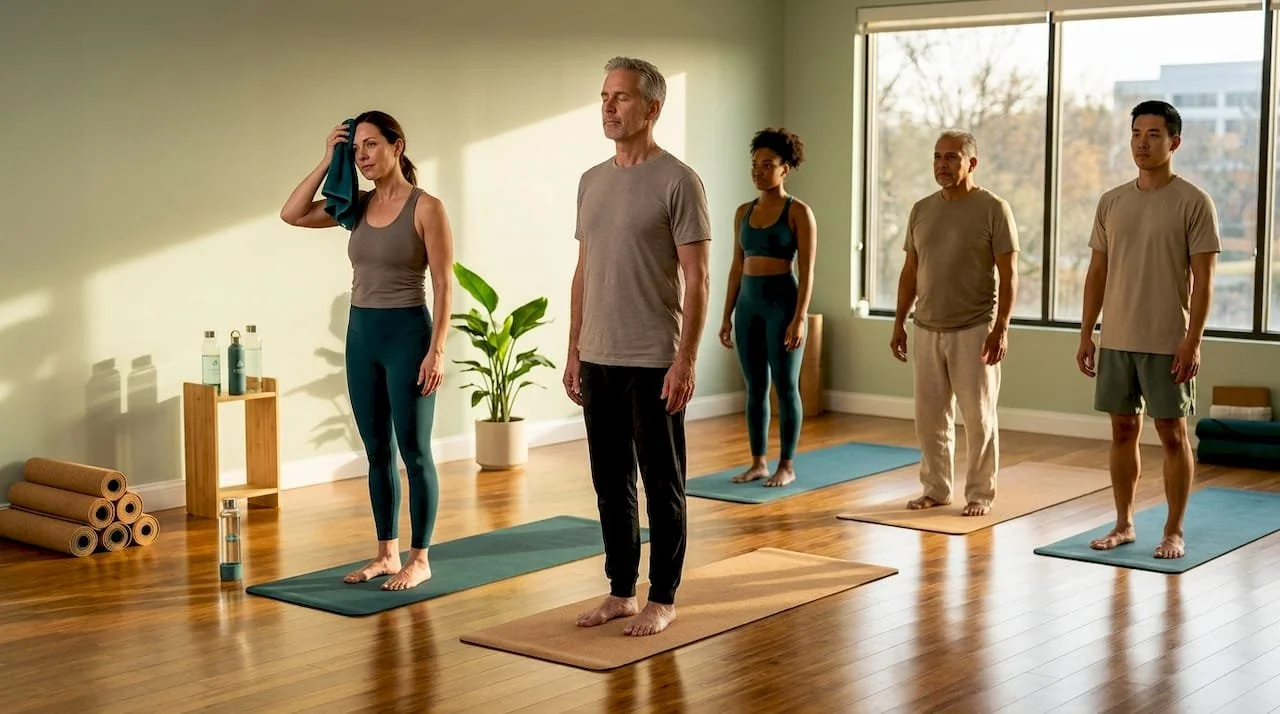
Hot yin yoga is a practice that combines the core philosophy of traditional Yin Yoga with the deliberate addition of a warmed room. Traditional Yin Yoga, developed largely through the teachings of Paul Grilley and Sarah Powers, focuses on holding passive poses for several minutes at a time to stress the deeper connective tissues: the fascia, ligaments, tendons, and joint capsules. What the heated version adds is temperature, not intensity.

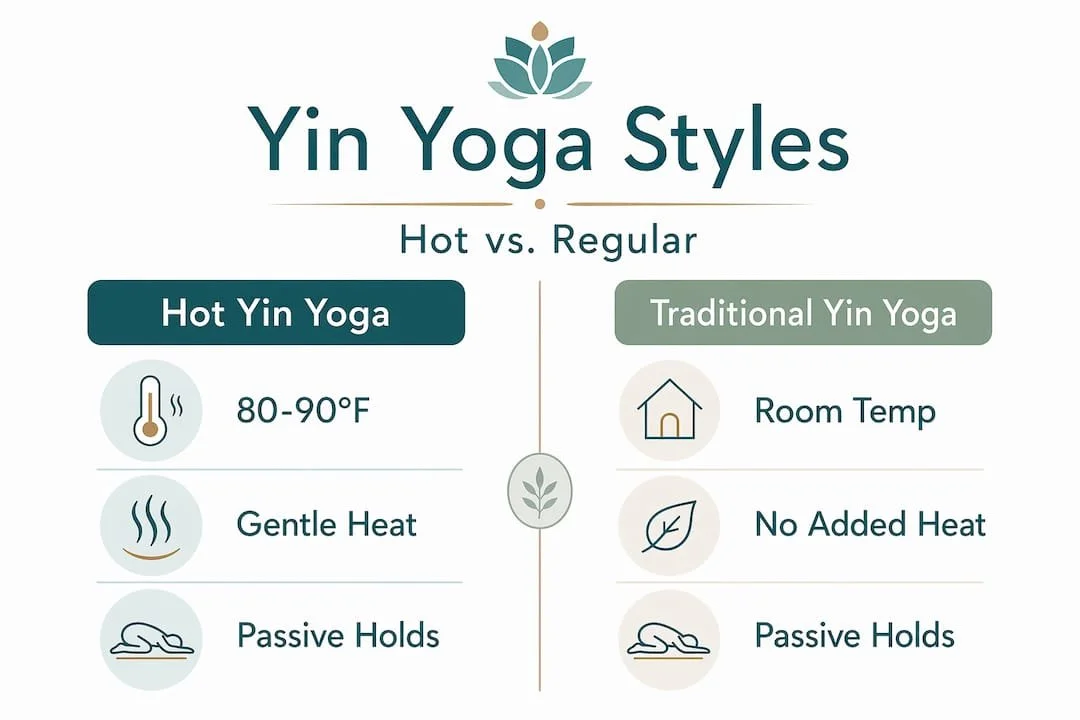
The room in a warm yin class sits between 80°F and 90°F, which is meaningfully different from the 95°F to 105°F you would find in a Bikram or traditional Hot Yoga class. That distinction matters. The goal is not to make you sweat through your mat. The goal is to use warmth the way a heating pad uses warmth: to soften tissue, encourage release, and help the body surrender into stillness more readily.

Here is a quick breakdown of where hot yin yoga fits among heated yoga styles:

  • Temperature: 80°F to 90°F, compared to 95°F to 105°F for standard Hot Yoga

  • Pace: Fully passive, slow holds of 3 to 7 minutes per pose

  • Sweat level: Minimal to light, not the intense cardiovascular sweat of Bikram

  • Focus: Deep connective tissue, breath awareness, and nervous system regulation

  • Class length: Typically 60 to 90 minutes, opening with grounding breath work before moving into long holds

The "hot" label sometimes creates confusion because it suggests something athletic and demanding. A better mental model is this: hot yin yoga is warm yin yoga. The heat is a tool for softening, not for pushing.

The real benefits of hot yin yoga

The benefits here go beyond "it feels nice." There are specific physiological and psychological reasons this practice works, and understanding them helps you get more out of every session.

Connective tissue release

Muscles respond well to active stretching because they contain elastic fibers designed for dynamic movement. Connective tissue, including fascia and ligaments, is denser and less elastic. It responds better to slow, sustained stress held over time. The gentle warmth promotes deeper connective tissue release without the aggressive heat that can cause muscle guarding or overstretching. You get a more genuine release, not just a temporary lengthening of muscle fibers.

Nervous system regulation

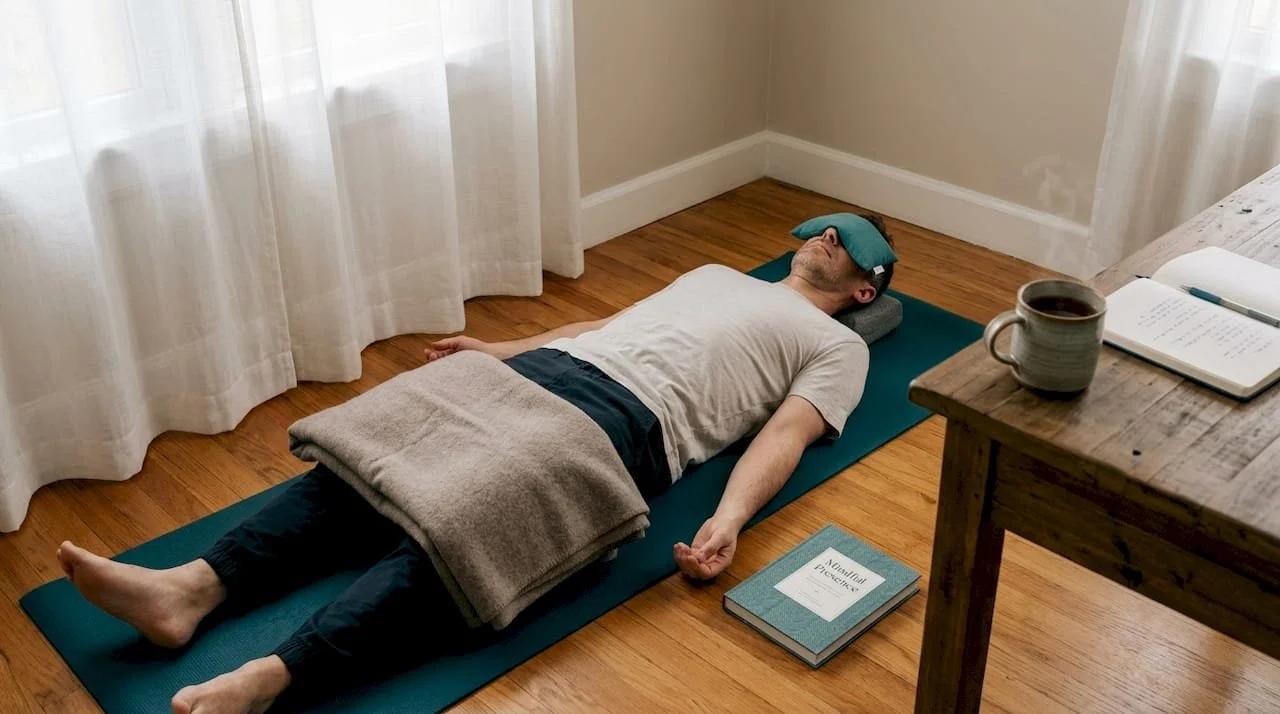
This is where hot yin yoga separates itself from almost every other physical practice. Long passive holds activate the parasympathetic nervous system, which is the branch responsible for rest, digestion, and recovery. In practical terms, your heart rate slows, your breathing deepens, and your body stops treating the world as a threat. For adults carrying chronic stress, that shift is not small.
Emotional processing

There is a reason people sometimes feel unexpectedly emotional during a long yin hold. Fascia stores tension patterns that correlate with habitual stress responses. When you release physical tension slowly and with breath awareness, emotional material sometimes surfaces. Hot yin yoga creates a supportive space for emotional balance and healing by pairing that physical release with the calming effect of warmth.

Accessibility across fitness levels

Because there is no flow, no jumping, and no cardiovascular demand, this practice works for people recovering from injury, older adults, athletes who need a genuine recovery day, and complete beginners. The lower heat avoids cardiovascular stress that makes some people feel dizzy or overwhelmed in hotter classes. You do not need to be flexible or athletic to benefit. You need to be willing to stay still.

Pro Tip: If you are new to yin yoga for relaxation, try yin yoga resources first to understand the foundational philosophy before adding heat to your practice. It will make your first hot yin class feel familiar rather than foreign.

What to expect in hot yin yoga class

Walking into a hot yin yoga class for the first time feels different from other yoga classes. Here is a realistic picture of how a session typically unfolds.

  1. Arrival and setup. You will enter a room that feels comfortably warm rather than oppressively hot. Gather props: a bolster, two blocks, a blanket, and optionally a warm weighted pack if the studio offers them.

  2. Opening breath work. Classes usually begin with 5 to 10 minutes of guided breathing or meditation. This is not optional filler. It signals your nervous system to downshift before the holds begin.

  3. Long-held passive poses. Expect shapes like Dragon (a deep hip flexor stretch), Butterfly (seated forward fold with feet together), and Sleeping Swan (a floor pigeon variation). Each is held for 3 to 7 minutes with minimal muscular effort.

  4. Props in action. Bolsters go under hips, knees, or chests to support the body so you can fully relax into the pose. Weighted warm packs placed on the lower back or hips add proprioceptive grounding and encourage the tissue to release more deeply.

  5. Savasana. The final rest period in hot yin yoga tends to feel especially profound because your body has spent the entire class releasing accumulated tension. Give it the full time offered.

Regarding safety, the safe surface temperature for heat props sits between 104°F and 113°F. Always use a fabric barrier between a heat pack and your skin, and stop using any prop that causes discomfort. People with pregnancy (without medical clearance), sensory neuropathy, cardiovascular conditions, or recent surgery should check contraindications before practicing in a heated room.

Pro Tip: Bring a small personal water bottle and a light layer you can remove during class. The room is warm but not punishing, and having water nearby lets you focus on the practice instead of watching the clock.

Hot yin yoga vs. regular yin and other heated styles

Knowing where hot yin yoga sits on the spectrum helps you decide whether it is the right fit for you right now.

Style Room temperature Pace Primary goal Best for
Traditional Yin Yoga Unheated or room temp Passive, slow holds Connective tissue + mindfulness All levels, sensitive populations
Hot Yin Yoga 80°F to 90°F Passive, slow holds Deeper tissue release + relaxation Most adults, beginners, recovery
Hot Yoga / Vinyasa 95°F to 105°F Dynamic, flowing Strength, flexibility, cardiovascular fitness Active practitioners
Bikram Yoga 105°F, 40% humidity Scripted active sequence Detoxification, strength Experienced practitioners

The most important column in that table is temperature. Traditional yin yoga works without heat because the long hold duration does the connective tissue work regardless. The warm room in hot yin yoga simply lowers the initial resistance, making it easier for most people to relax fully. You are not getting a better workout by adding heat. You are removing a barrier to surrender.
Hot yoga and Bikram, by contrast, use heat to drive cardiovascular response and increase muscle elasticity for a more active practice. The goals, pacing, and physiological demands are categorically different from what hot yin yoga offers.

Practical tips for your first hot yin yoga class

Preparation separates a rough first experience from one that makes you want to come back.

  • Choose the right class. Look for classes explicitly labeled "Warm Yin," "Hot Yin," or "Heated Yin" rather than general hot yoga classes. The distinction matters for what you will experience in the room.

  • Wear minimal, breathable clothing. Loose shorts and a light tank are ideal. Avoid thick fabrics that trap heat uncomfortably.

  • Hydrate before, not during. Drink 16 to 20 ounces of water in the two hours before class. Drinking large amounts during long holds interrupts the breath and stillness you are trying to cultivate.

  • Communicate with the instructor. Tell them it is your first class. A good teacher will offer modifications, check prop placement, and keep an eye on you during longer holds.

  • Plan for post-class recovery. Your connective tissue will have been gently stressed throughout the session. A light snack, additional water, and 20 minutes of rest after class helps the body integrate the work.

Pro Tip: Skip the coffee or stimulants for two hours before a warm yin class. Stimulants increase baseline nervous system activation, which makes it harder to drop into the parasympathetic state the practice is designed to cultivate.

My honest take on this practice

I have watched people come into heated yin classes expecting either a relaxing nap or a detoxifying sweat session, and leave slightly confused when it is neither. That is the most common misconception I encounter. Hot yin yoga occupies a specific territory: it is demanding in a way that has nothing to do with physical effort. Staying still for five minutes while your hip flexors resist, while your mind wants to move to the next thing, is genuinely hard. The warmth makes the physical surrender easier. It does not make the mental surrender easier.

What I have found is that the people who benefit most from this practice are not the flexible ones. They are the ones who are willing to get uncomfortable with stillness. That is a skill that transfers everywhere: in stress management, in sleep quality, in how you handle difficulty without immediately trying to fix it. Hot yin yoga teaches you to stop bracing. That is worth more than any stretch.

I have also noticed that practitioners who come from more athletic hot yoga backgrounds often underestimate warm yin classes at first. They assume less heat means less benefit. Then they hold Dragon pose for six minutes and reconsider.

— Juiced

Try it yourself at Amrita Yoga & Wellness

If this practice sounds like what your body and mind have been asking for, Amritayogawellness has you covered. Amrita Yoga & Wellness in Philadelphia offers hot yin yoga classes designed for adults at every level, from complete beginners to experienced practitioners looking for a genuine recovery practice. The studio's approach emphasizes accessibility, safety, and community, so you are never walking into an environment where you feel out of place.
Whether you are managing stress, working on flexibility, or simply curious about what a warm, meditative yoga class feels like, Amrita Yoga & Wellness offers a welcoming space to find out. Visit amritayogawellness.com to browse the class schedule, sign up for your first session, and explore everything the studio has to offer.

FAQ

What temperature is a hot yin yoga room?

Hot yin yoga rooms are typically heated to between 80°F and 90°F. This is noticeably cooler than traditional Hot Yoga studios, which range from 95°F to 105°F.

How long are hot yin yoga poses held?

Most poses in a hot yin yoga class are held for 3 to 7 minutes in a fully passive position. The class itself typically runs 60 to 90 minutes total.

Is hot yin yoga good for beginners?

Yes. The slower pace and lower heat level make hot yin yoga one of the more accessible heated yoga styles for people new to yoga or returning after a break.

What props do you need for hot yin yoga?

A bolster, yoga blocks, and a blanket cover most needs. Some studios also offer warm weighted packs placed on the body during long holds to deepen relaxation and tissue release.

Who should avoid hot yin yoga?

People who are pregnant without medical clearance, those with cardiovascular conditions, individuals with sensory neuropathy, or anyone recovering from recent surgery should consult a doctor before attending a heated yin class.
Recommended

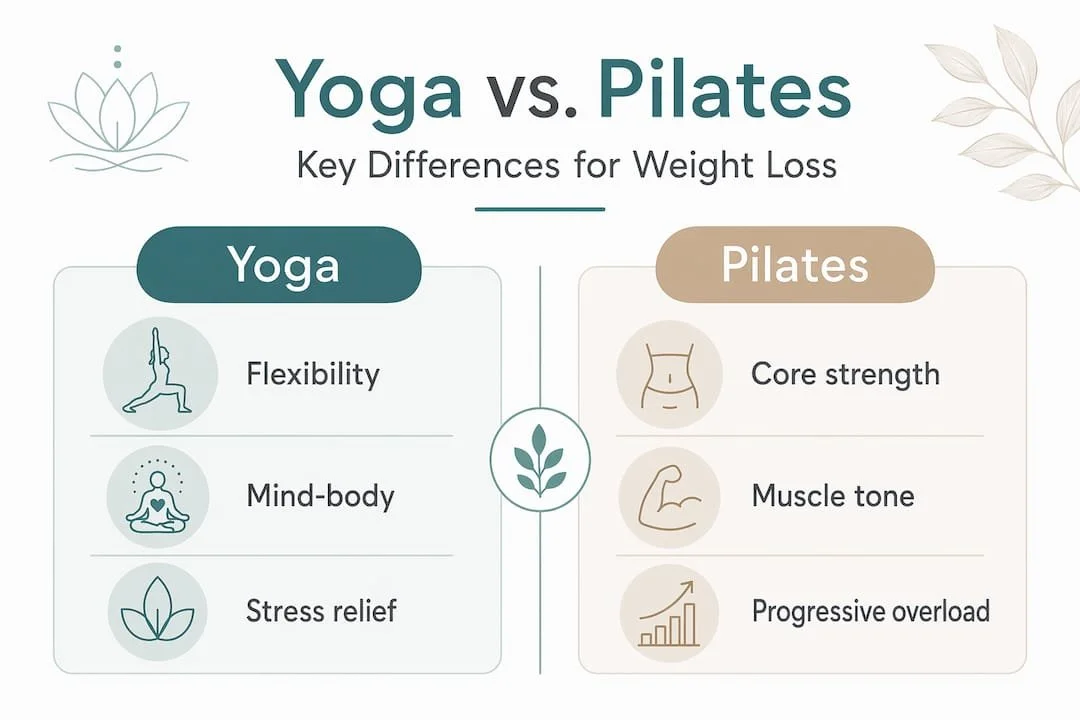
Yoga and Pilates for Weight Loss: What Really Works

Heather Rice

TL;DR:

Yoga and pilates improve physiological and behavioral conditions that support lasting weight loss, rather than directly burning calories. Consistent practice, combined with aerobic exercise and proper nutrition, enhances metabolic health, strength, and stress regulation, facilitating sustainable weight management. Integrating both into a broader fitness plan over several months yields the most meaningful and lasting results.

Most people assume yoga and pilates for weight loss is wishful thinking. The poses look peaceful, the reformer sessions seem almost meditative, and nothing about either practice screams "calorie furnace." That assumption is wrong, but so is the opposite extreme. Yoga and pilates won't replace a brisk run or a caloric deficit. What the research actually shows is more nuanced and, frankly, more useful: these practices create the physiological and behavioral conditions that make lasting weight loss possible.

Table of Contents

Key takeaways

Point Details
Yoga supports cardiometabolic health Practicing yoga at least 3 times per week improves blood pressure, lipid profiles, and glucose metabolism in adults with excess weight.
Pilates builds the foundation for fat loss Pilates improves strength, posture, and core function, making aerobic and daily activities more effective and sustainable.
Dose and consistency matter most At least 150 to 180 minutes of moderate activity per week is needed for clinically meaningful weight loss outcomes.
Neither practice works alone Combining yoga or pilates with aerobic exercise and nutrition changes produces the best results for losing weight.
Mindful movement improves adherence Both practices reduce stress and improve body awareness, which directly supports better eating habits and long-term exercise consistency.

Yoga and pilates for weight loss: what the science says

Let's start with yoga. A lot of people wonder whether yoga can actually move the needle on weight. The short answer is yes, but mostly through indirect pathways that most fitness content never mentions.

A systematic review and meta-analysis of 30 randomized controlled trials involving 2,689 adults with overweight or obesity found that yoga practiced at least three times per week produced measurable reductions in blood pressure and modest improvements in lipid profiles. These are cardiometabolic markers that sit upstream of weight-related disease. Improving them doesn't just reduce health risk. It creates a body that functions better during every other form of exercise you do.

The benefits of yoga for weight loss also show up in fat tissue directly when the practice is structured and sustained. Women who practiced Bikram yoga for six months achieved a 6.17% reduction in fat mass, which crosses the 5% threshold considered metabolically significant. That's not incidental. It reflects what happens when a practice is consistent, progressive, and combined with the lifestyle shifts yoga tends to encourage.

Here's what the research consistently points to as the deciding factors:

  • Frequency matters. At least 180 minutes per week of yoga practice is the dose associated with measurable cardiometabolic improvements. One class per week won't get you there.

  • Program selection matters. Not all yoga styles deliver the same physiological load. Iyengar, Vinyasa, and Bikram make different demands on your cardiovascular and muscular systems.

  • Duration of practice matters. The PATH trial protocol delivers Iyengar yoga twice weekly for 14 weeks, then once weekly for 22 more weeks. That's nearly nine months of sustained exposure, which is a very different commitment than a four-week "yoga challenge."

  • Behavioral effects matter enormously. Yoga can improve behavioral self-regulation during weight loss efforts, reducing dietary lapses and supporting consistent decision-making around food and activity.

Pro Tip: If you're using yoga as a weight management tool, track your weekly minutes, not just the number of sessions. Hitting 180 minutes per week across three to four sessions is the evidence-backed target.

What pilates actually does for your body composition

Pilates occupies a different lane than yoga in the weight loss conversation. Its reputation as a "core workout" is accurate but incomplete. The fuller picture is that pilates is a resistance-based modality that improves strength, function, and body composition in ways that set the stage for fat loss, even when it doesn't drive fat loss directly.

A narrative review on reformer versus mat Pilates found that reformer pilates may favor muscle hypertrophy mechanically through its spring-resistance system, but the empirical evidence for meaningful muscle mass gains or direct fat reduction is inconsistent. That's not a knock on pilates. It's a realistic framing of what a weight loss pilates workout can and cannot do on its own.

What pilates does reliably:

  • Builds core strength and postural control that reduces injury risk during higher-intensity exercise

  • Improves functional movement patterns that make everyday activity more calorie-expensive

  • Increases muscular endurance, particularly in the posterior chain and deep stabilizers

  • Supports recovery between more demanding aerobic sessions

The key variable in any pilates routine for fat burning is progressive overload. Static routines at the same resistance level, same tempo, same exercises every week, are unlikely to drive metabolic adaptation. Reformer pilates offers a structural advantage here because the spring system allows you to increase resistance over time. Mat pilates can achieve the same effect through tempo manipulation, added bodyweight leverage, and exercise complexity progression.

Pro Tip: Ask your pilates instructor to document your resistance levels and progressions session by session. Without progressive overload, a mat pilates practice will plateau metabolically within weeks.

If you're newer to pilates, the Pilates for beginners guide at Amrita Yoga & Wellness covers how to build core strength before layering in resistance progression, which is the right order of operations.

Yoga vs. pilates: how to choose or combine them

Most people treat this as an either-or decision. It doesn't need to be. Understanding what each practice prioritizes helps you make a smarter choice based on your goals, current fitness level, and what you'll actually stick with.

Feature Yoga Pilates
Primary focus Mind-body connection, flexibility, breath, stress reduction Core strength, postural alignment, controlled resistance movement
Caloric burn (per session) Moderate: 180 to 360 calories (style-dependent) Moderate: 175 to 375 calories (equipment and intensity-dependent)
Fat loss mechanism Indirect via cardiometabolic improvement, stress reduction, behavioral regulation Indirect via strength building, functional movement, and injury prevention
Best for Stress-driven weight gain, adherence challenges, metabolic health support Core weakness, postural problems, injury recovery, building a strength base
Equipment needed Mat, minimal props Mat or reformer for greater progression
Beginner accessibility High, especially gentle or restorative styles High for mat, moderate for reformer
Combines well with Walking, cycling, aerobic classes Running, HIIT, strength training

For a deeper look at how these two practices compare across fitness goals, the yoga vs. pilates comparison at Amritayogawellness covers the functional differences in plain language.

The honest answer for most adults trying to lose weight is this: use both, but use them as part of a larger plan, not as the entire plan.

Building a yoga and pilates workout plan that actually produces results

This is where most programs fall short. People show up to yoga twice a week, add a pilates session, and wonder why the scale isn't moving after two months. The issue isn't the practices. It's the dose and the missing pieces.

Here's how to build a yoga and pilates workout plan that supports real, sustainable fat loss:

  1. Hit the activity threshold first. Lifestyle interventions for weight loss target 150 to 180 minutes of moderate activity per week. Yoga and pilates count toward that total, but they typically cannot fill it alone. Add brisk walking, cycling, or swimming on non-practice days.

  2. Treat pilates as your resistance training. Combining aerobic activity with resistance training two to three times per week reduces insulin resistance and supports fat loss more effectively than either approach alone. Pilates counts as your resistance work if it's progressive and challenging.

  3. Schedule yoga for recovery and stress management. Yoga sessions on days after harder aerobic workouts reduce cortisol, improve sleep quality, and support the hormonal environment that makes fat burning easier.

  4. Anchor your nutrition. Exercise alone produces limited initial weight loss. Yoga and pilates are not exceptions. Pair your practice with a modest caloric deficit, not starvation, and the combination becomes genuinely powerful.

  5. Track progress in more than one way. The scale is one metric. Also track energy levels, sleep quality, how your clothes fit, and how far you can walk without fatigue. Yoga and pilates tend to show up first in those measures, well before body weight shifts.

Pro Tip: The biggest mistake people make when losing weight with yoga and pilates is treating either practice as their cardio. If you leave a yoga class barely winded, you've done recovery work, not cardiovascular training. That's valuable, but layer in something that elevates your heart rate for 20 to 30 minutes several times per week.

A realistic six-month arc looks like this: months one and two focus on establishing a consistent three-to-four day per week practice. Months three and four add aerobic sessions and begin progressive overload in pilates. Months five and six, the compounding effect becomes visible in body composition, energy, and metabolic markers.

My honest take after years of watching people use these practices

I've worked alongside enough practitioners to say something that most fitness content won't: the people who succeed with losing weight with yoga and pilates are rarely the ones chasing the fastest result. They're the ones who stopped fighting their bodies and started working with them.

Here's what I've observed consistently. Adults who come to yoga and pilates after burning out on high-intensity programs don't just get more flexible. They get more regulated. Their eating becomes less reactive. Their sleep improves. Their relationship with physical effort shifts from punitive to purposeful. That's not a soft outcome. That's the behavioral infrastructure that makes every other weight loss strategy work better.

What I've also seen is that people underestimate both practices when they go in expecting rapid fat loss, and overestimate them when they forget they need aerobic challenge too. The evidence supports yoga and pilates as facilitative components of a behavioral weight loss program, not replacements for the program itself. The practices that get you to your goal are the ones you can sustain for nine months or two years, not the ones that burn the most calories in a single session.

If you're someone who has tried and quit multiple exercise programs, yoga and pilates may be exactly the right entry point. Not because they're easy, but because they build the kind of body awareness and self-regulation that make everything else more sustainable.

— Juiced

Start your practice at Amrita Yoga & Wellness

Amrita Yoga & Wellness in Philadelphia offers the kind of structured, instructor-led environment where yoga and pilates for weight loss actually sticks. Classes span mat pilates, Iyengar yoga, Vinyasa flows, hot yoga, and blended formats designed for different fitness levels and goals. Whether you're just starting out or returning after a long break, the studio's instructors tailor sessions to where you are, not where you think you should be. The community-driven approach means you're not navigating this alone. Explore class schedules, workshops, and wellness services including holistic wellness offerings that support the mind-body connection at the heart of sustainable weight management. Visit Amrita Yoga & Wellness to find your fit.

FAQ

Can yoga really help with weight loss?

Yes. Yoga supports weight loss primarily through cardiometabolic improvements, stress reduction, and better behavioral self-regulation around food and activity. Structured yoga practiced at least three times per week shows measurable effects in clinical research.

How often should I do pilates to see weight loss results?

Two to three pilates sessions per week, combined with aerobic exercise and a modest caloric deficit, gives you the best chance of seeing body composition changes. Pilates alone, without progressive overload and aerobic activity, is unlikely to drive significant fat loss.

Is a yoga and pilates workout plan enough to lose weight?

It depends on total weekly activity and nutrition. Yoga and pilates contribute meaningfully to a weight loss plan, but most adults need additional moderate aerobic exercise to reach the 150 to 180 minute weekly activity threshold associated with clinically meaningful results.

What is the best yoga style for fat loss?

Higher-intensity styles like Bikram, Vinyasa, and Power yoga generate more cardiovascular demand and caloric expenditure than restorative or Yin yoga. Six months of regular Bikram yoga has been shown to reduce fat mass by over 6% in research settings.

Should beginners start with yoga or pilates for weight loss?

Both are beginner-friendly. Pilates may be the better starting point if core weakness or postural issues are limiting your ability to exercise comfortably. Yoga tends to be more accessible for those dealing with stress-related weight gain or who need to build a consistent movement habit first.

Recommended

What Are the 26 Bikram Poses? Full Sequence Guide

Heather Rice

TL;DR:

Bikram yoga features a fixed sequence of 26 postures practiced in heated rooms to enhance flexibility, circulation, and detoxification. Its rigid order allows practitioners to track progress easily and develop neuromuscular coordination efficiently. The sequence builds gradually, starting with standing poses and progressing to floor postures for spinal health and internal cleansing.

If you've ever wondered what are the 26 Bikram poses and why this particular sequence holds such a devoted following, you're about to get the clearest breakdown available. Bikram yoga is a fixed sequence of 26 postures performed identically in every class worldwide, no substitutions, no surprises. Understanding each pose by name, form, and benefit is what separates practitioners who simply survive a class from those who genuinely progress.

Table of Contents

Key takeaways

Point Details
Fixed global sequence All 26 poses follow the same order in every authentic Bikram class worldwide.
Heat amplifies benefits Classes run at 95–105°F for 90 minutes, enhancing circulation, flexibility, and detoxification.
Two breathing exercises frame the practice Pranayama breathing opens the class; Kapalbhati closes it for internal detox.
Standing before floor The first 13 poses build strength and balance; the final 13 restore and deepen flexibility.
Consistency drives progress The fixed format makes tracking personal growth significantly more measurable than fluid styles.

Understanding the Bikram yoga sequence structure

The Bikram yoga sequence is a 90-minute practice conducted in a room held at 95°F to 105°F. Every session opens with a standing breathing exercise and closes with a breathing detox, wrapping all 26 postures inside a precise physiological arc. The heat is not incidental. It primes muscles for deeper work, accelerates circulation, and supports sweating as a detox mechanism.

The two breathing exercises are fundamental to the practice. Pranayama Deep Breathing opens the session by oxygenating the body and calming the nervous system. Kapalbhati in Firm Pose closes it, using forceful exhalations to cleanse the respiratory system and reset your internal state. Neither is optional. They are structural pillars of the sequence.

One of the most underappreciated advantages of the Bikram yoga sequence is its fixed pose order. Practitioners can track tangible progress week over week because the variables never change. Neuromuscular coordination, breath control, and proprioception all develop faster when the brain is not constantly adapting to new shapes. This is what makes the Bikram format particularly effective for both beginners and experienced teachers.

Pro Tip: Drink at least 32 ounces of water two hours before class. The heat stress of a Bikram room affects cardiovascular demand significantly, and starting hydrated is the single most effective preparation strategy.

The 13 standing series poses (poses 1–13)

The standing series builds the foundation. These poses develop leg strength, spinal alignment, and balance while the body is fully warmed by the heat. Here is the complete Bikram yoga poses list for the standing series.

  1. Pranayama (Standing Deep Breathing). Arms and hands interlocked beneath the chin, you inhale slowly to expand the lungs and exhale to compress them fully. This maximizes oxygen intake before physical exertion begins.

  2. Ardha Chandrasana with Pada Hastasana (Half Moon Pose with Hands to Feet Pose). A lateral stretch combined with a standing forward fold. It lengthens the entire side body and activates spinal flexibility from the first moments of practice.

  3. Utkatasana (Awkward Pose). Three-part chair-like squat that targets the thighs, calves, and hips. This pose alone builds leg endurance most students don't realize they lack.

  4. Garurasana (Eagle Pose). Standing balance with arms and legs wrapped. It compresses 14 major joints simultaneously and then floods them with fresh blood upon release, which is why it is used so early in the sequence.

  5. Dandayamana Janushirasana (Standing Head to Knee Pose). One leg extended, forehead drawn toward the knee. Requires significant hamstring flexibility and core control. Most beginners hold the foot and work on locking the standing knee first.

  6. Dandayamana Dhanurasana (Standing Bow Pulling Pose). A spectacular backbend in balance that stretches the entire front body while contracting the back body. It trains focus as much as it trains flexibility.

  7. Tuladandasana (Balancing Stick Pose). The body forms a perfect "T" shape, arms forward, one leg extended back. This pose spikes cardiovascular demand dramatically for its 10-second duration, making it one of the most surprising in the Bikram yoga sequence.

  8. Dandayamana Bibhaktapada Paschimottanasana (Standing Separate Leg Stretching Pose). Wide-legged forward fold with the goal of touching forehead to floor. Targets the sciatic nerve and hamstrings while decompressiong the spine.

  9. Trikonasana (Triangle Pose). The only pose in the sequence that works every system of the body simultaneously, according to traditional Bikram instruction. Balance, strength, flexibility, and cardiovascular demand all intersect here.

  10. Dandayamana Bibhaktapada Janushirasana (Standing Separate Leg Head to Knee Pose). A compression of the thyroid, abdomen, and pancreas in a standing fold. Particularly valuable for metabolic regulation.

  11. Tadasana (Tree Pose). Classic standing balance with one foot pressed into the inner thigh. It restores concentration and body awareness after the intensity of Triangle Pose.

  12. Padangustasana (Toe Stand Pose). A full squat balanced on the toes of one foot. This is among the most technically demanding poses in the standing series and develops ankle strength few other practices address.

  13. Savasana (Dead Body Pose / Corpse Pose). Two minutes of complete stillness between the standing and floor series. The body integrates the cardiovascular work and begins the parasympathetic recovery process. This is not rest. It is active physiological reset.

Pro Tip: In Eagle Pose, focus on sinking your hips lower each class rather than perfecting the arm wrap. The hip depth creates the joint compression that produces the circulation benefits.

The 13 floor series poses (poses 14–26)

The floor series shifts focus from strength and balance to spinal health, flexibility, and internal detoxification. The pose sequence progresses gradually from easier spinal work to deeper backbends and compression, protecting the body by warming tissues in layers.

  1. Pavanamuktasana (Wind Removing Pose). Lying on your back, knees compressed toward the chest and shoulders. It massages the ascending and descending colon and begins the digestive benefits of the floor series.

  2. Sit Up. A transitional movement between poses used to activate abdominal strength. Short but purposeful.

  3. Bhujangasana (Cobra Pose). Low backbend on the belly, arms bent with palms beside the chest. Strengthens the lumbar spine and opens the chest. This pose is therapeutic for people with lower back discomfort when practiced with proper alignment.

  4. Salabhasana (Locust Pose). Lifting one leg, then both legs, from a prone position. Builds tremendous strength in the lower back, glutes, and hamstrings.

  5. Poorna Salabhasana (Full Locust Pose). Both arms and legs lift simultaneously, creating a full spinal extension. The chest and thighs leave the floor, making this one of the most demanding strength poses in the floor series.

  6. Dhanurasana (Bow Pose). Reaching back to hold the ankles and lifting the entire front body off the floor. The rocking motion in this pose massages the digestive organs and builds spinal elasticity.

  7. Supta Vajrasana (Fixed Firm Pose). Knees folded beneath you, the goal is to lower the back toward the floor. Targets the knees, ankles, and lower spine. Intense for those with tight quadriceps, but deeply restorative over time.

  8. Ardha Kurmasana (Half Tortoise Pose). A forward fold from a kneeling position with arms extended overhead. Stretches the lower back and promotes recovery from the earlier backbends.

  9. Ustrasana (Camel Pose). A full kneeling backbend reaching the heels. This pose stimulates the nervous system strongly and can produce emotional release in addition to its physical backbend benefits.

  10. Sasangasana (Rabbit Pose). The counterpose to Camel, folding deeply forward with forehead to knees. Creates maximum spinal flexion and stretches the entire back body.

  11. Janushirasana with Paschimottanasana (Head to Knee Pose with Stretching Pose). A seated single-leg compression followed by a full bilateral forward fold. Works the pancreas, thyroid, and entire posterior chain.

  12. Ardha Matsyendrasana (Spine Twisting Pose). A seated spinal twist that addresses each vertebra individually. Regular heated sessions in this pose improve spinal rotation and stimulate circulatory flow throughout the torso.

  13. Kapalbhati in Vajrasana (Blowing in Firm Pose). The closing breathing exercise. Short, forceful exhalations through the nose cleanse the lungs of stale air and carbon dioxide. This final detox breath resets respiratory function after the full sequence.

Pro Tip: In Camel Pose, press your hips forward before reaching for your heels. Most back discomfort in this pose comes from collapsing directly back rather than creating a full arc through the hips first.

All 26 poses at a glance: reference table

# English name Sanskrit name Category Primary focus
1 Standing Deep Breathing Pranayama Breathing Oxygenation
2 Half Moon / Hands to Feet Ardha Chandrasana Standing Lateral flexibility
3 Awkward Pose Utkatasana Standing Leg strength
4 Eagle Pose Garurasana Standing Joint health
5 Standing Head to Knee Dandayamana Janushirasana Standing Balance, hamstrings
6 Standing Bow Pulling Dandayamana Dhanurasana Standing Backbend, focus
7 Balancing Stick Tuladandasana Standing Cardio, core
8 Standing Separate Leg Stretch Dandayamana Bibhaktapada Paschimottanasana Standing Hamstrings, spine
9 Triangle Pose Trikonasana Standing Full body
10 Standing Separate Leg Head to Knee Dandayamana Bibhaktapada Janushirasana Standing Thyroid, abdomen
11 Tree Pose Tadasana Standing Balance, focus
12 Toe Stand Padangustasana Standing Ankle, concentration
13 Corpse Pose Savasana Rest Recovery
14 Wind Removing Pose Pavanamuktasana Floor Digestion
15 Sit Up N/A Transition Core
16 Cobra Pose Bhujangasana Floor Lower back
17 Locust Pose Salabhasana Floor Glutes, lower back
18 Full Locust Pose Poorna Salabhasana Floor Spinal strength
19 Bow Pose Dhanurasana Floor Spine, digestion
20 Fixed Firm Pose Supta Vajrasana Floor Knees, ankles
21 Half Tortoise Pose Ardha Kurmasana Floor Lower back recovery
22 Camel Pose Ustrasana Floor Full backbend
23 Rabbit Pose Sasangasana Floor Spinal flexion
24 Head to Knee with Stretching Janushirasana / Paschimottanasana Floor Hamstrings, thyroid
25 Spine Twisting Pose Ardha Matsyendrasana Floor Spinal rotation
26 Blowing in Firm Pose Kapalbhati in Vajrasana Breathing Respiratory detox

My honest take on learning this sequence

I've watched hundreds of students walk into their first Bikram class convinced the heat would be the hardest part. It never is. The real challenge is ego. The fixed format puts your progress on full display. You know exactly which poses you've improved in and exactly where you've plateaued. There is nowhere to hide, and that transparency is genuinely uncomfortable at first.

What I've found over years of practice is that the sequence's rigid order is actually its greatest gift. The body warms progressively, moving from relatively accessible shapes toward more demanding backbends and compressions. This design is not arbitrary. It reflects a deep understanding of how muscles, joints, and the nervous system respond to incremental stress. Practitioners who trust the order and stop fighting it tend to progress much faster than those who spend energy resisting poses they dislike.

For teachers, this sequence is one of the most teachable frameworks in any yoga style. Because every student in the room is doing the same 26 poses in the same order, you develop an eye for common alignment patterns and compensations very quickly. That specificity is what makes Bikram training so transferable to other teaching contexts.

If you are beginning the practice, commit to 10 consecutive classes before judging your experience. The first three classes you are just surviving. By class six, the sequence starts to feel familiar. By class ten, you'll find yourself anticipating the next pose, and that's when real learning begins.

— Juiced

Explore Bikram yoga and breathwork at Amrita Yoga & Wellness

Ready to experience the 26 Bikram poses in person or deepen what you've just learned? Amrita Yoga & Wellness in Philadelphia offers hot yoga classes designed for practitioners at every level, with expert instruction on the full Bikram sequence. The studio also offers dedicated resources on breathwork benefits that complement the pranayama and Kapalbhati exercises central to Bikram practice.

For those interested in integrating holistic wellness alongside their physical practice, Amrita Yoga & Wellness also offers tarot readings as part of its broader spiritual wellness program. Whether your goal is mastering the Bikram yoga sequence or building a fuller self-care practice, the studio's community and offerings are designed to support your path.

FAQ

What are the 26 Bikram poses?

The 26 Bikram poses are a standardized sequence of postures practiced in a heated room at 95–105°F over 90 minutes. They include 24 physical postures plus two breathing exercises that open and close the class.

How long does it take to learn the Bikram yoga sequence?

Most practitioners become familiar with the sequence after 10 to 15 classes. Genuine mastery of alignment and breath in all 26 poses typically develops over several months of consistent practice.

Is Bikram yoga good for beginners?

Yes. The fixed sequence and consistent class structure make Bikram yoga a strong option for beginners. Knowing exactly what comes next each class reduces cognitive load and lets students focus on form and breath.

What is the difference between the standing and floor series?

The standing series (poses 1–13) builds cardiovascular endurance, leg strength, and balance. The floor series (poses 14–26) focuses on spinal health, deep flexibility, and detoxification through compression and backbending.

How does the heat affect the 26 poses?

The heat increases muscle elasticity, allowing deeper ranges of motion in each pose. It also raises cardiovascular demand and promotes sweating, which supports metabolic balance and detoxification throughout the session.

Recommended

Beginner Aerial Yoga Poses: Build Strength and Flexibility

Heather Rice

TL;DR:

Most beginner aerial yoga poses rely on the hammock to support and deepen stretches, making the practice accessible regardless of flexibility or strength. Proper setup, including hammock height and clothing, combined with gradual progression and foundational poses, ensures safety and builds trust in the support system. Consistent practice focused on core poses develops the necessary strength, flexibility, and body awareness, laying a solid foundation for advanced moves over time.

If you've been curious about beginner aerial yoga poses but worried that you're not flexible enough or strong enough to get started, you're not alone. Most people walk into their first aerial yoga class with exactly that fear. Here's what actually happens: the hammock does most of the heavy lifting, making traditional yoga poses more accessible and deeper from your very first session. This guide walks you through everything you need to start safely, from setting up your hammock to five foundational poses you can practice right away.

Table of Contents

Key takeaways

Point Details
No flexibility needed The hammock supports your body so beginners can achieve deeper stretches safely from day one.
Hammock height matters Set the hammock at your hip crease for optimal safety and support in every foundational pose.
Dress for the fabric Fitted leggings that cover your knees protect against hammock pressure points and skin irritation.
Start slow, stay consistent Practice 2 to 3 times per week and spend the first few weeks mastering foundational poses only.
Stop at discomfort Step out of any pose that causes dizziness or sharp discomfort. Progression is earned gradually.

Equipment and preparation basics

Before you attempt a single pose, your setup and habits will determine how safe and enjoyable aerial yoga feels. This is the part most beginner guides gloss over, and it's where most early frustration comes from.

Getting your hammock height right

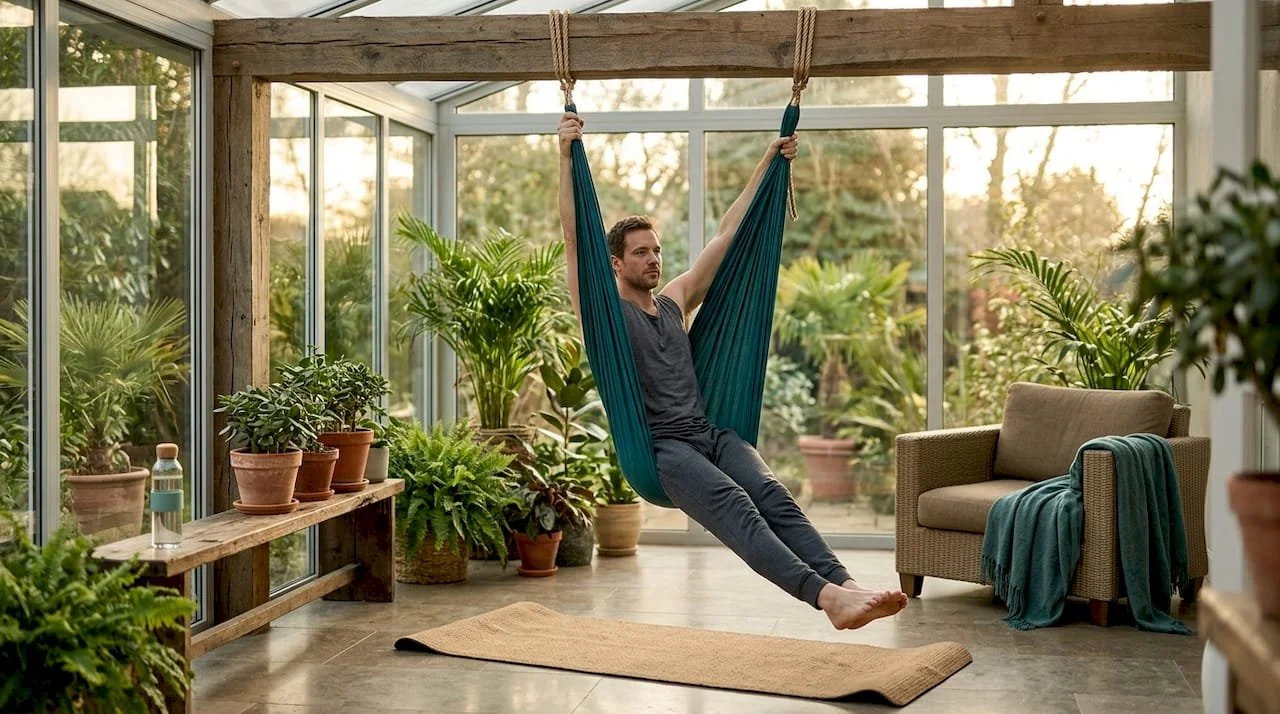
Hammock height at hip creaseis the foundational rule you'll hear in every aerial yoga guide for beginners, and for good reason. Too high and you'll struggle to get in and out of poses. Too low and you lose the support that makes the practice both safe and effective. Stand in front of the hammock and adjust the fabric so it rests directly at the fold of your hip. That position supports most beginner poses without modification.

If you're practicing at a studio, an instructor will set this for you. If you're setting up at home, check out this aerial yoga equipment checklist from Amritayogawellness to make sure your rigging and hardware are rated for aerial use before you ever leave the ground.

What to wear and how to prepare your body

Fitted leggings prevent chafing from hammock pressure points, particularly around the knees, inner thighs, and underarms. Skip shorts. Skip loose pants that bunch up. A fitted long-sleeve top is also worth considering if your arms will be bearing weight.

Here's a quick preparation checklist before every session:

  • Remove all jewelry, including rings and bracelets, before touching the hammock

  • Avoid eating a heavy meal in the 1 to 2 hours before practice to prevent nausea during inversions

  • Hydrate well in advance but avoid drinking large amounts right before class

  • Do a 5 to 10 minute floor warm-up to prepare your joints and sense your body's baseline

Pro Tip: Run the hammock fabric between your hands before practice. This brief sensory check helps your nervous system get familiar with the texture and tension before your full body weight goes into it.

Preparation factor Recommended approach
Hammock height Hip crease level for most beginner poses
Clothing Fitted leggings covering knees, close-fit top
Meal timing Avoid eating 1 to 2 hours before practice
Warm-up 5 to 10 minutes of floor mobility work
Jewelry Remove all items before practice

5 step-by-step beginner aerial yoga poses

Beginner aerial classes typically progress from floor-aided stretches to standing hammock-assisted poses before any full suspension. These five poses follow that same logic. Work through them in order during your first several sessions.

Pose 1: Supported downward dog

  1. Stand facing the hammock with the fabric at hip height.

  2. Place both hands on the fabric and walk your feet back until your body forms an angled "V" shape.

  3. Press into the hammock with straight arms and draw your hips up and back.

  4. Hold for 5 to 8 breaths, feeling your hamstrings and spine lengthen with the hammock's resistance.

This pose is where most people feel the hammock's power for the first time. The fabric creates gentle traction along your spine that a floor-based downward dog simply cannot replicate.

Pose 2: Floating pigeon pose

  1. Sit on the hammock as if it were a swing, with the fabric supporting your hips.

  2. Bring your right shin parallel to the front edge of the hammock and let the fabric hold your weight.

  3. Keep your left leg extended behind you with the foot resting lightly on the floor.

  4. Fold forward gently over your right shin and hold for 6 to 10 breaths before switching sides.

  • Benefit: Opens the hips and glutes without compressing the knee joint the way floor pigeon does.

  • Modification: Keep both feet touching the floor for stability until you feel confident in the hammock.

Pose 3: Cocoon inversion

  1. Sit in the hammock and pull the fabric up over your head so your body is gently wrapped.

  2. Allow yourself to tilt backward slowly until your head hangs below your hips.

  3. Let the hammock take your full weight. Your arms can rest at your sides or cross over your chest.

  4. Breathe slowly for 3 to 5 breaths, then use your core to return to upright.

This is most people's first true inversion. Because the hammock wraps around your entire body, beginners build trust with inversions through this pose before attempting anything more exposed.

Pro Tip: If you feel any pressure in your head or ears during the cocoon inversion, come up slowly and take 2 to 3 seated breaths before trying again. Dizziness that persists means you're done with inversions for that session.

Pose 4: Superman pose

  1. Stand behind the hammock and place it across your hip bones.

  2. Tip your body forward, letting your legs lift off the ground behind you.

  3. Extend your arms forward like you're flying, keeping your core gently engaged.

  4. Hold for 4 to 6 breaths, squeezing through your glutes and upper back to maintain the line.

This is one of the most underrated basic aerial yoga positions for beginners. It strengthens the posterior chain (your glutes, back extensors, and shoulder stabilizers) without any impact, making it a great complement to the forward-folding work in the other poses.

Pose 5: Aerial corpse pose (Savasana)

  1. Sit in the hammock and hold both sides of the fabric.

  2. Lean back slowly until the hammock cradles your full body from head to hips.

  3. Let your arms drop, close your eyes, and allow the fabric to rock you gently.

  4. Stay here for 3 to 5 minutes to close your session.

Aerial Savasana promotes deeper relaxationcompared to floor-based Savasana because the gentle compression and rocking activate your parasympathetic nervous system more directly. It's not just a nice ending. It's a physiologically distinct recovery state.

Pose Primary benefit Ground contact needed?
Supported downward dog Spinal traction, hamstring stretch Yes (hands)
Floating pigeon Hip opener, glute release Yes (one foot)
Cocoon inversion First inversion, full body relaxation No
Superman pose Back strength, posterior chain No
Aerial Savasana Spinal decompression, nervous system reset No

Common beginner mistakes to avoid

Even with a great set of step-by-step aerial yoga poses in hand, beginners consistently trip on the same few patterns. Knowing them in advance saves you frustration and protects your body.

The biggest error is moving too fast. After a few sessions of supported poses, the urge to try advanced inversions or drops is real. Resist it. Focusing on core foundational moves for 2 to 3 weeks builds the strength and proprioception that advanced poses actually require. Rushing creates bad habits and increases injury risk significantly.

Skin irritation is another predictable issue that beginners treat as a surprise. The hammock fabric concentrates pressure at contact points. If your inner knees are red and sore after class, it is not because aerial yoga is wrong for your body. It is because your clothing left those areas exposed. Long fitted leggings that cover the knee solve most of this.

Here are the other patterns worth watching:

  • Holding your breath during poses, especially inversions. Breath is your anchor. If your breathing gets shallow or stops, so should your movement.

  • Gripping the hammock with white-knuckle tension. Trust develops gradually. Practice releasing grip tension intentionally between holds.

  • Skipping the warm-up. Cold joints plus sudden weight-bearing aerial positions is a recipe for tweaks and pulls.

  • Comparing your early progress to anyone else's timeline.

"Beginner-friendly means supportive, not necessarily easy. Mastering balance and body awareness is the real focus of your first weeks."

Pro Tip: Keep a simple practice log after each session. Note which poses felt stable, which created discomfort, and how long you held inversions. This data helps you progress intentionally rather than by guesswork.

Building a beginner aerial yoga routine

A consistent practice schedule matters more than how perfect your poses look. Here is how to structure your first month as a practical aerial yoga for beginners guide:

  1. Weeks 1 and 2: Practice 2 times per week. Focus only on the five foundational poses above. Spend extra time in the cocoon inversion and Superman pose to build hammock trust and posterior strength.

  2. Week 3: Add a third session per week. Introduce a 10 minute floor warm-up before every session. Begin holding each pose 2 to 3 breaths longer.

  3. Week 4: Try sequencing the five poses in order without breaks between them. Notice what flows naturally and where your transitions feel awkward.

Practicing 2 to 3 times per week is the sweet spot for building strength and body memory without overloading your connective tissue, which adapts more slowly than muscle.

Session component Duration Purpose
Floor warm-up 8 to 10 minutes Joint prep, body awareness
Foundational poses 25 to 30 minutes Strength, flexibility, balance
Aerial Savasana 4 to 5 minutes Recovery, nervous system reset
Optional journaling 3 to 5 minutes Progress tracking and reflection

For deeper aerial yoga strength guidance, Amritayogawellness has a dedicated resource on developing the core and upper body capacity that makes these sessions progressively more rewarding.

My honest take on starting aerial yoga

I'll be direct about something I've seen repeatedly: the people who get the most out of aerial yoga in their first month are almost never the most athletic ones in the room. They are the ones willing to stay in a pose that feels slightly weird, breathe through the discomfort of unfamiliar sensation, and come back the next session anyway.

When I first experienced the fabric around my hips during Superman pose, my instinct was to bail out. It felt strange and vaguely unstable. What I've learned since is that the sensation of instability is actually your proprioceptive system learning. That weirdness is the training effect. The biggest misconception out there is that flexibility unlocks aerial yoga. It's the other way around. Aerial yoga develops flexibility because the hammock lets your body move into ranges of motion it would otherwise protect itself from reaching on a flat floor.

What I'd tell any beginner is this: do not chase the advanced poses you see on social media. Chase the feeling of your body learning to trust a new kind of support. That trust builds something you carry with you into every other physical practice you do, aerial or not. And the five poses in this guide are genuinely enough to create that foundation if you work them with intention for four weeks.

— Amritayogawellness

Start your aerial yoga practice with Amrita Yoga & Wellness

Ready to take these foundational moves off the screen and into a real hammock? Amrita Yoga & Wellness in Philadelphia offers beginner-friendly aerial yoga classes designed around exactly this kind of progressive, safety-first approach. Whether you are walking in with zero yoga experience or coming from a traditional mat-based practice, their instructors meet you where you are.

Classes are structured to give you hands-on guidance through the same foundational aerial yoga poses for beginners covered here, with expert eyes on your alignment and hammock setup from the start. Explore the full class offerings at Amritayogawellness and book a beginner session that fits your schedule. You can also check out their aerial yoga beginner guide for additional resources to support your practice between classes.

FAQ

What are the best beginner aerial yoga poses to start with?

The five most beginner-friendly poses are supported downward dog, floating pigeon, cocoon inversion, Superman pose, and aerial Savasana. These build hammock trust, foundational strength, and flexibility progressively without requiring prior yoga experience.

Do I need to be flexible to start aerial yoga?

No. The hammock acts as a structural support that makes poses accessible from your first session, regardless of your current flexibility level. Flexibility develops as a result of practice, not a prerequisite for it.

How often should beginners practice aerial yoga?

Practicing 2 to 3 times per week is the recommended frequency for beginners. This builds strength and body memory while giving connective tissue adequate recovery time between sessions.

What should I wear to my first aerial yoga class?

Wear fitted leggings that cover your knees and a close-fitting top. Loose clothing bunches in the hammock and bare skin at pressure points like the knees and inner thighs leads to irritation and chafing.

Is aerial yoga safe for complete beginners?

Yes, when practiced with proper hammock setup and foundational progressions. Beginning with low-to-ground poses before full suspension, wearing appropriate clothing, and working with a qualified instructor significantly reduces risk for new practitioners.

Recommended

What Is Hot Flow Yoga and Why It Works

Heather Rice

TL;DR:

Hot flow yoga is a dynamic practice combining breath-controlled movements in a heated studio to enhance flexibility, strength, and mental resilience. It offers cardiovascular benefits, improved joint mobility, and long-term physiological adaptations, emphasizing consistent training over detoxification myths. Beginners should prepare properly, start with lower temperatures, and focus on breath to safely experience its physical and mental advantages.

Most people assume hot flow yoga is just regular yoga with the thermostat cranked up. That's worth correcting before you walk into your first class. What is hot flow yoga, really? It's a heat-enhanced, breath-driven practice that fuses the physical intensity of vinyasa sequencing with the physiological demands of a heated studio environment. The result is something that challenges your body and mind in ways that neither element could accomplish alone. This guide covers the definition, real science-backed benefits, technique principles, and practical steps to get started with confidence.

Table of Contents

Key takeaways

Point Details
Heat is an active training tool Consistent heat exposure drives physiological adaptations like increased blood plasma volume and better thermoregulation.
Not just a detox trend The primary benefits are cardiovascular conditioning, improved joint mobility, and mental resilience, not sweat-based detoxification.
Different from Bikram yoga Hot flow yoga uses creative, variable sequencing rather than a fixed 26-posture series, making each class unique.
Beginners can participate With proper hydration and pacing, hot flow yoga is approachable for newcomers as long as they prepare correctly.
Breath control is everything Synchronizing breath with movement under heat stress is the defining technique that separates hot flow from other yoga styles.

What hot flow yoga actually is

The hot flow yoga definition starts with two components working together: a heated room and a flowing movement practice. Studios typically heat the room to around 95°F (35°C), and classes move through postures in continuous, linked sequences where each transition is timed to an inhale or exhale. That's the "flow" part, borrowed directly from vinyasa yoga. The heat is not decoration. It changes how your muscles respond, how your cardiovascular system works, and how much focus you need to stay present.

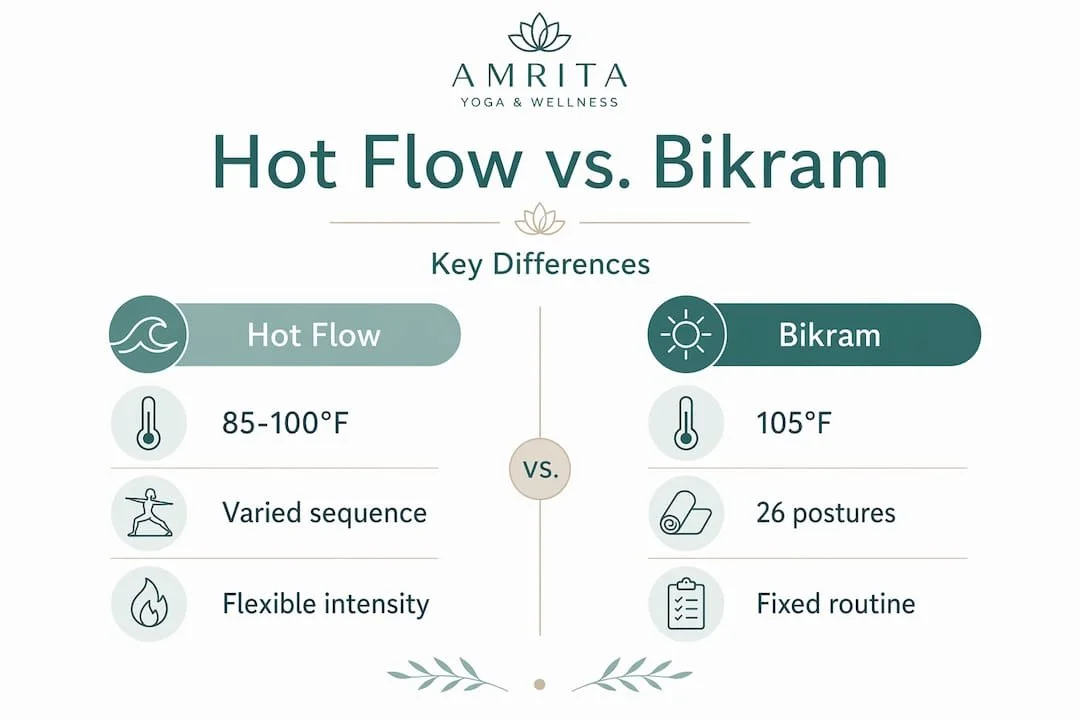
Hot flow yoga evolved as a more flexible alternative to Bikram yoga, which locked practitioners into the same 26 postures in a room heated to 105°F. Hot vinyasa yoga and hot flow yoga are terms used interchangeably at most studios, and what is hot vinyasa if not a heated version of the breath-movement sequencing that vinyasa practitioners already know well? The key difference from traditional hot yoga formats is freedom. Instructors design sequences based on themes, athletic goals, or skill levels rather than following a script.

Temperature and humidity also vary more in hot flow studios. Bikram studios maintain strict conditions, but hot flow classes might run anywhere from 85°F to 100°F depending on the instructor and studio philosophy. This flexibility is part of why the practice has attracted so many fitness enthusiasts who want the physiological benefits of heat without the rigidity of a fixed sequence.

Style Temperature Sequence Intensity Best for
Hot flow yoga 85 to 100°F Creative, variable Moderate to high Variety seekers, athletes
Bikram yoga 105°F Fixed 26 poses Moderate Structure-driven practitioners
Hot vinyasa 90 to 100°F Flow-based, varied Moderate to high Vinyasa fans wanting heat
Traditional vinyasa Room temp Flow-based, varied Moderate Beginners, heat-sensitive
Hatha yoga Room temp Held postures Low to moderate Alignment, restoration

The real benefits of hot flow yoga

Skip the detox claims. Your liver and kidneys handle toxin removal, not your sweat glands. Detoxification via sweat is a myth that has followed hot yoga for decades, and accepting it as fact means overlooking what the practice actually delivers. The real benefits of hot flow yoga are grounded in physiology and they are substantial.

From a cardiovascular standpoint, hot yoga sessions are classified as light to moderate intensity, ranging from 3 to 6 METs (metabolic equivalents of task). That puts a hot flow class on par with brisk walking or cycling at a moderate pace, which meets the American College of Sports Medicine's threshold for cardiovascular benefit. The heat makes your heart work harder to pump blood to the skin for cooling, adding a layer of cardiovascular demand that a room temperature yoga class does not replicate.

On the mobility side, heat potentiates stretching by increasing tissue extensibility and reducing stiffness in joints and connective tissue. You will notice deeper ranges of motion in a hot room than you would in a 70°F studio, and that is not just psychological. It is a measurable physiological effect.

Consistent practice also leads to longer-term adaptations. Heat training improves thermoregulatory efficiency and expands blood plasma volume, which means your body becomes better at managing heat stress over time. Athletes in endurance sports use deliberate heat training for exactly this reason. Hot flow yoga delivers the same stimulus in a format that also builds strength, flexibility, and mental focus.

Key physical and mental benefits include:

  • Improved cardiovascular output during and after class

  • Greater joint mobility from heat-enhanced stretching

  • Blood plasma expansion that supports endurance performance

  • Stronger mental focus under physical discomfort

  • Caloric expenditure comparable to moderate aerobic exercise

  • Reduced muscle soreness when heat is used consistently as a recovery tool

Pro Tip: Drink 16 to 20 ounces of water two hours before class, not five minutes before. Showing up pre-hydrated reduces dizziness and lets you focus on the practice instead of managing thirst.

How the techniques actually work in the heat

Understanding how to do hot flow yoga means understanding that heat changes everything about technique. You cannot treat a hot flow class like a vinyasa class with warm lighting. The heat is an active stressor, and your approach to breath, pacing, and attention has to shift accordingly.

Here is how practitioners get the most from a hot flow session:

  1. Prioritize breath over posture. When the room is at 95°F and you are halfway through a standing sequence, breath control is the mechanism that keeps you grounded. Inhale on movements that open the chest, exhale on forward folds and twists. Losing this connection is the fastest route to feeling overwhelmed.

  2. Slow down the transitions. Hot flow yoga uses creative, less rigid sequencing compared to Bikram, but that does not mean rushing through it. Moving deliberately between postures lets your heart rate stabilize and preserves energy for the second half of class.

  3. Use stillness as a strategy. Child's pose is not a failure. Coming down for 30 seconds and reconnecting with your breath is a technique, especially when heat challenges mental resilience and disrupts pacing in ways room-temperature yoga never does.

  4. Monitor exertion, not just effort. You will feel like you are working harder than you are because of heat-driven heart rate elevation. Rate your breathlessness, not your sweat. If you cannot speak in short sentences, dial back intensity.

  5. Cool gradually after class. Dropping your core temperature too fast after 60 minutes of heat exposure can cause dizziness. Sit for a few minutes, sip water steadily, and let your system normalize before heading into a cold space.

Class durations typically run 60 to 90 minutes. For beginners, a 60-minute class allows adequate time to experience the heat adaptation without overextending. Most hot yoga instructors will tell you that your first three sessions are about acclimatization, not performance. Trust that process.

Pro Tip: Wear moisture-wicking fabric and bring a large towel for your mat. Sweat pooling on a yoga mat is a grip problem, not just a comfort one, and it increases your injury risk significantly.

Hot flow vs. similar yoga styles

One of the most common points of confusion for people entering this space is figuring out how hot flow yoga compares to what they have heard about. The differences matter because each style prioritizes different things.

Bikram is the most frequently confused with hot flow. Both use heat, but Bikram's fixed 26-posture series runs in a room 10 degrees hotter than most hot flow studios. Bikram is predictable and structured. Hot flow is adaptive and creative, which many practitioners find more mentally engaging over time.

Hot vinyasa and hot flow yoga are genuinely almost the same thing. What is hot vinyasa yoga compared to hot flow? Essentially the same practice with slightly different branding depending on the studio. If a class is labeled hot vinyasa, expect breath-linked sequences in a heated room. The distinction is mostly marketing.

Traditional vinyasa at room temperature builds the same movement vocabulary without the heat stimulus. You will develop strength and flexibility, but you will miss the cardiovascular overlay and the mental demand that heat introduces. For fitness enthusiasts who already train aerobically, hot flow adds a conditioning layer that traditional vinyasa does not.

Hatha yoga is slower, posture-focused, and restorative by comparison. It is the right choice for recovery days or for practitioners who need to slow down and study alignment. Hot flow is not that. It is active, athletic, and demands more continuous engagement.

Getting started with hot flow yoga

Hot flow yoga for beginners does not require experience with yoga, but it does require preparation. Walking in cold, without a plan, is the reason most people have a miserable first class and never return.

What to expect from hot flow yoga in your first session: the heat will feel more intense than you anticipated, the sequences will move faster than you expect, and you will probably spend some time in child's pose. That is completely normal. Most experienced practitioners did the same in their early classes.

Practical steps for a strong start:

  • Check the room temperature before booking. Some studios run at 85°F, others push to 100°F. For your first class, look for something in the lower range.

  • Eat light beforehand. A full meal 90 minutes before class is too much. A small snack two hours prior works well.

  • Arrive 10 to 15 minutes early. Sitting in the room before class starts helps your body begin adjusting to the heat before the physical demand begins.

  • Follow hot yoga safety guidelines. Know the signs of heat exhaustion: lightheadedness, nausea, or a sudden drop in sweat. Leave the room immediately if any of these appear.

  • Give it three sessions. The first class is uncomfortable. The second is less so. By the third, your body starts to adapt and the practice begins to feel like what it actually is.

For practitioners with existing medical conditions, particularly cardiovascular issues, check with a physician before starting any heated yoga practice. The injury-free practice guidelines from Amrita Yoga & Wellness cover the specific precautions worth reviewing before your first class.

My honest take on hot flow yoga

I've watched hundreds of fitness enthusiasts dismiss hot flow yoga as a trendy sweat session and miss something genuinely useful as a result. In my experience, what separates consistent hot flow practitioners from people who dabble and move on is understanding that the heat is not the product. The heat is the tool.

What I've found is that the mental dimension of this practice is consistently underestimated. Staying composed, breathing fully, and moving deliberately when your body is running warm builds a kind of psychological endurance that carries into other areas of training and daily life. I've seen athletes who were exceptional in cold conditions completely fall apart in the heat, and hot flow gave them a structured way to address that gap.

The people who get the most out of hot flow yoga treat it the way sports scientists treat heat training: as a stimulus that requires consistency to pay off. Show up twice a week for six weeks and the adaptations become real. Go once a month and you just feel hot.

My suggestion is to resist evaluating it after one class. Evaluate it after a month of regular practice. The difference in how your body manages heat, how your breath responds under pressure, and how your joints feel in the morning will give you a much clearer answer than any single session can.

— Amritayogawellness

Try hot flow yoga at Amrita Yoga & Wellness

If you are ready to put this into practice, Amrita Yoga & Wellness in Philadelphia offers hot flow yoga classes designed for both first-timers and experienced practitioners. The studio's instructors bring structure and creativity to every heated session, helping you build the physical and mental foundation this practice requires.

Beyond yoga, Amrita offers a full range of wellness services including tarot readings that many students use to complement their physical practice with intentional reflection. Whether you want to drop into a single class or build a consistent hot flow routine, the team at Amrita Yoga & Wellness can help you find the right fit. Browse the full class schedule and find a session that works for where you are right now.

FAQ

What is hot flow yoga, exactly?

Hot flow yoga is a vinyasa-style yoga practice performed in a studio heated to approximately 85 to 100°F, where postures are linked continuously through breath-synchronized movement. It combines the cardiovascular demand of heat training with the flexibility and strength development of flowing sequences.

How is hot flow yoga different from Bikram?

Bikram yoga uses a fixed series of 26 postures in a 105°F room, while hot flow yoga uses variable, instructor-designed sequences in a slightly cooler environment. Hot flow offers more creative variety and typically feels less rigid than Bikram.

Is hot flow yoga good for beginners?

Yes, with the right preparation. Beginners should start in classes heated to the lower end of the temperature range, arrive early to acclimatize, hydrate thoroughly before class, and give themselves at least three sessions before drawing conclusions about the practice.

What are the main benefits of hot flow yoga?

Research classifies hot yoga as light to moderate intensity cardiovascular exercise, with added benefits including improved joint mobility from heat-enhanced stretching, increased blood plasma volume from consistent heat exposure, and stronger mental resilience developed through breath management under physical stress.

Does hot yoga actually detox your body?

No. The detoxification claims associated with hot yoga are not supported by physiology. Your sweat glands do not filter toxins. The real benefits are cardiovascular conditioning, mobility gains, and mental focus, all of which are well-documented and worth pursuing on their own terms.

Recommended

Infrared Hot Yoga Benefits: What Science Actually Says

Heather Rice

TL;DR:

Infrared hot yoga warms the body directly at lower temperatures, making breathing easier and tissues more deeply affected. Its physical benefits include improved cardiovascular health, joint pain relief, and temporary flexibility gains, with mental benefits like better sleep and mood regulation. Safe practice requires hydration, gradual heat exposure, and realistic expectations, emphasizing consistency over instant results.

You've probably heard the claims: infrared hot yoga melts toxins, supercharges flexibility, and delivers results that regular yoga can't touch. Some of those claims are worth taking seriously. Others aren't. The real benefits of infrared hot yoga are meaningful but more specific than the marketing suggests, and knowing the difference protects both your health and your expectations. This article breaks down exactly what the research supports, what it doesn't, and how to practice infrared hot yoga in a way that genuinely improves your physical and mental well-being.

Table of Contents

Key Takeaways

Point Details
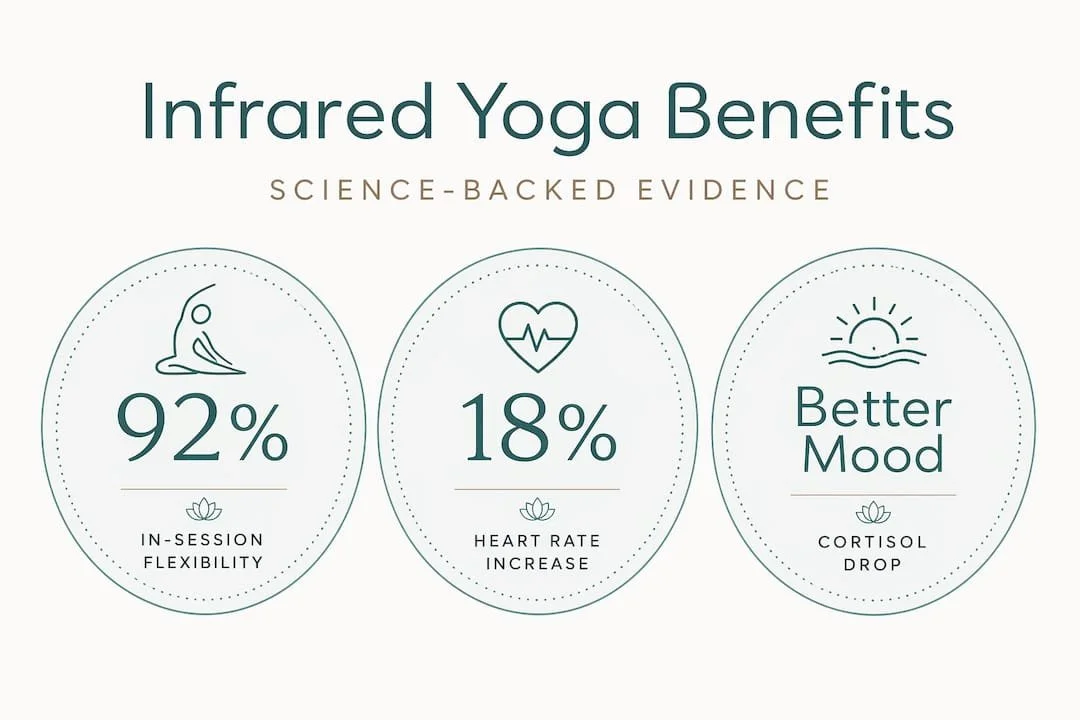
Infrared heat works differently Infrared panels warm your body directly at lower room temperatures than traditional hot yoga, making breathing easier.
Physical benefits are real but nuanced Flexibility gains during sessions may be temporary; cardiovascular and muscle recovery benefits have stronger support.
Mental health benefits are significant Research links infrared heat exposure to improved REM sleep, lower cortisol, and better mood regulation.
Safety requires preparation Hydration, gradual heat adaptation, and knowing your limits are non-negotiable for safe practice.
Set realistic expectations Infrared hot yoga builds on yoga's core benefits; it does not dramatically outperform room-temperature practice across every measure.

Benefits of infrared hot yoga: how the heat actually works

Most people assume infrared hot yoga is just regular hot yoga with fancier equipment. That assumption leads to a lot of confusion about what you should actually expect from a session.

Traditional hot yoga heats the air in the room, pushing temperatures to 95-105°F or higher with significant humidity. Infrared yoga takes a different approach. Instead of heating the surrounding air, infrared panels warm your body directly at room temperatures typically between 90 and 98°F. The heat penetrates the skin and soft tissue rather than just sitting on the surface.

That distinction matters for a few reasons:

  • Easier breathing: Lower humidity and cooler air mean you are not fighting to inhale during poses. This makes infrared yoga significantly more accessible for beginners and anyone with respiratory sensitivities.

  • Deeper tissue warming: The penetrating quality of infrared heat reaches muscles and joints more directly than heated air alone, which affects circulation and muscle pliability.

  • Heart rate elevation: Your cardiovascular system responds to the thermal load by increasing heart rate, a response similar to what you see with moderate aerobic exercise.

  • Nervous system response: The gentler temperature rise tends to feel less aggressive, reducing the sense of panic some people experience in a traditional hot yoga room.

The physiological result is a warm, penetrating environment that nudges your body into a state of increased circulation and mild cardiovascular stress without the oppressive humidity that turns off many practitioners.

Pro Tip: If you are new to infrared yoga and searching for an infrared yoga studio near me, ask specifically about room temperature and humidity levels before booking. A studio running at 92°F with low humidity will feel completely different from one pushing 105°F.

Physical health benefits: what research supports

Here is where the evidence gets interesting, and sometimes inconvenient for enthusiasts.

The benefits of infrared heat yoga for the body are real, but several popular claims are overstated. A study tracking experienced practitioners found that only 1 of 13 flexibility measures improved with heat compared to room-temperature yoga, and caloric burn was similar between the two conditions. That does not mean infrared hot yoga is pointless. It means you need to understand precisely where the value lies.

Flexibility: session gains vs. lasting change

Heat genuinely increases range of motion during a session. Warmer muscles and joints move more freely, and you will feel more pliable in class. What the research makes clear is that flexibility gains from heat may reflect temporary tissue warming rather than permanent structural change. Think of it as your muscles becoming more cooperative for the hour you are on the mat, not a guaranteed long-term upgrade over standard practice.
To get real, lasting flexibility improvements, consistency matters more than heat.

Cardiovascular and metabolic effects

This is where infrared hot yoga earns genuine credit. The heat-stress physiology of a session places real demand on your heart and vascular system. Heart rate elevation during class functions similarly to moderate cardio exercise, which supports heart health over time. There is also some evidence suggesting modest increases in fat metabolism with heat exposure, though the caloric expenditure difference between infrared and room-temperature yoga is not dramatic.

Joint and muscle recovery

Infrared heat reduces joint fluid viscosity, which translates to easier, less painful movement for people dealing with arthritis or chronic stiffness. Gentle infrared heat combined with yoga stretching offers meaningful pain relief for joint-related conditions. For muscle soreness, improved circulation from the warmth clears metabolic waste faster, which speeds recovery between training sessions.

Benefit Evidence strength Notes
In-session flexibility Strong Temporary thermal effect; not necessarily permanent
Cardiovascular conditioning Moderate to strong Heart rate elevation comparable to moderate exercise
Calorie burn vs. standard yoga Weak Differences are minimal per research
Joint pain and stiffness relief Moderate Particularly for arthritis and chronic pain
Muscle recovery Moderate Improved circulation supports faster recovery

Pro Tip: Track your flexibility by testing the same pose in a room-temperature setting every few weeks. This gives you a baseline that separates actual progress from in-session thermal facilitation.

Mental and holistic benefits you should not overlook

The physical story is only half the picture. The mental and emotional benefits of infrared yoga may actually be where this practice delivers its most consistent value.

Infrared heat has a measurable calming effect on the nervous system. When your body warms gradually and the heat penetrates deeply without the suffocating humidity of a traditional hot yoga room, your stress response tends to quiet rather than spike. That shift has real downstream effects on mood, anxiety, and cognitive function.

Here is what the research shows:

  • Improved sleep quality: A randomized crossover study found that far-infrared heat exposure lowered core body temperature during sleep and increased the proportion of REM sleep. Better REM sleep means sharper memory, improved emotional regulation, and less reactivity the following day.

  • Cortisol reduction: Combining yoga's mindfulness component with the calming effect of infrared heat creates a double-down effect on stress hormones. Lower cortisol after class is a predictable outcome for regular practitioners.

  • Endorphin release: The mild physical exertion of yoga poses combined with heat triggers endorphin production, which contributes to the mood lift many practitioners describe after class.
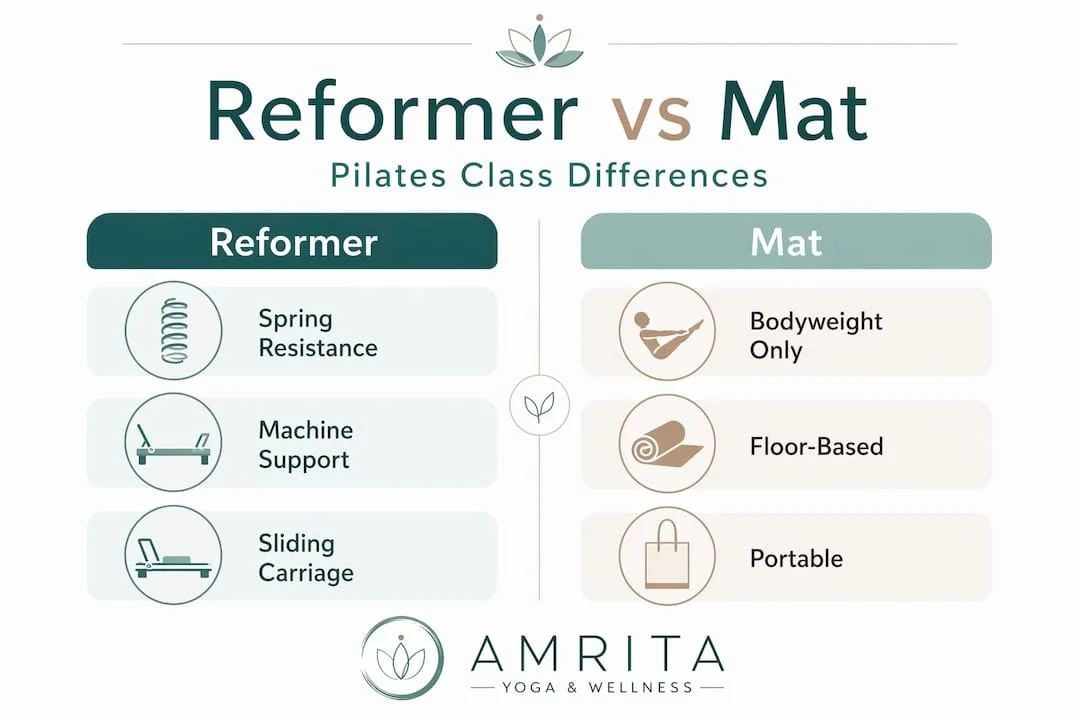
  • Mindfulness in a warm environment: Practicing movement and breath in a comfortably warmed space tends to deepen the meditative quality of yoga. The heat becomes a sensory anchor that keeps you present.

"The mental benefits of infrared yoga may stem from subtle thermoregulatory effects that enhance sleep quality and emotional regulation, not just the movement itself."

One honest note: claims about infrared yoga for detox are popular but lack strong clinical backing. Sweating is primarily a thermoregulatory mechanism. Your liver and kidneys handle actual detoxification. The mental clarity you feel after class is real. Attributing it to toxin removal is not accurate based on current evidence.

Safety considerations before you start

Infrared hot yoga is safe for most healthy adults. It is not automatically safe for everyone, and ignoring the risks is how people end up dizzy on their mat or worse.

Here are the steps to practice safely, especially if you are new:

  1. Hydrate aggressively before class. Drink at least 16 to 24 ounces of water in the two hours before your session. Bringing water into the room is not optional; it is expected.
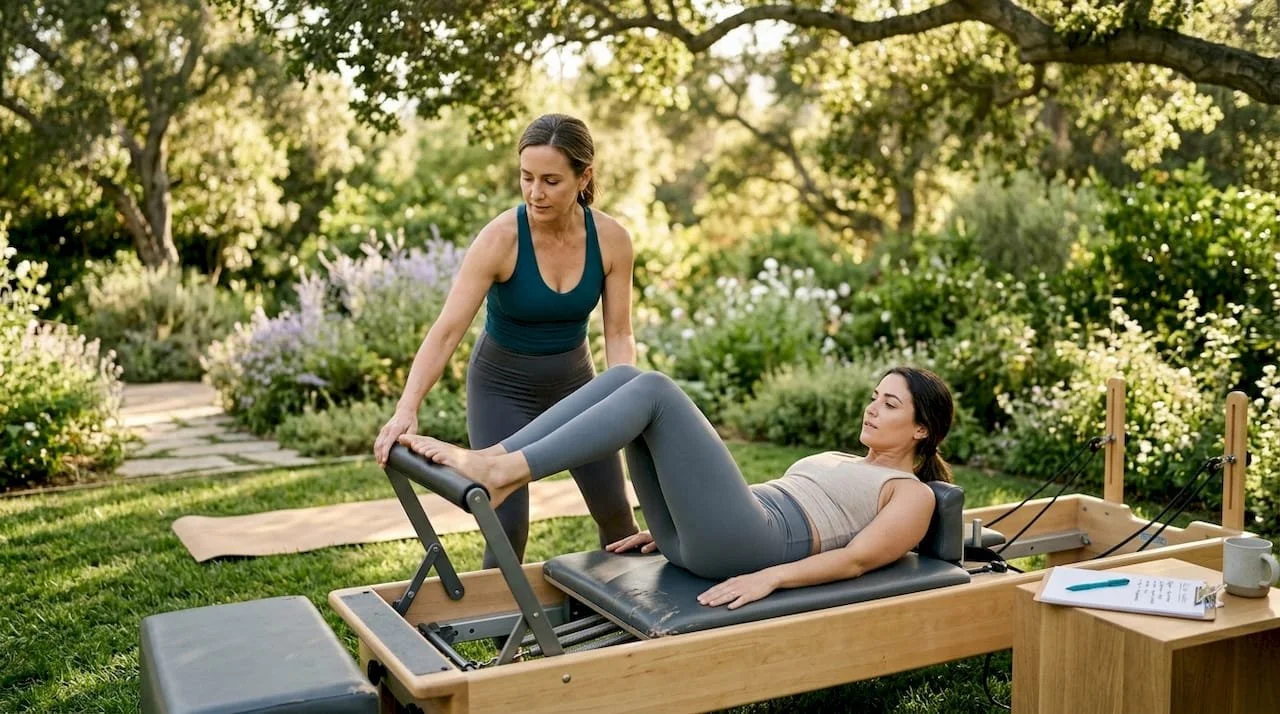
  2. Start with shorter sessions. Your first few classes should be 30 to 45 minutes rather than a full 60 to 75 minutes. Heat adaptation takes time, and pushing too hard early increases dizziness and overheating risk.

  3. Know your medical history. People with cardiovascular conditions, pregnancy, low blood pressure, or heat sensitivity need physician clearance before attending an infrared hot yoga class.
  4. Recognize warning signs. Lightheadedness, nausea, sudden fatigue, or an abnormal heartbeat during class means you step out and cool down. These are not signs to push through.

  5. Avoid overstretching under heat. This is underrated as a risk. When everything feels more flexible in the warmth, it is easy to push a joint or muscle past its actual structural limit. Thermal facilitation can mask discomfort until after the session.

Compared to traditional hot yoga, infrared hot yoga carries a slightly lower risk profile because of lower humidity and room temperature. That relative gentleness does not eliminate heat-related risk. You will still sweat heavily and your cardiovascular system will still be working.

Pro Tip: Review hot yoga safety tips before your first class. Knowing what to expect physiologically makes a significant difference in how you respond when your heart rate spikes midway through a pose sequence.
How to integrate infrared hot yoga into your routine

Knowing the benefits of infrared yoga is one thing. Building a practice that actually delivers those benefits over time requires a more structured approach than "go when you feel like it."

Here is a framework that works based on what practitioners consistently report:

  • Weeks one to three: Attend once or twice per week. Keep sessions to 45 minutes. Focus entirely on breathing and acclimating to the heat. Do not worry about pose depth.

  • Month two onward: Move to two or three sessions per week with full-length classes once your body has adjusted. This is when cardiovascular conditioning and consistent flexibility work begin to compound.

  • Complement your practice: Infrared hot yoga pairs particularly well with strength training, which benefits from the improved recovery circulation provides, and with meditation or breathwork, which deepens the mental calm you carry out of class.
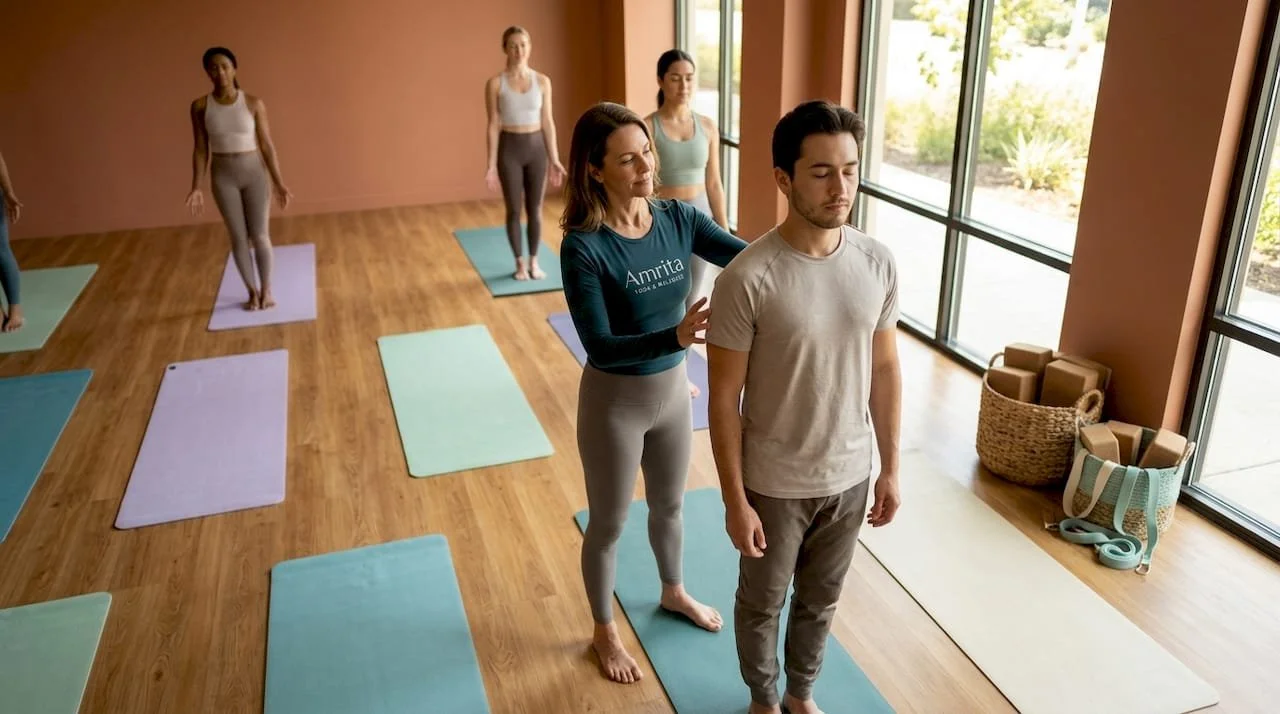
  • Track progress realistically: Test your range of motion in a non-heated setting every few weeks. Note energy levels, sleep quality, and stress. These markers give you a clearer picture of actual progress than how bendy you felt in Tuesday's class.
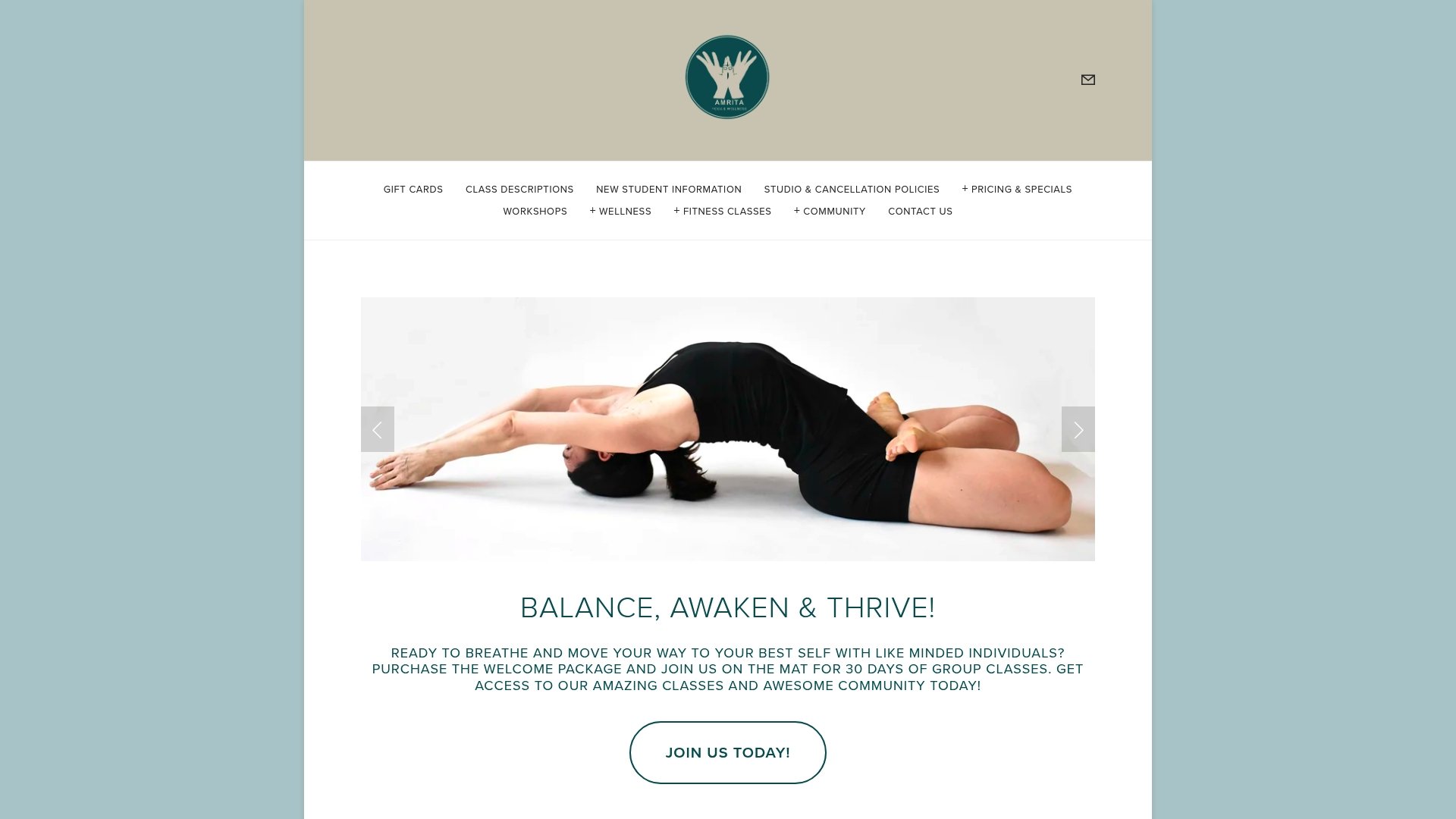
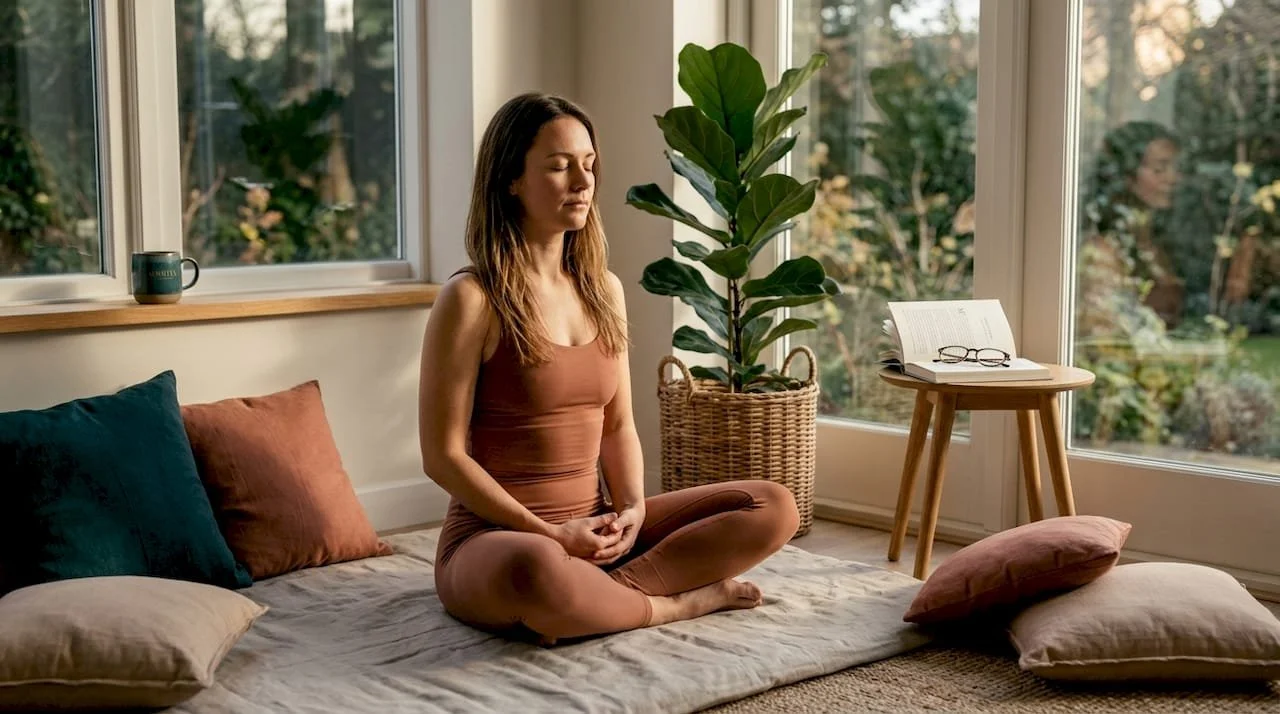
  • Rest and recover: Two days between sessions is a reasonable minimum for newcomers. Infrared heat places genuine demand on your cardiovascular and nervous systems, and recovery is where adaptation happens.

Setting realistic expectations protects your motivation. Infrared hot yoga builds on everything yoga already offers. You get a more forgiving heat environment, added cardiovascular stimulus, and real mental health support. You do not get a miracle that bypasses consistent practice.

My honest take on infrared hot yoga

I've spent enough time around practitioners and in wellness research to say this plainly: infrared hot yoga is genuinely good for you, and it is also genuinely overhyped in specific ways.

What I've observed most consistently is that the heat does something yoga alone sometimes struggles to do. It shuts off the noise. People who find it hard to quiet their minds during a room-temperature class often report that the warm, penetrating environment of infrared yoga forces a level of bodily presence that makes mindfulness almost automatic. That's a real benefit. It just isn't the detox miracle some studios advertise.

The physical gains that hold up over time are cardiovascular conditioning, joint mobility support for people with chronic pain, and muscle recovery. Flexibility improvements? Those require honest measurement. I've seen too many practitioners assume they're making structural progress when they're really just feeling the thermal effect wear off after class.

What newcomers miss most often is the hydration and pacing piece. It sounds boring, but heat and overstretching together cause more setbacks in new practitioners than any other factor. The warmth makes everything feel easier than it is, and that gap between perceived and actual capacity is where injuries happen.

My recommendation: go in with curiosity, not hype. Measure your progress honestly. Give it eight weeks of consistent practice before you judge it. And drink more water than you think you need.

— Juiced

Experience infrared hot yoga at Amrita Yoga & Wellness

If you are ready to put these benefits to the test, Amrita Yoga & Wellness in Philadelphia offers infrared hot yoga classes designed for every level, from curious first-timers to seasoned practitioners.

The studio's experienced instructors guide you through sequences that make the most of the infrared heat environment while keeping safety and pacing front of mind. Whether your focus is stress relief, flexibility, cardiovascular health, or simply finding a practice that fits your life, the supportive community at Amrita Yoga & Wellness meets you where you are. For something that extends your wellness practice beyond the mat, explore tarot reading services as a complement to your physical practice. Visit Amrita Yoga & Wellness to browse class schedules and book your first session.

FAQ

What is infrared yoga and how does it differ from hot yoga?

Infrared yoga uses infrared panels to heat your body directly at lower room temperatures (90-98°F) rather than heating the surrounding air to 95-105°F or higher as in traditional hot yoga. The result is lower humidity, easier breathing, and deeper tissue warming without the oppressive heat of a conventional hot yoga studio.

Does infrared hot yoga actually help with flexibility?

Heat does increase range of motion during a session, but research shows only 1 of 13 flexibility measures improved significantly over room-temperature yoga. Long-term flexibility gains require consistent practice regardless of heat.

What are the mental health benefits of infrared yoga?

Infrared heat exposure is linked to lower cortisol, improved mood through endorphin release, and better REM sleep quality. These effects, combined with yoga's inherent mindfulness component, make infrared hot yoga a strong tool for managing stress and anxiety.

Is infrared hot yoga safe for beginners?

Yes, with preparation. Beginners should start with shorter sessions of 30 to 45 minutes, hydrate thoroughly before and during class, and avoid pushing into extreme ranges of motion while the heat masks discomfort. People with cardiovascular conditions or heat sensitivity should consult a physician first.

How often should I practice infrared hot yoga to see results?

Start with one to two sessions per week for the first three weeks to build heat tolerance, then progress to two to three sessions per week. Most practitioners notice meaningful changes in energy levels, sleep, and recovery within six to eight weeks of consistent practice.

Recommended

Aerial Yoga for Weight Loss: What Actually Works

Heather Rice

TL;DR:

Aerial yoga can aid weight loss by burning around 300 calories per session and building muscle. Consistent practice combined with proper nutrition enhances fat reduction and improves strength within weeks. It is suitable for beginners and benefits from progression, but should be part of a broader healthy lifestyle to maximize results.

If you've ever dragged yourself to another treadmill session and felt zero motivation, aerial yoga for weight loss might be the change you've been looking for. Suspended in a fabric hammock, you engage your core, build real strength, and get your heart rate up. All while doing something that genuinely feels exciting. Aerial yoga sessions burn around 300 calories per 50-minute class, which makes it a legitimate workout, not a novelty act. This guide covers everything from getting started safely to tracking your real progress.

Table of Contents

Key Takeaways

Point Details
Calories and consistency Aerial yoga burns roughly 300 calories per class, but weekly consistency drives real fat loss.
Strength plus cardio combo The hammock adds resistance that builds muscle, which supports long-term metabolic health.
Realistic expectations matter Aerial yoga works best as part of a full plan including nutrition and additional activity.
Safety screening first Medical clearance and knowing your contraindications prevents injuries that derail progress.
Progressive challenge is key You must increase intensity and complexity over time to keep seeing results.

Aerial yoga for weight loss: what you need before starting

Before you show up to your first aerial yoga class hoping to lose weight, a bit of preparation goes a long way. Aerial yoga is accessible to most fitness levels, but it's not entirely without prerequisites.

Physical readiness and medical clearance

You don't need to be fit to start, but you do need to be honest about your health. People with hypertension, vertigo, recent surgeries, or musculoskeletal injuries should consult a doctor first. Safety screening for conditions like hypertension and pregnancy-related concerns is vital to keeping your practice consistent and injury-free. Getting cleared upfront isn't bureaucratic. It's what keeps you in the studio week after week instead of sidelined.

For a thorough breakdown before your first session, reviewing aerial yoga contraindications gives you a clear picture of what to watch out for.

What to wear and bring

Keep it simple. Fitted clothing that covers your armpits and the backs of your knees protects your skin from friction against the silk hammock. Avoid zippers, belts, or anything with hard edges. Go barefoot or wear grip socks.

Here's what to have ready before your first aerial workout for weight loss:

  • Fitted leggings and a long-sleeved fitted top

  • Grip socks (optional but helpful)

  • Water bottle

  • Light snack eaten 90 minutes beforehand

  • An open mind about being upside down

Choosing the right class

Not all aerial yoga classes are structured the same way. Some focus on flow and flexibility. Others emphasize strength and conditioning, which aligns better with aerial yoga weight loss goals. Look for classes that describe themselves as "aerial fitness" or "aerial conditioning." When searching for aerial yoga classes near me, filter for studios that have certified instructors with training in both yoga and aerial arts. The instructor's background matters more than the studio's decor.

Pro Tip: Ask the studio directly whether the class targets cardiovascular endurance or primarily flexibility. A strength-focused class will do more for your weight loss goals than a slow, restorative one.

Class type Weight loss benefit Best for
Aerial fitness/conditioning High Fat loss, muscle tone
Aerial flow yoga Moderate Flexibility, stress relief
Aerial restorative Low Recovery, relaxation
Aerial acrobatics High Strength, coordination

Best aerial yoga poses and routines for fat loss

The hammock is a tool. What you do with it determines your results. These seven movements specifically target major muscle groups, spike your heart rate, and build the lean muscle that keeps your metabolism active.

  1. Inverted core crunches. Hang face-down with your hips in the hammock. Use your core to pull your knees toward your chest repeatedly. This targets the entire abdominal wall while your stabilizer muscles work overtime to keep you balanced.

  2. Aerial squats. Stand with the hammock at hip height behind you. Sit back into it and lower into a squat, then press back up. This loads the glutes and quads with the added instability of the fabric, recruiting more muscle fibers than a regular bodyweight squat.

  3. Plank pulls. Start in a plank position with your feet in the hammock. Pull your knees to your chest and extend back out. Your core, hip flexors, and shoulders all fire at once.

  4. Hip hinge swings. Standing, hold the hammock overhead and hinge forward at the hip, letting the momentum build. This trains the posterior chain, specifically the glutes and hamstrings, and gets your heart rate climbing.

  5. Aerial side planks. Thread one foot into the hammock, extend into a side plank, and hold. The instability from the silk turns a static hold into an active full-body stabilization challenge.

  6. Seated backbend pulses. Sit in the hammock and lean back into a backbend. Pulse up and down to activate the spinal extensors, glutes, and core. This one opens the chest and builds real back strength.

  7. Hammock pull-ups. Grip the fabric and perform assisted or full pull-ups. Your back, biceps, and shoulders work hard here, and training all major muscle groups consistently is the core principle behind effective strength-based fat loss.

A sample 50-minute aerial yoga weight loss routine

Warm up for 8 minutes with light swinging and hip circles in the hammock. Move into the hip hinge swings and aerial squats for 15 minutes, running each for 3 sets of 12 repetitions. Shift to core work with inverted crunches and plank pulls for another 15 minutes. Finish with aerial side planks, backbend pulses, and hammock pull-ups for 10 minutes, then cool down with 5 minutes of gentle spinal traction in an inverted hang.

Pro Tip: Track how hard each move feels on a scale of 1 to 10. For weight loss, you want most of your working sets to land between 6 and 8. If every exercise feels easy, it's time to add reps, slow the tempo, or ask your instructor for a harder variation.

Common mistakes that slow aerial yoga weight loss results

Getting into the hammock is the fun part. Staying consistent and avoiding the pitfalls below is what separates people who see real change from those who don't.

Believing aerial yoga alone is enough

This is the most common mistake. Yoga contributes to weight loss as part of a full lifestyle plan that includes nutrition and other activity. One or two weekly classes won't hit the minimum 150 minutes of moderate aerobic activity per week recommended for weight management. You need to layer aerial yoga into a larger plan, not treat it as the plan itself.

Common mistakes to watch for:

  • Expecting to lose weight without adjusting your diet

  • Skipping strength-focused flows in favor of only restorative classes

  • Going too hard too soon and burning out within three weeks

  • Neglecting sleep and recovery between sessions

Falling for wellness hype

The aerial yoga world has its share of exaggerated claims. Detox and lymphatic drainage claims from inversions have no credible physiological backing. The real benefits are spinal decompression, strength development, and a genuine mood lift from the novelty and challenge of the practice. Chase the real results, not the Instagram-friendly promises.

"The best exercise plan is the one you actually stick to. Aerial yoga earns its place in a weight loss program by being something people genuinely look forward to. That consistency is worth more than the perfect protocol you never follow."

Not progressing your workouts

Repeating the same beginner flow every week is one of the fastest ways to plateau. Intensity progression and total weekly volume are what drive continued fat loss. Add minutes, increase repetitions, reduce rest periods, or try a more advanced variation every two to three weeks.

For tips on practicing safely as you advance, the aerial yoga safety resources at Amritayogawellness walk through how to scale up without risking injury.

Expected results and how to track progress

Setting the right expectations is what keeps you going when the scale moves slowly or not at all for a week.

Most people notice improved core strength and better posture within two to three weeks. Fat loss becomes visible around weeks six to eight when combined with a calorie-conscious diet. Yoga's improvements in cardiometabolic health markers like blood pressure and lipid profiles develop over consistent months of practice, not weeks.

Metric When to expect change How to measure
Core strength 2 to 3 weeks How long you hold a plank or aerial side plank
Posture 3 to 4 weeks Observation or posture photos
Body fat percentage 6 to 8 weeks Body composition scale or tape measure
Cardiovascular fitness 4 to 6 weeks Resting heart rate trends
Cardiometabolic markers 3 to 6 months Bloodwork with your physician

The number on the scale is the least interesting metric here. Track how your clothes fit, how your resting heart rate drops, and how far your endurance has improved mid-class. These tell you far more about what's actually changing in your body.

Pairing aerial yoga with nutrition and other movement

Aerial yoga works best alongside clean eating and additional cardio activity. Think of it as your strength and skill training session, then supplement with walks, cycling, or swimming on other days. For most people, aerial yoga two to three times per week plus 30 to 40 minutes of cardio on two other days puts you solidly within the recommended activity guidelines. Explore how your overall yoga wellness benefits stack up when you combine multiple modalities.

My honest take on aerial yoga and fat loss

I've watched people come to aerial yoga expecting magic and leave frustrated because they treated one weekly class like a silver bullet. Here's what I actually believe: aerial yoga is one of the most underrated strength training tools for people who hate the gym. The hammock creates instability that activates muscles your standard workout never touches, and the resistance from body weight plus gravity in unusual positions builds functional strength fast.

What I've seen work consistently is using aerial yoga as the anchor of a fitness routine, not the whole thing. The people who show up three times a week, push into harder flows every few weeks, and pair it with reasonably clean eating. They lose fat, get noticeably stronger, and, most critically, they keep coming back. That last part is everything.

I'm also straightforward about the wellness noise that follows aerial yoga around. Detox claims, lymphatic flushing, spiritual weight release. These real benefits are strength and psychological, not mythological. Reduced anxiety, real spinal decompression, and genuine calorie burn. That's more than enough to build on without fabricating extra claims.

If you're tired of workouts that feel like punishment, aerial yoga gives you something to actually practice and get better at. Progress in skill is its own motivator, and that motivation is what ultimately drives the weight loss.

— Juiced

Start your aerial yoga journey with Amrita Yoga & Wellness

If you're ready to try aerial yoga in a structured, supportive setting, Amrita Yoga & Wellness in Philadelphia has classes designed for all experience levels, from total beginners to those ready for advanced aerial conditioning. The instructors understand how to scale aerial workouts for weight loss goals specifically, not just flexibility. You'll be in a community that shows up consistently and pushes each other forward.

Beyond the mat, Amritayogawellness also offers tarot readings and other holistic wellness services for those who want to explore the mental and spiritual side of their health journey alongside the physical. You can browse class schedules, sign up online, and connect with the studio community directly at amritayogawellness.com.

FAQ

Can aerial yoga help you lose weight?

Yes. Aerial yoga helps with weight loss by burning around 300 calories per 50-minute session while building muscle through resistance-based movements. Combined with a sensible diet and additional cardio, it's a real tool for fat loss.

How many times per week should you do aerial yoga for weight loss?

Two to three sessions per week is the sweet spot for most people. Pair them with additional cardio activity to meet the recommended 150 minutes of weekly exercise for weight management.

Is aerial yoga good for beginners trying to lose weight?

Absolutely. Starting any regular resistance training produces meaningful strength and metabolic benefits even for beginners, and aerial yoga is beginner-friendly because instructors can modify every pose to match your starting fitness level.

Are there health conditions that prevent practicing aerial yoga?

Yes. Hypertension, vertigo, recent surgeries, and pregnancy may require modifications or medical clearance before you begin. Review contraindications with your doctor and inform your instructor of any conditions before your first class.

How long before you see results from aerial yoga?

Core strength improvements typically appear within two to three weeks. Visible fat loss usually takes six to eight weeks with consistent practice and a calorie-conscious diet supporting the work you do in the hammock.

Recommended

Heated Yoga Weight Loss: What Actually Works

Heather Rice

TL;DR:

Sweat from heated yoga does not equate to fat loss; it is primarily water weight that rehydrates easily.Consistent practice over months, combined with proper hydration and measurement, leads to meaningful body fat reduction.

Step into a heated yoga room for the first time and you will likely walk out soaking wet, feeling like you just ran a mile. That sensation makes heated yoga weight loss feel immediate and obvious. But what you see dripping off you is mostly water, not fat. The real story of how hot yoga changes your body is more interesting and more encouraging than the sweat myth suggests. This article covers the science, the safety, the timelines, and the practical steps that actually move the needle on body composition.

Table of Contents

Key takeaways

Point Details
Sweat does not equal fat loss Immediate weight drop after class is water loss that returns after rehydration, not actual fat burned.
Heat raises your calorie burn Rooms heated to 90-105°F increase heart rate and metabolic demand, pushing calorie expenditure higher than room-temperature yoga.
Fat loss takes consistent months Research shows measurable body fat reduction after six months of regular practice, not days or weeks.
Hydration is non-negotiable Managing fluids and electrolytes before, during, and after class determines both safety and performance.
Track smarter, not more often Weekly average weight and waist measurements reveal real progress better than daily scale readings.

How heated yoga drives weight loss

Walk into most hot yoga studios and the thermostat sits somewhere between 90 and 105°F. That temperature range is not arbitrary. Heat forces your cardiovascular system to work harder just to regulate core body temperature, which means your heart rate climbs even before you hold a single pose. You are essentially stacking a thermal challenge on top of a physical one.

That added demand translates directly to calories. Some studies put hot yoga calorie burn around 500 per session, though the actual number depends heavily on your body weight, effort level, and the class style. What matters more than the exact number is understanding why the heat contributes: it increases perceived effort, pushes metabolic rate up, and forces sustained muscle engagement longer than many people could manage in a cooler room.

Here is how heated yoga compares to unheated yoga on a few key measures:

Factor Heated yoga Room-temperature yoga
Average heart rate Moderately elevated (cardio range) Lower, closer to active rest
Calorie burn per 60 min 350–500+ calories (individual variation) 200–350 calories
Perceived effort Significantly higher Moderate
Flexibility access Temporarily improved by heat Baseline range of motion
Recovery demand Higher, needs more hydration Standard post-exercise recovery

Heat also gives you a temporary edge in flexibility. Warm muscles move more freely, which lets you hold poses deeper and engage stabilizing muscles that a stiff body skips. That added muscle recruitment is where the real metabolic benefit hides. More muscle engagement means more calories burned, and over months, more lean muscle retained or built.

Pro Tip: Do not confuse the temporary flexibility heat gives you with permanent range of motion improvement. According to controlled progression research, heat increases short-term mobility but sustainable flexibility comes from consistent practice and recovery, not the heat alone.

What the science says about actual fat loss

Here is the number that matters most for anyone serious about hot yoga and weight loss: a six-month Bikram yoga study on adult women found a 6.17% reduction in body fat percentage, which cleared clinical thresholds for meaningful health benefits. That is not a rounding error. That is a real, measurable change in body composition across all adult age groups studied.

Longer-term research backs this up. A one-year study tracking regular hot yoga practitioners showed progressive decreases in body fat that continued building over time. The pattern is clear: short bursts of hot yoga do almost nothing for fat loss. Months of consistent practice do a lot.

Why does this take so long? Because actual fat loss is a function of sustained calorie deficit combined with metabolic adaptation. Hot yoga contributes to that deficit each session, but weight loss is multifactorial. The heat raises physiological stress, improved muscle mass from regular poses increases resting metabolism, and many practitioners naturally shift toward healthier eating once they commit to a consistent practice. All three levers work together.

The scale reading right after class tells you almost nothing useful. That two-pound drop you see is water weight that comes back the moment you rehydrate. Sweating volume is a poor indicator of calorie burn. Fat loss requires a consistent calorie deficit and metabolic change, not just producing sweat. The good news is that heated yoga, practiced regularly, creates both.

Beyond body composition, the benefits extend further: reduced stress hormones, better cardiovascular stamina, and improved sleep all contribute to the conditions your body needs to lose fat and keep it off. Those are not bonus features. They are part of why consistent practitioners tend to see results that casual exercisers miss.

Safety and hydration for heated yoga practice

Heated yoga benefits only show up when you stay healthy enough to practice consistently. Heat illness is real, and it catches people who underestimate how much fluid the body loses in a 90-minute class in a 105-degree room. Knowing the warning signs and having a hydration plan is not optional.

Watch for these signals that your body is struggling with the heat:

  • Dizziness or lightheadedness during poses

  • Nausea or sudden headache mid-class

  • Stopping sweating when you were previously sweating heavily (a warning sign, not relief)

  • Muscle cramps, particularly in the legs or feet

  • Feeling confused or unusually fatigued

If any of these show up, stop, sit or lie down, and drink water slowly. Pushing through heat exhaustion symptoms is how a productive practice becomes a medical problem.

On the hydration side, the strategy is straightforward but often skipped. Drink 16 to 20 ounces of water two hours before class. Sip small amounts during class rather than gulping large quantities. After class, replace fluids and electrolytes because heavy sweating depletes sodium, potassium, and magnesium, not just water. A pinch of sea salt in your post-class water or a quality electrolyte drink handles this without needing supplements.

Equipment matters more than most beginners expect. A non-slip mat with a full-length towel covering it prevents you from sliding in your own sweat, which protects both your alignment and your safety. Wear minimal, moisture-wicking clothing.

Pro Tip: If you are new to heated yoga classes, plan to spend your first two or three sessions simply getting used to the heat. Skip the most intense poses and focus on breathing. Gradual heat exposure with self-awareness maximizes both safety and effectiveness far better than going all-in on day one.

Tracking progress that actually reflects fat loss

The scale after a hot yoga class is almost designed to mislead you. You step on it, see a lower number, feel great, eat a normal meal, and watch it climb back. That cycle creates false momentum and false disappointment in the same week. Understanding why daily scale changes reflect water, not fat, is the first step to tracking progress that actually motivates you.

Use these metrics instead:

  • Weekly average weight: Weigh yourself on the same days each week and average the readings. This smooths out water fluctuations and shows the real trend line.

  • Waist and hip measurements: Fat loss shows up in your measurements weeks before it changes your scale number significantly. Measure at the same time of day weekly.

  • Clothing fit: How your clothes feel around the waist and thighs is a reliable, zero-cost indicator of body composition change.

  • Endurance and strength gains: If you can hold poses longer, go deeper, or recover faster between classes, your body is adapting. That adaptation supports fat loss even when the scale stalls.

  • Energy and mood: Better sleep quality and reduced afternoon energy crashes are signs your metabolism and stress hormones are improving.

Consistency matters more than any single metric. Four to five heated yoga sessions per week, paired with adequate protein and a slight calorie deficit, is where the research-backed results appear. This is not a two-week experiment. Give it twelve weeks before you decide whether it is working.

Choosing the right heated yoga style for your goals

Not all heated yoga is the same, and picking the wrong format for your current fitness level is one of the fastest ways to burn out or get hurt.

Bikram yoga is the most structured option. Every class follows the same 26-pose sequence in a room heated to exactly 105°F with 40% humidity and runs 90 minutes. The consistency makes it easy to track your progress pose by pose. Bikram for weight loss works well for people who like predictability and respond to structured challenge. The intensity is front-loaded for beginners but manageable once you adapt.

Other hot yoga formats run at slightly lower temperatures, typically 90 to 100°F, with more varied sequences. Classes range from 60 to 75 minutes, which lowers the total calorie burn per session but also reduces recovery demand. These formats suit people who want the heated yoga benefits of increased heart rate and calorie expenditure without the strict structure of Bikram.

Flow-based heated yoga, such as hot vinyasa, adds continuous movement between poses. This style burns the most calories per minute of all heated yoga options because you rarely hold a static position long enough for your heart rate to drop. If bikram yoga and weight loss is your primary goal, starting with hot vinyasa or heated power yoga often produces faster early results before transitioning to Bikram for long-term refinement.

For people new to yoga entirely, a beginner heated class or a lower-temperature format is the smart starting point. The goal in the first month is adaptation, not maximum calorie burn.

My honest take on heated yoga for weight loss

I have watched people step into hot yoga with enormous enthusiasm and step out three weeks later completely disillusioned. The pattern is almost always the same: they expected the sweat to be the mechanism, not the symptom.

In my experience, the practitioners who get lasting results from heated yoga share one trait: they stop trying to feel the work and start measuring it. They track weekly averages. They notice when their waistband loosens. They pay attention to how they recover, not just how much they sweat. That shift in mindset, from chasing the sensation to trusting the process, is where sustainable results begin.

What I have also seen is that the biggest threat to long-term success is overexertion in the first month. People push too hard, get dehydrated, feel awful for two days, and skip class. Then the two-day skip becomes a week. Gradual progression with proper hydration is not the cautious choice. It is the aggressive choice, because it keeps you on the mat consistently.

The combination that actually works: three to four heated sessions per week, a protein-adequate diet, and a commitment to measuring the right things. Everything else is noise. Bikram hot yoga weight loss results in the research did not come from heroic individual sessions. They came from showing up regularly over months.

— Juiced

Try heated yoga at Amrita Yoga & Wellness

If you are ready to put this into practice, Amrita Yoga & Wellness in Philadelphia offers heated yoga classes designed for every level, from first-timers still figuring out the heat to experienced practitioners chasing measurable body composition goals. The studio's approach emphasizes safety, community, and the kind of consistent practice that produces the fat-loss results the research supports.

Beyond the mat, Amrita Yoga & Wellness offers tarot readings and holistic wellness services that many practitioners find complement their physical practice by reducing stress and supporting the mental clarity that makes staying consistent easier. Managing stress is not a soft benefit. Lower cortisol directly supports fat loss. Explore the full class schedule and wellness offerings at Amrita Yoga & Wellness and find the format that fits where you are right now.

FAQ

Does hot yoga actually burn enough calories to lose weight?

Hot yoga can burn around 500 calories per session depending on your weight and effort level, which is enough to contribute meaningfully to a calorie deficit when practiced consistently three to five times per week.

How long before heated yoga shows real fat loss results?

Research shows measurable fat loss after approximately six months of regular practice. A six-month Bikram study found over 6% reduction in body fat percentage in adult women with consistent attendance.

Is the weight I lose immediately after hot yoga real fat loss?

No. The weight you lose right after class is primarily water lost through sweating. It returns after rehydration and does not reflect actual fat burned during the session.

Is Bikram yoga better for weight loss than other hot yoga styles?

Bikram's 90-minute sessions at 105°F deliver high calorie expenditure and structure that supports long-term progress tracking, but hot vinyasa and flow-based formats burn more calories per minute. The best style is the one you will attend consistently.

What is the biggest risk of doing heated yoga for weight loss?

Dehydration and heat illness are the primary risks. Following a hydration plan before, during, and after class, including electrolyte replacement, and progressing gradually eliminates most of the risk for healthy adults.

Recommended

What Is Yoga Six? Classes, Benefits, and More

Heather Rice

TL;DR:

YogaSix is a modern yoga boutique with over 200 locations in the U.S., blending yoga philosophy with functional fitness. Its structured, fusion-style classes target diverse wellness goals through six core formats, emphasizing accessibility and results-driven practice. The brand leverages technology and mobility science to address physical and recovery needs for a broad range of practitioners.

If you've walked past a YogaSix studio or seen it in your city's boutique fitness lineup, you've probably wondered what is Yoga Six and whether it's actually different from a regular yoga class. The short answer: yes, significantly. YogaSix is a modern yoga boutique with over 200 locations across the U.S., built around structured, fusion-style class formats that blend yoga philosophy with functional fitness. It's not your grandmother's gentle flow, and it's not a hardcore gym class either. It sits in a category of its own, and understanding exactly what it offers will help you decide whether it fits your wellness goals.

Table of Contents

What Yoga Six is and what it actually offers

YogaSix launched as a franchised boutique yoga brand with a clear mission: make yoga more accessible, more varied, and more results-driven for modern life. The "six" in YogaSix refers directly to its six core signature classes, each designed to target a different aspect of physical wellness. This structure is one of the things that separates a Yoga Six overview from a description of a typical yoga studio, where classes are often loosely defined or instructor-dependent.

Here's what the core class lineup includes:

  • Y6 101 — The entry-level class built for complete beginners, covering foundational poses and breathwork without pressure

  • Y6 Restore — A deeply restorative session using props like bolsters and blankets to release tension and support recovery

  • Y6 Slow Flow — A gentler paced flow that builds awareness and flexibility without intensity

  • Y6 Hot — A heated yoga class that promotes detoxification and deepens muscle flexibility through elevated room temperature

  • Y6 Power — The most physically demanding class, designed to build strength, endurance, and cardiovascular fitness

  • Y6 Sculpt & Flow — A hybrid format that adds light weight training and resistance work into a flowing yoga sequence

More recently, YogaSix launched the Y6 Mobility class, a targeted session focused on hips, shoulders, ankles, and lower back. It's designed specifically for longevity, recovery, and injury prevention. Some locations also offer TRX suspension training integrated into class formats, pushing the fusion model even further. When you ask what does Yoga Six offer, the answer is genuinely broader than most people expect walking through the door.

Heated and non-heated classesserve different purposes within the YogaSix system. Heated classes like Y6 Hot promote muscle warmth and tissue flexibility, while non-heated formats like Y6 Restore and Y6 101 are lower intensity and focused on recovery and technique. This balance means you can build a weekly practice that mixes challenge with rest, which is exactly how sustainable fitness habits form.

How YogaSix blends yoga with movement science

The phrase "fusion yoga" gets used loosely, but YogaSix applies it with a clear framework. Understanding fusion yoga's core principles helps you see why YogaSix classes feel different from a standard vinyasa or hatha session at a neighborhood studio.

Traditional yoga prioritizes breath, philosophy, and a sequential pose practice rooted in ancient tradition. YogaSix keeps the breath work and the movement, but layers in modern movement science. That means deliberate mobility drills, targeted strength sequences, and attention to functional patterns your body uses in daily life. Standing up, reaching overhead, rotating through your spine — these are movement qualities that mobility training supports alongside the yoga framework.

Here's how YogaSix builds its fusion methodology in practice:

  1. Functional movement first — Classes are designed around how your body actually moves, not just how yoga tradition dictates

  2. Progressive intensity — You choose your class based on your current fitness level and rotate through formats as you build capacity

  3. Joint-centered recovery — Restorative and mobility classes specifically address the joints most people neglect: hips, ankles, and thoracic spine

  4. Props as tools, not shortcuts — Blocks, straps, and resistance balls are used to deepen work, not simplify it

  5. Instructor cueing — Teachers guide both alignment and effort levels, making classes adaptable for the same room full of different bodies

Pro Tip: If you're comparing YogaSix vs other studios, ask specifically about class structure and instructor training. YogaSix teachers follow a branded curriculum, which means you get a more consistent experience from city to city than you would at an independently owned yoga studio.

The practical effect of this approach is significant. People recovering from athletic injuries, desk workers with tight hips, and fitness enthusiasts looking for active recovery all find entry points within the YogaSix format. It doesn't replace traditional yoga for those who want a purely spiritual or philosophical practice. However, it fills a real gap for people who want yoga's physical benefits packaged in a results-oriented structure.

The YogaSix app and digital membership experience

One thing that sets YogaSix apart as a modern franchise is its investment in technology. The YogaSix app lets members discover classes, view schedules, book sessions, and manage their membership entirely from their phone. For anyone balancing a packed schedule, this matters more than it sounds. Being able to spot an open Y6 Power slot at 6 a.m. and book it in thirty seconds is genuinely different from calling a studio or navigating a clunky web portal.

Key features of the app include:

  • Class booking and scheduling — View real-time availability and reserve your spot in any class format

  • Apple Watch integration — The app connects directly with Apple Watch to track active workout metrics during class

  • Apple Health sync — Workout data flows into Apple Health automatically for a complete picture of your weekly activity

  • Membership management — Pause, adjust, or review your Yoga Six membership without calling the studio

Privacy is also addressed directly in the app's design. The app does not collect or share user data, encrypts data in transit, and allows users to request deletion of their data at any time. For anyone cautious about connecting a fitness app to personal health data, this is the kind of transparency that builds trust.

Pro Tip: Before your first class, download the app and set up your profile. You'll be able to browse the class descriptions, check whether your location offers heated rooms, and pick a format matched to your current fitness level rather than showing up and guessing.

Benefits of practicing Yoga Six for body and mind

The benefits of Yoga Six are best understood by format because each class type is designed to deliver a different outcome. Someone doing Y6 Power three times a week experiences different physical results than someone rotating between Y6 Restore and Y6 Slow Flow. This is actually one of the strongest arguments for the YogaSix model over a single-style studio. You can build a practice around what your body actually needs week to week.

YogaSix's structured classes are designed to be energizing, empowering, and accessible without sacrificing challenge. That balance is hard to achieve, and it's the reason the brand has grown across so many markets.

Class format Physical benefits Mental and recovery benefits
Y6 101 Foundational strength, posture Confidence building, stress reduction
Y6 Restore Muscle release, improved flexibility Deep relaxation, nervous system reset
Y6 Slow Flow Balance, body awareness, flexibility Mental clarity, focus development
Y6 Hot Increased flexibility, cardiovascular work Mood lift, mental resilience
Y6 Power Strength, endurance, muscle tone Energy, discipline, stress relief
Y6 Sculpt & Flow Functional strength, lean muscle Sense of accomplishment, drive
Y6 Mobility Joint health, range of motion Recovery support, long-term injury prevention

What ties all of these together is that YogaSix is built for accessibility at every level. Beginners are not thrown into classes without structure. Advanced practitioners aren't bored by sessions that lack intensity. The layered class system lets you find the right yoga program to match your specific goals rather than adapting yourself to whatever a single teacher happens to teach that week.

My take on what YogaSix means for yoga culture

I've watched boutique fitness brands come and go, and I'll be direct: YogaSix is not a fad. What it represents is a genuine evolution in how people access yoga's physical benefits without needing to commit to yoga as a philosophy or lifestyle first. That's a real shift.

In my experience, the biggest barrier to yoga for fitness-oriented people isn't the poses. It's the sense that they're doing it wrong, or that they need a deeper spiritual context they don't have yet. YogaSix removes that friction by giving you a format, a class name, and a clear outcome before you walk in. You know what Y6 Power is going to feel like. That predictability is actually empowering.

What I find most interesting about the Y6 Mobility launch is that it signals something broader. Mobility training is being recognized as the missing layer in most people's fitness routines, and a yoga brand incorporating it deliberately tells me these class designers are paying attention to how bodies actually break down and what prevents it. That's not a marketing move. It's a substantive curriculum decision.

My honest advice if you're considering YogaSix: don't compare it to traditional yoga and decide it's lesser. Compare it to your current routine and ask whether it fills a gap. For most people, it will. That said, if you also want a practice that goes deeper into yoga philosophy, breath work traditions, or spiritual context, seek that out separately. YogaSix and a traditional studio can coexist in the same weekly practice. They're solving different problems.

— Juiced

Explore wellness beyond the studio

Understanding what Yoga Six offers is a great starting point, but the path to genuine wellness is wider than any single brand or format. At Amritayogawellness, we believe in exploring every tool that supports your body and mind. Our Philadelphia studio offers yoga classes and wellness services that span hot yoga, barre, tai chi, and holistic therapies. If you're curious about pairing your physical practice with deeper self-awareness, our tarot reading sessions offer a reflective complement to movement-based work. Whether you're brand new to yoga or already exploring formats like YogaSix, our community welcomes every level. Come find what fits you.

FAQ

What does the "six" in YogaSix stand for?

The "six" refers to YogaSix's six core signature class formats: Y6 101, Y6 Restore, Y6 Slow Flow, Y6 Hot, Y6 Power, and Y6 Sculpt & Flow, each targeting a different fitness and wellness goal.

Is Yoga Six good for beginners?

Yes. YogaSix specifically designed its Y6 101 class for beginners, and its structured format reduces intimidation by giving new students clear expectations before they set foot in a class.

How is Yoga Six different from a traditional yoga studio?

YogaSix blends yoga with functional movement, mobility science, and strength training, whereas traditional yoga studios typically focus on classical pose sequences, breathwork, and philosophical tradition.

Does Yoga Six have a membership app?

Yes. The YogaSix app supports class booking, schedule viewing, membership management, and integrates with Apple Watch and Apple Health for workout tracking, with a strong data privacy policy.

Is Yoga Six worth it for someone who already does yoga?

It depends on your goals. YogaSix is worth exploring if you want structured variety, athletic recovery support, or heated class options that a traditional studio may not provide alongside your existing practice.

Recommended

What Are Pilates Reformer Classes? a Beginner's Guide

Heather Rice

TL;DR:

Reformer Pilates uses spring resistance to engage muscles more deeply than mat exercises, making it effective for most fitness levels. Classes follow a structured routine of warm-up, main exercises, and cool-down, emphasizing control, alignment, and breath, with modifications for individual needs. This low-impact training improves strength, balance, posture, and fall risk reduction, regardless of age or starting fitness level.

If you've walked past a Pilates studio and spotted those sleek, sliding machines and wondered what are Pilates reformer classes, you're not alone. Many fitness-curious adults assume reformer Pilates is reserved for dancers, gymnasts, or people who can already bend themselves into impossible shapes. That assumption is wrong, and it keeps a lot of people from one of the most effective low-impact strength training methods available. This guide breaks down exactly what a Pilates reformer class is, how it works, what to expect when you walk in, and why it might be the smartest addition to your wellness routine.

Table of Contents

Key takeaways

Point Details
Reformer uses spring resistance The machine challenges muscles in both directions, creating deeper engagement than mat work alone.
Safe for most fitness levels With proper instruction and spring adjustment, beginners can train effectively and without injury.
Benefits go beyond flexibility Research shows measurable gains in strength, balance, posture, and even fall risk reduction.
Form beats speed every time New practitioners get better results focusing on breath and alignment than rushing through repetitions.
Classes are structured and guided Instructors set pace, correct form, and modify exercises so every student progresses at the right rate.

What Pilates reformer classes actually are

The reformer is a bed-like frame fitted with a sliding carriage, adjustable springs, a footbar, and straps attached to pulleys. You move the carriage by pushing or pulling against spring tension while lying, sitting, kneeling, or standing on it. That last part surprises most beginners: reformer Pilates is not just lying down doing gentle stretches.

What sets reformer Pilates apart from mat Pilates is the resistance mechanism. Spring resistance works in both directions, meaning your muscles engage on both the push and the pull. Mat Pilates relies primarily on bodyweight, which is valuable but limited in how much it can load the stabilizer muscles. The reformer creates a deeper stability challenge because your core and supporting muscles must control the carriage throughout the full range of motion.

Joseph Pilates originally developed reformer-based exercises for rehabilitation, working with injured dancers and soldiers. That rehabilitation foundation is still visible in modern classes: precision, control, and breath are prioritized over volume and speed.

Here's a quick comparison to clarify the differences:

Feature Mat Pilates Reformer Pilates
Equipment Exercise mat Reformer machine with springs and carriage
Resistance type Bodyweight only Adjustable spring tension, both directions
Body positions Primarily floor-based Lying, seated, kneeling, standing
Beginner accessibility Very accessible Accessible with proper guidance
Muscle depth targeted Surface and core Deep stabilizers and surface muscles

Core principles of reformer Pilates:

  • Concentration: Full mental attention on each movement
  • Control: No momentum; every inch of motion is deliberate
  • Centering: All movement originates from the core
  • Precision: Quality of movement over quantity of repetitions
  • Breath: Coordinated with movement to amplify engagement

The real benefits of reformer Pilates

This is where reform Pilates earns its reputation. People often come in for the flexibility gains and stay because of the strength results. Reformer Pilates engages deep stabilizer muscles that conventional gym training routinely skips, including the muscles along the spine, hip rotators, and inner thighs. These are the muscles that keep you upright, protect your joints, and support every movement you make outside the studio.

The benefits extend well beyond what most beginners expect:

  • Core strength: Every reformer exercise recruits the core, not as an afterthought but as the foundation.

  • Posture improvement: Consistent practice retrains the body to hold proper alignment naturally.

  • Flexibility: Moving through controlled ranges of motion builds functional flexibility, not just passive stretch.

  • Balance and coordination: The unstable carriage surface demands constant neuromuscular feedback.

  • Mental focus: Coordinating breath with precise movement builds a mindfulness practice alongside the physical one.

The clinical research on these outcomes is worth knowing. A 10-week reformer program significantly improved functional mobility, balance, and fall risk reduction in adults over 65. That's not a small result. Falls are a leading cause of injury in older adults, and a twice-weekly Pilates reformer practice produced measurable change in just ten weeks.

Pro Tip: If you feel muscle fatigue or mild soreness after your first few reformer classes, that's a sign the deep stabilizers are activating. Most beginners feel this in the inner thighs, glutes, and lower abdominals, not the back or neck. If you feel it in your neck, check your form with your instructor.

For anyone integrating breathwork into their practice, Pilates breathing and core strength have a direct and documented relationship. Controlled lateral breathing keeps the core engaged while allowing the ribcage to expand, which is a skill that takes a few classes to develop but pays off throughout your training.

What to expect in reformer classes

Knowing the structure of a class removes most of the anxiety beginners feel walking in. A standard reformer Pilates class runs 50 to 55 minutes and follows a clear rhythm.

  1. Warm-up (5 to 10 minutes): Light spring-loaded movements to activate the core and establish breath rhythm. Common openers include footwork on the footbar with the carriage moving against resistance.

  2. Main sequence (35 to 40 minutes): A series of exercises targeting legs, core, upper body, and full-body integration. You change positions frequently, moving from supine to seated to standing. Instructors cue transitions and adjust spring settings between exercises.

  3. Cool down (5 to 10 minutes): Stretching using the straps and footbar, often accompanied by gentle spinal decompression exercises.

Spring resistance is the most technical aspect for beginners. Adjustable spring resistance is calibrated individually, and a good instructor adjusts it based on your fitness level and the specific exercise. Here's the counterintuitive part: more springs often mean more support, not more difficulty. If the carriage feels wobbly and impossible to control, adding more spring resistance actually stabilizes the carriage and helps you engage correctly.

Pro Tip: Before your first class, tell your instructor you're new. They will set your springs, explain transitions, and watch your alignment throughout. Most reformer injuries happen because beginners try to follow experienced practitioners without establishing their own baseline first.

Getting on and off the carriage is also part of the skill set. Rushing transitions on and off the reformer carriage is a common cause of minor accidents. Take it slow, plant your feet firmly, and always confirm your stability before shifting weight.

Safety, myths, and how to get the most out of it

The biggest misconception about reformer Pilates is that the machine makes the practice inherently safe. It does not. Safety in reformer Pilates depends on instruction quality, spring configuration, and the practitioner's body awareness. A machine with the wrong spring setting and no guidance is not safer than a mat.

Common mistakes that beginners make:

  • Gripping the straps too tightly: Proper force in reformer work travels through correct body lines, not through a white-knuckle grip. Over-gripping creates tension in the neck, shoulders, and wrists that interferes with engagement and causes strain.

  • Progressing too fast: The reformer looks simple until you're on it. Most seasoned instructors recommend spending at least four to six sessions on foundational exercises before advancing to standing or jumping work.

  • Skipping breath cues: Breath is not decoration. Beginners who prioritize breath and alignment over speed build stronger foundations and see faster progress in later stages.

  • Comparing progress to others in class: Reformer Pilates is highly individual. Someone next to you using lighter springs may be working twice as hard if they're managing a recent injury or learning a new movement pattern.

"Reformer Pilates is not 'Pilates lite.' It offers rigorous training that demands focus and control, making it beneficial even for experienced exercisers." Source: Reformer Pilates for Beginners

For wrist and shoulder alignment specifically, kinetic chain positioning during strap use is critical. Wrists should stay neutral, elbows slightly soft, and shoulders drawn away from the ears. This is something an experienced instructor will cue repeatedly in early sessions. See the full breakdown of breathwork mechanics in our guide to breathwork in Pilates to understand how breath and alignment work together.

Pro Tip: If you feel any sharp pain, stop immediately. Reformer Pilates creates muscle fatigue and sometimes mild discomfort as new muscle patterns activate. Sharp or joint pain is different and always warrants a pause and a word with your instructor.

My take on who this is really for

I've worked alongside people exploring reformer Pilates for the first time, and the pattern I see most often is this: they walk in convinced they're too out of shape, too inflexible, or too old to do it well. Within three sessions, they can't imagine going back to their previous routine.

What makes reformer Pilates different is that the machine meets you where you are. The spring system provides support when you need it and challenge when you're ready. I've seen people recovering from hip replacements rebuild functional strength alongside marathon runners correcting years of muscle imbalances. The same machine, the same class structure, completely different spring settings and modifications.

The intimidation factor is real, but it's a perception problem, not a fitness problem. The reformer looks complicated because it is mechanical. But within one class, the logic of the machine becomes clear, and the focus shifts from "how do I operate this" to "what is my body doing." That shift is where the real work begins. It's a form of strength training that asks you to be present, and that combination of physical and mental engagement is rare in fitness.

If you're curious about reformer Pilates, the best thing you can do is take one beginner class and commit to getting through three. The first one is orientation. The second is where you start to feel it. The third is when you understand why people do this for life.

— Amritayogawellness

Start your reformer Pilates practice at Amrita Yoga & Wellness

At Amrita Yoga & Wellness in Philadelphia, reformer Pilates classes are designed with beginners in mind, not as an afterthought but as a central priority. Every session includes instructor guidance on spring settings, movement cues for proper alignment, and modifications that meet each student where they are physically.

Whether you're managing a previous injury, building strength after a long break from exercise, or exploring low-impact training for the first time, Amrita's reformer Pilates classes offer a structured, supportive environment to learn the fundamentals and progress safely. The studio also supports your practice beyond the machine, with resources on technique, community events, and an online hub through Amrita Yoga & Wellness where you can book classes, explore schedules, and connect with the broader wellness community. This is one of those practices that rewards consistency. Starting in a space that takes your safety and progression seriously makes all the difference.

FAQ

What is a Pilates reformer class?

A Pilates reformer class is a structured group or individual session using the reformer machine, a sliding carriage with spring resistance, straps, and a footbar. Classes guide participants through exercises in multiple positions to build strength, flexibility, and core control.

Can anyone do Pilates reformer classes?

Yes. Reformer Pilates is adaptable for most fitness levels, ages, and physical conditions. Spring resistance can be adjusted to provide support or challenge, and experienced instructors modify exercises for beginners, older adults, and those managing injuries.

How do reformer classes work compared to mat Pilates?

Reformer classes use spring tension that challenges muscles in both directions, creating more resistance than bodyweight-only mat Pilates. This produces greater engagement of deep stabilizer muscles and allows more varied body positions, from lying flat to standing.

How many classes before you see results?

Most beginners notice improved body awareness and mild muscle fatigue within two to three sessions. Visible strength and postural changes typically emerge after four to six consistent weeks of weekly practice.

Is reformer Pilates safe for beginners?

Reformer Pilates is safe for beginners when taught by a qualified instructor who sets appropriate spring resistance and corrects form. The machine is not inherently safe on its own; proper instruction and controlled transitions are what make the practice safe and effective.

Recommended

12 Basic Yoga Poses for Beginners: Build Real Strength

Heather Rice

TL;DR:

Starting yoga can feel overwhelming, but beginners don't need flexibility or experience to begin safely. Props, proper form, and consistency are key to building strength, flexibility, and body awareness over time. Incorporating simple poses like Mountain, Downward Dog, and Child's Pose gradually enhances overall well-being and prepares you for more advanced practice.

Starting yoga can feel like walking into a library where every book is written in a language you almost understand. Yoga practice among U.S. adults grew from 5% in 2002 to 15.8% in 2022, which means millions of people have been exactly where you are right now. Scrolling through poses, wondering if you need to be flexible already, and second-guessing whether you can do this without injuring yourself. You don't need flexibility, experience, or perfect form. You need a smart starting point. These 12 basic yoga poses for beginners give you exactly that.

Table of Contents

Key takeaways

Point Details
Flexibility is not required Props like blocks and straps support alignment so beginners can practice safely from day one.
Pain signals to stop Dull muscle aching is normal, but sharp or stabbing pain means you should exit the pose immediately.
Savasana is not optional Skipping the final rest pose reduces anxiety relief and prevents your nervous system from resetting.
Props are professional tools Using a strap or block is not a shortcut. It helps you build correct form faster.
Consistency beats intensity Short, frequent sessions build more lasting strength and flexibility than occasional long practices.

What to know before picking basic yoga poses for beginners

Not every pose belongs in a beginner's practice. The 12 poses covered here were chosen based on four factors: safety, accessibility, body coverage, and measurable benefit.

Safety first. Sharp, stabbing pain in any joint is your body telling you to stop. Dull muscle aching as you build strength is normal. If you cannot breathe comfortably in a pose, you have gone too far. That line matters more than any Instagram photo of a perfect posture.

Coverage matters. These poses span six categories:

  • Standing poses (Mountain, Warrior 1, Warrior 2, Standing Forward Bend)

  • Balancing poses (Tree)

  • Backbends (Cobra, Bridge)

  • Forward bends (Seated Forward Bend)

  • Seated poses (Easy Pose)

  • Floor and resting poses (Child's Pose, Cat-Cow, Corpse)

Flexibility is a result, not a requirement. Using props like blocks and straps is professional advice, not a sign of weakness. Props help you maintain proper alignment and prevent strain while your flexibility develops naturally over time. Reaching for a strap because your hamstrings are tight is a smart training decision.

Practice frequency. Two to three sessions per week gives your body enough time to adapt without overloading it. As you build confidence, you can increase that to four or five sessions.

Pro Tip: Focus on how a pose feels in your body rather than how it looks. A slightly bent knee with good alignment beats a straight leg with a rounded spine every time.

1. Mountain pose (Tadasana)

Mountain pose is the foundation for all standing poses, and it teaches you more than it appears to. Stand with your feet hip-width apart, arms at your sides, palms facing forward. Lift through the crown of your head while pressing your feet firmly into the floor. This is where you learn posture alignment, weight distribution, and grounding. Hold it for five to eight slow breaths and notice where your body wants to shift or collapse.

2. Downward facing dog (Adho Mukha Svanasana)

From hands and knees, press your hips up and back to form an inverted V shape. This pose stretches your hamstrings, calves, and spine while building shoulder and arm strength. Beginners often feel tightness in the back of the legs. Keep a generous bend in your knees to keep your spine long rather than forcing your heels to the floor. Hold for five to eight breaths.

3. Warrior 1 (Virabhadrasana I)

Step one foot forward into a lunge, with your back foot turned out at roughly 45 degrees. Bend your front knee to a 90-degree angle and raise your arms overhead. Warrior 1 builds leg strength and hip flexibility while opening the chest. If your back heel lifts, widen your stance. Repeat on both sides, holding for five breaths each.

4. Warrior 2 (Virabhadrasana II)

From Warrior 1, open your hips and arms to the side so your torso faces the long edge of your mat. Your front knee stays stacked over your ankle. Warrior 2 strengthens the thighs and improves stability. Gaze over your front fingertips and keep your shoulders relaxed. Both Warrior poses together give your legs and core a thorough workout with simple instructions anyone can follow.

5. Tree pose (Vrikshasana)

Stand on one foot and place your other foot on your inner calf or inner thigh, never on the knee joint. Bring your palms together at your chest. Tree pose trains your balance and concentration simultaneously. If balancing is difficult, keep your toes on the ground with just your heel resting on your ankle. A wall nearby is a perfectly good tool. Hold for five breaths, then switch sides.

6. Child's pose (Balasana)

Kneel, bring your big toes together, widen your knees, and fold forward with your arms extended or resting alongside your body. Child's pose is your built-in recovery station. Taking breaks during practice is part of healthy yoga. Any time a pose feels overwhelming or you need a moment, this is where you come. It gently stretches the lower back and hips while calming the nervous system.

7. Cat-Cow (Marjaryasana-Bitilasana)

Start on hands and knees. On your inhale, drop your belly, lift your chest, and look slightly up (Cow). On your exhale, round your spine toward the ceiling and tuck your chin (Cat). Move slowly and let your breath lead the movement. This pair improves spinal mobility and is one of the most effective simple yoga exercises for waking up the back in the morning. Do five to ten rounds at your own pace.

Pro Tip: In Cat-Cow, the breath drives the movement. Let the inhale naturally lift your chest and the exhale naturally round your back. You will get more spinal benefit and better body awareness this way.

8. Cobra pose (Bhujangasana)

Lie face down with your hands under your shoulders. On your inhale, press lightly through your palms and lift your chest off the floor. Keep your elbows slightly bent and your lower ribs on the mat. This is a gentle backbend that strengthens the muscles along your spine. Many beginners make the mistake of pushing too high and straining their lower back. A low Cobra, where your navel stays close to the floor, is safer and more effective at this stage.

9. Easy pose (Sukhasana)

Sit cross-legged with your hands resting on your knees. Lengthen your spine, relax your shoulders, and close your eyes. Easy pose is your go-to position for breath work, meditation, and intention setting. If your hips are tight and your knees float high off the floor, sit on a folded blanket or yoga block to level your pelvis. Even five minutes in this pose at the start or end of your session builds the mindfulness habit that makes yoga more than just exercise.

10. Bridge pose (Setu Bandha Sarvangasana)

Lie on your back, bend your knees, and place your feet flat on the floor hip-width apart. Press your feet down and lift your hips toward the ceiling. Clasp your hands underneath your back if comfortable. Bridge pose opens the chest and hip flexors while strengthening your glutes and lower back. It is a beginner-friendly backbend that gives you many of the same spinal benefits as more advanced poses.

11. Standing forward bend (Uttanasana)

From Mountain pose, hinge forward at your hips and let your upper body hang toward the floor. Bend your knees generously if your hamstrings are tight. This pose stretches the entire back of the body and has a calming effect on the nervous system. Let gravity do the work rather than pulling yourself down. Hold for five to eight breaths and roll up slowly to stand.

12. Seated forward bend (Paschimottanasana)

Sit with your legs extended in front of you. Hinge forward from your hips and reach toward your feet, using a strap around your feet if needed. This pose targets hamstring and hip flexibility, two areas where most beginners feel the most tightness. Resist the urge to round your back dramatically just to reach further. A flat back with a shorter reach builds more flexibility over time than a hunched one.

Corpse pose (Savasana) closes every session. Lie on your back, arms at your sides, eyes closed. Do nothing. Skipping Savasana reduces your anxiety relief and prevents the hormonal integration your body needs after practice. Five to ten minutes here is not wasted time. It is where the work gets absorbed.

How the 12 poses compare at a glance

Use this table to plan your sessions based on your personal goals or any physical limitations.

Pose Type Target area Primary benefit Beginner modification
Mountain Standing Full body Posture and grounding Stand near a wall
Downward Facing Dog Standing Hamstrings, shoulders Full body stretch Bend knees generously
Warrior 1 Standing Legs, hips Strength and stability Shorten the stance
Warrior 2 Standing Thighs, core Strength and focus Reduce knee bend depth
Tree Balancing Core, ankles Balance and concentration Toes on floor, heel on ankle
Child’s Pose Resting Lower back, hips Recovery and calm Arms alongside body
Cat-Cow Floor Spine Mobility and breath Move at your own pace
Cobra Backbend Spine, chest Spinal strengthening Keep navel near floor
Easy Pose Seated Hips Mindfulness and breath Sit on a folded blanket
Bridge Backbend Glutes, chest Hip and spine opening Keep arms flat, no clasp
Standing Forward Bend Forward bend Hamstrings, back Calming and lengthening Bend knees freely
Seated Forward Bend Forward bend Hamstrings, hips Flexibility Use a strap around feet
Savasana Resting Full body Nervous system reset Blanket under knees

People with conditions like high blood pressure or glaucoma should check with their healthcare provider before attempting inversions or poses that place weight on the neck. Most of these 12 poses are accessible with simple modifications, but medical guidance is always the right first step if you have existing health concerns.

Building your beginner routine at home

Knowing the poses is step one. Building a habit around them is where real change happens.

Here is what a sustainable beginner session looks like:

  • Begin sessions with at least two hours after your last meal

  • Warm up with Cat-Cow and Child's Pose for five minutes before standing poses

  • Spend 60 minutes total if following a class format, or 20 to 30 minutes for a home session

  • Use a grippy yoga mat to prevent slipping and reduce joint stress

  • Always close with Savasana, even if only for five minutes

  • Practice two to three times per week to start

Joining a guided class accelerates your progress faster than solo practice alone. A teacher can spot misalignment you cannot see in yourself, and being in a room with other beginners removes the pressure to be perfect. A yoga guide for Philadelphia can help you understand what to expect before you walk in the door.

Pro Tip: Record a 60-second voice memo after each session noting what felt good and what was uncomfortable. After two weeks, patterns emerge that help you modify smarter, not harder.

The most common beginner mistakes are skipping warm-up, holding the breath during hard poses, and skipping Savasana because it "feels like doing nothing." Breath is the practice. Savasana is the payoff.

My honest take on starting yoga as a beginner

I have worked with hundreds of beginners over the years, and the worry I hear most often is: "I'm not flexible enough for yoga." I used to say flexibility comes with practice. Now I say something more direct. Flexibility is the wrong goal for a beginner. Your real goal is body awareness, and that starts the moment you pay attention to how Mountain pose feels in your feet.

The second hurdle is props. Most beginners feel embarrassed reaching for a block while the person next to them folds cleanly in half. That comparison is a trap. Props support alignment in ways that raw flexibility cannot. The person using a strap correctly is building better habits than the person straining past their range.

Rest poses changed my practice. I used to power through Child's Pose and rush Savasana to get to the "real" work. What I learned, somewhat reluctantly, is that the nervous system resets happen in stillness. The physical strength you build during practice only integrates when you give your body time to absorb it. Treat rest as part of the workout, not a gap in it.

If you take one thing from this perspective: start simpler than you think you need to. Master Mountain pose before you chase Warrior 3. The foundation never stops mattering.

— Amritayogawellness

Start your practice with Amrita Yoga & Wellness

Ready to take these 12 basic yoga poses off the page and into a real session? Amrita Yoga & Wellness in Philadelphia offers beginner-friendly classes built around exactly the kind of safe, accessible practice described here. Whether you are looking for a beginner yoga routine that focuses on relaxation and whole-body wellness, or you want to explore a free beginner class before committing, the studio makes it easy to start without pressure.

Amritayogawellness also offers tarot readings as part of its broader wellness experience, pairing mindfulness with spiritual insight for students who want more than a physical practice. Yoga builds the body. These complementary offerings help you explore the whole picture. Your first step is just showing up.

FAQ

What are the 12 basic yoga poses for beginners?

The 12 foundational poses are Mountain, Downward Facing Dog, Warrior 1, Warrior 2, Tree, Child's Pose, Cat-Cow, Cobra, Easy Pose, Bridge, Standing Forward Bend, Seated Forward Bend, and Savasana. Together they cover all major muscle groups and pose categories a beginner needs.

Do I need to be flexible to start yoga?

No. Flexibility develops through consistent practice rather than being a starting requirement. Props like straps and blocks help beginners maintain correct alignment while flexibility improves naturally over time.

How long should a beginner yoga session last?

Beginner yoga classes typically run 60 minutes. At home, 20 to 30 minutes of consistent practice two to three times per week builds meaningful progress without overloading the body.

Is it safe to practice yoga at home as a beginner?

Yes, practicing yoga at home is safe when you follow basic guidelines: use a grippy mat, avoid forcing poses past your range, and never skip the warm-up or Savasana. If you have a medical condition, consult your healthcare provider before starting.

What if a pose hurts?

Sharp or stabbing pain means you should stop the pose immediately. Mild muscle aching as you build strength is normal. If you cannot breathe comfortably in a pose, back off until you can.

Recommended

How to Practice Mindfulness for Mental Clarity

Heather Rice

TL;DR:

Practicing mindfulness, even for just one to five minutes daily, reduces stress and improves focus.Consistent practice trains the brain to better regulate emotions and enhances cognitive control over time.

Mental clutter is real. Most people go through their day half-present, replaying yesterday's argument or rehearsing tomorrow's meeting, while missing what's right in front of them. Learning how to practice mindfulness is one of the most direct ways to interrupt that cycle. It doesn't require a special cushion, a silent room, or an hour of free time. This guide gives you practical steps you can start today, from setting up your first session to weaving mindfulness into your daily routine, so you build something that actually sticks.

Table of Contents

Key takeaways

Point Details
Start with short sessions Even 1 to 5 minutes of daily practice measurably reduces stress and improves focus.
A wandering mind is normal Noticing when your attention drifts and returning to the present is the actual practice.
Habit stacking works Anchoring mindfulness to daily triggers like brushing your teeth makes it easy to sustain.
Consistency beats duration Five minutes every day is far more effective than a long session once a week.
Benefits build over time Regular practice creates real brain changes that improve emotional regulation and resilience.

How to practice mindfulness: what you need to start

You don't need much. That's probably the biggest surprise for most beginners. No app, no timer, no meditation cushion. What you do need is a basic understanding of what mindfulness actually is, because most people start with the wrong mental model.

Here's what sets beginners up for success from day one:

  • A comfortable posture. Sitting upright in a chair works perfectly. So does lying down, standing, or walking. The goal is alert but relaxed, not stiff or sleepy.

  • A short time commitment. 1 to 5 minutes per day significantly improves stress, attention, and emotional regulation for beginners. Start there, not with 20 minutes.

  • No tools required. Your breath is always available. That's your anchor. Apps and guided audio are optional supports, not requirements.

  • The right expectation. This one matters more than any of the above. Most people think mindfulness means achieving a quiet, thought-free mind. That's not it. Mindfulness is not about stopping thoughts but about observing them with acceptance. A busy mind during practice is not failure. It's the material you're working with.

  • A commitment to consistency over perfection. A two-minute practice you do every morning beats a 30-minute session you attempt twice a month.

The biggest thing holding beginners back is the belief that they're doing it wrong whenever a thought appears. When you understand that noticing the thought and returning your attention is the whole point, practice stops feeling like a test you keep failing.

Pro Tip: Set a specific time to practice, like right after your morning coffee or before you open your phone. Tying it to an existing habit removes the "I'll do it later" trap entirely.

For more tips for mindfulness practice that work in real life, the Amrita Yoga & Wellness blog has practical guidance built for everyday schedules.

A step-by-step guide to your first sessions

Once you understand the basics, here's exactly how to practice mindfulness in your first few sessions. These steps cover the most accessible forms, starting with breath focus and expanding from there.

Breath awareness: your default starting point

  1. Sit comfortably with your feet flat on the floor. Hands rest on your knees or in your lap.

  2. Close your eyes or soften your gaze downward.

  3. Take one slow breath in through your nose, feeling your chest or belly rise.

  4. Exhale through your mouth or nose. Feel the release.

  5. Let your breathing return to its natural rhythm. Don't control it. Just notice it.

  6. When a thought appears (and it will), simply notice it without criticism and bring your attention back to the breath.

  7. Repeat that noticing and returning for your chosen time, even if it's just two minutes.

That returning step is where the actual work happens. Noticing mind wandering and gently returning attention without judgment trains cognitive control and emotional regulation over time. Every return is a rep.

Other forms worth trying

Once breath focus feels familiar, you have several options to deepen or vary your practice:

  • Body scan. Lie down and slowly move your attention from the top of your head to the tips of your toes, noticing physical sensations without trying to change them.

  • Mindful walking. Walk slowly and notice each sensation: the lift of your heel, the shift of your weight, the feeling of the ground beneath you.

  • Mindful listening. Sit still and notice every sound in your environment without labeling them as good or bad. Just hear.

  • Mindful eating. Eat one meal or snack without your phone or TV. Focus on texture, taste, and temperature bite by bite.

Making it daily through habit stacking

The most effective way to build a consistent practice is not willpower. It's design. Habit stacking anchors mindfulness to existing behaviors, making daily practice automatic without demanding extra time. Pause for one breath at every doorway. Take three conscious breaths after brushing your teeth. Check in with your body while waiting for coffee to brew.

Daily integration of mindfulness momentsis more impactful than isolated long sessions. These micro-moments add up faster than most people expect.

Pro Tip: If you want support getting started, short guided sessions can ease frustration and sharpen focus, especially in the first few weeks. Try one 5-minute guided meditation before going solo.

For a structured daily approach, check out Amrita Yoga & Wellness's guide on building a mindfulness workflow for everyday clarity.

Common mistakes and how to get past them

Most people quit mindfulness in the first two weeks. Not because it doesn't work, but because they misread the experience. Here are the most common obstacles and what to do about each.

  • Treating a busy mind as failure. Your mind will wander. That's not a sign that you're bad at this. It's a sign that you're human. The practice is the noticing, not the silence.

  • Waiting for the perfect moment. Waiting for a quiet house, an uninterrupted hour, or the right mood means waiting forever. Two minutes on a park bench counts. Thirty seconds in your parked car counts.

  • Pushing away difficult emotions. Sometimes sitting quietly surfaces anxiety, sadness, or irritability. Regular short practice builds non-judgmental awareness that helps you respond to those emotions rather than react to them. Don't avoid the discomfort. Observe it with curiosity.

  • Chasing a streak and feeling defeated when you miss a day. Consistency matters more than perfect streaks. Missing a day is not failure. Just begin again the next morning without drama.

  • Using the wrong posture for your body. If sitting cross-legged hurts, sit in a chair. If lying down makes you fall asleep, sit up. Adapt the form to your body, not the other way around.

"The goal of mindfulness is not to get somewhere different. It's to see clearly where you already are."

That framing removes a lot of pressure. You're not trying to achieve a calm state. You're practicing the skill of returning to the present moment, again and again, with patience.

What to expect from consistent practice

Here's where the real motivation lives. How mindfulness benefits you is not abstract or mystical. The research is concrete and growing every year.

Benefit What the evidence shows
Stress reduction Short daily sessions measurably lower perceived stress levels
Attention and focus Regular practice improves sustained attention and reduces mind wandering
Emotional regulation Greater ability to pause before reacting to triggers
Brain structure changes Gray matter volume increases in areas tied to cognitive control
Resilience Better coping responses to difficult situations and emotions

The neurological evidence is particularly compelling. Mindfulness practice leads to measurable structural brain changes including increases in cortical thickness and gray matter density in regions responsible for attention and self-regulation. These are changes you earn through repetition, not insight.

What most people notice first, before any dramatic brain change, is a small but real shift in their relationship to stress. Situations that used to hijack the whole day start to feel more manageable. You still feel the frustration or anxiety. You just stop being completely controlled by it.

You can read more about mindfulness for stress relief and how these benefits show up in daily life on the Amrita Yoga & Wellness blog.

What I've learned from practicing mindfulness for years

I came to mindfulness the same way most people do. Stressed, scattered, and skeptical. The first few weeks felt like failing a test I didn't understand. My mind wandered constantly, and I kept assuming that meant I wasn't doing it right.

What I've learned since is that the wandering mind was never the problem. The problem was my perfectionism about it. I spent energy judging my practice instead of actually doing it. Once I stopped grading myself, something genuinely shifted.

The most useful thing I ever did was start absurdly small. Two minutes. That's it. Not because two minutes is the secret number, but because I couldn't argue myself out of it. Two minutes became five. Five became a real anchor in my morning. From there, I started noticing transitions throughout the day as natural mindfulness moments, the walk from my car to my office, the pause before answering a difficult email.

Here's the unexpected part: those small transitions became more valuable to me than the formal sessions. The formal practice trained the muscle. The transitions showed me I had actually built one.

Be patient with yourself. The practice doesn't reward urgency. It rewards showing up, imperfectly, again and again.

— Juiced

Take your mindfulness practice further with Amrita Yoga & Wellness

If you've found value in learning how to practice mindfulness and want to go deeper, Amrita Yoga & Wellness in Philadelphia offers a range of supportive wellness experiences designed to complement exactly this kind of inner work.

Beyond yoga and movement classes, Amrita Yoga & Wellness offers tarot readings as a unique way to support personal reflection and self-awareness, a natural companion to your mindfulness practice. Whether you're processing a difficult season, seeking clarity, or simply curious about tools for deeper self-knowledge, these sessions offer a guided space for insight. Explore the full range of offerings and find what supports your next step in building a life that feels more grounded and clear.

FAQ

How do I start practicing mindfulness as a beginner?

Start with just one to five minutes of breath-focused attention. Sit comfortably, follow your natural breath, and gently return your focus whenever your mind drifts. That returning is the practice.

How do you practice mindfulness without a quiet space?

Mindfulness works anywhere. You can practice mindful attention during everyday activities like eating, walking, or waiting. Noise and distraction are not obstacles; they become part of what you observe.

How long before I notice results from mindfulness practice?

Many people notice reduced stress and improved focus within two to four weeks of consistent daily practice. Short sessions practiced every day produce faster results than occasional long sessions.

What if my mind wanders the whole time?

That's completely normal and not a sign of failure. Noticing a wandering mind and returning your attention is exactly what the practice asks of you. Every return strengthens your focus over time.

Can mindfulness really change the brain?

Yes. Research shows mindfulness leads to measurable increases in gray matter in brain regions tied to attention, memory, and emotional regulation. These changes build gradually with consistent practice.

Recommended

Best Pilates reformer guide for Philadelphia adults

Heather Rice

TL;DR:

Choosing the best Pilates reformer depends on features like carriage length, spring system, and adjustability, which impact workout quality. Top models like the Balanced Body Studio Reformer and Merrithew At Home SPX offer studio-grade performance, suited for various space and user needs. Proper maintenance, thoughtful space measurement, and aligning with your fitness goals are essential to maximize benefits from your reformer.

Choosing what is the best Pilates reformer is not as simple as picking the one with the most springs or the sleekest frame. Many people assume all reformers deliver the same workout, but the differences between models can mean the difference between genuine core engagement and a frustrating, plateaued practice. For Philadelphia adults seeking stronger cores, better flexibility, and a low-impact fitness routine that actually sticks, the machine you use matters far more than most people realize. This guide cuts through the noise and helps you find the right fit for your goals, your space, and your lifestyle.

Table of Contents

Understanding Pilates reformers: core features and benefits

To make an informed choice, let's clarify what Pilates reformers are and why their features matter to your fitness and wellness goals.

A Pilates reformer is a spring-loaded, carriage-based machine that guides the body through resistance exercises targeting core strength, posture, and full-body flexibility. Four main components define the machine's quality and usability:

  • Carriage length and travel. This is the distance the sliding platform moves along the frame. Longer travel allows a fuller range of motion, which is especially important for taller users and for exercises that demand deep hip extension or spinal articulation.

  • Spring resistance system. Most reformers use between four and five springs in varying tensions (light, medium, and heavy). The ability to combine and swap these springs lets you customize resistance for everything from gentle rehabilitation work to demanding strength training.

  • Footbar adjustability. A footbar that locks into multiple positions accommodates different leg lengths and exercise types. Without sufficient adjustability, you end up compensating with poor form, which defeats the purpose entirely.

  • Headrest and shoulder block positioning. These details shape how safely and comfortably you can work through exercises. Shoulder blocks that are too far apart or headrests that don't tilt cause tension in the neck and shoulders, especially during supine (lying down) work.

Understanding these components tells you what to prioritize when reading quality pilates reformer reviews or comparing specs. A machine that looks impressive in photos but has minimal spring variety and a short carriage is going to limit your practice faster than you expect.

Top Pilates reformers for home and studio experience

Now that you understand reformer basics, let's explore the top models that stand out for home and studio Pilates practice. These are the names that consistently appear in best pilates reformers 2025 and 2026 roundups for good reason.

Reformer Best for Carriage length Space needed Price range
Balanced Body Studio Reformer Studio-quality home practice Extra-long Full room $$$$
Balanced Body Metro IQ Small apartments, storage ease Standard Foldable $$$
Merrithew At Home SPX Reliable studio-grade performance Long Moderate $$$$
Balanced Body Allegro STRETCH Taller users (over 6 ft) Extended Full room $$$$

The Balanced Body Studio Reformer is named best overall for its studio-like quality, complete with an extra-long carriage that accommodates nearly any body type without sacrificing movement depth. If you have the space and the budget, this is the benchmark everything else gets measured against.

For Philadelphia residents in rowhouses, condos, or apartments without a dedicated workout room, the Metro IQ folds for easy storage and is notably gentle on the knees, making it an excellent affordable pilates reformer option that doesn't feel like a compromise. The trade-off is a slightly shorter carriage travel, which matters more as your practice advances.

The Merrithew At Home SPX remains one of the closest translations of a professional studio experience available for home use. Its consistent engineering and carriage feel make it a strong pick for anyone who trained in a STOTT Pilates studio and wants to maintain that same quality of movement at home.

You can also browse reformer Pilates options and understand Pilates reformer types before committing to a model.

Pro Tip: Visit a local studio and try at least two different reformer models before buying. What feels smooth and responsive in a showroom can feel entirely different after 20 minutes of continuous footwork.

Nuances to consider: space, user height, and workout goals

To make the best choice, consider individual and environmental factors that can influence workout quality and reformer satisfaction.

Many first-time buyers underestimate how much space a reformer actually needs. Even a "compact" model requires roughly 8 to 10 feet of clear length when you account for getting on and off, standing at the footbar, and performing standing platform exercises. Here's a practical way to think through your decision:

  1. Measure your space first, then shop. Lay a piece of tape on the floor in the exact dimensions of the reformer plus 2 feet on each end. Sit with that reality for a week before buying.

  2. Factor in your height. The Allegro Reformer STRETCH version was designed specifically with a longer and wider carriage and adjustable footbar for users over 6 feet tall, giving them the room to fully extend without pushing against the footbar.

  3. Match the reformer to your goals. If you want to replicate classical Pilates technique with precision, studio-grade machines with traditional spring systems are worth the investment. If your goal is consistent, low-impact movement three times a week without fuss, a compact foldable reformer can trade a little range of motion for genuine daily convenience.

  4. Think two years ahead. Beginners often buy entry-level machines, improve rapidly, and outgrow the resistance range within a year. Buying one level above your current skill often saves money in the long run.

Understanding the reformer Pilates benefits specific to your body and goals will sharpen this decision considerably. Spinal flexibility work demands different spring configurations than targeted core strengthening, and knowing that before you buy shapes which model makes sense.

Pro Tip: If you're over 5'10", always confirm the reformer's published carriage travel length, not just the frame length. Manufacturers list these differently, and the carriage travel number is what actually determines your range of motion.

How to select the best Pilates reformer for your needs in Philadelphia

With your needs clear, let's break down practical steps for choosing the reformer that fits your Philadelphia home and wellness goals.

  1. Identify your Pilates training lineage. If you trained under a classical instructor, a Balanced Body machine matches that technique lineage closely. STOTT practitioners typically align better with Merrithew equipment. Matching training background to reformer brand preserves your technique rather than forcing adaptation.

  2. Decide how often you'll practice. Someone committed to four sessions a week needs studio-grade durability. Occasional practitioners can find excellent value in mid-range models.

  3. Set a realistic budget that includes accessories. Reformer pads, foot straps, jump boards, and boxes add $200 to $600 to the total cost. Budget for these upfront rather than discovering them later.

  4. Prioritize carriage smoothness above everything else. A jerky or uneven carriage disrupts the controlled movement that makes Pilates effective. This is the single feature you cannot assess from a product description alone.

Additional factors worth weighing as you finalize your choice:

  • Weight capacity. Most commercial reformers support 300 to 350 lbs. Confirm this matches your needs.

  • Frame material. Maple wood frames are traditional and durable. Aluminum frames are lighter but less forgiving over time.

  • Warranty length. Reputable brands offer 10-year frame warranties. Anything shorter on a premium-priced machine is a red flag.

  • Resale value. Well-known brands hold value far better than budget alternatives, which matters if your needs change.

You'll find ongoing Pilates reformer guidance on our blog covering everything from beginner setup to advanced spring configurations.

Maintaining and making the most of your Pilates reformer

Once you have your reformer, proper care and community engagement ensure your Pilates practice thrives.

The mechanical simplicity of a reformer is one of its greatest strengths, but it still requires attention. Springs fatigue over time. Ropes fray. Carriage wheels collect debris that creates friction and uneven glide. A neglected machine becomes a safety issue and a workout obstacle.

Here's what consistent maintenance looks like in practice:

  • Wipe down the carriage and frame after every session with a slightly damp cloth. Salt from sweat accelerates wear on metal components.

  • Inspect springs monthly for signs of rust, deformation, or uneven tension. Replace springs in matched pairs to preserve balanced resistance.

  • Check rope or strap integrity every few months. Fraying ropes should be replaced immediately. A snapped strap mid-exercise causes injury.

  • Lubricate the carriage wheels and rails every six months with a product recommended by the manufacturer. This preserves the smooth glide that defines a quality reformer experience.

Beyond maintenance, your practice improves fastest when you have structured guidance and community accountability. Subscription video libraries from Pilates instructors can add fresh programming to your home sessions, preventing the plateau that often hits three to six months in.

Pro Tip: Join a local Philadelphia Pilates community, whether in-person or online, to stay accountable and learn advanced exercises. Reformer work learned in isolation often develops subtle technique errors that go unnoticed without a trained eye.

Tracking your sessions and reformer Pilates benefits over time also keeps you motivated and helps you recognize when to progress your spring resistance.

Why studio-quality engineering matters more than trendy features

Here's a perspective we've developed after years of watching Philadelphians invest in wellness equipment: the flashiest reformers rarely produce the best results.

The reformer market has filled with machines promising magnetic resistance, smart tracking, app integration, and modular accessories that transform the machine into something else entirely. Most of these features add complexity without improving the fundamental movement quality that makes Pilates effective. Worse, novel mechanisms often mean unfamiliar repair needs and parts that are hard to source three years after purchase.

Studio-grade engineering decisions about carriage length and movement quality matter more than chasing novelty. This is not conservative thinking. It's practical wisdom earned by watching people buy on excitement and then watch their practice stagnate because the machine didn't feel right.

Smooth, consistent carriage travel is what allows the nervous system to develop the precise motor control Pilates demands. When a carriage jerks or resists unevenly, you compensate with larger muscle groups, which is exactly the opposite of what the practice is designed to do. A well-engineered machine from a reputable brand becomes invisible during your workout. You feel your body, not the equipment.

Longer carriage travel is the other non-negotiable. Full spinal articulation, deep hip flexion, and extended leg presses all require room to move without restriction. Cutting carriage length to save money or floor space creates a ceiling on your practice that you'll feel sooner than expected.

For those interested in how clinical applications of reformer work differ from general fitness use, our clinical reformer insights go deeper into engineering specifics and therapeutic applications.

The best reformer is not the most expensive one or the one with the longest feature list. It is the one with the smoothest carriage, appropriate length for your body, and a spring system that gives you room to grow for years.

Discover Pilates reformer classes and wellness support at Amrita Yoga & Wellness

Ready to put your new knowledge into action? At Amrita Yoga & Wellness in Philadelphia, we offer expert-led Pilates reformer classes designed for every fitness level, whether you're stepping onto a reformer for the first time or looking to deepen a practice you've been building for years.

Our community-focused environment means you are never figuring it out alone. Instructors guide your technique session by session, and fellow students become the accountability network that keeps a practice going through busy Philadelphia schedules. We also offer a full range of wellness services that support mind-body balance beyond the reformer. Want to explore what's possible before deciding on a home machine? Try a class first. Visit our reformer Pilates resources to learn more and schedule your first session.

Frequently asked questions

What is the best Pilates reformer for someone with limited home space?

Foldable models like the Balanced Body Metro IQ are ideal, offering studio-quality workouts with easy storage for apartments or smaller homes in Philadelphia.

Which Pilates reformer suits taller users best?

The Balanced Body Allegro STRETCH version features a longer, wider carriage and adjustable footbar, providing comfort and full range of motion for users over 6 feet tall.

Are at-home reformers as effective as studio machines?

High-quality at-home reformers like Merrithew's At Home SPX closely replicate the studio experience with consistent engineering, enabling effective core and flexibility workouts without leaving home.

How often should I practice Pilates on a reformer at home?

Practicing 2 to 4 times weekly supports meaningful progress in strength and flexibility while giving the body adequate recovery time between sessions.

What maintenance does a Pilates reformer require?

Regular cleaning after each session, monthly spring inspections, periodic rope or strap checks, and biannual rail lubrication keep the reformer safe, smooth, and performing well for years.

Recommended

Categories of yoga poses: a guide for every level

Heather Rice

TL;DR:

Understanding yoga pose categories helps practitioners build balanced, goal-oriented practices rather than plateau.Each category serves specific functions like strength, flexibility, or recovery, and their proper sequencing prevents injury.

Hundreds of yoga poses exist, and jumping in without a map is one of the fastest ways to plateau. Understanding the categories of yoga poses changes that completely. Instead of memorizing poses one by one, you start seeing patterns — how a standing pose builds the strength that makes your balancing work better, or how a twist unlocks the hip mobility your forward bends need. This guide breaks down the major types of yoga poses, explains how to use those groupings to build smarter practices, and gives you practical tools whether you're stepping onto the mat for the first time or deepening a long-term practice in Philadelphia.

Table of Contents

Key Takeaways

Point Details
Pose categories simplify practice Grouping poses by type helps you focus on areas needing improvement and build balanced yoga routines.
Balance movement types Alternating categories like forward bends, twists, and backbends avoids imbalances and supports progress.
Foundational poses matter Master basics in standing and seated categories before advancing to complex poses like arm balances or inversions.
Restorative poses aid recovery Incorporating restorative and yin poses helps reduce stress and improves overall well-being.

How to evaluate and choose yoga pose categories

The first thing to understand about yoga pose classifications is that they exist on two axes: body location and function. Body location asks where you are in space — standing, seated, lying down, inverted. Function asks what the body is actually doing — flexing forward, extending back, rotating, bearing weight on one leg.

Most confusion about yoga for mobility comes from treating every pose as its own isolated event. When you see poses as belonging to families, you start training movements rather than shapes. That shift is everything.

Here is what to look for when evaluating which categories to include in your practice:

  • Goal alignment: What are you trying to improve? Flexibility, strength, stress relief, balance, or postural correction? Each category serves different goals.

  • Movement balance: Every category has a counterpart. Backbends balance forward bends. Twists to the right balance twists to the left. Building in both sides prevents the tightness that comes from overtraining one pattern.

  • Skill progression: Some categories (standing poses, basic seated poses) form the groundwork for more demanding ones like inversions and arm balances. Skipping foundational categories to get to impressive shapes is the most common mistake in yoga practice.

  • Recovery ratio: Restorative and yin categories are not passive — they are active recovery tools that prevent overuse injuries when mixed into a weekly rotation.

Yoga Journal's pose taxonomygroups poses by type specifically so practitioners can build targeted practice by choosing pose families for specific goals rather than just picking random poses. Similarly,Yoga by Maya's frameworkuses both body location and biomechanics to help learners identify the right pose family for their needs at any given stage.

Pro Tip: Before building a weekly yoga plan, write down your top two goals and then map them to the categories most associated with those outcomes. That single step makes your practice three times more intentional.

With these evaluation criteria in mind, let's explore the main categories of yoga poses.

Major categories of yoga poses and examples

Yoga asanasfall into several distinct families, each with a clear role in a well-rounded practice.Yoga asanas are groupedinto standing, seated, forward bends, backbends, twists, balancing, inverted, and restorative poses. And 12 foundational postures across these categories provide a reliable base before you move into more complex territory.

Here is a breakdown of each major category with representative poses:

  • Standing poses: Mountain Pose (Tadasana), Warrior I, Warrior II, Triangle Pose. These build leg strength, improve posture, and are the backbone of most active yoga sequences. They are typically taught first because they are accessible and ground the body.

  • Seated poses: Staff Pose (Dandasana), Bound Angle Pose (Baddha Konasana), Hero Pose (Virasana). Seated work emphasizes hip flexibility and spinal elongation. Many of these poses are excellent entry points for beginners.

  • Forward bends: Seated Forward Fold (Paschimottanasana), Standing Forward Fold (Uttanasana), Wide-Legged Forward Fold. These poses lengthen the hamstrings and lower back while calming the nervous system, making them useful at the end of a session.

  • Backbends: Cobra (Bhujangasana), Bridge Pose (Setu Bandhasana), Wheel (Urdhva Dhanurasana). Backbends open the chest, strengthen the spine's extensor muscles, and counterbalance the forward-rounded posture most people carry from desk work.

  • Twists: Seated Spinal Twist (Ardha Matsyendrasana), Revolved Triangle, Supine Twist. Twists target spinal rotation and are widely credited with improving digestion and reducing lower back tension.

  • Balancing poses: Tree Pose (Vrksasana), Warrior III, Eagle Pose (Garudasana). These demand concentrated focus and build single-leg stability that carries over into athletic performance and daily movement.

  • Inversions: Legs-Up-the-Wall (Viparita Karani), Shoulder Stand, Headstand. Inversions shift circulation, calm the nervous system, and build upper body and core strength.

  • Restorative poses: Child's Pose (Balasana), Savasana, Supported Fish. These poses use props and gravity to release tension. They are not stretches in the athletic sense — they are recovery tools.

Category Primary benefit Example pose
Standing Strength and posture Warrior II
Seated Hip flexibility Bound Angle Pose
Forward bends Hamstring length, calm Seated Forward Fold
Backbends Chest opening, spine extension Bridge Pose
Twists Spinal rotation, digestion Seated Spinal Twist
Balancing Stability, concentration Tree Pose
Inversions Circulation, upper body strength Legs-Up-the-Wall
Restorative Recovery, stress relief Supported Child’s Pose

Now that we know the main categories, let’s compare their benefits and how they complement each other in practice.

Comparing yoga pose categories: benefits and practice tips

Understanding the types of yoga poses is one thing. Knowing how to work through them progressively and avoid the most common mistakes is what separates practitioners who improve from those who stall.

Here is a practical progression framework across categories:

  1. Begin with standing and seated poses to build foundational strength and basic body awareness. These beginner yoga poses require no props, no prior flexibility, and teach alignment principles that apply everywhere else.

  2. Add forward bends and gentle twists once you have two to four weeks of regular standing work. Your hamstrings and spine need a baseline of mobility before longer holds feel productive rather than painful.

  3. Introduce backbends carefully. Before you extend the spine deeply, the front body — hip flexors, chest, abdomen — needs to be open. Backbends require front body openness before safe spine extension, and skipping this preparation is the most frequent cause of lower back pain in yoga.

  4. Work on balancing poses concurrently with the above. They are less about raw strength than most people think. Balance is 70% attention and 30% strength, which is why a fixed gaze point (drishti) makes a bigger difference than leg strength alone.

  5. Layer in inversions gradually. Start with passive inversions like Legs-Up-the-Wall before attempting active ones like Headstand. Your nervous system and shoulder stability both need preparation.

  6. Close every session with restorative work. Even five minutes of Savasana or Supported Child's Pose shifts the body from effort to recovery.

"The categories of yoga poses are not a hierarchy to climb — they are a system to balance. Advanced practitioners don't abandon beginner yoga poses; they return to them with more precision."

Common mistakes by category, and how to fix them:

Category Common mistake Fix
Standing Locking the knees Micro-bend both knees to protect joints
Forward bends Rounding from the waist Hinge from the hips, keep spine long
Backbends Crunching the lower back Distribute extension across the whole spine
Twists Forcing rotation Let breath create space, then rotate
Balancing Holding the breath Steady breath anchors focus better than muscle
Inversions Collapsing into the neck Engage shoulders and lift away from the floor

Pro Tip: Before attempting essential yoga poses for beginners, spend one class just observing your body’s default patterns. Do you collapse in standing poses? Grip in twists? That self-awareness is worth more than any pose adjustment.

With this comparison, you can better decide which categories fit your current goals and practice stage.

Situational tips: which categories suit your practice goals?

One of the most practical ways to use yoga pose classifications is to match them directly to your current needs. Your goals will shift across weeks and seasons, and your pose category focus should shift with them.

For stress relief and nervous system recovery: Prioritize restorative and yin yoga categories. Restorative practices use supported poses and breath holds to calm the nervous system, and even a 20-minute session can meaningfully reduce tension after an overwhelming day. Yin yoga uses long-held reclined poses with props for deep stress relief, targeting connective tissue rather than muscle. Both categories belong in anyone's weekly routine, not just in crisis moments.

For building strength: Standing poses, balancing poses, and active backbends are your primary tools. Warrior sequences, Chair Pose, and Boat Pose build the kind of functional strength that transfers to daily movement. These are often underestimated as strength work because they don't look like gym exercises, but sustained holds in Warrior II challenge the same muscles as a leg press.

For improving flexibility and mobility: Forward bends, twists, and hip opener poses (categorized loosely under seated and supine poses) are most relevant here. Progress is slow and non-linear, but consistent work in these categories will open the hips, lengthen the hamstrings, and restore spinal rotation within a few months of regular practice.

For older adults and those returning from injury: Yoga poses for senior mobility offer a clear entry point. Starting with chair-supported standing poses and gentle seated forward bends lets the body adapt safely before introducing categories with more demand.

Pro Tip: Match your most challenging pose categories to the days when you have slept well and feel energetic. Save restorative categories for high-stress or low-energy days. Your practice becomes sustainable when it meets you where you are, not where you think you should be.

Understanding your goals makes it easier to build a sustainable yoga routine using pose categories.

Why balancing pose categories creates a stronger practice

Here is what most articles on how to categorize yoga poses won't tell you: the real skill in yoga isn't mastering any single category. It's knowing how to rotate between categories so no movement pattern goes untrained, and none gets overtrained.

Think about how most people naturally practice. They gravitate toward what feels good. Flexible practitioners do more forward bends. Strong practitioners load up on standing and balancing sequences. The result is a practice that reinforces what you're already capable of and leaves the gaps untouched.

Alternating functional categories like forward bends, twists, and backbends avoids over-conditioning one movement and under-training its counterbalance. This is not a small tweak. It's the difference between a body that moves well in every direction and one that performs beautifully in two planes and is fragile in the others.

The other dimension people miss is the relationship between foundation and advanced categories. Progressing into advanced categories like arm balances and inversions requires a solid foundation in standing, balance, and core poses first. Practitioners who try to shortcut this path end up with impressive-looking shapes built on unstable bases, and often with wrist, shoulder, or neck injuries to show for it.

For anyone working with yoga poses for seniors, this principle is even more critical. Building category variety from the beginning, even at a gentle pace, produces better long-term mobility outcomes than specializing in one area.

Rest is also part of this system. Restorative categories don't just feel nice — they allow the body to integrate the demands of active categories. Skipping them is like training hard at the gym and never sleeping. The adaptation happens in the recovery, not the effort.

Explore yoga categories with Amrita Yoga & Wellness in Philadelphia

Reading about pose categories is a start. Practicing them in an environment designed for your specific level, with teachers who can see what your body actually needs, is where real progress happens.

At Amrita Yoga & Wellness, our Philadelphia studio offers classes built around the full range of pose categories, from foundational work for beginners to advanced postures for experienced practitioners. Whether you're drawn to an active Vinyasa flow that moves through standing and balancing categories, a restorative session to reset after a stressful week, or specialty workshops that go deep into specific pose families, we have something designed for where you are right now. We also offer a range of wellness services, including tarot readings, to support the mental and spiritual dimensions of your practice alongside the physical.

Frequently asked questions

How many categories of yoga poses are there?

Yoga poses are typically grouped into around eight main categories: standing, seated, forward bends, backbends, twists, balancing, inversions, and restorative poses, though some systems use slightly different groupings.

Which yoga pose categories are best for beginners?

Beginners benefit most from standing, seated, and restorative categories, as foundational postures in these families build strength and flexibility without requiring the joint mobility or body awareness that more advanced categories demand.

How can using pose categories enhance my yoga practice?

Organizing your practice by category helps you build balanced routines that target different muscle groups and movement patterns, and alternating categories prevents overtraining one movement while leaving its counterpart underdeveloped.

What are restorative yoga poses and what benefits do they offer?

Restorative yoga poses are supported postures held for longer periods with props, and restorative sequences use these holds alongside focused breathwork to calm the nervous system, reduce stress, and support recovery between more active sessions.

Recommended

What is aerial yoga good for? A Philadelphia guide to benefits

Heather Rice

TL;DR:

Aerial yoga offers physical benefits like enhanced flexibility, strength, and spinal decompression through supported inversions. It also promotes mental relaxation, reduces stress, and fosters a sense of community by keeping practitioners present and engaged. When practiced safely, it supports holistic wellness, improves posture, and boosts confidence, making it a valuable addition to a healthy lifestyle.

If you've ever wondered what is aerial yoga good for beyond the Instagram-worthy poses, the answer runs deeper than you'd expect. Aerial yoga suspends you in silk hammocks, which allows your spine to decompress, your muscles to stretch in entirely new planes, and your mind to go quiet in ways that seated meditation rarely achieves. This guide covers the physical, mental, and wellness benefits of aerial yoga, backed by research and explained for anyone in Philadelphia curious about why this practice keeps growing.

Table of Contents

Key Takeaways

Point Details
Enhances flexibility and strength Aerial yoga effectively improves physical flexibility, core, and upper-body strength through suspended movements.
Promotes mental relaxation Its unique airborne practice lowers stress and obsessive thoughts, boosting mindfulness and mood.
Supports spinal health Aerial inversion and suspension decompress the spine, temporarily increasing height and relieving pressure.
Requires safety awareness Proper equipment, certified instruction, and medical considerations are vital to practice aerial yoga safely.
Burns calories, supports heart health Aerial yoga burns about 300 calories per session and reduces cardiovascular risk factors as a moderate-intensity workout.

What is aerial yoga good for physically? Flexibility, strength, and spinal health

Aerial yoga uses suspended silk hammocks to take traditional yoga postures off the ground, and that shift changes everything about how your body responds. Gravity becomes a tool rather than an obstacle. Your joints get traction, your spine decompresses, and muscles that barely fire during a standard flow suddenly have to work to stabilize you in midair.

The flexibility gains alone set aerial yoga apart. Aerial athletes demonstrate exceptional flexibility, balance, and strength compared to traditional practitioners, according to a 2019 study. The hammock lets you ease into deeper stretches by supporting your weight, so tight hamstrings and hip flexors release in ways a mat simply can't facilitate.

Strength is the less obvious benefit. Gripping, pulling, and stabilizing the hammock builds real upper-body and core strength. Your forearms, lats, and deep abdominal muscles engage continuously to keep you balanced. This functional strength directly improves posture and protects against everyday injuries.

The spinal benefit deserves its own moment. Hanging inverted in the hammock allows spinal elongation up to 1.5 inches per session, though this is not cumulative. That temporary decompression takes pressure off the discs and nerves in your spine, which is why so many people with chronic back tension find aerial yoga immediately satisfying. For a thorough breakdown of these gains, the complete wellness guide at Amrita Yoga & Wellness covers the full picture.

Key physical benefits of aerial yoga at a glance:

  • Deeper stretching of hip flexors, hamstrings, and shoulders through supported suspension

  • Core and upper-body strength from constant stabilization demands

  • Spinal decompression during inversion poses that temporarily relieves disc pressure

  • Joint traction that eases stiffness in knees, hips, and the lower back

  • Better balance and proprioception (your body's sense of where it is in space)

Benefit Aerial yoga Traditional yoga
Spinal decompression Yes, through full inversions Minimal
Upper-body strength Significant (grip, pull) Light to moderate
Flexibility range Extended via hammock support Limited by gravity and mat
Joint traction Active Passive at best
Core engagement Constant stabilization Pose-dependent

Pro Tip: If you're new to inversions, follow aerial yoga self care tips to build up gradually. Rushing inversions before your core is ready is the fastest way to strain your neck.

Mental health and relaxation benefits of aerial yoga

Beyond physical gains, aerial yoga profoundly supports mental relaxation and emotional well-being. The reason is almost mechanical. When you are suspended in the air mid-movement, your brain has one job: stay present. There is no room to replay an argument from the morning or plan tomorrow's schedule.

Practicing aerial arts significantly reduces depression and stress, particularly in non-competitive settings like community yoga classes. The combination of physical challenge, controlled breathing, and the sheer novelty of being airborne creates a state your nervous system doesn't get from a treadmill or even a standard yoga class.

Research backs this up specifically. A community-based aerial sling study reported decreased stress, increased joy, and improved mindfulness in participants after regular classes. Importantly, the study noted that these weren't just momentary mood lifts. Participants reported lasting changes in how they related to stress outside the studio.

"When you're in the air moving, you can't be thinking about what made you angry earlier." — aerial yoga participant

The feeling of flying, even at low heights, triggers genuine euphoria. That isn't poetic. The vestibular system (the part of your inner ear and brain managing balance and spatial orientation) gets stimulated by suspension and inversion in ways that produce measurable shifts in mood. Think of it as a natural, movement-driven reset for your mental state.

The social dimension also matters. Group aerial yoga for relaxation classes build a sense of shared challenge and trust that solo practice can't replicate. When you're nervous about your first inversion and the instructor and the person next to you are both cheering you on, that connection has real mental health value.

Mental health benefits supported by research:

  • Reduced symptoms of depression and anxiety with consistent practice

  • Improved mindfulness through movement demands that require full attention

  • Mood elevation from vestibular stimulation and the joy of suspension

  • Community connection and social support from group class environments

  • Improved sleep quality from physical exertion and nervous system regulation

For more on how this practice can ease tension, explore aerial yoga stress relief approaches used at Amrita Yoga & Wellness.

How aerial yoga supports holistic wellness and lifestyle improvements

Let's now consider how aerial yoga shapes your overall wellness beyond exercise and stress relief. The anti gravity yoga benefits extend into how you carry yourself, how you eat, and how you think about your body every day, not just during class.

One of the most reported outcomes from consistent aerial practice is improved body awareness, what researchers call "body schema." Aerial sling classes were found to improve body schema and mindfulness, leading to straighter posture and reduced obsessive thinking. When you practice isolating specific muscles to control a hammock movement, you develop a granular awareness of your body that carries into daily life. You stand differently. You breathe differently.

A surprising lifestyle ripple: participants in aerial yoga studies also reported making healthier food choices following regular practice. This isn't accidental. When you feel strong and capable in your body, you naturally want to support that feeling. The confidence that comes from nailing a challenging aerial pose transfers into other decisions.

Holistic benefits of regular aerial yoga practice:

  1. Body schema improvement: sharper awareness of posture, alignment, and muscle engagement

  2. Mental health boost: reduced obsessive thoughts, lower anxiety, and greater emotional steadiness

  3. Increased fitness: functional strength and flexibility gains that support all physical activities

  4. Better diet habits: participants report gravitating toward healthier food choices

  5. Greater confidence: mastering aerial poses builds self-efficacy that extends beyond the studio

The real impact on wellness is worth reading if you want a deeper look at how these lifestyle changes compound over time.

Pro Tip: Between aerial classes, use floor-based hip flexor and shoulder stretches inspired by aerial movements. This maintains the flexibility gains you've worked for and keeps the mind-body connection alive outside class. More ideas are available in the aerial yoga self care tips resource.

Safety considerations and who should avoid aerial yoga

Before you take flight with aerial yoga, it's crucial to understand important safety guidelines and whether this practice is right for you. The benefits are real, but so are the risks when proper precautions aren't followed.

Over 35% of aerial yoga injuriesare linked to improper equipment or lack of qualified guidance. That statistic should recalibrate how seriously you take equipment checks and instructor credentials before your first class.

Common risks include fabric burns from grip errors, falls from poor hammock technique, shoulder and wrist strains from overloading joints too early, and dizziness from prolonged inversions. None of these are inevitable. All of them are preventable with the right instruction and progressive skill-building.

Certain health conditions make aerial yoga inappropriate without medical clearance first. Avoid aerial yoga if you have glaucoma, uncontrolled hypertension, pregnancy, recent surgery, vertigo, or severe spinal issues until you've spoken with your doctor. Inversions increase blood pressure to the head, which is why conditions affecting eye pressure or blood pressure require careful evaluation.

Safety essentials before your first class:

  • Verify that all hardware is professionally installed and load-tested

  • Inspect the hammock fabric for fraying, thin spots, or worn stitching

  • Take a beginner class first, even if you have yoga experience

  • Warm up before every session to prepare joints and connective tissue

  • Inform your instructor about any health conditions or injuries upfront

The complete aerial yoga safety guide from Amrita Yoga & Wellness walks through every precaution in detail.

Pro Tip: Your practice area needs at least 6 feet of clearance on all sides. Furniture corners and door frames are the most common causes of accidental contact injuries.

Calories burned and cardiovascular benefits of aerial yoga

Alongside mental and physical gains, aerial yoga also delivers valuable cardiovascular and calorie-burning benefits that most people underestimate when they first see the gentle-looking hammocks.

A 50-minute aerial yoga session burns around 300 calories, classifying it as low-to-moderate intensity exercise that measurably reduces cardiovascular heart disease risk factors, according to an American Council on Exercise study. That's comparable to a brisk walk or a light cycling session, but with the added strength and flexibility work stacked on top.

This matters for Philadelphia residents looking for a single practice that covers multiple fitness needs without the joint stress of high-impact cardio.

Activity (50 minutes) Calories burned Cardiovascular benefit Flexibility benefit
Aerial yoga ~300 Moderate High
Brisk walking ~200 Moderate Low
Cycling (moderate) ~330 Moderate to high Low
Standard yoga ~175 Low High
Swimming ~400 High Moderate

How aerial yoga supports cardiovascular wellness:

  • Sustained low-intensity movement elevates heart rate without joint stress

  • Full-body engagement improves circulation throughout the session

  • Regular practice supports healthy blood pressure and metabolic function

  • Combines cardio benefits with strength and mobility gains in one session

Explore more about the intersection of movement and wellness through yoga wellness benefits to see how aerial yoga fits into a broader healthy lifestyle.

Why aerial yoga is more than a fitness trend in Philadelphia

Here's what most benefit articles miss: aerial yoga's greatest value isn't in any single category of gain. It's in the integration. You rarely find a practice that improves your spine, challenges your mind to stay present, builds genuine community, burns calories, and leaves you feeling euphoric rather than depleted. That combination is genuinely rare.

There's also a misconception worth addressing. Many people assume aerial yoga is for acrobats or unusually flexible people. The opposite is often true. The hammock supports you precisely where you're limited. It makes difficult poses accessible before your strength or flexibility has fully developed. That's not a shortcut. It's a smarter entry point.

"Inversions in a hammock create a state of physical and mental euphoria worth the trip." — Dr. Paul Jerard

The mental health advantages of aerial yoga rival what many stress reduction programs offer, and they arrive without the clinical sterility of a therapist's office or the isolation of solo meditation. You're moving, you're connected to other people, and your body is doing something it has never done before. That novelty alone is therapeutic.

Philadelphia has a genuinely strong wellness community, and aerial yoga fits it well. It's inclusive by design, it scales from complete beginner to advanced practitioner, and it rewards consistent effort with visible, felt results. If you're looking for the real impact on wellness that goes beyond a standard gym routine, aerial yoga belongs in the conversation.

The honest take: aerial yoga works best when it's not treated as a trend to try once. The compounding benefits, spinal health, mental clarity, community connection, show up most clearly after weeks of consistent practice.

Explore aerial yoga classes and wellness at Amrita Yoga & Wellness

If you're ready to experience aerial yoga firsthand, here's how Amrita Yoga & Wellness can support your journey. Whether you're a complete beginner or you've already dabbled in anti-gravity poses, the studio offers structured classes designed to meet you where you are.

Amrita Yoga & Wellness in Philadelphia offers beginner through advanced aerial yoga classes led by certified instructors who prioritize safe technique and progressive skill-building. Every class is designed to be accessible without being watered down. Beyond aerial yoga, the studio's wellness offerings extend into tarot readings, massage therapy, and other holistic services that complement your physical practice. If you want to integrate aerial yoga into a broader self-care lifestyle, this is where to start.

Frequently asked questions

What physical benefits can I expect from aerial yoga?

You can improve your flexibility, build upper-body and core strength, and experience spinal decompression that may relieve back pain. Aerial athletes demonstrate exceptional flexibility and strength advantages over traditional yoga practitioners.

Is aerial yoga safe for beginners?

Yes, when practiced in beginner classes with proper equipment and instructor guidance, aerial yoga is generally safe. That said, most aerial injuries relate to improper equipment or missing instruction, so certified teaching and careful gear inspection are non-negotiable.

Can aerial yoga reduce stress and improve mental health?

Yes. Regular aerial yoga practice reduces stress, decreases depressive symptoms, and improves mindfulness. A community aerial sling study reported decreased stress, increased joy, and improved mindfulness among consistent participants.

Who should avoid aerial yoga?

Anyone with glaucoma, uncontrolled hypertension, pregnancy, recent surgery, vertigo, or severe spinal issues should consult a doctor before starting. These conditions can be worsened by the inversion poses central to aerial yoga.

How many calories does aerial yoga burn?

A 50-minute session burns around 300 calories at low-to-moderate intensity, making it effective for cardiovascular health while simultaneously building strength and flexibility.

Recommended

What Is Yoga Bar? Nutrition, Origins, and Wellness Use

Heather Rice

TL;DR:

"Yoga Bar" refers to an Indian health-food snack brand known for its wholesome, no-added-sugar products, and also to local wellness classes or events in Philadelphia that use the same name. Clarifying which meaning applies is essential for making informed wellness decisions, whether purchasing snacks or attending classes. Awareness of the distinctions helps individuals align their choices with their health goals and avoid marketing-driven confusion.

If you've searched "Yoga Bar" in Philadelphia, you've probably run into something unexpected: results that swing wildly between an Indian health-food snack brand and local wellness studios or events using the same name. That confusion is real, and it matters, because what you're actually looking for shapes every decision that follows, from what you eat to which class you sign up for. This article cuts through the noise, explains both meanings clearly, and helps you make smarter, more intentional wellness choices right here in Philadelphia.

Table of Contents

Key Takeaways

Point Details
Two meanings for Yoga Bar Yoga Bar refers both to a popular Indian health snack brand and to wellness classes or events named 'Yoga Bar.'
Health-focused ingredients Yoga Bar snacks are known for their natural ingredients and lack of added sugars or preservatives.
Always check context In Philadelphia, verify whether 'Yoga Bar' means a snack bar or a yoga class to avoid confusion.
Finding Yoga Bar locally Yoga Bar snacks may be found online or through specialty stores, while classes are offered by local wellness centers.
Mindful wellness choices Understanding the difference empowers you to choose what supports your personal wellness goals.

What is Yoga Bar? A look at definitions and origins

The name "Yoga Bar" sounds like it should have one obvious meaning. It doesn't, and that's exactly where the trouble starts for people exploring wellness options in Philadelphia.

The most widely recognized meaning comes from the consumer packaged goods world. Yoga Bar most commonly refers to an Indian health-food and snack brand that produces breakfast cereals, protein bars, and protein shakes. It's a legitimate, well-established brand with a clear product line, and it has nothing to do with yoga classes, poses, or studios.

The brand has a compelling origin story. Sisters Anindita and Suhasini Sampath founded the company and launched their first products as multigrain energy bars, with the goal of offering a clean, wholesome snack alternative in a market crowded with processed foods. The company is headquartered in Bengaluru, India, and has grown significantly since those early days.

Here's what the Yoga Bar brand actually covers as a product line:

  • Multigrain energy bars in flavors like coconut and dark chocolate

  • Breakfast cereals with whole grains and no added sugar

  • Protein bars designed for fitness-focused consumers

  • Protein shakes and powders for post-workout recovery

  • Peanut butters and nut-based spreads

The second meaning is far less formal but genuinely common in wellness communities. Many yoga studios, wellness events, and even pop-up health experiences use "Yoga Bar" as part of their event or class name. This happens in Philadelphia and cities across the country. When a local studio hosts a "Yoga Bar Night" or calls a series of classes a "Yoga Bar," it's using the phrase as a brand concept, not a reference to the Indian snack company.

Understanding which meaning applies to a search result or listing is the single most important step before you commit your time or money to anything labeled "Yoga Bar."

For Philadelphia residents already curious about the difference between yoga-adjacent formats, understanding how yoga vs barre practices differ is a helpful starting point when evaluating local class offerings that borrow wellness terminology.

Yoga Bar nutrition: What's inside these snack products?

With a clear picture of what the brand is, let's look at what actually goes into Yoga Bar products, because the nutrition story is a core part of what makes this brand stand out.

The brand is headquartered in Bengaluru and built its reputation on a clear nutritional philosophy: no added sugar, no preservatives, and no artificial sweeteners. In a snack market where those three things are almost universal, that commitment is notable and worth examining closely.

The main ingredients across most Yoga Bar products center on whole-food sources:

  • Whole grains such as oats, ragi, and brown rice

  • Nuts and seeds including almonds, cashews, and pumpkin seeds

  • Natural sweeteners like dates or honey in small amounts

  • Plant-based proteins from sources like peas or brown rice

  • Superfoods like quinoa and flaxseed in select products

Here's a general nutritional snapshot for a typical Yoga Bar protein bar:

Nutrient Per Bar (Approx. 38g) Role in Wellness
Calories 140 to 160 kcal Moderate energy source
Protein 10 to 12g Muscle repair and satiety
Dietary Fiber 3 to 5g Digestive support
Total Sugar 4 to 7g (natural) No added refined sugar
Fat 5 to 7g Mostly from nuts
Sodium Under 100mg Low sodium profile

Who benefits most from snacks like these? People who are already living an active lifestyle and want quick, portable nutrition without the chemical load of conventional protein bars. That includes morning yoga practitioners grabbing a bar before a hot yoga session, fitness professionals doing double sessions, and anyone who treats food as part of their overall wellness practice rather than just fuel.

Pro Tip: If you're new to protein bars and unsure where to start, focus on bars where the ingredient list is short and every item is recognizable. The fewer the mystery ingredients, the better the nutritional transparency.

It's also worth knowing what these products are not. They are not meal replacements in the traditional sense. They work best as supplementary snacks between meals or before physical activity. Pairing them with hydration and a varied whole-food diet, rather than relying on them as standalone nutrition, reflects the kind of integrated approach that actually supports long-term wellness.

For those exploring different physical disciplines alongside smarter snack choices, reading about barre yoga comparisons can help round out your understanding of how exercise format and nutrition complement each other.

How Yoga Bar snacks compare to other popular health bars

Knowing what's in Yoga Bar products lets us place them on the map alongside other popular healthy snacks. This comparison matters because the health bar market is crowded, and not every bar marketed as "clean" or "protein-rich" actually delivers on those claims.

The brand's key differentiators are based on its commitment to no added sugar, preservatives, or artificial sweeteners, which puts it in a category that many mainstream protein bars simply can't occupy.

Here’s a direct comparison with the types of bars commonly found in U.S. wellness and health food stores:

Feature Yoga Bar Conventional Protein Bar Date-Based Natural Bar
Added Sugar None 5 to 20g added None (natural dates)
Artificial Sweeteners None Often present None
Protein Content 10 to 12g 15 to 25g 3 to 5g
Ingredient Simplicity High Low to medium Very high
Preservatives None Often present None
Calorie Density Moderate Moderate to high Moderate
Availability in the U.S. Limited Wide Wide

How to choose the right bar based on your individual needs comes down to four practical considerations:

Protein priority: If you're doing strength training or hot yoga and need significant post-workout protein, a bar with 20g or more might serve you better. Yoga Bar's 10 to 12g is solid but not the highest on the market.

  1. Sugar sensitivity: For anyone managing blood sugar or following a low-glycemic approach, Yoga Bar's no-added-sugar stance is a genuine advantage over bars that sweeten heavily with cane sugar or corn syrup.

  2. Ingredient transparency: People with food sensitivities benefit from shorter ingredient lists. Yoga Bar scores well here, though you still need to check individual product labels for nut allergens.

  3. Taste and texture preferences: Some people find naturally sweetened bars taste less rich than candy-flavored competitors. That's a real consideration, and personal preference is valid.

For Philadelphia residents exploring a holistic approach to fitness, understanding how nutrition supports movement practices matters. Reading about barre class benefits alongside snack choices helps you see the full picture of what fuels meaningful physical progress.

Yoga Bar in Philadelphia: Product access and local yoga wellness

Now let's get practical about Philadelphia specifically. Because this is where most of the confusion lives, and where clarity creates real opportunity.

When someone in Philadelphia searches "Yoga Bar," results can refer to the Indian snack brand or local yoga studios and events using that name. Both are legitimate. Both require different follow-up actions.

Finding Yoga Bar products in Philadelphia:

  • Online retailers are your most reliable source. Sites that specialize in Indian or South Asian grocery products often stock Yoga Bar items and ship nationally.

  • South Asian grocery stores in Philadelphia's diverse neighborhoods sometimes carry imported Indian health food brands. Check stores in neighborhoods with strong South Asian communities for the best results.

  • Specialty health food shops occasionally stock international wellness brands. It's worth calling ahead before making the trip.

  • Direct brand website shipping is an option, though international shipping costs can make this expensive for occasional purchases.

When "Yoga Bar" means a local class or event:

Pro Tip: Before booking any wellness class or event in Philadelphia that uses "Yoga Bar" in its name, check the studio's full class description, instructor credentials, and format details. A session called "Yoga Bar" could be anything from a flow class with snack samples to a cocktail-style wellness social event.

Here's a quick checklist for verifying any wellness listing that uses the term:

  • Does the listing mention a physical address or a studio name?

  • Is there a class schedule with instructor names?

  • Are there product images or descriptions suggesting it's a retail snack brand?

  • Does the booking page link to a yoga or wellness studio platform?

  • Is there a price for a class session or for a food product?

Statistic to keep in mind: The wellness industry in the United States is valued at over $480 billion according to industry research, and a significant portion of that growth comes from the blending of nutrition and movement cultures, exactly the space where terms like "Yoga Bar" thrive and cause confusion.

Philadelphia has a vibrant and growing holistic health scene. If you're navigating it, leaning into trusted resources about holistic health in Philadelphia gives you the local context you need to make genuinely informed choices rather than getting pulled in by trend-driven naming.

Perspective: Why the meaning matters and how smart choices start with clarity

Here's the part most wellness articles skip: the confusion around "Yoga Bar" isn't just a minor inconvenience. It's a window into a much bigger problem in the wellness world.

The wellness industry has a consistent habit of borrowing language from ancient, embodied practices and applying it to products, events, and services in ways that dilute the meaning. "Yoga" gets attached to snack bars, face creams, leggings, and weekend retreats with equal ease. The word stops meaning something specific and starts meaning "feels healthy." That's worth pushing back on.

When you see a snack bar called Yoga Bar, the name is doing marketing work. It's suggesting alignment with an ancient physical and philosophical practice through branding alone. The actual product may be genuinely wholesome, and in Yoga Bar's case it largely is, but the name choice is about positioning rather than connection to yoga as a tradition.

The same dynamic plays out in reverse. When a local studio event calls itself a "Yoga Bar," it may be doing so because the pairing of movement and mindful nutrition is genuinely meaningful to them, or it may be capitalizing on the trendiness of both concepts.

Neither is inherently wrong. But your job as someone investing time, money, and energy into your own wellness is to see through the naming and ask what's actually being offered. Is this class rooted in a real movement tradition? Does this snack align with how I actually want to fuel my body? Is this experience going to move me toward my health goals, or just make me feel like I'm on trend?

True wellness practice, whether that's a barre class, a hot yoga session, or a mindful approach to what you eat, is built on choices that align with your body and your goals, not with what sounds appealing right now. Exploring barre workout insights alongside nutrition awareness is a far more grounded approach than chasing whatever wellness concept is currently trending.

Clarity is a wellness practice in its own right. The ability to pause, verify, and choose intentionally is exactly the skill that separates people who build lasting health habits from those who cycle through wellness fads without lasting results.

Explore holistic health beyond the bar

Whether "Yoga Bar" brought you here for snack research or class ideas, the most important thing is that your curiosity about wellness is real and worth nurturing. At Amrita Yoga & Wellness in Philadelphia, we believe that holistic health isn't a single product or a single class. It's a practice woven through everything you do, from how you move to how you nourish yourself to how you reconnect with what matters.

We offer a range of ways to deepen that practice, including yoga, barre, tai chi, pilates, massage therapy, and even tarot readings for holistic health that help you reflect on your personal journey. If you're ready to explore what an integrated wellness community in Philadelphia looks like in practice, visit Amrita Yoga & Wellness to browse classes, workshops, and offerings designed for every level and every goal. Your next step into holistic health is closer than you think.

Frequently asked questions

Is Yoga Bar available in the United States, especially Philadelphia?

Yoga Bar snacks are primarily sold in India but can be found through online international grocery retailers or specialty South Asian food stores in the U.S., including in cities like Philadelphia.

What makes Yoga Bar products suitable for holistic health?

Yoga Bar products are built around no added sugar, preservatives, or artificial sweeteners and use whole, recognizable ingredients, making them a cleaner option compared to most mainstream protein bars.

Does "Yoga Bar" refer to a kind of yoga class in Philadelphia?

The term can mean both the Indian snack brand and a local wellness event or class using that name, so always check the specific context, booking page, or listing details before committing.

Who founded Yoga Bar and when?

Yoga Bar was founded in Bengaluru, India, in 2014 by sisters Anindita and Suhasini Sampath, who built the brand around clean, minimally processed snack options.

Recommended

Reformer Pilates benefits for core strength and flexibility

Heather Rice

TL;DR:

Reformer Pilates is a scientifically supported method that enhances strength, flexibility, and mental health through controlled, spring-resisted movements. Its equipment promotes precise core engagement and stability, making it suitable for rehabilitation and low-impact exercise. The benefits extend beyond physical gains, actively supporting emotional well-being and long-term fitness sustainability.

If you've ever dismissed reformer Pilates as a gentle stretch session for people who want to avoid "real" exercise, you're not alone in that assumption. But the research tells a completely different story. Reformer Pilates is designed to improve strength, endurance, mobility, flexibility, balance, and mental health through controlled, spring-resisted movements and coordinated breathing. Those aren't soft claims. They're measurable outcomes that show up consistently in clinical studies, and they're exactly what adults in Philadelphia who want powerful results without punishing their joints are looking for.

Table of Contents

Key Takeaways

Point Details
Low-impact, high results Reformer Pilates can boost core strength and flexibility without stressing joints.
Research-backed benefits Studies show improvements in endurance, muscle tone, and even mental health outcomes.
Adaptable for all levels Adjustable resistance makes reformer Pilates accessible for beginners to experienced athletes.
Instructor guidance matters Quality instruction and gradual progression maximize safety and effectiveness.

How reformer Pilates works: Key mechanics and methodology

Understanding what makes reformer Pilates so effective starts with the equipment itself. The reformer is a sliding carriage mounted on a rectangular frame, connected to a series of adjustable springs. Those springs create variable resistance as you push or pull the carriage. You can work with lighter tension for mobility-focused exercises or heavier tension to challenge strength and stability. That simple adjustment changes everything about the difficulty and intent of each movement.

What separates reformer Pilates from most gym machines is that the resistance is never locked into a single plane of motion. You're constantly stabilizing your body against the moving carriage while coordinating your breath with each repetition. This means your core is always engaged, even when the target muscle is your hamstring or shoulder. Controlled movement and spring-resisted ranges allow instructors to cue precise core engagement and stability while adjusting resistance to match exactly where you are right now, not where the average person is.

Key features of a standard reformer include:

  • Carriage: The sliding platform you lie, sit, kneel, or stand on

  • Springs: Color-coded for resistance levels, typically ranging from very light to heavy

  • Footbar: Adjustable bar you push against with your feet or hands

  • Straps and handles: Used for pulling exercises targeting the back, arms, and hip flexors

  • Shoulder blocks: Prevent you from sliding during leg-press movements

Pro Tip: Before your first class, ask your instructor to walk you through spring settings. Understanding which color corresponds to which resistance level helps you get more out of every movement.

"Reformer Pilates teaches you to move intentionally. The equipment provides feedback your body simply doesn't get from free weights or cardio machines." This precision is what makes even simple-looking exercises surprisingly demanding.

If you're just getting started, a solid beginner's guide to reformer Pilates will help you understand what to expect from your first few sessions. And if you're curious about how different machines compare, exploring pilates reformer types can help you find the right fit for your goals.

Physical benefits: Core strength, flexibility, and more

With a clear understanding of how the reformer works, the physical outcomes become easier to predict. This isn't equipment that looks impressive and does little. The results are documented and specific.

A standout finding from recent research: reformer Pilates improves body composition, upper-extremity strength, muscular endurance, and psychosocial measures including depression and anxiety in overweight and obese adults. That's not a minor benefit list. It means reformer Pilates can shift your physical health across multiple dimensions at once, and it does it without the joint stress of running, lifting heavy loads, or high-impact interval training.

An 8-week structured program produces measurable increases in muscle strength and endurance, with additional improvements in mobility and mental health outcomes. Eight weeks. Three sessions per week. That's a realistic timeline that most people in Philadelphia can actually commit to.

Physical outcome What the research shows
Core strength Significant improvement from controlled spring-resistance work
Flexibility Enhanced range of motion in hips, spine, and shoulders
Muscle endurance Documented gains after 8-week programs
Body composition Measurable shifts in overweight and obese participants
Balance and coordination Improved through unstable carriage and multi-plane movement
Upper body strength Demonstrated gains with consistent reformer training

The benefits go deeper than what a table captures. Improved flexibility in reformer Pilates isn't just about touching your toes. It's about functional mobility, which means the kind of range of motion that makes getting out of a car, reaching overhead, or sitting at a desk for hours without pain actually manageable. The spine, hips, and shoulder girdle all respond well to the long, loaded stretches the reformer enables.

Key physical benefits you can realistically expect:

  • Stronger, more stable core muscles that support your lower back

  • Improved posture from consistent spinal alignment cues

  • Increased muscular endurance without bulk

  • Better hip mobility and hamstring length

  • Reduced muscle imbalances that often cause pain or poor movement patterns

Digging into core strength and flexibility benefits gives you a closer look at how these changes happen movement by movement.

Mental health and holistic wellness advantages

Physical gains are only half the story. Reformer Pilates also does something that most strength training programs don't prioritize: it actively supports your mental and emotional health.

The effects on psychosocial wellbeing are real and measurable. Research shows small-to-medium improvements in sleep quality, fatigue levels, and fear of movement, particularly in populations managing chronic pain. Depression and anxiety scores also improve with structured reformer sessions. That's not a wellness buzzword. That's a documented clinical outcome.

Why does moving on a reformer affect your mood and mental clarity? Part of it is the focused attention the practice demands. You cannot ruminate about your to-do list while coordinating your breath with a footbar press on a moving carriage. The reformer forces you into the present moment in a way that passive gym exercises simply don't.

"The mental engagement required by reformer Pilates may be just as therapeutic as the physical work. Presence and precision create a moving meditation that many participants describe as clearing mental noise."

Tips for maximizing mental health outcomes from your reformer sessions:

  • Arrive five minutes early to transition mentally from your day before class starts

  • Focus on breath first, movement second during challenging exercises

  • Keep a session journal noting energy levels and mood before and after class

  • Practice consistency rather than intensity, since frequency matters more than how hard you push

Pro Tip: If you're managing anxiety or high stress, tell your instructor before class. They can modify pacing and select exercises that feel grounding rather than overwhelming, especially in your first few weeks.

Understanding why reformer Pilates works at a deeper level can help you appreciate why the mental and physical benefits are so closely linked. Movement quality, mindful breathing, and progressive challenge all contribute to an experience that leaves you genuinely feeling better, not just tired.

Reformer vs mat Pilates: Which is better for you?

Seeing both benefits and nuances, you may wonder how reformer Pilates compares to traditional mat work. The honest answer is that neither is universally superior. They serve different purposes and fit different situations. What matters is understanding which one fits your current goals, body, and budget.

Feature Reformer Pilates Mat Pilates
Resistance Adjustable spring resistance Bodyweight only
Accessibility Requires studio or equipment Practice anywhere
Cost Higher (class or equipment) Lower
Adjustability High, instructor can modify Moderate
Joint impact Very low, highly supported Low
Skill range Beginner to advanced Beginner to advanced
Ideal for Rehab, precision work, strength Home practice, travel, basics

The reformer truly shines for people who need support. If you're recovering from an injury, managing joint sensitivity, or just starting out and worried about form, the springs and carriage provide both assistance and feedback that mat work can't replicate. You can feel when you're misaligned because the carriage will tell you.

Mat Pilates has its own strengths. It's accessible, free once you know the movements, and effective for building foundational body awareness. Many dedicated reformer practitioners also do mat work at home between sessions to reinforce what they've learned.

Who benefits most from the reformer:

  • Adults managing chronic low back pain who need spinal support during movement

  • People with limited mobility who need adjustable resistance to participate safely

  • Those who want precise feedback on muscle activation and alignment

  • Athletes seeking controlled supplemental training that doesn't overload joints

  • Beginners who need instructor-guided progression

Pro Tip: If cost is a barrier, look for studios offering beginner class packages or introductory rates. Many people start with a few reformer sessions to learn the fundamentals and then supplement with mat practice at home.

Explore a detailed reformer vs mat Pilates comparison to help you decide what ratio makes sense for your weekly routine.

Who should (and shouldn't) do reformer Pilates?

Understanding when reformer Pilates fits your life is crucial for safe and optimal results.

The good news is that reformer Pilates is broadly adaptable as a low-impact, whole-body conditioning method. But the effectiveness depends strongly on instruction quality, appropriate progression, and thoughtful modification. It's not a one-size-fits-all solution, and treating it that way increases risk.

Who is a strong candidate for reformer Pilates:

  1. Beginners who want structured, guided movement with a clear learning curve

  2. Adults over 40 seeking low-impact strength work that respects joint health

  3. Post-rehabilitation patients cleared by a physician or physical therapist

  4. People with chronic pain who have been advised to stay active but need supported movement

  5. Fitness enthusiasts looking for a precision-based complement to their current training

  6. Prenatal and postnatal individuals when appropriately modified by a certified instructor

However, certain conditions make some reformer exercises inappropriate without direct medical guidance. Acute pain from a recent injury, post-surgical recovery in early stages, severe spinal structural issues, and unmanaged cardiovascular conditions all warrant caution and, in some cases, a conversation with your doctor before starting.

"Reformer Pilates is adaptable, not automatic. The machine accommodates many bodies, but only thoughtful programming and qualified instruction truly unlock its potential safely."

To start safely:

  • Work with a certified instructor for your first four to six sessions before attempting any independent practice

  • Communicate any pain, discomfort, or medical conditions before each class

  • Resist the urge to progress resistance quickly. Slow, controlled progression delivers better long-term results

  • Listen to your body and distinguish between productive challenge and warning signals

A helpful beginner pilates guide can help you approach your first sessions with confidence and realistic expectations.

What most people miss about reformer Pilates benefits

Here's a perspective you don't hear often: reformer Pilates is not magic, and the equipment is not the reason it works.

People sometimes walk into a reformer studio expecting the machine itself to deliver results. It won't. What delivers results is the quality of instruction, the intentional program design, and the consistency of practice. Evidence across populations and outcomes is still mixed in some areas. Pilates is not always clearly superior to other forms of exercise for strength and mobility goals. That's an honest finding, and it matters.

What reformer Pilates does better than most modalities is this: it meets you where you are and grows with you. That's not a marketing line. It's the functional value of adjustable resistance, skilled instructors, and a movement system designed around precision rather than intensity. For many people, that adaptability is what finally makes fitness sustainable after years of starting and stopping more demanding programs.

At Amrita Yoga & Wellness, we see this regularly. The students who get the most out of reformer work aren't necessarily the most athletic. They're the most curious. They ask questions, stay consistent, and trust the process long enough to feel the cumulative effect. That's where the real gains live.

The advice worth keeping: don't blend reformer Pilates into a chaotic wellness routine and expect clarity. Use it as a foundation. Add other practices like yoga, walking, or massage therapy around it. Explore deeper clinical reformer insights to understand how your sessions can be progressively designed to support long-term goals rather than just burning calories in a single class.

Explore reformer Pilates with expert guidance

You've seen the evidence. You understand the mechanics, the benefits, and what to watch out for. The logical next step is actually experiencing it with proper guidance rather than just reading about it.

At Amrita Yoga & Wellness, our Philadelphia studio brings together certified instructors, supportive class environments, and a genuine community of people committed to their health. Whether you're brand new to movement or returning after time away, we offer reformer Pilates sessions designed to meet you exactly where you are. Our team will walk you through equipment setup, spring selection, and modifications so your first class feels empowering, not intimidating. Explore our class schedule, workshop offerings, and wellness programs to find the right entry point for your journey.

Frequently asked questions

Is reformer Pilates good for beginners?

Yes, reformer Pilates is highly adaptable for beginners because adjustable resistance and instructor guidance allow you to start at your current fitness level and progress gradually without risking injury.

Does reformer Pilates help with back or neck pain?

Research shows that reformer Pilates may ease pain in both back and neck when exercises are specifically chosen and supervised by a qualified instructor who understands your condition.

How soon can I expect to see results from reformer Pilates?

Many people notice meaningful improvements in strength and flexibility within six to eight weeks, since reformer Pilates improves strength and endurance measurably after consistent three-times-per-week sessions over that period.

Are there risks associated with reformer Pilates?

While generally safe, risks increase with poor technique or inappropriate exercise selection, which is why instruction, progression, and modification are essential components of a safe practice from day one.

Can reformer Pilates support weight loss?

Reformer Pilates can contribute to weight management by improving body composition in overweight adults, especially when combined with balanced nutrition and a consistent overall wellness routine.

Recommended

What Is a Pilates Reformer Class? Core Strength Explained

Heather Rice

TL;DR:

Pilates reformer classes are accessible and beneficial for people of all fitness levels, not just dancers or athletes. They focus on core strength, flexibility, and balance through adjustable resistance and controlled movements, making them suitable for beginners and those with physical limitations. Consistent practice builds mind-body awareness and sustainable improvements, emphasizing long-term wellness over quick results.

Pilates reformer classes have a reputation problem. Many people assume they're reserved for dancers, athletes, or people who already have six-pack abs and serious flexibility. That image couldn't be further from the truth. A beginner reformer class guide will tell you the same thing we tell every first-timer who walks through our doors in Philadelphia: this method was built to meet your body where it is today. Whether you're dealing with tight hips, a history of back pain, or you've never set foot in a fitness studio before, reformer Pilates has something real to offer.

Table of Contents

Key Takeaways

Point Details
Beginner friendly Pilates reformer classes can be modified for all levels, including newcomers.
Core and flexibility Consistent practice improves core strength, flexibility, and balance.
Customizable workouts Spring settings and instructor guidance make reformer Pilates adaptable for any body.
Mat vs. reformer Reformer Pilates provides more support and options than mat Pilates, especially for beginners.
Mindset matters Long-term benefits come from regular practice and a holistic approach, not just physical exercise.

What happens in a Pilates reformer class?

The first time you see a reformer machine up close, it might look a little intimidating. It resembles a bed frame with a sliding platform, a set of cables, and a bar at one end. But once a certified instructor walks you through it, the design starts to make perfect sense.

A Pilates reformer class is an instructor-led workout performed on a specialized reformer machine with adjustable springs and a sliding carriage. The carriage is the platform you lie, sit, or stand on. Springs connect the carriage to the frame and provide resistance, which you can increase or decrease depending on your strength level and the exercise. Straps and handles at one end allow you to work your arms and legs with precision, while a footbar anchors your movement on the opposite end.

Here's what the main parts of a reformer do:

  • Sliding carriage: Moves back and forth along rails to create smooth, controlled resistance

  • Adjustable springs: Add or remove resistance; lighter springs actually make some moves harder by requiring more stabilization

  • Footbar: Provides a fixed point for footwork, leg presses, and standing exercises

  • Straps and handles: Enable upper body and lower body pulls with consistent resistance

  • Rails: Guide the carriage for smooth linear motion

A typical class follows a clear sequence. You start with a warm-up, usually gentle footwork while lying on the carriage. Then you move into core-focused exercises like the "hundred," which activates your deep abdominal muscles. From there, the class progresses through full-body movements targeting the hips, back, arms, and legs before wrapping up with a cool-down stretch sequence.

One of the smartest features of the reformer is what spring adjustments allow instructors to do. Adding springs creates more support and stability, which is ideal for beginners learning form. Removing springs introduces instability, which challenges advanced students. This flexibility is exactly why the reformer is so beginner-friendly, even if it doesn't look that way at first glance.

Class Phase Duration Focus
Warm-up 5–10 min Footwork, spinal mobility
Core work 15–20 min Deep abdominals, stabilizers
Full-body movements 15–20 min Hips, back, arms, legs
Cool-down 5–10 min Flexibility, breath

Key benefits: Core strength, flexibility, balance, and more

Once you understand what a reformer class looks like from the inside, it's easy to see why so many people stick with it long-term. The results are real, and the research backs them up.

An 8-week study found significant improvements in balance, flexibility, and core muscle endurance after reformer Pilates in healthy adult women. Participants attended supervised sessions twice a week, and the measured improvements across all three areas were statistically meaningful. That's not a small win. Those three qualities, balance, flexibility, and core endurance, are foundational to almost every physical activity and daily movement pattern you perform.

Specific benefits backed by evidence include:

  • Core endurance: The reformer trains the deep stabilizing muscles of the spine, including the transversus abdominis and multifidus, which are the muscles most closely linked to lower back health

  • Flexibility: Controlled, full-range movements on the reformer improve tissue length and joint mobility over time

  • Balance and coordination: Constantly stabilizing a moving carriage trains proprioception, your body's awareness of where it is in space

  • Posture: Reformer exercises reinforce neutral spinal alignment, which translates directly to how you sit, stand, and move throughout the day

  • Overall well-being: Many participants in Pilates studies also report improved mood, reduced stress, and greater body confidence

Explore more detail on reformer Pilates benefits to see how these gains build over time.

"The reformer doesn't just build strength. It builds the kind of intelligent movement your body uses every day."

Pro Tip: Aim to attend at least two sessions per week for the first eight weeks. This matches the frequency used in the most consistent research, and it gives your neuromuscular system enough repetition to truly encode the movement patterns.

The 2026 reformer beginner guide offers a helpful breakdown of how to structure your first months of practice for maximum benefit.

Reformer vs. mat Pilates: What's the difference and which is best for you?

After covering the benefits, a fair question comes up: how does the reformer compare to classic mat Pilates? The answer matters because your starting point should match your goals, your body, and your access to equipment.

Reformer Pilates is more adaptabledue to spring resistance and posture modifications, while mat Pilates relies entirely on body weight. That's the core technical difference, and it shapes everything else about how each format feels and what it can do for you.

Feature Reformer Pilates Mat Pilates
Equipment Specialized reformer machine Exercise mat only
Resistance Adjustable spring system Body weight only
Posture support High, springs and carriage assist Low, relies on self-correction
Adaptability for beginners High, springs reduce or increase challenge Moderate, relies on modification cues
Accessibility Studio-based, higher cost Anywhere, low cost

Understanding how reformer Pilates works at a mechanical level helps clarify why it's often the better starting point for adults dealing with any physical limitations.

How to choose which format to start with:

  1. Assess your current fitness base. If you have little to no core strength or have movement restrictions, the reformer's built-in support makes it the safer and more effective entry point.

  2. Consider your goals. If posture correction and joint mobility are priorities, the reformer gives instructors more tools to work with. If budget and convenience matter most, mat classes are accessible and still effective.

  3. Think about supervision. First-timers benefit enormously from in-person reformer instruction. The spring system needs a trained eye to set up safely for your body.

  4. Try both if possible. Many people who start on the reformer find that mat Pilates becomes more accessible and effective after a few months of building body awareness on the machine.

  5. Consult your instructor. A good teacher can assess your movement patterns in a single session and recommend the best starting point for your specific body.

Looking for a beginner Pilates guide that breaks down the choice in more depth? We've got resources to help you decide with confidence.

Is reformer Pilates adaptable for all bodies?

This is the question that stops most beginners before they even sign up. The honest answer is yes, with very few exceptions. The reformer's design is inherently adjustable, which is what makes it so widely applicable.

Spring resistance and setup allow modifying posture and difficulty, making it adaptable for physical limitations. That's not marketing language. It's how the machine was engineered. Joseph Pilates originally developed his method to rehabilitate injured and bedridden people. Adaptability has always been part of the DNA.

Who benefits from reformer Pilates adaptations:

  • Complete beginners who need extra support and slower movement progressions

  • Older adults working on functional strength, fall prevention, and joint mobility

  • Post-injury clients (with medical clearance) rebuilding strength around vulnerable areas

  • Prenatal and postnatal clients who need specific modifications for safe core engagement

  • People with chronic pain or hypermobility who need controlled, supported movement

  • Athletes using Pilates as a cross-training tool to address muscle imbalances

Instructors adapt sessions by adjusting spring tension, changing the starting position of the carriage, offering alternative movements that avoid certain joint angles, and providing hands-on cues for alignment. No two bodies move the same way, and a well-trained instructor knows how to meet yours where it is.

For a deeper look at equipment variations, check out the types of Pilates reformer guide, which explains how different machine styles serve different needs.

Pro Tip: Before your first class, tell your instructor about any injuries, surgeries, or movement restrictions. Even a brief conversation before class starts allows them to modify exercises in real time and keep your session safe and productive.

If your needs are more clinical, including post-surgical recovery or management of a specific condition, ask about clinical reformer options designed specifically for therapeutic contexts.

What results should you expect—and what are the limits?

Setting realistic expectations before you start is one of the most important things you can do for your long-term success with reformer Pilates. The method delivers meaningful results, but it's worth knowing exactly what's well-supported and where the science is more nuanced.

What you can realistically expect:

  • Stronger, more stable core: This is the most consistent and well-documented outcome across Pilates research

  • Improved mobility and flexibility: Joints move through fuller ranges with less effort over time

  • Better balance and coordination: Especially valuable for adults over 40 who want to stay active and prevent falls

  • Enhanced posture: The way you carry yourself in daily life genuinely shifts after consistent practice

  • Reduced lower back discomfort: Many clients report meaningful relief, particularly with regular, supervised sessions

  • Mental clarity and body confidence: These softer outcomes are frequently reported and genuinely meaningful

"Progress in reformer Pilates often shows up in how you feel before it shows up in how you look."

Where the limits are:

Evidence for robust skeletal muscle hypertrophyis inconsistent in Pilates research, even as functional strength clearly improves. In plain terms: reformer Pilates will make you functionally stronger and more resilient, but if building large visible muscles is your primary goal, traditional resistance training is a better primary tool. The reformer excels at quality of movement, endurance, and integrated strength, not bulk.

Find community stories and practical reformer Pilates tips from people navigating exactly these questions.

A thoughtful take: Why lasting reformer results come from mindset, not just movement

Here's what most reformer Pilates guides won't say out loud: the biggest obstacle for most people isn't the spring resistance or learning the footbar sequence. It's the expectation that results should arrive quickly and look a certain way.

We see this pattern constantly at our studio. Someone takes their first few classes, feels genuinely better in their body, then gets discouraged because they don't see dramatic visual changes in the mirror by week four. They compare their experience to highlight reels on social media and wonder if they're doing something wrong. They're not.

The most consistent reformer practitioners we know are the ones who showed up not to transform their appearance but to feel better, move better, and build a relationship with their own body. And almost without exception, those people end up with the best physical results too. That's not a paradox. It's how sustainable fitness actually works.

The reformer is genuinely good at creating body awareness, that quiet internal sense of how your muscles are working, where you're gripping, where you're compensating. That kind of awareness doesn't just make you better at Pilates. It makes you better at everything physical, from picking up groceries to hiking a trail to simply standing at your desk without your back aching.

Mindfulness isn't a bonus feature of reformer Pilates. It's the mechanism. The slow, controlled movements force you to pay attention in a way that explosive training simply doesn't. And that attention, practiced twice a week over months, builds a kind of physical confidence that no before-and-after photo can fully capture.

Commit to the process rather than the outcome. Let the results surprise you.

Ready to experience Pilates reformer for yourself?

If this guide has answered your questions and made reformer Pilates feel genuinely accessible, the next step is simple: get on the machine.

At Amrita Yoga & Wellness in Philadelphia, we offer beginner-friendly reformer classes led by certified instructors who understand that every body is different. Whether you're brand new to movement-based wellness or returning after a break, our team will meet you where you are. Curious about the mind-body connection beyond the physical? Our Tarot readings sessions are a popular complement to reformer practice, supporting the mental clarity and self-awareness that makes your physical work land more deeply. Browse our class schedule, connect with an instructor, and take that first step toward stronger, more mindful movement.

Frequently asked questions

Do I need experience to join a Pilates reformer class?

No prior experience is necessary. Spring resistance and posture modifications make reformer Pilates adaptable for all levels, and instructors guide beginners through every movement from the very first session.

How often should I attend reformer Pilates for results?

Attending twice per week yields the most measurable gains. An 8-week study using twice weekly supervised sessions showed significant improvements in core endurance, balance, and flexibility.

Is reformer Pilates safe for injury recovery or older adults?

Yes, with instructor guidance. The setup allows modifying posture and difficulty for different movement levels, making it appropriate for older adults and those recovering from injury when supervised properly.

Will I build large muscles with reformer Pilates?

Strength and endurance improve clearly, but evidence for robust muscle hypertrophy is inconsistent in the research. Reformer Pilates builds functional, integrated strength rather than the kind of muscle mass associated with traditional weightlifting.

Recommended

Pilates reformer machine: benefits, uses, and how it works

Heather Rice

TL;DR:

A Pilates reformer is a versatile resistance machine that enhances core strength, flexibility, and movement quality through adjustable spring resistance. It provides supported, low-impact full-body workouts capable of aiding injury recovery and improving posture, with each session emphasizing slow, controlled movements. Consistent practice focuses on proper form and progressive challenge, making reformer Pilates effective for long-term wellness and functional improvements.

Most people picture group fitness classes, yoga mats rolled out on hardwood floors, or rows of cardio machines when they think about low-impact exercise. The Pilates reformer rarely makes that mental shortlist, yet it consistently outperforms those alternatives for people who want to build real core strength, improve flexibility, and move with less pain. A Pilates reformer is a resistance exercise machine built around a sliding carriage, adjustable springs, and a footbar, giving you far more variability than any mat session can match. This guide breaks down exactly what the machine is, how it works, and what consistent practice can do for your body and your overall wellness.

Table of Contents

Key Takeaways

Point Details
Versatile support Pilates reformers offer adjustable resistance that fits many fitness levels and goals.
Core and flexibility gains Evidence shows reformer Pilates can improve core strength, balance, and flexibility.
Technique matters Proper form, spring selection, and controlled movements are crucial for results.
Beginner-friendly The reformer is accessible even to those new to Pilates, thanks to its adaptable setup.

What is a Pilates reformer machine?

Joseph Pilates invented the reformer in the early twentieth century, originally designing it to rehabilitate bedridden patients during World War I by attaching springs to hospital beds. That simple idea, controlled resistance plus guided movement, grew into one of the most versatile pieces of exercise equipment available today.

The machine's design centers on a few key components that work together to create a full-body training environment. Understanding each part helps you appreciate why the reformer feels so different from lifting weights or doing push-ups on a mat.

Main components of a Pilates reformer:

  • Carriage: The padded sliding platform you lie, sit, or stand on. It glides along rails in response to your movements.

  • Springs: Typically four to five color-coded coil springs that connect the carriage to the frame. Adding or removing springs changes the resistance level for every exercise.

  • Footbar: An adjustable bar at one end of the machine. You push against it with your feet or hands depending on the exercise.

  • Shoulder blocks: Padded stops at the top of the carriage that keep your shoulders from sliding off when you push.

  • Straps and pulleys: Loops attached to a pulley system at the top of the frame. You thread your feet or hands through them for pulling movements.

  • Headrest: A small padded rest that adjusts to support neutral spine alignment.

That adjustable spring-based resistance can be increased or decreased for different exercises and difficulty levels, which is what separates the reformer from bodyweight-only methods. You can make an exercise easier by removing a spring, or harder by adding one, without changing the movement pattern itself.

Component Function Adjustable?
Carriage Slides along rails to create movement No (fixed rails)
Springs Provide resistance or assistance Yes (add or remove)
Footbar Push or press surface for feet or hands Yes (height settings)
Shoulder blocks Prevent sliding; stabilize upper body Yes (position)
Straps/pulleys Allow pulling and extension exercises Yes (strap length)
Headrest Supports neck and spine Yes (angle)

For a deeper look at reformer Pilates basics, including how studios structure beginner sessions, that resource walks through what a first class actually looks like.

How does a Pilates reformer machine work?

Understanding the machine's structure helps, but how does a reformer turn that into effective exercise? Let's break down how it works in practice.

Reformer Pilatesuses the machine to provide smooth, adjustable resistance while supporting alignment and enabling a wide range of positions. Every exercise on the reformer involves moving the carriage against the tension of the springs, which means your muscles are working both during the push phase and the return phase. That two-direction demand is called eccentric loading, and it's part of why reformer sessions feel thorough without feeling brutal.

A typical reformer movement, step by step:

  1. Set up your spring load. You or your instructor choose how many springs are attached. Light spring loads reduce resistance and are often used for arm or flexibility work. Heavier loads build strength in larger muscle groups.

  2. Position your body. You might lie on your back with feet on the footbar, sit upright holding the straps, or stand on the carriage facing the footbar. Each position targets different muscle chains.

  3. Initiate from your core. Before the carriage moves, you engage your deep abdominal muscles and stabilize your pelvis. This is non-negotiable for reformer work.

  4. Push or pull with control. The carriage slides smoothly. The movement should be slow and deliberate, not jerky or rushed.

  5. Control the return. Bringing the carriage back to the starting position is equally important. The springs pull it back, and resisting that pull is where a lot of the strengthening happens.

  6. Breathe with the movement. Instructors cue specific breathing patterns to coordinate breath with muscle activation, especially for core exercises.

Body positioning is one of the reformer's real advantages. Lying down removes the compressive load of gravity on your spine, making certain exercises far more accessible to people with back issues. Sitting and standing variations add balance challenges. Each shift in position changes the demand completely, which is why a single reformer session can feel like a full-body workout without ever feeling repetitive.

Pro Tip: If you're brand new to the reformer, start with two medium springs on most exercises. That spring load provides enough feedback to feel the resistance without overwhelming stabilizer muscles that haven't been trained yet.

Because form and alignment cues matter so much, checking out our beginner Pilates guide before your first session can make an enormous difference in how quickly you progress.

Pilates reformer vs. mat: What's the real difference?

To see where the reformer fits in, let's compare it directly to classic mat work, which many people know from group classes or videos.

Mat Pilates is genuinely effective, especially for learning foundational movement principles and developing baseline core awareness. But reformer Pilates is generally more adjustable because the spring resistance and equipment allow modifications that mat work simply cannot replicate, including easier or harder setups and far more exercise options.

Category Reformer Pilates Mat Pilates
Equipment needed Reformer machine Mat only
Resistance type Adjustable spring resistance Bodyweight and gravity
Accessibility for beginners High (springs can assist movement) Moderate (relies on existing strength)
Support for injuries Higher (lying down reduces load) Lower (more demanding positions)
Exercise variety Very high (hundreds of variations) Moderate
Cost Higher (studio or machine purchase) Low to free
Depth of strength work Greater with progressive resistance Limited by bodyweight

The most important distinction for most people is support. On the mat, you're working against your full bodyweight in every exercise. On the reformer, springs can actually assist your movement when set lightly, which means someone recovering from injury or a complete beginner can execute movements with correct form long before their muscles would be strong enough to do those same movements on a mat.

When to choose reformer:

  • You want progressive resistance without weights

  • You're recovering from injury and need supported movement

  • You're looking for variety and challenge within one machine

  • Core stability and posture correction are priorities

When mat works well:

  • You want to practice at home without equipment

  • You're establishing body awareness before adding machine work

  • Budget or space is a constraint

For more detail on why reformer Pilates works so effectively for strength and alignment, as well as a breakdown of the different reformer types you'll encounter in studios, those resources go deep on the specifics.

Key benefits and results of Pilates reformer workouts

Given what makes the reformer unique, what real-world improvements can you expect if you add it to your routine?

Research shows that reformer Pilates can improve core stability, balance, flexibility, and body-composition measures in some populations over supervised multi-week programs, though results vary and muscle-mass hypertrophy effects are not consistent across studies. In plain language, you will very likely get stronger through your core, move better, and feel more flexible. You may not bulk up, which for most people who seek reformer training is exactly the point.

"The most consistent benefits of reformer Pilates reported across research are improvements in core muscle activation, postural alignment, and functional flexibility, especially in populations dealing with chronic low back pain or age-related movement decline."

Benefits you can realistically expect:

  • Core stability: The reformer demands constant deep core engagement. Your transverse abdominis (the deep wrapping muscle underneath the six-pack) activates on every movement, often more effectively than in mat work.

  • Improved posture: Shoulder and hip alignment cues throughout every session retrain habitual movement patterns over time.

  • Flexibility gains: The long, controlled range of motion in exercises like footwork and long spine stretch progressively lengthens tight muscle groups.

  • Balance and coordination: Exercises performed standing or on one leg on a moving carriage challenge your proprioception (your body's sense of its own position) in ways flat-ground exercise cannot.

  • Low-impact load: Joints experience far less stress than in running, jumping, or heavy lifting, making reformer Pilates particularly valuable for older adults or anyone managing joint conditions.

  • Mind-body connection: The deliberate focus required for each movement builds a level of body awareness that carries over into everyday posture and movement habits.

The core benefits page covers many of these outcomes in more depth, including practical timelines for when to expect noticeable changes.

Expert tips: Getting the most from your Pilates reformer

Knowing what the research says about results, the final step is using the reformer smartly. Here's what experts say makes all the difference.

The single biggest obstacle for new reformer practitioners is the temptation to speed through exercises. Moving too fast or using the wrong spring load can limit results or create unnecessary tension in the neck, shoulders, and lower back. The springs do part of the work for you, so rushing through reps just means you're letting the machine do the job your muscles should be doing.

Checklist for a safe, effective reformer session:

  1. Confirm your spring setup before you start. Ask your instructor which load is appropriate for each exercise rather than guessing.

  2. Check your alignment before any movement begins. Shoulders away from ears, neutral spine, ribcage not flaring.

  3. Engage your core before pushing or pulling. That deep contraction should happen before the carriage moves, not as an afterthought.

  4. Move at a pace where you feel the resistance the whole time. If you can't feel the springs working, you're going too fast.

  5. Breathe consistently. Holding your breath increases tension and reduces control. Match exhale to exertion.

  6. Rest when needed. Fatigue leads to compensation. It's better to pause and reset than to grind through with poor form.

Common beginner mistakes to avoid:

  • Selecting too many springs early on, thinking more resistance equals better results

  • Gripping the straps or footbar tightly instead of maintaining relaxed hands and engaged arms

  • Lifting the head and straining the neck during footwork instead of using the headrest

  • Skipping the neutral spine setup cue at the start of each exercise

Pro Tip: Before your very first session, mention any injury history to your instructor, specifically areas like the lower back, knees, or shoulders. Most reformer exercises have immediate modifications, and a qualified instructor will adapt the session to where your body actually is today rather than where you wish it were.

Our beginner Pilates guide covers the foundational concepts behind these tips in more detail, so you can walk into your first session with real confidence.

What most guides miss about Pilates reformer practice

Most articles about the reformer read like machine manuals. They list the components, name the benefits, maybe show a few exercises. What they skip is the most honest and important truth about this tool: the machine is not doing the work. You are.

Adjustable resistance is the reformer's greatest strength and, for many people, its biggest source of confusion. Because you can dial the springs to make every exercise feel manageable, it's easy to stay comfortable. Comfort feels like progress. It isn't. True progress on the reformer requires regular, intentional increases in challenge, whether that means adding a spring, changing body position, or slowing the movement down until your stabilizer muscles are shaking. Most beginners over-focus on the machine's features and under-focus on the quality of each rep.

Here's something seasoned instructors and clinical reformer practitioners will tell you plainly: thirty slow, aligned, deeply engaged reps will always outperform one hundred quick, sloppy ones. The reformer is a feedback tool as much as a resistance machine. If the carriage is jerking, wobbling, or drifting to one side, that tells you something about your muscle balance that no amount of mirror-watching will reveal.

The practical advice is straightforward. Seek out an instructor who watches your movement rather than just counting reps. Prioritize form feedback over workout duration in the first several months. Treat your reformer Pilates basics education as ongoing, not something you complete after a few classes.

The reformer rewards patience and precision in ways that most fitness tools simply do not. That's what makes it genuinely useful for long-term wellness, not just a trendy workout.

Ready to try Pilates reformer? Your next step

If reading this has confirmed what you've been thinking, that the reformer might be the right next step for your body and your wellness practice, the best move is working with experienced instructors who can personalize the experience from day one.

At Amrita Yoga & Wellness, we offer Pilates reformer classes designed for every level, from your very first session to advanced progressions. Our Philadelphia studio combines reformer instruction with a full range of holistic wellness services, including yoga, barre, massage therapy, and even Tarot readings for those who want to support their wellness journey on every level. Whether you're building a stronger core, recovering from an injury, or simply looking for a movement practice that respects your body, we're here to help you get there with guidance that actually fits your goals.

Frequently asked questions

Is a Pilates reformer machine suitable for beginners?

Yes, the adjustable resistance and guided support make a reformer accessible for most beginners. The spring modifications allow instructors to set difficulty low enough that anyone can execute proper form right from the start.

Can reformer Pilates help with weight loss or toning?

Reformer Pilates can improve body composition and core stability, though significant weight loss depends on overall lifestyle factors including diet and activity volume. Most practitioners notice improved muscle tone and posture before changes in body weight.

Do I need to be flexible or fit to start with a Pilates reformer?

No. The reformer's adjustability means people at most fitness levels can participate safely, with springs set to assist rather than resist movement when needed. The spring resistance modifications specifically exist to bridge the gap between where you are and where you want to be.

How is spring resistance adjusted on a Pilates reformer?

You change the reformer's resistance by physically attaching or detaching springs from the carriage to the frame. That spring-based resistance can be increased or decreased between exercises, making it easy to scale intensity within a single session.

Recommended

Find your balance: yoga, Pilates, and mindfulness in Philadelphia

Heather Rice

TL;DR:

Holistic wellness centers in Philadelphia integrate yoga, Pilates, and mindfulness to support both physical and mental health. These centers emphasize personalized attention, small group classes, certified instructors, and a supportive community to foster lasting well-being. Their comprehensive approach addresses stress, posture, and emotional resilience more effectively than traditional single-modality studios.

Most people assume a yoga studio is simply a room full of mats and stretching routines. That assumption misses something significant. In Philadelphia, a growing number of centers are redefining what a wellness studio can do, weaving together yoga, Pilates, and mindfulness into a single, intentional experience designed to build genuine physical and mental balance. This guide walks you through what separates these holistic centers from standard studios, how the practices complement each other, how to choose the right fit for your lifestyle, and exactly what your first steps should look like. If you're ready to move beyond the occasional class and toward lasting well-being, this is your starting point.

Table of Contents

Key Takeaways

Point Details
Holistic approach Yoga balance centers integrate yoga, Pilates, and mindfulness for physical and mental wellness.
How to evaluate Evaluate studios based on instructor credentials, community feel, class size, and integrated programs.
Benefits beyond fitness Consistent attendance can improve posture, reduce pain, and lower stress long-term.
Easy to start Begin with trial classes and supportive environments designed for all experience levels.

What is a yoga balance center?

Most traditional yoga studios do one thing well: teach yoga. That's not a criticism. But a yoga balance center takes a much broader view of what it means to feel well in your body and mind. Rather than offering a single modality, a true balance center brings together multiple integrated practices, including yoga, Pilates, and mindfulness techniques, to address the full picture of adult well-being.

The difference shows up in the details. Class sizes tend to be smaller, which allows instructors to give personalized adjustments and real feedback. The environment is designed to feel supportive rather than competitive. And the programming reflects a philosophy that physical strength and mental clarity are not separate goals but two parts of the same practice.

Here are the core features that define a genuine yoga balance center:

  • Integrated modalities: Yoga, Pilates, and mindfulness are offered together, not as isolated add-ons

  • Certified instructors: Teachers hold credentials in their specific disciplines, not just general fitness certifications

  • Small group settings: Class sizes are intentionally limited to preserve safety and individual attention

  • Whole-person focus: Programming addresses stress, mental clarity, and emotional health alongside physical fitness

  • Community culture: Regular practitioners are known by name, and instructors track your progress over time

"Balance Studios in Philadelphia offers Ashtanga Yoga alongside martial arts, focusing on physical and mental well-being in a supportive environment."

This kind of intentional design matters deeply for adults who want real-life results. Stress, posture problems, and mental fatigue don't respond to physical exercise alone. They require a holistic approach where the nervous system gets as much attention as the muscles. Understanding the Pilates basics of core engagement, for example, connects directly to how your body manages tension during a stressful workday. That connection is what balance centers are built to create.

How yoga, Pilates, and mindfulness work together

Now that you know what a yoga balance center offers, let's explore how its main practices combine for whole-body results. Each discipline brings something distinct to the table, and the real value emerges when you practice all three with consistency.

Yoga builds flexibility, body awareness, and breath control. Over time, a consistent yoga practice improves your range of motion, reduces joint stiffness, and trains you to notice tension patterns in your own body before they become pain. Pilates targets the deep stabilizing muscles of the core, improving posture and spinal alignment in ways that carry over into every other physical activity. Mindfulness addresses the mental layer, reducing stress hormones, sharpening focus, and helping you stay present in your body during practice and in daily life.

Practice Primary benefit Secondary benefit Combined benefit
Yoga Flexibility and balance Breath awareness Better body-mind connection
Pilates Core strength and posture Spinal stability Reduced back pain and injury risk
Mindfulness Stress reduction Mental focus Sustained motivation and consistency
All three combined Whole-body balance Emotional resilience Lasting lifestyle change

For adults in Philadelphia juggling work, family, and city living, the combined effect of these three practices is genuinely different from what any one practice achieves alone. Pilates mindfulness exercises train your ability to stay mentally present while your body works hard, which is a skill that transfers directly into managing high-pressure situations off the mat. Mindfulness for yoga deepens the physical practice by helping you connect breath to movement rather than just going through the motions.

Studies and practitioner experience alike support the idea that integrated practice benchmarks include consistent improvement in posture, pain reduction, and mental clarity when yoga, Pilates, and mindfulness are practiced together with individualized attention in small group settings.

Pro Tip: Adding even one dedicated mindfulness session per week alongside your yoga or Pilates classes can significantly improve how quickly you notice physical results. Mindfulness reduces the stress-related tension that often counteracts the physical benefits of exercise, which means your body can actually absorb and adapt to the work you're putting in. You can explore examples of mindfulness techniques specifically designed for yoga and Pilates practitioners to get started.

How to choose the best yoga balance center in Philadelphia

Understanding the combined power of yoga, Pilates, and mindfulness leads naturally to what matters in choosing a studio designed for balance. Not every studio that mentions "wellness" actually delivers integration. Here's how to evaluate your options clearly.

Evaluation factor What to look for Red flag
Class offerings Yoga, Pilates, and mindfulness in the same program Only one discipline available
Instructor credentials Certifications in each specific modality Generalist fitness background only
Class size Under 15 students per session Crowded, impersonal group classes
Community focus Instructors know practitioners by name High turnover, transactional feel
Studio homepage Detailed descriptions of philosophy and programming Sparse listings without context

When exploring studios, prioritize those with detailed homepages over directory listings. A studio's own website reveals far more about its culture, teaching philosophy, and programming depth than a third-party listing can. Look for studios that clearly explain how each modality is taught, who the instructors are, and what a new student's experience will look like from day one.

According to established holistic studio benchmarks, adults seeking genuine balance should prioritize studios that offer individualized attention, small group safety, and integrated yoga, Pilates, and mindfulness programming rather than settling for one-size-fits-all fitness classes.

Here's a checklist to use when contacting studios directly:

  • Does the studio offer classes in at least two of the three core modalities (yoga, Pilates, mindfulness)?

  • Are class sizes capped, and if so, at what number?

  • Do instructors hold certifications specific to the modalities they teach?

  • Is there an introductory program or trial period for new students?

  • Does the studio communicate a clear philosophy about mental and physical well-being?

For those focused on managing stress through movement, check out resources on fitness for stress relief to better understand what kinds of programming actually address the nervous system rather than just burning calories. And if you're building your overall approach to practice, the Fitness and Yoga Tips archive is a strong place to build your knowledge before committing to a studio.

Red flags worth watching for include studios that push advanced classes on beginners, lack certified instructors, or treat mindfulness as an afterthought rather than a foundational element of the programming. If a studio can't clearly explain how its practices work together, that's a sign the integration is surface-level rather than genuine.

Getting started: Practical steps and what to expect

Armed with selection criteria, you're ready for practical action. Here's what starting your wellness journey really looks like, step by step.

  1. Research local studios online and read their full websites, not just their social media profiles. Look for detailed class descriptions, instructor bios, and a stated philosophy about holistic wellness.

  2. Visit in person before committing. Walk through the space, notice whether it feels welcoming, and pay attention to how staff interact with current students.

  3. Sample a class through an introductory offer or drop-in session. Most quality studios offer these specifically for new students.

  4. Talk directly to instructors after class. Ask about their certifications, how they approach beginners, and how the studio structures its integrated programming.

  5. Reflect on fit after your first two or three visits. Does the environment feel supportive? Are instructors attentive? Do you leave feeling better than when you arrived?

Pro Tip: Always start with an introductory package or designated beginner series rather than jumping into a mixed-level class. This gives you time to learn proper alignment, ask questions without pressure, and build confidence before practicing alongside more experienced students. The difference in your long-term consistency will be significant.

Your first month will likely include a safety orientation, an introduction to studio culture, and a gradual ramp-up in challenge. Expect to feel some muscle awareness (not pain) as your body adapts. Most students notice improved posture within three to four weeks, reduced stress responses by week six, and sharper mental focus by the end of the first month of consistent practice.

For deeper guidance on essential mind-body wellness tips, resources are available to help you prepare for what a balanced practice program actually involves. If you're curious about specialty formats that challenge your body in new ways, understanding aerial yoga safety explained can help you make informed decisions as your practice grows.

Building consistency is where most adults stumble. The solution isn't willpower. It's structure. Scheduling your classes as fixed appointments, choosing a studio that feels like a community, and tracking small milestones like less back pain or sleeping better keeps motivation grounded in real experience rather than abstract goals. Balance Studios in Philadelphia is one example of a center that creates this structured, supportive environment alongside diverse physical programming.

Why most adults struggle with balance—and how holistic studios change everything

After outlining steps for getting started, it's worth reflecting on why this whole-person approach actually works in ways that most wellness advice overlooks.

Conventional wisdom tells adults to exercise more. Go to the gym, run a few miles, take a weekly yoga class. The problem is that this advice treats the body like a machine and ignores everything else. Stress isn't just mental. It lives in your shoulders, your jaw, your breathing pattern. An isolated fitness routine can temporarily burn off tension, but it rarely addresses the nervous system patterns that create that tension in the first place.

Urban adults in Philadelphia face a specific combination of stressors: long commutes, dense living, demanding careers, and very little unstructured time. These conditions create a chronic low-level activation state in the body that sporadic yoga classes simply can't undo. What they need is a sustained practice environment where the nervous system is consistently given permission to regulate.

This is exactly where holistic studios change the equation. Mindfulness for Pilates teaches practitioners to bring conscious attention to core engagement, which directly calms the sympathetic nervous system while strengthening the body. Yoga builds flexibility not just in muscles but in how you respond to discomfort. When practiced together in a supportive community setting, these disciplines reinforce each other in a way that solo workouts never can.

What surprises most adults who make the shift to a genuine balance center is how much the community element matters. When your instructor knows your name, when fellow students recognize your progress, and when you feel accountable to showing up, the practice becomes self-sustaining. That social layer turns good intentions into durable habits, and durable habits are the only thing that actually transforms how you feel in your body and your life.

The uncomfortable truth is that most adults aren't struggling with balance because they lack discipline. They're struggling because they've been trying to solve a whole-person problem with a single-discipline answer. Holistic centers exist to close that gap.

Explore holistic balance with specialists in Philadelphia

Having explored the why and how behind balanced living, the next step is to experience these benefits firsthand with a reputable Philadelphia center.

Amrita Yoga & Wellnessoffers an integrated approach to physical and mental well-being through yoga, Pilates, mindfulness, and a range of specialty sessions designed to support every level of practitioner. Whether you're brand new to movement-based wellness or looking to deepen an existing practice, the studio's programs are structured to meet you where you are.

From beginner yoga series to specialized workshops including Tarot readings and holistic wellness sessions, the studio's offerings reflect a genuine commitment to whole-person care. Explore the full class schedule, connect with certified instructors, and find the entry point that fits your life. The community is welcoming, the programming is intentional, and the results speak for themselves.

Frequently asked questions

What's the difference between a yoga balance center and a regular yoga studio?

A yoga balance center blends yoga, Pilates, and mindfulness to support both physical and mental health, while a regular studio typically focuses on yoga alone. Centers like Balance Studios in Philadelphia illustrate this by pairing yoga with other disciplines to serve the whole person.

How do I know if a studio is right for my needs?

Look for small group sizes, certified instructors, and integrated programming, then visit their homepage and ask about trial classes. Holistic studio benchmarks emphasize individualized attention and consistent outcomes like posture improvement and pain reduction as key indicators of quality.

What are the main benefits of integrating yoga, Pilates, and mindfulness?

Integrated practice boosts posture, reduces pain, lowers stress, and supports emotional well-being beyond what physical exercise alone can achieve. Combined practice research consistently highlights posture improvement and pain reduction as early and measurable benefits.

Is a yoga balance center suitable for beginners?

Yes. Most studios offer introductory programs, emphasize safety, and help beginners gradually build consistency and confidence. Balance Studios in Philadelphia is one example of a center that creates a supportive environment for students at every experience level.

Recommended