The Amrita Journal
Explore thoughtful stories, practical wellness guidance and inspiring ideas to support your movement, mindfulness and everyday wellbeing at Amrita.
Mat Pilates: Core Strength & Flexibility Benefits 2026
TL;DR:
Mat Pilates is a highly accessible, low-cost workout that requires only a mat and floor space.It effectively builds core strength, improves flexibility, and reduces chronic pain through controlled movements.Consistent practice offers significant benefits for posture, stability, and overall body awareness.
Many people assume Pilates means expensive reformer machines, a fancy studio membership, or a fitness background that most of us simply don't have. That assumption keeps a lot of Philadelphia adults from ever trying it. Mat Pilates flips that script entirely. All you need is a supportive mat and a small patch of floor. Research consistently shows it builds genuine core strength, improves flexibility, and even reduces chronic pain, making it one of the most accessible, low-impact workouts available to beginners and busy professionals alike. This guide breaks down exactly what mat Pilates is, what the science says, and how you can start this week.
Table of Contents
Key Takeaways
| Point | Details |
|---|---|
| Accessible for all | Mat Pilates builds core strength and flexibility without machines, making it easy for busy adults to start. |
| Backed by science | Research shows mat Pilates relieves pain, enhances movement, and supports joint health. |
| Perfect for busy lives | You can see real benefits from consistent 2-3x/week practice, fitting sessions into any schedule. |
| Empowers self-awareness | With no external equipment, mat Pilates develops deep core control and body awareness. |
What is mat Pilates and why is it unique?
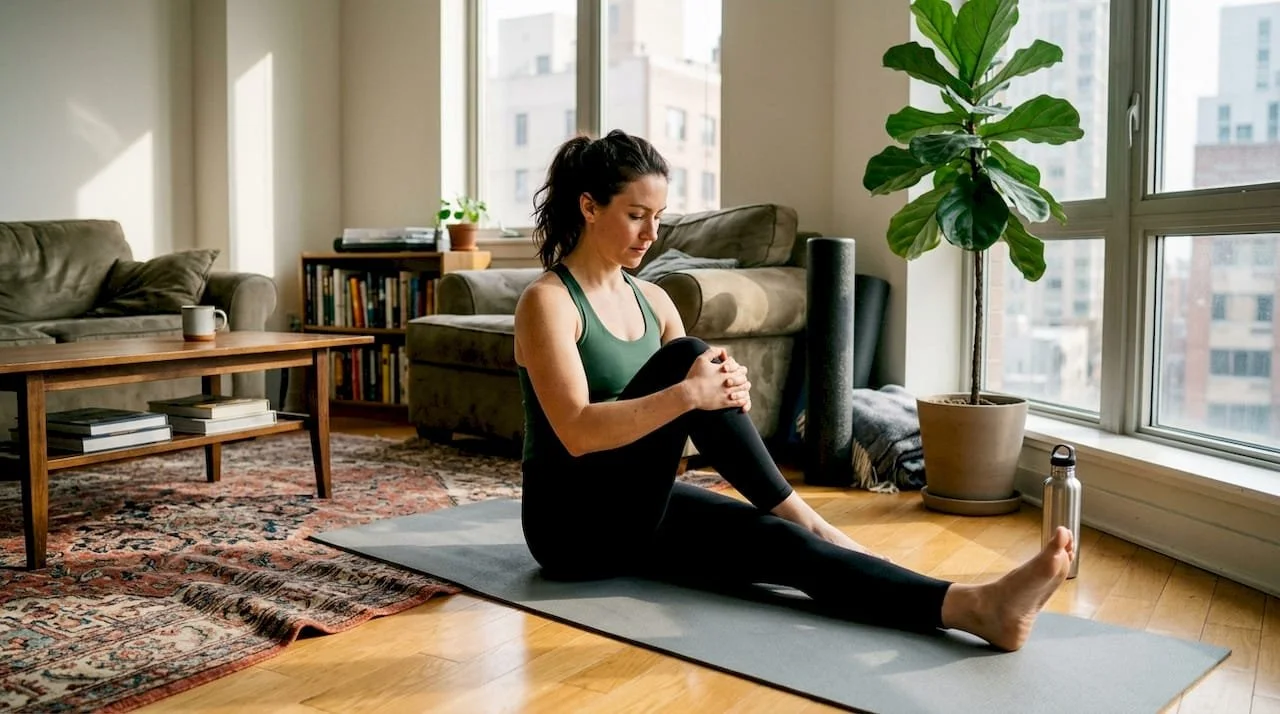
Mat Pilates is a floor-based exercise system developed from Joseph Pilates' original method, sometimes called "Contrology." Every movement uses your own bodyweight as resistance. There are no springs, cables, or sliding carriages involved. A typical session runs 45 to 60 minutes and moves through a sequence of controlled exercises targeting the core, hips, back, and shoulders.
What makes it stand out among Pilates for wellness options is the sheer accessibility. You can practice at a boutique studio, in your living room, or even in a hotel room while traveling for work. For urban adults in Philadelphia juggling packed schedules, that flexibility matters enormously.
Here is what a standard mat Pilates session typically includes:
Breathing and alignment warm-up to activate deep core muscles before any movement begins
Core-focused exercises like the Hundred, Roll-Up, and Single Leg Stretch
Hip and glute work using Bridge variations and Side-Lying Leg Series
Spinal mobility sequences including Swan and Spine Stretch Forward
Cool-down stretches to lengthen muscles and release tension
Now, how does this compare to reformer Pilates? The reformer machine uses spring-based resistance to assist or challenge movement. That external support actually makes some exercises easier to perform with correct form, especially for people recovering from injury. Mat Pilates, on the other hand, offers no external support, which means your intrinsic core muscles must work harder to stabilize every single movement. That builds a deeper, more functional body awareness over time. You can explore reformer Pilates basics if you are curious about how the two approaches overlap, but for most beginners, the mat is the best starting point.
Mat Pilates suits a wide range of people: those new to structured exercise, professionals who need something they can fit into a lunch break, anyone dealing with mild joint discomfort, and even athletes looking to improve control and balance.
Pro Tip: Commit to 2 to 3 mat Pilates sessions per week for at least six weeks before judging your progress. Consistency matters far more than session length, especially in the early stages.
Core strength, flexibility, and pain relief: Science-backed benefits
Understanding what mat Pilates is sets the stage, but what do the studies really say about its impact?
The core benefits are the most well-documented. Mat Pilates targets the deep stabilizing muscles, specifically the transverse abdominis and multifidus, that most conventional gym workouts barely touch. Strengthening these muscles improves posture, reduces spinal compression, and creates the kind of stable foundation that protects your joints during everyday movement. You can explore sample Pilates exercises to see exactly which movements activate these deeper layers.
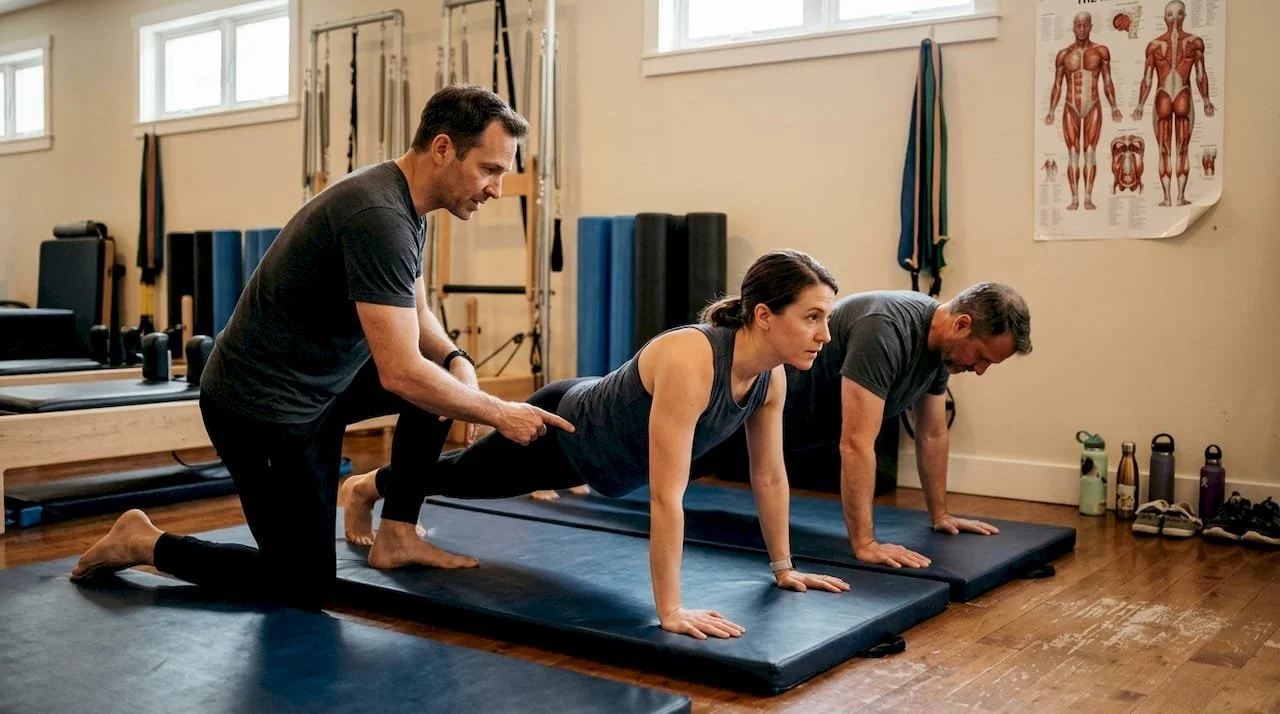
Flexibility gains are equally impressive. Unlike static stretching, where you hold a position for 30 seconds and call it done, mat Pilates improves flexibility through controlled, dynamic movements that enhance range of motion in the hamstrings, shoulders, and spine simultaneously. This dynamic approach trains your nervous system to accept greater range under load, which translates to real-world mobility improvements.
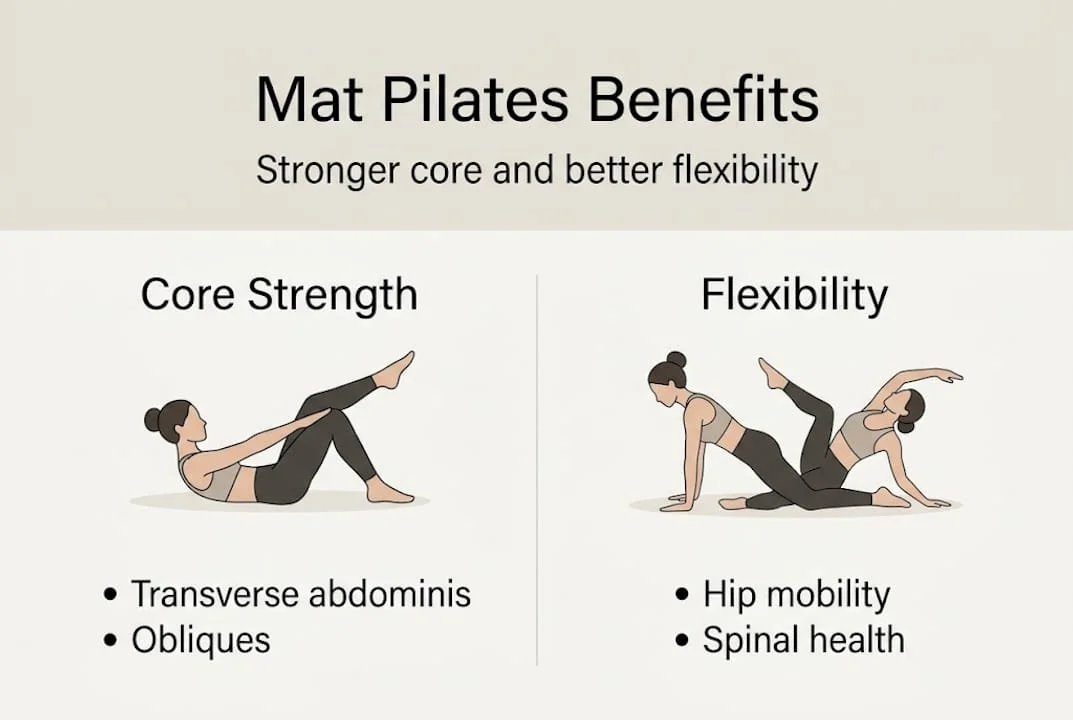
The pain relief evidence is particularly compelling for anyone dealing with chronic discomfort. Research published in a randomized controlled trial found that mat Pilates reduced pain and improved physical function in middle-aged women with chronic low back pain. A separate meta-analysis found that Pilates reduced knee pain in people with osteoarthritis compared to no intervention, with a standardized mean difference of 1.09.
Here is a quick summary of the top science-backed reasons busy adults stick with mat Pilates:
Core activation goes deeper than crunches or planks, targeting stabilizers that protect the spine
Dynamic flexibility improves range of motion without the boredom of static stretching routines
Pain reduction in the lower back and knees is supported by multiple peer-reviewed studies
Improved posture from consistent practice reduces neck and shoulder tension common in desk workers
Low injury risk makes it sustainable for people who have had to stop other workouts due to soreness or strain
"The beauty of mat Pilates is that it meets you where you are. Whether you are managing pain or training for performance, the same principles of control, breath, and precision apply."
Check out Pilates workout routines to see how these principles translate into structured weekly programs.
Mat Pilates vs. reformer: Comparing versatility and outcomes
To make your best choice, let's compare mat Pilates to the ever-popular reformer approach.
| Factor | Mat Pilates | Reformer Pilates |
|---|---|---|
| Equipment needed | Mat only | Reformer machine |
| Average cost per class | Lower | Higher |
| Space required | Minimal | Dedicated studio space |
| Core engagement | Deep intrinsic muscles | Assisted by springs |
| Balance and control | High demand | Moderate demand |
| Power and agility | Moderate | Higher potential |
| Best for | Beginners, flexibility, control | Rehab, power, variety |
| Accessibility | Home or studio | Studio only |
Beyond Pilates, the studio brings together yoga, barre, massage therapy, and even mind-body wellness options that support your overall well-being. Whether you want to try a single mat Pilates class or explore a fuller wellness routine, Amrita makes it easy to start. Browse the schedule, sign up for a class, and experience firsthand why so many Philadelphia adults have made this studio their wellness home.
Frequently asked questions
Is mat Pilates effective for core strength compared to reformer Pilates?
Yes, mat Pilates requires greater intrinsic core control since there is no external support, making it equally effective for building strength and flexibility as reformer Pilates.
Can mat Pilates help with chronic back or knee pain?
Yes, a randomized controlled trial found mat Pilates reduced pain and improved function in people with chronic low back pain, and a meta-analysis confirmed Pilates reduced knee pain in osteoarthritis patients compared to no intervention.
How often should I practice mat Pilates for best results?
Most experts recommend starting 2 to 3 times per week to see sustained core strength and flexibility improvements without overtraining.
Do I need any special equipment for mat Pilates?
No, only a supportive mat is required. No machines, springs, or special tools are needed to get started or to see meaningful results.
Recommended
Best Pilates for weight loss: top styles and tips in 2026
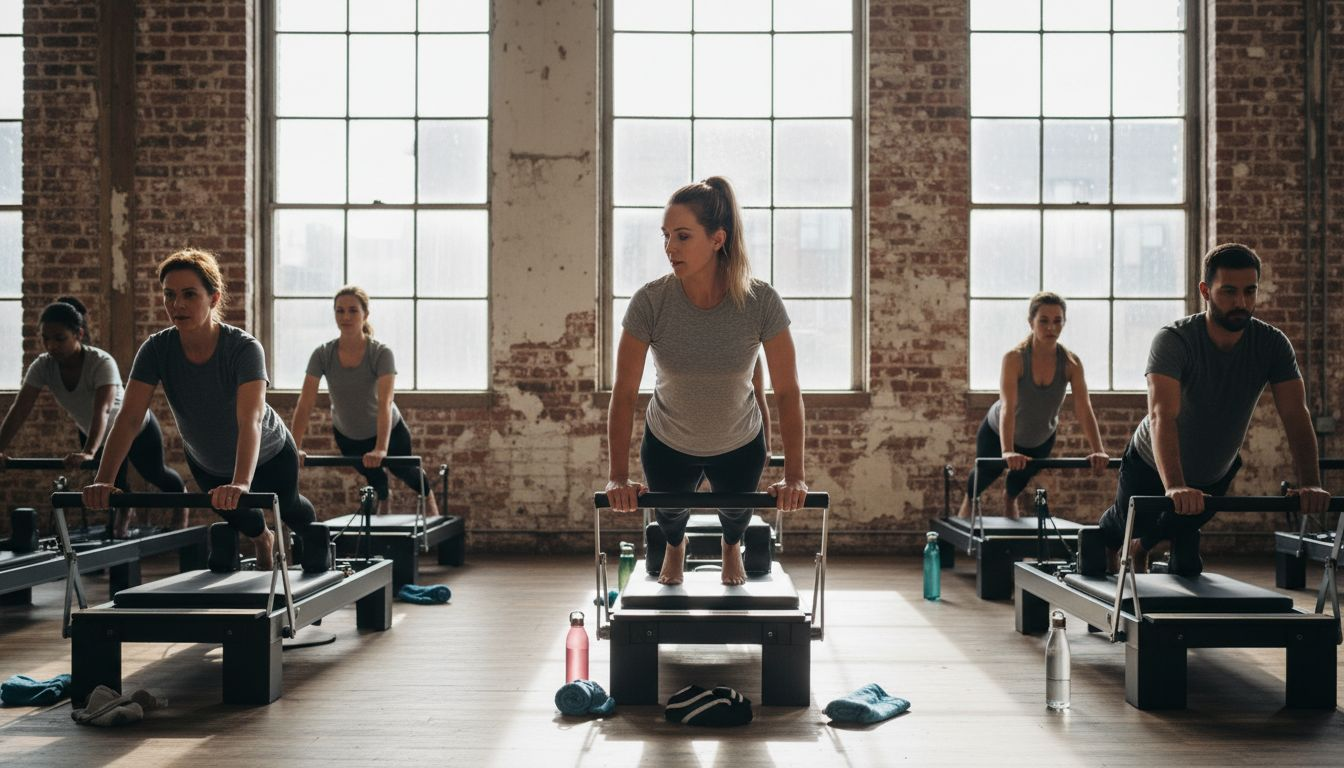
Choosing the right Pilates style for weight loss can feel overwhelming with so many options available in Philadelphia. The most effective approach balances calorie burn, muscle toning, and mindful movement to create sustainable results. This guide breaks down the key criteria, compares popular Pilates styles, and helps you select the method that fits your wellness goals and lifestyle.
Table of Contents
How To Choose The Best Pilates For Weight Loss: Key Selection Criteria
Comparing Pilates To Other Low-Impact Exercises For Weight Loss
Pricing And Accessibility Of Pilates Classes In Philadelphia
Situational Recommendations: Choosing The Right Pilates For Your Weight Loss Journey
Explore Pilates Classes At Amrita Yoga & Wellness In Philadelphia
Key takeaways
| Point | Details |
|---|---|
| Reformer Pilates burns the most calories | With approximately 252 calories per hour, it offers the highest weight loss potential among Pilates styles. |
| Mindful breathing reduces stress eating | Integrated breath work lowers cortisol and helps manage emotional eating triggers. |
| Group classes boost adherence by 33% | Community motivation significantly increases long-term commitment to regular practice. |
| Hybrid classes increase calorie burn | Combining Pilates with barre or yoga can raise calorie expenditure by up to 30%. |
| Class format affects safety and results | Private sessions offer customization while group classes provide energizing social support. |
How to choose the best Pilates for weight loss: key selection criteria
Selecting the right Pilates approach requires evaluating several factors that directly impact your weight loss success. Understanding these criteria helps you make an informed choice that you'll stick with long term.
Calorie burn potential stands as the primary metric for weight loss effectiveness. Different Pilates styles burn varying amounts of energy, with reformer classes typically outperforming mat work. Class intensity matters too, as higher resistance and faster-paced sessions create greater metabolic demand. You need a style that challenges you without causing burnout or injury.
Accessibility ensures you can practice safely regardless of fitness level. Beginner-friendly classes with modification options prevent injuries that derail progress. If you have physical limitations, look for instructors trained in adaptive movement who can tailor exercises to your needs. The learning curve should feel manageable, not discouraging.
Mindful movement practices distinguish Pilates from pure cardio workouts. Breath-focused exercises reduce stress hormones that trigger weight gain and emotional eating. This mental component improves adherence because you feel calmer and more centered after each session. Stress reduction supports sustainable lifestyle changes beyond the studio.
Class format influences both motivation and safety outcomes. Group settings provide social accountability and energizing community vibes. Private sessions offer personalized attention that ensures proper form and reduces injury risk. Your personality and goals determine which format serves you best.
Cost and location convenience affect whether you maintain consistent attendance. Studios near your home or workplace make it easier to show up regularly. Affordable pricing or package deals reduce financial barriers to long-term commitment. Weight loss requires months of regular practice, so accessibility matters.
Pro Tip: Track your first month of classes to identify which format keeps you most motivated. Consistency beats intensity for sustainable weight loss.
Pilates styles and their weight loss benefits
Different Pilates styles offer distinct advantages for weight loss based on equipment, intensity, and muscle engagement. Understanding these differences helps you select the approach that matches your fitness level and goals.
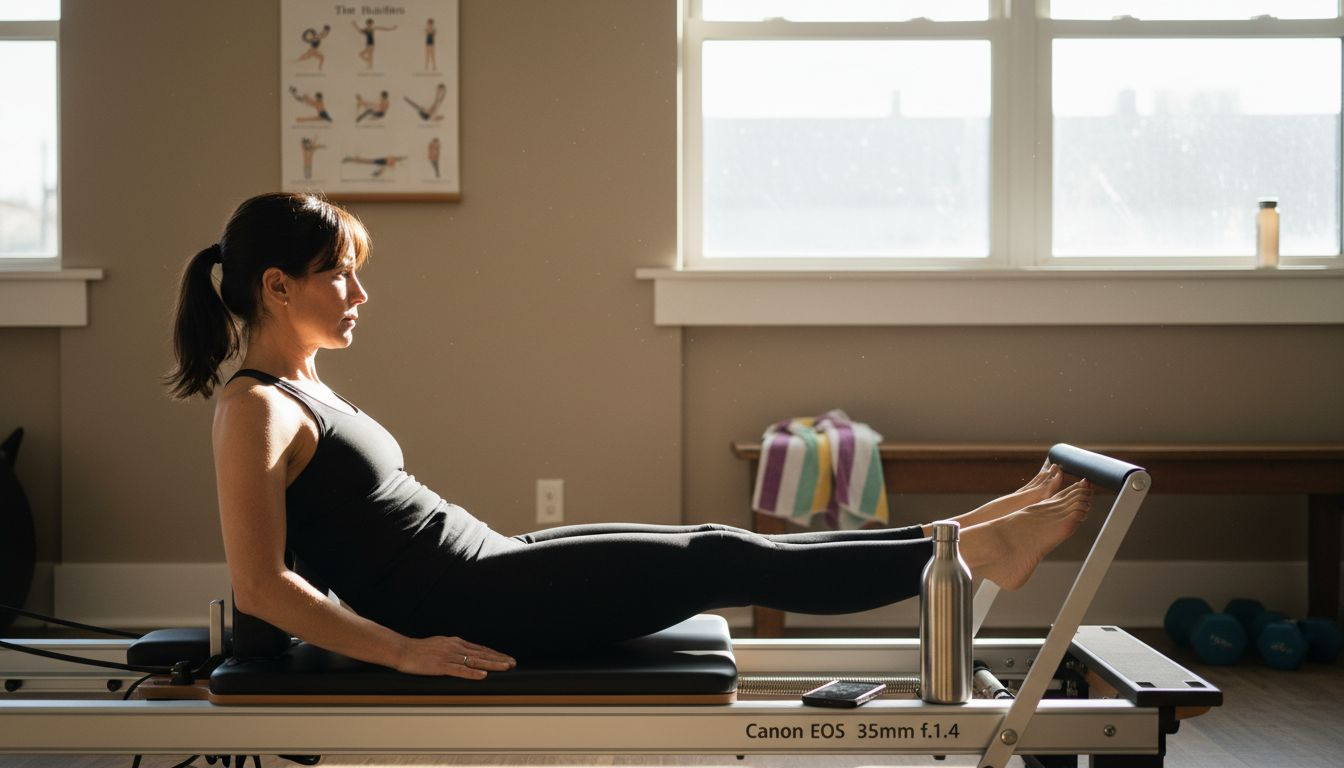
Reformer Pilates delivers the highest calorie burn among traditional styles. The spring-loaded carriage creates variable resistance that challenges muscles throughout each movement. Reformer Pilates can burn approximately 252 calories per hour, making it highly effective for weight loss compared to mat work. This style suits intermediate practitioners who have mastered basic form and want to increase workout intensity. The equipment adds variety and progression that prevents plateaus.
Classical Mat Pilates focuses on bodyweight exercises that build core strength and improve muscle tone. While Classical Mat Pilates offers lower calorie burn at around 175 calories per hour, it excels at developing the lean muscle mass essential for boosting resting metabolism. This style works perfectly for beginners who need to establish proper form before advancing to equipment. The minimal setup makes home practice easy and affordable.
Hybrid Pilates blends traditional movements with elements from barre, yoga, or cardio training. These fusion classes keep workouts interesting while increasing calorie burn by up to 30% compared to standard Pilates. The variety prevents mental burnout and challenges your body in new ways. Hybrid formats appeal to people who get bored with repetitive routines.
Muscle toning supports sustainable fat loss by elevating your metabolic rate even at rest. Lean muscle tissue burns more calories than fat throughout the day. All Pilates styles develop this metabolic advantage, though reformer work accelerates the process through higher resistance. Building strength also improves posture and daily movement efficiency, further increasing total energy expenditure.
Choosing your style affects both immediate calorie burn in Pilates and long-term metabolic benefits. Consider your current fitness level, budget, and schedule flexibility when deciding. Many successful practitioners combine styles throughout the week for balanced results.
| Style | Calories per Hour | Best For | Equipment Needed |
|---|---|---|---|
| Reformer | 252 | Intermediate to advanced; maximum calorie burn | Reformer machine |
| Classical Mat | 175 | Beginners; core strength and muscle tone | Mat only |
| Hybrid | 230+ | Variety seekers; plateau breakers | Varies by class |
Exploring different options helps you find what feels sustainable. Check out Pilates reformer classes or Pilates exercises for all levels to understand what each style entails.
Specific Pilates exercises that target weight loss
Certain Pilates movements maximize fat burning through muscle engagement, metabolic activation, and breath control. Incorporating these exercises into your routine accelerates weight loss results.
Core-focused moves like the Hundred and Leg Circles create significant metabolic demand. The Hundred involves pumping arms while holding legs at a challenging angle, engaging deep abdominal muscles for extended periods. Leg Circles require hip stability and core control while moving legs through large ranges of motion. Both exercises build lean muscle that elevates resting metabolism.
Controlled breathing enhances oxygen delivery to working muscles, improving workout quality and fat oxidation. Proper Pilates breathing techniques coordinate inhales and exhales with movement patterns, creating rhythm and focus. This breath work reduces stress hormones that promote fat storage around the midsection. Better oxygenation means you can work harder with less perceived effort.
Flexibility and posture exercises increase your overall activity capacity outside class. Improved mobility makes daily movements easier and more efficient, burning additional calories throughout your day. Better posture engages core muscles constantly, turning everyday activities into micro-workouts. The Swan and Spine Stretch Forward exemplify movements that enhance functional fitness.
Sequencing exercises properly maintains elevated heart rate throughout your session. Alternating between standing, seated, and prone positions keeps different muscle groups engaged without rest. This strategic ordering maximizes sustained calorie burn during the full hour. Instructors design flows that challenge cardiovascular endurance alongside strength.
Mindfulness during exercise prevents mindless movement that wastes energy. Focusing on muscle engagement ensures you work efficiently and get maximum benefit from each repetition. This mental connection also reduces stress-related eating by calming your nervous system. Quality always trumps quantity in Pilates practice.
Pro Tip: Start each session with breath work to activate your parasympathetic nervous system, setting the stage for focused, effective exercise that reduces cortisol.
Try effective Pilates exercises that match your current ability level. Progressive difficulty keeps you challenged as you get stronger.
Comparing Pilates to other low-impact exercises for weight loss
Understanding how Pilates stacks up against similar low-impact options helps you appreciate its unique strengths for sustainable weight loss.
Pilates burns fewer calories than high-impact cardio like running but offers superior muscle-building benefits. While walking burns roughly 150 calories per hour and gentle yoga around 120 calories, Pilates falls in the middle range while delivering better metabolic improvements. Pilates participants had a 15% higher improvement in metabolic rate post-exercise than those doing walking alone. This metabolic boost continues burning calories hours after your workout ends.
Low injury risk makes Pilates particularly sustainable for long-term practice. High-impact exercises often lead to joint problems that interrupt training consistency. Pilates protects joints while still building strength and endurance. This safety advantage means you can maintain regular practice for years without forced breaks.
The mind-body connection in Pilates enhances workout quality and mental health simultaneously. Unlike repetitive cardio that allows mental distraction, Pilates demands focus on form and breath. This meditative quality reduces anxiety and depression that often trigger overeating. Better mental health supports all the lifestyle changes necessary for lasting weight loss.
Group Pilates classes demonstrate powerful adherence benefits. Studies show community-based exercise increases long-term participation rates significantly compared to solo workouts. The social accountability and shared energy keep you coming back even when motivation dips. Gyms offering Pilates classes provide this community advantage.
Sustainability determines weight loss success more than any single workout's calorie burn. Pilates offers enough variety and progression to stay interesting for years. The combination of strength, flexibility, and mindfulness creates a complete practice that feels rewarding beyond the scale. You're more likely to stick with something you genuinely enjoy.
| Exercise Type | Calories per Hour | Injury Risk | Metabolic Benefit | Adherence Factors |
|---|---|---|---|---|
| Pilates | 175-252 | Low | High (15% boost) | Community, variety, mind-body |
| Walking | 150 | Very Low | Moderate | Accessible, outdoor options |
| Gentle Yoga | 120 | Low | Low to Moderate | Stress relief, flexibility |
| Swimming | 400+ | Low | High | Joint-friendly, full-body |
“Choosing an exercise you enjoy enough to practice consistently matters more than picking the highest calorie burner. Pilates balances effectiveness with sustainability.”
Explore metabolic rate improvements with Pilates to understand the science behind its fat-burning benefits.
The role of mindful movement in Pilates for weight loss
Mindfulness integrated throughout Pilates practice amplifies weight loss by addressing psychological and hormonal factors that standard exercise misses.
Mindful breathing reduces stress eating triggers by lowering cortisol levels. Chronic stress elevates this hormone, which promotes fat storage particularly around the abdomen. The deliberate Pilates breathing techniques activate your parasympathetic nervous system, counteracting stress responses. Regular practice recalibrates your baseline stress levels, reducing cravings for comfort foods.
Mental focus during exercise improves form and movement quality. When you concentrate on engaging specific muscles correctly, you work more efficiently and burn more calories per movement. This awareness prevents sloppy repetitions that waste energy without building strength. Better form also reduces injury risk that could sideline your weight loss efforts.
Pilates movement functions as moving meditation. The required concentration quiets mental chatter and grounds you in present-moment awareness. This meditative state provides stress relief comparable to seated meditation while delivering physical benefits simultaneously. The dual advantage makes Pilates more appealing than isolated stress management techniques.
Stress reduction supports sustainable lifestyle changes beyond exercise. When you feel calmer and more balanced, you make better food choices and sleep more soundly. Quality sleep regulates hunger hormones that control appetite and satiety. The ripple effects of reduced stress touch every aspect of weight management.
Combining mindfulness with physical practice creates a holistic approach that addresses root causes of weight gain. Many people overeat due to emotional dysregulation rather than physical hunger. Pilates teaches body awareness that helps you distinguish true hunger from stress-driven cravings. This wisdom supports long-term weight maintenance after initial loss.
Mindful movement transforms exercise from a chore into a form of self-care. This shift in perspective dramatically improves adherence and enjoyment.
Class format and accessibility considerations
How you practice Pilates matters as much as what style you choose. Format decisions impact safety, motivation, and long-term success.
Group classes offer social support that increases adherence by 33% compared to solo practice. Working out alongside others creates accountability and friendly competition that pushes you harder. The communal energy makes challenging exercises feel more achievable. Many people find group settings more fun and look forward to seeing familiar faces.
Private sessions provide tailored workouts that address your specific needs and limitations. An instructor can modify every exercise for injuries, pregnancy, or other constraints. This customization minimizes injury risk while maximizing results for your unique body. One-on-one attention ensures you learn proper form from the start.
Beginners often benefit most from initial private instruction before joining group classes. Learning fundamentals individually builds confidence and prevents bad habits. Once you understand basic principles, group classes offer better value and motivation. Advanced practitioners might return to private sessions periodically for refinement.
Scheduling flexibility influences whether you maintain consistent attendance. Studios offering early morning, lunchtime, and evening options accommodate diverse work schedules. Weekend availability helps people with unpredictable weekday commitments. The easier it is to fit Pilates into your life, the more likely you'll stick with it.
Accessibility includes location convenience relative to your home or workplace. Local Pilates classes within 15 minutes of your regular routes face fewer attendance barriers. Long commutes create friction that erodes motivation over time. Proximity matters for sustainable practice.
Group classes provide motivating community energy and cost efficiency
Private sessions offer personalized progression and injury prevention
Hybrid approaches combining both formats maximize benefits
Schedule alignment with your lifestyle ensures regular attendance
Convenient studio location reduces barriers to showing up
Pricing and accessibility of Pilates classes in Philadelphia
Understanding local costs helps you plan a realistic budget for consistent Pilates practice that supports weight loss goals.
Average Pilates class costs in urban areas typically range from $15 to $30 per session for group classes. Drop-in rates usually fall at the higher end while class packages offer per-session savings. Reformer classes often cost slightly more than mat classes due to equipment overhead. Philadelphia pricing aligns with these national urban averages.
Membership packages or class bundles provide significant savings for regular practitioners. Buying 10 or 20 classes upfront commonly reduces per-session costs by 20 to 40 percent. Monthly unlimited memberships work well for people attending three or more times weekly. Calculate your expected attendance to determine which payment structure saves most.
Weight loss specialized Pilates classes exist but pricing varies by studio. Some facilities charge premium rates for targeted programs with nutritional guidance. Others include weight loss focus within standard class offerings at regular prices. Research what's included before committing to higher-priced specialty programs.
Philadelphia offers multiple studios with convenient locations throughout the city and surrounding neighborhoods. Gyms with Pilates classes range from boutique studios to larger fitness centers with diverse offerings. Proximity to public transportation or parking availability affects accessibility. Studio amenities like showers and retail also influence value.
Affordability directly impacts long-term commitment essential for weight loss success. Overextending your budget creates stress that undermines wellness goals. Look for Pilates classes near Philadelphia that fit comfortably within your monthly recreation spending. New student specials help you try different studios before committing.
Drop-in rates: $20 to $30 per class
Class packages: $15 to $25 per session with bulk purchase
Monthly unlimited: $120 to $200 depending on studio
Private sessions: $60 to $120 per hour
Introductory specials often available for new students
Situational recommendations: choosing the right Pilates for your weight loss journey
Applying selection criteria to your specific situation ensures you pick the Pilates approach most likely to deliver results.
Beginners should start with Classical Mat Pilates to build foundational strength safely. The bodyweight focus allows you to master proper form without equipment complexity. Lower injury risk keeps you practicing consistently while your body adapts. Once you understand basic principles, progress to reformer work for increased calorie burn.
Those seeking maximum calorie expenditure should prioritize Reformer Pilates classes for resistance training benefits. The variable spring tension challenges muscles more intensely than mat work. Higher metabolic demand accelerates fat loss when combined with proper nutrition. Expect faster visible results with this equipment-based approach.
People prioritizing stress reduction alongside weight loss benefit most from mindful Pilates with emphasized breath work. Classes focusing on the mind-body connection address emotional eating patterns. The meditative quality provides mental health benefits that support all wellness efforts. Reduced cortisol levels prevent stress-related weight gain.
Social butterflies thrive in group class environments that foster community connections. The accountability and energy of working out with others boosts motivation significantly. Shared struggles and victories create bonds that keep you committed. Group formats also cost less per session than private instruction.
Those hitting weight loss plateaus should try hybrid classes combining Pilates with barre, yoga, or cardio elements. The variety challenges your body in new ways that reignite progress. Increased calorie burn from fusion formats helps break through stalls. Novel movement patterns prevent both physical and mental adaptation.
Budget-conscious practitioners can maximize value by purchasing class packages and practicing supplementary mat work at home. Learning Pilates exercises for all levels allows home practice between studio sessions. This hybrid approach maintains consistency while controlling costs.
Pro Tip: Commit to at least three sessions weekly for 12 weeks before evaluating results. Weight loss requires time and consistency to manifest visibly.
Balance cost, convenience, and personal preferences to design a sustainable Pilates practice. The best program is the one you'll actually maintain long term.
Explore Pilates classes at Amrita Yoga & Wellness in Philadelphia
Ready to start your Pilates weight loss journey with expert guidance and community support? Amrita Yoga & Wellness offers comprehensive Pilates programming designed for Philadelphia residents seeking effective, mindful movement.
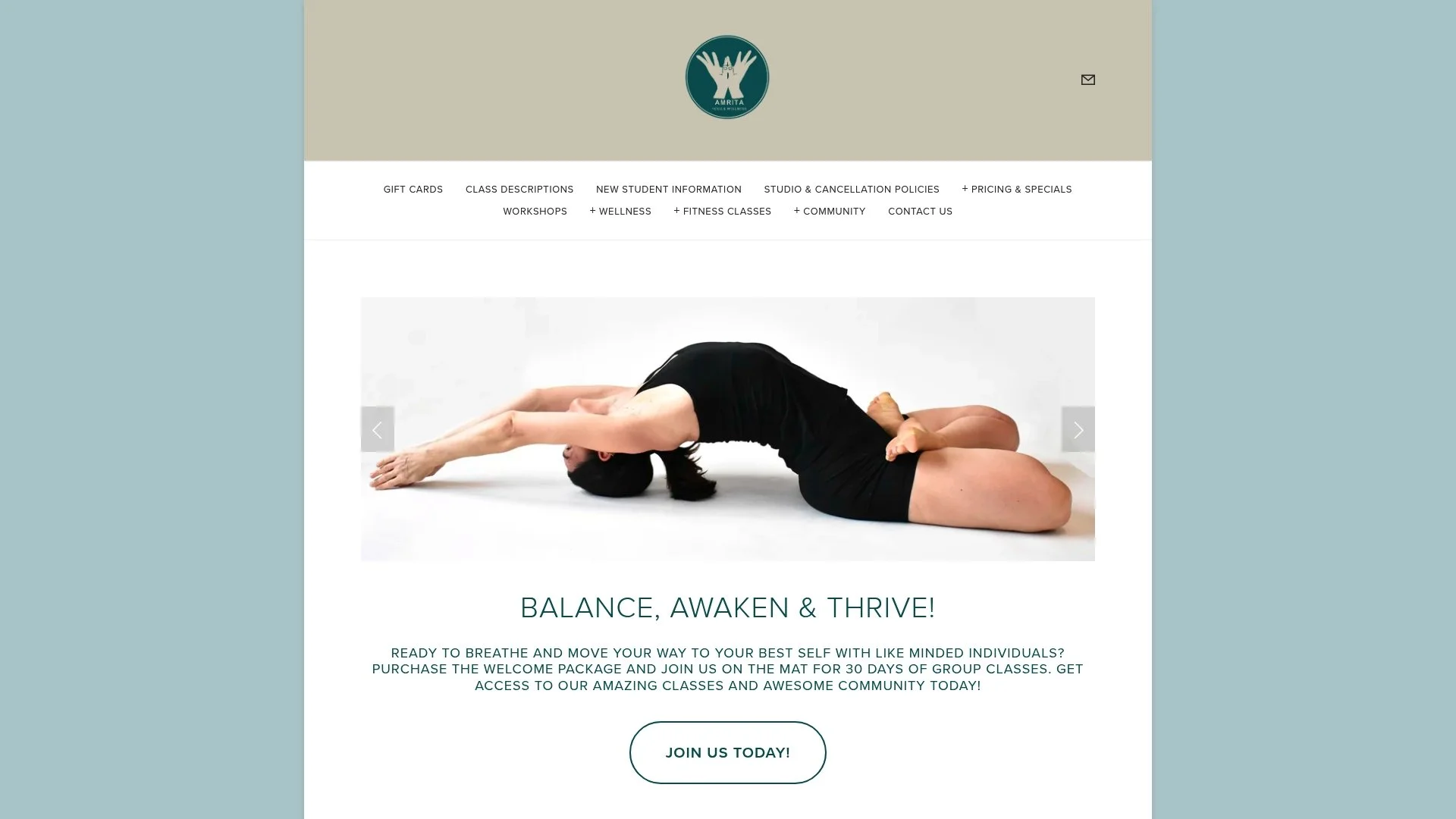
Our studio provides both Reformer and Mat Pilates classes that emphasize proper form, breath awareness, and sustainable progression. Experienced instructors tailor exercises to individual fitness levels, ensuring safe and effective practice for beginners through advanced students. The welcoming community atmosphere makes every class feel supportive rather than intimidating.
Flexible pricing options and new student specials make starting your practice affordable and accessible. Convenient scheduling accommodates busy Philadelphia lifestyles with morning, evening, and weekend options. Our studio policies prioritize your safety and satisfaction.
Join Amrita Yoga & Wellness to integrate expert Pilates instruction with your holistic wellness goals. Experience how mindful movement transforms both body and mind.
FAQ
What is the best Pilates style for beginners aiming for weight loss?
Classical Mat Pilates provides the ideal starting point for newcomers focused on weight loss. It builds essential core strength and muscle tone with moderate calorie burn around 175 per hour. The bodyweight approach allows you to master proper form safely before advancing to equipment-based classes.
How does mindful movement in Pilates support weight loss?
Mindful breathing techniques reduce cortisol levels that trigger stress eating and hormonal imbalances promoting fat storage. The mental focus required during Pilates improves exercise quality and form, maximizing calorie burn per movement. This awareness also helps distinguish true hunger from emotional cravings.
Are private Pilates sessions better for weight loss than group classes?
Both formats offer distinct advantages depending on your needs and preferences. Private sessions provide personalized intensity adjustments and form corrections that prevent injury while maximizing results. Group classes deliver social motivation and accountability that increase long-term adherence by 33%, which matters more for sustained weight loss.
How many Pilates sessions per week are needed for weight loss?
Practicing Pilates three to four times weekly produces optimal weight loss results when combined with proper nutrition. This frequency allows adequate recovery between sessions while maintaining elevated metabolism. Consistency over months matters more than session intensity, so choose a schedule you can maintain long term.
Can Pilates alone lead to significant weight loss?
Pilates contributes meaningfully to weight loss by building lean muscle that boosts resting metabolism and burning 175 to 252 calories per session. However, combining Pilates with nutritional changes and complementary cardiovascular activity accelerates results. The mind-body benefits of Pilates support the lifestyle changes necessary for sustainable weight management.