The Amrita Journal
Explore thoughtful stories, practical wellness guidance and inspiring ideas to support your movement, mindfulness and everyday wellbeing at Amrita.
How to Practice Mindfulness: A Beginner's Guide
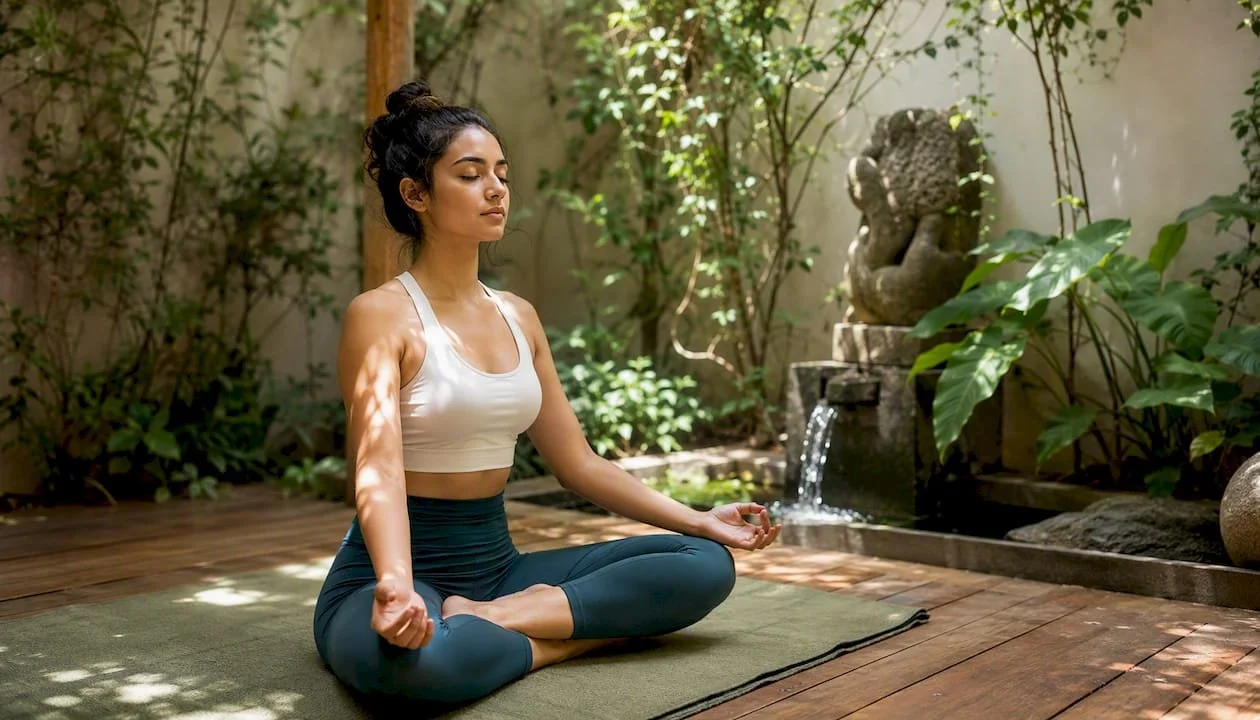
You can start a useful mindfulness practice in two minutes using one breath-based exercise. This guide gives you the scripts, timing guidance, and habit tips to make it stick.
Try this right now. Sit comfortably, close your eyes, and take one slow breath in through your nose for a count of four. Hold for one count. Exhale through your mouth for a count of six. Notice where you feel the breath most clearly: your nostrils, your chest, or your belly. When a thought appears, simply note it and return to the next breath. That's one complete cycle. Do it three times.
What to expect during and after:
A slight slowing of your heart rate after the second or third breath
Thoughts appearing almost immediately (this is normal and expected)
A brief sense of mental quiet, even if it lasts only a few seconds
Mild physical relaxation in your shoulders or jaw
According to Harvard Health, even 1–3 minutes of focused breathing can reduce stress immediately. You don't need a cushion, an app, or a quiet room to begin.
Table of Contents
What mindfulness is and why it actually helps
Mindfulness is the practice of paying deliberate, non-judgmental attention to what is happening right now, in your body and mind, without trying to change it.
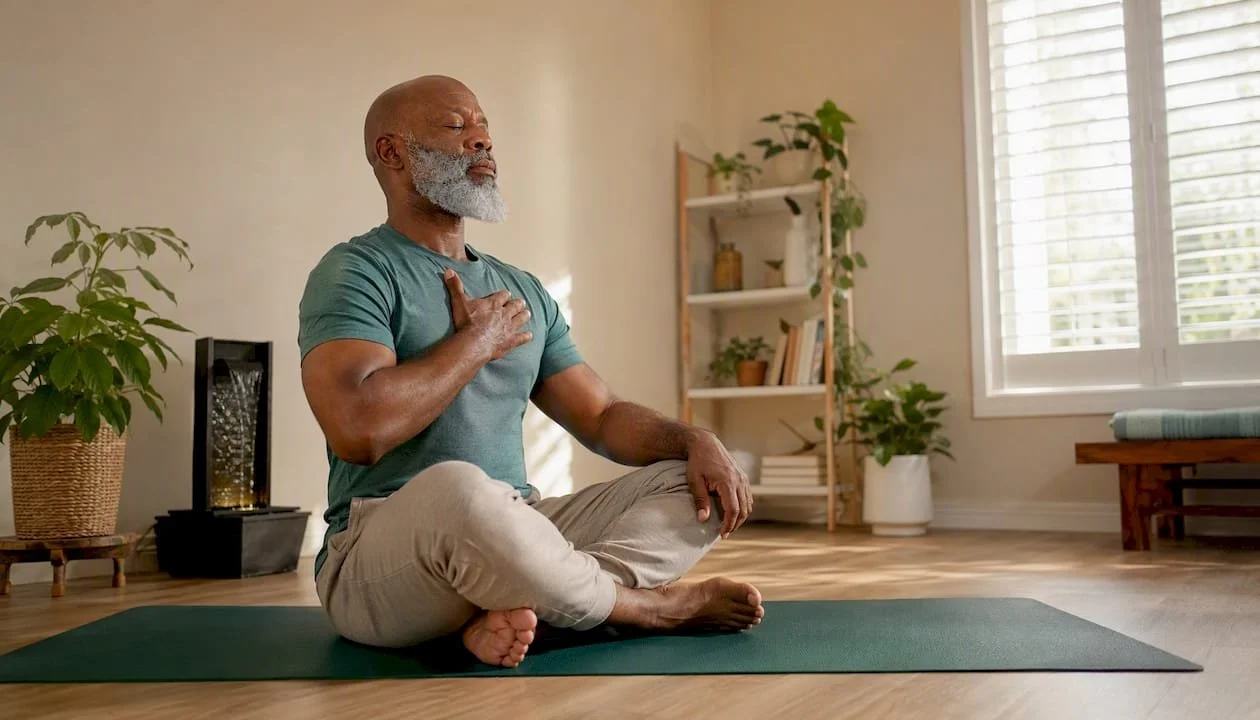
That definition sounds simple, but the effect is real. When you shift attention to present-moment sensory details, you interrupt the mental loops that replay past problems or rehearse future worries, a mechanism the NHS describes as one of mindfulness's core benefits. The practice doesn't require you to stop thinking. It just asks you to notice what you're thinking.
Research-backed benefits for beginners:
Reduced stress and anxiety, even after short sessions
Improved ability to focus and make decisions under pressure
Better sleep quality, particularly when practiced in the evening
Lower emotional reactivity, so you respond rather than react
A greater sense of calm and present-moment awareness
Reduced tendency to ruminate on past events or future worries
Mayo Clinic confirmsthat mindfulness requires no special equipment and can be done anywhere, which removes the biggest barrier most beginners face: thinking they need the right conditions to start.
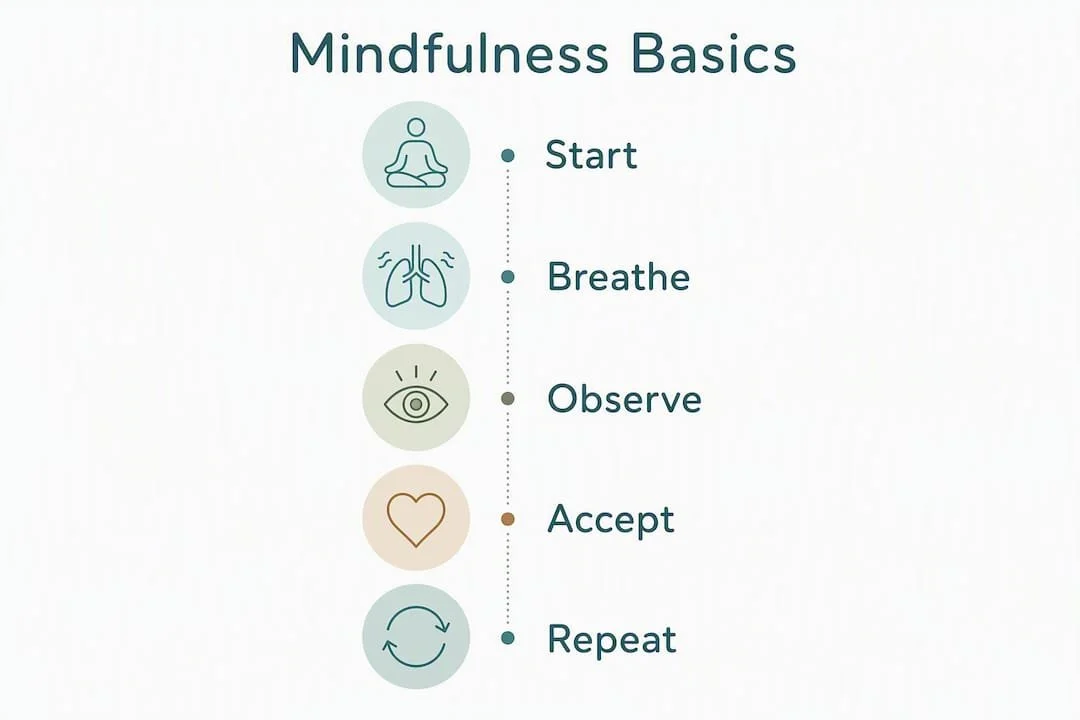
How to practice mindfulness: four core exercises with step-by-step scripts
These four practices cover the full range of what most beginners need. Each one builds the same core skill: noticing where your attention is and gently returning it to your chosen anchor. Mindful.org describes this loop as the foundational skill of all mindfulness practice.
Focused breathing
Sit in a chair with your feet flat on the floor, or cross-legged on the floor.
Close your eyes or soften your gaze downward.
Breathe naturally and notice where you feel the breath most clearly: nostrils, chest, or belly.
When your mind wanders (and it will), simply notice that it has wandered.
Without judgment, return your attention to the next breath.
Repeat for your chosen duration.
Timing: 1–3 minutes to start; work toward 5–10 minutes over two to three weeks.
Body scan
Lie down or sit in a chair. Close your eyes.
Start at the top of your head and slowly move your attention downward: scalp, forehead, jaw, neck, shoulders.
At each area, notice any sensation without trying to change it: warmth, tension, tingling, or nothing at all.
If your mind drifts to a to-do list or a worry, label it mentally ("thinking") and return to the body part you left.
Continue down through your chest, arms, belly, hips, legs, and feet.
End with three slow breaths.
Timing: 5–10 minutes. A seated version works well at a desk; a lying-down version suits bedtime.
Sitting meditation
Set a timer for your chosen duration so you're not checking the clock.
Sit upright with your hands resting on your thighs.
Choose an anchor: your breath, the sounds in the room, or the physical sensation of your feet on the floor.
Hold your attention on that anchor.
When a thought arises, name it gently ("planning," "worry," "memory") and return to the anchor.
When the timer ends, open your eyes slowly and take one conscious breath before moving.
Timing: 5–15 minutes. Three to four sessions per week is a solid starting point.
Walking meditation
Find a short path, indoors or outdoors, about 10–20 steps long.
Walk at roughly half your normal pace.
Focus on the physical sensations of each step: the heel lifting, the foot swinging forward, the sole pressing the ground.
When your mind wanders to a conversation or a task, notice it, and bring your attention back to the next footfall.
At the end of the path, pause, breathe, and turn around.
Continue for your chosen duration.
Timing: 5–10 minutes. Works well outdoors on a lunch break or indoors in a hallway.
Timing and frequency at a glance

| Practice level | Session length | Frequency |
|---|---|---|
| Micro (just starting) | 1–3 minutes | Daily |
| Beginner regular | 5–10 minutes | 3–4 times per week |
| Building consistency | 10–15 minutes | Daily |
| Established practice | 15–20 minutes | Daily |
A 10-minute beginner sequence combining two techniques
Sit comfortably and set a timer for 10 minutes.
Spend the first 3 minutes on focused breathing: notice the breath, return when you wander.
Spend the next 5 minutes on a seated body scan from head to feet.
Spend the final 2 minutes back on the breath, this time noticing any shift in how your body feels.
Open your eyes and sit quietly for 30 seconds before standing.
Micro-practices you can use anywhere in under five minutes
Short on time doesn't mean short on benefit. These micro-practices are designed for real life: a commute, a bathroom break, a moment between meetings. Body scans, mindful eating, and mindful movement are all accessible alternatives to formal sitting meditation.
Six micro-practices with when to use them:
Single breath reset (30 seconds). One slow inhale, one slow exhale, full attention on the sensation. Use it before a difficult conversation or right after getting a stressful email.
3-count box breathing (2 minutes). Inhale for 3 counts, hold for 3, exhale for 3, hold for 3. Repeat four times. Use it on a commute or before a meeting starts.
Mindful hand wash (1 minute). Feel the temperature of the water, the texture of the soap, the sound of the faucet. When your mind drifts to what's next, return to the sensation. Use it as a built-in reset throughout the workday.
Mindful sip (1 minute). Hold your coffee or tea with both hands. Notice the warmth, the smell, the first taste. Take three sips with full attention before going on autopilot. Use it every morning to anchor the start of your day.
Mindful listening (1–2 minutes). Close your eyes and simply listen to whatever sounds are present: traffic, birds, an HVAC hum. Don't label them as good or bad; just notice them. Use it during a lunch break or after an argument to reset your nervous system.
Mindful 30-second stretch. Stand up, stretch your arms overhead, and feel every sensation in your shoulders, spine, and hands as you move. Breathe slowly. Use it between tasks when you've been sitting for more than an hour.
The NHS notes that shifting attention to present-moment sensory details is the mechanism that breaks worry loops, which is exactly what each of these micro-practices does in a compressed form.
Pro Tip: Pick just one micro-practice and commit to it for one week before adding another. Trying to use all six at once almost guarantees you'll use none of them.
How to build a daily mindfulness habit that actually sticks
Consistency matters more than duration. Brief daily practice beats a longer session once a week, and Harvard Health confirms that if daily practice feels unrealistic, aiming for several sessions per week is a strong and sufficient target.
Habit-building checklist:
Choose one existing daily routine as your anchor (brushing teeth, making coffee, sitting down at your desk).
Set a tiny time goal: two minutes, not twenty. You can always go longer, but two minutes is easy to keep.
Pair the practice with that anchor every single day for four weeks.
Track one simple metric: did you do it today? A paper calendar with an X works as well as any app.
After four weeks, extend by two minutes if you want more.
Pro Tip: Tying a 1–3 minute breathing practice to teeth brushing, morning or night, is one of the most reliable habit-stacking approaches because the cue is already automatic. Do it for four weeks and the association forms on its own.
What to realistically expect over time:
After 1 week: You'll notice the practice feels slightly less awkward. You may catch yourself taking a conscious breath during a stressful moment without being prompted.
After 3–4 weeks: Small but measurable shifts in how quickly you recover from stress. You'll start noticing your thoughts more often before reacting to them.
After 8 weeks: Research on mindfulness-based stress reduction programs, including work from the UMass Center for Mindfulness, points to meaningful reductions in stress and anxiety at the eight-week mark. Trait-level changes, the kind that show up in how you handle difficulty on a bad day, tend to emerge here.
For more mindfulness tips on building a consistent routine, the Amritayogawellness blog has practical, studio-tested suggestions.
What the research says about timelines and what to expect
Brief, regular practice produces measurable benefits. You don't need a clinical program or a meditation retreat to see results.
Harvard Health recommends 10–15 minutes daily as a sufficient starting point, while noting that even 1–3 minutes of focused breathing can reduce stress in the moment. For most beginners, that's the most useful piece of information in all the research: start small, and the benefits are still real.
Realistic outcomes by timeline:
Short-term (days to 2 weeks): Improved sense of calm after sessions, slightly better ability to notice stress as it builds, small improvements in sleep onset for some people.
Medium-term (4–6 weeks): Reduced emotional reactivity, better focus during work tasks, a growing ability to pause before responding in difficult situations.
Longer-term (8+ weeks): Lasting reductions in anxiety and stress, improved attention span, and the kind of trait-level changes that show up in daily behavior rather than just during practice.
| Timeline | What beginners typically notice |
|---|---|
| Short-term | Calmer feeling after sessions; thoughts still very active |
| Weeks 2–4 | Slightly faster stress recovery; catching thoughts earlier |
| Weeks 4–6 | Reduced reactivity; better focus; more consistent sleep |
| Weeks 8+ | Trait-level changes; stress response shifts in daily life |
A Harvard Gazette study on mindfulness meditation found that participants reported less stress and clearer thinking after a mindfulness program, reinforcing that the benefits are real and not just anecdotal. The key variable across all the research is not the length of each session but whether you show up regularly.
Common beginner mistakes and how to fix them
A wandering mind is not a sign that you're doing it wrong. It's the practice. Mindful.org puts it plainly: the moment you notice your mind has wandered and return to your anchor is the actual skill-building event. Every return is a mental rep, not a failure.
Common pitfalls and what to do instead:
Thinking the goal is a blank mind. The goal is noticing. When you catch a thought, you've succeeded. Return to the breath without commentary.
Judging yourself for wandering. Mind.org recommends meeting wandering thoughts with friendly curiosity rather than frustration. The phrase "be curious, not critical" is worth keeping in mind.
Naming thoughts to create distance. When a thought feels sticky, label it: "thinking," "worry," "planning." This creates psychological distance and reduces its pull without requiring you to push it away.
Quitting because sessions feel too long. Shorten the session. Two minutes of genuine attention beats ten minutes of fighting yourself. Build up gradually.
Practicing only when you feel like it. Motivation follows action, not the other way around. Set the anchor and show up even on flat days.
Practicing in a distracting environment and giving up. Move the practice outdoors, use low-volume ambient sound, or switch to a walking meditation when a quiet room isn't available.
Pro Tip: If you keep falling asleep during body scans, try the practice seated rather than lying down, and keep your eyes slightly open with a soft downward gaze. Sleep is a sign your nervous system needed rest, not that you failed.
Pro Tip: If you feel like "nothing is happening," use a concrete sensory anchor instead of a vague intention to "be present." Notice the exact temperature of the air at your nostrils, or the precise pressure of your feet on the floor. Objective sensory details reduce judgment and sharpen focus immediately.
For specific mindfulness for stress strategies, including classroom-tested exercises, the Amritayogawellness blog covers techniques that address the most common frustrations beginners bring to the studio.
Where to find good guided resources as a beginner
Use guided resources if you want structure. The best ones give you a voice to follow, a script to internalize, and a consistent format that removes the decision fatigue of figuring out what to do next.
Harvard Health points to UCLA MARC (Mindful Awareness Research Center) as a reputable starting point for free guided audio meditations. Their library includes body scans, breathing practices, and sitting meditations at various lengths, all available without a subscription.
Vetted resource categories and what each is best for:
UCLA MARC (free audio library). Best for: structured guided sessions ranging from 3 to 19 minutes, taught by trained instructors. No account required.
Mindful.org (articles and guided scripts). Best for: written scripts you can read before practicing, plus evidence-based articles on specific techniques.
Mayo Clinic mindfulness page. Best for: a clinical, no-frills overview of exercises with clear language for people who want medical credibility behind their practice.
NHS mindfulness resources. Best for: UK-based clinical guidance, though the exercises themselves are universally applicable and well-written for beginners.
Mindfulness apps (Insight Timer, for example). Best for: daily reminders, a timer with ambient sound, and a large library of free guided sessions. When evaluating any app, look for teachers with named credentials, a free tier, and a clear privacy policy before sharing personal data.
In-person classes and workshops. Best for: real-time feedback, community accountability, and the kind of subtle posture and breathing corrections that audio alone can't provide.
When evaluating a teacher or program, look for transparent credentials (training background, affiliated institution), a clear description of what the practice involves, and a free introductory option. The UMass Center for Mindfulness is one of the most credible institutional programs in the United States and a useful benchmark for what a well-structured mindfulness curriculum looks like.
For readers ready to move beyond solo practice, exploring different meditation types can help you find the style that fits your temperament and schedule.
Key Takeaways
Consistent short practice, starting at just 1–3 minutes daily, is the most reliable path to real mindfulness benefits for beginners.
| Point | Details |
|---|---|
| Start with 1–3 minutes | Even brief focused breathing reduces stress immediately; no equipment or experience needed. |
| Wandering mind is the practice | Each time you notice distraction and return to your anchor, you build the core skill. |
| Consistency beats duration | Practicing 3–4 times per week produces more progress than occasional long sessions. |
| Habit-stack to make it automatic | Tie your practice to an existing routine, like brushing teeth, for at least four weeks. |
| Amritayogawellness supports beginners | The studio offers beginner classes, workshops, and guided sessions in Philadelphia to support your practice. |
A teacher's note on starting out
Every beginner I've worked with arrives with the same worry: "I can't stop thinking." That's not a problem to solve. It's the starting point. The practice isn't about achieving silence; it's about noticing the noise and choosing where to place your attention anyway.
The most useful shift I've seen in new students is moving from "I'm doing this wrong" to "I noticed I wandered, and I came back." That second framing is accurate. The first one is just a story the mind tells to avoid sitting still.
Start with two minutes. Do it after you brush your teeth tonight. If you miss a day, start again the next morning without making it mean anything. The practice doesn't require a streak. It requires showing up more often than not.
Guided practice at Amrita Yoga & Wellness in Philadelphia
Reading about mindfulness is a solid start. Practicing it with an experienced teacher in a room full of people who are also figuring it out is a different experience entirely.
Amrita Yoga & Wellness in Philadelphia offers beginner-friendly classes, mindfulness workshops, and wellness sessions designed for people who are new to practice and want real guidance rather than a generic app. The studio's approach covers breath-based practices, mindful movement, and body-awareness techniques across formats that fit different schedules and comfort levels.
If you're ready to move from solo practice to something more structured, here's how to take the next step:
Drop into a beginner class. No prior experience needed. Show up, follow along, and ask questions after.
Try a workshop. Focused sessions on specific techniques give you more depth than a single class.
Explore the full range of offerings. From yoga and pilates to tai chi and massage therapy, the studio supports the kind of whole-body wellness that makes mindfulness practice easier to sustain.
Book your first sessionat Amrita Yoga & Wellness and bring what you've practiced here into a supported, in-person setting.
Useful sources
You can practice mindfulness in as little as 15 minutes a day — Harvard Health. Covers timing recommendations, habit-stacking advice, and beginner-friendly entry points including UCLA MARC.
Mindfulness exercises — Mayo Clinic. Clear clinical overview of core exercises (breathing, body scan, mindful movement) with no-equipment framing.
Mindfulness — NHS. Explains how mindfulness interrupts worry loops and provides accessible scripts for everyday practice.
How to Practice Mindfulness — Mindful.org. Detailed scripting guidance and the "notice and return" framing that normalizes mind-wandering for beginners.
Getting Started with Mindfulness — Mindful.org. Step-by-step beginner sequence and the four-step foundational loop used throughout this guide.
Mindfulness exercises and tips — Mind. Covers thought-labeling, body scan variations, and the "be curious, not critical" approach to self-judgment.
Less stress, clearer thoughts with mindfulness meditation — Harvard Gazette. Research-based evidence that mindfulness programs reduce stress and improve mental clarity.
Mindfulness-Based Programs — UMass Center for Mindfulness. The institutional home of Mindfulness-Based Stress Reduction (MBSR); a benchmark for evidence-based program structure and eight-week outcomes.
Mindful Eating — Harvard T.H. Chan School of Public Health. Covers mindful eating as an everyday mindfulness practice with practical guidance.
Recommended
How Do You Practice Mindfulness: A Beginner's Guide
TL;DR:
Mindfulness involves deliberately focusing on the present moment with openness and acceptance. It can be practiced easily without special equipment by starting small and maintaining consistency. Regular short sessions help build awareness and reduce stress, enhancing mental well-being over time.
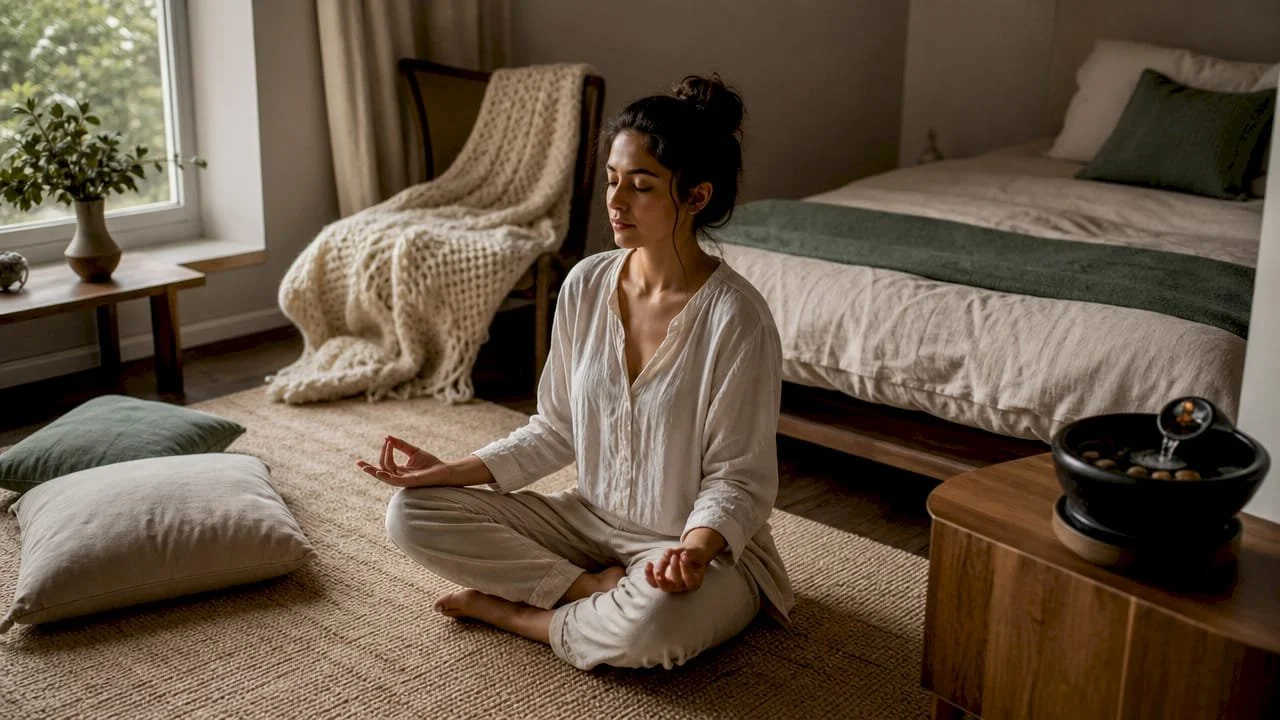
Mindfulness is the practice of focusing your attention deliberately on the present moment with openness and acceptance. If you've been wondering how do you practice mindfulness without special training or equipment, the answer is simpler than most people expect. Mindfulness exercises require no special equipment and can fit into even the busiest schedule. Institutions like Mayo Clinic and Ohio State University recognize mindfulness as a practical tool for reducing stress and improving mental well-being. The key is starting small, staying consistent, and treating every session as progress, not performance.
How do you practice mindfulness as a complete beginner?
Mindfulness practice starts with one decision: to pay attention on purpose. You do not need a meditation cushion, a quiet retreat, or years of experience. Consistency matters more than duration for beginners, which means a two-minute daily habit beats a 30-minute session you do once a week.
The right mindset matters as much as the technique. Mindfulness trains the brain in acceptance, and expecting quick results actually works against that process. Go in without a performance goal. Your only job is to notice what is happening right now.
Here is what you need to get started:
A comfortable posture. Sit in a chair, on the floor, or lie down. Keep your spine reasonably upright so you stay alert.
A low-distraction space. You do not need silence, but fewer interruptions help at first.
A set intention. Decide before you sit down what you are practicing: breathing, body awareness, or simply noticing sounds.
Self-compassion. Your mind will wander. That is not a problem. It is the practice.
A realistic time goal. Start with 1–5 minutes. Add time only when short sessions feel natural.
Pro Tip: Set a gentle timer before you begin. Checking the clock pulls you out of the present moment and defeats the purpose of the session.
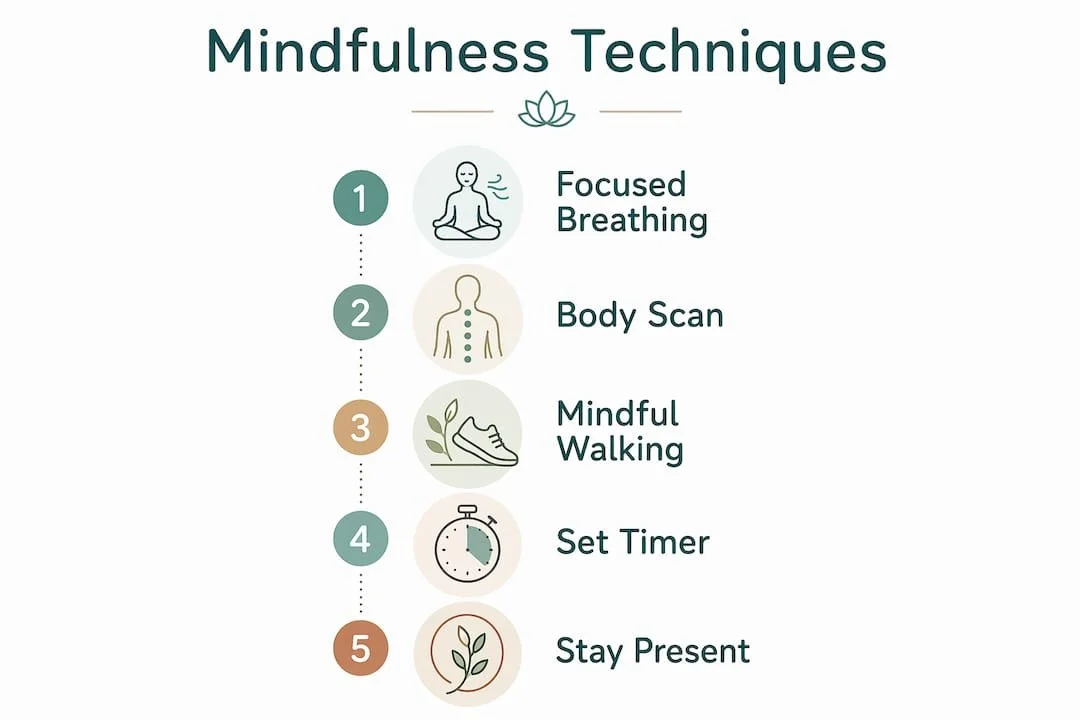
Step-by-step mindfulness techniques for beginners
Three methods work well for people new to mindfulness: focused breathing, the body scan, and mindful walking. Each one builds present-moment awareness in a slightly different way.

1. Focused breathing
Focused breathing is the most direct entry point into mindfulness practice. It uses the breath as an anchor because it is always available and always happening right now.
Sit comfortably and close your eyes or soften your gaze downward.
Take one slow breath in through your nose, noticing the sensation of air entering.
Exhale slowly and notice the feeling of release.
Continue breathing naturally. Do not force a rhythm.
When your mind drifts to a thought, gently return your attention to the breath.
Repeat for 1–5 minutes.
Returning focus after mind wanderingis the core exercise, not a failure. Every time you notice distraction and come back, you are doing exactly what mindfulness asks of you.
2. Body scan meditation
The body scan moves your attention slowly from one part of the body to another. It builds the skill of noticing physical sensations without judging them.
Lie down or sit comfortably.
Close your eyes and take three slow breaths.
Bring your attention to the top of your head. Notice any sensation: warmth, tension, or nothing at all.
Slowly move your focus down through your face, neck, shoulders, arms, chest, belly, hips, legs, and feet.
Spend 15–30 seconds on each area.
If you notice tension, breathe toward that spot and let it soften.
3. Mindful walking
Mindful walking turns movement into meditation. It works well for people who find sitting still frustrating.
Walk at a slower pace than usual.
Focus on the sensation of each foot lifting, moving forward, and landing.
Notice the ground beneath you, the air on your skin, and the sounds around you.
When your mind wanders to a to-do list or a worry, return your attention to your feet.
Pro Tip: Try mindful walking during a short trip you already take, like walking from your car to the office. You do not need extra time.
The table below shows how these three techniques compare for beginners:
| Technique | Time needed | Best for | Difficulty |
|---|---|---|---|
| Focused breathing | 1–5 minutes | Stress relief, focus | Low |
| Body scan | 5–15 minutes | Tension release, sleep | Low to medium |
| Mindful walking | 5–10 minutes | Restless minds, movement lovers | Low |
Common challenges beginners face and how to get past them
The biggest obstacle in mindfulness practice is not distraction. It is the belief that distraction means failure. Mind wandering is a normal part of practice, and noticing it is itself an act of awareness. The moment you realize your mind has drifted, you have already returned to the present.
Here are the most common challenges and what actually helps:
"My mind won't stop." This is universal. The goal is not a blank mind. The goal is to notice thoughts without chasing them. Treating thoughts as guests to acknowledge kindly, rather than fighting them, makes practice more effective.
"I don't have time." A one-minute pause counts. Mindfulness can be practiced in one-minute increments during daily activities. Waiting for coffee to brew is enough time.
"I keep getting interrupted." Silencing devices and informing family members before a session reduces interruptions significantly. Treat those minutes as protected time.
"I'm not feeling any different." Progress in mindfulness is subtle and cumulative. You may notice it first as a slightly longer pause before reacting to stress, not as a dramatic shift.
"The brain's evolutionary negativity bias is a primary target for mindfulness practice. Mindfulness teaches you to notice and hold onto positive experiences rather than letting them slip past unnoticed." — Harvard University
Patience is not passive. It is an active choice to keep showing up even when results feel invisible. That choice, repeated daily, is what builds the mental muscle mindfulness develops.
How to bring mindfulness into your everyday life
Formal meditation sessions are valuable, but mindfulness grows fastest when you weave it into activities you already do. The goal is to turn ordinary moments into brief windows of present-moment awareness.
You can find mindfulness activities for adults in nearly every part of your day. Here are the most practical entry points:
Mindful eating. Put your phone down during one meal. Notice the taste, texture, and temperature of each bite before swallowing.
Mindful showering. Focus on the sensation of water temperature, the smell of soap, and the sound of water. When your mind plans the day, return to the shower.
Mindful handwashing. Use the 20 seconds of handwashing as a reset. Feel the water, notice the lather, breathe once.
Mindful pauses. Before opening your email, take three conscious breaths. Before answering the phone, pause for one second and notice where you are.
Stacking mindfulness onto existing habits is the most reliable way to build consistency. The table below shows how informal practice compares to formal sessions:
| Practice type | Format | Time required | Best benefit |
|---|---|---|---|
| Formal session | Dedicated meditation time | 5–20 minutes | Deep focus, habit formation |
| Informal practice | Woven into daily activities | 1–3 minutes | Sustained awareness, low effort |
Building a daily mindfulness workflow does not require restructuring your schedule. It requires redirecting your attention during moments you already have.
Key takeaways
Consistent, short mindfulness sessions practiced daily produce more lasting mental health benefits than occasional long sessions.
| Point | Details |
|---|---|
| Start with 1–5 minutes | Short daily sessions build the habit faster than infrequent long ones. |
| Mind wandering is normal | Noticing distraction and returning focus is the actual practice, not a setback. |
| No equipment needed | Mindfulness works anywhere, from a chair to a sidewalk, with zero tools required. |
| Stack it onto habits | Attach brief mindful moments to existing routines like eating, walking, or washing hands. |
| Acceptance is the core skill | Treating thoughts without resistance makes practice more effective over time. |
What I've learned from building a real mindfulness practice
Most articles tell you mindfulness is simple. That is true. What they skip is that simple does not mean easy, especially in the first two weeks.
When I started, I expected to feel calm after every session. Instead, I noticed how loud my thoughts actually were. That was uncomfortable. What shifted my experience was understanding that noticing the noise is the point. You are not trying to silence the mind. You are learning to watch it without getting pulled in.
The second thing nobody tells you: the benefits show up sideways. You do not finish a session and feel transformed. You notice, three weeks in, that you paused before snapping at someone. You notice you slept better on the nights you practiced. The changes are quiet and cumulative, which is exactly why so many people quit too soon.
My honest recommendation is to pick one technique from the breathing, body scan, or walking methods and do it every day for two weeks before adding anything else. Variety is tempting but it delays the habit from forming. Once one method feels natural, exploring different mindfulness tips becomes genuinely useful rather than distracting.
Mindfulness is not a personality trait some people have and others don't. It is a skill. Skills get better with repetition. That's the whole story.
— Juiced
Mindfulness support at Amrita Yoga & Wellness in Philadelphia
Amritayogawellness offers a welcoming space for people who want to take their mindfulness practice further with real community support.
The studio's tarot readings pair naturally with mindfulness work, offering a reflective, intuitive layer to self-awareness practice. For people who find solo meditation difficult to sustain, guided classes in yoga, tai chi, and other mind-body disciplines provide the structure and accountability that make consistency easier. Amritayogawellness serves practitioners at every level, from first-timers to those deepening an existing practice. Visit the studio's website to see current class schedules, workshops, and wellness services available in Philadelphia.
FAQ
How long should a beginner practice mindfulness each day?
Beginners should start with 1–5 minutes daily, prioritizing consistency over session length. Short daily practice builds the habit more effectively than longer sessions done occasionally.
What is the easiest mindfulness technique for beginners?
Focused breathing is the most accessible starting point. It requires no equipment, takes as little as one minute, and can be done anywhere.
Is it normal for my mind to wander during mindfulness practice?
Mind wandering is completely normal and expected. Noticing that your mind has drifted and gently returning your focus is the core exercise of mindfulness, not a sign that you are doing it wrong.
Can I practice mindfulness without meditating formally?
Yes. Mindfulness can be woven into everyday activities like eating, walking, or washing hands. These informal practices build present-moment awareness without requiring dedicated meditation time.
How soon will I notice the benefits of practicing mindfulness?
Benefits are typically subtle and cumulative rather than immediate. Most people notice small changes, like a longer pause before reacting to stress, within two to three weeks of consistent daily practice.
Recommended
Find your balance: yoga, Pilates, and mindfulness in Philadelphia
TL;DR:
Holistic wellness centers in Philadelphia integrate yoga, Pilates, and mindfulness to support both physical and mental health. These centers emphasize personalized attention, small group classes, certified instructors, and a supportive community to foster lasting well-being. Their comprehensive approach addresses stress, posture, and emotional resilience more effectively than traditional single-modality studios.
Most people assume a yoga studio is simply a room full of mats and stretching routines. That assumption misses something significant. In Philadelphia, a growing number of centers are redefining what a wellness studio can do, weaving together yoga, Pilates, and mindfulness into a single, intentional experience designed to build genuine physical and mental balance. This guide walks you through what separates these holistic centers from standard studios, how the practices complement each other, how to choose the right fit for your lifestyle, and exactly what your first steps should look like. If you're ready to move beyond the occasional class and toward lasting well-being, this is your starting point.
Table of Contents
Key Takeaways
| Point | Details |
|---|---|
| Holistic approach | Yoga balance centers integrate yoga, Pilates, and mindfulness for physical and mental wellness. |
| How to evaluate | Evaluate studios based on instructor credentials, community feel, class size, and integrated programs. |
| Benefits beyond fitness | Consistent attendance can improve posture, reduce pain, and lower stress long-term. |
| Easy to start | Begin with trial classes and supportive environments designed for all experience levels. |
What is a yoga balance center?
Most traditional yoga studios do one thing well: teach yoga. That's not a criticism. But a yoga balance center takes a much broader view of what it means to feel well in your body and mind. Rather than offering a single modality, a true balance center brings together multiple integrated practices, including yoga, Pilates, and mindfulness techniques, to address the full picture of adult well-being.
The difference shows up in the details. Class sizes tend to be smaller, which allows instructors to give personalized adjustments and real feedback. The environment is designed to feel supportive rather than competitive. And the programming reflects a philosophy that physical strength and mental clarity are not separate goals but two parts of the same practice.
Here are the core features that define a genuine yoga balance center:
Integrated modalities: Yoga, Pilates, and mindfulness are offered together, not as isolated add-ons
Certified instructors: Teachers hold credentials in their specific disciplines, not just general fitness certifications
Small group settings: Class sizes are intentionally limited to preserve safety and individual attention
Whole-person focus: Programming addresses stress, mental clarity, and emotional health alongside physical fitness
Community culture: Regular practitioners are known by name, and instructors track your progress over time
"Balance Studios in Philadelphia offers Ashtanga Yoga alongside martial arts, focusing on physical and mental well-being in a supportive environment."
This kind of intentional design matters deeply for adults who want real-life results. Stress, posture problems, and mental fatigue don't respond to physical exercise alone. They require a holistic approach where the nervous system gets as much attention as the muscles. Understanding the Pilates basics of core engagement, for example, connects directly to how your body manages tension during a stressful workday. That connection is what balance centers are built to create.
How yoga, Pilates, and mindfulness work together
Now that you know what a yoga balance center offers, let's explore how its main practices combine for whole-body results. Each discipline brings something distinct to the table, and the real value emerges when you practice all three with consistency.
Yoga builds flexibility, body awareness, and breath control. Over time, a consistent yoga practice improves your range of motion, reduces joint stiffness, and trains you to notice tension patterns in your own body before they become pain. Pilates targets the deep stabilizing muscles of the core, improving posture and spinal alignment in ways that carry over into every other physical activity. Mindfulness addresses the mental layer, reducing stress hormones, sharpening focus, and helping you stay present in your body during practice and in daily life.
| Practice | Primary benefit | Secondary benefit | Combined benefit |
|---|---|---|---|
| Yoga | Flexibility and balance | Breath awareness | Better body-mind connection |
| Pilates | Core strength and posture | Spinal stability | Reduced back pain and injury risk |
| Mindfulness | Stress reduction | Mental focus | Sustained motivation and consistency |
| All three combined | Whole-body balance | Emotional resilience | Lasting lifestyle change |
For adults in Philadelphia juggling work, family, and city living, the combined effect of these three practices is genuinely different from what any one practice achieves alone. Pilates mindfulness exercises train your ability to stay mentally present while your body works hard, which is a skill that transfers directly into managing high-pressure situations off the mat. Mindfulness for yoga deepens the physical practice by helping you connect breath to movement rather than just going through the motions.
Studies and practitioner experience alike support the idea that integrated practice benchmarks include consistent improvement in posture, pain reduction, and mental clarity when yoga, Pilates, and mindfulness are practiced together with individualized attention in small group settings.
Pro Tip: Adding even one dedicated mindfulness session per week alongside your yoga or Pilates classes can significantly improve how quickly you notice physical results. Mindfulness reduces the stress-related tension that often counteracts the physical benefits of exercise, which means your body can actually absorb and adapt to the work you're putting in. You can explore examples of mindfulness techniques specifically designed for yoga and Pilates practitioners to get started.
How to choose the best yoga balance center in Philadelphia
Understanding the combined power of yoga, Pilates, and mindfulness leads naturally to what matters in choosing a studio designed for balance. Not every studio that mentions "wellness" actually delivers integration. Here's how to evaluate your options clearly.
| Evaluation factor | What to look for | Red flag |
|---|---|---|
| Class offerings | Yoga, Pilates, and mindfulness in the same program | Only one discipline available |
| Instructor credentials | Certifications in each specific modality | Generalist fitness background only |
| Class size | Under 15 students per session | Crowded, impersonal group classes |
| Community focus | Instructors know practitioners by name | High turnover, transactional feel |
| Studio homepage | Detailed descriptions of philosophy and programming | Sparse listings without context |
When exploring studios, prioritize those with detailed homepages over directory listings. A studio's own website reveals far more about its culture, teaching philosophy, and programming depth than a third-party listing can. Look for studios that clearly explain how each modality is taught, who the instructors are, and what a new student's experience will look like from day one.
According to established holistic studio benchmarks, adults seeking genuine balance should prioritize studios that offer individualized attention, small group safety, and integrated yoga, Pilates, and mindfulness programming rather than settling for one-size-fits-all fitness classes.
Here's a checklist to use when contacting studios directly:
Does the studio offer classes in at least two of the three core modalities (yoga, Pilates, mindfulness)?
Are class sizes capped, and if so, at what number?
Do instructors hold certifications specific to the modalities they teach?
Is there an introductory program or trial period for new students?
Does the studio communicate a clear philosophy about mental and physical well-being?
For those focused on managing stress through movement, check out resources on fitness for stress relief to better understand what kinds of programming actually address the nervous system rather than just burning calories. And if you're building your overall approach to practice, the Fitness and Yoga Tips archive is a strong place to build your knowledge before committing to a studio.
Red flags worth watching for include studios that push advanced classes on beginners, lack certified instructors, or treat mindfulness as an afterthought rather than a foundational element of the programming. If a studio can't clearly explain how its practices work together, that's a sign the integration is surface-level rather than genuine.
Getting started: Practical steps and what to expect
Armed with selection criteria, you're ready for practical action. Here's what starting your wellness journey really looks like, step by step.
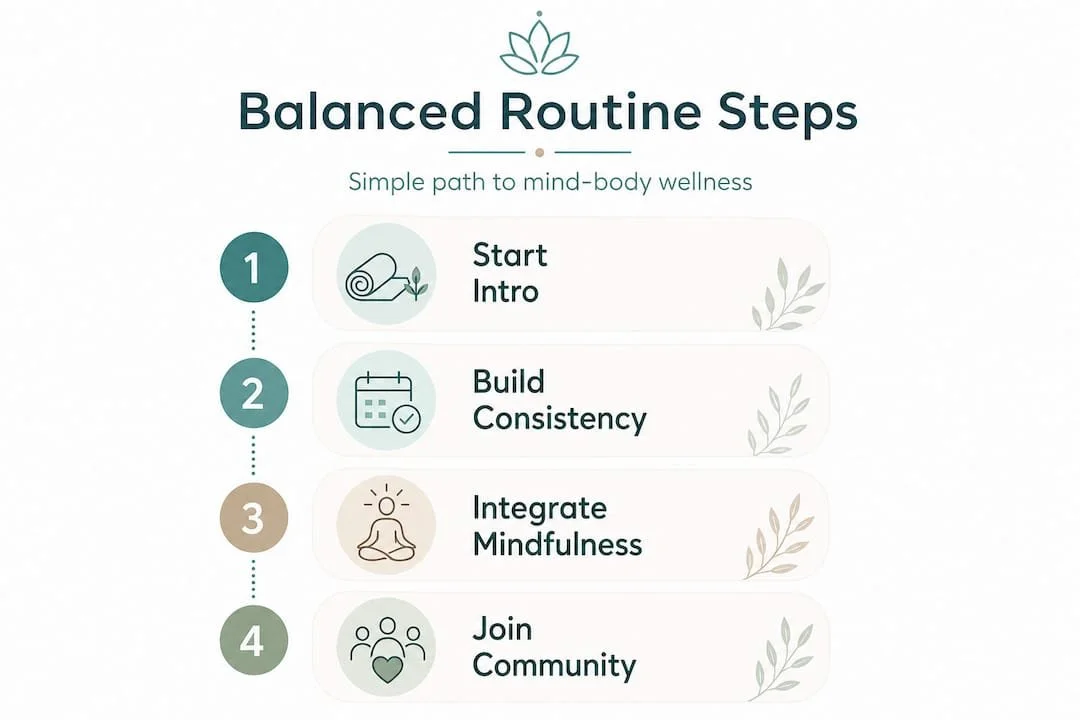
Research local studios online and read their full websites, not just their social media profiles. Look for detailed class descriptions, instructor bios, and a stated philosophy about holistic wellness.
Visit in person before committing. Walk through the space, notice whether it feels welcoming, and pay attention to how staff interact with current students.
Sample a class through an introductory offer or drop-in session. Most quality studios offer these specifically for new students.
Talk directly to instructors after class. Ask about their certifications, how they approach beginners, and how the studio structures its integrated programming.
Reflect on fit after your first two or three visits. Does the environment feel supportive? Are instructors attentive? Do you leave feeling better than when you arrived?
Pro Tip: Always start with an introductory package or designated beginner series rather than jumping into a mixed-level class. This gives you time to learn proper alignment, ask questions without pressure, and build confidence before practicing alongside more experienced students. The difference in your long-term consistency will be significant.
Your first month will likely include a safety orientation, an introduction to studio culture, and a gradual ramp-up in challenge. Expect to feel some muscle awareness (not pain) as your body adapts. Most students notice improved posture within three to four weeks, reduced stress responses by week six, and sharper mental focus by the end of the first month of consistent practice.
For deeper guidance on essential mind-body wellness tips, resources are available to help you prepare for what a balanced practice program actually involves. If you're curious about specialty formats that challenge your body in new ways, understanding aerial yoga safety explained can help you make informed decisions as your practice grows.
Building consistency is where most adults stumble. The solution isn't willpower. It's structure. Scheduling your classes as fixed appointments, choosing a studio that feels like a community, and tracking small milestones like less back pain or sleeping better keeps motivation grounded in real experience rather than abstract goals. Balance Studios in Philadelphia is one example of a center that creates this structured, supportive environment alongside diverse physical programming.
Why most adults struggle with balance—and how holistic studios change everything
After outlining steps for getting started, it's worth reflecting on why this whole-person approach actually works in ways that most wellness advice overlooks.
Conventional wisdom tells adults to exercise more. Go to the gym, run a few miles, take a weekly yoga class. The problem is that this advice treats the body like a machine and ignores everything else. Stress isn't just mental. It lives in your shoulders, your jaw, your breathing pattern. An isolated fitness routine can temporarily burn off tension, but it rarely addresses the nervous system patterns that create that tension in the first place.
Urban adults in Philadelphia face a specific combination of stressors: long commutes, dense living, demanding careers, and very little unstructured time. These conditions create a chronic low-level activation state in the body that sporadic yoga classes simply can't undo. What they need is a sustained practice environment where the nervous system is consistently given permission to regulate.
This is exactly where holistic studios change the equation. Mindfulness for Pilates teaches practitioners to bring conscious attention to core engagement, which directly calms the sympathetic nervous system while strengthening the body. Yoga builds flexibility not just in muscles but in how you respond to discomfort. When practiced together in a supportive community setting, these disciplines reinforce each other in a way that solo workouts never can.
What surprises most adults who make the shift to a genuine balance center is how much the community element matters. When your instructor knows your name, when fellow students recognize your progress, and when you feel accountable to showing up, the practice becomes self-sustaining. That social layer turns good intentions into durable habits, and durable habits are the only thing that actually transforms how you feel in your body and your life.
The uncomfortable truth is that most adults aren't struggling with balance because they lack discipline. They're struggling because they've been trying to solve a whole-person problem with a single-discipline answer. Holistic centers exist to close that gap.
Explore holistic balance with specialists in Philadelphia
Having explored the why and how behind balanced living, the next step is to experience these benefits firsthand with a reputable Philadelphia center.
Amrita Yoga & Wellnessoffers an integrated approach to physical and mental well-being through yoga, Pilates, mindfulness, and a range of specialty sessions designed to support every level of practitioner. Whether you're brand new to movement-based wellness or looking to deepen an existing practice, the studio's programs are structured to meet you where you are.
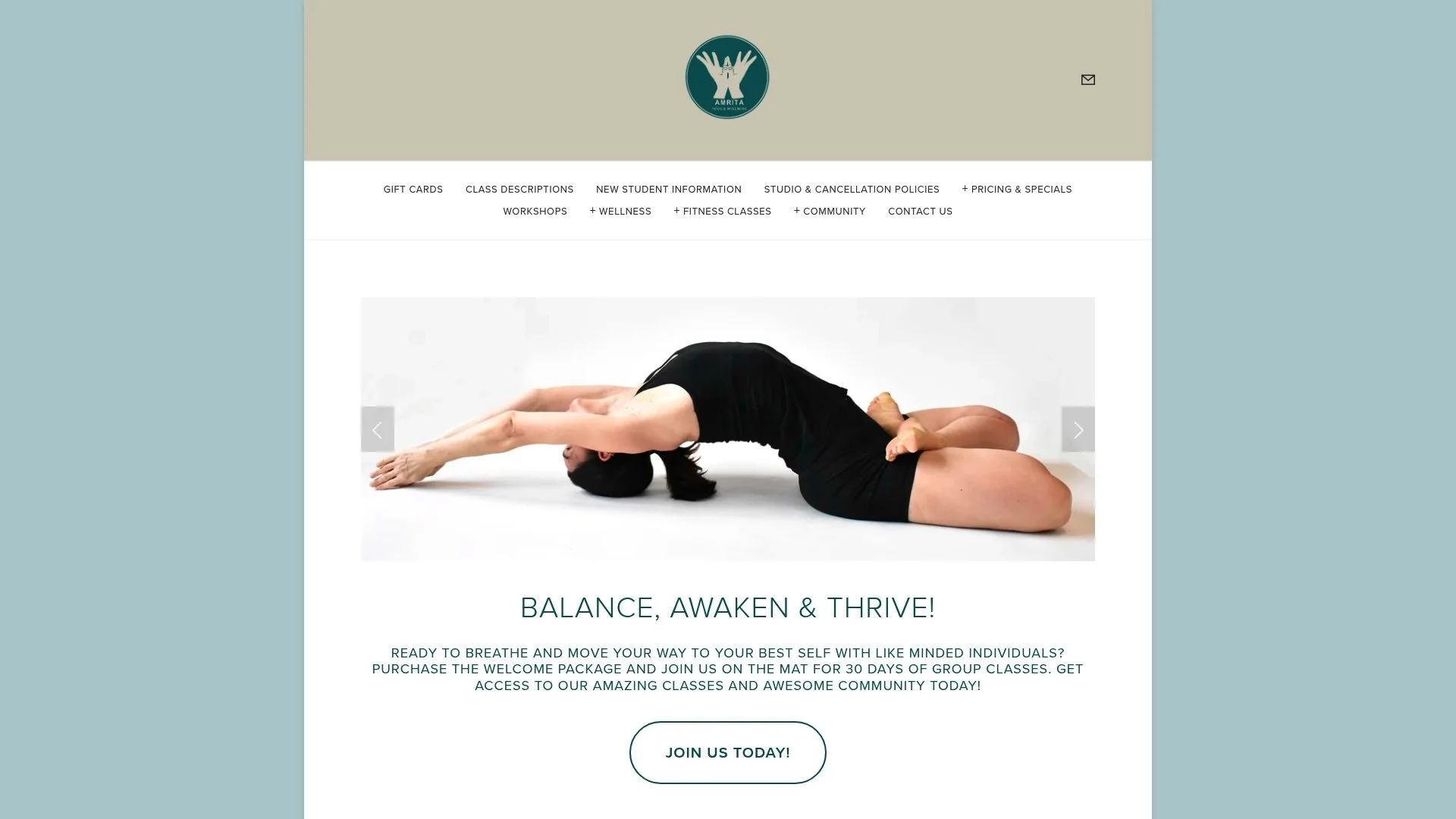
From beginner yoga series to specialized workshops including Tarot readings and holistic wellness sessions, the studio's offerings reflect a genuine commitment to whole-person care. Explore the full class schedule, connect with certified instructors, and find the entry point that fits your life. The community is welcoming, the programming is intentional, and the results speak for themselves.
Frequently asked questions
What's the difference between a yoga balance center and a regular yoga studio?
A yoga balance center blends yoga, Pilates, and mindfulness to support both physical and mental health, while a regular studio typically focuses on yoga alone. Centers like Balance Studios in Philadelphia illustrate this by pairing yoga with other disciplines to serve the whole person.
How do I know if a studio is right for my needs?
Look for small group sizes, certified instructors, and integrated programming, then visit their homepage and ask about trial classes. Holistic studio benchmarks emphasize individualized attention and consistent outcomes like posture improvement and pain reduction as key indicators of quality.
What are the main benefits of integrating yoga, Pilates, and mindfulness?
Integrated practice boosts posture, reduces pain, lowers stress, and supports emotional well-being beyond what physical exercise alone can achieve. Combined practice research consistently highlights posture improvement and pain reduction as early and measurable benefits.
Is a yoga balance center suitable for beginners?
Yes. Most studios offer introductory programs, emphasize safety, and help beginners gradually build consistency and confidence. Balance Studios in Philadelphia is one example of a center that creates a supportive environment for students at every experience level.
Recommended
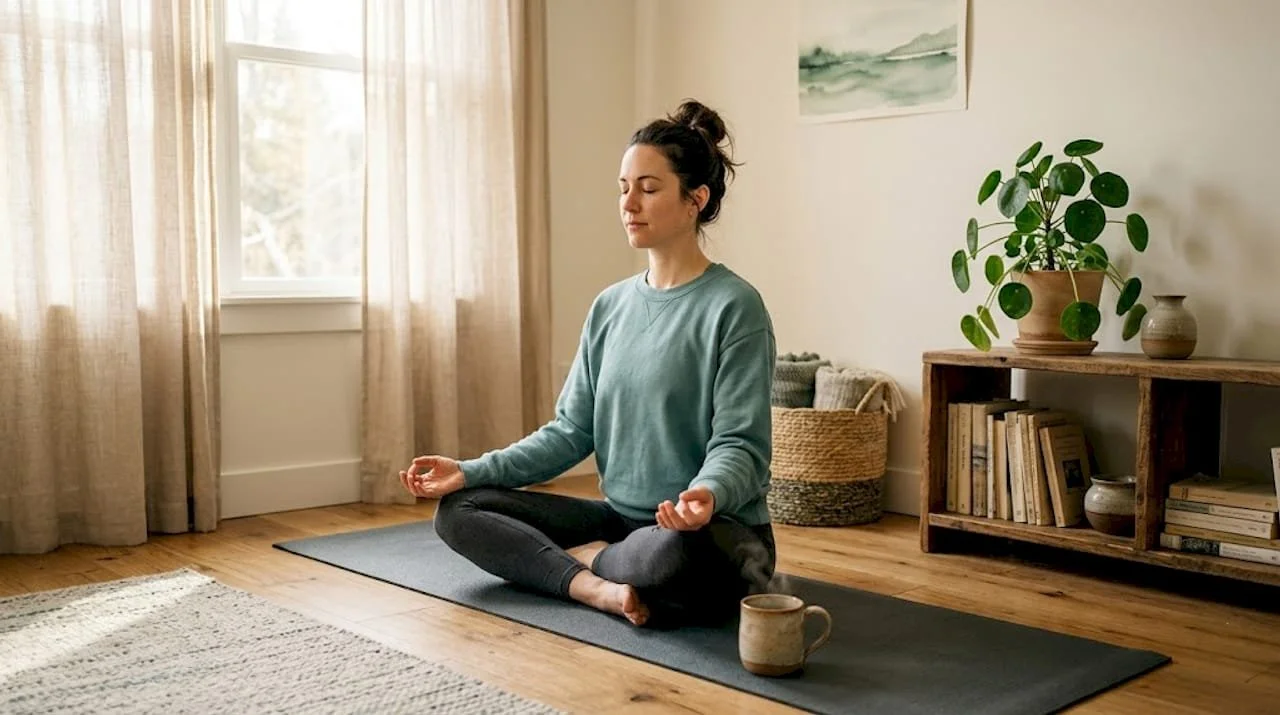
Explore 6 types of mindfulness meditation for clarity
TL;DR:
Different mindfulness practices suit specific goals like stress reduction or focus enhancement.Short, consistent sessions of 5 to 20 minutes can effectively improve mindfulness.Combining practices such as focused attention, open monitoring, and loving-kindness fosters lasting growth.
Walking into the world of mindfulness meditation for the first time feels a lot like standing in front of a menu with fifty options. You know you want something good, but the sheer variety makes it hard to know where to start. Focused attention? Loving-kindness? Body scan? Open monitoring? Each practice promises stress relief, mental clarity, and personal growth, but not all of them work the same way or deliver the same results. This guide cuts through the confusion by comparing six key mindfulness meditation types, helping you match the right approach to your actual goals so you can stop guessing and start practicing with purpose.
Table of Contents
Key Takeaways
| Point | Details |
|---|---|
| Match meditation to goals | Each mindfulness type offers unique benefits, so choose based on your top wellness priorities. |
| Short practices work | Even brief daily meditations can significantly lower stress and increase clarity. |
| Acceptance cultivates resilience | Practices that include non-judgment are especially powerful for long-term emotional health. |
| Mixing methods is powerful | Drawing on different types of mindfulness sustains results and keeps your routine engaging. |
How to evaluate mindfulness meditation practices
Before you commit to any single style, it helps to understand what makes each practice distinct. Choosing based on a friend's recommendation or a trending app might get you started, but it rarely keeps you going. The better move is to evaluate each form against your personal goals and daily reality.
The most important thing to know is that mindfulness definitions vary widely, covering attention training, acceptance, compassion, and even ethical development. That means two people who both say they "do mindfulness" might be practicing in completely different ways, with completely different outcomes. Once you understand this, evaluating your options becomes a lot clearer.
Here are the core criteria worth considering when you assess any practice:
Goal alignment: Are you trying to reduce anxiety, sharpen focus, build self-compassion, or manage chronic pain? Different forms target different outcomes.
Ease of entry: Some practices can be done anywhere with zero guidance. Others benefit from a teacher, especially early on.
Time commitment: Practices range from five minutes of breathing to hour-long guided body scans. Know what you can realistically sustain.
Physical requirements: Seated meditation works for many people, but if sitting still is difficult, movement-based options may serve you better.
Guidance needed: Apps and recordings work well for attention practices. Compassion and ethics-based forms often go deeper with a live instructor or community.
Getting clear on these mindfulness practice basics before you start saves you weeks of trial and error.
Pro Tip: Test any new meditation style for at least five to seven sessions before deciding if it works for you. First sessions are almost always awkward, and your brain needs a little repetition before the benefits become noticeable.
Focused attention meditation: Training your mind
With those criteria in mind, let's start with focused attention meditation, probably the most widely practiced form and often the first one people try.
The core technique is simple. You pick one object to focus on, typically the breath, a mantra, or a single point of visual focus, and you keep returning your attention to it whenever your mind wanders. That act of noticing the wander and returning is actually the whole practice. Every redirect is a small mental rep, and over time those reps build real concentration.
The benefits are well documented. Attention-based practices boost focus and help people manage distractions far more effectively in daily life. For busy Philadelphia adults juggling work, commutes, and packed schedules, this form of meditation offers a practical mental reset that carries over into everything else you do.
Common challenges include:
Mind wandering: Completely normal. The practice is not about having zero thoughts. It is about noticing them and coming back.
Restlessness: Sitting still feels unnatural at first. Shorter sessions of five to ten minutes help build tolerance.
Boredom: Many people abandon focused attention practice because it feels too simple. Stick with it. The simplicity is the point.
Frustration: Expecting instant calm actually creates more tension. Lower the expectation, and the results show up faster.
"Even five minutes of daily focused attention practice can produce measurable increases in state mindfulness. The practice does not need to be long to be effective."
The best way to explore mindfulness meditation techniques like focused attention is to start short and consistent rather than long and occasional. A ten-minute daily practice beats a forty-five-minute session twice a week every time.
Open monitoring meditation: Embracing awareness
While focused attention builds concentration, open monitoring offers a different path toward mindful living. Instead of anchoring attention on one thing, open monitoring asks you to observe whatever arises in your awareness, thoughts, sensations, emotions, sounds, without labeling, judging, or chasing any of it.

Think of it like sitting on a park bench in Philadelphia and watching people walk by. You notice them. You do not chase them down or push them away. You just watch. That is exactly what open monitoring feels like once you get the hang of it.
This approach is especially powerful for breaking negative thought cycles. When you practice observing thoughts without reacting to them, the automatic grip those thoughts have over your mood and behavior starts to loosen. Acceptance-based practices show moderate efficacy for stress and pain, with acceptance and non-judgment emerging as stronger predictors of improvement than meditation frequency alone.
Key benefits of open monitoring practice:
Builds emotional resilience over time rather than just temporary calm
Reduces reactivity in difficult conversations and stressful situations
Supports pain management by changing your relationship to discomfort rather than fighting it
Develops genuine self-awareness and a cleaner understanding of your own patterns
Open monitoring is also excellent for mindfulness for stress relief because it teaches you to tolerate uncertainty and discomfort without needing to immediately fix or escape it. That is a skill with applications in every area of life.
Pro Tip: During open monitoring, try noticing each thought or sensation and silently acknowledging "there it is" without further commentary. This tiny shift interrupts the habit of immediately evaluating everything as good or bad.
Other key forms: Loving-kindness, body scan, and movement meditation
Beyond attention and monitoring, several other types support holistic wellness outcomes. Mindfulness as a family of practices extends well past attention or acceptance into compassion, body awareness, and ethical development. Here are three forms worth knowing.
Loving-kindness meditation (Metta): This practice involves silently repeating phrases of goodwill directed at yourself and then gradually expanding outward to others. Phrases like "May I be well. May I be happy. May you be free from suffering." might sound simple, but they actively rewire how the brain generates social emotions over time. People who practice loving-kindness consistently report greater warmth, fewer feelings of isolation, and a more forgiving relationship with themselves. This makes it especially valuable for anyone dealing with chronic self-criticism or burnout.
Body scan meditation: You move your awareness slowly through each part of the body, noticing sensation without trying to change it. A body scan paired with MBSR (Mindfulness-Based Stress Reduction) is one of the most researched combinations for managing chronic pain and physical tension. It improves interoception, meaning your ability to accurately read your own body's signals, which is fundamental for stress awareness and regulation.
Mindful movement meditation: This form integrates awareness into physical activity, including yoga, walking, tai chi, and qigong. Instead of zoning out during exercise, you tune in to your breath, your body's position, and the sensations of movement. For people who find seated meditation frustrating or inaccessible, mantra meditation and movement practices offer an entry point that feels less restrictive and more sustainable.
Pro Tip: If seated meditation consistently feels like a struggle, start with ten minutes of mindful walking before attempting seated practice. The physical movement settles the nervous system and makes stillness easier to access.
Comparison table: Which mindfulness meditation style fits you?
Now, to help you decide, here is a side-by-side comparison of the key mindfulness meditation forms. Research shows that 8-week MBSR programs produce large reductions in stress, while even brief daily practices prove effective for improving moment-to-moment mindfulness. Both approaches have a real place in your wellness toolkit.
| Practice | Description | Best for | Suggested session length |
|---|---|---|---|
| Focused attention | Anchor awareness on breath, mantra, or object | Beginners, focus improvement | 5 to 20 minutes |
| Open monitoring | Observe thoughts and sensations without judgment | Stress resilience, emotional regulation | 10 to 30 minutes |
| Loving-kindness | Cultivate compassion toward self and others | Self-compassion, social connection | 10 to 20 minutes |
| Body scan | Systematic awareness of body sensations | Chronic pain, sleep, tension relief | 20 to 45 minutes |
| Mindful movement | Awareness integrated into yoga, walking, tai chi | Active learners, beginners to sitting | 15 to 45 minutes |
| MBSR program | Structured 8-week curriculum combining multiple forms | Clinically significant stress or pain | 45 to 60 minutes |
Before committing to one practice, run through these decision questions:
Do you want immediate calm or long-term emotional resilience?
Are you managing a specific condition like chronic pain or anxiety?
Do you prefer structure or open-ended exploration?
How much time can you genuinely commit each day?
Does physical movement help you focus or distract you?
You can also explore a full breakdown in this guide on 7 types of meditation practices for holistic wellness, or check out practical stress reduction mindfulness tips to complement whatever style you choose.
One more thing worth knowing: blending practices is not only allowed, it is often ideal. Body scan pairs naturally with open monitoring. Loving-kindness works beautifully as an addition to focused attention. You do not have to choose just one and stay there forever.
Why mixing methods beats choosing just one
Here is something most meditation guides will not tell you: rigid loyalty to a single practice style can actually cap your growth. We have watched practitioners in Philadelphia spend years perfecting focused attention only to hit a ceiling, not because the practice failed them, but because they never introduced the acceptance and compassion dimensions that create lasting change.
The research backs this up. Acceptance skills sustain benefits more powerfully than sitting frequency alone. That means someone who practices open monitoring twice a week often outperforms someone doing focused attention daily, especially for long-term stress outcomes.
The most effective approach we have seen is a rotating or layered method. You might start a session with five minutes of focused attention to settle the mind, shift into open monitoring for ten minutes to build awareness, and then close with two minutes of loving-kindness. That progression mirrors the natural arc of a well-supported nervous system.
Exploring meditation typesover time also prevents the staleness that causes people to abandon practice altogether. Your needs shift. What you needed at 30 is different from what serves you at 45. Give yourself permission to evolve. The goal is not a perfect meditation resume. It is a life that gradually feels cleaner, calmer, and more intentional.
Ready to start your mindfulness journey?
Finding the right meditation style is one thing. Having a supportive community to practice with makes the whole experience easier, more consistent, and honestly more enjoyable.
At Amrita Yoga & Wellness, we offer a full range of classes and workshops right here in Philadelphia, from yoga and tai chi to guided meditation and even mindful tarot readings for those who want to explore their inner world from a different angle. Whether you are brand new to mindfulness or looking to deepen an existing practice, our studio is designed to meet you wherever you are. Come explore what fits, and let the community support your growth every step of the way.
Frequently asked questions
Which type of mindfulness meditation is best for reducing stress?
MBSR and acceptance-based practices are among the most effective for lowering stress over time, with acceptance and non-judgment proving especially important for sustaining those benefits.
Can short daily mindfulness sessions have an impact?
Yes. Brief 5 to 20 minute sessions produce measurable increases in state mindfulness and mood, making even a short daily commitment well worth your time.
What's the difference between focused attention and open monitoring?
Focused attention trains your mind to concentrate on a single anchor like the breath, while open monitoring means observing thoughts and feelings without judgment or attachment to any of them.
How do I choose the right form of mindfulness meditation?
Start by identifying your main goal, whether that is stress relief, better focus, self-compassion, or physical wellness, then try two or three styles for at least a week each to see what genuinely resonates with your daily life.
Recommended
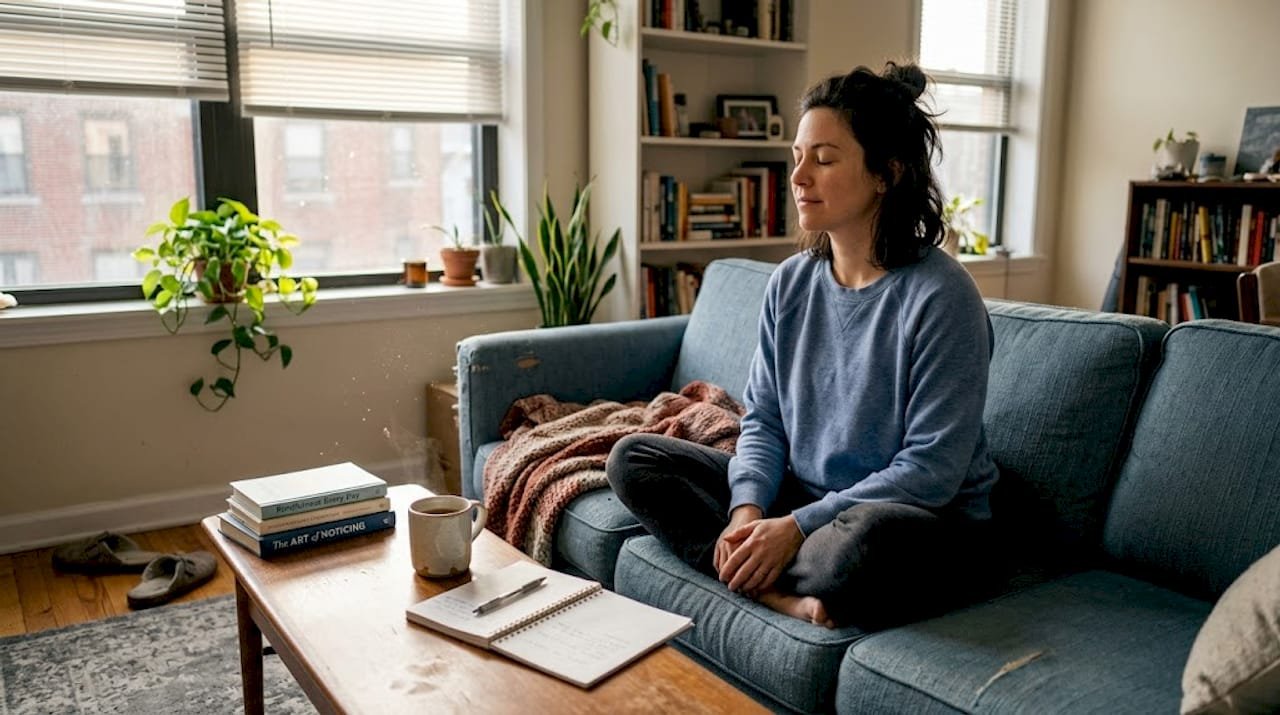
Step-by-Step Mindfulness: Practical Guidance for Everyday Calm
TL;DR:
Mindfulness can be practiced anywhere, even with busy schedules and city noise.Consistent, small daily practices build emotional resilience and reduce stress effectively.Community involvement and flexible routines are key to sustaining mindfulness long-term.
Philadelphia moves fast. The rumble of the Market-Frankford line, back-to-back meetings, crowded sidewalks in Center City, and the endless pull of your phone can leave your nervous system running on overdrive by noon. The good news is that mindfulness, practiced consistently and without perfection, can interrupt that cycle. This guide is built for real Philadelphians with real schedules. You will learn exactly what to do, when to do it, and how to keep going even on the days when calm feels completely out of reach.
Table of Contents
Key Takeaways
| Point | Details |
|---|---|
| Start small and stay consistent | Short, regular mindfulness practices make a real difference in stress reduction. |
| Local adaptation matters | Integrating mindfulness into your Philadelphia routine is easier with community resources and context-specific strategies. |
| Notice and return | The heart of mindfulness is gently noticing when your mind wanders and returning your attention, not achieving perfect focus. |
| Expect measurable benefits | Most individuals notice lower stress and emotional improvement within a few weeks of steady mindfulness exercises. |
What you need to begin your mindfulness journey
Mindfulness is the practice of paying deliberate, non-judgmental attention to your present-moment experience. That is the whole definition. It does not require a silent room, a meditation cushion, or any special equipment. What it does require is a willingness to show up, even imperfectly.
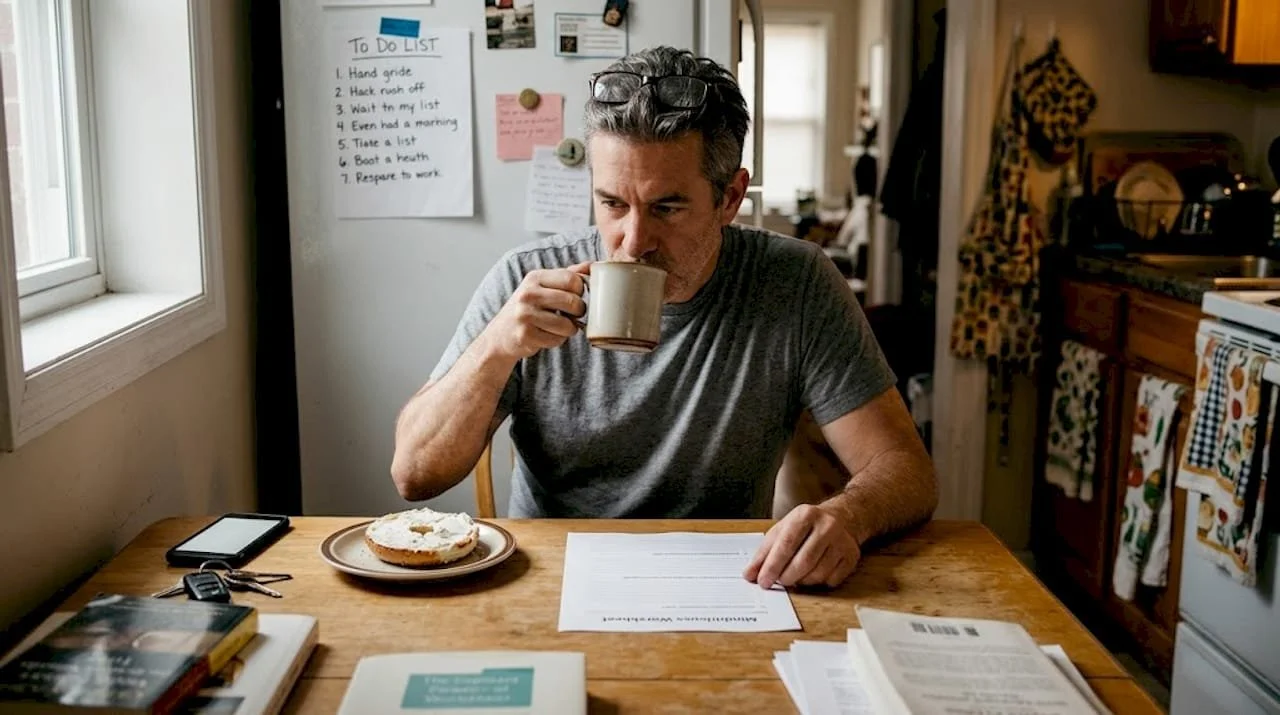
People often assume they need perfect conditions to start. They do not. You can practice on a SEPTA bus, during a lunch break in Clark Park, or sitting at your kitchen table before the rest of the household wakes up. The setting matters far less than the intention.
Here is a short list of helpful (but optional) materials to support your practice:
A timer or meditation app (Insight Timer and Calm are free or low-cost)
A journal for brief post-practice reflections
A comfortable chair or floor cushion
Noise-canceling earbuds if you find city noise distracting at first
A simple daily checklist to track consistency
For those looking for a structured start, the MBSR program (Mindfulness-Based Stress Reduction) is an 8-week course developed by Jon Kabat-Zinn that includes weekly sessions of 2 to 2.5 hours, daily 45 to 60 minute home practice, and one all-day retreat. That is a serious commitment, but knowing this helps set realistic expectations. You do not need to start there. Most beginners do well with just 5 to 15 minutes a day.
Pro Tip: Pair your mindfulness practice with an existing habit, like morning coffee or your commute home. "Habit stacking" makes it easier to stay consistent without carving out a brand new block of time.
| Commitment level | Time per day | What to expect |
|---|---|---|
| Beginner | 5 to 10 minutes | Reduced acute stress, better focus |
| Intermediate | 15 to 30 minutes | Mood improvements, less reactivity |
| Structured (MBSR) | 45 to 60 minutes | Sustained emotional and cognitive gains |
For ongoing inspiration and mindfulness practice tips that fit a busy lifestyle, our blog is a solid starting point.
Mindfulness step by step: Core practices explained
Now that you know what to expect, here are the four foundational practices used in evidence-based mindfulness programs. These core practices include the body scan, sitting meditation, mindful movement, and mindful tasks.
Body scan. Lie down or sit comfortably. Starting at your feet, slowly move your attention up through your body, noticing sensations without trying to change them. Spend about 20 to 45 minutes. This trains your nervous system to detect tension before it builds into pain or anxiety.
Sitting meditation. Sit upright with your spine tall but not rigid. Focus your attention on the physical sensation of breathing. When your mind drifts (and it will), gently return attention to your breath. Start with 5 minutes and build from there.
Mindful movement. This includes slow yoga, tai chi, or even a deliberate walk. The goal is to connect physical movement with present-moment awareness. Pay attention to how your body feels in motion, not where you are going or what is next on your list.
Mindful tasks. Pick one daily activity, washing dishes, brushing your teeth, or eating lunch, and give it your full attention. Notice textures, temperatures, and sounds. This is one of the most underrated practices because it requires zero extra time.
"The goal is not to stop your thoughts. The goal is to stop letting your thoughts stop you." Returning your attention is the practice, not preventing distraction.
A meta-analysis of mindfulness interventions confirms that these practices robustly and sustainably reduce perceived stress across diverse populations. This is not anecdotal. The evidence base is strong.
| Practice | Time needed | Best for |
|---|---|---|
| Body scan | 20 to 45 minutes | Physical tension, sleep issues |
| Sitting meditation | 5 to 20 minutes | Mental clarity, focus |
| Mindful movement | 10 to 30 minutes | Anxiety, low energy |
| Mindful tasks | 0 extra minutes | Beginners, time-pressed people |
For a broader look at examples of mindfulness practices and how they support your health, we have a full breakdown on the blog.
You can also browse mindfulness exercises organized by category.
Integrating mindfulness into daily life in Philadelphia
Knowing the steps is one thing. Building them into a real Philadelphia day is another. The city does not pause for your meditation timer. So the strategy is to bring mindfulness to where your life already is.
Here are practical micro-practices that fit into urban rhythms:
Morning body scan (5 minutes). Before you check your phone, do a brief scan from head to toe while still in bed. Notice what feels tight or alert. This sets a grounded tone before the noise begins.
Mindful commute. On the subway or bus, put your phone away for two stops. Notice the sounds, the weight of your bag, the feeling of your feet on the floor. No special effort required.
Lunch reset. Step outside or away from your desk. Eat one meal a week with no screen. Focus on flavor, temperature, and pace. A 10-minute reset improves afternoon concentration significantly.
Evening reflection. Before sleep, write two or three sentences in a journal. What did you notice today? What felt heavy? What helped? This brief ritual builds emotional clarity over time.
Pro Tip: Research suggests that nearly half of waking hours are spent with attention drifting away from what we are actually doing. Mindfulness is not about eliminating that drift. It is about noticing it faster and returning with less drama each time.
Philadelphia has real local resources to support your routine. A structured mindfulness workflow built around morning scans, mindful walking, and evening reflection can anchor your week without overwhelming it. For more ideas, our guide to mindfulness activities for everyday life is packed with approaches tested in real urban settings. You can also find targeted reduce stress tips tailored to busy schedules.
Troubleshooting and common mistakes: Stay on track
Even people who love their practice hit rough patches. Here is what usually goes wrong and how to handle it.
The biggest barriers most people face:
"I do not have time." This usually means practice has not been linked to an existing routine yet. Five minutes counts. Do not wait for a longer window.
"I am not doing it right." There is no perfect mindfulness session. If you are noticing your experience, you are doing it right.
"It is not working." Progress is subtle. You may not feel calmer during practice but notice you snapped at fewer people that week. That is the work showing up.
"I keep forgetting." Use a phone reminder labeled with something motivating, not just "meditate." Try "two minutes for yourself" instead.
The mechanics of mindfulness prioritize consistency over duration. Every time you notice your mind has wandered and you bring it back, that moment is the practice succeeding. Not failing.
Pro Tip: When you miss a day or a week, do not restart from scratch mentally. Just do your next session. Treat it like skipping the gym, you go back without a guilt spiral. Consistency over time matters far more than perfection on any single day.
For a full set of mindfulness tips to stay consistent without burning out, check out that dedicated guide. If you find yourself consistently struggling, that is a good signal to join a group or work with a teacher. Shared accountability changes everything.
Measuring results: How mindfulness changes your well-being
Change from mindfulness is often quiet. You do not wake up one morning enlightened. Instead, you notice things: you paused before reacting, you slept a little better, the afternoon anxiety was lighter than usual.
Here are clear markers to watch for:
Shorter emotional recovery time after stressful events
Increased ability to focus on one thing at a time
Improved quality of sleep or easier time falling asleep
Reduced physical symptoms of stress (tight shoulders, shallow breathing, headaches)
Greater ease in difficult conversations
A meta-analysis of 17 RCTs confirms that mindfulness interventions reduce perceived stress post-intervention, with effects that are both robust and sustained over time. This is not a short-term mood boost. It is neurological and behavioral change.
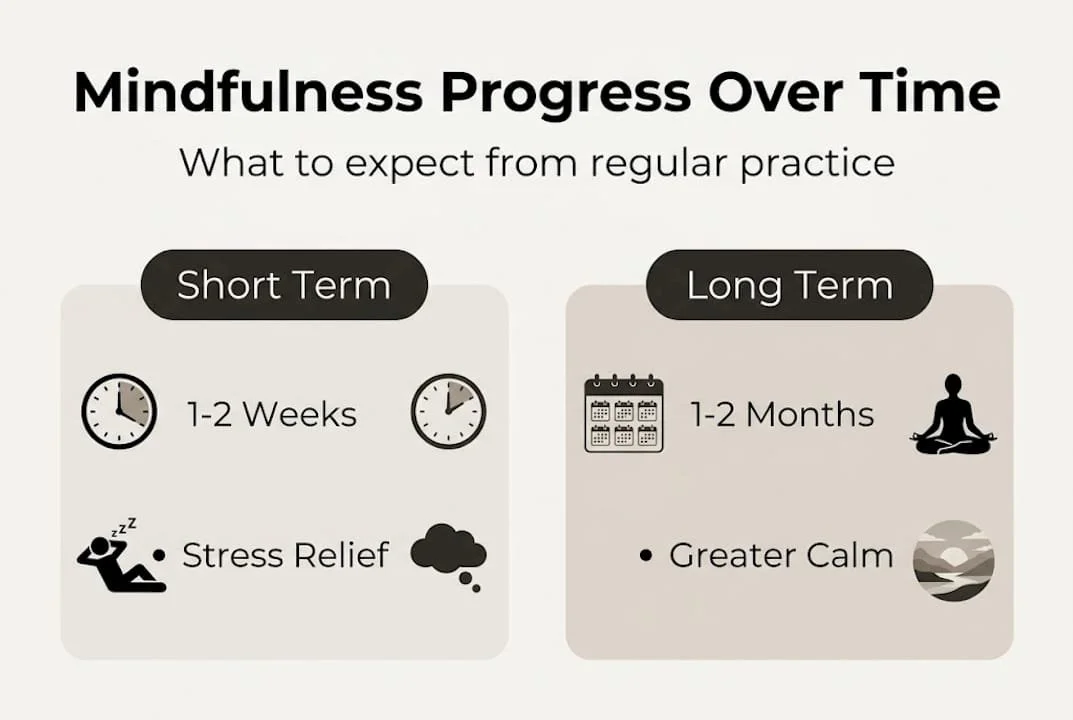
| Timeframe | What you may notice |
|---|---|
| Week 1 to 2 | Mild reduction in acute stress, more awareness of tension |
| Week 3 to 4 | Improved focus, slightly better sleep |
| Week 5 to 8 | Mood stability, less reactive to daily frustrations |
| Beyond 8 weeks | Sustained emotional resilience, richer relationships |
The simplest tracking tool is a five-second daily check-in. Rate your stress level from 1 to 10 each morning in a notebook. Over weeks, patterns emerge. For more on mindfulness activities that improve well-being, our blog has practical examples organized by experience level.
The truth most mindfulness guides skip: Sustainable change comes from small, local steps and community
Most mindfulness content sets you up for a subtle failure. It presents the practice as a solo pursuit measured by how long you can sit still or how perfectly you follow a program. That framing backfires, especially in a city where life is unpredictable and mental real estate is scarce.
What we have seen at Amrita Yoga & Wellness is that the people who stick with mindfulness are not the ones who meditate flawlessly. They are the ones who keep showing up, often in community with others. Group classes, shared accountability, and even knowing a neighbor is doing the same thing creates a different kind of motivation than willpower alone.
Perfectionism is the enemy of practice. A rigid mindset around "doing mindfulness correctly" produces more anxiety, not less. The moment you treat a wandering mind as a failure, you have missed the whole point. Returning to focus, awkwardly and imperfectly, is the entire skill.
Small local steps taken consistently and supported by real community are the most reliable path to lasting change. Exploring mindfulness workflow insights within a community setting accelerates what solo practice often stalls.
Take your next step: Mindfulness support and resources in Philadelphia
If this guide has you ready to go deeper, you do not have to figure it out alone.
At Amrita Yoga & Wellness, we offer classes, workshops, and community gatherings designed to support exactly the kind of grounded, consistent mindfulness practice this guide describes. Whether you are brand new or looking to build on an existing routine, our Philadelphia studio has options that meet you where you are. From group yoga and tai chi sessions to specialized workshops, including explore tarot readings for deeper self-reflection, we bring together practices that support your whole emotional life. Come practice with people who get it.
Frequently asked questions
How long does it take to see results from mindfulness practice?
Most people notice increased calm or reduced stress within a few weeks of consistent daily practice. Research confirms these effects are robust and tend to last well beyond the initial practice period.
What should I do if my mind keeps wandering during meditation?
Gently bring your focus back each time. Mind wandering is normal, and noticing it is part of the practice. Studies show nearly 47% of attention drifts during waking hours, so returning your focus is the actual skill being built.
Can I practice mindfulness if I only have a few minutes each day?
Yes. Short, consistent practices like a 5-minute morning scan are highly effective for busy people. The mechanics of consistency matter more than session length, especially for beginners.
Are there local mindfulness resources in Philadelphia?
Yes. Philadelphia has multiple options including the Philadelphia Meditation Center, Penn Medicine programs, and Amrita Yoga Philly, each offering structured support for building a consistent practice.
Recommended
Build a mindfulness workflow for daily clarity in 2026
TL;DR:
A daily mindfulness workflow builds mental clarity through small, repeated practices linked to routines.Tools like timers, journals, and local Philadelphia resources help establish and sustain the practice.Consistency, community, and simplicity are key to long-term benefits and overcoming common challenges.
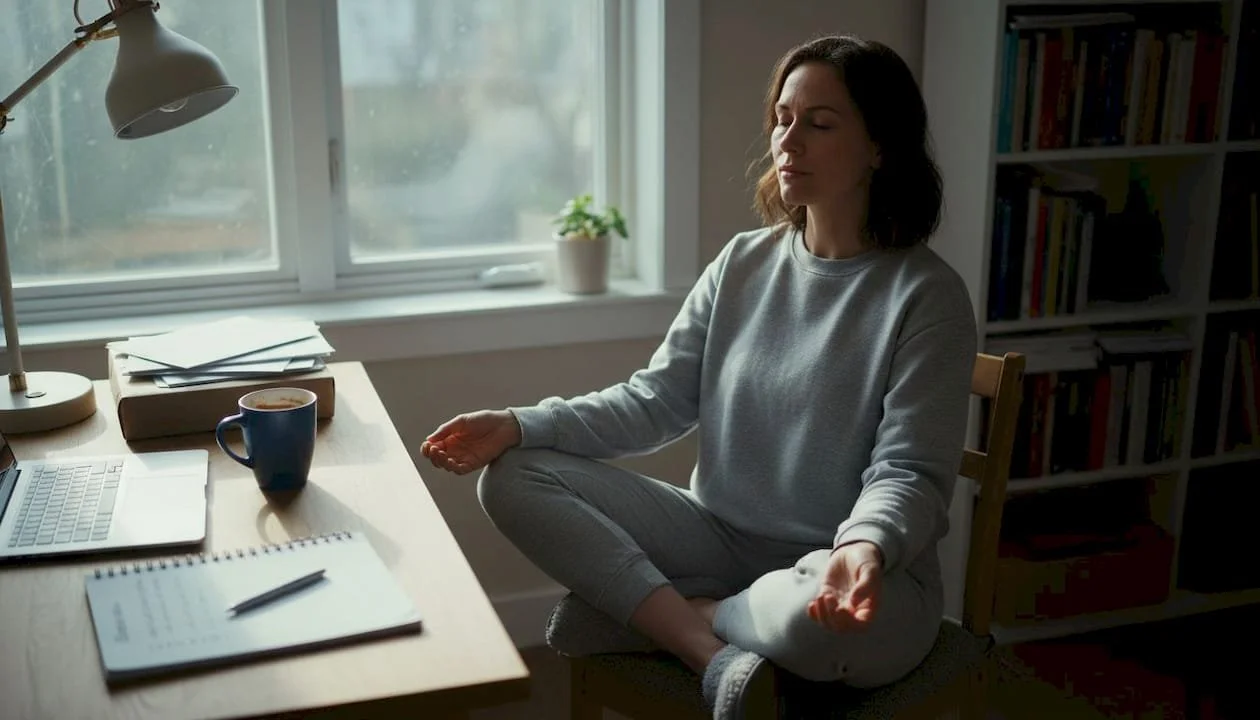
Philadelphia moves fast. Between the commute, the inbox, and the noise of city life, mental clarity can feel like something that only happens on vacation. But a structured mindfulness workflow, meaning a repeatable sequence of small, intentional practices woven into your day, makes calm and focus accessible every single morning, not just when you finally get a break. Micro-practices like mindful breathing and body scans are the building blocks of this kind of workflow. This guide walks you through every stage: what a workflow is, how to set one up, and where to find Philadelphia-specific support along the way.
Table of Contents
Key Takeaways
PointDetailsSmall steps matterStarting with just 5–10 minutes a day can significantly reduce stress and improve focus.Stack habitsPairing mindfulness with existing routines increases your chance for lasting success.Community supportPhiladelphia offers many local resources—joining a group boosts motivation and well-being.Personalize the workflowAdapt your practices and timing to fit your personality and daily schedule for best results.
Understanding the mindfulness workflow
Mindfulness is simply the practice of paying attention to the present moment without judging what you find there. That sounds easy, but in practice it means noticing your thoughts, feelings, and physical sensations as they happen, rather than getting swept away by them. A mindfulness workflow takes that principle and turns it into a daily structure, so the practice becomes a habit rather than a good intention.
Workflows work because they rely on repetition and triggers. When you attach a mindfulness practice to something you already do, like brewing your morning coffee or sitting down at your desk, the habit stacks onto an existing routine. Habit stacking into routines like this maximizes long-term adherence far better than willpower alone. You can explore mindfulness practice basics to understand how these principles apply across different styles.
The science behind this is solid. Mindfulness-based interventions reduce perceived stress by a standardized mean difference of 0.53 in non-clinical adults, which is a meaningful, real-world shift. Beyond stress, consistent practice improves mood, sharpens emotional regulation, and builds resilience over time.
Even five to ten minutes of daily mindfulness practice produces measurable improvements in focus and emotional balance. You do not need an hour on a cushion to feel a difference.
Here is a quick look at the core elements that make up a solid daily workflow:
| Workflow element | Purpose | Recommended duration |
|---|---|---|
| Morning intention | Sets mental direction for the day | 1 to 2 minutes |
| Breath focus | Anchors attention, reduces reactivity | 3 to 5 minutes |
| Body scan | Releases physical tension | 5 to 10 minutes |
| Mindful transition | Resets focus between tasks | 1 minute |
| Evening reflection | Consolidates learning, promotes rest | 3 to 5 minutes |
You can also draw inspiration from mindfulness activities to keep the workflow fresh and personally relevant.
What you need: Preparation and tools
Good news: the barrier to entry is low. You do not need a dedicated meditation room or expensive gear. What you do need is intention, a few simple tools, and the right mindset.
Essential tools to get started:
A timer (your phone works perfectly)
A small notebook or journal for brief reflections
A quiet corner, a set of headphones, or both
A meditation app if you prefer guided sessions (Insight Timer and Calm are popular free options)
A consistent trigger moment in your existing schedule
The mindset prerequisites matter just as much as the tools:
Openness: Be willing to sit with discomfort without immediately fixing it
Patience: Progress is gradual and not always linear
Non-judgment: Treat wandering thoughts as normal, not as failure
Flexibility: Adapt the workflow to your life, not the other way around
Here is how personal tools compare to local class-based support:
| Option | Best for | Key benefit | Limitation |
|---|---|---|---|
| App or journal | Solo, flexible schedules | Low cost, always available | Easy to skip without accountability |
| In-person class | Community learners | Guided instruction, social support | Fixed schedule, travel required |
| Local workshop | Beginners or deepeners | Structured curriculum, expert access | One-time or short-term |
| Therapy-integrated | Anxiety or trauma history | Clinical support alongside practice | Requires referral or cost |
Philadelphia has genuinely strong local options. Barnes Foundation art-mindfulness workshops, Chenrezig Tibetan Buddhist Center weekly meditations, Penn Memory Center classes, be mindphl at the YMCA, and MPower Wellness therapy are all accessible resources for adults at different stages. Check out practical mindfulness tips and reduce stress resources for more guidance on pairing tools with technique.

Pro Tip: Your daily commute is prime mindfulness real estate. Instead of scrolling, try one minute of slow nasal breathing before you get off the train or bus. Stacking this onto a routine you already have makes it far easier to sustain.
Step-by-step guide: Building your daily mindfulness workflow
Now that you have your tools and a supportive environment, it is time to build the actual workflow. Think of this as designing a personal system, not copying someone else's routine.
Steps to design and launch your workflow:
Set a clear intention. Decide what you want from the practice. Better focus? Less reactivity? Improved sleep? A specific intention keeps you motivated when novelty wears off.
Choose one anchor practice. Pick a single technique to start, such as a five-minute breath focus. Mindful breathing, body scans, and single-tasking are all strong starting points for busy adults.
Identify your trigger moments. Attach your practice to an existing habit: after brushing your teeth, before your first meeting, or during your lunch break. Triggers remove the need for daily decision-making.
Schedule it. Put it in your calendar like any other appointment. Even a two-minute block counts.
Track your experience briefly. After each session, write one sentence about how you felt. This builds self-awareness and shows you patterns over time. Use mindfulness workflow tips to refine your approach as you go.
Review weekly. Every Sunday, spend two minutes asking: What worked? What felt forced? Adjust accordingly.
Popular practices for busy Philadelphians (all under five minutes):
Box breathing: inhale four counts, hold four, exhale four, hold four
Progressive body scan: mentally check in from head to toe
Mindful eating: one meal per day without screens
Mindful walking: notice three physical sensations on your next walk
As little as 5 to 10 minutes dailyproduces measurable benefits in short-term studies, with the eight-week MBSR (Mindfulness-Based Stress Reduction) program serving as the gold standard for deeper transformation. You can explorestructured meditation techniquesandmindfulness exercise ideasto expand your toolkit over time.
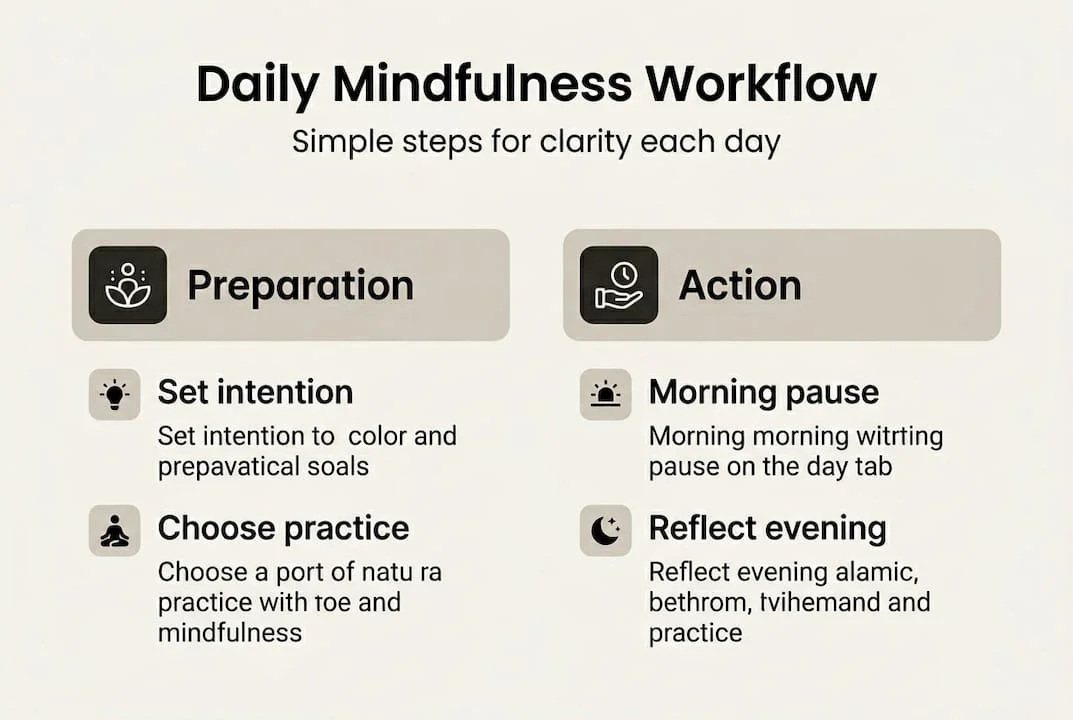
Pro Tip: Start with just one practice for two full weeks before adding another. Layering too quickly leads to overwhelm and dropout. Simplicity is a feature, not a flaw.
Common challenges and troubleshooting
Starting a mindfulness workflow is the easy part. Sticking with it when life gets loud is where most people struggle. Knowing the common obstacles ahead of time gives you a real advantage.
Common workflow obstacles:
Motivation loss: The novelty fades after week two. This is normal. Return to your original intention.
Time pressure: A two-minute practice still counts. Do not let perfect be the enemy of present.
Boredom: Rotate practices or try a new format like a guided session or a local class.
Emotional discomfort: Sometimes sitting quietly surfaces difficult feelings. This is not a sign to stop, but it is a sign to go slowly.
Perfectionism: Missing a day does not erase your progress. Self-kindness is part of the practice.
Mindfulness is not universally safe or appropriate for every person in every situation. Some individuals, particularly those with unprocessed trauma or severe anxiety, may need additional support before or during practice.
Shorter practices work betterfor individuals with low agreeableness, and potential adverse effects like increased anxiety can occur when mindfulness is practiced without complementary skills. Pairing it with self-compassion training or Internal Family Systems (IFS) therapy significantly improves outcomes for those who find solo practice difficult.
Mindfulness is also necessary but not a stand-alone solution for overall well-being. Its efficacy depends on the quality of the meditation and the surrounding psychoeducation. If you feel stuck or distressed after several weeks, consider working with a therapist who integrates mindfulness rather than pushing through alone. Find local stress reduction with mindfulness resources to support your journey.
When you do miss days, treat it as data, not failure. Ask what made it hard and adjust the trigger or the duration. Consistency over months matters far more than perfection over a single week.
A fresh perspective on mindfulness workflows
Most guides tell you that more practice equals more benefit. We think that framing quietly sets people up to quit. The real power of a mindfulness workflow is not in its length or complexity. It is in its reliability. A two-minute breath practice you actually do every day beats a forty-minute session you do twice a month.
Here is what we have seen working with Philadelphia practitioners: the people who sustain long-term mindfulness gains are almost never the ones who meditate the longest. They are the ones who practice in community. Group settings create gentle accountability, shared language, and a sense of belonging that solo apps simply cannot replicate. Philadelphia's local resources are genuinely underused by most adults who could benefit from them.
The other thing worth saying plainly: clarity and emotional well-being do not come from adding more to your day. They come from doing less, more intentionally. A workflow built on three small, consistent practices will outperform a packed routine that collapses under pressure. Simplicity is not a beginner's compromise. It is the advanced move.
Take your next step: Support for your mindfulness journey
Building a workflow on your own is a powerful start. But sometimes the right environment or guide accelerates everything. At Amrita Yoga & Wellness in Philadelphia, we offer services designed to complement and deepen your daily practice in ways that solo routines often cannot.
If you are looking for reflective support, tarot sessions for reflection offer a structured way to explore your inner landscape. For physical relaxation that supports mental clarity, acupuncture for relaxation pairs beautifully with breathwork and body scan practices. Browse all of our wellness options to find what fits your current stage. Your workflow does not have to be a solo project.
Frequently asked questions
How quickly can I see results from a mindfulness practice workflow?
Most adults experience reduced stress and better focus within one to two weeks of consistent daily practice. Short-term studies show benefits with as little as five to ten minutes per day.
What if I can't meditate every day—does my workflow still work?
Yes, even irregular practice provides real benefits. Focus on gentle consistency and lean on micro-practices like mindful breathing and single-tasking when a full session is not possible.
Are there risks to starting mindfulness if I have anxiety or trauma?
Some individuals may notice increased anxiety without complementary skills, so pairing mindfulness with self-compassion practices or professional support is strongly recommended if you have a trauma or anxiety history.
Which local resources in Philadelphia support mindfulness beginners?
The Barnes Foundation workshops, Chenrezig Tibetan Buddhist Center, Penn Memory Center, be mindphl at the YMCA, and MPower Wellness all offer accessible entry points for adults new to mindfulness.
Recommended
7 Mindfulness Activities for Stress Relief and Clarity
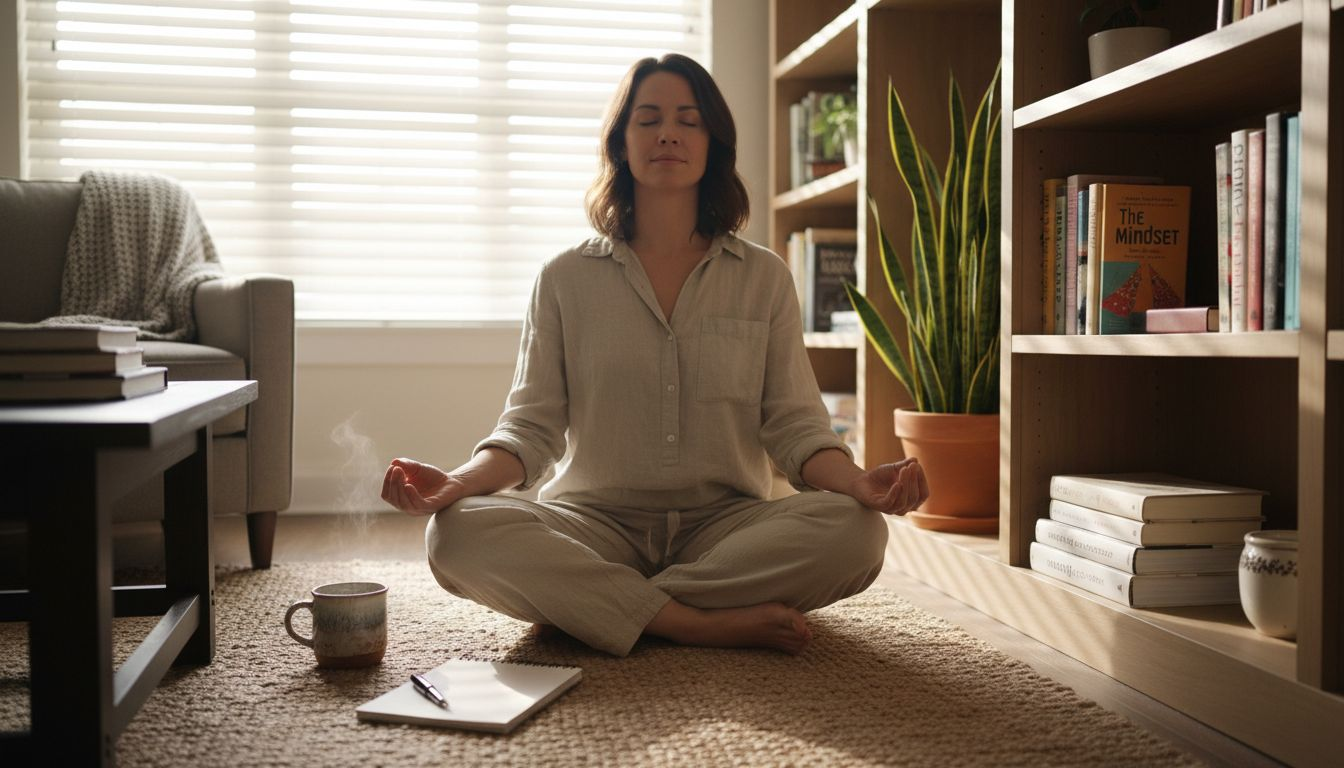
Stress has a way of building up quickly, leaving you feeling scattered and tense no matter where you are. When your mind is racing and your body feels wired, finding reliable techniques that actually work can feel challenging. The right methods can help you reset and restore calm in minutes, whether you’re at home, in a studio, or simply pausing at your desk.
This list brings together practical strategies that don’t require hours of training or special equipment. You’ll discover proven approaches for stress relief and mental clarity—like breath awareness, body scan meditation, and mindful walking—that have been shown to deliver instant relaxation by engaging your brain and nervous system. Each insight will show you how to harness these tools for fast, noticeable results.
Get ready to learn actionable steps that turn everyday situations into opportunities for peace and focus. The following techniques promise to help you shift your mindset, release tension, and feel more like yourself again.
Table of Contents
Quick Summary
| Takeaway | Explanation |
|---|---|
| 1. Practice Breath Awareness Daily | Engage in breath awareness for 5 minutes each morning to initiate a calm state and improve mental clarity throughout the day. |
| 2. Utilize Body Scan Meditation | Allocate 10–15 minutes to practice body scan meditation, focusing on physical sensations to effectively reduce stress and promote relaxation. |
| 3. Incorporate Mindful Walking | Spend 10–15 minutes walking mindfully, focusing on sensations and surroundings, enhancing focus and emotional regulation regardless of location. |
| 4. Start Gratitude Journaling | Write down 3–5 specific things you appreciate daily; this shifts your mindset and increases overall well-being. |
| 5. Engage in Loving-Kindness Meditation | Dedicate time to practice loving-kindness meditation, fostering self-compassion and improving your mental health through consistent daily sessions. |
1. Breath Awareness for Instant Calm
Your breath is always with you, yet most of us barely notice it. Breath awareness is the practice of consciously observing and regulating your breathing patterns to activate your body's natural calming response. Unlike complicated meditation techniques that require years of practice, breath awareness works immediately. Within just a few minutes of focused breathing, you can shift your nervous system from stressed to calm.
Why does this work so effectively? Your autonomic nervous system controls your stress response, and breathing is one of the few functions you can consciously influence. When you breathe slowly and deliberately, you activate your parasympathetic nervous system, which is responsible for relaxation and recovery. Controlled breathing influences your brain and autonomic functions, promoting parasympathetic activation that calms your entire body. The beauty of this approach is that it's accessible to everyone, whether you're a beginner at yoga or someone who's never stepped foot in a studio. Studies show that breath awareness sessions lasting at least five minutes can significantly improve mood and emotional regulation.
Here's how to practice breath awareness in your daily life. Find a comfortable position, either sitting or lying down, and simply notice your natural breath for one minute without changing anything. Then, gradually slow your exhale to be longer than your inhale, such as breathing in for four counts and out for six counts. Continue this pattern for five to ten minutes. You'll notice your mind becoming clearer, your shoulders dropping, and a wave of calm washing over you. This practice requires no special equipment or location. You can do it at your desk in Philadelphia during a work break, in your car before a stressful meeting, or at home before bed. The immediate effects are remarkable for stress relief, and with repeated practice, you'll train your nervous system to respond more calmly overall.
Pro tip: Practice breath awareness for just five minutes each morning before checking your phone, and you'll notice improved mental clarity throughout your entire day.
2. Body Scan Meditation for Relaxation
Body scan meditation is a systematic practice where you direct your attention through different parts of your body, noticing physical sensations without judgment. Instead of trying to quiet your mind like some meditation practices, you're actively engaging your awareness by tuning into what your body is telling you. This approach transforms relaxation from something passive into an active, intentional process that creates profound calm.
The science behind body scan meditation reveals why it works so effectively for stress relief. When you systematically focus on different physiological sensations, you activate interoceptive awareness that reduces stress and enhances relaxation. As you move your attention through your body, you're also activating your parasympathetic nervous system, which is responsible for your body's relaxation response. Research demonstrates that brief body scan sessions can increase parasympathetic activity and lower blood pressure, making this technique particularly valuable for anyone dealing with chronic tension or anxiety. The beauty of this practice is that it works quickly. You don't need to spend an hour meditating to experience real physiological changes. Even ten to fifteen minutes of focused body awareness can produce measurable relaxation responses.
Practicing body scan meditation is straightforward and accessible, whether you're at home, in a yoga class at Amrita Yoga & Wellness, or even during a work break. Begin lying on your back in a comfortable position, or sit in a chair if that feels better for your body. Start at the top of your head and slowly move your attention downward, spending thirty seconds to one minute on each body area. Notice sensations without trying to change them. Feel the crown of your head, your forehead, your eyes, your jaw. Continue down your neck, shoulders, arms, and hands. Notice which areas hold tension and which feel relaxed. This awareness alone begins to release tightness. Move through your chest, belly, lower back, and hips. Finally, scan down each leg to your feet. When your mind wanders, which it will, simply redirect your attention back to the body part you're focusing on. This isn't failure. This is the practice working exactly as intended.
Pro tip: Record yourself slowly guiding through each body part, or use a guided body scan meditation, and practice the same recording several times so your nervous system recognizes the pattern and begins relaxing even faster.
3. Mindful Walking to Focus the Mind
Mindful walking combines the physical benefits of movement with the mental clarity of meditation. Rather than walking on autopilot while your mind jumps between tasks, mindful walking involves deliberate awareness of your physical sensations, your surroundings, and your breath with each step. This simple shift transforms an ordinary walk into a powerful tool for mental focus and emotional regulation that you can practice anywhere, anytime.
The effectiveness of mindful walking comes from how it anchors your attention in the present moment. When you concentrate on the sensation of your feet touching the ground, the rhythm of your breath, and the environment around you, your mind has no room for worrying about the past or future. Research shows that mindful walking significantly improves anxiety reduction and stress relief while also improving cardiovascular health markers. The practice works whether you walk outdoors in Philadelphia's parks or indoors during your lunch break. By incorporating sensory engagement and deepened awareness into your walking experience, you sustain mindfulness skills that extend far beyond the walk itself, contributing to lasting mental clarity and emotional balance.
To practice mindful walking, start by choosing a familiar route where you feel safe and can walk at a comfortable pace without rushing. Begin walking slowly and deliberately, bringing your full attention to each step. Notice how your foot feels as it makes contact with the ground. Feel the heel touch down first, then the ball of your foot, then your toes. Synchronize your breath with your steps, perhaps breathing in for four steps and out for four steps. Expand your awareness to include the sensations around you. What do you see? What colors, shapes, and movements catch your attention? What sounds do you hear? Notice without judging. If your mind wanders to your to do list or a concern at work, gently redirect your attention back to your breath and the physical sensations of walking. Start with just ten to fifteen minutes of mindful walking, and you'll notice your mind becoming clearer and more focused. This practice is particularly effective when done in nature, where the environment naturally supports your sensory awareness.
Pro tip: Walk the same route several times weekly so your nervous system becomes familiar with the path, allowing you to deepen your mindfulness practice without cognitive effort spent on navigation.
4. Gratitude Journaling to Shift Perspective
Gratitude journaling is the practice of regularly writing down things you appreciate, no matter how small. This simple act of acknowledging the positive aspects of your life creates a powerful shift in your mental state and overall well-being. When stress and worry consume your thoughts, gratitude journaling acts as a mental reset button that redirects your focus toward what is actually going right in your life.
The psychology behind gratitude journaling is compelling. Your brain has a natural negativity bias that evolved to keep you safe by focusing on threats and problems. Gratitude journaling intentionally counters this bias by training your attention toward positive experiences. Research demonstrates that gratitude journaling enhances life satisfaction and emotional resilience by fostering awareness of positive aspects of life. This practice works by interrupting negative thinking patterns and cultivating emotional balance, reducing anxiety and depression symptoms. The benefits extend beyond the moment you write. When you regularly acknowledge what you are grateful for, your nervous system becomes conditioned to notice positive experiences throughout your day, creating lasting perspective shifts. Studies show that structured gratitude interventions yield greater improvements in mental well-being when combined with diverse practices rather than journaling alone.
Starting a gratitude practice is straightforward. Each morning or evening, spend just five minutes writing three to five specific things you appreciate. Move beyond generic responses like "I'm grateful for my family." Instead, write with detail. For example, "I'm grateful for my yoga instructor at Amrita Yoga and Wellness who corrected my alignment today, helping me feel stronger in my body" or "I'm grateful for the way sunlight streamed through my kitchen window this morning while I drank my coffee." Specific gratitude anchors your mind in concrete, positive moments rather than abstract ideas. As you write, notice the feelings that arise in your body. This sensory awareness deepens the practice. Some days will feel easier than others. On challenging days when gratitude feels forced, simply notice one small thing. You noticed your breath. You saw a bird. You received a kind text message. These micro-moments of appreciation still shift your perspective and build your capacity for seeing the good in your life.
Pro tip: Write your gratitude entries by hand rather than typing, as the slower pace of handwriting allows your brain to process and integrate the positive experiences more deeply.
5. Guided Imagery for Mental Clarity
Guided imagery is a mental technique where you create vivid, detailed visualizations in your mind, often with the support of a guide's voice or recorded instructions. Rather than passively sitting with a blank mind, you actively engage your imagination to create a mental scene that promotes relaxation and clarity. This practice taps into the power of your mind to influence your physical state, emotional well-being, and cognitive function in profound ways.
The science behind guided imagery reveals why it works so effectively for mental clarity. When you engage in vivid mental visualization with multisensory details, you activate specific brain regions associated with attention and focus. Research shows that guided imagery increases alpha brainwave activity associated with relaxation while reducing stress, leading to enhanced mental clarity and executive functioning. By incorporating multisensory engagement into your imagery practice, you create a more powerful neurological response than visualization alone. Your brain essentially experiences the imagined scenario as real, triggering relaxation responses throughout your body. Studies from randomized controlled trials confirm that guided imagery reduces anxiety and depression symptoms while facilitating cognitive regulation and mental clarity. The practice works by interrupting the stress response cycle and replacing anxious thoughts with calming mental experiences.
Practicing guided imagery is simple and accessible. Find a comfortable position, close your eyes, and begin with a few deep breaths. Then, imagine a peaceful place in vivid detail. If you choose a beach, engage all your senses. What do you see? Maybe golden sand, turquoise water, and a clear blue sky. What do you hear? Perhaps gentle waves lapping against the shore and seagulls calling. What do you feel? Warm sun on your skin and a cool breeze. What do you smell? Salt air and perhaps tropical flowers. Spend ten to fifteen minutes in this imagined space, allowing your body and mind to fully relax into the experience. You can practice this on your own using your imagination, or you can use a guided imagery recording where someone walks you through the visualization step by step. Many people find recorded guidance helpful, especially when learning. As you practice regularly, your mind becomes more skilled at creating vivid imagery, and the relaxation benefits deepen. This technique pairs beautifully with your yoga practice, as the mental clarity from imagery enhances your ability to stay present on the mat.
Pro tip: Create a consistent imagery practice by using the same peaceful scene each time you practice, allowing your nervous system to recognize the mental cues and relax more quickly with repetition.
6. Yoga Flow with Mindful Movement
Yoga flow with mindful movement is the practice of moving through poses with complete awareness and intention, synchronizing your breath with each transition. Rather than simply executing postures mechanically, you bring your full attention to how your body feels, how your muscles engage, and how your breath guides your movement. This integration of physical practice with mindfulness transforms yoga from exercise into a powerful tool for mental clarity, emotional regulation, and stress relief.
When you practice yoga mindfully, you are engaging your entire nervous system in a coordinated way. Mindful movement interventions, including yoga, significantly reduce symptoms of anxiety and depression by integrating physical postures, breath regulation, and meditative focus. The synergy of these three elements creates profound psychological benefits that extend far beyond the physical gains from stretching and strengthening. By cultivating moment-to-moment awareness during your flow, you develop what researchers call stable trait mindfulness, which means you carry greater mental clarity and emotional resilience into your daily life off the mat. Regular yoga practice facilitates body appreciation and positive embodiment, helping you reconnect with your physical self rather than dissociating from it. This embodied awareness is particularly valuable for people dealing with stress, as it anchors you in the present moment and interrupts the cycle of anxious thoughts.
To practice yoga flow with mindful movement, begin your session by setting an intention to stay present. As you move through poses, coordinate your breath with your movement. Inhale as you expand or lift, exhale as you fold or ground. Between poses, pause briefly to notice how your body feels. Which muscles are engaged? Where do you feel energy or tension? Rather than rushing through your flow, move slowly enough that you can maintain awareness throughout. If you attend classes at Amrita Yoga and Wellness, you might notice that instructors emphasize body awareness and breath coordination. This emphasis reflects the mindfulness approach. Even five to ten minutes of intentional, flowing movement can shift your mental state. You might start with simple sequences like sun salutations, focusing entirely on the connection between breath and movement. As you practice regularly, you will notice your mind becoming quieter during flow, thoughts settling, and mental clarity emerging naturally. This is the gift of combining movement with mindfulness.
Pro tip: Practice the same yoga sequence weekly so your body becomes familiar with the movements, allowing your mind to deepen into mindfulness rather than focusing on remembering what comes next.
7. Loving-Kindness Meditation for Self-Compassion
Loving-kindness meditation is a practice where you systematically cultivate feelings of warmth, care, and compassion toward yourself and others. Rather than forcing positive emotions, you use specific phrases and mental imagery to gently open your heart and soften your inner critic. This practice directly addresses one of the greatest obstacles to stress relief and clarity: the harsh, judgmental voice inside your head that tells you that you are not good enough.
Many of us are far more critical of ourselves than we would ever be toward a friend. Loving-kindness meditation fundamentally shifts this relationship with yourself by training your mind to offer itself the same compassion you naturally extend to others. Loving-kindness meditation significantly increases self-compassion in adults through cultivating feelings of kindness toward yourself and others, contributing to psychological well-being and reduced symptoms of mental health challenges. Research demonstrates that compassion meditation interventions enhance positive affect and mindfulness while reducing stress, depression, and anxiety. The practice works by creating new neural pathways in your brain that support self-acceptance rather than self-criticism. When you regularly practice loving-kindness, you develop greater emotional resilience and empathy, not just toward others but toward yourself as well. This is particularly powerful for people living in fast-paced urban environments like Philadelphia, where perfectionism and self-judgment can run high.
Practicing loving-kindness meditation is straightforward. Sit comfortably and bring to mind yourself or an image of yourself. Then silently repeat phrases of kindness. Traditional phrases include "May I be happy, may I be healthy, may I be safe, may I live with ease." Repeat these phrases slowly, allowing the words to resonate emotionally rather than intellectually. You might feel warmth in your chest or a softening of tension in your face. After spending a few minutes directing kindness toward yourself, expand your focus to include someone you love, then a neutral person, then someone you find difficult, and finally all beings everywhere. The entire practice typically takes fifteen to twenty minutes. Start with just five minutes if longer sessions feel overwhelming. The key is consistency. Even brief daily practice rewires your nervous system to default toward self-compassion rather than self-criticism. Over time, you will notice that your inner dialogue becomes kinder, your stress levels decrease, and your overall sense of well-being improves dramatically.
Pro tip: Practice loving-kindness meditation right before bed so the feelings of self-compassion settle into your subconscious mind overnight, allowing you to wake with greater self-acceptance.
Below is a comprehensive table summarizing the key concepts and practical applications of relaxation and mindfulness techniques described in the article.
| Technique | Implementation | Benefits |
|---|---|---|
| Breath Awareness | Focus on your natural breathing and gradually lengthen exhalations. | Activates the parasympathetic nervous system, quickly reducing stress. |
| Body Scan Meditation | Bring your focus gradually to different parts of the body, observing sensations. | Promotes deep relaxation and physiological healing processes. |
| Mindful Walking | Walk intentionally, synchronizing breath with steps and observing your surroundings. | Enhances mental clarity and reduces stress through mindful movement. |
| Gratitude Journaling | Write three to five specific things you are thankful for daily. | Cultivates a positive mindset and improves emotional resilience. |
| Guided Imagery | Create detailed, relaxing mental scenes that engage all senses. | Alleviates anxiety and enhances mental focus through visualization. |
| Mindful Yoga Flow | Perform yoga poses with deliberate breath coordination and body awareness. | Combines physical exercise with mindfulness for mental and physical health benefits. |
| Loving-Kindness Meditation | Repeat phrases promoting compassion toward yourself and others. | Cultivates empathy and self-compassion, reducing self-critical thoughts. |
Discover Stress Relief and Mental Clarity with Amrita Yoga & Wellness
If you're seeking effective ways to manage stress and find mental clarity inspired by practices like breath awareness, body scan meditation, and mindful movement, you are not alone. Many people face the challenge of overwhelming stress and restless minds, which these proven mindfulness activities can help address. At Amrita Yoga & Wellness, we understand the importance of connecting breath, body, and mind through accessible classes and mindful practices that foster emotional balance and nervous system regulation.
Experience the power of guided yoga flows, meditation workshops, and wellness sessions designed to cultivate calm, clarity, and self-compassion in your daily life. Join our welcoming community in Philadelphia by exploring our offerings at Amrita Yoga & Wellness. Take the next step toward reducing anxiety and increasing emotional resilience by signing up for classes and workshops tailored to all levels. Your journey to stress relief and greater mental focus begins with one mindful moment — start today.
Frequently Asked Questions
How can I use breath awareness for stress relief?
Breath awareness can be used to quickly calm your mind and body. Start by finding a comfortable position and noticing your natural breath for one minute. Gradually slow your exhale to be longer than your inhale, repeating this for five to ten minutes to promote relaxation and clarity.
What is a body scan meditation, and how can I practice it?
A body scan meditation helps you focus on different parts of your body, noticing sensations without judgment. Lie down or sit comfortably, and systematically move your attention from your head to your feet, spending a minute or so on each area. This practice can help release tension and promote overall relaxation.
Can mindful walking really help with anxiety?
Yes, mindful walking helps reduce anxiety by grounding you in the present moment. To practice, walk at a comfortable pace while focusing on the sensation of your feet on the ground and your breath. Aim for just ten to fifteen minutes, focusing your awareness to clear your mind.
How do I start a gratitude journaling practice?
To start gratitude journaling, set aside just five minutes each day to write down three to five things you appreciate. Focus on specific details, like a positive experience or a kind gesture, to create a meaningful shift in your perspective and enhance emotional well-being.
What are the steps for practicing guided imagery for mental clarity?
To practice guided imagery, find a comfortable position and close your eyes. Visualize a peaceful scene in detail, engaging all your senses. Spend ten to fifteen minutes in this calming mental space to enhance relaxation and mental clarity.
How can I incorporate loving-kindness meditation into my daily routine?
Incorporate loving-kindness meditation by setting aside fifteen minutes, where you focus on positive phrases directed toward yourself and others. Begin with yourself, then gradually extend kindness to loved ones and even those you find challenging. Practicing regularly can enhance self-compassion and reduce stress.