The Amrita Journal
Explore thoughtful stories, practical wellness guidance and inspiring ideas to support your movement, mindfulness and everyday wellbeing at Amrita.
Heated Vinyasa Yoga Benefits: What the Research Shows
TL;DR:
Heated vinyasa yoga offers benefits like improved flexibility, balance, and mental health, but it carries risks for certain individuals. Most healthy adults can practice safely with gradual acclimation, proper hydration, and attentive monitoring. Evidence supports flexibility and balance gains, while cellular stress responses differentiate hot from normal yoga effects.
Heated vinyasa yoga delivers real, measurable physical and mental benefits — faster flexibility gains, improved balance, a meaningful cardiovascular stimulus, and reduced perceived stress — but it carries genuine risks for people with heart disease, pregnancy, heat intolerance, or dehydration. Most healthy adults can practice it safely with a gradual acclimation plan and attentive body-signal monitoring.
Primary benefits at a glance:
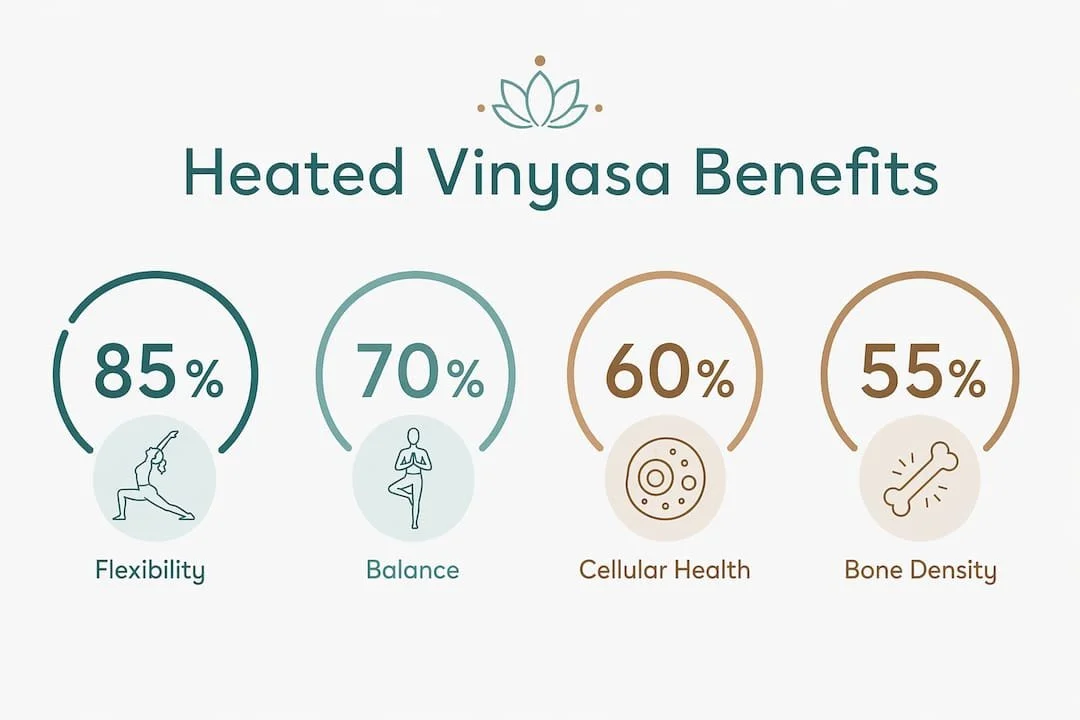
Flexibility and range of motion: Heat softens connective tissue, and studies consistently show flexibility gains with chronic practice.
Balance and functional strength: Randomized trials report significant single-leg balance improvements and modest isometric strength gains over 8-week programs.
Cardiovascular and cellular stimulus: Heated sessions raise heart rate and core temperature and, in some protocols, increase HSP70 expression in immune cells — a cellular stress-adaptation marker.
Mood and stress reduction: Research links regular hot yoga practice to lower perceived stress and improved quality of life, particularly in inactive or stressed adults.
Bone mineral density: The 2025 systematic review found chronic practice associated with bone-density improvements across 43 studies and 942 participants.
Safety headline: Avoid heated classes if you are pregnant, have heart disease, take medications that impair heat regulation, or have a history of heat illness. If any of those apply, consult a clinician before stepping into a hot room. For everyone else: start slow, hydrate early, and treat breathlessness or dizziness as a hard stop signal.
Table of Contents
Physical benefits explained: what the research actually supports
Mental and emotional benefits: stress, mood, and what heat actually adds
Who should avoid heated vinyasa and how to recognize heat illness
How to get started: practical steps for your first heated vinyasa class
What heated vinyasa yoga is and how it differs from Bikram
Heated vinyasa (sometimes called hot vinyasa) is a flow-based yoga practice performed in a warm or hot room. Unlike Bikram yoga, which follows a fixed 26-posture sequence in a room held at exactly 105°F and 40% humidity for 90 minutes, heated vinyasa classes vary the sequence, the teacher, and often the temperature. That flexibility is part of the appeal — and part of why the research picture is messier.
According to the 2025 systematic review, typical hot-yoga sessions across 43 studies lasted a variable duration at temperatures within a wide range that reflects real studio variation, with humidity varying as well. Those are wide bands and reflect real studio variation. A "warm" vinyasa class might run at 86°F; a hot vinyasa class at a more intense studio might push toward 100°F or above.
| Feature | Heated vinyasa | Bikram yoga |
|---|---|---|
| Sequence | Variable, teacher-led flow | Fixed 26-posture sequence |
| Class length | Typically 20–90 minutes | 90 minutes |
| Temperature range | ~86–105°F (varies by studio) | ~105°F / 40% humidity |
| Humidity control | Often not strictly controlled | Precisely maintained |
| Research representation | ~2% of hot-yoga studies | Majority of the literature |
One important caveat: vinyasa comprised approximately 2% of the hot-yoga methods studied in the systematic review. Most of what researchers know comes from Bikram trials. That does not mean heated vinyasa lacks benefits — it means the evidence is extrapolated more than it is direct.
Physical benefits explained: what the research actually supports
Heat changes the body's mechanical and physiological environment in ways that matter for yoga practice. The Cleveland Clinic notes that warmth helps lubricate tendons and ligaments, making stretches more accessible — but also raising the risk of overexertion if practitioners push too hard.
Flexibility and range of motion show the most consistent evidence. Heat reduces tissue stiffness acutely, and chronic practice compounds that with genuine neuromuscular adaptation. Across the studies reviewed, flexibility improvements were among the most reliably reported outcomes.
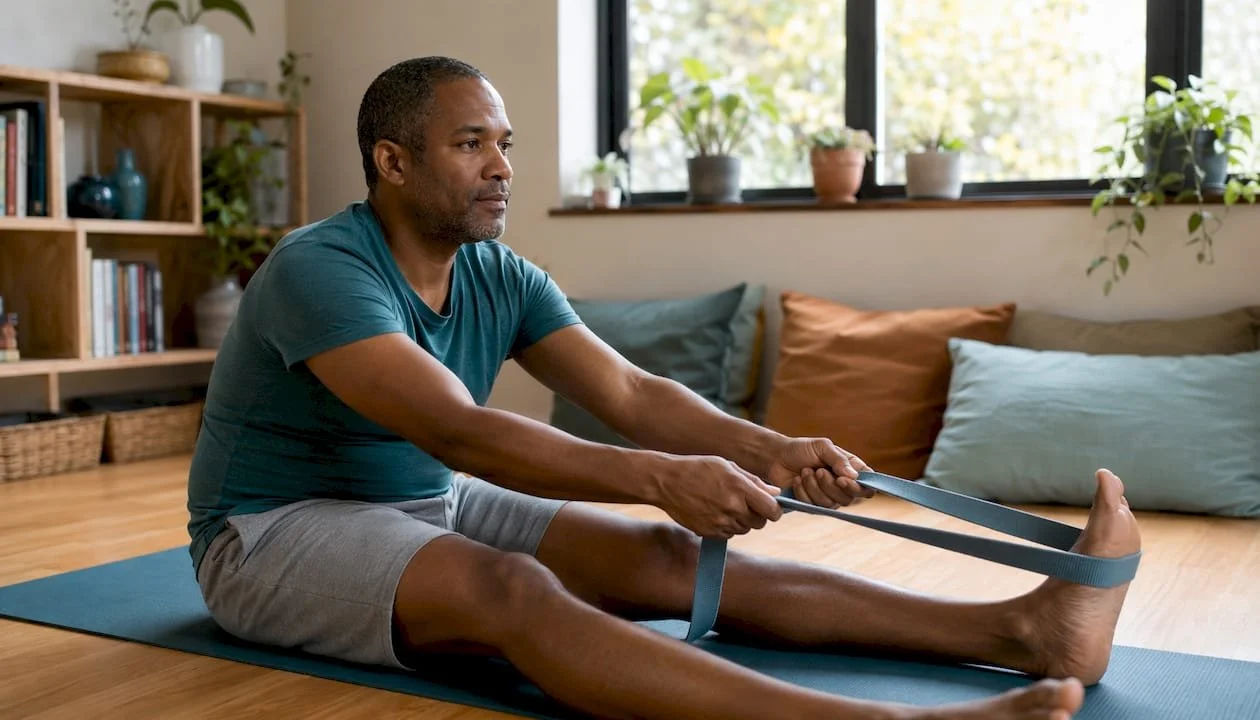
Balance and functional strength also have solid backing. One protocol that produced measurable gains ran 8 weeks at three sessions per week; reported improvements included a 13% increase in isometric strength and large improvements in single-leg balance in some randomized controlled trials. Those are meaningful numbers for everyday functional health, not just yoga performance.
Cardiovascular and cellular adaptations are more nuanced. Heated sessions raise core temperature and heart rate acutely, but the Sports Medicine systematic review found that hot yoga does not necessarily increase overall energetic demands compared with non-heated yoga. The heat adds a thermoregulatory stress, not simply more calories burned. In one randomized study, 12 sessions of hot yoga increased expression of HSP70 (a cellular heat-shock protein tied to stress adaptation) in peripheral blood cells, while BDNF — a neural growth factor — rose across yoga groups regardless of temperature.
Bone mineral density improvements appeared in chronic interventions (6–36 sessions), which is a meaningful finding for adults concerned about long-term skeletal health.
| Benefit | Evidence strength | Notes |
|---|---|---|
| Flexibility / range of motion | Consistent positive evidence | Acute and chronic effects both documented |
| Balance | Consistent positive evidence | Large improvements in some RCTs |
| Functional strength | Moderate evidence | Isometric gains in 8-week protocols |
| Bone mineral density | Moderate evidence | Chronic practice (6+ sessions) required |
| Aerobic fitness (VO2max) | Limited / mixed | Some trials show modest gains; others show none |
| Body composition | Limited / mixed | Inconsistent across studies |
Pro Tip: In a heated class, your body will feel more open than it actually is. Stop a stretch when you feel mild tension, not when you hit your apparent maximum. If you feel a sharp sensation at the joint, back off immediately — heat masks the warning signal that would normally stop you.
Mental and emotional benefits: stress, mood, and what heat actually adds
The mental-health case for heated vinyasa is real, though it requires some unpacking. Not every benefit comes from the heat itself.

How to get started: practical steps for your first heated vinyasa class
Before you arrive:
Drink 16–20 oz of water in the two hours before class; avoid large meals within 90 minutes of the start time.
Wear light, moisture-wicking clothing — less fabric is better in a hot room.
Bring a full water bottle (at least 20 oz), a yoga mat, and a towel.
Tell the teacher it is your first heated class. That single sentence will get you better cues and more check-ins.
During class:
Beginners should treat the first few sessions as orientation, not performance. Child's pose is always available and always appropriate. Use it whenever your breath becomes labored or your heart rate feels too high to sustain. A useful internal benchmark: if you cannot breathe through your nose, you are working too hard for where you are in your acclimation.
A 4-week acclimation approach:
Week 1: One class, shorter format if available (45 minutes). Focus entirely on staying in the room and breathing. Do not worry about pose depth. Rest at least two days before your next session.
Week 2: Two classes. Begin engaging with the flow, but continue using child's pose freely. Notice how your body responds in the 24 hours after class — fatigue, thirst, and sleep quality are all useful signals.
Week 3: Two to three classes. Start working on pose alignment rather than just survival. Hydration should now be a habit, not an afterthought.
Week 4: Three classes if recovery feels good. You can begin exploring fuller ranges of motion, but keep the end-range caution from the physical benefits section in mind.
For detailed hot yoga preparation guidance including what to eat and how to recover post-class, Amritayogawellness's blog covers the specifics well.
Pro Tip: Wear a heart-rate monitor or use your watch's HR feature for the first few classes. If your heart rate climbs above what feels sustainable for conversation, sit down. In a hot room, cardiovascular load can spike faster than perceived exertion suggests.
Myths vs. facts: what heated vinyasa does not do
A few persistent misconceptions follow hot yoga everywhere. They are worth addressing directly.
Myth: Sweating detoxifies your body. Sweat cools you down. The liver and kidneys handle detoxification. Sweat contains trace amounts of metabolic waste, but the quantities are physiologically insignificant compared with what your organs process daily. No credible clinical source supports sweat-based detox as a meaningful health mechanism.
Myth: You will lose fat from a hot yoga class. The weight you lose immediately after class is almost entirely fluid. Drink water and it comes back. Fat loss requires sustained caloric expenditure over time. Hot yoga can contribute to that if practiced consistently, but a single session's sweat is not a fat-loss event.
Myth: Heat makes a pose intrinsically better or safer. Heat makes a pose more accessible by reducing tissue stiffness. It does not make it safer. The same heat that lets you sink deeper into a forward fold also masks the strain signals that would normally tell you to stop. Practitioners who push to their apparent maximum in a hot room are at higher injury risk, not lower.
Myth: If you feel fine, you are fine. Heat illness can develop quickly and without obvious warning. Feeling okay at minute 45 does not mean you will feel okay at minute 60. Monitoring breath quality and heart rate throughout class matters more than how you feel in any single moment.
What the studies actually say: a research summary
The strongest single source on this topic is the 2025 systematic review published in Sports Medicine — Open, which analyzed 43 studies and 942 participants — 76% of whom were female. Common protocols ran sessions of 20–90 minutes at 86–125°F, with chronic interventions spanning 6–36 sessions over 1–16 weeks. The outcomes that improved most reliably were flexibility, balance, and some functional-strength markers. Bone mineral density improvements also appeared in longer interventions.
Aerobic fitness and body composition results were mixed. Some trials showed modest VO2-related improvements; others did not. The heat adds a thermoregulatory challenge, but it does not automatically translate into a harder cardiovascular workout in terms of total energy expenditure.
| Study / Source | Sample | Protocol | Primary outcomes |
|---|---|---|---|
| 2025 Systematic Review (Sports Med Open) | 942 participants, 43 studies | 20–90 min, 86–125°F, 6–36 sessions | Flexibility, balance, BMD, functional strength |
| RCT — hot vs. normal-temperature yoga | Not specified in pool | 12 sessions | HSP70 increase (hot only); BDNF increase (both groups) |
| 16-week clinical program | Inactive/stressed adults | 16 weeks | Reduced perceived stress, improved QoL |
Key limitations researchers flag:
- Most studies use Bikram; vinyasa-specific evidence is thin (roughly 2% of the literature).
- Sample sizes are generally small.
- Intensity controls vary widely across studies, making comparisons difficult.
- Long-term follow-up data (beyond 16 weeks) is largely absent.
A studio practitioner's perspective on pacing and cues
The most common mistake beginners make in a heated vinyasa class is treating the heat as a challenge to conquer rather than a variable to manage. They walk in determined to keep up with the room, ignore their breath, and end up on their mat in child's pose not by choice but by necessity — sometimes feeling dizzy or nauseated. That is not a failure of fitness. It is a failure of pacing.
A well-run heated vinyasa class will give you explicit permission to modify. Good instructors say things like "if your breath is gone, your pose is gone" and "child's pose is always the right choice." When you hear those cues, they are not filler. They are the actual instruction. Beginners should listen for them and act on them without self-consciousness.
The breath-first principle is the single most useful thing a new student can take into a hot room. Before you worry about whether your heels touch the floor in downward dog, ask whether you can breathe slowly and evenly in the shape. If you cannot, the shape is too much for today. That is not a limitation — it is the practice working exactly as intended.
Amritayogawellness builds this kind of instructor-led safety culture into its heated classes, with teachers trained to spot and address cardiovascular strain before it becomes a problem. New students are encouraged to introduce themselves before class so the instructor can offer appropriate modifications throughout.
Try heated vinyasa at Amrita Yoga & Wellness
If the research has you ready to experience these benefits in person, Amrita Yoga & Wellness in Philadelphia offers heated vinyasa classes designed with exactly this kind of beginner in mind. First-time participants can expect a warm welcome at check-in, clear hydration guidance before the room opens, and a teacher who will walk you through modification options before the first pose.
Classes run in formats suited to different experience levels, so you are not thrown into an advanced flow on day one. The studio's approach centers on safe acclimation: instructors actively cue breath-first pacing, offer pose modifications, and monitor the room for signs of heat-related strain. You will leave knowing what to do differently next time, not just how tired you are.
Ready to book your first class or check the current schedule? Visit Amritayogawellness to find a heated vinyasa session that fits your week.
Useful sources for further reading
| Source | What it covers | Why it matters |
|---|---|---|
| 2025 Systematic Review — Sports Medicine Open | 43 studies, 942 participants; protocols, outcomes, limitations | The most comprehensive current synthesis of hot-yoga evidence |
| PMC — Hot vs. Normal-Temperature Yoga RCT | HSP70, BDNF, VO2 adaptations across 12 sessions | Key mechanistic data on what heat adds vs. movement alone |
| PMC — Systematic Review (full text) | Full review including vinyasa representation data | Source for the ~2% vinyasa figure and protocol ranges |
| Mayo Clinic — What is hot yoga? | Contraindications, heat-illness risk, clinical cautions | Authoritative clinical guidance for screening and safety |
| Cleveland Clinic — Is hot yoga right for me? | Studio temperature ranges, stretching benefits, exertion risks | Practical health-system overview for general readers |
| Harvard Health — Yoga for mental health | Mood, anxiety, depression markers across yoga styles | Broader mental-health context for yoga's psychological effects |
| NIH Bone Health — Exercise and bone health | Exercise types and bone mineral density evidence | Background on why weight-bearing yoga practice supports bone health |
| Colorado State — Hot yoga fitness benefits | Researcher commentary on fitness outcomes from hot yoga | University-sourced perspective on cardiovascular and functional gains |
Heated Yoga Classes: Boost Flexibility and Relieve Stress

Stepping into a heated yoga studio in Philadelphia, you notice immediately how the warmth wraps around your body and shifts your experience from the very first posture. As an intermediate yogi, you’re familiar with asanas and breath work, but the added heat offers a new path toward deeper stretching and releasing daily stress. The elevated temperature in these sessions not only makes muscles more pliable for improved flexibility but also encourages detoxification through sweating, offering both immediate and lasting benefits for body and mind.
Table of Contents
Key Takeaways
| Point | Details |
|---|---|
| Heated Yoga Enhances Flexibility | Practicing in warm temperatures increases muscle elasticity, allowing deeper stretches and improved range of motion. |
| Detoxification Benefits | Sweating during heated yoga helps flush toxins, supporting the body’s natural cleansing processes. |
| Mental Clarity and Mindfulness | The combination of breath control and heat creates a calming environment that aids in stress relief and mental focus. |
| Safety Precautions Are Essential | Proper hydration and awareness of personal limits are crucial to prevent injuries and ensure a safe yoga experience. |
What Heated Yoga Classes Involve
Heated yoga classes take the foundational postures and breathing techniques you're already familiar with and add one critical element: temperature. The room is typically heated between 80 to 105 degrees Fahrenheit, often with added humidity to create an environment that mirrors the warm, tropical climate where yoga originated in India. This isn't just about comfort or nostalgia for warmer weather. The heat fundamentally changes how your body responds to the practice, making muscles more pliable and allowing you to explore deeper ranges of motion than you might achieve in a regular room-temperature class.
During a heated yoga session, you'll move through a sequence of asanas (yoga postures) combined with pranayama (breath work) and relaxation techniques, just as you would in any yoga class. The difference is that the elevated temperature triggers profuse sweating and increased heart rate, which accelerates cardiovascular activity and mimics the benefits of moderate exercise. This physiological response does two things simultaneously: it helps flush toxins from your system through perspiration while also conditioning your cardiovascular system. Most heated yoga classes last 60 to 90 minutes, giving your body time to adjust to the heat while working through a thoughtful progression of poses. Some studios follow a fixed sequence, while others offer more flexibility in pose selection, though the heat intensity remains consistent throughout.
What makes heated yoga different from your current intermediate practice is the mental and physical adaptation required. Your nervous system works harder in the heat, your muscles tire differently, and your breath becomes more deliberate. You'll need to drink water before and after class, wear breathable clothing that can handle moisture, and bring a towel since sweat becomes part of the experience. Many Philadelphia practitioners find that the heat creates a meditative quality too—the warmth and sweat become anchoring sensations that naturally deepen your focus and presence on the mat. If you're accustomed to standard yoga classes, expect your first heated session to feel more demanding than you anticipated, even if the individual poses feel familiar.
Pro tip: Arrive to your first heated class with lower expectations for how deep you'll go into poses; the heat makes your body more flexible but also more prone to overstretching, so honor your body's signals and back off slightly earlier than you normally would.
Popular Heated Yoga Styles and Differences
Not all heated yoga classes are created equal. While they all involve practicing in a warm room, the styles available in Philadelphia vary significantly in their approach, intensity, and philosophy. Understanding these differences helps you choose the right fit for your intermediate practice. Bikram Yoga remains the most structured and traditional heated style, featuring a fixed sequence of 26 poses and 2 breathing exercises performed in a room heated to exactly 105 degrees Fahrenheit with 40 percent humidity. This consistency means that every Bikram class you attend anywhere in the world follows the same sequence, making it predictable and measurable for tracking your progress. The rigidity appeals to practitioners who value routine and clear benchmarks for advancement.
Other heated styles offer more flexibility and personalization. Baptiste Power Yoga and Vinyasa heated classes incorporate warmth but allow instructors to vary sequences and link breath with movement more dynamically, giving you greater freedom to explore different poses within a flowing practice. Moksha Yoga (also called Modo Yoga) builds on Bikram's foundation but emphasizes environmental consciousness and often incorporates mindfulness elements alongside the physical practice. Forrest Yoga takes a different approach by using heat to enable longer-held poses that target deep stretching and self-discovery. There's also Tribalance Hot Yoga, which intentionally blends Bikram's structured heat with Yin Yoga's meditative, restorative qualities. These variations exist because instructors and studios recognize that students have different goals. Some people crave the meditative stability of fixed sequences, while others want dynamic flow and the freedom to modify based on how their body feels on any given day.
The practical differences come down to a few key factors. Temperature ranges from 80 to 105 degrees depending on the style, sequence flexibility varies from completely fixed to entirely fluid, and the pacing ranges from slow and deliberate to rapid and cardiovascular. Some styles embrace props like blocks and straps, while others discourage them. Music plays a role in some classes and not others. As an intermediate practitioner, you might find that one style perfectly complements your existing practice while another feels limiting or overly intense. Many Philadelphia studios offer introductory classes in different heated styles, which gives you the chance to experience the differences firsthand before committing to a regular schedule.
Here's a comparison of popular heated yoga styles, highlighting their key differences:
| Yoga Style | Room Temperature | Sequence Type | Practice Focus |
|---|---|---|---|
| Bikram | 105°F, 40% humidity | Fixed sequence | Consistency, discipline |
| Baptiste Power | 90–95°F | Variable / creative | Dynamic flow, strength |
| Vinyasa (Heated) | 90–95°F | Flexible sequences | Breath-movement connection |
| Moksha (Modo) | 95–100°F | Structured, varied | Mindfulness, eco-focus |
| Forrest | 85–90°F | Long hold sequences | Inner work |
| Tribalance Hot | 100°F | Mixed / static | Yin elements, meditation |
Pro tip: Try at least three different heated yoga styles before settling on your favorite, as the style that sounds perfect in theory often differs from what resonates with your body during practice.
Benefits for Flexibility, Detox, and Mindfulness
Heated yoga delivers three interconnected benefits that make it particularly valuable for intermediate practitioners looking to deepen their practice. The first and most obvious is improved flexibility. When muscles warm up in a heated room, their elasticity increases naturally, allowing you to move deeper into stretches than you could in a standard temperature class. This isn't forced or unsafe; the heat simply prepares your tissues more thoroughly. Think of it like warming up a rubber band before stretching it. Your Philadelphia studio's heated room creates this optimal condition throughout the entire class, meaning you can progress faster toward poses that might have felt out of reach. Over consistent practice, you'll notice increased range of motion that extends beyond just the yoga mat into daily activities like reaching, bending, and moving with greater ease.
The second benefit centers on detoxification through sweating. The profuse perspiration that comes from heated yoga eliminates toxins through your skin, supporting your body's natural cleansing processes. Your lymphatic system moves more effectively when your body temperature rises, which means waste products and metabolic byproducts can be released more efficiently. This is why you feel so refreshed after a heated class, even though you've exerted significant energy. Many practitioners report clearer skin, better digestion, and increased energy levels after establishing a regular heated yoga practice. The detox effect isn't mystical; it's straightforward biology. Your body's natural cooling mechanism becomes your cleansing tool.

The third benefit addresses your mental health through mindfulness and stress relief. Heated yoga classes incorporate breath control and meditation alongside physical postures, which research shows helps practitioners cope with stress and reduce anxiety. The heat itself supports body relaxation, creating a calm nervous system response that complements the mental work you're doing. As you focus on your breath while moving through poses in the warmth, your mind naturally quiets down. This meditative quality addresses the stress relief you're seeking. Unlike the physical benefits that develop over weeks, the mental clarity often arrives during your first heated class. You leave feeling not just more flexible, but also more grounded and centered. The combination of heat, breath work, and movement creates a powerful reset for your nervous system, which is especially valuable if you're managing Philadelphia's busy lifestyle.
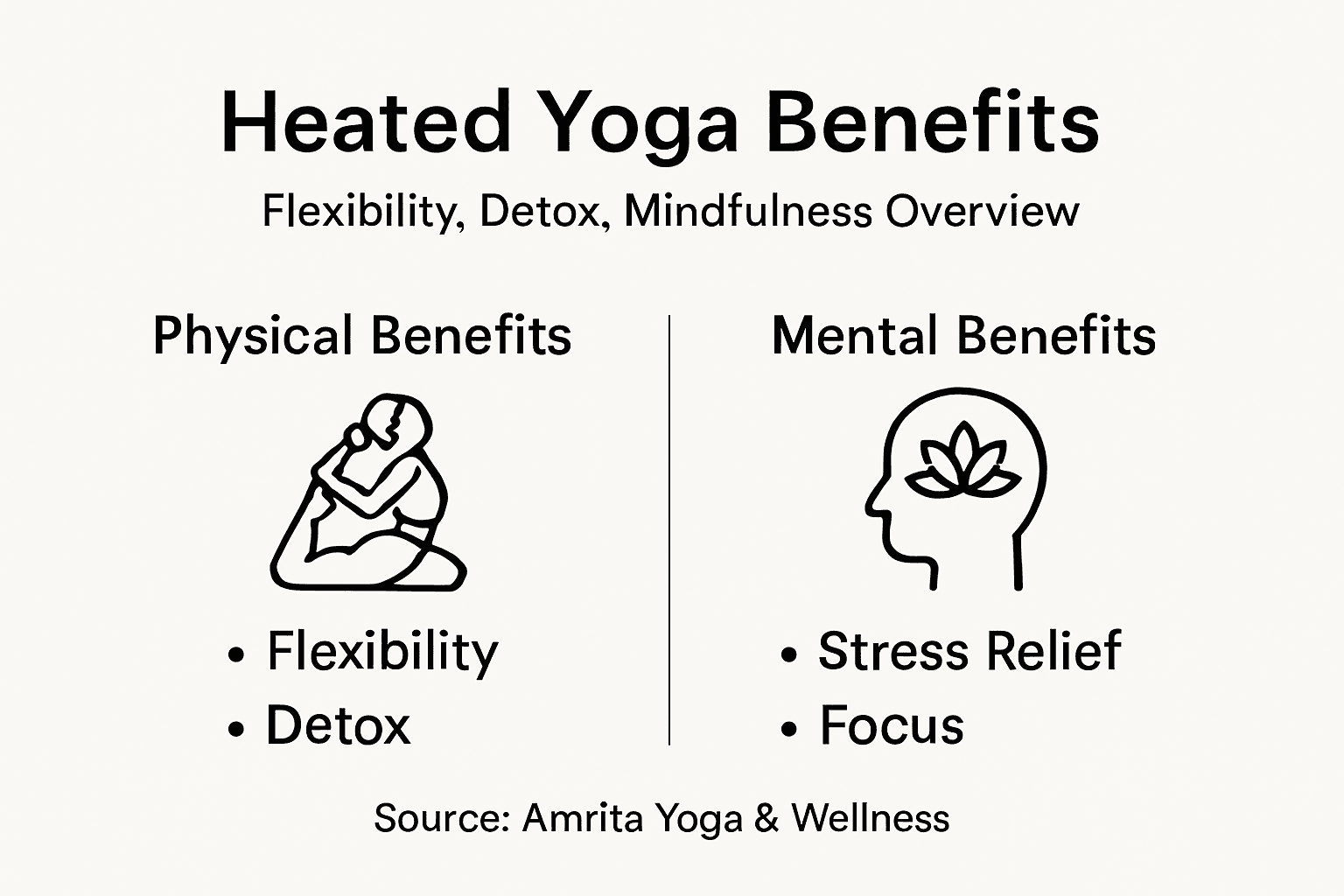
The table below quickly summarizes how heated yoga benefits the body and mind:
| Benefit | How It Manifests | Lasting Impact |
|---|---|---|
| Flexibility | Easier deep stretching | Increased range of motion |
| Detoxification | Heavy sweating | Enhanced toxin elimination |
| Mindfulness | Enhanced focus | Lowered stress, clarity |
Pro tip: Schedule your heated yoga classes during times when you can rest afterward rather than rushing into your day, as the relaxation and detox effects deepen significantly when you allow your body time to integrate the practice.
Preparing for and Attending Heated Yoga Safely
Safety in heated yoga starts before you step into the studio. The most critical preparation involves hydration. Your body will lose significant fluids through sweating, sometimes up to 1.5 liters during a single 60 to 90 minute session. Begin hydrating at least two to three hours before your class, drinking water steadily rather than chugging large amounts right before you practice. This gives your body time to absorb what you drink. Avoid arriving thirsty, as dehydration in a heated room compromises your ability to regulate body temperature and increases the risk of dizziness or cramping. You should also consume adequate electrolytes before and after class to prevent muscle cramps and the post-practice fatigue that comes from mineral loss through sweat. Many Philadelphia practitioners keep coconut water or an electrolyte drink on hand specifically for this purpose.
What you eat and wear matters significantly. Avoid heavy meals two to three hours before class, as your body needs energy for the practice, not for digesting food. A light snack like a banana or a few almonds an hour beforehand provides fuel without making you uncomfortable. Clothing should be lightweight and breathable, allowing sweat to evaporate rather than sit against your skin. Cotton or moisture-wicking fabrics work best. Avoid anything too baggy or too restrictive. Bring a towel, as the floor becomes slippery with perspiration, and consider investing in a yoga towel with grip dots specifically designed for heated classes. Your regular mat can become a skating rink without proper coverage.
During class itself, listen to your body with genuine attention. Your intermediate experience means you know what your normal limits feel like, but heat changes everything. If you feel dizzy, lightheaded, or overwhelmed, take a break. Sitting or lying down in child's pose is not failure; it's intelligence. Build your heat tolerance gradually over several classes rather than pushing yourself to complete every pose in your first session. Use modifications and props without hesitation. The studio likely offers blocks and straps for a reason. Warm up your muscles gently before moving into deeper stretches, and always cool down afterward rather than rushing out immediately. Your nervous system needs time to transition from the intensity back to normal functioning. After class, continue drinking water and give yourself at least 15 to 20 minutes of rest if possible, allowing your body to fully integrate the practice.
Pro tip: Schedule a heated yoga class at a time when you can skip social plans and sit quietly afterward, as attempting to jump into errands or conversations immediately after class reduces the safety and recovery benefits significantly.
Common Risks and How to Avoid Injury
Heated yoga carries specific risks that differ from traditional yoga practice, primarily because the combination of heat and physical intensity accelerates how your body fatigues. The most common injuries include muscle strains, ligament tears, and overexertion injuries. Your muscles feel more flexible in heat, which can trick you into pushing deeper than is actually safe. The heat masks pain signals that normally alert you to stop, meaning you might stretch a muscle or tear a ligament without realizing it until hours later when inflammation kicks in. Heat exhaustion and dehydration also pose real risks if you ignore your body's warning signals. Beyond physical injury, strains and sprains represent the most common outcomes when practitioners overestimate their heat tolerance or try to match the pace of more experienced students.
The path to injury prevention requires honest self-awareness. Work exclusively with qualified instructors who understand how heat changes movement mechanics and can offer proper modifications. When choosing classes, select ones suited to your intermediate experience level rather than jumping into advanced heated sessions. Never compete with the person next to you or try to match their depth of pose. Your body is unique, and heat affects everyone differently. Use props without shame. Blocks and straps exist to help you maintain proper alignment and prevent compensatory movements that lead to injury. Warm up deliberately before attempting deep stretches, and resist the urge to push harder just because the heat makes flexibility feel accessible. The flexibility is temporary; the injury would be lasting. Stay genuinely hydrated throughout class, and take breaks whenever you feel dizzy, unusually fatigued, or confused. These are not signs of weakness. They are your body asking for rest.
If you have preexisting medical conditions, consult your healthcare provider before attending heated yoga classes. High blood pressure, heart conditions, heat sensitivity, or pregnancy require medical clearance. Many Philadelphia practitioners benefit from heated yoga, but some people's bodies handle heat differently, and that is not a personal failing. Even without medical concerns, pay attention to subtle signals your body sends. Mild discomfort while stretching is normal; sharp pain is not. Fatigue that feels manageable is fine; dizziness or nausea means stop immediately. The goal of heated yoga is to deepen your practice sustainably over months and years, not to achieve maximum depth in a single session. Respect that timeline, and your body will reward you with genuine progress without setbacks.
Pro tip: If you experience sharp pain during a pose, come out of it immediately and inform your instructor; they can help you modify future sessions to prevent recurring injury in that area.
Elevate Your Practice with Heated Yoga at Amrita Yoga & Wellness
Heated yoga offers a powerful way to boost your flexibility, detoxify through sweat, and find deep mental clarity. If you have felt the challenge of managing heat safely while working toward greater range of motion and mindfulness this practice meets those needs directly. By embracing the warmth and focused breath work, you can unlock new levels of physical ease and emotional balance right here in Philadelphia.
Discover the right heated yoga style for your goals with expert guidance at Amrita Yoga & Wellness. Our welcoming community provides classes designed to respect your limits and enhance your well-being safely. Visit us at Amrita Yoga & Wellness to explore schedules and find a class that fits your intermediate practice. Experience the transformational benefits of heated yoga now and take the next step in your wellness journey with confidence.
Frequently Asked Questions
What should I wear to a heated yoga class?
You should wear lightweight, breathable clothing that allows sweat to evaporate. Avoid heavy or restrictive fabrics to ensure comfort during class.
How can I prepare for my first heated yoga class?
Hydrate well before class, avoid heavy meals, and arrive feeling comfortable. Also, consider bringing a towel and a mat towel for grip, as the class can get very sweaty.
What are the main benefits of heated yoga?
Heated yoga improves flexibility, facilitates detoxification through sweating, and promotes mindfulness, helping to relieve stress and enhance mental clarity.
How can I prevent injuries in heated yoga?
Listen to your body, stay hydrated, and use props to maintain proper alignment. Avoid pushing too hard, especially in a heated environment, and take breaks if you feel dizzy or fatigued.