
Tips for Mindfulness Practice That Reduce Stress

More than eighty percent of American professionals experience work-related stress each year. For those in Philadelphia, the relentless pace leaves many searching for practical ways to clear their minds and feel more in control. Mindfulness, rooted in scientific evidence rather than outdated misconceptions, provides a simple path to greater mental clarity and emotional balance. This guide reveals realistic practices busy Philadelphians can incorporate each day to find focus and connect with a supportive local wellness community.
Table of Contents
Key Takeaways
| Point | Details |
|---|---|
| Understanding Mindfulness | Mindfulness is an active mental practice focused on present-moment awareness, not a mystical state or empty mind. |
| Integration of Practices | Mindfulness techniques can easily fit into busy schedules, providing mental health benefits with minimal time investment. |
| Emotional Regulation | Practicing mindfulness enhances emotional regulation and reduces impulsive reactions to stressors in daily life. |
| Common Pitfalls | Avoid unrealistic expectations and treat mindfulness as a journey of awareness, integrating both mind and body into the practice. |
Defining Mindfulness and Common Misconceptions
Mindfulness is a powerful mental practice that involves deliberately paying attention to the present moment with openness and curiosity. Defined scientifically as awareness arising from intentional, nonjudgmental attention, mindfulness goes far beyond popular misconceptions about meditation or spiritual practices.
Contrary to widespread beliefs, mindfulness is not about emptying the mind or achieving a mystical state. Instead, it represents an active process of observing experiences exactly as they occur, without criticism or judgment. Moment-to-moment awareness becomes the core principle, allowing practitioners to engage with their thoughts and sensations without becoming overwhelmed by them.
Many people mistakenly view mindfulness as exclusively religious or spiritual, but contemporary research demonstrates it is a secular, evidence-based approach to mental wellness that can be practiced by anyone regardless of background. The practice helps individuals develop greater emotional regulation, reduce stress, and cultivate a more balanced perspective on their internal experiences.
Pro tip: Start your mindfulness journey by dedicating just five minutes each day to observing your breath without trying to change anything, allowing thoughts to pass like clouds in the sky.
Types of Mindfulness Practices for Busy Lives
Research demonstrates that mindfulness practices can be seamlessly integrated into even the most hectic schedules, offering powerful stress reduction techniques that require minimal time investment. Busy professionals can leverage short, targeted practices that deliver significant mental health benefits without demanding extensive time commitments.
Some of the most effective micro-practices for time-constrained individuals include mindful breathing, body scan meditation, and brief awareness exercises. These techniques can be practiced during short breaks, while commuting, or even during routine activities like hand washing or waiting in line. Micro-practices lasting just 1-5 minutes can provide measurable benefits such as reduced anxiety and improved emotional regulation, making them ideal for Philadelphia professionals juggling multiple responsibilities.
Key mindfulness approaches for busy lives include:
Mindful Breathing: Taking 3-5 conscious breaths during transition moments
Single-Tasking: Focusing completely on one activity at a time
Mindful Pauses: Creating brief moments of intentional awareness throughout the day
Walking Meditation: Transforming daily commutes into mindfulness opportunities
These practices do not require special equipment or extensive training, making them accessible to anyone seeking to reduce stress and enhance mental clarity in their daily routine.
Here's a summary of different mindfulness practices and the environments where they work best:
| Practice Type | Ideal Environment | Primary Benefit |
|---|---|---|
| Mindful Breathing | Desk, commute, breaks | Quick relaxation, mental clarity |
| Body Scan Meditation | Home, quiet space | Increased self-awareness |
| Walking Meditation | Outdoors, commute | Grounding, stress relief |
| Brief Awareness Pause | Office, public places | Emotional regulation, focus |
Pro tip: Choose one 2-minute mindfulness technique and practice it consistently at the same time each day to build a sustainable habit.
How Mindfulness Works in Everyday Situations
Mindfulness fundamentally transforms how individuals respond to daily stressorsby developing a heightened awareness of automatic mental and emotional patterns. Instead of reacting impulsively to challenging situations, practitioners learn to create a deliberate pause between stimulus and response, allowing for more thoughtful and balanced interactions.

In practical terms, mindfulness operates through several key mechanisms. Emotional regulation becomes more accessible as individuals develop the ability to observe their internal experiences without immediate judgment. This skill proves particularly valuable in high-pressure environments like professional settings, where interpersonal dynamics and work challenges can trigger reactive stress responses. By cultivating moment-to-moment awareness, people can recognize emerging emotional states and choose more intentional responses.
The process of mindfulness involves training the brain to:
Interrupt automatic stress reactions
Develop greater emotional flexibility
Enhance self-awareness
Create mental space between thoughts and actions
Reduce the intensity of negative emotional experiences
These neurological shifts translate directly into improved communication, reduced workplace tension, and more effective problem-solving strategies. Mindfulness essentially rewires habitual mental patterns, allowing individuals to approach challenges with clarity and composure.
Pro tip: Practice a 30-second mindful breathing technique before entering potentially stressful interactions to reset your mental state and approach the situation with greater emotional balance.
Real-World Benefits and Applications
Scientific research confirms the profound impact of mindfulness across multiple domains of human experience, demonstrating its transformative potential in addressing complex personal and professional challenges. Mindfulness is not merely a theoretical concept but a practical approach with measurable benefits in healthcare, workplace performance, and personal well-being.
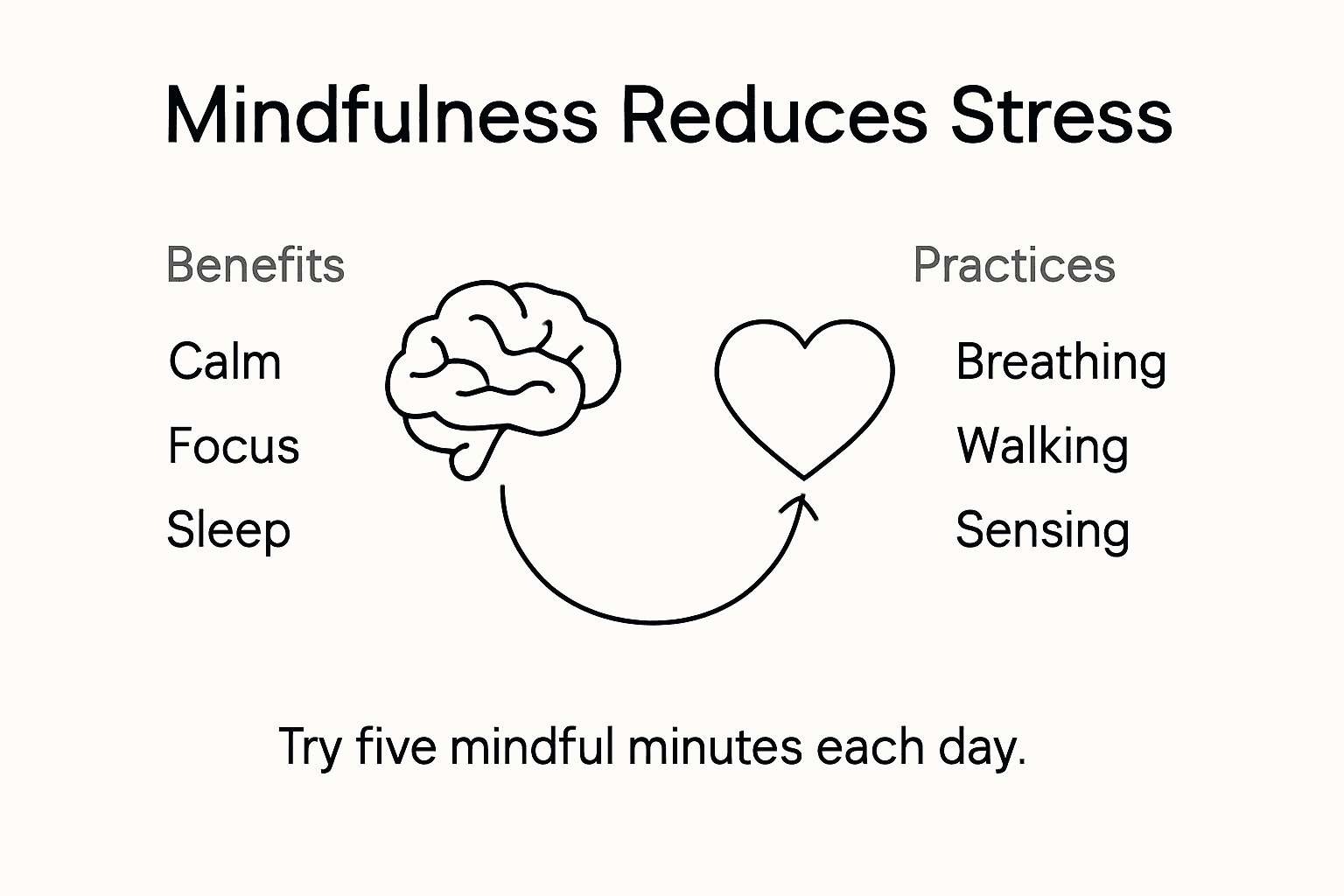
In professional environments, mindfulness practice offers significant advantages, including enhanced cognitive flexibility, improved emotional regulation, and reduced stress levels. Workers who integrate mindfulness techniques experience increased resilience, better communication skills, and more effective problem-solving abilities. These benefits translate directly into improved workplace dynamics, reduced burnout, and greater overall job satisfaction.
Key real-world applications of mindfulness include:
Stress management in high-pressure careers
Pain management in medical treatment
Emotional regulation for mental health support
Improved focus and productivity in academic and professional settings
Enhanced interpersonal communication and conflict resolution
Beyond professional contexts, mindfulness demonstrates remarkable potential in personal health management, particularly in addressing chronic conditions, managing anxiety and depression, and promoting overall psychological well-being. The practice provides individuals with a powerful toolkit for navigating life's complex emotional landscapes.
This table compares the impact of mindfulness in professional versus personal settings:
| Context | Major Benefit | Example Application |
|---|---|---|
| Workplace | Improved resilience | Handling workplace conflict calmly |
| Personal | Reduced anxiety | Managing chronic stress and worries |
Pro tip: Start by dedicating just five minutes daily to a consistent mindfulness practice, gradually increasing duration as you become more comfortable with the technique.
Mistakes to Avoid in Mindfulness Practice
Mindfulness is a nuanced practice that requires careful approach and understanding. Practitioners often encounter common pitfalls that can undermine their progress, potentially discouraging them from continuing their mindful journey.
One of the most significant misconceptions involves expecting immediate or perfect results. Mindfulness is not about achieving a state of constant calm or eliminating all thoughts, but rather developing a compassionate, non-judgmental awareness. Many beginners become frustrated when their minds continue to wander, mistakenly believing they are doing something wrong. In reality, noticing when your mind drifts and gently bringing attention back is the core of the practice.
Common mistakes in mindfulness practice include:
Setting unrealistic expectations
Trying to force a particular mental state
Judging yourself harshly during practice
Inconsistent or sporadic practice
Confusing mindfulness with relaxation or meditation
Another critical error is treating mindfulness as a purely mental exercise, disconnected from physical experience. True mindfulness integrates body and mind, requiring practitioners to pay attention to physical sensations, breath, and present-moment experiences without getting caught in analytical thinking.
Pro tip: Approach your mindfulness practice with curiosity and gentleness, treating yourself like you would a good friend learning a new skill.
Enhance Your Mindfulness Practice to Truly Reduce Stress
Struggling to find time for mindfulness or feeling overwhelmed by stress in your busy Philadelphia life is a common challenge. This article highlights simple yet effective mindfulness techniques like mindful breathing and brief awareness pauses that anyone can practice anytime. If you want to deepen your skills and experience lasting mental clarity and emotional balance, integrating mindfulness with holistic wellness can make a real difference.
Discover how Amrita Yoga & Wellness supports you in building consistent, gentle mindfulness habits through expert-led yoga, tai chi, and meditation classes designed for all levels. Our welcoming community and accessible offerings help you transform micro-practices into meaningful daily rituals. Visit the class schedule now to find sessions that fit your lifestyle and start reducing stress effectively today.
Frequently Asked Questions
What is mindfulness and how does it help reduce stress?
Mindfulness is the practice of intentionally paying attention to the present moment with openness and curiosity. It helps reduce stress by promoting greater emotional regulation, allowing individuals to respond more thoughtfully to stressors instead of reacting impulsively.
How can I practice mindfulness if I have a busy schedule?
You can practice mindfulness through short techniques such as mindful breathing, brief awareness pauses, or transforming routine activities like walking or hand washing into mindfulness exercises. These micro-practices can be done in just 1-5 minutes and fit seamlessly into your busy life.
What common mistakes should I avoid when starting mindfulness practice?
Common mistakes include setting unrealistic expectations, trying to force a specific mental state, self-judgment during practice, and inconsistent practice. Remember that mindfulness is not about achieving constant calm but about developing gentle awareness.
How can mindfulness improve my emotional regulation at work?
Mindfulness enhances emotional regulation by training individuals to observe their thoughts and feelings without immediate judgment. This increased awareness allows for more balanced and thoughtful responses in high-pressure professional situations, reducing stress and improving communication.