Benefits of Aerial Yoga: Complete Wellness Guide

Did you know that aerial yoga can help improve flexibility and strength while relieving pressure on your joints? This innovative practice combines gentle movement, the support of a silk hammock, and the benefits of traditional yoga to deliver a unique full-body workout. More people are discovering how aerial yoga not only enhances physical health but also supports mental well-being, creating new possibilities for those seeking something beyond the standard yoga mat.
Table of Contents
Key Takeaways
| Point | Details |
|---|---|
| Unique Practice | Aerial yoga combines traditional yoga with suspended silk hammocks, enhancing movement through gravity and support. |
| Physical Benefits | It improves strength, flexibility, and joint mobility while minimizing impact on joints. |
| Mental Wellness | Aerial yoga aids in stress reduction and emotional healing by promoting relaxation and mindfulness. |
| Safety Considerations | Proper instruction and equipment maintenance are essential for safe practice, making it accessible to various fitness levels. |
Defining Aerial Yoga and How It Works
Aerial yoga represents a revolutionary approach to traditional yoga practice, transforming how practitioners experience movement and physical wellness. According to United Spinal, this unique discipline combines classical yoga poses with a suspended silk hammock, allowing participants to perform movements in mid-air and leverage gravity in entirely new ways.
Aerial yoga involves using a specialized hammock or silk fabric suspended from the ceiling, creating a dynamic platform for exploration and physical challenge. By integrating the hammock into traditional yoga postures, practitioners can experience enhanced flexibility, improved strength, and deeper body awareness. The hammock provides support and assists with achieving positions that might be difficult on a standard yoga mat, making complex poses more accessible and reducing joint strain.
The mechanics of aerial yoga are both innovative and intuitive. Practitioners use the hammock as both a support system and a tool for movement, which allows for:
Increased range of motion
Reduced gravitational pressure on joints
Deeper stretches with added stability
Improved spinal decompression
Enhanced core engagement
For those seeking a transformative yoga experience, Understanding Aerial Yoga vs Traditional Yoga offers additional insights into how this practice differs from ground-based techniques. Whether you're a seasoned yogi or a curious beginner, aerial yoga provides a unique opportunity to explore movement in a three-dimensional space, challenging both body and mind in extraordinary ways.
Physical Benefits for Strength and Flexibility
Aerial yoga offers an extraordinary approach to building physical strength and flexibility that goes far beyond traditional ground-based practices. According to United Spinal, engaging in aerial yoga can lead to significant improvements in joint mobility, spinal decompression, and muscle strength through the unique support provided by suspended silk hammocks.
The suspended nature of aerial yoga creates a dynamic environment that challenges the body in unique ways. By using bodyweight against gravity and the hammock's support, practitioners develop core strength and muscular endurance more effectively than conventional yoga practices. The hammock allows for deeper stretches and more expansive movements, enabling individuals to access muscle groups and range of motion that might be challenging on a standard mat.
Specific physical benefits of aerial yoga include:
Enhanced muscular strength through suspended resistance training
Improved flexibility by allowing deeper, supported stretches
Increased joint mobility and reduced gravitational pressure
Better postural alignment and body awareness
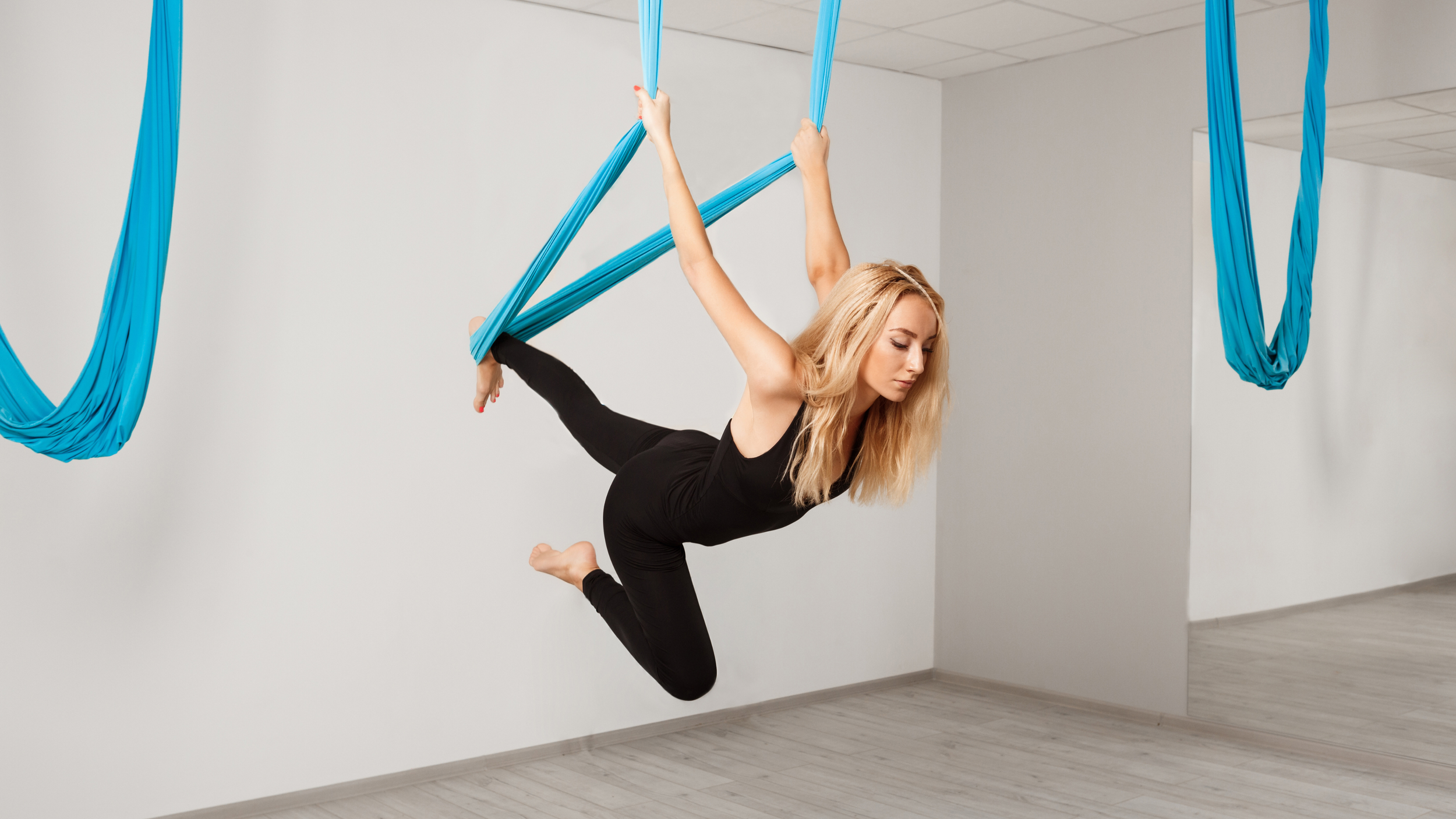
Low-impact conditioning that minimizes stress on joints
Master Aerial Yoga Flexibility Exercisescan provide additional insights into how these specialized movements can transform your physical fitness. Whether you're an athlete seeking cross-training or someone recovering from injury, aerial yoga offers a versatile and adaptable approach to building strength, flexibility, and overall physical resilience.
Mental Wellness and Stress Reduction Effects
Aerial yoga emerges as a powerful holistic practice for mental wellness, offering practitioners a unique approach to stress reduction and emotional healing. According to United Spinal, practicing aerial yoga can significantly improve mood and alleviate symptoms of depression, with participants reporting remarkable benefits in pain management and overall emotional well-being.
The suspended environment of aerial yoga creates a profound psychological experience that goes beyond traditional exercise. By literally elevating practitioners off the ground, this practice helps break typical mental patterns, encouraging a sense of freedom and playfulness. The combination of gentle swinging, supported inversions, and meditative movements triggers the body's relaxation response, reducing cortisol levels and promoting a deep sense of calm and mental clarity.
Key mental wellness benefits of aerial yoga include:
Reduced anxiety and stress levels
Enhanced mood and emotional regulation
Improved mindfulness and present-moment awareness
Increased sense of personal empowerment
Breakthrough of psychological barriers through physical challenge
7 Examples of Mindfulness Practices can complement your aerial yoga journey, offering additional strategies for mental wellness. Whether you're struggling with daily stress or seeking a transformative approach to mental health, aerial yoga provides a unique, supportive environment for emotional healing and personal growth.
Safety Tips and Common Misconceptions
Aerial yoga can be an incredibly rewarding practice, but like any physical activity, it requires careful attention to safety and proper technique. United Spinal emphasizes the critical importance of ensuring that the silk hammock is securely anchored and that practitioners are always under the guidance of a certified instructor to prevent potential injuries.
One of the most prevalent misconceptions about aerial yoga is that it's only for extremely flexible or athletic individuals. In reality, aerial yoga can be adapted for practitioners of all fitness levels and body types. However, this adaptability doesn't negate the need for proper preparation and precautions. Beginners should always start with foundational classes, communicate any pre-existing health conditions with their instructor, and listen carefully to their body's signals during practice.
Key safety considerations for aerial yoga include:
Always train with a certified and experienced aerial yoga instructor
Wear fitted clothing that covers arms and legs to prevent silk burns
Perform a thorough physical assessment before starting practice
Start with basic, ground-level techniques before advancing to more complex poses
Use proper equipment and ensure regular maintenance of aerial hammocks
Inform your instructor about any physical limitations or health concerns
Common misconceptions can create unnecessary barriers to experiencing this transformative practice. Many people believe aerial yoga is dangerous or only for advanced practitioners, but with proper guidance and a gradual approach, it can be a safe and accessible form of exercise for most individuals. As with any new fitness routine, consulting with healthcare professionals and starting slowly are key to a successful and injury-free aerial yoga journey.
Comparing Aerial Yoga to Traditional Yoga
Aerial yoga represents a revolutionary approach to traditional yoga practice, offering practitioners a unique and transformative experience that goes beyond conventional mat-based techniques. According to United Spinal, aerial yoga provides distinctive benefits such as spinal decompression and reduced joint compression, which are less prominently featured in traditional yoga practices.
While traditional yoga focuses on ground-based poses and alignment, aerial yoga introduces a three-dimensional practice that leverages gravity and suspension. The silk hammock becomes an extension of the practitioner's body, allowing for deeper stretches, enhanced flexibility, and poses that might be challenging or impossible on a standard yoga mat. This suspended environment creates a playful yet intentional approach to movement, engaging muscles and core stability in ways that traditional yoga cannot replicate.
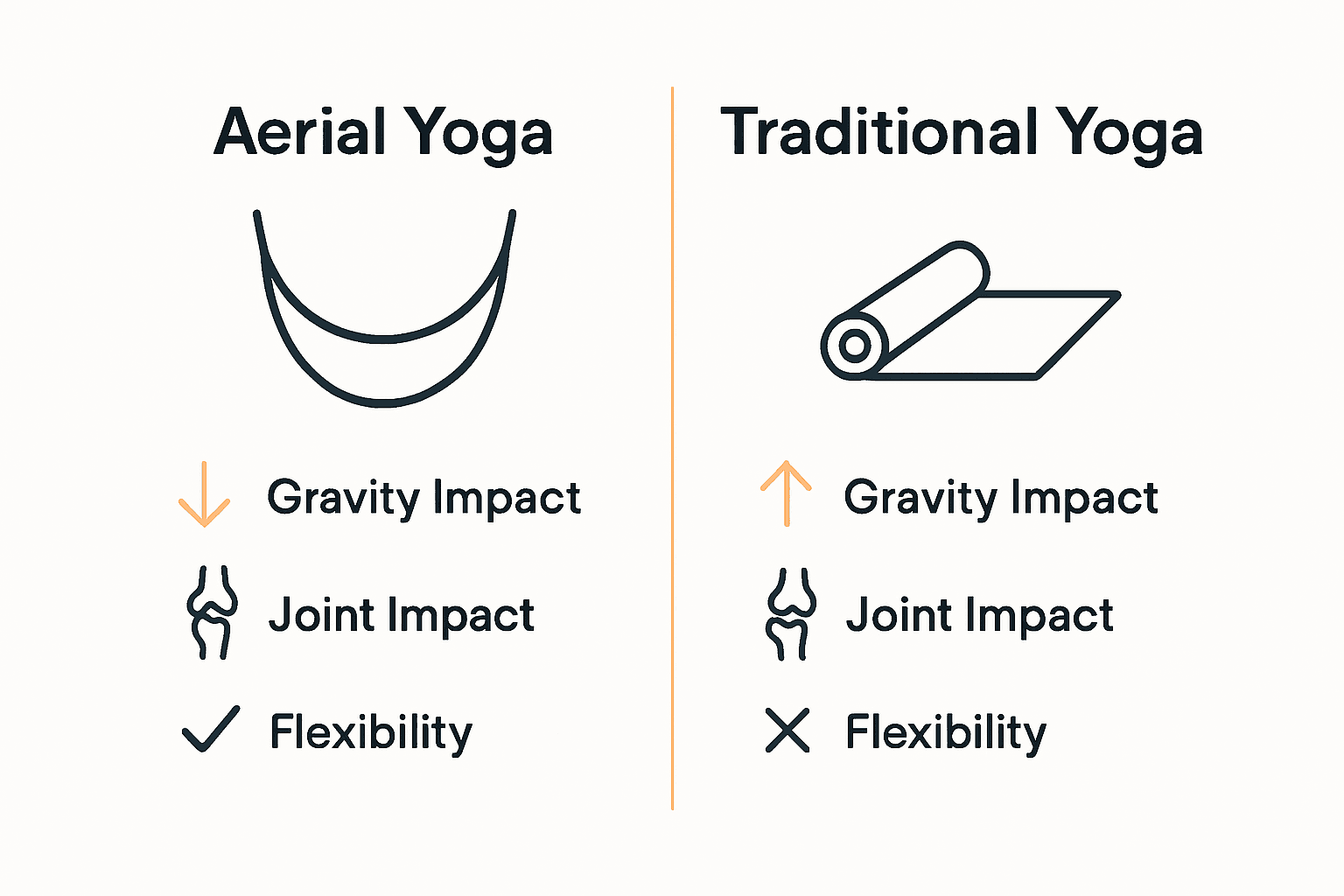
Key differences between aerial and traditional yoga include:
Here's a comparison of aerial yoga and traditional yoga:
Aerial Yoga vs Traditional Yoga
| Feature | Aerial Yoga | Traditional Yoga |
|---|---|---|
| Main Equipment | Silk hammock | Yoga mat |
| Gravity Use | Suspension, anti-gravity | Ground-based, gravity-resisted |
| Spinal Decompression | Enhanced through hanging | Limited, mostly through poses |
| Joint Impact | Low-impact, less joint strain | Moderate impact, some poses harder on joints |
| Core Engagement | High, balancing in hammock | Moderate, core used for stability |
| Flexibility Gains | Deep, supported stretches | Gradual, mat-based stretches |
| Playful Elements | Swinging, inversions | Static or flowing movement |
| Accessibility | Adaptable for many levels | Widely accessible, familiar format |
Gravity-assisted movements in aerial yoga
Enhanced spinal decompression through suspension
Increased range of motion and flexibility
Lower impact on joints and muscles
More dynamic and playful practice environment
Unique approach to inversions and balance
What is Aerial Yoga? Understanding Its Benefits and Techniquesoffers deeper insights into this innovative practice. While traditional yoga remains a powerful form of exercise and mindfulness, aerial yoga provides an exciting alternative for those seeking to expand their physical and mental wellness practices, offering a fresh perspective on movement, strength, and body awareness.
Experience the Transformative Power of Aerial Yoga for Your Body and Mind
If you are looking to break free from the limitations of traditional yoga and discover new ways to boost strength, flexibility, and mental clarity, aerial yoga offers an accessible and exciting solution. This practice addresses common challenges like joint strain, limited range of motion, and everyday stress by using a suspended silk hammock that supports your body while enhancing every movement. Whether you want to deepen your stretches, improve spinal decompression, or find a fresh path to emotional balance, aerial yoga meets you where you are.

Take the next step in your wellness journey at Amrita Yoga & Wellness. Our Philadelphia-based studio offers expert-led aerial yoga classes designed to safely guide you through this uplifting practice. Explore a welcoming community that embraces all levels and supports your growth through workshops, wellness experiences, and holistic care. Don’t wait to transform your physical and mental health—discover more and sign up for a class today at Amrita Yoga & Wellness and start unfolding the benefits described in the Benefits of Aerial Yoga: Complete Wellness Guide. Your body and mind deserve this next-level care.
Frequently Asked Questions
What is aerial yoga and how does it differ from traditional yoga?
Aerial yoga combines classical yoga poses with a suspended silk hammock, allowing for movement in mid-air. Unlike traditional yoga, which is ground-based, aerial yoga leverages gravity and provides support for deeper stretches and enhanced flexibility.
What are the physical benefits of practicing aerial yoga?
Practicing aerial yoga can lead to improved muscular strength, enhanced flexibility, increased joint mobility, better posture, and spinal decompression, all while minimizing stress on the joints.
How can aerial yoga contribute to mental wellness?
Aerial yoga promotes mental wellness by reducing stress and anxiety, enhancing mood, and encouraging mindfulness. The unique suspended environment helps break mental patterns, providing a sense of freedom and emotional healing.
What safety precautions should I take when starting aerial yoga?
It's essential to train with a certified instructor, wear fitted clothing to prevent burns, start with basic poses, and communicate any health concerns with your instructor. Always ensure the hammock is securely anchored to avoid injuries.