Aerial yoga equipment checklist: safe & effective practice
TL;DR:
Proper load-rated equipment and professional installation are essential for safe aerial yoga practice.Regular inspections, maintenance, and adherence to safety standards reduce injury risk significantly.Community resources and expert guidance in Philadelphia support safe and confident practice.
Aerial yoga is one of the most physically rewarding practices you can try, but it carries real risks when the setup is wrong. A torn hammock, an improperly anchored rigging point, or a ceiling that can't handle dynamic loads can turn a peaceful session into a serious injury. Many practitioners, both beginners and experienced movers, skip crucial steps because the gear looks fine or the setup "worked last time." This guide gives you a complete, step-by-step equipment checklist built around real safety standards, so you can practice with confidence whether you're at home in Philadelphia or walking into a studio for the first time.
Table of Contents
Key Takeaways
| Point | Details |
|---|---|
| Prioritize safety first | Professional installation, correct load ratings, and regular checks are non-negotiable for a safe aerial yoga setup. |
| Use a complete gear checklist | Every aerial yoga practitioner needs the right equipment and setup for their specific space and experience level. |
| Inspect and maintain regularly | Pre-use inspection and periodic cleaning help prevent the majority of injuries and keep equipment in top condition. |
| Consult local experts | Philadelphians can access studios like Amrita Yoga & Wellness for professional guidance, setup support, and ongoing safety. |
Understand aerial yoga safety essentials
Before you gather equipment, it's crucial to understand the standards your setup must meet. Aerial yoga isn't like floor yoga. Every piece of gear is load-bearing, and the forces involved are far greater than your body weight alone. When you swing, invert, or drop into a pose, you create what engineers call dynamic load, which can be two to three times your static weight in an instant.
"Safety standards require professional installation, regular inspections, and equipment rated 3x user weight to protect practitioners at every level."
Here's what every safe aerial yoga setup must include:
Load capacity: Your rigging system, anchor points, and hammock must all be rated for at least three times your body weight. A 150-pound person needs gear rated for at least 450 pounds minimum.
Certified equipment: Look for CE or TUV certifications on all hardware. These marks confirm the product has been independently tested.
Structural integrity: The ceiling beam or mounting surface must be inspected by a professional before installation, not just eyeballed.
Professional installation: Even if you're handy, a licensed rigger or structural engineer should sign off on your anchor points.
Local compliance: In Philadelphia, home and studio installations must follow both Pennsylvania building codes and any local Philadelphia ordinances related to structural modifications.
Studios like Amrita Yoga & Wellness in Philadelphia set the standard here. They use professionally installed equipment, conduct regular inspections, and ensure every setup meets load requirements before a single class begins. That's the benchmark to hold yourself to.
If you're new to the practice, reviewing a solid aerial yoga safety guide before purchasing anything is a smart first move. It's also worth understanding aerial yoga contraindications, which are the physical conditions that may make certain aerial movements risky for you specifically.
Pro Tip: Never assume a ceiling joist can hold your weight just because it looks solid. A structural engineer can assess load capacity in under an hour, and that one-time cost is far cheaper than an ER visit.
Build your aerial yoga gear checklist
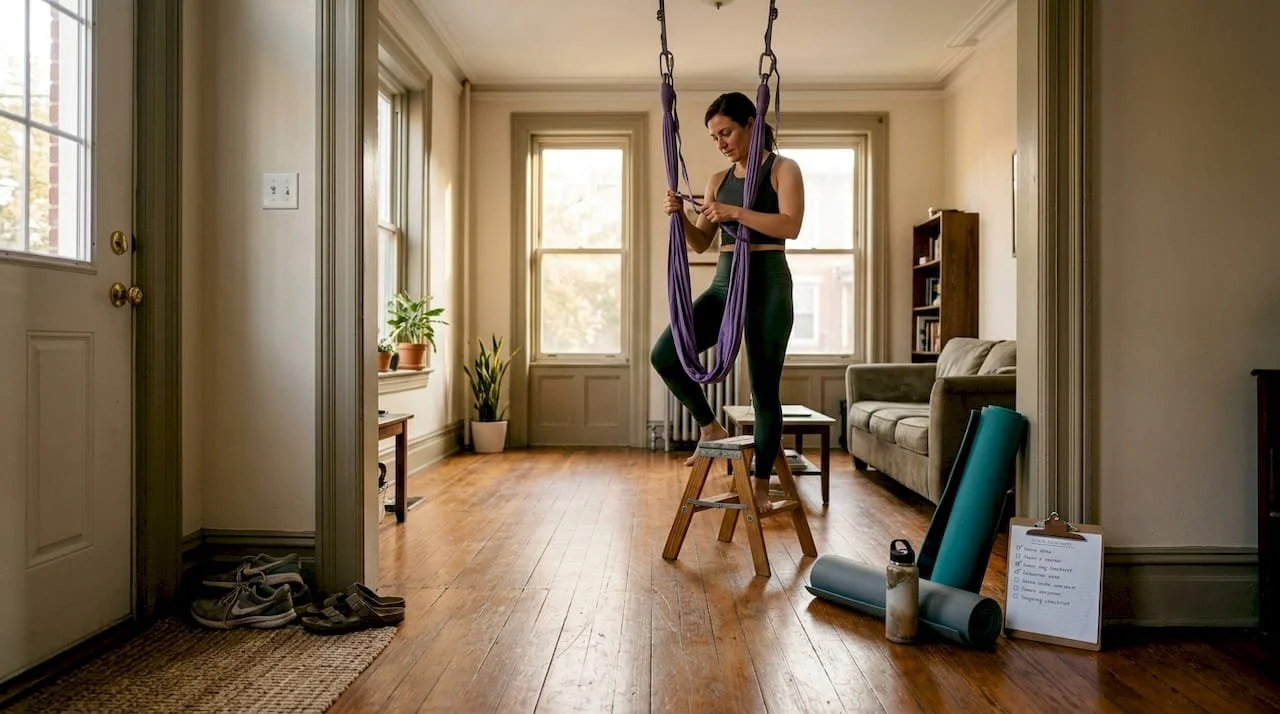
Now that you know the safety requirements, let's list out every piece of equipment you need for a reliable setup. Whether you're building a home rig in a Philadelphia row house or outfitting a dedicated studio space, the core list stays the same.
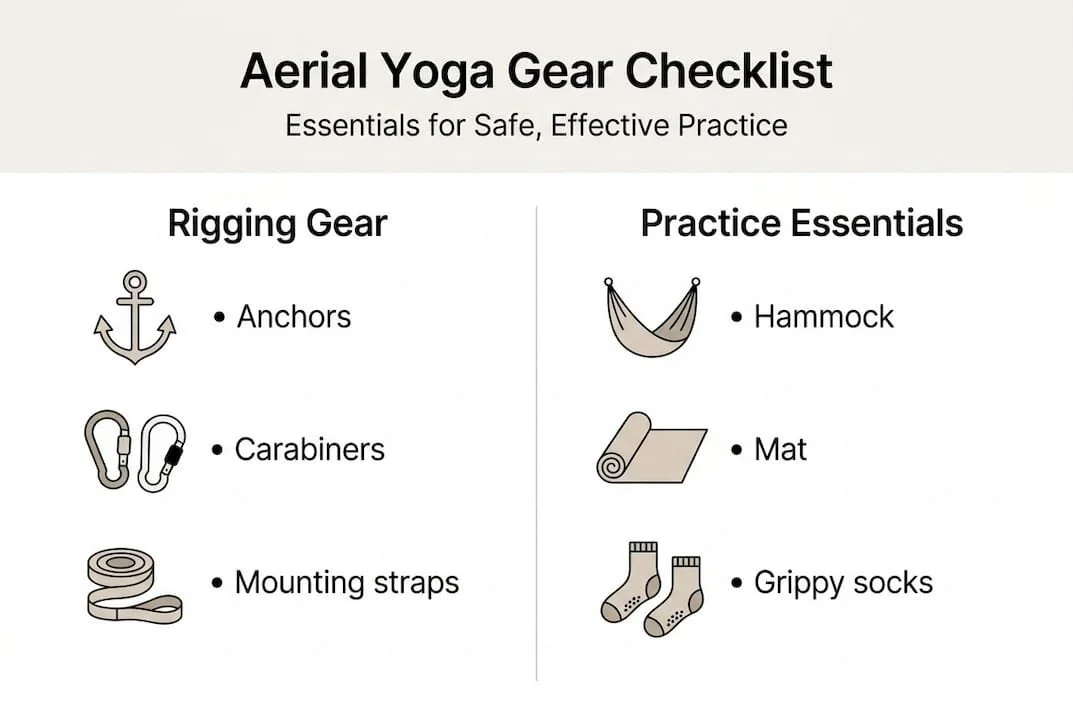
Essential equipment breakdown:
Aerial hammock or silk: Choose a hammock rated for at least 300 to 600 pounds. Nylon and tricot fabric are the most common. Nylon is more durable; tricot is softer on skin.
Rigging hardware: This includes carabiners (rated to at least 20kN), swivel hooks, and daisy chains or extension straps. All hardware must be climbing-grade or aerial-specific.
Ceiling anchor or mount: A steel ceiling mount bolted into a structural beam is the gold standard. Portable freestanding rigs are an option when ceiling installation isn't possible.
Yoga mat: Placed directly beneath the hammock for landing safety. Non-slip, at least 5mm thick.
Crash mat or foam pad: Especially important for beginners or anyone learning inversions. Place it under and around your practice area.
Safety scissors: Keep a pair nearby to cut fabric in an emergency.
Chalk or grip aid: Optional, but helpful for maintaining control during longer holds.
| Setting | Ceiling height needed | Clearance space | Rig type |
|---|---|---|---|
| Home (ideal) | 9 to 10 feet | 5 to 6 feet radius | Ceiling mount |
| Home (minimum) | 8 feet | 5 feet radius | Ceiling or portable rig |
| Studio | 10 to 14 feet | 6+ feet radius | Professional ceiling mount |
| Outdoor/portable | Variable | 6+ feet radius | Freestanding rig |
Studios in Philadelphia use pro-installed equipment and recommend engineer consults for home rigs, which tells you something important: even the professionals don't skip this step.
For Philly practitioners with older homes or lower ceilings, a portable freestanding rig is a legitimate option. Just confirm it's rated for dynamic loads, not just static weight. Explore aerial yoga best practices to understand how different rig types perform under real movement conditions.
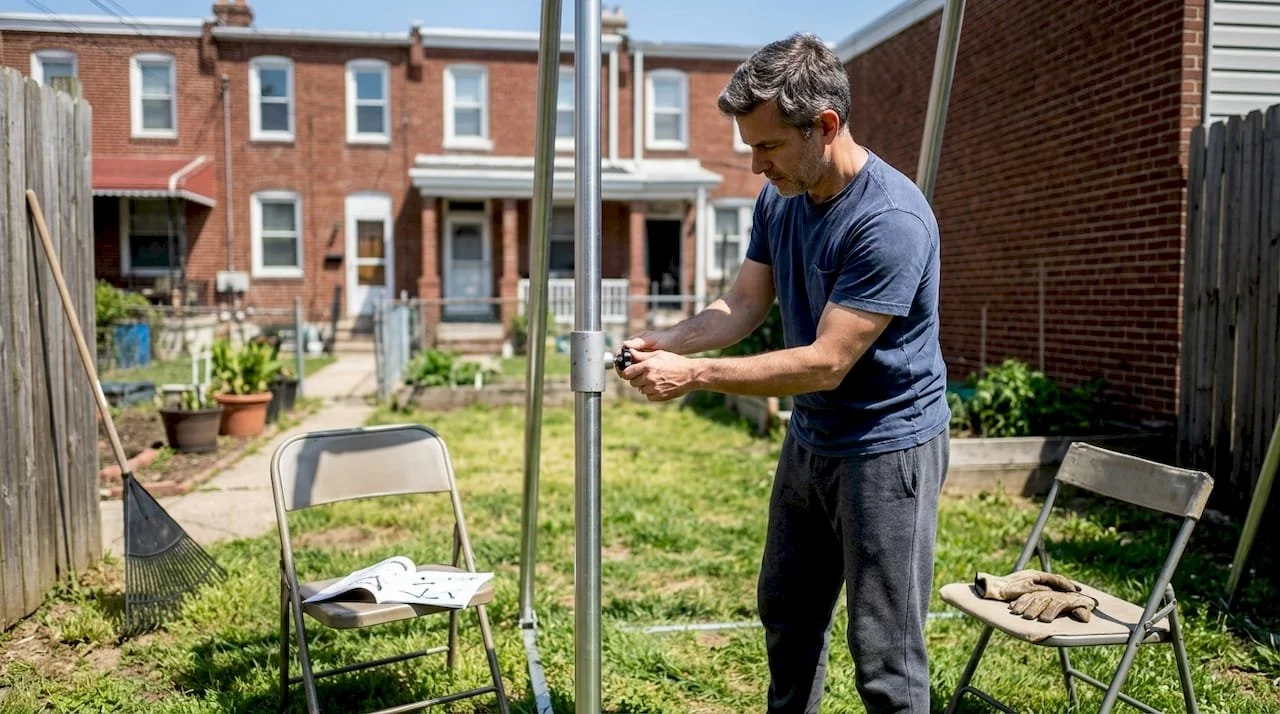
Pro Tip: Measure your ceiling height before buying anything. An 8-foot ceiling is workable, but you'll need a lower hammock mount and should avoid deep drops or swinging poses until you're in a taller space.
Step-by-step setup for safe practice
With everything on your checklist, it's time to put it all together for a safe start. Follow these steps every single time you set up, not just the first time.
Inspect the anchor point. Before attaching anything, visually check your ceiling mount or structural beam for cracks, rust, or looseness. Tug the mount firmly with both hands.
Attach rigging hardware. Connect your carabiner and swivel to the anchor point. Gate-check every carabiner by twisting and pulling to confirm it's locked.
Hang the hammock. Loop the hammock through the rigging at your desired height. For beginners, hip height is a safe starting point.
Test the load gradually. Sit in the hammock before standing or inverting. Apply weight slowly and listen for any creaking or movement in the anchor.
Set up your mat and crash pad. Place your yoga mat directly under the hammock. Add a crash mat for any inversion or drop work.
Clear the space. Remove furniture, sharp objects, and anything within your 5 to 6 foot clearance radius.
Run a pre-session check. Scan the fabric for tears, check all hardware connections, and confirm the hammock hangs evenly.
| Situation | Adjustment needed |
|---|---|
| Low ceiling (8 ft) | Lower mount, avoid swinging, use portable rig |
| Children practicing | Extra crash mats, lower hammock height, adult supervision |
| Practitioner with injury | Medical consult first, avoid inversions, studio guidance |
| First-time setup | Have a second person present, go slow on load testing |
Edge cases like low ceilings, setups for kids, and practice with injuries all require specific adjustments that go beyond the standard setup. Never rush these situations. Review aerial yoga setup tips for detailed guidance on each scenario.
Pro Tip: If your hammock hangs unevenly after setup, don’t just adjust by eye. Use a measuring tape to confirm both sides are at equal height from the floor. An uneven hang shifts your center of gravity and increases fall risk.
Edge cases like low ceilings, setups for kids, and practice with injuries all require specific adjustments that go beyond the standard setup. Never rush these situations. Review aerial yoga setup tips for detailed guidance on each scenario.
Pro Tip: If your hammock hangs unevenly after setup, don't just adjust by eye. Use a measuring tape to confirm both sides are at equal height from the floor. An uneven hang shifts your center of gravity and increases fall risk.
Inspect, maintain, and troubleshoot your setup
Once your setup is complete, ongoing maintenance is key to long-term safety and performance. Most aerial yoga accidents don't happen on day one. They happen weeks or months later, when gear starts to wear and inspections get skipped.
What to check before every session:
Run your hands along the full length of the hammock fabric, feeling for thin spots, small tears, or fraying at the edges.
Inspect all carabiners and swivel hooks for rust, deformation, or gate issues.
Check the ceiling mount or anchor for any movement, new cracks, or signs of stress.
Confirm the hammock hangs at the same height as your last session. A drop in height can signal a loosening anchor.
Look at the stitching on hammock loops and daisy chains. Pulled threads are an early warning sign.
"Regular inspections reduce injury risk by 35%; wash gear every 4 to 6 weeks and schedule annual professional checks to keep your setup performing safely."
For cleaning, hand wash your hammock in cold water with a mild detergent every 4 to 6 weeks, or more often if you practice frequently. Air dry only. Machine washing can weaken fabric fibers over time, and heat from a dryer accelerates breakdown.
Know when to retire gear. If you see any of these, stop using the equipment immediately: visible tears in the fabric, bent or cracked carabiners, a swivel that no longer rotates smoothly, or any anchor point that has shifted position. No amount of patching or tightening makes compromised gear safe again.
For troubleshooting common issues, an uneven mount usually means one anchor point has shifted or the hammock loops are set at different heights. Mat slippage is typically solved by switching to a higher-grip mat surface or placing a non-slip underlay beneath it.
Philadelphia practitioners can lean on local studios for annual professional inspections. Many studios, including those in the Amrita Yoga & Wellness community, connect students with trusted riggers. Check out dedicated aerial yoga safety tips and resources on aerial yoga risks to stay current on best practices.
Our perspective: why aerial yoga safety is personal
Here's something most aerial yoga content won't tell you: checklists aren't just for beginners. In fact, the practitioners who get hurt most often are the ones who've been doing this long enough to feel comfortable skipping steps.
Complacency is the real enemy. Dynamic loads far exceed static weight calculations, and most accidents occur due to skipped inspections or misguided DIY shortcuts, not inexperience. That's a critical distinction. It means experience alone doesn't protect you. Process does.
We believe the checklist mindset is actually a form of respect for the practice. Every time you run through your pre-session inspection, you're honoring the seriousness of what you're doing. It keeps you present before you even get into the hammock.
Philadelphia practitioners have a genuine advantage here. The local studio community, anchored by spaces like Amrita Yoga & Wellness, offers access to experienced instructors, trusted riggers, and a culture of shared Philadelphia safety lessons that you simply can't replicate from a YouTube tutorial. Use that community. It's one of the best resources you have.
Start your aerial yoga journey with expert guidance
Ready to take everything you've learned and bring your aerial yoga goals to life?
Amrita Yoga & Wellness in Philadelphia offers aerial yoga classes led by experienced instructors who prioritize your safety from the very first session. Whether you want to try a class before committing to a home setup, or you need a professional consultation for your own rigging installation, the team at Amrita is ready to help. You can also explore complementary wellness options like acupuncture services to support recovery and flexibility, or unwind with tarot readings as part of a broader self-care practice. Your next step toward safe, confident aerial yoga starts here.
Frequently asked questions
What is the minimum ceiling height for home aerial yoga in Philadelphia?
The minimum recommended ceiling height is 8 feet, but 8 to 10 feet with clearance of 5 to 6 feet around the hammock is ideal for safe, full-range movement.
Can I install aerial yoga equipment myself, or do I need a professional?
Professional installation is strongly recommended for all home setups, since a licensed rigger or structural engineer can confirm your ceiling can safely handle dynamic loads during practice.
How often should I check or replace my aerial yoga hammock?
Inspect the hammock before every session and wash it every 4 to 6 weeks. Replace it immediately at the first sign of fraying, tears, or thinning fabric, since routine maintenance cuts injury risk significantly.
Is aerial yoga safe for children or people with medical conditions?
Children need lower rigging, extra crash mats, and constant adult supervision, while anyone with a medical condition or injury should get a doctor's clearance and start in a supervised studio setting before practicing at home.