What is a yoga class: complete Philadelphia guide 2026
Many people curious about yoga feel uncertain about what actually happens in a class. You might wonder if you need to be flexible, what to wear, or whether yoga is just stretching. This guide clears up those misconceptions with research-backed insights tailored for Philadelphia beginners. You'll discover what yoga classes involve, the proven health benefits, how to choose the right style, and practical tips for your first session. Whether you're seeking stress relief, community connection, or improved fitness, understanding yoga classes helps you make confident decisions about your wellness journey.
Table of Contents
Key takeaways
| Point | Details |
|---|---|
| Physical benefits | Yoga improves balance, strength, flexibility and reduces chronic pain through consistent practice. |
| Mental wellness | Regular sessions reduce trait anxiety and inflammation markers, supporting emotional health. |
| Instructor quality matters | Certified, experienced teachers minimize injury risk and maximize benefits for beginners. |
| Class variety | Different yoga styles cater to diverse fitness levels, from gentle restorative to dynamic vinyasa. |
| Community connection | Philadelphia studios emphasize social support and belonging beyond physical exercise. |
Understanding what a yoga class entails
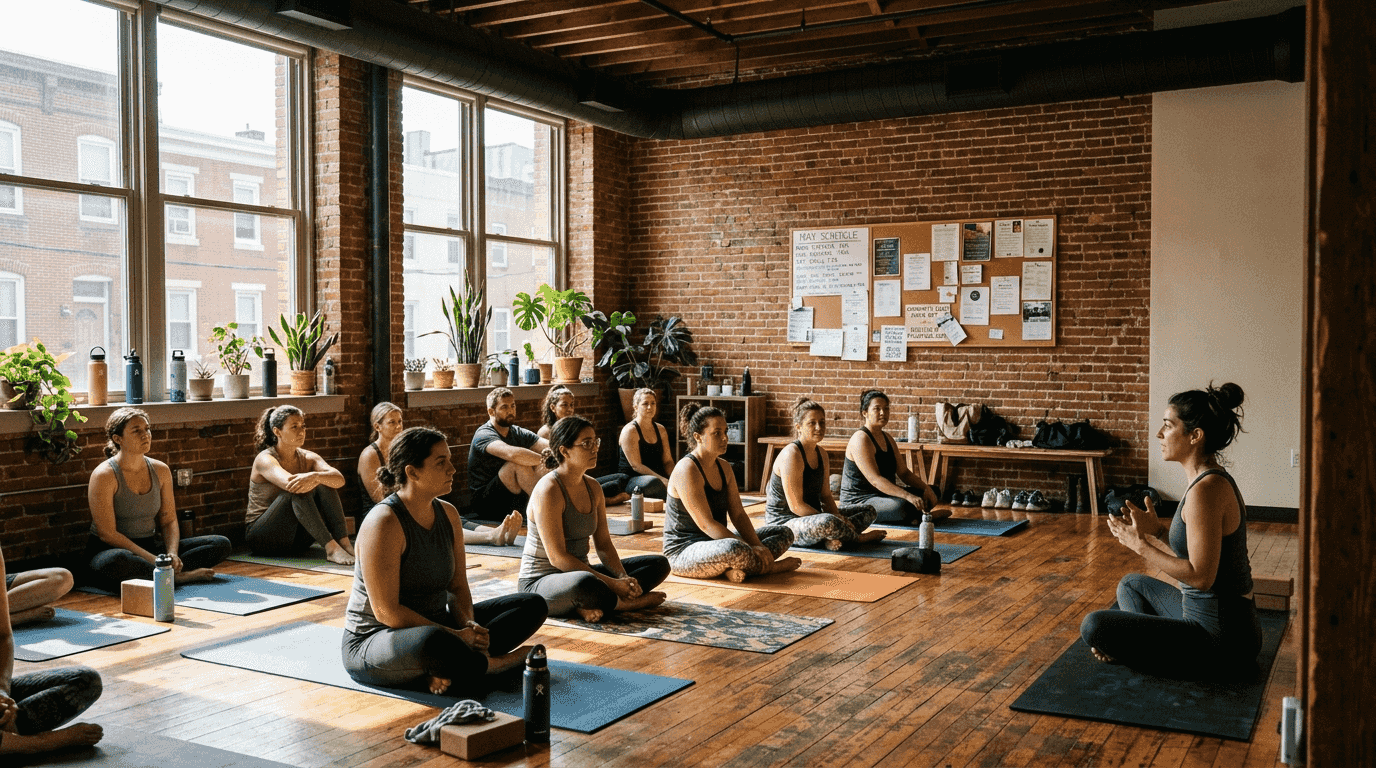
A typical yoga class follows a structured format designed to integrate body, breath, and mind. Sessions usually begin with a brief warm-up period where you focus on breathing and gentle movements to prepare your muscles and joints. The main portion involves practicing poses, called asanas, which range from standing balances to seated stretches and inversions. Instructors guide you through sequences that build strength, flexibility, and body awareness.
Breathing exercises, known as pranayama, play a central role throughout the class. You'll learn techniques to control your breath, which helps calm your nervous system and deepen your focus. Most classes conclude with a relaxation phase, often in a resting pose called savasana, where you integrate the physical and mental benefits of the practice.
Yoga classes vary significantly by style. Hatha classes move at a slower pace, making them ideal for beginners learning foundational poses. Vinyasa links breath with movement in flowing sequences that build heat and cardiovascular endurance. Restorative yoga uses props to support passive stretches held for several minutes, promoting deep relaxation. Hot yoga takes place in heated rooms to increase flexibility and detoxification through sweating.
Philadelphia studios often incorporate community-building elements that extend beyond the physical practice. You might find workshops, social events, or partner exercises that foster connections with fellow practitioners. This holistic approach addresses physical, mental, and emotional wellness simultaneously.
Sessions typically last 60 to 90 minutes, though some studios offer shorter express classes or longer intensive workshops. Beginners often feel confused by Sanskrit terminology and the pace of instruction initially. Friendly teachers bridge this gap by demonstrating modifications, offering hands-on adjustments with consent, and encouraging questions. The welcoming atmosphere helps newcomers feel comfortable exploring their capabilities without judgment.
Common class components include:
Centering and intention setting at the beginning
Dynamic warm-up sequences to prepare muscles
Standing poses for strength and balance
Floor work targeting flexibility and core stability
Breathing practices to regulate energy
Final relaxation for integration and stress relief
Physical and mental health benefits supported by research
Scientific studies demonstrate measurable improvements in physical function for regular yoga practitioners. An eight-week clinical trial found that yoga improves balance, strength, flexibility and reduces chronic pain through consistent practice. Participants showed better balance scores on standardized tests, increased muscular strength measured by push-up capacity, and enhanced flexibility in multiple joints.
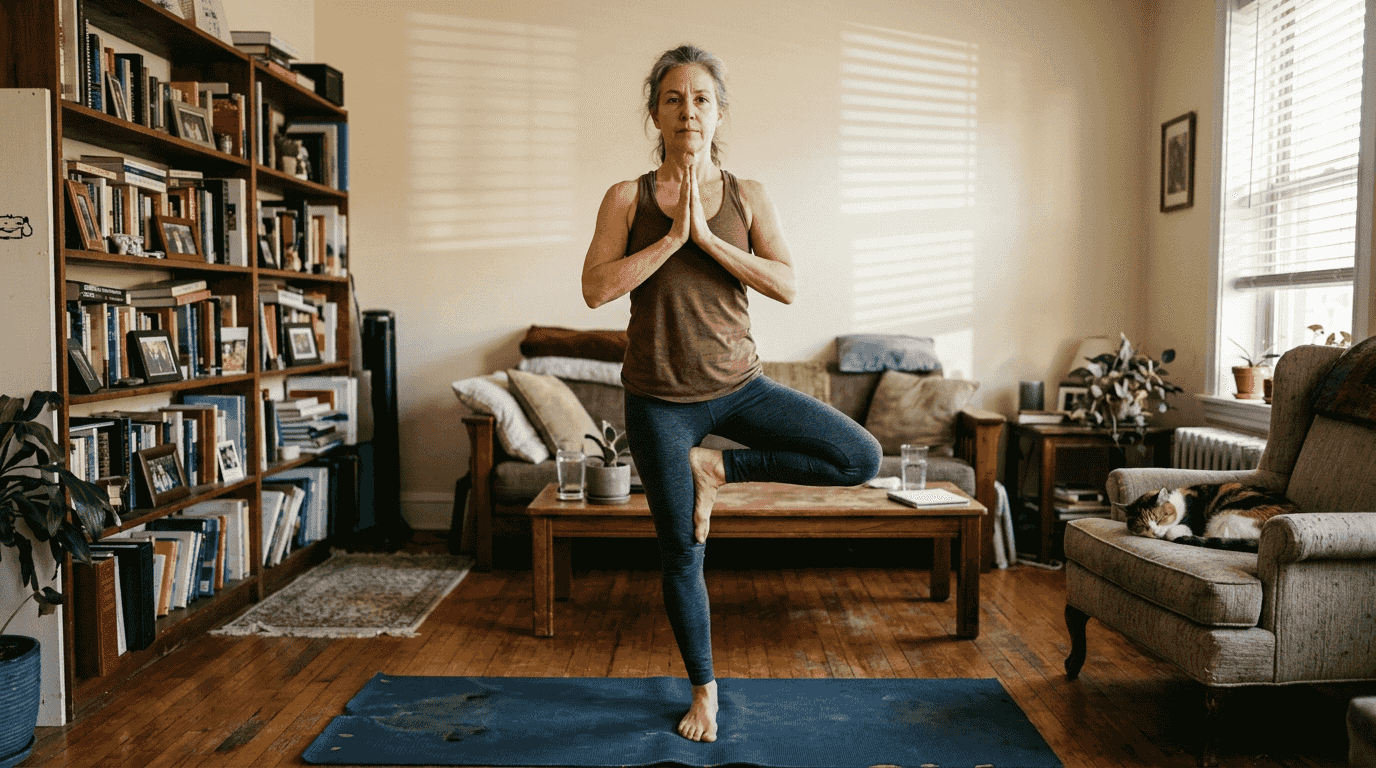
The same research revealed reductions in chronic low back pain intensity and improvements in inflammatory markers like tumor necrosis factor alpha. These biological changes suggest yoga influences your immune system and inflammatory responses at a cellular level. For beginners managing pain or stiffness, these findings offer evidence that regular classes can provide meaningful relief.
Mental health benefits extend beyond temporary relaxation. Studies show yoga reduces trait anxiety, the baseline level of worry you experience in daily life. This differs from state anxiety, which fluctuates with specific stressors. By lowering trait anxiety, yoga helps you develop greater emotional resilience and calm that persists between sessions.
A balanced perspective acknowledges both benefits and limitations. Critics note risks and some overstated claims in yoga marketing, particularly around injury prevention and healing serious medical conditions. While yoga complements overall fitness, it doesn't replace cardiovascular exercise for heart health or resistance training for maximum strength gains. Injuries can occur, especially in fast-paced classes with inexperienced instructors or when students push beyond safe limits.
Pro Tip: Prioritize classes with certified instructors who have completed at least 200 hours of training from recognized programs. Quality teaching dramatically reduces injury risk and ensures you learn proper alignment from the start.
Research supports these specific outcomes:
Improved balance reduces fall risk, especially important for older adults
Increased flexibility enhances daily movement and reduces injury susceptibility
Muscular endurance supports better posture and reduces chronic tension
Lower inflammation markers contribute to overall immune function
Reduced anxiety improves sleep quality and emotional regulation
Experts emphasize realistic expectations for beginners. Dr. Sarah Mitchell, a sports medicine physician who studies yoga interventions, notes that benefits accumulate gradually with consistent practice rather than appearing after one or two sessions. She recommends attending classes at least twice weekly for eight to twelve weeks before evaluating personal outcomes.
The combination of physical postures, breathing control, and mindfulness meditation creates synergistic effects greater than any single component alone. This integration distinguishes yoga from conventional exercise, offering community yoga class benefits that address whole-person wellness. Philadelphia practitioners often report feeling more connected to their bodies, experiencing less stress reactivity, and developing greater self-awareness through regular attendance.
| Benefit Category | Measured Outcome | Typical Timeline |
|---|---|---|
| Balance | Improved BESS scores | 6-8 weeks |
| Strength | Increased push-up capacity | 8-10 weeks |
| Flexibility | Enhanced range of motion | 4-6 weeks |
| Pain relief | Reduced low back pain intensity | 6-12 weeks |
| Mental health | Lower trait anxiety scores | 8-12 weeks |
For maximum benefit, combine yoga with other healthy lifestyle practices including adequate sleep, balanced nutrition, and social connection. The inclusive yoga benefits extend to people of all ages, body types, and fitness levels when classes are appropriately modified and taught with skill.
Choosing the right yoga class in Philadelphia: styles, safety, and community
Selecting your first yoga class involves understanding style differences, safety considerations, and community culture. Philadelphia offers diverse options ranging from vigorous power yoga to gentle chair-based classes. Matching the style to your goals and current fitness level sets you up for sustainable practice.
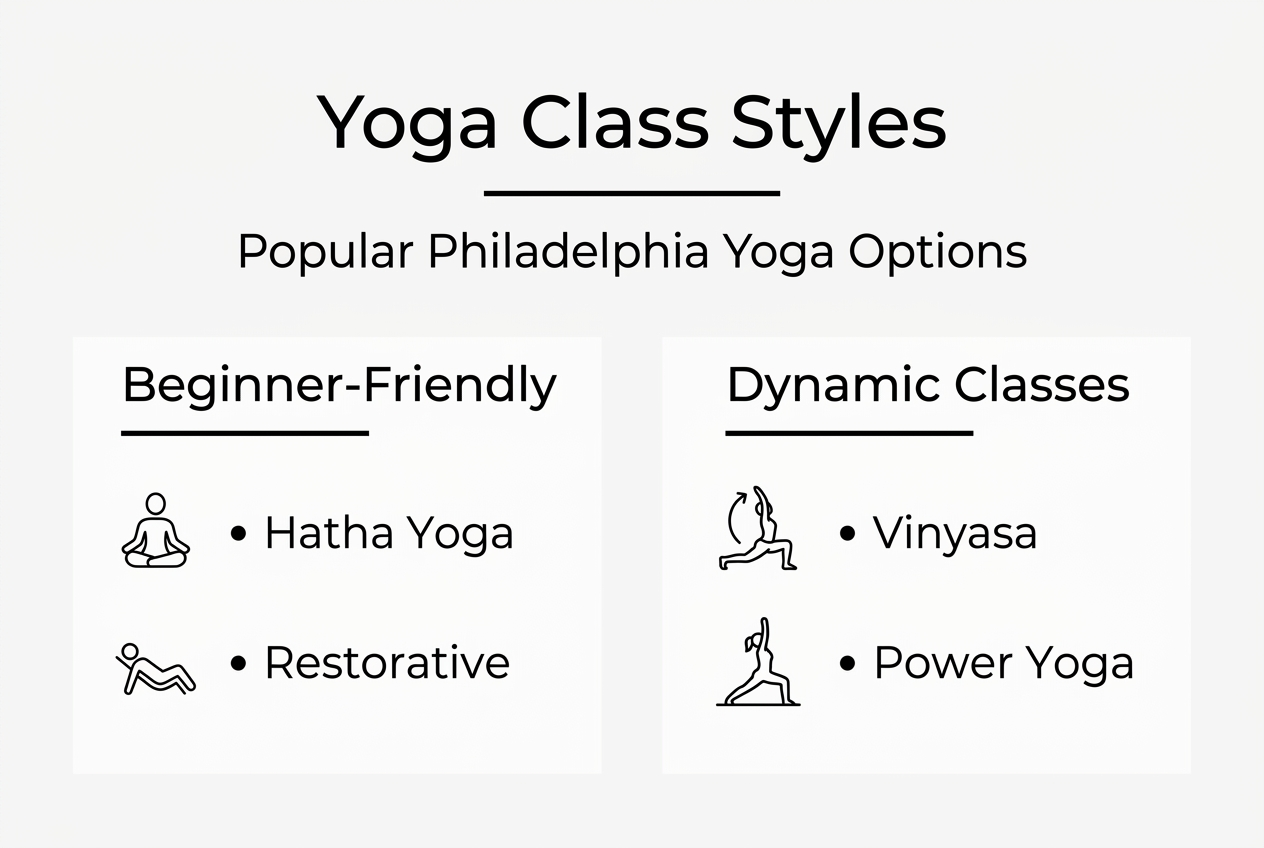
Hatha yoga provides an excellent starting point for most beginners. Classes move slowly through foundational poses with detailed instruction on alignment and breathing. You'll have time to ask questions and make adjustments without feeling rushed. Vinyasa offers more dynamic movement, linking poses in flowing sequences synchronized with breath. This style builds cardiovascular endurance and appeals to those seeking a more athletic practice.
Restorative yoga uses bolsters, blankets, and blocks to support passive stretches held for five to ten minutes each. This deeply relaxing style helps manage stress and complements more active exercise. Aerial yoga incorporates fabric hammocks for supported inversions and unique movement patterns. While exciting, aerial classes require good upper body strength and comfort with being upside down.
| Yoga Style | Intensity Level | Primary Focus | Beginner Friendly | Community Feel |
|---|---|---|---|---|
| Hatha | Low to moderate | Foundational poses, alignment | Highly suitable | Supportive, educational |
| Vinyasa | Moderate to high | Flowing movement, breath-body link | Moderately suitable | Energetic, creative |
| Restorative | Very low | Deep relaxation, stress relief | Highly suitable | Nurturing, introspective |
| Aerial | Moderate | Inversions, core strength | Requires some fitness | Playful, adventurous |
| Hot yoga | High | Flexibility, detoxification | Challenging for beginners | Intense, committed |
Safety should guide your class selection, especially if you have injuries or health conditions. Instructor quality is crucial for minimizing risks and improving outcomes. Look for teachers certified through reputable programs who demonstrate clear communication and attentiveness to student needs. Quality instructors offer modifications for different ability levels and encourage you to honor your body's limits.
Before attending, verify that instructors:
Hold current certification from recognized training programs
Provide clear verbal cues and demonstrate poses when helpful
Offer modifications for common limitations or injuries
Create a welcoming environment for questions and feedback
Maintain appropriate class sizes for individual attention
Pro Tip: Visit studios in person or attend trial classes before committing to memberships. Experiencing the space, meeting instructors, and observing the community vibe helps you find the best fit for your personality and goals.
Philadelphia's yoga scene emphasizes community connection alongside physical practice. Many studios host social events, workshops, and volunteer opportunities that deepen relationships between practitioners. This social support enhances motivation and accountability, making it easier to maintain consistent attendance. Inclusive yoga classes welcome people of all backgrounds, body types, and abilities, fostering belonging and reducing intimidation for newcomers.
When evaluating studios, ask about:
Class size limits and student-teacher ratios
Availability of props and equipment for modifications
Cancellation and makeup class policies
Accessibility features for mobility limitations
Trial class options or introductory packages
The aerial yoga safety guide provides detailed information for those interested in hammock-based classes. Understanding proper setup, contraindications, and progression helps you practice safely and enjoyably.
Community-oriented classes offer social support and motivation that enhance long-term adherence. You'll find accountability partners, make friends who share wellness values, and participate in group activities that extend beyond the mat. This social dimension often becomes as valuable as the physical benefits for sustained practice.
What to expect your first yoga class: preparation and tips for beginners
Preparing thoughtfully for your first class reduces anxiety and helps you focus on the experience rather than logistics. Start by selecting appropriate clothing that allows free movement without restriction. Choose breathable fabrics that wick moisture and avoid overly loose garments that might shift during inversions or forward folds. Most practitioners prefer fitted tops and stretchy leggings or shorts.
Follow this pre-class checklist:
Wear comfortable, non-restrictive clothing in breathable fabrics
Bring a water bottle to stay hydrated before and after class
Arrive 10 to 15 minutes early for check-in and setup
Eat a light snack 1 to 2 hours before if needed, avoiding heavy meals
Remove jewelry that might interfere with poses or cause discomfort
Silence your phone and store belongings in designated areas
Inform the instructor about any injuries, health conditions, or concerns
Most studios provide yoga mats, but you may prefer bringing your own for hygiene and familiarity. If borrowing a studio mat, arrive early to select equipment and set up your space. Position yourself where you can see the instructor clearly, typically in the middle or front rows for beginners who benefit from visual cues.
Your first class will likely begin with introductions if the group is small, or a brief welcome explaining class format and safety guidelines. The instructor will demonstrate key poses, offer modifications for different levels, and guide you through breathing techniques. Don't worry about matching everyone else's pace or depth in poses. Yoga emphasizes personal exploration rather than competition or comparison.
Common first-class activities include:
Centering practice with focused breathing or meditation
Warm-up sequences to prepare joints and muscles
Instruction on foundational poses with modifications
Guided breathing exercises to regulate energy
Cool-down stretches and final relaxation
Etiquette helps create a respectful environment for everyone. Arrive on time or slightly early to avoid disrupting the class once it begins. Keep conversations quiet before and after sessions, as many practitioners value the peaceful atmosphere. Respect personal space by leaving adequate room between mats. If you need to leave early, position yourself near the door and exit quietly during a transition.
Communicate openly with instructors about physical limitations, injuries, or discomfort during class. Quality teachers appreciate this information and will offer appropriate modifications. If a pose feels painful beyond normal muscle engagement, back off or skip it entirely. Yoga should challenge you without causing sharp pain or strain.
Pro Tip: Set realistic goals focused on mindfulness and personal growth rather than achieving perfect poses. Progress happens gradually, and every practitioner starts as a beginner regardless of fitness level.
Maintain realistic expectations about flexibility and strength development. You won't master complex poses in your first session, and that's completely normal. Focus on learning proper breathing, understanding basic alignment principles, and noticing how your body responds to different movements. These foundational skills support safe, sustainable practice over time.
Many beginners feel self-conscious about their abilities compared to experienced practitioners. Remember that everyone in the room started exactly where you are now. The yoga community generally embraces beginners with encouragement rather than judgment. Preparing for yoga classes includes cultivating patience with yourself and trusting the learning process.
After class, take time to notice how you feel physically and mentally. Some people experience immediate relaxation and clarity, while others feel energized or notice subtle shifts in mood. These responses help you understand which styles and intensities work best for your needs. Keep a simple journal noting your experiences to track progress and preferences over time.
Explore yoga classes in Philadelphia with Amrita Yoga & Wellness
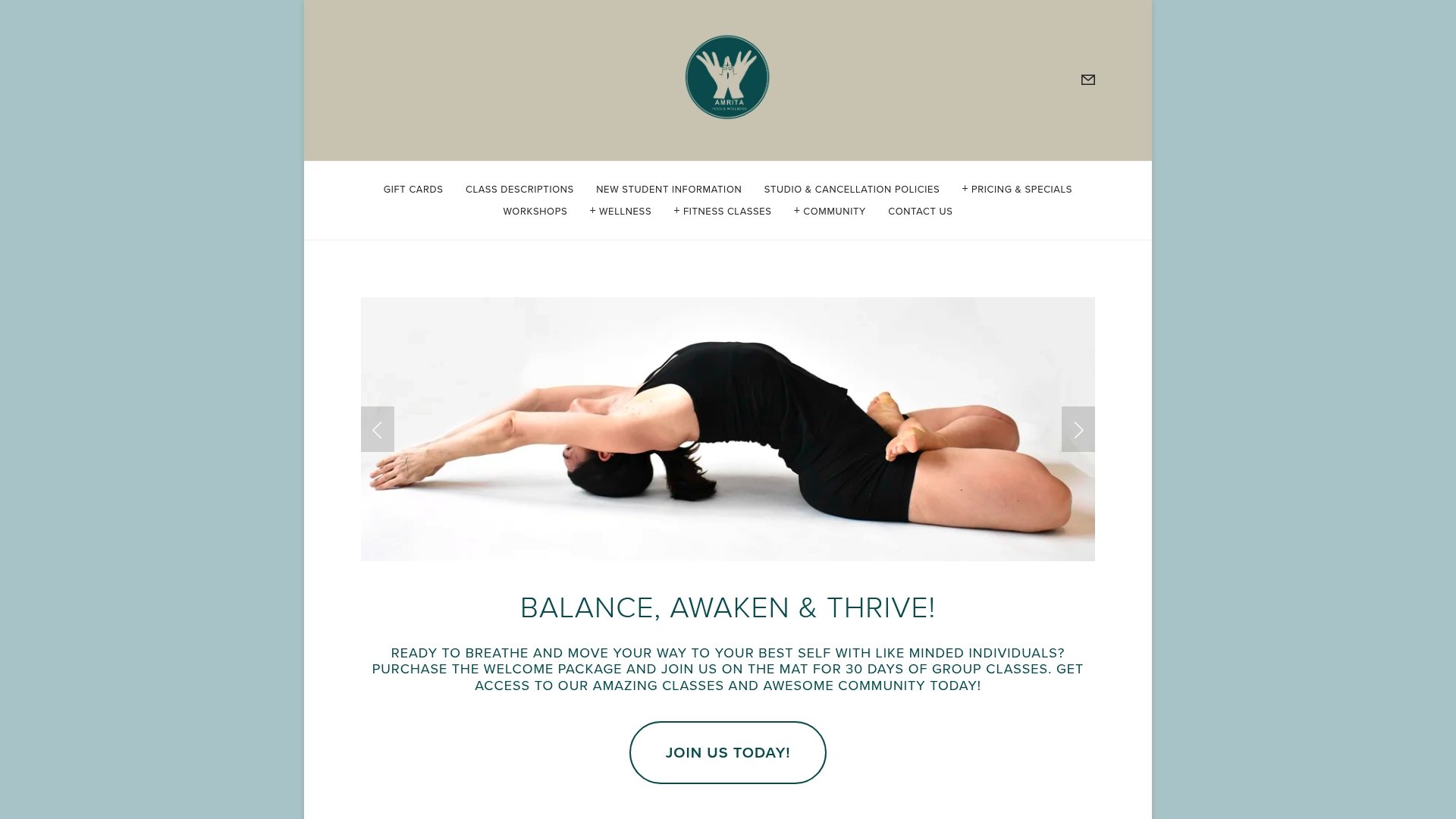
Ready to experience the benefits of yoga for yourself? Amrita Yoga & Wellness welcomes beginners with open arms, offering diverse class styles taught by certified, experienced instructors who prioritize safety and individual attention. Our Philadelphia studio creates a supportive community where you can explore yoga at your own pace without pressure or judgment.
Take advantage of our new student specials designed to help you find the perfect class fit affordably. Try multiple styles, meet different teachers, and discover which approach resonates with your wellness goals. Our transparent studio and cancellation policies ensure a smooth, stress-free experience from your first visit forward.
Beyond yoga, we offer complementary wellness services including acupuncture, massage therapy, and holistic health workshops. This integrated approach supports your whole-person wellness journey, addressing physical, mental, and emotional health through multiple proven modalities. Join our vibrant community and discover how yoga classes can transform your relationship with movement, stress, and self-care.
Frequently asked questions
What should I wear to a yoga class?
Wear comfortable, breathable clothing that allows free movement without restriction. Fitted tops and stretchy leggings or shorts work well for most styles. Avoid overly loose garments that might shift during inversions or interfere with poses. Most practitioners go barefoot, so leave shoes and socks in designated storage areas.
How often should beginners attend yoga sessions?
Start with one to two classes per week to build familiarity, strength, and flexibility gradually. Consistency matters more than frequency initially, so choose a sustainable schedule you can maintain long-term. As you develop comfort and endurance, you can increase attendance to three or more sessions weekly. Listen to your body and allow adequate recovery time between classes.
Can yoga help with stress and pain relief?
Yes, yoga reduces trait anxiety and chronic low back pain with regular practice over eight to twelve weeks. Research shows measurable improvements in pain intensity and stress markers through consistent attendance. Yoga serves as an effective complementary therapy for stress management when combined with other healthy lifestyle practices. Individual results vary based on class style, frequency, and personal health conditions.
Are yoga classes safe for people with injuries?
Yoga can be safe for those with injuries when instructors are experienced and modifications are appropriately used. Always inform your teacher about any health issues, injuries, or limitations before class begins. Quality instructors will offer alternative poses and adjustments to accommodate your needs safely. Consult your healthcare provider before starting yoga if you have serious injuries or chronic conditions.
What if I'm not very flexible?
Flexibility improves over time with consistent practice, and initial limitations are completely normal for beginners. Yoga classes are designed to accommodate all levels, with modifications available for tight muscles and restricted range of motion. Focus on gradual progress rather than comparing yourself to others. Many experienced practitioners started with minimal flexibility and developed it through patient, sustained practice.