What Is Yoga Bar? Nutrition, Origins, and Wellness Use

TL;DR:
"Yoga Bar" refers to an Indian health-food snack brand known for its wholesome, no-added-sugar products, and also to local wellness classes or events in Philadelphia that use the same name. Clarifying which meaning applies is essential for making informed wellness decisions, whether purchasing snacks or attending classes. Awareness of the distinctions helps individuals align their choices with their health goals and avoid marketing-driven confusion.
If you've searched "Yoga Bar" in Philadelphia, you've probably run into something unexpected: results that swing wildly between an Indian health-food snack brand and local wellness studios or events using the same name. That confusion is real, and it matters, because what you're actually looking for shapes every decision that follows, from what you eat to which class you sign up for. This article cuts through the noise, explains both meanings clearly, and helps you make smarter, more intentional wellness choices right here in Philadelphia.
Table of Contents
Key Takeaways
| Point | Details |
|---|---|
| Two meanings for Yoga Bar | Yoga Bar refers both to a popular Indian health snack brand and to wellness classes or events named 'Yoga Bar.' |
| Health-focused ingredients | Yoga Bar snacks are known for their natural ingredients and lack of added sugars or preservatives. |
| Always check context | In Philadelphia, verify whether 'Yoga Bar' means a snack bar or a yoga class to avoid confusion. |
| Finding Yoga Bar locally | Yoga Bar snacks may be found online or through specialty stores, while classes are offered by local wellness centers. |
| Mindful wellness choices | Understanding the difference empowers you to choose what supports your personal wellness goals. |
What is Yoga Bar? A look at definitions and origins
The name "Yoga Bar" sounds like it should have one obvious meaning. It doesn't, and that's exactly where the trouble starts for people exploring wellness options in Philadelphia.
The most widely recognized meaning comes from the consumer packaged goods world. Yoga Bar most commonly refers to an Indian health-food and snack brand that produces breakfast cereals, protein bars, and protein shakes. It's a legitimate, well-established brand with a clear product line, and it has nothing to do with yoga classes, poses, or studios.
The brand has a compelling origin story. Sisters Anindita and Suhasini Sampath founded the company and launched their first products as multigrain energy bars, with the goal of offering a clean, wholesome snack alternative in a market crowded with processed foods. The company is headquartered in Bengaluru, India, and has grown significantly since those early days.
Here's what the Yoga Bar brand actually covers as a product line:
Multigrain energy bars in flavors like coconut and dark chocolate
Breakfast cereals with whole grains and no added sugar
Protein bars designed for fitness-focused consumers
Protein shakes and powders for post-workout recovery
Peanut butters and nut-based spreads
The second meaning is far less formal but genuinely common in wellness communities. Many yoga studios, wellness events, and even pop-up health experiences use "Yoga Bar" as part of their event or class name. This happens in Philadelphia and cities across the country. When a local studio hosts a "Yoga Bar Night" or calls a series of classes a "Yoga Bar," it's using the phrase as a brand concept, not a reference to the Indian snack company.
Understanding which meaning applies to a search result or listing is the single most important step before you commit your time or money to anything labeled "Yoga Bar."
For Philadelphia residents already curious about the difference between yoga-adjacent formats, understanding how yoga vs barre practices differ is a helpful starting point when evaluating local class offerings that borrow wellness terminology.
Yoga Bar nutrition: What's inside these snack products?
With a clear picture of what the brand is, let's look at what actually goes into Yoga Bar products, because the nutrition story is a core part of what makes this brand stand out.

The brand is headquartered in Bengaluru and built its reputation on a clear nutritional philosophy: no added sugar, no preservatives, and no artificial sweeteners. In a snack market where those three things are almost universal, that commitment is notable and worth examining closely.
The main ingredients across most Yoga Bar products center on whole-food sources:
Whole grains such as oats, ragi, and brown rice
Nuts and seeds including almonds, cashews, and pumpkin seeds
Natural sweeteners like dates or honey in small amounts
Plant-based proteins from sources like peas or brown rice
Superfoods like quinoa and flaxseed in select products
Here's a general nutritional snapshot for a typical Yoga Bar protein bar:
| Nutrient | Per Bar (Approx. 38g) | Role in Wellness |
|---|---|---|
| Calories | 140 to 160 kcal | Moderate energy source |
| Protein | 10 to 12g | Muscle repair and satiety |
| Dietary Fiber | 3 to 5g | Digestive support |
| Total Sugar | 4 to 7g (natural) | No added refined sugar |
| Fat | 5 to 7g | Mostly from nuts |
| Sodium | Under 100mg | Low sodium profile |
Who benefits most from snacks like these? People who are already living an active lifestyle and want quick, portable nutrition without the chemical load of conventional protein bars. That includes morning yoga practitioners grabbing a bar before a hot yoga session, fitness professionals doing double sessions, and anyone who treats food as part of their overall wellness practice rather than just fuel.
Pro Tip: If you're new to protein bars and unsure where to start, focus on bars where the ingredient list is short and every item is recognizable. The fewer the mystery ingredients, the better the nutritional transparency.
It's also worth knowing what these products are not. They are not meal replacements in the traditional sense. They work best as supplementary snacks between meals or before physical activity. Pairing them with hydration and a varied whole-food diet, rather than relying on them as standalone nutrition, reflects the kind of integrated approach that actually supports long-term wellness.
For those exploring different physical disciplines alongside smarter snack choices, reading about barre yoga comparisons can help round out your understanding of how exercise format and nutrition complement each other.
How Yoga Bar snacks compare to other popular health bars
Knowing what's in Yoga Bar products lets us place them on the map alongside other popular healthy snacks. This comparison matters because the health bar market is crowded, and not every bar marketed as "clean" or "protein-rich" actually delivers on those claims.
The brand's key differentiators are based on its commitment to no added sugar, preservatives, or artificial sweeteners, which puts it in a category that many mainstream protein bars simply can't occupy.
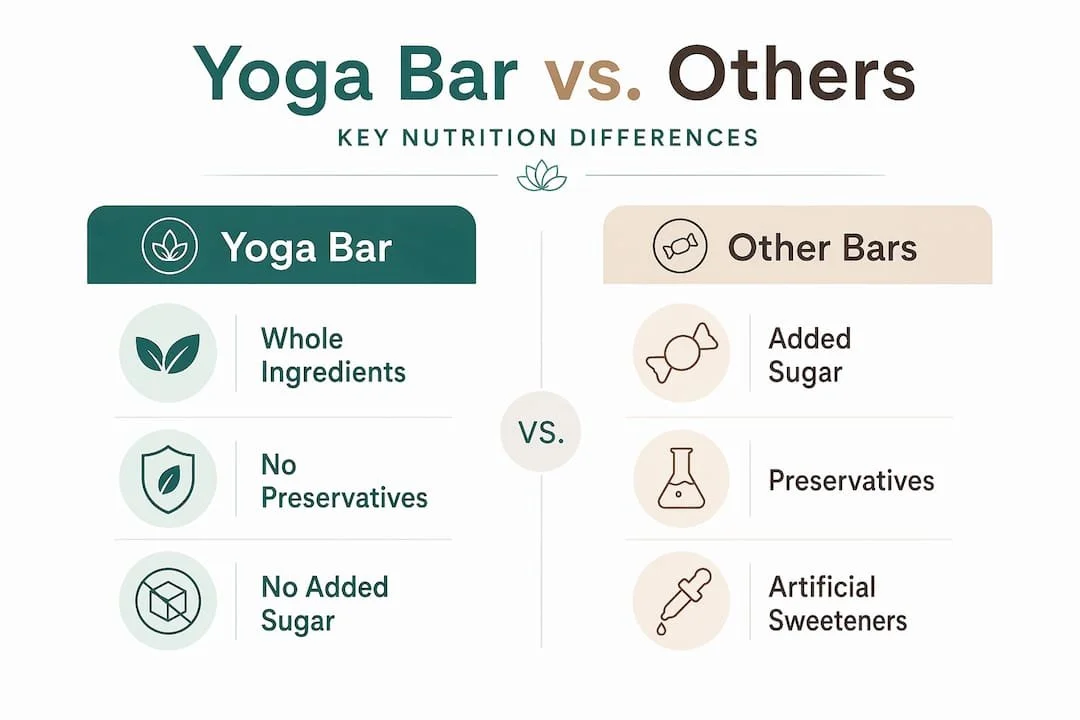
Here’s a direct comparison with the types of bars commonly found in U.S. wellness and health food stores:
| Feature | Yoga Bar | Conventional Protein Bar | Date-Based Natural Bar |
|---|---|---|---|
| Added Sugar | None | 5 to 20g added | None (natural dates) |
| Artificial Sweeteners | None | Often present | None |
| Protein Content | 10 to 12g | 15 to 25g | 3 to 5g |
| Ingredient Simplicity | High | Low to medium | Very high |
| Preservatives | None | Often present | None |
| Calorie Density | Moderate | Moderate to high | Moderate |
| Availability in the U.S. | Limited | Wide | Wide |
How to choose the right bar based on your individual needs comes down to four practical considerations:
Protein priority: If you're doing strength training or hot yoga and need significant post-workout protein, a bar with 20g or more might serve you better. Yoga Bar's 10 to 12g is solid but not the highest on the market.
Sugar sensitivity: For anyone managing blood sugar or following a low-glycemic approach, Yoga Bar's no-added-sugar stance is a genuine advantage over bars that sweeten heavily with cane sugar or corn syrup.
Ingredient transparency: People with food sensitivities benefit from shorter ingredient lists. Yoga Bar scores well here, though you still need to check individual product labels for nut allergens.
Taste and texture preferences: Some people find naturally sweetened bars taste less rich than candy-flavored competitors. That's a real consideration, and personal preference is valid.
For Philadelphia residents exploring a holistic approach to fitness, understanding how nutrition supports movement practices matters. Reading about barre class benefits alongside snack choices helps you see the full picture of what fuels meaningful physical progress.
Yoga Bar in Philadelphia: Product access and local yoga wellness
Now let's get practical about Philadelphia specifically. Because this is where most of the confusion lives, and where clarity creates real opportunity.
When someone in Philadelphia searches "Yoga Bar," results can refer to the Indian snack brand or local yoga studios and events using that name. Both are legitimate. Both require different follow-up actions.
Finding Yoga Bar products in Philadelphia:
Online retailers are your most reliable source. Sites that specialize in Indian or South Asian grocery products often stock Yoga Bar items and ship nationally.
South Asian grocery stores in Philadelphia's diverse neighborhoods sometimes carry imported Indian health food brands. Check stores in neighborhoods with strong South Asian communities for the best results.
Specialty health food shops occasionally stock international wellness brands. It's worth calling ahead before making the trip.
Direct brand website shipping is an option, though international shipping costs can make this expensive for occasional purchases.
When "Yoga Bar" means a local class or event:
Pro Tip: Before booking any wellness class or event in Philadelphia that uses "Yoga Bar" in its name, check the studio's full class description, instructor credentials, and format details. A session called "Yoga Bar" could be anything from a flow class with snack samples to a cocktail-style wellness social event.
Here's a quick checklist for verifying any wellness listing that uses the term:
Does the listing mention a physical address or a studio name?
Is there a class schedule with instructor names?
Are there product images or descriptions suggesting it's a retail snack brand?
Does the booking page link to a yoga or wellness studio platform?
Is there a price for a class session or for a food product?
Statistic to keep in mind: The wellness industry in the United States is valued at over $480 billion according to industry research, and a significant portion of that growth comes from the blending of nutrition and movement cultures, exactly the space where terms like "Yoga Bar" thrive and cause confusion.
Philadelphia has a vibrant and growing holistic health scene. If you're navigating it, leaning into trusted resources about holistic health in Philadelphia gives you the local context you need to make genuinely informed choices rather than getting pulled in by trend-driven naming.
Perspective: Why the meaning matters and how smart choices start with clarity
Here's the part most wellness articles skip: the confusion around "Yoga Bar" isn't just a minor inconvenience. It's a window into a much bigger problem in the wellness world.
The wellness industry has a consistent habit of borrowing language from ancient, embodied practices and applying it to products, events, and services in ways that dilute the meaning. "Yoga" gets attached to snack bars, face creams, leggings, and weekend retreats with equal ease. The word stops meaning something specific and starts meaning "feels healthy." That's worth pushing back on.
When you see a snack bar called Yoga Bar, the name is doing marketing work. It's suggesting alignment with an ancient physical and philosophical practice through branding alone. The actual product may be genuinely wholesome, and in Yoga Bar's case it largely is, but the name choice is about positioning rather than connection to yoga as a tradition.
The same dynamic plays out in reverse. When a local studio event calls itself a "Yoga Bar," it may be doing so because the pairing of movement and mindful nutrition is genuinely meaningful to them, or it may be capitalizing on the trendiness of both concepts.
Neither is inherently wrong. But your job as someone investing time, money, and energy into your own wellness is to see through the naming and ask what's actually being offered. Is this class rooted in a real movement tradition? Does this snack align with how I actually want to fuel my body? Is this experience going to move me toward my health goals, or just make me feel like I'm on trend?
True wellness practice, whether that's a barre class, a hot yoga session, or a mindful approach to what you eat, is built on choices that align with your body and your goals, not with what sounds appealing right now. Exploring barre workout insights alongside nutrition awareness is a far more grounded approach than chasing whatever wellness concept is currently trending.
Clarity is a wellness practice in its own right. The ability to pause, verify, and choose intentionally is exactly the skill that separates people who build lasting health habits from those who cycle through wellness fads without lasting results.
Explore holistic health beyond the bar
Whether "Yoga Bar" brought you here for snack research or class ideas, the most important thing is that your curiosity about wellness is real and worth nurturing. At Amrita Yoga & Wellness in Philadelphia, we believe that holistic health isn't a single product or a single class. It's a practice woven through everything you do, from how you move to how you nourish yourself to how you reconnect with what matters.

We offer a range of ways to deepen that practice, including yoga, barre, tai chi, pilates, massage therapy, and even tarot readings for holistic health that help you reflect on your personal journey. If you're ready to explore what an integrated wellness community in Philadelphia looks like in practice, visit Amrita Yoga & Wellness to browse classes, workshops, and offerings designed for every level and every goal. Your next step into holistic health is closer than you think.
Frequently asked questions
Is Yoga Bar available in the United States, especially Philadelphia?
Yoga Bar snacks are primarily sold in India but can be found through online international grocery retailers or specialty South Asian food stores in the U.S., including in cities like Philadelphia.
What makes Yoga Bar products suitable for holistic health?
Yoga Bar products are built around no added sugar, preservatives, or artificial sweeteners and use whole, recognizable ingredients, making them a cleaner option compared to most mainstream protein bars.
Does "Yoga Bar" refer to a kind of yoga class in Philadelphia?
The term can mean both the Indian snack brand and a local wellness event or class using that name, so always check the specific context, booking page, or listing details before committing.
Who founded Yoga Bar and when?
Yoga Bar was founded in Bengaluru, India, in 2014 by sisters Anindita and Suhasini Sampath, who built the brand around clean, minimally processed snack options.