What are reformer Pilates: complete 2026 beginner guide
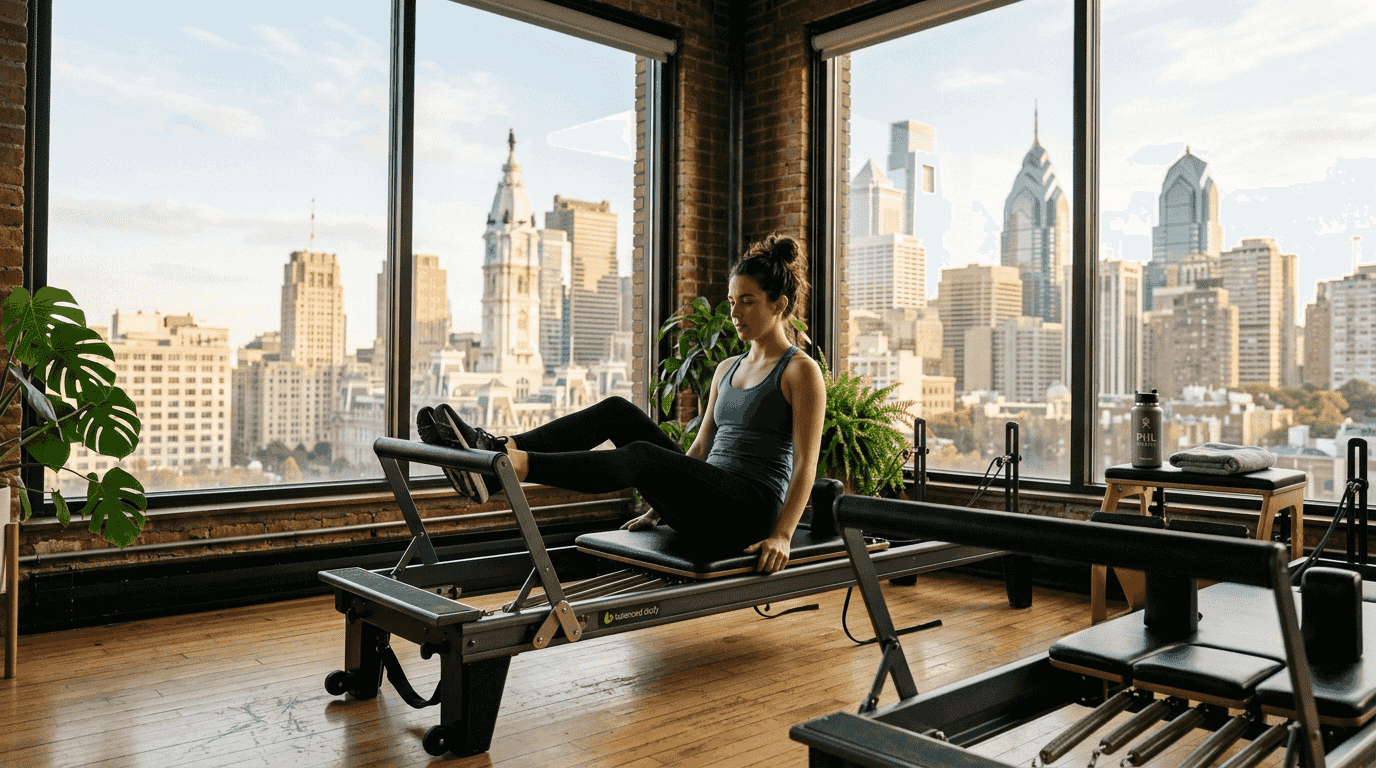
You've probably heard reformer Pilates is only for elite athletes or rehab patients. That's a myth. This machine-based workout offers accessible, scalable benefits for every fitness level. Whether you're seeking core strength, flexibility, or mental clarity, reformer Pilates adapts to your needs. This guide explains what reformer Pilates is, how it works, its proven benefits, and how to start with community classes in Philadelphia.
Table of Contents
Key takeaways
| Point | Details |
|---|---|
| Reformer uses spring resistance | The machine provides adjustable resistance for versatile, low-impact workouts suitable for all levels. |
| Superior core and flexibility gains | Studies show 20–30% greater improvements compared to mat Pilates after 8 weeks. |
| Community classes boost motivation | Group settings in Philadelphia studios enhance accountability and make practice more consistent. |
| Safe for all skill levels | Professional instruction ensures proper form and progressive resistance tailored to individual needs. |
| Mental wellness benefits included | Mindfulness and breath control reduce stress while improving focus during sessions. |
Introduction to reformer Pilates
Reformer Pilates is Pilates performed on a specialized machine equipped with adjustable springs that create controlled resistance. Joseph Pilates invented the reformer in the early 20th century to enhance traditional Pilates exercises with mechanical support and variable resistance, allowing practitioners to engage muscles more precisely while protecting joints.
The reformer machine features a sliding carriage, foot bar, shoulder blocks, and adjustable straps. This design enables hundreds of exercises targeting core strength, flexibility, balance, and functional movement patterns. Unlike mat Pilates, which relies solely on body weight, the reformer's spring system provides resistance in multiple directions, creating unique training opportunities.
Key characteristics of reformer Pilates include:
Adaptability for all fitness levels through adjustable spring resistance
Low-impact movements that protect joints while building strength
Emphasis on controlled, precise movements rather than speed or repetition
Integration of breath work and mindfulness during physical practice
Versatility for rehabilitation, athletic training, and general wellness
Philadelphia's wellness community embraces reformer Pilates with numerous studios offering beginner-friendly classes. These community-focused spaces prioritize inclusivity, making the practice accessible regardless of previous fitness experience. The proven benefits extend beyond physical improvements to include mental clarity and stress reduction, creating a holistic wellness experience.
How reformer Pilates works: mechanics and equipment
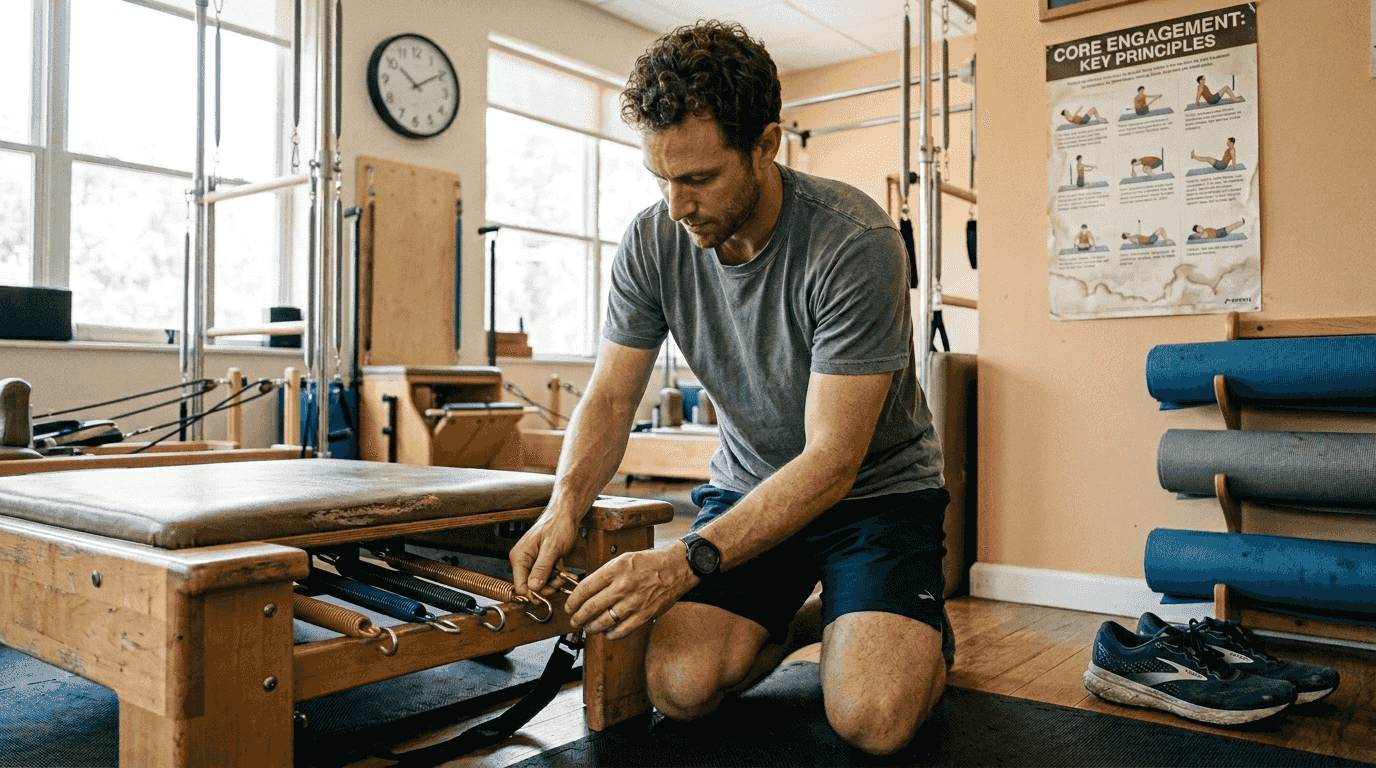
The reformer machine's genius lies in its simplicity and versatility. The main components include a sliding carriage that moves along tracks, adjustable springs that attach to the carriage, a foot bar for standing or lying exercises, shoulder blocks that prevent sliding, and leather straps connected to the springs for arm and leg work.
Spring resistance is the core mechanical principle. Studios typically offer reformers with 2 to 5 springs of varying tensions. Adding springs increases resistance, while removing them decreases it. This customization allows instructors to tailor exercises precisely to each person's strength level and training goals. Adjustable springs provide controlled resistance that enhances muscle engagement and improves movement precision.
The sliding carriage creates instability that requires core engagement to control. When you push or pull against the springs, your body must stabilize itself on the moving surface. This challenges deep stabilizing muscles often neglected in traditional strength training. The guided track system ensures movements follow safe, biomechanically sound patterns, reducing injury risk.
Resistance works differently than traditional weights. Springs provide resistance throughout the entire range of motion, including both the exertion and return phases. This eccentric loading strengthens muscles while they lengthen, improving flexibility simultaneously with strength. The system supports safe practice for people with mobility limitations, arthritis, or injuries who need joint-friendly exercise options.
Different reformer typesvary in spring configurations and additional features. Clinical reformers may include more springs for rehabilitation work, while studio models balance versatility with space efficiency. Understanding these mechanics helps you appreciate howPilates reformerscreate such effective workouts.
Pro Tip: Start with lighter spring resistance than you think you need. Proper form matters more than heavy resistance. You'll progress faster by mastering technique with manageable resistance before increasing load.
Physical and mental benefits of reformer Pilates
Reformer Pilates delivers measurable improvements across multiple wellness dimensions. Research demonstrates that reformer Pilates improves core strength, flexibility, and postural alignment significantly more than mat Pilates. These gains translate to reduced back pain, better posture, and enhanced athletic performance in other activities.
Core muscle activation reaches deeper than superficial abdominal work. The reformer engages transverse abdominis, multifidus, and pelvic floor muscles that stabilize the spine and pelvis. This deep core strength improves posture, reduces injury risk, and creates a foundation for all movement. Many practitioners notice reduced back pain within weeks of consistent practice.
Flexibility improvements occur naturally through the reformer's spring-assisted movements. The machine supports your body as you stretch, allowing you to safely explore greater ranges of motion. This approach increases flexibility without the forcing or bouncing that causes injury in traditional stretching. Joint mobility improves as muscles lengthen and strengthen simultaneously.
Mental wellness benefits often surprise new practitioners. Reformer Pilates requires focused attention on breath, alignment, and controlled movement. This mindfulness practice reduces stress, clears mental chatter, and improves concentration. Many people describe the mental reset as meditation in motion. Community class settings enhance these benefits through social connection and shared experience.
Additional physical benefits include:
Improved balance and coordination through unstable surface training
Enhanced body awareness and proprioception
Increased muscle tone without bulk
Better breathing patterns and lung capacity
Reduced tension in shoulders, neck, and hips
Core strength and flexibility benefitssupport functional fitness for daily activities like lifting, bending, and carrying.Beginner reformer workoutsintroduce these benefits gradually, building confidence alongside physical improvements.
Pro Tip: Track your progress by noting how exercises feel rather than counting repetitions. Notice when challenging movements become easier or your balance improves. These qualitative markers reveal progress better than numbers.
Common misconceptions about reformer Pilates
Several myths prevent people from trying reformer Pilates despite its accessibility. The biggest misconception positions reformer Pilates as elite fitness reserved for dancers, athletes, or physical therapy patients. Reality shows the opposite: the reformer's adjustable resistance makes it ideal for complete beginners, older adults, and people with injuries precisely because it adapts to any fitness level.
Another myth treats reformer Pilates as just mat Pilates performed on a machine. The reformer fundamentally changes how exercises work by adding spring resistance, instability, and mechanical support. This creates unique training stimuli impossible to replicate on a mat. The machine enables exercises that would be too difficult or unsafe to attempt without support.
Safety concerns about the machine's complexity or injury risk also circulate. Professional instruction eliminates these risks. Certified instructors teach proper setup, alignment, and progression. The reformer actually reduces injury risk compared to high-impact activities or improper free weight use. Its controlled, low-impact nature protects joints while building strength.
Some believe reformer Pilates requires exceptional flexibility or core strength before starting. The machine's support system actually helps people with limited flexibility or weak cores build these qualities safely. Modifications make every exercise accessible regardless of current fitness level. Pilates reformer classes welcome absolute beginners with no prior experience.
Common myths debunked:
You need prior Pilates experience: False, beginners learn fundamentals faster on the reformer
It's too easy to provide real fitness benefits: False, resistance adjusts to challenge any fitness level
You'll bulk up from the resistance: False, the training builds lean strength without significant muscle growth
Only women practice reformer Pilates: False, men benefit equally from improved core strength and flexibility
Addressing these misconceptions opens reformer Pilates to everyone who could benefit from its unique approach to strength, flexibility, and wellness.
Comparing reformer Pilates to mat Pilates
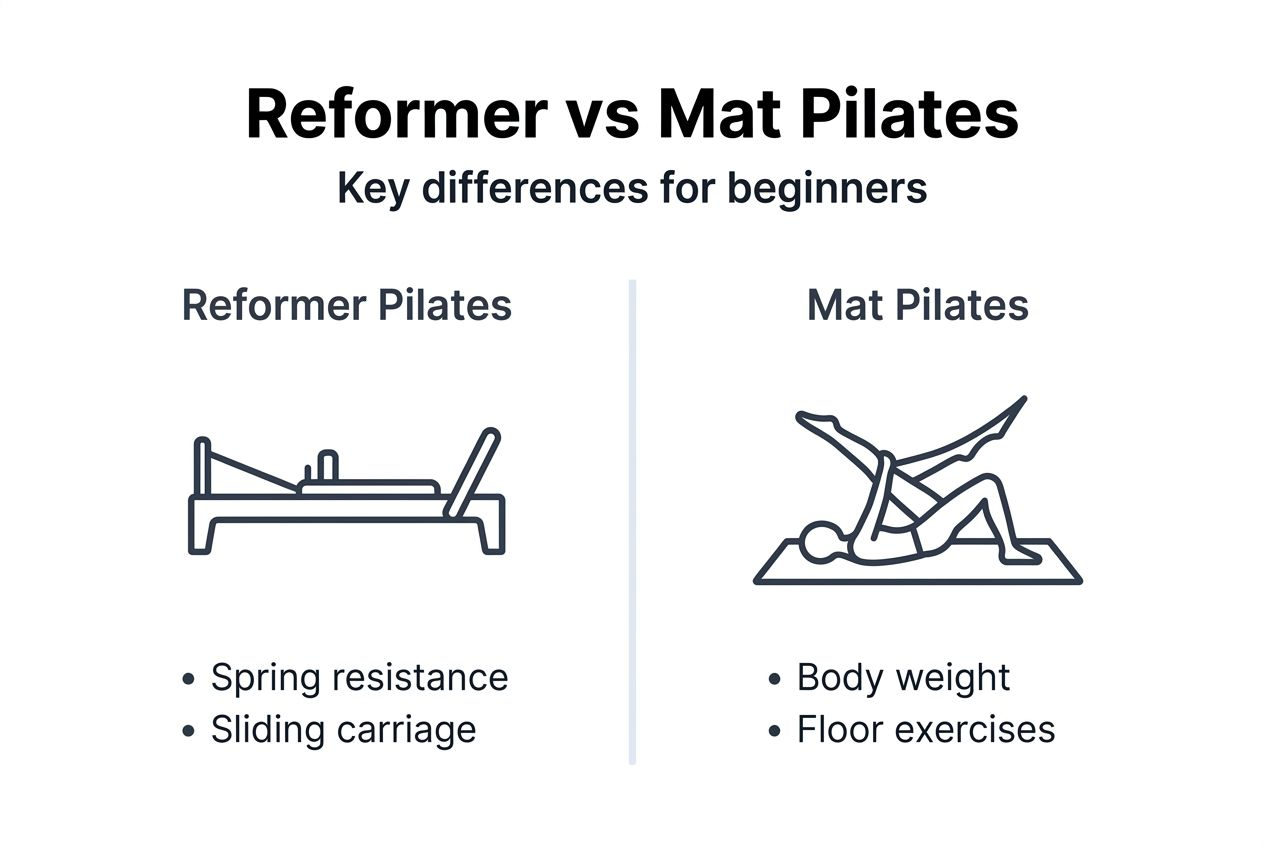
Understanding the differences between reformer and mat Pilates helps you choose the right approach for your goals. Both practices share Pilates principles of breath, control, and precision, but the equipment creates distinct training experiences.
| Aspect | Reformer Pilates | Mat Pilates |
|---|---|---|
| Resistance | Adjustable springs provide variable resistance | Body weight only |
| Equipment | Requires reformer machine in studio | Needs only mat, portable |
| Exercise variety | 500+ exercises possible | 100+ exercises typical |
| Joint support | Machine supports body during movements | Floor provides minimal support |
| Progression speed | Faster strength gains from resistance | Slower strength development |
| Accessibility | Better for injuries or limitations | Requires more baseline strength |
Clinical research shows measurable differences in outcomes. Studies demonstrate 20-30% greater core and flexibility improvements with reformer Pilates after 8 weeks compared to mat Pilates. The spring resistance engages muscles more completely throughout each movement's full range.
Reformer Pilates offers advantages for specific populations:
People with arthritis benefit from supported movements that reduce joint stress
Those recovering from injuries use lighter springs for safe rehabilitation
Beginners find the machine's feedback helps them learn proper form faster
Advanced practitioners use heavy spring loads for intense strength training
Mat Pilates provides accessibility and convenience. You can practice anywhere with minimal equipment. The floor work challenges stability differently, requiring more core control without external support. Many practitioners incorporate both for comprehensive training.
The reformer approach suits people seeking structured progression with measurable resistance increases. Clinical reformer applications extend to physical therapy and rehabilitation settings where controlled, supported movement is essential.
Choosing between them depends on your goals, access to equipment, and physical needs. If you value variety, faster strength gains, and joint protection, reformer Pilates likely serves you better. If convenience and minimal equipment appeal more, mat Pilates offers a solid foundation.
How community enhances reformer Pilates experience
Practicing reformer Pilates in community classes transforms individual exercise into shared experience. Group settings create accountability that private practice often lacks. When you commit to attending specific class times, you're more likely to maintain consistent practice. Fellow participants become familiar faces who notice and encourage your progress.
Philadelphia's wellness community particularly values inclusive, supportive environments. Local studios design reformer classes to welcome all bodies, abilities, and backgrounds. This inclusivity reduces the intimidation many people feel when starting new fitness practices. Seeing others at various skill levels working through the same challenges normalizes the learning process.
Social support significantly impacts long-term adherence to exercise programs. When you struggle with a challenging exercise, watching others push through provides motivation. Celebrating small victories together creates positive associations with practice. Many people form friendships in reformer Pilates classes that extend beyond the studio.
Community classes also provide structure and scheduling that supports habit formation:
Regular class times create routine and consistency
Advance registration commits you to attendance
Group energy elevates effort and focus
Instructor guidance ensures proper progression
Shared experience reduces self-consciousness about being a beginner
Studios often organize their schedules to accommodate urban lifestyles, offering early morning, lunchtime, and evening options. This flexibility helps busy adults integrate reformer Pilates into packed schedules without major lifestyle disruption.
The group setting allows instructors to demonstrate modifications and progressions efficiently. Watching others perform exercises with different spring loads or body positions helps you understand how to adapt practices to your needs. This peer learning accelerates skill development beyond what private practice typically achieves.
Getting started: practical tips for joining reformer Pilates classes
Taking your first reformer Pilates class requires minimal preparation but benefits from thoughtful approach. Start by researching studios that specifically advertise beginner-friendly reformer classes. Look for language emphasizing accessibility, modifications, and small class sizes that allow personalized attention.
When contacting studios, communicate your fitness level honestly. Mention any injuries, limitations, or health conditions that might affect your practice. Good instructors use this information to provide appropriate modifications, not to exclude you from classes. Certified instructors have training in adapting exercises for diverse needs and abilities.
Your first class checklist:
Arrive 10 minutes early to complete paperwork and meet your instructor
Wear comfortable, form-fitting clothing that allows you to see your alignment
Bring water and a small towel for the reformer carriage
Remove jewelry that might catch on straps or springs
Communicate with your instructor about any discomfort during class
Begin with low spring resistance even if you consider yourself strong. Proper form matters infinitely more than heavy loads. The neuromuscular patterns you establish in early sessions create the foundation for all future practice. Rushing this process leads to poor habits that limit long-term progress.
Consistent attendance produces better results than sporadic intensive practice. Research and clinical experience suggest attending classes 1 to 2 times weekly for at least 8 weeks to experience noticeable benefits. This frequency allows your body to adapt while preventing overtraining.
Pro Tip: Focus on breathing and control rather than completing maximum repetitions. Quality movement with fewer reps builds strength and body awareness more effectively than rushed, sloppy form with higher volume.
Pair reformer Pilates with complementary activities for balanced wellness. Walking, swimming, or yoga on alternate days supports recovery while maintaining activity levels. Avoid scheduling intense workouts immediately before reformer classes, as fatigue compromises form and learning.
Explore reformer Pilates classes at Amrita Yoga & Wellness in Philadelphia
Ready to experience reformer Pilates firsthand? Amrita Yoga & Wellness offers community-focused classes designed for all skill levels throughout Philadelphia. Certified instructors provide personalized guidance ensuring you learn proper technique safely while progressing at your own pace.
New students can explore special introductory offers that make starting affordable and accessible. Class schedules accommodate busy urban lifestyles with morning, midday, and evening options. Small class sizes ensure individual attention while maintaining the motivational benefits of group practice.
The studio's inclusive atmosphere welcomes practitioners from all backgrounds and fitness levels. Whether you're managing an injury, enhancing athletic performance, or simply seeking sustainable wellness practices, the reformer Pilates program adapts to your goals. Review studio policies to understand scheduling, cancellations, and what to expect. Join a community committed to accessible, supportive wellness.
What are reformer Pilates?
Is reformer Pilates suitable for beginners?
Yes, reformer Pilates is highly suitable for beginners. The machine's adjustable spring resistance allows instructors to customize difficulty for any fitness level. Certified teachers provide modifications that make exercises safe and approachable for people with no prior Pilates experience.
What equipment do I need for reformer Pilates?
You need only the reformer machine itself, which studios provide. Wear comfortable, form-fitting athletic clothing and bring water. The reformer includes all necessary components: sliding carriage, springs, straps, foot bar, and shoulder blocks. No personal equipment purchase is required.
How long does it take to see benefits from reformer Pilates?
Most practitioners notice improvements within 6 to 8 weeks of consistent practice at 1 to 2 sessions weekly. Early benefits include better posture awareness and reduced muscle tension. Measurable strength and flexibility gains typically emerge after 8 weeks of regular attendance and progressive resistance increases.
Can reformer Pilates help with stress and mental focus?
Yes, reformer Pilates significantly reduces stress and improves mental focus. The practice requires concentrated attention on breath, movement quality, and body position, creating a mindfulness experience. Community class settings further enhance mental wellness through social connection and shared commitment to self-care and growth.