The Amrita Journal
Explore thoughtful stories, practical wellness guidance and inspiring ideas to support your movement, mindfulness and everyday wellbeing at Amrita.
Hot Yoga Essentials: What Every Beginner Needs to Bring
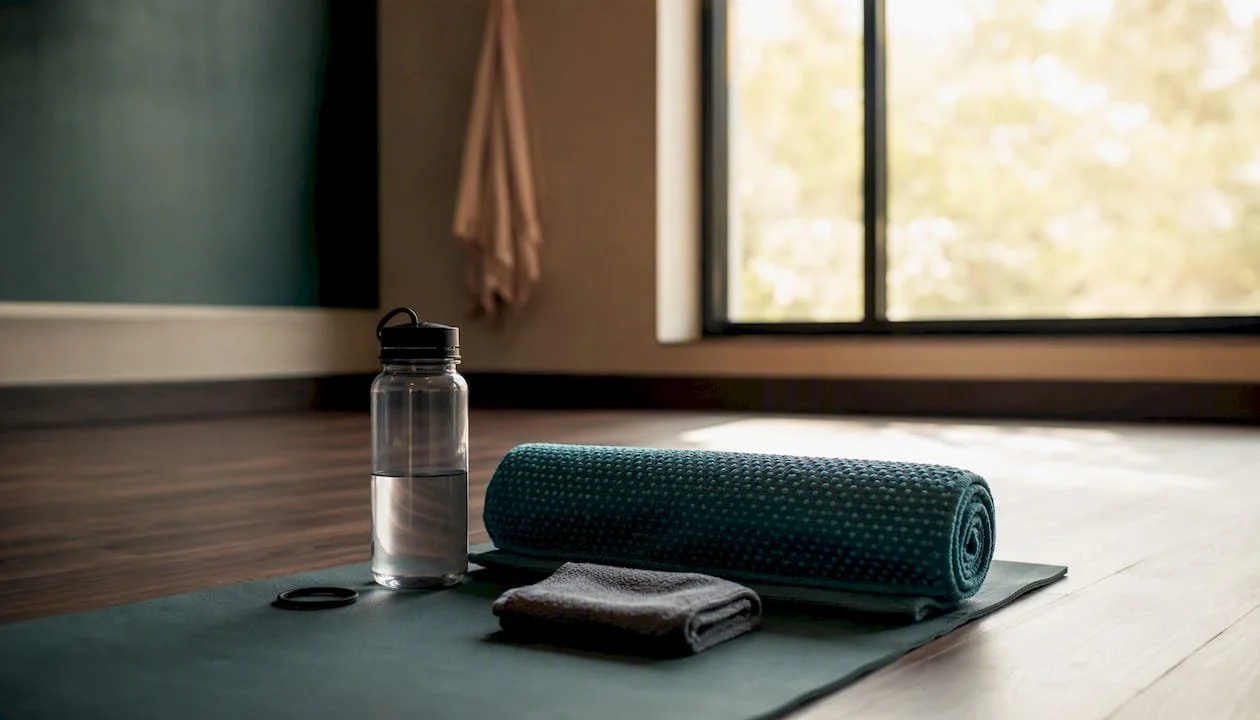
For your first hot yoga class, bring a grippy mat or full-length mat towel, a small hand towel, a large water bottle, moisture-wicking fitted clothing, a change of dry clothes, and a wet bag for soaked gear. That's the complete hot yoga checklist.
Here's why each item earns its spot in your bag:
Grippy mat or mat towel — sweat makes standard mats dangerously slippery; traction is the main safety upgrade in a heated room
Small hand towel — wipe sweat from your face and hands between poses without disrupting your flow
Large water bottle (at least 32 oz) — hot rooms typically run 90–105°F (32–40°C), per the International Yoga Conference checklist, and you will sweat more than you expect
Moisture-wicking fitted clothing — cotton holds sweat against your skin and gets heavy; fitted pieces stay put during inversions
Change of dry clothes — wet clothes are uncomfortable for the ride home and can cause chills
Wet bag — seals soaked gear away from dry items in your bag
Start hydrating the day before class, not the morning of. By the time you feel thirsty in a hot room, you're already behind.
Pro Tip: Pack your bag the night before. Forgetting a hand towel or dry clothes is the most common first-timer regret.
Key Takeaways
Traction, hydration, and a dry change of clothes are the three things that separate a comfortable first hot yoga class from a miserable one.
| Details | |
|---|---|
| Pack the core six | Mat or mat towel, hand towel, 32+ oz water bottle, fitted moisture-wicking clothes, dry change of clothes, wet bag. |
| Hydrate the day before | Drink 16–20 oz water 2–3 hours before class; sip during breaks rather than gulping mid-flow. |
| Traction is a safety issue | A mat towel with silicone nubs (like yogitoes® by Manduka) grips better as sweat builds, reducing slip risk. |
| Know when to stop | Dizziness, confusion, or very dark urine mean stop, cool down, and hydrate immediately. |
| Amritayoga wellness beginner classes | Philadelphia studio with rental gear, safety-focused teachers, and beginner hot yoga sessions available to book online. |
Table of Contents
Gear checklist: what to bring, what to rent, and a few smart extras
Amrita Yoga & Wellness studio tips for your first heated class
What to wear for hot yoga (and what to skip)
Wear fitted, moisture-wicking pieces made from polyester, nylon, or a compression knit with elastane. That's the short answer, and experts at Tom's Guide back it up.
For tops, a fitted sports bra or snug tank works well. Loose shirts ride up during forward folds and end up over your face. For bottoms, high-waist leggings, bike shorts, or fitted shorts with a built-in liner all work. High-waist styles stay put through deep hip openers without requiring constant adjustment.
A few things to avoid:
Cotton — absorbs sweat and becomes heavy, cold, and clingy within minutes
Baggy shirts — they flip over your head in downward dog and stay there
Thin light-colored fabrics — do a squat test in good lighting before class; many fabrics go transparent when soaked
Flat or minimal seam construction reduces chafing on the inner thighs and underarms, where sweat pools fastest. Compression knits also keep everything in place so your attention stays on your breath, not your waistband.
Pro Tip: Bring a lightweight cover-up or zip-up hoodie for before and after class. Studios can feel cold when you first walk in, and you'll want it after you cool down. A headband or hair tie keeps sweat out of your eyes mid-flow.
Gear checklist: what to bring, what to rent, and a few smart extras
Bring either a grippy mat or a full-length mat towel, a small hand towel, and a large water bottle. Everything else is optional but useful.
Studio rental vs. owning your gear:
Studio loaner mats are convenient for a first class, but they've been used by many people and may not grip well when wet. A personal mat towel laid over a rental mat solves both the hygiene and traction problems at once, and it's cheaper than buying a dedicated hot-yoga mat. Manduka's hot yoga guide recommends a grippy towel as the single most practical gear upgrade for heated classes.
Useful extras to pack:
Flip-flops or sandals for walking to and from the studio floor (bare feet in shared changing areas are a hygiene risk)
Wet bag or a sealed plastic bag for soaked clothes and towels
Deodorant and face wipes for a quick refresh if you can't shower immediately
Spare hair ties
A small bandage in case of a blister from a new mat or towel
Most studios rent mats and towels, but calling ahead to confirm saves a scramble at the door.
Pro Tip: A mat towel like the yogitoes® from Manduka costs less than a few rental fees and travels flat in any bag. It's the one gear upgrade worth buying before your second class.
Why mat construction and towel type matter for traction
Traction is the core safety issue in a hot room. A mat that grips on a dry floor can become a slip hazard once you're 20 minutes into a sweaty class.
Open-cell vs. closed-cell mats:
Open-cell mats (softer, more cushioned) absorb sweat into the material, which improves grip as you warm up but makes them harder to clean and prone to bacteria if not washed regularly. Closed-cell mats repel moisture, so sweat pools on the surface rather than soaking in. They're easier to wipe down but can get slippery when wet.
Mat towel options:
Towel typeHow it gripsBest forMicrofiber sueded towelFriction increases as towel gets dampLight-to-moderate sweatersSweat-activated silicone-nub towelSilicone nubs anchor to mat; grip improves with sweatHeavy sweaters, Bikram-style classes

The yogitoes® mat towel from Manduka uses a sweat-activated textured surface with silicone nubs on the underside to anchor the towel and reduce bunching. The design means traction improves rather than degrades as sweat builds.
Quick checklist for buying a mat towel:
Full-length (at least as long as your mat)
Silicone nubs or anchoring corners to prevent bunching
Machine washable (cold wash, hang dry)
Compatible with studio rental mat dimensions
Pro Tip: Mist your mat towel lightly with water before class starts. It activates the grip faster so you're not slipping through the first 10 minutes while it warms up.
Hydration strategy: before, during, and after class
Arrive already hydrated. Drink steadily the day before class, then take in 16–20 oz of water 2–3 hours before you go. A small 8 oz top-up in the 30 minutes before class rounds out your pre-class prep.
CDC/NIOSH workplace heat guidancerecommends drinking about 1 cup (8 oz) every 15–20 minutes during moderate activity in heat, rather than waiting until you feel thirsty. Thirst is a lagging signal; by the time it kicks in, you're already mildly dehydrated.
Practical hydration schedule:
Day before: steady water intake throughout the day
2–3 hours before class: 16–20 oz
30 minutes before: 8 oz
During class: small sips during water breaks (follow studio rules)
After class: rehydrate steadily; add electrolytes if you sweated heavily
When to use electrolytes: Plain water covers most single classes. If you attend multiple hot classes per week, sweat heavily, or feel lightheaded after class, an electrolyte drink or tablet helps replace sodium and potassium. CDC Yellow Book guidance notes that electrolyte-containing drinks are most useful after longer or very intense sweating; for a standard 60-minute class, water is usually enough.
Avoid drinking large amounts during class. Sipping is fine; gulping a full bottle mid-flow can cause nausea.
Pre-class prep: timing, eating, and arrival
Arrive 10–15 minutes early, finish major meals 2–3 hours before class, and use the restroom right before you enter the room. Those three steps prevent most first-class discomfort.
Light snack timing: If you need something within an hour of class, keep it small and easy to digest: a banana, a few dates, or a small energy bar. Avoid anything high in fat or fiber.
Quick do/don't list:
Do remove shoes before entering the studio floor
Do tell the teacher it's your first heated class
Do set up near the door if you want an easy exit option
Don't apply heavy lotion, body oil, or sunscreen before class — they reduce mat grip and make the floor slippery
Don't eat a full meal within 2 hours of class
Studio etiquette steps:
Check in and confirm mat/towel rental if needed
Introduce yourself to the teacher and mention it's your first hot class
Set up your mat, lay your towel flat, and place your water bottle within reach
Take a few minutes to acclimate to the room temperature before class starts
Follow the teacher's cues for water breaks — don't drink freely if the studio asks you to wait
Post-class care: changing, cleaning gear, and recovery
Change out of wet clothes immediately after class and seal everything soaked into a wet bag. Sitting in damp synthetic fabric for an extended period irritates skin and breeds odor fast.
Step-by-step post-class routine:
Rinse off or shower if the studio has facilities
Change into completely dry clothes, including underwear
Drink water or an electrolyte drink
Pack wet mat towel, hand towel, and clothes into a sealed wet bag
Wash synthetics as soon as you get home: cold wash, no fabric softener, hang dry
Fabric softener coats synthetic fibers and traps odor rather than removing it. Skipping it keeps moisture-wicking fabrics working longer. For washing sweat-prone intimate apparel, the same cold-wash principles apply — SweeTee Beauty's guide on washing sweat-prone garments covers the method well.
Pro Tip: Keep a small hygiene kit in your bag: face wipes, deodorant, and a spare pair of underwear. You'll use all three after your first class.
Heat-safety signs and when to skip or modify class
Skip class if you have cardiovascular conditions, are pregnant, take medications that affect hydration or heat regulation, or feel unwell. When in doubt, check with your healthcare provider before your first heated class.
Stop and cool down immediately if you notice:
Dizziness or fainting
Severe nausea or vomiting
Confusion or disorientation
Very dark urine (a sign of significant dehydration)
Slow down or take child's pose if you feel:
A heavy, pounding headache
Excessive fatigue beyond normal exertion
Rapid heart rate that doesn't settle
CDC/NIOSH heat guidance identifies lack of acclimatization, dehydration, certain medications (diuretics, antihistamines, beta-blockers), and older age as factors that reduce heat tolerance. For more on hot yoga safety tips, Amritayogawellness has a dedicated resource.
Practical modifications for beginners:
Take child's pose whenever you need it — no explanation required
Practice near the doorway for easier airflow
Try a non-heated class first to build baseline fitness before adding heat
Amrita Yoga & Wellness studio tips for your first heated class
Tell your teacher it's your first heated class before you unroll your mat. That one sentence gets you modifications, positioning advice, and a heads-up on when water breaks happen.
Studio setup checklist:
Set up near the door if you want easier access to cooler air
Confirm mat and towel rental availability when you check in
Ask the teacher where water breaks fall in the sequence
Keep your phone on silent and stored outside the room
For deeper hot yoga preparation resources, Amritayogawellness publishes beginner-focused guides covering acclimatization, class pacing, and gear selection.
Pro Tip: After your first class, note what felt uncomfortable — too hot, too slippery, too hungry — and adjust one variable at a time. Most first-class issues are fixable with small prep changes.
Personal hygiene before class
Shower before class if you can, or at minimum wash your face and underarms. Arriving with clean skin reduces the bacterial load that causes odor when you sweat heavily. Skip heavy perfume or cologne — in a small, hot room, strong scents affect everyone around you.
Remove nail polish if it's chipping, since bare feet on a mat towel can catch on flaking edges. Keep fingernails trimmed to avoid tearing mat surfaces during weight-bearing poses.
Footwear for entering and leaving the studio
Wear flip-flops, slides, or easy slip-on shoes to and from the studio. You'll remove them before stepping onto the studio floor, and having something easy to slip on post-class matters when your feet are damp and you're tired.
Avoid lace-up shoes for a hot yoga day. They're slow to remove, and wet hands make laces harder to manage. Most studios have a designated shoe area near the entrance; leave footwear there and walk barefoot only on the studio floor itself, not in shared hallways or changing rooms.
Skin care during and after hot yoga
Arrive with a clean, bare face. Heavy moisturizers, sunscreen, and makeup migrate into your eyes when you sweat, which stings and distracts. A light, non-comedogenic moisturizer applied an hour before class is fine; anything applied right before will run.
After class, rinse your face with cool water as soon as possible. Sweat left on skin for an extended period can clog pores, particularly around the hairline and chest. If you're prone to breakouts, a gentle salicylic acid cleanser used post-class helps clear sweat residue before it settles.

Medical considerations before your first hot yoga class
If you have a heart condition, high blood pressure, diabetes, or a history of heat-related illness, talk to your doctor before attending a heated class. The same applies if you take diuretics, antihistamines, antidepressants, or beta-blockers, since several of these affect how your body manages heat and fluid balance.
Pregnancy is a standard contraindication for hot yoga. Most studios will ask you to disclose pregnancy at check-in, and many will redirect you to a non-heated prenatal class instead.
For a full overview of injury-free hot yoga practice, Amritayogawellness covers acclimatization timelines and risk factors in detail.
This article provides general information only and is not a substitute for medical advice. Confirm any health concerns with a qualified healthcare provider before attending your first heated class.
What actually made the difference on my first hot class
The single thing that changed everything was arriving already hydrated. Not chugging water in the parking lot, but drinking steadily the day before and taking in a solid 16 oz two hours before class. The room felt manageable instead of punishing.
The second thing: a mat towel. Slipping mid-pose in a hot room breaks concentration and confidence at the same time. Once the towel was down and damp, the grip held and the practice became about the poses rather than the floor.
Set a phone reminder for two hours before your next class: "Drink 16 oz now." That one habit removes the most common first-class mistake before it happens.
Ready for your first hot class at Amrita Yoga & Wellness?
Amrita Yoga & Wellness in Philadelphia offers beginner-friendly hot yoga classes with safety-focused instructors who know how to guide first-timers through the heat without overwhelm. Mat and towel rentals are available, so you can show up with just your water bottle and dry clothes and handle the rest on-site.
Classes are structured to let you work at your own pace, take rest poses freely, and build heat tolerance gradually. If you have medical questions before booking, reach out directly through the site. To check the current class schedule or sign up for a beginner session, visit Amritayogawellness. You can also explore tarot readings and wellness workshops while you're there.
Sources
Recommended
4th Ave Yoga in Tucson: Quick Guide to Classes and Booking
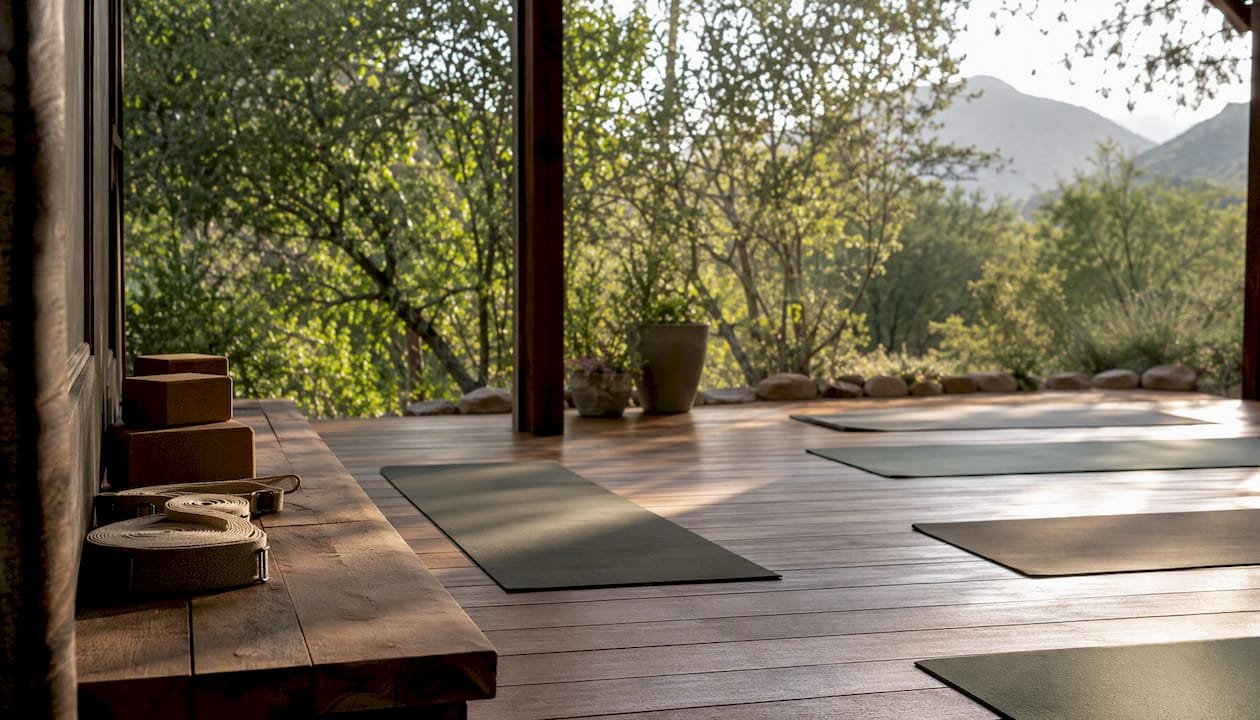
4th Avenue Yoga sits at 413 East 5th Street in Tucson's historic Fourth Avenue neighborhood, and it's one of the most affordable studio options in the city. Drop-in classes are currently listed at a modest rate (confirmed by the studio's FAQ as of April 9, 2024), so ignore the $4 figure that still floats around on TripAdvisor and older directory listings. Booking is online only through WellnessLiving — the studio does not take payment on-site. If you're a budget-minded local or a visitor who wants a real community class without a gym-chain price tag, this studio fits.
Quick facts at a glance:
Address: 413 East 5th St, Tucson, AZ 85705
Drop-in price: $9 (verify current rate on the official site before visiting)
Booking: Online via WellnessLiving or the Achieve app — no walk-in payment
Top class types: Hot 26, Vinyasa, Yin, Slow Flow, Yoga Fundamentals
Map: MapQuest directions
Key Takeaways
4th Avenue Yoga is Tucson's most affordable community studio, with a $9 drop-in rate, online-only booking, and a class menu that covers everything from 100°F hot yoga to gentle fundamentals.
| Point | Details |
|---|---|
| Address | 413 East 5th St, Tucson, AZ 85705, across from Sky Bar in the Fourth Avenue district. |
| Current drop-in price | $9 as of April 2024 — ignore older $4 directory mentions and verify on the official site. |
| Booking method | Online only via WellnessLiving or the Achieve app; no on-site payment accepted. |
| Best first class | Yoga Fundamentals or Slow Flow for beginners; Hot 26 for experienced practitioners. |
| Amritayogawellness | Philadelphia-based studio offering hot yoga, pilates, barre, and wellness workshops for all levels. |
Table of Contents
Where is 4th Ave yoga, and when is it open?
The studio is at 413 East 5th Street, Tucson, AZ 85705, in the heart of the historic Fourth Avenue district. It sits directly across from Sky Bar, which also matters for parking (more on that below). The neighborhood is walkable, lively, and easy to find from downtown.
Hours posted on Yelp suggest weekday early-morning and evening availability, with shorter windows on weekends. Because directory hours sometimes lag behind studio updates, always confirm the current schedule on the official site before making the trip.
These are approximate directory-reported times. Confirm directly with the studio.
What classes does 4th Avenue Yoga offer?
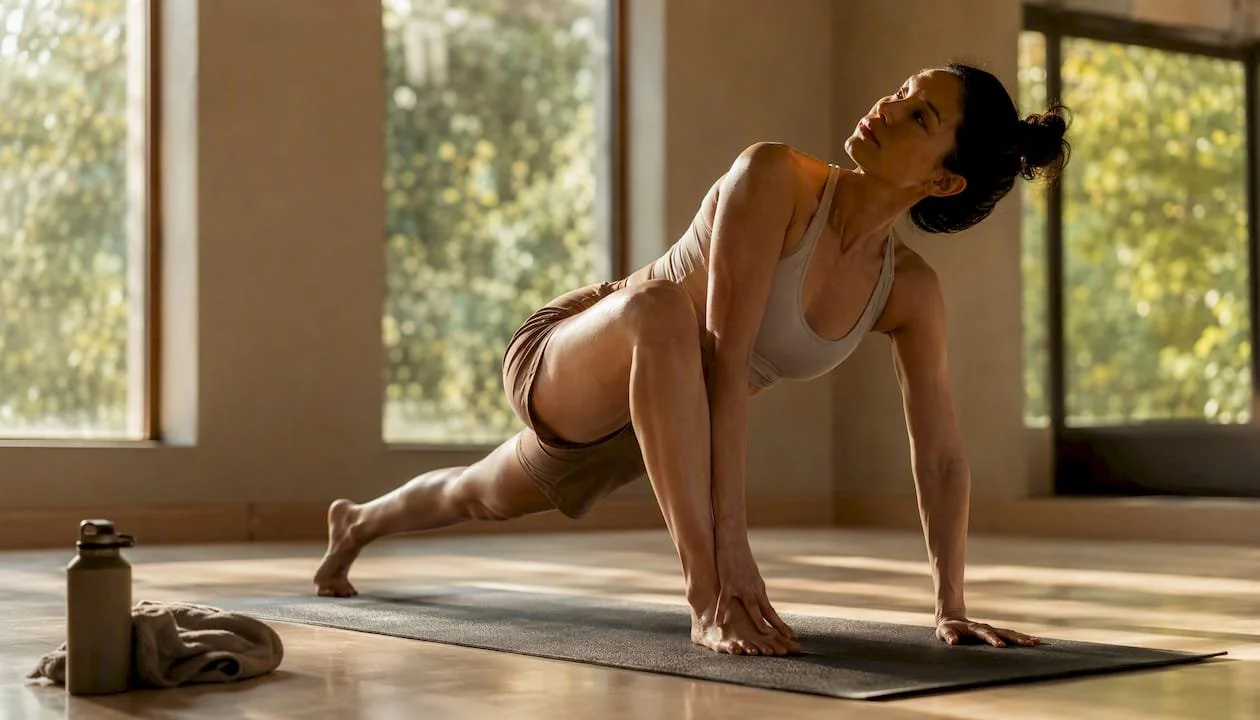
The official classes page lists a solid range of styles, and the temperature breakdown is genuinely useful if you're deciding between a sweaty session and something gentler.
Class temperature guide:
The full class menu includes:
Hot 26 — the classic Bikram-style sequence in a 100–105°F room; 26 postures, two breathing exercises
Juicy Flow — a heated vinyasa with creative sequencing
Rise and Flow — morning-friendly, energizing flow
Slow Flow — deliberate pacing, good for building awareness
Vinyasa/Ashtanga variations — breath-linked movement at different intensities
Yin — long-held floor poses targeting connective tissue
Yoga + Meditation — combines asana with a seated practice
Yoga Fundamentals — alignment-focused, ideal for newer students
yogahour — a 60-minute format for when you're short on time
Morning classes tend to run early (around 6:00–7:30 AM on weekdays), with evening options typically finishing by 7:30–8:00 PM. Weekend classes are fewer and shorter. Check the live schedule on the studio site to see exact times before booking.
Pro Tip: If this is your first visit, start with Yoga Fundamentals or Slow Flow. Both give instructors room to offer adjustments, and you'll leave with a clearer sense of whether Hot 26 is your next step.
How much do classes cost at 4th Avenue Yoga?
The studio's FAQ page states that classes were priced at $9 as of April 9, 2024. That's the most reliable figure available. Several TripAdvisor reviewers mention a historic $4 cash drop-in rate, but that appears to reflect an older pricing structure — treat it as a fun piece of studio history, not a current expectation.
$9 drop-in is the studio-stated rate as of April 2024. Confirm the current price at 4thavenueyoga.com/faq before your visit, since rates can change.
The studio's Facebook page also lists a monthly unlimited pass option, with individual classes priced modestly. Class packs may be available; check the booking platform for current options. Payment is handled entirely through WellnessLiving online — there's no cash register at the front desk.
What should you expect inside the studio?

The space is compact and community-oriented, which is part of the appeal. Props (blocks, straps) are typically available in the room. For hot classes, the heat is real — Hot 26 at 100–105°F is not a gentle warm room.
What to bring:
Your own mat (recommended, especially for hot classes where grip matters)
A large water bottle
A full-size towel for heated or hot classes
Comfortable, breathable clothing
Pro Tip: Arrive 10–15 minutes early for your first class. The instructor can show you where to set up and answer questions about modifications before the room fills.
Parking passes for the Sky Bar lot are handled through the studio — ask when you book or arrive. Street meters on Fourth Avenue are active during business hours. For readers who want to ease into yoga before attending a group class, yoga for mobility resources can help you prepare at home.
What do reviewers say about 4th Avenue Yoga?
Yelpshows a strong average rating from about 50 reviews, which is a strong signal for a small independent studio. The consistent themes across platforms: friendly instructors, a welcoming community vibe, and prices that don't punish casual attendance.
Common caveats include crowded classes during peak times and some variation in room heat depending on the class and day. A few reviewers note that the space is small, so popular evening classes fill quickly.
How do you book a class at 4th Avenue Yoga?
The studio uses WellnessLiving for all reservations. No on-site payment is accepted, so set up your account before you go.
Create a free account at 4thavenueyoga or download the WellnessLiving Achieve app
Browse the live schedule and select your class
Pay online at the time of booking
Arrive a few minutes early — reserved spots can be released if you're late
Follow @4thavenueyoga on Instagram for schedule updates and class announcements
Check the Facebook page for pricing updates and community posts
For direct contact, visit the contact page for phone and email details
Getting there, parking, and what's nearby
Fourth Avenue is accessible by foot or bike from much of central Tucson, and Sun Tran bus routes serve the corridor. If you're driving, street meters on Fourth Avenue and 5th Street are active during the day. The Sky Bar lot across from the studio is an option — the studio provides parking passes for patrons using that lot, so ask when you check in.
Pro Tip: Street parking is free after 6:00 PM on weekdays and on Sundays, which makes evening and weekend classes easier on the wallet.
The neighborhood itself is worth arriving early for. Fourth Avenue has independent coffee shops, bookstores, and restaurants within a short walk, making it easy to pair a morning class with breakfast or an evening class with dinner.
For readers interested in community fitness events beyond yoga, the Just Move Supplements blog covers movement classes and local wellness events worth exploring.
Where to see photos and check accessibility
The studio's Instagram account @4thavenueyoga is the best place to preview the room, see class setups, and get a feel for the community before your first visit. The official site also has gallery content.
Photos: Instagram and the official website gallery
Accessibility: The studio has not published detailed ADA accessibility information publicly — contact them directly via the contact page to confirm stair access, restroom accessibility, or other needs
Photo etiquette: Most studios ask that you avoid photographing other students during class; check with the front desk if you want to take room photos
Seniors or visitors wanting gentle modifications before attending may find yoga poses for seniors a helpful starting point.
An honest take on 4th Avenue Yoga
The $9 drop-in price is genuinely rare for a studio that runs heated classes and maintains a consistent schedule. Most comparable studios in Tucson charge $15–$20 for a single class. The community feel reviewers mention isn't marketing copy — small studios with affordable pricing tend to attract regulars, and regulars create atmosphere.
For a first visit, Yoga Fundamentals or Slow Flow gives you the room to breathe and ask questions. If you're already comfortable in a heated room, go straight to Hot 26 and see what 100°F feels like with 26 postures. Either way, $9 is a low-risk way to find out.
Amritayogawellness: yoga and wellness in Philadelphia
If you're based in Philadelphia or planning a visit, Amritayogawellness offers a full studio experience with hot yoga, pilates, barre, tai chi, and massage therapy under one roof. The studio is built around the same values that make 4th Avenue Yoga appealing: accessible pricing, a genuine community, and classes for every level. Where 4th Avenue Yoga serves Tucson's Fourth Avenue neighborhood, Amritayogawellness serves Philadelphia practitioners looking for a consistent, multi-discipline wellness home.
Workshops, tarot readings, and specialty events run regularly alongside the core class schedule. Check the current offerings at Amritayogawellness and book a class or workshop that fits your practice.
Sources
Recommended
Hot Power Yoga Benefits: What Adults Need to Know
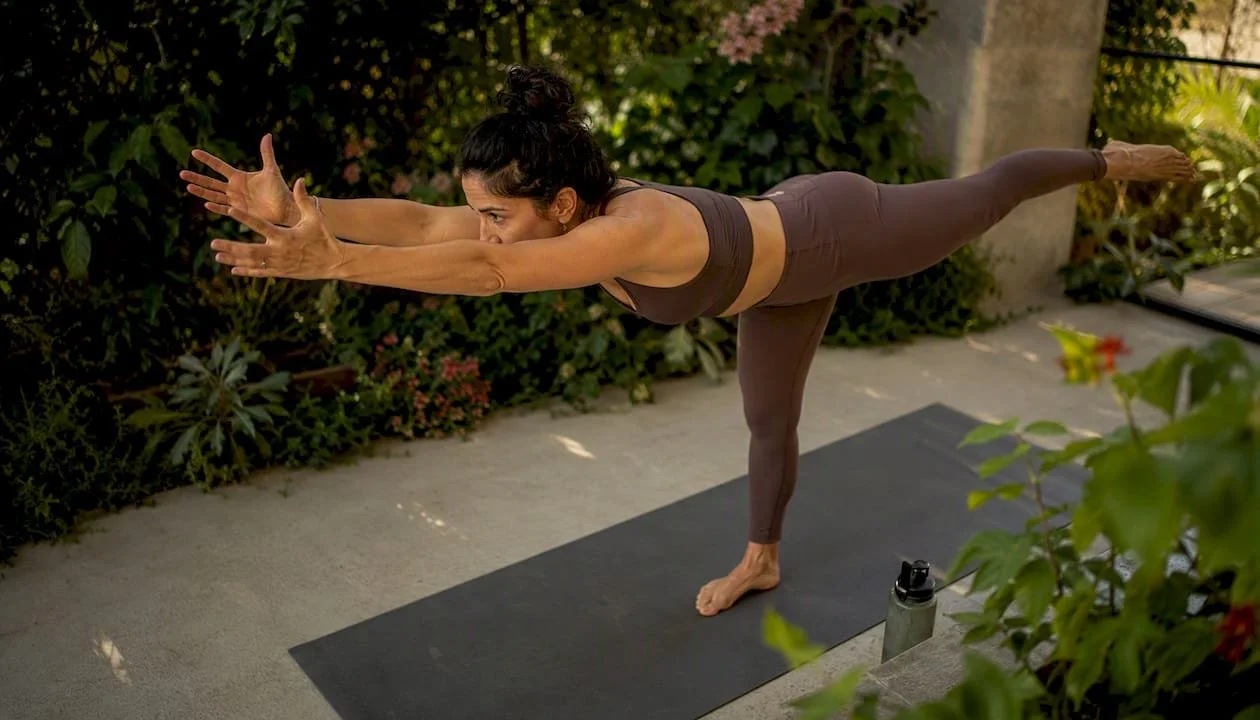
Hot power yoga reliably improves flexibility, balance, and stress resilience while delivering a real cardiovascular stimulus — when practiced safely and consistently. A 16-week randomized controlled trial found significant reductions in perceived stress and improvements in energy and self-efficacy in sedentary adults, and a 2025 systematic review across 43 studies confirmed gains in flexibility, balance, and some cardiometabolic markers. Amritayogawellness offers hot power yoga classes in Philadelphia for adults at every starting point.
Core benefits at a glance:
Measurably improved flexibility and lower-body range of motion
Better balance and coordination, even in early weeks
Strength gains, particularly in the lower body and core
Elevated heart rate during sessions, supporting cardiovascular conditioning
Reduced perceived stress and improved mood
Skin circulation and thermoregulatory adaptation from repeated heat exposure
Key Takeaways
Hot power yoga produces measurable improvements in flexibility, balance, and stress resilience within four to six weeks of consistent practice, with cardiovascular and strength adaptations building over eight to twelve weeks.
| Point | Details |
|---|---|
| Flexibility and balance | Lower-body range of motion and balance improve consistently across trials, including a 33% sit-and-reach gain in one 8-week RCT. |
| Stress reduction | A 16-week RCT found significant reductions in perceived stress (p=0.003) and energy/fatigue improvements in sedentary adults. |
| Calorie burn context | Heat raises heart rate acutely but does not reliably increase total energy expenditure versus non-heated yoga, per Mayo Clinic. |
| Safety first | People with heart disease, pregnancy, or heat intolerance should get medical clearance before attending any hot yoga class. |
| Amritayogawellness | Amrita Yoga & Wellness in Philadelphia offers beginner-friendly hot power yoga classes with instructor-led modifications and safety guidance. |
Table of Contents
What exactly is hot power yoga, and how does it differ from other formats?
How does hot power yoga compare to other yoga styles and fitness activities?
Hot power yoga works best for adults who want more than one thing from their fitness practice
Try hot power yoga at Amrita Yoga & Wellness in Philadelphia
What are the main benefits of hot power yoga?
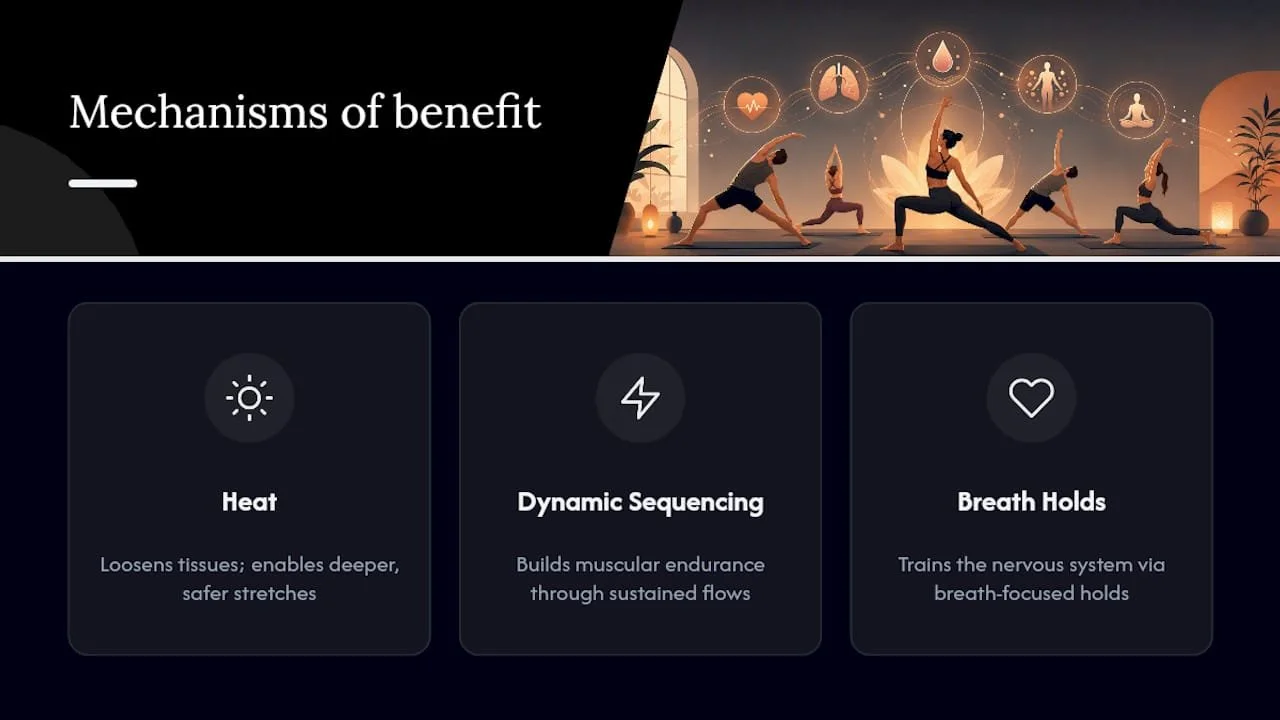
Each benefit below has a distinct mechanism. Heat loosens connective tissue, making stretches more accessible. Dynamic sequencing builds muscular endurance. Breath-focused holds train the nervous system. Together, they produce outcomes that neither a standard gym session nor a room-temperature yoga class replicates in quite the same combination.
Flexibility and range of motion
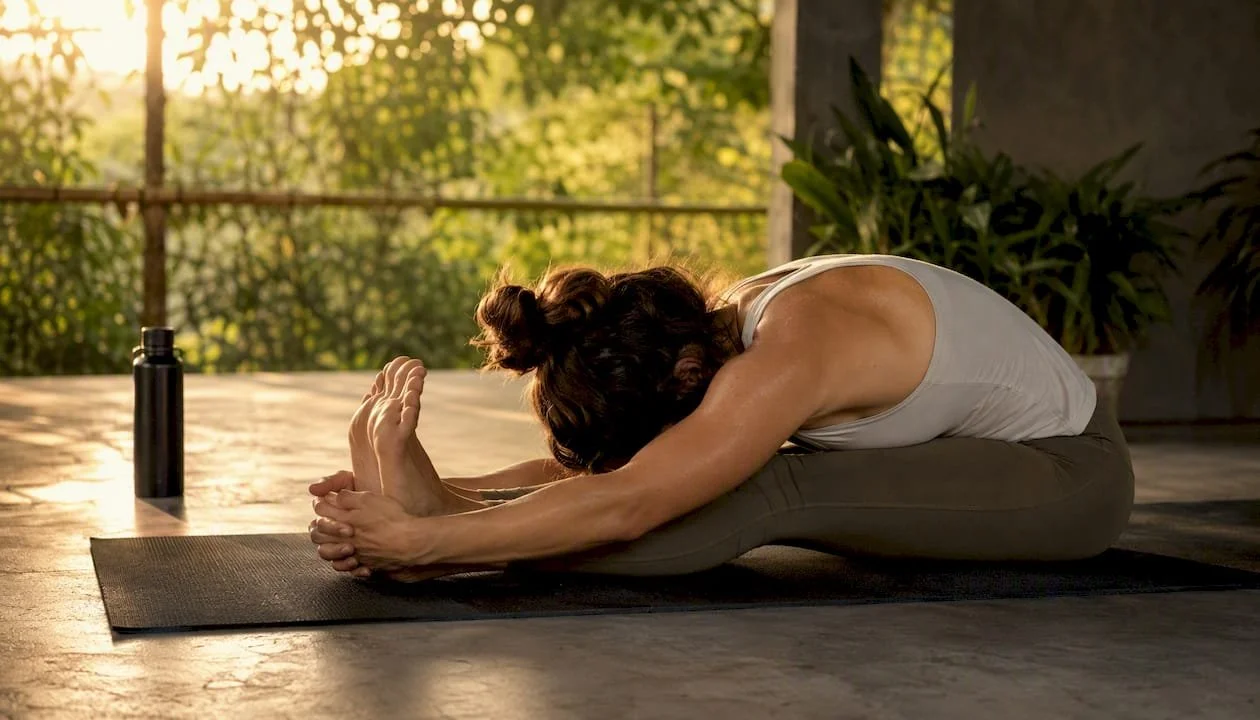
The heat in a hot power class raises muscle and connective tissue temperature, which reduces stiffness and allows deeper, safer stretching. An 8-week Bikram intervention reported a sit-and-reach improvement of roughly 33% in the yoga group versus a 1% decline in controls. That gap is striking. Most adults notice meaningful changes in hamstring and hip flexibility within four to six weeks of consistent practice.
Balance and coordination
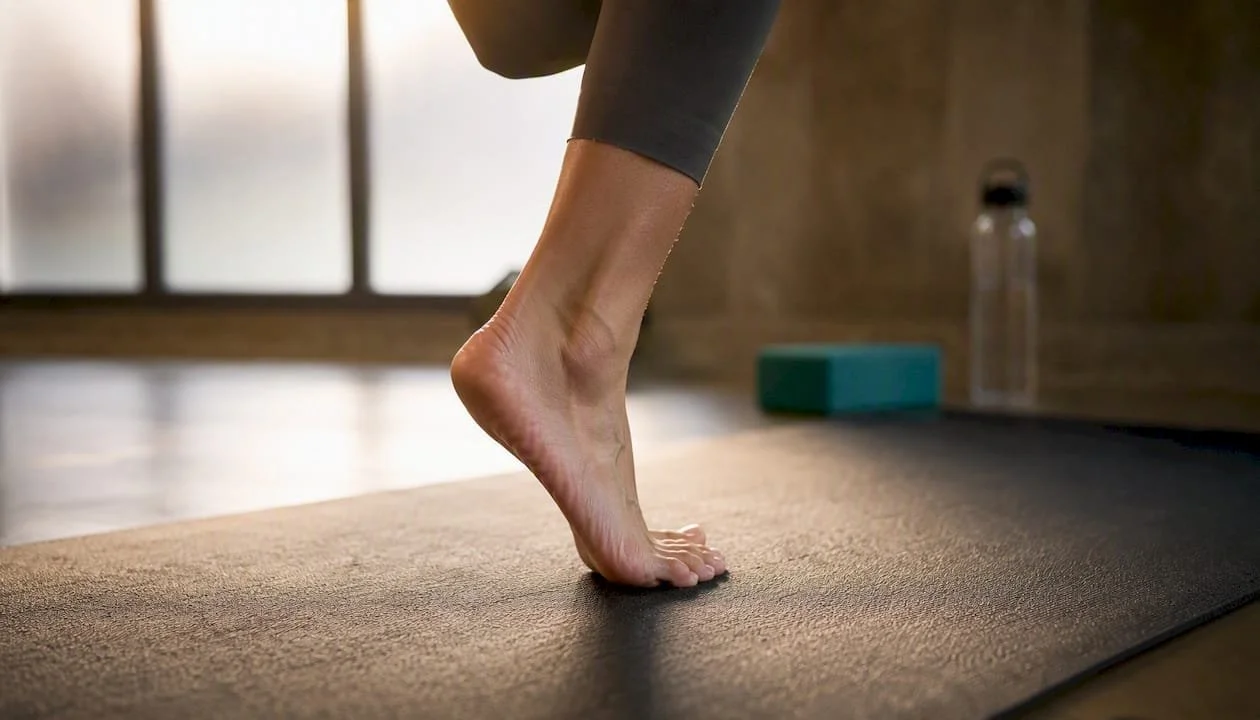
Single-leg poses held in a warm room demand constant micro-adjustments from the stabilizing muscles around the ankle, knee, and hip. The 2025 systematic review identified balance as one of the more consistently improved outcomes across hot-yoga studies, which aligns with what instructors observe in class. Students who struggle to hold Warrior III in week one are often steady by week six.
Strength and musculoskeletal benefits
Hot power yoga is not weightlifting, but sustained isometric holds in poses like Chair, Warrior II, and Boat build real muscular endurance in the quads, glutes, and core. Colorado State University research notes that the combination of heat and exercise likely drives these adaptations, not heat alone. Upper-body and cardiorespiratory strength findings are more mixed across trials, so treat those as secondary gains rather than primary outcomes.
Cardiovascular stimulus and metabolic hints
A 12-session study comparing hot and normal-temperature yoga found increased maximal aerobic fitness in the hot-yoga group alongside higher HSP70 expression, a cellular heat-shock protein linked to cardiovascular adaptation.
Heart rate during a hot power class can reach levels comparable to moderate aerobic exercise. That said, Mayo Clinic sports medicine notes that acute heart rate elevation from heat does not necessarily translate to higher total energy expenditure compared to non-heated yoga. For weight management, this matters: the calorie burn may feel higher, but the actual difference versus a room-temperature class is smaller than most people expect. The cardiovascular adaptation over repeated sessions is the real prize, not the per-session calorie count.
Mental health and stress reduction
A six-week hot-yoga study reported improved well-being in participants, and Harvard Health's yoga and mental health summary confirms that yoga broadly reduces stress and supports mood. The heat adds a layer: finishing a challenging class in a 95°F room builds a specific kind of psychological resilience that carries into daily life. The 16-week RCT found stress reductions were dose-dependent, meaning more attendance correlated with greater improvement.
Respiratory and lung capacity notes
Controlled breathing under thermal load trains the diaphragm and intercostal muscles more deliberately than most gym workouts. Evidence here is limited and mostly observational, but practitioners consistently report improved breath awareness and capacity over time.
Skin and thermoregulatory effects
Repeated heat exposure improves the body's ability to regulate core temperature, a process called heat acclimatization. Sweating increases skin circulation, and many practitioners report clearer skin as a secondary effect. These are real physiological changes, though they are not the primary reason most adults choose the practice.
What exactly is hot power yoga, and how does it differ from other formats?
Hot power yoga is fitness-focused vinyasa or power-style sequencing taught in a heated room, typically between 85°F and 100°F. Classes emphasize strength, flow, and breath-linked movement rather than a fixed sequence. Length varies, usually 45–75 minutes.
The differences between hot-yoga formats matter practically:
Bikram yoga: A standardized 26-posture series practiced at approximately 105°F with 40% humidity, always 90 minutes. The fixed sequence makes it highly consistent and well-studied, but there is no variation between classes. Read more about the Bikram format and its evidence base on the Amritayogawellness blog.
Hot power yoga: Variable sequencing at lower temperatures (85–100°F), shorter or longer class lengths, and a stronger emphasis on muscular strength and dynamic flow. Better suited to adults who want fitness gains alongside flexibility.
Hot Vinyasa: More continuous movement, fewer prolonged isometric holds, and a similar temperature range to hot power. Less strength-focused than hot power, more aerobic in feel.
For adults who want a combined strength-and-flexibility outcome with stress-reduction benefits, hot power yoga sits in the most useful middle ground. Bikram suits those who prefer structure and repetition; hot Vinyasa suits those who prioritize flow over holds.
What does the science actually show?
The evidence base is real but imperfect. Most studies use Bikram-style protocols, so findings must be applied cautiously to hot power formats. The 2025 systematic review noted that participants across studies were predominantly female, which limits generalizability to broader populations.
| Study | Sample | Length | Primary outcomes | Confidence |
|---|---|---|---|---|
| well-being study | Adults | four to six weeks | Well-being, stress | Limited; pilot level |
What the evidence supports with reasonable confidence:
Flexibility and lower-body range of motion improve in most trials
Balance improves consistently across study types
Perceived stress and some quality-of-life domains improve in RCT conditions
Acute cardiovascular and thermoregulatory responses are well-documented
Where the evidence is weaker:
Superiority over non-heated yoga has not been proven for most outcomes
Upper-body strength and cardiorespiratory fitness findings are inconsistent
Long-term data beyond 16 weeks is sparse
Hot power yoga specifically is underrepresented; most data comes from Bikram protocols
Who should be cautious, and how do you stay safe?
Heat adds genuine physiological stress to an already demanding practice. That is part of what makes it effective, and also what makes it risky for some people.
Consult a clinician before starting if you have:
Known heart disease, arrhythmia, or uncontrolled hypertension
Pregnancy (hot yoga is generally not recommended without explicit medical clearance)
Heat intolerance or a history of heat illness
Medications that impair sweating or thermoregulation (certain antihistamines, diuretics, beta-blockers)
Diabetes with autonomic neuropathy
Recent illness, fever, or dehydration
Practical risk reduction:
Arrive well-hydrated: drink 16–20 oz of water in the two hours before class
Acclimate gradually: spend your first two or three sessions simply staying in the room and breathing before attempting full sequences
Wear minimal, breathable clothing and bring a full-size towel for your mat
Take child's pose or sit down whenever you feel lightheaded, and tell your teacher before class about any health concerns
Cool down actively after class: cold water on the wrists and neck, and sit before standing quickly
Stop immediately and seek help if you experience:
Dizziness, nausea, or confusion during class
Fainting or near-fainting
Chest pain or heart palpitations
Skin that stops sweating despite the heat (a warning sign of heat exhaustion)
Pro Tip: For sessions lasting 60–90 minutes, plain water is often not enough. Electrolyte replacement, specifically sodium and potassium, helps prevent lightheadedness and syncope. A small electrolyte drink or tablet before and after longer sessions makes a measurable difference. See the Amritayogawellness hot yoga safety guide for detailed protocols.
How to get started with hot power yoga
What to bring to your first class:
A large water bottle (at least 24 oz, ideally more)
A full-size yoga towel to cover your mat
Your own mat if possible (studios provide them, but a personal mat improves grip)
Minimal, moisture-wicking clothing
An electrolyte option for sessions over 60 minutes
An open conversation with the teacher about any health issues before class begins
A four-week starter plan:
Week 1: Attend one class. Focus entirely on staying in the room, breathing steadily, and taking rest in child's pose whenever needed. Do not push pose depth.
Week 2: Attend one or two classes. Begin attempting full sequences but exit poses early if your heart rate feels unmanageable. Notice which poses challenge your balance most.
Week 3: Aim for two classes. Start holding poses for their full duration. Track your flexibility in one or two benchmark poses (seated forward fold, standing balance).
Week 4: Two to three classes. You should notice improved heat tolerance, steadier balance, and reduced effort in poses that felt impossible in week one.
Most beginners feel the heat most intensely in weeks one and two. By week three, the thermoregulatory adaptation kicks in and the room feels more manageable. For beginner-specific yoga guidance, the Amritayogawellness blog has resources tailored to new practitioners.
Choose a class labeled "beginner," "level 1," or "all levels" for your first month. A 60-minute format is more forgiving than a 90-minute class while your body acclimates.
Studio tips from Amrita Yoga & Wellness instructors
Experienced teachers at Amritayogawellness have observed consistent patterns in how adults adapt to hot power yoga, and a few practical adjustments make a significant difference in early sessions.
What instructors recommend for acclimation:
Treat the first session as a heat-exposure session, not a yoga session. Lying in savasana for 60 minutes in a hot room is a legitimate first class.
Progressive exposure works better than pushing through discomfort. Add one more challenging pose each session rather than attempting the full sequence from day one.
In standing balance poses, fix your gaze on a single unmoving point (a technique called drishti). The heat makes proprioception less reliable, and a stable gaze compensates.
Common modifications teachers offer:
Low back discomfort: Shorten the stance in Warrior poses and avoid deep backbends until the lumbar muscles are warmer and stronger.
Dizziness: Drop to hands and knees immediately, breathe slowly, and skip the next standing sequence. This is not failure; it is smart pacing.
Poor balance: Use the wall or a block without hesitation. Balance improves faster when you practice the correct alignment than when you wobble through a pose unsupported.
Pro Tip: In your first month, prioritize breath over depth. A shallow pose with steady breathing produces better adaptation than a deep pose with held breath. Instructors consistently see students who breathe well outperform students who push hard but brace through sequences.
For more studio-specific guidance, the hot power yoga content hub on the Amritayogawellness site covers class descriptions, sequencing tips, and community updates.
Why people stick with hot power yoga long-term
The dropout rate for most fitness programs is high. Hot power yoga has a retention advantage that is worth understanding: the practice changes in a way that keeps it interesting. As flexibility improves, poses that were physically inaccessible become available. As heat tolerance builds, the mental challenge shifts from survival to refinement. That progression keeps practitioners engaged in a way that a fixed-resistance gym routine often does not.
There is also a community dimension. Hot yoga studios tend to develop tight-knit groups because the shared experience of a challenging heated class creates a specific kind of social bond. Research on exercise adherence consistently shows that social accountability is one of the strongest predictors of long-term consistency, and studio yoga delivers that naturally.
For stress management specifically, the yoga for relaxation resources at Amritayogawellness show how practitioners integrate breathwork and mindfulness into daily life beyond the mat, which compounds the mental health benefits over time.
Practically, hot power yoga fits into a broader fitness life without conflict. It complements strength training by improving mobility and recovery. It complements running by building hip and core stability. Adults who add two hot power sessions per week to an existing routine typically report improved performance in their other activities within six to eight weeks.
How does hot power yoga compare to other yoga styles and fitness activities?
Against room-temperature yoga, hot power yoga adds two things: a thermoregulatory challenge that drives cellular adaptations (HSP70, improved heat tolerance, possible aerobic gains) and a deeper stretch stimulus from elevated tissue temperature. The 2025 systematic review found that superiority over non-heated yoga has not been definitively proven for most outcomes, but the acute physiological difference is real and likely produces different long-term adaptations in some practitioners.
Against standard gym training, hot power yoga offers flexibility, balance, and stress-reduction benefits that resistance machines do not. It is not a substitute for heavy compound lifting if maximal strength is the goal, but for adults who want functional fitness, it covers more dimensions simultaneously than most single-modality gym workouts.
Against running or cycling, hot power yoga is lower-impact, which matters for adults with joint concerns. The cardiovascular stimulus is real but generally lower in intensity than sustained aerobic exercise, so it is better positioned as a complement to cardio than a replacement.
Against Bikram specifically, hot power yoga offers more variety, lower temperatures, and shorter class lengths, which tends to improve adherence for adults with busy schedules. The trade-off is less research backing, since most studies use the Bikram protocol.
Hot power yoga works best for adults who want more than one thing from their fitness practice
The adults who get the most from hot power yoga are not chasing a single outcome. They want flexibility and strength. They want a cardiovascular challenge and a stress outlet. They want something that changes as they improve. Hot power yoga delivers all of that in a single 60-minute class, which is genuinely rare.
That said, it is not the right choice for every goal. If maximal aerobic capacity is the priority, dedicated cardio training will outperform it. If maximal strength is the goal, progressive resistance training is more efficient. And if heat is a genuine medical concern, room-temperature yoga delivers most of the same flexibility and mental-health benefits without the thermoregulatory risk.
The realistic timeline for noticeable change: flexibility and balance shift within four to six weeks of two-to-three sessions per week. Stress reduction can appear faster, sometimes within the first two weeks, because the parasympathetic activation from breath-focused movement is immediate. Strength and cardiovascular adaptations take longer, typically eight to twelve weeks of consistent practice.
Measure progress concretely: track your sit-and-reach distance, time a single-leg balance hold, and rate your perceived stress on a simple 1–10 scale weekly. Those three metrics will tell you more than how the class feels on any given day.
Try hot power yoga at Amrita Yoga & Wellness in Philadelphia
Amrita Yoga & Wellness offers hot power yoga classes designed for adults at every starting point, from complete beginners to experienced practitioners looking to deepen their practice. The studio's heated classes run at temperatures appropriate for safe acclimation, with instructors trained to offer modifications for common concerns like low back sensitivity and balance challenges.
First-time students get a beginner-friendly entry point: smaller class sizes, clear teacher cues, and a welcoming environment where taking child's pose is encouraged, not stigmatized. If you are ready to experience the benefits covered in this guide, visit Amritayogawellness to check the current schedule and book your first class. Bring water, wear something light, and tell the teacher one thing about your body before you start.
Sources
Effect of a 16-week Bikram yoga program on perceived stress, self-efficacy and health-related quality of life in stressed and sedentary adults: A randomised controlled trial
Hot Yoga: A Systematic Review of the Physiological, Functional and Psychological Responses and Adaptations | Sports Medicine - Open
An examination of the effectiveness of an 8-week Bikram Yoga program on mindfulness, perceived stress, and physical fitness
What is hot yoga? - Mayo Clinic Orthopedics & Sports Medicine
Cardiovascular, cellular and neural adaptations to hot versus normal-temperature yoga
Yoga for better mental health - Harvard Health
Researcher: Hot yoga yields fitness benefits - Colorado State University
This article provides general health information and is not a substitute for professional medical advice. Consult a qualified clinician before starting hot yoga if you have any cardiovascular, metabolic, or heat-related health concerns.
Recommended
Unlimited Yoga Classes: Is a Monthly Membership Worth It?
TL;DR:
Unlimited yoga memberships are most cost-effective for practicing three or more times weekly. For irregular attendance, class packs or online subscriptions often offer better value. Building a consistent habit first is advised before committing to an unlimited plan.
An unlimited yoga membership pays off when you attend at least 3–4 times a week. Below that threshold, a class pack almost always costs less. If you're already practicing consistently, or you're committed to building that habit, an unlimited yoga pass is usually the smarter buy. Amrita Yoga & Wellness in Philadelphia offers in-studio, livestream, and workshop options worth considering once you've run the math on your own schedule. And if your doctor has recommended yoga for a specific condition, IRS Publication 502 outlines when wellness expenses may qualify for HSA or FSA reimbursement, which can meaningfully lower your effective monthly cost.
Table of Contents
What does "unlimited" actually cover in studio, online, and hybrid plans?
What to check before you sign: terms, cancellation, and red flags
Amrita Yoga & Wellness: what the studio offers regular practitioners
Amritayogawellness makes it easy to start without overcommitting
What does "unlimited" actually cover in studio, online, and hybrid plans?
Not all unlimited plans are built the same. Three structures dominate the U.S. market:
In-studio unlimited: Access to all regularly scheduled group classes at one or more physical locations. This is the most common format and the most expensive.
Online-only unlimited: Livestream and on-demand classes only, no studio floor access. Prices run significantly lower than in-studio plans.
Hybrid unlimited: Combines in-studio classes with livestream and on-demand access. Some studios include this in one membership tier; others charge separately for the digital layer.
What's typically included: daily group classes across styles (Vinyasa, Iyengar, restorative, hot yoga), livestream sessions, and an on-demand video library where one exists.
What's commonly excluded: specialty workshops, teacher trainings, merchandise, massage or bodywork services, and certain premium or heated classes that carry a surcharge. Guest passes and event tickets are almost never part of a base unlimited plan.
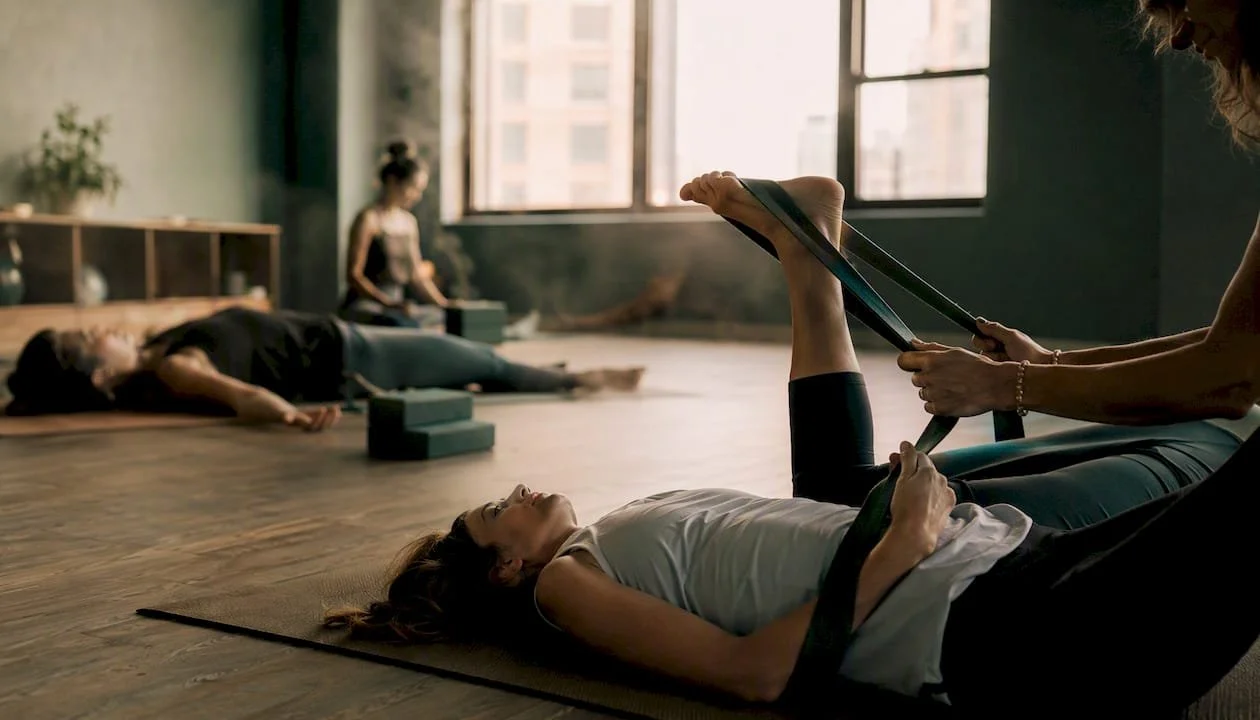
Pro Tip: Before signing, ask specifically whether the studio charges a surcharge for hot yoga, sculpt, or other specialty formats. Some studios advertise "unlimited" but add $5–$10 per class for their most popular formats, which can quietly erode the value.
What do unlimited yoga memberships typically cost?
Online-only unlimited plans in the U.S. commonly run in the $20–$50 per month range. In-studio unlimited memberships vary more widely depending on city, studio size, and included perks, and tend to run considerably higher than their digital-only counterparts. Comparing an online-only price to an in-studio price without checking access levels is one of the most common mistakes buyers make.
Several factors push a studio's price up or down:
Teacher credentials: Studios with faculty holding advanced certifications, anatomy training, or specialized Iyengar or therapeutic credentials typically charge more.
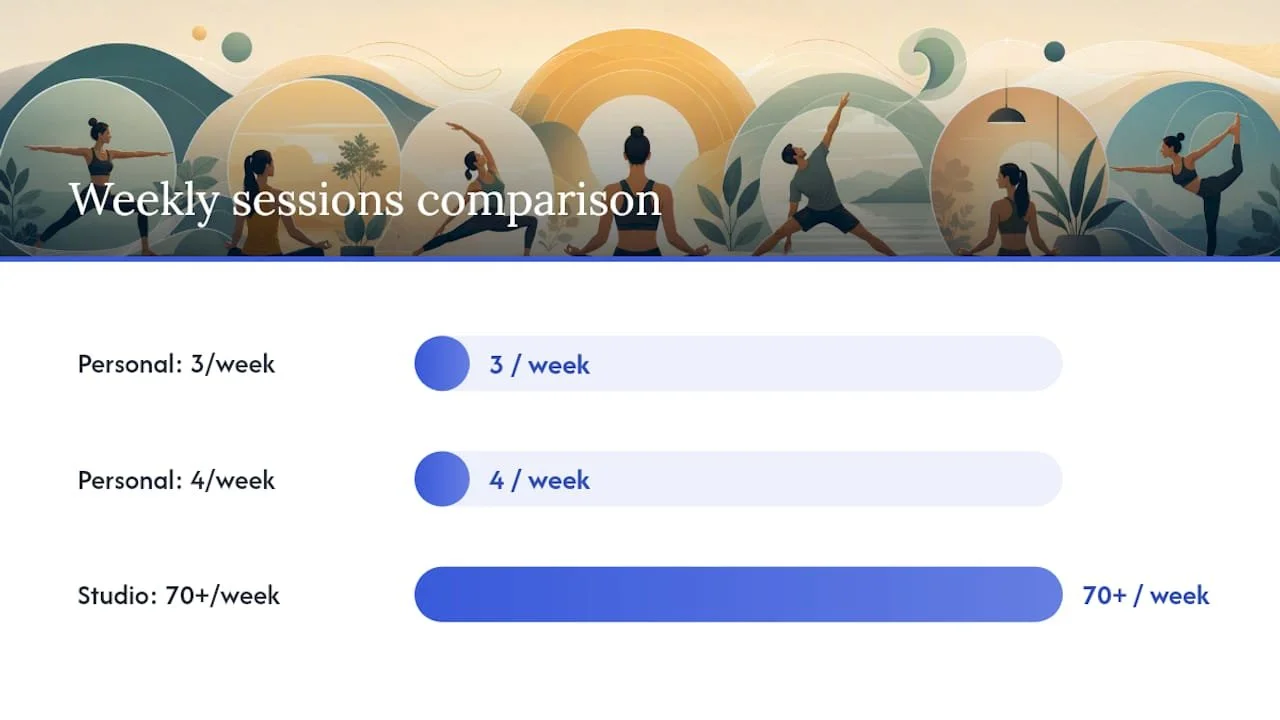
Class volume and schedule: A studio offering 70+ weekly sessions across multiple styles commands a premium over one with a limited schedule.
Location and overhead: Urban studios in high-rent markets charge more than suburban or community-cooperative studios.
Bundled perks: Free meditation classes, workshop discounts, and guest passes add real value. Count them when comparing sticker prices.
The per-class math shifts fast with attendance. At three classes a week, you're getting roughly 12–13 sessions a month. At four, that's 16–17. Run those numbers against local drop-in rates and you'll see quickly whether the monthly fee pencils out. Some wellness expenses tied to a medical recommendation may also qualify for HSA or FSA reimbursement per IRS Publication 502, so ask your studio if they can provide documentation.
Is unlimited right for you? A simple decision test
If you reliably attend yoga three or more times a week, choose unlimited. If you're still building the habit, start smaller.
Studio operators consistently advise that unlimited memberships work best for students with an established routine. Beginners or irregular attendees almost always get better value from a smaller class pack first.
Work through this checklist before committing:
Track your current attendance. How many times did you actually practice last month? Be honest.
Check your schedule flexibility. Can you realistically get to the studio three or more times a week, or does your week vary too much?
Assess your financial comfort. Are you prepared for an auto-renewing monthly charge, potentially with a minimum commitment period?
Match style to your goals. If you're focused on rehabilitation or mobility, Iyengar-based or therapeutic classes matter more than a broad schedule. If you want cardio and flow, Vinyasa yoga is likely your format.
Read the cancellation terms before you sign. More on this below.
Pro Tip: If you're unsure about your attendance habits, buy a 10-class pack first. Track how long it takes you to use it. That data tells you exactly what an unlimited plan is worth to you.
What to check before you sign: terms, cancellation, and red flags
Most studios auto-renew monthly memberships unless you cancel within a specific window, often 15–30 days before your next billing date. Missing that window by a day can mean another full month's charge.
Before signing any unlimited membership agreement, verify these items:
Auto-renew terms: When does billing recur, and how far in advance must you cancel?
Cancellation process: Is it online, by email, or in person only? Some studios require written notice sent by certified mail, which is a red flag.
Freeze policy: Can you pause your membership for travel or injury, and how many times per year?
Surcharges: Which class formats carry extra fees beyond the base membership?
Minimum commitment: Some agreements lock you in for several months with early-termination penalties.
"Before I commit to any membership, I ask three questions: How do I cancel? How much notice do I need? And what happens if I need to pause?" This approach surfaces the most important contract terms before you're bound by them.
Red flags to walk away from: vague cancellation instructions, no written freeze policy, and contracts that require you to call during business hours to cancel with no online option.
Alternatives to unlimited memberships
Unlimited isn't the only path to a regular practice. These options often make more sense depending on your situation:
5/10/20-class packs: — Best for irregular schedules or when you're testing a new studio. No recurring charge, no expiration pressure if the window is generous.
Online-only subscriptions: If in-studio access isn't a priority, online yoga subscriptions deliver solid value at a fraction of in-studio pricing. Good for home practitioners or those supplementing occasional studio visits.
Chair yoga programs offered in community care settings, like those described at Mearns House, show how structured, lower-intensity formats can serve specific populations well, a useful reminder that the right format matters as much as the right membership type.
Amrita Yoga & Wellness: what the studio offers regular practitioners
Amritayogawellness is a Philadelphia-based studio built for practitioners who want depth alongside consistency. The studio's offerings include:
In-studio group classes across multiple styles, including hot yoga, Vinyasa, pilates, barre, and tai chi
Workshops and retreats for students who want to go beyond the weekly schedule
Adjunct services including massage therapy and community events like tarot readings
Detailed class descriptions and teacher profiles to help students match format to goal
Membership options oriented to regular practice, with trial offers for new students
Community perks, workshop discounts, and a welcoming environment for all levels are part of what Amritayogawellness emphasizes. Teacher qualifications and class descriptions are publicly listed so you can assess fit before your first visit. For students with health-related goals, the studio's range of styles, from gentle restorative to hot yoga instruction, means you're not locked into one format.
How to cancel or freeze a membership without losing money
Cancellation mistakes are common and expensive. Follow these steps:
Read your agreement now. Note the cancellation window, required notice period, and accepted cancellation methods.
Set a calendar reminder at least five days before the cancellation deadline.
Submit your request in writing. Email is usually sufficient; keep a copy.
Request written confirmation. Don't assume the cancellation processed until you have it.
Check your next billing statement. If a charge appears after confirmed cancellation, dispute it with your bank immediately.
For freezes: Ask for the freeze policy in writing before you need it. Some studios limit freezes to one or two per year.
A simple cancellation email: "I am writing to cancel my membership effective [date]. Please confirm receipt and provide written confirmation of cancellation. My account name is [name] and my member ID is [ID]."
Watch for trials that auto-enroll at the end of the trial period. Confirm the exact cancellation mechanics and deadline before you start any intro offer.
Membership types side by side: which format fits your life?
| Membership Type | Best For | Commitment | Flexibility |
|---|---|---|---|
| Unlimited monthly | Consistent practitioners, 3–4x/week | Monthly, often with minimum term | Low to moderate |
| Class packs (5/10/20) | Irregular schedules, studio testing | None | High |
| Drop-in / single class | Travelers, very occasional use | None | Highest |
| Online-only subscription | Home practice, travel supplement | Monthly, usually cancel anytime | High |
| 30-day intro / trial | New students building a habit | Short-term | Moderate |
The unlimited monthly plan rewards frequency. Every other format rewards flexibility. Your attendance pattern, not your aspirations, should decide which row you're in.
Key Takeaways
An unlimited yoga membership saves you money only when you consistently attend 3–4 classes per week. Below that, class packs are almost always a better value.
| Point | Details |
|---|---|
| Attendance threshold | Attend 3–4 times per week for unlimited to beat class-pack pricing. |
| Test before committing | Use a 10-class pack to measure real attendance before buying unlimited. |
| Contract must-checks | Verify auto-renew terms, cancellation window, freeze policy, and surcharges before signing. |
| Alternatives exist | Class packs, drop-ins, and online subscriptions suit irregular or budget-first practitioners. |
| Amritayogawellness | Philadelphia studio offering in-studio, workshop, and adjunct wellness options for regular practitioners. |
The case for patience before you commit
The conventional wisdom says: buy unlimited and you'll practice more. Studios lean into this framing because it works for them. But the evidence from studio operators points the other way: students who build the habit first and then upgrade to unlimited get far more from the membership than those who buy it hoping the sunk cost will motivate them.
There's also a style-matching problem most buyers ignore. Choosing a studio because it's cheap or close, then discovering the teaching methodology doesn't match your goals, is a waste of money at any price point. A Vinyasa-heavy schedule won't serve someone focused on injury rehabilitation the way an Iyengar or therapeutic program will. Teacher credentials and class descriptions deserve more scrutiny than the monthly price.
The smartest move is a short trial, honest attendance tracking, and a careful read of the cancellation terms before you hand over a credit card. Unlimited yoga access is genuinely valuable for the right person at the right studio. The work is figuring out whether that's you, before the auto-renew kicks in.
Amritayogawellness makes it easy to start without overcommitting
Amritayogawellness offers new students a trial path into regular practice without locking you into a long-term contract upfront. The Philadelphia studio covers hot yoga, Vinyasa, pilates, barre, tai chi, and massage therapy under one roof, with teacher profiles and class descriptions that let you match format to goal before your first session.
Community events, including tarot readings and workshops, are part of the membership experience, not add-ons you pay extra for. If you've done the attendance math and you're ready to commit to a consistent practice, visit amritayogawellness.com to explore current membership options and book your first class.
Recommended
Power Flow Yoga Explained: What Beginners Need to Know
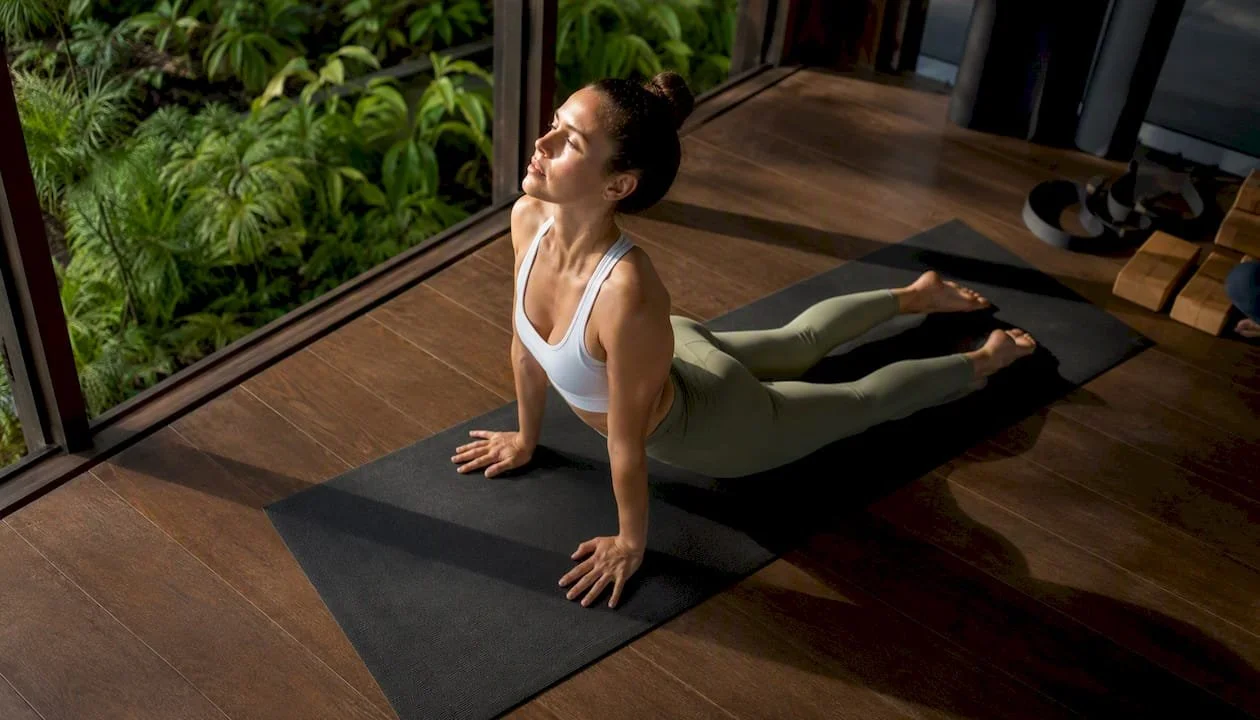
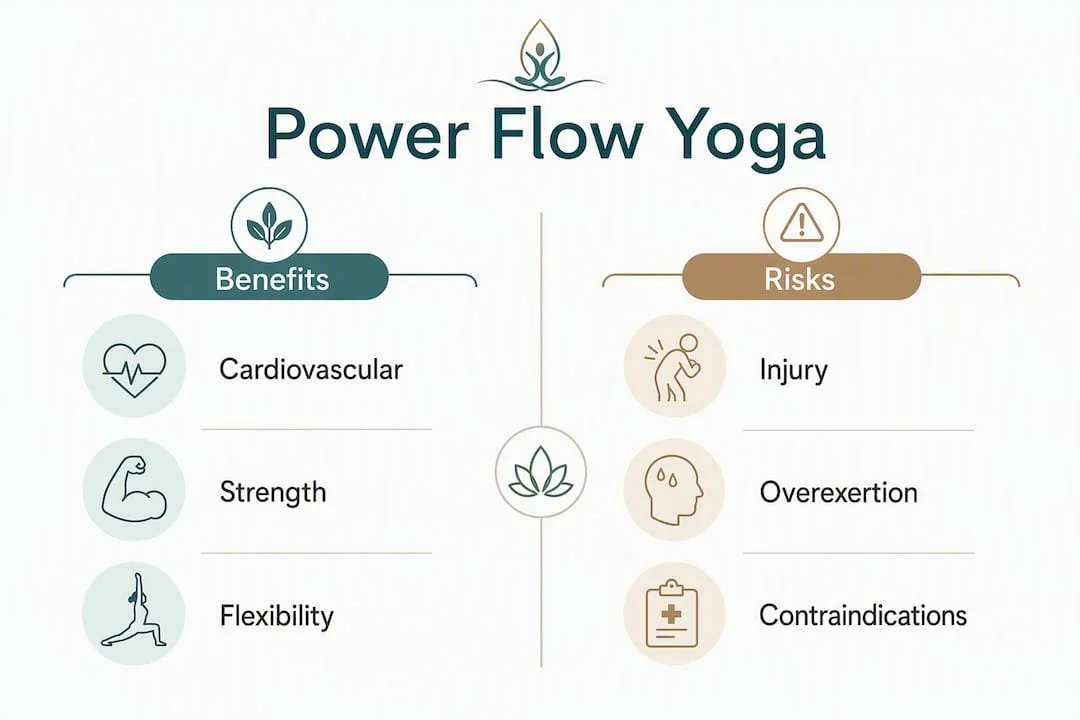
Power flow yoga is a vigorous, breath-synchronized practice that links postures in continuous movement sequences, building cardiovascular fitness and muscular strength simultaneously. Think of it as the athletic cousin of a standard yoga class: you rarely stop moving, your heart rate climbs, and the breath drives every transition. According to Asheville Yoga Center, power flow favors continuous movement over long static holds, which is what separates it from most other yoga styles at a glance.
Who benefits most: people who want a workout and a mindfulness practice in one session. The practice targets strength, endurance, and what experienced teachers call "moving meditation." At Amrita Yoga & Wellness in Philadelphia, power flow classes draw athletes, fitness-minded practitioners, and anyone who finds slower classes too passive.
Three things to know before you read further:
Intensity: moderate to high. Expect a sustained elevated heart rate, not a gentle stretch session.
Pacing: transitions happen quickly, often on the inhale or exhale, with minimal rest between poses.
Beginners: yes, you can join, but modifications matter. Starting with shorter sessions and communicating with your instructor makes a real difference.
Table of Contents
How does power flow compare to Vinyasa, Ashtanga, Hatha, and Slow Flow?
A teacher's honest perspective on what power flow actually demands
Amrita Yoga & Wellness offers guided power flow in Philadelphia
What is power flow yoga, and what defines it as a style?
Power flow yoga is not a single codified lineage the way Ashtanga is. It is a descriptive category, which means two instructors can teach "power flow" and produce noticeably different classes while sharing the same core principles: breath-linked movement, continuous sequencing, and an emphasis on aerobic conditioning.
The foundational mechanic is the vinyasa principle: each movement is tied to either an inhale or an exhale. You move through a chaturanga (a low push-up transition) on the exhale, rise into upward-facing dog on the inhale, and press back to downward dog on the exhale. That rhythm repeats, building internal heat and cardiovascular load. Peloton's yoga resource describes power yoga as combining the athletic sequencing of Ashtanga with the creative freedom of vinyasa, which is a useful shorthand: structured enough to build skill, open enough to keep classes varied.
Common technical elements you will encounter in a power flow class:
Sun salutations (Surya Namaskar A and B) used as warm-up and as recurring anchors throughout the sequence
Chaturanga transitions repeated multiple times, loading the shoulders, chest, and triceps
Arm balances such as crow pose (Bakasana), introduced as peak poses in intermediate and advanced classes
Core-intensive sequences like boat pose holds and plank variations woven between standing flows
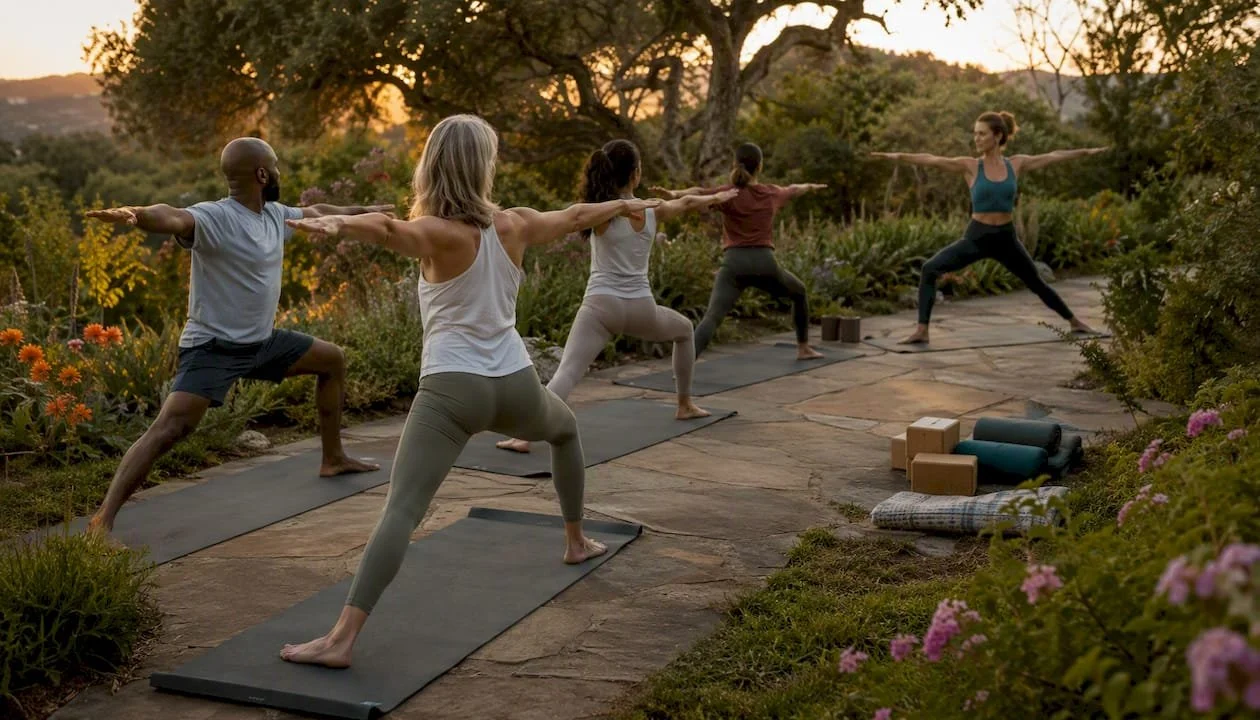
Standing pose series (Warrior I, II, III, crescent lunge) linked without pausing between sides
One important clarification: "hot" and "power flow" are not the same thing. Yoga Design Lab notes that "hot" refers to room temperature, not style. A studio can offer hot power flow (elevated temperature plus power sequencing) or a room-temperature power flow class. The heat is optional; the breath-linked movement is not.
Instructors also vary intensity by adjusting tempo, hold duration, and sequencing focus. A shoulder-focused power flow class looks different from a core-focused one, even at the same studio. That flexibility is a feature, not a flaw.
How does power flow compare to Vinyasa, Ashtanga, Hatha, and Slow Flow?
The differences come down to three things: pace, sequencing structure, and what the class is actually trying to accomplish.
| Style | Pace | Sequencing | Primary goal |
|---|---|---|---|
| Power Flow | Brisk, continuous | Creative, instructor-led | Cardio, strength, moving meditation |
| Vinyasa | Moderate to brisk | Creative, breath-linked | Breath awareness, flexibility, flow |
| Ashtanga | Structured, disciplined | Fixed series (Primary, Intermediate) | Strength, discipline, purification |
| Hatha | Slow to moderate | Pose-by-pose, static holds | Alignment, foundational technique |
| Slow Flow | Deliberate, unhurried | Flowing but paced | Restoration, deep stretching, mindfulness |
Power flow sits closest to vinyasa yoga on the spectrum, but with a deliberate push toward higher cardiovascular output. Where a vinyasa class might pause to explain alignment in warrior II, a power flow class keeps moving. The industry expert framing from Peloton's blog captures it well: Hatha treats the mat as a place for alignment and stillness; power flow treats it as an athletic training ground.
Ashtanga is the style power flow draws from most directly, but Ashtanga follows a fixed sequence that never changes. Power flow instructors build their own sequences, which means the class you take on Tuesday may look nothing like the one on Thursday. That creative variability is the clearest practical difference.
Signals to watch for in class descriptions:
"Dynamic," "athletic," or "strength-building" typically signals power flow territory
"Breath-to-movement" without "slow" or "restorative" usually means moderate-to-high intensity
"Fixed sequence" or "Mysore" points to Ashtanga, not power flow
"Gentle," "restorative," or "yin" indicates the opposite end of the spectrum
What benefits does regular power flow practice deliver?
The physical outcomes from consistent vigorous yoga practice are well-documented. Research summaries link regular vigorous yoga to improved upper-body endurance, reduced cortisol levels, and better body composition after several weeks of consistent practice. An ACE Fitness study found measurable improvements in muscular strength and endurance among yoga practitioners, supporting what power flow teachers observe anecdotally in class.
The primary benefits practitioners report and research supports:
Cardiovascular fitness: the interval-like structure of power flow, bursts of effort with brief transitions, elevates heart rate in a pattern similar to circuit training
Upper-body and core strength: repeated chaturangas, plank holds, and arm balance attempts build functional pushing and stabilizing strength
Flexibility: moving through full ranges of motion under mild muscular load improves active flexibility more effectively than passive stretching alone
Stress reduction: breath-linked movement keeps attention anchored to the present moment; mindfulness for yoga research consistently ties this attentional focus to lower perceived stress
Improved body composition: consistent practice over time tends to reduce fat mass and increase lean muscle, particularly in the core and upper body
Mental clarity: the moving-meditation quality of flow practice trains sustained focus, which practitioners often describe as carrying over into daily life
A realistic timeline: four to eight weeks of two to three sessions per week typically produces noticeable gains in upper-body endurance and a measurable reduction in resting tension. Flexibility improvements often appear sooner, within the first two to three weeks, because the practice moves joints through their full range every session.
What are the real risks and who should be cautious?
Power flow is demanding, and that demand creates specific injury patterns worth knowing before you walk into a class.
Wrist and shoulder strain top the list. Repeated chaturangas load the rotator cuff and wrist extensors in a way that accumulates quickly, especially if alignment breaks down under fatigue. YogaAnatomy's guidance on Chaturanga Dandasana is direct: there is one mechanically sound way to do this transition, and in fast-paced flow classes, instructors may not stop to correct it. That means the correction responsibility falls partly on you.
Other common risks:
Overuse injuries from practicing daily without adequate recovery, particularly in the shoulders, lower back, and knees
Dizziness or lightheadedness from rapid breathwork or overexertion, especially in heated rooms
Heat-related stress if you attend a hot power flow class before your body has adapted to the temperature
Medical contraindications: recent surgery (especially shoulder, wrist, or spine), uncontrolled hypertension, pregnancy (particularly second and third trimesters without prenatal modification), and acute joint inflammation. If any of these apply, consult a clinician before attending a standard power flow class.
Pro Tip: Before your first class, tell the instructor about any injuries or conditions. Ask specifically: "What's the modification for chaturanga if my wrists are sensitive?" A good instructor will give you an immediate answer (drop to knees, use fists, or skip the transition entirely). If they can't, that's useful information about the class.
Who is power flow yoga actually for?
The honest answer: power flow fits people who already have some movement baseline and want both a workout and a mindfulness practice. That does not mean beginners are excluded. It means beginners need to enter with realistic expectations and a willingness to modify.
Good fit indicators:
You have a regular exercise habit (gym, running, cycling, other sports) and want to add flexibility and breath awareness
You find slower yoga classes mentally difficult to sustain because the pace feels too low
You want cardiovascular conditioning without high-impact movement
You are an athlete looking for active recovery that still challenges strength and mobility
Who may prefer a gentler entry point: complete beginners with no movement background, people recovering from injury, those with significant joint hypermobility, and anyone who finds breathwork disorienting at first.
Modifications that keep the practice accessible without gutting the intensity:
Drop to knees in plank and chaturanga to reduce shoulder and wrist load
Use blocks under hands in standing forward folds and low lunges to shorten the lever arm
Skip arm balances and hold the preparatory pose instead
Take child's pose whenever needed, without waiting for the instructor to offer it
MyYogaTeacher's guide to power yoga notes that instructors can adjust tempo, hold duration, and sequencing focus to serve mixed-level groups. A well-run power flow class builds in these options naturally.
What does a typical power flow class look like?
Here is a realistic picture of a 45–60 minute class, broken into its working parts.
Warm-up (minutes 1–10): Child's pose, cat-cow, and seated breathwork to establish the breath rhythm. Two to three rounds of Sun Salutation A at a slower pace to warm the spine and shoulders.
Building heat (minutes 10–20): Sun Salutation B rounds, adding Warrior I and crescent lunge. Pace picks up. Chaturanga transitions begin repeating. Heart rate climbs into a moderate aerobic zone.
Standing flow sequence (minutes 20–35): Linked standing poses: Warrior II, extended side angle, triangle, half-moon. The sequence flows from one side to the other without stopping. This is the cardiovascular peak of most classes.
Peak pose work (minutes 35–45): Arm balance or inversion attempt (crow, headstand prep, or wheel depending on level). Instructors often build toward one challenging pose through a short preparatory sequence.
Floor sequence and cool-down (minutes 45–55): Boat pose, bridge or wheel, pigeon for hip opening, supine twists. Pace drops significantly. The body begins to recover.
Savasana (final 5 minutes): Complete stillness. This is not optional filler; it is where the nervous system integrates the session's work.
Common poses across nearly every power flow class: Downward-Facing Dog, Plank, Chaturanga, Upward-Facing Dog, Warrior I and II, Triangle, Crescent Lunge, and Pigeon. International Yoga Conference's power flow overview describes this interval-like structure, with bursts of effort and brief transitions, as the defining rhythm of the style.
How to start power flow yoga safely: a 4-week beginner plan
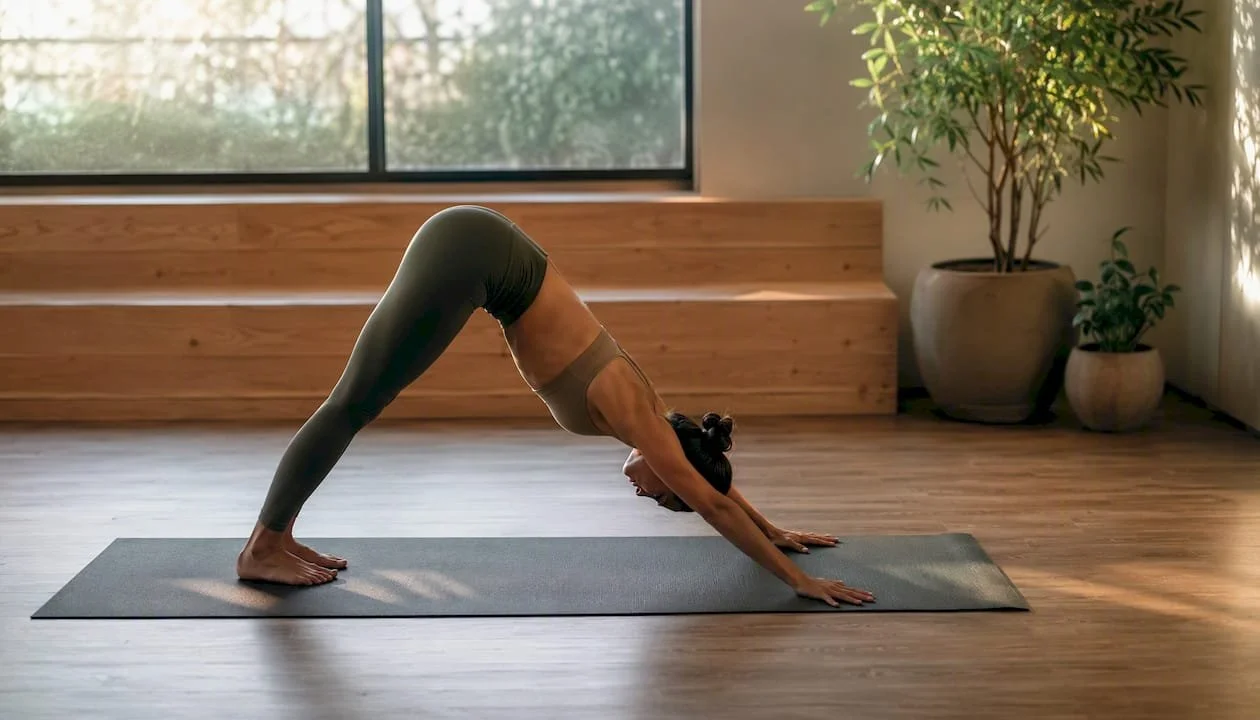
Starting with short sessions is not a compromise. It is the right call. Yoga Rove's beginner power yoga guide recommends exactly this: short routines one to two times per week, using a non-slip mat and props, with instructors informed to offer step-down options.
4-week starter plan:
Week 1: Two sessions of 15–20 minutes. Focus on Sun Salutation A only. Practice chaturanga with knees down every time. Rest at least two days between sessions.
Week 2: Two sessions of 20–25 minutes. Add Sun Salutation B. Attempt one standing pose series (Warrior I and II on each side). Still use knee drops in chaturanga unless wrists feel stable.
Week 3: Two to three sessions of 25–30 minutes. Add a short standing flow (three to four poses linked). Try one chaturanga without knee drop per round, then drop knees for the rest.
Week 4: Three sessions of 30–40 minutes. Attend a beginner-labeled studio class or follow a structured online sequence. Communicate your level to the instructor before class starts.
Equipment checklist:
Non-slip yoga mat (this is non-negotiable in a sweaty class)
Two yoga blocks for hand support in standing poses and low lunges
A strap for hamstring stretches and shoulder openers in the cool-down
A small towel if the room is heated or you run warm
Water bottle, filled before class
Safety rules for first classes: skip heated rooms until you have completed at least four weeks of room-temperature practice. Tell the instructor your experience level before class. Never push through sharp joint pain; dull muscular fatigue is normal, sharp pain is a signal to stop.
What does the evidence say about vigorous yoga?
The research base for vigorous yoga is growing, and the findings are consistent enough to be useful without overstating them.
A 2018 PubMed study found that regular yoga practice produced meaningful improvements in muscular strength and endurance. A 2016 PubMed review linked yoga practice to reductions in cortisol, the primary stress hormone, with effects comparable to other mind-body interventions. A PMC review found that yoga interventions improved body composition and cardiovascular markers across multiple study populations.
Key evidence-based takeaways for practitioners:
Practicing a few sessions per week appears to be the threshold at which measurable strength and flexibility gains emerge in most studies
Cortisol reductions are observed even in shorter practice periods (six to eight weeks), suggesting stress benefits arrive before peak fitness gains
Harvard Health notes that rhythmic, breath-linked exercise activates the parasympathetic nervous system, which is the physiological mechanism behind yoga's stress-reduction effect
The U.S. Department of Health and Human Services Physical Activity Guidelines recommend 150 minutes of moderate-intensity or 75 minutes of vigorous-intensity activity per week; three 45-minute power flow sessions comfortably meets the vigorous threshold
What the research does not yet tell us: optimal session length, ideal frequency for injury prevention, or how power flow specifically compares to other vigorous yoga styles in head-to-head trials. The evidence supports vigorous yoga broadly; the power flow label is a studio category, not a research variable.
Key Takeaways
Power flow yoga is a vigorous, breath-linked practice that builds cardiovascular fitness and muscular strength simultaneously, making it one of the most efficient hybrid workouts available in a studio setting.
| Point | Details |
|---|---|
| Core definition | Power flow links postures to breath in continuous sequences, emphasizing cardio and strength over static holds. |
| Beginner entry point | Start with 15–20 minute sessions one to two times per week, using blocks and knee drops to protect joints. |
| Evidence base | Studies link regular vigorous yoga to reduced cortisol, improved strength, and better body composition after six to eight weeks. |
| Key risks | Wrist and shoulder strain from repeated chaturangas; skip heated rooms until you have four weeks of baseline practice. |
| Amritayogawellness | Amrita Yoga & Wellness in Philadelphia offers power flow and related classes with instructor guidance suited to mixed-level groups. |
A teacher's honest perspective on what power flow actually demands
The most common misunderstanding about power flow yoga is that it is just a faster vinyasa class. Speed is not the point. Rhythm is.
When a class is running well, the breath is the metronome and the movement follows it, not the other way around. Students who try to keep up visually, matching what the person next to them is doing, tend to lose the breath connection within the first ten minutes. Once that happens, the practice becomes exercise with yoga shapes, which is fine, but it is not what power flow is designed to deliver.
The mindfulness techniques that underpin a strong power flow practice are the same ones that make it sustainable long-term. Practitioners who learn to pace themselves by breath rather than by visual cues report fewer injuries, better recovery between sessions, and a qualitatively different experience of the class. They also tend to stay with the practice longer.
There is also a sequencing reality that beginning students rarely hear: even in a beginner-labeled class, instructors may not stop to break down chaturanga. The pace of a flow class works against detailed technical correction. That is not negligence; it is the nature of the format. The practical implication is that you should learn the mechanics of chaturanga, plank, and downward dog before you walk into a power flow class, not during it. Ten minutes with a video or a single private session is enough to get the fundamentals right and protect your shoulders for the long term.
Power flow works. The evidence supports it, and the experience of thousands of practitioners confirms it. But it works best when you enter it with patience, a willingness to modify, and enough body awareness to know the difference between productive discomfort and a warning signal.
Amrita Yoga & Wellness offers guided power flow in Philadelphia
If you have read this far and want to experience power flow with an instructor who can cue modifications in real time, Amrita Yoga & Wellness in Philadelphia offers exactly that. Drop-in classes, beginner series, and private sessions give you options depending on where you are starting from. Guided instruction cuts the learning curve significantly: an instructor watching your chaturanga alignment in the first class can prevent the shoulder strain that sidelines self-taught practitioners weeks later.
Amrita Yoga & Wellness also offers a range of complementary wellness services, from hot yoga to massage therapy, that pair naturally with a power flow practice for recovery and stress management. Whether you are brand new or returning after a break, the studio's class descriptions include level guidance so you can choose the right entry point.
Book a class or explore the full schedule at Amrita Yoga & Wellness and tell the front desk it is your first power flow class. That one sentence gets you the modifications you need from the start.
Selected sources and further reading
The following sources informed this article and are worth reading directly if you want to go deeper on any specific topic.
Peloton Blog: What Is Power Yoga? — Accessible overview of power yoga's lineage and its relationship to Ashtanga and vinyasa.
YogaAnatomy: Chaturanga Dandasana — Detailed anatomical breakdown of the most technically demanding transition in power flow; essential reading before your first class.
PubMed: Yoga and muscular strength (2018) — Peer-reviewed study on strength and endurance outcomes from regular yoga practice.
PubMed: Yoga and cortisol reduction (2016) — Review of yoga's effects on stress hormones across multiple study populations.
NIH/PMC: Yoga and body composition — Systematic review of yoga's effects on body composition and cardiovascular markers.
Harvard Health: Exercising to Relax — Explains the parasympathetic nervous system mechanism behind breath-linked exercise and stress reduction.
U.S. Department of Health and Human Services: Physical Activity Guidelines — The federal benchmark for vigorous physical activity that power flow practice can meet.
This article is general information, not medical or fitness advice. If you have a health condition, recent injury, or are pregnant, consult a qualified clinician before starting a vigorous yoga practice.
Recommended
Chair Yoga for Seniors: 10 Poses and a 15-Minute Routine
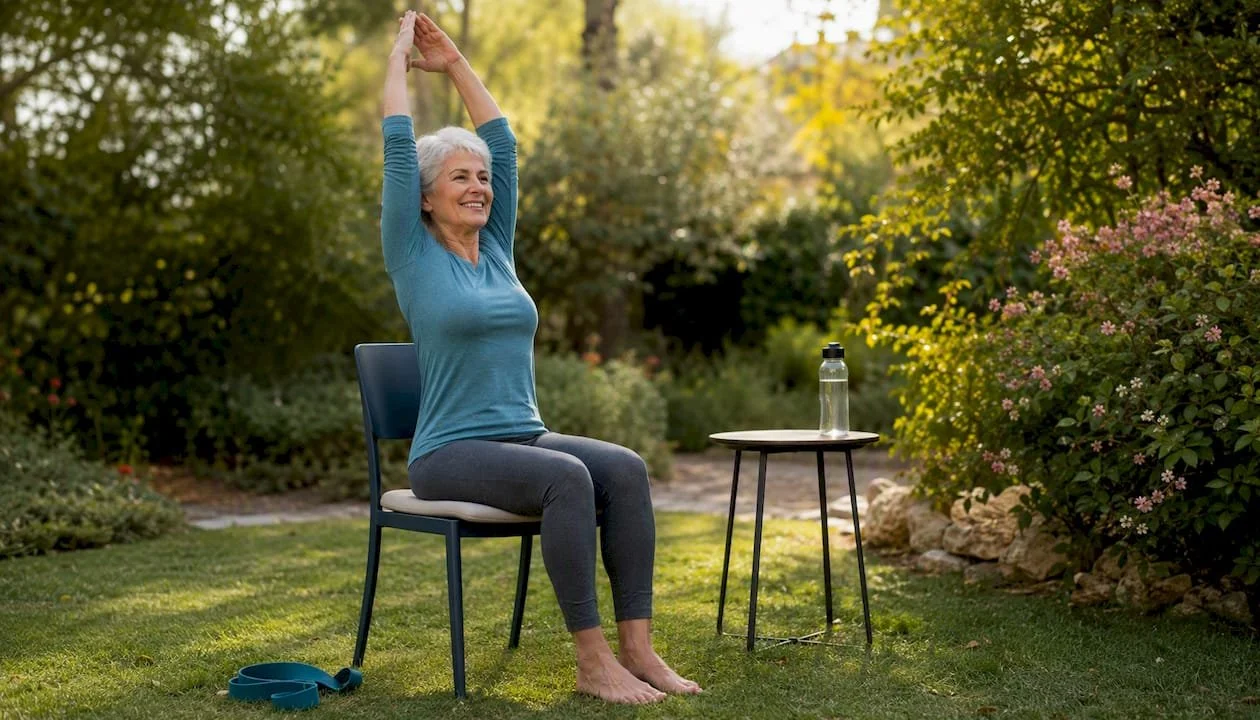
Chair yoga for seniors is a seated or chair-supported yoga practice that adapts classic poses, breathing, and mindfulness for older adults who want safe, effective movement without getting on the floor. Harvard Health describes it as a mind-body practice that incorporates gentle stretches, strength-building poses, breathing techniques, and mindfulness. Start with short sessions several times a week. Small clinical programs have reported measurable improvements in pain, fatigue, and daily function, so even modest, regular sessions add up. Amrita Yoga & Wellness offers guided chair yoga classes in Philadelphia for exactly this kind of beginning.
Table of Contents
Who should try chair yoga and when to check with a clinician first
What the research says and why Amrita Yoga & Wellness is a trusted resource
What chair yoga for seniors actually is
Chair yoga is not simply stretching in a seat. It is a full yoga practice, adapted so that every element of a traditional class, including breath work, movement, balance training, and relaxation, can be done safely with a chair as support.
The four core elements are:
Breath work (pranayama): Controlled breathing that calms the nervous system and trains the diaphragm to work more efficiently than shallow chest breathing.
Gentle movement: Seated and standing poses adapted from traditional yoga, modified so joints move through a safe, comfortable range.
Balance support: The chair acts as a stable base, replacing the floor mat and reducing fall risk during standing work.
Mindfulness and relaxation: Guided attention to body sensation, breath, and stillness, the same mental-health component found in any yoga class.
The practice covers two distinct modes: fully seated poses where the chair is the platform, and standing poses where one hand rests on the chair back for balance. Many classic mat poses, from cat-cow to forward folds to twists, translate directly to a chair with minor adjustments. That scope is wider than most beginners expect, and it is what separates chair yoga from a simple stretching routine.
Benefits of chair yoga that go beyond flexibility
The physical gains are real and well-documented. Regular practice builds functional strength, the kind that makes it easier to stand from a sofa, carry groceries, or climb stairs. It improves joint mobility, posture, and circulation. Research shows that small clinical programs report reduced pain and fatigue, better ability to perform daily activities, and greater stress reduction compared with some other activity programs.
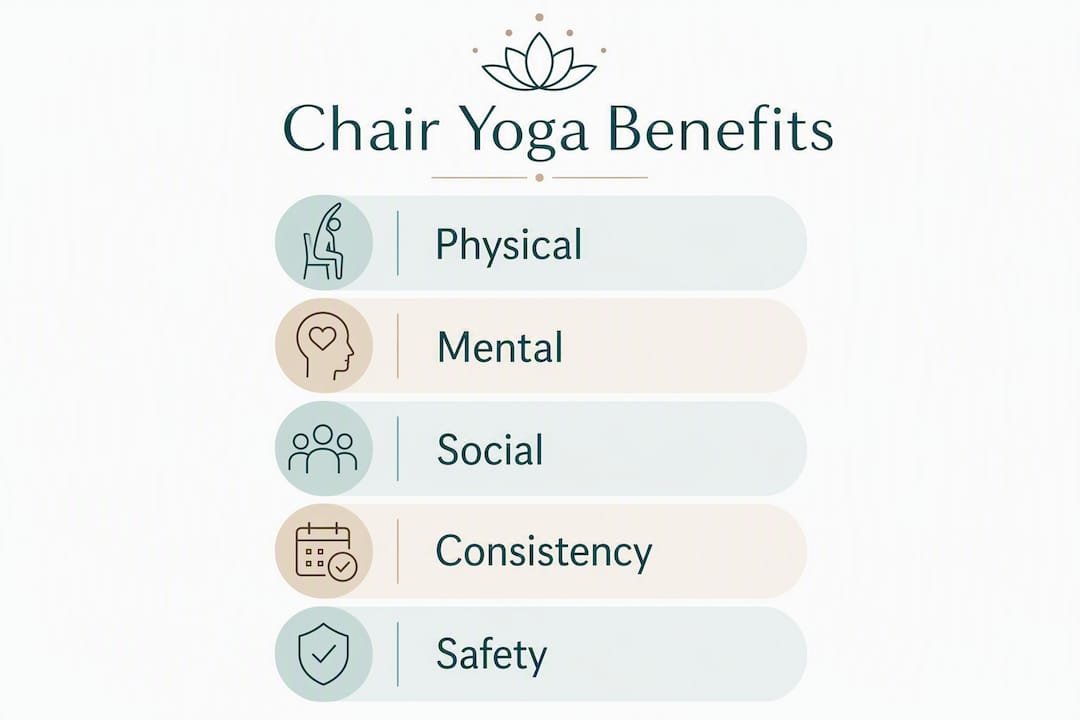
The mental benefits are just as significant. Harvard Health notes that chair yoga supports improved sleep, lower stress, and better mood, outcomes that matter enormously for older adults managing chronic conditions or caregiver fatigue. Breathing practices slow the heart rate and activate the parasympathetic nervous system, which is the body's rest-and-digest mode. That shift is cumulative: the more consistently you practice, the more resilient your baseline stress response becomes.
Group classes add a third layer. Community participation is frequently cited as a key factor in adherence and in reducing the social isolation that often accompanies aging. Showing up to a class, even a short one, creates accountability and connection that solo practice rarely matches.
Pro Tip: Consistency beats intensity every time. Three 15-minute sessions a week will produce more lasting benefit than one long session on the weekend.
Who should try chair yoga and when to check with a clinician first
Chair yoga suits a wide range of people: seniors with balance concerns, anyone recovering from a fall or minor injury, beginners who have never done yoga, people with arthritis or joint stiffness, and those who simply find floor-based practice uncomfortable or intimidating. Caregivers can practice alongside the people they support, which makes sessions easier to sustain.
That said, certain conditions call for a quick conversation with a doctor or physical therapist before starting:
Recent surgery (hip replacement, shoulder repair, abdominal procedures): some movements may be restricted during recovery.
Uncontrolled high blood pressure: inverted positions and breath retention can spike pressure temporarily.
Advanced osteoporosis: deep spinal flexion and forceful twists place torque on vertebrae; hip-hinge movements with a straight back are safer.
Severe vertigo: head movements and transitions between positions may trigger symptoms.
Acute joint inflammation: active flare-ups need rest, not loaded movement.
Cooperative Extension resources recommend treating chair yoga as part of a broader fitness program that includes flexibility and balance work, not a replacement for medical guidance.
Pro Tip: Before your first class, write a two-sentence note listing your main health conditions and any movements your doctor has told you to avoid. Hand it to the instructor before the session starts.
How to set up safely before your first session
Getting the setup right removes most of the risk before you move a single muscle.
Chair: Choose a sturdy, armless chair that does not roll or wobble. Medical News Today specifically warns against chairs with arms or wheels. If your feet do not reach the floor flat, place a folded blanket or stable block under them to establish a firm base.
Space: Clear a two-foot radius around the chair. Good lighting matters more than most people realize, especially for transitions between seated and standing. Keep a phone within reach.
Footwear: Bare feet or non-slip socks give better ground contact than shoes with thick soles. If balance is a concern, supportive shoes with flat soles are fine.
Optional props: A yoga strap or resistance band for seated stretches, a small cushion for lumbar support, and a folded blanket for under the feet if needed.
Frequency and duration: Start with 10–20 minutes, three to five days per week. The key rule on pain: a mild stretch sensation is fine; sharp, stabbing, or joint pain means stop and reassess.
10 chair yoga poses with step-by-step instructions
Work through these in order for a complete session, or pick individual poses to address specific areas. Each one includes a simpler modification and a small progression when you are ready.
1. Seated mountain (Tadasana) Sit tall at the front half of the chair, feet flat, hands on thighs. Press down through both sitting bones equally. Lengthen the spine on an inhale, relax the shoulders on an exhale. Hold for five breaths. Easier: rest your back against the chair. Progression: lift both hands overhead and hold for three breaths.
2. Seated cat-cow Hands on knees. Inhale, arch the back and lift the chest (cow). Exhale, round the spine and drop the chin (cat). Move slowly, five to eight rounds. Easier: reduce the range of motion to a gentle nod. Progression: add a slow side-to-side sway between rounds.
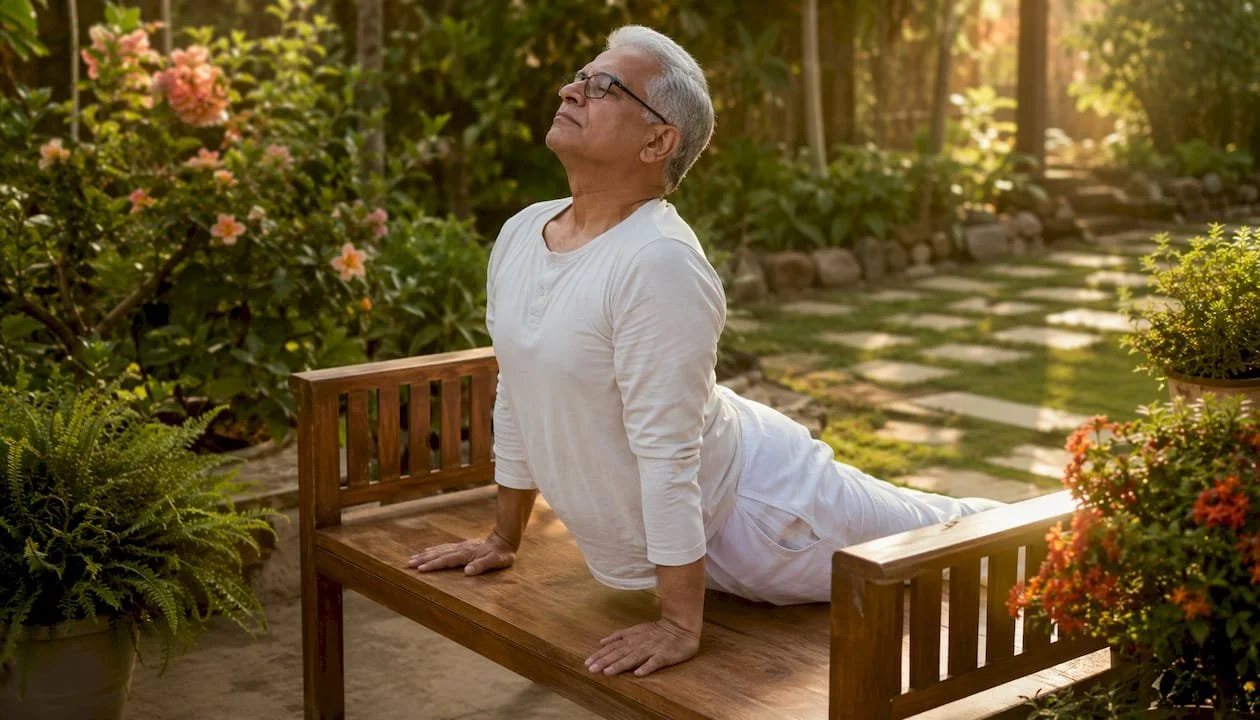
3. Seated twist Sit tall, place the right hand on the outside of the left knee and the left hand on the chair back. Inhale to lengthen, exhale to rotate left. Hold three breaths, then switch sides. Easier: keep both hands on the knees and rotate only the head. Progression: extend the top arm behind you to deepen the shoulder opening.
4. Seated forward fold (hip hinge) Feet hip-width apart. Inhale tall, then hinge forward from the hips with a straight back, letting hands slide down the shins. Hold three breaths. Easier: place hands on thighs and hinge only slightly. Progression: reach hands toward the floor, keeping the spine long.
5. Seated side bend Right hand on the seat edge, left arm sweeps overhead and arcs to the right. Hold two breaths, return, repeat on the other side. Easier: rest the raised arm on the head instead of extending it. Progression: add a slow breath-led pulse at the end range.
6. Seated figure-4 hip opener Cross the right ankle over the left knee. Sit tall and gently press the right knee toward the floor. Hold five breaths, then switch. Easier: keep the ankle lower on the shin rather than at the knee. Progression: hinge forward from the hips while maintaining the cross to deepen the stretch.
7. Seated leg lifts Hands on the seat edge for support. Inhale and lift the right leg until it is parallel to the floor. Exhale and lower slowly. Eight to ten reps per side. Easier: lift only a few inches. Progression: hold the lifted position for three counts before lowering.
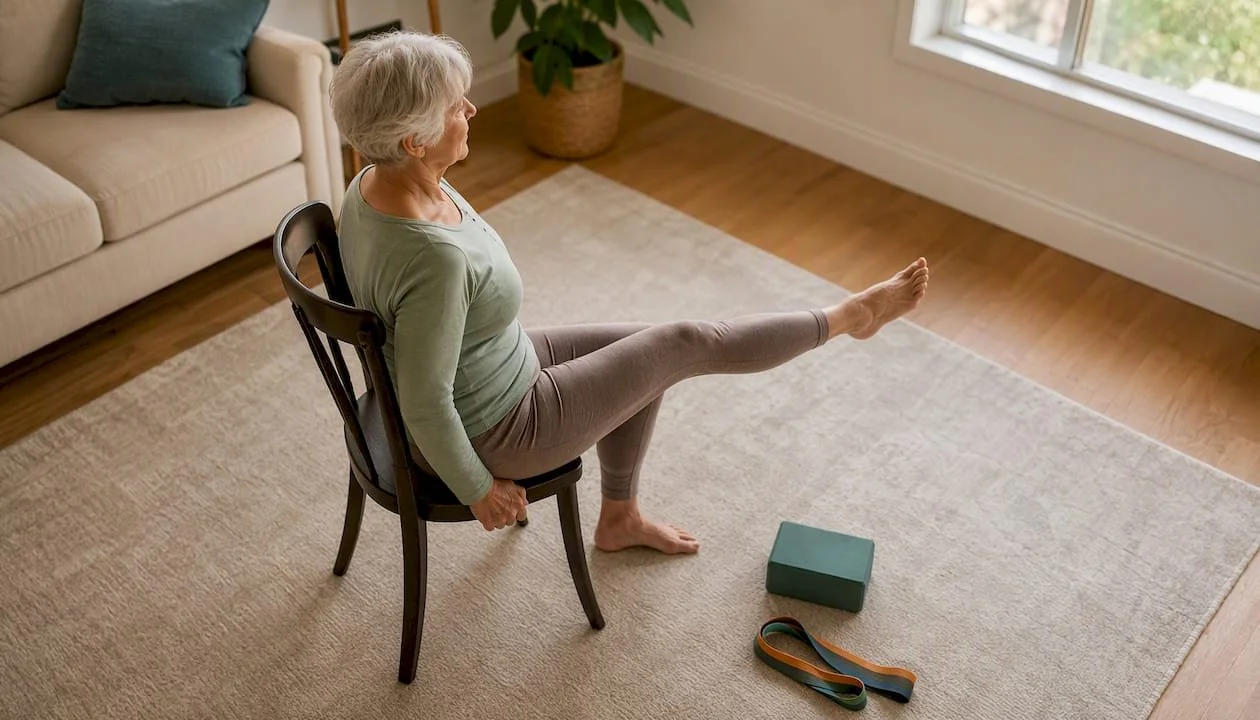
8. Heel-toe rocks (ankle mobility) Both feet flat. Lift both heels, hold two counts, lower. Then lift both toes, hold two counts, lower. Ten rounds. Easier: alternate one foot at a time. Progression: add a slow calf raise, rising onto the balls of both feet.
9. Seated chest opener and shoulder rolls Interlace fingers behind the back or grip the seat edge. Inhale and draw the shoulders back and down, opening the chest. Hold three breaths. Follow with five slow shoulder rolls forward, then five backward. Easier: simply squeeze the shoulder blades together without the hand grip. Progression: hold the chest-open position while turning the head slowly side to side.
10. Seated breath and relaxation Close the eyes or soften the gaze. Place one hand on the belly. Inhale for four counts, exhale for six counts. Repeat eight to ten cycles. For a slightly more structured option, try alternate nostril breathing: close the right nostril with the thumb, inhale left, close the left with the ring finger, exhale right, then reverse. Easier: skip the nostril work and simply focus on lengthening the exhale. Progression: extend the exhale to eight counts.
Pro Tip: Move at the pace of your breath, not the pace of the clock. If a pose requires you to hold your breath to maintain it, you have gone too far.
For more chair yoga poses for beginners, Amritayogawellness has a growing library of step-by-step posts.
How to adapt poses and progress safely over weeks
The most common mistake in any new practice is adding too much too soon. A slow, range-of-motion-focused approach teaches the nervous system that movement is safe before asking for more range or strength. That neurological trust-building is what makes progress stick.
To make a pose easier: reduce the range of motion, shorten the hold time, keep both feet firmly on the floor, or use a strap to bridge the gap between your hands and your feet.
To progress safely: add one or two more repetitions per week, introduce a light resistance band for seated leg or arm work, shift from fully seated to supported standing for balance poses, or slow the tempo down deliberately, since slower movement under control is harder than fast, momentum-driven movement.
The 24-hour rule: notice how your body feels the morning after a session. Mild muscle tiredness is normal. Sharp joint pain, new swelling, or lingering soreness that lasts more than two days means the session was too intense. Dial back and rebuild.
Pro Tip: Keep a simple one-week log: date, session length, a 1–5 effort rating, and any pain or unusual symptoms. After a week you will have a clear picture of what your body tolerates and where to push.
A ready-to-use 15-minute seated routine
This sequence follows the poses above. Read through it once before you start.
Warm-up (3 minutes)
Seated mountain, 5 breaths
Heel-toe rocks, 10 rounds
Shoulder rolls, 5 forward and 5 backward
Mobility and stretching (8 minutes)
Seated cat-cow, 8 rounds (about 90 seconds)
Seated side bend, 2 breaths each side, 2 rounds
Seated figure-4 hip opener, 5 breaths each side
Seated forward fold, 3 breaths, twice
Strength and balance (2 minutes)
Seated leg lifts, 8 reps each side
Seated chest opener, hold 3 breaths, twice
Relaxation and breath (2 minutes)
Seated breath work, 8–10 slow cycles with a lengthened exhale
To shorten the routine to 10 minutes, drop the second round of the forward fold and reduce leg lifts to five reps. To extend to 20 minutes, add the seated twist and a second round of cat-cow, and hold the relaxation breath for four minutes.
Safety tips and red flags to know before you start
Most chair yoga sessions are uneventful, but knowing the warning signs in advance means you can act quickly if something feels wrong.
Stop and seek medical advice if you experience:
Sudden chest pain or pressure during or after practice
Severe shortness of breath that does not resolve within a minute of rest
New, sharp joint pain (distinct from a stretch sensation)
Lightheadedness or dizziness that does not pass after sitting quietly for two minutes
Numbness or tingling in the arms or legs
Common mistakes that cause problems:
Using a wheeled office chair or a soft armchair that shifts under load
Forcing a pose past the point of discomfort to "get deeper"
Holding the breath during effort, which raises blood pressure and reduces stability
Skipping the warm-up and going straight into deeper stretches
Healthlinestresses that an armless, non-rolling chair and a conversation with a healthcare professional when appropriate are the two most practical safety steps for seniors starting out.
Pro Tip: Test your chair before every session: press down firmly on the seat and push sideways on the back. If it shifts or wobbles, find a different chair before you start.
What the research says and why Amrita Yoga & Wellness is a trusted resource
The evidence base for chair yoga is growing. The table below summarizes the types of study protocols that have been evaluated.
| Study type | Duration | Primary outcome |
|---|---|---|
| Small clinical trial | — | Reduced pain and fatigue; better daily function |
| Community program evaluation | Small clinical program | Improved ability to perform daily activities |
| Stress-reduction program | 6-week program | Measurable reduction in reported stress |
These are small studies, and the field needs larger randomized trials. But the direction of findings is consistent: regular chair-yoga programs produce measurable improvements in pain, fatigue, stress, and daily function for older adults.
Yoga Journal's benefits overview adds an important framing point: research shows we may lose as much as eight percent of our muscle mass each decade, a condition called sarcopenia, and strength training through yoga, including chair yoga, can help prevent and potentially reverse that loss.
Amritayogawellness brings this evidence to life through guided classes in Philadelphia. The studio's chair yoga resources cover both the practical and the mindfulness dimensions of the practice, with content designed for beginners and for caregivers supporting older adults.
Key Takeaways
Chair yoga for seniors delivers real physical and mental benefits through short, consistent seated sessions that require nothing more than a stable armless chair.
| Point | Details |
|---|---|
| What it is | Seated or chair-supported yoga adapting classic poses, breath, and mindfulness for older adults. |
| Top benefits | Reduces pain and fatigue, improves daily function, supports sleep, mood, and stress resilience. |
| Safety first | Use a sturdy armless chair; consult a clinician for recent surgery or uncontrolled conditions. |
| How to start | Begin with 10–20 minutes, three to five days per week; use the 15-minute routine above. |
| Guided practice | Amritayogawellness offers beginner-friendly chair yoga classes and resources in Philadelphia. |
Why chair yoga deserves more credit than it gets
The yoga world has a quiet bias toward the floor. Advanced poses, deep backbends, inversions — these are what fill the magazine covers. Chair yoga sits in the background, often treated as a consolation prize for people who "can't do real yoga." That framing is wrong, and it costs people real health gains.
Seated practice allows for precise, therapeutic joint work that is genuinely difficult to replicate on a mat. With a stable base under you, the nervous system relaxes its protective guarding, and a skilled teacher can guide hip and spinal mobility work that translates directly to safer, easier everyday movement. That is not a lesser version of yoga. It is a different tool, and for many older adults, it is the more effective one.
The social dimension is underrated too. Showing up to a group class, even a gentle one, creates a rhythm. That rhythm is what separates people who practice for a week from people who practice for years. If you are a caregiver helping someone start, prioritize finding a class over finding the perfect home routine. The community does work the mat cannot.
Amritayogawellness's yoga for seniors programming reflects exactly this philosophy: accessible, consistent, and built around what actually helps people move better and feel steadier in their daily lives.
Try a guided chair yoga class at Amrita Yoga & Wellness
Reading about chair yoga and doing it are two different things. The 10 poses and 15-minute routine above give you a solid starting point, but a live instructor catches the alignment details a written guide cannot: the shoulder that creeps up, the breath that stops during effort, the chair that is slightly too high.
Amritayogawellness offers accessible classes in Philadelphia designed for beginners and older adults, with instructors who understand how to adapt poses for individual needs. Whether you are starting for yourself or supporting someone you care for, the studio's beginner-friendly schedule makes it easy to find a session that fits. Visit amritayogawellness.com to browse class times, ask about accessible options, or book an introductory session.
Useful sources and further reading
Harvard Health: Chair Yoga — The most cited clinical overview; covers study protocols, mental health benefits, and safety guidance.
Medical News Today: Chair Yoga for Seniors — Practical benefits and pose guidance with clear equipment safety notes.
Yoga Journal: Chair Yoga Poses — Pose-by-pose adaptation guide covering both seated and standing chair-supported options.
Yoga Journal: Benefits of Chair Yoga — Teacher-written overview of physical, mental, and social benefits with notes on sarcopenia and balance.
YogaUOnline: Slow Chair Yoga — Explains the neurological rationale for slow, range-of-motion-focused practice and how it builds lasting mobility.
Healthline: Chair Yoga for Seniors — Accessible safety checklist and pose descriptions for beginners.
UAEX Cooperative Extension: Chair Yoga — Positions chair yoga within a broader senior fitness program including balance and flexibility work.
Amrita Yoga & Wellness: Chair Yoga Blog — Studio-specific posts, class notes, and guided resources for seniors beginning chair yoga in Philadelphia.
This article is general information, not medical advice. Confirm whether specific movements are appropriate for your health conditions with your physician or a qualified physical therapist before starting a new exercise program.
Recommended
Heated Vinyasa Yoga Benefits: What the Research Shows
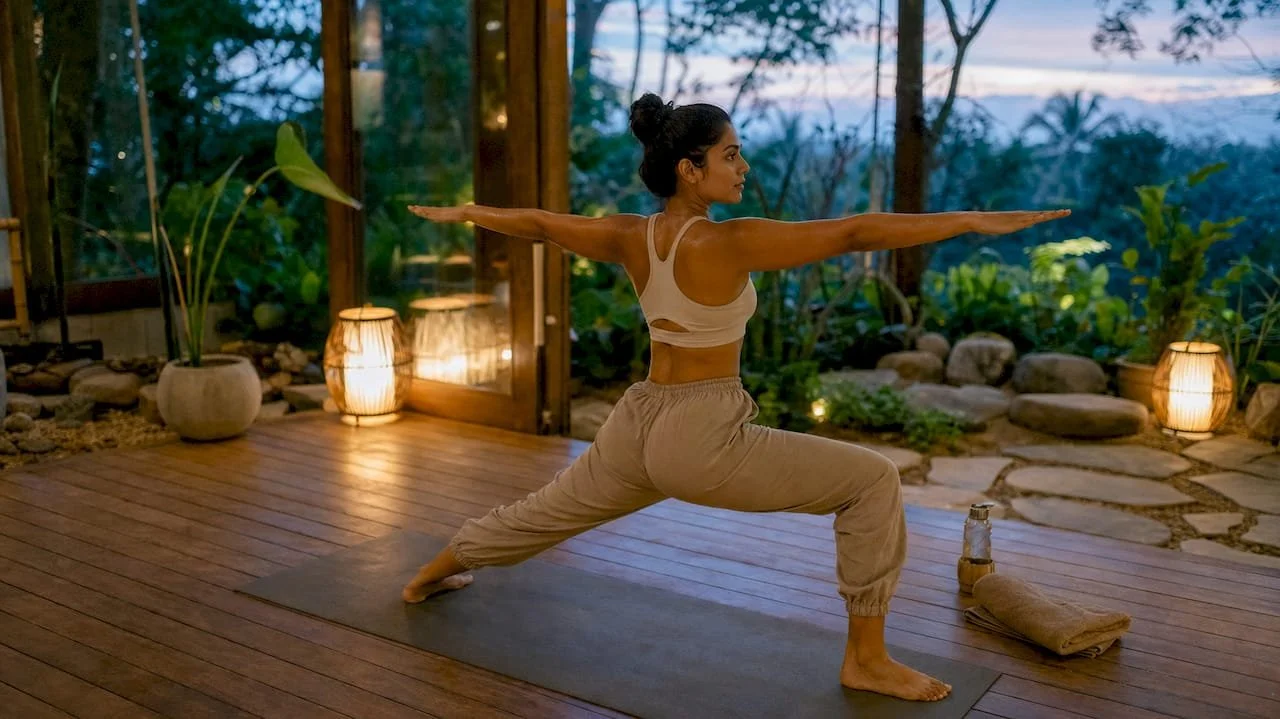
TL;DR:
Heated vinyasa yoga offers benefits like improved flexibility, balance, and mental health, but it carries risks for certain individuals. Most healthy adults can practice safely with gradual acclimation, proper hydration, and attentive monitoring. Evidence supports flexibility and balance gains, while cellular stress responses differentiate hot from normal yoga effects.
Heated vinyasa yoga delivers real, measurable physical and mental benefits — faster flexibility gains, improved balance, a meaningful cardiovascular stimulus, and reduced perceived stress — but it carries genuine risks for people with heart disease, pregnancy, heat intolerance, or dehydration. Most healthy adults can practice it safely with a gradual acclimation plan and attentive body-signal monitoring.
Primary benefits at a glance:
Flexibility and range of motion: Heat softens connective tissue, and studies consistently show flexibility gains with chronic practice.
Balance and functional strength: Randomized trials report significant single-leg balance improvements and modest isometric strength gains over 8-week programs.
Cardiovascular and cellular stimulus: Heated sessions raise heart rate and core temperature and, in some protocols, increase HSP70 expression in immune cells — a cellular stress-adaptation marker.
Mood and stress reduction: Research links regular hot yoga practice to lower perceived stress and improved quality of life, particularly in inactive or stressed adults.
Bone mineral density: The 2025 systematic review found chronic practice associated with bone-density improvements across 43 studies and 942 participants.
Safety headline: Avoid heated classes if you are pregnant, have heart disease, take medications that impair heat regulation, or have a history of heat illness. If any of those apply, consult a clinician before stepping into a hot room. For everyone else: start slow, hydrate early, and treat breathlessness or dizziness as a hard stop signal.
Table of Contents
Physical benefits explained: what the research actually supports
Mental and emotional benefits: stress, mood, and what heat actually adds
Who should avoid heated vinyasa and how to recognize heat illness
How to get started: practical steps for your first heated vinyasa class
What heated vinyasa yoga is and how it differs from Bikram
Heated vinyasa (sometimes called hot vinyasa) is a flow-based yoga practice performed in a warm or hot room. Unlike Bikram yoga, which follows a fixed 26-posture sequence in a room held at exactly 105°F and 40% humidity for 90 minutes, heated vinyasa classes vary the sequence, the teacher, and often the temperature. That flexibility is part of the appeal — and part of why the research picture is messier.
According to the 2025 systematic review, typical hot-yoga sessions across 43 studies lasted a variable duration at temperatures within a wide range that reflects real studio variation, with humidity varying as well. Those are wide bands and reflect real studio variation. A "warm" vinyasa class might run at 86°F; a hot vinyasa class at a more intense studio might push toward 100°F or above.
| Feature | Heated vinyasa | Bikram yoga |
|---|---|---|
| Sequence | Variable, teacher-led flow | Fixed 26-posture sequence |
| Class length | Typically 20–90 minutes | 90 minutes |
| Temperature range | ~86–105°F (varies by studio) | ~105°F / 40% humidity |
| Humidity control | Often not strictly controlled | Precisely maintained |
| Research representation | ~2% of hot-yoga studies | Majority of the literature |
One important caveat: vinyasa comprised approximately 2% of the hot-yoga methods studied in the systematic review. Most of what researchers know comes from Bikram trials. That does not mean heated vinyasa lacks benefits — it means the evidence is extrapolated more than it is direct.
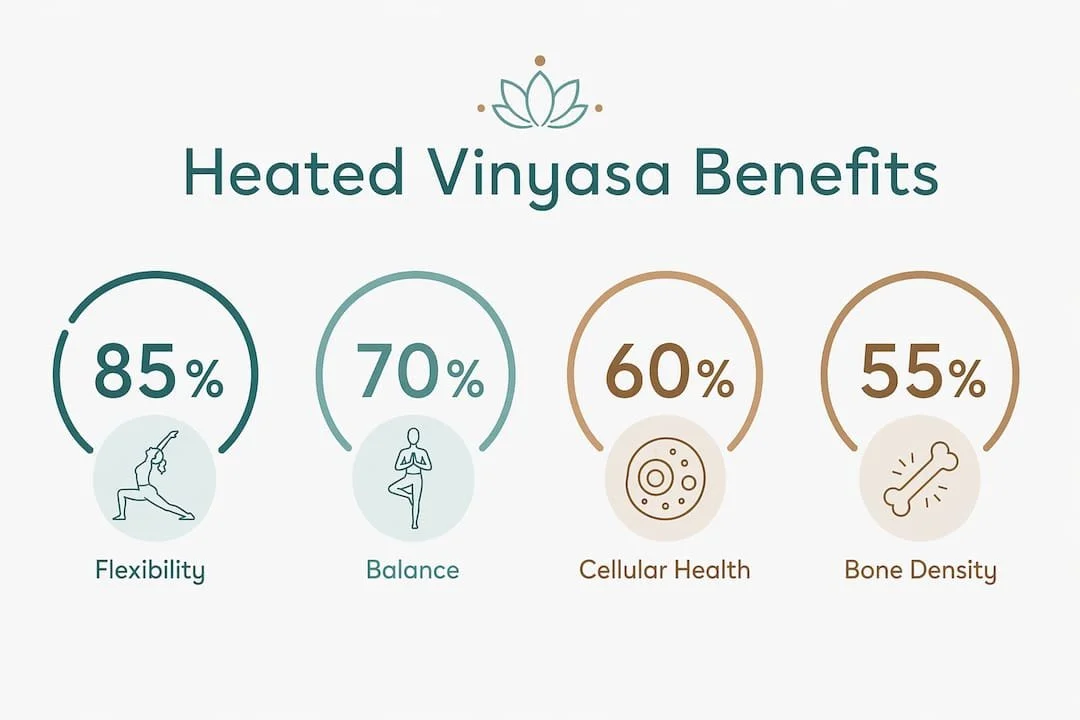
Physical benefits explained: what the research actually supports
Heat changes the body's mechanical and physiological environment in ways that matter for yoga practice. The Cleveland Clinic notes that warmth helps lubricate tendons and ligaments, making stretches more accessible — but also raising the risk of overexertion if practitioners push too hard.
Flexibility and range of motion show the most consistent evidence. Heat reduces tissue stiffness acutely, and chronic practice compounds that with genuine neuromuscular adaptation. Across the studies reviewed, flexibility improvements were among the most reliably reported outcomes.
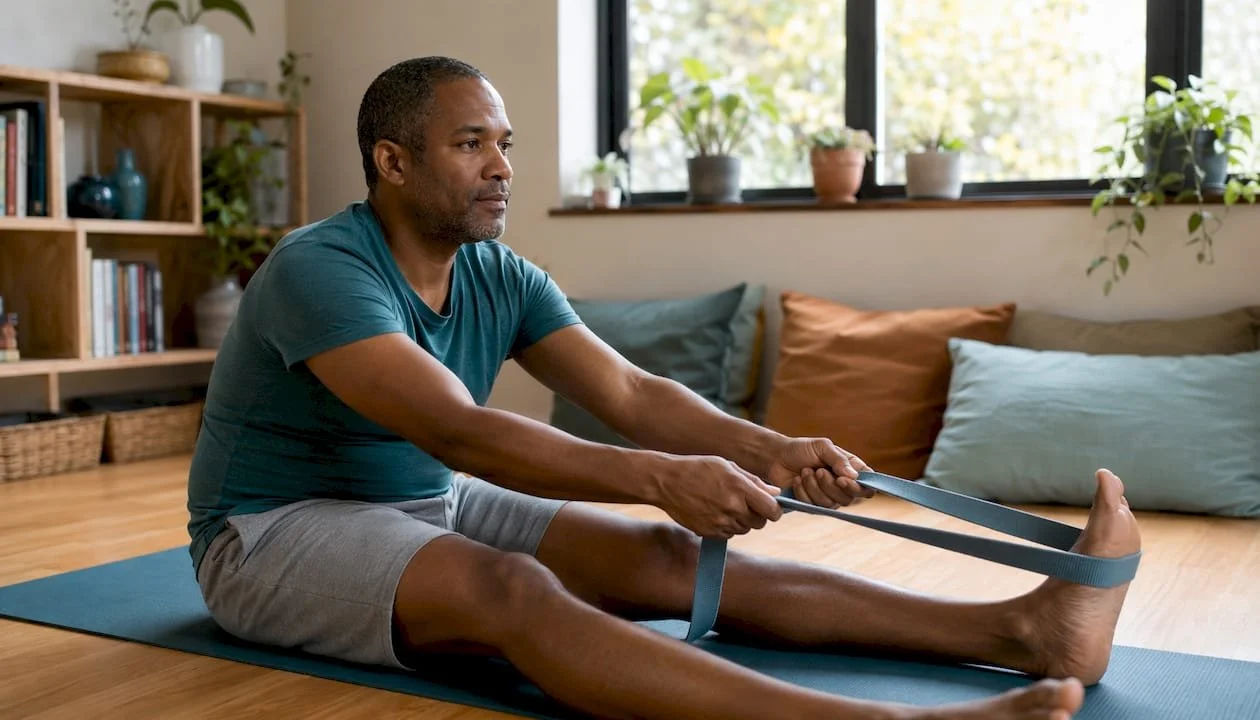
Balance and functional strength also have solid backing. One protocol that produced measurable gains ran 8 weeks at three sessions per week; reported improvements included a 13% increase in isometric strength and large improvements in single-leg balance in some randomized controlled trials. Those are meaningful numbers for everyday functional health, not just yoga performance.
Cardiovascular and cellular adaptations are more nuanced. Heated sessions raise core temperature and heart rate acutely, but the Sports Medicine systematic review found that hot yoga does not necessarily increase overall energetic demands compared with non-heated yoga. The heat adds a thermoregulatory stress, not simply more calories burned. In one randomized study, 12 sessions of hot yoga increased expression of HSP70 (a cellular heat-shock protein tied to stress adaptation) in peripheral blood cells, while BDNF — a neural growth factor — rose across yoga groups regardless of temperature.
Bone mineral density improvements appeared in chronic interventions (6–36 sessions), which is a meaningful finding for adults concerned about long-term skeletal health.
| Benefit | Evidence strength | Notes |
|---|---|---|
| Flexibility / range of motion | Consistent positive evidence | Acute and chronic effects both documented |
| Balance | Consistent positive evidence | Large improvements in some RCTs |
| Functional strength | Moderate evidence | Isometric gains in 8-week protocols |
| Bone mineral density | Moderate evidence | Chronic practice (6+ sessions) required |
| Aerobic fitness (VO2max) | Limited / mixed | Some trials show modest gains; others show none |
| Body composition | Limited / mixed | Inconsistent across studies |
Pro Tip: In a heated class, your body will feel more open than it actually is. Stop a stretch when you feel mild tension, not when you hit your apparent maximum. If you feel a sharp sensation at the joint, back off immediately — heat masks the warning signal that would normally stop you.
Mental and emotional benefits: stress, mood, and what heat actually adds
The mental-health case for heated vinyasa is real, though it requires some unpacking. Not every benefit comes from the heat itself.
How to get started: practical steps for your first heated vinyasa class
Before you arrive:
Drink 16–20 oz of water in the two hours before class; avoid large meals within 90 minutes of the start time.
Wear light, moisture-wicking clothing — less fabric is better in a hot room.
Bring a full water bottle (at least 20 oz), a yoga mat, and a towel.
Tell the teacher it is your first heated class. That single sentence will get you better cues and more check-ins.
During class:
Beginners should treat the first few sessions as orientation, not performance. Child's pose is always available and always appropriate. Use it whenever your breath becomes labored or your heart rate feels too high to sustain. A useful internal benchmark: if you cannot breathe through your nose, you are working too hard for where you are in your acclimation.
A 4-week acclimation approach:
Week 1: One class, shorter format if available (45 minutes). Focus entirely on staying in the room and breathing. Do not worry about pose depth. Rest at least two days before your next session.
Week 2: Two classes. Begin engaging with the flow, but continue using child's pose freely. Notice how your body responds in the 24 hours after class — fatigue, thirst, and sleep quality are all useful signals.
Week 3: Two to three classes. Start working on pose alignment rather than just survival. Hydration should now be a habit, not an afterthought.
Week 4: Three classes if recovery feels good. You can begin exploring fuller ranges of motion, but keep the end-range caution from the physical benefits section in mind.
For detailed hot yoga preparation guidance including what to eat and how to recover post-class, Amritayogawellness's blog covers the specifics well.
Pro Tip: Wear a heart-rate monitor or use your watch's HR feature for the first few classes. If your heart rate climbs above what feels sustainable for conversation, sit down. In a hot room, cardiovascular load can spike faster than perceived exertion suggests.
Myths vs. facts: what heated vinyasa does not do
A few persistent misconceptions follow hot yoga everywhere. They are worth addressing directly.
Myth: Sweating detoxifies your body. Sweat cools you down. The liver and kidneys handle detoxification. Sweat contains trace amounts of metabolic waste, but the quantities are physiologically insignificant compared with what your organs process daily. No credible clinical source supports sweat-based detox as a meaningful health mechanism.
Myth: You will lose fat from a hot yoga class. The weight you lose immediately after class is almost entirely fluid. Drink water and it comes back. Fat loss requires sustained caloric expenditure over time. Hot yoga can contribute to that if practiced consistently, but a single session's sweat is not a fat-loss event.
Myth: Heat makes a pose intrinsically better or safer. Heat makes a pose more accessible by reducing tissue stiffness. It does not make it safer. The same heat that lets you sink deeper into a forward fold also masks the strain signals that would normally tell you to stop. Practitioners who push to their apparent maximum in a hot room are at higher injury risk, not lower.
Myth: If you feel fine, you are fine. Heat illness can develop quickly and without obvious warning. Feeling okay at minute 45 does not mean you will feel okay at minute 60. Monitoring breath quality and heart rate throughout class matters more than how you feel in any single moment.
What the studies actually say: a research summary
The strongest single source on this topic is the 2025 systematic review published in Sports Medicine — Open, which analyzed 43 studies and 942 participants — 76% of whom were female. Common protocols ran sessions of 20–90 minutes at 86–125°F, with chronic interventions spanning 6–36 sessions over 1–16 weeks. The outcomes that improved most reliably were flexibility, balance, and some functional-strength markers. Bone mineral density improvements also appeared in longer interventions.
Aerobic fitness and body composition results were mixed. Some trials showed modest VO2-related improvements; others did not. The heat adds a thermoregulatory challenge, but it does not automatically translate into a harder cardiovascular workout in terms of total energy expenditure.
| Study / Source | Sample | Protocol | Primary outcomes |
|---|---|---|---|
| 2025 Systematic Review (Sports Med Open) | 942 participants, 43 studies | 20–90 min, 86–125°F, 6–36 sessions | Flexibility, balance, BMD, functional strength |
| RCT — hot vs. normal-temperature yoga | Not specified in pool | 12 sessions | HSP70 increase (hot only); BDNF increase (both groups) |
| 16-week clinical program | Inactive/stressed adults | 16 weeks | Reduced perceived stress, improved QoL |
Key limitations researchers flag:
- Most studies use Bikram; vinyasa-specific evidence is thin (roughly 2% of the literature).
- Sample sizes are generally small.
- Intensity controls vary widely across studies, making comparisons difficult.
- Long-term follow-up data (beyond 16 weeks) is largely absent.
A studio practitioner's perspective on pacing and cues
The most common mistake beginners make in a heated vinyasa class is treating the heat as a challenge to conquer rather than a variable to manage. They walk in determined to keep up with the room, ignore their breath, and end up on their mat in child's pose not by choice but by necessity — sometimes feeling dizzy or nauseated. That is not a failure of fitness. It is a failure of pacing.
A well-run heated vinyasa class will give you explicit permission to modify. Good instructors say things like "if your breath is gone, your pose is gone" and "child's pose is always the right choice." When you hear those cues, they are not filler. They are the actual instruction. Beginners should listen for them and act on them without self-consciousness.
The breath-first principle is the single most useful thing a new student can take into a hot room. Before you worry about whether your heels touch the floor in downward dog, ask whether you can breathe slowly and evenly in the shape. If you cannot, the shape is too much for today. That is not a limitation — it is the practice working exactly as intended.
Amritayogawellness builds this kind of instructor-led safety culture into its heated classes, with teachers trained to spot and address cardiovascular strain before it becomes a problem. New students are encouraged to introduce themselves before class so the instructor can offer appropriate modifications throughout.
Try heated vinyasa at Amrita Yoga & Wellness
If the research has you ready to experience these benefits in person, Amrita Yoga & Wellness in Philadelphia offers heated vinyasa classes designed with exactly this kind of beginner in mind. First-time participants can expect a warm welcome at check-in, clear hydration guidance before the room opens, and a teacher who will walk you through modification options before the first pose.
Classes run in formats suited to different experience levels, so you are not thrown into an advanced flow on day one. The studio's approach centers on safe acclimation: instructors actively cue breath-first pacing, offer pose modifications, and monitor the room for signs of heat-related strain. You will leave knowing what to do differently next time, not just how tired you are.
Ready to book your first class or check the current schedule? Visit Amritayogawellness to find a heated vinyasa session that fits your week.
Useful sources for further reading
| Source | What it covers | Why it matters |
|---|---|---|
| 2025 Systematic Review — Sports Medicine Open | 43 studies, 942 participants; protocols, outcomes, limitations | The most comprehensive current synthesis of hot-yoga evidence |
| PMC — Hot vs. Normal-Temperature Yoga RCT | HSP70, BDNF, VO2 adaptations across 12 sessions | Key mechanistic data on what heat adds vs. movement alone |
| PMC — Systematic Review (full text) | Full review including vinyasa representation data | Source for the ~2% vinyasa figure and protocol ranges |
| Mayo Clinic — What is hot yoga? | Contraindications, heat-illness risk, clinical cautions | Authoritative clinical guidance for screening and safety |
| Cleveland Clinic — Is hot yoga right for me? | Studio temperature ranges, stretching benefits, exertion risks | Practical health-system overview for general readers |
| Harvard Health — Yoga for mental health | Mood, anxiety, depression markers across yoga styles | Broader mental-health context for yoga's psychological effects |
| NIH Bone Health — Exercise and bone health | Exercise types and bone mineral density evidence | Background on why weight-bearing yoga practice supports bone health |
| Colorado State — Hot yoga fitness benefits | Researcher commentary on fitness outcomes from hot yoga | University-sourced perspective on cardiovascular and functional gains |
How to Do Hot Yoga at Home: Safe Setup & Quick Routine
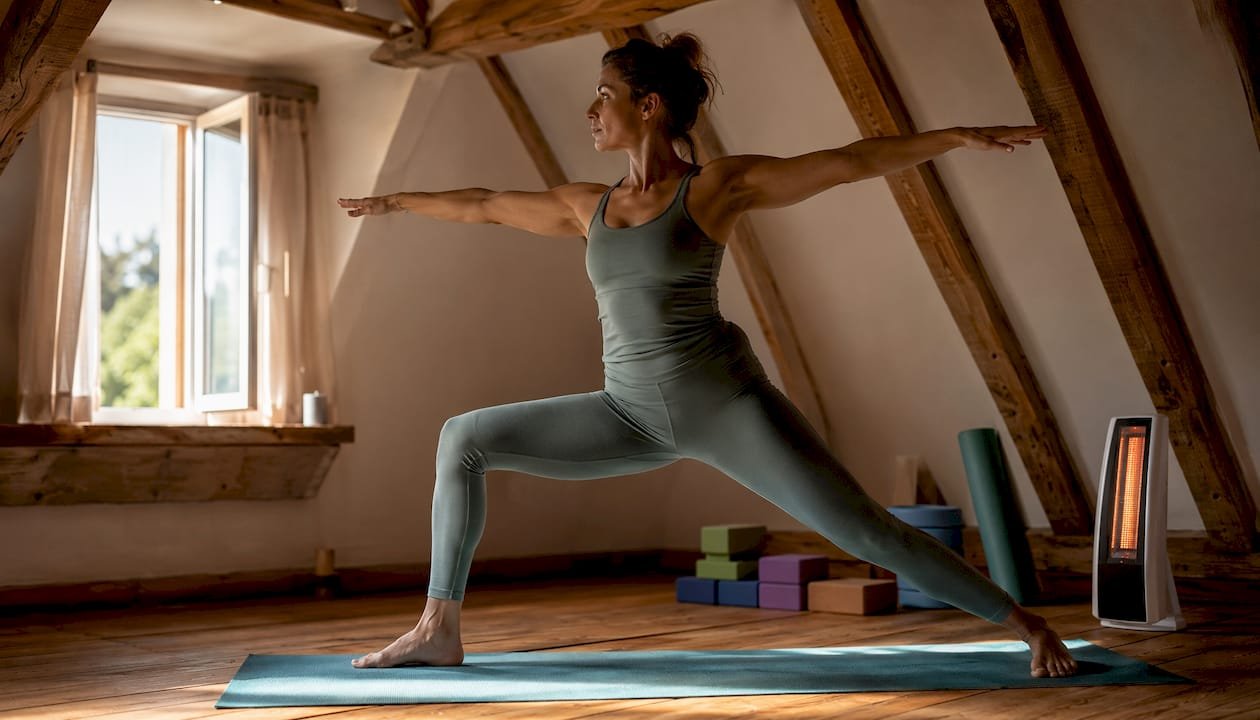
Yes, you can practice hot yoga at home safely — but three things have to be in place before you unroll your mat:
Control the environment. A small, uncluttered room that you can heat to 85°F–95°F is the practical at-home target. Pushing above 100°F without professional ventilation is discouraged.
Hydrate hours ahead. Drink 16–20 ounces about two hours before you start, sip steadily throughout the day, and replenish electrolytes after the session.
Know your stop signals. Dizziness, nausea, or faintness means stop immediately, move into Child's Pose, and sip water slowly. Do not push through those signs.
Amritayogawellness covers hot yoga safety in depth, and the guidance below builds on those principles for a home setting. The goal here is a repeatable, lower-risk practice — not a studio clone.
Table of Contents
What do you need before you heat the room?
Run through this checklist before your first session. Missing even one item turns a manageable practice into a real risk.
Yoga mat with solid grip ($25–$80 for a quality option)
Full-length microfiber towel to lay over the mat ($20–$40)
Insulated water bottle, at least 32 oz ($15–$35)
Digital thermometer and hygrometer combo ($10–$20) to monitor temperature and humidity in real time
Space heater — infrared or ceramic ($40–$150)
Humidifier ($25–$80) to keep air from feeling sharp during deep breathing
Non-slip floor area cleared of furniture and trip hazards
Timer or phone nearby for session tracking and emergency use
Pro Tip: Start with a basic ceramic heater and your existing mat. Once you've done six to eight sessions and know the practice suits you, upgrade to an infrared panel or a heated yoga dome. Spending $300 on gear before your first sweaty session at home is a common and avoidable mistake.
For a fuller hot yoga preparation checklist, Amritayogawellness has a dedicated resource worth bookmarking.
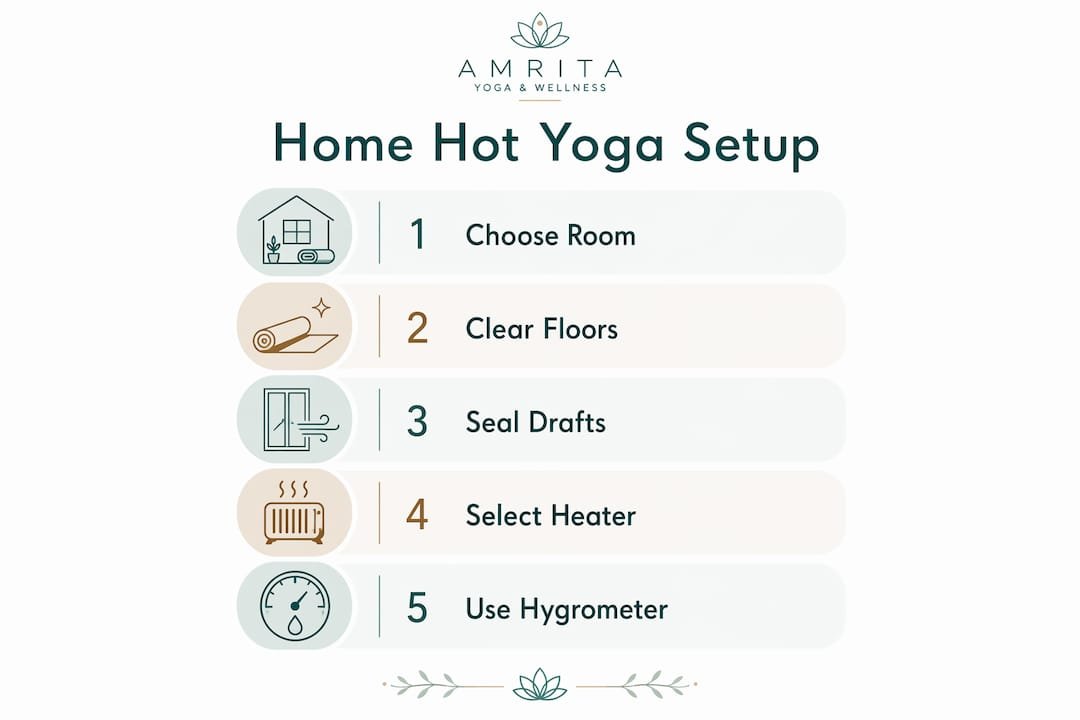
How do you set up and heat the room safely?
Choosing and preparing the space
Pick the smallest room that still lets you extend your arms and legs fully in every direction. A spare bedroom, a large home office, or even a spacious bathroom all work. Large open-concept rooms with high ceilings are beautiful and nearly impossible to heat efficiently
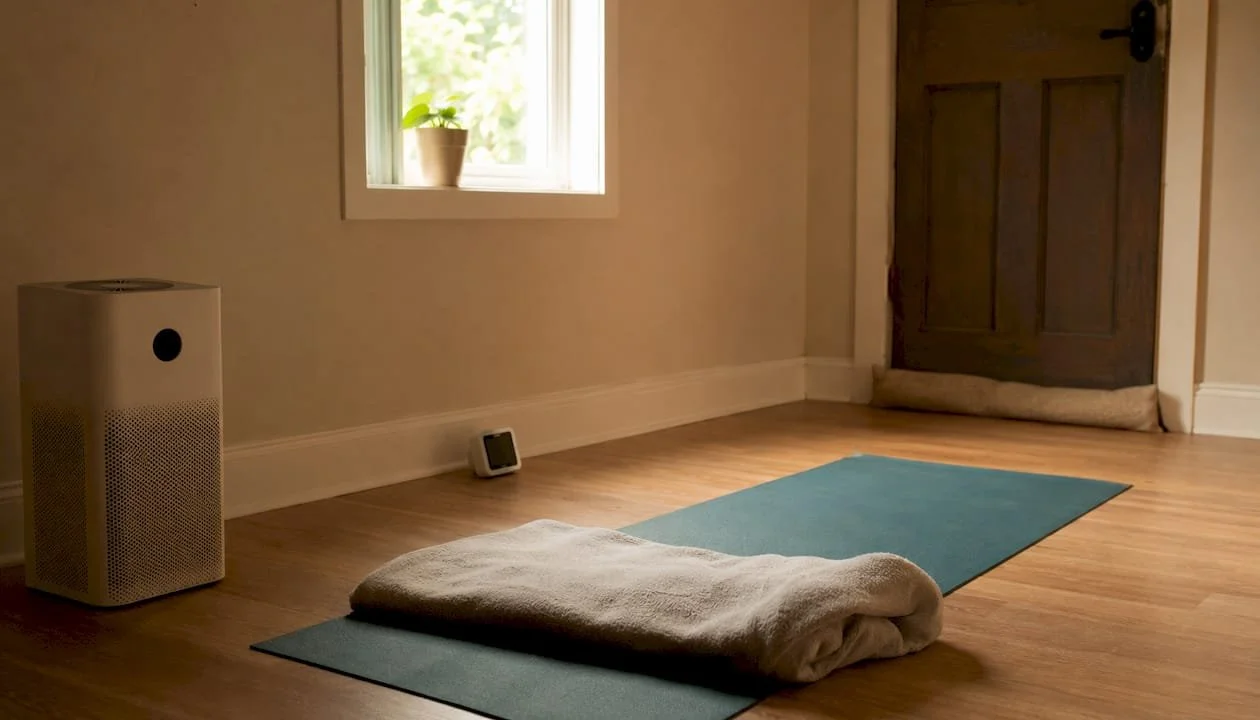
Clear the floor completely. Furniture creates cold pockets where air stagnates, and clutter is a fall hazard when you're sweating and off-balance. Hardwood, tile, or vinyl flooring is easier to sanitize than carpet; if you're on carpet, layer extra towels under your mat.
Seal drafts before you turn on any heat. Roll a towel against the gap under the door, close all windows, and pull thermal curtains over large glass panes. Heat escapes fast through those gaps, and your heater will run harder to compensate.
Heating the room safely
Infrared heaters warm objects and people directly rather than just the air, so the room feels warmer at a lower ambient temperature. Ceramic heaters warm the air and may need more time or a fan to distribute heat evenly. Either works; infrared tends to feel more comfortable during pranayama because the air stays less dry.
Place the heater at least three feet from your mat, away from curtains, towels, and any flammable material. Plug it into a ground-fault protected outlet if you're near a bathroom or any water source. Never leave it unattended, and never stack a towel on top of or directly in front of it.
Give the room 20–30 minutes to pre-warm before you step on the mat. Set your thermometer and hygrometer at mat level, not near the ceiling, where readings run several degrees hotter. Target humidity between 40% and 50%.
A note on temperature: Many home practitioners find 85°F–95°F safer and more sustainable than studio highs. Staying in that range lets you build a consistent practice without the ventilation infrastructure a 105°F room actually requires. Monitor the thermometer mid-session and turn the heater off if the room climbs past your target.
Pro Tip: Place the hygrometer at the center of your mat space, not near the heater or a window. Readings near heat sources are artificially high; readings near glass run low. The center of the room is what your body actually experiences.
What does a beginner home hot yoga sequence look like?
Start with breath and gentle movement to build tapas (internal heat) before expecting studio-level sweating. The room temperature matters less than you think in the first ten minutes; your body generates significant heat through movement alone.
This sequence runs 20–35 minutes and suits hot yoga for beginners or anyone returning after a break.
Arrival and breathing (3 minutes). Sit or lie on your mat. Take slow diaphragmatic breaths: inhale through the nose for four counts, exhale for six. Let your nervous system settle before the heat registers.
Gentle mobilization (4 minutes). Cat-Cow (8 slow rounds), then Downward Facing Dog held for five breaths. These wake up the spine and begin circulating warm blood to the joints.
Standing flow (10 minutes). Move through two rounds of Sun Salutation A at a measured pace. Add Warrior II (five breaths each side), Triangle Pose (four breaths each side), and Chair Pose (six breaths). Rest in Mountain Pose between rounds if your breath becomes ragged.
Floor work (5 minutes). Bridge Pose (five breaths, twice), then a Supine Twist on each side (five breaths). These decompress the spine after standing work and keep the heart rate from spiking.
Savasana (3 minutes minimum). Turn off the heater before you lie down. Let the room cool naturally while your body recalibrates. Skip this step and you'll feel the fatigue for hours afterward.
Shorten the standing flow first if you feel the heat becoming too much. Skip jump-backs entirely; walk between poses instead. If your balance wobbles or your breath shortens noticeably, drop into Child's Pose and stay there until both stabilize.
For more sequencing ideas, Amritayogawellness has a hot yoga routine tag with progressions you can layer in as you build confidence.
How do you stay safe and know when to stop?
Hydration plan
Start drinking water well before you practice — not when you step on the mat. Drink 16–20 ounces roughly two hours before your session and sip steadily throughout the day. During the session, take small sips between poses rather than gulping large amounts, which causes stomach discomfort during twists. After practice, replenish electrolytes: coconut water, a pinch of sea salt in water, or an electrolyte tablet all work.
Thirst is a lagging signal. By the time you feel it, you're already behind on fluids.
Warning signs — stop immediately if you notice:
Dizziness or lightheadedness
Nausea or stomach cramping
Headache that builds during practice
Rapid or irregular heart rate
Visual disturbance or tunnel vision
Sudden fatigue that feels different from normal exertion
Immediate response if symptoms appear
Stop the pose and lower yourself to the floor.
Move into Child's Pose to let your body regulate before standing.
Sip water slowly — do not gulp.
Turn off the heater and open a window or door.
If symptoms don't ease within two to three minutes, move to a cooler room.
Call for help or dial 911 if symptoms worsen, you lose consciousness, or vomiting begins.
The essential hot yoga safety tips on the Amritayogawellness blog go deeper on each of these stop signals and are worth reading before your first heated session.
Skip a heated session entirely if you have: a fever, recent heavy alcohol consumption, a known cardiovascular condition (consult your physician first), or you're pregnant. The heat adds physiological load that compounds existing stress on the body.
Pro Tip: Keep your phone within arm's reach and tell someone you're doing a heated solo session. A simple text before and after takes ten seconds and matters if something goes wrong.
This article is general information, not medical advice. Consult a physician before starting heated yoga if you have any significant health condition.
What should you wear and which heater actually works?
Clothing and grip
Moisture-wicking, fitted clothing is the standard for a reason: loose cotton traps sweat and adds weight. Start your session in a light layer (a thin sweatshirt over your yoga top) to reach a sweating point faster, then shed it once you're warm. Bare feet are the norm; socks become slippery fast.
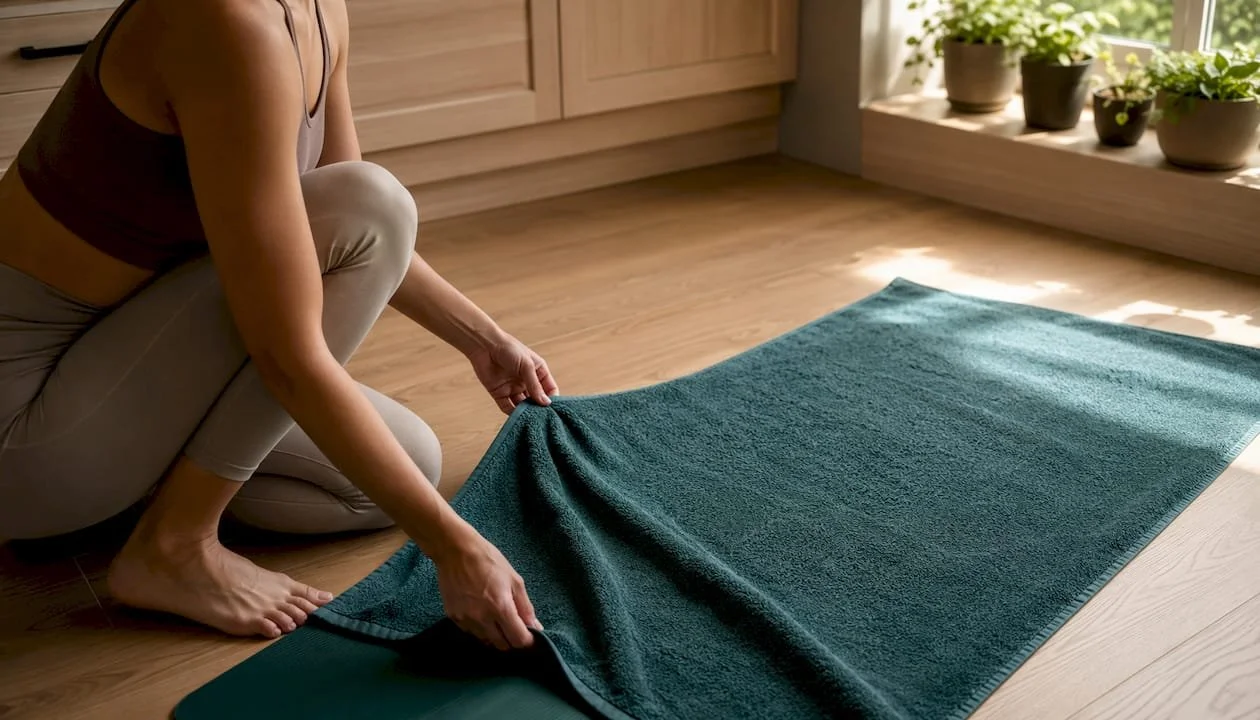
For grip, a full-length microfiber towel laid over your mat is the most effective traction tool in hot practice. It absorbs sweat, protects the mat surface, and stays put better than relying on any single "non-slip" mat feature. Cork blocks outperform foam when your hands are wet — the natural texture holds even when soaked.
Heater comparison
| Feature | Infrared heater | Ceramic heater |
|---|---|---|
| What it heats | Objects and people directly | Air in the room |
| Warm-up time | Faster perceived warmth | 20–30 min to reach target temp |
| Air quality | Doesn’t dry the air as much | Can feel dry without a humidifier |
| Typical cost | $80–$150 | $40–$100 |
| Best for | Solo practitioners, smaller rooms | Budget setups, rooms with fans |
The inflatable hot yoga dome is a third option: a portable, cocoon-like structure that heats to 105°F in 10–15 minutes because the enclosed volume is tiny. This is a practical solution for apartment dwellers with rental restrictions, though the cost runs higher and the space inside is tight.
Safety checklist for any heater:
Minimum three feet of clearance from mat and all fabric
Plugged into a ground-fault protected outlet near water sources
Never left running unattended
Turned off before Savasana
What if you can't heat the room?
Not every living situation allows for a heated room. Rental restrictions, shared walls, circuit limitations, or a health condition that makes extreme heat unwise — any of these can make a fully heated session impractical. You still have options.
Hot shower beforehand. Ten minutes of warm water raises your core temperature and loosens the muscles. Step onto the mat while your skin is still slightly damp to encourage early sweating.
Layered clothing. Start in a sweatshirt and light leggings. The layers trap body heat and simulate the early warm-up phase of a heated session. Shed them as you build internal heat through movement.
Bathroom practice. A small bathroom retains steam well. Run a hot shower for a few minutes before you practice, then close the door and work through a short flow in the residual warmth.
Outdoor practice in summer. Practicing in direct sun creates real heat, but UV exposure is a concern. Choose a shaded spot or apply a high-SPF sunscreen, and avoid peak midday hours.
Movement-first approach. Vigorous Cat-Cow, rapid Sun Salutations, and Ujjayi breathing generate significant internal heat without any external source. This is the tapas principle in practice: the body is its own furnace when you move with intention.
If heat-related risks are your concern, a therapeutic recovery approach can complement your practice by addressing the muscular tension that builds when you train in warm conditions.
When does in-person instruction actually matter?
Home practice is genuinely effective for building consistency, but there are specific moments when a studio class pays for itself quickly.
Alignment is the clearest one. In a heated room, muscles release faster than usual, which means you can move into ranges of motion your joints aren't ready to support. A teacher catches that in real time; a video does not. If you're pushing into deeper backbends or inversions, in-person correction protects you from the kind of injury that sidelines a practice for months.
High-heat safety is the other. Practicing at 95°F alone is manageable with the protocols above. Practicing at 105°F alone, without professional ventilation and a trained instructor watching the room, is a different calculation.
Before signing up at any studio, ask these questions:
What is the maximum room temperature and how is it monitored?
What ventilation system is in place?
What are the teacher's credentials and training hours?
What is the emergency protocol if a student feels unwell?
Amritayogawellness offers hot yoga classes in Philadelphia with instructors trained to guide practitioners through safe, progressive heat exposure. If you've built a home practice and want alignment feedback or want to experience supervised high-heat sessions, their step-by-step hot yoga guide is a good starting point before booking a class.
Pro Tip: Ask the studio to let you observe a class before your first session. Fifteen minutes of watching tells you more about the room's heat management and the teacher's style than any website description.
Key Takeaways
A safe, repeatable home hot yoga practice depends on controlling three variables: environment, hydration, and your response to warning signs.
| Point | Details |
|---|---|
| Choose a small room | Smaller spaces heat faster and hold temperature more consistently than open-concept areas. |
| Hydrate hours ahead | Drink 16–20 ounces about two hours before practice; sip steadily all day and use electrolytes after. |
| Use towel plus mat for grip | A full-length microfiber towel over your mat provides better traction than any single non-slip mat feature. |
| Start with 20–35 minute sessions | Short, manageable flows build heat tolerance safely; extend duration only after several consistent sessions. |
| Stop on warning signs | Dizziness, nausea, or visual disturbance means pause, Child's Pose, slow sips, then cooler air — not pushing through. |
The heat is a tool, not the point
Hot yoga at home works best when you treat the heat as a support condition, not the main event. The practice is the movement, the breath, the attention you bring to each pose. The warmth just makes all of it more available.
What tends to go wrong is chasing the studio experience too literally — cranking the room to 105°F, skipping the hydration prep, doing a 60-minute flow on day one. Slow progress in a sustainable practice beats one heroic session followed by two weeks of recovery. A 25-minute flow at 88°F, done three times a week with proper hydration, will build more genuine heat tolerance than an occasional extreme session.
If you hit a plateau at home or want hands-on alignment work, Amritayogawellness is a natural next step. Their resources on hot yoga tips and in-studio classes in Philadelphia offer the kind of feedback a home setup simply can't replicate.
Useful sources and further reading
These are the primary references behind this guide, each worth visiting for a specific reason:
PubMed Central — Hydration and Heat (PMC10542737): The research foundation for the 16–20 oz pre-practice hydration guidance and electrolyte timing.
Hugger Mugger — Hot Yoga at Home: Practical room selection, mat/towel gear advice, and heater placement guidance from a long-standing yoga equipment brand.
HotYoga.site — Safe Setup and Beginner Routine: Session length guidance (20–35 minutes for beginners) and sequencing pacing for home practice.
Yoga Basics — Hot Yoga at Home: Ten practical tips covering room choice, humidity, layering, and outdoor alternatives.
Amritayogawellness — Essential Hot Yoga Safety Tips: In-depth stop-signal guidance and safety protocols specific to hot practice.
Amritayogawellness — How to Prepare for Hot Yoga: Pre-practice preparation steps that complement the hydration and warm-up advice above.
Recommended
Hot Power Yoga: What It Is, Benefits, and How It Works
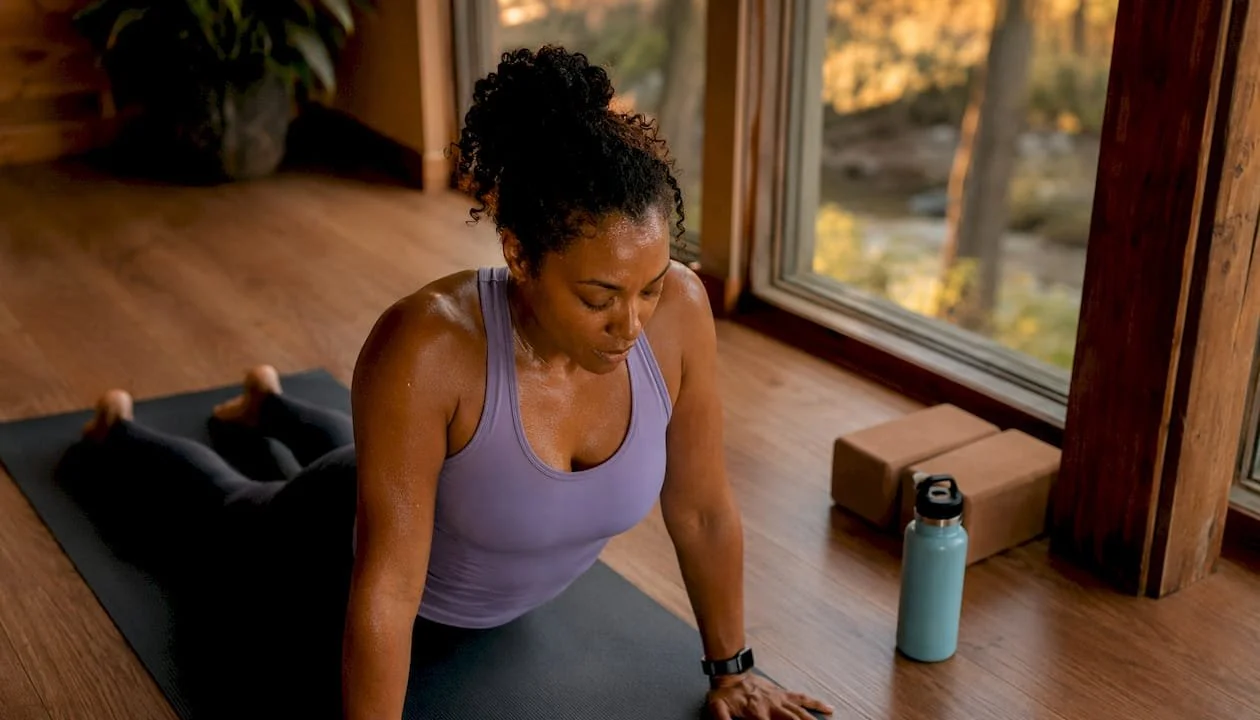
Hot power yoga is a flowing, breath-synchronized yoga practice performed in a heated room with moderately high temperature and humidity levels. Unlike gentler heated formats, it layers athletic, dynamic sequences on top of that heat stress, targeting muscular strength, cardiovascular endurance, flexibility, and mental focus simultaneously. Classes run for about an hour or longer and follow instructor-designed sequences rather than a fixed script, which means every session can look different.
Here's what defines it at a glance:
Heated studio environment: 95–105°F, 40–60% humidity
Dynamic, breath-linked movement sequences inspired by power yoga
Non-fixed sequences designed by the instructor each class
Dual focus on strength and cardiovascular endurance
Adaptable to various fitness levels, though physically demanding
Table of Contents
What is hot power yoga made of? Two styles, one practice
Hot power yoga draws from two distinct traditions that each bring something the other lacks.
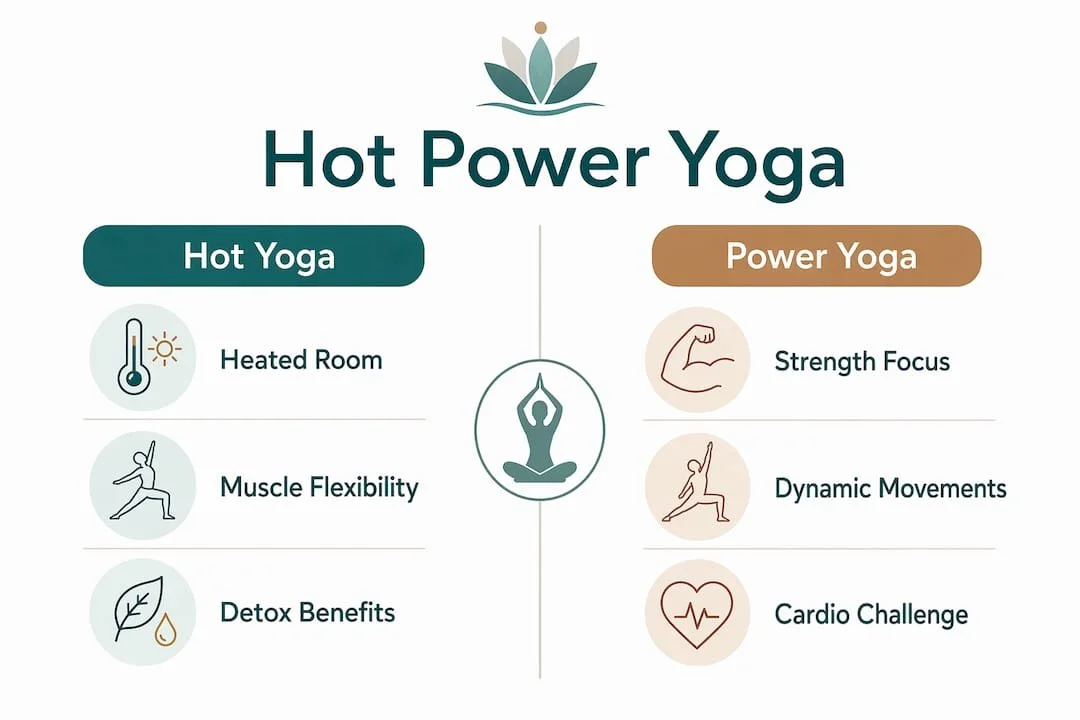
Hot yoga is the umbrella term for any yoga practiced in warm to hot ambient conditions (typically at or above about 25°C). The most recognized version is Bikram yoga, a longer class built around fixed postures and breathing exercises, conducted in a heated room with elevated humidity. Contemporary hot yoga formats tend to vary in length and allow more pose flexibility, but the defining feature stays the same: the room is hot, and that heat is the point.
Power yoga is a different animal. It evolved from Ashtanga yoga in the late 20th century as a more athletic, Western-influenced take on vinyasa flow. The emphasis is on building strength and stamina through challenging transitions, held poses, and sometimes repetitions. There's no fixed sequence, which gives instructors room to design classes around specific muscle groups or energy demands.
Hot power yoga merges these two. You get the cardiovascular and physiological challenge of heat exposure alongside the strength-building, dynamic movement of power yoga. The result is more physically demanding than either style practiced alone, and the non-fixed sequence format means the experience varies with the instructor.
What the practice environment actually feels like
Walking into a hot power yoga studio is immediately different from a standard class, where thoughtful yoga room decor can inspire calm and enhance your practice environment. The room is heated with elevated humidity, creating a distinctive climate that you feel within the first minute. Classes typically last around an hour or more, and that combination of sustained heat and continuous movement puts real demands on the body.
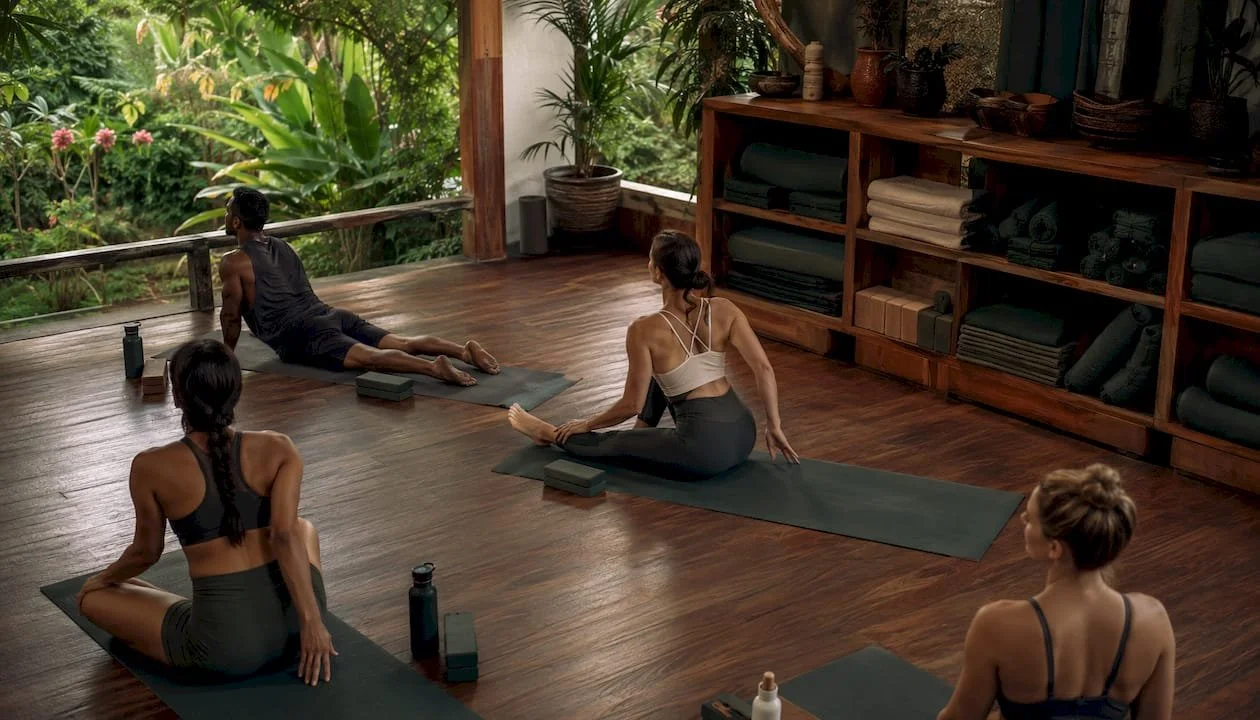
Physiologically, the heat increases blood flow to working muscles and improves muscle pliability, which allows deeper stretching and a greater range of motion. At the same time, it challenges the cardiovascular system and the autonomic nervous system, requiring your body to regulate heart rate and core temperature while you're also moving through demanding sequences.
What to bring and wear:
A non-slip yoga towel to cover your mat (sweat makes standard mats slippery fast)
A separate sweat towel for your face and hands
Electrolyte-enhanced water, not plain water alone
Minimal, moisture-wicking clothing — shorts and a fitted top work well for most practitioners
A full water bottle you'll actually use throughout class
Safety matters here. Heat illness is a real risk, particularly for newcomers. Gradual adaptation to the heated environment over multiple sessions is the standard recommendation from health professionals, not diving into the hardest class on day one.
Pro Tip: Drink 16–20 oz of water with electrolytes in the two hours before class, not just immediately before. Arriving already hydrated gives your thermoregulatory system a head start.
The benefits of hot power yoga go beyond sweating
The physical benefits are real and well-documented. Regular practice builds muscular strength, improves cardiovascular endurance, increases flexibility, and develops core stability. The heat facilitates muscle ease and joint mobility, allowing practitioners to access ranges of motion that would take longer to reach in a room-temperature class.
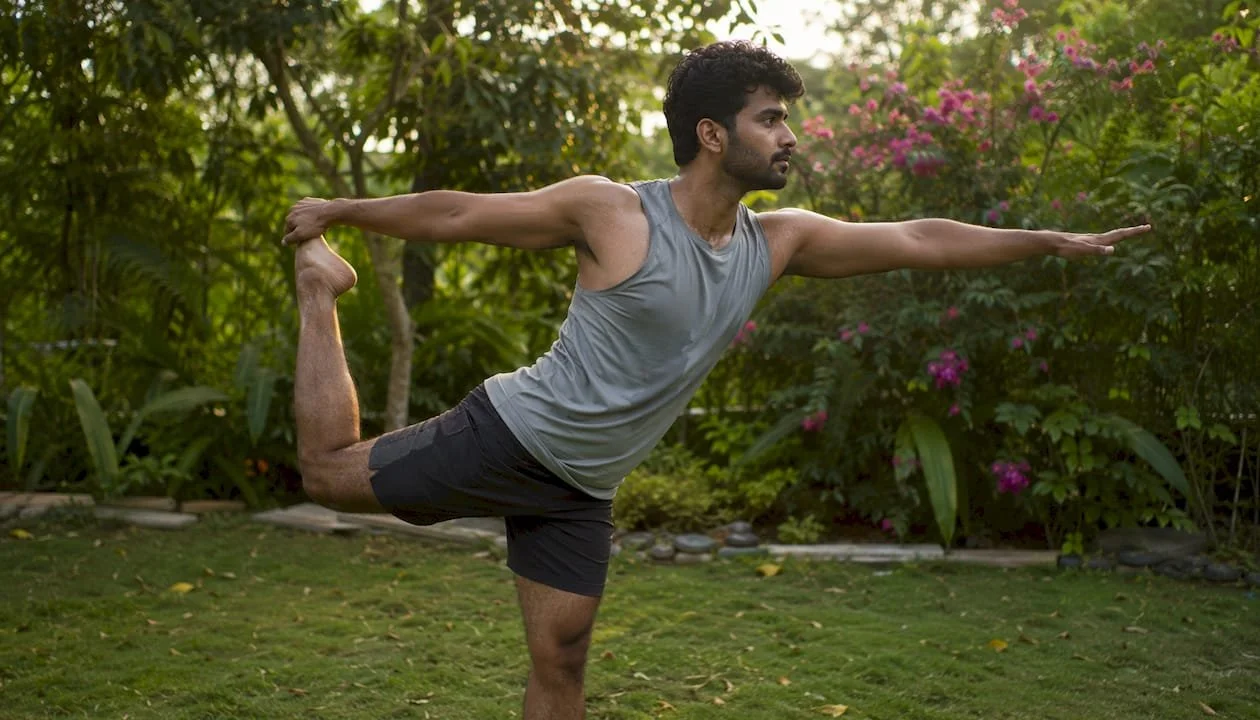
Mental benefits are equally significant. Sustaining focus through 60–90 minutes of challenging movement in intense heat trains concentration and stress tolerance in ways that carry over outside the studio. Many practitioners report improved mood and reduced anxiety as consistent effects of regular practice.
One finding worth knowing: systematic reviews show that hot yoga raises core temperature and heart rate but may not increase caloric expenditure beyond what non-heated yoga produces. The heat's primary value is physiological adaptation, not simply burning more calories. That distinction matters for setting realistic expectations.
Hot power yoga also differs from traditional hot yoga formats in a key way: the dynamic, strength-focused sequences mean you're building real muscular capacity, not just stretching in a warm room. You get the flexibility benefits of heat and the strength benefits of power yoga in the same session.
Expert tips for practicing safely and effectively
Getting the most from hot power yoga means respecting what the heat actually does to your body.
Acclimate gradually. Your first few sessions should be about surviving the heat comfortably, not pushing your physical limits. Gradual adaptation over multiple sessions before starting full intensity practice is recommended.
Hydrate with electrolytes. Plain water isn't enough when you're sweating heavily for 90 minutes. Sodium, potassium, and magnesium help your body retain fluid and maintain muscle function.
Use breath regulation actively. Slow, controlled breathing helps manage heart rate and reduces the perception of heat stress. When the room feels overwhelming, the breath is your first tool.
Take child's pose without hesitation. Newcomers to hot yoga should treat rest poses as a legitimate part of the practice, not a sign of weakness. Dropping to child's pose when your heart rate spikes is smart, not soft.
Work with experienced instructors. A qualified instructor will offer modifications, watch for signs of heat distress, and pace the class appropriately. This matters more in a heated environment than in a standard class.
Leave if something feels wrong. Dizziness, nausea, or a sudden feeling of cold despite the heat are warning signs. Step out, cool down, and don't push through them.
What the research says about heat and your body
Research on hot yoga's physiological effectsconfirms that heat elevates core temperature and heart rate during practice. The cardiovascular demand is real. What the evidence also shows is that the primary mechanism driving adaptation isn't calorie burn — it's the thermoregulatory challenge itself, which trains the autonomic nervous system and improves the body's efficiency at managing heat stress over time.
Heat improves muscle pliability and blood flow to working tissues, which directly supports enhanced range of motion. This is why practitioners often feel more flexible in a hot class than in a cool one, even at the same skill level.
The autonomic nervous system demand is often underestimated. Managing heart rate and cardiovascular regulation under heat stress is frequently a greater barrier for new practitioners than flexibility or strength. That's why gradual heat adaptation is the consistent recommendation across research and expert guidance alike.
How hot power yoga compares to other yoga styles
| Style | Temperature | Sequence | Primary Focus |
|---|---|---|---|
| Hot power yoga | Heated room with elevated temperature | Non-fixed, instructor-designed | Strength, endurance, flexibility |
| Bikram yoga | Heated room with high temperature | — | Flexibility, detox, heat adaptation |
| Standard vinyasa | Room temperature | Non-fixed | Flow, flexibility, breath |
| Hot pod yoga | Heated room or pod at moderate temperatures | Non-fixed, flowing | Flexibility, mindfulness, immersion |
| Ashtanga yoga | Room temperature | Fixed series | Strength, discipline, flexibility |
Hot pod yoga deserves a specific note since it often comes up alongside hot power yoga. What is hot pod yoga? It’s a format practiced inside heated, enclosed inflatable pods rather than open studios, typically at lower temperatures (around 86–99°F) using infrared heating. The environment is more immersive and private, with dim lighting and curated scent. It originated in the United Kingdom and prioritizes mindfulness and flexibility over the athletic intensity that defines hot power yoga.
Common poses you'll find in a hot power yoga class
Hot power yoga sequences vary by instructor, but certain poses appear consistently because they build the strength and endurance the format demands.
Sun Salutations: The backbone of most classes, linking breath to movement across multiple poses in a continuous flow.
Warrior I, II, and III: Build leg strength, hip stability, and balance while demanding sustained focus.
Chair pose (Utkatasana): A quad and glute burner that also challenges core stability and breath control.
Plank and Chaturanga: Upper body and core strength staples that appear repeatedly in vinyasa transitions.
Boat pose (Navasana): Core-intensive and often held longer than comfortable to build endurance.
Pigeon pose: A deep hip opener that benefits from the heat-enhanced muscle pliability.
Crow pose (Bakasana): An arm balance that tests upper body strength and concentration.
Camel pose (Ustrasana): A backbend that opens the chest and hip flexors, often used as a peak pose.
Sequences typically open with standing poses and sun salutations, move through strength-focused standing and balancing poses, then wind down with floor work and a final savasana. Music and active instructor cuing are common, which distinguishes the format from the silent, scripted structure of Bikram classes.
Amritayogawellness: where hot power yoga meets expert guidance in Philadelphia
Amritayogawellness, based in Philadelphia, offers hot power yoga alongside a full range of wellness practices, including pilates, barre, tai chi, and massage therapy. What sets it apart from a generic studio is the emphasis on expert instruction and holistic care — practitioners at every level get guidance that accounts for both the physical demands of the heated format and the broader wellness picture.
For someone coming from this article, the practical value is straightforward: you get experienced instructors who understand heat adaptation, proper sequencing, and safe progression, all within a community-focused environment that doesn't treat beginners as an afterthought. The studio's wellness offerings extend beyond yoga, making it a genuine hub for health-conscious practitioners rather than a single-format gym.
Check the class schedule at amritayogawellness.com and book your first session.
Key Takeaways
Hot power yoga is most effective when you treat heat adaptation as a skill to develop gradually, not a condition to simply endure.
| Point | Details |
|---|---|
| Practice environment | Rooms run 95–105°F with 40–60% humidity; classes last 60–90 minutes. |
| Heat’s real benefit | Research shows heat primarily drives physiological adaptation, not higher calorie burn. |
| Safety priority | Electrolyte hydration and gradual acclimation reduce heat illness risk significantly. |
| Vs. other styles | More strength-focused than Bikram; more physically demanding than standard vinyasa or hot pod yoga. |
| Amritayogawellness | Philadelphia studio offering expert-led hot power yoga with holistic wellness support for all levels. |
Hot Yoga Renton WA: What to Expect and How to Choose
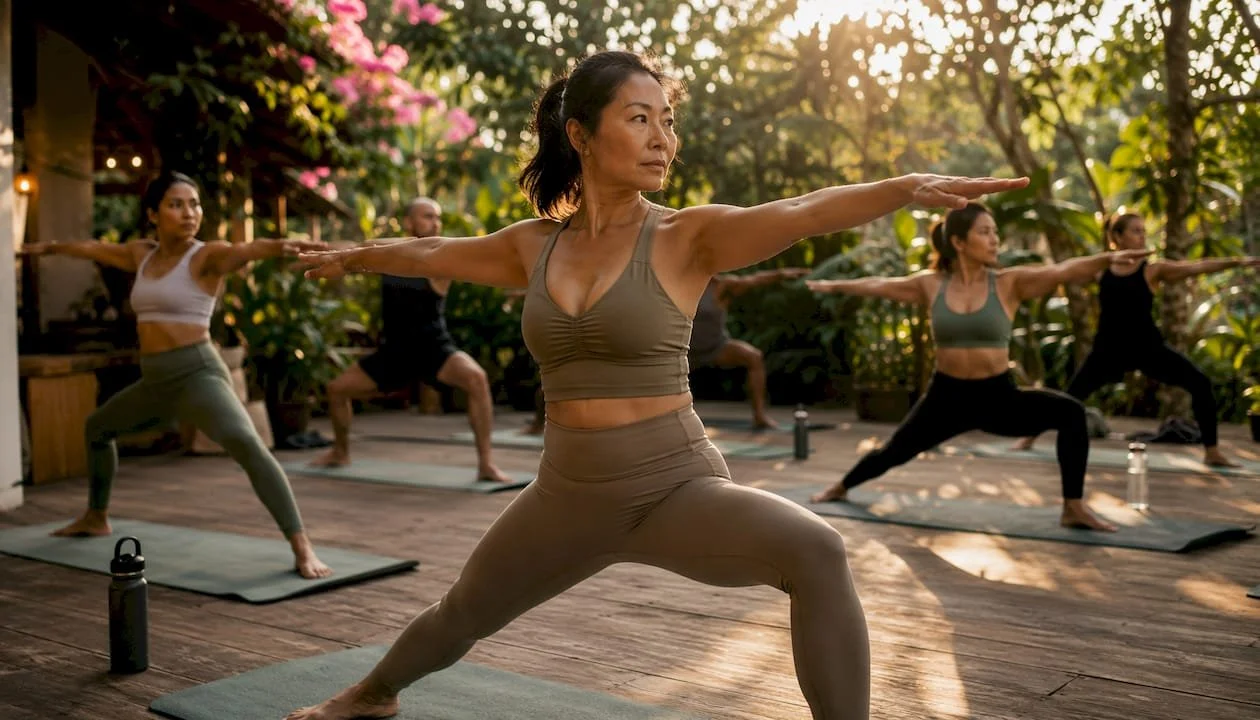
What hot yoga in Renton, WA actually looks like
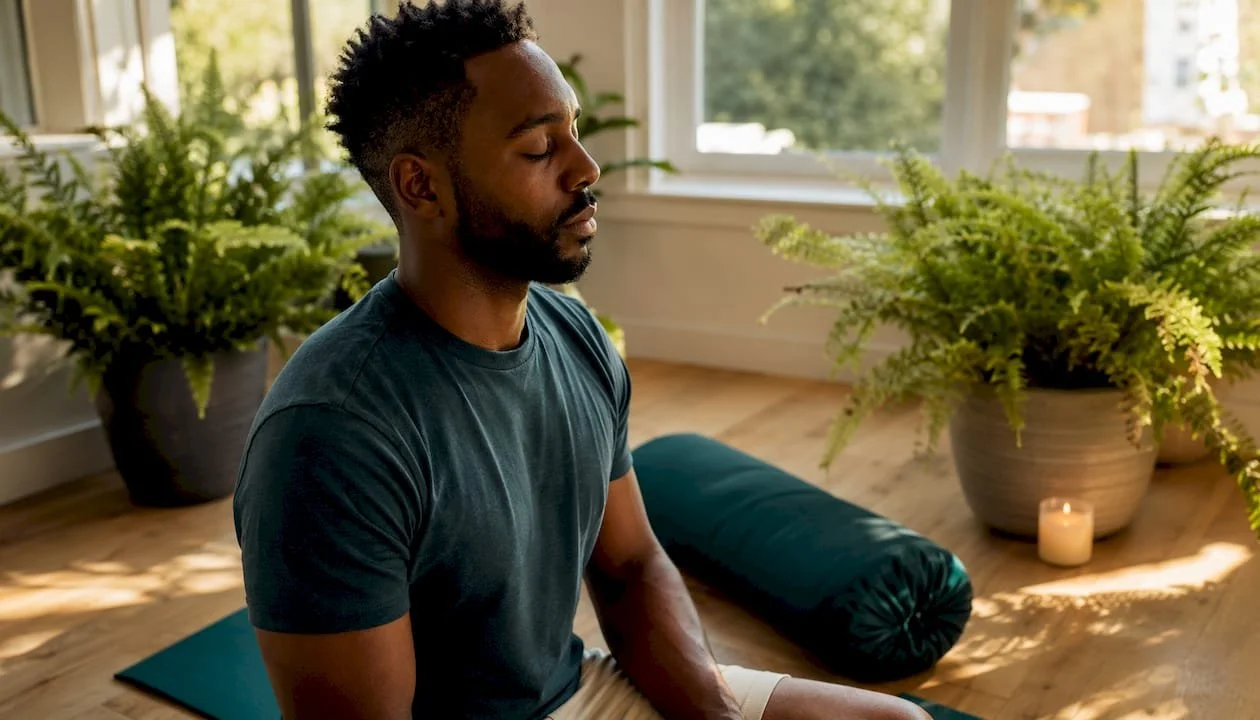
Hot yoga in Renton, WA is genuinely built for everyone. Studios here welcome all ages, body types, and experience levels, with the explicit goal of healing and building inner confidence rather than pushing competitive fitness. If you've never set foot on a mat, that's fine. If you've practiced for years, there's room for you too.
A few things to know before your first class:
Doors open 30 minutes before class and lock at start time, so plan to arrive early
Classes focus on stress relief, joint mobility, toxin flushing, and energy rather than performance
New students can typically start with a $39 30-day new student special to ease in without long-term commitment
Beginner-friendly formats are standard, not an afterthought
If online booking or payment causes any friction, studios prefer you come in person for quick, stress-free resolution
The practice itself combines concentration, patience, and physical benefits like increased metabolism, improved range of motion, and thyroid balance. It's less about sweating through a workout and more about what happens when heat, breath, and stillness work together.
Pro Tip: Arriving 15 minutes early on your first visit gives you time to meet the instructor, ask questions, and settle in before the room heats up.
Table of Contents
How to choose a hot yoga studio in Renton, WA
The right studio comes down to more than just location. Here's what actually separates a good fit from a frustrating one:
Inclusivity and atmosphere: Look for studios that explicitly welcome all fitness levels. Reviews on ClassPass and Google give you an honest read on community vibe before you commit
Class schedule and formats: Check whether the hot yoga schedule includes early morning, evening, and weekend slots, plus beginner-specific classes
Amenities: Showers and lockers matter more than you'd think after a heated session. Confirm these are available before signing up
Pricing and intro offers: A 30-day new student package lets you try multiple class formats without locking into a membership
Safety guidance: Good studios address contraindications openly, particularly for pregnancy, cardiovascular conditions, and heat sensitivity
Staff accessibility: Studios that prioritize face-to-face help for booking or billing questions signal a genuinely student-first culture
| Factor | What to look for |
|---|---|
| Inclusivity | All ages, sizes, and experience levels welcomed |
| Schedule | Early, evening, and weekend slots; beginner classes available |
| Amenities | Showers, lockers, towel service on site |
| Pricing | $39 30-day introductory offer with no long-term pressure |
| Safety | Clear contraindication guidance from instructors |
| Community | Positive third-party reviews on ClassPass or Google |
The studios that stand out in Renton treat administrative friction, like a billing glitch or a scheduling question, as something they solve for you, not something you figure out alone.
Amritayogawellness brings holistic yoga depth beyond the studio
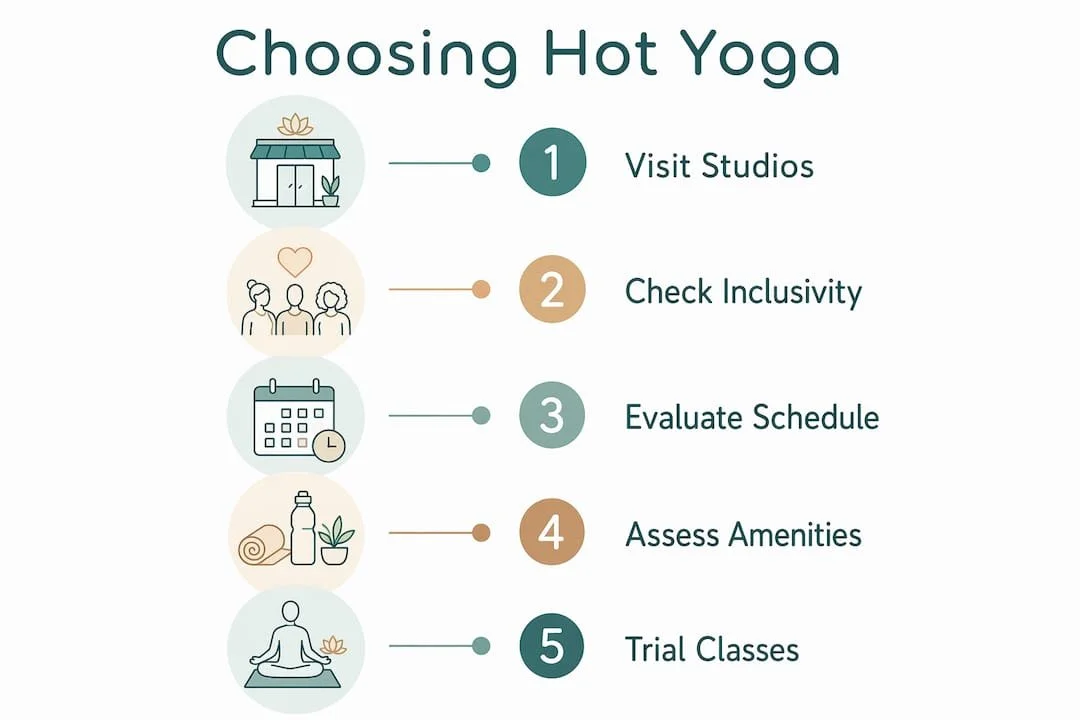
Amritayogawellness is a Philadelphia-based wellness hub that goes well past a single heated room. Where most studios offer one or two formats, Amritayogawellness covers hot yoga, pilates, barre, tai chi, and massage therapy under one roof, with detailed class descriptions written for beginners and experienced practitioners alike.
The blog is genuinely useful. You’ll find step-by-step hot yoga guidance for newcomers, beginner-specific resources, and in-depth breakdowns of physical benefits. Workshops extend into areas like tarot readings, which rounds out the mind-body-spirit focus that sets the community apart from a standard fitness studio.
Ready to go deeper? Explore classes and workshops at Amritayogawellness and find the practice that fits where you are right now.
Key Takeaways
Hot yoga in Renton, WA is accessible, structured around healing rather than competition, and best approached with early arrival and a beginner-friendly intro package.
| Point | Details |
|---|---|
| Arrive early | Doors lock at class start time; plan to arrive 30 minutes before. |
| Beginner-friendly pricing | A $39 30-day new student introductory special lets newcomers try classes without long-term pressure. |
| Check amenities | Confirm showers and lockers are available before committing to a studio. |
| Use third-party reviews | ClassPass and Google reviews reveal community atmosphere before you visit. |
| Amritayogawellness | Offers hot yoga resources, diverse class formats, and beginner guides for all levels. |
How to Start Yoga for Beginners: A Safe, Simple Guide
What every beginner needs to know before their first yoga session
Starting yoga safely comes down to three things: short sessions, a forgiving style, and zero pressure to be flexible. Experts recommend that beginners practice two to three times per week, with each session lasting 15–30 minutes. That cadence builds the habit without overwhelming your body or your schedule.
Flexibility is not a prerequisite. It's a result. Many people put off starting because they can't touch their toes, but beginner classes are specifically designed to improve mobility gradually, not to test it on day one. Walk in stiff. That's the whole point.
Here's what to focus on from the start:
Start small. Two to three sessions per week, 15–30 minutes each, is the sweet spot for beginners.
Pick a gentle style. Hatha, Restorative, and Yin yoga are the most accessible entry points. Avoid fast-paced flows until you have the basics down.
Breathe first, pose second. Breath control is the foundation of every yoga practice. If you lose your breath, the pose isn't working for you.
Use props without apology. Blocks, straps, and folded blankets exist to make poses accessible, not to signal weakness.
Modify everything. No pose is mandatory in its full expression. A modified version done with good form beats a strained version done "correctly."
Learn a few foundational poses first. Mountain pose, Child's pose, Cobra, Forward Fold, and Plank give you a complete beginner sequence you can repeat for weeks.
Stop at sharp pain. Mild muscle fatigue is normal. Sharp or radiating pain is a signal to back off immediately.
Skip the comparison trap. Yoga is not a performance. What you see on social media is not your benchmark.
The mindset shift that matters most: yoga rewards consistency, not intensity. Showing up for a 20-minute session three times a week will do more for you than one ambitious 90-minute class you dread repeating.
Which yoga style is right for you as a beginner?
Not all yoga is the same, and picking the wrong style early on is one of the most common reasons beginners quit. The good news is that a few styles are genuinely built for people who are just starting out.
Hatha yogais the most widely recommended starting point. It moves slowly, holds poses long enough for you to actually feel what's happening in your body, and keeps the focus on alignment and breath rather than speed. Yoga therapist Valerie Williams, E-RYT 500, puts it plainly: Hatha lets you learn how a pose feels and which muscles it engages without rushing into the next movement. That's exactly what a beginner needs.
Other styles worth knowing:
Restorative yoga uses props heavily and focuses on deep relaxation. Poses are held for several minutes, which activates the parasympathetic nervous system and helps reduce stress. It's an excellent choice if you're coming to yoga for recovery or anxiety relief.
Yin yoga targets connective tissue with long holds, typically three to nearly ten minutes per pose. The slow pace suits beginners who want to work on flexibility without the intensity of a flow class.
Gentle Vinyasa links breath to movement in a slower, more accessible version of the traditional flow format. Once you've built some body awareness through Hatha, this is a natural next step.
Pro Tip: Try at least two or three different styles and teachers before deciding yoga "isn't for you." If your first class felt unwelcoming or confusing, that's almost certainly a reflection of the teaching style, not your ability. Different instructors create very different experiences.
For learning formats, you have real options. A studio beginner class gives you live feedback and the energy of a group. Online guided videos let you practice at home on your own schedule, which removes every logistical excuse. Private instruction is the fastest way to learn correct alignment, though it costs more. Many beginners do well starting with labeled "beginner" or "gentle" classes, either in person or online, because those classes build alignment and breathing habits from the ground up rather than assuming prior knowledge.
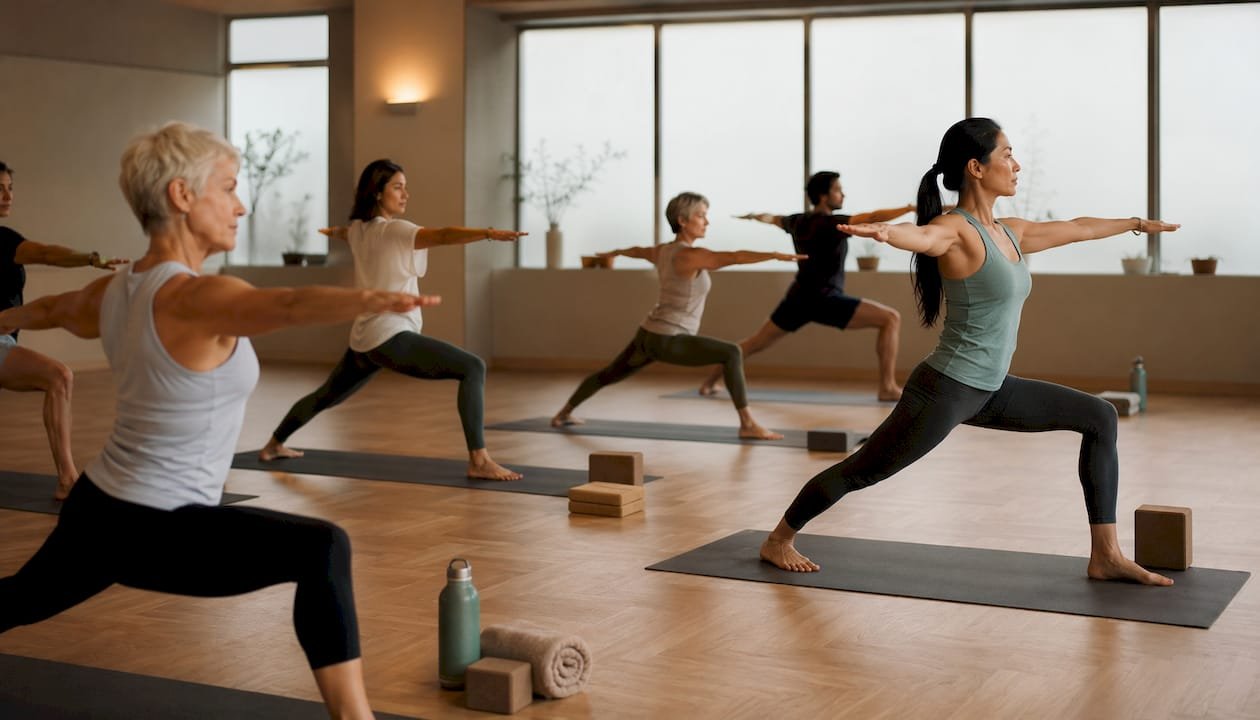
Amritayogawellness offers a range of beginner-friendly yoga styles that walk you through the differences so you can make an informed choice before you ever step on a mat.
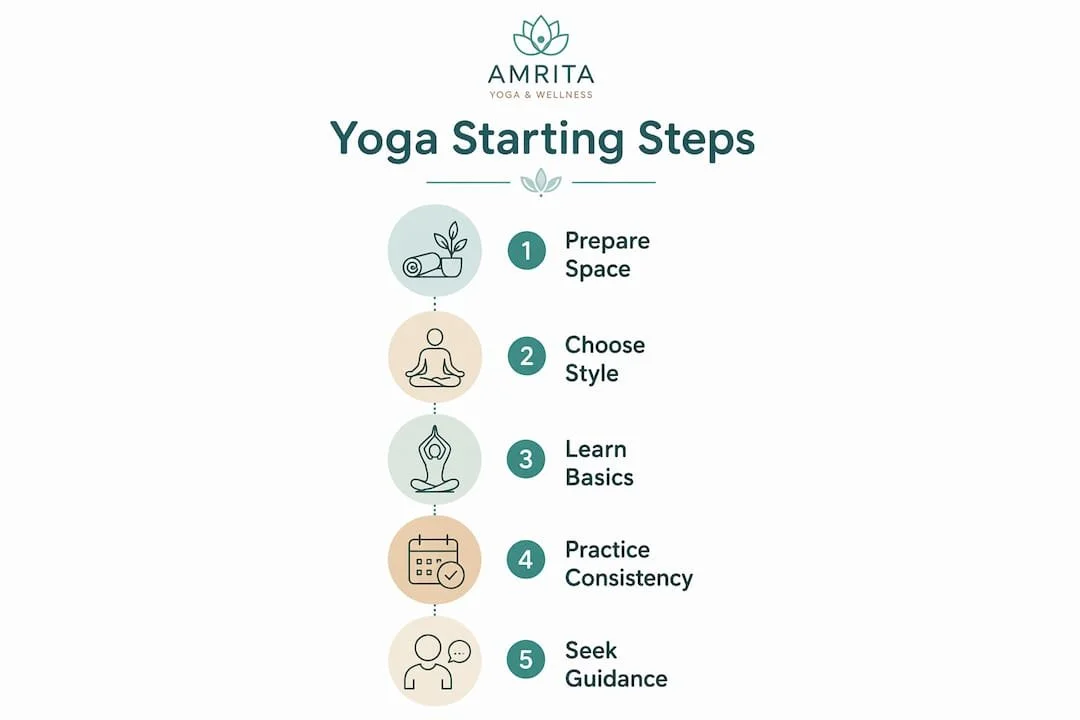
How to set up a home yoga practice that actually sticks
The biggest barrier to starting yoga at home isn't flexibility or knowledge. It's the false belief that you need the perfect setup first. You don't.
Effective practice starts with whatever you have. A towel on carpet works. A clear patch of floor works. Waiting until you have a dedicated yoga room, a premium mat, and matching gear is what yoga teachers call "optimization paralysis," and it's the most reliable way to never start.
What you actually need:
A mat or towel. A basic yoga mat costs around $20–$30 and provides enough grip and cushioning for all beginner poses. A folded towel on carpet is a legitimate substitute.
Comfortable clothing. Anything you can move freely in works. Fitted clothes make it easier for you (and an instructor) to see your alignment.
Props if available. Two yoga blocks and a strap cover nearly every modification a beginner will need. If you don't have them, hardcover books and a belt work fine.
A clutter-free space. You need roughly a 6-by-4-foot area. Clear it before each session so you're not stepping around furniture mid-pose.
Building the routine:
Frequency and duration. Start with two to three sessions per week of 15–30 minutes. Short, frequent sessions build the habit and let your body adapt without soreness that discourages you from coming back.
Warm up for 3–5 minutes. Gentle neck rolls, shoulder circles, Cat-Cow stretches on all fours, and a few slow spinal twists prepare your joints before any standing or weight-bearing poses.
Cool down for 5 minutes. End every session with Child's pose or a simple Savasana (lying flat on your back, arms relaxed at your sides). This signals to your nervous system that the work is done.
Breathing from day one. Start each session with three to five slow, deep breaths before you move. Ujjayi breathing, a gentle constriction at the back of the throat that creates a soft ocean sound, is a foundational pranayama technique worth learning early. It anchors your attention and regulates your pace throughout the practice.
Consistency beats duration every time. A 20-minute session three times a week will produce more progress than a two-hour session once a month.
How to stay motivated when yoga feels hard or intimidating
The hardest part of yoga for most beginners isn't the poses. It's showing up when you feel stiff, self-conscious, or like everyone else in the room knows something you don't. That feeling is almost universal, and it fades faster than you'd expect.
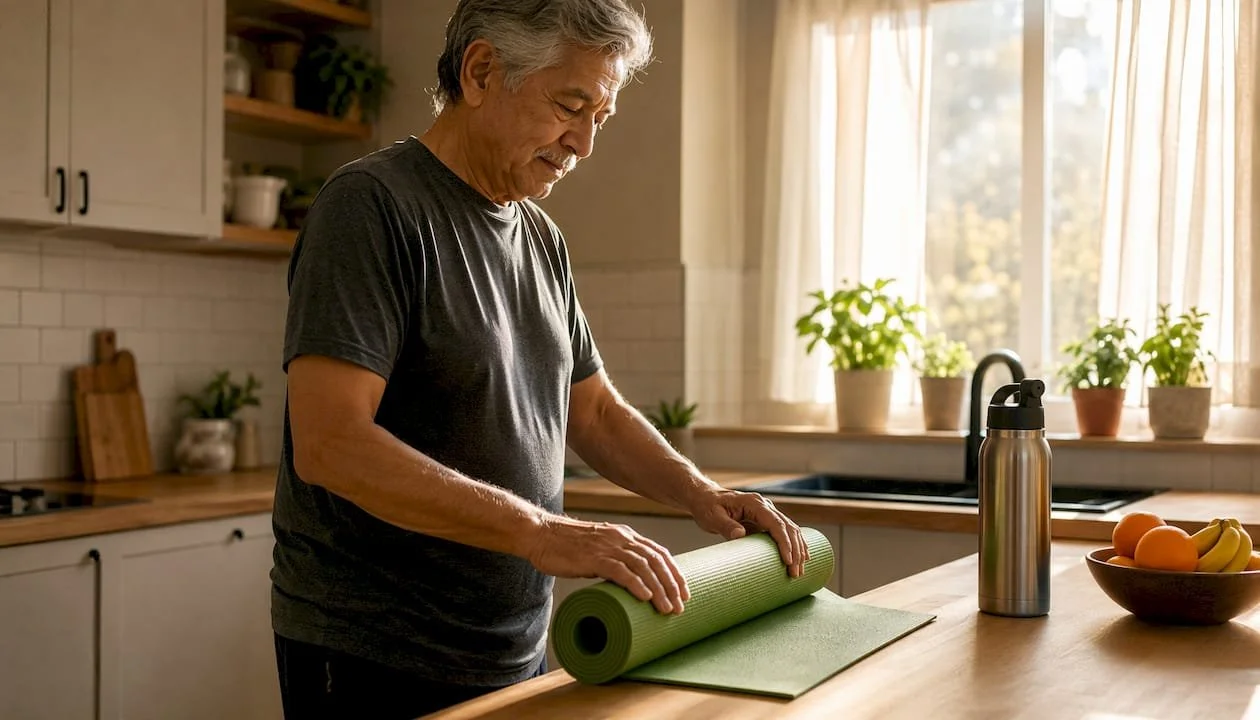
Yoga is fundamentally personal. The practice is a mirror, not a competition. What the person on the next mat is doing has no bearing on what your body needs today. Many beginners feel intimidated by the advanced poses that dominate social media, but a single conscious breath in Mountain pose counts as a successful yoga practice. That's not a consolation prize. That's the actual point.
Practical strategies that help:
Use breath and body sensation as your guide. If you're breathing steadily and feel a productive stretch, you're doing it right. If you're holding your breath to force a deeper pose, you've gone too far.
Accept modifications as the default, not the fallback. Props and modified versions of poses are not training wheels. They're how you build the strength and flexibility to eventually access the full pose safely.
Know the difference between discomfort and pain. Muscle fatigue, mild burning, and the sensation of a deep stretch are all normal. Sharp, shooting, or joint pain means stop and modify immediately.
Start with sessions short enough that skipping feels harder than doing them. A 15-minute session has almost no excuse. Once the habit is there, you'll naturally extend it.
Try different teachers before giving up on yoga entirely. Teaching style varies enormously. A teacher whose cues don't click for you isn't evidence that yoga doesn't work for you.
Track small wins. Notice when a pose that felt impossible last week now feels manageable. Progress in yoga is often subtle and cumulative.
Burnout at the beginner stage almost always comes from doing too much too soon. Three short sessions a week, done consistently for a month, will build more real progress than daily two-hour sessions that leave you exhausted and sore. Start smaller than you think you need to.
Why qualified instruction makes a real difference for beginners
Self-guided practice has its place, but for beginners, qualified instruction changes the trajectory of the practice in ways that are hard to replicate alone.
Lisa Blum, Doctor of Physical Therapy, identifies a qualified yoga teacher who provides clear, accessible cues and individual modifications as the most valuable investment a beginner can make for safety and confidence. The reason is straightforward: misalignment in basic poses, repeated over weeks, creates the kind of overuse injuries that sideline people for months. A good teacher catches those patterns before they become problems.
| Feature | Structured beginner program | Self-guided practice |
|---|---|---|
| Alignment feedback | Real-time correction from instructor | None; relies on mirrors or video review |
| Injury prevention | Modifications offered proactively | Depends on self-awareness |
| Progression | Structured, sequenced skill-building | Ad hoc; easy to plateau or skip steps |
| Motivation | Group energy and accountability | Requires strong self-discipline |
| Community | Built-in peer support | Isolated unless you seek it out |
| Accessibility | Labeled beginner classes remove guesswork | Requires research to find appropriate content |
Community matters more than most beginners expect. Practicing alongside others at a similar level normalizes the struggle, reduces self-consciousness, and creates accountability that's hard to manufacture alone. Workshops and group sessions also expose you to teaching perspectives and pose variations you wouldn't find in a solo practice.
Pro Tip: Look for beginner programs that explicitly describe their progression structure. A program that moves from foundational poses to more complex sequences over several weeks, with clear feedback mechanisms, will build your skills faster and more safely than a general "all levels" class.
Amritayogawellness builds its beginner programs around exactly this model: accessible entry points, individual modifications, and a community structure that keeps new practitioners engaged past the first few sessions. The studio's classes cover a range of styles, from Hatha to Restorative, with instructors trained to adapt poses for different bodies and ability levels. For beginners in the Philadelphia area, or anyone exploring structured online resources, Amritayogawellness offers a grounded, welcoming starting point.
Ready to take the first step? Amritayogawellness offers beginner classes, workshops, and wellness services including tarot readings for those looking to complement their yoga practice with broader self-care. Visit amritayogawellness.com to explore current class schedules and find the right entry point for where you are right now.
Key Takeaways
Starting yoga as a beginner requires short, consistent sessions in a gentle style, with qualified instruction and a patient mindset focused on breath and body awareness rather than flexibility or performance.
| Point | Details |
|---|---|
| Session frequency and duration | Begin with 2–3 sessions per week, each lasting 15–30 minutes, to build habit and allow safe body adaptation. |
| Best styles for beginners | Hatha yoga is the most recommended starting style; Restorative and Yin are strong alternatives for recovery and flexibility. |
| Flexibility is not required | Flexibility develops through consistent practice; it is never a prerequisite for starting yoga. |
| Props and modifications | Blocks, straps, and modified poses are standard tools, not workarounds, and reduce injury risk for new practitioners. |
| Qualified instruction matters | A trained teacher providing individual modifications is the most effective investment a beginner can make for safety and progress. |
Hatha Yoga: Meaning, History, and Practice Explained
Hatha Yoga is a branch of yoga that combines physical postures (asanas), breath control (pranayama), and meditation to balance the body's energy and prepare the mind for deeper awareness. The word "Hatha" carries two layers of meaning: in Sanskrit it literally means "force," pointing to its active, disciplined nature, and it is also interpreted as the union of "ha" (sun) and "tha" (moon), symbolizing the balance of opposing energies within the body. What most Americans encounter in studios today is a slower, alignment-focused style of yoga that uses that name as a broad umbrella, covering everything from gentle beginner classes to more structured traditional practice.
Modern Hatha classes emphasize steady postures held with mindful attention rather than flowing sequences, making them one of the most accessible entry points for newcomers. A typical session moves through breathwork, a series of postures, and a closing meditation or relaxation period, lasting a standard class length.
Core components of Hatha Yoga practice include:
Asanas — physical postures that build strength, flexibility, and body awareness
Pranayama — conscious breath regulation that calms the nervous system
Mudras — hand or body gestures that direct energy flow
Bandhas — internal energy locks that concentrate vital force
Shatkarmas — traditional cleansing techniques for purification
Meditation — focused mental practice that anchors the session's physical work
How Hatha Yoga developed through history
Hatha Yoga originatedaround the 11th century, with the oldest dated text, the Amṛtasiddhi, emerging from a tantric Buddhist context. Some techniques, however, appear even earlier, traceable to the 1st century CE in Hindu Sanskrit epics and Buddhism's Pali canon. The tradition was not a single, unified system from the start. It grew through centuries of overlapping influences from Hindu and Buddhist tantric lineages.

The earliest Hatha Yoga methods focused on preserving bindu, the vital force believed to reside in the body and sustain life. Practitioners used inverted postures like viparītakaraṇī to physically reverse the downward flow of this energy, or used mudras to redirect the breath through the body's central channel. Over time, the framework shifted. Later texts layered the Kaula tradition's model of Kundalini energy rising through a system of chakras onto the earlier bindu-centered approach, broadening both the philosophy and the practice.
Key milestones in Hatha Yoga's development:
1st century CE — Early techniques appear in Hindu epics and Buddhist Pali texts
11th century — Amṛtasiddhi, the oldest dated Hatha Yoga text, emerges from tantric Buddhism
11th–13th centuries — Hindu Hatha texts appear; early focus on bindu preservation
15th century — Haṭhayogapradīpikā codifies asanas, pranayama, mudras, and bandhas
19th–20th centuries — Indian teachers bring Hatha Yoga to Western audiences
Late 20th century — "Hatha" becomes a catch-all term in American studios for alignment-based yoga
| Period | Development |
|---|---|
| 1st century CE | Earliest technique references in Hindu and Buddhist texts |
| 11th century | Amṛtasiddhi, oldest Hatha Yoga text, from tantric Buddhism |
| 11th–15th centuries | Classical texts including Haṭhayogapradīpikā formalize practice |
| 19th–20th centuries | Indian teachers introduce Hatha Yoga to the West |
| Late 20th century | “Hatha” adopted as a broad studio category in the United States |
What a Hatha Yoga practice actually looks like
Traditional Hatha Yogaencompasses far more than postures. Its classical toolkit includes asanas, pranayama, mudras, bandhas, and shatkarmas, the six internal cleansing practices: dhauti (cleansing the teeth and body), basti (cleansing the rectum), neti (cleansing the nasal passages), trataka (cleansing the eyes), nauli (abdominal massage), and kapalabhati (clearing phlegm). Most modern classes skip the shatkarmas entirely and concentrate on postures and breath, but knowing the full picture helps you understand why classical teachers treat Hatha Yoga as a complete system, not just exercise.
A typical class structure follows a clear arc. Sessions open with breathwork to settle the mind, move into a warm-up sequence, build through standing and floor postures held for alignment and endurance, and close with meditation or Savasana (final relaxation). Because postures are held rather than flowed through, the practice demands sustained focus. Beginners often find this more physically demanding than expected.
Practice components at a glance:
Asanas — held steadily, not flowed; build strength and alignment
Pranayama — often taught at the start and woven through the session
Mudras and bandhas — used in classical and more advanced classes to direct prana
Shatkarmas — traditional purification; rare in modern Western classes
Meditation and Savasana — anchor the session's closing
Pro Tip: If you find a Hatha class surprisingly tiring, that's by design. Holding a Warrior II for several breaths recruits more sustained muscular effort than moving through it quickly in a flow class. Give yourself three or four sessions before judging the difficulty level.
No standardized sequence exists for Hatha Yoga, unlike some other styles. What you experience depends heavily on the teacher's training and lineage, so two classes labeled "Hatha" at different studios can feel quite different.
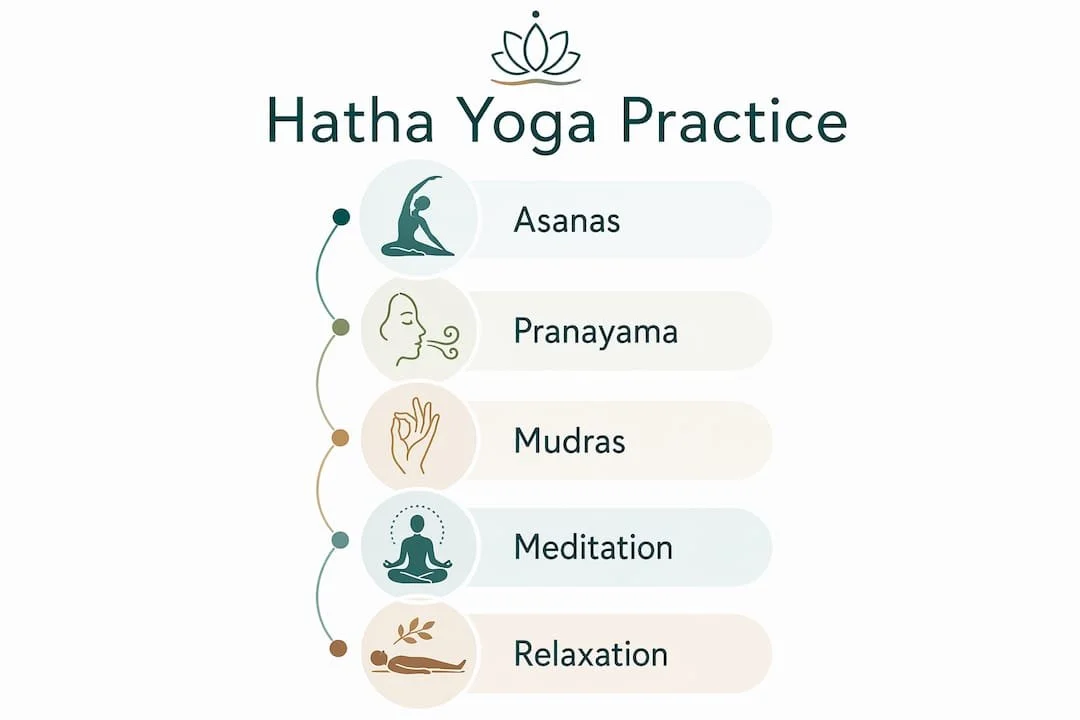
What are the real benefits of practicing Hatha Yoga?
Hatha Yoga was originally designed to prepare the body and mind for meditation and spiritual realization, not primarily for physical fitness. That original purpose shapes the benefits practitioners actually report: a calmer, more focused mind alongside genuine physical gains.
Practicing Hatha Yogaregularly builds flexibility, strength, and balance while reducing stress and supporting mental health. The slow, deliberate pace gives the nervous system time to downshift, which is part of why many practitioners describe feeling both physically worked and mentally clear after a session. For people who want to develop a meditation practice, Hatha Yoga serves as a natural on-ramp: the body becomes comfortable sitting still, and the breath becomes a familiar anchor.
Benefits practitioners commonly experience:
Increased flexibility and joint mobility
Greater muscular strength and endurance, especially in the core
Improved posture and spinal alignment
Reduced stress and anxiety through breath-focused movement
Better sleep quality
Heightened body awareness and proprioception
Preparation for seated meditation through physical ease and breath control
Support for mental health and emotional regulation
The physical and mental benefits reinforce each other. A body that moves without pain sits more comfortably in stillness, and a mind trained to follow the breath during a challenging posture carries that skill into daily life.
Diet in the Hatha Yoga tradition
Classical Hatha Yoga texts treat diet as part of the practice, not a separate lifestyle choice. The traditional recommendation is a sattvic diet, meaning foods that are pure, light, fresh, and easy to digest. The reasoning is practical within the system: heavy, processed, or stimulating foods are believed to agitate the mind and disrupt the subtle energy channels that pranayama and asana work to refine.
Classical dietary principles from the Hatha tradition include:
Favor fresh, plant-based foods — fruits, vegetables, grains, legumes, and dairy
Eat in moderation — classical texts recommend filling the stomach halfway with food, a quarter with water, and leaving a quarter empty
Avoid heavy, fried, or processed foods — believed to dull awareness and slow energy
Limit meat, alcohol, and stimulants — traditionally discouraged for serious practitioners
Eat at regular times — consistency supports digestive fire (agni) and stable energy
Modern practitioners take a flexible approach. Many follow a broadly plant-forward diet without strict adherence to classical rules, and teachers rarely mandate specific eating patterns in Western studio settings. The underlying principle, eating in a way that supports clarity and energy rather than heaviness, translates well regardless of how literally you follow the tradition.
Practical tips for starting your Hatha Yoga practice
Beginners do well in Hatha Yoga when they prioritize breath and alignment over how a posture looks. The most common mistake is forcing range of motion before the body is ready, which leads to strain rather than progress. A good teacher will offer modifications for every posture, and using them is a sign of intelligence, not weakness.
For equipment, you need very little: a non-slip yoga mat and comfortable, form-fitting athletic wear that lets the teacher see your alignment. Loose, baggy clothing can obscure whether your hips are square or your spine is neutral, which matters in a style where alignment is the point. You can explore wellness scheduling strategies to build a consistent practice into your week without overcommitting early on.
When selecting a class or teacher, look for someone who cues breath alongside movement and who offers hands-on or verbal adjustments. A teacher trained in a recognized lineage, whether Iyengar-influenced, Sivananda, or another classical school, will typically give you more structural guidance than a generalist. Start with a beginner or "all levels" Hatha class rather than jumping into an intermediate session.
Pro Tip: Hatha Yoga often feels harder than it looks. Static holds demand more from your muscles and mind than flowing through the same postures. Set your expectation at "steady effort" rather than "easy stretch," and you'll enjoy the practice far more from session one.
Consistency matters more than frequency at the start. Two or three sessions per week builds the body awareness and breath habits that make the practice genuinely useful, and it gives your muscles time to adapt between sessions.
Classical Hatha Yoga texts and philosophy
The Haṭhayogapradīpikā, composed in the 15th century by Svātmārāma, is the most widely studied classical Hatha Yoga text in the world today. It systematizes four main practices: asanas, pranayama, mudras, and samadhi (meditative absorption), and it draws explicitly from earlier sources including the Goraksha Shataka and the work of the Nath tradition. The text frames the entire physical practice as a vehicle for spiritual liberation, not an end in itself.
Other foundational texts include the Gheranda Samhita, which organizes practice into seven limbs and gives detailed instructions for shatkarmas, and the Shiva Samhita, which emphasizes the subtle body, chakras, and the role of the guru. Together, these texts establish that Hatha Yoga's philosophy is inseparable from its techniques. Breath control, for example, is not just a relaxation tool in this framework. It is a method for directing prana through the nadis (energy channels) to awaken Kundalini energy and ultimately dissolve the individual self into universal awareness.
The philosophical backbone of Hatha Yoga connects to the broader Shaiva Tantra tradition and shares significant ground with Patanjali's Yoga Sutras, though with different emphases. Patanjali's system dwells deeply on meditation methodology; Hatha texts dwell on the body and breath as the primary instruments of transformation.
What are the main styles and schools within Hatha Yoga?
Because no single standardized Hatha sequence exists, the tradition has branched into distinct schools, each with its own emphasis and teaching methodology.
Iyengar Yoga places extraordinary attention on precise alignment, using props like blocks, straps, and bolsters to help practitioners access postures correctly regardless of their current flexibility. It traces directly to B.K.S. Iyengar, one of the most influential yoga teachers of the 20th century.
Sivananda Yoga follows a fixed sequence of 12 basic postures developed by Swami Sivananda and popularized in the West by Swami Vishnudevananda. It integrates the five points of yoga: proper exercise, breathing, relaxation, diet, and positive thinking, making it one of the more explicitly philosophical Western Hatha schools.
Kundalini Yoga, as taught in the West by Yogi Bhajan, emphasizes breath, chanting, and specific kriyas (action sets) designed to awaken Kundalini energy. It sits at the more spiritually intensive end of the Hatha spectrum.
Bikram and hot yoga formats apply Hatha postures in a heated room, typically 95–105°F, to increase flexibility and intensify the cardiovascular effect. Amritayogawellness offers hot Hatha yoga as one of its class formats, combining the alignment focus of traditional Hatha with the added challenge of heat.
Restorative Yoga uses long-held, fully supported postures to activate the parasympathetic nervous system. It draws from Hatha principles but prioritizes deep rest over muscular engagement.
Who should be cautious with Hatha Yoga?
Hatha Yoga is generally safe for most adults, but certain conditions call for modifications or medical clearance before starting. The slow pace makes it less risky than high-intensity styles, yet static holds can still stress joints and connective tissue when done without proper guidance.
Situations that warrant extra care:
Recent surgery or injury — especially to the spine, knees, hips, or shoulders; get clearance from a physician before joining a class
Osteoporosis — some forward folds and twists can compress vertebrae; an experienced teacher can modify these
Pregnancy — many postures are safe with modification, but deep twists, strong inversions, and prone postures need adjustment, particularly in the second and third trimesters
Glaucoma or high blood pressure — inversions like Shoulderstand or Headstand can temporarily raise intraocular and arterial pressure
Severe anxiety or trauma history — breath retention techniques (kumbhaka) can trigger panic responses in some people; a trauma-informed teacher helps
The most practical precaution for anyone starting out is to tell your teacher about any injuries or health conditions before class begins. A qualified Hatha teacher will adjust your practice, not push you past your limits.
How does Hatha Yoga differ from Ashtanga, Iyengar, and Kundalini?
The clearest way to understand the difference between Hatha and other styles is to look at pace, structure, and emphasis.
Hatha vs. Ashtanga: Ashtanga follows a fixed, progressive sequence of postures linked by breath in a continuous flow. The pace is demanding and the sequence never changes. Hatha has no fixed sequence, moves at a slower pace, and holds postures rather than flowing through them. Ashtanga is physically intense by design; Hatha can range from gentle to moderately challenging depending on the teacher.
Hatha vs. Iyengar: Iyengar is technically a Hatha style, but it is distinguished by its extreme precision in alignment and its systematic use of props. A general Hatha class may cue alignment verbally; an Iyengar class will spend significant time on a single posture until it is correct. Iyengar is particularly well-suited for people recovering from injury.
Hatha vs. Kundalini: Kundalini yoga, as practiced in Western lineages, incorporates repetitive movements, chanting (mantras), and specific breathing patterns called pranayama kriyas that are rarely found in a standard Hatha class. The goal is explicitly energetic and spiritual awakening rather than physical conditioning. Hatha can lead toward the same spiritual aims, but through a more gradual, body-centered path.
Hatha vs. Vinyasa: Vinyasa links postures with breath in a continuous flow, creating heat and cardiovascular demand. Hatha holds postures statically. Both use the same foundational poses, but the experience feels entirely different. Vinyasa tends to feel athletic; Hatha tends to feel deliberate and meditative. You can deepen your understanding of pranayama's role in both styles by exploring how breath anchors each approach differently.
How often and how long should you practice Hatha Yoga?
Typical Hatha classes run 45–90 minutes, and that range suits most practitioners well. A 60-minute class gives enough time for a meaningful breathwork opening, a solid sequence of postures, and a proper closing relaxation. Ninety minutes allows for more depth in individual postures and a longer meditation.
For frequency, two to three sessions per week is a practical starting point for beginners. That schedule builds body awareness and breath habits without overtaxing muscles that are adapting to new demands. Daily practice is traditional in classical Hatha lineages, but for most people integrating yoga into a busy American schedule, consistency over months matters far more than daily sessions in the short term.
Progress in Hatha Yoga is not linear. Flexibility gains can plateau and then suddenly jump. Breath awareness develops quietly over weeks before it becomes noticeable. The practitioners who benefit most are those who treat the practice as a long-term habit rather than a short-term fix, showing up regularly even when sessions feel unremarkable. Exploring patient wellness resources can help you build the broader health habits that support a sustainable yoga routine.
Key Takeaways
Hatha Yoga is the foundational physical branch of yoga, combining asanas, pranayama, and meditation to balance body and mind, with roots dating to 11th-century tantric texts and a modern presence in studios across the United States.
| Point | Details |
|---|---|
| Meaning of Hatha | “Force” in Sanskrit; also interpreted as the union of sun and moon energies. |
| Historical roots | Oldest text, the Amṛtasiddhi, dates to the 11th century from a tantric Buddhist tradition. |
| Class structure | Sessions typically include breathwork, asanas held for alignment, then meditation, covering a standard class length. |
| Core benefits | Builds flexibility, strength, and stress resilience while preparing the mind for meditation. |
| Practice frequency | Two to three sessions per week is a solid starting point for most beginners. |
Ready to experience Hatha Yoga firsthand? Amritayogawellness offers classes, workshops, and wellness services in Philadelphia designed for every level, from first-timers to dedicated practitioners. Whether you want to explore traditional Hatha, try a hot yoga format, or complement your practice with something unexpected like a tarot reading for personal reflection, the studio brings together a community of people serious about their well-being.
Restorative Yin Yoga: What It Is and How to Practice It
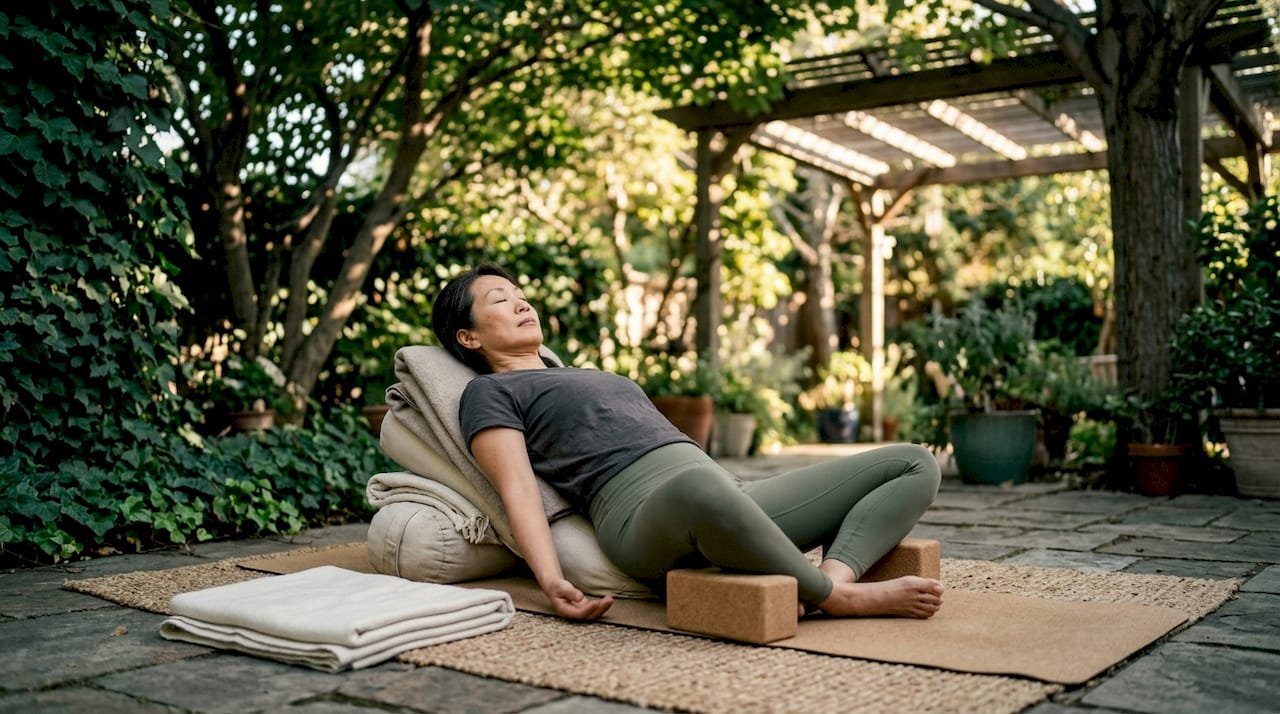
Restorative yin yoga is a hybrid practice that combines the long-held connective tissue work of yin yoga with the full prop-supported relaxation of restorative yoga. You hold floor-based poses for several minutes, fully supported by bolsters, blocks, blankets, and eye pillows, so your muscles can disengage completely while your connective tissues receive a gentle, sustained release. The result is something neither practice delivers alone: deep tissue work happening simultaneously with a profound nervous system reset.
What makes this hybrid distinct is the intention behind the props. In traditional yin yoga, props assist your position but you still feel a working edge of sensation. In restorative yoga, props eliminate all sensation entirely. Restorative yin yoga lands between those two poles, using props generously enough to remove muscular effort while still allowing mild connective tissue engagement to occur passively over time.
This practice suits anyone chasing flexibility, stress relief, or a nervous system reset, particularly people who find pure restorative yoga too passive but find traditional yin too demanding.
At a glance, restorative yin yoga:
Holds poses for 3–10 minutes in fully supported positions
Uses bolsters, blocks, blankets, and eye pillows to eliminate muscular effort
Targets deep connective tissues (fascia, ligaments, joint capsules) passively
Activates the parasympathetic nervous system for deep rest
Blends yin's tissue focus with restorative yoga's surrender and comfort
Suits flexibility goals, stress recovery, and emotional processing
What is yin yoga and why does it matter?
Yin yoga is a slow, floor-based practice that targets the body's deep connective tissues rather than its muscles. Where most movement practices work the muscular layer, yin goes deeper, reaching fascia, ligaments, and joint capsules through long, still holds. The practice was popularized in the West by Paul Grilley and Sarah Powers, drawing on both Taoist principles and anatomical understanding of how connective tissue responds to sustained, gentle load.
The defining concept in yin is the "working edge." You move into a pose until you feel a mild to moderate sensation, then stop there and stay. Not pain, not numbness, just a noticeable pull that you breathe through for several minutes. That sustained, low-level stress is what prompts connective tissue to adapt and lengthen over time, which is why yin yoga benefits include improved joint mobility and tissue health that other styles rarely touch.
Props appear in yin, but their role is positioning rather than comfort. A block under your hip might help you reach the floor, but you're still feeling the stretch. The mental side of yin is real too: staying with sensation for several minutes builds a kind of quiet resilience, training your nervous system to tolerate discomfort without reacting.
Core characteristics of yin yoga:
Poses held several minutes at a mild working edge of sensation
Targets fascia, ligaments, and joint capsules rather than muscles
Props used for alignment assistance, not to remove sensation
Builds flexibility, joint health, and connective tissue adaptation
Cultivates mental stillness and breath awareness under mild stress
Best suited for active practitioners wanting tissue-focused recovery
What restorative yoga actually does for your body
Restorative yoga operates on a completely different premise. The goal is not adaptation through stress but recovery through the complete absence of it. Every prop, every blanket fold, every bolster angle exists to remove physical load from the body until muscles have nothing left to do but let go.
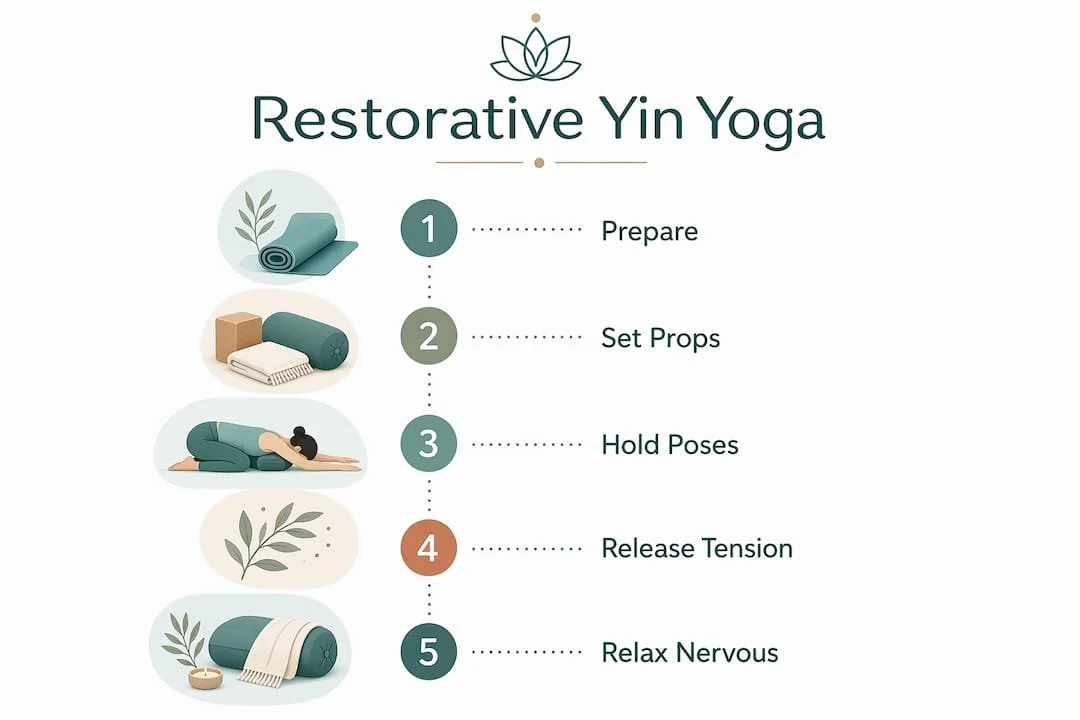
Pose durations run longer here because the nervous system needs time to shift from sympathetic (fight-or-flight) to parasympathetic (rest-and-digest) mode. A well-set-up restorative pose feels like being held rather than stretched. Restorative yoga sessions use props like two blankets, two blocks, a bolster, and often an eye pillow to create that nest of support, and even a 10-minute session can produce measurable emotional relief.
The mental approach is surrender rather than endurance. You're not staying with anything uncomfortable. You're practicing the skill of letting go, which turns out to be harder than it sounds for most people. Restorative yoga is particularly effective during burnout, illness recovery, or any period when the body's reserves are genuinely depleted.
Core characteristics of restorative yoga:
Poses held 5–20 minutes with full prop support and zero sensation
Props fill every gap so muscles disengage completely
Activates the parasympathetic nervous system for deep recovery
Benefits include stress relief, improved sleep, emotional balance, and injury recovery
No stretch sensation should be present; props are adjusted until comfort is total
Suited for burnout, stress recovery, and nervous system restoration
How yin yoga and restorative yoga actually differ
The clearest way to separate these two practices is by asking one question: are you supposed to feel something? In yin yoga, yes. In restorative yoga, no. That single distinction drives every other difference between them.
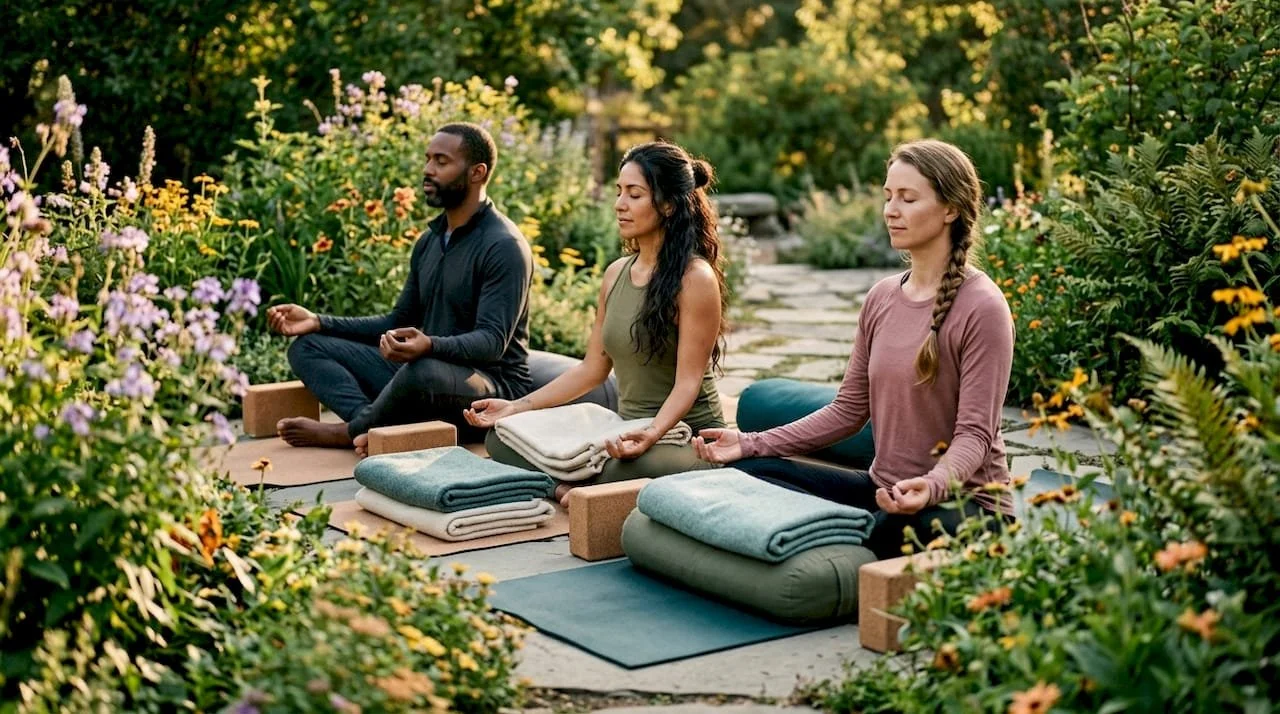
Yin yoga introduces mild sustained stress to connective tissues to stimulate adaptation, while restorative yoga uses extensive props to remove all physical load for total relaxation. The prop use reflects this: yin uses props moderately to help you reach a position, while restorative yoga's prop approach fills every negative space in the body until muscles disengage completely. A restorative setup can involve sandbags, multiple bolsters, and carefully folded blankets under every limb.
Philosophically, yin builds resilience through controlled sensation. Restorative rehearses rest by removing all challenge. Both activate the parasympathetic nervous system, but through opposite mechanisms: yin applies gentle stress for tissue adaptation, while restorative removes stress entirely for deep recovery. They're complementary, not interchangeable, and confusing them leads to either under-supporting a restorative pose or over-supporting a yin one.
| Dimension | Yin yoga | Restorative yoga |
|---|---|---|
| Philosophy | Resilience through sustained sensation | Surrender and deep rest |
| Stress vs. rest | Mild connective tissue stress for adaptation | Complete removal of physical stress |
| Alignment | Functional; props assist positioning | Comfort-first; props fill all gaps |
| Time per pose | 3–5 minutes | 5–20 minutes |
| Use of props | Moderate; sensation remains | Extensive; sensation eliminated |
| Intended benefits | Flexibility, joint health, mental resilience | Stress relief, recovery, nervous system reset |
Common misconceptions worth clearing up:
- Yin yoga is not the same as restorative yoga, even though both are slow and floor-based.
- Restorative yoga is not a beginner version of yin; it serves a different physiological purpose.
- Using more props does not make a yin pose restorative; the intention and sensation level define the practice.
- Both practices can and do activate the parasympathetic nervous system, just through different pathways.
Benefits of restorative yin yoga and how to start safely
The hybrid practice earns its place precisely because it delivers what neither parent practice does alone. Yin restorative yoga offers deep tissue work alongside complete relaxation and nervous system calming, with poses typically held up to 10 minutes in full prop support. You get the connective tissue release of yin without the mental demand of staying with sharp sensation, because the props reduce that sensation to something mild and manageable.
Mentally and emotionally, this practice creates space that active yoga rarely offers. Long, supported holds give the nervous system time to process stress rather than just suppress it. Many practitioners find that emotions surface during extended floor poses, which is a sign the body is releasing stored tension rather than a reason to stop. Breath awareness is the primary tool for navigating that experience: slow, deliberate exhales signal safety to the nervous system and deepen the relaxation response.
For beginners, the biggest obstacle is usually mental rather than physical. Stillness feels unproductive at first, especially for people accustomed to movement-based exercise. Breath focus is the primary technique instructors teach overcoming restlessness and settle into the hold. Start with shorter holds of 3–5 minutes and build gradually. Pair restorative yin yoga with more active practices on alternating days for a balanced approach to both flexibility and recovery. Exploring a holistic wellness routine that includes movement variety can make the stillness of restorative yin feel more natural over time.
Practical tips and precautions for beginners:
Start with classic poses: Supported Child's Pose, Reclined Butterfly, Legs Up the Wall, Supported Fish, and Melting Heart
Use a bolster under the spine, blocks under the knees, and blankets under the head to build full support
Aim for mild tissue sensation at most; if you feel sharp or joint pain, add props or exit the pose
Avoid restorative yin yoga during acute injury, late-stage pregnancy, or severe osteoporosis without medical guidance
Keep the room warm and dim; cold muscles and bright light work against the parasympathetic shift
Allow 5–10 minutes of stillness after your final pose before returning to activity
Pro Tip: Before settling into any pose, spend 60–90 seconds adjusting your props until you feel no muscular effort at all. Most beginners under-prop and then wonder why they can't relax. The setup is the practice.
Key Takeaways
Restorative yin yoga is the most accessible entry point for practitioners who want connective tissue release and nervous system recovery in a single session, without the mental demand of traditional yin or the complete passivity of pure restorative yoga.
| Point | Details |
|---|---|
| Hybrid practice definition | Restorative yin yoga blends yin's connective tissue focus with restorative yoga's full prop support and relaxation. |
| Pose duration | Poses are held 3–10 minutes, fully supported, to release tension without muscular effort. |
| Key distinction from yin | Yin requires a working edge of sensation; restorative yin minimizes that sensation through generous prop use. |
| Key distinction from restorative | Restorative yoga removes all sensation; restorative yin allows mild passive tissue engagement to occur. |
| Beginner priority | Adjust props until muscular effort disappears, and use breath awareness to navigate mental restlessness during holds. |
Amritayogawellness offers classes, workshops, and community events in Philadelphia designed to support exactly this kind of layered wellness practice. Whether you're drawn to the deep tissue work of yin, the nervous system reset of restorative yoga, or the restorative yoga techniques that bridge both, the studio's offerings meet you where you are. You can also explore Amritayogawellness's wellness workshops for community-centered ways to deepen your self-care practice beyond the mat.
Anti Gravity Yoga Benefits: What You Need to Know
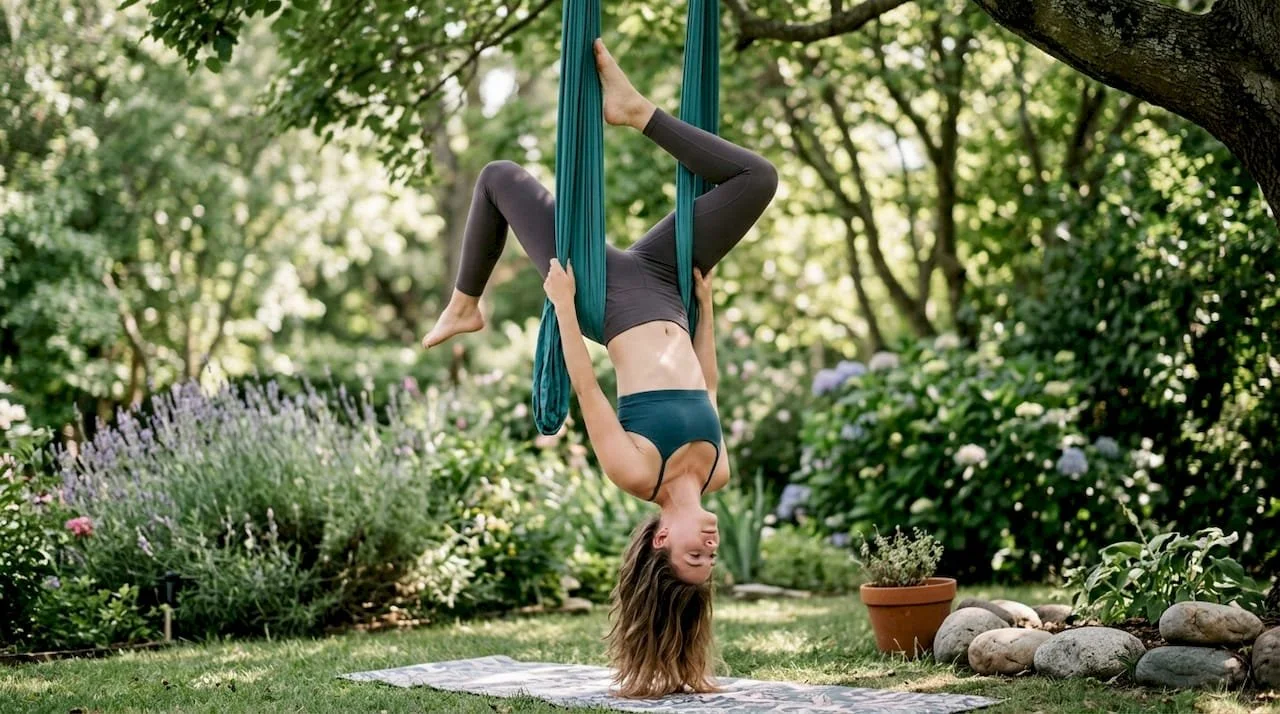
TL;DR:
Anti-gravity yoga uses a silk hammock to enhance strength, flexibility, and mental well-being through inversions and suspension. It offers significant benefits like spinal decompression, increased core and upper body strength, and greater flexibility than traditional yoga. The practice also reduces cortisol levels and improves mood, though beginners should consider safety precautions and proper instruction.
Anti-gravity yoga is defined as a practice that uses a silk suspension hammock to support the body through inversions, strength poses, and flexibility work that traditional floor yoga cannot replicate. The anti gravity yoga benefits span from measurable spinal decompression to reduced cortisol levels, making it one of the most physically and mentally complete fitness methods available to adults today. Aerial yoga, the widely recognized industry term for this practice, combines classical yoga alignment with aerial acrobatics and physical therapy principles. Research from 2024–2026 confirms quantifiable gains in strength, flexibility, and psychological well-being that go well beyond what most people expect from a hammock class.
What physical benefits does anti-gravity yoga offer?
Aerial yoga delivers physical results that traditional yoga simply cannot match, largely because suspension changes how the body loads and moves. When you hang in a hammock, gravity works with you rather than against you, allowing deeper stretches and more honest alignment.
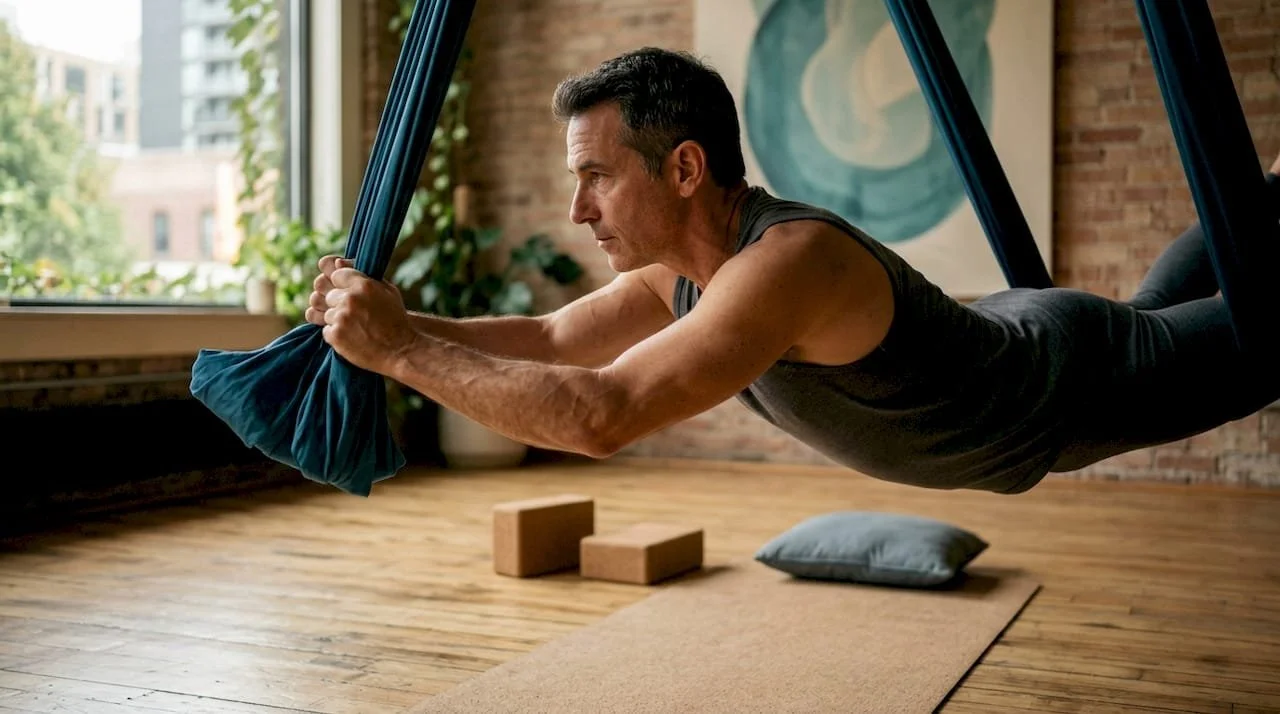
Spinal decompression and joint relief
Spinal decompression is the most cited physical benefit of aerial yoga, and the biomechanics behind it are straightforward. Intradiscal pressure in the lumbar spine decreases by 35–50% during full inversion, reducing paraspinal muscle activity and promoting spinal relaxation. That pressure drop mimics the disc height recovery your spine experiences during sleep, but it happens actively and consciously during practice. The result is reduced muscle tension along the spine and a noticeable sense of length after class.
One detail worth knowing: acute spinal decompression during inversion does not produce permanent disc changes. The benefits come from mechanical unloading and muscle relaxation, not structural remodeling. That distinction matters if you have a disc condition and are weighing aerial yoga against other therapies.
Strength and core activation
Aerial yoga activates 30% more core muscles than traditional floor yoga because the hammock creates constant instability. Your stabilizing muscles fire continuously to keep you balanced in the air. That sustained activation builds functional strength faster than static poses on a mat.
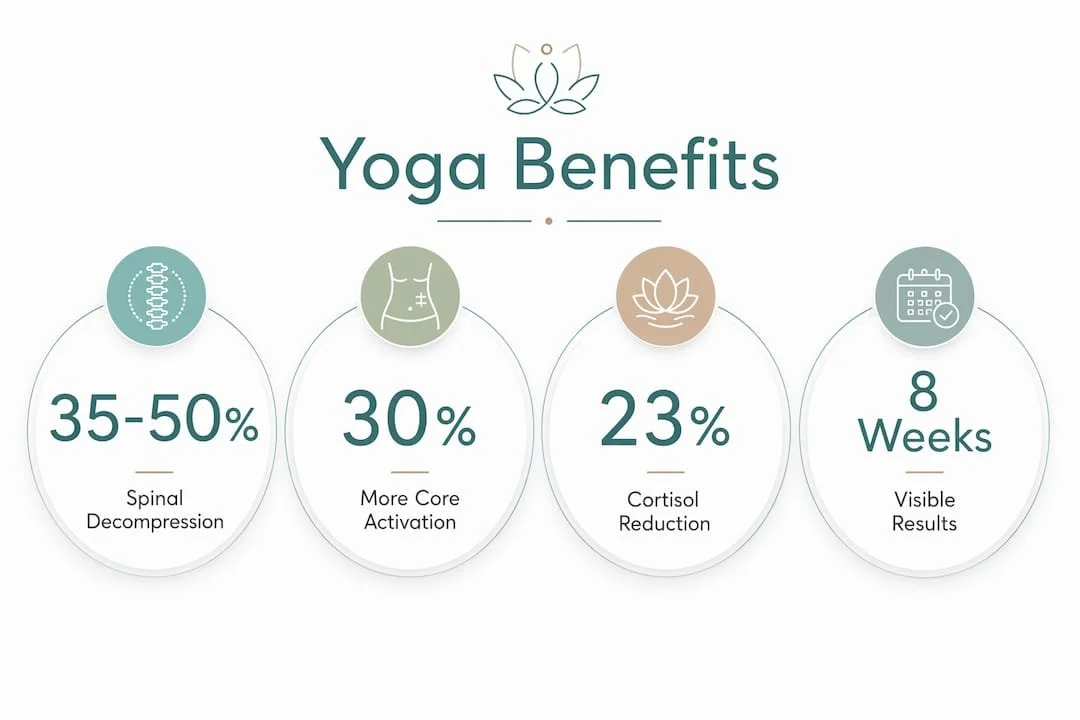
Upper body gains are equally significant. Practitioners who train twice weekly for 8 weeks improve upper body strength by 27% and spinal flexibility by 35% compared to traditional yoga participants. Eight weeks is a short window for that level of change. It reflects how much harder the body works when it cannot rely on the floor for support.
Flexibility gains
Flexibility improvements in aerial yoga are concentrated in the hamstrings and spine, two areas where traditional yoga often plateaus. Biomechanics research shows a 41% average increase in hamstring flexibility within 3 months for aerial yoga practitioners, nearly double the rate seen in traditional yoga. The hammock allows practitioners to release into a stretch without the muscular bracing that floor poses often trigger. That passive release is why gains accumulate faster.
Pro Tip: If hamstring tightness has been your plateau in traditional yoga, try a supported aerial forward fold in the hammock at the start of class. The suspension removes the need to "hold yourself up," so the hamstrings can actually let go.
| Benefit | What the research shows |
|---|---|
| Spinal decompression | Lumbar intradiscal pressure drops 35–50% during full inversion |
| Core strength | 30% more core muscle activation than floor yoga |
| Upper body strength | 27% improvement after 8 weeks of twice-weekly practice |
| Hamstring flexibility | 41% average increase within 3 months |
| Spinal flexibility | 35% improvement over 8 weeks compared to traditional yoga |
How does aerial yoga improve mental well-being?
The mental health case for aerial yoga is grounded in neuroscience, not just anecdote. Suspension and inversion activate the parasympathetic nervous system, which is the branch responsible for rest, digestion, and recovery. That activation is the physiological reason practitioners consistently report feeling calmer after class.
Cortisol reduction and anxiety relief
Aerial yoga reduces cortisol levels by 23% more than traditional yoga. Lower cortisol means less physiological stress, which translates directly into reduced anxiety symptoms over time. For adults carrying chronic stress, that difference between aerial and traditional yoga is clinically meaningful, not just a wellness talking point.
The psychological benefits of aerial yoga also include improved mood, reduced anxiety, and increased self-efficacy. Self-efficacy, the belief that you can handle challenges, grows when you repeatedly do something that initially felt impossible. Hanging upside down in a hammock qualifies.
Inversion, blood flow, and mood
Supported inversions temporarily increase cerebral blood flow, improving alertness, reducing mental fatigue, and elevating mood shortly after practice. The effect is brief but consistent. Practitioners often describe the post-class mental clarity as sharper than what they get from a standard yoga session.
"Aerial yoga combines physical challenge with playful movement, creating unique mood-boosting effects rarely matched by traditional yoga. The novelty of the environment, the vestibular stimulation, and the sense of accomplishment after each class work together to produce psychological benefits that go beyond simple relaxation."
The vestibular system, which governs balance and spatial orientation, gets a genuine workout during aerial practice. That stimulation is linked to improved mood regulation and reduced anxiety in adults. The playfulness built into aerial yoga is not incidental. It is part of what makes the practice neurologically effective.
Realistic expectations
Aerial yoga is not a clinical treatment for anxiety or depression. The stress relief and mood benefits are real and measurable, but they work best as part of a broader wellness routine. Consistency matters more than intensity. Two sessions per week produces better cumulative results than occasional drop-in classes.
Are there any risks to consider before trying aerial yoga?
Aerial yoga is safe for most healthy adults, but a few specific conditions require attention before your first class. Knowing these upfront lets you modify intelligently rather than push through discomfort.
Vestibular sensitivity. Beginners may experience mild motion sickness from vestibular stimulation during inversions. This is common and usually resolves within the first two or three sessions as the nervous system adapts.
Inner-ear conditions. Tell your instructor before class if you have a history of vertigo, labyrinthitis, or Meniere's disease. Instructors can modify or skip inversion sequences entirely.
Certain back conditions. Spinal decompression benefits most people with general back tension, but specific conditions like severe osteoporosis, spinal stenosis, or recent disc surgery require medical clearance first.
Acrobatic progressions. Practitioners should build foundational skills before attempting advanced acrobatic moves. Skipping the basics to try advanced sequences is the most common source of aerial yoga injuries.
Blood pressure concerns. Full inversions temporarily shift blood pressure. Adults with uncontrolled hypertension or glaucoma should consult a physician before practicing.
Pro Tip: Book an introductory or beginner-specific aerial yoga class for your first session. Instructors in these classes spend more time on hammock adjustment and body positioning, which dramatically reduces the learning curve and the risk of strain.
Who benefits most from aerial yoga, and how do you start?
Aerial yoga suits a wide range of adults, but certain groups see the fastest and most meaningful results.
Adults with chronic back tension benefit from the spinal decompression and paraspinal muscle relaxation that inversions provide. Many report reduced discomfort after just a few sessions.
People with joint sensitivity find aerial yoga gentler than weight-bearing exercise because the hammock absorbs a significant portion of body load during standing and balancing poses.
Stress-heavy professionals benefit from the cortisol reduction and parasympathetic activation that aerial yoga produces more reliably than many other fitness formats.
Traditional yoga practitioners who have plateaued in flexibility or strength often find aerial yoga breaks through those ceilings within weeks, particularly in hamstring and spinal mobility.
Adults who find conventional gym workouts boring respond well to aerial yoga's novelty. The playful, exploratory quality of the practice keeps attendance consistent, which is the real driver of long-term results.
For starting out, two sessions per week is the research-backed frequency for meaningful strength and flexibility gains. Pair aerial yoga with a complementary practice like pilates or barre to build the foundational core strength that makes aerial poses more accessible. Working with a certified instructor for the first 4–6 sessions is the fastest path to correct hammock setup, safe inversion technique, and confident progression.
You can read more about aerial yoga strengthening moves to understand which poses build the most functional strength before your first class. For a direct comparison of what aerial yoga offers that traditional yoga does not, the breakdown of aerial vs. traditional yoga is worth reading before you book.
Key Takeaways
Aerial yoga produces measurable physical and mental benefits that traditional yoga cannot replicate, primarily because suspension and inversion change how the body loads, stretches, and recovers.
| Point | Details |
|---|---|
| Spinal decompression | Lumbar pressure drops 35–50% during inversion, relieving back tension without permanent structural change. |
| Strength and core gains | Twice-weekly practice for 8 weeks improves upper body strength by 27% and activates 30% more core muscles than floor yoga. |
| Flexibility acceleration | Hamstring flexibility increases by 41% within 3 months, nearly double the rate of traditional yoga. |
| Cortisol and stress reduction | Aerial yoga lowers cortisol 23% more than traditional yoga, producing measurable anxiety relief over time. |
| Safety and progression | Build foundational skills first, disclose health conditions to your instructor, and start with beginner-specific classes. |
What I've learned from watching people discover aerial yoga
The most consistent thing I observe when adults try aerial yoga for the first time is the gap between what they expect and what they actually feel. Most people expect a circus trick. What they get is a genuine physical challenge that exposes every weakness in their core and shoulder stability within the first ten minutes.
The mental shift is equally predictable. The first session is usually dominated by sensory discomfort: the unfamiliar pressure of the hammock, the mild disorientation of being partially inverted, the effort of trusting fabric to hold your weight. By the third or fourth session, that discomfort converts into confidence. That conversion is where the real psychological benefit lives. It is not just stress relief. It is the experience of doing something your nervous system initially flagged as dangerous and coming out fine.
The adults who get the most out of aerial yoga are not the most flexible or the most athletic. They are the most consistent. Two sessions a week, a willingness to stay in beginner classes longer than feels necessary, and the patience to let the hammock teach you rather than forcing poses. The stress relief benefits of aerial yoga compound over weeks, not days. The practitioners who understand that come back. The ones who expect instant results usually do not.
The blend of playfulness and discipline in aerial yoga is genuinely rare in fitness. Most workouts are either serious and grinding or light and ineffective. Aerial yoga manages to be both fun and physically demanding in the same session. That combination is why retention rates in aerial yoga classes tend to outpace most other group fitness formats.
— Juiced
Aerial yoga classes at Amritayogawellness
Amritayogawellness offers aerial yoga classes in Philadelphia designed for adults at every level, from first-timers to experienced practitioners looking to deepen their practice. Certified instructors guide each session with attention to safe hammock setup, proper inversion technique, and modifications for individual needs.
Whether your goal is back pain relief, stress reduction, or a strength and flexibility challenge that actually holds your attention, the Amritayogawellness class schedule has options that fit. The studio also offers pilates, barre, and massage therapy for adults who want to build a well-rounded wellness routine around their aerial practice. Booking an introductory class is the most direct way to experience what the research describes.
FAQ
What are the main anti gravity yoga benefits for beginners?
Beginners typically experience spinal decompression, reduced back tension, and improved core activation within the first few sessions. Cortisol reduction and mood improvement become more pronounced with consistent twice-weekly practice over 8–12 weeks.
How does aerial yoga reduce stress better than traditional yoga?
Aerial yoga reduces cortisol by 23% more than traditional yoga by combining parasympathetic nervous system activation through inversion with the mood-boosting effects of novel, playful movement. The vestibular stimulation from suspension adds a neurological dimension that floor yoga does not produce.
Is aerial yoga safe for people with back pain?
Aerial yoga is generally safe for adults with general back tension because inversion reduces lumbar intradiscal pressure by 35–50%. Adults with specific conditions like severe osteoporosis, spinal stenosis, or recent disc surgery should get medical clearance before practicing.
How quickly do you see results from aerial yoga?
Research shows measurable strength and flexibility improvements within 8 weeks of twice-weekly practice. Hamstring flexibility gains of up to 41% appear within 3 months. Stress and mood benefits often appear sooner, sometimes after just a few sessions.
Who should avoid aerial yoga?
Adults with uncontrolled hypertension, glaucoma, severe vertigo, or recent spinal surgery should consult a physician before practicing. Beginners with inner-ear sensitivity should inform their instructor so inversions can be modified or skipped.
Recommended
4 Types of Yoga in the Bhagavad Gita Explained
TL;DR:
The four primary yoga paths in the Bhagavad Gita are Karma, Bhakti, Jnana, and Raja Yoga, each suited to different temperaments. These internal disciplines aim for self-realization and complement each other to foster balanced spiritual growth. Practitioners are encouraged to start with the path that aligns with their nature and incorporate others as they progress.
The Bhagavad Gita defines four primary yoga paths: Karma, Bhakti, Jnana, and Raja Yoga, each designed for a distinct human temperament and all aimed at the same goal of self-realization. These are not physical fitness styles. They are internal psychological disciplines that address the full spectrum of human nature. Swami Vivekananda formalized the 4 types of yoga Bhagavad Gita framework in the late 19th century, integrating Raja Yoga from Patanjali's Yoga Sutras into the classical three-path structure. Understanding all four paths gives you a map for spiritual growth that no single practice can provide on its own.
1. What are the 4 types of yoga in the Bhagavad Gita?
The four yogic paths are Karma Yoga (action), Bhakti Yoga (devotion), Jnana Yoga (knowledge), and Raja Yoga (meditation). Each path corresponds to a different psychological tendency. Active, duty-driven people gravitate toward Karma Yoga. Heart-led, emotionally expressive people find Bhakti Yoga natural. Analytical thinkers pursue Jnana Yoga. Those drawn to stillness and mental discipline practice Raja Yoga.
The Gita does not present these as competing options. It presents them as complementary routes to the same destination. Most practitioners will find one path more natural at first, then draw from the others as their practice deepens. That progression is not a sign of inconsistency. It is a sign of growth.
2. Karma Yoga: the path of selfless action
Karma Yoga is the yoga of action performed without attachment to results. The Bhagavad Gita's most cited verse on this path, BG 2.47, states: "You have a right to your actions, never to the fruits of those actions." That principle is the entire foundation of the path. You act fully, give your best effort, and release the outcome.

This path suits people who are naturally active, duty-driven, and engaged with the world. It does not require retreat from daily life. Instead, it transforms ordinary work into spiritual practice by changing the motivation behind the action.
Core Karma Yoga practices include:
Seva (selfless service): volunteering, community work, or helping others without expectation of reward
Nishkama karma: performing professional and personal duties as an offering rather than a transaction
Mindful engagement: bringing full attention and care to every task, however small
Pro Tip: If you feel spiritually dry or mentally scattered, adding a weekly seva practice regrounds the other paths. Karma Yoga keeps knowledge and devotion from becoming abstract.
Karma Yoga is also the most accessible entry point for practitioners who feel disconnected from meditation or devotional practice. Yoga therapy frameworks often use Karma Yoga principles to help people find meaning in daily routines, which supports both mental health and spiritual development.
3. How Bhakti Yoga cultivates devotion and transformation
Bhakti Yoga is the path of love and surrender to the Divine. It channels all emotional energy, including longing, grief, and joy, toward a higher source. Bhakti Yoga is often considered the easiest path because it requires an open heart rather than intellectual rigor or physical discipline. That does not make it shallow. Emotional surrender at depth is one of the most demanding spiritual acts a person can undertake.
Bhakti Yoga is not mere ritual. The difference between ritual and Bhakti is intention. Ritual performed mechanically stays on the surface. Bhakti performed with genuine love transforms the practitioner from the inside out.
Common Bhakti practices include:
Mantra repetition: chanting names of the Divine to focus and purify the mind
Kirtan: call-and-response devotional singing that builds communal spiritual energy
Puja: ritual offerings made with sincere devotion rather than obligation
Prayer: direct, personal communication with the Divine as a living relationship
Bhakti Yoga suits emotionally expressive, heart-led individuals who connect more easily through feeling than through analysis. It also serves as a corrective for Jnana practitioners who risk becoming intellectually arrogant. Devotion keeps knowledge humble.
4. What makes Jnana Yoga the most intellectually demanding path?
Jnana Yoga is the path of discriminative wisdom, called viveka in Sanskrit. Jnana Yoga uses the intellect to transcend the intellect, leading ultimately to the realization that the individual self (Atman) and the universal consciousness (Brahman) are one. That is not a metaphor. It is the central philosophical claim of the Upanishads, which the Bhagavad Gita draws from directly.
This path is considered the most rigorous because it demands sustained mental discipline over years, not weeks. Practitioners must hold a question in the mind with total seriousness and refuse to settle for comfortable answers.
Core Jnana Yoga practices include:
Atma Vichara: the self-inquiry practice of asking "Who am I?" and tracing every thought back to its source
Scriptural study: deep reading of the Bhagavad Gita, Upanishads, and Brahma Sutras with a qualified teacher
Viveka-Vairagya: cultivating discernment between the real and the unreal, and detachment from what is unreal
Contemplation: sustained, silent reflection on philosophical questions rather than surface-level reading
Pro Tip: Jnana Yoga without Bhakti or Karma Yoga produces dry intellectualism. Pair scriptural study with a service practice or devotional ritual to keep insights grounded in lived experience.
Jnana Yoga suits analytical, philosophical temperaments. It appeals to people who find meditation frustrating without a conceptual framework to work within. For practitioners interested in yoga therapy for mental health, Jnana Yoga's self-inquiry tools offer a structured way to examine thought patterns and their roots.
5. How Raja Yoga provides systematic meditation for mental mastery
Raja Yoga is the "royal" path of meditation and mental control. Its systematic framework comes from Patanjali's eight limbs, known as Ashtanga Yoga, which provide a complete program for training the mind from ethical conduct through to deep meditative absorption. Swami Vivekananda integrated this system into the Bhagavad Gita's framework in the 1890s, creating the modern four-path structure most practitioners study today.
Raja Yoga suits people who are naturally drawn to structure, stillness, and measurable inner progress. It is the path most directly concerned with the mechanics of the mind.
Key Raja Yoga practices include:
Yama and Niyama: ethical disciplines and personal observances that create the foundation for stable meditation
Asana: physical posture practiced to prepare the body for long periods of stillness
Pranayama: breath regulation that directly influences the nervous system and mental state
Dharana and Dhyana: concentration and sustained meditation leading toward samadhi (union)
Raja Yoga does not stand alone. It provides the mental stability that makes Karma Yoga more focused, Bhakti Yoga more absorbed, and Jnana Yoga more penetrating. Practitioners who struggle with scattered attention often find that a consistent Raja Yoga practice transforms every other aspect of their spiritual life.
6. How the four yoga paths interrelate and benefit modern practitioners
The four yogas are complementary disciplines, not competing schools. The Gita teaches integration, not exclusive mastery of one path. A Jnana yogi needs Karma Yoga's grounding in real-world action. A Bhakti yogi benefits from Raja Yoga's mental focus. Knowledge informs selfless action, and devotion supports meditation. Practicing only one path creates imbalance over time.
Spiritual progression through the paths is often natural and evolving. Many practitioners begin with Karma Yoga because it requires no special conditions, just showing up and doing the work. Over time, that work generates questions that Jnana Yoga addresses. Devotion arises naturally as understanding deepens. Meditation becomes possible once the mind is steadied by action and knowledge.
| Path | Temperament | Core focus | Key practice |
|---|---|---|---|
| Karma Yoga | Active, duty-driven | Selfless action | Seva, nishkama karma |
| Bhakti Yoga | Emotional, heart-led | Devotion and surrender | Kirtan, mantra, puja |
| Jnana Yoga | Intellectual, analytical | Discriminative wisdom | Atma Vichara, scriptural study |
| Raja Yoga | Structured, stillness-seeking | Mental mastery | Pranayama, meditation |
A common pitfall for Western practitioners is treating these paths as physical style choices rather than lifelong philosophical disciplines. Hatha and Vinyasa yoga are physical practices. The Bhagavad Gita's four paths are psychological and spiritual frameworks that address the full depth of human experience. Confusing the two leads to a practice that stays permanently on the surface.
Pro Tip: Assess your dominant temperament honestly, then choose one path as your primary practice. Add elements from the other three as needed. Rigid adherence to one path is itself a form of attachment the Gita warns against.
For practitioners exploring yoga styles and their best fit, understanding the Bhagavad Gita's four paths provides a philosophical foundation that makes every physical practice more meaningful.
Key takeaways
The four yoga paths of the Bhagavad Gita are complementary disciplines suited to different temperaments, and integrating all four produces more balanced and sustainable spiritual growth than any single path alone.
| Point | Details |
|---|---|
| Four distinct paths | Karma, Bhakti, Jnana, and Raja Yoga each address a different human temperament. |
| Not physical styles | These paths are internal psychological disciplines, not fitness or movement practices. |
| Integration is the goal | The Gita teaches synthesis of all four paths, not exclusive mastery of one. |
| Temperament guides entry | Start with the path that matches your nature, then draw from the others as you grow. |
| Progression is natural | Many practitioners move through the paths organically, from action to knowledge to devotion to meditation. |
What I've learned from watching practitioners choose just one path
Most beginners arrive with a strong preference for one path and treat it as the whole picture. The Karma Yoga practitioner volunteers constantly but never sits still long enough to examine why. The Jnana Yoga student reads every text but struggles to feel anything. The Bhakti practitioner overflows with devotion but avoids the hard questions that Jnana Yoga demands. The Raja Yoga meditator achieves stillness but disconnects from the world.
The Bhagavad Gita's real teaching is not "find your path." It is "develop all four capacities." Krishna does not tell Arjuna to pick one yoga and ignore the rest. He describes each path in detail because Arjuna, like every human being, needs all of them at different moments.
What I find most striking is how the paths correct each other's weaknesses. Karma Yoga keeps Jnana Yoga honest. Bhakti Yoga keeps Raja Yoga warm. Jnana Yoga keeps Bhakti Yoga from becoming sentimental. Raja Yoga keeps Karma Yoga from becoming frantic. That mutual correction is the architecture of a balanced spiritual life.
The modern tendency to specialize, to become a "meditation person" or a "service person," misses this entirely. The Gita describes a complete human being, not a spiritual specialist. The practitioners I have seen grow most consistently are the ones who hold all four paths lightly and move between them as life demands.
— Juiced
Spiritual guidance at Amrita Yoga & Wellness in Philadelphia
Amritayogawellness offers classes, workshops, and services that support practitioners at every stage of their yogic path, whether you are just beginning to understand the Bhagavad Gita's teachings or deepening a long-standing practice.
For seekers who want personalized spiritual insight alongside their yoga practice, tarot readings at Amritayogawellness offer a reflective tool for examining where you are on your path and what the next step might look like. The studio's Philadelphia community brings together practitioners across all four yogic temperaments, creating a space where action, devotion, knowledge, and meditation all have a home. Connect with the Amritayogawellness community and find the guidance that fits where you are right now.
FAQ
What are the 4 types of yoga in the Bhagavad Gita?
The four types are Karma Yoga (selfless action), Bhakti Yoga (devotion), Jnana Yoga (knowledge), and Raja Yoga (meditation). Each path suits a different temperament and all lead toward self-realization.
Are these yoga paths the same as physical yoga styles like Hatha or Vinyasa?
No. The Bhagavad Gita's four paths are internal psychological and spiritual disciplines, not physical movement practices. Hatha and Vinyasa are physical styles; the Gita's yogas address the full depth of human consciousness.
Which of the four yogas is considered the easiest?
Bhakti Yoga is widely considered the most accessible path because it requires an open heart rather than intellectual rigor or physical discipline. It channels emotion directly into spiritual practice through devotion and love.
Can you practice more than one yoga path at the same time?
Yes. The Bhagavad Gita teaches integration rather than exclusive mastery of one path. Combining all four prevents one-sidedness and produces more balanced spiritual growth over time.
Who formalized the four-path yoga framework?
Swami Vivekananda formalized the four-path framework in the late 19th century by integrating Raja Yoga from Patanjali's Yoga Sutras into the Bhagavad Gita's classical three-path structure of Karma, Bhakti, and Jnana Yoga.
Recommended
Wall Yoga for Beginners: Build Strength Safely
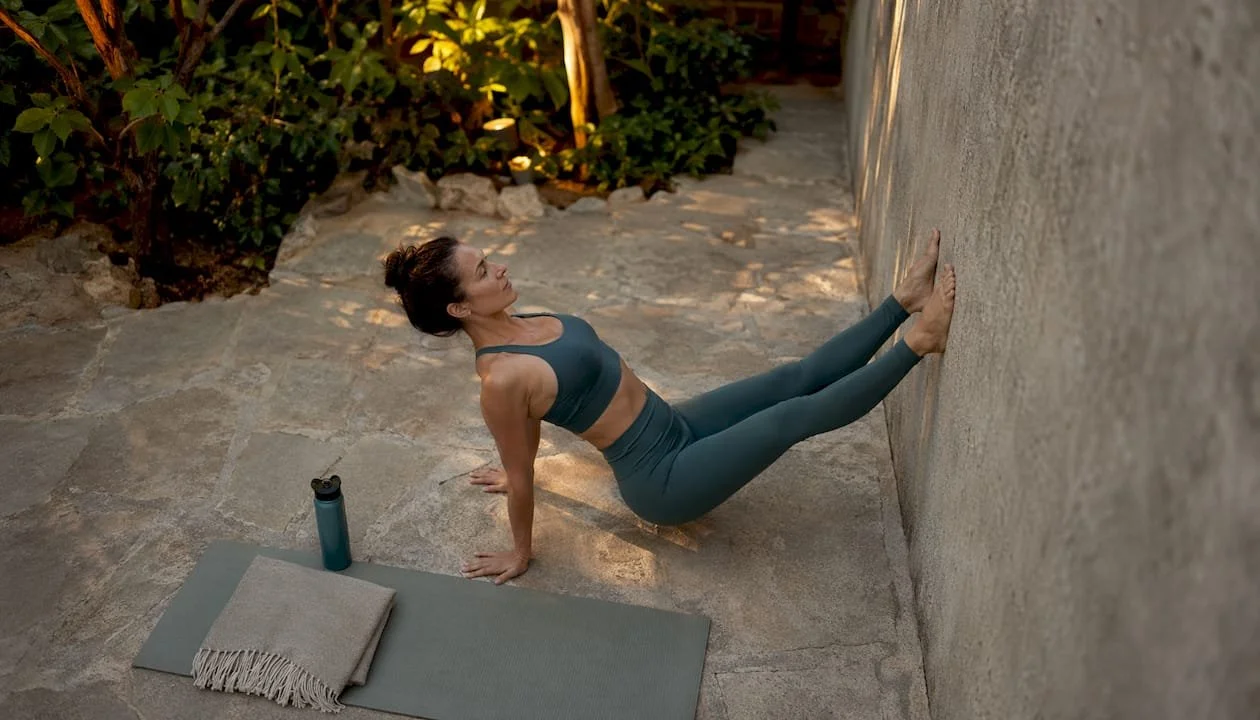
TL;DR:
Wall yoga for beginners uses a wall as a prop to improve balance, alignment, and flexibility safely. Practicing 15 to 25 minutes, four to five days weekly, helps build strength and correct posture while emphasizing slow, breath-led movements. The wall provides tactile feedback that enhances proprioception and supports steady progress without dependency.
Wall yoga for beginners is a practice that uses a flat wall as a prop to improve balance, alignment, and flexibility while protecting your joints. You need no special equipment, no prior yoga experience, and no gym membership. The wall acts as a stable guide that lets you feel correct body position from your very first session. Practices rooted in Hatha and restorative yoga principles use this same concept, emphasizing slow movement and breath connection over speed or intensity. Amritayogawellness recommends 15–25 minutes of practice, 4–5 days per week, as the ideal starting point for building strength and flexibility safely.
What are the essential wall yoga poses for beginners?
Five foundational poses form the backbone of any beginner wall yoga routine. Each one teaches your body a key alignment principle while the wall keeps you steady enough to actually feel it.
Wall Mountain Pose (30–60 seconds). Stand with your back flat against the wall, heels about two inches away from the baseboard, and feet hip-width apart. Press your shoulder blades and the back of your head lightly into the wall. This pose trains spinal stacking, the skill every other pose depends on. Hold for 30–60 seconds and breathe slowly.
Wall Forward Stretch (30 seconds). Face the wall and place both palms flat at shoulder height. Walk your feet back until your torso is parallel to the floor. Keep your spine long and your hips directly over your heels. This stretch opens the hamstrings and lengthens the entire back line of the body.
Wall Downward Dog (30–45 seconds). From the forward stretch position, walk your hands slightly higher on the wall and press your hips back and up. Your body forms an inverted V shape with the wall as your anchor. The wall distributes weight so you can explore the full length of the pose without straining your wrists or shoulders.
Wall Chair Pose (20–30 seconds). Stand with your back against the wall and slowly slide down until your thighs are parallel to the floor. Keep your knees directly over your ankles. This position builds quad and glute strength faster than most floor-based beginner poses. Hold for 20–30 seconds, then press through your heels to stand.
Legs Up the Wall (1–3 minutes). Sit sideways next to the wall, then swing your legs up as you lower your back to the floor. Let your arms rest at your sides, palms up. This restorative pose reduces leg fatigue, calms the nervous system, and is one of the most studied yoga stretches for beginners in both Hatha and restorative traditions.
Pro Tip: Place your heels two inches from the wall rather than flush against it. That small gap forces your legs to stay active instead of collapsing into the wall, which protects your knees and builds real strength.
How often and how long should beginners practice wall yoga?
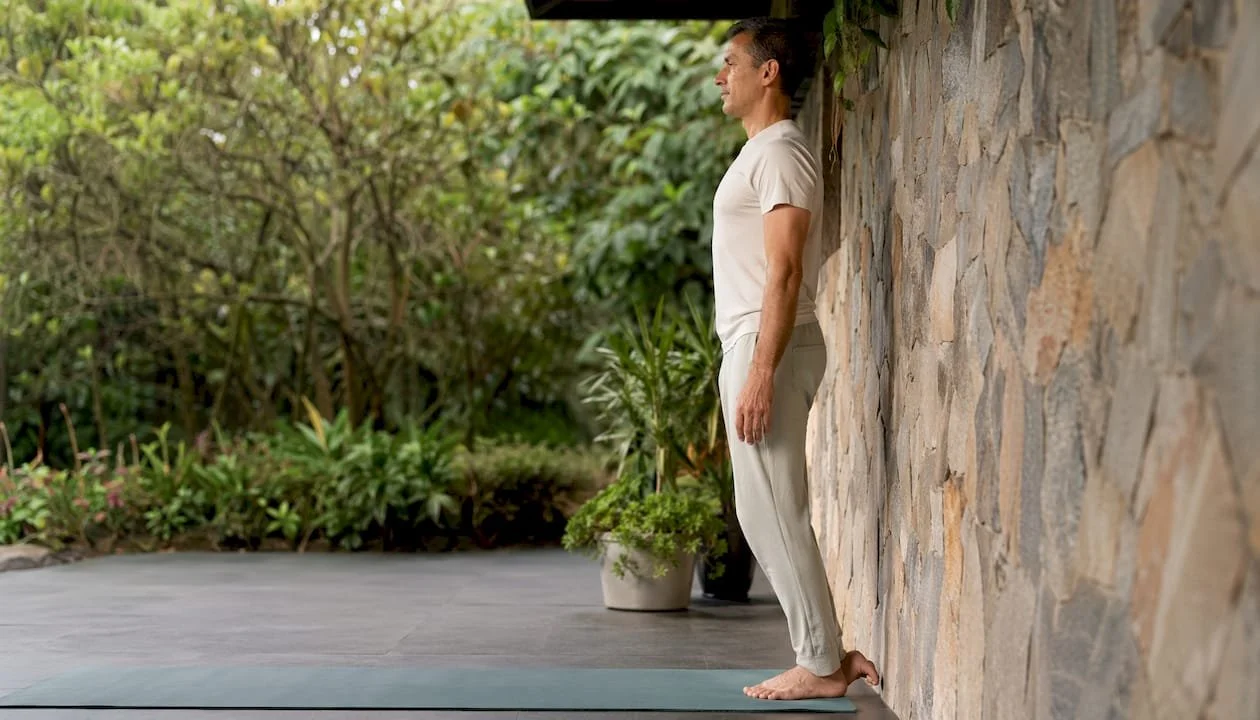
Consistency beats duration every time. Short daily sessions build better habits and produce more measurable physical results than infrequent longer sessions. That finding holds true across beginner yoga populations, and wall yoga is no exception.
The recommended starting point is 15–25 minutes per session, practiced 4–5 days per week. That range is short enough to fit into a lunch break but long enough to complete all five foundational poses with proper hold times and rest between sets.
Here is what an effective beginner schedule looks like in practice:
Days 1, 3, 5: Full five-pose sequence, 15–20 minutes total
Days 2, 4: Shorter 10-minute session focused on one or two poses you find challenging
Day 6 or 7: Full rest, or gentle Legs Up the Wall for 3–5 minutes
Slow, breath-led sessions of 15 minutes produce more progress for beginners than longer, sporadic high-intensity sessions. The reason is simple: your nervous system needs repetition, not volume, to rewire movement patterns.
Wall yoga follows Hatha yoga principles, which prioritize longer holds and slower transitions. That pacing gives your muscles time to release and your breath time to regulate. Rushing through poses defeats the purpose entirely.
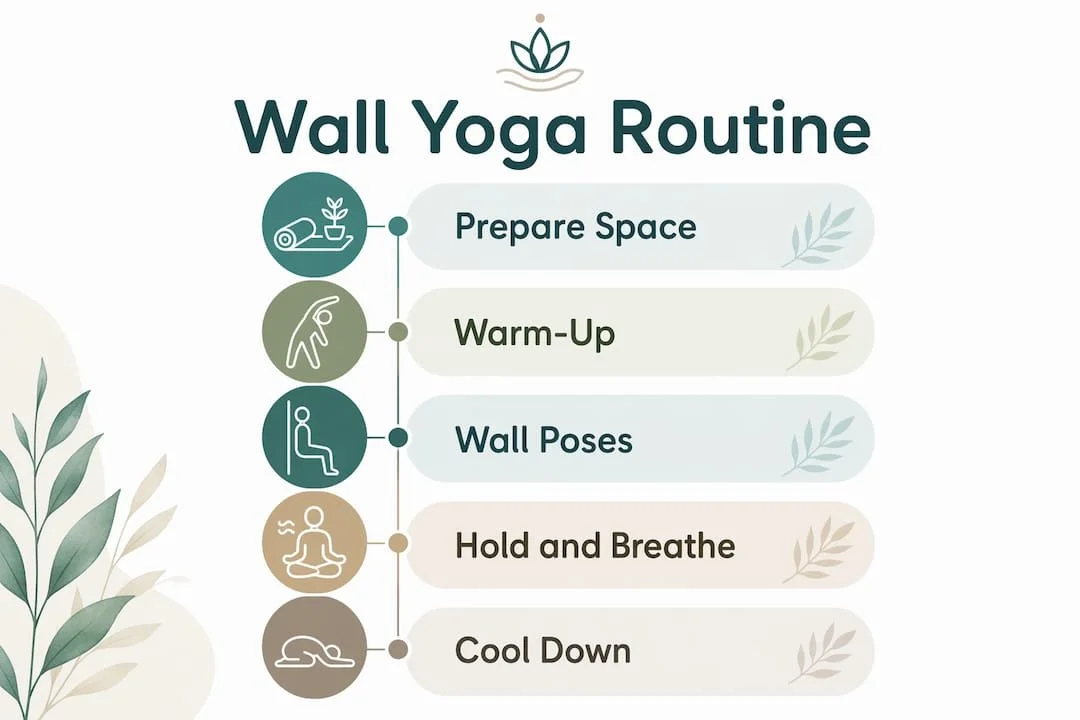
Pro Tip: Set a timer for each pose rather than counting in your head. Counting splits your attention. A timer lets you stay fully present in the stretch.
What common mistakes should beginners avoid in wall yoga?
Most beginners make the same four errors in their first few weeks. Knowing them in advance keeps you safe and speeds up your progress.
Leaning fully into the wall. The wall is a guide, not a crutch. Beginners should position heels slightly away from the wall to maintain active leg engagement. Full reliance on the wall shuts off the stabilizer muscles you are trying to build.
Holding your breath. Breath is not optional in yoga. Holding it triggers a stress response that tightens the very muscles you are trying to open. Inhale to prepare, exhale to deepen every pose.
Pushing into pain. Discomfort from a deep stretch is normal. Sharp or joint-level pain is a signal to back off immediately. The wall makes it easy to overextend because you feel more stable than you actually are.
Locking the knees. Straight legs do not mean rigid legs. Micro-bend your knees in standing poses to keep the joint safe and the surrounding muscles engaged.
Skipping warm-up. Two minutes of gentle walking in place or shoulder rolls before your first pose prepares your connective tissue and reduces injury risk significantly.
The wall gives you confidence, but confidence without awareness creates bad habits. Stay curious about what you feel, not just what you can achieve.
The goal is active participation, not passive leaning. Every pose should feel like a conversation between your body and the wall, not a collapse into it. That distinction separates beginners who progress quickly from those who plateau.
How does wall yoga improve body awareness and alignment?
The wall provides tactile feedback that free-standing poses simply cannot replicate. Pressing into the wall activates stabilizing muscles and refines alignment in ways that are difficult to achieve without a fixed reference point. That physical contact is called proprioceptive feedback, and it is the reason wall yoga works so well for beginners.
Proprioception is your body's ability to sense its own position in space. Most beginners have underdeveloped proprioception, which is why their posture collapses the moment they stop thinking about it. The wall interrupts that pattern by giving your nervous system a clear, constant signal about where your spine, hips, and shoulders actually are.
When you feel the wall against your back, you stop guessing about alignment. You know exactly where you are, and that knowledge transfers to every other movement you make off the mat.
The table below shows how specific wall contact points improve alignment in each foundational pose.
| Pose | Wall contact point | Alignment benefit |
|---|---|---|
| Wall Mountain | Full back, head | Trains neutral spinal curve |
| Wall Chair | Lower back, upper back | Prevents forward lean in squats |
| Wall Downward Dog | Both palms | Distributes shoulder load evenly |
| Wall Forward Stretch | Both palms | Keeps hips stacked over heels |
| Legs Up the Wall | Both legs | Decompresses lumbar spine |
Wall yoga also builds confidence in balance-dependent poses. When you know the wall is there, you take risks you would avoid on an open mat. Those risks, taken safely, are exactly how your balance improves. Amritayogawellness offers yoga for mobility resources that extend this principle into more advanced movement patterns for practitioners ready to progress. The physical and mental benefits of consistent yoga practice also extend beyond the mat, with research noting connections between regular yoga and overall skin and body wellness.
Key Takeaways
Wall yoga for beginners builds real strength and flexibility when you practice consistently, use the wall as a guide rather than full support, and follow Hatha-inspired slow, breath-led sessions of 15–25 minutes, 4–5 days per week.
| Point | Details |
|---|---|
| Optimal session length | Practice 15–25 minutes per session, 4–5 days per week for safe, steady progress. |
| Wall as guide, not crutch | Keep heels slightly away from the wall to maintain active muscle engagement in every pose. |
| Five foundational poses | Wall Mountain, Forward Stretch, Downward Dog, Chair Pose, and Legs Up the Wall cover all key alignment principles. |
| Breath is non-negotiable | Holding your breath tightens muscles and slows progress; exhale to deepen every pose. |
| Consistency over intensity | Short daily sessions produce better results than infrequent longer workouts. |
Why the wall changed how I think about beginner yoga
Most beginner yoga programs throw people into open-mat sequences and expect them to figure out alignment by watching an instructor from across the room. That approach works for some people. For most, it creates frustration and bad habits that take months to undo.
Wall yoga solves that problem at the root. The wall gives beginners immediate, honest feedback about where their body actually is versus where they think it is. That gap is usually surprising. I have watched people who swore their back was straight discover, the moment they pressed against a wall, that they had been rounding their shoulders for years.
What I find most underrated about this practice is the confidence effect. Beginners who feel unstable in open-mat balances often give up before they build any real skill. The wall removes that instability long enough for the body to learn the pattern. Once the pattern is learned, the wall becomes optional. That progression from supported to independent is far more satisfying than grinding through poses you are not ready for.
The slow pace is also not a compromise. It is the point. Breath-led movement at a Hatha-inspired tempo teaches your nervous system to stay calm under physical challenge. That skill carries into every other area of your life. Patience in a Wall Chair Pose is the same skill as patience in a difficult conversation. The gentle yoga poses that seem too easy at first are often the ones that create the deepest change.
— Juiced
Wellness at Amritayogawellness goes beyond the mat
Amritayogawellness, Philadelphia's community-centered wellness studio, offers more than yoga classes. If your wall yoga practice has sparked curiosity about your inner life as much as your physical body, the studio's tarot reading sessions offer a thoughtful complement to your movement practice.
Tarot readings at Amrita Yoga & Wellness are designed for people who take their self-care seriously and want to explore wellness from multiple angles. Pairing a grounded physical practice like wall yoga with reflective tools creates a fuller picture of where you are and where you want to go. Browse the full range of classes, workshops, and wellness services at Amritayogawellness to find what fits your practice right now.
FAQ
What is wall yoga and why is it good for beginners?
Wall yoga is a yoga practice that uses a flat wall as a prop to support balance, alignment, and safe stretching. It suits beginners because it reduces joint strain and provides immediate feedback about body position.
How long should a beginner wall yoga session last?
Beginners should practice for 15–25 minutes per session, 4–5 days per week. That duration is enough to complete foundational poses with proper hold times without overloading the body.
Can wall yoga help with posture?
Wall yoga directly improves posture by training spinal alignment through tactile feedback. Regular practice of Wall Mountain Pose and Wall Chair Pose resets habitual rounding in the shoulders and lower back.
Do I need any equipment for beginner wall yoga poses?
No equipment is required beyond a clear wall space and a yoga mat or non-slip surface. Bare feet work best for grip and proprioceptive feedback during standing poses.
How is wall yoga different from regular yoga?
Wall yoga uses the wall as a fixed reference point that activates stabilizing muscles and corrects alignment in ways free-standing poses cannot. The wall distributes weight and supports balance, making deeper stretches accessible to beginners from the very first session.
Recommended
Why Do Yoga? Real Benefits for Body, Mind, and Spirit
TL;DR:
Yoga combines physical postures, breathwork, and mindfulness to improve health and reduce stress. Regular practice lowers cortisol, enhances strength and flexibility, and supports emotional balance. Different styles serve specific physical and mental goals, with consistency being key for lasting benefits.
Yoga is a practice that unites physical postures, breathwork, and mindfulness to build strength, reduce stress, and support emotional balance. Millions of people practice yoga precisely because it delivers results across multiple dimensions of health at once. A 12-week yoga program significantly reduces cortisol, the body's primary stress hormone. That single finding explains why so many people who start yoga for flexibility end up staying for the mental clarity. Whether you are brand new or returning after a long break, understanding why practice yoga matters gives you a foundation to build on.
Why do yoga for physical health and strength?
Yoga builds physical fitness through mechanisms most people overlook. Unlike weight training, yoga uses prolonged bodyweight holds to create muscular tension. Holding Warrior II for 60 seconds recruits the same stabilizing muscles as a loaded squat, without the joint compression. Over time, that sustained effort increases muscular strength and mobility while reducing the systemic inflammation linked to chronic diseases.
The cardiovascular evidence is stronger than most people expect. A meta-analysis of 37 studies found that yoga reduced LDL cholesterol, blood pressure, and resting heart rate comparably to aerobic exercise. That result challenges the assumption that you need to run or cycle to protect your heart. Yoga achieves those outcomes partly through stress reduction, which lowers the hormonal load that drives arterial inflammation.
Chronic pain is another area where yoga earns its reputation. A 2017 Cochrane Review of 12 randomized controlled trials found that yoga improves chronic low back pain with effects lasting up to six months. That durability matters because most pain interventions lose their effect quickly. Yoga works by improving movement tolerance and regulating the nervous system, not by masking pain.
Key physical benefits include:
Flexibility and joint health: Stiffness is often the reason yoga feels so beneficial. Movement lubricates connective tissue and strengthens the structures around joints.
Balance and fall prevention: A 12-week study showed yoga improves balance and reduces fear of falls in older adults through better proprioception.
Inflammation reduction: Regular practice lowers markers of systemic inflammation, which contributes to conditions like heart disease and type 2 diabetes.
Functional strength: Poses like Plank, Chaturanga, and Chair build real-world strength that transfers to daily movement.
Pro Tip: If your goal is pain relief, prioritize consistency over intensity. Three shorter sessions per week outperform one long session for nervous system regulation.
In what ways does yoga support mental and emotional wellbeing?
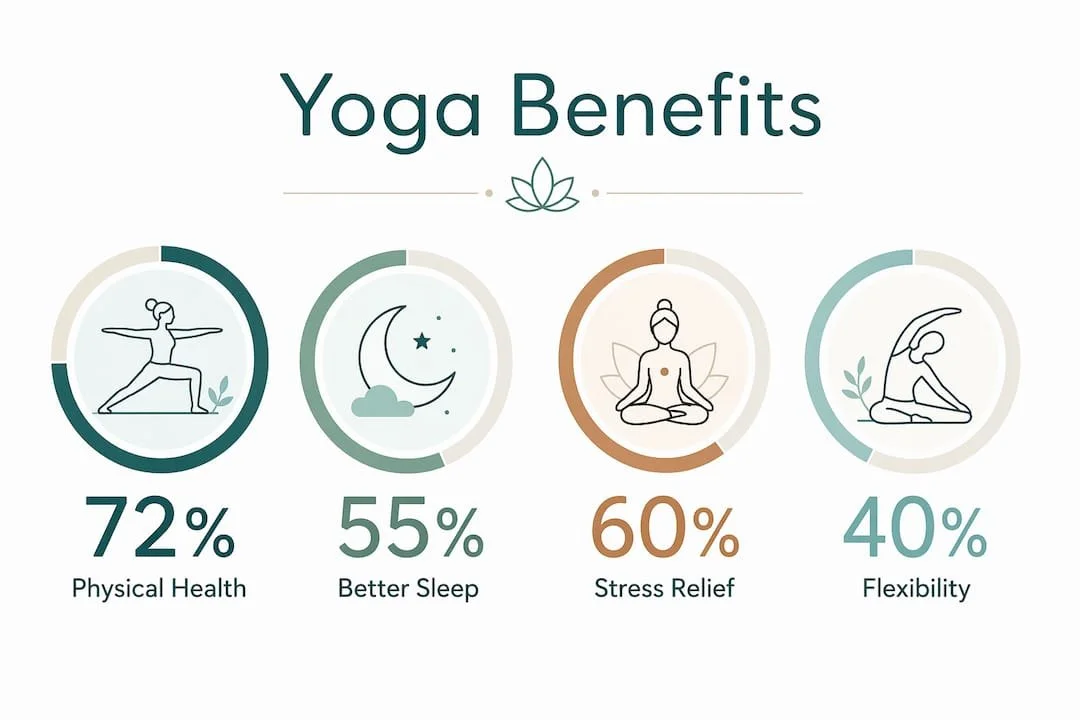
Yoga's mental health benefits operate through direct neurological pathways, not just relaxation. The practice activates the parasympathetic nervous system, the branch responsible for rest and recovery, while suppressing the fight-or-flight response. A 2018 systematic review found that yoga increases GABA neurotransmission and reduces activity in brain networks linked to rumination and depression. That is a measurable brain change, not a mood metaphor.
Sleep is one of the clearest downstream benefits. 55% of yoga practitioners report better sleep, and Yoga Nidra, a guided relaxation technique, reduces insomnia symptoms over eight weeks. Better sleep then reduces pain sensitivity, which in turn lowers anxiety. Stress reduction, improved sleep, and pain relief work together in a reinforcing cycle, each benefit strengthening the others.
The breath is the mechanism most people underestimate. Slow, controlled breathing during yoga practice directly lowers heart rate and blood pressure within minutes. That physiological shift is why a single session can change your mood, even before any long-term adaptation occurs.
A structured approach to mental health benefits through yoga looks like this:
Start with breath awareness. Even five minutes of diaphragmatic breathing before a session primes the nervous system for down-regulation.
Hold poses longer than feels comfortable. Discomfort tolerance in yoga trains the same emotional regulation circuits used during anxiety.
Practice Yoga Nidra before sleep. This body-scan technique lowers physiological arousal more effectively than passive rest.
Attend group classes regularly. Social connection during group yoga practice amplifies the stress-reduction effect through shared nervous system co-regulation.
Track mood, not just flexibility. Progress in yoga for mental health shows up in emotional patterns weeks before it shows up in physical range of motion.
Yoga's greatest mental health contribution is not relaxation. It is teaching the nervous system that discomfort is survivable. That lesson transfers to every area of life.
What are the different styles of yoga and how do they affect outcomes?
Not all yoga produces the same results. The style you choose determines whether you are training your cardiovascular system, your nervous system, or both. That distinction matters when you are selecting a class or building a weekly routine.
| Style | Intensity | Primary benefit | Best for |
|---|---|---|---|
| Vinyasa | High | Cardiovascular fitness, strength | Active adults, weight management |
| Ashtanga | High | Endurance, discipline, core strength | Structured learners, athletes |
| Hatha | Moderate | Flexibility, foundational alignment | Beginners, general wellness |
| Yin | Low | Deep tissue release, stress relief | Recovery, sleep improvement |
| Yoga Nidra | Very low | Nervous system reset, insomnia relief | Anxiety, burnout, chronic pain |
Vigorous styles like Vinyasa and Ashtanga push heart rate into aerobic zones of 130–150 BPM, which supports cardiovascular fitness. Yin yoga, by contrast, holds passive poses for three to five minutes, targeting connective tissue and the parasympathetic nervous system. Neither is superior. They serve different goals, and the most effective weekly practice combines both.
Beginners often default to the gentlest option available, which makes sense for building confidence. Hatha yoga is the most practical starting point because it teaches alignment principles that apply across all other styles. Once those foundations are solid, adding one Vinyasa session per week creates a balanced physical and mental training effect.
Pro Tip: Combine one vigorous style and one gentle style each week. The vigorous session builds fitness; the gentle session builds recovery. Together, they prevent burnout and sustain long-term practice.
How can beginners start and maintain an effective yoga practice?
The most common reason people delay starting yoga is the belief that they need to be flexible first. Flexibility is not a prerequisite for yoga. Stiffness is often exactly why yoga feels so beneficial, because movement lubricates joints and strengthens the connective tissue that surrounds them. You do not need to touch your toes to benefit from a forward fold.
Consistency matters far more than duration or intensity in the early stages. Three sessions of 30 minutes per week produce more cumulative benefit than one 90-minute session. The nervous system adapts through repetition, not volume. That means showing up regularly, even imperfectly, is the single most important factor in building a lasting practice.
Practical steps for beginners:
Choose Hatha or gentle Vinyasa first. These styles teach foundational poses without overwhelming pace or complexity.
Use props without apology. Blocks, straps, and bolsters are not signs of weakness. They allow correct alignment, which is where the benefit lives.
Set a specific time slot. Morning practice before other commitments have a higher completion rate than evening sessions for most beginners.
Follow beginner yoga tips from credible sources. Structured guidance prevents the common mistakes that cause early frustration or injury.
Measure progress in awareness, not poses. Noticing how your body feels before and after practice is more useful data than whether you can do a handstand.
Yoga's effectiveness depends strongly on practitioner mindset and personal goals. People who approach yoga as a process rather than a performance milestone report greater satisfaction and longer-term commitment. That shift in expectation is often the difference between someone who quits after six weeks and someone who practices for years.
Pro Tip: Write down one specific reason you want to practice yoga before your first class. Revisit that reason after 30 days. The gap between what you expected and what you actually experienced is where the real learning begins.
What are yoga's spiritual and philosophical foundations?
The word "yoga" comes from the Sanskrit root "yuj," meaning to yoke or unite. That etymology points directly to yoga's core purpose: the union of body, mind, and spirit into a coherent whole. Classical texts like the Yoga Sutras of Patanjali define yoga as "the stilling of the fluctuations of the mind," a goal that physical postures serve but do not complete on their own.
Understanding these foundations does not require adopting any religious belief. The philosophical framework simply provides a reason to practice that outlasts physical goals. When flexibility plateaus or motivation dips, a practitioner with a clear philosophical anchor keeps showing up.
Core principles from classical yoga philosophy that enhance modern practice:
Ahimsa (non-harm): Applied to your own body, this principle prevents the ego-driven pushing that causes injury in beginners.
Svadhyaya (self-study): The practice of observing your own patterns, physical and mental, without judgment. This is what makes yoga a tool for personal growth, not just exercise.
Santosha (contentment): Accepting where you are in your practice today. This principle directly counters the comparison culture that makes many beginners quit.
Pranayama (breath control): Breath is the bridge between the physical and mental dimensions of yoga. Controlling breath controls the nervous system.
Mindfulness and meditation integrate naturally with physical postures when practitioners understand these principles. The deeper benefits of advanced practice become accessible only when the philosophical layer is engaged alongside the physical one.
Key Takeaways
Yoga delivers its strongest results when physical practice, breathwork, and mindful intention work together rather than separately.
| Point | Details |
|---|---|
| Physical benefits are evidence-backed | A Cochrane Review confirms yoga relieves chronic low back pain for up to six months. |
| Mental health gains are neurological | Yoga increases GABA and reduces brain activity linked to rumination and depression. |
| Style selection determines outcomes | Vigorous styles build cardio fitness; gentle styles support stress relief and sleep. |
| Flexibility is not required to start | Stiffness is a reason to begin yoga, not a reason to wait. |
| Consistency beats intensity | Three shorter sessions per week outperform one long session for lasting adaptation. |
What I've learned from watching people start and stick with yoga
Most people who try yoga once and quit do so because they measured the wrong thing. They expected to feel more flexible after two weeks and felt nothing. The practitioners who stay are the ones who notice that they slept better on the nights after class, or that they handled a stressful meeting differently. Those are the real early returns, and they show up before any physical change is visible.
The philosophical layer is what separates yoga from a fitness class. I have seen people with serious athletic backgrounds struggle with yoga not because of physical limitation, but because yoga asks you to observe discomfort rather than push through it. That is a genuinely different skill. Once it clicks, the practice becomes self-sustaining because the mental benefits are immediate and repeatable.
The best advice I can give anyone starting out is to pick one style, commit to it for 60 days, and track how you feel rather than how you look. The physical and mental wellbeing gains compound over time in ways that are genuinely hard to predict at the start. Trust the process long enough to see the data.
— Juiced
Yoga classes and wellness services at Amritayogawellness
Amritayogawellness offers classes across a full range of styles and experience levels at its Philadelphia studio. Whether you are drawn to the physical challenge of hot yoga, the grounding pace of Hatha, or the meditative depth of Yin, the studio structures its program so that beginners and experienced practitioners can both find their footing.
The studio's approach combines physical practice with broader wellness services, including massage therapy, barre, tai chi, and pilates. For those interested in the spiritual and reflective dimensions of wellness, Amritayogawellness also offers tarot reading sessions as a complementary tool for self-inquiry. Class schedules, membership options, and workshop details are available directly on the Amritayogawellness website.
FAQ
Why do yoga if I'm not flexible?
Flexibility is not a requirement for yoga. Stiffness is often the reason yoga feels most beneficial, because movement lubricates joints and strengthens the connective tissue around them.
How often should a beginner practice yoga?
Three sessions per week of 30 minutes each produces consistent, cumulative benefit. The nervous system adapts through repetition, so regularity matters more than session length.
What is the best yoga style for stress relief?
Yin yoga and Yoga Nidra are the most effective styles for stress relief. Both activate the parasympathetic nervous system and lower cortisol, with Yoga Nidra specifically shown to reduce insomnia symptoms over eight weeks.
Can yoga replace cardio exercise?
Vigorous styles like Vinyasa and Ashtanga push heart rate into aerobic zones of 130–150 BPM, which supports cardiovascular fitness. For most people, yoga works best as a complement to other forms of movement rather than a full replacement.
How long before yoga produces noticeable mental health benefits?
A 12-week yoga program produces statistically significant reductions in cortisol. Many practitioners report improved sleep and mood within the first two to four weeks of consistent practice.
Recommended
Bikram Yoga for Weight Loss: What Really Works
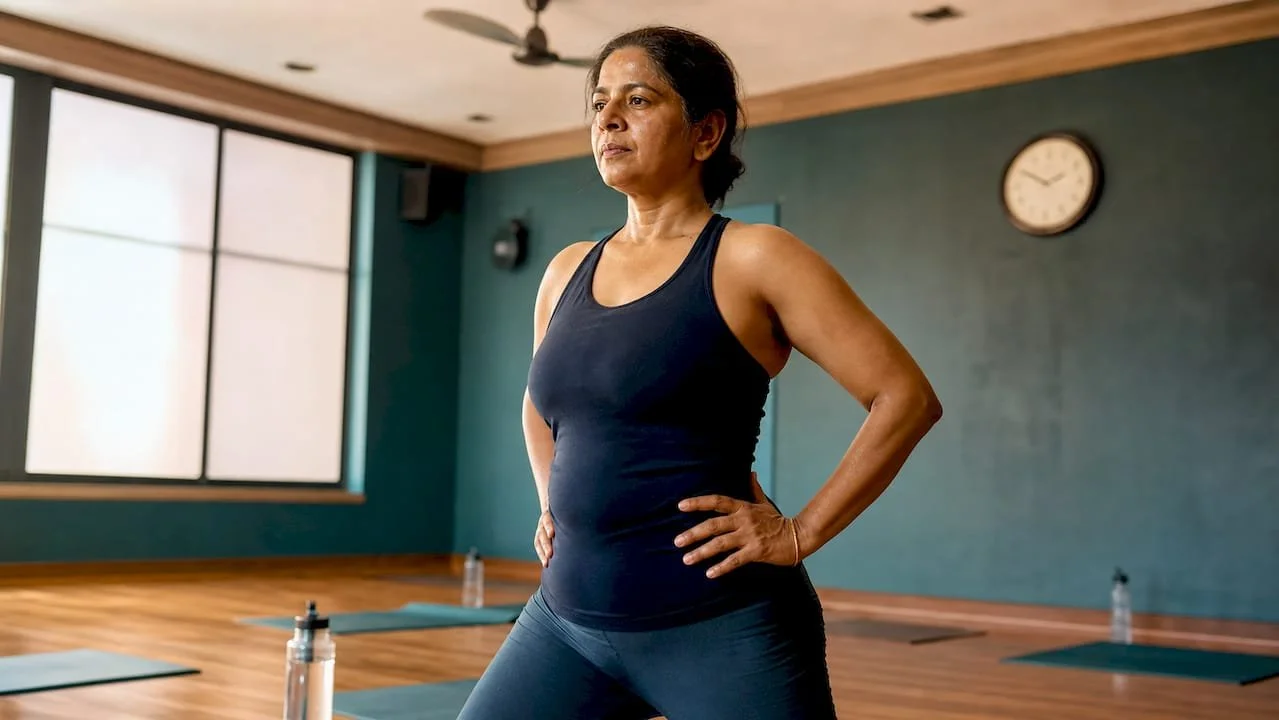
TL;DR:
Bikram yoga can support fat loss when practiced consistently three times weekly over six months, mainly through metabolic and caloric expenditure. Immediate weight loss after sessions is mostly water, while fat reduction requires weeks of steady practice and proper hydration. Combining Bikram with strength training and proper recovery enhances long-term body composition improvements.
Bikram yoga for weight loss is defined as a structured practice using 26 postures and two breathing exercises performed in a room heated to 104–105°F, producing measurable fat reduction over consistent months of practice. A single 90-minute session burns 330 to 460 calories depending on body size and effort level. That caloric output, combined with the metabolic stress of sustained heat, makes Bikram one of the more demanding yoga formats available. A six-month longitudinal study found an average body fat reduction of 6.07% in adult women practicing three sessions per week. The results are real, but they require patience, consistency, and a clear understanding of how the practice actually works.
How Bikram yoga sessions are structured for weight loss
The standard Bikram protocol consists of 26 postures and two pranayama breathing exercises, performed in sequence over 90 minutes at 40°C (104°F) with 40% humidity. Every class follows the exact same order, which means your body learns the sequence but never fully adapts to the heat. That predictability is a feature, not a flaw. It lets you track progress precisely and push harder within a familiar framework.
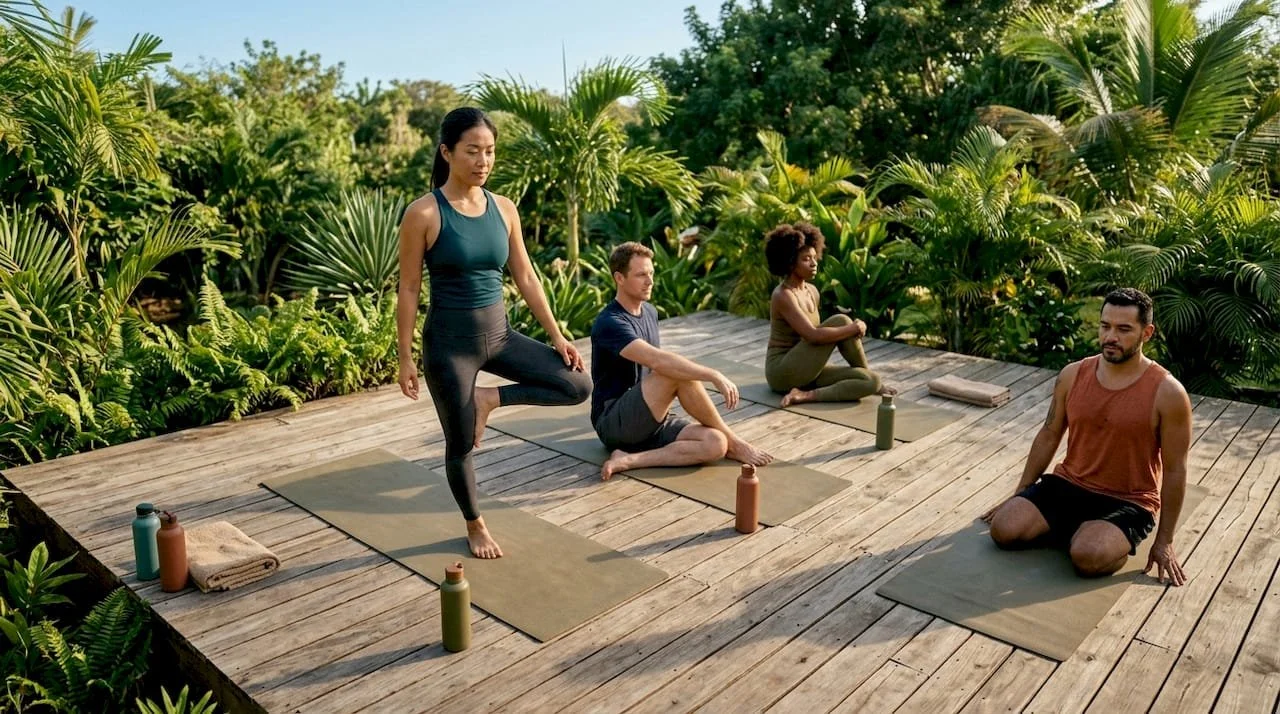
The heat does specific work in this context. It raises your heart rate earlier in the session, increases blood flow to muscles, and forces your body to regulate temperature while simultaneously holding challenging postures. Heat acts as a catalyst for cardiovascular activation, but the real metabolic work comes from sustained muscular effort across all 26 poses. Think of the heat as a multiplier, not the engine.
What the 26 postures actually demand
The sequence moves through standing series poses like Half Moon, Eagle, and Standing Bow, then transitions to a floor series including Camel, Rabbit, and Spine Twist. Each posture targets specific muscle groups while demanding balance, core engagement, and breath control simultaneously. That multi-system demand is why the calorie burn is higher than most people expect from a yoga class.
Standing series: Builds leg strength, balance, and cardiovascular endurance
Floor series: Targets spinal flexibility, core compression, and hip mobility
Breathing exercises: Kapalbhati and standing deep breathing regulate oxygen delivery and activate the diaphragm
Heat exposure: Elevates heart rate to aerobic training zones without high-impact movement
Pro Tip: Arrive 10 minutes early to acclimate to the room temperature before class starts. Your first few postures will feel significantly more controlled, and you will sweat more efficiently throughout the session.
For adults new to Bikram hot yoga, the first two weeks feel overwhelming. That is normal. Your body is adapting to heat stress, new movement patterns, and a longer session duration than most fitness classes.
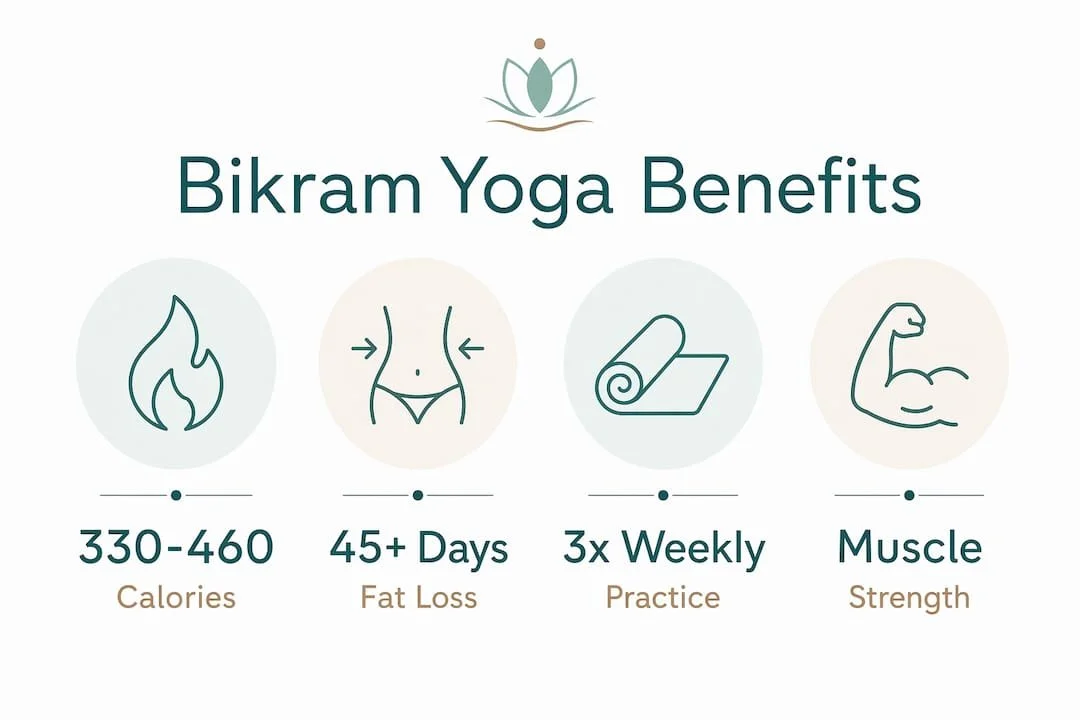
Is the weight you lose after class actually fat?
Immediate weight loss after a Bikram session is mostly water weight lost through sweating, not fat. You can lose one to three pounds of fluid in a single class. That number reappears on the scale as soon as you rehydrate properly.
Fat loss works through a completely different mechanism. Your body breaks down stored triglycerides through lipolysis, and the byproducts are exhaled as carbon dioxide and excreted as water over time. That process accelerates with consistent caloric deficit and sustained aerobic effort, both of which Bikram yoga supports across weeks and months of practice.
Effective weight loss through Bikram yoga depends heavily on consistency, allowing metabolic and body composition adaptations to accumulate over months, not days.
Tracking your weight daily after Bikram classes will mislead you. The scale fluctuates by two to four pounds based on hydration alone. A more accurate approach is to measure body fat percentage every four to six weeks and track how your clothes fit. The six-month study showing a 6.07% body fat reduction used body composition measurements, not scale weight, for exactly this reason.
Pro Tip: Weigh yourself once per week, on the same morning, after using the bathroom and before eating. This removes daily hydration noise and gives you a cleaner trend line over time.
How often should you practice to see real results?
Research supports three sessions per week over six months as the protocol that produces measurable body fat reduction. That frequency gives your body enough stimulus to adapt metabolically while leaving room for recovery between sessions.
Weeks 1–2: Practice two sessions per week. Focus on finishing the class and staying in the room. Heat adaptation is the primary goal.
Weeks 3–6: Add a third weekly session. Your heart rate will stabilize faster in the heat, and you will hold postures longer.
Months 2–4: Maintain three sessions per week. Body composition changes become visible around the 45-day mark based on study data.
Months 4–6: Consider adding a fourth session if recovery feels complete. Watch for signs of overtraining: persistent fatigue, disrupted sleep, or declining performance in class.
Rest days are not optional. Muscle repair and metabolic stabilization happen during recovery, not during the session itself. Skipping rest days in pursuit of faster results typically produces the opposite outcome: inflammation, fatigue, and reduced performance.
Combining Bikram yoga with strength training increases resting metabolic rate beyond what yoga alone achieves. Two strength sessions per week, focused on compound movements like squats, deadlifts, and rows, build lean muscle mass. More muscle means more calories burned at rest, which compounds the fat loss effect of your Bikram practice.
Pro Tip: Schedule strength training on non-Bikram days or at least six hours apart from a Bikram session. Combining both in the same window without adequate recovery blunts the benefit of each.
For more on staying safe while pushing your limits in the heat, the hot yoga safety guide from Amritayogawellness covers the key precautions every practitioner needs.
Hydration and nutrition strategies that support Bikram weight loss
Proper hydration before, during, and after Bikram yoga is not optional. It directly affects muscle recovery, metabolic function, and your ability to complete the session safely. Dehydration reduces performance, increases injury risk, and slows the metabolic adaptations that drive fat loss.
| Timing | Hydration target | Key nutrients |
|---|---|---|
| 2 hours before class | 16–20 oz of water | Sodium, potassium |
| During class | Small sips only, 4–8 oz total | Electrolytes if sweating heavily |
| Within 30 minutes after | 20–24 oz of water or electrolyte drink | Magnesium, sodium, potassium |
| 2 hours after class | Continue hydrating to clear urine | Whole food minerals preferred |
Electrolytes matter as much as water volume. Sweating heavily depletes sodium, potassium, and magnesium. Replacing only water without electrolytes can cause cramping, dizziness, and hyponatremia in extreme cases. A simple electrolyte drink or a meal with mineral-rich foods like leafy greens, bananas, and nuts handles this effectively.
Pre-class nutrition affects your energy and your fat-burning capacity. Eating a large meal within 90 minutes of class typically causes nausea in the heat. A light snack of 150–200 calories, such as a banana with almond butter or a small bowl of oatmeal, provides fuel without digestive stress. Post-class, prioritize protein within 45 minutes to support muscle repair. Twenty to thirty grams of protein from eggs, Greek yogurt, or a quality protein shake works well.
Avoid alcohol the night before class. It accelerates dehydration and impairs heat tolerance.
Limit caffeine within two hours of class if you are heat-sensitive.
Eat whole foods rather than processed snacks around your practice days to support metabolic health.
How consistent practice transforms body composition over time
The body composition changes from regular Bikram practice extend well beyond the scale. The six-month study documented a 6.07% average body fat reduction in adult women, with measurable changes appearing as early as 45 days into the program. That timeline holds across different age groups, which means the practice is not limited to younger adults.
| Benefit | Timeframe | Mechanism |
|---|---|---|
| Initial fat loss | 45–60 days | Caloric deficit plus heat-driven metabolic activation |
| Improved cardiovascular endurance | 30–45 days | Sustained aerobic effort in heated environment |
| Increased flexibility | 2–4 weeks | Repeated deep stretching in warm muscles |
| Resting metabolic rate increase | 2–3 months | Lean muscle gain from sustained posture work |
| Sustained body fat reduction | 6 months | Cumulative metabolic adaptation and caloric output |
The afterburn effect, formally called excess post-exercise oxygen consumption (EPOC), extends calorie burning for one to three hours after a Bikram session ends. That means the 330–460 calories burned during class underestimates the total metabolic cost of each session. The heated environment amplifies this effect by keeping core temperature elevated longer than a standard workout.
The heat-induced sweating in Bikram yoga primarily facilitates cardiovascular activation and detoxification, but sustained muscular effort across the 26-posture sequence is what drives lasting fat loss and body composition change.
The heated yoga and stress reduction connection also matters for weight loss. Chronic stress elevates cortisol, which promotes fat storage, particularly around the abdomen. Regular Bikram practice lowers perceived stress and supports better sleep, both of which create a more favorable hormonal environment for fat loss.
Key Takeaways
Bikram yoga produces measurable, sustained fat loss when practiced three times per week over at least six months, supported by proper hydration, recovery, and complementary strength training.
| Point | Details |
|---|---|
| Caloric burn per session | Each 90-minute class burns 330–460 calories, depending on body size and effort. |
| Fat loss vs. water weight | Post-class scale drops reflect fluid loss; true fat reduction takes consistent weeks of practice. |
| Optimal frequency | Three sessions per week over six months produces an average 6.07% body fat reduction. |
| Recovery is non-negotiable | Rest days allow muscle repair and metabolic stabilization that drive long-term results. |
| Strength training amplifies results | Adding two resistance sessions per week raises resting metabolic rate beyond yoga alone. |
What I've learned about Bikram yoga and lasting weight loss
Most people walk into their first Bikram class expecting to sweat off weight. They walk out five pounds lighter on the scale and think it worked. Then they rehydrate, the number climbs back, and they feel cheated. That misunderstanding kills more Bikram weight loss attempts than any physical limitation.
The practice works, but it works slowly and cumulatively. I have seen adults who committed to three sessions per week for six months achieve body composition changes that years of gym work had not produced. The difference was not the heat alone. It was the combination of consistent aerobic effort, the discipline the sequence demands, and the recovery habits they built around it.
What most articles skip is the mental recalibration required. You have to stop measuring success by the post-class scale and start measuring it by how you move, how you recover, and how your clothes fit after 60 days. The 45-day mark in the longitudinal research is real. That is roughly when practitioners start noticing visible changes, and it is also when most people quit if they have been chasing the wrong metric.
Hydration and rest are the two factors I see people undervalue most. Skipping electrolytes after class, training six days a week without rest, and eating too little to fuel recovery all stall results. Bikram is demanding. Treat it like the serious training it is, and it delivers.
Wellness resources at Amrita Yoga & Wellness in Philadelphia
Amritayogawellness offers hot yoga classes, wellness workshops, and complementary services designed for adults who want more than a workout.
If you are building a weight loss practice around Bikram yoga, pairing it with intentional recovery and reflection makes a real difference. Amritayogawellness provides tarot reading sessions as part of its broader wellness offerings, giving practitioners a space to reconnect with their goals and mental state between physically demanding weeks. The studio also offers class scheduling, beginner-friendly descriptions, and a community built around inclusive, evidence-informed practice. Visit Amrita Yoga & Wellness to find classes and services that fit where you are right now.
FAQ
How many calories does a Bikram yoga session burn?
A 90-minute Bikram session burns approximately 330 to 460 calories, depending on body weight and effort level. The heated environment and sustained posture work together to keep caloric output higher than most yoga formats.
How long does it take to lose weight with Bikram yoga?
Measurable body fat reduction typically appears around 45 days into a consistent three-sessions-per-week program. A six-month study documented an average 6.07% body fat reduction in adult women following this protocol.
Is the weight lost after a Bikram class real fat loss?
No. The immediate post-class weight drop is water weight lost through sweating and returns with rehydration. Actual fat loss accumulates over weeks of consistent practice and caloric deficit.
Does combining Bikram yoga with strength training improve results?
Yes. Adding strength training to a Bikram practice increases resting metabolic rate by building lean muscle, which amplifies fat loss beyond what yoga alone produces. Two resistance sessions per week on non-Bikram days works well for most adults.
How important is hydration for Bikram yoga weight loss?
Hydration is critical. Replacing fluids and electrolytes before, during, and after class supports muscle recovery, metabolic function, and safe heat tolerance. Dehydration reduces performance and slows the adaptations that drive fat loss.
— Juiced
Recommended
Gentle Flow Yoga: Benefits, Tips, and How to Start
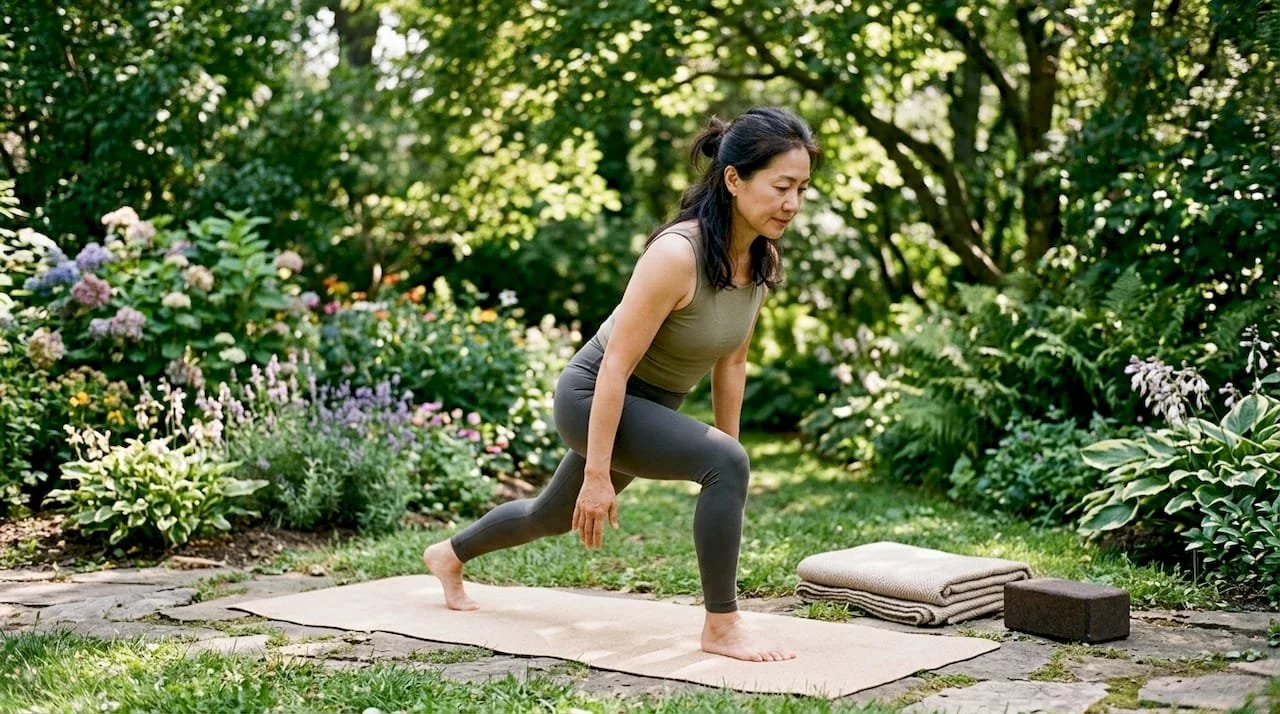
TL;DR:
Gentle flow yoga is a low-intensity practice that links slow movements to controlled breathing for stress relief. It promotes joint mobility, muscle release, and mental calmness while being accessible to beginners and those recovering from injury. Regular practice enhances emotional regulation, reduces tension, and supports long-term wellness through mindful movement.
Gentle flow yoga is defined as a low-intensity, breath-led practice that links slow, deliberate movements to controlled breathing, making it accessible to nearly anyone regardless of fitness level. Unlike high-intensity styles, it prioritizes joint mobility, mental calm, and body awareness over speed or strength. A standard session runs 45–60 minutes, though home practices often fall in the 20–45 minute range. Rooted in Hatha principles, gentle flow yoga adapts traditional poses for accessibility, focusing on how movement feels rather than how it looks. Amritayogawellness, based in Philadelphia, offers guided instruction in this style as part of a broader wellness approach that includes yoga, pilates, and mindfulness practices.
What is gentle flow yoga and why does it matter?
Gentle flow yoga is a low-intensity, beginner-friendly practice built on slow transitions between poses, each one linked to an inhale or exhale. The "flow" refers to continuity of movement, not speed. Poses connect smoothly, one after another, without the jarring stops or demanding holds found in power or vinyasa styles.
The practice directly targets the body's stress response. Gentle flow stimulates the parasympathetic nervous system and lowers cortisol levels, which reduces chronic tension held in the neck, shoulders, and hips. That physiological shift is why practitioners often feel noticeably calmer after a single session, not just physically looser.
A common misconception is that slower movement means less benefit. The opposite is true. Slowing down allows deeper muscular release and safer joint engagement than faster-paced styles. The body has time to respond, adapt, and release tension without triggering a protective stress reaction.
Gentle flow also adapts Hatha principles for accessibility, prioritizing body confidence over perfect form. That makes it a natural entry point for beginners, older adults, people recovering from injury, and anyone who finds traditional yoga classes too demanding.
What are the main benefits of gentle flow yoga?
The physical and mental benefits of this practice are well-documented and wide-ranging. Here is what consistent practice delivers:
Stress reduction. The slow pace prevents the nervous system from entering a stress response during movement. Dr. Joel, cited in research on gentle flow yoga, explains that slow pacing maintains nervous system regulation, which directly supports emotional balance and a more positive mental outlook.
Improved joint mobility. Gradual, repeated movement through a joint's range of motion lubricates cartilage and reduces stiffness. This is especially valuable for adults with arthritis, desk-related tension, or post-injury tightness.
Muscle release. Longer holds and slower transitions give muscles time to soften. Chronic holding patterns in the hips, hamstrings, and lower back respond particularly well.
Mental clarity. Breath-focused movement trains attention. Practitioners report improved concentration and reduced mental chatter after regular sessions.
Emotional regulation. The gentle yoga benefits extend beyond the mat. Reduced cortisol and a calmer nervous system carry over into daily life, making stress feel more manageable.
"The slow pace of gentle flow yoga is not a limitation. It is the mechanism. When movement slows, the nervous system settles, and the body can finally release what it has been holding."
Gentle flow yoga also supports injury prevention. Because poses never demand force or extreme range, the risk of strain is low. That makes it a sustainable long-term practice, not just a temporary fix.
How does gentle flow yoga differ from restorative or yin yoga?
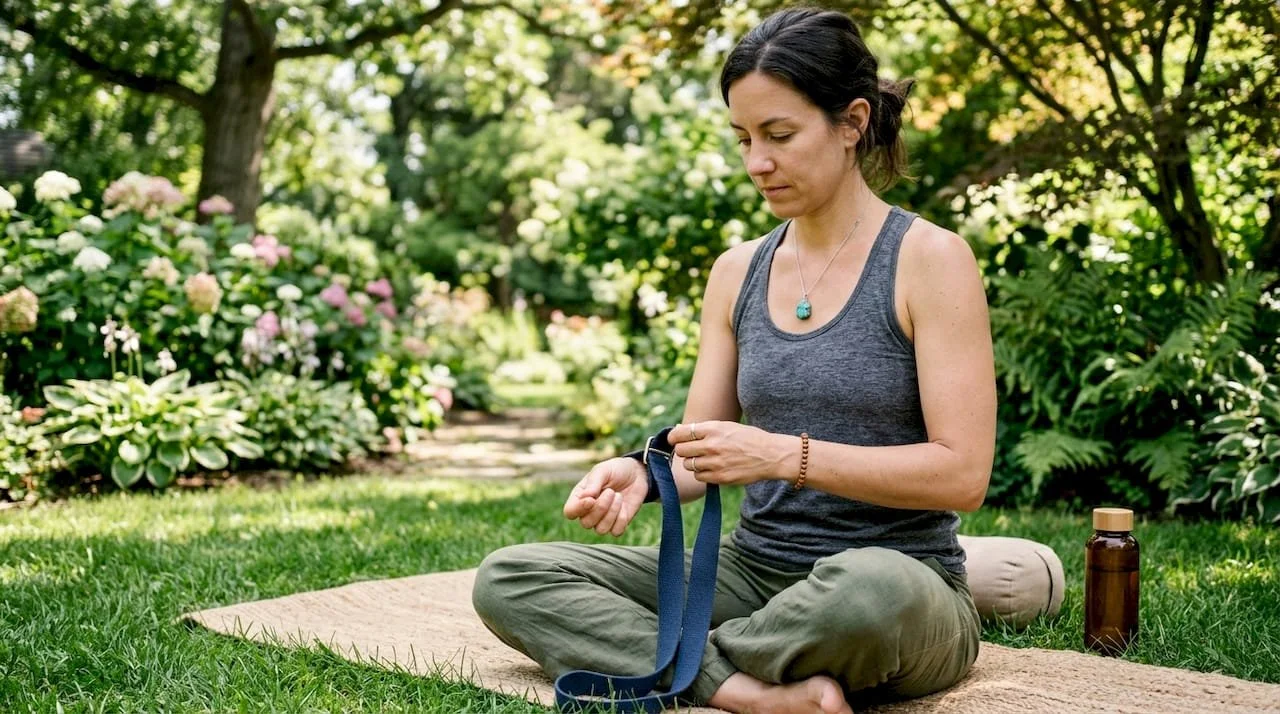
Understanding the differences between gentle yoga styles prevents frustration and helps you choose the right class for your goals. Gentle flow, restorative yoga, yin yoga, and gentle Hatha each serve different purposes.
| Style | Movement level | Pose duration | Prop use | Best for |
|---|---|---|---|---|
| Gentle flow | Active, slow | 30–90 seconds | Moderate | Beginners, stress relief, mobility |
| Restorative yoga | Passive | 5–20 minutes | Heavy | Deep rest, recovery, nervous system reset |
| Yin yoga | Passive to mild | 3–5 minutes | Moderate | Connective tissue, deep hip and spine work |
| Gentle Hatha | Mild to moderate | 30–60 seconds | Light to moderate | General fitness, foundational poses |
| Chair yoga | Seated, mild | 20–45 seconds | Chair as primary prop | Seniors, limited mobility, office workers |
Gentle flow is active, whereas restorative yoga involves supported stillness for extended periods. In a restorative class, you might hold a single supported pose for 15 minutes with bolsters, blankets, and blocks fully supporting your weight. In gentle flow, you move through poses continuously, staying connected to breath throughout.
Yin yoga targets connective tissue rather than muscle. It requires holding poses for 3–5 minutes to reach the deeper fascial layers. That is a different physical demand than gentle flow, which works primarily with muscle and joint mobility through movement.
Gentle Hatha is the closest relative to gentle flow. The key difference is continuity. Hatha typically involves discrete poses with pauses between them. Gentle flow links poses together so the breath guides the transition.
Pro Tip: If you feel exhausted and need deep rest, choose restorative yoga. If you want to move, breathe, and gradually build flexibility, gentle flow is the better fit.
What does a typical gentle flow yoga session look like?
A standard gentle flow session runs 45–60 minutes in a studio setting. Home practices often run shorter, from 20–45 minutes, depending on the practitioner's schedule and energy level.
A typical session follows this structure:
Settling in (3–5 minutes). Seated or lying down, focusing on breath and releasing the pace of the day.
Joint warm-up (5–10 minutes). Gentle circles and movements through the wrists, ankles, neck, and hips to prepare the body.
Standing poses (10–15 minutes). Slow transitions through foundational poses like Mountain, Warrior I, and Tree, held briefly and linked by breath.
Seated and floor poses (15–20 minutes). Forward folds, twists, and hip openers held for 30–90 seconds each.
Final relaxation, or Savasana (5–10 minutes). Complete stillness to allow the nervous system to integrate the practice.
Props are standard in gentle flow, not optional extras. Blocks, bolsters, blankets, and chairs support alignment and reduce strain. Using a block under your hand in a standing pose is not a sign of weakness. It is correct technique that protects your joints and makes the pose sustainable.
Pro Tip: Set up your props before class begins. Having a block, blanket, and strap within reach means you never have to rush or strain to grab support mid-pose.
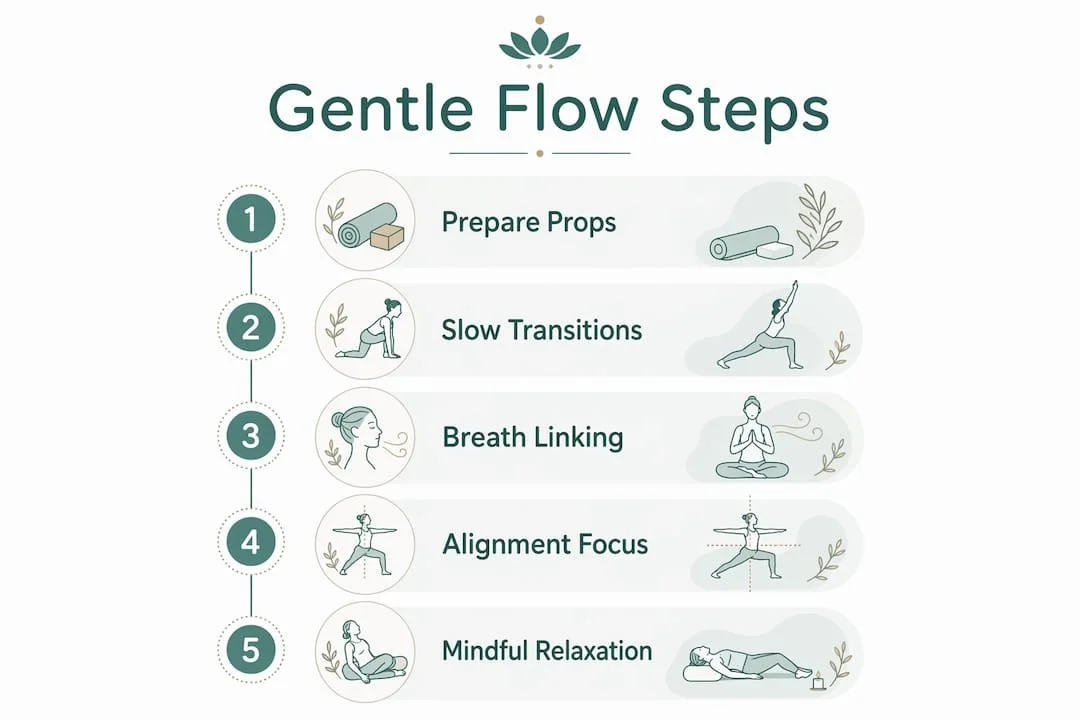
How can beginners start practicing gentle flow yoga safely?
Starting gently is not just advice for beginners. It is the correct approach for anyone new to this style. Follow these steps to build a safe and effective practice:
Start with breath awareness. Before attempting any pose, spend two to three minutes simply observing your inhale and exhale. Breath is the foundation of gentle flow. Every movement follows it.
Gather your props. A yoga mat, one or two blocks, a blanket, and a strap cover most needs. Props prevent strain and allow you to hold poses longer without compensating with poor alignment.
Begin with 20-minute sessions. Three sessions per week at 20 minutes builds consistency without overwhelming the body. Increase duration as comfort grows.
Sync movement to breath. Inhale as you open or extend. Exhale as you fold or release. This pairing is what makes gentle flow distinct from simple stretching.
Resist the urge to rush. The biggest mental barrier for most beginners is slowing down. Habitual rushing undermines the practice's core benefit. Staying slow is the work.
Seek qualified instruction. A live or video-guided class with an experienced teacher accelerates learning and prevents common alignment mistakes. Amritayogawellness offers beginner-friendly yoga guidance that supports safe, gradual progress.
One misconception worth addressing directly: gentle yoga does not produce results slowly. Slower movement fosters deeper release and safer joint work than faster styles. Practitioners often notice meaningful changes in tension and mood within two to three weeks of consistent practice.
Pro Tip: After each session, write one sentence about how your body feels. This simple habit builds body awareness faster than any pose sequence.
Key Takeaways
Gentle flow yoga is the most accessible entry point to yoga for adults seeking stress relief, flexibility, and mindfulness, because its slow, breath-led structure supports the nervous system directly.
| Point | Details |
|---|---|
| Core definition | Gentle flow links slow, deliberate poses to controlled breathing for low-intensity movement. |
| Primary benefit | It stimulates the parasympathetic nervous system and lowers cortisol, reducing chronic tension. |
| Session length | Standard classes run 45–60 minutes; home sessions work well at 20–45 minutes. |
| Props are required | Blocks, bolsters, and blankets support alignment and make poses sustainable for all bodies. |
| Beginner strategy | Start with 20-minute sessions three times per week and prioritize breath over pose perfection. |
What I have learned from watching beginners find their pace
The most consistent pattern I see in people new to gentle flow yoga is the same every time. They arrive expecting to feel like they are not doing enough. The pace feels almost uncomfortably slow at first. They want to push further, hold longer, move faster. That impulse is understandable. Most of us have been conditioned to equate effort with value.
What shifts things is the moment a practitioner stops fighting the pace and actually follows the breath. The body softens in a way that no amount of pushing produces. I have watched people with years of chronic shoulder tension release it in a single session, not because they worked harder, but because they finally stopped bracing.
The gentle yoga accessibility conversation matters here too. This practice is not a consolation prize for people who cannot do "real" yoga. It is a distinct discipline with its own demands, primarily the demand to stay present and resist the habit of rushing. That is harder than it sounds, and it is where the real growth happens.
My honest advice: give it six sessions before you judge it. The first two sessions feel unfamiliar. By session four, most people notice something has shifted in how they carry tension through the day. By session six, they stop asking whether it is working.
— Juiced
Gentle yoga classes at Amritayogawellness in Philadelphia
Amritayogawellness offers gentle flow yoga classes designed for adults at every starting point, from complete beginners to those returning after injury or a long break from movement.
The studio's instructors in Philadelphia guide practitioners through breath-led sequences with clear alignment cues and prop support built into every class. Beyond yoga, Amritayogawellness connects physical practice to broader wellness through offerings like tarot readings for those exploring mindfulness and self-reflection from multiple angles. Whether you are stepping onto a mat for the first time or looking to deepen a low-impact practice, the studio provides structure, community, and expert guidance to support your progress.
FAQ
What is gentle flow yoga in simple terms?
Gentle flow yoga is a slow, low-intensity yoga style that links poses together using breath. It prioritizes joint mobility, stress relief, and body awareness over strength or flexibility demands.
Is gentle flow yoga good for beginners?
Gentle flow yoga is one of the best starting points for beginners because it requires no prior fitness or flexibility. Its slow pace and use of props make it safe and approachable from the first session.
How long is a gentle flow yoga class?
A standard gentle flow class runs 45–60 minutes. Home practices often run 20–45 minutes and still deliver meaningful benefits with consistent practice.
Is gentle flow yoga meditative?
Gentle flow yoga is meditative in practice. The combination of breath-linked movement and slow transitions trains focused attention, which produces many of the same calming effects as seated meditation.
How is gentle flow yoga different from restorative yoga?
Gentle flow involves active, continuous movement through poses. Restorative yoga uses passive, fully supported holds lasting 5–20 minutes. Both reduce stress, but through different mechanisms and levels of physical engagement.
Recommended
North End Yoga: Best Classes for Philadelphia Adults
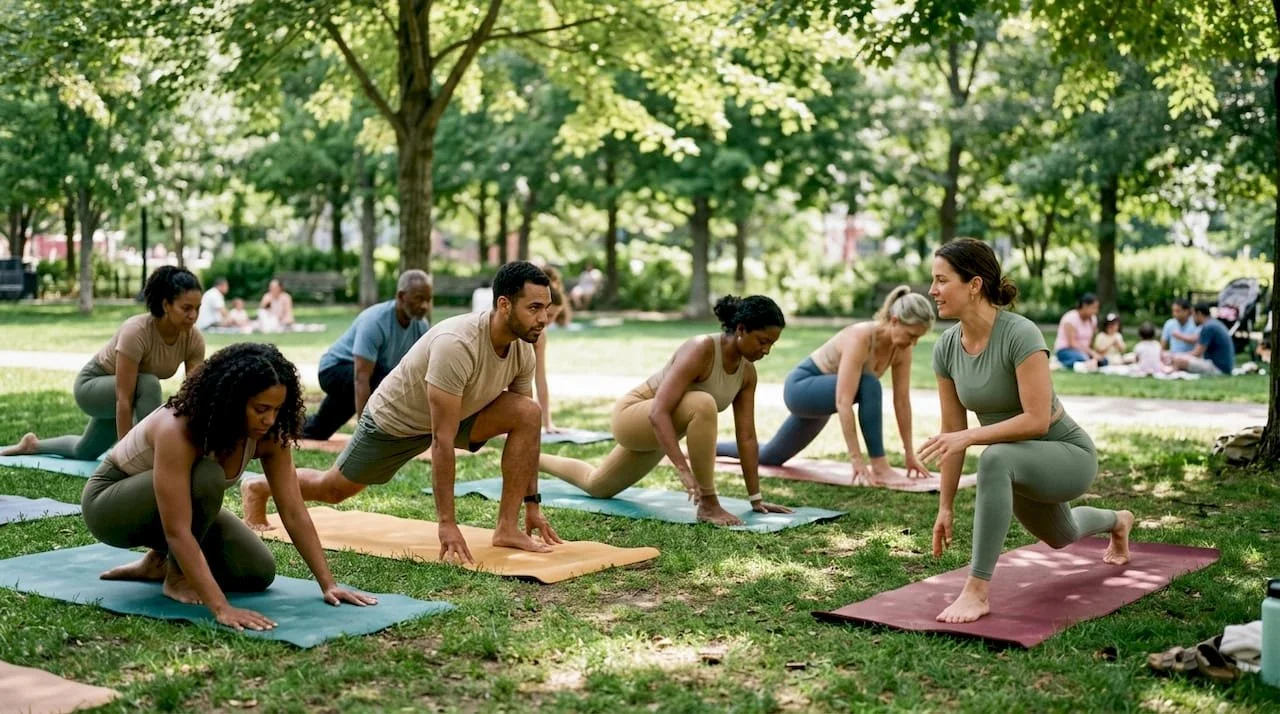
TL;DR:
North End yoga offers accessible classes for adults of all levels, emphasizing community and breath-led practice. Community involvement through outdoor sessions fosters accountability and motivation, making yoga a social routine. Beginners should choose classes aligned with their goals, check accessibility, and take advantage of trial offers for lasting wellness benefits.
North end yoga is a community-centered approach to wellness that brings together adults seeking physical strength, mental clarity, and social connection through structured yoga practice. Philadelphia adults looking for accessible, welcoming classes will find that the North End offers a range of studio sessions, outdoor pop-ups, and beginner-friendly programs designed to meet people exactly where they are. Whether you have never set foot on a mat or you practice regularly, the local yoga scene gives you real options grounded in both classical technique and modern accessibility. Amritayogawellness understands this need and supports adults on every step of that path.
What yoga classes are available in Philadelphia's North End?
The North End yoga scene covers a wide range of class types, from beginner-friendly flows to restorative sessions built around recovery and deep stretching. Studios in the area offer structured programming that builds strength and flexibility over time, with instructors who adapt poses to different ability levels. You do not need prior experience to walk into most of these classes and feel at home.
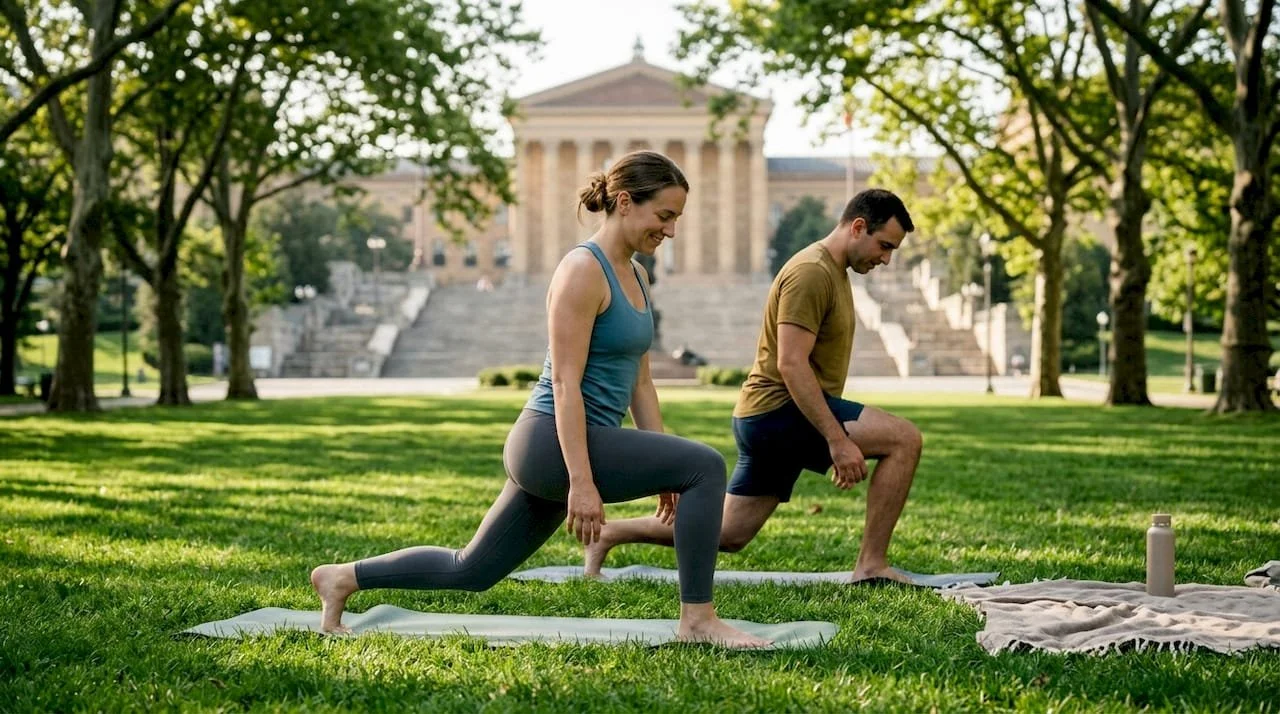
Outdoor and pop-up sessions add another layer of access. The Rose Kennedy Greenway hosts public fitness schedules that include outdoor yoga and Pilates in open plazas, designed for all levels. These sessions lower the barrier for adults who feel uncertain about committing to a studio right away.
Studio-based classes typically run on consistent weekly schedules, making it easier to build a routine. Established venues like Soma Yoga Center at 256 Hanover St offer varied sessions covering beginner to restorative formats, improving both strength and flexibility. Scheduling options often include morning, midday, and evening slots to fit working adults.
Here is what you can typically expect from local class formats:
Beginner flows: Slow-paced sessions focused on foundational poses and breath awareness
Restorative yoga: Longer holds with props that release tension and support recovery
Strength-building vinyasa: Linked movement sequences that build cardiovascular endurance
Outdoor pop-up classes: Free or low-cost sessions in public spaces like the Greenway
Midday reset classes: Shorter sessions designed for working professionals needing a mental break
Pro Tip: Check whether a studio offers a trial period before you commit to a monthly membership. Many studios provide a 30-day unlimited introductory offer that lets you sample multiple instructors and class styles at a reduced rate.
How does community involvement enhance the North End yoga experience?
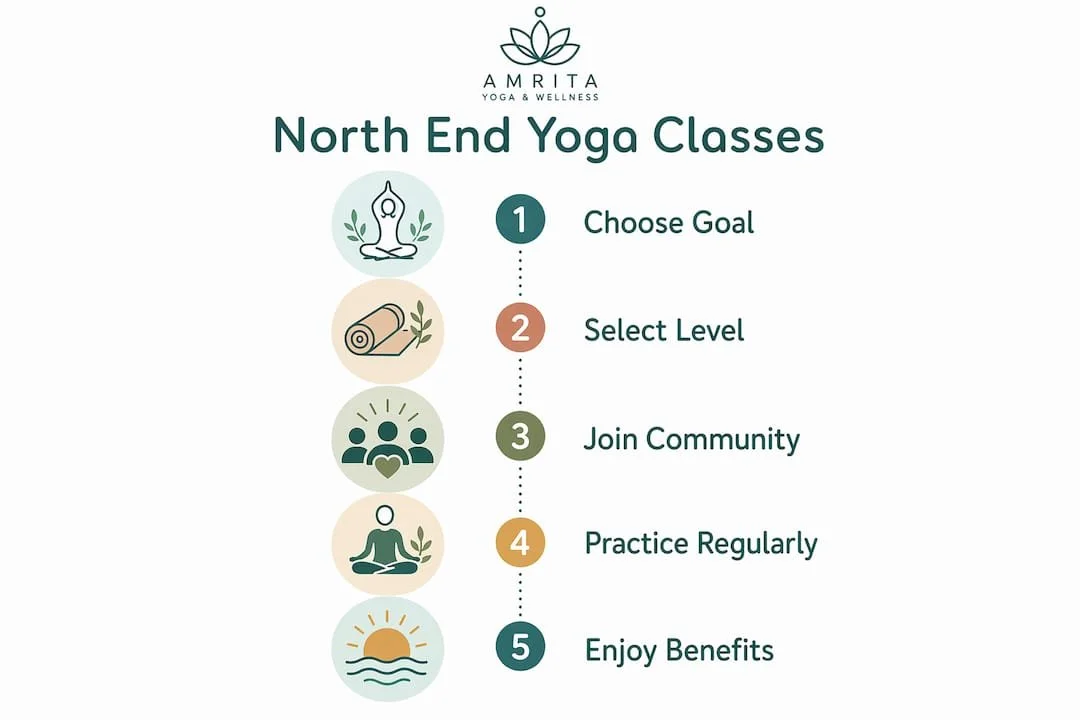
Group yoga practice produces benefits that solo home practice simply cannot replicate. When you practice alongside others, the shared energy of the room creates accountability, encourages consistency, and reduces the isolation that often accompanies stress and anxiety. Community-oriented programming turns a physical workout into a social wellness ritual.
Outdoor seasonal classes on the Rose Kennedy Greenway serve as a lower-barrier entry point for adults who feel intimidated by studio commitments. These free and low-cost sessions grow community engagement by making yoga visible and approachable in everyday public spaces. Seeing neighbors practice together normalizes the habit.
Recurring sessions matter more than one-off events. When a class meets every Tuesday morning or every Saturday at noon, participants build relationships with instructors and fellow practitioners. That consistency is what turns a casual interest into a lasting wellness practice. Research on yoga and stress relief confirms that community-based practice improves both adherence and mental wellbeing outcomes for adults.
The four strongest community benefits of group yoga practice are:
Social accountability: Knowing others expect you at class increases follow-through on attendance.
Shared motivation: Practicing alongside people at different levels shows you what is possible over time.
Instructor feedback: Group settings give teachers the chance to offer real-time corrections that improve form and prevent injury.
Mental health support: Group environments reduce feelings of isolation, which directly supports emotional regulation and stress reduction.
What expert insights explain the benefits of practicing yoga in the North End?
Yoga practice is cumulative. Each session builds on the last, gradually improving cardiovascular health, weight-bearing strength, and mental focus. This is not a fitness trend with a short shelf life. It is a practice with documented physical and psychological returns that compound over months and years.
Breath-led movement sits at the core of effective yoga instruction. Instructor Therlande Louissaint, whose approach is documented through the Stretch and the City program, focuses classes on breath, flow, and non-judgmental movement for both mental and physical flexibility. That framework creates an intentional space where adults can reset, recover, and build strength without pressure.
"Yoga is not about touching your toes. It is about what you learn on the way down. Breath-led movement and curated sound create an intentional, restorative experience that meets practitioners exactly where they are, regardless of ability level. Flexibility is not a prerequisite. It is a result."
Classical lineage training adds another layer of quality assurance. Instructors trained in established lineages follow rigorous, safe teaching methods that reduce injury risk and maximize long-term benefits. That standard matters when you are new to practice and learning how your body responds to unfamiliar movement patterns.
Yoga also functions as both cardiovascular and weight-bearing exercise. Adults who practice regularly report improvements in balance, joint stability, and resting heart rate. For those managing yoga for stress, the combination of physical exertion and mindful breathing produces measurable reductions in cortisol levels. The practice works on multiple systems at once.
What should beginners know before starting yoga classes in North End?
The single biggest misconception about yoga is that you need to be flexible before you start. Flexibility is not a requirement. It is a result of consistent practice. Yoga suits all ability levels and builds strength gradually, which means your first class does not need to look like anyone else's.
Introductory trial periods are your best tool for getting started without pressure. Many studios offer 30-day unlimited promotions that give new practitioners consistent exposure to multiple class styles and instructors. That first month is where habits form, so taking advantage of discounted unlimited access is a practical move.
Physical accessibility deserves attention before you book. Some studios in historic districts occupy upper floors in older buildings. Soma Yoga Center, for example, sits on the third floor without elevator access. Always check building access details before your first visit, especially if mobility is a consideration.
| Factor | What to check before you go |
|---|---|
| Class level | Confirm the session is labeled beginner or all-levels |
| Building access | Ask about floor level and elevator availability |
| Trial offer | Look for a 30-day unlimited introductory rate |
| Class length | Choose 45–60 minute sessions to start |
| Instructor background | Ask whether instructors hold lineage-based certifications |
Selecting a class aligned with your personal goals makes a real difference in early motivation. If stress relief is your priority, restorative or yin yoga gives you the most return. If you want physical conditioning, a beginner vinyasa or flow class builds strength faster. Resources like healthy yoga practices can help you match class style to your specific health goals before you commit.
Pro Tip: Arrive 10 minutes early to your first class. Introduce yourself to the instructor, mention any injuries or limitations, and ask which modifications apply to you. Instructors trained in classical lineages will always have answers ready.
Key Takeaways
North End yoga delivers the strongest results when adults combine consistent studio practice with community-based programming and instructor-guided breathwork from the very first class.
| Point | Details |
|---|---|
| Flexibility is not required | Yoga builds flexibility over time; beginners can start any class without prior experience. |
| Trial periods build habits | A 30-day unlimited introductory offer gives new practitioners the consistent exposure needed to form a lasting routine. |
| Community practice improves adherence | Group settings create accountability and social connection that solo practice cannot replicate. |
| Check building accessibility | Studios in historic districts may lack elevator access; confirm floor level before your first visit. |
| Breathwork drives results | Breath-led movement and classical lineage instruction reduce injury risk and maximize long-term physical and mental benefits. |
What I have learned from years of watching people start yoga
Most adults who quit yoga in the first month quit because they picked the wrong class, not because yoga was wrong for them. They walked into an advanced flow class expecting a gentle stretch, felt lost, and never came back. That is a scheduling problem, not a fitness problem.
The community element is what I have seen change that pattern most reliably. When a studio runs consistent outdoor sessions or beginner series with the same group of faces each week, people stay. They show up not just for the practice but for the people. The breathwork component is what keeps them coming back once the novelty wears off. Breath awareness is a skill that transfers directly into daily stress management, and adults notice that transfer quickly.
The cultural integration in North End yoga offerings is also worth naming. Classes that blend movement with mindfulness, sound, and community ritual give adults something a gym class cannot. That depth is what separates a wellness practice from a workout. If you are on the fence, start with one outdoor class on the Greenway. The barrier is low and the payoff is immediate.
— Juiced
Wellness beyond the mat at Amritayogawellness
Amritayogawellness offers more than yoga classes. For adults ready to deepen their wellness practice, the studio pairs physical movement with complementary services that address mental and spiritual wellbeing.
One standout offering is the tarot reading service at Amrita Yoga & Wellness, which gives adults a structured space for reflection and self-inquiry alongside their physical practice. The studio's welcoming environment makes it easy to explore these services without prior experience. Whether you are new to wellness practices or looking to add depth to an existing routine, Amritayogawellness provides a full range of options in one accessible location.
FAQ
What types of yoga classes are available in the North End?
North End yoga studios typically offer beginner flows, restorative sessions, and strength-building vinyasa classes. Outdoor pop-up classes on the Rose Kennedy Greenway provide free, all-levels options for adults who prefer open-air practice.
Do I need to be flexible to start yoga classes in North End?
Flexibility is not a prerequisite for yoga. Regular practice builds flexibility over time, and most North End yoga studios offer beginner-friendly classes that accommodate all ability levels from the first session.
Are there free or low-cost yoga options near the North End?
The Rose Kennedy Greenway hosts seasonal outdoor yoga and Pilates classes that are free or low-cost, making community wellness programming accessible to adults without a studio membership.
How do I choose the right yoga class as a beginner?
Match your class choice to your primary goal: restorative yoga works best for stress relief, while beginner vinyasa builds physical strength faster. Always confirm a class is labeled all-levels or beginner before attending.
Is there yoga in North End for adults with mobility concerns?
Some studios in historic North End buildings are located on upper floors without elevator access. Always contact the studio directly to ask about floor level and building accessibility before booking your first class.