The Amrita Journal
Explore thoughtful stories, practical wellness guidance and inspiring ideas to support your movement, mindfulness and everyday wellbeing at Amrita.
Reformer Pilates for Weight Loss: What Really Works
TL;DR:
Reformer Pilates builds lean muscle and improves body composition through low-impact resistance training, supporting fat loss over time. A 12-week routine of three weekly sessions can reduce waist, hip, and chest circumferences by 1 to 3 kilograms. Combining reformer Pilates with moderate cardio and a calorie deficit results in sustainable weight loss and body shaping within 6 to 8 weeks.
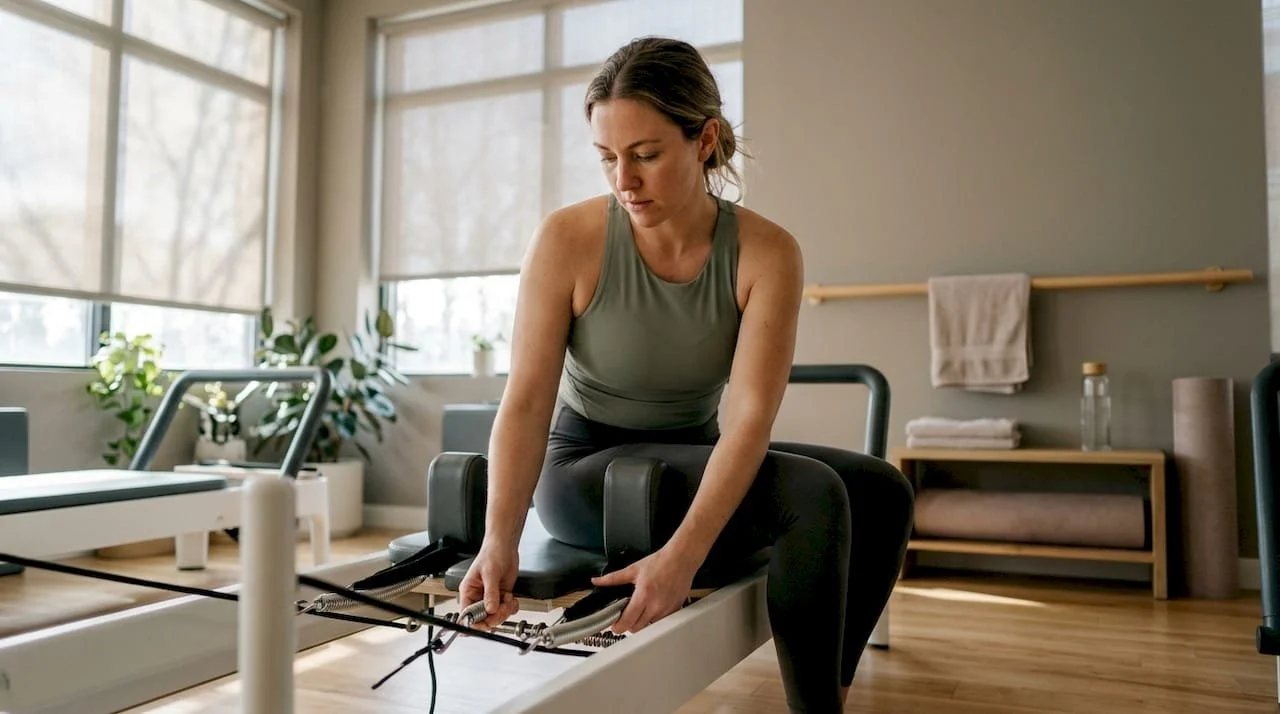
Reformer Pilates is a low-impact resistance training method that supports weight loss primarily by building lean muscle and improving body composition, not by burning large numbers of calories alone. A 12-week protocol of three sessions per week produces statistically significant reductions in waist, hip, and chest circumference, with 1–3 kg of weight loss. The scale tells only part of the story. Reformer Pilates reshapes the body from the inside out, making it one of the most sustainable fat loss tools available for adults who want results without punishing their joints.
How many calories does reformer Pilates burn?
Calorie burn is the first question most people ask, and the honest answer is: it depends heavily on class style and your body weight. A 70 kg adult burns approximately 175–200 kcal per 30 minutes doing a standard reformer session. That number sits below running and cycling, but it is not the whole picture.
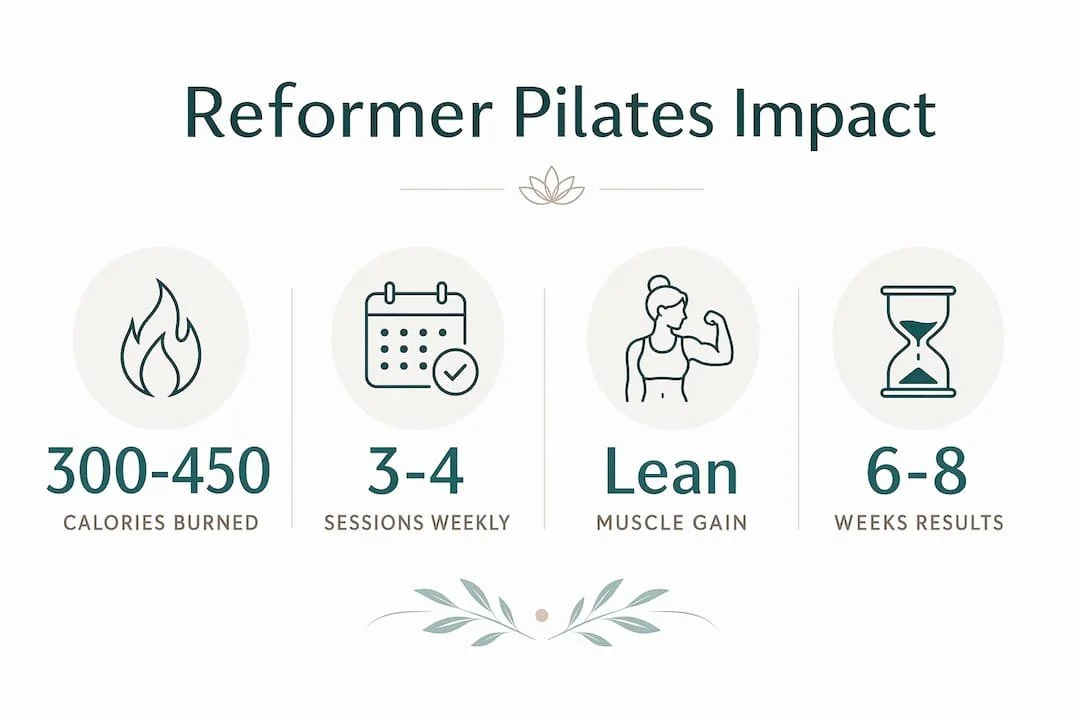
A typical 50-minute reformer class burns 250–450 calories depending on intensity. Fast-paced classes using jumpboards can push that figure above 500 calories, while classical style sessions land closer to 200–280 calories. The range is wide because reformer Pilates is not a single workout. It is a spectrum.
| Exercise type | Approx. calories (50 min) |
|---|---|
| Reformer Pilates (classical) | 200–280 kcal |
| Reformer Pilates (standard) | 250–450 kcal |
| Reformer Pilates (jumpboard) | 500+ kcal |
| Brisk walking | 200–250 kcal |
| Running (moderate pace) | 450–550 kcal |
| HIIT | 400–600 kcal |
Wearable devices consistently undercount Pilates calorie burn because the movements are controlled and isometric rather than aerobic. Do not rely on your fitness tracker as a precise measure. The real weight loss value of reformer Pilates comes from what it does to your body between sessions, not just during them.
How reformer Pilates improves body composition and supports fat loss
Body composition change is where reformer Pilates earns its reputation. Building lean muscle through consistent reformer training raises resting metabolism by roughly 100–200 calories per day. That means your body burns more fuel around the clock, even while you sleep.
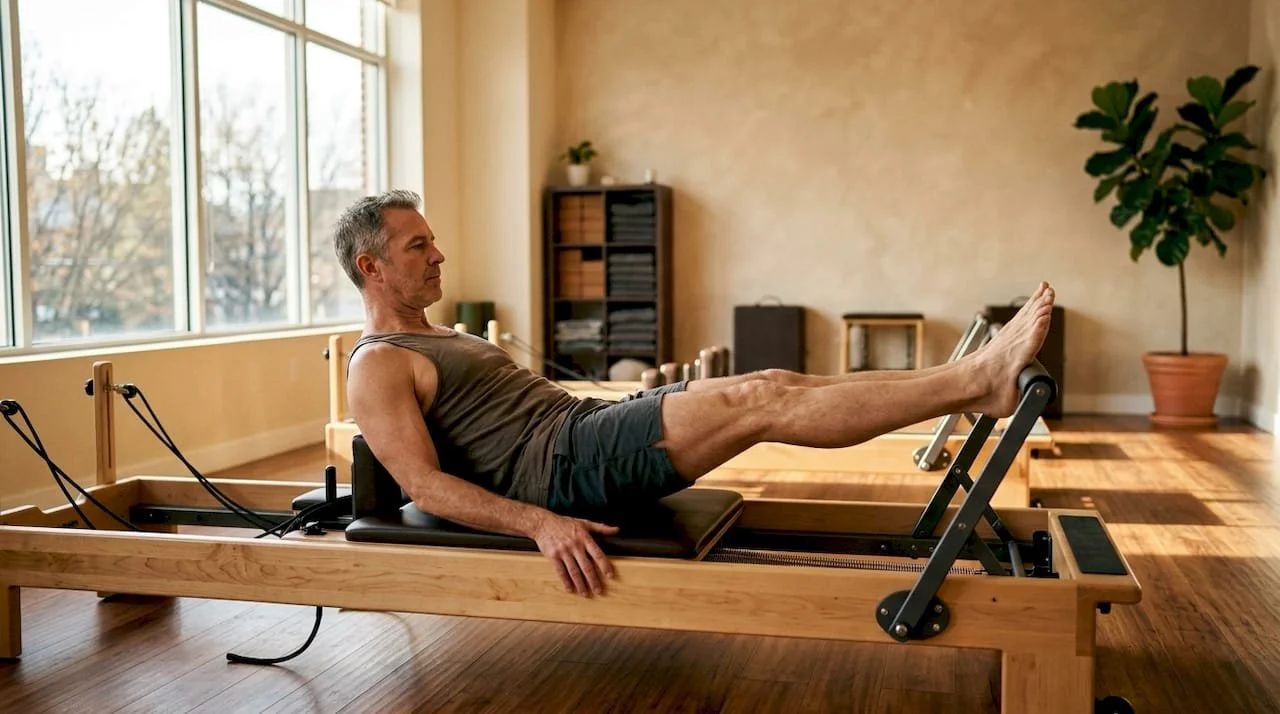
The reformer's spring resistance system is the key mechanism here. Progressive overload through spring resistance enhances lean muscle hypertrophy in a way that mat Pilates cannot replicate. More muscle means a higher resting metabolic rate, which compounds over weeks and months into meaningful fat loss.
Several visible changes happen before the scale moves:
Posture correction pulls the spine into alignment, making the abdomen appear flatter almost immediately.
Core strengthening tightens the deep stabilizers, creating visible abdominal definition.
Circumference reductions in the waist, hips, and chest appear within 8–12 weeks of consistent practice.
Clothing fit changes before body weight does, because fat loss and muscle gain can offset each other on the scale.
Pro Tip: Track your progress with a tape measure around your waist and hips every two weeks. The scale may not move for the first month, but your measurements almost certainly will.
Reformer Pilates also preserves lean mass during periods of calorie restriction, which is critical. Losing muscle while dieting slows metabolism and makes long-term weight maintenance harder. The lean mass preservation advantage of reformer over mat Pilates makes it the smarter choice when fat loss is the goal.
How often should you do reformer Pilates for weight loss?
Frequency is where most people either undercommit or overdo it. The research is clear: 3–4 reformer sessions per week, combined with 1–2 moderate cardio sessions and a 200–400 kcal daily calorie deficit, produces visible changes within 6–8 weeks. That combination is the most effective weight loss Pilates routine for adults who want sustainable results.
Here is a practical weekly structure that works:
Monday: Reformer Pilates (45–50 minutes, full body)
Tuesday: Moderate cardio (30 minutes of brisk walking, cycling, or swimming)
Wednesday: Reformer Pilates (45–50 minutes, emphasis on lower body)
Thursday: Rest or gentle yoga
Friday: Reformer Pilates (45–50 minutes, upper body and core focus)
Saturday: Moderate cardio or a second reformer session if energy allows
Sunday: Full rest
Consistency matters far more than intensity. Three to four weekly sessions yield better results than sporadic high-intensity efforts, and pairing reformer Pilates with low-impact cardio helps break through plateaus when progress stalls.
The most common mistakes people make are skipping rest days and ignoring nutrition. Reformer Pilates is demanding on the stabilizer muscles, and those muscles need recovery time. Overtraining leads to fatigue, poor form, and a higher injury risk, especially in the lower back and shoulders. A 200–400 kcal daily deficit from food is far easier to sustain than trying to burn everything off in the studio.
Pro Tip: If you are new to reformer Pilates, start with two sessions per week for the first month. Let your body adapt to the spring resistance before adding a third or fourth session.
Pairing your reformer practice with yoga for weight loss on rest days adds active recovery, reduces cortisol, and keeps you moving without taxing the same muscle groups.
What are the best reformer exercises for burning fat and toning?
The best reformer workouts for fat loss combine full-body muscle engagement with controlled breathing and progressive resistance. These exercises are the foundation of any effective weight loss Pilates routine:
The Hundred: A core-intensive breathing exercise that elevates heart rate and activates the deep abdominals. It is the standard warm-up in most reformer classes for good reason.
Long Stretch Series: A plank-based sequence performed on the moving carriage. It challenges the core, shoulders, and glutes simultaneously, burning more calories per minute than most mat exercises.
Frog and Leg Circles: Targets the inner thighs, hip flexors, and glutes with spring resistance. These movements sculpt the lower body while improving hip mobility.
Elephant: A hamstring and core exercise that builds posterior chain strength, which is critical for posture and metabolism.
Knee Stretches: A high-rep, low-load exercise that elevates heart rate and targets the glutes and quads.
Circuit-style reformer sessions combining these movements burn 250–350 calories per session and build functional strength when done 3–4 times weekly. That calorie burn adds up to 750–1,400 calories per week from reformer alone, before accounting for the metabolic boost from added muscle.
| Exercise | Primary muscles | Calorie contribution |
|---|---|---|
| The Hundred | Core, hip flexors | High (heart rate elevation) |
| Long Stretch Series | Core, shoulders, glutes | High (full body load) |
| Frog and Leg Circles | Inner thighs, glutes | Moderate |
| Elephant | Hamstrings, core | Moderate |
| Knee Stretches | Glutes, quads | Moderate to high |
Beginners should prioritize form over speed. A complete beginner's guide to reformer classes covers what to expect in your first sessions, including how to set spring resistance and carriage position correctly. Poor form on the reformer reduces muscle activation and increases injury risk, which defeats the purpose entirely.
Mindful breathing during every exercise also matters more than most people realize. Controlled breathing during Pilates reduces cortisol, the stress hormone directly linked to abdominal fat accumulation. That is an indirect but real weight loss benefit that no calorie counter captures.
Key Takeaways
Reformer Pilates supports sustainable fat loss by building lean muscle that raises resting metabolism, improving body composition, and reducing cortisol, making it most effective when combined with moderate cardio and a modest calorie deficit.
| Point | Details |
|---|---|
| Calorie burn varies widely | A 50-minute session burns 250–450 kcal; jumpboard classes can exceed 500 kcal. |
| Muscle raises metabolism | Each pound of lean muscle added increases resting calorie burn by 100–200 calories per day. |
| Frequency drives results | Three to four sessions per week with 1–2 cardio days produces visible changes in 6–8 weeks. |
| Measure circumference, not just weight | Waist and hip measurements reveal fat loss that the scale often masks early on. |
| Form before speed | Correct spring resistance and movement quality maximize muscle engagement and reduce injury risk. |
The scale is the wrong scorecard
After years of watching people start and stop fitness programs, the pattern is always the same. They step on the scale after three weeks of consistent reformer Pilates, see a number that has barely moved, and conclude it is not working. That conclusion is almost always wrong.
The mind-body awareness that reformer Pilates builds is genuinely different from what you get in a cardio class. You learn to feel your body moving through space, to notice tension, to breathe deliberately. That awareness carries into the rest of your day. People who practice reformer Pilates consistently tend to eat more mindfully and respond to hunger differently. That is not a small thing when weight management is the goal.
The reformer is also uniquely honest. You cannot fake good form on a moving carriage. The spring resistance exposes every muscular imbalance, every weak stabilizer, every tight hip flexor. Fixing those things makes every other form of exercise more effective. Reformer Pilates is best understood as a supporting act that makes the whole production better, not just a standalone calorie-burning tool.
My honest recommendation: commit to 8 weeks before judging results. Take photos, measure your waist, and notice how your clothes fit. The scale will catch up. And when it does, you will have built a body that holds its results because the muscle is there to support them.
— Juiced
Reformer Pilates classes at Amrita Yoga & Wellness
Amritayogawellness offers reformer Pilates classes in Philadelphia designed for adults at every fitness level, from complete beginners to experienced practitioners looking to push their results further.

The studio's instructors guide you through progressive spring resistance work, proper form, and class structures built around real fat loss and body composition goals. Amritayogawellness also offers a broader wellness approach that includes integrated wellness services connecting physical practice with mental and emotional balance. Whether you are starting your first reformer session or adding structure to an existing routine, the community and expert instruction at Amritayogawellness give you the foundation to see consistent, lasting results.
FAQ
How long does it take to see weight loss results from reformer Pilates?
Most people see visible circumference reductions and clothing fit changes within 6–8 weeks of three to four sessions per week. Scale weight changes typically follow at the 8–12 week mark.
Is reformer Pilates better than mat Pilates for fat loss?
Reformer Pilates produces greater lean mass preservation and higher calorie burn than mat Pilates because the spring resistance system enables progressive overload and full-body muscle engagement.
How many calories does a reformer Pilates class burn?
A standard 50-minute reformer class burns 250–450 calories depending on intensity. Jumpboard-style classes can exceed 500 calories, while classical sessions burn closer to 200–280 calories.
Can beginners do reformer Pilates for weight loss?
Yes. Beginners benefit from reformer Pilates because the spring resistance is adjustable, making exercises accessible at any fitness level. Starting with two sessions per week and focusing on beginner Pilates fundamentals builds the foundation for safe, effective fat loss.
Do I need to change my diet to lose weight with reformer Pilates?
A 200–400 kcal daily calorie deficit from nutrition significantly accelerates results. Reformer Pilates alone produces modest weight loss. Pairing it with a moderate calorie reduction and 1–2 cardio sessions per week delivers the most consistent fat loss outcomes.
Recommended
Aerial Yoga for Weight Loss: What Actually Works

TL;DR:
Aerial yoga can aid weight loss by burning around 300 calories per session and building muscle. Consistent practice combined with proper nutrition enhances fat reduction and improves strength within weeks. It is suitable for beginners and benefits from progression, but should be part of a broader healthy lifestyle to maximize results.
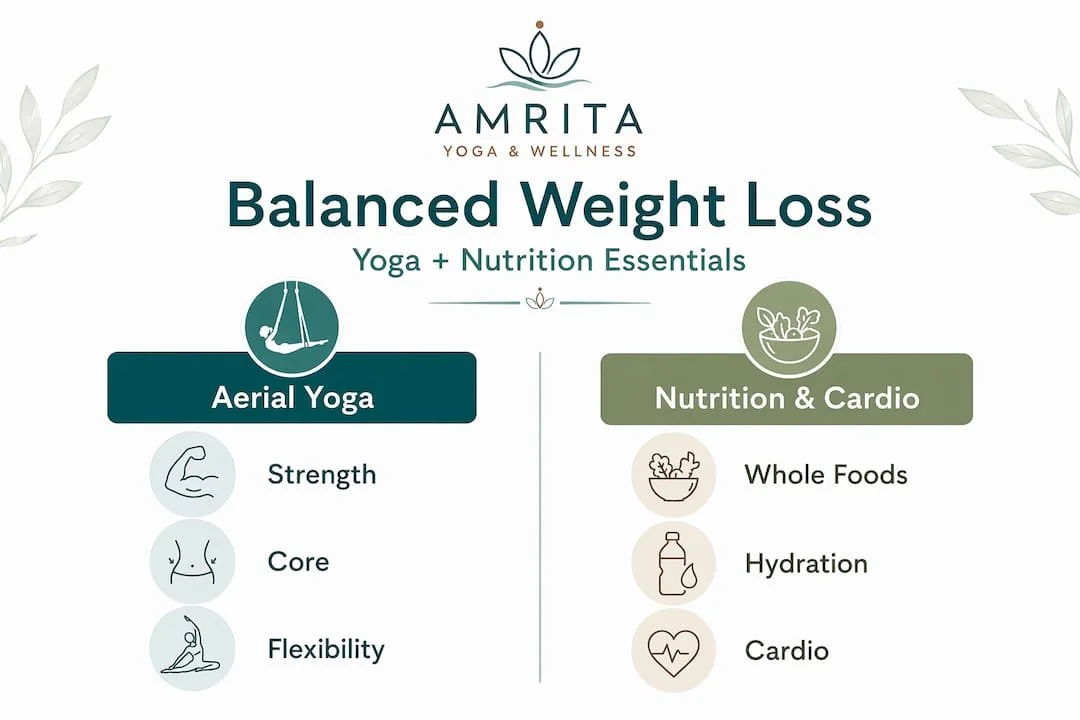
If you've ever dragged yourself to another treadmill session and felt zero motivation, aerial yoga for weight loss might be the change you've been looking for. Suspended in a fabric hammock, you engage your core, build real strength, and get your heart rate up. All while doing something that genuinely feels exciting. Aerial yoga sessions burn around 300 calories per 50-minute class, which makes it a legitimate workout, not a novelty act. This guide covers everything from getting started safely to tracking your real progress.
Table of Contents
Key Takeaways
| Point | Details |
|---|---|
| Calories and consistency | Aerial yoga burns roughly 300 calories per class, but weekly consistency drives real fat loss. |
| Strength plus cardio combo | The hammock adds resistance that builds muscle, which supports long-term metabolic health. |
| Realistic expectations matter | Aerial yoga works best as part of a full plan including nutrition and additional activity. |
| Safety screening first | Medical clearance and knowing your contraindications prevents injuries that derail progress. |
| Progressive challenge is key | You must increase intensity and complexity over time to keep seeing results. |
Aerial yoga for weight loss: what you need before starting
Before you show up to your first aerial yoga class hoping to lose weight, a bit of preparation goes a long way. Aerial yoga is accessible to most fitness levels, but it's not entirely without prerequisites.
Physical readiness and medical clearance
You don't need to be fit to start, but you do need to be honest about your health. People with hypertension, vertigo, recent surgeries, or musculoskeletal injuries should consult a doctor first. Safety screening for conditions like hypertension and pregnancy-related concerns is vital to keeping your practice consistent and injury-free. Getting cleared upfront isn't bureaucratic. It's what keeps you in the studio week after week instead of sidelined.
For a thorough breakdown before your first session, reviewing aerial yoga contraindications gives you a clear picture of what to watch out for.
What to wear and bring
Keep it simple. Fitted clothing that covers your armpits and the backs of your knees protects your skin from friction against the silk hammock. Avoid zippers, belts, or anything with hard edges. Go barefoot or wear grip socks.
Here's what to have ready before your first aerial workout for weight loss:
Fitted leggings and a long-sleeved fitted top
Grip socks (optional but helpful)
Water bottle
Light snack eaten 90 minutes beforehand
An open mind about being upside down
Choosing the right class
Not all aerial yoga classes are structured the same way. Some focus on flow and flexibility. Others emphasize strength and conditioning, which aligns better with aerial yoga weight loss goals. Look for classes that describe themselves as "aerial fitness" or "aerial conditioning." When searching for aerial yoga classes near me, filter for studios that have certified instructors with training in both yoga and aerial arts. The instructor's background matters more than the studio's decor.
Pro Tip: Ask the studio directly whether the class targets cardiovascular endurance or primarily flexibility. A strength-focused class will do more for your weight loss goals than a slow, restorative one.
| Class type | Weight loss benefit | Best for |
|---|---|---|
| Aerial fitness/conditioning | High | Fat loss, muscle tone |
| Aerial flow yoga | Moderate | Flexibility, stress relief |
| Aerial restorative | Low | Recovery, relaxation |
| Aerial acrobatics | High | Strength, coordination |
Best aerial yoga poses and routines for fat loss
The hammock is a tool. What you do with it determines your results. These seven movements specifically target major muscle groups, spike your heart rate, and build the lean muscle that keeps your metabolism active.
Inverted core crunches. Hang face-down with your hips in the hammock. Use your core to pull your knees toward your chest repeatedly. This targets the entire abdominal wall while your stabilizer muscles work overtime to keep you balanced.
Aerial squats. Stand with the hammock at hip height behind you. Sit back into it and lower into a squat, then press back up. This loads the glutes and quads with the added instability of the fabric, recruiting more muscle fibers than a regular bodyweight squat.
Plank pulls. Start in a plank position with your feet in the hammock. Pull your knees to your chest and extend back out. Your core, hip flexors, and shoulders all fire at once.
Hip hinge swings. Standing, hold the hammock overhead and hinge forward at the hip, letting the momentum build. This trains the posterior chain, specifically the glutes and hamstrings, and gets your heart rate climbing.
Aerial side planks. Thread one foot into the hammock, extend into a side plank, and hold. The instability from the silk turns a static hold into an active full-body stabilization challenge.
Seated backbend pulses. Sit in the hammock and lean back into a backbend. Pulse up and down to activate the spinal extensors, glutes, and core. This one opens the chest and builds real back strength.
Hammock pull-ups. Grip the fabric and perform assisted or full pull-ups. Your back, biceps, and shoulders work hard here, and training all major muscle groups consistently is the core principle behind effective strength-based fat loss.
A sample 50-minute aerial yoga weight loss routine
Warm up for 8 minutes with light swinging and hip circles in the hammock. Move into the hip hinge swings and aerial squats for 15 minutes, running each for 3 sets of 12 repetitions. Shift to core work with inverted crunches and plank pulls for another 15 minutes. Finish with aerial side planks, backbend pulses, and hammock pull-ups for 10 minutes, then cool down with 5 minutes of gentle spinal traction in an inverted hang.

Pro Tip: Track how hard each move feels on a scale of 1 to 10. For weight loss, you want most of your working sets to land between 6 and 8. If every exercise feels easy, it's time to add reps, slow the tempo, or ask your instructor for a harder variation.
Common mistakes that slow aerial yoga weight loss results
Getting into the hammock is the fun part. Staying consistent and avoiding the pitfalls below is what separates people who see real change from those who don't.
Believing aerial yoga alone is enough
This is the most common mistake. Yoga contributes to weight loss as part of a full lifestyle plan that includes nutrition and other activity. One or two weekly classes won't hit the minimum 150 minutes of moderate aerobic activity per week recommended for weight management. You need to layer aerial yoga into a larger plan, not treat it as the plan itself.
Common mistakes to watch for:
Expecting to lose weight without adjusting your diet
Skipping strength-focused flows in favor of only restorative classes
Going too hard too soon and burning out within three weeks
Neglecting sleep and recovery between sessions
Falling for wellness hype
The aerial yoga world has its share of exaggerated claims. Detox and lymphatic drainage claims from inversions have no credible physiological backing. The real benefits are spinal decompression, strength development, and a genuine mood lift from the novelty and challenge of the practice. Chase the real results, not the Instagram-friendly promises.
"The best exercise plan is the one you actually stick to. Aerial yoga earns its place in a weight loss program by being something people genuinely look forward to. That consistency is worth more than the perfect protocol you never follow."
Not progressing your workouts
Repeating the same beginner flow every week is one of the fastest ways to plateau. Intensity progression and total weekly volume are what drive continued fat loss. Add minutes, increase repetitions, reduce rest periods, or try a more advanced variation every two to three weeks.
For tips on practicing safely as you advance, the aerial yoga safety resources at Amritayogawellness walk through how to scale up without risking injury.
Expected results and how to track progress
Setting the right expectations is what keeps you going when the scale moves slowly or not at all for a week.
Most people notice improved core strength and better posture within two to three weeks. Fat loss becomes visible around weeks six to eight when combined with a calorie-conscious diet. Yoga's improvements in cardiometabolic health markers like blood pressure and lipid profiles develop over consistent months of practice, not weeks.
| Metric | When to expect change | How to measure |
|---|---|---|
| Core strength | 2 to 3 weeks | How long you hold a plank or aerial side plank |
| Posture | 3 to 4 weeks | Observation or posture photos |
| Body fat percentage | 6 to 8 weeks | Body composition scale or tape measure |
| Cardiovascular fitness | 4 to 6 weeks | Resting heart rate trends |
| Cardiometabolic markers | 3 to 6 months | Bloodwork with your physician |
The number on the scale is the least interesting metric here. Track how your clothes fit, how your resting heart rate drops, and how far your endurance has improved mid-class. These tell you far more about what's actually changing in your body.
Pairing aerial yoga with nutrition and other movement
Aerial yoga works best alongside clean eating and additional cardio activity. Think of it as your strength and skill training session, then supplement with walks, cycling, or swimming on other days. For most people, aerial yoga two to three times per week plus 30 to 40 minutes of cardio on two other days puts you solidly within the recommended activity guidelines. Explore how your overall yoga wellness benefits stack up when you combine multiple modalities.
My honest take on aerial yoga and fat loss
I've watched people come to aerial yoga expecting magic and leave frustrated because they treated one weekly class like a silver bullet. Here's what I actually believe: aerial yoga is one of the most underrated strength training tools for people who hate the gym. The hammock creates instability that activates muscles your standard workout never touches, and the resistance from body weight plus gravity in unusual positions builds functional strength fast.
What I've seen work consistently is using aerial yoga as the anchor of a fitness routine, not the whole thing. The people who show up three times a week, push into harder flows every few weeks, and pair it with reasonably clean eating. They lose fat, get noticeably stronger, and, most critically, they keep coming back. That last part is everything.
I'm also straightforward about the wellness noise that follows aerial yoga around. Detox claims, lymphatic flushing, spiritual weight release. These real benefits are strength and psychological, not mythological. Reduced anxiety, real spinal decompression, and genuine calorie burn. That's more than enough to build on without fabricating extra claims.
If you're tired of workouts that feel like punishment, aerial yoga gives you something to actually practice and get better at. Progress in skill is its own motivator, and that motivation is what ultimately drives the weight loss.
— Juiced
Start your aerial yoga journey with Amrita Yoga & Wellness

If you're ready to try aerial yoga in a structured, supportive setting, Amrita Yoga & Wellness in Philadelphia has classes designed for all experience levels, from total beginners to those ready for advanced aerial conditioning. The instructors understand how to scale aerial workouts for weight loss goals specifically, not just flexibility. You'll be in a community that shows up consistently and pushes each other forward.
Beyond the mat, Amritayogawellness also offers tarot readings and other holistic wellness services for those who want to explore the mental and spiritual side of their health journey alongside the physical. You can browse class schedules, sign up online, and connect with the studio community directly at amritayogawellness.com.
FAQ
Can aerial yoga help you lose weight?
Yes. Aerial yoga helps with weight loss by burning around 300 calories per 50-minute session while building muscle through resistance-based movements. Combined with a sensible diet and additional cardio, it's a real tool for fat loss.
How many times per week should you do aerial yoga for weight loss?
Two to three sessions per week is the sweet spot for most people. Pair them with additional cardio activity to meet the recommended 150 minutes of weekly exercise for weight management.
Is aerial yoga good for beginners trying to lose weight?
Absolutely. Starting any regular resistance training produces meaningful strength and metabolic benefits even for beginners, and aerial yoga is beginner-friendly because instructors can modify every pose to match your starting fitness level.
Are there health conditions that prevent practicing aerial yoga?
Yes. Hypertension, vertigo, recent surgeries, and pregnancy may require modifications or medical clearance before you begin. Review contraindications with your doctor and inform your instructor of any conditions before your first class.
How long before you see results from aerial yoga?
Core strength improvements typically appear within two to three weeks. Visible fat loss usually takes six to eight weeks with consistent practice and a calorie-conscious diet supporting the work you do in the hammock.
Recommended
Heated Yoga Weight Loss: What Actually Works
TL;DR:
Sweat from heated yoga does not equate to fat loss; it is primarily water weight that rehydrates easily.Consistent practice over months, combined with proper hydration and measurement, leads to meaningful body fat reduction.
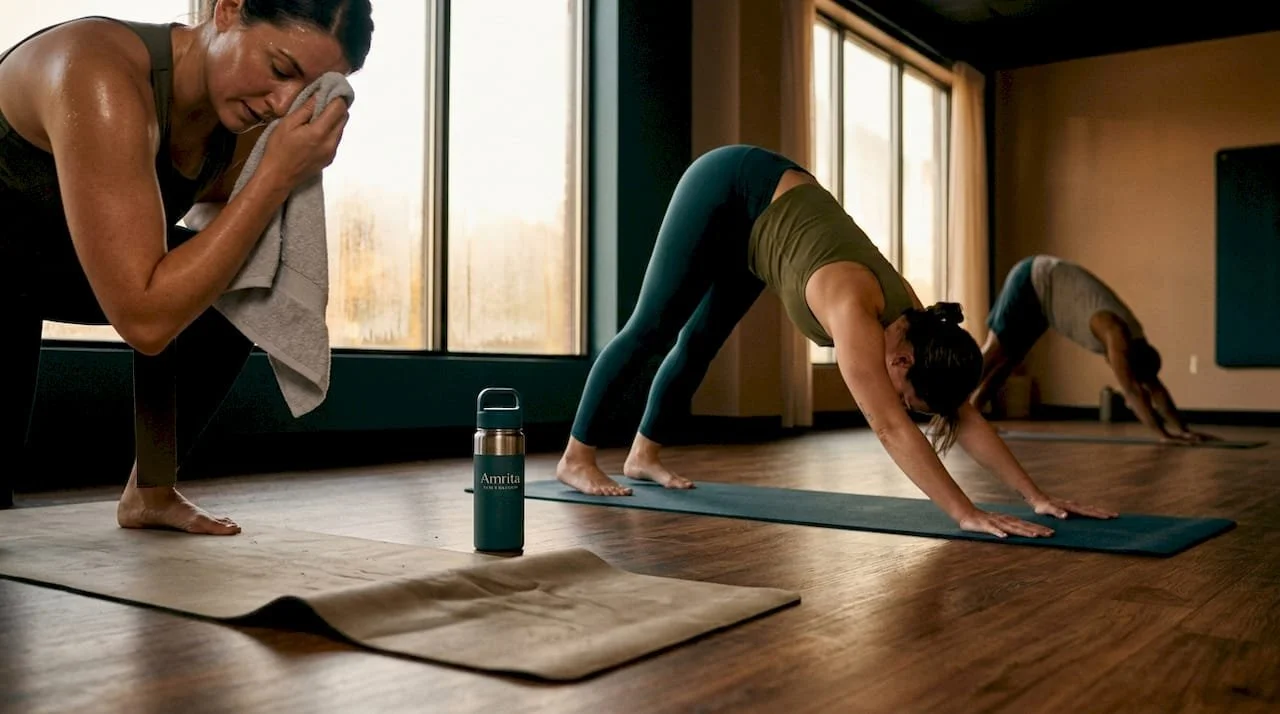
Step into a heated yoga room for the first time and you will likely walk out soaking wet, feeling like you just ran a mile. That sensation makes heated yoga weight loss feel immediate and obvious. But what you see dripping off you is mostly water, not fat. The real story of how hot yoga changes your body is more interesting and more encouraging than the sweat myth suggests. This article covers the science, the safety, the timelines, and the practical steps that actually move the needle on body composition.
Table of Contents
Key takeaways
| Point | Details |
|---|---|
| Sweat does not equal fat loss | Immediate weight drop after class is water loss that returns after rehydration, not actual fat burned. |
| Heat raises your calorie burn | Rooms heated to 90-105°F increase heart rate and metabolic demand, pushing calorie expenditure higher than room-temperature yoga. |
| Fat loss takes consistent months | Research shows measurable body fat reduction after six months of regular practice, not days or weeks. |
| Hydration is non-negotiable | Managing fluids and electrolytes before, during, and after class determines both safety and performance. |
| Track smarter, not more often | Weekly average weight and waist measurements reveal real progress better than daily scale readings. |
How heated yoga drives weight loss
Walk into most hot yoga studios and the thermostat sits somewhere between 90 and 105°F. That temperature range is not arbitrary. Heat forces your cardiovascular system to work harder just to regulate core body temperature, which means your heart rate climbs even before you hold a single pose. You are essentially stacking a thermal challenge on top of a physical one.
That added demand translates directly to calories. Some studies put hot yoga calorie burn around 500 per session, though the actual number depends heavily on your body weight, effort level, and the class style. What matters more than the exact number is understanding why the heat contributes: it increases perceived effort, pushes metabolic rate up, and forces sustained muscle engagement longer than many people could manage in a cooler room.
Here is how heated yoga compares to unheated yoga on a few key measures:
| Factor | Heated yoga | Room-temperature yoga |
|---|---|---|
| Average heart rate | Moderately elevated (cardio range) | Lower, closer to active rest |
| Calorie burn per 60 min | 350–500+ calories (individual variation) | 200–350 calories |
| Perceived effort | Significantly higher | Moderate |
| Flexibility access | Temporarily improved by heat | Baseline range of motion |
| Recovery demand | Higher, needs more hydration | Standard post-exercise recovery |
Heat also gives you a temporary edge in flexibility. Warm muscles move more freely, which lets you hold poses deeper and engage stabilizing muscles that a stiff body skips. That added muscle recruitment is where the real metabolic benefit hides. More muscle engagement means more calories burned, and over months, more lean muscle retained or built.
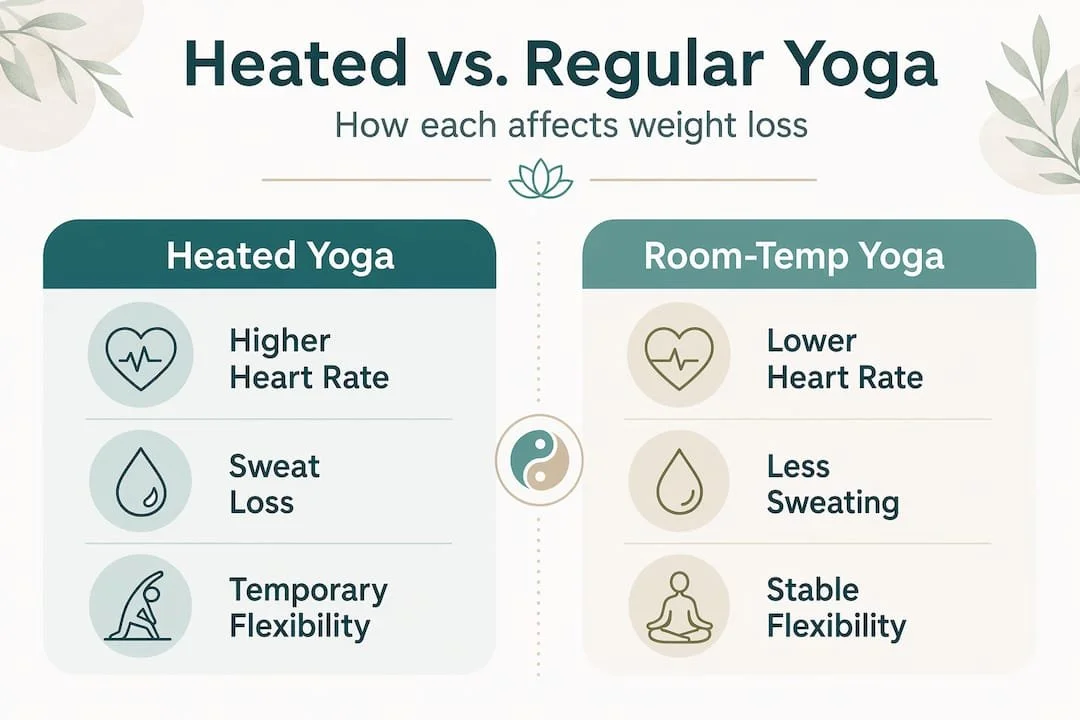
Pro Tip: Do not confuse the temporary flexibility heat gives you with permanent range of motion improvement. According to controlled progression research, heat increases short-term mobility but sustainable flexibility comes from consistent practice and recovery, not the heat alone.
What the science says about actual fat loss
Here is the number that matters most for anyone serious about hot yoga and weight loss: a six-month Bikram yoga study on adult women found a 6.17% reduction in body fat percentage, which cleared clinical thresholds for meaningful health benefits. That is not a rounding error. That is a real, measurable change in body composition across all adult age groups studied.
Longer-term research backs this up. A one-year study tracking regular hot yoga practitioners showed progressive decreases in body fat that continued building over time. The pattern is clear: short bursts of hot yoga do almost nothing for fat loss. Months of consistent practice do a lot.
Why does this take so long? Because actual fat loss is a function of sustained calorie deficit combined with metabolic adaptation. Hot yoga contributes to that deficit each session, but weight loss is multifactorial. The heat raises physiological stress, improved muscle mass from regular poses increases resting metabolism, and many practitioners naturally shift toward healthier eating once they commit to a consistent practice. All three levers work together.
The scale reading right after class tells you almost nothing useful. That two-pound drop you see is water weight that comes back the moment you rehydrate. Sweating volume is a poor indicator of calorie burn. Fat loss requires a consistent calorie deficit and metabolic change, not just producing sweat. The good news is that heated yoga, practiced regularly, creates both.

Beyond body composition, the benefits extend further: reduced stress hormones, better cardiovascular stamina, and improved sleep all contribute to the conditions your body needs to lose fat and keep it off. Those are not bonus features. They are part of why consistent practitioners tend to see results that casual exercisers miss.
Safety and hydration for heated yoga practice
Heated yoga benefits only show up when you stay healthy enough to practice consistently. Heat illness is real, and it catches people who underestimate how much fluid the body loses in a 90-minute class in a 105-degree room. Knowing the warning signs and having a hydration plan is not optional.
Watch for these signals that your body is struggling with the heat:
Dizziness or lightheadedness during poses
Nausea or sudden headache mid-class
Stopping sweating when you were previously sweating heavily (a warning sign, not relief)
Muscle cramps, particularly in the legs or feet
Feeling confused or unusually fatigued
If any of these show up, stop, sit or lie down, and drink water slowly. Pushing through heat exhaustion symptoms is how a productive practice becomes a medical problem.
On the hydration side, the strategy is straightforward but often skipped. Drink 16 to 20 ounces of water two hours before class. Sip small amounts during class rather than gulping large quantities. After class, replace fluids and electrolytes because heavy sweating depletes sodium, potassium, and magnesium, not just water. A pinch of sea salt in your post-class water or a quality electrolyte drink handles this without needing supplements.
Equipment matters more than most beginners expect. A non-slip mat with a full-length towel covering it prevents you from sliding in your own sweat, which protects both your alignment and your safety. Wear minimal, moisture-wicking clothing.
Pro Tip: If you are new to heated yoga classes, plan to spend your first two or three sessions simply getting used to the heat. Skip the most intense poses and focus on breathing. Gradual heat exposure with self-awareness maximizes both safety and effectiveness far better than going all-in on day one.
Tracking progress that actually reflects fat loss
The scale after a hot yoga class is almost designed to mislead you. You step on it, see a lower number, feel great, eat a normal meal, and watch it climb back. That cycle creates false momentum and false disappointment in the same week. Understanding why daily scale changes reflect water, not fat, is the first step to tracking progress that actually motivates you.
Use these metrics instead:
Weekly average weight: Weigh yourself on the same days each week and average the readings. This smooths out water fluctuations and shows the real trend line.
Waist and hip measurements: Fat loss shows up in your measurements weeks before it changes your scale number significantly. Measure at the same time of day weekly.
Clothing fit: How your clothes feel around the waist and thighs is a reliable, zero-cost indicator of body composition change.
Endurance and strength gains: If you can hold poses longer, go deeper, or recover faster between classes, your body is adapting. That adaptation supports fat loss even when the scale stalls.
Energy and mood: Better sleep quality and reduced afternoon energy crashes are signs your metabolism and stress hormones are improving.
Consistency matters more than any single metric. Four to five heated yoga sessions per week, paired with adequate protein and a slight calorie deficit, is where the research-backed results appear. This is not a two-week experiment. Give it twelve weeks before you decide whether it is working.
Choosing the right heated yoga style for your goals
Not all heated yoga is the same, and picking the wrong format for your current fitness level is one of the fastest ways to burn out or get hurt.
Bikram yoga is the most structured option. Every class follows the same 26-pose sequence in a room heated to exactly 105°F with 40% humidity and runs 90 minutes. The consistency makes it easy to track your progress pose by pose. Bikram for weight loss works well for people who like predictability and respond to structured challenge. The intensity is front-loaded for beginners but manageable once you adapt.
Other hot yoga formats run at slightly lower temperatures, typically 90 to 100°F, with more varied sequences. Classes range from 60 to 75 minutes, which lowers the total calorie burn per session but also reduces recovery demand. These formats suit people who want the heated yoga benefits of increased heart rate and calorie expenditure without the strict structure of Bikram.
Flow-based heated yoga, such as hot vinyasa, adds continuous movement between poses. This style burns the most calories per minute of all heated yoga options because you rarely hold a static position long enough for your heart rate to drop. If bikram yoga and weight loss is your primary goal, starting with hot vinyasa or heated power yoga often produces faster early results before transitioning to Bikram for long-term refinement.
For people new to yoga entirely, a beginner heated class or a lower-temperature format is the smart starting point. The goal in the first month is adaptation, not maximum calorie burn.
My honest take on heated yoga for weight loss
I have watched people step into hot yoga with enormous enthusiasm and step out three weeks later completely disillusioned. The pattern is almost always the same: they expected the sweat to be the mechanism, not the symptom.
In my experience, the practitioners who get lasting results from heated yoga share one trait: they stop trying to feel the work and start measuring it. They track weekly averages. They notice when their waistband loosens. They pay attention to how they recover, not just how much they sweat. That shift in mindset, from chasing the sensation to trusting the process, is where sustainable results begin.
What I have also seen is that the biggest threat to long-term success is overexertion in the first month. People push too hard, get dehydrated, feel awful for two days, and skip class. Then the two-day skip becomes a week. Gradual progression with proper hydration is not the cautious choice. It is the aggressive choice, because it keeps you on the mat consistently.
The combination that actually works: three to four heated sessions per week, a protein-adequate diet, and a commitment to measuring the right things. Everything else is noise. Bikram hot yoga weight loss results in the research did not come from heroic individual sessions. They came from showing up regularly over months.
— Juiced
Try heated yoga at Amrita Yoga & Wellness

If you are ready to put this into practice, Amrita Yoga & Wellness in Philadelphia offers heated yoga classes designed for every level, from first-timers still figuring out the heat to experienced practitioners chasing measurable body composition goals. The studio's approach emphasizes safety, community, and the kind of consistent practice that produces the fat-loss results the research supports.
Beyond the mat, Amrita Yoga & Wellness offers tarot readings and holistic wellness services that many practitioners find complement their physical practice by reducing stress and supporting the mental clarity that makes staying consistent easier. Managing stress is not a soft benefit. Lower cortisol directly supports fat loss. Explore the full class schedule and wellness offerings at Amrita Yoga & Wellness and find the format that fits where you are right now.
FAQ
Does hot yoga actually burn enough calories to lose weight?
Hot yoga can burn around 500 calories per session depending on your weight and effort level, which is enough to contribute meaningfully to a calorie deficit when practiced consistently three to five times per week.
How long before heated yoga shows real fat loss results?
Research shows measurable fat loss after approximately six months of regular practice. A six-month Bikram study found over 6% reduction in body fat percentage in adult women with consistent attendance.
Is the weight I lose immediately after hot yoga real fat loss?
No. The weight you lose right after class is primarily water lost through sweating. It returns after rehydration and does not reflect actual fat burned during the session.
Is Bikram yoga better for weight loss than other hot yoga styles?
Bikram's 90-minute sessions at 105°F deliver high calorie expenditure and structure that supports long-term progress tracking, but hot vinyasa and flow-based formats burn more calories per minute. The best style is the one you will attend consistently.
What is the biggest risk of doing heated yoga for weight loss?
Dehydration and heat illness are the primary risks. Following a hydration plan before, during, and after class, including electrolyte replacement, and progressing gradually eliminates most of the risk for healthy adults.