The Amrita Journal
Explore thoughtful stories, practical wellness guidance and inspiring ideas to support your movement, mindfulness and everyday wellbeing at Amrita.
Bikram Yoga for Weight Loss: What Really Works
TL;DR:
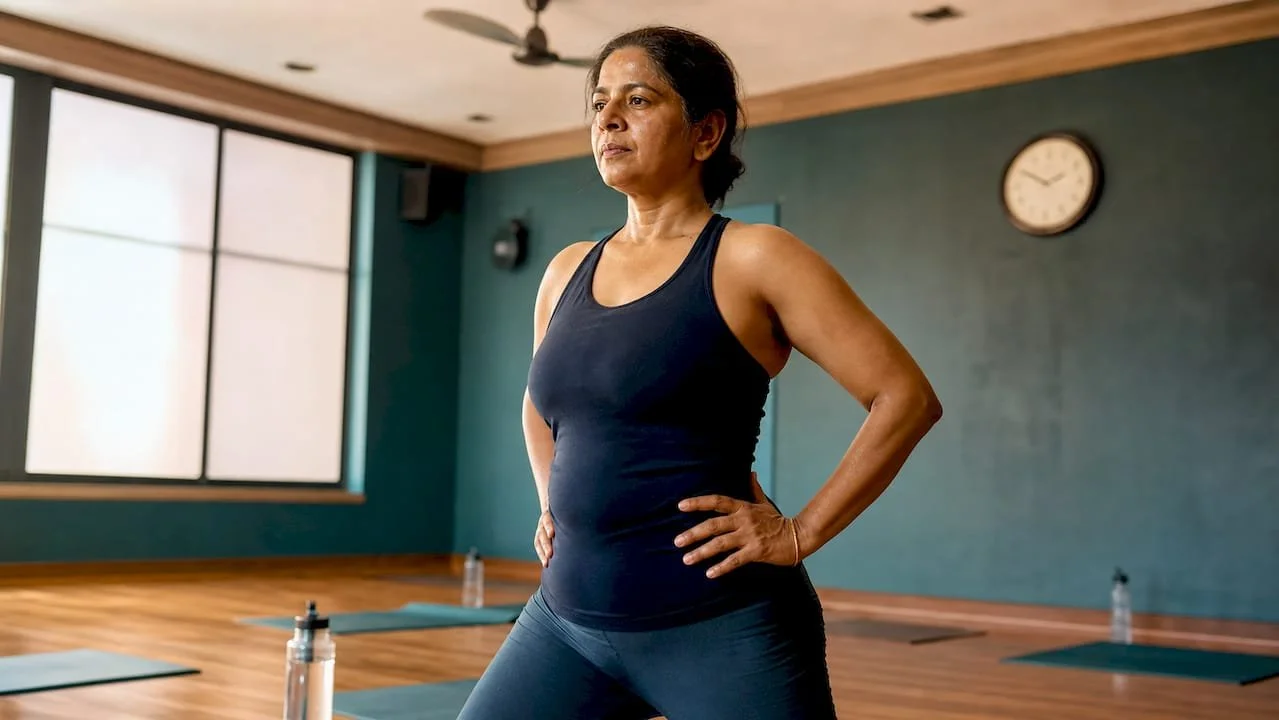
Bikram yoga can support fat loss when practiced consistently three times weekly over six months, mainly through metabolic and caloric expenditure. Immediate weight loss after sessions is mostly water, while fat reduction requires weeks of steady practice and proper hydration. Combining Bikram with strength training and proper recovery enhances long-term body composition improvements.
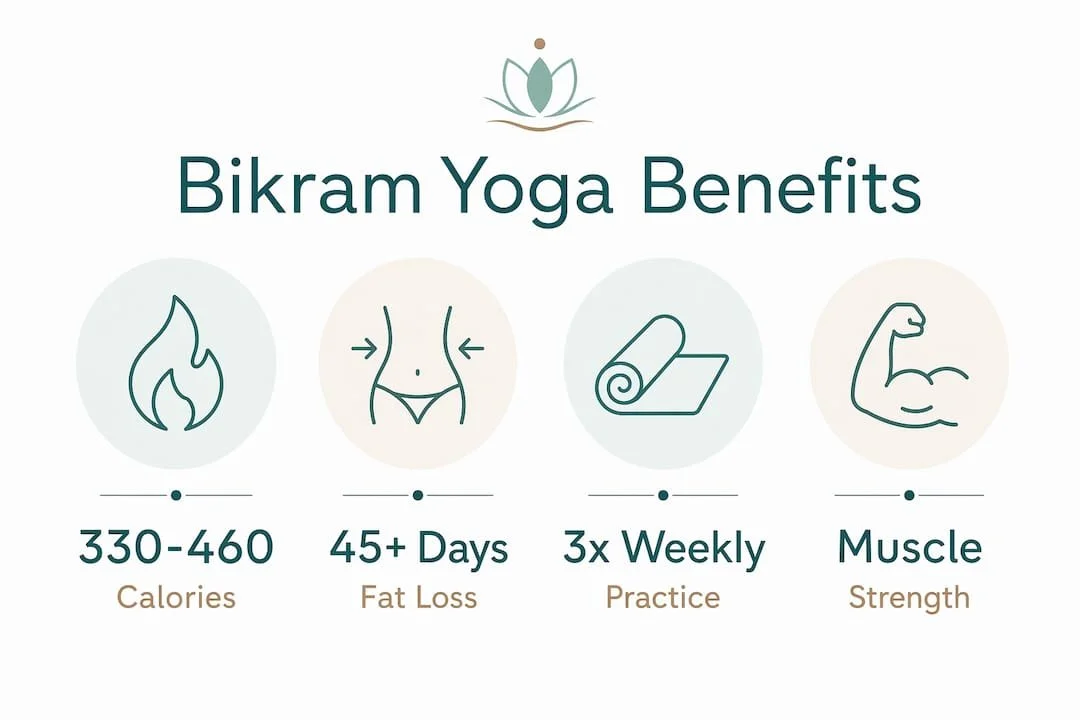
Bikram yoga for weight loss is defined as a structured practice using 26 postures and two breathing exercises performed in a room heated to 104–105°F, producing measurable fat reduction over consistent months of practice. A single 90-minute session burns 330 to 460 calories depending on body size and effort level. That caloric output, combined with the metabolic stress of sustained heat, makes Bikram one of the more demanding yoga formats available. A six-month longitudinal study found an average body fat reduction of 6.07% in adult women practicing three sessions per week. The results are real, but they require patience, consistency, and a clear understanding of how the practice actually works.
How Bikram yoga sessions are structured for weight loss
The standard Bikram protocol consists of 26 postures and two pranayama breathing exercises, performed in sequence over 90 minutes at 40°C (104°F) with 40% humidity. Every class follows the exact same order, which means your body learns the sequence but never fully adapts to the heat. That predictability is a feature, not a flaw. It lets you track progress precisely and push harder within a familiar framework.

The heat does specific work in this context. It raises your heart rate earlier in the session, increases blood flow to muscles, and forces your body to regulate temperature while simultaneously holding challenging postures. Heat acts as a catalyst for cardiovascular activation, but the real metabolic work comes from sustained muscular effort across all 26 poses. Think of the heat as a multiplier, not the engine.
What the 26 postures actually demand
The sequence moves through standing series poses like Half Moon, Eagle, and Standing Bow, then transitions to a floor series including Camel, Rabbit, and Spine Twist. Each posture targets specific muscle groups while demanding balance, core engagement, and breath control simultaneously. That multi-system demand is why the calorie burn is higher than most people expect from a yoga class.
Standing series: Builds leg strength, balance, and cardiovascular endurance
Floor series: Targets spinal flexibility, core compression, and hip mobility
Breathing exercises: Kapalbhati and standing deep breathing regulate oxygen delivery and activate the diaphragm
Heat exposure: Elevates heart rate to aerobic training zones without high-impact movement
Pro Tip: Arrive 10 minutes early to acclimate to the room temperature before class starts. Your first few postures will feel significantly more controlled, and you will sweat more efficiently throughout the session.
For adults new to Bikram hot yoga, the first two weeks feel overwhelming. That is normal. Your body is adapting to heat stress, new movement patterns, and a longer session duration than most fitness classes.
Is the weight you lose after class actually fat?
Immediate weight loss after a Bikram session is mostly water weight lost through sweating, not fat. You can lose one to three pounds of fluid in a single class. That number reappears on the scale as soon as you rehydrate properly.
Fat loss works through a completely different mechanism. Your body breaks down stored triglycerides through lipolysis, and the byproducts are exhaled as carbon dioxide and excreted as water over time. That process accelerates with consistent caloric deficit and sustained aerobic effort, both of which Bikram yoga supports across weeks and months of practice.
Effective weight loss through Bikram yoga depends heavily on consistency, allowing metabolic and body composition adaptations to accumulate over months, not days.
Tracking your weight daily after Bikram classes will mislead you. The scale fluctuates by two to four pounds based on hydration alone. A more accurate approach is to measure body fat percentage every four to six weeks and track how your clothes fit. The six-month study showing a 6.07% body fat reduction used body composition measurements, not scale weight, for exactly this reason.
Pro Tip: Weigh yourself once per week, on the same morning, after using the bathroom and before eating. This removes daily hydration noise and gives you a cleaner trend line over time.
How often should you practice to see real results?
Research supports three sessions per week over six months as the protocol that produces measurable body fat reduction. That frequency gives your body enough stimulus to adapt metabolically while leaving room for recovery between sessions.
Weeks 1–2: Practice two sessions per week. Focus on finishing the class and staying in the room. Heat adaptation is the primary goal.
Weeks 3–6: Add a third weekly session. Your heart rate will stabilize faster in the heat, and you will hold postures longer.
Months 2–4: Maintain three sessions per week. Body composition changes become visible around the 45-day mark based on study data.
Months 4–6: Consider adding a fourth session if recovery feels complete. Watch for signs of overtraining: persistent fatigue, disrupted sleep, or declining performance in class.
Rest days are not optional. Muscle repair and metabolic stabilization happen during recovery, not during the session itself. Skipping rest days in pursuit of faster results typically produces the opposite outcome: inflammation, fatigue, and reduced performance.
Combining Bikram yoga with strength training increases resting metabolic rate beyond what yoga alone achieves. Two strength sessions per week, focused on compound movements like squats, deadlifts, and rows, build lean muscle mass. More muscle means more calories burned at rest, which compounds the fat loss effect of your Bikram practice.
Pro Tip: Schedule strength training on non-Bikram days or at least six hours apart from a Bikram session. Combining both in the same window without adequate recovery blunts the benefit of each.
For more on staying safe while pushing your limits in the heat, the hot yoga safety guide from Amritayogawellness covers the key precautions every practitioner needs.
Hydration and nutrition strategies that support Bikram weight loss
Proper hydration before, during, and after Bikram yoga is not optional. It directly affects muscle recovery, metabolic function, and your ability to complete the session safely. Dehydration reduces performance, increases injury risk, and slows the metabolic adaptations that drive fat loss.
| Timing | Hydration target | Key nutrients |
|---|---|---|
| 2 hours before class | 16–20 oz of water | Sodium, potassium |
| During class | Small sips only, 4–8 oz total | Electrolytes if sweating heavily |
| Within 30 minutes after | 20–24 oz of water or electrolyte drink | Magnesium, sodium, potassium |
| 2 hours after class | Continue hydrating to clear urine | Whole food minerals preferred |
Electrolytes matter as much as water volume. Sweating heavily depletes sodium, potassium, and magnesium. Replacing only water without electrolytes can cause cramping, dizziness, and hyponatremia in extreme cases. A simple electrolyte drink or a meal with mineral-rich foods like leafy greens, bananas, and nuts handles this effectively.
Pre-class nutrition affects your energy and your fat-burning capacity. Eating a large meal within 90 minutes of class typically causes nausea in the heat. A light snack of 150–200 calories, such as a banana with almond butter or a small bowl of oatmeal, provides fuel without digestive stress. Post-class, prioritize protein within 45 minutes to support muscle repair. Twenty to thirty grams of protein from eggs, Greek yogurt, or a quality protein shake works well.
Avoid alcohol the night before class. It accelerates dehydration and impairs heat tolerance.
Limit caffeine within two hours of class if you are heat-sensitive.
Eat whole foods rather than processed snacks around your practice days to support metabolic health.
How consistent practice transforms body composition over time
The body composition changes from regular Bikram practice extend well beyond the scale. The six-month study documented a 6.07% average body fat reduction in adult women, with measurable changes appearing as early as 45 days into the program. That timeline holds across different age groups, which means the practice is not limited to younger adults.
| Benefit | Timeframe | Mechanism |
|---|---|---|
| Initial fat loss | 45–60 days | Caloric deficit plus heat-driven metabolic activation |
| Improved cardiovascular endurance | 30–45 days | Sustained aerobic effort in heated environment |
| Increased flexibility | 2–4 weeks | Repeated deep stretching in warm muscles |
| Resting metabolic rate increase | 2–3 months | Lean muscle gain from sustained posture work |
| Sustained body fat reduction | 6 months | Cumulative metabolic adaptation and caloric output |
The afterburn effect, formally called excess post-exercise oxygen consumption (EPOC), extends calorie burning for one to three hours after a Bikram session ends. That means the 330–460 calories burned during class underestimates the total metabolic cost of each session. The heated environment amplifies this effect by keeping core temperature elevated longer than a standard workout.
The heat-induced sweating in Bikram yoga primarily facilitates cardiovascular activation and detoxification, but sustained muscular effort across the 26-posture sequence is what drives lasting fat loss and body composition change.
The heated yoga and stress reduction connection also matters for weight loss. Chronic stress elevates cortisol, which promotes fat storage, particularly around the abdomen. Regular Bikram practice lowers perceived stress and supports better sleep, both of which create a more favorable hormonal environment for fat loss.
Key Takeaways
Bikram yoga produces measurable, sustained fat loss when practiced three times per week over at least six months, supported by proper hydration, recovery, and complementary strength training.
| Point | Details |
|---|---|
| Caloric burn per session | Each 90-minute class burns 330–460 calories, depending on body size and effort. |
| Fat loss vs. water weight | Post-class scale drops reflect fluid loss; true fat reduction takes consistent weeks of practice. |
| Optimal frequency | Three sessions per week over six months produces an average 6.07% body fat reduction. |
| Recovery is non-negotiable | Rest days allow muscle repair and metabolic stabilization that drive long-term results. |
| Strength training amplifies results | Adding two resistance sessions per week raises resting metabolic rate beyond yoga alone. |
What I've learned about Bikram yoga and lasting weight loss
Most people walk into their first Bikram class expecting to sweat off weight. They walk out five pounds lighter on the scale and think it worked. Then they rehydrate, the number climbs back, and they feel cheated. That misunderstanding kills more Bikram weight loss attempts than any physical limitation.
The practice works, but it works slowly and cumulatively. I have seen adults who committed to three sessions per week for six months achieve body composition changes that years of gym work had not produced. The difference was not the heat alone. It was the combination of consistent aerobic effort, the discipline the sequence demands, and the recovery habits they built around it.
What most articles skip is the mental recalibration required. You have to stop measuring success by the post-class scale and start measuring it by how you move, how you recover, and how your clothes fit after 60 days. The 45-day mark in the longitudinal research is real. That is roughly when practitioners start noticing visible changes, and it is also when most people quit if they have been chasing the wrong metric.
Hydration and rest are the two factors I see people undervalue most. Skipping electrolytes after class, training six days a week without rest, and eating too little to fuel recovery all stall results. Bikram is demanding. Treat it like the serious training it is, and it delivers.
Wellness resources at Amrita Yoga & Wellness in Philadelphia
Amritayogawellness offers hot yoga classes, wellness workshops, and complementary services designed for adults who want more than a workout.
If you are building a weight loss practice around Bikram yoga, pairing it with intentional recovery and reflection makes a real difference. Amritayogawellness provides tarot reading sessions as part of its broader wellness offerings, giving practitioners a space to reconnect with their goals and mental state between physically demanding weeks. The studio also offers class scheduling, beginner-friendly descriptions, and a community built around inclusive, evidence-informed practice. Visit Amrita Yoga & Wellness to find classes and services that fit where you are right now.
FAQ
How many calories does a Bikram yoga session burn?
A 90-minute Bikram session burns approximately 330 to 460 calories, depending on body weight and effort level. The heated environment and sustained posture work together to keep caloric output higher than most yoga formats.
How long does it take to lose weight with Bikram yoga?
Measurable body fat reduction typically appears around 45 days into a consistent three-sessions-per-week program. A six-month study documented an average 6.07% body fat reduction in adult women following this protocol.
Is the weight lost after a Bikram class real fat loss?
No. The immediate post-class weight drop is water weight lost through sweating and returns with rehydration. Actual fat loss accumulates over weeks of consistent practice and caloric deficit.
Does combining Bikram yoga with strength training improve results?
Yes. Adding strength training to a Bikram practice increases resting metabolic rate by building lean muscle, which amplifies fat loss beyond what yoga alone produces. Two resistance sessions per week on non-Bikram days works well for most adults.
How important is hydration for Bikram yoga weight loss?
Hydration is critical. Replacing fluids and electrolytes before, during, and after class supports muscle recovery, metabolic function, and safe heat tolerance. Dehydration reduces performance and slows the adaptations that drive fat loss.
— Juiced
Recommended
Pilates for Weight Loss Near Me: Philadelphia Guide
TL;DR:
Pilates effectively supports weight loss by building lean muscle and lowering cortisol levels when practiced with sufficient intensity.In Philadelphia, small-group classes at affordable community studios provide personalized coaching essential for progress.Combining Pilates with cardio and proper nutrition accelerates fat loss, with results typically visible in 8 to 16 weeks.
Pilates for weight loss near me is defined as finding local classes that combine progressive resistance, core conditioning, and sufficient intensity to shift body composition over time. Philadelphia residents have real options for this, and the method works when applied correctly. A 2021 meta-analysis confirmed that Pilates dramatically reduces body weight and body fat in overweight adults, with longer practice producing greater losses. That means the method is legitimate, but only if you choose the right class format, show up consistently, and pair it with supporting habits. This guide tells you exactly how to do that in Philadelphia.
What makes Pilates effective for weight loss?
Pilates is a neuromuscular strength training system, not a steady-state cardio workout. That distinction matters enormously for anyone using it to lose fat. The mechanism behind its effectiveness is muscle building: lean muscle mass raises your basal metabolic rate, meaning your body burns more calories at rest every single day. That compounding effect is what makes Pilates a genuine fat-loss tool over weeks and months, not just a flexibility class.
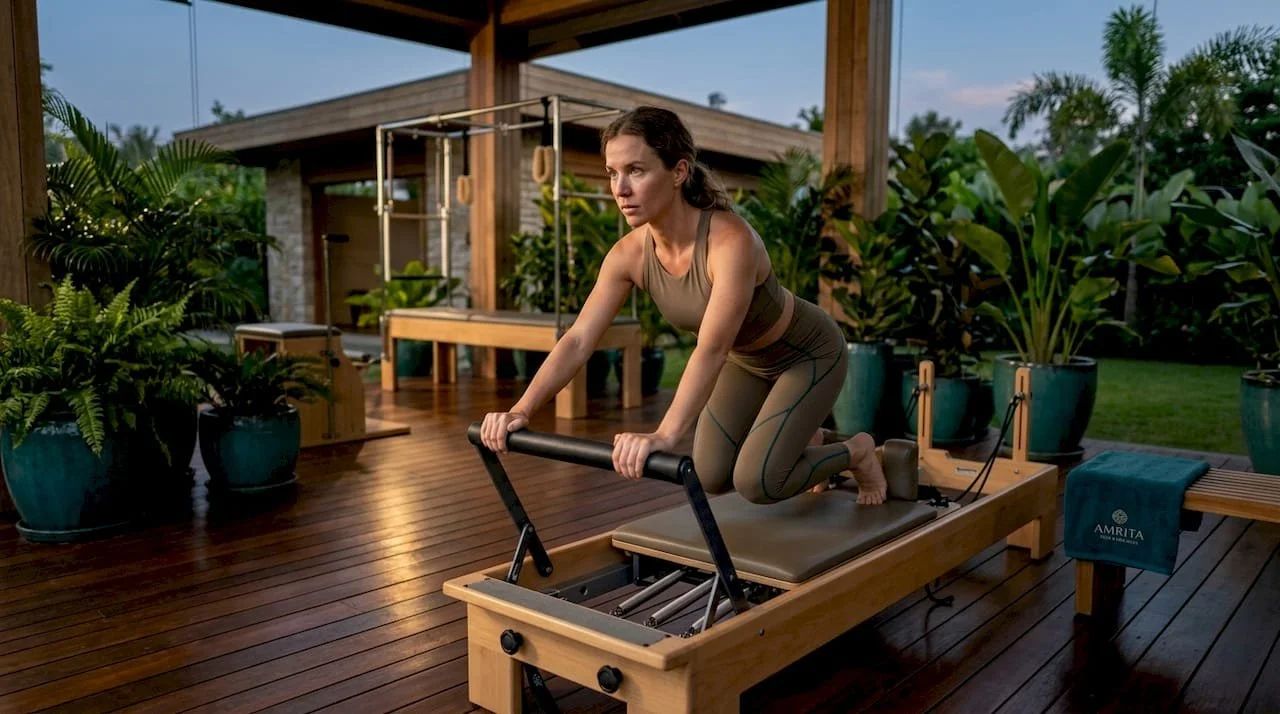
Beyond metabolism, Pilates addresses a hidden driver of abdominal fat: cortisol. The mindful breathing central to every Pilates session actively lowers cortisol levels, which reduces the hormonal signal that tells your body to store fat around the midsection. Most gym workouts ignore this entirely. Pilates targets it by design.
Here is what Pilates consistently delivers when practiced with adequate intensity:
Improved muscle tone and core strength that supports posture and reduces injury risk during other workouts
Elevated resting metabolic rate through increased lean muscle, which accelerates fat loss between sessions
Reduced cortisol and stress-related fat storage, particularly around the abdomen
Better body awareness and movement quality, which improves performance in cardio and strength training
High adherence rates because the low-impact format is sustainable long-term, unlike high-intensity programs that cause burnout
Pro Tip: If your Pilates class never leaves you breathing hard or feeling muscular fatigue, the intensity is too low for fat loss. Ask your instructor about reformer progressions or resistance band variations to increase the challenge.
The research is clear that Pilates alone is not inherently a fat-loss modality without sufficient intensity. The class format, equipment, and instructor quality determine whether you are building the muscle and metabolic demand needed for real results.
How to find the best Pilates for weight loss near me in Philadelphia
Philadelphia and its surrounding neighborhoods offer several structured options for weight loss Pilates, ranging from affordable community programs to boutique studios. The most important filter is not price. It is class size and instructor expertise, because personalized feedback is what separates progress from going through the motions.
Cheltenham Adult School, located just outside Philadelphia in Cheltenham Township, runs a Pilates Mixed Equipment class capped at five participants. Sessions run Fridays from 10:30 to 11:30 AM, and a 10-week enrollment costs $150. That pricing makes it one of the most affordable Pilates programs in the region, and the small group size means the instructor can correct your form and adjust resistance in real time. That level of individual attention is rare at larger studios.
| Format | Equipment | Best for | Typical cost |
|---|---|---|---|
| Mat Pilates | Bodyweight only | Beginners, home practice | $15–$25 per class |
| Reformer Pilates | Reformer machine | Intermediate, higher resistance | $30–$50 per class |
| Mixed Equipment | Reformer, ring, bands | Fat loss, progressive overload | $150 per 10 weeks (community) |
| Group studio classes | Varies | Social motivation, variety | $20–$40 per class |
When evaluating any local Pilates studio nearby, ask three direct questions before enrolling: Does the instructor hold a certification from BASI Pilates, Balanced Body, or STOTT Pilates? Does the class include progressive resistance over the course of the program? And what is the average class size? Anything above 12 participants makes individualized coaching nearly impossible.
Pro Tip: Search for local Pilates classes that explicitly mention "weight loss" or "body composition" in their class descriptions. A general stretch-and-breathe class will not produce the metabolic demand you need. Explore popular Pilates styles to identify which formats match your fat-loss goals before committing.
How to integrate Pilates with exercise and nutrition for fat loss
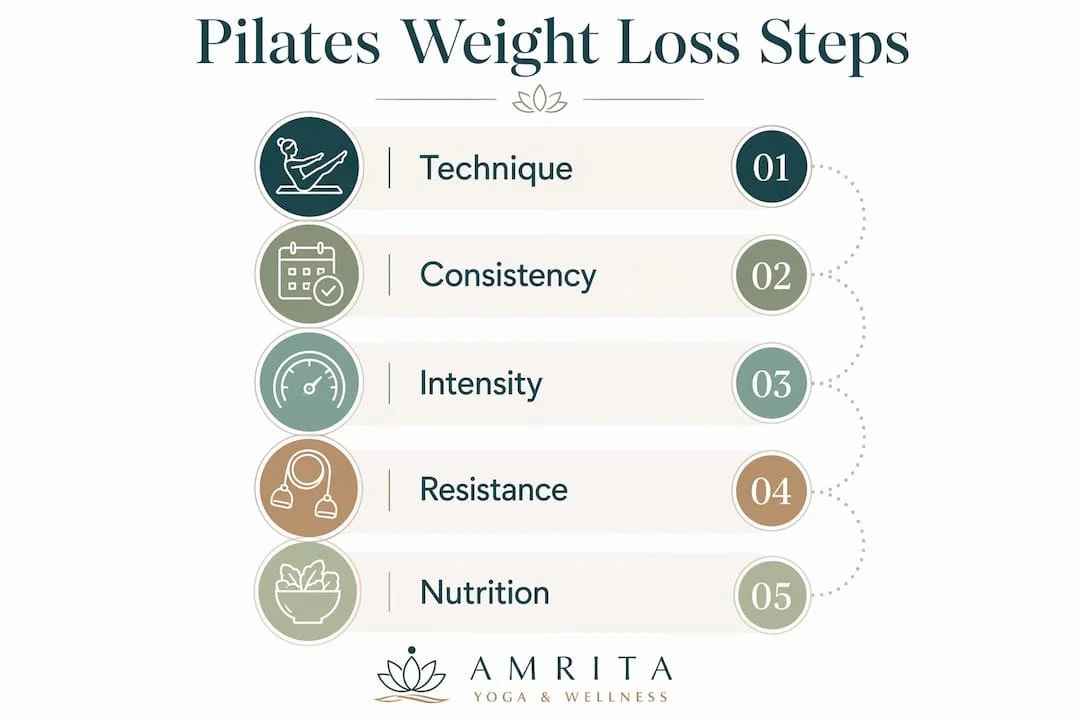
Pilates is strength and neuromuscular training. It is not steady-state cardio, and treating it as your only fat-loss tool is the single most common reason people plateau. Combining resistance training with moderate cardio produces 44% more fat loss than cardio alone, which means Pilates paired with walking and aerobic activity is a genuinely superior strategy.
A practical weekly structure for Philadelphia residents looks like this:
Monday: Pilates session (45 to 60 minutes, mixed equipment or reformer)
Tuesday: 8,000 to 10,000 steps walking, ideally outdoors or on a treadmill
Wednesday: Pilates session or light strength training with dumbbells
Thursday: Moderate cardio, 30 to 40 minutes at a conversational pace (cycling, swimming, or brisk walking)
Friday: Pilates session (use this as your structured class day if enrolled at a local studio)
Saturday: Active recovery, yoga, or a longer walk
Sunday: Rest
Nutrition is where most people undermine their Pilates results. A combined routine of weights, walking, and Pilates only works if your caloric intake supports a modest deficit. The key nutritional priorities are:
Eat enough protein (0.7 to 1 gram per pound of bodyweight) to protect and build the muscle Pilates develops
Time a protein-rich meal or snack within 90 minutes after each Pilates session
Avoid the common trap of eating back all calories burned because Pilates "felt hard"
Prioritize whole foods and reduce processed carbohydrates to manage insulin and cortisol together
Pro Tip: Track your measurements and how your clothes fit weekly rather than relying on the scale. Body composition changes often precede scale movement by two to four weeks, and seeing your waist shrink while the scale stalls is a sign the method is working.
Common mistakes when using Pilates for weight loss
The biggest mistake is assuming that any Pilates class automatically produces fat loss. It does not. A gentle mat class focused on breathing and flexibility burns roughly the same calories as a slow walk. The intensity and resistance of the class determine whether you are building the muscle and metabolic stimulus needed for body composition change.
Here are the mistakes that consistently derail results:
Choosing low-intensity classes because they feel manageable, then wondering why nothing changes after eight weeks
Skipping complementary cardio and expecting Pilates alone to create the caloric deficit fat loss requires
Ignoring nutrition entirely, which negates even the best Pilates program
Avoiding progressive overload by staying at the same resistance level session after session
Measuring only by the scale, which misses the fat-to-muscle shift that Pilates produces
"The best exercise for weight loss is the one you actually do consistently. Pilates wins on adherence because it is low-impact, skill-based, and genuinely enjoyable for most people. Build on that foundation rather than abandoning it when the scale does not move in week three."
Burnout is also a real risk when people set unrealistic timelines. Sustainable fat loss through Pilates and complementary training takes 8 to 16 weeks to show measurable results. Expecting visible change in two weeks leads to quitting a method that would have worked at week ten.
Step-by-step plan to start Pilates for weight loss near me
Starting well is more important than starting fast. A structured entry into local Pilates classes sets the foundation for results that last.
Identify two or three local options with explicit weight-loss or body-composition focus. Cheltenham Adult School and studios offering reformer or mixed-equipment group Pilates sessions are strong starting points in the Philadelphia area.
Enroll in a beginner-appropriate class that caps enrollment at 10 or fewer participants. Review the beginner Pilates guide at Amritayogawellness to understand what to expect in your first sessions.
Commit to three to five sessions per week for the first eight weeks without evaluating results before that point.
Add two to three cardio sessions per week on non-Pilates days, targeting 8,000 to 10,000 steps or 30 minutes of moderate aerobic activity.
Track progress through measurements, clothing fit, and energy levels rather than daily weigh-ins.
| Week range | Focus | Progress marker |
|---|---|---|
| Weeks 1 to 3 | Learn technique, build consistency | Attendance rate, form improvement |
| Weeks 4 to 6 | Increase resistance and session frequency | Muscle fatigue during class, clothing fit |
| Weeks 7 to 10 | Add cardio sessions, refine nutrition | Measurements, energy levels |
| Weeks 11 and beyond | Progressive overload, class variety | Body composition, strength benchmarks |
Adjust intensity upward every three to four weeks. If a class no longer challenges you, ask your instructor to add resistance or try a more advanced format. Stagnation in Pilates looks like comfort, and comfort does not produce fat loss.
Key takeaways
Pilates supports fat loss most effectively when paired with cardio, progressive resistance, and a caloric deficit, practiced consistently over 8 to 16 weeks.
| Point | Details |
|---|---|
| Intensity determines results | Low-intensity Pilates classes do not produce the metabolic demand needed for fat loss. |
| Muscle building drives metabolism | Pilates increases lean muscle mass, which raises resting calorie burn over time. |
| Philadelphia has affordable options | Cheltenham Adult School offers capped classes at $150 for 10 weeks with individualized coaching. |
| Cardio and Pilates together win | Combining resistance training with moderate cardio produces 44% more fat loss than cardio alone. |
| Track composition, not just weight | Clothing fit and measurements reveal progress weeks before the scale moves. |
What I have learned about Pilates and weight loss in Philadelphia
After spending time observing and participating in the Philadelphia wellness community, one pattern stands out clearly: the people who get results from Pilates are not the ones who work the hardest in week one. They are the ones who find a class small enough to get real feedback, show up three to five times a week without drama, and add a walk or a bike ride on the days in between.
The small-group format at places like Cheltenham Adult School is genuinely underrated. Five people in a room with a qualified instructor means your form gets corrected before bad habits set in, and that matters more than any equipment upgrade. I have seen people spend $50 a class at boutique reformer studios and plateau because the class was too large for the instructor to notice their compensations.
The other thing most articles get wrong: Pilates is not a punishment for eating. It is a skill-based practice that builds a body capable of doing more over time. When you approach it that way, and pair it with enjoyable cardio and sensible eating, the weight loss follows. Patience is not passive. It is the active choice to keep showing up when the scale has not moved yet.
— Juiced
Start your Pilates and wellness journey at Amrita Yoga & Wellness
Amrita Yoga & Wellness is Philadelphia's community-centered studio offering Pilates classes designed for real results, not just relaxation. Whether you are brand new to the practice or looking to intensify your current routine, the studio's accessible programs meet you where you are.
Amritayogawellness offers a range of movement and wellness services under one roof, from structured Pilates workouts built for body composition goals to holistic wellness sessions that support your mental and physical recovery. If you are looking to complement your fitness routine with something that addresses stress and overall well-being, explore the studio's tarot readings as a mindful addition to your self-care practice. Visit Amritayogawellness to browse the current class schedule, check availability, and take the first step toward a consistent, results-driven Pilates practice in Philadelphia.
FAQ
Is Pilates good for weight loss?
Pilates is good for weight loss when practiced at sufficient intensity and combined with cardio and a caloric deficit. A 2021 meta-analysis confirmed it significantly reduces body weight and fat in overweight adults with consistent practice.
How many times a week should I do Pilates to lose weight?
Three to five sessions per week is the recommended frequency for fat loss results. Pairing those sessions with two to three cardio days accelerates body composition change significantly.
What is the best Pilates format for weight loss?
Reformer Pilates and mixed-equipment classes produce the most fat-loss benefit because they allow progressive resistance increases. Review the best Pilates styles at Amritayogawellness to match the right format to your goals.
How long before I see weight loss results from Pilates?
Most people see measurable body composition changes between weeks 8 and 16 with consistent practice. Clothing fit and measurements typically shift before the scale reflects the change.
Are there affordable Pilates classes for weight loss in Philadelphia?
Yes. Cheltenham Adult School offers a mixed-equipment Pilates class capped at five participants for $150 over 10 weeks, making it one of the most cost-effective structured options in the Philadelphia area.
Recommended
Yoga and Pilates for Weight Loss: What Really Works
TL;DR:
Yoga and pilates improve physiological and behavioral conditions that support lasting weight loss, rather than directly burning calories. Consistent practice, combined with aerobic exercise and proper nutrition, enhances metabolic health, strength, and stress regulation, facilitating sustainable weight management. Integrating both into a broader fitness plan over several months yields the most meaningful and lasting results.
Most people assume yoga and pilates for weight loss is wishful thinking. The poses look peaceful, the reformer sessions seem almost meditative, and nothing about either practice screams "calorie furnace." That assumption is wrong, but so is the opposite extreme. Yoga and pilates won't replace a brisk run or a caloric deficit. What the research actually shows is more nuanced and, frankly, more useful: these practices create the physiological and behavioral conditions that make lasting weight loss possible.
Table of Contents
Key takeaways
| Point | Details |
|---|---|
| Yoga supports cardiometabolic health | Practicing yoga at least 3 times per week improves blood pressure, lipid profiles, and glucose metabolism in adults with excess weight. |
| Pilates builds the foundation for fat loss | Pilates improves strength, posture, and core function, making aerobic and daily activities more effective and sustainable. |
| Dose and consistency matter most | At least 150 to 180 minutes of moderate activity per week is needed for clinically meaningful weight loss outcomes. |
| Neither practice works alone | Combining yoga or pilates with aerobic exercise and nutrition changes produces the best results for losing weight. |
| Mindful movement improves adherence | Both practices reduce stress and improve body awareness, which directly supports better eating habits and long-term exercise consistency. |
Yoga and pilates for weight loss: what the science says
Let's start with yoga. A lot of people wonder whether yoga can actually move the needle on weight. The short answer is yes, but mostly through indirect pathways that most fitness content never mentions.
A systematic review and meta-analysis of 30 randomized controlled trials involving 2,689 adults with overweight or obesity found that yoga practiced at least three times per week produced measurable reductions in blood pressure and modest improvements in lipid profiles. These are cardiometabolic markers that sit upstream of weight-related disease. Improving them doesn't just reduce health risk. It creates a body that functions better during every other form of exercise you do.
The benefits of yoga for weight loss also show up in fat tissue directly when the practice is structured and sustained. Women who practiced Bikram yoga for six months achieved a 6.17% reduction in fat mass, which crosses the 5% threshold considered metabolically significant. That's not incidental. It reflects what happens when a practice is consistent, progressive, and combined with the lifestyle shifts yoga tends to encourage.
Here's what the research consistently points to as the deciding factors:
Frequency matters. At least 180 minutes per week of yoga practice is the dose associated with measurable cardiometabolic improvements. One class per week won't get you there.
Program selection matters. Not all yoga styles deliver the same physiological load. Iyengar, Vinyasa, and Bikram make different demands on your cardiovascular and muscular systems.
Duration of practice matters. The PATH trial protocol delivers Iyengar yoga twice weekly for 14 weeks, then once weekly for 22 more weeks. That's nearly nine months of sustained exposure, which is a very different commitment than a four-week "yoga challenge."
Behavioral effects matter enormously. Yoga can improve behavioral self-regulation during weight loss efforts, reducing dietary lapses and supporting consistent decision-making around food and activity.
Pro Tip: If you're using yoga as a weight management tool, track your weekly minutes, not just the number of sessions. Hitting 180 minutes per week across three to four sessions is the evidence-backed target.
What pilates actually does for your body composition
Pilates occupies a different lane than yoga in the weight loss conversation. Its reputation as a "core workout" is accurate but incomplete. The fuller picture is that pilates is a resistance-based modality that improves strength, function, and body composition in ways that set the stage for fat loss, even when it doesn't drive fat loss directly.

A narrative review on reformer versus mat Pilates found that reformer pilates may favor muscle hypertrophy mechanically through its spring-resistance system, but the empirical evidence for meaningful muscle mass gains or direct fat reduction is inconsistent. That's not a knock on pilates. It's a realistic framing of what a weight loss pilates workout can and cannot do on its own.
What pilates does reliably:
Builds core strength and postural control that reduces injury risk during higher-intensity exercise
Improves functional movement patterns that make everyday activity more calorie-expensive
Increases muscular endurance, particularly in the posterior chain and deep stabilizers
Supports recovery between more demanding aerobic sessions
The key variable in any pilates routine for fat burning is progressive overload. Static routines at the same resistance level, same tempo, same exercises every week, are unlikely to drive metabolic adaptation. Reformer pilates offers a structural advantage here because the spring system allows you to increase resistance over time. Mat pilates can achieve the same effect through tempo manipulation, added bodyweight leverage, and exercise complexity progression.
Pro Tip: Ask your pilates instructor to document your resistance levels and progressions session by session. Without progressive overload, a mat pilates practice will plateau metabolically within weeks.
If you're newer to pilates, the Pilates for beginners guide at Amrita Yoga & Wellness covers how to build core strength before layering in resistance progression, which is the right order of operations.
Yoga vs. pilates: how to choose or combine them
Most people treat this as an either-or decision. It doesn't need to be. Understanding what each practice prioritizes helps you make a smarter choice based on your goals, current fitness level, and what you'll actually stick with.
| Feature | Yoga | Pilates |
|---|---|---|
| Primary focus | Mind-body connection, flexibility, breath, stress reduction | Core strength, postural alignment, controlled resistance movement |
| Caloric burn (per session) | Moderate: 180 to 360 calories (style-dependent) | Moderate: 175 to 375 calories (equipment and intensity-dependent) |
| Fat loss mechanism | Indirect via cardiometabolic improvement, stress reduction, behavioral regulation | Indirect via strength building, functional movement, and injury prevention |
| Best for | Stress-driven weight gain, adherence challenges, metabolic health support | Core weakness, postural problems, injury recovery, building a strength base |
| Equipment needed | Mat, minimal props | Mat or reformer for greater progression |
| Beginner accessibility | High, especially gentle or restorative styles | High for mat, moderate for reformer |
| Combines well with | Walking, cycling, aerobic classes | Running, HIIT, strength training |
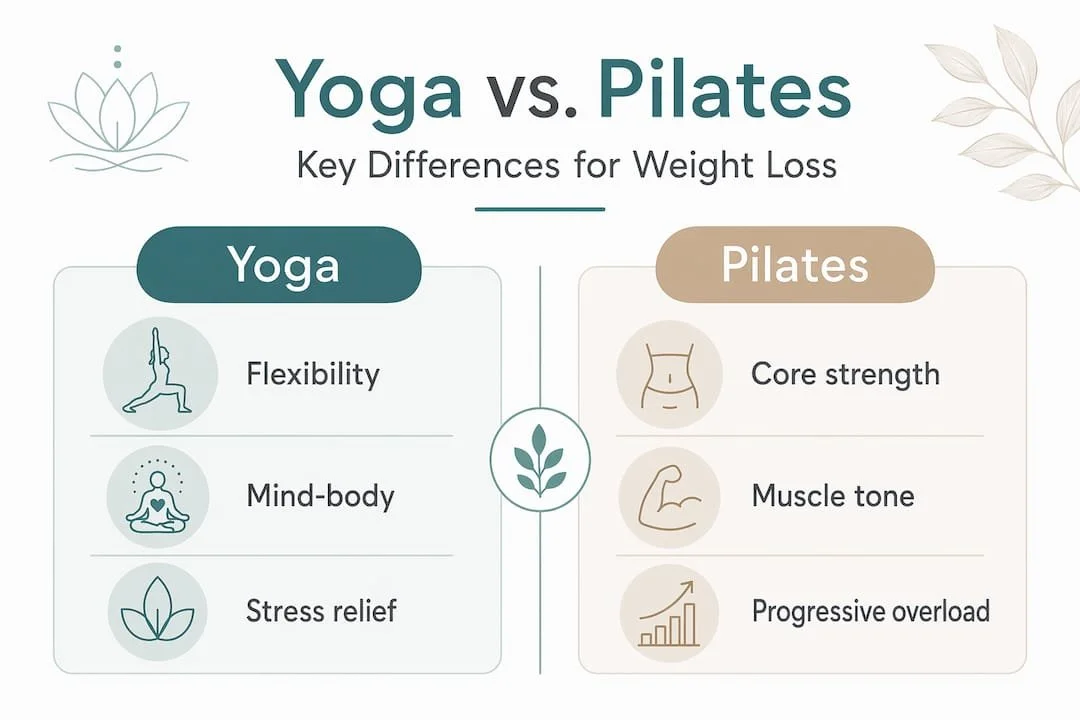
For a deeper look at how these two practices compare across fitness goals, the yoga vs. pilates comparison at Amritayogawellness covers the functional differences in plain language.
The honest answer for most adults trying to lose weight is this: use both, but use them as part of a larger plan, not as the entire plan.
Building a yoga and pilates workout plan that actually produces results
This is where most programs fall short. People show up to yoga twice a week, add a pilates session, and wonder why the scale isn't moving after two months. The issue isn't the practices. It's the dose and the missing pieces.
Here's how to build a yoga and pilates workout plan that supports real, sustainable fat loss:
Hit the activity threshold first. Lifestyle interventions for weight loss target 150 to 180 minutes of moderate activity per week. Yoga and pilates count toward that total, but they typically cannot fill it alone. Add brisk walking, cycling, or swimming on non-practice days.
Treat pilates as your resistance training. Combining aerobic activity with resistance training two to three times per week reduces insulin resistance and supports fat loss more effectively than either approach alone. Pilates counts as your resistance work if it's progressive and challenging.
Schedule yoga for recovery and stress management. Yoga sessions on days after harder aerobic workouts reduce cortisol, improve sleep quality, and support the hormonal environment that makes fat burning easier.
Anchor your nutrition. Exercise alone produces limited initial weight loss. Yoga and pilates are not exceptions. Pair your practice with a modest caloric deficit, not starvation, and the combination becomes genuinely powerful.
Track progress in more than one way. The scale is one metric. Also track energy levels, sleep quality, how your clothes fit, and how far you can walk without fatigue. Yoga and pilates tend to show up first in those measures, well before body weight shifts.
Pro Tip: The biggest mistake people make when losing weight with yoga and pilates is treating either practice as their cardio. If you leave a yoga class barely winded, you've done recovery work, not cardiovascular training. That's valuable, but layer in something that elevates your heart rate for 20 to 30 minutes several times per week.
A realistic six-month arc looks like this: months one and two focus on establishing a consistent three-to-four day per week practice. Months three and four add aerobic sessions and begin progressive overload in pilates. Months five and six, the compounding effect becomes visible in body composition, energy, and metabolic markers.
My honest take after years of watching people use these practices
I've worked alongside enough practitioners to say something that most fitness content won't: the people who succeed with losing weight with yoga and pilates are rarely the ones chasing the fastest result. They're the ones who stopped fighting their bodies and started working with them.
Here's what I've observed consistently. Adults who come to yoga and pilates after burning out on high-intensity programs don't just get more flexible. They get more regulated. Their eating becomes less reactive. Their sleep improves. Their relationship with physical effort shifts from punitive to purposeful. That's not a soft outcome. That's the behavioral infrastructure that makes every other weight loss strategy work better.
What I've also seen is that people underestimate both practices when they go in expecting rapid fat loss, and overestimate them when they forget they need aerobic challenge too. The evidence supports yoga and pilates as facilitative components of a behavioral weight loss program, not replacements for the program itself. The practices that get you to your goal are the ones you can sustain for nine months or two years, not the ones that burn the most calories in a single session.
If you're someone who has tried and quit multiple exercise programs, yoga and pilates may be exactly the right entry point. Not because they're easy, but because they build the kind of body awareness and self-regulation that make everything else more sustainable.
— Juiced
Start your practice at Amrita Yoga & Wellness
Amrita Yoga & Wellness in Philadelphia offers the kind of structured, instructor-led environment where yoga and pilates for weight loss actually sticks. Classes span mat pilates, Iyengar yoga, Vinyasa flows, hot yoga, and blended formats designed for different fitness levels and goals. Whether you're just starting out or returning after a long break, the studio's instructors tailor sessions to where you are, not where you think you should be. The community-driven approach means you're not navigating this alone. Explore class schedules, workshops, and wellness services including holistic wellness offerings that support the mind-body connection at the heart of sustainable weight management. Visit Amrita Yoga & Wellness to find your fit.
FAQ
Can yoga really help with weight loss?
Yes. Yoga supports weight loss primarily through cardiometabolic improvements, stress reduction, and better behavioral self-regulation around food and activity. Structured yoga practiced at least three times per week shows measurable effects in clinical research.
How often should I do pilates to see weight loss results?
Two to three pilates sessions per week, combined with aerobic exercise and a modest caloric deficit, gives you the best chance of seeing body composition changes. Pilates alone, without progressive overload and aerobic activity, is unlikely to drive significant fat loss.
Is a yoga and pilates workout plan enough to lose weight?
It depends on total weekly activity and nutrition. Yoga and pilates contribute meaningfully to a weight loss plan, but most adults need additional moderate aerobic exercise to reach the 150 to 180 minute weekly activity threshold associated with clinically meaningful results.
What is the best yoga style for fat loss?
Higher-intensity styles like Bikram, Vinyasa, and Power yoga generate more cardiovascular demand and caloric expenditure than restorative or Yin yoga. Six months of regular Bikram yoga has been shown to reduce fat mass by over 6% in research settings.
Should beginners start with yoga or pilates for weight loss?
Both are beginner-friendly. Pilates may be the better starting point if core weakness or postural issues are limiting your ability to exercise comfortably. Yoga tends to be more accessible for those dealing with stress-related weight gain or who need to build a consistent movement habit first.