7 Essential Yoga Asanas for Beginners to Start Today
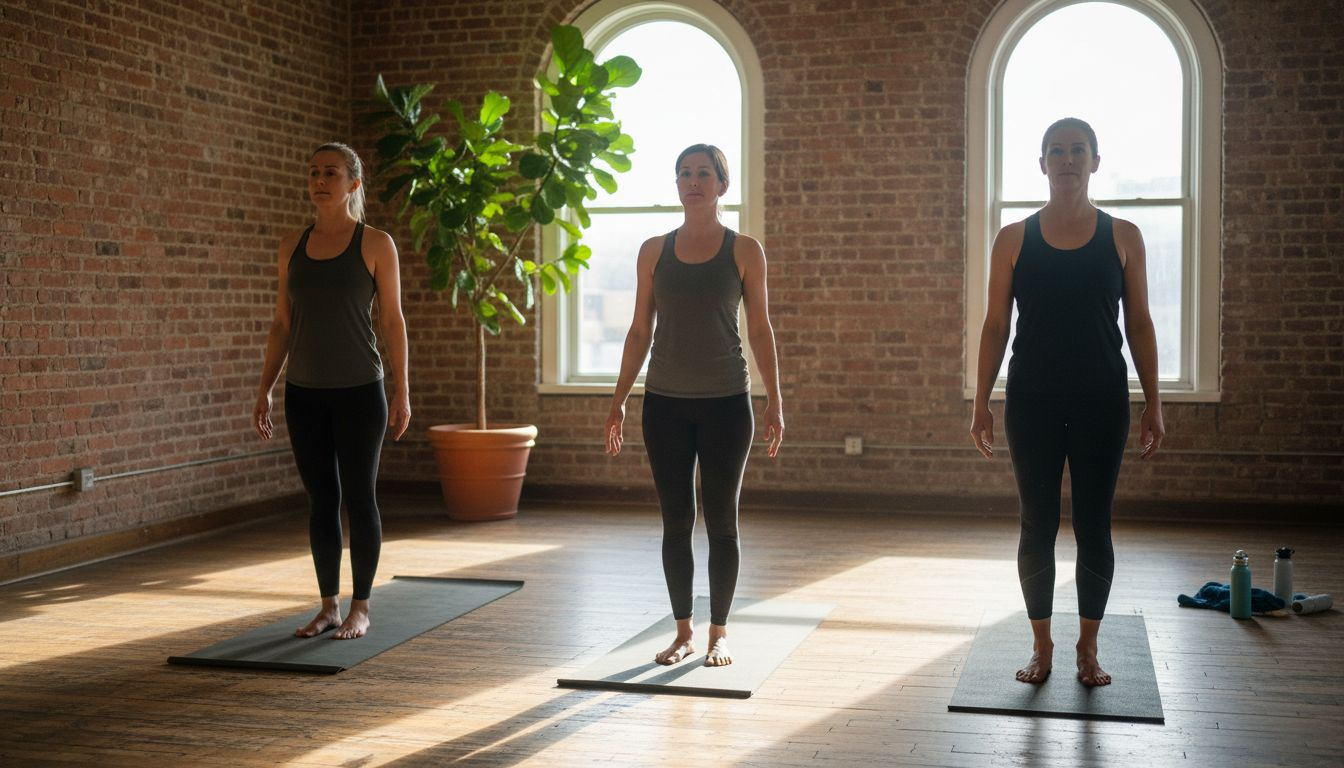
Finding time for self-care can feel impossible in a busy American city like Philadelphia, but a supportive yoga community offers a practical solution. Studies show that over 36 million Americans now practice yoga to help manage stress, build strength, and improve focus. If you want to develop a healthier body and calmer mind, starting with foundational asanas in a welcoming group can make your wellness journey both accessible and rewarding.
Table of Contents
Quick Summary
| Takeaway | Explanation |
|---|---|
| 1. Master Mountain Pose for stability | Practicing Mountain Pose improves balance and core stability, forming the basis for all standing yoga. |
| 2. Use Downward Dog for full-body strength | Downward Dog enhances upper body strength, flexibility, and spinal decompression, beneficial for physical function. |
| 3. Incorporate Cobra Pose for spinal health | Regularly performing Cobra Pose helps alleviate tension in the back and improves posture by strengthening spinal muscles. |
| 4. Practice Child’s Pose for relaxation | Child’s Pose offers a restorative break, reducing stress while gently stretching the back and hips during practice. |
| 5. Enhance focus with Tree Pose | Tree Pose develops balance, stability, and mindfulness, encouraging a deeper connection between body and mind. |
1. Mountain Pose for Balance and Stability
Mountain Pose (Tadasana) is the fundamental standing posture that teaches precise body alignment and serves as the foundation for all standing yoga practices. This seemingly simple pose is actually a powerful technique for developing full body awareness and core stability.
Standing tall with feet together, Mountain Pose might look easy, but it requires significant muscular engagement and mental focus. When practiced correctly, this pose helps improve balance and stability through strategic muscle training. By activating leg muscles, engaging core stabilizers, and aligning your spine, you create a strong foundation that translates into better overall movement patterns.
To perform Mountain Pose, stand with feet hip width apart, distribute your weight evenly, and imagine a straight line running from the crown of your head through your spine to your feet. Keep your shoulders relaxed, arms at your sides, and breathe deeply. Focus on grounding through your feet while simultaneously lifting your chest and lengthening your spine.
Regular practice of Mountain Pose can significantly enhance postural awareness, reduce injury risk, and improve overall body coordination. Research indicates that balance exercises like this are crucial for preventing falls and maintaining muscular strength, particularly as we age.
Pro tip: Practice Mountain Pose near a wall initially to help maintain balance and check your alignment using the wall as a gentle reference point.
2. Downward Dog to Stretch and Strengthen
Downward Dog is a fundamental yoga pose that transforms your body through powerful stretching and strength building. This classic posture works simultaneously as an active rest position and an intense full body workout.
Also known as Adho Mukha Svanasana, Downward Dog uniquely engages multiple muscle groups simultaneously, creating an extraordinary stretch and strengthening experience. By positioning your body in an inverted V shape, you activate your shoulders, arms, core, and legs while decompressing your spine.
To perform the pose, start on your hands and knees, spread your fingers wide, then lift your hips toward the ceiling. Press your hands firmly into the ground, straighten your arms and legs, and create an inverted V shape with your body. Focus on distributing weight evenly and maintaining a long, straight spine.
Regular practice of Downward Dog offers significant benefits. It helps improve upper body strength, increases hamstring and shoulder flexibility, and provides gentle spinal decompression. Research indicates that consistent yoga practice with poses like Downward Dog can help manage chronic pain and enhance overall physical function.
Pro tip: If you have tight hamstrings, bend your knees slightly to maintain proper spine alignment and prevent lower back strain.
3. Cobra Pose for Spine Flexibility
Cobra Pose, known as Bhujangasana in Sanskrit, represents a powerful yoga posture designed to open and strengthen your spine through gentle backbending. This foundational pose offers remarkable benefits for improving overall spinal health and mobility.
As a gentle backbend, Cobra Pose works by engaging the posterior chain of muscles along your back, creating significant improvements in spinal flexibility and muscle strength. By lifting your chest while keeping your lower body grounded, you activate deep back muscles and create space between vertebrae, which can help alleviate tension and reduce stiffness.
To perform Cobra Pose, lie face down with palms placed beside your shoulders. Press your hands into the ground, engage your core, and slowly lift your chest while keeping your pelvis and legs connected to the floor. Focus on creating a smooth, controlled arch in your spine without straining or overextending.
Regular practice of Cobra Pose can help counteract the negative effects of prolonged sitting, improve posture, and increase overall back strength. By gently stretching and strengthening spinal muscles, you can develop greater flexibility and reduce the risk of back pain.
Pro tip: Start with a low lift in Cobra Pose and gradually increase your range of motion as your back muscles become stronger and more flexible.
4. Child's Pose for Relaxation and Recovery
Child's Pose, known as Balasana in Sanskrit, offers a powerful sanctuary of calm and restoration during your yoga practice. This gentle resting posture serves as a physical and mental reset button, allowing your body to release tension and your mind to find stillness.
Considered a restorative pose, Child's Pose provides remarkable benefits by supporting nervous system recovery. When you fold forward with your forehead resting on the mat, you create a protective cocoon that signals your body to transition from stress response to relaxation mode.
To practice Child's Pose, kneel on your mat with big toes touching and knees spread wide. Sit back on your heels and extend your arms forward or alongside your body. Allow your forehead to rest on the ground, creating a sense of surrender and letting go of external pressures.
This pose is particularly powerful for managing stress, reducing anxiety, and providing a gentle stretch to your back, hips, and shoulders. It serves as a safe space during yoga practice where you can pause, breathe deeply, and reconnect with your inner calm whenever feeling overwhelmed.
Pro tip: Use a folded blanket or yoga block under your forehead if you have difficulty reaching the ground comfortably, ensuring you can fully relax into the pose.
5. Warrior I to Build Strength and Confidence
Warrior I, known as Virabhadrasana I in Sanskrit, stands as a powerful yoga pose that transforms both physical strength and mental resilience. This dynamic posture embodies the warrior spirit of inner strength, balance, and focused determination.
As a fundamental standing pose, Warrior I supports functional fitness and muscle development. By creating a strong lunge position with your body, you engage multiple muscle groups simultaneously, building leg strength, core stability, and overall body awareness.
To practice Warrior I, start in a standing position and step one foot back, turning it slightly outward. Bend your front knee to create a 90-degree angle while keeping your back leg straight. Raise your arms overhead, palms facing each other, and gaze forward. Focus on creating a long, powerful line from your back heel through your fingertips.
This pose offers remarkable benefits beyond physical strength. By holding the challenging stance, you develop mental endurance, improve balance, and cultivate a sense of inner confidence. The deliberate breath and focused gaze help calm the mind while building physical stamina.
Pro tip: If balance is challenging, practice near a wall or use a chair for support, gradually building strength and stability as you become more comfortable with the pose.
6. Tree Pose for Improved Focus and Balance
Tree Pose (Vrksasana) represents a beautiful meditation in motion, challenging your body to find stillness and strength while balancing on a single leg. This elegant pose transforms physical balance into a powerful metaphor for mental concentration.
By requiring you to root down through one leg while maintaining an upright posture, Tree Pose develops critical balance and stability skills. The pose demands complete mental presence, training your nervous system to create harmony between physical alignment and inner calm.
To practice Tree Pose, begin by standing with your weight evenly distributed. Slowly shift your weight onto one leg, then gently place the sole of your opposite foot either on your inner ankle, calf, or upper thigh (avoiding the knee joint). Bring your hands together at your heart center or raise them overhead like branches reaching toward the sky.
What makes Tree Pose truly remarkable is its dual impact on physical and mental wellness. As you balance, you strengthen stabilizing muscles, improve proprioception, and cultivate a sense of inner quiet. The concentrated effort required helps quiet mental chatter and enhance overall mindfulness.
Pro tip: If you struggle with balance, practice near a wall or chair for support, and remember that wobbling is part of the learning process.
7. Seated Forward Bend to Increase Flexibility
Seated Forward Bend (Paschimottanasana) is a transformative yoga posture that gently opens your entire posterior chain, creating space and releasing tension throughout your back, hamstrings, and spine. This powerful stretch offers a moment of introspection and physical release.
The pose works by systematically elongating muscle groups through controlled, mindful movement. As you fold forward, you create a deep stretch that improves overall flexibility, reduces muscle stiffness, and promotes better body awareness.
To practice Seated Forward Bend, sit on the floor with legs extended straight in front of you. Inhale and lengthen your spine, then exhale and hinge forward from your hips. Reach toward your feet, holding onto your shins, ankles, or toes depending on your flexibility. Remember that the goal is not to touch your toes, but to create a comfortable stretch.
Regular practice of this pose can significantly improve hamstring flexibility, reduce lower back tension, and calm the nervous system. The combination of physical stretch and deep breathing helps release both muscular and mental stress, creating a sense of overall relaxation and well-being.
Pro tip: If you have tight hamstrings, sit on a folded blanket to elevate your hips and make the forward bend more accessible.
Below is a comprehensive table summarizing the primary yoga poses discussed in the article and their benefits, approaches, and notable tips for effective practice.
| Yoga Pose | Description | Key Benefits | Pro Tip |
|---|---|---|---|
| Mountain Pose | A fundamental standing pose focused on body alignment and stability. | Improves balance, promotes postural awareness, and enhances core engagement. | Practice near a wall to aid initial balance and alignment. |
| Downward Dog | An inverted V-shaped posture that strengthens and stretches various muscle groups. | Builds upper body strength, stretches hamstrings and shoulders, and decompresses the spine. | Bend knees slightly if hamstrings are tight to ensure spine alignment. |
| Cobra Pose | A gentle backbend designed to enhance spinal flexibility and strength. | Supports posture, alleviates stiffness, and increases spinal mobility. | Begin with a low lift to build strength and avoid overstretching. |
| Child’s Pose | A restorative pose focusing on relaxation and recovery. | Reduces stress, stretches back and shoulders, and calms the nervous system. | Use a yoga block or blanket under the forehead for added comfort when stretching. |
| Warrior I | A strong standing pose that builds physical and mental resilience. | Enhances leg strength, balance, and self-confidence. | Utilize a wall or chair as support when starting out to maintain stability. |
| Tree Pose | A balancing pose enhancing focus and stability. | Strengthens stabilizing muscles and promotes mindfulness. | Practice near support surfaces like walls or chairs until balance improves. |
| Seated Forward Bend | A stretch targeting the posterior chain for flexibility and tension release. | Improves flexibility of hamstrings and spine, and fosters a calming effect on the nervous system. | Elevate the hips with a folded blanket when hamstrings are tight for improved posture. |
Begin Your Yoga Journey with Confidence and Support
Starting yoga can feel overwhelming when facing challenges like balance, flexibility and mental focus as the article highlights with poses such as Mountain Pose for stability and Tree Pose for focus. These common beginner goals show the need for guided practice to build strength, reduce risk of injury and improve body awareness in a nurturing environment.
At Amrita Yoga & Wellness, we understand these very pain points. Our inclusive classes and workshops are designed specifically to help beginners master fundamental asanas like Downward Dog and Warrior I while cultivating mental calmness and confidence. Whether you want to enhance flexibility through restorative poses like Child's Pose or improve balance and core strength with standing postures, you will find expert instruction tailored to your unique needs.
Take the next step toward lasting holistic wellness by exploring our schedule and offerings at Amrita Yoga & Wellness.
Experience firsthand how guided yoga classes can transform your routine from intimidating to empowering. Start building your practice today with supportive community and personalized attention at Amrita Yoga & Wellness. Visit our landing page to reserve your spot and step into a healthier, balanced life now.
Frequently Asked Questions
What are the benefits of practicing Mountain Pose as a beginner?
Mountain Pose helps develop full body awareness and core stability, which are essential for all other yoga postures. Start by practicing for 5–10 minutes each day to improve posture and balance.
How can I ensure proper alignment in Downward Dog?
To ensure proper alignment in Downward Dog, focus on spreading your fingers wide and pressing your hands firmly into the ground while lifting your hips. Practice this pose for a few minutes daily to enhance upper body strength and flexibility.
How often should I practice Cobra Pose to see improvements in flexibility?
You should practice Cobra Pose several times a week to experience improvements in spinal flexibility and muscle strength. Aim for 3–5 times a week, holding the pose for 30 seconds each time.
Can Child's Pose help with stress relief?
Yes, Child's Pose is an excellent restorative posture that promotes relaxation and helps reduce stress and anxiety. Incorporate it into your practice whenever you feel overwhelmed, holding the position for 1–5 minutes to calm your mind.
What should I focus on when practicing Tree Pose?
When practicing Tree Pose, focus on grounding through your standing foot and maintaining an upright posture. Spend 3–5 minutes each session working on balance and concentration, gradually increasing your hold time as you improve.
How can Seated Forward Bend help me with flexibility?
Seated Forward Bend effectively stretches your back and hamstrings, which can significantly increase your overall flexibility. Practice this pose 2–3 times a week, aiming to hold the stretch for at least 30 seconds each time.