The Amrita Journal
Explore thoughtful stories, practical wellness guidance and inspiring ideas to support your movement, mindfulness and everyday wellbeing at Amrita.
7 Mindfulness Techniques Examples for Yoga and Pilates
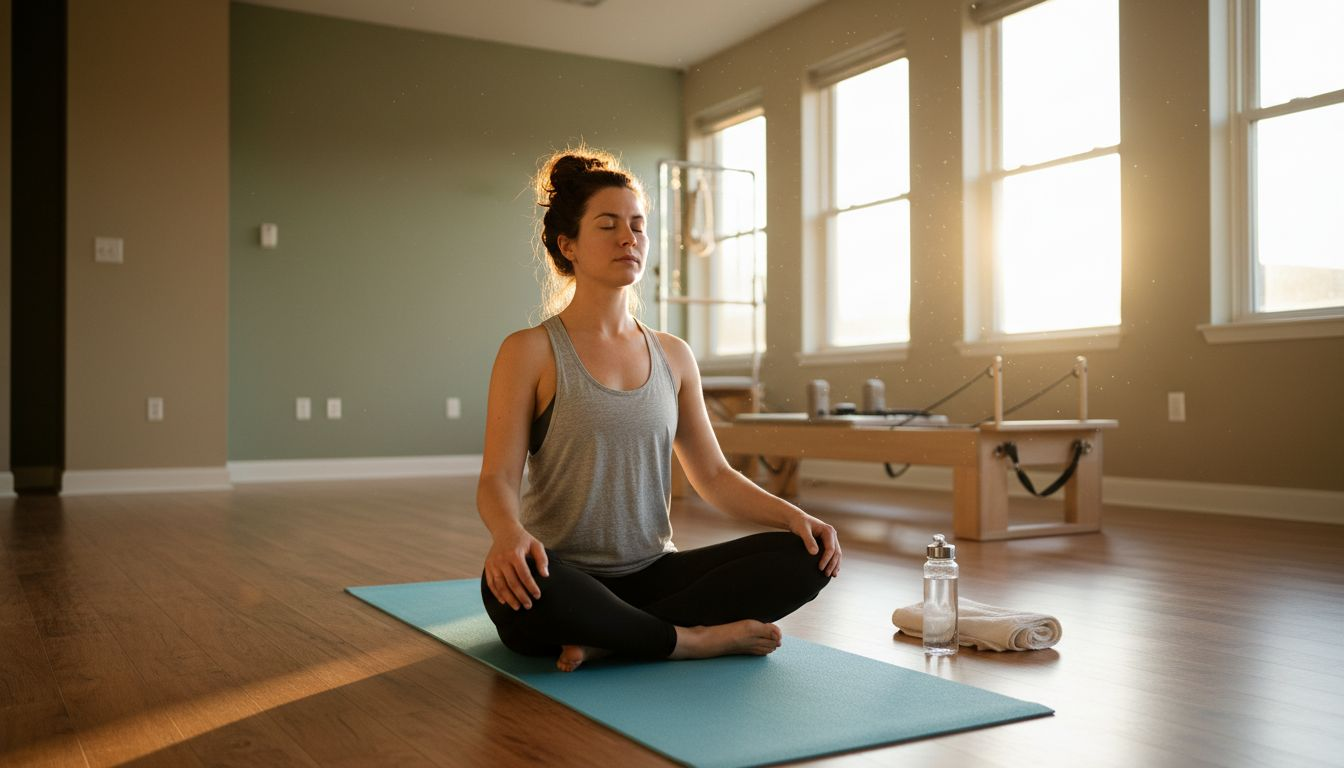
Most American adults find their minds wandering during yoga or Pilates, with distractions often breaking their concentration in class. For health-conscious residents of Philadelphia, a restless mind can stand between you and meaningful progress, both physically and mentally. This guide reveals proven mindfulness techniques, including focused breathing and body scan meditations, designed to help you stay present and get the most out of every session.
Table of Contents
Quick Summary
| Takeaway | Explanation |
|---|---|
| 1. Focus on Your Breath | Concentrate on breath sensations to enhance mindfulness and reduce mental noise during practices. |
| 2. Practice Body Scanning | Methodically observe bodily sensations from head to toe to cultivate awareness and manage stress effectively. |
| 3. Use Visualization Techniques | Create calming mental images to enhance relaxation and emotional regulation during yoga or Pilates. |
| 4. Engage in Mindful Movement | Move slowly and with intention, focusing on bodily sensations to deepen your practice and prevent injury. |
| 5. Cultivate Self-Compassion | Use loving-kindness meditation to develop emotional resilience and reduce self-criticism in your practice. |
1. Focused Breathing to Calm the Mind
Focused breathing represents a powerful mindfulness technique designed to anchor your attention and cultivate inner calm during yoga and Pilates practice. By directing consciousness to breath sensations, practitioners can systematically reduce mental noise and enhance moment-to-moment awareness.
This technique involves intentionally concentrating on breath patterns while maintaining a nonjudgmental attitude toward wandering thoughts. Research demonstrates that focused breathing can positively influence cognitive functions, including memory and emotional regulation. When distractions emerge during practice, the goal is to gently redirect attention back to breathing without self criticism.
To implement focused breathing, sit with an upright posture and close your eyes. Begin by observing the natural rhythm of your breath without attempting to modify it. Notice the sensation of air moving through your nostrils - feeling the coolness of inhalation and warmth of exhalation. Some practitioners find it helpful to count breaths or use a specific counting pattern to maintain concentration.
Physical benefits include reduced stress responses, lowered heart rate, and improved oxygen circulation. Mentally, this practice helps train attentional control and creates space between thoughts and reactive emotional patterns. Regular practice can significantly improve your ability to remain present during challenging yoga or Pilates movements.
Pro tip: Start with short 3-5 minute sessions and gradually increase duration as your concentration improves, making focused breathing a consistent part of your wellness routine.
2. Body Scan Technique for Deep Awareness
Body scan meditation represents a transformative mindfulness approach that supports profound mind body connection during yoga and Pilates practice. This systematic technique allows practitioners to cultivate deep somatic awareness by methodically focusing attention across different body regions from head to toe.
The technique involves deliberately moving consciousness through physical spaces while maintaining a nonjudgmental perspective toward bodily sensations. Unlike typical physical exercises that emphasize external performance, body scan meditation encourages internal observation. Participants learn to notice subtle experiences like temperature variations, muscle tension, or areas of comfort and discomfort without attaching emotional judgment.
To practice body scan meditation, find a comfortable position either seated or lying down. Begin by taking several deep breaths to center yourself. Start at your feet and progressively move attention upward through legs, abdomen, chest, arms, and head. With each region, pause to observe sensations without attempting to change them. Some individuals find it helpful to imagine breathing directly into areas of tension or discomfort.
Physical benefits include reduced muscle tension, improved stress management, and enhanced body awareness. Mental benefits encompass increased emotional regulation, heightened present moment awareness, and a deeper understanding of subtle physical signals that often go unnoticed during fast paced daily activities.
Pro tip: Practice body scan meditation for 10-15 minutes daily and experiment with different positions to discover what helps you maintain the most relaxed and attentive state.
3. Guided Visualization for Enhanced Relaxation
Guided visualization is a powerful mindfulness technique that uses imagination to promote deep relaxation and mental clarity during yoga and Pilates practice. This strategic mental exercise helps practitioners create immersive, calming experiences that engage multiple sensory pathways to reduce stress and enhance overall wellness.
The technique involves deliberately constructing a detailed mental landscape that triggers physiological relaxation responses. Practitioners are encouraged to engage all senses—visualizing vivid imagery, hearing soothing sounds, feeling gentle textures, and experiencing emotional tranquility. Unlike passive meditation, guided visualization actively directs mental focus toward constructing a peaceful inner environment.
To practice guided visualization, begin by finding a comfortable position during your yoga or Pilates session. Close your eyes and take several deep breaths. Choose a serene setting like a quiet beach, peaceful forest, or tranquil garden. Develop the scene in intricate detail. Imagine the warmth of sunlight, the sound of gentle waves or rustling leaves, and the soft texture of sand or moss beneath you. Allow your body to synchronize with this mental landscape, releasing tension with each breath.
Mental benefits include reduced anxiety, improved emotional regulation, and enhanced focus. Physical benefits encompass lowered heart rate, decreased muscle tension, and activation of the body's natural relaxation mechanisms. Regular practice can help practitioners develop greater resilience against stress and cultivate a more balanced internal state.
Pro tip: Create a personal library of 3-5 different visualization scenes to prevent mental fatigue and maintain the technique's effectiveness during repeated practice.
4. Mindful Movement During Yoga Sequences
Mindful movement represents a sophisticated approach to physical practice that transforms ordinary yoga sequences into profound experiences of consciousness and presence. Integrating attention and intentional motor skills creates a powerful mind body connection that extends beyond traditional physical exercise.
At its core, mindful movement requires practitioners to cultivate moment to moment awareness during each physical transition. This means moving with deliberate attention to bodily sensations, breath patterns, and internal experiences rather than performing sequences mechanically. Each pose becomes an opportunity to explore subtle muscular engagement, spinal alignment, and energetic flow.
To practice mindful movement during yoga, slow down your typical sequence pace. Begin by taking conscious breaths before initiating any movement. As you transition between poses, notice the weight distribution through your feet, the engagement of specific muscle groups, and the quality of your breath. Approach each posture with curiosity instead of judgment, observing how your body responds without creating narrative or expectation.
Physical benefits include improved body awareness, enhanced proprioception, and reduced risk of injury through intentional movement. Mental benefits encompass increased emotional regulation, reduced stress responses, and a deeper understanding of internal physical signals. Regular practice can transform yoga from a purely physical discipline into a meditative journey of self discovery.
Pro tip: Integrate a 30 second pause between challenging sequences to reset your awareness and maintain mindful connection throughout your entire practice.
5. Loving-Kindness Meditation for Self-Compassion
Loving-kindness meditation represents a transformative mindfulness practice designed to cultivate deep emotional resilience and compassionate self awareness. This powerful technique helps practitioners generate positive emotional states by intentionally directing warmth and goodwill toward themselves and others.
At its essence, loving-kindness meditation involves systematically generating feelings of acceptance, warmth, and care through intentional mental phrases and visualization. Unlike traditional meditation practices that focus solely on breath or stillness, this approach actively encourages practitioners to develop emotional softness and empathy toward themselves and their experiences.
To practice loving-kindness meditation during yoga or Pilates, begin by finding a comfortable seated position. Close your eyes and take several deep breaths. Start by generating kind phrases toward yourself such as may I be peaceful or may I be free from suffering. Gradually expand these wishes to include loved ones, neutral acquaintances, and eventually even challenging relationships. The goal is not to force positive emotions but to gently invite them with genuine curiosity and openness.
Psychological benefits include reduced anxiety, enhanced emotional regulation, and increased capacity for self compassion. By practicing regularly, individuals can develop greater emotional flexibility and resilience. The technique helps interrupt habitual patterns of self criticism and creates space for more nurturing internal dialogues.
Pro tip: Create a personalized set of three to five compassionate phrases that resonate deeply with your current emotional landscape, rotating them to maintain the practice's freshness and impact.
6. Observing Thoughts Without Judgment
Observing thoughts without judgment represents a sophisticated mindfulness technique that transforms how we interact with our inner mental landscape. This approach enables practitioners to develop a compassionate and curious relationship with their mental experiences.
The core principle involves treating thoughts as temporary mental events rather than absolute truths. Imagine your thoughts as clouds drifting across the sky of your consciousness existing momentarily without requiring engagement or resistance. This practice helps create distance between your essential self and the continuous stream of mental chatter that often dominates our internal experience.
To practice nonjudgmental thought observation during yoga or Pilates, begin by finding a comfortable seated position. Close your eyes and focus on your breath. When thoughts arise notice them as you would observe passing scenery from a train window. Acknowledge each thought without labeling it as good or bad. Simply recognize its presence and allow it to move along without attaching emotional significance or attempting to change its content.
Psychological benefits include reduced anxiety, enhanced emotional regulation, and increased cognitive flexibility. By practicing this technique regularly, individuals can develop greater metacognitive awareness. This means gaining the ability to observe mental processes with detachment, ultimately reducing the power of repetitive or negative thought patterns.
Pro tip: Create a visual metaphor for your thoughts like leaves floating down a stream to help maintain emotional distance and cultivate a sense of gentle curiosity during meditation.
7. Anchoring Attention with Sensory Practices
Sensory anchoring represents a sophisticated mindfulness technique that transforms how practitioners engage with present moment experience during yoga and Pilates. Multisensory mindfulness practices help ground attention by intentionally directing consciousness toward specific sensory inputs.
The fundamental principle involves using sensory experiences as stabilizing focal points that interrupt mental wandering and cultivate deep awareness. By systematically training attention on specific sensory signals such as breath rhythm, ambient sounds, or physical sensations, practitioners develop increased mental resilience and concentration skills. This approach differs from traditional meditation by actively engaging multiple sensory pathways rather than passively observing thoughts.
To implement sensory anchoring during practice, choose a specific sensory focus before beginning your yoga or Pilates session. This could involve listening to the subtle sound of your breath, feeling the temperature variations in your palms, or noticing the texture of your yoga mat against your skin. When mental distractions arise gently redirect attention back to your chosen sensory anchor without self criticism.
Physiological benefits include reduced stress responses, increased parasympathetic nervous system activation, and enhanced mind body connection. Regular practice supports improved emotional regulation and builds metacognitive skills that extend beyond formal meditation sessions. By training attention through sensory experiences, practitioners develop greater capacity to remain present and centered during challenging physical and mental circumstances.
Pro tip: Create a personalized sensory anchor kit with textured objects, essential oils, or sound tools to provide variety and maintain engagement in your mindfulness practice.
Below is a table providing a detailed summary of mindfulness techniques and practices outlined in the article, detailing their purposes, applications, and expected benefits.
| Technique | Description | Purpose and Benefits |
|---|---|---|
| Focused Breathing | A method that involves concentrating on breath patterns to cultivate presence and calm the mind. | Enhances attentional control, reduces stress, and improves emotional regulation. |
| Body Scan Meditation | Systematically moving attention across body regions, observing sensations nonjudgmentally. | Reduces muscle tension, increases bodily awareness, and enhances emotional regulation. |
| Guided Visualization | Using detailed mental imagery to induce relaxation by engaging multiple sensory pathways. | Promotes recovery, reduces anxiety, and enhances mental clarity. |
| Mindful Movement | Intentionally maintaining moment-to-moment awareness during physical movements. | Improves proprioception, lowers risk of injury, and deepens mindful presence. |
| Loving-Kindness Meditation | Generating feelings of warmth and goodwill toward oneself and others through intentional phrases and imagery. | Cultivates self-compassion and emotional resilience. |
| Observing Thoughts | Viewing thoughts nonjudgmentally, detaching from the need to interact with them. | Enhances cognitive flexibility and reduces the effect of intrusive thoughts. |
Deepen Your Mindfulness Practice with Amrita Yoga & Wellness
The 7 mindfulness techniques highlighted in this article address common challenges such as calming the mind, cultivating self-compassion, and anchoring attention during yoga and Pilates sessions. Many practitioners struggle with distractions, mental noise, and maintaining present moment awareness. Techniques like focused breathing, body scan meditation, and loving-kindness meditation provide practical tools to overcome these hurdles and deepen your mind-body connection.
At Amrita Yoga & Wellness, we understand the importance of integrating these mindfulness practices into your routine. Whether you seek to enhance emotional regulation or improve physical performance through mindful movement, our diverse class offerings including hot yoga, Pilates, and barre are designed to support your personal growth. Explore our classes and workshops to experience guided sessions that bring these techniques to life.
Ready to transform your practice and embrace mindfulness fully?
Join a welcoming community committed to holistic wellness. Visit Amrita Yoga & Wellness today to sign up for a class or workshop that suits your goals. Start cultivating inner calm and resilience now before distractions take hold again.
Frequently Asked Questions
What is focused breathing and how can I practice it during yoga?
Focused breathing is a mindfulness technique that involves paying attention to your breath to calm your mind. To practice, sit upright, close your eyes, and take a few deep breaths while observing the natural rhythm of your breath for 3-5 minutes, gradually increasing the duration as you get more comfortable.
How do I perform a body scan meditation while practicing Pilates?
A body scan meditation involves directing your attention to different parts of your body to enhance awareness. Start by lying down comfortably, taking deep breaths, and slowly focusing on each body part from your feet to your head, pausing to observe sensations without judgment for 10-15 minutes.
What is guided visualization and how can it help during yoga?
Guided visualization is a technique that uses imagination to create a calming mental experience, promoting relaxation. To use it, close your eyes during practice, take deep breaths, and visualize a serene place in detail, allowing yourself to fully immerse in that peaceful scene to enhance your relaxation.
How can mindful movement impact my yoga practice?
Mindful movement emphasizes awareness of your body and breath as you transition between poses. Slow down your routine, focus on each movement and sensation, and allow yourself to be curious about how your body feels, ultimately transforming your practice into a meditative experience.
What are the benefits of practicing loving-kindness meditation during Pilates?
Loving-kindness meditation encourages emotional resilience and self-compassion by directing positive feelings toward yourself and others. To practice, find a comfortable seated position, take deep breaths, and repeat kind phrases to yourself, gradually extending these wishes to others during your Pilates sessions.
How can I observe my thoughts without judgment during yoga practice?
Observing thoughts without judgment involves recognizing them as temporary mental events rather than engaging with them. Sit comfortably, focus on your breath, and when thoughts arise, acknowledge them like passing scenery, allowing them to drift away without attaching significance, which you can practice routinely for better emotional regulation.