Reformer Pilates: What It Is and Why It Works in 2026
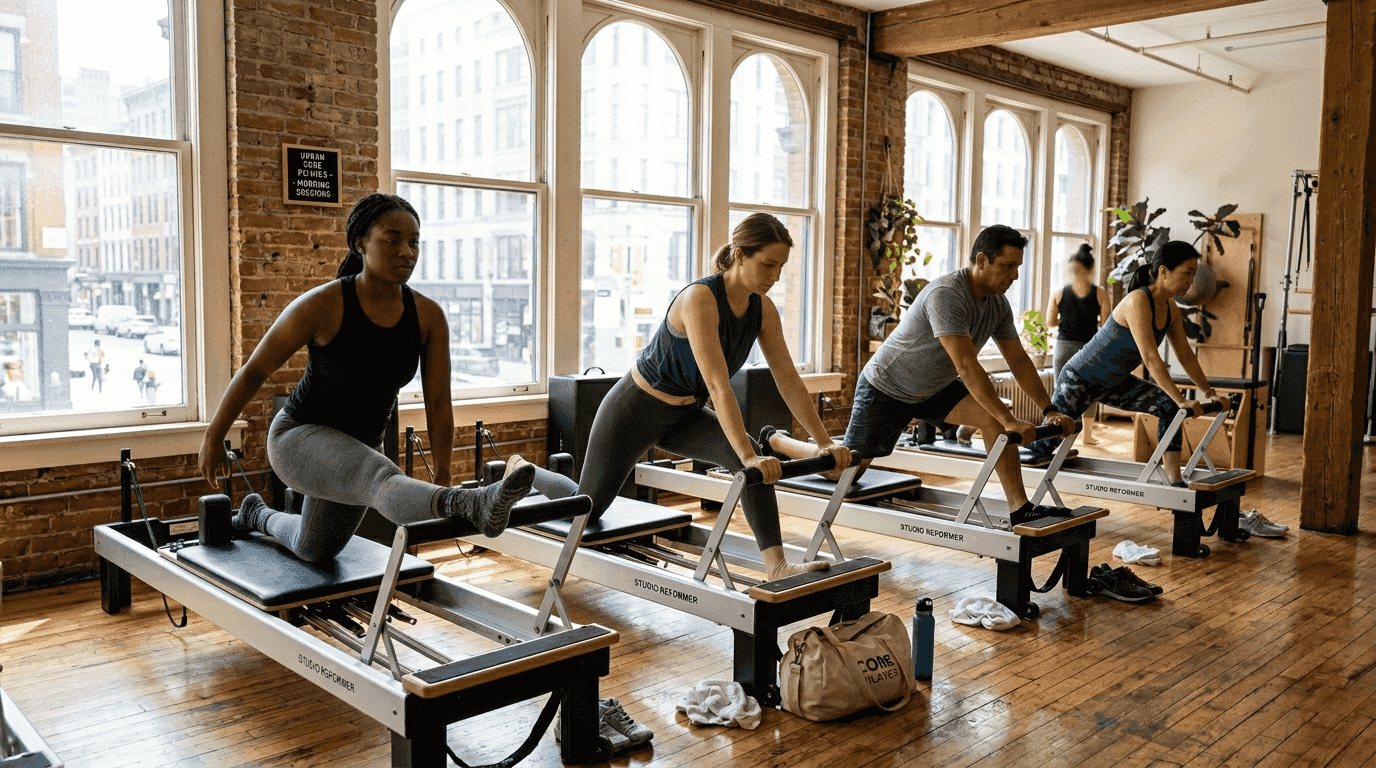
When you hear Pilates, you probably picture mat exercises with minimal equipment. That's only half the story. Reformer Pilates uses a specialized machine with springs, pulleys, and a sliding carriage to deliver controlled resistance training that builds core strength and flexibility far beyond traditional mat work. For adults in Philadelphia seeking low-impact workouts that deliver measurable results, Reformer Pilates offers an accessible, adaptable approach to fitness. This guide explains how the machine works, what benefits you can expect, who should try it, and how to get started in your local community.
Table of Contents
Key takeaways
| Point | Details |
|---|---|
| Machine mechanics | Springs, pulleys, and sliding carriage create variable resistance for controlled strength building |
| Health benefits | Studies show 20-30% core strength gains and 15-25% flexibility improvements after 12 weeks |
| Accessibility | Low-impact design suits beginners, people with joint concerns, and fitness level transitions |
| Safety priority | Professional instruction ensures proper form and prevents injuries during practice |
| Mental wellness | Regular practice reduces anxiety and depression while improving body appreciation |
Understanding the reformer machine: springs, pulleys, and carriage
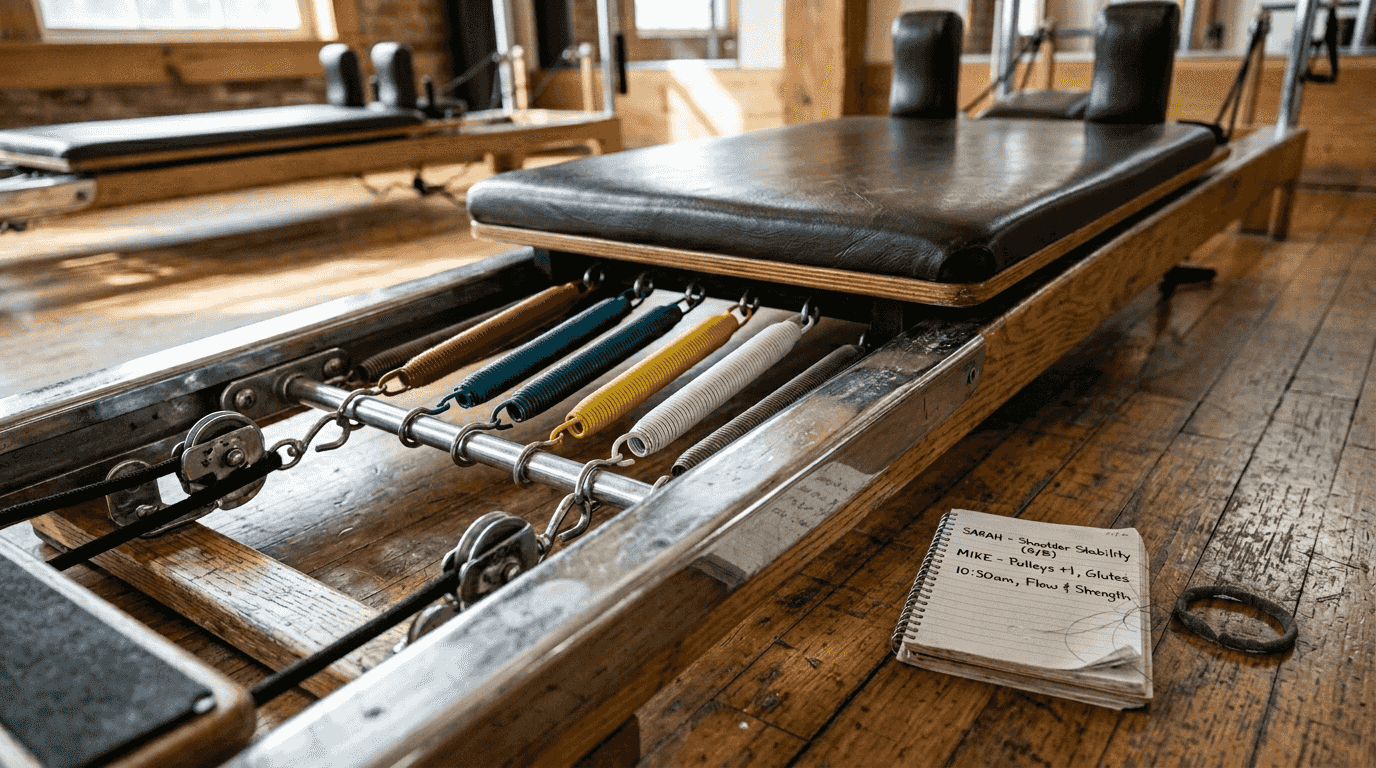
The Pilates Reformer looks intimidating at first glance, but understanding its components makes everything clear. The machine uses adjustable springs for resistance, pulleys to guide movement direction, and a sliding carriage that moves along rails. These elements work together to create a unique training environment where you control intensity through spring selection and body positioning.
Spring resistance increases as you stretch them, changing how your muscles activate throughout each movement. This variable resistance develops strength and control simultaneously, unlike fixed weights that maintain constant load. You might start an exercise with light tension that builds as you extend, forcing your muscles to adapt continuously. The pulleys attach to ropes and straps, allowing you to pull, push, or stabilize from multiple angles while the carriage glides smoothly beneath you.
Key machine components include:
Four to five color-coded springs offering different resistance levels
Adjustable footbar for varied starting positions
Shoulder blocks preventing unwanted sliding
Headrest and padded carriage for comfort
Rope and pulley system for upper body exercises
Pro Tip: Before your first session, ask your instructor to explain spring color coding and resistance levels so you understand how adjustments affect difficulty.
The beauty of this design lies in its adaptability. Instructors can modify nearly every exercise by changing spring tension, footbar height, or your body position on the carriage. This makes Reformer Pilates suitable for rehabilitation work, athletic conditioning, and everything between. A certified instructor becomes essential because improper spring selection or form can reduce effectiveness or cause strain. The machine supports your movements but demands precision, which is why Reformer Pilates classes emphasize technique over speed or repetition count.
Core strength, flexibility, and health benefits of reformer Pilates
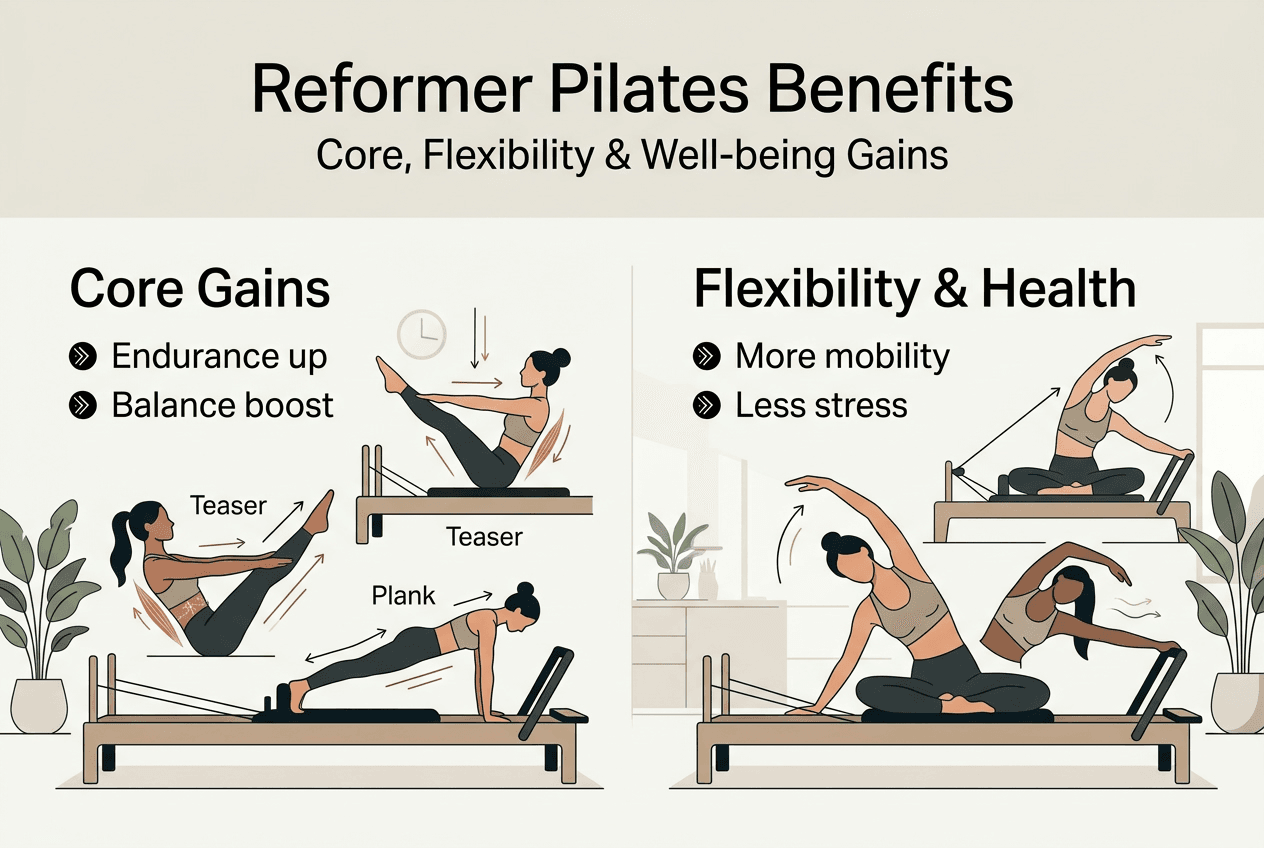
The research backing Reformer Pilates is compelling. Studies document 20-30% increases in core endurance and 15-25% improvements in flexibility after consistent 12-week programs. These aren't marginal gains. They represent functional improvements you'll notice in daily activities, from lifting groceries to maintaining posture during long work hours. The controlled resistance training strengthens deep stabilizing muscles that other workouts often miss.
Beyond core and flexibility, Reformer Pilates delivers broader health benefits. Research shows the practice improves body composition and muscle strength while reducing depression and anxiety in participants. The mind-body connection inherent in Pilates creates a meditative quality that calms your nervous system even as you challenge your muscles. You focus intensely on breath, alignment, and controlled movement, which naturally reduces stress and mental clutter.
| Benefit Category | Improvement Range | Timeline |
|---|---|---|
| Core endurance | 20-30% increase | 12 weeks |
| Flexibility | 15-25% improvement | 12 weeks |
| Muscle strength | Significant gains | 8-12 weeks |
| Depression/anxiety | Measurable reduction | 8+ weeks |
| Body composition | Improved lean mass | 12+ weeks |
The low-impact nature makes these benefits accessible without joint stress. Unlike running or high-intensity interval training, Reformer Pilates builds strength through controlled eccentric and concentric movements that protect your joints while challenging your muscles. You work against spring resistance rather than gravity alone, which allows precise load management. This proves especially valuable for people recovering from injuries or managing chronic conditions.
Additional benefits include:
Enhanced postural alignment and body awareness
Improved balance and coordination
Reduced lower back pain through core stabilization
Better breathing patterns and lung capacity
Increased muscle endurance without bulk
Pro Tip: Consistency matters more than intensity when starting out. Aim for two to three sessions weekly for at least 12 weeks to experience the documented strength and flexibility gains.
The mental health improvements deserve special attention. The focused, deliberate nature of Reformer Pilates creates a moving meditation that quiets racing thoughts. You can't multitask on the Reformer. This forced presence builds mindfulness skills that extend beyond your workout. Many practitioners report better sleep, reduced anxiety, and improved mood regulation after establishing a regular practice. Explore more about these core strength and flexibility benefits and dive deeper into Reformer Pilates advantages for comprehensive wellness.
Who can do reformer Pilates? Accessibility, safety, and beginners' tips
Reformer Pilates welcomes nearly everyone, but smart precautions ensure safe, effective practice. The adjustable resistance makes it suitable for beginners and people transitioning from other fitness routines. You can start with minimal spring tension and progress gradually as strength develops. The low-impact movements protect joints while building muscle, making this an ideal choice for people who find running or weightlifting too harsh on their bodies.
The machine's support system allows modifications that accommodate various physical limitations. Someone with knee concerns might perform exercises lying down rather than standing. A person recovering from shoulder injury can work lower body extensively while allowing upper body healing. This adaptability makes Reformer Pilates valuable for rehabilitation and general fitness alike.
Safety considerations include:
Consulting healthcare providers if you have severe back pain, osteoporosis, or recent surgeries
Avoiding practice during acute injury phases
Disclosing pregnancy, as modifications become necessary
Reporting dizziness or unusual pain immediately to instructors
Proper form remains crucial, especially for beginners who lack body awareness around spinal alignment and core engagement. Working with certified instructors prevents compensation patterns that reduce effectiveness or cause strain. They'll watch for common mistakes like gripping with shoulders instead of engaging core, holding breath during exertion, or rushing through movements without control.
Beginner steps for successful practice:
Schedule an introductory session to learn machine basics and safety protocols
Focus on mastering five to seven foundational exercises before advancing
Practice two to three times weekly, allowing rest days for muscle recovery
Ask questions about spring selection, body positioning, and breathing patterns
Track how exercises feel rather than how many repetitions you complete
Gradually increase resistance only after perfecting form at lighter tensions
Certain medical conditions require clearance before starting. People with severe osteoporosis risk fractures from spinal flexion exercises. Those with herniated discs need modifications to avoid aggravating nerve compression. Pregnancy requires specialized prenatal instruction that accounts for relaxin hormone effects on joints and ligament laxity. These aren't absolute contraindications, but they demand professional guidance and possible medical approval.
Quality always trumps quantity in Reformer Pilates. Ten perfectly executed repetitions with full core engagement and breath control deliver more benefit than thirty sloppy ones. Instructors should emphasize this from your first session. You'll feel muscles working in ways traditional exercises don't reach because the springs create constant tension that demands continuous stabilization. Check out this beginner Pilates guide for additional foundational tips.
Reformer Pilates in Philadelphia: getting started and what to expect
Philadelphia offers numerous studios with Reformer Pilates programs suited to various schedules and budgets. Most studios provide introductory packages that let you try several classes before committing to memberships. Expect small group classes with four to eight participants or private sessions for personalized attention. Group classes typically run 50 to 60 minutes and follow a structured format that works the entire body through progressive exercises.
Your first class will likely cover machine orientation, basic spring settings, and fundamental movement patterns. Instructors demonstrate each exercise, then watch closely as you attempt it, offering corrections and encouragement. Don't worry about keeping pace with experienced students. Everyone progresses differently, and good instructors modify exercises to match your current ability. The focus stays on your form and engagement, not comparison with others.
What to bring and wear:
Form-fitting clothing that allows instructors to see your alignment
Grip socks with rubber soles for traction on the carriage
Water bottle for hydration between exercises
Hair tie if you have long hair
Open mind and patience with the learning curve
| Class Format | Pros | Cons |
|---|---|---|
| Group classes | Lower cost, community motivation, regular schedule | Less individual attention, fixed pace, potential wait for equipment |
| Private sessions | Personalized programming, flexible timing, detailed corrections | Higher expense, requires self-motivation, limited social interaction |
| Semi-private (2-3 people) | Moderate cost, some personalization, accountability partner | Scheduling coordination, slightly less attention than private |
Realistic timelines matter for managing expectations. You'll likely feel muscles you didn't know existed after your first session. This normal soreness typically subsides within 48 hours as your body adapts. Visible strength improvements emerge around week four to six with consistent practice. The mental health and postural benefits often appear sooner, with many people reporting better body awareness and reduced anxiety after just eight sessions.
Maintaining motivation requires strategy. Set specific, measurable goals like holding plank position 30 seconds longer or completing footwork series without spring adjustments. Track these milestones in a journal or app. Many studios offer progress assessments where instructors document your improvements, which provides tangible evidence of growth. Connecting with other students creates accountability and makes classes more enjoyable. Some people find morning sessions boost energy for the entire day, while others prefer evening classes for stress relief after work.
Philadelphia's wellness community embraces Reformer Pilates as part of holistic health approaches. You'll find studios integrating it with yoga, barre, and massage therapy for comprehensive body care. This alignment with broader wellness philosophies makes it easier to build sustainable fitness habits. For a thorough introduction to starting your practice, review this complete 2026 beginner guide covering everything from first class expectations to long-term progression strategies.
Explore Reformer Pilates classes at Amrita Yoga & Wellness
Ready to experience these benefits yourself? Amrita Yoga & Wellness in Philadelphia offers beginner-friendly Reformer Pilates classes led by certified instructors who prioritize proper form and individual progression. Our welcoming community supports people at every fitness level, whether you're completely new to Pilates or transitioning from other workout routines.
We understand starting something new feels intimidating. That's why we offer new student specials designed to help you explore Reformer Pilates without major financial commitment. Our flexible studio and cancellation policies accommodate busy schedules while encouraging consistent practice. Visit our website to browse class schedules, meet our instructors, and book your first session. Join a community that values holistic wellness, personal growth, and supportive guidance as you build strength and flexibility through Reformer Pilates.
Frequently asked questions
What equipment does Reformer Pilates use?
Reformer Pilates uses a specialized machine with a sliding carriage, adjustable springs for variable resistance, pulleys with ropes or straps, a footbar, and shoulder blocks. The springs create tension that increases as you stretch them, providing unique resistance that builds strength and control simultaneously. Most studios have multiple reformers allowing small group instruction.
Is Reformer Pilates suitable for beginners and people with joint pain?
Yes, the adjustable resistance and low-impact nature make Reformer Pilates excellent for beginners and people with joint concerns. You can start with minimal spring tension and progress gradually as strength develops. The controlled movements protect joints while building muscle, though people with severe conditions should consult healthcare providers first. Certified instructors modify exercises to accommodate individual limitations safely.
How often should I practice Reformer Pilates for noticeable benefits?
Practice two to three times weekly for at least 12 weeks to experience the documented 20-30% core strength gains and 15-25% flexibility improvements. Consistency matters more than intensity when starting. Many people notice better posture and body awareness within four to six weeks, while mental health benefits like reduced anxiety often appear after eight sessions. Allow rest days between sessions for proper muscle recovery.
Can Reformer Pilates help with chronic pain and mental well-being?
Research shows Reformer Pilates reduces depression and anxiety while improving body appreciation and postural alignment. The practice strengthens deep core muscles that support spinal stability, which often alleviates chronic lower back pain. The mind-body focus creates a meditative quality that calms your nervous system and reduces stress. People with specific chronic conditions should work with instructors experienced in therapeutic applications and obtain medical clearance when appropriate.
What should I wear or bring to my first Reformer Pilates session?
Wear form-fitting clothing that allows instructors to see your body alignment, such as leggings and a fitted top. Bring grip socks with rubber soles for traction on the carriage, a water bottle for hydration, and a hair tie if needed. Avoid loose clothing that might catch on springs or pulleys. Most studios provide all necessary equipment, so you don't need to bring mats or props. Arrive a few minutes early to complete any paperwork and orient yourself to the studio space.