
Master Hot Yoga Step by Step for Optimal Wellness Results

More than 36 million american adults engage in yoga, but hot yoga takes the experience to a whole new level of challenge and reward. From finding the right space to selecting the proper gear, each step matters for safety and results. With smart preparation and practical guidance, you can transform any home or studio session into a powerful hot yoga practice that truly supports your wellness journey.
Table of Contents
Quick Summary
| Key Insight | Explanation |
|---|---|
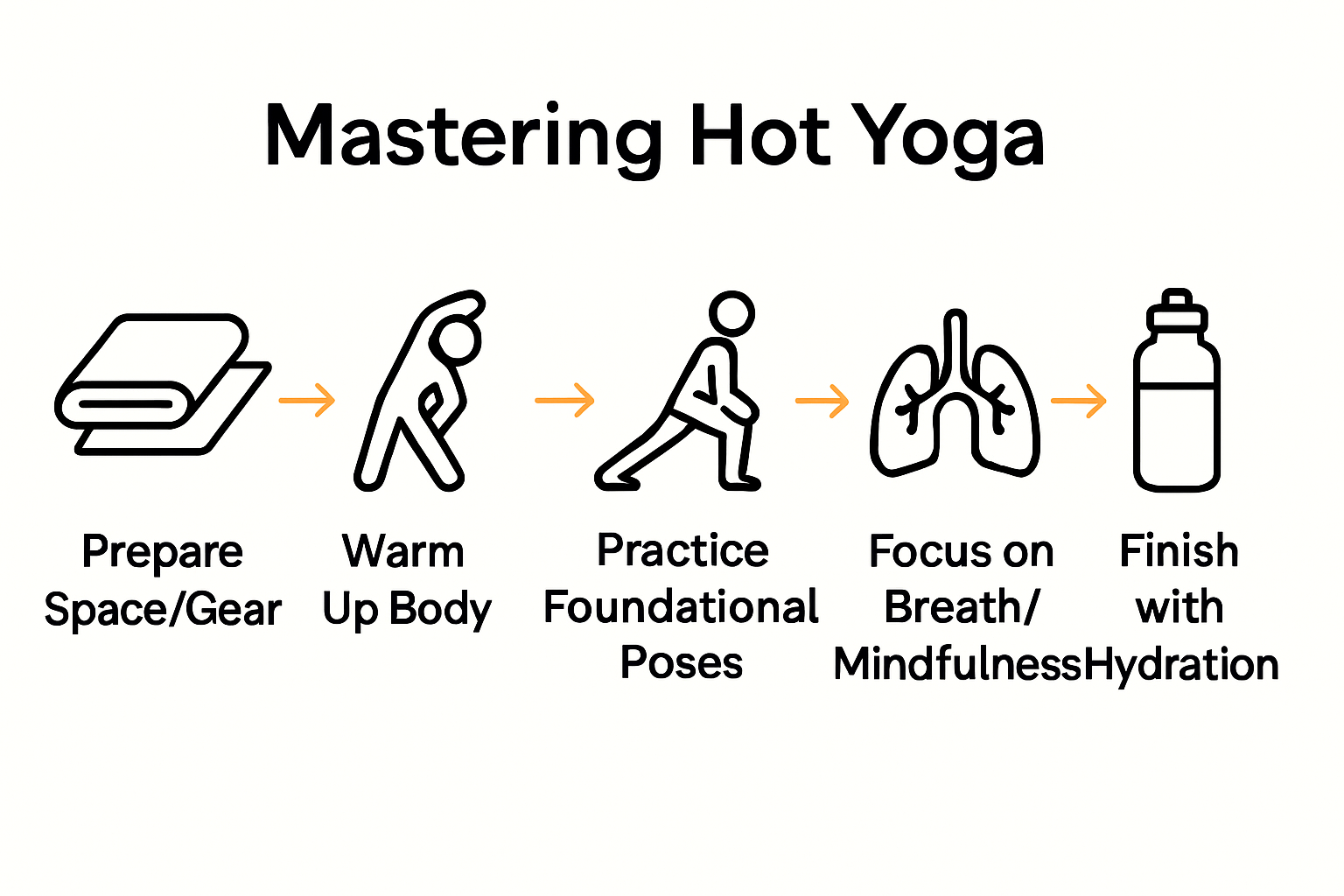
| 1. Prepare Your Yoga Space | A dedicated, well-ventilated area enhances your practice, ensuring a temperature-controlled environment for optimal performance. |
| 2. Warm Up Properly | Engage in gentle dynamic stretches to improve flexibility and reduce injury risk before starting your yoga session. |
| 3. Master Foundational Poses | Focus on core postures like Standing Deep Breathing and Eagle Pose to build strength and balance effectively. |
| 4. Prioritize Your Breathing | Maintain a steady breathing rhythm to connect your movements with mindfulness and enhance your overall yoga experience. |
| 5. Hydrate After Practice | Rehydrate gradually and restore electrolytes post-session to support recovery and counteract fluid loss from sweating. |
Step 1: Prepare Your Space and Gear for Hot Yoga
Gearing up for hot yoga requires strategic preparation to ensure a safe and transformative practice. According to research from MDPI, a well-prepared environment significantly enhances your flexibility, strength, and overall performance.
Your hot yoga space needs precise attention to detail. As insights from Wikipedia reveal, traditional hot yoga environments like Bikram are heated to 105°F with specific humidity levels. Start by selecting a dedicated area with excellent ventilation and temperature control. Clear at least a 6 x 4 foot space for your yoga mat, ensuring no obstructions that could interrupt your practice.
Gear selection is equally critical. Invest in moisture-wicking clothing that allows maximum breathability - think lightweight, stretchy fabrics that move with you. Pack a large microfiber towel to place over your mat, preventing slipping during intense sweating. Bring at least two water bottles to stay hydrated, and consider a waterproof yoga mat specifically designed for hot yoga practices. Pro tip: Place a small hand towel nearby for quick sweat management during your session.
Ready to transform your wellness journey? Your perfectly prepared space sets the foundation for an incredible hot yoga experience.
Step 2: Warm Up Your Body to Prevent Injury
Successful hot yoga practice starts with a strategic warm up that prepares your body and minimizes injury risk. IJYSHS research confirms that targeted yoga warm up routines can dramatically improve joint mobility and muscle activation.
Begin your warm up with gentle dynamic stretches that progressively increase your body temperature and flexibility. Start with slow neck rolls to release tension, followed by shoulder circles and arm swings to awaken your upper body. Incorporate gentle twists to activate your core and spine. Move into standing side bends and slow lunges to open your hip flexors and quadriceps. Your goal is creating a smooth transition from a resting state to an active practice.
Research from Zenodo highlights that comprehensive yoga warm ups enhance not just flexibility, but also balance, strength, endurance, and reaction time. Focus on controlled breathing during these preparatory movements to center your mind and increase oxygen flow. Key areas to target include your spine, shoulders, hips, and hamstrings. Pro tip: Move slowly and mindfully, listening to your body and never pushing into pain.
With these targeted warm up techniques, you are now primed and ready to dive into your transformative hot yoga session.
Step 3: Practice Foundational Hot Yoga Poses
Mastering hot yoga begins with understanding its core foundational poses. According to Wikipedia, Bikram Yoga follows a precise sequence of 26 specific postures designed to systematically work every muscle group and internal organ in the body.
Start with standing poses that build strength and balance. The first key posture is the Standing Deep Breathing pose, which helps regulate your breath and prepare your body for the heated environment. Next, move into the Half Moon pose with gentle side stretches, focusing on alignment and controlled movement. Follow this with the Eagle pose to challenge your balance and build core strength. Each pose should be performed slowly and mindfully, paying close attention to your body's signals and maintaining steady breathing.
Research from ArXiv highlights the importance of understanding pose mechanics through comprehensive datasets like 3DYoga90. For beginners, concentrate on proper form over complexity. Keep your movements deliberate and controlled, especially in the heated studio environment. Pro tip: Always listen to your body and modify poses as needed. If a full expression of a pose feels uncomfortable, use props or gentler variations to support your practice.
With these foundational poses, you are building a strong yoga practice that will transform your physical and mental wellness.

Step 4: Focus on Breath and Mindfulness Throughout
Breath is the cornerstone of a transformative hot yoga practice, connecting your physical movements with your mental landscape. ArXiv research highlights how personalized yoga practices integrate breath control and mindfulness techniques to enhance overall well-being and inner balance.
Begin by establishing a consistent breathing rhythm that matches your movements. Inhale deeply through your nose for four counts, feeling your lungs expand fully. Exhale slowly through your mouth for four counts, releasing tension and creating space in your body. Throughout your practice, maintain this deliberate breathing pattern even when poses become challenging. Your breath becomes an anchor, helping you stay present and calm in the heated studio environment.
Drawing inspiration from Wikipedia's exploration of advanced meditative practices, visualize your breath as a source of inner energy and warmth. During challenging poses, return your attention to your breath when your mind starts to wander. Pro tip: If you feel overwhelmed, pause in a resting pose and focus solely on your breathing until you regain your center. Remember that mindfulness is not about perfection but about consistent compassionate awareness.
By cultivating this mindful breathing practice, you transform your hot yoga session from a physical workout into a deeply transformative experience.
Step 5: Finish Safely and Hydrate for Recovery
Successfully completing your hot yoga practice requires strategic post-practice recovery. PubMed research confirms that hot yoga induces significant cardiovascular and cellular adaptations, making proper recovery critical for long-term wellness.
Begin your recovery immediately after your final pose. Slowly roll up your mat and take several deep breaths to center yourself. Grab your water bottle and start rehydrating gradually. Aim to drink at least 20 to 24 ounces of water within the first hour after your practice. Your body will have lost substantial fluids through intense sweating, so replenishing electrolytes becomes crucial. Consider adding a pinch of sea salt or drinking coconut water to restore mineral balance more effectively.
Research from MDPI underscores the importance of recovery practices in heated yoga environments. Pay attention to your body temperature and gradually cool down. Pro tip: Keep a lightweight, moisture-wicking towel nearby to pat yourself dry and prevent potential chills. If you feel lightheaded or extremely fatigued, sit or lie down in a comfortable position and continue slow, controlled breathing.
By mindfully concluding your hot yoga session, you set the stage for optimal physical recovery and continued wellness.
Elevate Your Hot Yoga Journey with Expert Guidance and Support
Mastering hot yoga involves more than just learning poses and breathing techniques. As this article highlights, preparing your space, warming up properly, focusing on breath, and safe recovery are essential steps you cannot overlook. Many practitioners struggle with maintaining the right environment, balancing mindfulness with physical challenge, and ensuring safe hydration after intense sessions. These challenges can leave you feeling overwhelmed or unsure about progressing confidently.
At Amrita Yoga & Wellness, we understand these pain points and are here to help you build strength, flexibility, and calm through carefully guided hot yoga classes tailored for all levels. From expert instruction on foundational poses to personalized breathwork and mindfulness coaching, our Philadelphia studio offers the tools and community support you need to transform your practice safely and effectively.
Discover the power of a holistic approach to your wellness journey by joining our welcoming classes and workshops. Visit Amrita Yoga & Wellness today for detailed class descriptions and seamless scheduling options. Start mastering hot yoga the right way and embrace lasting physical and mental well-being.
Take the next step toward your best hot yoga experience now. Explore our offerings and sign up for a class or workshop at Amrita Yoga & Wellness. Transform your practice, refresh your mind, and feel renewed with support tailored to your goals.
Frequently Asked Questions
What should I prepare for my hot yoga session?
To prepare for your hot yoga session, set up a dedicated space with good ventilation and a clear area for your mat. Equip yourself with moisture-wicking clothing, a large microfiber towel, and at least two water bottles to stay hydrated during your practice.
How can I warm up effectively before hot yoga?
Start your warm-up with gentle dynamic stretches such as neck rolls, shoulder circles, and standing side bends to increase your body temperature and flexibility. Aim to spend at least 10 minutes on your warm-up to ensure your muscles and joints are ready for the yoga session.
Which foundational poses should I focus on as a beginner?
As a beginner, concentrate on foundational poses like Standing Deep Breathing and Half Moon. Spend adequate time familiarizing yourself with each pose, ensuring that you maintain proper form and alignment throughout the practice.
How can I maintain mindfulness and breathing during hot yoga?
Establish a consistent breathing pattern by inhaling deeply through your nose and exhaling slowly through your mouth. Focus on coordinating your breath with your movements throughout the session, and don't hesitate to pause in a resting pose if needed.
What should I do after completing my hot yoga practice?
After your session, gradually roll up your mat and take deep breaths to center yourself. Begin rehydrating with at least 20 to 24 ounces of water within the first hour and consider consuming electrolytes to replenish minerals lost during practice.
How can I manage discomfort or lightheadedness during a hot yoga class?
If you start feeling lightheaded or uncomfortable, pause in a resting pose and focus on your breathing. If symptoms persist, sit or lie down comfortably until you feel steadier before resuming your practice.