
Best Pilates reformer guide for Philadelphia adults
TL;DR:
Choosing the best Pilates reformer depends on features like carriage length, spring system, and adjustability, which impact workout quality. Top models like the Balanced Body Studio Reformer and Merrithew At Home SPX offer studio-grade performance, suited for various space and user needs. Proper maintenance, thoughtful space measurement, and aligning with your fitness goals are essential to maximize benefits from your reformer.
Choosing what is the best Pilates reformer is not as simple as picking the one with the most springs or the sleekest frame. Many people assume all reformers deliver the same workout, but the differences between models can mean the difference between genuine core engagement and a frustrating, plateaued practice. For Philadelphia adults seeking stronger cores, better flexibility, and a low-impact fitness routine that actually sticks, the machine you use matters far more than most people realize. This guide cuts through the noise and helps you find the right fit for your goals, your space, and your lifestyle.
Table of Contents
How to select the best Pilates reformer for your needs in Philadelphia
Why studio-quality engineering matters more than trendy features
Discover Pilates reformer classes and wellness support at Amrita Yoga & Wellness
Understanding Pilates reformers: core features and benefits
To make an informed choice, let's clarify what Pilates reformers are and why their features matter to your fitness and wellness goals.
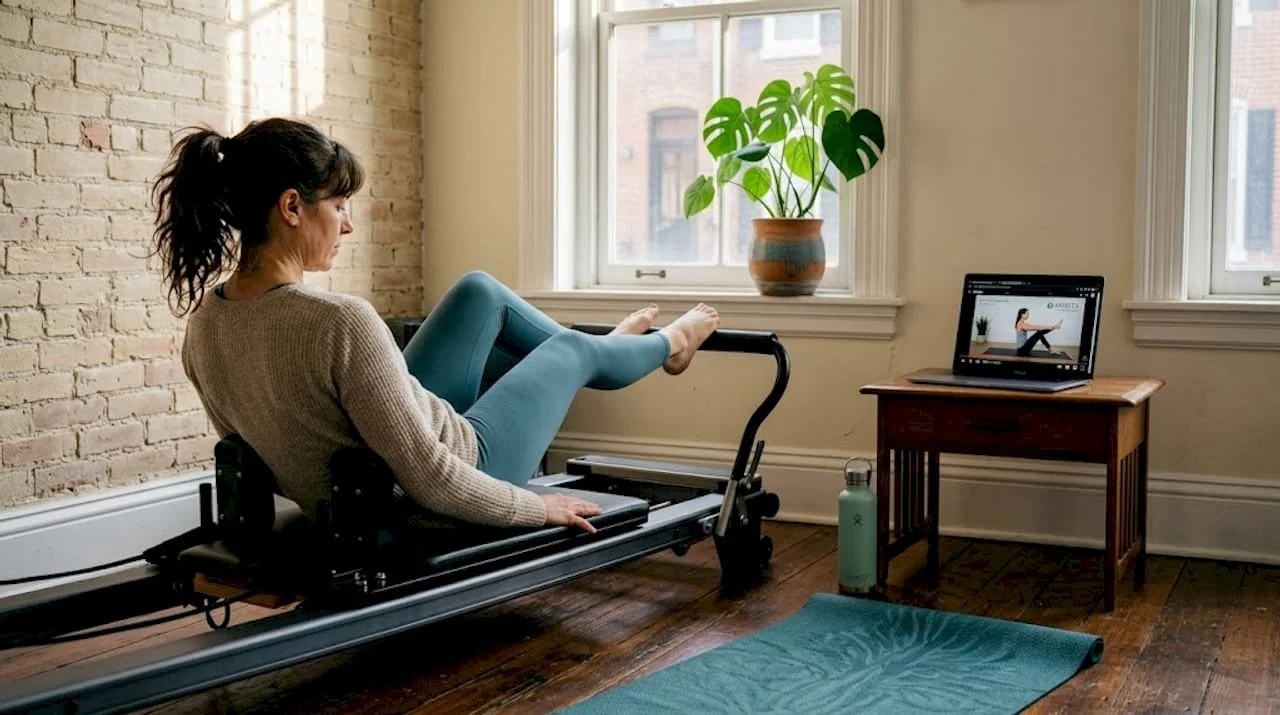
A Pilates reformer is a spring-loaded, carriage-based machine that guides the body through resistance exercises targeting core strength, posture, and full-body flexibility. Four main components define the machine's quality and usability:
Carriage length and travel. This is the distance the sliding platform moves along the frame. Longer travel allows a fuller range of motion, which is especially important for taller users and for exercises that demand deep hip extension or spinal articulation.
Spring resistance system. Most reformers use between four and five springs in varying tensions (light, medium, and heavy). The ability to combine and swap these springs lets you customize resistance for everything from gentle rehabilitation work to demanding strength training.
Footbar adjustability. A footbar that locks into multiple positions accommodates different leg lengths and exercise types. Without sufficient adjustability, you end up compensating with poor form, which defeats the purpose entirely.
Headrest and shoulder block positioning. These details shape how safely and comfortably you can work through exercises. Shoulder blocks that are too far apart or headrests that don't tilt cause tension in the neck and shoulders, especially during supine (lying down) work.
Understanding these components tells you what to prioritize when reading quality pilates reformer reviews or comparing specs. A machine that looks impressive in photos but has minimal spring variety and a short carriage is going to limit your practice faster than you expect.
Top Pilates reformers for home and studio experience
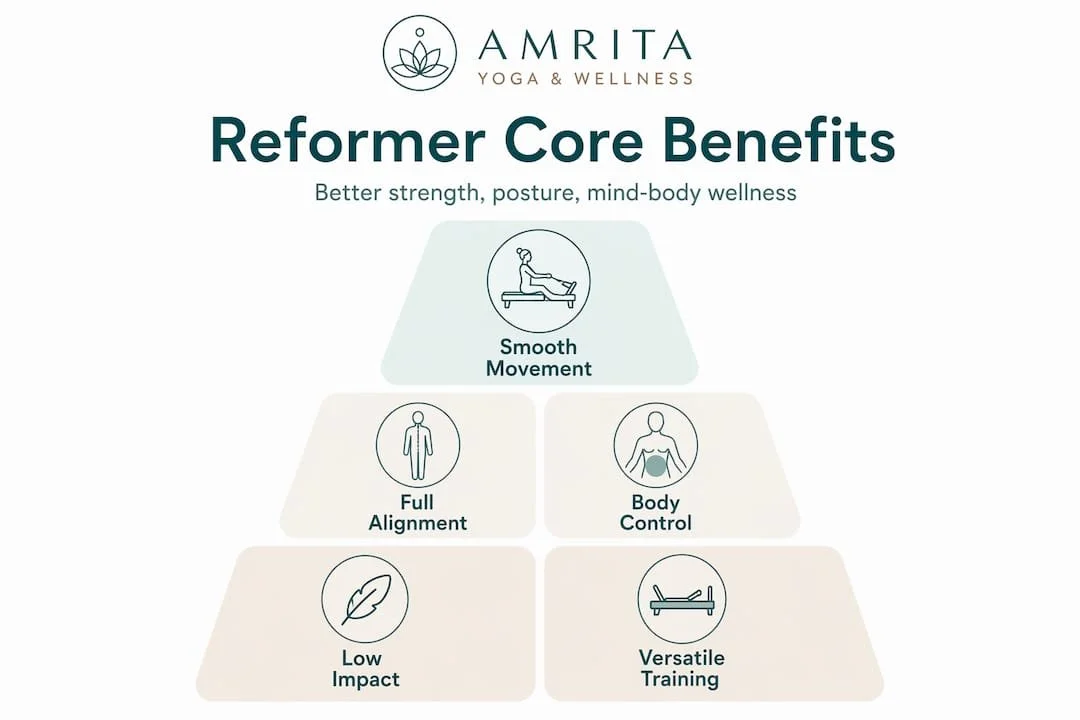
Now that you understand reformer basics, let's explore the top models that stand out for home and studio Pilates practice. These are the names that consistently appear in best pilates reformers 2025 and 2026 roundups for good reason.
| Reformer | Best for | Carriage length | Space needed | Price range |
|---|---|---|---|---|
| Balanced Body Studio Reformer | Studio-quality home practice | Extra-long | Full room | $$$$ |
| Balanced Body Metro IQ | Small apartments, storage ease | Standard | Foldable | $$$ |
| Merrithew At Home SPX | Reliable studio-grade performance | Long | Moderate | $$$$ |
| Balanced Body Allegro STRETCH | Taller users (over 6 ft) | Extended | Full room | $$$$ |
The Balanced Body Studio Reformer is named best overall for its studio-like quality, complete with an extra-long carriage that accommodates nearly any body type without sacrificing movement depth. If you have the space and the budget, this is the benchmark everything else gets measured against.
For Philadelphia residents in rowhouses, condos, or apartments without a dedicated workout room, the Metro IQ folds for easy storage and is notably gentle on the knees, making it an excellent affordable pilates reformer option that doesn't feel like a compromise. The trade-off is a slightly shorter carriage travel, which matters more as your practice advances.
The Merrithew At Home SPX remains one of the closest translations of a professional studio experience available for home use. Its consistent engineering and carriage feel make it a strong pick for anyone who trained in a STOTT Pilates studio and wants to maintain that same quality of movement at home.
You can also browse reformer Pilates options and understand Pilates reformer types before committing to a model.
Pro Tip: Visit a local studio and try at least two different reformer models before buying. What feels smooth and responsive in a showroom can feel entirely different after 20 minutes of continuous footwork.
Nuances to consider: space, user height, and workout goals
To make the best choice, consider individual and environmental factors that can influence workout quality and reformer satisfaction.
Many first-time buyers underestimate how much space a reformer actually needs. Even a "compact" model requires roughly 8 to 10 feet of clear length when you account for getting on and off, standing at the footbar, and performing standing platform exercises. Here's a practical way to think through your decision:
Measure your space first, then shop. Lay a piece of tape on the floor in the exact dimensions of the reformer plus 2 feet on each end. Sit with that reality for a week before buying.
Factor in your height. The Allegro Reformer STRETCH version was designed specifically with a longer and wider carriage and adjustable footbar for users over 6 feet tall, giving them the room to fully extend without pushing against the footbar.
Match the reformer to your goals. If you want to replicate classical Pilates technique with precision, studio-grade machines with traditional spring systems are worth the investment. If your goal is consistent, low-impact movement three times a week without fuss, a compact foldable reformer can trade a little range of motion for genuine daily convenience.
Think two years ahead. Beginners often buy entry-level machines, improve rapidly, and outgrow the resistance range within a year. Buying one level above your current skill often saves money in the long run.
Understanding the reformer Pilates benefits specific to your body and goals will sharpen this decision considerably. Spinal flexibility work demands different spring configurations than targeted core strengthening, and knowing that before you buy shapes which model makes sense.
Pro Tip: If you're over 5'10", always confirm the reformer's published carriage travel length, not just the frame length. Manufacturers list these differently, and the carriage travel number is what actually determines your range of motion.
How to select the best Pilates reformer for your needs in Philadelphia
With your needs clear, let's break down practical steps for choosing the reformer that fits your Philadelphia home and wellness goals.
Identify your Pilates training lineage. If you trained under a classical instructor, a Balanced Body machine matches that technique lineage closely. STOTT practitioners typically align better with Merrithew equipment. Matching training background to reformer brand preserves your technique rather than forcing adaptation.
Decide how often you'll practice. Someone committed to four sessions a week needs studio-grade durability. Occasional practitioners can find excellent value in mid-range models.
Set a realistic budget that includes accessories. Reformer pads, foot straps, jump boards, and boxes add $200 to $600 to the total cost. Budget for these upfront rather than discovering them later.
Prioritize carriage smoothness above everything else. A jerky or uneven carriage disrupts the controlled movement that makes Pilates effective. This is the single feature you cannot assess from a product description alone.
Additional factors worth weighing as you finalize your choice:
Weight capacity. Most commercial reformers support 300 to 350 lbs. Confirm this matches your needs.
Frame material. Maple wood frames are traditional and durable. Aluminum frames are lighter but less forgiving over time.
Warranty length. Reputable brands offer 10-year frame warranties. Anything shorter on a premium-priced machine is a red flag.
Resale value. Well-known brands hold value far better than budget alternatives, which matters if your needs change.
You'll find ongoing Pilates reformer guidance on our blog covering everything from beginner setup to advanced spring configurations.
Maintaining and making the most of your Pilates reformer
Once you have your reformer, proper care and community engagement ensure your Pilates practice thrives.
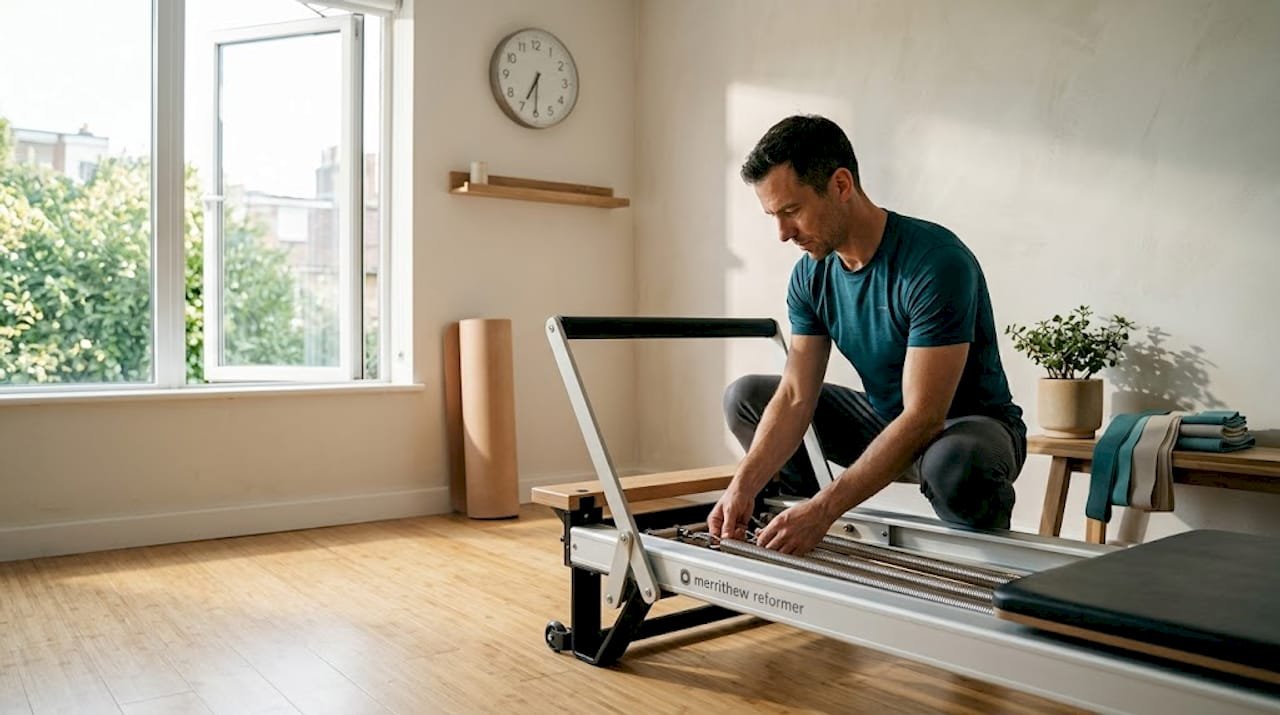
The mechanical simplicity of a reformer is one of its greatest strengths, but it still requires attention. Springs fatigue over time. Ropes fray. Carriage wheels collect debris that creates friction and uneven glide. A neglected machine becomes a safety issue and a workout obstacle.
Here's what consistent maintenance looks like in practice:
Wipe down the carriage and frame after every session with a slightly damp cloth. Salt from sweat accelerates wear on metal components.
Inspect springs monthly for signs of rust, deformation, or uneven tension. Replace springs in matched pairs to preserve balanced resistance.
Check rope or strap integrity every few months. Fraying ropes should be replaced immediately. A snapped strap mid-exercise causes injury.
Lubricate the carriage wheels and rails every six months with a product recommended by the manufacturer. This preserves the smooth glide that defines a quality reformer experience.
Beyond maintenance, your practice improves fastest when you have structured guidance and community accountability. Subscription video libraries from Pilates instructors can add fresh programming to your home sessions, preventing the plateau that often hits three to six months in.
Pro Tip: Join a local Philadelphia Pilates community, whether in-person or online, to stay accountable and learn advanced exercises. Reformer work learned in isolation often develops subtle technique errors that go unnoticed without a trained eye.
Tracking your sessions and reformer Pilates benefits over time also keeps you motivated and helps you recognize when to progress your spring resistance.
Why studio-quality engineering matters more than trendy features
Here's a perspective we've developed after years of watching Philadelphians invest in wellness equipment: the flashiest reformers rarely produce the best results.
The reformer market has filled with machines promising magnetic resistance, smart tracking, app integration, and modular accessories that transform the machine into something else entirely. Most of these features add complexity without improving the fundamental movement quality that makes Pilates effective. Worse, novel mechanisms often mean unfamiliar repair needs and parts that are hard to source three years after purchase.
Studio-grade engineering decisions about carriage length and movement quality matter more than chasing novelty. This is not conservative thinking. It's practical wisdom earned by watching people buy on excitement and then watch their practice stagnate because the machine didn't feel right.
Smooth, consistent carriage travel is what allows the nervous system to develop the precise motor control Pilates demands. When a carriage jerks or resists unevenly, you compensate with larger muscle groups, which is exactly the opposite of what the practice is designed to do. A well-engineered machine from a reputable brand becomes invisible during your workout. You feel your body, not the equipment.
Longer carriage travel is the other non-negotiable. Full spinal articulation, deep hip flexion, and extended leg presses all require room to move without restriction. Cutting carriage length to save money or floor space creates a ceiling on your practice that you'll feel sooner than expected.
For those interested in how clinical applications of reformer work differ from general fitness use, our clinical reformer insights go deeper into engineering specifics and therapeutic applications.
The best reformer is not the most expensive one or the one with the longest feature list. It is the one with the smoothest carriage, appropriate length for your body, and a spring system that gives you room to grow for years.
Discover Pilates reformer classes and wellness support at Amrita Yoga & Wellness
Ready to put your new knowledge into action? At Amrita Yoga & Wellness in Philadelphia, we offer expert-led Pilates reformer classes designed for every fitness level, whether you're stepping onto a reformer for the first time or looking to deepen a practice you've been building for years.
Our community-focused environment means you are never figuring it out alone. Instructors guide your technique session by session, and fellow students become the accountability network that keeps a practice going through busy Philadelphia schedules. We also offer a full range of wellness services that support mind-body balance beyond the reformer. Want to explore what's possible before deciding on a home machine? Try a class first. Visit our reformer Pilates resources to learn more and schedule your first session.
Frequently asked questions
What is the best Pilates reformer for someone with limited home space?
Foldable models like the Balanced Body Metro IQ are ideal, offering studio-quality workouts with easy storage for apartments or smaller homes in Philadelphia.
Which Pilates reformer suits taller users best?
The Balanced Body Allegro STRETCH version features a longer, wider carriage and adjustable footbar, providing comfort and full range of motion for users over 6 feet tall.
Are at-home reformers as effective as studio machines?
High-quality at-home reformers like Merrithew's At Home SPX closely replicate the studio experience with consistent engineering, enabling effective core and flexibility workouts without leaving home.
How often should I practice Pilates on a reformer at home?
Practicing 2 to 4 times weekly supports meaningful progress in strength and flexibility while giving the body adequate recovery time between sessions.
What maintenance does a Pilates reformer require?
Regular cleaning after each session, monthly spring inspections, periodic rope or strap checks, and biannual rail lubrication keep the reformer safe, smooth, and performing well for years.