The Amrita Journal
Explore thoughtful stories, practical wellness guidance and inspiring ideas to support your movement, mindfulness and everyday wellbeing at Amrita.
Hatha Yoga: Meaning, History, and Practice Explained
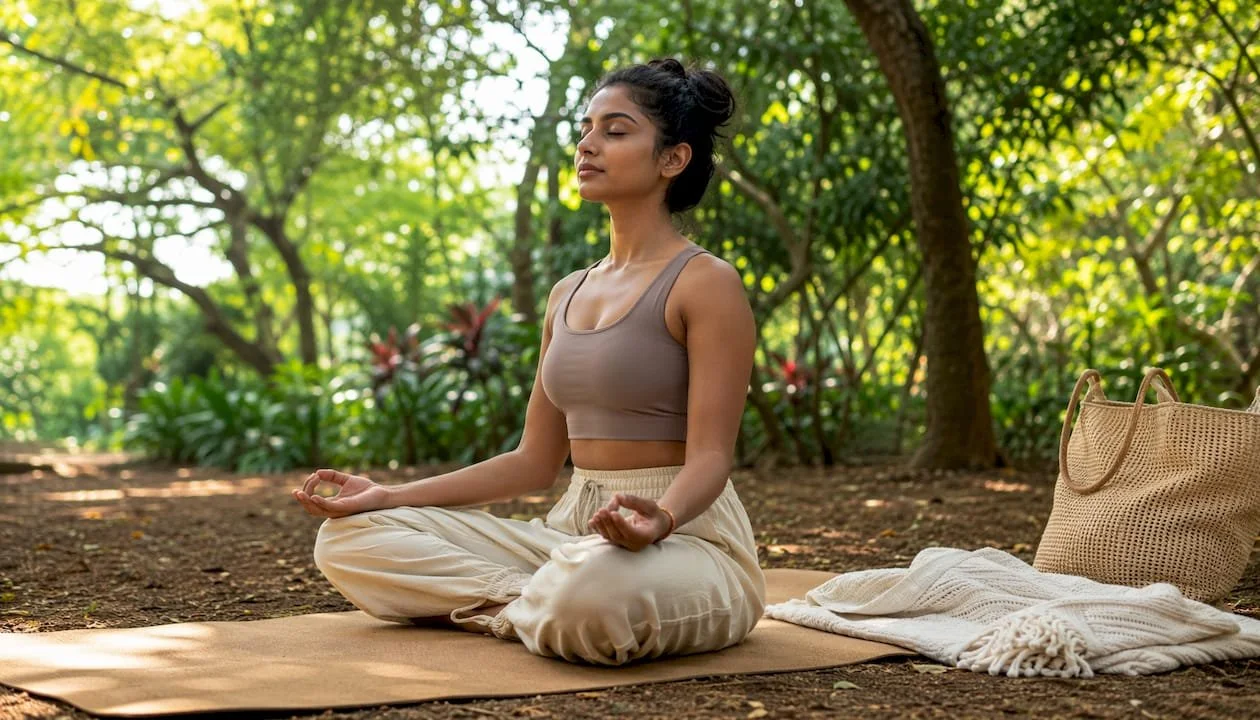
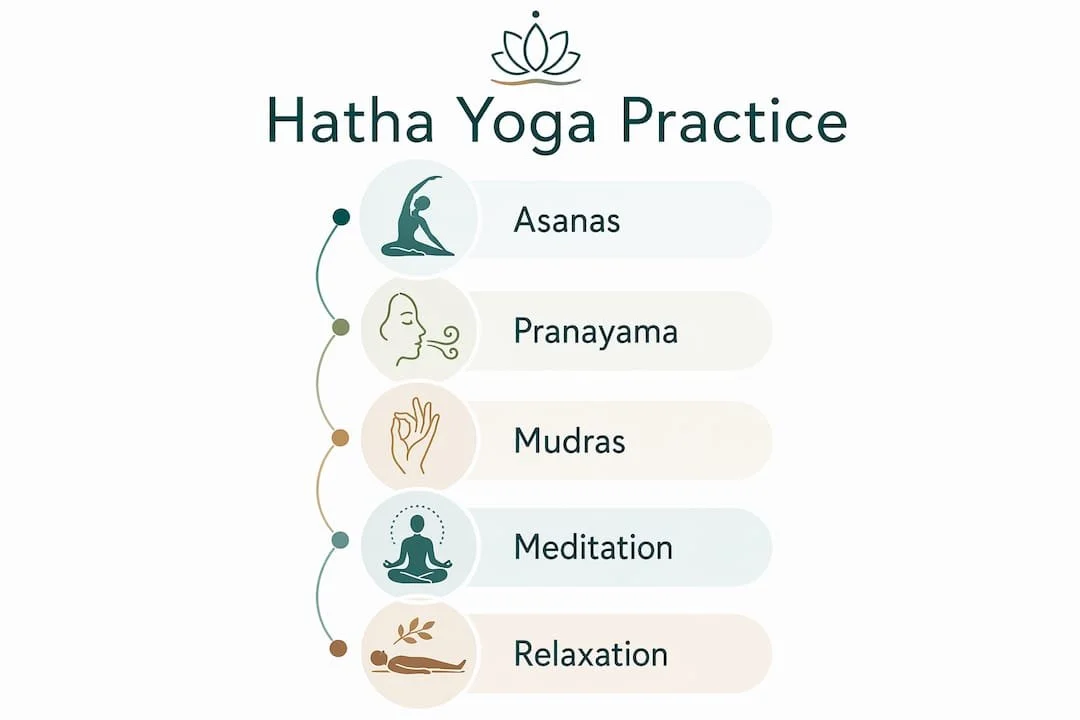
Hatha Yoga is a branch of yoga that combines physical postures (asanas), breath control (pranayama), and meditation to balance the body's energy and prepare the mind for deeper awareness. The word "Hatha" carries two layers of meaning: in Sanskrit it literally means "force," pointing to its active, disciplined nature, and it is also interpreted as the union of "ha" (sun) and "tha" (moon), symbolizing the balance of opposing energies within the body. What most Americans encounter in studios today is a slower, alignment-focused style of yoga that uses that name as a broad umbrella, covering everything from gentle beginner classes to more structured traditional practice.
Modern Hatha classes emphasize steady postures held with mindful attention rather than flowing sequences, making them one of the most accessible entry points for newcomers. A typical session moves through breathwork, a series of postures, and a closing meditation or relaxation period, lasting a standard class length.
Core components of Hatha Yoga practice include:
Asanas — physical postures that build strength, flexibility, and body awareness
Pranayama — conscious breath regulation that calms the nervous system
Mudras — hand or body gestures that direct energy flow
Bandhas — internal energy locks that concentrate vital force
Shatkarmas — traditional cleansing techniques for purification
Meditation — focused mental practice that anchors the session's physical work
How Hatha Yoga developed through history
Hatha Yoga originatedaround the 11th century, with the oldest dated text, the Amṛtasiddhi, emerging from a tantric Buddhist context. Some techniques, however, appear even earlier, traceable to the 1st century CE in Hindu Sanskrit epics and Buddhism's Pali canon. The tradition was not a single, unified system from the start. It grew through centuries of overlapping influences from Hindu and Buddhist tantric lineages.

The earliest Hatha Yoga methods focused on preserving bindu, the vital force believed to reside in the body and sustain life. Practitioners used inverted postures like viparītakaraṇī to physically reverse the downward flow of this energy, or used mudras to redirect the breath through the body's central channel. Over time, the framework shifted. Later texts layered the Kaula tradition's model of Kundalini energy rising through a system of chakras onto the earlier bindu-centered approach, broadening both the philosophy and the practice.
Key milestones in Hatha Yoga's development:
1st century CE — Early techniques appear in Hindu epics and Buddhist Pali texts
11th century — Amṛtasiddhi, the oldest dated Hatha Yoga text, emerges from tantric Buddhism
11th–13th centuries — Hindu Hatha texts appear; early focus on bindu preservation
15th century — Haṭhayogapradīpikā codifies asanas, pranayama, mudras, and bandhas
19th–20th centuries — Indian teachers bring Hatha Yoga to Western audiences
Late 20th century — "Hatha" becomes a catch-all term in American studios for alignment-based yoga
| Period | Development |
|---|---|
| 1st century CE | Earliest technique references in Hindu and Buddhist texts |
| 11th century | Amṛtasiddhi, oldest Hatha Yoga text, from tantric Buddhism |
| 11th–15th centuries | Classical texts including Haṭhayogapradīpikā formalize practice |
| 19th–20th centuries | Indian teachers introduce Hatha Yoga to the West |
| Late 20th century | “Hatha” adopted as a broad studio category in the United States |
What a Hatha Yoga practice actually looks like
Traditional Hatha Yogaencompasses far more than postures. Its classical toolkit includes asanas, pranayama, mudras, bandhas, and shatkarmas, the six internal cleansing practices: dhauti (cleansing the teeth and body), basti (cleansing the rectum), neti (cleansing the nasal passages), trataka (cleansing the eyes), nauli (abdominal massage), and kapalabhati (clearing phlegm). Most modern classes skip the shatkarmas entirely and concentrate on postures and breath, but knowing the full picture helps you understand why classical teachers treat Hatha Yoga as a complete system, not just exercise.
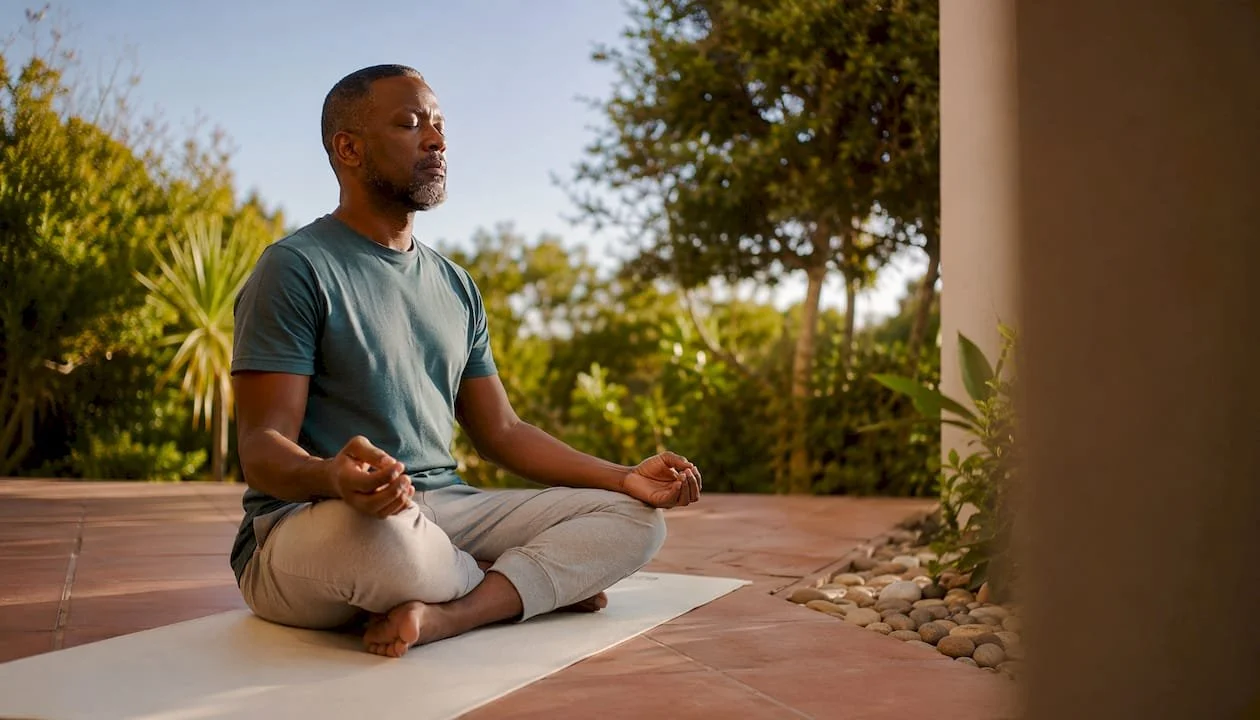
A typical class structure follows a clear arc. Sessions open with breathwork to settle the mind, move into a warm-up sequence, build through standing and floor postures held for alignment and endurance, and close with meditation or Savasana (final relaxation). Because postures are held rather than flowed through, the practice demands sustained focus. Beginners often find this more physically demanding than expected.
Practice components at a glance:
Asanas — held steadily, not flowed; build strength and alignment
Pranayama — often taught at the start and woven through the session
Mudras and bandhas — used in classical and more advanced classes to direct prana
Shatkarmas — traditional purification; rare in modern Western classes
Meditation and Savasana — anchor the session's closing
Pro Tip: If you find a Hatha class surprisingly tiring, that's by design. Holding a Warrior II for several breaths recruits more sustained muscular effort than moving through it quickly in a flow class. Give yourself three or four sessions before judging the difficulty level.
No standardized sequence exists for Hatha Yoga, unlike some other styles. What you experience depends heavily on the teacher's training and lineage, so two classes labeled "Hatha" at different studios can feel quite different.
What are the real benefits of practicing Hatha Yoga?
Hatha Yoga was originally designed to prepare the body and mind for meditation and spiritual realization, not primarily for physical fitness. That original purpose shapes the benefits practitioners actually report: a calmer, more focused mind alongside genuine physical gains.
Practicing Hatha Yogaregularly builds flexibility, strength, and balance while reducing stress and supporting mental health. The slow, deliberate pace gives the nervous system time to downshift, which is part of why many practitioners describe feeling both physically worked and mentally clear after a session. For people who want to develop a meditation practice, Hatha Yoga serves as a natural on-ramp: the body becomes comfortable sitting still, and the breath becomes a familiar anchor.
Benefits practitioners commonly experience:
Increased flexibility and joint mobility
Greater muscular strength and endurance, especially in the core
Improved posture and spinal alignment
Reduced stress and anxiety through breath-focused movement
Better sleep quality
Heightened body awareness and proprioception
Preparation for seated meditation through physical ease and breath control
Support for mental health and emotional regulation
The physical and mental benefits reinforce each other. A body that moves without pain sits more comfortably in stillness, and a mind trained to follow the breath during a challenging posture carries that skill into daily life.
Diet in the Hatha Yoga tradition
Classical Hatha Yoga texts treat diet as part of the practice, not a separate lifestyle choice. The traditional recommendation is a sattvic diet, meaning foods that are pure, light, fresh, and easy to digest. The reasoning is practical within the system: heavy, processed, or stimulating foods are believed to agitate the mind and disrupt the subtle energy channels that pranayama and asana work to refine.
Classical dietary principles from the Hatha tradition include:
Favor fresh, plant-based foods — fruits, vegetables, grains, legumes, and dairy
Eat in moderation — classical texts recommend filling the stomach halfway with food, a quarter with water, and leaving a quarter empty
Avoid heavy, fried, or processed foods — believed to dull awareness and slow energy
Limit meat, alcohol, and stimulants — traditionally discouraged for serious practitioners
Eat at regular times — consistency supports digestive fire (agni) and stable energy
Modern practitioners take a flexible approach. Many follow a broadly plant-forward diet without strict adherence to classical rules, and teachers rarely mandate specific eating patterns in Western studio settings. The underlying principle, eating in a way that supports clarity and energy rather than heaviness, translates well regardless of how literally you follow the tradition.
Practical tips for starting your Hatha Yoga practice
Beginners do well in Hatha Yoga when they prioritize breath and alignment over how a posture looks. The most common mistake is forcing range of motion before the body is ready, which leads to strain rather than progress. A good teacher will offer modifications for every posture, and using them is a sign of intelligence, not weakness.
For equipment, you need very little: a non-slip yoga mat and comfortable, form-fitting athletic wear that lets the teacher see your alignment. Loose, baggy clothing can obscure whether your hips are square or your spine is neutral, which matters in a style where alignment is the point. You can explore wellness scheduling strategies to build a consistent practice into your week without overcommitting early on.
When selecting a class or teacher, look for someone who cues breath alongside movement and who offers hands-on or verbal adjustments. A teacher trained in a recognized lineage, whether Iyengar-influenced, Sivananda, or another classical school, will typically give you more structural guidance than a generalist. Start with a beginner or "all levels" Hatha class rather than jumping into an intermediate session.
Pro Tip: Hatha Yoga often feels harder than it looks. Static holds demand more from your muscles and mind than flowing through the same postures. Set your expectation at "steady effort" rather than "easy stretch," and you'll enjoy the practice far more from session one.
Consistency matters more than frequency at the start. Two or three sessions per week builds the body awareness and breath habits that make the practice genuinely useful, and it gives your muscles time to adapt between sessions.
Classical Hatha Yoga texts and philosophy
The Haṭhayogapradīpikā, composed in the 15th century by Svātmārāma, is the most widely studied classical Hatha Yoga text in the world today. It systematizes four main practices: asanas, pranayama, mudras, and samadhi (meditative absorption), and it draws explicitly from earlier sources including the Goraksha Shataka and the work of the Nath tradition. The text frames the entire physical practice as a vehicle for spiritual liberation, not an end in itself.
Other foundational texts include the Gheranda Samhita, which organizes practice into seven limbs and gives detailed instructions for shatkarmas, and the Shiva Samhita, which emphasizes the subtle body, chakras, and the role of the guru. Together, these texts establish that Hatha Yoga's philosophy is inseparable from its techniques. Breath control, for example, is not just a relaxation tool in this framework. It is a method for directing prana through the nadis (energy channels) to awaken Kundalini energy and ultimately dissolve the individual self into universal awareness.
The philosophical backbone of Hatha Yoga connects to the broader Shaiva Tantra tradition and shares significant ground with Patanjali's Yoga Sutras, though with different emphases. Patanjali's system dwells deeply on meditation methodology; Hatha texts dwell on the body and breath as the primary instruments of transformation.
What are the main styles and schools within Hatha Yoga?
Because no single standardized Hatha sequence exists, the tradition has branched into distinct schools, each with its own emphasis and teaching methodology.
Iyengar Yoga places extraordinary attention on precise alignment, using props like blocks, straps, and bolsters to help practitioners access postures correctly regardless of their current flexibility. It traces directly to B.K.S. Iyengar, one of the most influential yoga teachers of the 20th century.
Sivananda Yoga follows a fixed sequence of 12 basic postures developed by Swami Sivananda and popularized in the West by Swami Vishnudevananda. It integrates the five points of yoga: proper exercise, breathing, relaxation, diet, and positive thinking, making it one of the more explicitly philosophical Western Hatha schools.
Kundalini Yoga, as taught in the West by Yogi Bhajan, emphasizes breath, chanting, and specific kriyas (action sets) designed to awaken Kundalini energy. It sits at the more spiritually intensive end of the Hatha spectrum.
Bikram and hot yoga formats apply Hatha postures in a heated room, typically 95–105°F, to increase flexibility and intensify the cardiovascular effect. Amritayogawellness offers hot Hatha yoga as one of its class formats, combining the alignment focus of traditional Hatha with the added challenge of heat.
Restorative Yoga uses long-held, fully supported postures to activate the parasympathetic nervous system. It draws from Hatha principles but prioritizes deep rest over muscular engagement.
Who should be cautious with Hatha Yoga?
Hatha Yoga is generally safe for most adults, but certain conditions call for modifications or medical clearance before starting. The slow pace makes it less risky than high-intensity styles, yet static holds can still stress joints and connective tissue when done without proper guidance.
Situations that warrant extra care:
Recent surgery or injury — especially to the spine, knees, hips, or shoulders; get clearance from a physician before joining a class
Osteoporosis — some forward folds and twists can compress vertebrae; an experienced teacher can modify these
Pregnancy — many postures are safe with modification, but deep twists, strong inversions, and prone postures need adjustment, particularly in the second and third trimesters
Glaucoma or high blood pressure — inversions like Shoulderstand or Headstand can temporarily raise intraocular and arterial pressure
Severe anxiety or trauma history — breath retention techniques (kumbhaka) can trigger panic responses in some people; a trauma-informed teacher helps
The most practical precaution for anyone starting out is to tell your teacher about any injuries or health conditions before class begins. A qualified Hatha teacher will adjust your practice, not push you past your limits.
How does Hatha Yoga differ from Ashtanga, Iyengar, and Kundalini?
The clearest way to understand the difference between Hatha and other styles is to look at pace, structure, and emphasis.
Hatha vs. Ashtanga: Ashtanga follows a fixed, progressive sequence of postures linked by breath in a continuous flow. The pace is demanding and the sequence never changes. Hatha has no fixed sequence, moves at a slower pace, and holds postures rather than flowing through them. Ashtanga is physically intense by design; Hatha can range from gentle to moderately challenging depending on the teacher.
Hatha vs. Iyengar: Iyengar is technically a Hatha style, but it is distinguished by its extreme precision in alignment and its systematic use of props. A general Hatha class may cue alignment verbally; an Iyengar class will spend significant time on a single posture until it is correct. Iyengar is particularly well-suited for people recovering from injury.
Hatha vs. Kundalini: Kundalini yoga, as practiced in Western lineages, incorporates repetitive movements, chanting (mantras), and specific breathing patterns called pranayama kriyas that are rarely found in a standard Hatha class. The goal is explicitly energetic and spiritual awakening rather than physical conditioning. Hatha can lead toward the same spiritual aims, but through a more gradual, body-centered path.
Hatha vs. Vinyasa: Vinyasa links postures with breath in a continuous flow, creating heat and cardiovascular demand. Hatha holds postures statically. Both use the same foundational poses, but the experience feels entirely different. Vinyasa tends to feel athletic; Hatha tends to feel deliberate and meditative. You can deepen your understanding of pranayama's role in both styles by exploring how breath anchors each approach differently.
How often and how long should you practice Hatha Yoga?
Typical Hatha classes run 45–90 minutes, and that range suits most practitioners well. A 60-minute class gives enough time for a meaningful breathwork opening, a solid sequence of postures, and a proper closing relaxation. Ninety minutes allows for more depth in individual postures and a longer meditation.
For frequency, two to three sessions per week is a practical starting point for beginners. That schedule builds body awareness and breath habits without overtaxing muscles that are adapting to new demands. Daily practice is traditional in classical Hatha lineages, but for most people integrating yoga into a busy American schedule, consistency over months matters far more than daily sessions in the short term.
Progress in Hatha Yoga is not linear. Flexibility gains can plateau and then suddenly jump. Breath awareness develops quietly over weeks before it becomes noticeable. The practitioners who benefit most are those who treat the practice as a long-term habit rather than a short-term fix, showing up regularly even when sessions feel unremarkable. Exploring patient wellness resources can help you build the broader health habits that support a sustainable yoga routine.
Key Takeaways
Hatha Yoga is the foundational physical branch of yoga, combining asanas, pranayama, and meditation to balance body and mind, with roots dating to 11th-century tantric texts and a modern presence in studios across the United States.
| Point | Details |
|---|---|
| Meaning of Hatha | “Force” in Sanskrit; also interpreted as the union of sun and moon energies. |
| Historical roots | Oldest text, the Amṛtasiddhi, dates to the 11th century from a tantric Buddhist tradition. |
| Class structure | Sessions typically include breathwork, asanas held for alignment, then meditation, covering a standard class length. |
| Core benefits | Builds flexibility, strength, and stress resilience while preparing the mind for meditation. |
| Practice frequency | Two to three sessions per week is a solid starting point for most beginners. |
Ready to experience Hatha Yoga firsthand? Amritayogawellness offers classes, workshops, and wellness services in Philadelphia designed for every level, from first-timers to dedicated practitioners. Whether you want to explore traditional Hatha, try a hot yoga format, or complement your practice with something unexpected like a tarot reading for personal reflection, the studio brings together a community of people serious about their well-being.
Hatha Style Yoga: A Complete Guide for All Levels
TL;DR:
Hatha yoga combines breath control, physical postures, and meditation to balance the body and mind. It typically involves slow, deliberate poses held for multiple breaths, followed by final relaxation to promote mental clarity and physical strength. Regular practice leads to improvements in flexibility, stress reduction, and overall wellness.
Hatha style yoga is a complete system that combines breath control, physical postures, and meditative awareness to balance the body and mind. Known formally as Hatha Yoga, the practice draws its name from two Sanskrit roots: "Ha," meaning sun energy, and "Tha," meaning moon energy. Balancing these two forces is the central goal of every session. The foundational text, the Hatha Yoga Pradipika, written in the 15th century, outlines this system as a path toward inner stillness and, ultimately, meditation. Whether you are stepping onto the mat for the first time or returning after years of practice, understanding what Hatha yoga is at its core changes how you experience every class.
What is hatha style yoga and how is a class structured?
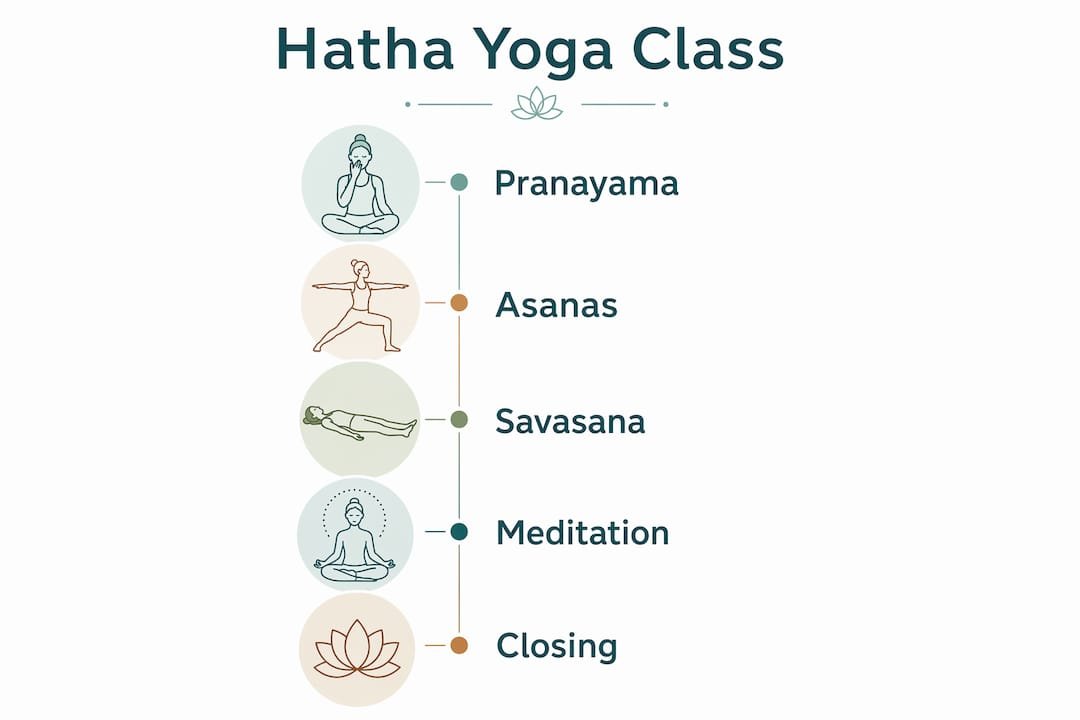
A typical hatha style yoga class runs between 30 and 90 minutes and follows a consistent sequence: pranayama (breath work), asanas (physical postures), and Savasana (final relaxation). That structure is not arbitrary. Each phase prepares the body and mind for the next, so skipping pranayama at the start is like skipping a warm-up before a run.
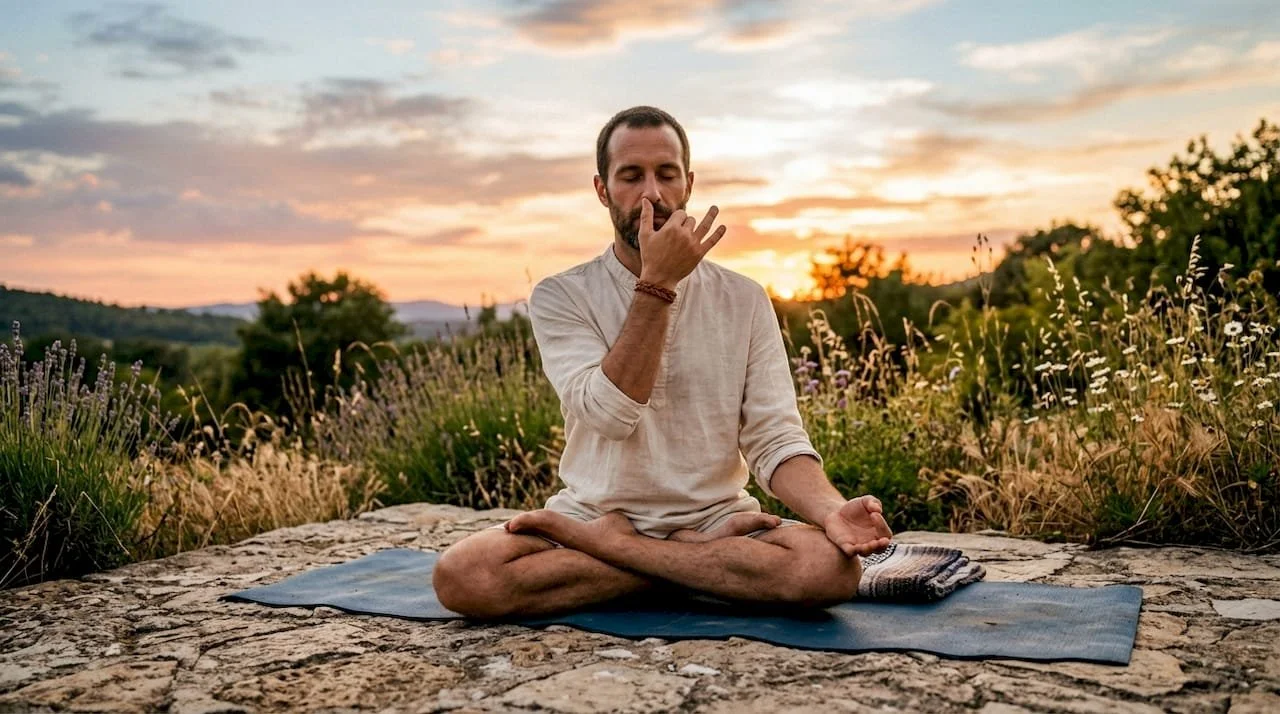
The class opens with pranayama to settle the nervous system and draw attention inward. Techniques such as Nadi Shodhana (alternate nostril breathing) and Ujjayi (victorious breath) are common openers. Pranayama is considered more powerful than asanas in the classical tradition, which is why it anchors the session rather than finishing it.
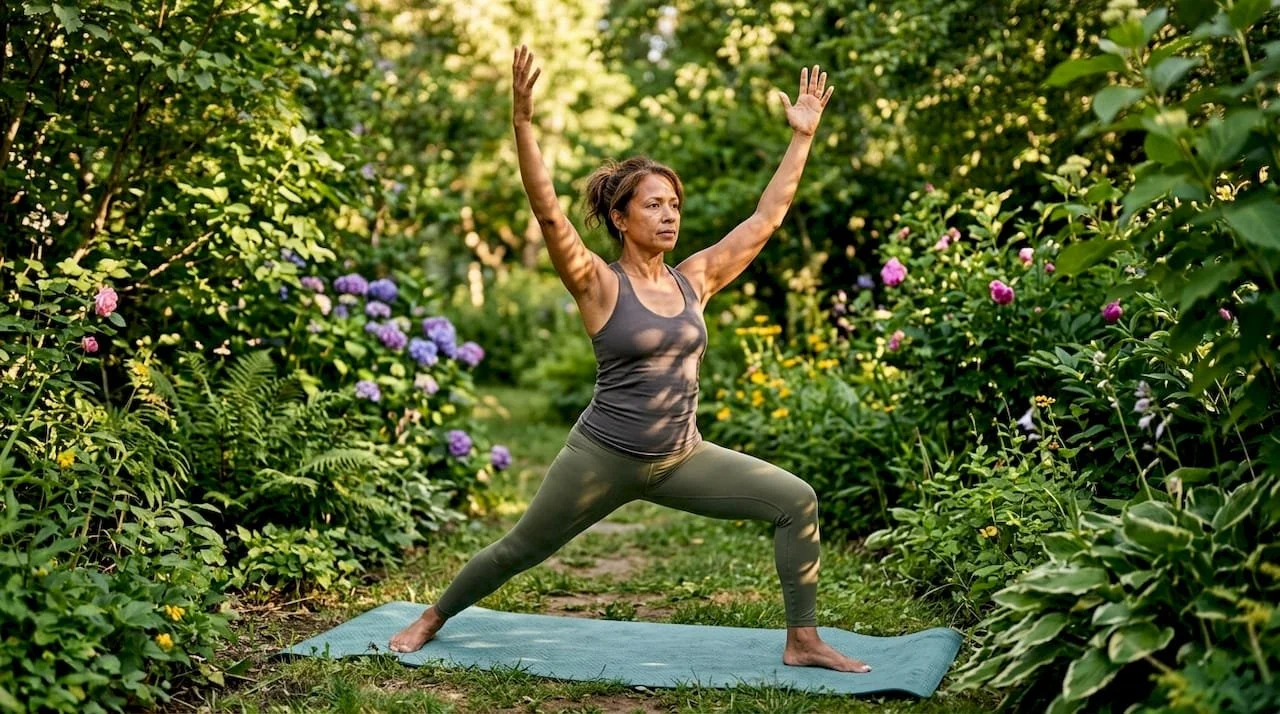
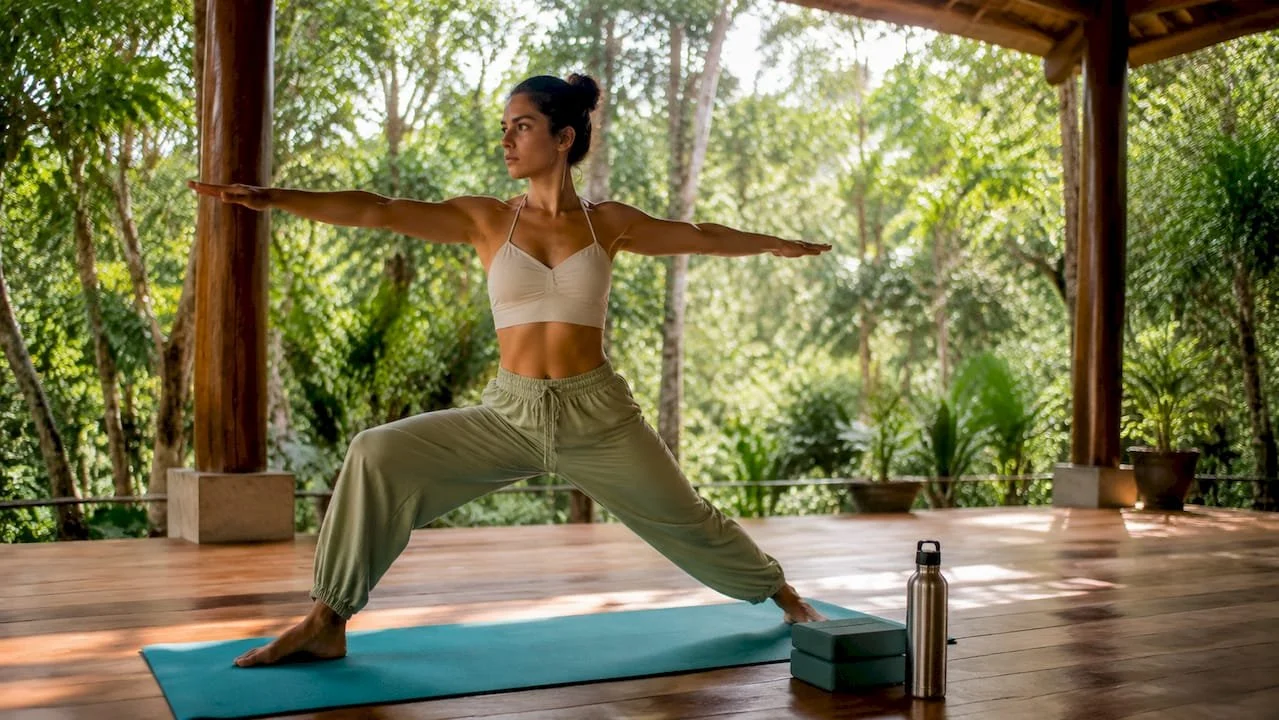
Asanas follow, and this is where Hatha's defining quality becomes clear. Poses are held for multiple breaths, not cycled through quickly. That stillness gives teachers time to offer alignment cues and gives practitioners time to feel what is actually happening in the body. A Warrior II held for five full breaths teaches far more about hip alignment than one held for a single count.
The session closes with Savasana, a full-body rest that lets the nervous system absorb the practice. Skipping Savasana is the most common beginner mistake. It is not a reward for finishing. It is a required part of the sequence.
Pranayama: Breath work to regulate the nervous system and focus the mind.
Asanas: Held postures with alignment focus and sustained muscle engagement.
Savasana: Final relaxation to integrate the physical and mental work of the session.
Pro Tip: If you arrive late and miss the pranayama opening, spend two minutes in Child's Pose with slow nasal breathing before joining the asana sequence. It replicates the settling effect and keeps your practice intentional.
What health and mental benefits does Hatha yoga provide?
Hatha yoga produces measurable physical results faster than most practitioners expect. Beginners who practice consistently show improvements in strength, flexibility, and cardio-respiratory fitness within 8 weeks. Eight weeks is a short window. That timeline makes Hatha one of the most accessible entry points into structured physical conditioning.
The mental benefits are equally well-supported. Slow, conscious breathing activates the parasympathetic nervous system, which reduces stress hormones, improves sleep quality, and sharpens mental clarity. This is not a vague wellness claim. It is a direct physiological response to controlled breath. The meditation benefits of breathwork extend well beyond the mat, supporting emotional regulation and focus throughout the day.
"The breath is the bridge between the body and the mind. In Hatha yoga, learning to control the breath is learning to control the quality of your attention, your stress response, and your inner state."
That insight captures why Hatha yoga is not simply a flexibility class. The physical postures are a vehicle. The breath is the engine. Practitioners who treat the asanas as the point often miss the deeper shift that happens when breath and movement align.
Hatha also supports practitioners dealing with chronic stress. The gentle yoga practice format makes it accessible for people who find high-intensity exercise counterproductive during stressful periods. The body responds to sustained, low-load movement and breath work in ways that vigorous exercise cannot replicate.
How does Hatha style yoga differ from Vinyasa and Hatha Flow?
The clearest difference between Hatha and Vinyasa is the breath-to-movement ratio. Hatha holds poses for multiple breaths, allowing deep focus on alignment and grounding. Vinyasa links each movement to a single breath, creating a continuous, flowing sequence. One is deliberate and still. The other is dynamic and rhythmic.
That difference in pacing changes the entire experience of a class. In Hatha, you might hold Triangle Pose for five breaths while your teacher adjusts your shoulder alignment. In Vinyasa, you move through Triangle, Warrior II, and Extended Side Angle in the time it takes to exhale twice. Neither is superior. They serve different needs.
| Feature | Hatha yoga | Hatha Flow | Vinyasa yoga |
|---|---|---|---|
| Pace | Slow, deliberate | Moderate, mindful | Fast, continuous |
| Breath style | Held poses, multiple breaths | Steady movement with breath | One breath per movement |
| Best for | Beginners, alignment focus | Intermediate, gentle flow | Active, fitness-oriented |
| Stillness emphasis | High | Moderate | Low |
Hatha Flow sits between the two. It is a mindful hybrid style that blends steady movement with moments of stillness. Practitioners who find pure Hatha too static but feel rushed in Vinyasa often find Hatha Flow the right fit. It preserves the breath awareness of traditional Hatha without the pressure of speed.
Hatha yoga: Best for learning alignment, building a foundation, and reducing stress.
Hatha Flow: Best for practitioners who want gentle movement without static holds.
Vinyasa yoga: Best for those seeking cardiovascular challenge and fluid sequencing.
Understanding what Vinyasa yoga is helps clarify why Hatha remains the preferred starting point for most new practitioners. The slower pace creates space for learning that faster styles cannot provide.
What are the deeper aspects of Hatha yoga for experienced practitioners?
Hatha yoga is not a single technique. It is a comprehensive system that integrates body, breath, and mind as preparation for meditation and spiritual awareness. Styles like Ashtanga and Iyengar yoga both fall under the Hatha umbrella. That context matters for experienced practitioners who want to understand where their practice sits within the broader tradition.
The pranayama techniques used in classical Hatha go well beyond basic breathing. Bhastrika (bellows breath) generates heat and energy. Sitali (cooling breath) lowers body temperature and calms the mind. Kumbhaka, or breath retention, is considered the most advanced technique. It creates internal pressure that, according to the classical texts, purifies the energy channels and prepares the practitioner for deeper states of concentration.
The classical texts describe Hatha as a preparatory practice for Raja Yoga, the path of meditation. The physical postures and breath work are not the destination. They are the preparation. Samadhi, a state of complete meditative absorption, is the classical goal. Most modern practitioners never frame their practice this way, but understanding it changes how you approach even a basic standing pose.
Isometric muscle engagement: Holding poses recruits deep stabilizing muscles that dynamic movement misses.
Breath retention (Kumbhaka): Advanced technique that builds concentration and internal awareness.
Purification practices (Shatkarmas): Classical cleansing techniques that precede asana in traditional sequences.
Philosophical framework: Hatha as preparation for Raja Yoga and the state of Samadhi.
Pro Tip: If you have practiced Hatha for more than a year, ask your teacher to introduce Nadi Shodhana with brief Kumbhaka holds. Even a two-second retention after inhalation noticeably deepens the meditative quality of the session.
Holding poses with full breath awareness shifts the experience from muscular effort to ease and concentration. That shift is the marker of an advancing practice.
How can beginners safely start a Hatha yoga practice?
Hatha yoga is accessible, but accessible does not mean risk-free. People with injuries or chronic conditions should consult a healthcare professional before starting, even at a gentle pace. Sustained isometric holds create real physical load. A knee injury that feels manageable in daily life can become aggravated in a held Warrior pose.
Props are not a sign of weakness. Blocks, straps, and bolsters allow the body to access the correct alignment without forcing range of motion. A block under the hand in Triangle Pose keeps the spine long. A strap around the foot in seated forward folds protects the lower back. Using props correctly is a sign of good instruction, not beginner limitation.
Start with two sessions per week and build to three or four as the body adapts.
Use props consistently until alignment feels natural without them.
Avoid pushing through pain. Discomfort from muscle engagement is normal. Sharp or joint pain is not.
Find a qualified teacher who offers hands-on adjustments and clear verbal cues.
Listen to your body rather than matching the person on the next mat.
Beginners and older adults benefit most from Hatha's adaptable pace, but the practice still demands respect. The 7 yoga styles for beginners resource from Amritayogawellness provides useful context for choosing the right entry point among the many options available.
Pro Tip: Tell your teacher about any injuries before class, not after. A good teacher will offer specific modifications before the session starts, so you are never caught off guard mid-pose.
Key Takeaways
Hatha yoga is the foundational system from which most modern yoga styles derive, combining breath control, held postures, and meditative awareness to build strength, reduce stress, and prepare the mind for deeper concentration.
| Point | Details |
|---|---|
| Core structure | Classes run 30–90 minutes and follow a pranayama, asana, and Savasana sequence. |
| Physical benefits | Consistent practice produces measurable gains in strength and flexibility within 8 weeks. |
| Mental benefits | Controlled breathing activates the parasympathetic nervous system, reducing stress and improving sleep. |
| Hatha vs. Vinyasa | Hatha holds poses for multiple breaths; Vinyasa links each movement to a single breath. |
| Safety for beginners | Consult a healthcare professional before starting if you have injuries or chronic conditions. |
Why Hatha keeps pulling me back
Every style of yoga I have practiced traces back to Hatha. Ashtanga, Iyengar, even the occasional Vinyasa flow. They all borrow their architecture from the same source. But what keeps me returning to a pure Hatha class is something harder to name than flexibility gains or stress reduction.
It is the quality of attention that a held pose demands. When you stay in Warrior I for six breaths instead of two, the first three breaths are physical. You feel the quad burn, the hip stretch, the shoulder fatigue. But somewhere around breath four, something shifts. The effort becomes quieter. You stop fighting the pose and start inhabiting it. That shift is what the classical texts mean by moving from effort to ease, and it does not happen in a faster practice.
The community dimension matters too. A Hatha class moves slowly enough that you actually notice the people around you. There is a shared quality of attention in the room that a fast-paced class rarely produces. That collective stillness is underrated as a wellness tool. Healthy habits built in community tend to stick longer than solo routines, and a consistent Hatha practice is one of the most sustainable habits I have seen people build.
My honest advice: do not let the word "gentle" mislead you. Hatha is not easy. It is slow. Those are very different things.
— Juiced
Hatha yoga classes and wellness at Amritayogawellness
Amritayogawellness offers Hatha yoga classes designed for practitioners at every level, from first-timers to those with years of mat experience. The Philadelphia studio provides structured guidance on breath work, alignment, and meditation, so each class builds on the last rather than repeating the same sequence indefinitely.
Beyond yoga, Amritayogawellness supports a full wellness practice. Workshops cover breathwork and mindfulness, and the studio also offers tarot readings as a complementary tool for self-reflection and inner awareness. For practitioners who want to deepen their understanding of Hatha yoga beyond the physical postures, the studio's community and programming provide a clear path forward.
FAQ
What is Hatha yoga, exactly?
Hatha yoga is a traditional system that combines physical postures, breath control, and meditation to balance the body and mind. The name comes from Sanskrit: "Ha" (sun energy) and "Tha" (moon energy), reflecting the practice's goal of internal balance.
How long is a typical Hatha yoga class?
A standard Hatha yoga class runs between 30 and 90 minutes, structured as pranayama, asanas, and a closing Savasana. The exact duration varies by studio and instructor.
Is Hatha yoga good for beginners?
Hatha yoga is one of the best starting points for beginners because its slower pace allows time for alignment instruction and body awareness. Beginners with injuries or chronic conditions should consult a healthcare professional before starting.
What is Hatha Flow yoga?
Hatha Flow is a hybrid style that blends the steady breath awareness of traditional Hatha with gentle, continuous movement. It suits practitioners who find pure Hatha too static but feel rushed in a Vinyasa class.
How quickly will I see results from Hatha yoga?
Research shows measurable improvements in strength, flexibility, and cardio-respiratory fitness after 8 weeks of consistent Hatha practice. Mental benefits such as reduced stress and better sleep often appear sooner.
Recommended
What Is Hot Hatha Yoga? A Beginner's Guide
TL;DR:
Hot Hatha yoga is traditional yoga practiced in a heated room of 95 to 100°F, emphasizing alignment, breathwork, and static postures. Its heat increases flexibility, reduces stiffness, and promotes mental calmness through pranayama techniques, making it suitable for beginners and intermediate practitioners. Unlike Bikram, Hot Hatha offers flexible sequencing and a calmer, slower pace that fosters mindfulness and physical benefits.
Hot Hatha yoga is traditional Hatha yoga practiced in a room heated to around 95 to 100°F, combining static posture holds with pranayama breathing and meditation to build flexibility, muscle tone, and mental focus. The heat is not a gimmick. It loosens connective tissue faster than a room-temperature class, which means you can go deeper into poses with less risk of strain. If you have been wondering what is hot hatha and whether it belongs in your weekly routine, this guide covers everything from the core techniques and real benefits to safety rules and what to expect on day one.
What is hot hatha yoga, and how does it work?
Hot Hatha yoga is the heated version of classical Hatha yoga, a practice that combines asanas, pranayama, and meditation to balance the body and prepare the mind for stillness. The word Hatha comes from the Sanskrit roots ha (sun) and tha (moon), representing the balance of opposing forces within the body. That philosophy carries directly into the heated format. You work with both effort and ease, heat and breath, strength and surrender.
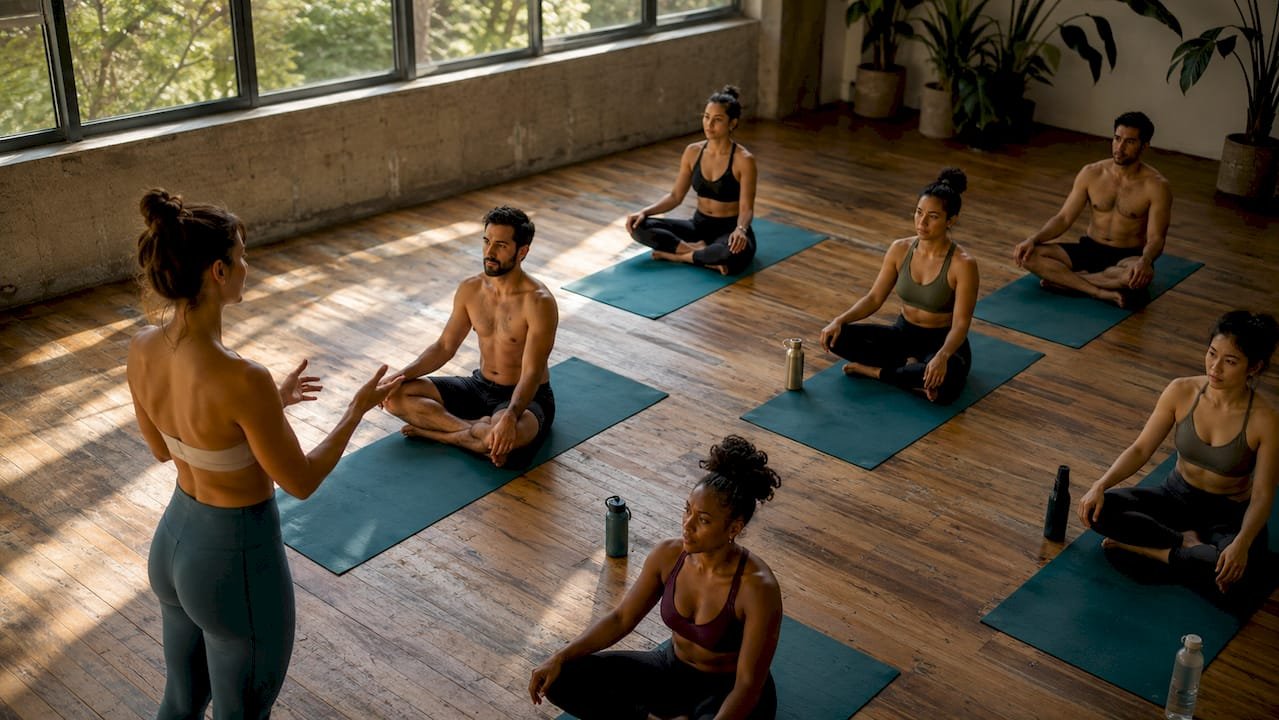
The class structure is deliberate and unhurried. An instructor guides you through traditional postures held for several breaths at a time, with the room temperature maintained between 95 and 100°F. That sustained heat increases blood flow to muscles, which makes deeper stretching more accessible and reduces the stiffness that often limits beginners in unheated classes. The emphasis throughout is on alignment and mindfulness, not speed.
Breathing is central to how the practice works. Most Hot Hatha classes incorporate pranayama techniques like ujjayi (victorious breath) or nadi shodhana (alternate nostril breathing) to regulate the nervous system and manage the physical intensity of the heat. This is what separates Hot Hatha from a simple "hot stretching" session. The breathwork turns the heat into a tool for mental training, not just physical conditioning.
Pro Tip: Hydrate before you arrive. Drink at least 16 ounces of water two hours before class so your body enters the heated room already prepared, not playing catch-up.
Key characteristics of a standard Hot Hatha class:
Room temperature between 95 and 100°F with controlled humidity
Traditional Hatha postures held for 5 to 10 breaths each
Slower pace focused on alignment, not transitions
Pranayama and brief meditation woven throughout
No fixed sequence, unlike Bikram yoga
What are the benefits of hot hatha yoga?
The benefits of hot hatha yoga span both the physical and mental. Heat loosens muscles more effectively than a warm-up alone, which translates to measurably greater range of motion during holds. Longer holds build the kind of slow-twitch muscle endurance that improves posture and functional strength over time. You are not just stretching. You are training your muscles to stabilize under sustained load.
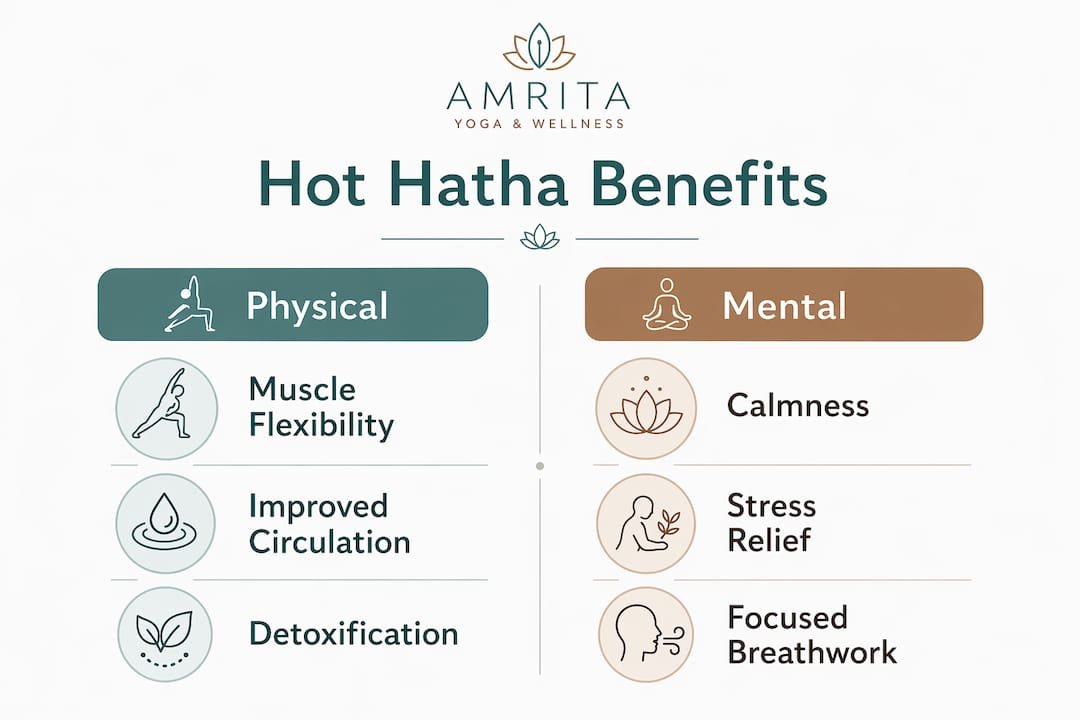
Mental calmness is one of the most reported outcomes, and it is not accidental. The combination of heat, breathwork, and slow movement activates the parasympathetic nervous system, the part of your nervous system responsible for rest and recovery. Practitioners who stick with Hot Hatha for four to six weeks consistently report reduced stress and improved sleep quality. The heat forces you to stay present. You cannot mentally drift when the room is 98°F and you are holding Warrior II for eight breaths.
The cardiovascular dimension is real but moderate. Your heart rate rises in a heated room even during slow movement, which means Hot Hatha delivers a mild aerobic stimulus without the joint impact of running or the intensity of Hot Power Yoga. This makes it particularly well-suited for people returning from injury or those who want cardiovascular conditioning without high-impact movement.
Specific benefits backed by practice and research:
Flexibility: Heat increases muscle elasticity, allowing deeper stretches in poses like forward folds and hip openers
Muscle tone: Sustained holds in postures like Chair Pose and Warrior III recruit stabilizing muscles that dynamic flows often skip
Endurance: Holding poses for extended periods in heat builds mental and physical stamina simultaneously
Stress reduction: Pranayama and meditation components lower cortisol and promote mental calm
Improved circulation: Elevated room temperature dilates blood vessels and increases blood flow to muscles and joints
How does hot hatha differ from Bikram, Vinyasa, and traditional Hatha?
Understanding where Hot Hatha sits among other yoga styles removes a lot of confusion for beginners. Hot Hatha moves slower than Vinyasa and uses static holds rather than flowing transitions. Vinyasa links breath to movement in a continuous sequence, making it more aerobic and cardiovascular. Hot Hatha prioritizes depth and alignment over momentum.
The comparison with Bikram is equally important. Bikram yoga follows a fixed sequence of exactly 26 postures practiced in a room heated to approximately 105°F with 40% humidity. Hot Hatha has no fixed sequence, runs cooler, and incorporates meditation and pranayama that Bikram's format does not include. Hot Hatha instructors have creative freedom in sequencing, which means classes vary significantly between studios and teachers.
Traditional Hatha yoga, practiced at room temperature, shares the same postures and philosophy but lacks the heat variable. The heat in Hot Hatha is not decorative. It changes the physiological experience of every pose, accelerating the physical benefits and adding a layer of mental challenge that room-temperature classes simply cannot replicate.
| Style | Temperature | Pace | Sequence | Best for |
|---|---|---|---|---|
| Hot Hatha | 95 to 100°F | Slow, static holds | Flexible, instructor-led | Beginners to intermediate |
| Bikram | ~105°F | Moderate, structured | Fixed 26-pose sequence | Those wanting consistency |
| Vinyasa | Room temp or warm | Fast, flowing | Dynamic, varies by class | Intermediate to advanced |
| Traditional Hatha | Room temperature | Slow, static holds | Flexible, instructor-led | All levels, especially beginners |
The table makes one thing clear. Hot Hatha occupies a specific niche: the mindfulness and accessibility of traditional Hatha, combined with the physical intensity of a heated environment, without the rigidity of Bikram or the aerobic demand of Vinyasa.
What safety considerations do you need to know?
Heat changes the risk profile of yoga in ways that matter before you ever step into a studio. Hot yoga is not safe for everyone, and knowing who should consult a doctor first is not optional reading. Pregnant people, and those with high blood pressure, asthma, or cardiovascular conditions, face elevated risk from heat stress and should get medical clearance before attending any heated class.
Dehydration is the most common issue beginners encounter. Sweating in a 98°F room depletes fluids faster than most people expect, and thirst is a lagging indicator. By the time you feel thirsty during class, you are already mildly dehydrated. Hydration planning needs to start hours before class, not in the parking lot.
Follow these steps to prepare safely for your first Hot Hatha class:
Drink at least 16 ounces of water two hours before class
Eat a light meal two to three hours before, not immediately before
Bring a large water bottle and a full-size towel to class
Wear moisture-wicking, form-fitting clothing to manage sweat
Arrive five minutes early to acclimate to the room temperature before class begins
Know the signs of heat exhaustion: dizziness, nausea, rapid heartbeat, or sudden weakness
Pro Tip: If you feel dizzy or lightheaded during class, sit or lie down immediately. Leaving the room briefly to cool down is always the right call. Pushing through heat illness symptoms is the one mistake you cannot afford to make.
For a deeper look at hot yoga safety practices, Amritayogawellness has published detailed guidance specifically for heated class formats.
How can beginners get started with hot hatha yoga?
Hot Hatha is accessible for beginners precisely because of its slower pace and alignment focus. You do not need prior yoga experience to attend your first class. What you do need is realistic expectations and a willingness to listen to your body rather than compete with the person on the mat next to you.
Choose a class explicitly labeled "Hot Hatha" or "Heated Hatha" rather than "Hot Power" or "Hot Flow," which are faster and more demanding. Many studios, including Amrita Yoga & Wellness in Philadelphia, offer beginner-specific sessions where instructors provide more detailed alignment cues and offer pose modifications throughout class.
What to bring and wear matters more in a heated class than in a standard studio:
A non-slip yoga mat or a mat towel to manage sweat on the surface
Moisture-wicking shorts or leggings and a fitted top
A large water bottle, at least 24 ounces
A full-size towel for your mat and a smaller one for your face
An open mindset about resting in Child's Pose whenever you need it
The first class will feel intense. The heat is the dominant sensation for most beginners, and that is normal. Your body needs two to three sessions to begin adapting to the thermal environment. Resist the urge to judge the practice based on one class. The adaptation itself is part of the training. For preparing for hot yoga, reviewing a preparation checklist before your first session significantly reduces first-class anxiety.
Pro Tip: Modify every pose that causes pain, not just discomfort. Bending your knees in a forward fold or using a block in Triangle Pose is not a shortcut. It is correct technique for your current range of motion.
Key takeaways
Hot Hatha yoga delivers the most benefit when you combine proper hydration, realistic expectations, and consistent attendance over several weeks.
| Point | Details |
|---|---|
| Core definition | Hot Hatha is traditional Hatha yoga practiced in a room heated to 95 to 100°F with a focus on alignment and breathwork. |
| Primary benefits | Heat enhances flexibility, static holds build muscle tone, and pranayama reduces stress and improves mental focus. |
| Key difference from Bikram | Hot Hatha has no fixed sequence and runs cooler than Bikram, making it more varied and beginner-friendly. |
| Safety first | Drink 16 ounces of water two hours before class and avoid Hot Hatha if you have cardiovascular or heat-sensitivity conditions without medical clearance. |
| Beginner strategy | Start with classes labeled "Hot Hatha" or "Heated Hatha," bring a mat towel, and plan to rest in Child's Pose as needed. |
Why Hot Hatha changed how I think about yoga intensity
Most people assume intensity in yoga means speed. Vinyasa flows, power sequences, and rapid transitions feel demanding because they are busy. Hot Hatha taught me that the hardest thing in yoga is staying completely still in a difficult position while the room is 98°F and your mind is screaming at you to move.
The heat is not the enemy. It is the teacher. Every time I have watched a beginner walk into their first Hot Hatha class, the heat strips away the performance instinct almost immediately. You cannot fake stillness in a hot room. You either find your breath and settle in, or you spend the entire class fighting yourself. That struggle, and the moment it resolves, is where the real practice lives.
My honest observation after years of teaching and practicing in heated environments: Hot Hatha is underrated as a mental training tool. People come for the physical benefits, the flexibility and the muscle tone, and those are real. But the students who stay come back because of what happens to their focus and stress levels outside the studio. The breathwork carries over. The stillness carries over.
If you are on the fence, start with one class. Hydrate properly, lower your expectations for the first session, and pay attention to how you feel the following morning. That is where Hot Hatha makes its case.
— Juiced
Explore Hot Hatha yoga at Amrita Yoga & Wellness
Amrita Yoga & Wellness in Philadelphia offers Hot Hatha classes designed for all experience levels, from first-timers to seasoned practitioners looking to deepen their alignment practice in a heated environment. The studio's class schedule includes beginner-friendly heated sessions with instructors who provide modifications and detailed cues throughout. Beyond yoga, Amritayogawellness supports whole-person wellness through offerings like tarot readings for those exploring the mind-body-spirit connection alongside their physical practice. If you are ready to experience Hot Hatha in a welcoming, community-focused studio, visit Amrita Yoga & Wellness to browse the current class schedule and sign up.
FAQ
What is hot hatha yoga in simple terms?
Hot Hatha yoga is traditional Hatha yoga practiced in a room heated to 95 to 100°F, focusing on holding postures longer to build flexibility, muscle tone, and mental calm through breathwork and alignment.
How hot is a hot hatha yoga class?
A Hot Hatha class is typically heated to 95 to 100°F, which is cooler than Bikram yoga's standard 105°F but warm enough to significantly increase muscle elasticity and cardiovascular load.
Is hot hatha yoga good for beginners?
Yes. Hot Hatha is one of the most beginner-accessible heated yoga formats because its slower pace and alignment focus allow new students to learn postures correctly without the pressure of keeping up with a fast-moving flow.
Who should avoid hot hatha yoga?
People who are pregnant or have high blood pressure, asthma, or cardiovascular conditions should consult a doctor before attending any heated yoga class due to the elevated cardiovascular and heat stress involved.
How is hot hatha different from Bikram yoga?
Hot Hatha uses a flexible, instructor-designed sequence in a room at 95 to 100°F, while Bikram follows a fixed 26-pose sequence in a hotter room at approximately 105°F with strict humidity controls.
Recommended
Your guide to group classes in Philadelphia for wellness
TL;DR:
Group wellness classes provide social connection, accountability, and structured movement, boosting consistency.Yoga, Pilates, and reformer Pilates differ in focus, equipment, and complexity, accommodating various goals.Regular participation in group classes improves physical health and fosters community, aiding long-term wellness.
Most adults in Philadelphia default to a gym membership, a solo jog along the Schuylkill, or a YouTube workout at home. It works, until it doesn't. Motivation fades, progress stalls, and the whole thing starts to feel like a chore. Group wellness classes flip that script entirely. They combine structured movement with real human connection, giving you accountability, variety, and a sense of belonging that no treadmill can replicate. Whether you're curious about yoga, Pilates, barre, or something more restorative, this guide breaks down what's available in Philadelphia, how these formats differ, and exactly how to get started without feeling lost.
Table of Contents
Key Takeaways
| Point | Details |
|---|---|
| Group classes build community | Philadelphia wellness studios foster social support and lasting accountability, enhancing holistic health. |
| Understand your class options | Yoga, mat Pilates, and reformer Pilates each provide unique benefits—find the best fit for your needs and goals. |
| Start smart and safe | Begin with certified instructors, try intro offers, and prioritize proper form and communication for the best experience. |
| Consistency is key | Attend 2-3 weekly sessions for at least six weeks to realize lasting improvements in strength and flexibility. |
Understanding group classes: What makes them unique?
Group classes are instructor-led sessions where a small to mid-sized group moves through a structured practice together. Unlike a gym floor where everyone does their own thing, group classes have a shared rhythm. The instructor cues the movement, manages the pacing, and creates an environment where everyone is working toward the same goal at the same time.
In Philadelphia, the most popular group class formats include:
Hatha yoga: Slow, deliberate poses ideal for beginners or anyone wanting a mindful practice
Vinyasa yoga: A flowing sequence that links breath to movement, building heat and strength
Hot yoga: Practiced in a heated room, intensifying the stretch and cardiovascular challenge
Mat Pilates: Bodyweight-based core work done on a mat, no equipment needed
Reformer Pilates: Machine-assisted resistance training that targets deep stabilizing muscles
Barre: Ballet-inspired movements that tone the lower body and improve posture
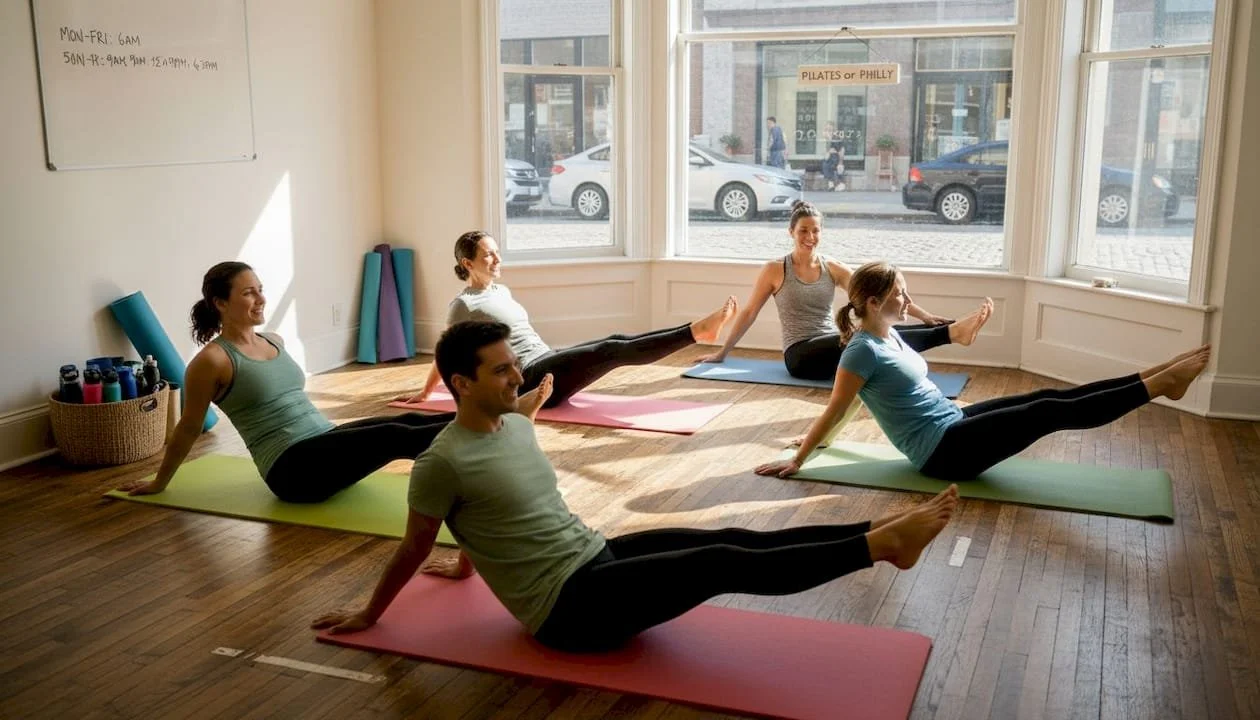
A typical yoga session follows a clear arc. Yoga group classes in Philadelphia typically last 60 to 90 minutes, starting with warm-up and breathing, moving through asanas (poses), and closing in savasana (rest). That structure is intentional. It prepares your body, challenges it, then lets it recover.
What separates group classes from solo workouts is the social layer. When you show up and see familiar faces, you're less likely to skip. When an instructor calls your name or adjusts your form, you feel seen. That peer accountability is a genuine performance driver, not just a feel-good bonus.
Research consistently shows that people who exercise in group settings report higher adherence and greater gains in holistic health compared to those who train alone. The combination of social encouragement and structured programming makes a measurable difference over time.
If you're just starting out, exploring beginner Pilates tips can help you walk into your first class with confidence rather than anxiety.
Comparing yoga, mat Pilates, and reformer Pilates
Now that you know what to expect from group classes, let's break down the most popular formats and how they differ.
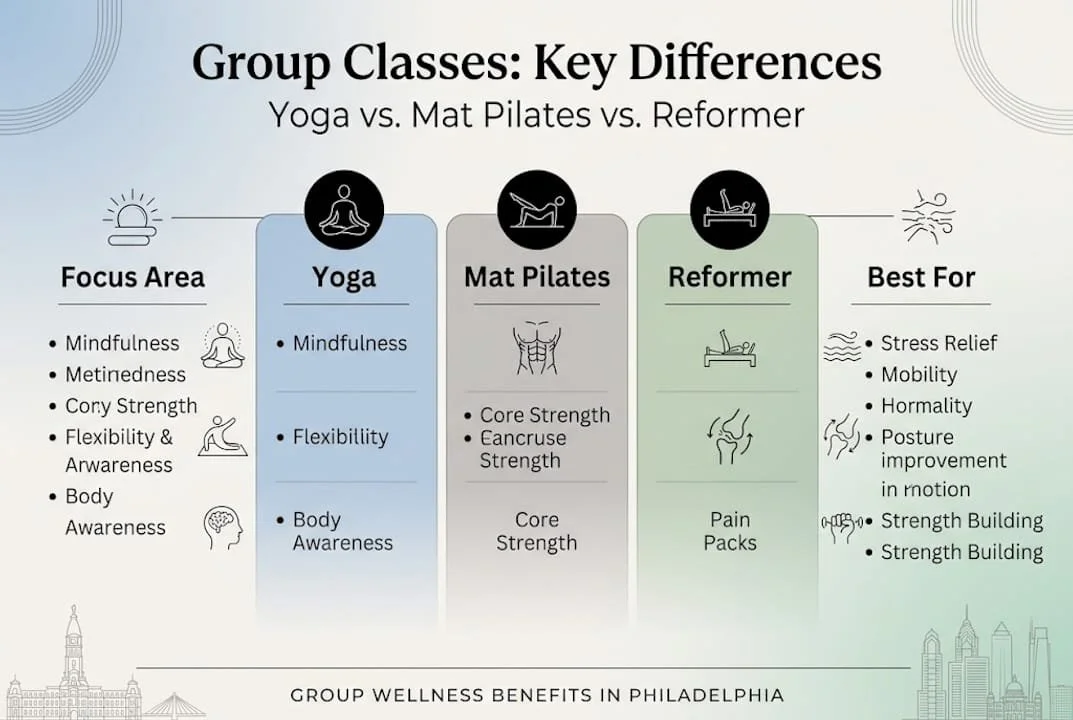
Yoga, mat Pilates, and reformer Pilates each serve a different purpose, even though they overlap in some benefits. Yoga is rooted in breath, mindfulness, and the connection between body and mind. Mat Pilates is precision-driven, targeting the deep core muscles that support your spine and posture. Reformer Pilates adds resistance through a spring-loaded machine, allowing for a wider range of movement patterns and load.
Mat Pilates uses bodyweight on a matfor core strength and flexibility, with structured sequences targeting deep stabilizers. Reformer Pilates uses a machine for resistance and is suitable for all levels with modifications.
| Format | Accessibility | Avg. cost per class | Equipment needed | Physical challenge | Best for |
|---|---|---|---|---|---|
| Hatha yoga | High | $15 to $25 | Mat | Low to moderate | Beginners, stress relief |
| Vinyasa yoga | Moderate | $18 to $28 | Mat | Moderate to high | Cardio, flexibility |
| Mat Pilates | High | $15 to $22 | Mat | Moderate | Core strength, rehab |
| Reformer Pilates | Moderate | $30 to $45 | Reformer machine | Moderate to high | All levels, injury recovery |
Choosing the right format depends on your goals. Want to manage stress and improve flexibility? Start with Hatha yoga. Looking to build core strength after a back injury? Mat Pilates is a safe entry point. Interested in a more dynamic, resistance-based challenge? Look into reformer Pilates benefits or check out a reformer Pilates beginner guide before booking.
Yoga prioritizes breath, meditation, and flexibility
Mat Pilates emphasizes core precision and spinal alignment
Reformer Pilates adds resistance for strength and rehabilitation
Pro Tip: Most Philadelphia studios offer intro packages at a steep discount. Try two or three different formats in your first month before committing to a membership. Your body will tell you what it needs.
Benefits of group classes for physical health and community
Understanding the core formats, it's important to see how group classes elevate both body and mind together.
The physical benefits are well-documented and significant. Regular participation in yoga and Pilates builds muscular strength, improves flexibility, reduces chronic pain, and supports better posture. A study found that an 8-week combined yoga and Pilates program significantly improved muscular strength, endurance, and body composition in participants compared to a control group. That's not a small result. That's a measurable body transformation in under two months.
For those managing chronic conditions, the evidence is equally strong. Mat Pilates reduced pain and improved function in adults with chronic low back pain and also improved health-related quality of life in older adults managing type 2 diabetes.
| Benefit | Yoga | Mat Pilates | Reformer Pilates |
|---|---|---|---|
| Core strength | Moderate | High | High |
| Flexibility | High | Moderate | Moderate |
| Pain reduction | High | High | High |
| Stress relief | Very high | Moderate | Moderate |
| Cardiovascular | Moderate (hot yoga) | Low | Low to moderate |
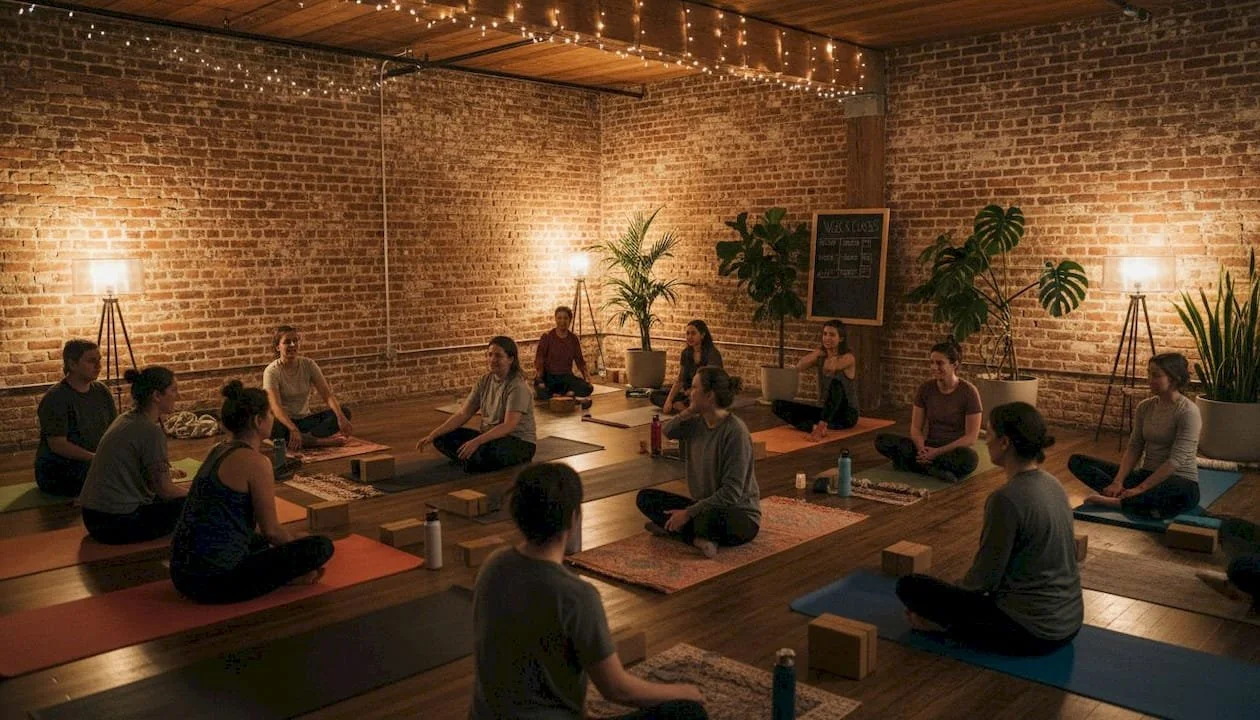
Beyond the physical, the community element is what keeps people coming back long-term. Group classes in Philadelphia create a culture of encouragement. You see the same people week after week. You celebrate each other's progress. Studios often host social events, workshops, and themed classes that deepen those connections.
- Peer accountability reduces the chance of skipping sessions
- Instructors provide personalized attention even in a group setting
- Shared struggle builds genuine camaraderie
- Community events extend wellness beyond the mat
Exploring Reformer Pilates benefits in more depth can help you understand just how far the physical gains extend, especially for those recovering from injury or managing long-term health goals.
How to choose and get started with group classes in Philadelphia
Armed with an understanding of benefits and formats, you're ready to take the next step.
Getting started doesn't have to be complicated. Follow these steps to find the right class and set yourself up for success:
Define your goal. Are you managing stress, building strength, recovering from an injury, or looking for community? Your goal narrows the format.
Research local studios. Look for certified instructors with 200-plus training hours and read recent reviews on Google or Yelp.
Use intro offers. Philadelphia studios prioritize inclusivity for adults and offer intro deals like $39 for 3 classes at Focus Barre, making it easy to try before committing.
Attend 2 to 3 sessions per week. Experts recommend 2 to 3 sessions per week for 6 to 8 weeks to see meaningful gains in strength and flexibility.
Communicate with your instructor. Always mention injuries, limitations, or pregnancy before class begins.
For your first session, keep these practical tips in mind:
Arrive 10 to 15 minutes early to introduce yourself and get oriented
Wear comfortable, form-fitting clothes that allow full range of motion
Bring water and a mat if the studio doesn't provide one
Skip a heavy meal for at least 90 minutes before class
Accept modifications without judgment. Every instructor offers them
Pro Tip: Don't judge a format by one class. Instructors vary widely in teaching style. If a session doesn't click, try the same format with a different teacher before writing it off entirely.
You can also browse Reformer Pilates insights to get a clearer picture of what to expect before walking through the studio door.
The real secret to lasting change: More than just exercise
But the story of group classes goes well beyond physical health metrics.
Here's something most wellness content won't tell you: the reason most solo fitness routines fail isn't lack of effort. It's lack of context. When you exercise alone, you're fighting every motivation battle by yourself. There's no one waiting for you. No one notices if you skip. That silence makes it easy to quit.
Group classes solve that problem structurally. Group classes enhance community engagement through accountability, peer encouragement, and social events, all of which are key drivers of long-term holistic health adherence. It's not a soft benefit. It's the mechanism that makes everything else work.
The people who sustain a wellness practice for years aren't always the most disciplined. They're the ones who found a community that made showing up feel natural. That's what a great studio does. It removes friction and replaces it with belonging.
Long-term health is a lifestyle, not a 6-week program. The Pilates group experience and yoga community in Philadelphia offer exactly that kind of sustained, supportive environment. When you feel connected to the people around you, consistency stops being a struggle and starts being something you actually look forward to.
Find your next community class at Amrita Yoga & Wellness
Ready to join a vibrant and welcoming community? Here's how to begin.
Amrita Yoga & Wellnessoffers a full range of group classes in Philadelphia, including yoga, mat Pilates, reformer Pilates, barre, tai chi, and massage therapy. Every class is designed with inclusivity in mind, welcoming beginners and experienced practitioners alike.
Beyond movement, Amrita hosts workshops and special events that deepen your wellness journey in unexpected ways. If you're curious about the spiritual side of well-being, explore tarot reading sessions as a complement to your physical practice. Check the current schedule for intro offers and upcoming community events. Your next step toward lasting wellness starts right here in Philadelphia.
Frequently asked questions
How often should I attend group wellness classes to see results?
Experts recommend 2 to 3 sessions per week for 6 to 8 weeks to notice meaningful gains in strength and flexibility. Consistency matters more than intensity at the start.
What are the main differences between mat and reformer Pilates?
Mat Pilates uses bodyweight and is equipment-free and cost-effective, while reformer Pilates uses a spring-loaded machine for resistance, offering greater control and rehabilitation options.
Are group classes suitable for beginners or people with injuries?
Yes, modifications are offered for all levels in virtually every group class format. Always inform your instructor about injuries or special needs before the session begins.
Which Philadelphia studios offer the best intro deals?
Studios like Club Pilates and Thrive Pilates & Yoga offer free trials or discounted unlimited weeks for new students. Check local studio websites regularly for updated promotions.
Recommended
7 Yoga Styles for Beginners and Wellness Seekers
Table of Contents
Quick Summary
| Takeaway | Explanation |
|---|---|
| 1. Hatha Yoga Builds Foundation | This gentle practice emphasizes alignment and mindful movement, ideal for beginners and advanced yogis alike. |
| 2. Vinyasa Yoga Enhances Endurance | This dynamic style combines movement with breath, providing a full-body workout that boosts cardiovascular fitness. |
| 3. Restorative Yoga Promotes Healing | With supported poses, this practice encourages deep relaxation, making it ideal for stress relief and recovery. |
| 4. Hot Yoga Boosts Flexibility | Practicing in heat increases muscle elasticity, aiding deeper stretches and promoting detoxification through sweat. |
| 5. Power Yoga Offers Intense Fitness | This vigorous style combines strength and cardio, making it effective for building lean muscle and improving endurance. |
1. Hatha Yoga: Foundation for All Levels
Hatha Yoga serves as the cornerstone of yoga practice for practitioners at every skill level. This ancient style focuses on mastering physical postures and breath control while creating a solid foundation for more advanced yoga techniques.
At its core, Hatha Yoga emphasizes precise alignment and mindful movement. Practitioners learn to develop a connection between breath and body through deliberate, controlled poses that build strength and flexibility. Unlike more intense yoga styles, Hatha provides a gentle yet transformative approach suitable for complete beginners and experienced yogis alike.
Key benefits of Hatha Yoga include:
Improved physical flexibility
Enhanced muscle strength
Better body awareness
Stress reduction techniques
Foundation for advanced yoga practices
The practice typically involves holding postures for several breaths, allowing practitioners to explore proper alignment and develop a deep understanding of each movement. Modifications are always encouraged, making Hatha an incredibly accessible style that meets individuals exactly where they are in their wellness journey.
Practitioners can expect a balanced workout that challenges the body while simultaneously calming the mind. By integrating slow, intentional movements with focused breathing, Hatha Yoga creates a holistic experience that supports both physical and mental well-being.
Pro tip: Start with shorter Hatha sessions and gradually increase duration as you build strength and confidence in your practice.
2. Vinyasa Yoga: Flow for Strength and Endurance
Vinyasa Yoga represents a dynamic and energetic approach to yoga practice that combines continuous movement with intentional breathing. This style transforms traditional yoga into a powerful fitness experience that challenges both body and mind.
Breath synchronization drives the practice, creating a rhythmic flow where each movement connects seamlessly with inhalation and exhalation. Cardiovascular endurance improves dramatically through these flowing sequences that maintain elevated heart rates and engage multiple muscle groups simultaneously.
Key advantages of Vinyasa Yoga include:
Enhanced core strength
Improved muscular endurance
Increased cardiovascular fitness
Full body muscle engagement
Stress reduction through mindful movement
Dynamic movements build functional fitness by challenging practitioners to maintain balance and control during continuous transitions. Unlike static yoga styles, Vinyasa creates a workout that feels more like a moving meditation, making it appealing to fitness enthusiasts and wellness seekers.
The practice accommodates various fitness levels by offering modifications that allow beginners to progress gradually while providing advanced practitioners intense physical challenges. Practitioners can expect a full body workout that develops strength, flexibility, and mental focus.
Vinyasa Yoga transforms traditional yoga into an engaging, high energy practice that supports holistic wellness.
Pro tip: Begin with slower Vinyasa classes to learn proper alignment and gradually increase pace as your strength and confidence grow.
3. Restorative Yoga: Gentle Practice for Relaxation
Restorative Yoga offers a sanctuary of calm in our fast-paced world, providing a gentle approach to healing and relaxation. This therapeutic practice focuses on complete physical and mental restoration through carefully supported poses and intentional breathing.
Stillness becomes a powerful healing tool in restorative yoga. Practitioners activate deep relaxation responses by holding passive poses with the support of props like bolsters, blankets, and blocks.
Key benefits of Restorative Yoga include:
Reduced stress and anxiety
Enhanced nervous system recovery
Improved sleep quality
Deeper mind-body connection
Gentle physical rehabilitation
Supportive props create a nurturing environment that allows complete muscular release. Unlike more active yoga styles, restorative practice encourages practitioners to remain in poses for extended periods, sometimes 5-10 minutes, promoting deep relaxation and healing.
Restorative Yoga transforms stillness into a powerful healing practice, offering profound relaxation in a world of constant motion.
The practice is particularly beneficial for individuals recovering from injury, experiencing chronic stress, or seeking a gentle approach to wellness. Each pose is designed to support the body completely, allowing muscles to relax and the nervous system to reset.
Pro tip: Create a dedicated relaxation space at home with soft lighting and comfortable props to enhance your restorative yoga experience.
4. Hot Yoga: Boost Flexibility with Heat
Hot Yoga transforms traditional yoga practice by introducing intentional heat as a powerful wellness tool. This dynamic style challenges practitioners by conducting yoga sessions in carefully controlled heated environments, typically between 95-110 degrees Fahrenheit.
Heat creates powerful physiological responses that enhance muscle elasticity and flexibility. The elevated temperature allows muscles to warm more quickly, enabling deeper stretches and reducing the risk of injury while promoting increased range of motion.
Key benefits of Hot Yoga include:
Accelerated muscle flexibility
Improved cardiovascular endurance
Enhanced metabolic performance
Increased perspiration and detoxification
Stress reduction and mental clarity
Cardiovascular challenges complement muscle work by elevating heart rate and creating an experience similar to moderate exercise. Practitioners can expect a full body workout that combines strength training, flexibility enhancement, and cardiovascular conditioning.
Hot Yoga transforms physical practice into a comprehensive wellness experience through intentional environmental design.
The practice demands proper hydration and mindful attention to personal physical limits. Beginners should start slowly, listen to their bodies, and gradually build heat tolerance while maintaining good form and breathing techniques.
Pro tip: Bring a large towel and water bottle to your first hot yoga class, and position yourself near the door for easier access if you need a quick break.
5. Yin Yoga: Deep Stretching for Joint Health
Yin Yoga offers a revolutionary approach to wellness that focuses on deep, sustained stretching for holistic joint health. Unlike more dynamic yoga styles, this practice emphasizes long-held poses that target connective tissues and promote profound physical healing.
Slow stretches unlock deep tissue potential by stimulating synovial fluid circulation. Each pose is typically held for 3-5 minutes, allowing practitioners to gently stress connective tissues like ligaments, fascia, and joint capsules in ways that more active practices cannot.
Key benefits of Yin Yoga include:
Enhanced joint mobility
Improved flexibility
Reduced risk of connective tissue injury
Deeper relaxation
Increased mind-body awareness
Passive poses create profound transformations by applying gentle, sustained pressure that encourages tissue regeneration. The practice works at a cellular level, promoting collagen production and increasing overall tissue hydration and resilience.
Yin Yoga transforms passive stretching into a powerful healing practice that speaks directly to your body's deepest tissues.
Particularly beneficial for individuals with sedentary lifestyles or chronic joint stiffness, Yin Yoga provides a gentle yet effective approach to maintaining and improving joint health. Practitioners of all ages and fitness levels can modify poses to suit their individual needs.
Pro tip: Use supportive props like blocks and bolsters to help maintain comfortable, sustainable positions during long-held stretches.
6. Kundalini Yoga: Energize Body and Mind
Kundalini Yoga represents a transformative practice that goes far beyond traditional physical exercise, focusing on awakening inner energy and cultivating holistic wellness. This dynamic style combines breathwork, movement, meditation, and sound to create a comprehensive approach to mental and physical rejuvenation.
Breath techniques drive energetic transformation as practitioners regulate neurophysiology through specific kriyas and meditation practices. Unlike other yoga styles, Kundalini emphasizes the intentional movement of energy through the body's subtle systems.
Key benefits of Kundalini Yoga include:
Enhanced emotional resilience
Reduced anxiety and stress
Improved cognitive clarity
Increased nervous system flexibility
Deeper self-awareness
Rhythmic movements unlock inner potential by combining physical postures with specialized breathing patterns and meditative techniques. Practitioners can expect a practice that challenges both body and mind, promoting profound internal shifts and emotional balance.
Kundalini Yoga transforms inner energy into a powerful tool for personal transformation and holistic wellness.
The practice incorporates unique elements like mantra chanting, specific hand positions (mudras), and dynamic breathing techniques that differentiate it from more traditional yoga styles. Each session offers a comprehensive approach to healing and self-discovery.
Pro tip: Start with shorter Kundalini sessions and wear comfortable white clothing to enhance the energetic experience.
7. Power Yoga: Dynamic Moves for Fitness
Power Yoga transforms traditional yoga practice into a high-intensity fitness experience that challenges both body and mind. This dynamic style combines strength training, cardiovascular exercise, and mindful movement into an energetic workout that appeals to fitness enthusiasts and wellness seekers.
Continuous movement drives physical transformation as practitioners synchronize breath and motion. Unlike gentler yoga styles, Power Yoga maintains a vigorous pace that elevates heart rate and builds muscular endurance through flowing sequences.
Key benefits of Power Yoga include:
Enhanced muscular strength
Improved cardiovascular fitness
Increased metabolic activity
Greater flexibility and balance
Stress reduction through intense movement
Athletic sequences challenge physical limits by incorporating strength-building poses and rapid transitions that keep practitioners constantly engaged. The practice demands full-body commitment, making it an excellent cross-training option for athletes and fitness enthusiasts.
Power Yoga blends the mindfulness of traditional yoga with the intensity of a comprehensive fitness workout.
Participants can expect a workout that develops lean muscle, improves core strength, and provides a full-body conditioning experience. The practice adapts to various fitness levels, allowing beginners and advanced practitioners to find their unique challenge.
Pro tip: Start with foundational Power Yoga classes and listen to your body, gradually increasing intensity as your strength and flexibility improve.
Below is a comprehensive table summarizing the different types of yoga practices discussed throughout the article, their key attributes, and suggested considerations for practitioners
Begin your journey today by exploring comprehensive class descriptions and scheduling your spot online. Let us help you transform your vision of well-being into reality. Visit Amrita Yoga & Wellness now and take the first step toward a healthier, more balanced life.
Frequently Asked Questions
What are the best yoga styles for beginners?
Hatha Yoga and Restorative Yoga are excellent choices for beginners. Start with Hatha to build a strong foundation, and consider Restorative for gentle relaxation techniques.
How can I improve my flexibility through yoga?
Hot Yoga and Yin Yoga are particularly effective for enhancing flexibility. Join sessions regularly, aiming for at least 2-3 times a week to notice improvements in your range of motion within a month.
What types of yoga help reduce stress?
Restorative Yoga and Kundalini Yoga are both effective for stress reduction. Participate in a 30-45 minute session weekly to experience relaxation and emotional resilience.
How long should each yoga session last for beginners?
Beginners should aim for 30-60 minute sessions. Starting with shorter durations allows you to focus on proper form and build confidence before lengthening your practice.
Can yoga help with physical rehabilitation?
Yes, yoga styles like Restorative Yoga and Yin Yoga are beneficial for gentle rehabilitation. Commit to at least one session per week to support recovery and enhance overall healing.