Reformer Pilates: Core Strength and Flexibility Benefits
Over half of American adults now look for ways to improve flexibility and core strength, yet many myths still surround Reformer Pilates. This unique workout offers far more than standard fitness routines, blending resistance-based movements with precision control for real results. By clarifying what Reformer Pilates truly involves and debunking outdated ideas, this guide reveals how anyone can experience greater strength, improved posture, and better overall body health.
Table of Contents
Key Takeaways
| Point | Details |
|---|---|
| Reformer Pilates Enhances Workouts | Utilizes a specialized apparatus for dynamic resistance training, improving core strength and flexibility. |
| Comprehensive Training for All | Suitable for all genders and fitness levels, it promotes controlled muscle engagement and full range workouts. |
| Variety of Equipment Available | Offers different reformer models and accessories, enhancing functionality and exercise diversity. |
| Mindful Practice and Safety | Focus on body alignment and communication with instructors ensures safe participation, especially for those with health concerns. |
What Reformer Pilates Involves and Debunks
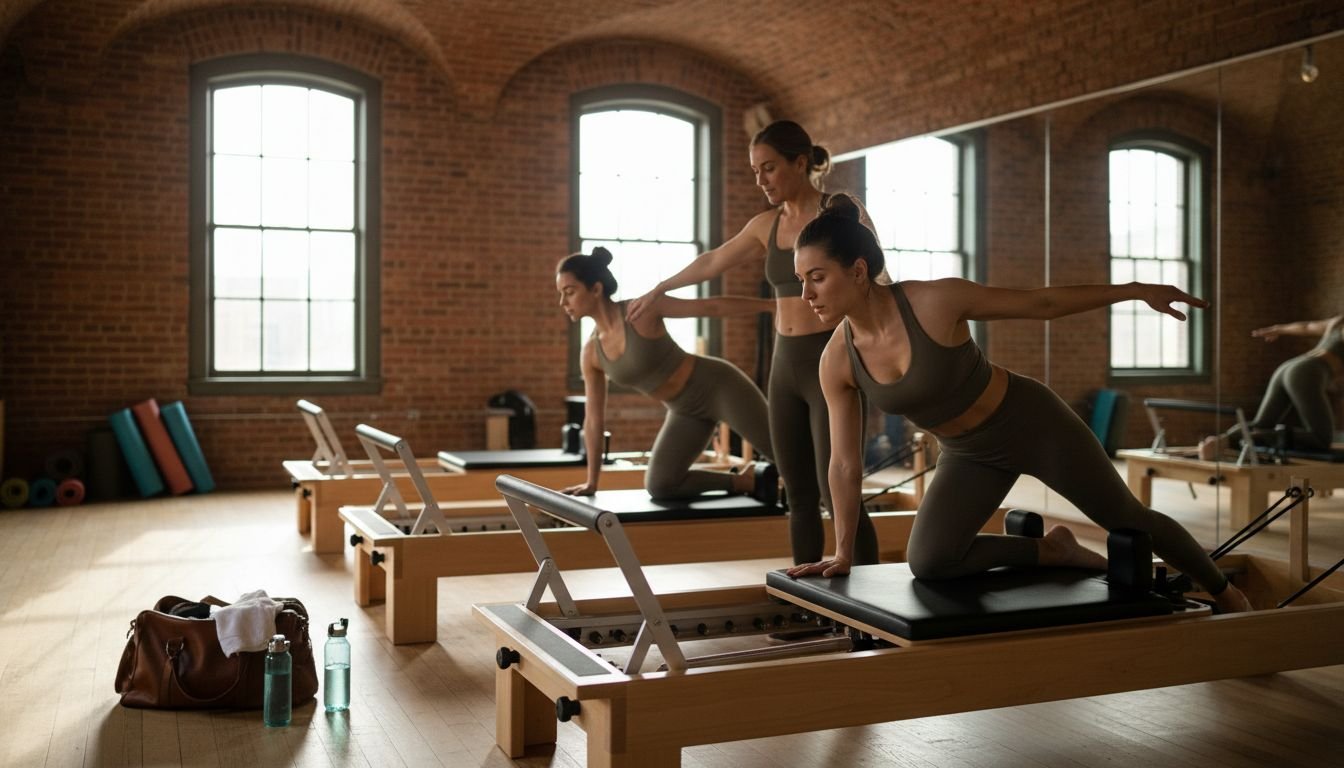
Reformer Pilates transforms traditional mat workouts through a specialized apparatus that adds resistance and precision to every movement. Unlike standard exercise routines, this method utilizes a sliding platform with adjustable spring tensions, enabling practitioners to perform exercises with enhanced control and targeted muscle engagement. Pilates reformer techniques challenge your body through dynamic resistance training that builds core strength while improving overall flexibility.
The machine itself consists of a movable carriage connected to springs and pulleys, which creates variable resistance levels suitable for all fitness abilities. These springs allow participants to modify difficulty by adjusting tension, making Reformer Pilates accessible for beginners and advanced athletes alike. Core mechanics involve maintaining body alignment while managing the carriage’s movement, which simultaneously strengthens stabilizing muscles and promotes muscular balance.
Contrary to popular misconceptions, Reformer Pilates is not exclusively for women or limited to gentle movements. Research demonstrates this practice offers comprehensive strength training suitable for all genders and fitness levels. The method challenges practitioners through precise, controlled movements that engage multiple muscle groups simultaneously. Key principles include:
Concentration on proper form and technique
Controlled breathing patterns
Precise muscle engagement
Full range of motion exercises
Low-impact muscle conditioning
By debunking myths and showcasing its versatility, Reformer Pilates emerges as a powerful full-body workout strategy that goes beyond traditional exercise paradigms. Whether you seek rehabilitation, athletic performance enhancement, or holistic fitness improvement, this method provides a scientifically designed approach to physical conditioning.
Types of Pilates Reformers and Accessories
Pilates reformer equipment represents a sophisticated fitness system designed to enhance strength, flexibility, and overall body conditioning. At its core, the reformer machine is a versatile apparatus featuring a sliding carriage, adjustable springs, and multiple attachment points that transform traditional exercise approaches. The standard reformer includes key components like a padded platform, adjustable tension springs, a movable carriage, foot bar, and integrated straps that enable a wide range of resistance-based movements.
The primary variations of Pilates reformers include studio-grade professional models, compact home versions, and specialized therapeutic designs. Professional models typically offer more robust construction, multiple spring tensions, and advanced adjustability for comprehensive training. Home reformers prioritize space efficiency and portability, often featuring foldable designs and lighter materials. Therapeutic reformers focus on rehabilitation, with gentler resistance and additional support mechanisms for individuals recovering from injuries or managing physical limitations.
Accessories play a crucial role in expanding reformer functionality and workout diversity. Essential complementary items include:
Non-slip grip socks for stability
Padded straps for comfortable hand and foot positioning
Cushioned mats for floor-based exercises
Resistance bands for additional tension variations
Foam rollers for muscle recovery and mobility work
Understanding the nuanced differences between reformer types and selecting appropriate accessories can significantly enhance your Pilates practice. Whether you are a fitness enthusiast, rehabilitation patient, or professional athlete, the right equipment can transform your workout experience and help you achieve targeted strength and flexibility goals.
How a Typical Reformer Pilates Session Works
Pilates reformer classes begin with a comprehensive warm-up designed to prepare the body for targeted movements and resistance training. Guided instruction forms the core of the session, where practitioners learn to synchronize breath with precise, controlled motions across the reformer’s sliding carriage. The instructor typically starts by helping participants adjust spring tensions, positioning, and alignment to match individual fitness levels and specific wellness goals.
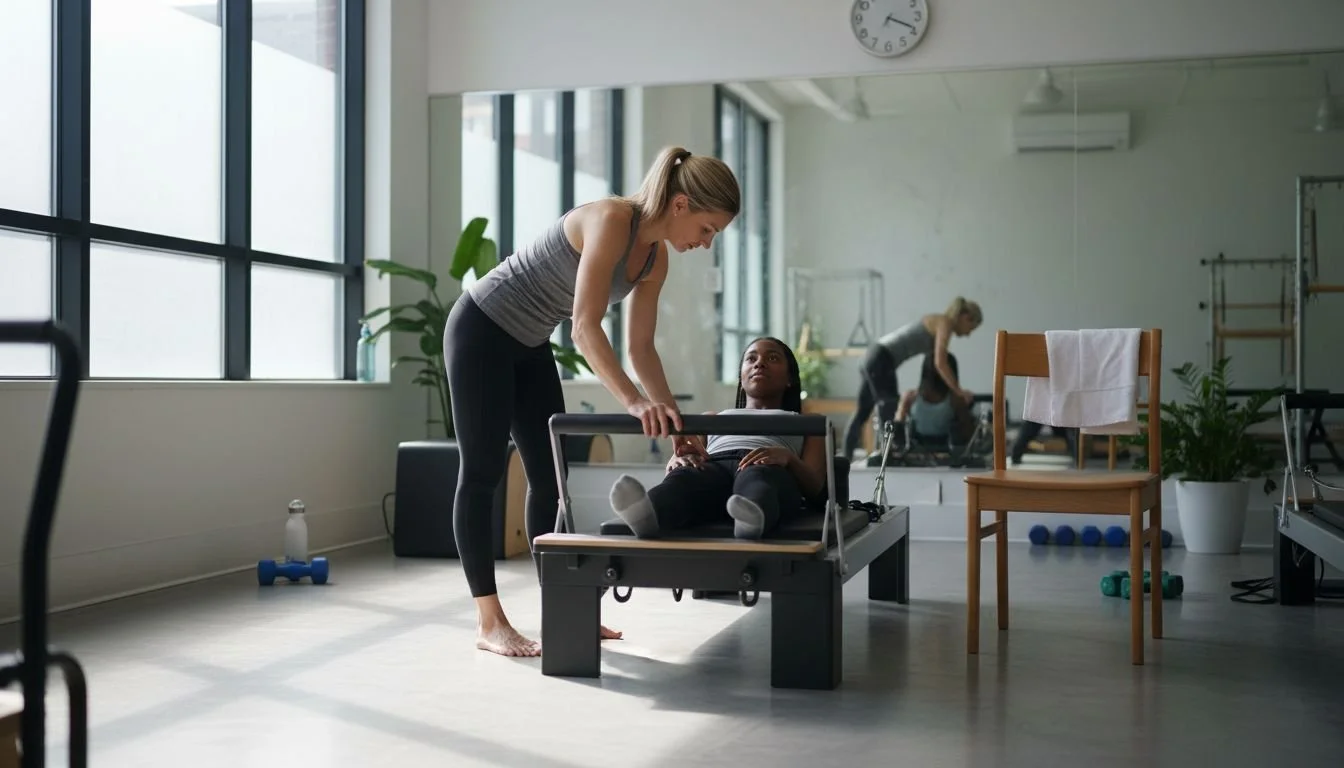
The session progresses through a structured sequence of exercises that challenge different muscle groups and movement patterns. Participants might experience a combination of supine, seated, and standing movements that leverage the reformer’s unique resistance mechanisms. Reformer Pilates workouts emphasize smooth, intentional transitions between exercises, focusing on maintaining core engagement and proper body mechanics throughout each movement.
Typical session components include:
Initial body alignment and tension setup
Dynamic full-body strengthening exercises
Targeted core engagement sequences
Balance and coordination challenges
Flexibility and mobility work
Cool-down and muscle recovery stretches
Instructors carefully modify exercises to accommodate varying fitness levels, ensuring that both beginners and advanced practitioners can benefit from the workout. The session concludes with a mindful cool-down that promotes muscle recovery, improves flexibility, and reinforces the mind-body connection fundamental to Pilates practice. Each workout represents a holistic approach to physical conditioning, combining strength, precision, and intentional movement to transform body mechanics and overall wellness.
Benefits for Flexibility, Core, and Posture
Reformer Pilates workouts fundamentally transform body mechanics by targeting core strength, flexibility, and postural alignment through strategic resistance training. Core engagement becomes the foundational principle of this practice, where practitioners learn to activate deep stabilizing muscles while performing precise, controlled movements on the reformer machine. The unique design of the equipment allows for targeted muscle recruitment that traditional strength training often overlooks, creating a comprehensive approach to physical conditioning.
The resistance mechanisms of the reformer create an environment where muscles are challenged through eccentric and concentric movements, promoting enhanced muscle elasticity and joint mobility. This approach differs significantly from standard weight training by emphasizing controlled, fluid motions that simultaneously stretch and strengthen muscle groups. Practitioners experience improved spinal alignment, reduced muscular imbalances, and increased overall body awareness through consistent practice.
Key benefits of Reformer Pilates include:
Enhanced core muscle strength and stability
Improved postural alignment
Increased full-body flexibility
Reduced risk of injury through balanced muscle development
Better movement efficiency and body mechanics
Enhanced mind-body connection
The holistic nature of Reformer Pilates extends beyond physical conditioning, offering practitioners a transformative approach to understanding body movement. By integrating precise techniques that challenge muscular endurance, balance, and control, individuals can develop a more integrated and responsive physical system that supports overall wellness and functional fitness.
Potential Risks and When to Avoid It
Reformer Pilates safety guidelines emphasize the importance of understanding individual health limitations before engaging in this dynamic workout. Medical clearance becomes crucial for practitioners with pre-existing conditions, as the resistance-based training can place significant demands on the body’s musculoskeletal and cardiovascular systems. While generally considered a low-impact exercise, certain health scenarios require careful evaluation and potential modification or avoidance of Reformer Pilates practices.
Individuals should exercise caution and potentially avoid Reformer Pilates if experiencing:
Recent surgical procedures
Uncontrolled hypertension
Acute joint injuries
Severe spinal conditions
Pregnancy without professional guidance
Chronic pain syndromes
Acute inflammatory conditions
Balance or vestibular disorders
Professional guidance is paramount when navigating potential risks. Certified Pilates instructors can provide personalized assessments, helping practitioners understand their individual limitations and develop safe, adaptive strategies. Modifications exist for most health conditions, allowing individuals to participate in modified routines that minimize strain while promoting overall wellness. Communication with healthcare providers and qualified Pilates professionals ensures a safe, effective approach to integrating this comprehensive training method into one’s fitness routine.
Reformer Pilates Versus Mat Pilates
Pilates practices demonstrate significant variation between reformer and mat methodologies, each offering unique advantages for practitioners. Equipment dynamics fundamentally distinguish these approaches, with reformer Pilates utilizing a specialized spring-loaded machine that provides adjustable resistance, while mat Pilates relies exclusively on body weight and gravitational forces. This key difference dramatically impacts the intensity, accessibility, and muscle engagement of each workout style.
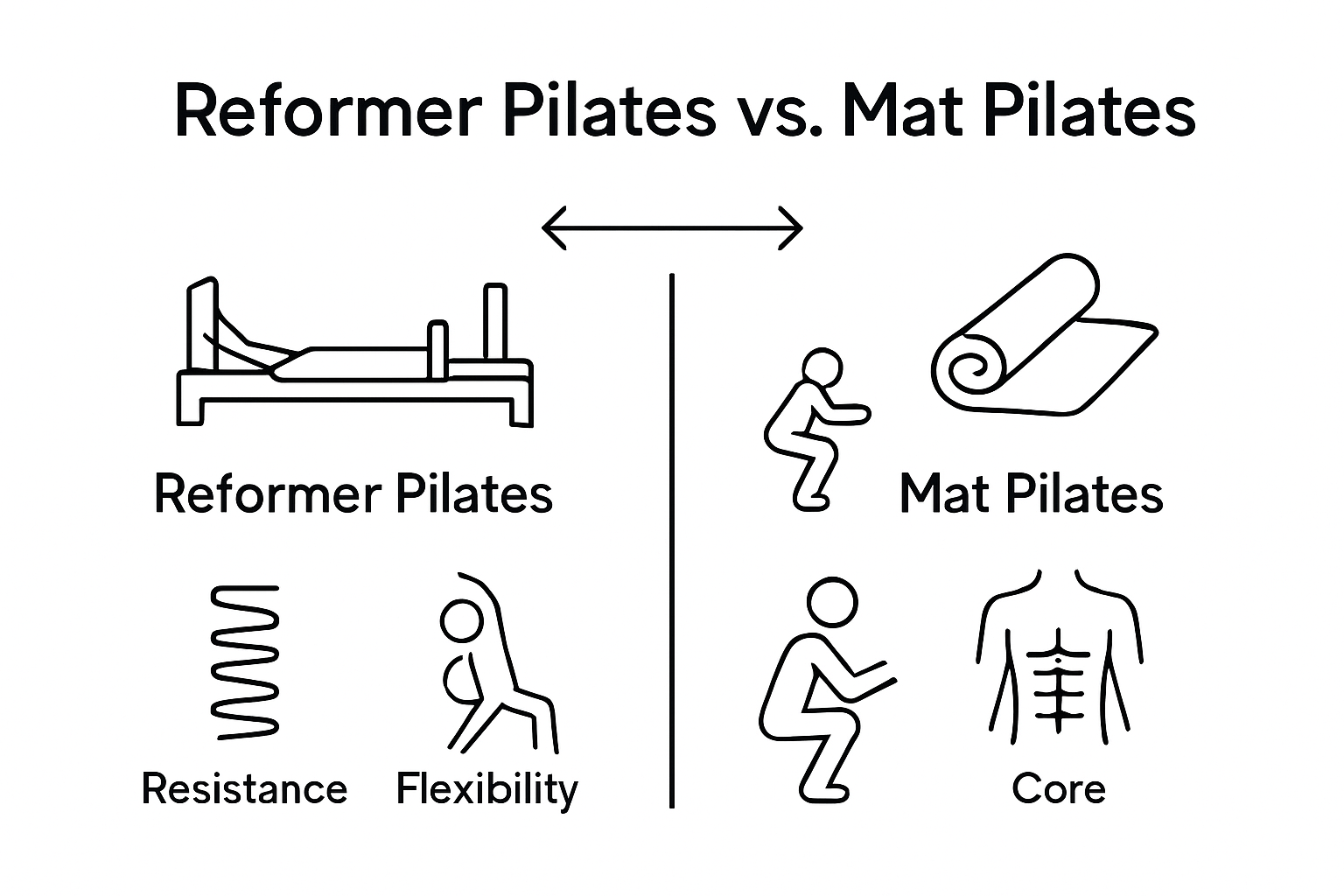
Reformer Pilates introduces external resistance through sophisticated spring mechanisms, allowing for more nuanced muscle recruitment and movement complexity. Mat Pilates, conversely, demands greater inherent core strength and stability since practitioners must generate all resistance internally. The reformer provides support and modification options that make certain challenging movements more approachable, particularly for beginners or individuals with limited mobility.
Key comparative aspects include:
Resistance mechanism
Reformer: Adjustable spring tension
Mat: Body weight and gravity
Accessibility
Reformer: More beginner-friendly modifications
Mat: Requires higher baseline strength
Muscle engagement
Reformer: Targeted, supported muscle activation
Mat: Comprehensive core and stabilization work
Equipment requirements
Reformer: Specialized machine needed
Mat: Minimal equipment necessary
Ultimately, both Pilates approaches offer comprehensive fitness benefits, with the choice depending on individual fitness goals, physical limitations, and personal preferences. Practitioners can effectively complement their fitness journey by incorporating elements from both reformer and mat Pilates, creating a holistic approach to strength, flexibility, and body awareness.
Unlock Your Full Potential with Reformer Pilates at Amrita Yoga & Wellness
If you are ready to enhance your core strength, improve flexibility, and achieve better posture through targeted resistance training then exploring Reformer Pilates classes is a powerful next step. This method addresses common challenges like muscular imbalances and limited mobility by focusing on precise muscle engagement and controlled movement designs specifically for lasting body transformation. Experience how the careful alignment and resistance of the reformer machine can build a stronger, more balanced you.
Join our welcoming community in Philadelphia at Amrita Yoga & Wellness where expert instructors tailor Reformer Pilates sessions to all fitness levels. Whether you are new or looking to deepen your practice, our class schedules and workshops provide flexible options to meet your wellness goals. Begin your journey today to reduce injury risk, enhance body awareness, and revitalize your physical and mental wellbeing. Visit our site now for details about our Reformer Pilates and other holistic practices designed to empower your health.
Frequently Asked Questions
What is Reformer Pilates?
Reformer Pilates is a specialized workout that uses a sliding apparatus to add resistance and precision to traditional Pilates movements, enhancing core strength and flexibility.
What are the core benefits of Reformer Pilates?
Reformer Pilates enhances core strength, improves postural alignment, increases flexibility, and reduces the risk of injury through balanced muscle development.
How does Reformer Pilates differ from Mat Pilates?
Reformer Pilates utilizes a machine with adjustable spring tension to provide external resistance, while Mat Pilates relies solely on body weight and gravity, requiring more inherent core stability.
Is Reformer Pilates suitable for beginners?
Yes, Reformer Pilates is accessible for beginners, as the specialized equipment allows for modifications to suit various fitness levels and helps maintain proper body mechanics.