Essential Hot Yoga Safety Tips for Injury-Free Practice

Over 35 percent of American hot yoga enthusiasts report skipping key safety steps before their first class. For health-conscious adults in Philadelphia, practicing hot yoga can boost wellness but ignoring hydration or injury risks may cut you short. This guide shares actionable strategies to help you prepare, practice, and recover safely so you can enjoy every sweaty session while protecting your body and peace of mind.
Table of Contents
Quick Summary
| Key Insight | Explanation |
|---|---|
| 1. Assess Your Physical Readiness | Evaluate your health conditions and fitness level before starting hot yoga. Consult a healthcare professional for personalized advice. |
| 2. Hydrate and Nourish Properly | Start hydrating well before class and eat a balanced meal after to recover effectively and maintain performance. |
| 3. Choose Appropriate Gear | Wear lightweight, moisture-wicking clothing and use a quality mat for better comfort and performance during yoga sessions. |
| 4. Adapt Movements for Safety | Modify poses based on your body’s signals to prevent injury and respect your physical limitations during practice. |
| 5. Monitor Well-Being During Class | Stay aware of your physical state by checking for signs of distress and take necessary breaks to maintain a safe practice. |
Step 1: Assess your physical readiness and health needs
Before stepping into a hot yoga studio, understanding your body's current condition is critical. Comprehensive health evaluations help determine whether hot yoga matches your wellness goals and physical capabilities.
Starting your hot yoga journey requires honest self reflection about your current fitness level, existing health conditions, and potential physical limitations. While hot yoga offers incredible benefits like increased flexibility and strength, individual health considerations are paramount. Consider consulting a healthcare professional who can provide personalized guidance based on your medical history. Important factors to assess include cardiovascular health, respiratory function, heat tolerance, hydration levels, and any chronic conditions that might impact your practice.
Your physical readiness checklist should include reviewing recent medical records, understanding any prior injuries, and recognizing your body's current stress and flexibility thresholds. Pay special attention to conditions like hypertension, respiratory issues, pregnancy, or recent surgeries that could make hot yoga challenging or potentially risky.
Expert Advice: Always listen to your body and progress gradually when exploring hot yoga practices.
Here's a quick summary of key physical considerations for hot yoga readiness:
| Health Factor | Why It Matters | Recommended Action |
|---|---|---|
| Cardiovascular | Increases heart workload | Consult a doctor if concerns arise |
| Respiratory | Hot air can challenge breathing | Assess asthma or allergies early |
| Heat Tolerance | Risk of overheating | Start slow and monitor reactions |
| Hydration Status | Critical for safe sweating | Pre-hydrate before class |
| Chronic Conditions | May impact exercise safety | Share relevant information with the instructor |
Step 2: Prepare your hydration and nutrition routine
Hydration and nutrition are your secret weapons for successfully navigating a hot yoga practice. Strategic fluid intake helps prevent heat illness and maintains peak performance during intense physical activity.
Your hydration strategy begins well before you step into the hot yoga studio. Experts recommend drinking 17-20 ounces of water a few hours before class, followed by 8 ounces 20-30 minutes prior to starting. During your practice, aim to consume 4-8 ounces of water every 15-20 minutes, adjusting based on the class intensity and your individual sweat rate. Focus on balanced nutrition that includes complex carbohydrates, lean proteins, and electrolyte rich foods to support your body's energy needs and recovery.
After class, prioritize replenishing fluids and nutrients. Drink water consistently, consume a small meal with protein and carbohydrates within 45 minutes of finishing, and consider adding electrolyte rich beverages to restore mineral balance lost through sweating.
Pro Tip: Prepare a hydration kit with a large water bottle, electrolyte supplements, and a small towel to keep yourself comfortable and well hydrated throughout your hot yoga experience.
Step 3: Select proper gear for hot yoga sessions
Choosing the right gear can make or break your hot yoga experience, transforming a potentially uncomfortable session into a comfortable and enjoyable practice. Appropriate clothing is essential for managing heat and maintaining comfort during intense yoga sessions.
Lightweight, moisture-wicking attire helps regulate body temperature and prevents skin irritation during hot yoga. Look for yoga pants and tops made from breathable, quick-drying fabrics that allow maximum movement and flexibility. Opt for fitted but not restrictive clothing that will stay in place during various poses. Your mat is equally important select a high quality mat with excellent grip to prevent slipping from increased perspiration. Consider investing in a specialized hot yoga towel that can be placed over your mat for additional traction and hygiene.

Accessorize wisely by bringing a large water bottle, extra towel for wiping sweat, and a change of clothes for after class. While you wont wear shoes during practice, having comfortable slip on shoes for before and after class can be helpful. Prioritize gear that supports your comfort and allows you to focus entirely on your practice.
Pro Tip: Bring a spare set of dry clothes and pack them in a sealed waterproof bag to ensure youre comfortable after an intense sweaty session.
Step 4: Adapt your movements to support safety
Successfully navigating hot yoga requires understanding how to modify your practice to prevent injury and respect your body's unique limitations. Yoga practice demands careful adaptation to individual capabilities to minimize potential risks.
Safe yoga movements involve recognizing your body's current flexibility and strength levelsand making intelligent modifications accordingly. Start by paying close attention to your body's signals during practice. If a pose feels uncomfortable or causes sharp pain, immediately modify or skip it. Use props like blocks, straps, or blankets to support your practice and provide additional stability. Focus on maintaining proper alignment rather than achieving the deepest possible stretch. In the heated environment of hot yoga, your muscles will feel more flexible, which increases the risk of overstretching. Move slowly, breathe deliberately, and prioritize controlled movements over extreme range of motion.
Remember that every yoga practice is personal. Some days you might feel strong and flexible, while other days you may need more gentle modifications. Learning to listen to your body and honor its current state is the most important skill in creating a sustainable and safe hot yoga practice.
Pro Tip: Practice each new pose near a wall or with an instructor nearby to ensure you can modify quickly if you lose balance or feel strain.
Step 5: Monitor your well-being during class
Navigating a hot yoga class requires constant awareness of your physical and mental state to ensure a safe and beneficial practice. Understanding the critical signs of potential overexertion is fundamental to maintaining your health during intense yoga sessions.
Monitoring your bodily signals involves staying alert to symptoms like dizziness, excessive fatigue, breathing difficulties, or sudden discomfort. Start by establishing a baseline awareness of your physical condition when entering the class. Pay attention to your breath rhythm, muscle tension, and overall energy levels. If you experience lightheadedness, stop moving and sit or lie down immediately. Position yourself near the door or a wall for quick access if you need to exit. Recognize that it is perfectly acceptable to take breaks, drink water, or modify poses when your body signals distress. The goal is not to push through pain but to maintain a balanced and mindful practice.
Develop a personal check in system where you pause briefly between poses to assess your comfort level. Some practitioners find it helpful to mentally scan their body from head to toe, noting any areas of tension or strain. Trust your intuition and understand that each yoga session is unique your body may respond differently depending on hydration, stress levels, and overall health.
Pro Tip: Create a personal code with your instructor beforehand using a discrete signal that indicates you need help or want to modify your practice.
Step 6: Evaluate recovery and adjust future practice
After completing a hot yoga session, understanding your body's response is crucial for developing a sustainable and safe practice. Post practice recovery involves carefully analyzing your physical and mental state to inform future yoga experiences.
Effective recovery evaluation requires a holistic approach that considers both physical sensations and overall wellness. Begin by performing a gentle body scan within 24 hours after your class, noting any muscle soreness, stiffness, or unusual fatigue. Pay attention to areas of potential strain or discomfort. Hydration and nutrition play significant roles in recovery track your fluid intake and consider how your diet might support muscle recovery and reduce inflammation. If you experienced challenges during the class like overheating, muscle tension, or balance issues, document these observations to help you modify future practices.
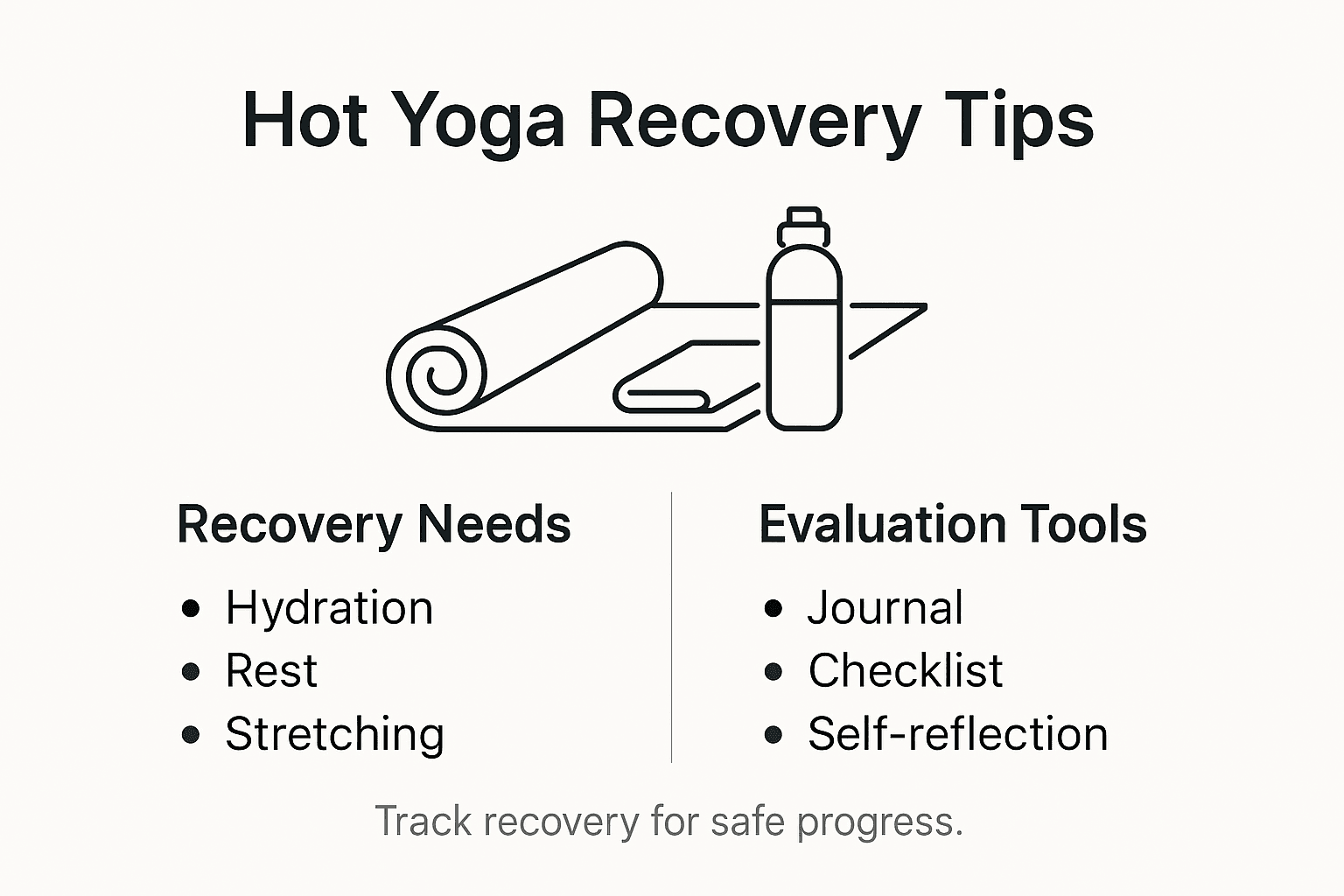
Treat your recovery process as a learning opportunity. Some days you might feel more resilient, while other times you may need gentler modifications. Communicate with your yoga instructor about your observations and seek personalized guidance on adjusting your approach. Remember that progress in yoga is not about pushing to extreme limits but about consistent, mindful practice that respects your body's current capabilities.
Pro Tip: Keep a short yoga journal to track your physical responses, helping you identify patterns and make informed adjustments to your practice.
Below is an overview of recovery strategies and their benefits after a hot yoga session:
| Recovery Strategy | Purpose | Tips for Best Results |
|---|---|---|
| Hydration | Replace fluids lost in sweat | Drink water and electrolytes |
| Nutrition | Restore energy and aid healing | Consume protein and carbohydrates |
| Gentle Body Scans | Detect soreness or strain | Check muscles within 24 hours |
| Journaling | Track progress and reactions | Record observations post class |
| Instructor Feedback | Personalize future practice | Discuss challenges or adjustments |
Stay Safe and Confident in Your Hot Yoga Journey with Amrita Yoga & Wellness
Navigating the challenges of hot yoga like hydration management, movement adaptations, and recovery can feel overwhelming. If you want to build your strength and flexibility while prioritizing safety, Amrita Yoga & Wellness offers supportive classes and expert guidance that align perfectly with essential hot yoga safety tips. From understanding your body's limits to selecting proper gear, our welcoming community in Philadelphia helps you honor your unique wellness needs.
Ready to embrace injury-free hot yoga practice today Explore diverse class options and personalized workshops designed to empower your safe progress at Amrita Yoga & Wellness. Take the first step toward mindful movement and lasting well-being by checking out our class schedules and offerings. Your safest, most rewarding hot yoga experience is just a click away.
Frequently Asked Questions
What should I assess before starting hot yoga?
Before starting hot yoga, assess your physical readiness by reflecting on your current fitness level, existing health conditions, and any possible limitations. Consider reviewing recent medical records and consulting a healthcare professional for personalized guidance.
How can I stay hydrated during a hot yoga class?
To stay hydrated during a hot yoga class, drink 17-20 ounces of water a few hours before practice and consume 4-8 ounces every 15-20 minutes during class. Start this hydration routine to ensure your body is well-prepared for the heat.
What type of clothing is best for hot yoga?
Wear lightweight, moisture-wicking clothing designed for quick-drying to maintain comfort during hot yoga. Choose fitted yet flexible attire that allows maximum movement, helping you focus on your practice without distractions.
How can I modify poses to ensure safety during hot yoga?
Modify poses by paying attention to your body’s signals and using props like blocks or straps for support. If any pose feels uncomfortable or painful, skip it or adjust the position to prevent injury and respect your body’s limits.
What signs indicate I should stop or take a break during hot yoga?
Signs that indicate you should stop or take a break include dizziness, excessive fatigue, or any breathing difficulties. Upon noticing these signals, position yourself near a wall and take a moment to rest and assess your condition.
How can I evaluate my recovery after a hot yoga session?
Evaluate your recovery by conducting a gentle body scan within 24 hours after your session, noting any soreness or unusual fatigue. Use this assessment to inform your future practice and adjust as needed for comfort and safety.