
Heated Yoga Weight Loss: What Actually Works

TL;DR:
Sweat from heated yoga does not equate to fat loss; it is primarily water weight that rehydrates easily.Consistent practice over months, combined with proper hydration and measurement, leads to meaningful body fat reduction.
Step into a heated yoga room for the first time and you will likely walk out soaking wet, feeling like you just ran a mile. That sensation makes heated yoga weight loss feel immediate and obvious. But what you see dripping off you is mostly water, not fat. The real story of how hot yoga changes your body is more interesting and more encouraging than the sweat myth suggests. This article covers the science, the safety, the timelines, and the practical steps that actually move the needle on body composition.
Table of Contents
Key takeaways
| Point | Details |
|---|---|
| Sweat does not equal fat loss | Immediate weight drop after class is water loss that returns after rehydration, not actual fat burned. |
| Heat raises your calorie burn | Rooms heated to 90-105°F increase heart rate and metabolic demand, pushing calorie expenditure higher than room-temperature yoga. |
| Fat loss takes consistent months | Research shows measurable body fat reduction after six months of regular practice, not days or weeks. |
| Hydration is non-negotiable | Managing fluids and electrolytes before, during, and after class determines both safety and performance. |
| Track smarter, not more often | Weekly average weight and waist measurements reveal real progress better than daily scale readings. |
How heated yoga drives weight loss
Walk into most hot yoga studios and the thermostat sits somewhere between 90 and 105°F. That temperature range is not arbitrary. Heat forces your cardiovascular system to work harder just to regulate core body temperature, which means your heart rate climbs even before you hold a single pose. You are essentially stacking a thermal challenge on top of a physical one.
That added demand translates directly to calories. Some studies put hot yoga calorie burn around 500 per session, though the actual number depends heavily on your body weight, effort level, and the class style. What matters more than the exact number is understanding why the heat contributes: it increases perceived effort, pushes metabolic rate up, and forces sustained muscle engagement longer than many people could manage in a cooler room.
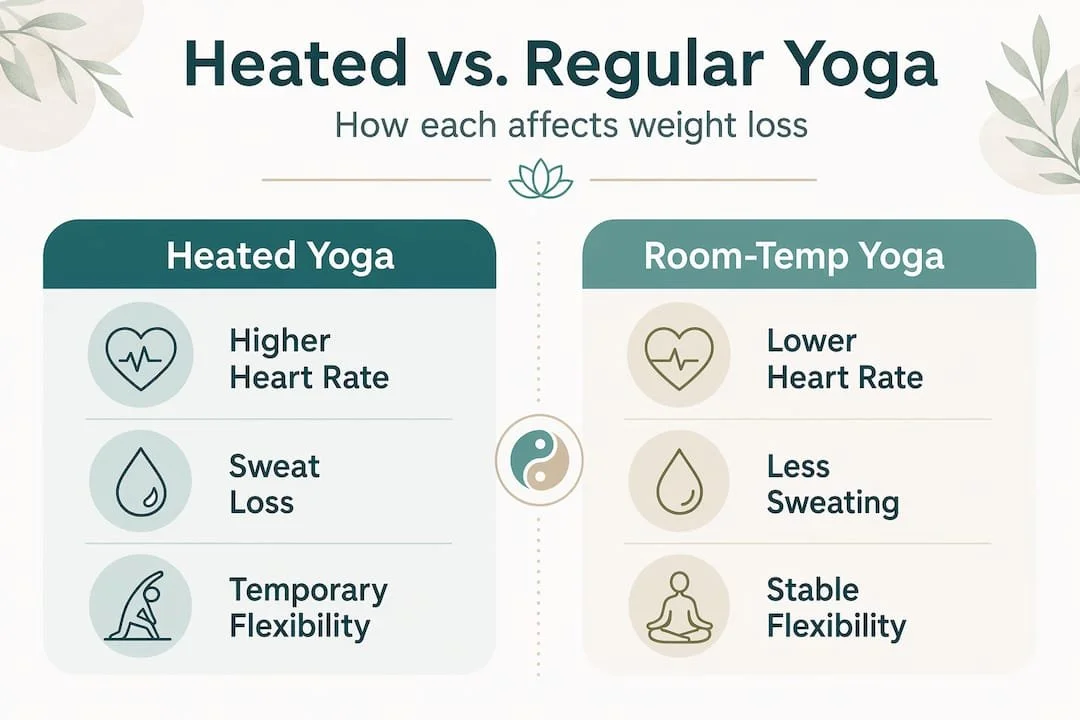
Here is how heated yoga compares to unheated yoga on a few key measures:
| Factor | Heated yoga | Room-temperature yoga |
|---|---|---|
| Average heart rate | Moderately elevated (cardio range) | Lower, closer to active rest |
| Calorie burn per 60 min | 350–500+ calories (individual variation) | 200–350 calories |
| Perceived effort | Significantly higher | Moderate |
| Flexibility access | Temporarily improved by heat | Baseline range of motion |
| Recovery demand | Higher, needs more hydration | Standard post-exercise recovery |
Heat also gives you a temporary edge in flexibility. Warm muscles move more freely, which lets you hold poses deeper and engage stabilizing muscles that a stiff body skips. That added muscle recruitment is where the real metabolic benefit hides. More muscle engagement means more calories burned, and over months, more lean muscle retained or built.
Pro Tip: Do not confuse the temporary flexibility heat gives you with permanent range of motion improvement. According to controlled progression research, heat increases short-term mobility but sustainable flexibility comes from consistent practice and recovery, not the heat alone.
What the science says about actual fat loss
Here is the number that matters most for anyone serious about hot yoga and weight loss: a six-month Bikram yoga study on adult women found a 6.17% reduction in body fat percentage, which cleared clinical thresholds for meaningful health benefits. That is not a rounding error. That is a real, measurable change in body composition across all adult age groups studied.
Longer-term research backs this up. A one-year study tracking regular hot yoga practitioners showed progressive decreases in body fat that continued building over time. The pattern is clear: short bursts of hot yoga do almost nothing for fat loss. Months of consistent practice do a lot.
Why does this take so long? Because actual fat loss is a function of sustained calorie deficit combined with metabolic adaptation. Hot yoga contributes to that deficit each session, but weight loss is multifactorial. The heat raises physiological stress, improved muscle mass from regular poses increases resting metabolism, and many practitioners naturally shift toward healthier eating once they commit to a consistent practice. All three levers work together.
The scale reading right after class tells you almost nothing useful. That two-pound drop you see is water weight that comes back the moment you rehydrate. Sweating volume is a poor indicator of calorie burn. Fat loss requires a consistent calorie deficit and metabolic change, not just producing sweat. The good news is that heated yoga, practiced regularly, creates both.

Beyond body composition, the benefits extend further: reduced stress hormones, better cardiovascular stamina, and improved sleep all contribute to the conditions your body needs to lose fat and keep it off. Those are not bonus features. They are part of why consistent practitioners tend to see results that casual exercisers miss.
Safety and hydration for heated yoga practice
Heated yoga benefits only show up when you stay healthy enough to practice consistently. Heat illness is real, and it catches people who underestimate how much fluid the body loses in a 90-minute class in a 105-degree room. Knowing the warning signs and having a hydration plan is not optional.
Watch for these signals that your body is struggling with the heat:
Dizziness or lightheadedness during poses
Nausea or sudden headache mid-class
Stopping sweating when you were previously sweating heavily (a warning sign, not relief)
Muscle cramps, particularly in the legs or feet
Feeling confused or unusually fatigued
If any of these show up, stop, sit or lie down, and drink water slowly. Pushing through heat exhaustion symptoms is how a productive practice becomes a medical problem.
On the hydration side, the strategy is straightforward but often skipped. Drink 16 to 20 ounces of water two hours before class. Sip small amounts during class rather than gulping large quantities. After class, replace fluids and electrolytes because heavy sweating depletes sodium, potassium, and magnesium, not just water. A pinch of sea salt in your post-class water or a quality electrolyte drink handles this without needing supplements.
Equipment matters more than most beginners expect. A non-slip mat with a full-length towel covering it prevents you from sliding in your own sweat, which protects both your alignment and your safety. Wear minimal, moisture-wicking clothing.
Pro Tip: If you are new to heated yoga classes, plan to spend your first two or three sessions simply getting used to the heat. Skip the most intense poses and focus on breathing. Gradual heat exposure with self-awareness maximizes both safety and effectiveness far better than going all-in on day one.
Tracking progress that actually reflects fat loss
The scale after a hot yoga class is almost designed to mislead you. You step on it, see a lower number, feel great, eat a normal meal, and watch it climb back. That cycle creates false momentum and false disappointment in the same week. Understanding why daily scale changes reflect water, not fat, is the first step to tracking progress that actually motivates you.
Use these metrics instead:
Weekly average weight: Weigh yourself on the same days each week and average the readings. This smooths out water fluctuations and shows the real trend line.
Waist and hip measurements: Fat loss shows up in your measurements weeks before it changes your scale number significantly. Measure at the same time of day weekly.
Clothing fit: How your clothes feel around the waist and thighs is a reliable, zero-cost indicator of body composition change.
Endurance and strength gains: If you can hold poses longer, go deeper, or recover faster between classes, your body is adapting. That adaptation supports fat loss even when the scale stalls.
Energy and mood: Better sleep quality and reduced afternoon energy crashes are signs your metabolism and stress hormones are improving.
Consistency matters more than any single metric. Four to five heated yoga sessions per week, paired with adequate protein and a slight calorie deficit, is where the research-backed results appear. This is not a two-week experiment. Give it twelve weeks before you decide whether it is working.
Choosing the right heated yoga style for your goals
Not all heated yoga is the same, and picking the wrong format for your current fitness level is one of the fastest ways to burn out or get hurt.
Bikram yoga is the most structured option. Every class follows the same 26-pose sequence in a room heated to exactly 105°F with 40% humidity and runs 90 minutes. The consistency makes it easy to track your progress pose by pose. Bikram for weight loss works well for people who like predictability and respond to structured challenge. The intensity is front-loaded for beginners but manageable once you adapt.
Other hot yoga formats run at slightly lower temperatures, typically 90 to 100°F, with more varied sequences. Classes range from 60 to 75 minutes, which lowers the total calorie burn per session but also reduces recovery demand. These formats suit people who want the heated yoga benefits of increased heart rate and calorie expenditure without the strict structure of Bikram.
Flow-based heated yoga, such as hot vinyasa, adds continuous movement between poses. This style burns the most calories per minute of all heated yoga options because you rarely hold a static position long enough for your heart rate to drop. If bikram yoga and weight loss is your primary goal, starting with hot vinyasa or heated power yoga often produces faster early results before transitioning to Bikram for long-term refinement.
For people new to yoga entirely, a beginner heated class or a lower-temperature format is the smart starting point. The goal in the first month is adaptation, not maximum calorie burn.
My honest take on heated yoga for weight loss
I have watched people step into hot yoga with enormous enthusiasm and step out three weeks later completely disillusioned. The pattern is almost always the same: they expected the sweat to be the mechanism, not the symptom.
In my experience, the practitioners who get lasting results from heated yoga share one trait: they stop trying to feel the work and start measuring it. They track weekly averages. They notice when their waistband loosens. They pay attention to how they recover, not just how much they sweat. That shift in mindset, from chasing the sensation to trusting the process, is where sustainable results begin.
What I have also seen is that the biggest threat to long-term success is overexertion in the first month. People push too hard, get dehydrated, feel awful for two days, and skip class. Then the two-day skip becomes a week. Gradual progression with proper hydration is not the cautious choice. It is the aggressive choice, because it keeps you on the mat consistently.
The combination that actually works: three to four heated sessions per week, a protein-adequate diet, and a commitment to measuring the right things. Everything else is noise. Bikram hot yoga weight loss results in the research did not come from heroic individual sessions. They came from showing up regularly over months.
— Juiced
Try heated yoga at Amrita Yoga & Wellness

If you are ready to put this into practice, Amrita Yoga & Wellness in Philadelphia offers heated yoga classes designed for every level, from first-timers still figuring out the heat to experienced practitioners chasing measurable body composition goals. The studio's approach emphasizes safety, community, and the kind of consistent practice that produces the fat-loss results the research supports.
Beyond the mat, Amrita Yoga & Wellness offers tarot readings and holistic wellness services that many practitioners find complement their physical practice by reducing stress and supporting the mental clarity that makes staying consistent easier. Managing stress is not a soft benefit. Lower cortisol directly supports fat loss. Explore the full class schedule and wellness offerings at Amrita Yoga & Wellness and find the format that fits where you are right now.
FAQ
Does hot yoga actually burn enough calories to lose weight?
Hot yoga can burn around 500 calories per session depending on your weight and effort level, which is enough to contribute meaningfully to a calorie deficit when practiced consistently three to five times per week.
How long before heated yoga shows real fat loss results?
Research shows measurable fat loss after approximately six months of regular practice. A six-month Bikram study found over 6% reduction in body fat percentage in adult women with consistent attendance.
Is the weight I lose immediately after hot yoga real fat loss?
No. The weight you lose right after class is primarily water lost through sweating. It returns after rehydration and does not reflect actual fat burned during the session.
Is Bikram yoga better for weight loss than other hot yoga styles?
Bikram's 90-minute sessions at 105°F deliver high calorie expenditure and structure that supports long-term progress tracking, but hot vinyasa and flow-based formats burn more calories per minute. The best style is the one you will attend consistently.
What is the biggest risk of doing heated yoga for weight loss?
Dehydration and heat illness are the primary risks. Following a hydration plan before, during, and after class, including electrolyte replacement, and progressing gradually eliminates most of the risk for healthy adults.