The Amrita Journal
Explore thoughtful stories, practical wellness guidance and inspiring ideas to support your movement, mindfulness and everyday wellbeing at Amrita.
Explore 6 types of mindfulness meditation for clarity
TL;DR:
Different mindfulness practices suit specific goals like stress reduction or focus enhancement.Short, consistent sessions of 5 to 20 minutes can effectively improve mindfulness.Combining practices such as focused attention, open monitoring, and loving-kindness fosters lasting growth.
Walking into the world of mindfulness meditation for the first time feels a lot like standing in front of a menu with fifty options. You know you want something good, but the sheer variety makes it hard to know where to start. Focused attention? Loving-kindness? Body scan? Open monitoring? Each practice promises stress relief, mental clarity, and personal growth, but not all of them work the same way or deliver the same results. This guide cuts through the confusion by comparing six key mindfulness meditation types, helping you match the right approach to your actual goals so you can stop guessing and start practicing with purpose.
Table of Contents
Key Takeaways
| Point | Details |
|---|---|
| Match meditation to goals | Each mindfulness type offers unique benefits, so choose based on your top wellness priorities. |
| Short practices work | Even brief daily meditations can significantly lower stress and increase clarity. |
| Acceptance cultivates resilience | Practices that include non-judgment are especially powerful for long-term emotional health. |
| Mixing methods is powerful | Drawing on different types of mindfulness sustains results and keeps your routine engaging. |
How to evaluate mindfulness meditation practices
Before you commit to any single style, it helps to understand what makes each practice distinct. Choosing based on a friend's recommendation or a trending app might get you started, but it rarely keeps you going. The better move is to evaluate each form against your personal goals and daily reality.
The most important thing to know is that mindfulness definitions vary widely, covering attention training, acceptance, compassion, and even ethical development. That means two people who both say they "do mindfulness" might be practicing in completely different ways, with completely different outcomes. Once you understand this, evaluating your options becomes a lot clearer.
Here are the core criteria worth considering when you assess any practice:
Goal alignment: Are you trying to reduce anxiety, sharpen focus, build self-compassion, or manage chronic pain? Different forms target different outcomes.
Ease of entry: Some practices can be done anywhere with zero guidance. Others benefit from a teacher, especially early on.
Time commitment: Practices range from five minutes of breathing to hour-long guided body scans. Know what you can realistically sustain.
Physical requirements: Seated meditation works for many people, but if sitting still is difficult, movement-based options may serve you better.
Guidance needed: Apps and recordings work well for attention practices. Compassion and ethics-based forms often go deeper with a live instructor or community.
Getting clear on these mindfulness practice basics before you start saves you weeks of trial and error.
Pro Tip: Test any new meditation style for at least five to seven sessions before deciding if it works for you. First sessions are almost always awkward, and your brain needs a little repetition before the benefits become noticeable.
Focused attention meditation: Training your mind
With those criteria in mind, let's start with focused attention meditation, probably the most widely practiced form and often the first one people try.
The core technique is simple. You pick one object to focus on, typically the breath, a mantra, or a single point of visual focus, and you keep returning your attention to it whenever your mind wanders. That act of noticing the wander and returning is actually the whole practice. Every redirect is a small mental rep, and over time those reps build real concentration.
The benefits are well documented. Attention-based practices boost focus and help people manage distractions far more effectively in daily life. For busy Philadelphia adults juggling work, commutes, and packed schedules, this form of meditation offers a practical mental reset that carries over into everything else you do.
Common challenges include:
Mind wandering: Completely normal. The practice is not about having zero thoughts. It is about noticing them and coming back.
Restlessness: Sitting still feels unnatural at first. Shorter sessions of five to ten minutes help build tolerance.
Boredom: Many people abandon focused attention practice because it feels too simple. Stick with it. The simplicity is the point.
Frustration: Expecting instant calm actually creates more tension. Lower the expectation, and the results show up faster.
"Even five minutes of daily focused attention practice can produce measurable increases in state mindfulness. The practice does not need to be long to be effective."
The best way to explore mindfulness meditation techniques like focused attention is to start short and consistent rather than long and occasional. A ten-minute daily practice beats a forty-five-minute session twice a week every time.
Open monitoring meditation: Embracing awareness
While focused attention builds concentration, open monitoring offers a different path toward mindful living. Instead of anchoring attention on one thing, open monitoring asks you to observe whatever arises in your awareness, thoughts, sensations, emotions, sounds, without labeling, judging, or chasing any of it.

Think of it like sitting on a park bench in Philadelphia and watching people walk by. You notice them. You do not chase them down or push them away. You just watch. That is exactly what open monitoring feels like once you get the hang of it.
This approach is especially powerful for breaking negative thought cycles. When you practice observing thoughts without reacting to them, the automatic grip those thoughts have over your mood and behavior starts to loosen. Acceptance-based practices show moderate efficacy for stress and pain, with acceptance and non-judgment emerging as stronger predictors of improvement than meditation frequency alone.
Key benefits of open monitoring practice:
Builds emotional resilience over time rather than just temporary calm
Reduces reactivity in difficult conversations and stressful situations
Supports pain management by changing your relationship to discomfort rather than fighting it
Develops genuine self-awareness and a cleaner understanding of your own patterns
Open monitoring is also excellent for mindfulness for stress relief because it teaches you to tolerate uncertainty and discomfort without needing to immediately fix or escape it. That is a skill with applications in every area of life.
Pro Tip: During open monitoring, try noticing each thought or sensation and silently acknowledging "there it is" without further commentary. This tiny shift interrupts the habit of immediately evaluating everything as good or bad.
Other key forms: Loving-kindness, body scan, and movement meditation
Beyond attention and monitoring, several other types support holistic wellness outcomes. Mindfulness as a family of practices extends well past attention or acceptance into compassion, body awareness, and ethical development. Here are three forms worth knowing.
Loving-kindness meditation (Metta): This practice involves silently repeating phrases of goodwill directed at yourself and then gradually expanding outward to others. Phrases like "May I be well. May I be happy. May you be free from suffering." might sound simple, but they actively rewire how the brain generates social emotions over time. People who practice loving-kindness consistently report greater warmth, fewer feelings of isolation, and a more forgiving relationship with themselves. This makes it especially valuable for anyone dealing with chronic self-criticism or burnout.
Body scan meditation: You move your awareness slowly through each part of the body, noticing sensation without trying to change it. A body scan paired with MBSR (Mindfulness-Based Stress Reduction) is one of the most researched combinations for managing chronic pain and physical tension. It improves interoception, meaning your ability to accurately read your own body's signals, which is fundamental for stress awareness and regulation.
Mindful movement meditation: This form integrates awareness into physical activity, including yoga, walking, tai chi, and qigong. Instead of zoning out during exercise, you tune in to your breath, your body's position, and the sensations of movement. For people who find seated meditation frustrating or inaccessible, mantra meditation and movement practices offer an entry point that feels less restrictive and more sustainable.
Pro Tip: If seated meditation consistently feels like a struggle, start with ten minutes of mindful walking before attempting seated practice. The physical movement settles the nervous system and makes stillness easier to access.
Comparison table: Which mindfulness meditation style fits you?
Now, to help you decide, here is a side-by-side comparison of the key mindfulness meditation forms. Research shows that 8-week MBSR programs produce large reductions in stress, while even brief daily practices prove effective for improving moment-to-moment mindfulness. Both approaches have a real place in your wellness toolkit.
| Practice | Description | Best for | Suggested session length |
|---|---|---|---|
| Focused attention | Anchor awareness on breath, mantra, or object | Beginners, focus improvement | 5 to 20 minutes |
| Open monitoring | Observe thoughts and sensations without judgment | Stress resilience, emotional regulation | 10 to 30 minutes |
| Loving-kindness | Cultivate compassion toward self and others | Self-compassion, social connection | 10 to 20 minutes |
| Body scan | Systematic awareness of body sensations | Chronic pain, sleep, tension relief | 20 to 45 minutes |
| Mindful movement | Awareness integrated into yoga, walking, tai chi | Active learners, beginners to sitting | 15 to 45 minutes |
| MBSR program | Structured 8-week curriculum combining multiple forms | Clinically significant stress or pain | 45 to 60 minutes |
Before committing to one practice, run through these decision questions:
Do you want immediate calm or long-term emotional resilience?
Are you managing a specific condition like chronic pain or anxiety?
Do you prefer structure or open-ended exploration?
How much time can you genuinely commit each day?
Does physical movement help you focus or distract you?
You can also explore a full breakdown in this guide on 7 types of meditation practices for holistic wellness, or check out practical stress reduction mindfulness tips to complement whatever style you choose.
One more thing worth knowing: blending practices is not only allowed, it is often ideal. Body scan pairs naturally with open monitoring. Loving-kindness works beautifully as an addition to focused attention. You do not have to choose just one and stay there forever.
Why mixing methods beats choosing just one
Here is something most meditation guides will not tell you: rigid loyalty to a single practice style can actually cap your growth. We have watched practitioners in Philadelphia spend years perfecting focused attention only to hit a ceiling, not because the practice failed them, but because they never introduced the acceptance and compassion dimensions that create lasting change.
The research backs this up. Acceptance skills sustain benefits more powerfully than sitting frequency alone. That means someone who practices open monitoring twice a week often outperforms someone doing focused attention daily, especially for long-term stress outcomes.
The most effective approach we have seen is a rotating or layered method. You might start a session with five minutes of focused attention to settle the mind, shift into open monitoring for ten minutes to build awareness, and then close with two minutes of loving-kindness. That progression mirrors the natural arc of a well-supported nervous system.
Exploring meditation typesover time also prevents the staleness that causes people to abandon practice altogether. Your needs shift. What you needed at 30 is different from what serves you at 45. Give yourself permission to evolve. The goal is not a perfect meditation resume. It is a life that gradually feels cleaner, calmer, and more intentional.
Ready to start your mindfulness journey?
Finding the right meditation style is one thing. Having a supportive community to practice with makes the whole experience easier, more consistent, and honestly more enjoyable.
At Amrita Yoga & Wellness, we offer a full range of classes and workshops right here in Philadelphia, from yoga and tai chi to guided meditation and even mindful tarot readings for those who want to explore their inner world from a different angle. Whether you are brand new to mindfulness or looking to deepen an existing practice, our studio is designed to meet you wherever you are. Come explore what fits, and let the community support your growth every step of the way.
Frequently asked questions
Which type of mindfulness meditation is best for reducing stress?
MBSR and acceptance-based practices are among the most effective for lowering stress over time, with acceptance and non-judgment proving especially important for sustaining those benefits.
Can short daily mindfulness sessions have an impact?
Yes. Brief 5 to 20 minute sessions produce measurable increases in state mindfulness and mood, making even a short daily commitment well worth your time.
What's the difference between focused attention and open monitoring?
Focused attention trains your mind to concentrate on a single anchor like the breath, while open monitoring means observing thoughts and feelings without judgment or attachment to any of them.
How do I choose the right form of mindfulness meditation?
Start by identifying your main goal, whether that is stress relief, better focus, self-compassion, or physical wellness, then try two or three styles for at least a week each to see what genuinely resonates with your daily life.
Recommended
Step-by-Step Mindfulness: Practical Guidance for Everyday Calm
TL;DR:
Mindfulness can be practiced anywhere, even with busy schedules and city noise.Consistent, small daily practices build emotional resilience and reduce stress effectively.Community involvement and flexible routines are key to sustaining mindfulness long-term.
Philadelphia moves fast. The rumble of the Market-Frankford line, back-to-back meetings, crowded sidewalks in Center City, and the endless pull of your phone can leave your nervous system running on overdrive by noon. The good news is that mindfulness, practiced consistently and without perfection, can interrupt that cycle. This guide is built for real Philadelphians with real schedules. You will learn exactly what to do, when to do it, and how to keep going even on the days when calm feels completely out of reach.
Table of Contents
Key Takeaways
| Point | Details |
|---|---|
| Start small and stay consistent | Short, regular mindfulness practices make a real difference in stress reduction. |
| Local adaptation matters | Integrating mindfulness into your Philadelphia routine is easier with community resources and context-specific strategies. |
| Notice and return | The heart of mindfulness is gently noticing when your mind wanders and returning your attention, not achieving perfect focus. |
| Expect measurable benefits | Most individuals notice lower stress and emotional improvement within a few weeks of steady mindfulness exercises. |
What you need to begin your mindfulness journey
Mindfulness is the practice of paying deliberate, non-judgmental attention to your present-moment experience. That is the whole definition. It does not require a silent room, a meditation cushion, or any special equipment. What it does require is a willingness to show up, even imperfectly.
People often assume they need perfect conditions to start. They do not. You can practice on a SEPTA bus, during a lunch break in Clark Park, or sitting at your kitchen table before the rest of the household wakes up. The setting matters far less than the intention.
Here is a short list of helpful (but optional) materials to support your practice:
A timer or meditation app (Insight Timer and Calm are free or low-cost)
A journal for brief post-practice reflections
A comfortable chair or floor cushion
Noise-canceling earbuds if you find city noise distracting at first
A simple daily checklist to track consistency
For those looking for a structured start, the MBSR program (Mindfulness-Based Stress Reduction) is an 8-week course developed by Jon Kabat-Zinn that includes weekly sessions of 2 to 2.5 hours, daily 45 to 60 minute home practice, and one all-day retreat. That is a serious commitment, but knowing this helps set realistic expectations. You do not need to start there. Most beginners do well with just 5 to 15 minutes a day.
Pro Tip: Pair your mindfulness practice with an existing habit, like morning coffee or your commute home. "Habit stacking" makes it easier to stay consistent without carving out a brand new block of time.
| Commitment level | Time per day | What to expect |
|---|---|---|
| Beginner | 5 to 10 minutes | Reduced acute stress, better focus |
| Intermediate | 15 to 30 minutes | Mood improvements, less reactivity |
| Structured (MBSR) | 45 to 60 minutes | Sustained emotional and cognitive gains |
For ongoing inspiration and mindfulness practice tips that fit a busy lifestyle, our blog is a solid starting point.
Mindfulness step by step: Core practices explained
Now that you know what to expect, here are the four foundational practices used in evidence-based mindfulness programs. These core practices include the body scan, sitting meditation, mindful movement, and mindful tasks.
Body scan. Lie down or sit comfortably. Starting at your feet, slowly move your attention up through your body, noticing sensations without trying to change them. Spend about 20 to 45 minutes. This trains your nervous system to detect tension before it builds into pain or anxiety.
Sitting meditation. Sit upright with your spine tall but not rigid. Focus your attention on the physical sensation of breathing. When your mind drifts (and it will), gently return attention to your breath. Start with 5 minutes and build from there.
Mindful movement. This includes slow yoga, tai chi, or even a deliberate walk. The goal is to connect physical movement with present-moment awareness. Pay attention to how your body feels in motion, not where you are going or what is next on your list.
Mindful tasks. Pick one daily activity, washing dishes, brushing your teeth, or eating lunch, and give it your full attention. Notice textures, temperatures, and sounds. This is one of the most underrated practices because it requires zero extra time.
"The goal is not to stop your thoughts. The goal is to stop letting your thoughts stop you." Returning your attention is the practice, not preventing distraction.
A meta-analysis of mindfulness interventions confirms that these practices robustly and sustainably reduce perceived stress across diverse populations. This is not anecdotal. The evidence base is strong.
| Practice | Time needed | Best for |
|---|---|---|
| Body scan | 20 to 45 minutes | Physical tension, sleep issues |
| Sitting meditation | 5 to 20 minutes | Mental clarity, focus |
| Mindful movement | 10 to 30 minutes | Anxiety, low energy |
| Mindful tasks | 0 extra minutes | Beginners, time-pressed people |
For a broader look at examples of mindfulness practices and how they support your health, we have a full breakdown on the blog.
You can also browse mindfulness exercises organized by category.
Integrating mindfulness into daily life in Philadelphia
Knowing the steps is one thing. Building them into a real Philadelphia day is another. The city does not pause for your meditation timer. So the strategy is to bring mindfulness to where your life already is.
Here are practical micro-practices that fit into urban rhythms:
Morning body scan (5 minutes). Before you check your phone, do a brief scan from head to toe while still in bed. Notice what feels tight or alert. This sets a grounded tone before the noise begins.
Mindful commute. On the subway or bus, put your phone away for two stops. Notice the sounds, the weight of your bag, the feeling of your feet on the floor. No special effort required.
Lunch reset. Step outside or away from your desk. Eat one meal a week with no screen. Focus on flavor, temperature, and pace. A 10-minute reset improves afternoon concentration significantly.
Evening reflection. Before sleep, write two or three sentences in a journal. What did you notice today? What felt heavy? What helped? This brief ritual builds emotional clarity over time.
Pro Tip: Research suggests that nearly half of waking hours are spent with attention drifting away from what we are actually doing. Mindfulness is not about eliminating that drift. It is about noticing it faster and returning with less drama each time.
Philadelphia has real local resources to support your routine. A structured mindfulness workflow built around morning scans, mindful walking, and evening reflection can anchor your week without overwhelming it. For more ideas, our guide to mindfulness activities for everyday life is packed with approaches tested in real urban settings. You can also find targeted reduce stress tips tailored to busy schedules.
Troubleshooting and common mistakes: Stay on track
Even people who love their practice hit rough patches. Here is what usually goes wrong and how to handle it.
The biggest barriers most people face:
"I do not have time." This usually means practice has not been linked to an existing routine yet. Five minutes counts. Do not wait for a longer window.
"I am not doing it right." There is no perfect mindfulness session. If you are noticing your experience, you are doing it right.
"It is not working." Progress is subtle. You may not feel calmer during practice but notice you snapped at fewer people that week. That is the work showing up.
"I keep forgetting." Use a phone reminder labeled with something motivating, not just "meditate." Try "two minutes for yourself" instead.
The mechanics of mindfulness prioritize consistency over duration. Every time you notice your mind has wandered and you bring it back, that moment is the practice succeeding. Not failing.
Pro Tip: When you miss a day or a week, do not restart from scratch mentally. Just do your next session. Treat it like skipping the gym, you go back without a guilt spiral. Consistency over time matters far more than perfection on any single day.
For a full set of mindfulness tips to stay consistent without burning out, check out that dedicated guide. If you find yourself consistently struggling, that is a good signal to join a group or work with a teacher. Shared accountability changes everything.
Measuring results: How mindfulness changes your well-being
Change from mindfulness is often quiet. You do not wake up one morning enlightened. Instead, you notice things: you paused before reacting, you slept a little better, the afternoon anxiety was lighter than usual.
Here are clear markers to watch for:
Shorter emotional recovery time after stressful events
Increased ability to focus on one thing at a time
Improved quality of sleep or easier time falling asleep
Reduced physical symptoms of stress (tight shoulders, shallow breathing, headaches)
Greater ease in difficult conversations
A meta-analysis of 17 RCTs confirms that mindfulness interventions reduce perceived stress post-intervention, with effects that are both robust and sustained over time. This is not a short-term mood boost. It is neurological and behavioral change.
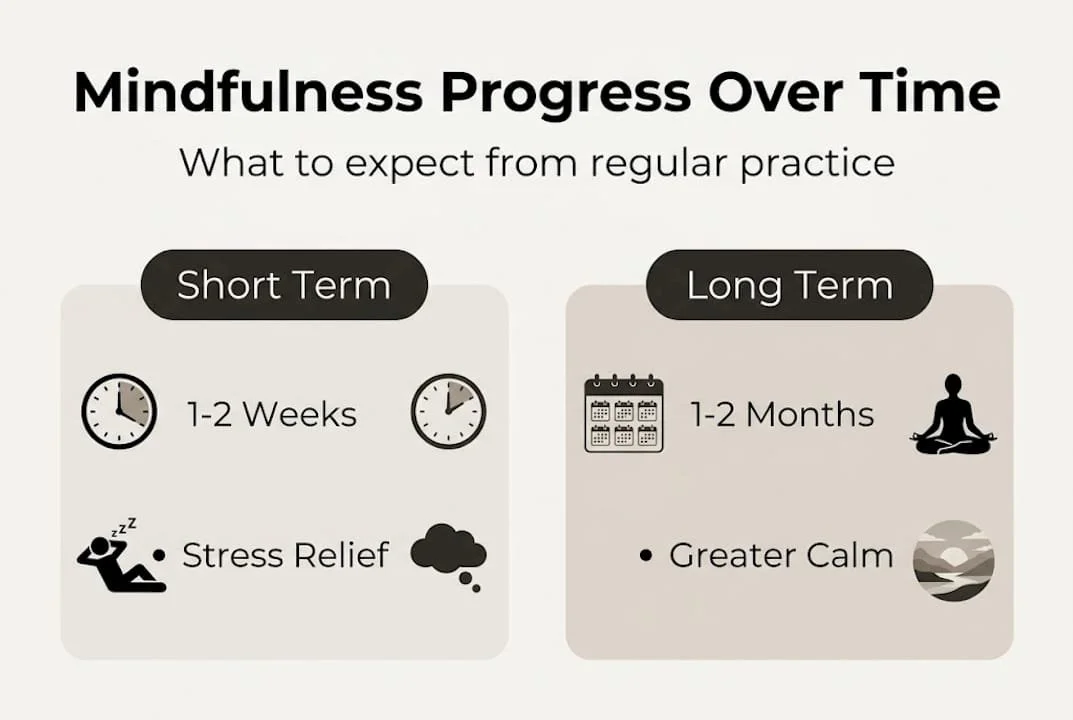
| Timeframe | What you may notice |
|---|---|
| Week 1 to 2 | Mild reduction in acute stress, more awareness of tension |
| Week 3 to 4 | Improved focus, slightly better sleep |
| Week 5 to 8 | Mood stability, less reactive to daily frustrations |
| Beyond 8 weeks | Sustained emotional resilience, richer relationships |
The simplest tracking tool is a five-second daily check-in. Rate your stress level from 1 to 10 each morning in a notebook. Over weeks, patterns emerge. For more on mindfulness activities that improve well-being, our blog has practical examples organized by experience level.
The truth most mindfulness guides skip: Sustainable change comes from small, local steps and community
Most mindfulness content sets you up for a subtle failure. It presents the practice as a solo pursuit measured by how long you can sit still or how perfectly you follow a program. That framing backfires, especially in a city where life is unpredictable and mental real estate is scarce.
What we have seen at Amrita Yoga & Wellness is that the people who stick with mindfulness are not the ones who meditate flawlessly. They are the ones who keep showing up, often in community with others. Group classes, shared accountability, and even knowing a neighbor is doing the same thing creates a different kind of motivation than willpower alone.
Perfectionism is the enemy of practice. A rigid mindset around "doing mindfulness correctly" produces more anxiety, not less. The moment you treat a wandering mind as a failure, you have missed the whole point. Returning to focus, awkwardly and imperfectly, is the entire skill.
Small local steps taken consistently and supported by real community are the most reliable path to lasting change. Exploring mindfulness workflow insights within a community setting accelerates what solo practice often stalls.
Take your next step: Mindfulness support and resources in Philadelphia
If this guide has you ready to go deeper, you do not have to figure it out alone.
At Amrita Yoga & Wellness, we offer classes, workshops, and community gatherings designed to support exactly the kind of grounded, consistent mindfulness practice this guide describes. Whether you are brand new or looking to build on an existing routine, our Philadelphia studio has options that meet you where you are. From group yoga and tai chi sessions to specialized workshops, including explore tarot readings for deeper self-reflection, we bring together practices that support your whole emotional life. Come practice with people who get it.
Frequently asked questions
How long does it take to see results from mindfulness practice?
Most people notice increased calm or reduced stress within a few weeks of consistent daily practice. Research confirms these effects are robust and tend to last well beyond the initial practice period.
What should I do if my mind keeps wandering during meditation?
Gently bring your focus back each time. Mind wandering is normal, and noticing it is part of the practice. Studies show nearly 47% of attention drifts during waking hours, so returning your focus is the actual skill being built.
Can I practice mindfulness if I only have a few minutes each day?
Yes. Short, consistent practices like a 5-minute morning scan are highly effective for busy people. The mechanics of consistency matter more than session length, especially for beginners.
Are there local mindfulness resources in Philadelphia?
Yes. Philadelphia has multiple options including the Philadelphia Meditation Center, Penn Medicine programs, and Amrita Yoga Philly, each offering structured support for building a consistent practice.
Recommended
Build a mindfulness workflow for daily clarity in 2026
TL;DR:
A daily mindfulness workflow builds mental clarity through small, repeated practices linked to routines.Tools like timers, journals, and local Philadelphia resources help establish and sustain the practice.Consistency, community, and simplicity are key to long-term benefits and overcoming common challenges.
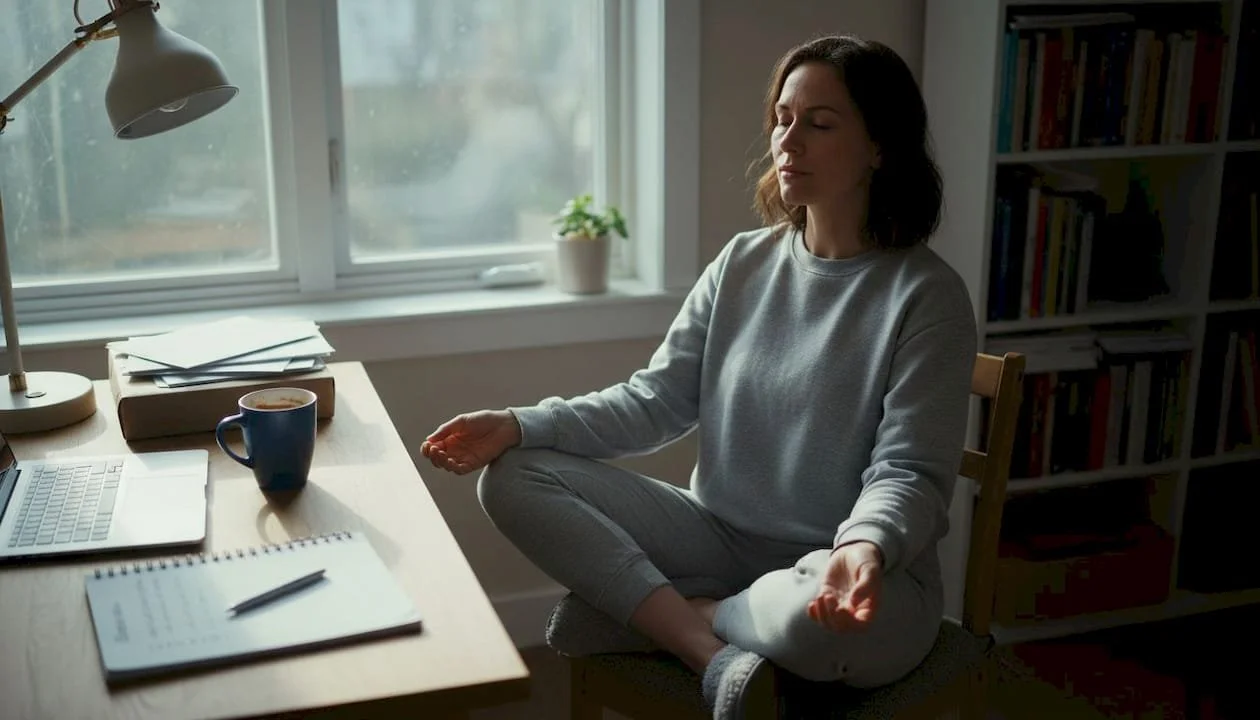
Philadelphia moves fast. Between the commute, the inbox, and the noise of city life, mental clarity can feel like something that only happens on vacation. But a structured mindfulness workflow, meaning a repeatable sequence of small, intentional practices woven into your day, makes calm and focus accessible every single morning, not just when you finally get a break. Micro-practices like mindful breathing and body scans are the building blocks of this kind of workflow. This guide walks you through every stage: what a workflow is, how to set one up, and where to find Philadelphia-specific support along the way.
Table of Contents
Key Takeaways
PointDetailsSmall steps matterStarting with just 5–10 minutes a day can significantly reduce stress and improve focus.Stack habitsPairing mindfulness with existing routines increases your chance for lasting success.Community supportPhiladelphia offers many local resources—joining a group boosts motivation and well-being.Personalize the workflowAdapt your practices and timing to fit your personality and daily schedule for best results.
Understanding the mindfulness workflow
Mindfulness is simply the practice of paying attention to the present moment without judging what you find there. That sounds easy, but in practice it means noticing your thoughts, feelings, and physical sensations as they happen, rather than getting swept away by them. A mindfulness workflow takes that principle and turns it into a daily structure, so the practice becomes a habit rather than a good intention.
Workflows work because they rely on repetition and triggers. When you attach a mindfulness practice to something you already do, like brewing your morning coffee or sitting down at your desk, the habit stacks onto an existing routine. Habit stacking into routines like this maximizes long-term adherence far better than willpower alone. You can explore mindfulness practice basics to understand how these principles apply across different styles.
The science behind this is solid. Mindfulness-based interventions reduce perceived stress by a standardized mean difference of 0.53 in non-clinical adults, which is a meaningful, real-world shift. Beyond stress, consistent practice improves mood, sharpens emotional regulation, and builds resilience over time.
Even five to ten minutes of daily mindfulness practice produces measurable improvements in focus and emotional balance. You do not need an hour on a cushion to feel a difference.
Here is a quick look at the core elements that make up a solid daily workflow:
| Workflow element | Purpose | Recommended duration |
|---|---|---|
| Morning intention | Sets mental direction for the day | 1 to 2 minutes |
| Breath focus | Anchors attention, reduces reactivity | 3 to 5 minutes |
| Body scan | Releases physical tension | 5 to 10 minutes |
| Mindful transition | Resets focus between tasks | 1 minute |
| Evening reflection | Consolidates learning, promotes rest | 3 to 5 minutes |
You can also draw inspiration from mindfulness activities to keep the workflow fresh and personally relevant.
What you need: Preparation and tools
Good news: the barrier to entry is low. You do not need a dedicated meditation room or expensive gear. What you do need is intention, a few simple tools, and the right mindset.
Essential tools to get started:
A timer (your phone works perfectly)
A small notebook or journal for brief reflections
A quiet corner, a set of headphones, or both
A meditation app if you prefer guided sessions (Insight Timer and Calm are popular free options)
A consistent trigger moment in your existing schedule
The mindset prerequisites matter just as much as the tools:
Openness: Be willing to sit with discomfort without immediately fixing it
Patience: Progress is gradual and not always linear
Non-judgment: Treat wandering thoughts as normal, not as failure
Flexibility: Adapt the workflow to your life, not the other way around
Here is how personal tools compare to local class-based support:
| Option | Best for | Key benefit | Limitation |
|---|---|---|---|
| App or journal | Solo, flexible schedules | Low cost, always available | Easy to skip without accountability |
| In-person class | Community learners | Guided instruction, social support | Fixed schedule, travel required |
| Local workshop | Beginners or deepeners | Structured curriculum, expert access | One-time or short-term |
| Therapy-integrated | Anxiety or trauma history | Clinical support alongside practice | Requires referral or cost |
Philadelphia has genuinely strong local options. Barnes Foundation art-mindfulness workshops, Chenrezig Tibetan Buddhist Center weekly meditations, Penn Memory Center classes, be mindphl at the YMCA, and MPower Wellness therapy are all accessible resources for adults at different stages. Check out practical mindfulness tips and reduce stress resources for more guidance on pairing tools with technique.

Pro Tip: Your daily commute is prime mindfulness real estate. Instead of scrolling, try one minute of slow nasal breathing before you get off the train or bus. Stacking this onto a routine you already have makes it far easier to sustain.
Step-by-step guide: Building your daily mindfulness workflow
Now that you have your tools and a supportive environment, it is time to build the actual workflow. Think of this as designing a personal system, not copying someone else's routine.
Steps to design and launch your workflow:
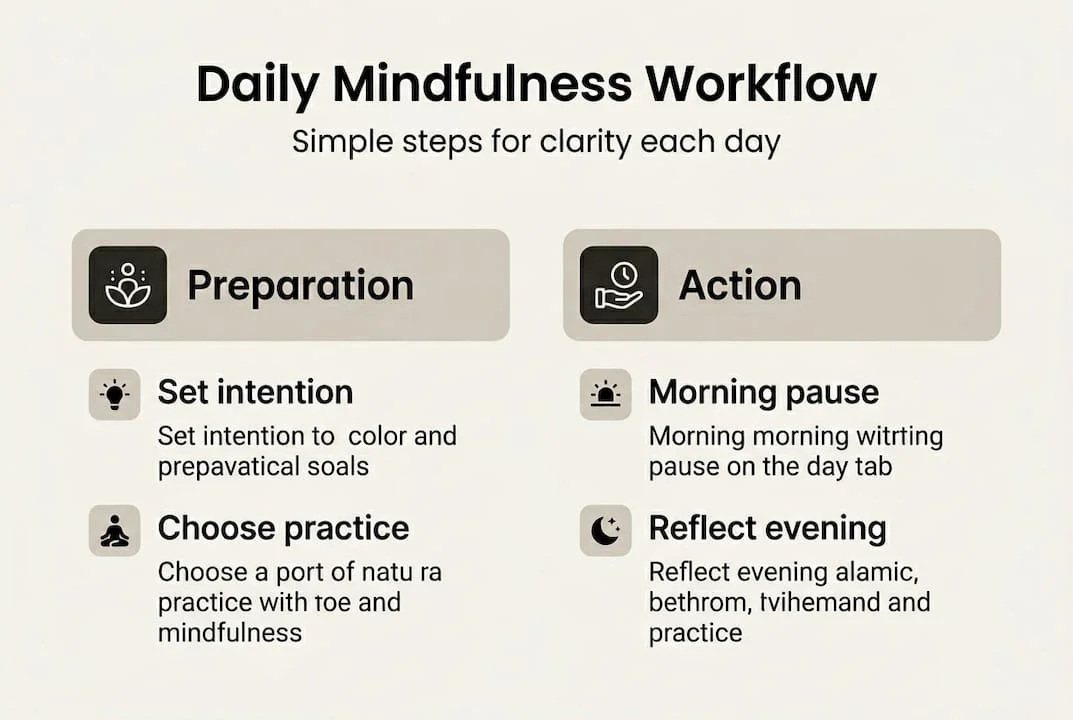
Set a clear intention. Decide what you want from the practice. Better focus? Less reactivity? Improved sleep? A specific intention keeps you motivated when novelty wears off.
Choose one anchor practice. Pick a single technique to start, such as a five-minute breath focus. Mindful breathing, body scans, and single-tasking are all strong starting points for busy adults.
Identify your trigger moments. Attach your practice to an existing habit: after brushing your teeth, before your first meeting, or during your lunch break. Triggers remove the need for daily decision-making.
Schedule it. Put it in your calendar like any other appointment. Even a two-minute block counts.
Track your experience briefly. After each session, write one sentence about how you felt. This builds self-awareness and shows you patterns over time. Use mindfulness workflow tips to refine your approach as you go.
Review weekly. Every Sunday, spend two minutes asking: What worked? What felt forced? Adjust accordingly.
Popular practices for busy Philadelphians (all under five minutes):
Box breathing: inhale four counts, hold four, exhale four, hold four
Progressive body scan: mentally check in from head to toe
Mindful eating: one meal per day without screens
Mindful walking: notice three physical sensations on your next walk
As little as 5 to 10 minutes dailyproduces measurable benefits in short-term studies, with the eight-week MBSR (Mindfulness-Based Stress Reduction) program serving as the gold standard for deeper transformation. You can explorestructured meditation techniquesandmindfulness exercise ideasto expand your toolkit over time.
Pro Tip: Start with just one practice for two full weeks before adding another. Layering too quickly leads to overwhelm and dropout. Simplicity is a feature, not a flaw.
Common challenges and troubleshooting
Starting a mindfulness workflow is the easy part. Sticking with it when life gets loud is where most people struggle. Knowing the common obstacles ahead of time gives you a real advantage.
Common workflow obstacles:
Motivation loss: The novelty fades after week two. This is normal. Return to your original intention.
Time pressure: A two-minute practice still counts. Do not let perfect be the enemy of present.
Boredom: Rotate practices or try a new format like a guided session or a local class.
Emotional discomfort: Sometimes sitting quietly surfaces difficult feelings. This is not a sign to stop, but it is a sign to go slowly.
Perfectionism: Missing a day does not erase your progress. Self-kindness is part of the practice.
Mindfulness is not universally safe or appropriate for every person in every situation. Some individuals, particularly those with unprocessed trauma or severe anxiety, may need additional support before or during practice.
Shorter practices work betterfor individuals with low agreeableness, and potential adverse effects like increased anxiety can occur when mindfulness is practiced without complementary skills. Pairing it with self-compassion training or Internal Family Systems (IFS) therapy significantly improves outcomes for those who find solo practice difficult.
Mindfulness is also necessary but not a stand-alone solution for overall well-being. Its efficacy depends on the quality of the meditation and the surrounding psychoeducation. If you feel stuck or distressed after several weeks, consider working with a therapist who integrates mindfulness rather than pushing through alone. Find local stress reduction with mindfulness resources to support your journey.
When you do miss days, treat it as data, not failure. Ask what made it hard and adjust the trigger or the duration. Consistency over months matters far more than perfection over a single week.
A fresh perspective on mindfulness workflows
Most guides tell you that more practice equals more benefit. We think that framing quietly sets people up to quit. The real power of a mindfulness workflow is not in its length or complexity. It is in its reliability. A two-minute breath practice you actually do every day beats a forty-minute session you do twice a month.
Here is what we have seen working with Philadelphia practitioners: the people who sustain long-term mindfulness gains are almost never the ones who meditate the longest. They are the ones who practice in community. Group settings create gentle accountability, shared language, and a sense of belonging that solo apps simply cannot replicate. Philadelphia's local resources are genuinely underused by most adults who could benefit from them.
The other thing worth saying plainly: clarity and emotional well-being do not come from adding more to your day. They come from doing less, more intentionally. A workflow built on three small, consistent practices will outperform a packed routine that collapses under pressure. Simplicity is not a beginner's compromise. It is the advanced move.
Take your next step: Support for your mindfulness journey
Building a workflow on your own is a powerful start. But sometimes the right environment or guide accelerates everything. At Amrita Yoga & Wellness in Philadelphia, we offer services designed to complement and deepen your daily practice in ways that solo routines often cannot.
If you are looking for reflective support, tarot sessions for reflection offer a structured way to explore your inner landscape. For physical relaxation that supports mental clarity, acupuncture for relaxation pairs beautifully with breathwork and body scan practices. Browse all of our wellness options to find what fits your current stage. Your workflow does not have to be a solo project.
Frequently asked questions
How quickly can I see results from a mindfulness practice workflow?
Most adults experience reduced stress and better focus within one to two weeks of consistent daily practice. Short-term studies show benefits with as little as five to ten minutes per day.
What if I can't meditate every day—does my workflow still work?
Yes, even irregular practice provides real benefits. Focus on gentle consistency and lean on micro-practices like mindful breathing and single-tasking when a full session is not possible.
Are there risks to starting mindfulness if I have anxiety or trauma?
Some individuals may notice increased anxiety without complementary skills, so pairing mindfulness with self-compassion practices or professional support is strongly recommended if you have a trauma or anxiety history.
Which local resources in Philadelphia support mindfulness beginners?
The Barnes Foundation workshops, Chenrezig Tibetan Buddhist Center, Penn Memory Center, be mindphl at the YMCA, and MPower Wellness all offer accessible entry points for adults new to mindfulness.
Recommended

Mindfulness activities for adults: easy ways to reduce stress

Finding time for mindfulness when you're juggling work, commutes, and everything else Philadelphia life throws at you feels nearly impossible. But stress and anxiety reduction are well within reach through short, evidence-based practices that fit real schedules. This guide walks you through how to pick the right mindfulness activity for your personality and lifestyle, gives you a practical menu of exercises you can try today, highlights local Philadelphia resources, and compares which activities work best for stress, sleep, and mood. No hour-long meditation retreats required.
Table of Contents
Key Takeaways
| Point | Details |
|---|---|
| Personalize your approach | Choose mindfulness activities that suit your personality, routine, and comfort for lasting benefits. |
| Short breaks work | Even brief practices like mindful breathing or sensory check-ins reduce stress and boost mood. |
| Use local resources | Philadelphia offers free and affordable group mindfulness options to support your practice. |
| Consistency beats perfection | Regular, small efforts give more results than aiming for long, perfect sessions. |
How to choose the right mindfulness activity for you
Not every mindfulness activity works for every person. The good news is that a simple three-part framework can help you find your fit fast.
Start with these three criteria:
Time commitment: Can you spare 5 minutes or 20? Short practices work well for most adults, but knowing your realistic window prevents you from setting yourself up to quit.
Preferred setting: Do you recharge alone or with others? Some people thrive in group classes; others need the privacy of solo practice at home or during a lunch break.
Personal comfort: Are you drawn to movement, stillness, breathing, or sensory awareness? Your natural preferences predict whether you'll stick with a practice long enough to see results.
Personalization matters more than most guides admit. Research on mindfulness and individual differences shows that factors like ADHD, trauma history, and personality traits affect which approach delivers the best results. For example, people with ADHD often do better with movement-based practices or shorter sessions paired with self-compassion strategies. Those recovering from trauma may need a gentler body scan approach rather than intense breath focus.
One of the most effective strategies for busy Philadelphians is habit stacking, which means attaching a new mindfulness practice to something you already do every day. Pair a two-minute breathing exercise with your morning coffee, or try a body scan right after you sit down at your desk. This removes the friction of carving out separate time.
Explore more mindfulness tips to find approaches that match your lifestyle and goals.
Pro Tip: Sample three different activities for one week each, then commit to your two favorites. Variety at the start prevents early burnout and helps you discover what genuinely resonates.
Top practical mindfulness activities for everyday life
Now that you know how to choose, here is a practical menu of mindfulness practice options you can start today. Each one is backed by research and designed to fit a busy schedule.
Mindful breathing (2 to 5 minutes): Sit comfortably, close your eyes, and focus entirely on the sensation of each breath. When your mind wanders, gently return your attention to the breath. That's it. Simple and immediately calming.
Body scan (5 to 10 minutes): Starting at your feet, slowly move your attention up through each part of your body, noticing tension without trying to fix it. This is especially effective for mindfulness for stress relief before bed.
Five senses exercise (under 3 minutes): Name five things you can see, four you can hear, three you can touch, two you can smell, and one you can taste. This grounds you instantly in the present moment.
Mindful eating (any meal): Eat one meal or snack without screens. Notice the texture, temperature, and flavor of each bite. This practice also supports healthier eating habits as a bonus.
Mindful walking (5 to 15 minutes): On your next walk around the block or through Rittenhouse Square, pay attention to the feeling of each step, the sounds around you, and the air on your skin.
"Micro-pauses, like washing your hands slowly or taking three deep breaths before a meeting, count as real mindfulness practice and add up over the course of a day." This insight from practical mindfulness examples reframes what 'practice' actually means.
These mindfulness tips for stress work because they lower cortisol and activate your parasympathetic nervous system, which is your body's built-in calm response. According to Kaiser Permanente's mindfulness guide, activities like mindful breathing, body scans, and sensory check-ins are among the most accessible and effective options for adults.
Pro Tip: Keep a sticky note at your desk that says "3 breaths." Every time you see it, take three slow, deliberate breaths. This micro-mindfulness habit takes under 30 seconds and genuinely shifts your mental state.
Philadelphia-specific mindfulness resources you can access
Once you have a few activities in your toolkit, connecting with local resources can deepen your practice and keep you consistent. Community settings add accountability that solo practice sometimes lacks.
Here are some accessible Philadelphia options:
Roxborough YMCA: Offers group mindfulness and meditation classes on a sliding scale, making it accessible regardless of budget.
Penn Memory Center: Provides free mindfulness programming, particularly for older adults and caregivers.
Barnes Foundation: Hosts art-based mindfulness sessions. Their equanimity for spring series blends visual art with present-moment awareness in a genuinely unique format.
Be MindPhl: A community initiative offering free and low-cost mindfulness events across Philadelphia neighborhoods.
| Resource | Format | Cost | Schedule |
|---|---|---|---|
| Roxborough YMCA | In-person group | Sliding scale | Weekly |
| Penn Memory Center | In-person/online | Free | Monthly |
| Barnes Foundation | In-person workshop | Varies | Seasonal |
| Be Mindful | Community events | Free | Ongoing |
| Amrita Yoga & Wellness | Classes and workshops | Membership/drop-in | Weekly |
Group settings work because they create social accountability. When you know others are showing up, you're more likely to follow through. Research on group mindfulness resources confirms that community-based practice supports long-term consistency better than solo efforts alone.
For a broader look at what's available, the Philadelphia wellness resources at Amrita Yoga & Wellness include everything from yoga and tai chi to massage therapy. You can also check out this Philadelphia yoga class guide or explore diverse yoga options Philadelphia residents are using to support their mental well-being.
Comparing mindfulness activities: which is best for stress, sleep, and mood?
Not all mindfulness activities are equally effective for every goal. Here is how the most common practices stack up based on current research.
| Activity | Stress relief | Mood boost | Sleep support |
|---|---|---|---|
| Mindful breathing | High | Moderate | Moderate |
| Body scan | Moderate | Moderate | High |
| Five senses exercise | High | High | Low |
| Mindful eating | Low | Moderate | Low |
| Mindful walking | High | High | Moderate |
| Structured MBI program | Very high | High | High |
The numbers behind these ratings are meaningful. A major meta-analysis on MBIs found that mindfulness-based interventions reduce perceived stress with a standardized mean difference of negative 0.53 post-intervention. That is a clinically significant effect. The same research found that people who practiced daily for just 10 minutes experienced 42% greater anxiety reduction compared to less frequent practitioners.
A digital mindfulness RCT also found that brief, habitual daily practice performed comparably to structured group programs for reducing psychological distress, which is a significant finding for anyone who cannot commit to a weekly class.
Key takeaways based on the research:
For stress, mindful breathing and walking deliver the fastest relief with the least time investment.
For sleep, the body scan is your best bet, especially practiced in bed before sleep.
For mood, the five senses exercise and mindful walking both score high because they combine movement or sensory engagement with present-moment focus.
For overall well-being, combining brief daily practices with occasional structured sessions gives you the best of both worlds.
Check out more on mindfulness for stress management to dig deeper into which approaches fit your specific goals.
Why mindful micro-moments beat perfection and what most guides miss
Here is something most mindfulness guides won't tell you: the obsession with "doing it right" is one of the biggest barriers to actually benefiting from mindfulness. We see this constantly in Philadelphia, where driven, busy adults set ambitious goals, miss a few days, and then abandon the practice entirely.
The research is clear. Brief, habitual mindfulness integrated into daily life is just as effective as formal, time-intensive programs for many adults. That means your two-minute breathing break at your desk is not a lesser version of mindfulness. It is the real thing.

Self-compassion is the missing ingredient most guides skip. When you miss a day or get distracted during a session, the way you respond to that moment matters enormously. Beating yourself up creates stress that cancels out the benefits. Treating yourself with the same kindness you'd offer a friend keeps the practice alive.
For Philadelphians with ADHD, trauma histories, or packed schedules, rigid routines often backfire. Flexibility and personalization are not compromises. They are the strategy. Pairing mindfulness with a Philadelphia yoga for mindfulness class once a week, while keeping daily micro-practices as your foundation, is a sustainable model that actually holds up over months and years.
Explore more mindfulness and wellness with us
If this guide has sparked your curiosity, we would love to support the next step in your wellness journey at Amrita Yoga & Wellness. Our Philadelphia studio offers a range of classes and workshops designed to meet you exactly where you are, whether you are brand new to mindfulness or looking to go deeper.
Beyond yoga and movement, we offer holistic tools like Acupuncture services to support your nervous system and Tarot readings as a reflective practice for self-awareness. These offerings complement the mindfulness activities in this guide beautifully, giving you multiple pathways to calm, clarity, and connection. Explore our full schedule and community events to find what resonates with you.
Frequently asked questions
What are the easiest mindfulness activities for beginners?
Mindful breathing, body scans, and the five senses exercise are all easy to start and take only a few minutes, making them ideal first steps for anyone new to mindfulness.
How often should I practice mindfulness for the best results?
Practicing daily, even for just 5 to 10 minutes, has been shown to produce 42% greater anxiety reduction compared to less frequent practice, so consistency matters more than session length.
Are group mindfulness classes more effective than solo practice?
Both approaches help, but group settings add accountability and motivation. Research shows that habitual daily mindfulness is comparable to structured group programs for reducing distress, so the best format is simply the one you will actually stick with.
What if I struggle to stick with mindfulness routines?
Start with the smallest possible version of a practice and pair it with daily habits you already have. Consistency over weeks matters far more than the length of any single session.
Recommended
Tips for Mindfulness Practice That Reduce Stress

More than eighty percent of American professionals experience work-related stress each year. For those in Philadelphia, the relentless pace leaves many searching for practical ways to clear their minds and feel more in control. Mindfulness, rooted in scientific evidence rather than outdated misconceptions, provides a simple path to greater mental clarity and emotional balance. This guide reveals realistic practices busy Philadelphians can incorporate each day to find focus and connect with a supportive local wellness community.
Table of Contents
Key Takeaways
| Point | Details |
|---|---|
| Understanding Mindfulness | Mindfulness is an active mental practice focused on present-moment awareness, not a mystical state or empty mind. |
| Integration of Practices | Mindfulness techniques can easily fit into busy schedules, providing mental health benefits with minimal time investment. |
| Emotional Regulation | Practicing mindfulness enhances emotional regulation and reduces impulsive reactions to stressors in daily life. |
| Common Pitfalls | Avoid unrealistic expectations and treat mindfulness as a journey of awareness, integrating both mind and body into the practice. |
Defining Mindfulness and Common Misconceptions
Mindfulness is a powerful mental practice that involves deliberately paying attention to the present moment with openness and curiosity. Defined scientifically as awareness arising from intentional, nonjudgmental attention, mindfulness goes far beyond popular misconceptions about meditation or spiritual practices.
Contrary to widespread beliefs, mindfulness is not about emptying the mind or achieving a mystical state. Instead, it represents an active process of observing experiences exactly as they occur, without criticism or judgment. Moment-to-moment awareness becomes the core principle, allowing practitioners to engage with their thoughts and sensations without becoming overwhelmed by them.
Many people mistakenly view mindfulness as exclusively religious or spiritual, but contemporary research demonstrates it is a secular, evidence-based approach to mental wellness that can be practiced by anyone regardless of background. The practice helps individuals develop greater emotional regulation, reduce stress, and cultivate a more balanced perspective on their internal experiences.
Pro tip: Start your mindfulness journey by dedicating just five minutes each day to observing your breath without trying to change anything, allowing thoughts to pass like clouds in the sky.
Types of Mindfulness Practices for Busy Lives
Research demonstrates that mindfulness practices can be seamlessly integrated into even the most hectic schedules, offering powerful stress reduction techniques that require minimal time investment. Busy professionals can leverage short, targeted practices that deliver significant mental health benefits without demanding extensive time commitments.
Some of the most effective micro-practices for time-constrained individuals include mindful breathing, body scan meditation, and brief awareness exercises. These techniques can be practiced during short breaks, while commuting, or even during routine activities like hand washing or waiting in line. Micro-practices lasting just 1-5 minutes can provide measurable benefits such as reduced anxiety and improved emotional regulation, making them ideal for Philadelphia professionals juggling multiple responsibilities.
Key mindfulness approaches for busy lives include:
Mindful Breathing: Taking 3-5 conscious breaths during transition moments
Single-Tasking: Focusing completely on one activity at a time
Mindful Pauses: Creating brief moments of intentional awareness throughout the day
Walking Meditation: Transforming daily commutes into mindfulness opportunities
These practices do not require special equipment or extensive training, making them accessible to anyone seeking to reduce stress and enhance mental clarity in their daily routine.
Here's a summary of different mindfulness practices and the environments where they work best:
| Practice Type | Ideal Environment | Primary Benefit |
|---|---|---|
| Mindful Breathing | Desk, commute, breaks | Quick relaxation, mental clarity |
| Body Scan Meditation | Home, quiet space | Increased self-awareness |
| Walking Meditation | Outdoors, commute | Grounding, stress relief |
| Brief Awareness Pause | Office, public places | Emotional regulation, focus |
Pro tip: Choose one 2-minute mindfulness technique and practice it consistently at the same time each day to build a sustainable habit.
How Mindfulness Works in Everyday Situations
Mindfulness fundamentally transforms how individuals respond to daily stressorsby developing a heightened awareness of automatic mental and emotional patterns. Instead of reacting impulsively to challenging situations, practitioners learn to create a deliberate pause between stimulus and response, allowing for more thoughtful and balanced interactions.

In practical terms, mindfulness operates through several key mechanisms. Emotional regulation becomes more accessible as individuals develop the ability to observe their internal experiences without immediate judgment. This skill proves particularly valuable in high-pressure environments like professional settings, where interpersonal dynamics and work challenges can trigger reactive stress responses. By cultivating moment-to-moment awareness, people can recognize emerging emotional states and choose more intentional responses.
The process of mindfulness involves training the brain to:
Interrupt automatic stress reactions
Develop greater emotional flexibility
Enhance self-awareness
Create mental space between thoughts and actions
Reduce the intensity of negative emotional experiences
These neurological shifts translate directly into improved communication, reduced workplace tension, and more effective problem-solving strategies. Mindfulness essentially rewires habitual mental patterns, allowing individuals to approach challenges with clarity and composure.
Pro tip: Practice a 30-second mindful breathing technique before entering potentially stressful interactions to reset your mental state and approach the situation with greater emotional balance.
Real-World Benefits and Applications
Scientific research confirms the profound impact of mindfulness across multiple domains of human experience, demonstrating its transformative potential in addressing complex personal and professional challenges. Mindfulness is not merely a theoretical concept but a practical approach with measurable benefits in healthcare, workplace performance, and personal well-being.
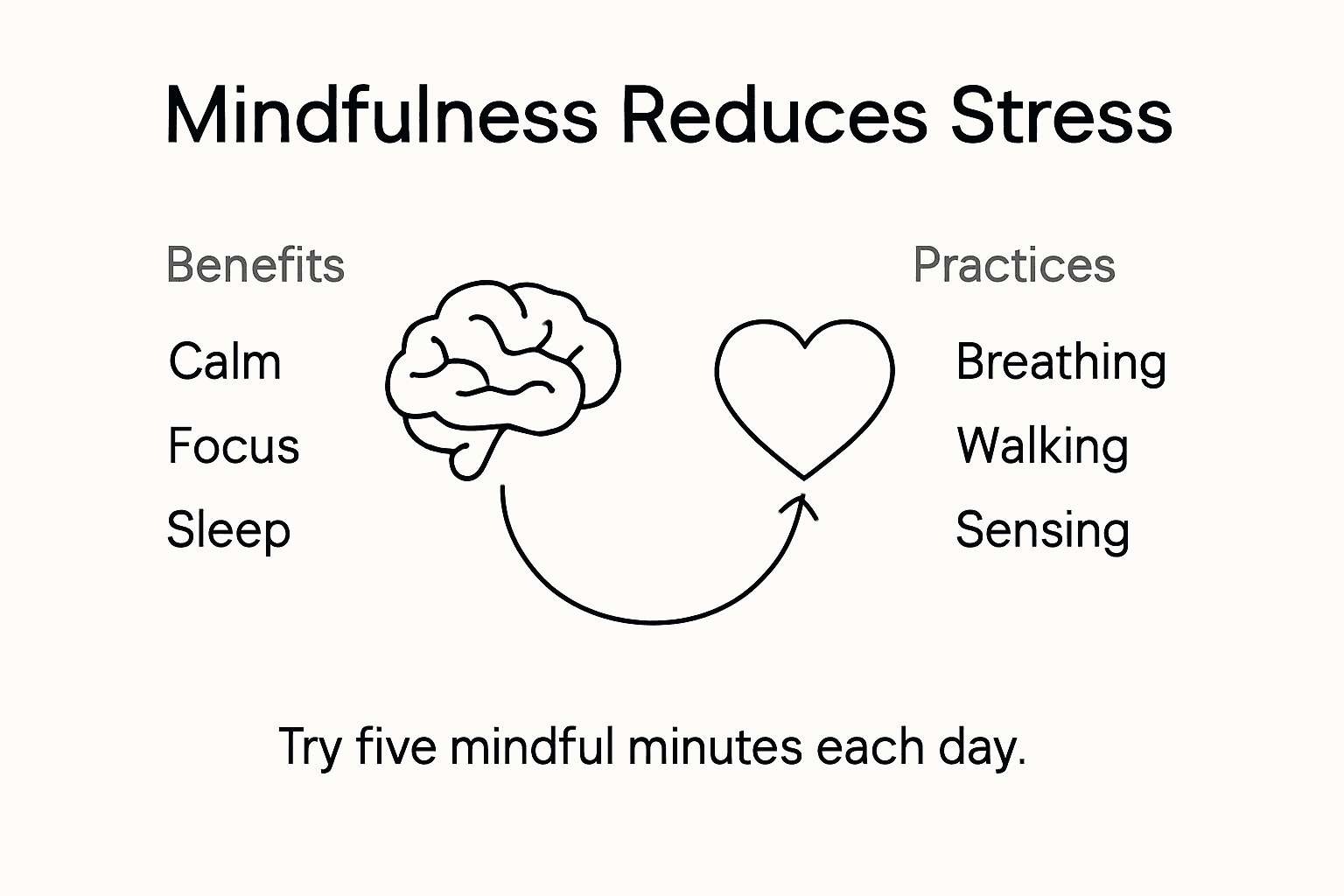
In professional environments, mindfulness practice offers significant advantages, including enhanced cognitive flexibility, improved emotional regulation, and reduced stress levels. Workers who integrate mindfulness techniques experience increased resilience, better communication skills, and more effective problem-solving abilities. These benefits translate directly into improved workplace dynamics, reduced burnout, and greater overall job satisfaction.
Key real-world applications of mindfulness include:
Stress management in high-pressure careers
Pain management in medical treatment
Emotional regulation for mental health support
Improved focus and productivity in academic and professional settings
Enhanced interpersonal communication and conflict resolution
Beyond professional contexts, mindfulness demonstrates remarkable potential in personal health management, particularly in addressing chronic conditions, managing anxiety and depression, and promoting overall psychological well-being. The practice provides individuals with a powerful toolkit for navigating life's complex emotional landscapes.
This table compares the impact of mindfulness in professional versus personal settings:
| Context | Major Benefit | Example Application |
|---|---|---|
| Workplace | Improved resilience | Handling workplace conflict calmly |
| Personal | Reduced anxiety | Managing chronic stress and worries |
Pro tip: Start by dedicating just five minutes daily to a consistent mindfulness practice, gradually increasing duration as you become more comfortable with the technique.
Mistakes to Avoid in Mindfulness Practice
Mindfulness is a nuanced practice that requires careful approach and understanding. Practitioners often encounter common pitfalls that can undermine their progress, potentially discouraging them from continuing their mindful journey.
One of the most significant misconceptions involves expecting immediate or perfect results. Mindfulness is not about achieving a state of constant calm or eliminating all thoughts, but rather developing a compassionate, non-judgmental awareness. Many beginners become frustrated when their minds continue to wander, mistakenly believing they are doing something wrong. In reality, noticing when your mind drifts and gently bringing attention back is the core of the practice.
Common mistakes in mindfulness practice include:
Setting unrealistic expectations
Trying to force a particular mental state
Judging yourself harshly during practice
Inconsistent or sporadic practice
Confusing mindfulness with relaxation or meditation
Another critical error is treating mindfulness as a purely mental exercise, disconnected from physical experience. True mindfulness integrates body and mind, requiring practitioners to pay attention to physical sensations, breath, and present-moment experiences without getting caught in analytical thinking.
Pro tip: Approach your mindfulness practice with curiosity and gentleness, treating yourself like you would a good friend learning a new skill.
Enhance Your Mindfulness Practice to Truly Reduce Stress
Struggling to find time for mindfulness or feeling overwhelmed by stress in your busy Philadelphia life is a common challenge. This article highlights simple yet effective mindfulness techniques like mindful breathing and brief awareness pauses that anyone can practice anytime. If you want to deepen your skills and experience lasting mental clarity and emotional balance, integrating mindfulness with holistic wellness can make a real difference.
Discover how Amrita Yoga & Wellness supports you in building consistent, gentle mindfulness habits through expert-led yoga, tai chi, and meditation classes designed for all levels. Our welcoming community and accessible offerings help you transform micro-practices into meaningful daily rituals. Visit the class schedule now to find sessions that fit your lifestyle and start reducing stress effectively today.
Frequently Asked Questions
What is mindfulness and how does it help reduce stress?
Mindfulness is the practice of intentionally paying attention to the present moment with openness and curiosity. It helps reduce stress by promoting greater emotional regulation, allowing individuals to respond more thoughtfully to stressors instead of reacting impulsively.
How can I practice mindfulness if I have a busy schedule?
You can practice mindfulness through short techniques such as mindful breathing, brief awareness pauses, or transforming routine activities like walking or hand washing into mindfulness exercises. These micro-practices can be done in just 1-5 minutes and fit seamlessly into your busy life.
What common mistakes should I avoid when starting mindfulness practice?
Common mistakes include setting unrealistic expectations, trying to force a specific mental state, self-judgment during practice, and inconsistent practice. Remember that mindfulness is not about achieving constant calm but about developing gentle awareness.
How can mindfulness improve my emotional regulation at work?
Mindfulness enhances emotional regulation by training individuals to observe their thoughts and feelings without immediate judgment. This increased awareness allows for more balanced and thoughtful responses in high-pressure professional situations, reducing stress and improving communication.