The Amrita Journal
Explore thoughtful stories, practical wellness guidance and inspiring ideas to support your movement, mindfulness and everyday wellbeing at Amrita.
What to Bring to a Pilates Reformer Class: 9 Essentials
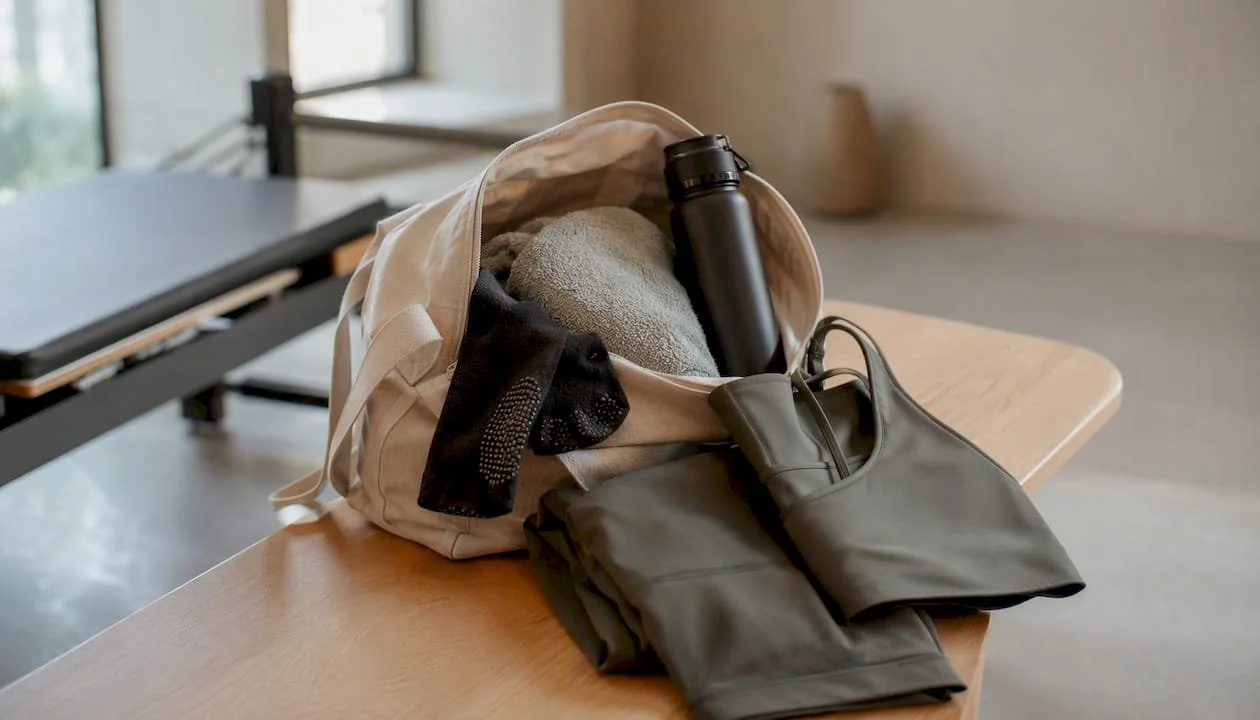
Bring grip socks, a reusable water bottle, a small towel, and form-fitting workout clothes. That covers the non-negotiables for your first reformer class. Most studios in the United States require non-slip socks, and Familydoctor recommends sipping fluids before, during, and after exercise to stay safe and perform well.
Here's what goes in your bag:
Grip (non-slip) socks
Reusable water bottle with an easy-open top
Small workout towel
Form-fitting leggings or bike shorts and a fitted top
Hair tie, deodorant, minimal jewelry
Pro Tip: Check the studio's website before you go. Some locations sell grip socks at the front desk, but studio retail prices tend to run higher than buying a pair online in advance.
Key Takeaways
Grip socks, a water bottle, a small towel, and form-fitting activewear are the four items every reformer class requires, and arriving 10–15 minutes early to brief your instructor makes every session safer and more effective.
| Details | |
|---|---|
| Grip socks are non-negotiable | Most U.S. studios require them for traction and hygiene on the moving carriage. |
| Hydrate throughout class | Sip before, during, and after your session; an easy-open bottle helps. |
| Fitted clothing helps your instructor | Instructors need to see your spine and pelvis to give accurate corrections. |
| Arrive 10–15 minutes early | Use that time to check in, stow belongings, and brief your instructor on injuries. |
| Tell your instructor your goals | One or two specific goals lets them adjust springs and cues for your body. |
Table of Contents
1. What to bring to a Pilates reformer class: the full item breakdown
2. What to wear to Pilates class so your instructor can actually help you
3. Do you need socks for Pilates? What studios actually require
4. Studio etiquette: what to do when you arrive and after class ends
1. What to bring to a Pilates reformer class: the full item breakdown
Every item below earns its spot in your bag for a specific reason, not just habit.
Water bottle. Sip before class, during rest moments, and after. An easy-open or flip-top lid lets you hydrate without fumbling mid-session. A 20–24 oz bottle fits most studio cubbies without taking up the whole shelf.
Small workout towel. Studios expect you to wipe down the reformer carriage after class. A microfiber hand towel works better than a full gym towel because it dries fast and folds small.
Grip socks. These are the one item most studios will turn you away without. More on why in the next section.
Form-fitting activewear. Leggings, bike shorts, and a snug top let your instructor see your spine and pelvis clearly. Loose clothing hides the alignment cues instructors need to correct your form safely.
Hair tie. Long hair loose on the carriage is a distraction and a safety issue. One elastic band solves it.
Deodorant. You will sweat. Bring it.
Minimal jewelry. Rings, bracelets, and dangling earrings can catch on springs, straps, or the footbar. Leave them at home or drop them in a small zip pouch in your bag before class starts.
Lock or small wallet. Most studios offer lockers. Bring a lock or keep valuables in a compact pouch you can stash easily.
Optional: change of clothes. If you're heading straight to work or lunch after class, a fresh outfit makes the transition far easier.
2. What to wear to Pilates class so your instructor can actually help you
Wear form-fitting, breathable activewear. That's the short answer. The longer one matters because clothing directly affects the quality of instruction you receive.
Instructors watch your spine curvature, shoulder position, and pelvic tilt throughout every exercise. Baggy shorts or an oversized tee makes that nearly impossible. A fitted tank or compression top and a pair of full-length leggings or longer bike shorts give your teacher a clear picture of what your body is doing, which means better corrections and safer cues for you.
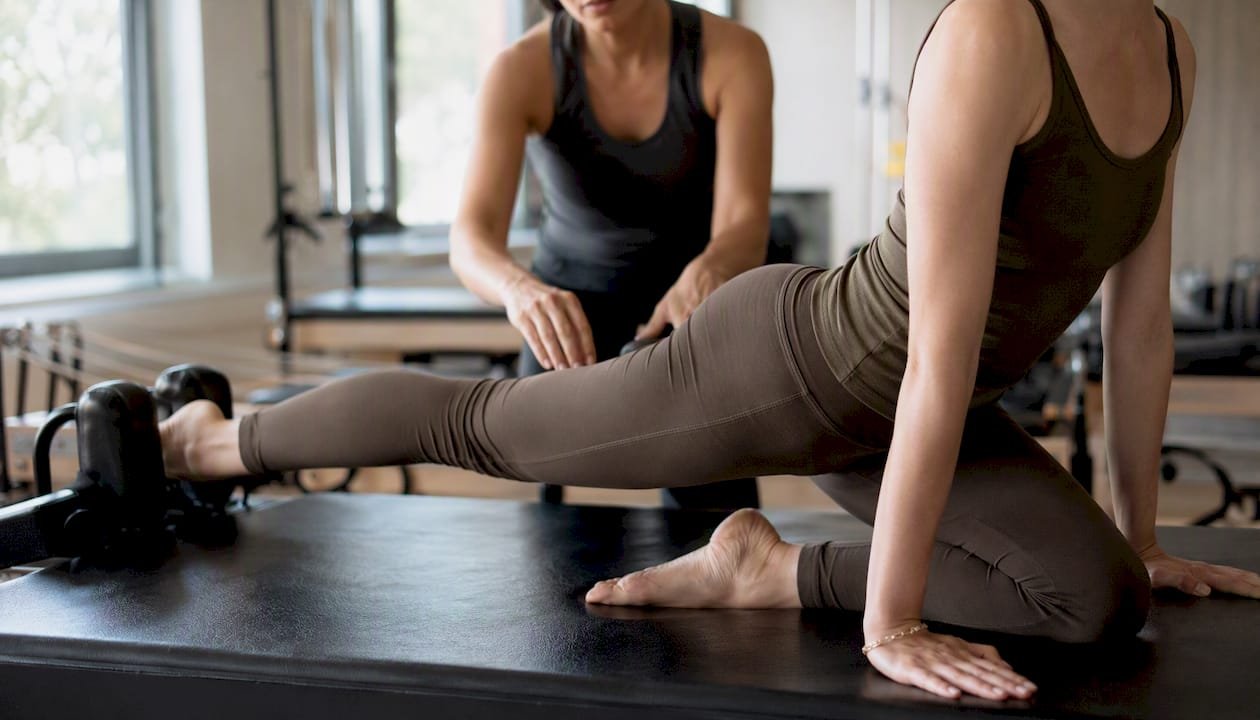
Fabric matters too. Moisture-wicking materials pull sweat away from your skin and keep you comfortable through a full session. Avoid anything with exposed zippers, metal buttons, or bulky hardware. Those details can dig into your skin when you're lying on the carriage or damage the reformer's upholstery over time.
Clothing dos and don'ts:
Do wear a low-impact sports bra with full coverage
Do choose leggings that stay put through leg circles and footwork
Don't wear loose running shorts, which ride up on the carriage
Don't wear jeans, denim, or any stiff fabric that limits range of motion
Don't layer a baggy hoodie over your workout clothes and leave it on during class
Pro Tip: Before you leave home, do a slow forward fold and a full roll-down. If your top slips over your face or your waistband gaps, swap the outfit. Five seconds at home saves an awkward adjustment mid-class.
3. Do you need socks for Pilates? What studios actually require
Yes, and most U.S. studios won't let you on the reformer without them. Grip socks with rubber or silicone dots on the sole provide traction on the moving carriage and the studio floor, which is a genuine safety issue, not just a policy preference.
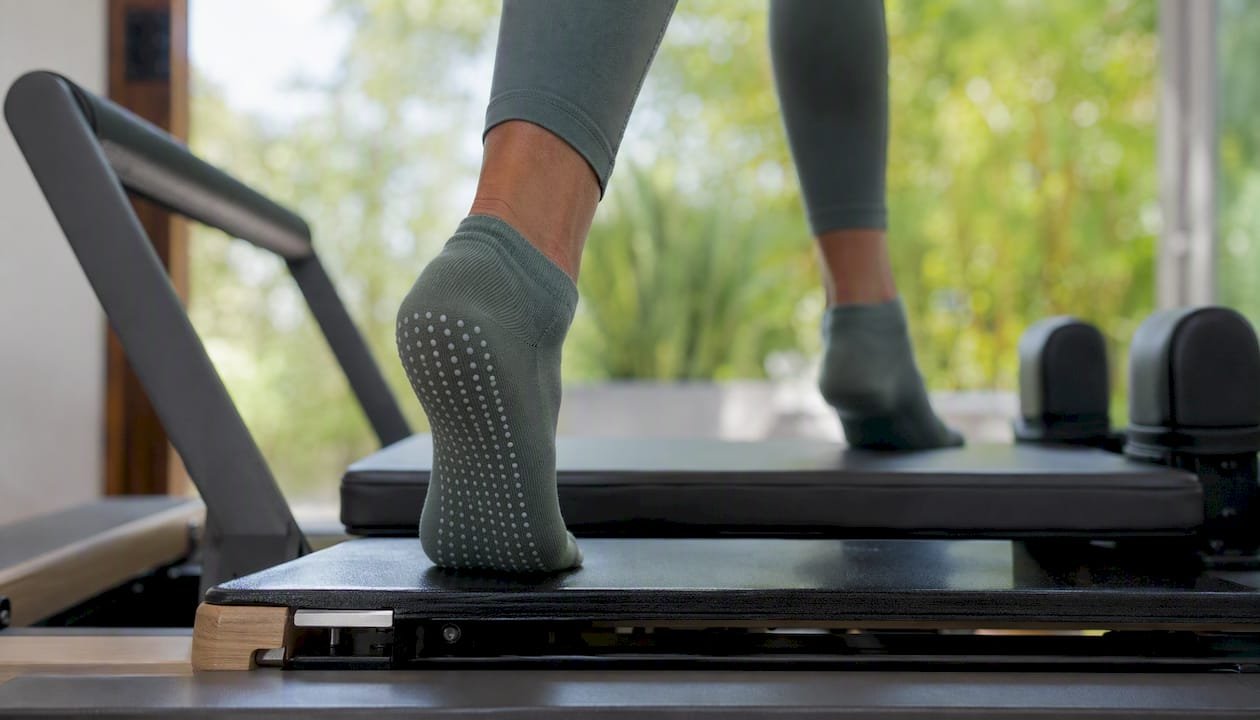
The reformer's carriage, springs, and footbar create a dynamic surface that shifts under your feet during footwork and jumping exercises. Bare feet on that surface increase slip risk. Grip socks also address hygiene in a shared training space where multiple clients use the same equipment daily.
What if you forget them?
Ask the front desk. Most studios sell grip socks at reception.
Studio retail prices are typically higher than online, so buying a pair in advance is smarter.
Some locations offer rentals, though this varies by studio.
Can you go barefoot? Occasionally a studio allows it, but treat that as the exception. Always check your specific studio's policy before assuming barefoot is fine. The gear guidance from Moonchild Yogawear also points to grip gloves as an optional add-on for hand stability during certain exercises.
4. Studio etiquette: what to do when you arrive and after class ends
Arrive 10–15 minutes before your class starts. That window gives you time to check in, stow your shoes and bag in a locker, and have a quick word with your instructor before the room fills up.
After class, wipe down the reformer carriage, footbar, and any props you used with the studio's provided spray and cloth. Return springs, boxes, and straps to their default positions unless the instructor tells you otherwise. Keep conversation low in shared spaces, especially if another class is starting nearby.
Post-class checklist:
Wipe the carriage and footbar
Return all props to their storage spots
Collect your belongings from the locker promptly
Refill your water bottle if the studio has a station
Pro Tip: Before class begins, tell your instructor about any aches, recent injuries, or surgeries. Even a quick "my lower back has been tight this week" lets them adjust spring resistance and modify exercises before you're already in a position that aggravates it.
5. Optional extras worth packing if you want them
None of these are required. All of them are useful in the right situation.
Light layer for before and after class, especially in air-conditioned studios
Ankle or wrist bands if you prefer extra joint support during footwork
Post-workout snack or protein bar for back-to-back classes or long commutes home
Travel-size sunscreen if you're heading outside immediately after
Foam roller or massage ball for home recovery after class, not for studio use
Small microfiber towel with fast-dry fabric for longer commutes or double sessions
The Global News reformer gear roundup covers additional accessories for home practice if you're building out a personal setup alongside studio sessions.
6. What to tell your instructor before class starts
Your instructor can only work with what you give them. A 30-second conversation before warm-up makes a real difference in how the session is tailored to your body.
State any injuries or recent surgeries. Mention which movements bother you specifically. If cervical flexion aggravates your neck, say so. If supine bridging bothers your lower back, name it. That detail lets the instructor adjust spring setup and hand placement immediately.
Share your fitness level. First class ever or returning after a break? Both affect how the instructor sequences exercises and sets spring resistance.
Name one or two goals. "I want to work on lower back stability" or "I'm trying to improve hamstring flexibility" gives the instructor a direction for modifications and verbal cues.
Flag any pregnancy or mobility limits. These require specific modifications that instructors need to plan for before class, not during it.
Pro Tip: Keep your pre-class note to two or three sentences. Instructors appreciate specifics over a long medical history. "Right shoulder impingement, overhead movements are uncomfortable" is more useful than a five-minute explanation.
A note from Amrita Yoga & Wellness
At Amrita Yoga & Wellness, we supply the reformers, the props, and the instruction. You bring the essentials: grip socks, a water bottle, a small towel, and fitted activewear. Arriving 10–15 minutes early gives you time to settle in, meet your instructor, and share anything we should know before we begin.
Our studio is built for community, and that starts with showing up prepared and respectful of the shared space. If you're new to reformer work, our complete beginner's guide to reformer Pilates walks you through what to expect from your first session, including how exercises are structured and what instructors watch for.
Curious about everything Amrita Yoga & Wellness offers beyond reformer classes? Explore our full range of wellness services, including tarot readings and other studio offerings, at Amritayogawellness.
Sources
Everything you need for Reformer Pilates at home — Global News
Modern Reform® MRX™ Pilates Essentials Reformer — ModernReform
Reformer Pilates — a guide to equipment and gear you need | Moonchild Yogawear
Studio policies on grip socks, rentals, and locker availability vary by location. Always check your specific studio's rules before your first visit.
Recommended
Fusion Pilates Explained: Benefits, Classes, and Results
Fusion Pilates is a workout format that layers traditional Pilates principles — centering, breath, control, precision, and flow — on top of elements drawn from other disciplines like barre, yoga, HIIT, and strength training, producing a total-body conditioning experience that builds core stability, improves flexibility, and stays genuinely low-impact. According to a comprehensive overview of the method, the goal is a versatile full-body workout that keeps the structural integrity of Pilates while expanding what a single class can accomplish. Studios like Amrita Yoga & Wellness in Philadelphia have built their fusion programming around exactly that balance.
| Point | Details |
|---|---|
| Core definition | Fusion Pilates blends Pilates principles with other modalities for total-body, low-impact conditioning. |
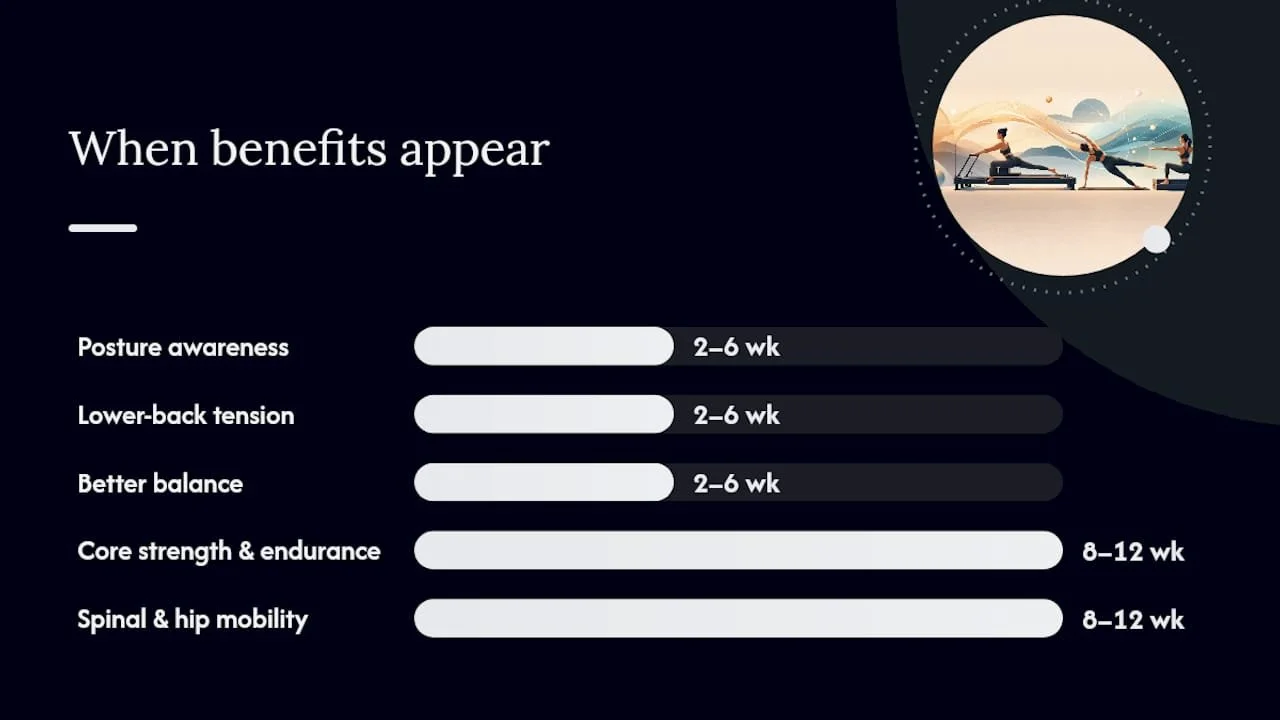
| Realistic timeline | Early neuromuscular gains appear in weeks 2–6; visible strength changes typically follow by weeks 8–12. |
| Ideal frequency | Two to four sessions per week suits most goals; pair with weight-bearing exercise for bone health. |
| Who it fits | Beginners, older adults, athletes, and returning exercisers all benefit; modifications make it widely accessible. |
| Amritayogawellness | Amrita Yoga & Wellness in Philadelphia offers fusion Pilates classes with certified instructors and individual cueing. |
Table of Contents
Who is fusion Pilates for, and who should modify or avoid it?
How often should you practice, and when will you see results?
What does fusion Pilates actually mean?
The word "fusion" does the heavy lifting here. Classical Pilates follows a defined repertoire developed by Joseph Pilates, with specific sequences on the mat or reformer. Fusion Pilates keeps the foundational principles but opens the door to other movement vocabularies within the same session.
The six Pilates principles that well-designed fusion classes preserve:
Centering: every movement initiates from the deep core
Breath: coordinated inhale and exhale drive each exercise
Control: quality of movement outranks quantity of reps
Precision: joint alignment and muscle engagement are specific, not approximate
Flow: transitions between exercises are smooth and intentional
Awareness: the practitioner stays attentive to body position throughout
Preserving these principles matters for two practical reasons: safety and results. Pilates-based cueing on breath and alignment protects the spine during higher-intensity segments, and the precision focus is what drives neuromuscular adaptation that generic cardio classes skip.
What does a typical fusion Pilates class look like?
Class formats vary more than in traditional Pilates, which is part of the appeal.
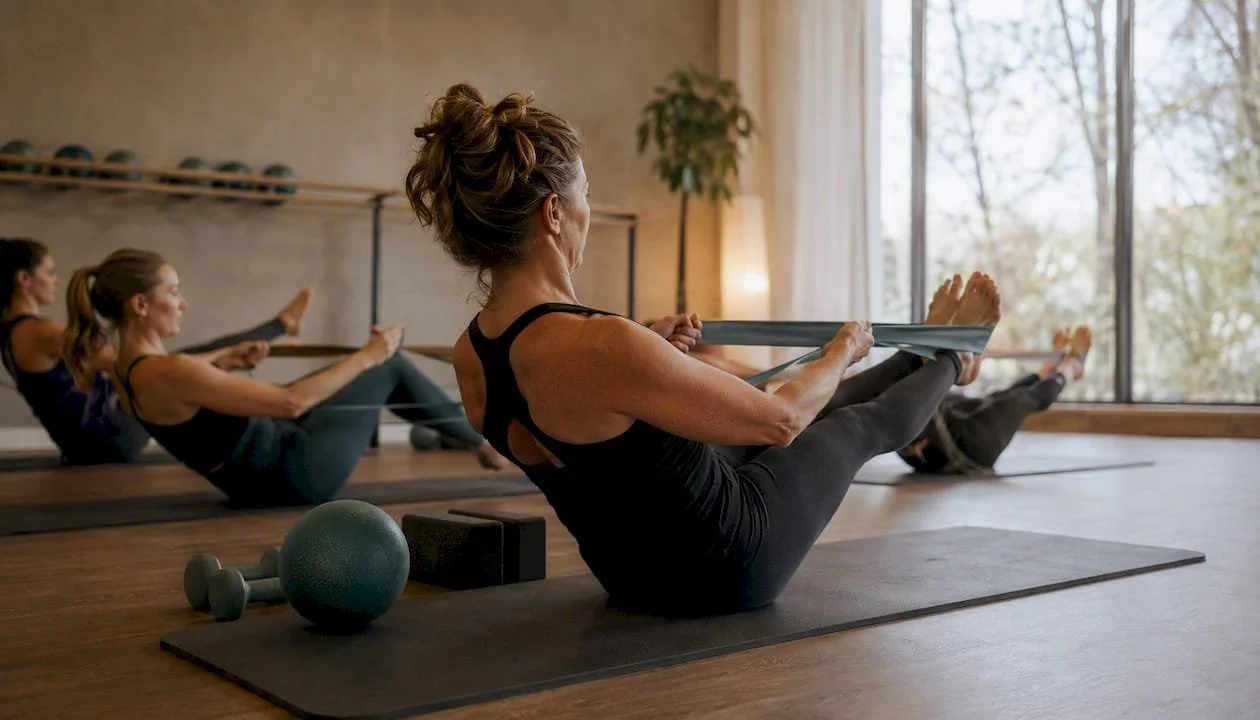
Mat-based fusion is the most accessible entry point. You work on a standard Pilates mat, often with small props: a resistance band, a Pilates ball, or light hand weights (typically 1–3 lbs). The instructor layers barre-style standing sequences or yoga-influenced stretches between core sets.
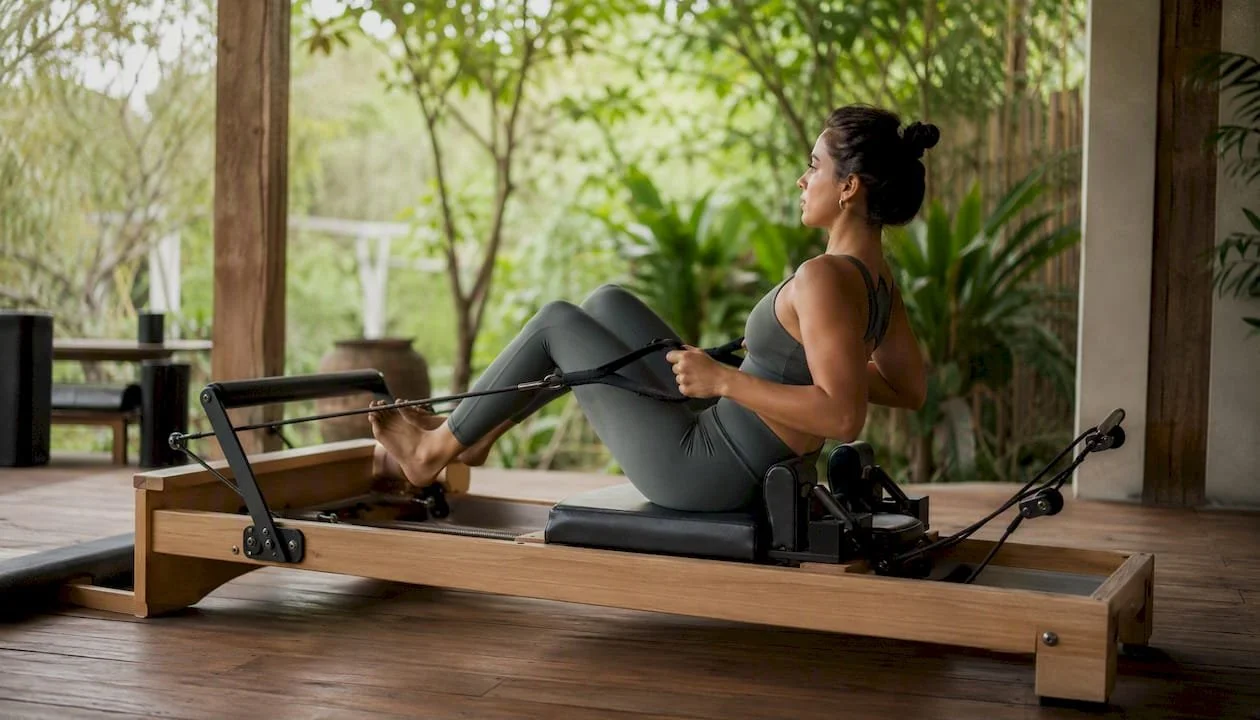
Reformer circuits use the spring-loaded carriage as the base, rotating through footwork, long-box rows, and plank progressions, then adding standing balance or band work between reformer rounds. These classes tend to run in small groups of four to eight people so the instructor can adjust spring resistance individually.
Hybrid classes mix mat and reformer work in a single session, sometimes adding a Pilates chair or tower. Online and streamed options have expanded access significantly, though they typically default to mat-based formats with minimal equipment.
A rough session timeline looks like this: arrival and briefing (2–3 minutes), breath and joint-prep warm-up (5–10 minutes), main work block (30–40 minutes), and a mobility-focused cooldown with breathwork (5–10 minutes). That structure is consistent whether the class is labeled "Pilates Barre," "Pilates HIIT," or simply "Fusion."
How a fusion Pilates session flows from start to finish
Knowing the shape of a class before you walk in reduces the intimidation factor considerably.
Warm-up (5–10 minutes): The instructor opens with diaphragmatic breathing, then moves into joint circles, cat-cow variations, and glute activation. The goal is to wake up the deep stabilizers before any load is added.
Main segment (30–40 minutes): This is where the fusion element shows up. A typical sequence might include:
Pelvic curl variations (Pilates base, 8–10 reps with breath cues)
Plank-to-downward-dog transitions (yoga influence, 4–6 reps)
Band-resisted rows in a seated V-sit (strength element, 12 reps)
Standing barre-like relevé pulses with core engagement (barre influence, 30 seconds)
Short HIIT burst: lateral step-touches or modified jumping jacks (20–30 seconds)
Return to mat: single-leg stretch series (Pilates reset)
The instructor cycles through two or three rounds of a similar structure, adjusting tempo and resistance as the class progresses. Pilates technique cues ("zip up through the low belly," "exhale as you press") appear throughout, even during the cardio bursts.
Cooldown (5–10 minutes): Spinal rotation, hip flexor stretches, and a final breathwork sequence bring the nervous system down. Some instructors end with a short supine relaxation.
What physical and mental benefits can you expect?
Physical benefits build in layers. In the first two to six weeks, most people notice improved posture awareness, reduced lower-back tension, and better balance during everyday movement. The core engagement required in every exercise starts retraining the deep stabilizers quickly.
By weeks eight through twelve, the changes become more visible and measurable:
Increased core strength and endurance
Improved spinal mobility and hip flexibility
Better functional movement patterns (squatting, reaching, rotating)
Low-impact cardiovascular stimulus from the HIIT and barre elements
Reduced joint stress compared to high-impact formats
The mental benefits are less discussed but equally real. Mindful movement practices like Pilates-based fusion require sustained attention to breath and alignment, which pulls focus away from external stressors. Many practitioners report reduced anxiety and improved body awareness after consistent practice. The variety in fusion formats also prevents the mental flatness that comes from repeating the same routine, which helps with long-term adherence.
One important nuance: low-impact does not mean easy. Slow, precise movements targeting deep stabilizers can produce significant fatigue, especially for beginners who expect a light workout. Pacing matters.
Who is fusion Pilates for, and who should modify or avoid it?
Fusion Pilates suits a wide range of peoplebecause the format is inherently scalable. Ideal candidates include:
Beginners who want a structured, low-impact introduction to fitness
Older adults focused on mobility, balance, and joint health
Athletes adding cross-training variety without high injury risk
People returning to exercise after a period of inactivity
Anyone who finds traditional gym workouts monotonous
That said, certain situations call for caution or medical clearance before starting:
Recent abdominal or spinal surgery (consult your surgeon first)
Unstable spine conditions or acute disc herniation
Active joint inflammation or acute injury in the hips, knees, or shoulders
Postpartum recovery, particularly after cesarean delivery (a staged recovery plan is worth reviewing before joining a group class)
Common modifications include reducing range of motion, using lighter resistance or no props, staying on the mat rather than the reformer, and slowing the tempo. A good instructor will offer these without being asked. If you have any of the above conditions, booking a private session before joining a group class lets the instructor assess your baseline and build appropriate modifications into your practice from day one.
Pro Tip: Ask the studio whether their instructors hold a recognized Pilates certification (BASI, STOTT, or PMA-certified programs) in addition to any fusion-specific training. That combination signals someone who can keep the Pilates principles intact when the class gets more dynamic.
What are the most common fusion Pilates styles?
Fusion formats incorporate barre, yoga, strength, cardio, and dance while retaining Pilates' emphasis on core and alignment. Here is how the main styles break down:
Pilates + Barre: Small isometric movements at the barre or mat edge; best for lower-body toning and hip stability
Pilates + Yoga: Longer holds, deeper stretches, and breath synchronization; best for flexibility and stress relief
Pilates + HIIT: Short cardio bursts between Pilates sets; best for cardiovascular conditioning and calorie output
Pilates + Strength: Light-to-moderate resistance added to classic Pilates moves; best for building functional muscle endurance
Dance-influenced fusion: Rhythmic movement patterns layered over Pilates core work; best for coordination and enjoyment
To spot a class's emphasis before you book, read the description for words like "intervals" (HIIT lean), "flow" (yoga lean), "sculpt" or "tone" (barre or strength lean), and "rhythm" or "groove" (dance lean). If the description is vague, ask the instructor directly what percentage of the class is Pilates-based versus the added modality.
How does fusion Pilates differ from traditional Pilates?
The differences are real but not as dramatic as the marketing sometimes suggests.
| Dimension | Traditional Pilates | Fusion Pilates |
|---|---|---|
| Repertoire | Fixed classical or contemporary sequence | Open; varies by instructor and class theme |
| Tempo | Controlled, deliberate throughout | Varies; can include faster cardio intervals |
| Equipment | Mat, reformer, Cadillac, chair, tower | Mat, reformer, bands, balls, light weights |
| Rep structure | Low reps, high precision | Mixed; higher reps in strength/cardio segments |
| Cueing focus | Alignment, breath, muscle activation | Same, plus tempo and rhythm cues |
| Primary goal | Postural correction, core development | Total-body conditioning, variety, adherence |
What stays the same: the breath, the centering, the emphasis on quality over quantity. A fusion class that drops those elements is not really Pilates-based at all.
Choose traditional Pilates over fusion when you are working through a specific rehabilitation protocol, developing technical Pilates skill from scratch, or following a structured therapeutic program. Fusion is the stronger choice when you want variety, a broader conditioning stimulus, or a format that keeps you coming back consistently.
How often should you practice, and when will you see results?
Two to three sessions per week is the practical starting point for most people. That frequency allows adequate recovery while building the neuromuscular patterns that Pilates-based work depends on.
Four sessions per week suits people with a fitness base who want faster conditioning progress, provided the sessions vary in intensity (not four high-intensity fusion classes back to back).
Pair fusion with weight-bearing exercise at least once a week if bone density is a priority. Fusion formats are not a substitute for heavier resistance training in that specific regard.
Watch for overtraining signals: persistent muscle soreness beyond 48 hours, declining performance, or disrupted sleep suggest you need more recovery, not more classes.
Progressive overload applies here too. Increase spring resistance, add a light weight, or extend the HIIT interval duration every three to four weeks to keep the stimulus fresh.
Early gains after starting Fusion Pilates are mostly neuromuscular: your body learns to recruit the right muscles in the right sequence. Visible strength and conditioning changes tend to appear after consistent attendance over time. The variety in fusion programming helps prevent the plateau that often stalls progress in single-modality training.
How do you choose a safe, effective fusion Pilates class?
Questions to ask before you book:
What certifications do your instructors hold, and do they include a recognized Pilates program?
How do you scale exercises for beginners or people with injuries?
What is the maximum class size, and how is equipment maintained?
Is there a beginner orientation or demo session available?
How do you handle modifications during a live class?
Checklist of features worth confirming:
Instructor holds a recognized Pilates certification (BASI, STOTT, or equivalent) plus any fusion-specific training
Class size is small enough for individual feedback (typically under 12 for reformer, under 16 for mat)
Equipment is inspected and maintained regularly (springs, straps, and carriage pads)
The class description specifies the modality blend, not just a vague "fusion" label
A trial class or drop-in option is available before committing to a package
Red flags: no breath or alignment cues during class, no progressions or regressions offered, equipment that looks worn or poorly maintained, and an instructor who cannot explain how they would modify for a specific limitation.
How experienced instructors structure safe fusion sessions
Skilled fusion instructors treat the Pilates principles as non-negotiable anchors, not optional add-ons. The modality elements (the barre sequence, the HIIT burst, the resistance band row) get layered on top of that foundation, not in place of it.
In practice, this means:
Opening every class with breath and centering, regardless of how dynamic the main segment will be
Grouping students by ability when possible, or offering two clear versions of each exercise simultaneously
Rotating equipment (reformer springs, band resistance levels) between rounds rather than mid-exercise, so transitions stay smooth
Watching for form breakdown during the cardio segments and calling a reset before injury risk rises
Ending with a cooldown that returns the nervous system to a parasympathetic state, not just a quick stretch
Pro Tip: The best fusion instructors cue the breath during the HIIT segments, not just the Pilates sets. If your instructor goes silent on breath during the fast intervals, that's a signal the Pilates foundation is slipping.
Scaling tools available to a prepared instructor include spring resistance adjustments, band tension swaps, tempo changes, and prop substitutions (a folded blanket instead of a Pilates ball, for example). These let a single class plan serve a room with genuinely different fitness levels without anyone feeling singled out or left behind.
A studio perspective on teaching fusion well
Teaching fusion Pilates well comes down to one discipline: never let the "fusion" part crowd out the Pilates part. At Amrita Yoga & Wellness, the instructors approach every class by setting the Pilates principles first, then asking which modality element serves the session's goal that day. A class designed around hip mobility gets a yoga-influenced cooldown. A class aimed at cardiovascular conditioning gets a short HIIT interval, but the breath cues stay on throughout. The result is a session that feels varied and energizing without ever losing the structural integrity that makes Pilates-based work effective for the long term. Amrita Yoga & Wellness serves practitioners across Philadelphia, from complete beginners to experienced movers looking for a smarter cross-training option.
Try a fusion Pilates class at Amrita Yoga & Wellness
Amrita Yoga & Wellness in Philadelphia offers fusion Pilates classes built around the principles this guide describes: Pilates fundamentals preserved, modality elements chosen with intention, and every session scaled to the room. Whether you are stepping onto a mat for the first time or adding fusion to an existing training plan, the studio's instructors provide the individual cueing and progressions that make the difference between a workout you tolerate and one you return to.
Check availability and book a trial class directly at Amrita Yoga & Wellness. The studio also offers group Pilates sessions and wellness workshops for those who want to explore the full range of offerings before committing to a regular schedule.
Sources
What is Fusion Pilates: A Comprehensive Guide to This Unique Fitness Method
Fusion Pilates for Everyone: Full-Body Workout for All Ages & Fitness Levels (2026)
Recommended
Club Pilates Explained: A Beginner's Complete Guide
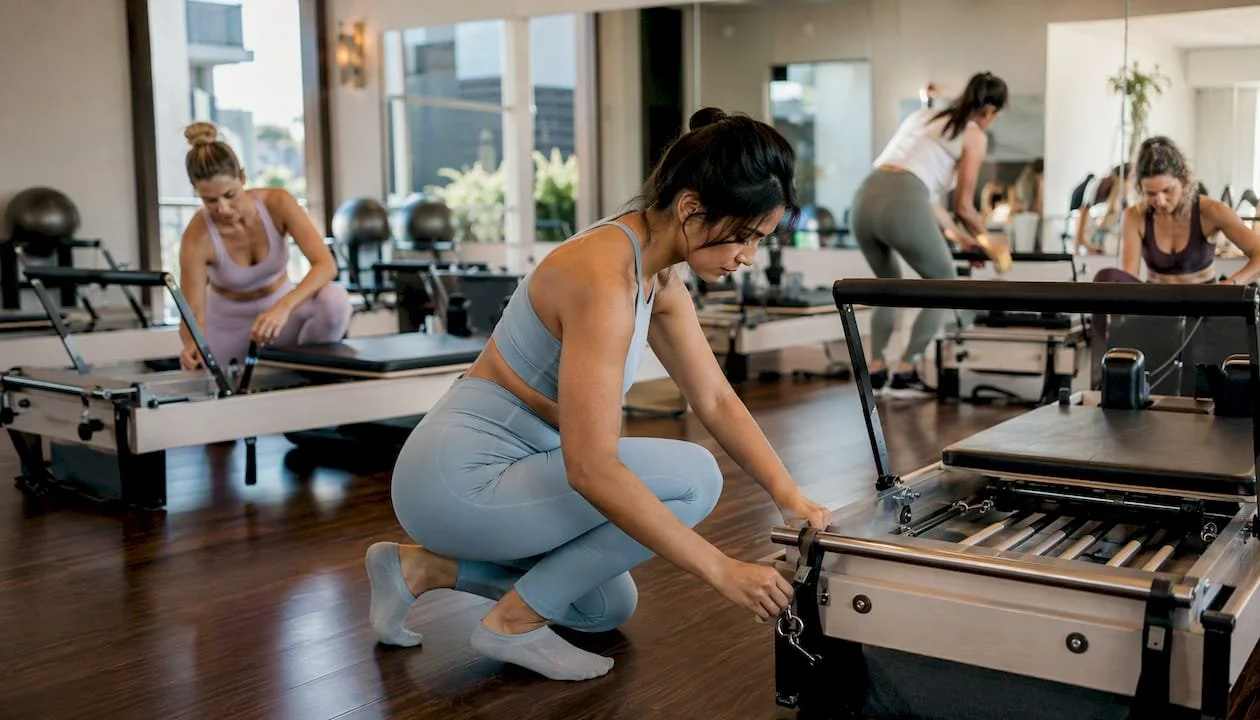
Club Pilates is a nationwide reformer-centered fitness franchise that runs instructor-led group classes using the Reformer as the primary apparatus, supplemented by the EXO-Chair, Springboard, TRX, and other equipment. Owned by Xponential Fitness, it operates as a studio franchise network with locations across the United States. Here is what you get at a glance:
Format: Group classes of roughly 45–50 minutes, reformer-based
Equipment: Balanced Body Allegro 2 Reformers plus complementary apparatus
Class levels: Four progressive levels, nine class formats
Entry point: A 30-minute Intro Reformer session, often complimentary for first-timers
Instructors: Certified with 500+ hours of Pilates training per brand claims
Table of Contents
How are Club Pilates instructors trained and how do they keep classes safe?
Why does Club Pilates rotate between multiple apparatus in one session?
Amrita Yoga & Wellness: a local complement to reformer Pilates
What is Club Pilates and how does the brand work?
Club Pilates launched in 2007 in San Diego, California, and has since grown into one of the largest Pilates franchise chains in the country. Xponential Fitness, the parent company behind several boutique fitness brands, owns and operates the franchise system. Individual studios are franchisee-owned, which means the experience is standardized at the brand level but managed locally.
The positioning is deliberate: reformer Pilates made accessible at a membership price point rather than the private-session rates that traditional Pilates studios typically charge. Group classes keep costs lower while still delivering instructor attention and equipment-based training. Every studio carries a locator on the Club Pilates website so you can find a nearby location, check class schedules, and book an intro session before committing to a membership.
Pro Tip: Before visiting, use the Club Pilates studio locator to confirm which class formats your nearest location offers. Not every studio runs every format on every day.
What classes and equipment will you find at Club Pilates?
The Reformer is the centerpiece. Club Pilates primarily uses Balanced Body Allegro 2 Reformers, chosen for their smooth carriage performance, durability, and compatibility with tower attachments. Balanced Body is the dominant brand in commercial Pilates studios, and franchise standardization is a key reason: every location gets the same machine, which keeps maintenance predictable and the client experience consistent across studios.
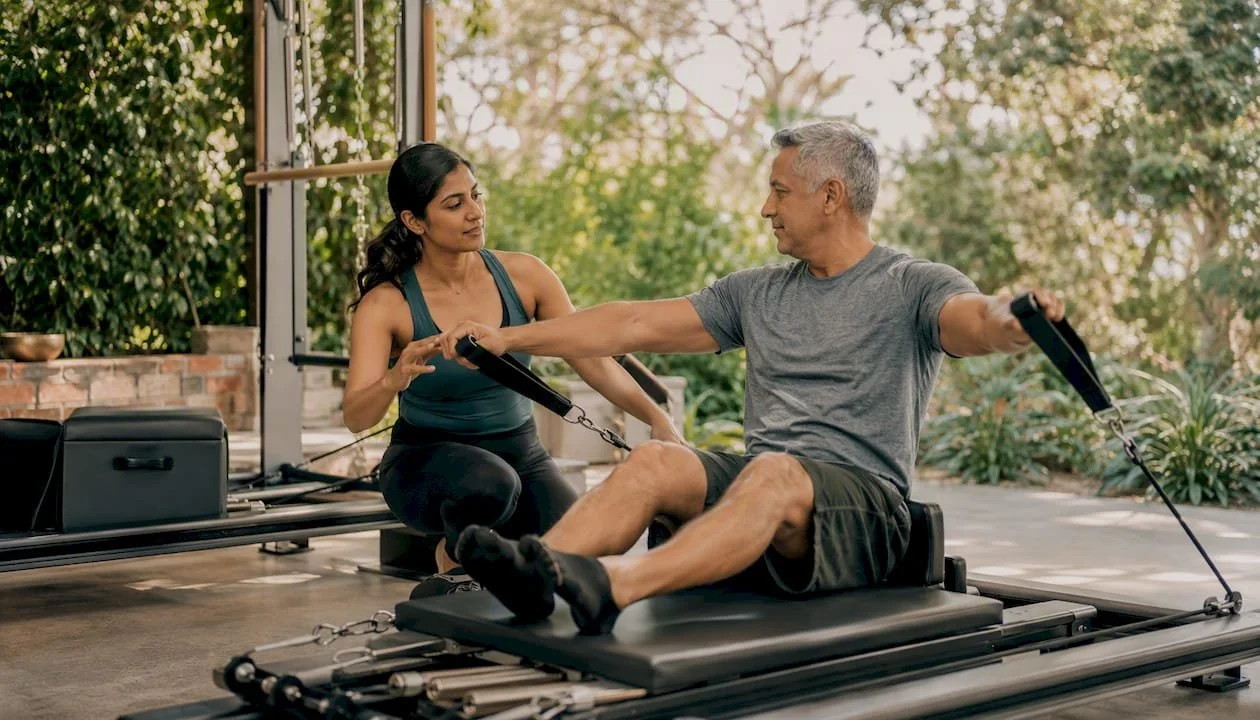
Beyond the Reformer, a typical Club Pilates studio includes the EXO-Chair, Springboard, TRX suspension system, Bosu balance trainer, and foam rollers. Each piece targets something specific. The EXO-Chair challenges single-leg stability and hip strength. The Springboard adds spring-resistance wall work for upper body and spinal mobility. TRX shifts load to bodyweight suspension, raising the core demand. Bosu work tests balance under instability.
Class formats and levels
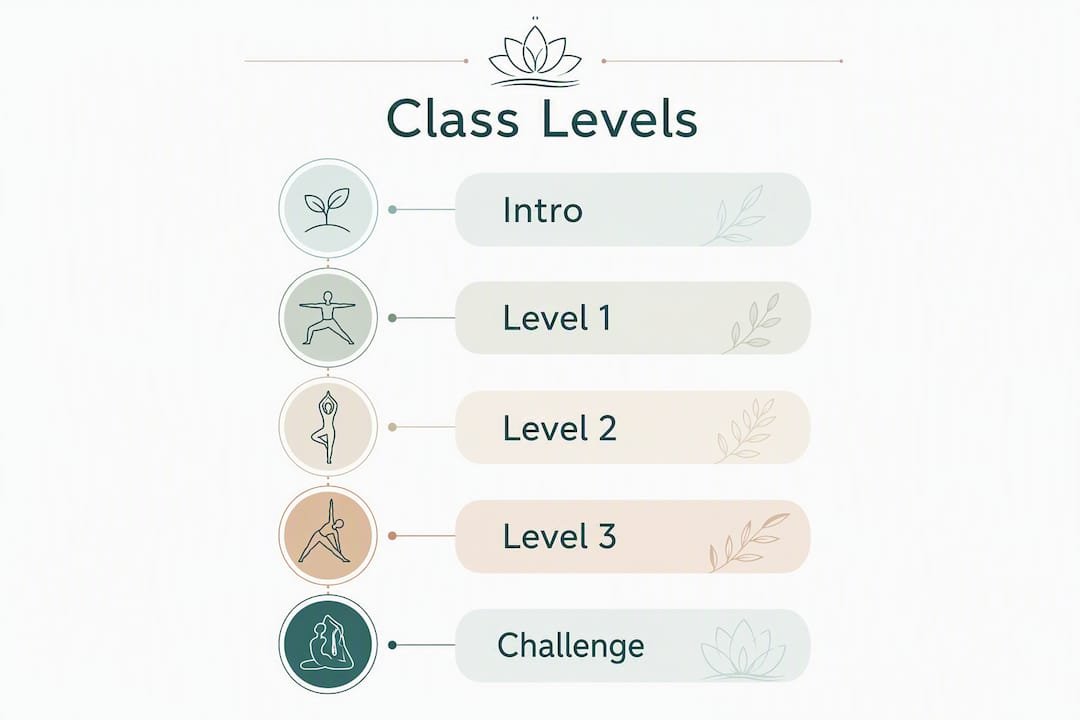
Club Pilates offers nine formats organized across four levels. The level structure matters more than most beginners realize.
| Level | Who it suits | Focus |
|---|---|---|
| Intro | Absolute beginners | Equipment orientation, basic spring settings |
| Level 1 | New clients, foundational movers | Core fundamentals, reformer basics |
| Level 1.5 | Clients with solid Level 1 base | Increased pace, added apparatus |
| Level 2+ | Experienced reformer clients | Complex sequences, multi-apparatus flow |
Core formats include Reformer Flow (the standard group class), CP F.I.T. (higher-intensity conditioning), and dedicated stretch and cardio trampoline options at select studios. The Intro class sits outside the level system and is specifically designed for first-timers.
Pro Tip: Stay at Level 1 longer than you think you need to. Resistance settings and flow transitions on the Reformer rely on muscle memory. Rushing to Level 1.5 before those patterns are automatic is the most common beginner mistake.
What should you expect at your first Club Pilates class?
A first-timer should book the Intro session, a 30-minute Reformer experience where an instructor walks you through the machine, spring resistance settings, and basic movement patterns. It is not a full workout. Think of it as a safety orientation that also gives you a real feel for the apparatus before you step into a group class.
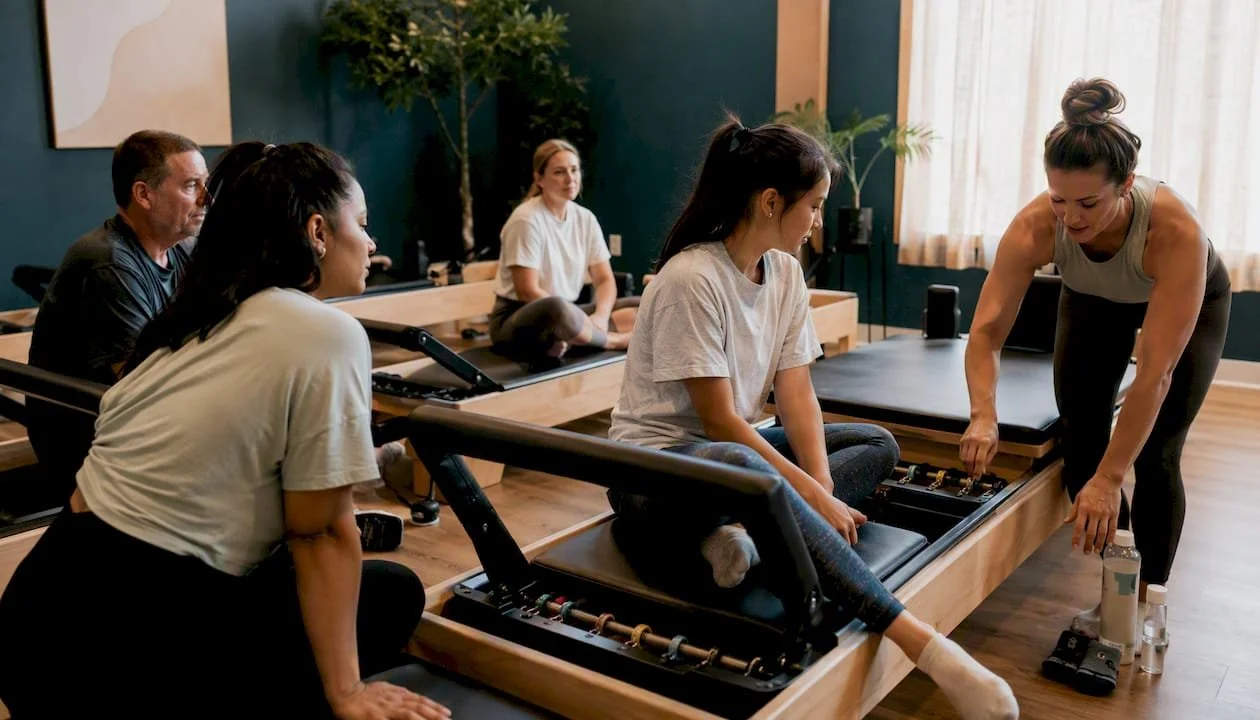
Standard group classes run roughly 50 minutes. The instructor cues the room verbally and demonstrates when needed, moving between clients to check form and offer modifications. Class sizes are kept small enough that you are not anonymous. If you have a knee issue, a shoulder limitation, or you are coming back from an injury, tell the instructor before class. Modifications are a normal part of the session, not an exception.
Wear grip socks (most studios sell them if you forget), arrive five minutes early, and bring water. The studio will assign you a Reformer. You will not spend the whole class on it. Depending on the format, you may rotate to the Springboard or EXO-Chair mid-session.
Pro Tip: Grip socks are required at most Club Pilates locations. Pack a pair or budget a few dollars to buy them at the front desk on your first visit.
Who benefits most from Club Pilates workouts?
Club Pilates describes its method as suitable for a wide range of backgrounds, from sedentary beginners to competitive athletes using it for cross-training. That claim holds up in practice for several specific groups:
Beginners and deconditioned clients: The level system and intro session remove the intimidation factor. You are not expected to know anything walking in.
Athletes cross-training: Reformer work builds the stabilizer muscles that heavy compound lifting tends to neglect, particularly around the hips, shoulders, and spine.
Rehab and injury-prevention clients: The low-impact, spring-assisted resistance is easier on joints than free weights. Pairing reformer sessions with therapeutic exercise principles can support recovery from movement-limiting injuries.
Older adults: Low-impact, balance-focused, and scalable. The EXO-Chair and Springboard work especially well for clients prioritizing functional strength over aesthetics.
Where Club Pilates is not the right fit: if your primary goal is maximal hypertrophy or heavy barbell strength, reformer classes will not get you there. The resistance levels are meaningful but not comparable to progressive overload training. Think of it as a complement to strength work, not a replacement. Exploring different types of Pilates classes can help you figure out where reformer work fits in your broader fitness picture.
How does Club Pilates pricing and membership work?
Pricing is not set at the national level. Individual franchisees set their own rates, so what you pay in Philadelphia will differ from what a studio in Austin charges. That said, the purchase structures are consistent across locations.
Most studios offer three options: a drop-in single class, a class pack (typically 5 or 10 sessions), and a monthly membership with a set number of classes per month. Monthly memberships generally offer the lowest per-class cost. The Intro session is often complimentary or offered at a reduced rate for first-timers.
Before signing anything, ask three specific questions: What is the cancellation policy for the membership? Can you freeze the membership if you travel or get injured? What does a private training session cost if you want one-on-one instruction? The answers vary by studio and are not always posted online.
Pro Tip: Ask about the freeze policy before you sign a monthly membership. Most studios allow a temporary hold, but the terms differ. Knowing this upfront saves a frustrating conversation later.
How are Club Pilates instructors trained and how do they keep classes safe?
Club Pilates references 500+ hours of comprehensive Pilates training as the standard for its instructors, a figure that appears in official brand materials including the studio intro class description. That training depth is above the minimum required by most general fitness certifications, which typically run 20–40 hours.
Key safety and modification practices across Club Pilates studios:
Instructors are trained to offer movement modifications for common injuries and mobility limitations
Class size is kept small to allow instructors to observe and correct form
Equipment is maintained and cleaned between sessions
Level-based class structure prevents beginners from being placed in sequences beyond their current ability
The certified instructor model and progressive class levels are the two structural features that most directly affect your safety as a client. The level system is not just marketing. It is what keeps a Level 1 client from attempting a Reformer sequence that requires hip flexor control they have not yet built.
500+ hours of Pilates training is the instructor standard Club Pilates cites. For context, a standard personal training certification requires roughly 20 hours of study.
Why does Club Pilates rotate between multiple apparatus in one session?
Rotating between the Reformer, EXO-Chair, and Springboard within a single class is not just variety for its own sake. Each apparatus changes the stability demand on your body. The Reformer moves under you. The EXO-Chair requires you to hold position against spring resistance from a seated or standing base. The Springboard anchors you to a wall while you work against horizontal resistance. Switching between them forces your neuromuscular system to recalibrate constantly, which accelerates balance, core stability, and mobility gains compared with staying on one machine the entire session.
For first-timers, this is worth knowing before you walk in. A Reformer Flow class stays primarily on the Reformer. A multi-apparatus format like CP F.I.T. will move you around the room. If you are still learning spring settings and carriage control, start with Reformer Flow before adding the complexity of apparatus rotation.
Pro Tip: If neuromuscular adaptation and postural recovery are your goals, ask the front desk which formats include the most apparatus rotation. That information is usually not on the class description card.
Should you try Club Pilates?
For most people asking this question, yes. Club Pilates is a well-structured entry point into reformer Pilates, with a level system that genuinely protects beginners and enough format variety to stay interesting as you progress. The Intro session removes the financial risk of committing before you know whether you like it.
Try it if: — You are new to Pilates, returning from an injury, cross-training alongside another sport, or looking for low-impact strength work
Key Takeaways
Club Pilates is a reformer-centered franchise offering nine class formats across four levels, with certified instructors and a complimentary Intro session that makes it one of the most accessible entry points into reformer Pilates in the United States.
| Point | Details |
|---|---|
| Reformer is the core apparatus | Club Pilates uses Balanced Body Allegro 2 Reformers, supplemented by EXO-Chair, Springboard, and TRX. |
| Nine formats, four levels | Start at Level 1 or the Intro session; advancing too quickly is the most common beginner mistake. |
| Pricing varies by studio | Drop-in, class packs, and monthly memberships are all available; ask about freeze and cancellation policies locally. |
| Instructors hold 500+ hours of training | That standard is above most general fitness certifications and directly affects class safety. |
| Amitayoga wellness complements reformer work | Amrita Yoga & Wellness in Philadelphia offers mat Pilates, private sessions, and rehab-focused classes that pair well with reformer training. |
A local studio's perspective on where Club Pilates fits
Club Pilates fills a real gap: affordable, equipment-based group Pilates with a clear level structure. For someone who has never touched a Reformer, that structure is genuinely useful. The franchise model means you get a consistent experience regardless of which location you visit, which matters when you are still learning.
Where it gets interesting is what happens after the intro phase. Reformer group classes are excellent for building a movement foundation, but some clients eventually want more individualized attention, particularly those working around an injury or trying to address a specific postural pattern. That is where a smaller studio setting, private instruction, or mat-based work becomes a meaningful complement rather than a replacement.
At Amrita Yoga & Wellness in Philadelphia, the Pilates for beginners approach emphasizes that foundation work. Whether you are just starting out or looking to deepen what you have built in a reformer class, mat and private sessions can address the gaps that group formats naturally leave.
Amrita Yoga & Wellness: a local complement to reformer Pilates
If you are exploring reformer classes and also want a community-focused studio experience in Philadelphia, Amrita Yoga & Wellness offers mat Pilates, private sessions, and wellness workshops that work alongside what you build in a reformer class. The focus is on accessible, personalized practice, whether you are a complete beginner or someone recovering from an injury who needs more individualized guidance than a group class allows.
Posture recovery, core rebuilding, and movement retraining are areas where smaller-group and private instruction genuinely outperform the group format, especially when you are working around a specific limitation. Amrita Yoga & Wellness brings that depth to Philadelphia practitioners. Visit amritayogawellness.com to browse classes and book a session that fits where you are right now.
Useful sources
What Brand of Reformer Does Club Pilates Use — Gymfrog: explains the Balanced Body Allegro 2 selection and commercial studio reasoning
Club Pilates Equipment Suite — Balanced Body: Balanced Body's own page listing equipment used in Club Pilates locations
Recommended
Pilates Crossover for Fitness Pros: Certify, Program, Launch

TL;DR:
Fitness professionals should pursue a Pilates crossover program to meet growing client demand and enhance retention. Integrating Pilates sequences into strength sessions improves movement transfer, expands client segments, and boosts revenue with minimal equipment investment. Starting with a structured 8-16 week plan, trainers can build their dual-discipline offerings through certification, pilot programs, and targeted marketing efforts.
Yes — pursue a structured Pilates crossover. The fastest path is a bridging (crossover) program if your documented training hours qualify, or a foundational certification if they don't. Start today by pulling your training transcripts and booking an info session with an accredited bridging program. The demand is real: 57% of new members in a recent 2026 U.K. pilot named Reformer Pilates as their primary reason for joining. That's a client-acquisition lever most fitness professionals aren't using yet.
Before you go further, check two things:
Your documented training hours. Most bridging programs require a 450-hour minimum; applicants with fewer than roughly 300 apprenticeship hours often need full re-enrollment rather than a bridge.
Your current scope of practice. Adding Pilates to your offer changes what you screen for, what liability coverage you need, and when you refer out.
Pro Tip: Audit your certificates and training logs this week. A single missing transcript can delay bridging admission by a full enrollment cycle.
Table of Contents
Why should fitness professionals integrate Pilates into their services?
How do you teach Pilates effectively inside a fitness setting?
Which equipment and formats scale Pilates across your business?
The case for Pilates crossover is stronger than most fitness pros realize
Amrita Yoga & Wellness helps you build your Pilates crossover offer
Why should fitness professionals integrate Pilates into their services?
57% of new members in a 2026 U.K. pilot program named Reformer Pilates as the primary reason for joining — making it one of the strongest documented demand signals in group fitness right now.
That number matters for two reasons. First, it shows Pilates isn't a niche add-on; it's a primary acquisition driver. Second, it means clients are already walking in the door expecting it. Fitness professionals who can deliver it capture that demand directly instead of sending clients elsewhere.
The conditioning case is equally strong. Hybrid programs that blend Pilates principles with strength training improve lifting mechanics, mobility, and core control while staying time-efficient. The Pilates x Lift model, for example, structures five 35-minute sessions per hybrid cycle, pairing Pilates sequences with compound lifts to reinforce movement patterns and increase time-under-tension without extending session length.
Business outcomes fitness professionals report from Pilates integration:
Incremental revenue through premium-tier or per-class surcharges on Reformer sessions
Higher session commitment from clients enrolled in progressive cohorts versus drop-in formats
Expanded client segments: post-rehab adults, performance athletes, and busy professionals seeking low-impact strength work
Reduced client attrition, since Pilates for wellness programming tends to build longer-term habits than pure strength cycles
Boutique operators are already moving here. YogaSix launched Y6 Core, a Pilates-inspired class mixing core strengthening, upper-body engagement, and full-body controlled movement, specifically to capture the audience seeking mindful, low-impact strength work.
What certification pathway fits your crossover goals?
The word "crossover" means two different things in this industry, and confusing them costs time and money. The first meaning is a formal teacher-credential bridge: a lineage-specific program that recognizes your prior comprehensive training and aligns you with a new methodological approach. The second is the broader gym trend of adopting standardized Pilates-style group classes to scale delivery. Both are legitimate paths; they just require different commitments.
For the formal bridge, Core Pilates NYC's crossover program sets a clear benchmark: a 450-hour minimum for crossover applicants, with the rule that applicants holding fewer than roughly 300 apprenticeship hours may need to re-enroll in a full certification rather than bridge. The program structure typically includes immersive weekend intensives, supervised practice hours, and a practical test-out before the credential is awarded.
Certification checklist before you apply:
Gather all training transcripts and certificates; calculate total documented hours
Confirm whether your hours meet the 450-hour threshold or fall below the ~300-hour re-enrollment line
Contact your target program directly to verify accepted bridging admissions and lineage compatibility
Plan your apprenticeship and supervised practice hours into your calendar before enrolling
Review your liability insurance policy; adding Pilates instruction often requires a rider or separate coverage
Note when to refer out: clients with acute spinal conditions, osteoporosis, or recent surgery need clearance from a healthcare provider before you program Pilates for them. For clients with low bone density, safe exercise guidelines should inform your screening and modification decisions.
One clarification worth making: Crossover Symmetry is a resistance-band shoulder system developed for rehab and performance, not a Pilates method or bridging program. The names overlap in search results and can create real confusion when fitness professionals are researching certification options.
How do you build a practical dual-discipline program?
Integrate Pilates sequences within strength sessions rather than dedicating separate days to each discipline. The dual-discipline model works because it reinforces movement patterns in context: a client who practices pelvic control in a Pilates sequence immediately before a loaded hinge transfers that motor pattern directly into the lift.
Sample one-week microcycle (intermediate level):
Monday — Hybrid session A: 20 min Pilates mat sequence (spine articulation, single-leg work, hip stability) + 25 min compound strength (deadhinge, goblet squat, row)
Tuesday — Active recovery or mobility: 30 min targeted hip and thoracic work
Wednesday — Hybrid session B: 20 min Reformer-style footwork and core series + 25 min upper-body strength (press, pull, carry)
Thursday — Rest or light walk
Friday — Hybrid session A repeat with progressive load or rep increase
Saturday — Group Reformer-style class (45–55 min, see Session Plan A below)
Sunday — Rest
Session Plan A — 45–55 min group Reformer-style hybrid class:
5 min: breath and pelvic floor activation, neutral spine setup
15 min: footwork series (parallel, Pilates V, wide stance) with progressive spring resistance
10 min: core series (hundred variation, single-leg stretch, oblique curl)
15 min: standing compound work (squat to press, lateral lunge with band)
10 min: cool-down, spine stretch, supine hip release
Session Plan B — 45 min private hybrid session (corrective + loadable lifts):
10 min: movement screen (hip hinge pattern, overhead reach, single-leg balance)
15 min: corrective Pilates sequence based on screen findings (e.g., clam series for hip stability, cat-cow for spinal mobility)
15 min: loadable lifts with Pilates cueing integrated (Romanian deadlift with pelvic neutral cue, single-arm row with scapular cue)
5 min: client debrief and movement marker notation.
Progression table:
| Level | Pilates Focus | Strength Load | Key Marker |
|---|---|---|---|
| Beginner | Neutral spine, breath, pelvic control | Bodyweight or light resistance | Consistent neutral pelvis in hinge |
| Intermediate | Single-leg stability, rotation, hip dissociation | Moderate load, 3–4 sets | Scapular upward rotation during press |
| Advanced | Dynamic control under load, full reformer repertoire | Heavy compound lifts, tempo work | Pelvic stability during single-leg loaded hinge |
For exercise progressions across levels, the principle stays the same: add complexity or load only after the movement marker is clean.
How do you teach Pilates effectively inside a fitness setting?
Teach the why first. When clients understand that a cue like "knit your ribs down" prevents lumbar hyperextension during a press, they self-correct faster and stay engaged longer. Master educator Shannon Willits puts it plainly: when students understand the science behind a movement, they stay in their programs for the long haul.
Pre-session screening checklist:
Spinal history: disc issues, fusions, scoliosis
Shoulder history: impingement, rotator cuff repairs
Hip history: labral tears, replacements
Pregnancy or postpartum status
Current pain or active inflammation
High-impact teaching cues:
Breath: "Inhale to prepare, exhale to initiate the movement" — links breath to core activation
Pelvic position: "Find neutral, not flat" — prevents posterior pelvic tuck during hip work
Ribcage management: "Soften the front ribs toward the floor" — reduces thoracic flare in supine work
Scapular stability: "Draw the shoulder blades down and wide" — sets the base for all pressing and pulling
Three common modifications:
Lower-back sensitivity: Replace roll-up with supported spine stretch; use a wedge under the pelvis for supine work
Shoulder impingement: Substitute overhead reach with a horizontal pull; avoid loaded external rotation until cleared
Pregnancy/postpartum: Avoid supine work past the first trimester; use side-lying and seated variations; screen for diastasis recti before loading the core. For clients managing bone health concerns alongside these modifications, high-impact exercise guidance can help you calibrate load safely.
Pro Tip: Use one objective movement marker per session — pelvic control during a hinge, for example — and note it in the client's file. That single data point becomes your progress story and your pricing justification.
Which equipment and formats scale Pilates across your business?
Pick the lowest-friction format that fits your business model first, then upgrade equipment as revenue supports it.
Equipment options:
Mat + small props (resistance bands, foam roller, magic circle): lowest cost, highest scalability, works in any space
Reformer: premium positioning, higher per-session revenue, requires dedicated space and significant capital investment
Tower/Cadillac: advanced corrective work, best for private or semi-private settings
Resistance bands (general): versatile for group formats, easy to standardize
Format guidance:
Single private sessions: highest revenue per hour, best for corrective or post-rehab clients; price at a premium tier
Small-group Reformer cohorts (4–6 clients): strong retention, progressive curriculum, justifies equipment investment
Class-based Reformer-style formats: scalable with pre-choreographed delivery (similar to the Les Mills model); lower instructor prep time, consistent client experience
Mat-based group classes: easiest to launch, lowest overhead, ideal for piloting demand before investing in equipment
For a breakdown of different Pilates styles and which formats suit different client goals, that's a useful reference when building your initial class menu.
Pre-choreographed formats prioritize scalability and staff consistency. Classical lineage-based training prioritizes depth and client specificity. Neither is wrong; the choice depends on whether you're building a volume model or a premium private practice.
How do you launch a Pilates crossover in 8–16 weeks?
A realistic rollout fits an 8–16 week window. The first four weeks are preparation; weeks five through ten are pilot; weeks eleven through sixteen are scale.
Weeks 1–2: Audit training hours, pull transcripts, select bridging program or foundational course, confirm insurance coverage
Weeks 3–6: Complete bridging intensive or first certification module; acquire minimum equipment (mat + props to start)
Weeks 7–10: Run a paid pilot cohort (4–8 clients); collect attendance, movement marker data, and client feedback
Weeks 11–16: Refine programming based on pilot data; set permanent pricing; market to broader client base
Budget ranges:
Mat-based launch: $500–$1,500 for props, continuing education, and liability rider
Reformer-equipped launch: $3,000–$15,000+ depending on whether you lease, buy used, or purchase new
Marketing moves that work:
Lead with the pilot result: "X out of Y clients improved their hinge pattern in four weeks"
Position Pilates crossover for specific segments: post-rehab adults, performance athletes, time-pressed professionals
Use Pilates core strength content to educate prospective clients before they book
Early club pilots show that adding a small per-class surcharge on Reformer sessions drives both attendance increases and stronger client commitment compared to flat-rate memberships.
Always screen clients before their first session and carry appropriate liability coverage for the modalities you teach. This article is general professional guidance; confirm scope-of-practice and insurance requirements with your certifying body and a qualified legal or insurance professional for your specific situation.
Key Takeaways
Fitness professionals who pursue a structured Pilates crossover, combining a bridging credential with integrated dual-discipline programming, gain a measurable client-acquisition and retention advantage backed by documented pilot demand.
| Point | Details |
|---|---|
| Demand is documented | 57% of new members in a 2026 U.K. pilot cited Reformer Pilates as their primary joining reason. |
| Know your hour threshold | Bridging programs typically require 450 hours; fewer than ~300 apprenticeship hours usually means full re-enrollment. |
| Integrate, don’t segregate | Blend Pilates sequences within strength sessions using the dual-discipline model for better motor transfer and time efficiency. |
| Track one movement marker | Objective markers (pelvic control, scapular rotation) measure progress, justify premium pricing, and guide programming adjustments. |
| Amritayogawellness supports your launch | Amrita Yoga & Wellness offers workshops, programming templates, and private mentoring to help fitness professionals build and pilot a Pilates crossover offering. |
Pro Tip: Your immediate next step: pull your training transcripts today, calculate your documented hours, and register for a bridging info session or a foundational Pilates course this week.
The case for Pilates crossover is stronger than most fitness pros realize
The conventional wisdom treats Pilates as a separate discipline, something you add to your menu after you've built everything else. That framing is backwards. The fitness professionals seeing the strongest client retention and the most referrals right now are the ones who've stopped separating Pilates from strength work and started treating them as one integrated system.
What gets underestimated is the teaching shift required. Adding Pilates to your offer isn't just learning new exercises. It's learning to see movement differently: to notice a client's ribcage flaring during a press, to catch the moment pelvic control breaks down under load, and to cue the correction before the compensation becomes a habit. That skill transfers back into every other modality you teach.
The 57% pilot stat is striking, but the more durable argument is what happens after the client joins. Clients who understand why they're doing a movement, not just how, stay longer, progress faster, and refer more. That's the real return on a Pilates crossover investment, and it shows up in your retention numbers within a single programming cycle.
Amrita Yoga & Wellness helps you build your Pilates crossover offer
Fitness professionals who want to move from "I should add Pilates" to a running pilot cohort in under 16 weeks have a concrete starting point at Amrita Yoga & Wellness. The studio offers workshops, one-week microcycle templates, and private mentoring sessions designed specifically for trainers building their first integrated Pilates and strength program.
Reach out to get a programming audit, a starter kit with session plan templates, and direct guidance on selecting the right certification pathway for your current training hours. Whether you're launching a mat-based group class or building toward a small-group Reformer cohort, the support is structured around your timeline and budget, not a generic curriculum.
Visit Amrita Yoga & Wellness to book a mentoring session or explore upcoming workshops and get your Pilates crossover off the ground.
Useful sources and further reading
2026 Reformer Pilates pilot statistic and Les Mills program launch: Athletech News — Les Mills Reformer Pilates
Core Pilates NYC crossover program (450-hour threshold, bridging structure): Core Pilates NYC — The Core Crossover
Pilates x Lift hybrid programming model: Women's Health — Pilates x Lift Plan
Shannon Willits on biomechanics-based teaching and the 'why' behind movement: shannonwillits.com
Crossover Symmetry clarification (resistance-band shoulder system, not a Pilates bridge): Crossover Symmetry — What Is It?
YogaSix Y6 Core Pilates-inspired class launch: Athletech News — YogaSix Y6 Core
Recommended
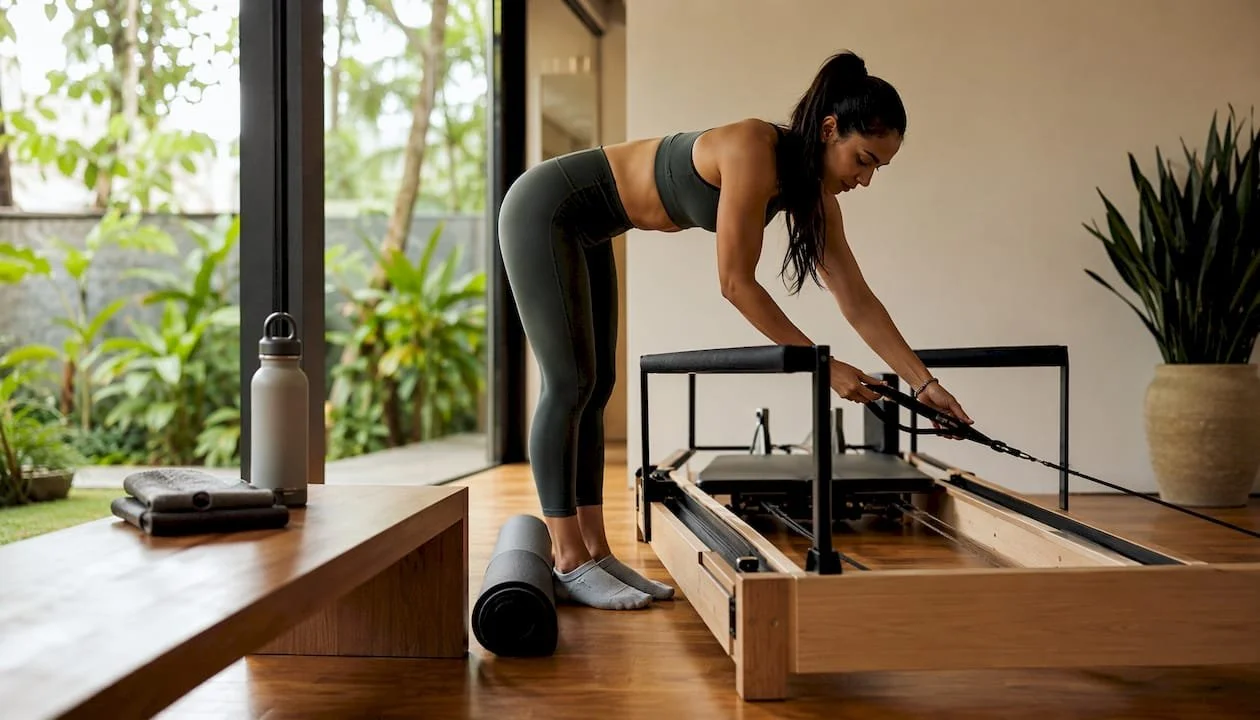
What to Wear for Reformer Pilates: Studio Outfit Guide
TL;DR:
Fitted, hardware-free clothing and grip socks are essential for safe and effective reformer Pilates classes. Wearing appropriate tops and bottoms allows instructors to see alignment and prevents damage to equipment, while grip socks ensure traction and hygiene. Loose clothing and metal hardware undermine safety, visibility, and equipment longevity.
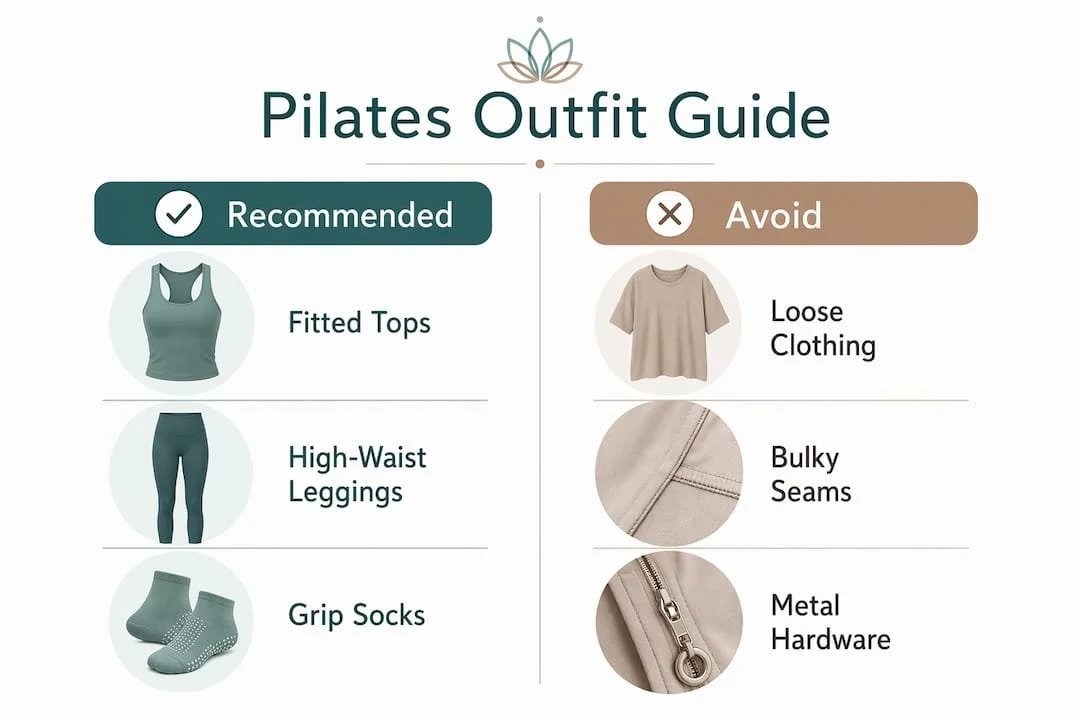
For reformer Pilates, wear fitted, smooth clothing and grip socks. That's the whole answer. Everything else is detail.
Your 10-second checklist:
Fitted tank, longline sports bra, or snug tee
High-waisted leggings or compressive bike shorts
Grip socks (required at most studios)
Hair tied low (bun, braid, or low ponytail)
Jewelry off, especially rings and bracelets
Light zip layer for warm-up, optional
Loose clothing catches on springs and hides your alignment from your instructor. Studio grip-sock policies exist for hygiene and traction, not upselling. At Amrita Yoga & Wellness, instructors rely on visual cues to correct your spine and pelvis in real time, so what you wear directly affects how much you get out of class.
Table of Contents
What should you wear on top for reformer Pilates?
Fitted is non-negotiable. When you're doing roll-ups, planks, or overhead reaches, a loose top shifts, bunches, and rides over your face. Your instructor loses sight of your ribcage and shoulder placement, which are two of the most important alignment cues in Pilates.
Best top choices:
Fitted tank tops (most popular, great airflow)
Longline sports bras or racerback crop tops
Snug long-sleeve athletic tops for cooler studios
Medium-support sports bra as a base layer
Skip underwire entirely. Prone and supine positions make underwire dig in fast, and clasps create pressure points against the carriage. A medium-support longline bra or seamless crop top handles the movement without any hardware problem.
Pro Tip: A longline sports bra worn alone counts as your top in most studios. It keeps your torso visible, stays put during inversions, and eliminates the layering issue entirely.
What bottoms work best for reformer Pilates?
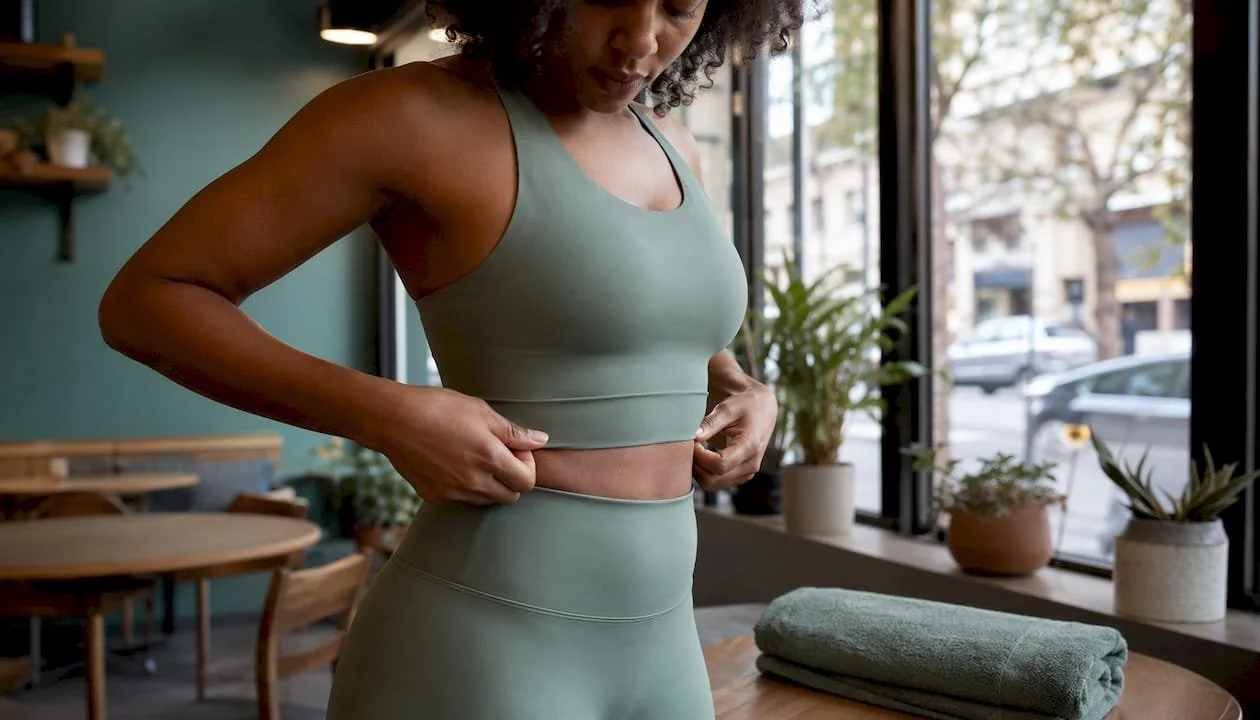
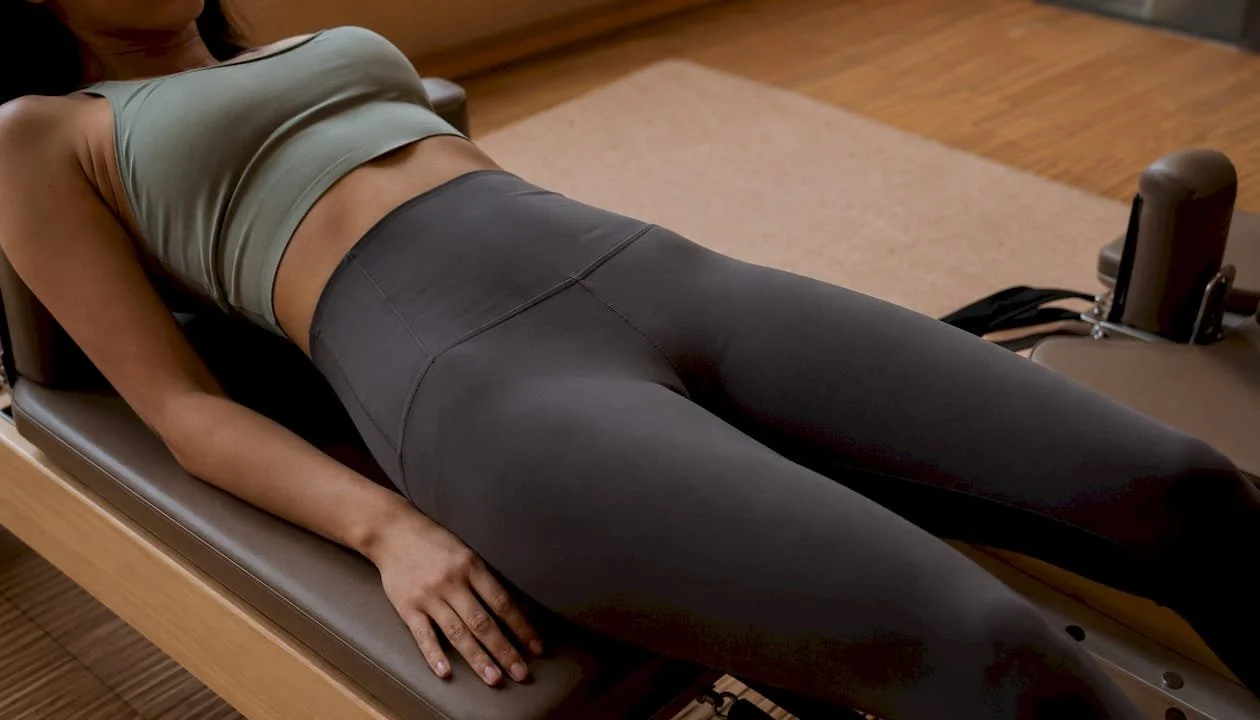
High-waist leggings are the default for good reason. High-waisted leggings with a smooth, wide waistband and flat seams prevent rolling and slipping during supine footwork, and they give your instructor a clear view of your hip and knee tracking.
Bike shorts work well in heated classes or if you run warm, but length matters. Choose shorts with enough length to avoid riding up. Shorter styles ride up during leg circles and long stretch, and the carriage surface can chafe bare skin during strap work.
What to look for in bottoms:
Four-way stretch fabric (nylon-spandex blends, typically 75/25 or 80/20)
Waistband at least 3 inches wide, no fold-over styles
Flat-locked or seamless construction at the inner thigh
7/8 or full length for reformer (ankle bunching is a minor annoyance; bare skin on straps is not)
What to avoid:
| Avoid | Why |
|---|---|
| Flared or wide-leg pants | Can snag springs or footbar |
| Cargo pockets or belt loops | Metal hardware scratches carriage vinyl |
| Fold-over yoga waistbands | Roll down during core work by the third exercise |
| Baggy sweatpants | Hide leg alignment; unsafe near springs |
| Jeans or denim | Zero stretch, metal rivets damage equipment |
Pro Tip: Beginners benefit from solid colors or mid-tones over busy prints. Instructors can spot spinal curves and hip alignment faster on a plain surface, which means more useful corrections for you.
Do you need grip socks for reformer Pilates?
Yes, at most U.S. studios. Grip socks are almost universally required in U.S. reformer studios for hygiene and safety. Regular socks are genuinely dangerous on a sliding carriage and footbar. One barefoot moment on a moving reformer explains the policy better than any studio sign.
What to look for in grip socks:
Silicone or rubber treads (full-sole patterns offer more traction than scattered dots)
Snug fit that doesn't twist during footwork
Breathable fabric (cotton-blend or moisture-wicking)
Low-profile toe seam to avoid pressure points on the footbar
Toe-separator styles (like ToeSox) are optional but improve proprioceptive feedback
On rentals vs. buying your own: Studios often sell or rent grip socks at the front desk, but rental pairs wear out and rarely fit well. A basic pair costs a modest amount and lasts through regular use. Buy before your first class.
Barefoot is acceptable at some studios, particularly smaller or private ones. Athletic shoes are never worn on the reformer. They limit foot flexibility and block the sensory feedback that reformer footwork is specifically designed to build.
Pro Tip: Pack your grip socks in the outer pocket of your bag so you never walk in without them. Forgetting on day one is the most common beginner mistake.
Which fabrics and seams hold up best on the reformer?
Moisture-wicking synthetics outperform cotton for reformer work. Moisture-wicking performance materials regulate temperature and draw sweat away when you're lying on equipment for extended periods. A soaked cotton base layer gets heavy and cold during the stretch sequence.
Fabric priorities:
Nylon-spandex blends (four-way stretch, quick-dry)
Seamless or flat-locked construction at contact points
Smooth outer surface (no textured panels against the carriage)
Seam construction matters more than most people expect. Bulky inner-thigh seams press against the carriage during footwork and become genuinely uncomfortable after 20 minutes. Flat-locked or seamless panels solve this entirely.
The hardware rule is absolute. Studios prohibit clothing with hard external hardware because metal zippers, buckles, and decorative rings scratch carriage vinyl and snag on springs. Some studios charge for equipment damage. Pullover tops and elastic-waist bottoms only.
| Fabric | Verdict |
|---|---|
| Nylon-spandex blend | Best all-around: stretch, moisture management, durability |
| Polyester-spandex | Good moisture-wicking, slightly less soft |
| Cotton | Avoid as a base layer; absorbs sweat, gets heavy |
| Bamboo blends | Comfortable but slower to dry |
Pro Tip: Bring a light zip-up or cropped sweatshirt for the warm-up and cooldown. Studios start cool, heat up mid-class, and drop again during the final stretch. Tying a hoodie around your waist doesn't work on a reformer carriage.
Quick do's and don'ts before you walk in
Do:
Wear fitted base layers from top to bottom
Bring grip socks (or check studio rental policy in advance)
Tie hair low before you arrive
Remove rings, bracelets, and dangling earrings
Pack a light removable layer and a water bottle
Check studio policies on socks, nails, and jewelry
Don't:
Wear baggy tops or wide-leg pants near the equipment
Wear anything with zippers, buttons, or metal hardware
Use regular socks or athletic shoes on the machine
Wear heavy perfume (studios are small, enclosed spaces)
Leave long nails untrimmed (they can tear carriage upholstery)
Pro Tip: Check your specific studio's class policies before your first session. Sock requirements, jewelry rules, and nail-length guidelines vary by location.
How should you handle hair, jewelry, and accessories?
Hair is a practical issue, not a style one. High buns and topknots sit exactly where your head rests on the carriage headrest. After five minutes of supine work, that pressure point becomes distracting. Low buns, low ponytails, and braids stay comfortable through the whole class.
Hair options that work:
Low bun or low ponytail (most common)
Single or double braids (secure, no movement)
Headband for flyaways or shorter hair
Non-slip hair ties over regular elastics
Removing rings, bracelets, and dangling earrings prevents pinches, skin abrasions, and catching on straps. Small stud earrings are generally fine, but the safest move is to leave jewelry at home entirely. Metal hair clips are worth skipping too since they can scratch the headrest upholstery.
Pro Tip: Pack a spare hair tie in your grip-sock pocket. Elastics break at the worst moments, and mid-class adjustments interrupt your flow and your instructor's.
What should you pack in your bag?
Keep it simple. The goal is to arrive ready, not to overpack.
Essentials:
Grip socks (your own pair)
Water bottle
Small towel (some studios request one for carriage wipe-down)
Hair ties
Light zip layer or cropped sweatshirt
Optional but useful:
Unscented deodorant
A thin mat or personal towel if your studio requests it
A fresh top for after class if you're heading somewhere else
Arrive 5–10 minutes early on your first visit. Check the front desk for sock rentals if you forgot yours, confirm any studio-specific rules, and get settled on your reformer before class starts. Rushing onto the machine cold is how small injuries happen.
Why fit, fabric, and studio rules actually matter
The attire rules at reformer studios aren't about aesthetics. They exist because instructors need to see spine curves, shoulder placement, and pelvic alignment to give safe corrections. Loose clothing blocks that feedback loop entirely. In a group class, an instructor scanning six reformers has seconds to spot a misaligned pelvis. Fitted clothing makes that possible; baggy clothing makes it a guess.
Equipment protection is the second reason. Carriage vinyl is expensive to replace. Metal hardware scratches it on contact, and bulky seams can catch on springs under load. Some studios include damage fees in their liability waivers.
Grip socks reduce slipping on the carriage and footbar while also limiting shared-surface contamination on studio equipment. Most U.S. reformer studios state sock requirements explicitly for both safety and hygiene reasons.
What instructors actually watch for in your first class:
Neutral spine vs. flat back during footwork
Shoulder blade position during arm work
Pelvic tilt during the hundred and roll-ups
Knee tracking over the second toe during leg press
Fit, not brand, is what instructors prioritize. Clothing that stays put and allows visual assessment reduces mid-class adjustments and improves how much you learn. For more on why precise alignment matters in reformer Pilates, the functional stakes go well beyond what you wear.
Key Takeaways
Fitted, hardware-free clothing and grip socks are the complete reformer Pilates dress code: everything else is a preference, not a rule.
| Point | Details |
|---|---|
| Fitted base layers | Tops and bottoms must stay close to the body to avoid catching on springs and to let instructors see alignment. |
| High-waist leggings | A wide, smooth waistband and flat-locked seams prevent rolling and pressure points during supine work. |
| Grip socks required | Most U.S. studios require grip socks for traction and hygiene; buy your own pair for $8–$15 before class. |
| No hardware rule | Metal zippers, buckles, and jewelry scratch carriage vinyl and can trigger equipment damage fees. |
| Amritayogawellness | Amrita Yoga & Wellness offers beginner reformer classes and studio guidance for first-time practitioners in Philadelphia. |
What instructors actually want you to know
The clothing conversation comes up in almost every beginner's first session, and it's worth saying plainly: nobody is judging your outfit. Instructors ask about fit because they're watching your spine, not your style.
The most common beginner mistake isn't wearing the wrong brand. It's showing up in a loose tee and fold-over yoga pants, then spending half the class pulling fabric out of the way. That's frustrating for you and makes it harder for your instructor to help. One fitted outfit solves it.
You don't need expensive or branded apparel. A basic pair of compressive leggings and a snug tank from any athletic brand works perfectly. The only thing most beginners genuinely need to buy before class is grip socks. Everything else is probably already in your drawer.
Studios welcome questions. If you're unsure about the sock policy, the temperature, or whether your outfit is appropriate, ask at the front desk before class. That's a much better use of two minutes than adjusting your waistband through the entire footwork series.
Ready to try your first reformer class?
Amrita Yoga & Wellness in Philadelphia offers beginner-friendly reformer classes where fit and function matter more than gear. Whether you're stepping onto a reformer for the first time or returning after a break, the studio's approach keeps things practical: show up in fitted clothing, bring your grip socks, and the rest takes care of itself.
Browse reformer class resources on the Amritayogawellness site, or book a beginner session directly at amritayogawellness.com to get started. Drop-in and trial options are available for new practitioners.
Useful sources and further reading
Policies vary by studio, so always confirm sock requirements and jewelry rules before your first class.
What to Wear to Reformer Pilates — Vitalis Studios: General attire guidance and studio expectations
Pilates Grippy Socks Guide — DeadSoxy: Grip-sock features, fit, and traction explained
Reformer Pilates Client Safety & Studio Guidelines — Elizabeth Nadine: Equipment protection and jewelry/hardware rules
What to Wear to Pilates — Inner Soul: Fabric selection and fit-over-brand guidance
What to Wear to Pilates — Rank and Style: Waistband and seam construction details
Pilates resistance ring fitness benefits: How correct clothing and accessories support movement quality
Amrita Yoga & Wellness — Reformer Pilates resources: Studio-level guidance and class information
Recommended
Pilates Certification Programs Philadelphia: Best In-Person Options
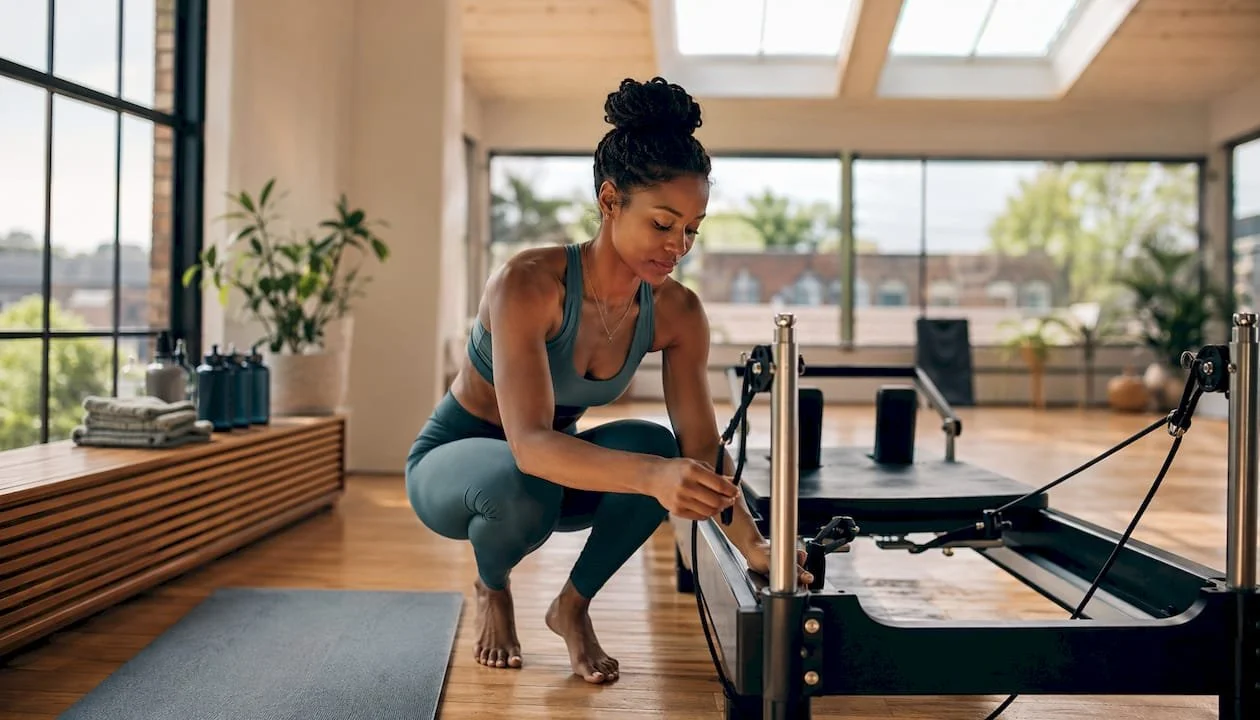
If you want in-person, NCPT-qualifying Pilates certification in Philadelphia, three programs are worth contacting first: the Drexel Pilates Training Program, SOLMAR x Polestar, and Thrive Pilates Yoga teacher training.
Here's the short version of why each one belongs on your list:
Drexel Pilates Training Program — A 450-hour comprehensive curriculum divided into three progressive modules (mat, mixed equipment, reformer) over a full academic year. University-backed, cohort-based, and explicitly structured to prepare students for the NCPT exam. The cohort runs from September through June.
SOLMAR x Polestar — A studio-hosted Polestar pathway that emphasizes movement science and rehab-informed teaching. Strong fit if you want brand recognition with Polestar and a contemporary, clinically grounded methodology.
Thrive Pilates Yoga teacher training — A local studio-run program focused on practical studio readiness and boutique-studio hiring relationships in Philadelphia.
Your immediate next step: email each program's admissions contact and ask three things — current cohort start dates, total program hours, and whether the curriculum explicitly prepares students to sit for the NPCP NCPT exam.
Pro Tip: Ask every program for a sample weekly schedule before you apply. A program that can't show you one hasn't thought carefully about your time.

Table of Contents
Which Philadelphia Pilates certification program fits your goals?
How do you pick the right program for where you want to teach?
How do you build real teaching experience in Philadelphia after you certify?
Amrita Yoga & Wellness: a local resource for practice hours and mentorship
Which Philadelphia Pilates certification program fits your goals?
| Program | Total Hours / Scope | Certification / Accreditation | Format & Schedule | Prerequisites | Duration | Cost / Tuition | Location / Contact |
|---|---|---|---|---|---|---|---|
| Drexel Pilates Training Program | 450 hours; comprehensive curriculum (Mat, Reformer, Trapeze Table (Cadillac), Chair, Ladder Barrel, and Spine Corrector) | NCPT prep (NPCP-qualifying comprehensive curriculum) | In-person cohort; three modules (fall/winter/spring) | ~30 hours prior practice recommended | ~9 months (Sept–June) | Contact admissions | Drexel Westphal College, Philadelphia |
| SOLMAR x Polestar | Not publicly listed | Polestar brand certification; NCPT eligibility — confirm with admissions | In-person; studio-hosted modules | Contact SOLMAR for current requirements | Contact admissions | Contact admissions | SOLMAR studio, Philadelphia area |
| Thrive Pilates Yoga | Not publicly listed | Studio certificate; NCPT eligibility — confirm with admissions | In-person; studio-based | Contact Thrive for current requirements | Contact admissions | Contact admissions | Thrive studio, Philadelphia |
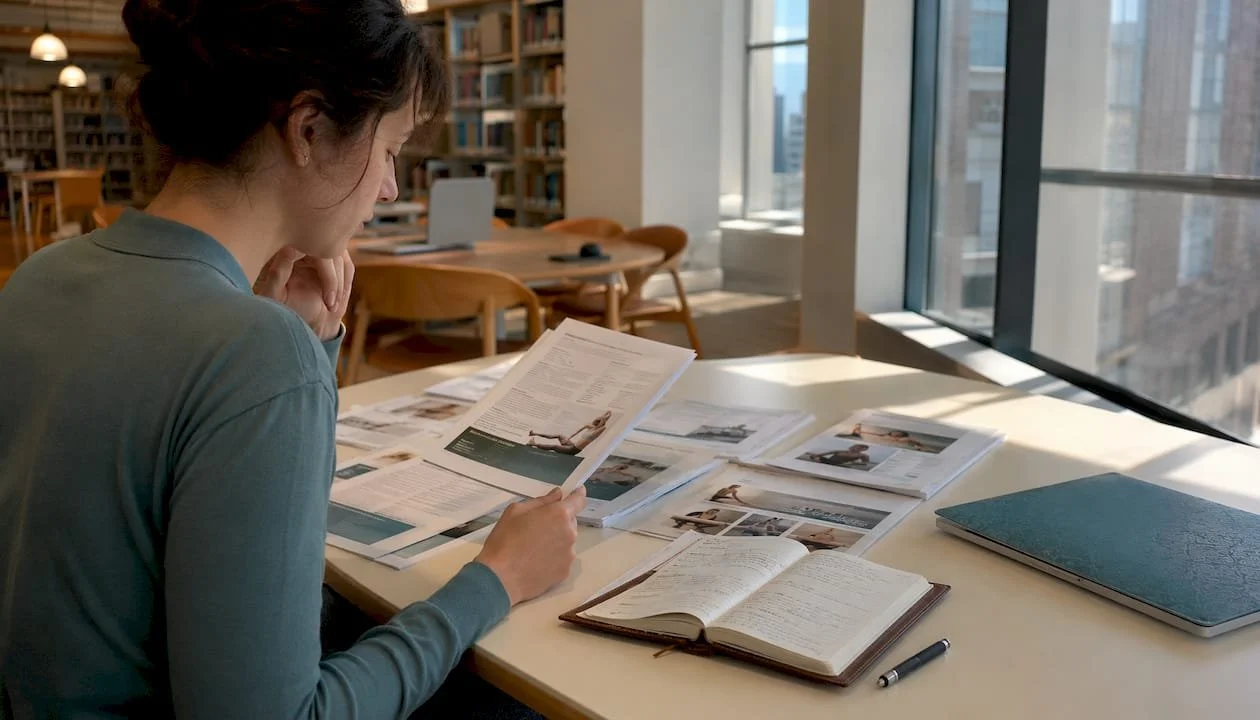
A few notes: Drexel's hours and cohort structure are publicly documented. For SOLMAR x Polestar and Thrive, tuition and cohort dates require a direct inquiry — both programs update these seasonally.
The single most important question to ask every program: "Does your curriculum explicitly prepare students to sit for the NPCP NCPT exam, and does it cover the full comprehensive repertoire?"
Confirm the program covers all six equipment categories: Mat, Reformer, Trapeze Table (Cadillac), Chair, Ladder Barrel, and Spine Corrector.
Ask how supervised teaching hours are documented and signed off for your NCPT application.
Request instructor credentials upfront — master instructors, physical therapists, or NPCP-affiliated mentors signal a serious program.
Detailed profiles: what each program actually offers
Drexel Pilates Training Program
Drexel's program is the most structurally transparent option on this list. It runs as a cohort-based, one-year curriculum with three sequential modules: mat work in the fall, mixed equipment in the winter, and reformer in the spring. Total hours reach 450, which meets the NPCP's minimum for comprehensive NCPT eligibility.
Curriculum modules covered:
Mat (foundational and advanced repertoire)
Reformer
Cadillac / Trapeze Table
Chair
Ladder Barrel and Spine Corrector
The program includes formal apprenticeship phases (Apprentice 1 and Apprentice 2), where students accumulate supervised teaching hours under faculty oversight. That structure matters: the NPCP requires documented supervised hours as part of your NCPT application, and Drexel's sign-off process is built into the cohort model. The recommended minimum prior practice is approximately 30 hours before admission. Tuition is not publicly listed; contact Drexel Westphal's admissions office directly.
Pro Tip: The Drexel cohort fills on a set academic calendar. If you miss the September start, you wait a full year. Reach out in spring to confirm your spot.
SOLMAR x Polestar
SOLMAR hosts a Polestar Pilates pathway, one of the established brand certification routes recognized across the U.S. and internationally. Polestar's methodology is built around movement science and clinical application, making it a natural fit for instructors who want to work alongside physical therapists or in rehab-adjacent settings.
Curriculum modules and total hours are not publicly listed for the SOLMAR-hosted version; contact the studio directly to confirm scope. The key question to ask: does the Polestar pathway offered here cover the full comprehensive repertoire, or only mat and reformer? That distinction determines NCPT eligibility.
Local studio support at SOLMAR is a genuine advantage. You're training in the environment where you may eventually teach, which accelerates the transition from student to working instructor.
Thrive Pilates Yoga teacher training
Thrive runs a studio-level teacher training with a practical, hire-ready focus. The program's strength is its local studio relationships — graduates enter a network of boutique Philadelphia studios that already know the Thrive training standard.
Total hours and curriculum scope are not publicly listed. Before applying, ask Thrive directly whether the program covers the full six-category comprehensive repertoire and whether it prepares students for the NCPT. If your goal is immediate local employment in a boutique studio rather than a clinical or academic setting, Thrive's pipeline is worth the inquiry.
Cost for both SOLMAR x Polestar and Thrive: contact admissions. Neither program publishes current tuition publicly.
How do you pick the right program for where you want to teach?
The answer-first version: match your career goal to the program's primary strength before you compare anything else.
NCPT credential + academic structure → Drexel. The 450-hour cohort is the clearest path to NCPT eligibility in Philadelphia.
Rehab-informed methodology + Polestar brand recognition → SOLMAR x Polestar. Useful if you plan to work in clinical fitness or alongside PTs.
Boutique studio hiring pipeline → Thrive. Best if you want to teach locally within months of finishing, not years.
There is no single "best" Pilates certification — the right choice depends entirely on where you intend to teach and what your clients will need from you.
Questions to ask every program before you commit:
Does this program explicitly prepare students to sit for the NPCP NCPT exam?
What is the total hour count, and how are supervised teaching hours documented?
Who are the lead instructors, and what are their credentials (master instructor, PT, NPCP-affiliated)?
What does the apprenticeship or mentorship structure look like week to week?
Do graduates receive job placement support or studio referrals?
What continuing education options exist after certification?
Red flags to watch for:
Vague total hours ("over 200 hours" with no breakdown)
No mention of supervised teaching or apprenticeship
Instructor credentials not listed publicly
No clear curriculum scope (can't confirm all six equipment categories)
No answer when you ask about NCPT eligibility
Once you've received replies, schedule a shadow day or info session at the top one or two programs. Sitting in on a class tells you more about teaching culture than any brochure.
Does your program actually prepare you for the NCPT exam?
The NCPT (Nationally Certified Pilates Teacher) is the primary recognized credential in the U.S. It's administered by the NPCP (National Pilates Certification Program) and is NCCA-accredited, which puts it in the same credentialing tier as other nationally recognized fitness certifications.
Key NCPT application basics from the 2026 NPCP handbook:
A minimum duration for the comprehensive curriculum pathway
Exam consisting of multiple-choice items with a time limit
A defined passing score is required
There is an application fee covering initial certification period
The full comprehensive repertoire should include Mat, Reformer, Trapeze Table (Cadillac), Chair, Ladder Barrel, and Spine Corrector.
A program that covers only mat and reformer does not qualify you to sit for the comprehensive NCPT exam. Confirm the full six-category scope before enrolling.
Brand certifications from Polestar, Balanced Body, STOTT, BASI, and Peak each carry their own employer recognition and methodology. Some studios specifically hire for a brand credential. Many instructors pursue both a brand pathway and the NCPT, since the two serve different purposes: brand certs signal methodology fluency, while the NCPT signals independent professional validation. Online and hybrid options exist, but hands-on supervised hours remain required for NCPT-qualifying comprehensive training.
Pro Tip: Start a dedicated log of every supervised teaching hour from day one of your program. Programs document hours differently, and a clean personal record prevents delays when you file your NCPT application.
How do you build real teaching experience in Philadelphia after you certify?
Philadelphia studios hire based on observed teaching hours, private-session readiness, and clear client programming skills. A certificate alone rarely gets you booked. What actually moves the needle:
Apprenticeship hours during training — the most direct signal to local studios that you've taught real clients under supervision
Mock private sessions — practice designing and delivering a 30–45 minute session for a specific client profile before you graduate
Client intake competency — studios want instructors who can read an intake form and build a session around what a client needs versus what they want; programming that balances both is what keeps clients returning
Community classes — teaching free or low-cost community sessions builds reps fast and generates early testimonials
Clinical partnerships — if you trained with a rehab focus (Polestar pathway), reach out to PT clinics about co-teaching or referral arrangements
To request a shadow day at a Philadelphia studio, send a short email with your certification status, your availability, and one or two sentences on your teaching focus. Keep it under 150 words. Attach a brief bio and, if you have one, a link to a demo video or a reference from your training program.
For building synchronized class delivery and atmosphere, focus on consistent cueing rhythm and clear transitions between exercises — these are the first things a studio owner notices during a shadow observation.
Pro Tip: Collect a short written testimonial from every practice client during training. Three genuine testimonials from real people carry more weight in a studio inquiry than a polished resume.
Key Takeaways
Philadelphia has three credible in-person Pilates instructor training pathways, and the right one depends on your career goal, not on which program has the most name recognition.
| Point | Details |
|---|---|
| Confirm NCPT eligibility first | Ask every program whether it covers all six equipment categories and meets the 450-hour NPCP minimum, as specified in the NPCP handbook. |
| Match program to career goal | Drexel suits NCPT-track students; SOLMAR x Polestar fits rehab-informed paths; Thrive targets boutique studio placement. |
| Supervised hours are non-negotiable | Document every supervised teaching hour from day one; the NCPT application requires a verified log. |
| Brand certs and NCPT serve different purposes | A Polestar or Balanced Body cert signals methodology; the NCPT signals independent professional validation. |
| Amrita Yoga Wellness supports local practice | Amrita Yoga & Wellness in Philadelphia offers reformer classes and community sessions where aspiring instructors can log practice hours while training. |
What training in Philadelphia actually prepares you for
The part no program brochure tells you: the first year after certification is mostly about reps, not credentials. Teaching three privates back to back requires a different kind of agility than passing a written exam. You need to move fluidly between a client's intake goals and what their body actually shows you in the first ten minutes.
What matters most in that early period is the quality of your supervised hours during training, not the total count. A program that puts you in front of real clients with a mentor watching and correcting you is worth more than one that logs hours through observation alone. The cohort model at Drexel, for instance, builds that accountability into the structure. Polestar's clinical framing does something similar for rehab-track instructors.
A typical early-career week in Philadelphia might look like: two to three paid privates, one community class, and two hours of continuing education or practice. That rhythm builds fast if you graduate with a studio relationship already in place. It stalls if you're starting cold.
Prioritize programs with real mentorship and clear supervised-hour documentation. That combination de-risks the transition from student to working instructor more than any single credential.
Amrita Yoga & Wellness: a local resource for practice hours and mentorship
If you're working toward certification and need consistent reformer practice time or a local studio environment to build your hours, Amrita Yoga & Wellness in Philadelphia is a practical next stop. The studio offers Pilates classes, reformer sessions, and a welcoming community for practitioners at every level — exactly the kind of environment where a trainee can log practice hours, observe experienced instructors, and get comfortable in a real studio setting before they're running sessions solo.
Aspiring instructors can use Amrita's class schedule to supplement their program training, build client-facing confidence, and connect with the local wellness community. To explore current class offerings or ask about shadowing opportunities, visit Amrita Yoga & Wellness and reach out directly through the site's contact page.
Useful sources to read next
NPCP 2026 NCPT Handbook — Primary source for exam eligibility, the 450-hour minimum, exam format, passing score, and application fee. Read this before you apply to any program.
Drexel Westphal Pilates Training Program — Full cohort structure, module breakdown, apprenticeship phases, and admissions guidance. Start here if Drexel is on your shortlist.
Fitnesstrainer: 9 Best Pilates Certifications — Useful overview of brand certification pathways (STOTT, BASI, Polestar, Balanced Body) with duration and recognition context.
Erica Bell Pilates: Programming Private Sessions — Practical guidance on building client-centered private session plans; directly relevant to early-career teaching.
Open Exam Prep: NPCP NCPT — Exam prep context and instructor skill emphasis; useful once you're in a program and preparing for the NCPT.
SOLMAR x Polestar and Thrive Pilates Yoga — Contact each studio directly for current cohort dates, tuition, and curriculum scope. Neither program publishes full details publicly; a direct inquiry is the only way to get accurate, current information.
Recommended
Pilates Class Formats in Philadelphia: 2026 Guide
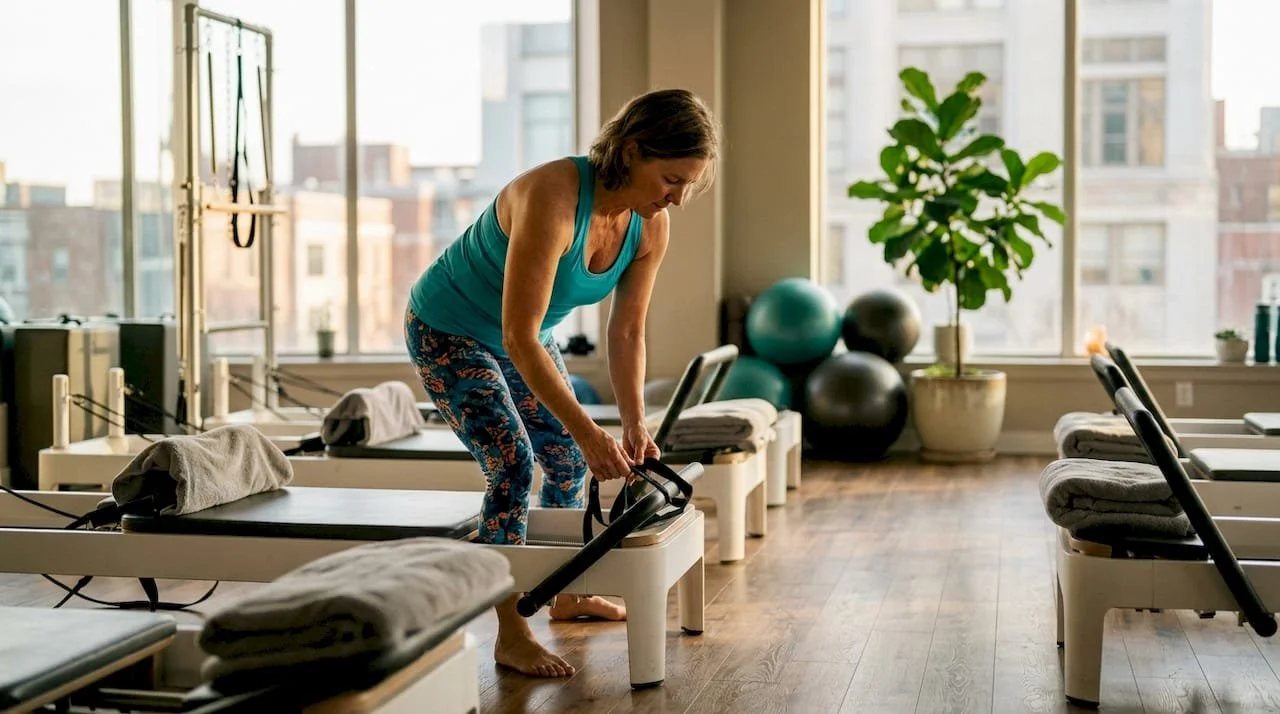
TL;DR:
Philadelphia offers a variety of Pilates classes, including mat, reformer, and specialty formats for different goals. Beginners should choose smaller classes with experienced instructors or private sessions for better guidance. Amritayogawellness provides diverse Pilates options along with other wellness services in a community-focused environment.
What Pilates class formats are available in Philadelphia?
Philadelphia offers a solid range of Pilates formats, from floor-based mat work to equipment-driven reformer sessions and specialty classes built around specific goals. Here's a quick breakdown of what you'll find locally:
Mat Pilates: Bodyweight exercises on a mat, typically in group fitness classes of 8–20+ participants. Affordable, widely available, and great for building foundational core strength.
Reformer Pilates: Uses a spring-resistance machine for controlled, full-body work. Group reformer classes run 6–12 participants, offering more individual attention than large mat sessions.
Springboard Pilates: A wall-mounted apparatus with springs and bars. Targets the full body with a focus on alignment and controlled resistance, often used in smaller class settings.
Chair/Tower fusion classes: Combines the Pilates chair and tower apparatus for targeted work on stability, balance, and functional strength.
Cardio-focused Reformer classes: Incorporate a jumpboard attachment for low-impact plyometrics. These add dynamic intensity while keeping stress off the joints.
Prenatal and postnatal Pilates: Specialty formats led by instructors with additional training in prenatal movement and safety modifications.
Rehabilitation-focused Pilates: Often called clinical or therapeutic Pilates, these classes require instructors with relevant healthcare training and are suited to post-injury recovery.
Athletic performance Pilates: Designed for athletes seeking cross-training benefits, focusing on power, mobility, and sport-specific movement patterns.
Amrita Yoga & Wellnessin Philadelphia offers diverse formats across these categories, making it a practical starting point for anyone exploring local options.
Pro Tip: If a class label sounds unfamiliar, ask the studio directly: what equipment is used, who the class is designed for, and what progression looks like. Nusu's 2025 guidance makes this the single most useful step for anyone new to Pilates.
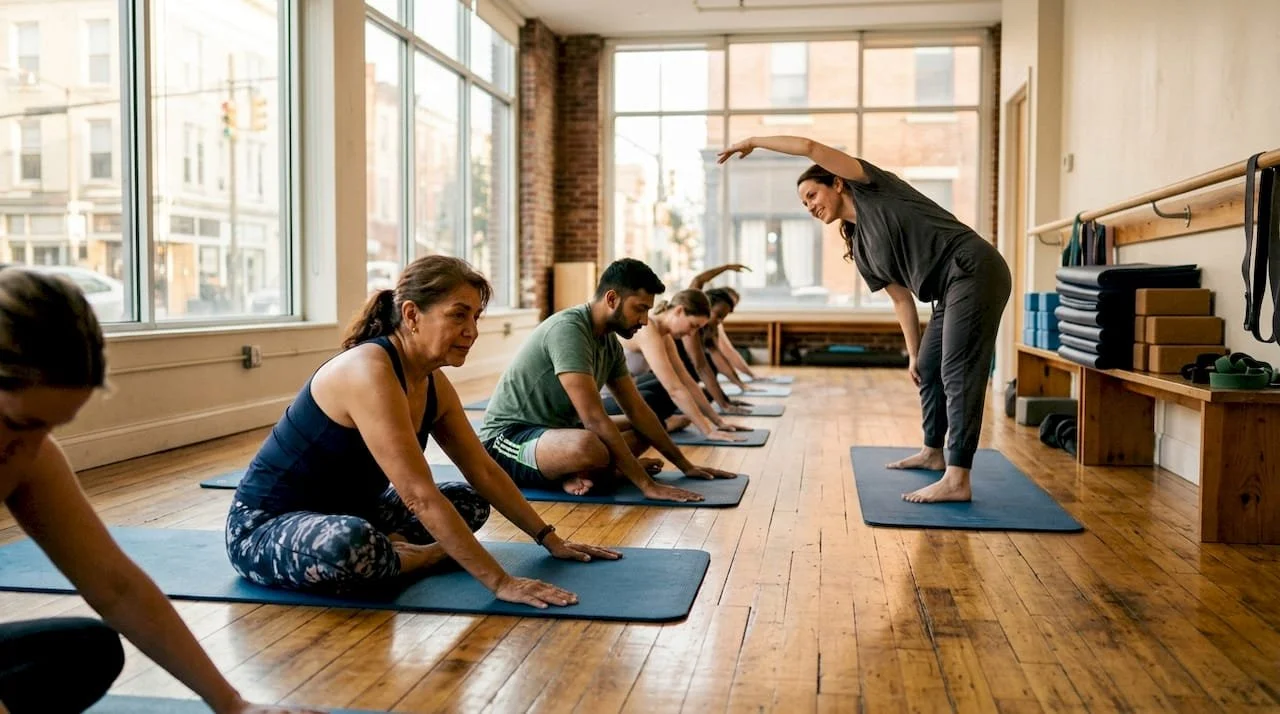
How to choose the right Pilates class in Philadelphia
Start with your goal, not the class name. Nusu's 2025 guidance recommends asking studios about format, target audience, expectations, and coaching structure before committing, especially if you're new to Pilates.
A few practical considerations:
Experience level: Beginners benefit from a beginner Pilates guide and smaller class sizes where instructors can correct form. A group mat class of 20 people isn't the best place to learn the basics.
Group vs. private: Private and semi-private sessions offer tailored instruction adapted to your goals and any physical limitations, with direct feedback that group classes can't always provide. They cost more, but the personalization is real.
Class duration: Standard sessions run 50–60 minutes, which includes warm-up, main exercises, and enough time for proper instruction.
Accessibility: Most studios offer modifications for different fitness levels and physical limitations. Ask upfront whether the format accommodates your specific needs.
Specialty classes: Prenatal, rehab, and athletic formats require instructors with additional relevant training. Verify credentials before signing up.
Pricing and scheduling: Look for studios offering flexible membership options or drop-in rates that fit your routine without locking you into a rigid commitment.
Amritayogawellness brings Pilates and wellness together in Philadelphia
Pilates is one piece of a larger wellness picture, and Amritayogawellness builds that picture in one place. The studio offers Pilates alongside yoga, barre, tai chi, and massage therapy, so you're not piecing together a routine from multiple locations.
Whether you're starting with mat work or ready to try reformer classes, Amritayogawellness provides class options for beginners through advanced practitioners, with a community-focused environment that makes showing up easier. The studio also offers workshops and wellness services, including tarot readings, for those interested in a broader approach to self-care. Visit amritayogawellness.com to browse the current class schedule and book your first session.
Key Takeaways
Philadelphia's Pilates class formats range from accessible mat sessions to specialty equipment-based classes, and matching the format to your goal is what determines results.
| Point | Details |
|---|---|
| Format variety | Philadelphia offers mat, reformer, springboard, chair/tower, cardio reformer, and specialty classes. |
| Group class size | Mat classes run 8–20+ participants; reformer classes are capped at 6–12 for more attention. |
| Private sessions | One-on-one and semi-private formats offer personalized programming and direct feedback. |
| Class duration | Standard Pilates sessions run 50–60 minutes, including warm-up and main exercises. |
| Amritayogawellness | Offers diverse Pilates formats in Philadelphia alongside yoga, barre, and wellness services. |
Reformer Pilates for Weight Loss: What Really Works
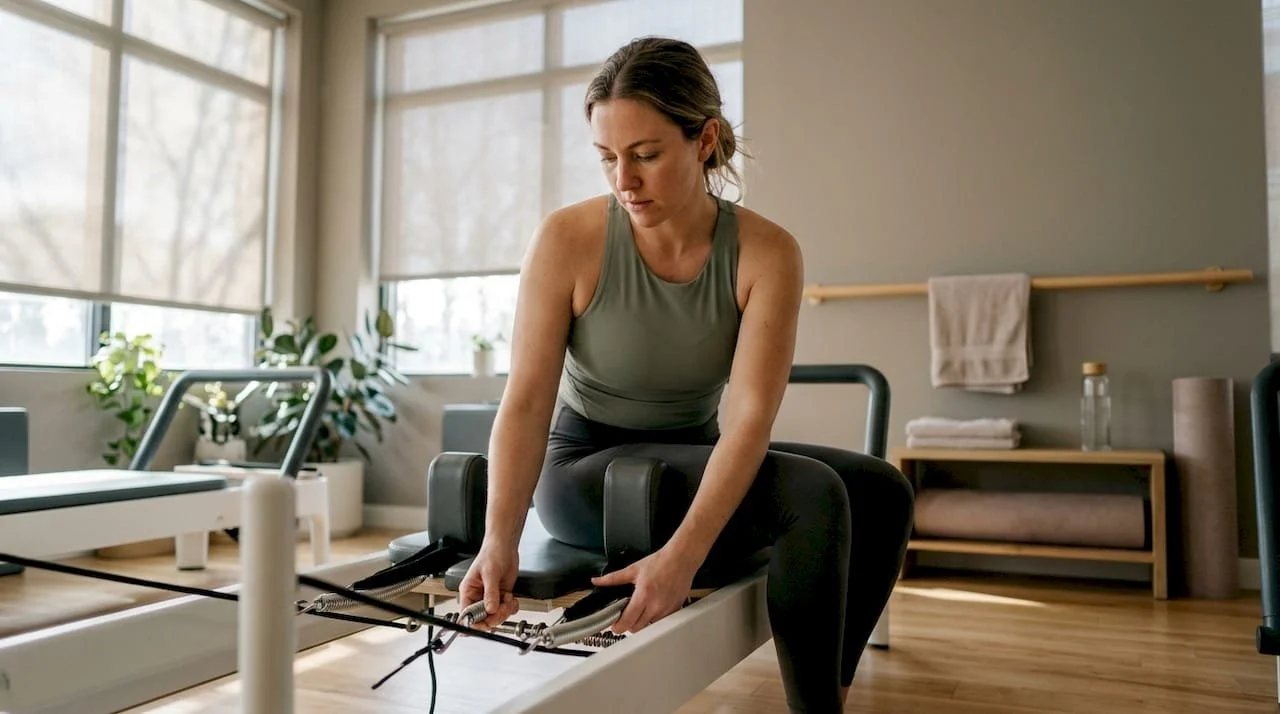
TL;DR:
Reformer Pilates builds lean muscle and improves body composition through low-impact resistance training, supporting fat loss over time. A 12-week routine of three weekly sessions can reduce waist, hip, and chest circumferences by 1 to 3 kilograms. Combining reformer Pilates with moderate cardio and a calorie deficit results in sustainable weight loss and body shaping within 6 to 8 weeks.
Reformer Pilates is a low-impact resistance training method that supports weight loss primarily by building lean muscle and improving body composition, not by burning large numbers of calories alone. A 12-week protocol of three sessions per week produces statistically significant reductions in waist, hip, and chest circumference, with 1–3 kg of weight loss. The scale tells only part of the story. Reformer Pilates reshapes the body from the inside out, making it one of the most sustainable fat loss tools available for adults who want results without punishing their joints.
How many calories does reformer Pilates burn?
Calorie burn is the first question most people ask, and the honest answer is: it depends heavily on class style and your body weight. A 70 kg adult burns approximately 175–200 kcal per 30 minutes doing a standard reformer session. That number sits below running and cycling, but it is not the whole picture.
A typical 50-minute reformer class burns 250–450 calories depending on intensity. Fast-paced classes using jumpboards can push that figure above 500 calories, while classical style sessions land closer to 200–280 calories. The range is wide because reformer Pilates is not a single workout. It is a spectrum.
| Exercise type | Approx. calories (50 min) |
|---|---|
| Reformer Pilates (classical) | 200–280 kcal |
| Reformer Pilates (standard) | 250–450 kcal |
| Reformer Pilates (jumpboard) | 500+ kcal |
| Brisk walking | 200–250 kcal |
| Running (moderate pace) | 450–550 kcal |
| HIIT | 400–600 kcal |
Wearable devices consistently undercount Pilates calorie burn because the movements are controlled and isometric rather than aerobic. Do not rely on your fitness tracker as a precise measure. The real weight loss value of reformer Pilates comes from what it does to your body between sessions, not just during them.
How reformer Pilates improves body composition and supports fat loss
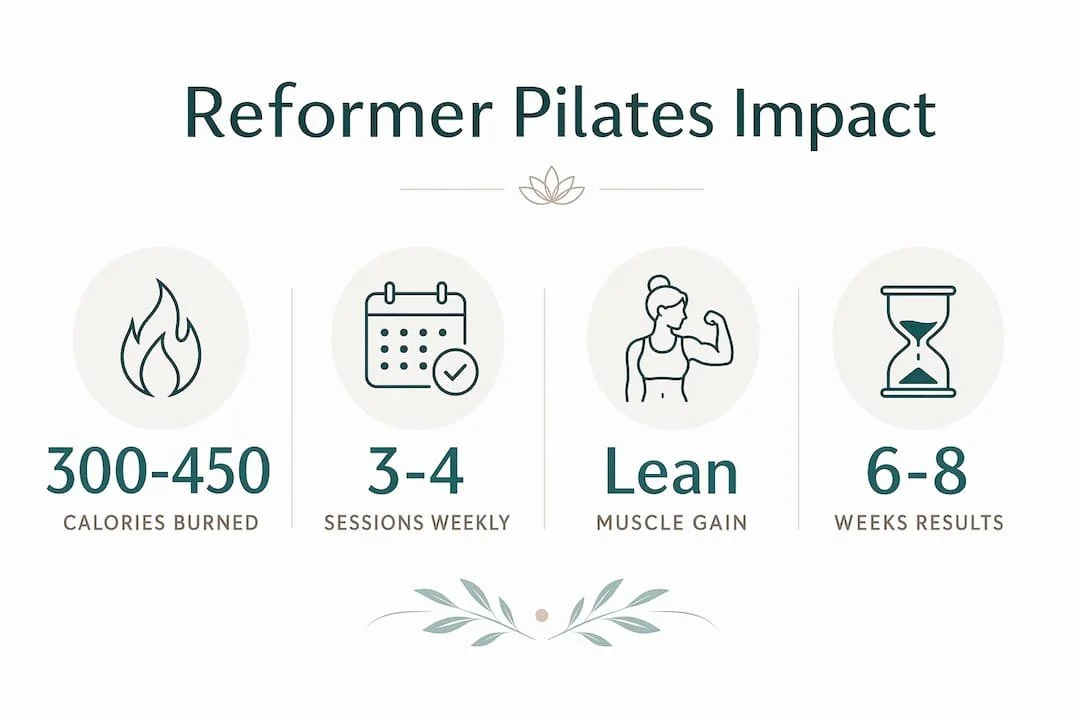
Body composition change is where reformer Pilates earns its reputation. Building lean muscle through consistent reformer training raises resting metabolism by roughly 100–200 calories per day. That means your body burns more fuel around the clock, even while you sleep.
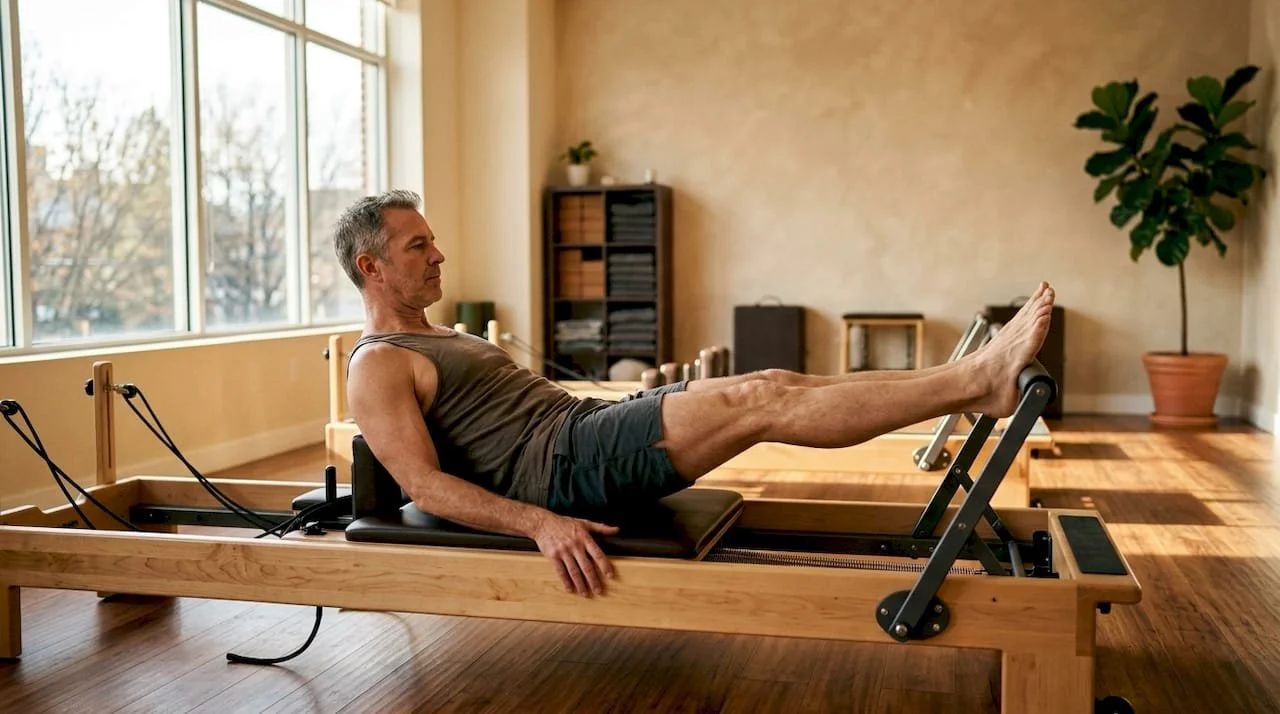
The reformer's spring resistance system is the key mechanism here. Progressive overload through spring resistance enhances lean muscle hypertrophy in a way that mat Pilates cannot replicate. More muscle means a higher resting metabolic rate, which compounds over weeks and months into meaningful fat loss.
Several visible changes happen before the scale moves:
Posture correction pulls the spine into alignment, making the abdomen appear flatter almost immediately.
Core strengthening tightens the deep stabilizers, creating visible abdominal definition.
Circumference reductions in the waist, hips, and chest appear within 8–12 weeks of consistent practice.
Clothing fit changes before body weight does, because fat loss and muscle gain can offset each other on the scale.
Pro Tip: Track your progress with a tape measure around your waist and hips every two weeks. The scale may not move for the first month, but your measurements almost certainly will.
Reformer Pilates also preserves lean mass during periods of calorie restriction, which is critical. Losing muscle while dieting slows metabolism and makes long-term weight maintenance harder. The lean mass preservation advantage of reformer over mat Pilates makes it the smarter choice when fat loss is the goal.
How often should you do reformer Pilates for weight loss?
Frequency is where most people either undercommit or overdo it. The research is clear: 3–4 reformer sessions per week, combined with 1–2 moderate cardio sessions and a 200–400 kcal daily calorie deficit, produces visible changes within 6–8 weeks. That combination is the most effective weight loss Pilates routine for adults who want sustainable results.
Here is a practical weekly structure that works:
Monday: Reformer Pilates (45–50 minutes, full body)
Tuesday: Moderate cardio (30 minutes of brisk walking, cycling, or swimming)
Wednesday: Reformer Pilates (45–50 minutes, emphasis on lower body)
Thursday: Rest or gentle yoga
Friday: Reformer Pilates (45–50 minutes, upper body and core focus)
Saturday: Moderate cardio or a second reformer session if energy allows
Sunday: Full rest
Consistency matters far more than intensity. Three to four weekly sessions yield better results than sporadic high-intensity efforts, and pairing reformer Pilates with low-impact cardio helps break through plateaus when progress stalls.
The most common mistakes people make are skipping rest days and ignoring nutrition. Reformer Pilates is demanding on the stabilizer muscles, and those muscles need recovery time. Overtraining leads to fatigue, poor form, and a higher injury risk, especially in the lower back and shoulders. A 200–400 kcal daily deficit from food is far easier to sustain than trying to burn everything off in the studio.
Pro Tip: If you are new to reformer Pilates, start with two sessions per week for the first month. Let your body adapt to the spring resistance before adding a third or fourth session.
Pairing your reformer practice with yoga for weight loss on rest days adds active recovery, reduces cortisol, and keeps you moving without taxing the same muscle groups.
What are the best reformer exercises for burning fat and toning?
The best reformer workouts for fat loss combine full-body muscle engagement with controlled breathing and progressive resistance. These exercises are the foundation of any effective weight loss Pilates routine:
The Hundred: A core-intensive breathing exercise that elevates heart rate and activates the deep abdominals. It is the standard warm-up in most reformer classes for good reason.
Long Stretch Series: A plank-based sequence performed on the moving carriage. It challenges the core, shoulders, and glutes simultaneously, burning more calories per minute than most mat exercises.
Frog and Leg Circles: Targets the inner thighs, hip flexors, and glutes with spring resistance. These movements sculpt the lower body while improving hip mobility.
Elephant: A hamstring and core exercise that builds posterior chain strength, which is critical for posture and metabolism.
Knee Stretches: A high-rep, low-load exercise that elevates heart rate and targets the glutes and quads.
Circuit-style reformer sessions combining these movements burn 250–350 calories per session and build functional strength when done 3–4 times weekly. That calorie burn adds up to 750–1,400 calories per week from reformer alone, before accounting for the metabolic boost from added muscle.
| Exercise | Primary muscles | Calorie contribution |
|---|---|---|
| The Hundred | Core, hip flexors | High (heart rate elevation) |
| Long Stretch Series | Core, shoulders, glutes | High (full body load) |
| Frog and Leg Circles | Inner thighs, glutes | Moderate |
| Elephant | Hamstrings, core | Moderate |
| Knee Stretches | Glutes, quads | Moderate to high |
Beginners should prioritize form over speed. A complete beginner's guide to reformer classes covers what to expect in your first sessions, including how to set spring resistance and carriage position correctly. Poor form on the reformer reduces muscle activation and increases injury risk, which defeats the purpose entirely.
Mindful breathing during every exercise also matters more than most people realize. Controlled breathing during Pilates reduces cortisol, the stress hormone directly linked to abdominal fat accumulation. That is an indirect but real weight loss benefit that no calorie counter captures.
Key Takeaways
Reformer Pilates supports sustainable fat loss by building lean muscle that raises resting metabolism, improving body composition, and reducing cortisol, making it most effective when combined with moderate cardio and a modest calorie deficit.
| Point | Details |
|---|---|
| Calorie burn varies widely | A 50-minute session burns 250–450 kcal; jumpboard classes can exceed 500 kcal. |
| Muscle raises metabolism | Each pound of lean muscle added increases resting calorie burn by 100–200 calories per day. |
| Frequency drives results | Three to four sessions per week with 1–2 cardio days produces visible changes in 6–8 weeks. |
| Measure circumference, not just weight | Waist and hip measurements reveal fat loss that the scale often masks early on. |
| Form before speed | Correct spring resistance and movement quality maximize muscle engagement and reduce injury risk. |
The scale is the wrong scorecard
After years of watching people start and stop fitness programs, the pattern is always the same. They step on the scale after three weeks of consistent reformer Pilates, see a number that has barely moved, and conclude it is not working. That conclusion is almost always wrong.
The mind-body awareness that reformer Pilates builds is genuinely different from what you get in a cardio class. You learn to feel your body moving through space, to notice tension, to breathe deliberately. That awareness carries into the rest of your day. People who practice reformer Pilates consistently tend to eat more mindfully and respond to hunger differently. That is not a small thing when weight management is the goal.
The reformer is also uniquely honest. You cannot fake good form on a moving carriage. The spring resistance exposes every muscular imbalance, every weak stabilizer, every tight hip flexor. Fixing those things makes every other form of exercise more effective. Reformer Pilates is best understood as a supporting act that makes the whole production better, not just a standalone calorie-burning tool.
My honest recommendation: commit to 8 weeks before judging results. Take photos, measure your waist, and notice how your clothes fit. The scale will catch up. And when it does, you will have built a body that holds its results because the muscle is there to support them.
— Juiced
Reformer Pilates classes at Amrita Yoga & Wellness
Amritayogawellness offers reformer Pilates classes in Philadelphia designed for adults at every fitness level, from complete beginners to experienced practitioners looking to push their results further.
The studio's instructors guide you through progressive spring resistance work, proper form, and class structures built around real fat loss and body composition goals. Amritayogawellness also offers a broader wellness approach that includes integrated wellness services connecting physical practice with mental and emotional balance. Whether you are starting your first reformer session or adding structure to an existing routine, the community and expert instruction at Amritayogawellness give you the foundation to see consistent, lasting results.
FAQ
How long does it take to see weight loss results from reformer Pilates?
Most people see visible circumference reductions and clothing fit changes within 6–8 weeks of three to four sessions per week. Scale weight changes typically follow at the 8–12 week mark.
Is reformer Pilates better than mat Pilates for fat loss?
Reformer Pilates produces greater lean mass preservation and higher calorie burn than mat Pilates because the spring resistance system enables progressive overload and full-body muscle engagement.
How many calories does a reformer Pilates class burn?
A standard 50-minute reformer class burns 250–450 calories depending on intensity. Jumpboard-style classes can exceed 500 calories, while classical sessions burn closer to 200–280 calories.
Can beginners do reformer Pilates for weight loss?
Yes. Beginners benefit from reformer Pilates because the spring resistance is adjustable, making exercises accessible at any fitness level. Starting with two sessions per week and focusing on beginner Pilates fundamentals builds the foundation for safe, effective fat loss.
Do I need to change my diet to lose weight with reformer Pilates?
A 200–400 kcal daily calorie deficit from nutrition significantly accelerates results. Reformer Pilates alone produces modest weight loss. Pairing it with a moderate calorie reduction and 1–2 cardio sessions per week delivers the most consistent fat loss outcomes.
Recommended
What Does a Pilates Reformer Do for Your Body?
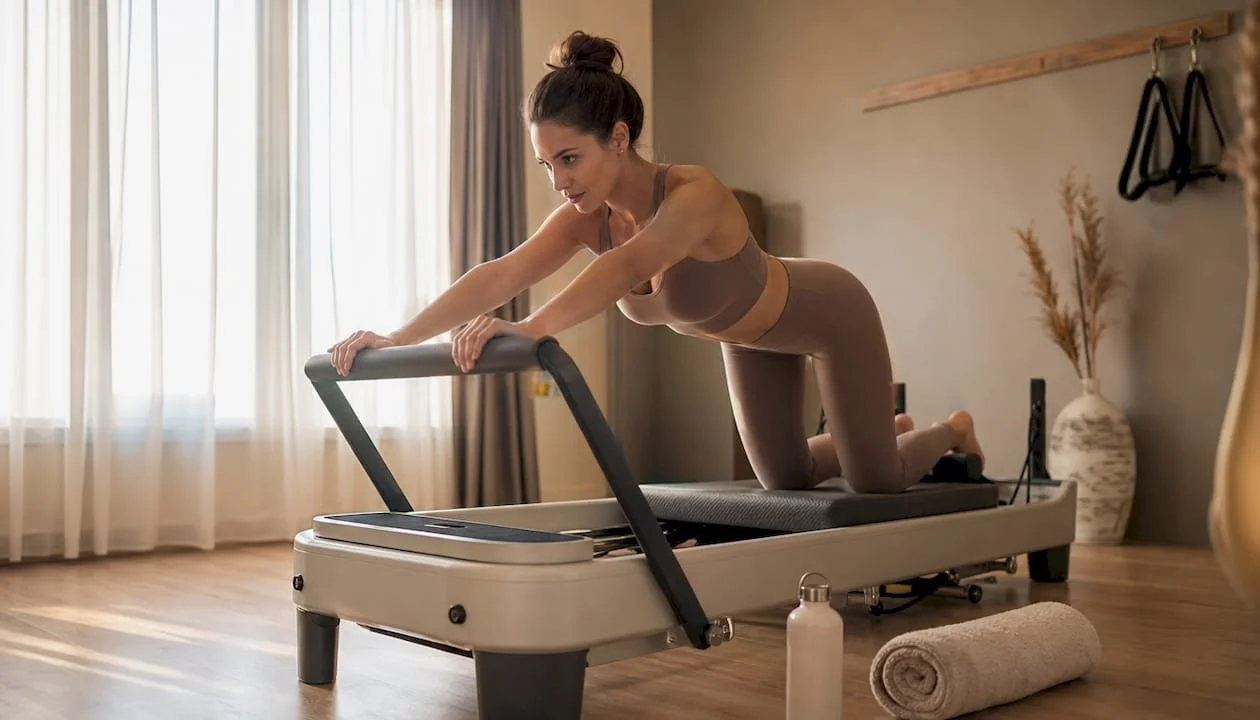
TL;DR:
A Pilates reformer is a spring-resistance machine that enhances core strength, posture, and mobility through controlled movement. It activates deep stabilizers, corrects muscle imbalances, and trains functional mobility, making it effective for injury recovery and long-term conditioning. Most noticeable results include improved posture, stronger stabilizer muscles, and better movement habits over weeks of consistent practice.
A Pilates reformer is a spring-resistance exercise machine that builds core strength, corrects posture, increases functional mobility, and conditions your entire body through controlled, low-impact movement. Understanding what does pilates reformer do for your body goes far beyond the common assumption that it is just a stretching tool. The reformer uses a sliding carriage, adjustable springs, and a pulley system to create resistance that challenges your muscles through full ranges of motion. Clinical research confirms measurable improvements in strength, posture, and pain reduction, making it one of the most versatile training tools available for beginners and experienced practitioners alike.
How does the Pilates reformer improve core strength and muscle balance?
The reformer targets deep core stabilizers that most traditional gym exercises miss entirely. Specifically, it activates the transversus abdominis and lumbar multifidus, the two muscles most responsible for spinal stability and injury prevention. A 2015 study confirmed that deep core activation improved significantly after just 8 weeks of consistent reformer use. That result matters because these muscles are chronically underactive in people who sit for long periods or rely on surface-level abdominal exercises like crunches.
Traditional strength training tends to reinforce dominant muscle groups, which creates imbalances over time. The reformer corrects this by requiring stabilization against a moving carriage, which forces your weaker, underused muscles to engage. Your hips, legs, and posterior chain all work together rather than in isolation. This whole-body recruitment pattern is what makes reformer Pilates benefits so distinct from standard resistance training.
The spring system also increases resistance dynamically as the springs stretch. That means your muscles work through the full arc of motion rather than only at peak contraction. The result is more complete muscle development and better neuromuscular coordination over time.
Deep core muscles (transversus abdominis, lumbar multifidus) are activated more effectively than in traditional training
The moving carriage demands stabilization, correcting overuse of dominant muscles
Hips, legs, and the posterior chain are engaged simultaneously, not in isolation
Dynamic spring resistance trains muscles through their full range of motion
Pro Tip: Focus on slow, controlled movement rather than speed during your first sessions. Precision activates the deep stabilizers. Speed lets your surface muscles take over and defeats the purpose.
What does the Pilates reformer do for posture and spinal alignment?
The reformer produces measurable postural improvements that few other exercise methods can match. A 12-week reformer Pilates program increased postural symmetry by 37.1%, reduced pain by 50%, and lowered disability scores by 42.5% in a study of 30 adults aged 18–45. Those numbers reflect real structural change, not just subjective comfort.
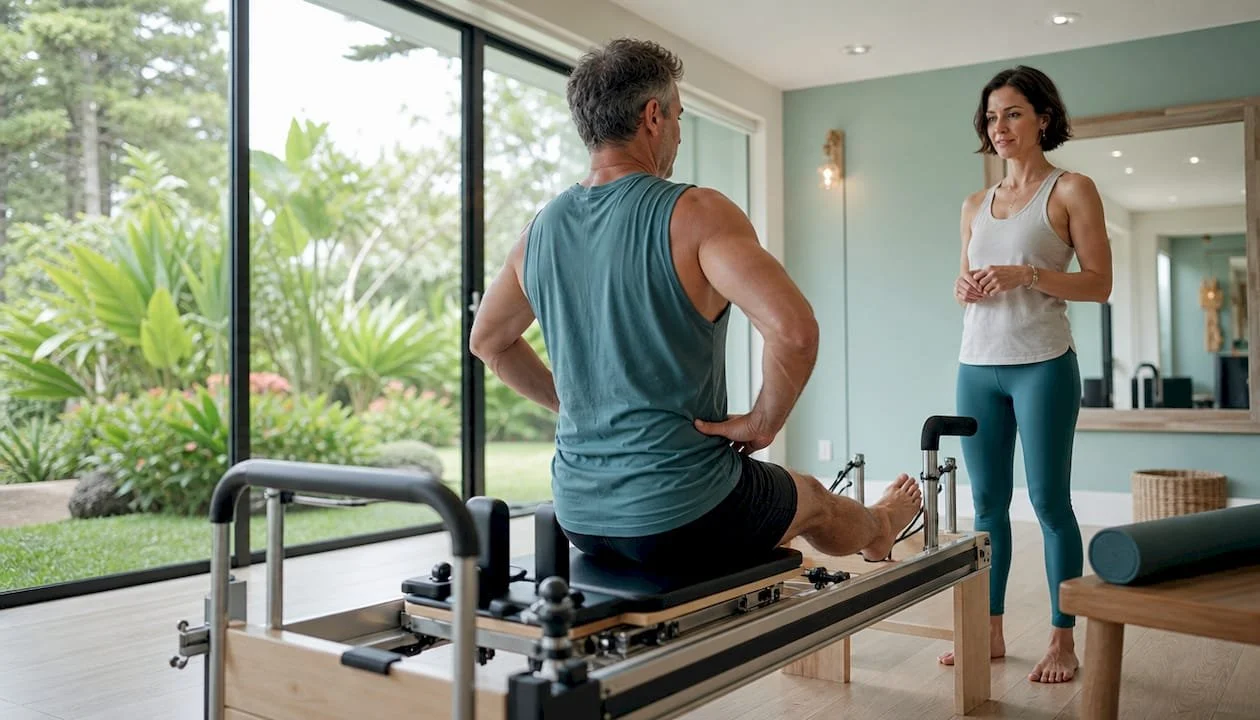
The mechanism behind this is straightforward. Spring resistance creates constant feedback during movement. Your body learns to self-correct alignment because any deviation from neutral spine immediately changes how the springs feel. That sensory loop retrains postural awareness faster than most static exercises.
Most practitioners notice posture improvements within 4–6 weeks of consistent practice. The muscles weakened by sedentary habits, particularly the deep spinal extensors and hip stabilizers, begin to reactivate and hold the body more efficiently upright.
| Benefit | What the research shows |
|---|---|
| Postural symmetry | 37.1% improvement after 12 weeks |
| Pain reduction | 50% decrease in reported pain scores |
| Disability index | 42.5% reduction in functional limitations |
| Onset of visible change | Posture improvements typically within 4–6 weeks |
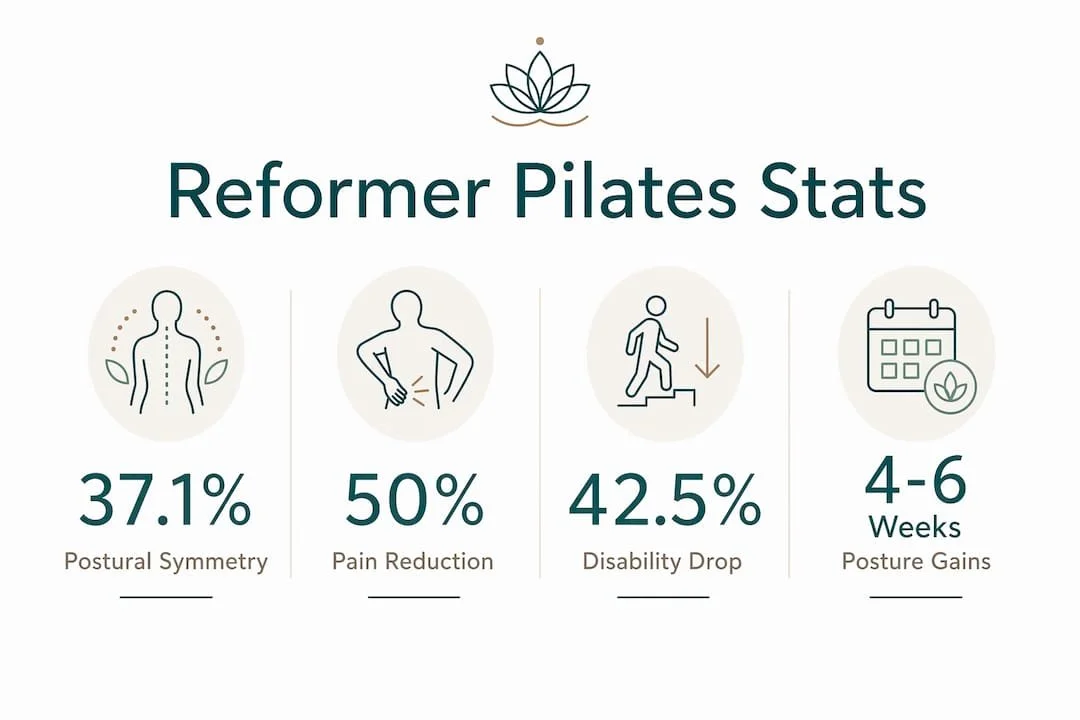
Pro Tip: Ask your instructor to film a side-view video of your posture on week one. Repeat at week six. The visual difference is often more motivating than any number on a scale.
In what ways does the reformer enhance flexibility and functional mobility?
Functional mobility and passive flexibility are not the same thing. Passive flexibility means your muscles can lengthen when relaxed. Functional mobility means you can control movement through a full range of motion while under load. The reformer trains the second, which is far more useful in daily life and athletic performance.
The moving carriage and spring resistance create what researchers describe as controlled ranges of motion under load. Your muscles lengthen and contract simultaneously, which builds strength at end ranges where most people are weakest. This is especially valuable for people with stiffness from desk work, past injuries, or age-related mobility restrictions.
The reformer is also one of the few training tools that makes mobility work accessible to people who cannot yet perform bodyweight movements comfortably. Springs can assist you through a range of motion rather than just resist it. That means someone recovering from a hip replacement and a competitive athlete can both use the same machine productively.
Functional mobility trains strength through full ranges of motion, not just passive lengthening
Spring assistance allows people with restrictions to safely access greater movement ranges
Muscles lengthen under load, building strength at end ranges where injuries most often occur
Tension relief and muscle lengthening happen simultaneously, not sequentially
People with stiffness, prior injuries, or limited mobility benefit without high joint stress
How does the reformer support injury recovery and long-term conditioning?
The reformer's adjustable spring system is its most clinically significant feature. Springs can be set to assist movement, making exercises easier, or to resist movement, making them harder. This dual function means the same machine works for someone in early rehabilitation and someone training at an advanced level. Scalable spring resistance accommodates injury recovery and high-level conditioning without requiring different equipment.
For people with chronic low back pain, the evidence is particularly strong. A 12-week reformer course produced lasting pain and function improvements that held at a 6-month follow-up. That durability suggests the reformer does not just mask symptoms. It retrains the movement patterns that caused the problem in the first place.
The low-impact nature of reformer training also protects joints. Unlike running or heavy lifting, the carriage absorbs much of the compressive force that would otherwise travel through knees, hips, and the spine. This makes it a practical long-term fitness option for people across all ages and fitness levels.
Set springs for assistance first. Beginners and those in rehab should use lighter spring loads to build movement patterns before adding challenge.
Progress gradually. Increase spring resistance only when you can complete each movement with full control and no compensations.
Prioritize consistency over intensity. Practicing 2–3 times per week over several months produces functional strength gains that occasional hard sessions cannot replicate.
Use the reformer alongside physical therapy. For clinical populations, the clinical reformer approach integrates reformer work with targeted rehab protocols for faster recovery.
Track your range of motion, not just your weight. Functional improvements show up in how you move before they show up on a scale.
What are common misconceptions about reformer Pilates?
The most persistent myth is that reformer Pilates is easy. It is not. It is controlled, low-impact strength training that demands precision and deep muscular engagement. The effort is less visible than lifting heavy weights, but the internal demand on stabilizing muscles is significant. Many people leave their first session surprised by how much they feel the next day.
A second misconception is that the reformer is only for flexibility. Flexibility is a byproduct, not the goal. The primary adaptation is neuromuscular control, which means your brain and muscles learn to coordinate more efficiently. That coordination improvement is what drives the posture, strength, and mobility gains that practitioners report.
Beginners also tend to underestimate the learning curve. The reformer requires you to manage your body position, breathing, and spring resistance simultaneously. That coordination takes time to develop.
Reformer Pilates is strength training, not stretching. Expect muscle fatigue, not just a relaxed stretch.
Precision matters more than range. A small movement done correctly outperforms a large movement done sloppily.
Results require consistency. Attending once a week produces awareness. Attending 2–3 times per week produces physical change.
Springs that feel easy are not always set correctly. Ask your instructor to assess your spring load before assuming the workout is too simple.
Pro Tip: If your first few sessions feel manageable, that is normal. The reformer's learning curve means your nervous system is adapting before your muscles are fully challenged. Stick with it past week three before drawing conclusions.
Key takeaways
The Pilates reformer builds functional strength, corrects posture, and supports injury recovery through adjustable spring resistance that targets deep stabilizing muscles traditional training consistently misses.
| Point | Details |
|---|---|
| Core muscle activation | The reformer targets transversus abdominis and lumbar multifidus more effectively than standard gym exercises. |
| Posture improvement | A 12-week program produced a 37.1% increase in postural symmetry and a 50% reduction in pain. |
| Functional mobility | Spring resistance trains strength through full ranges of motion, not just passive flexibility. |
| Injury recovery | Adjustable springs make the reformer effective for both early rehabilitation and advanced conditioning. |
| Consistency requirement | Practicing 2–3 times per week over several months is necessary for lasting functional strength gains. |
People come to reformer Pilates expecting flexibility. What they get is something harder to name but more useful: control. After working with practitioners at various levels, the pattern I notice most is not dramatic weight loss or visible muscle gain in the first weeks. It is the moment someone realizes they are standing differently. Their shoulders are back without effort. Their lower back is not aching after a long day. That shift happens quietly, usually around week four or five, and it tends to stick.
What surprises people most is how demanding precision actually is. Slowing down a movement and holding it at the end range with spring resistance is genuinely hard work. The reformer does not let you cheat the way a barbell or a machine does. The carriage will slide if your stabilizers are not engaged. That honest feedback is what makes the tool so effective and so humbling for people who consider themselves already fit.
The deeper benefit I have observed is the retraining of movement habits. People stop hiking one hip when they walk. They stop collapsing through the shoulder when they reach overhead. Those corrections carry into everything they do outside the studio. That is the kind of conditioning that holds up over years, not just weeks. If you are curious about how reformer Pilates works at a deeper level, the research behind it is worth reading.
— Juiced
Reformer Pilates at Amrita Yoga & Wellness in Philadelphia
Amritayogawellness offers reformer Pilates classes designed for both first-time practitioners and those with an established practice. The studio's approach integrates physical conditioning with broader wellness principles, so your training connects to how you feel and move in everyday life, not just during class.
Classes are structured to accommodate different fitness levels, with instructors who adjust spring resistance and movement progressions to match where you are right now. Whether you are managing a past injury, building strength from scratch, or looking to deepen an existing practice, the sessions are built around your body's actual needs. Amritayogawellness also offers complementary wellness services, including tarot readings, for those who want to support their physical practice with intentional self-reflection. Visit amritayogawellness.com to view the current class schedule and reserve your spot.
FAQ
What muscles does the Pilates reformer work?
The reformer primarily targets deep core stabilizers including the transversus abdominis and lumbar multifidus, along with the hips, legs, and posterior chain. It engages multiple muscle groups simultaneously rather than isolating single muscles.
How quickly will I see results from reformer Pilates?
Most practitioners notice posture improvements within 4–6 weeks of consistent practice. Meaningful functional strength gains require 2–3 sessions per week sustained over several months.
Is the Pilates reformer good for back pain?
A 12-week reformer Pilates program produced a 50% reduction in pain and a 42.5% drop in disability scores in clinical populations. Benefits were maintained at a 6-month follow-up, suggesting lasting improvement rather than temporary relief.
Can beginners use the Pilates reformer safely?
Beginners benefit directly from the adjustable spring system, which can assist movement rather than resist it. This makes the reformer accessible and low-risk for people new to exercise or returning from injury.
Is reformer Pilates the same as mat Pilates?
Reformer Pilates uses spring resistance and a moving carriage to create dynamic load through full ranges of motion. Mat Pilates relies on bodyweight only, which limits the depth of core activation and the range of exercises available.
Recommended
Hot Pilates Benefits: Your Complete Fitness Guide
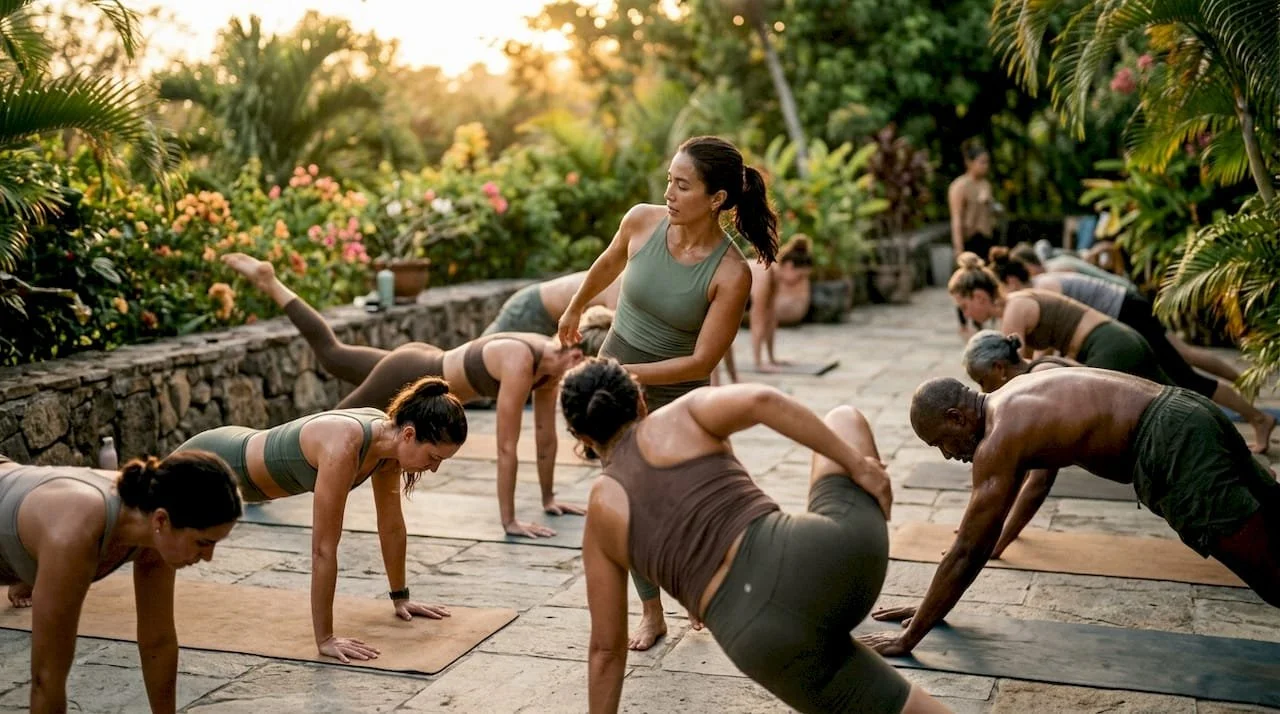
TL;DR:
Hot Pilates is performed in a heated room to enhance flexibility, calorie burn, and mental focus. The heat increases muscle pliability, joint mobility, and cardiovascular effort without high-impact movements, providing unique physical and mental benefits. To practice safely, hydrate well, enter gradually, and cool down after each session, especially for beginners and those with joint concerns.
Hot Pilates is defined as a Pilates practice performed in a room heated to 35°C–40°C (95°F–104°F), and the benefit of hot pilates goes well beyond what you get from a standard mat class. The heat amplifies every core Pilates advantage: deeper flexibility, higher calorie burn, and sharper mental focus. Where traditional Pilates builds strength and control, the heated environment adds a cardiovascular layer and a meditative intensity that changes the entire experience. Amritayogawellness offers heated Pilates and yoga classes in Philadelphia for practitioners at every level, from first-timers to seasoned athletes.
What is the core benefit of hot pilates for your body?
Hot Pilates delivers a measurably higher physical output than room-temperature Pilates, and the science behind that difference is straightforward. Heat raises your core temperature, which triggers a cascade of physiological changes that make every movement more effective.
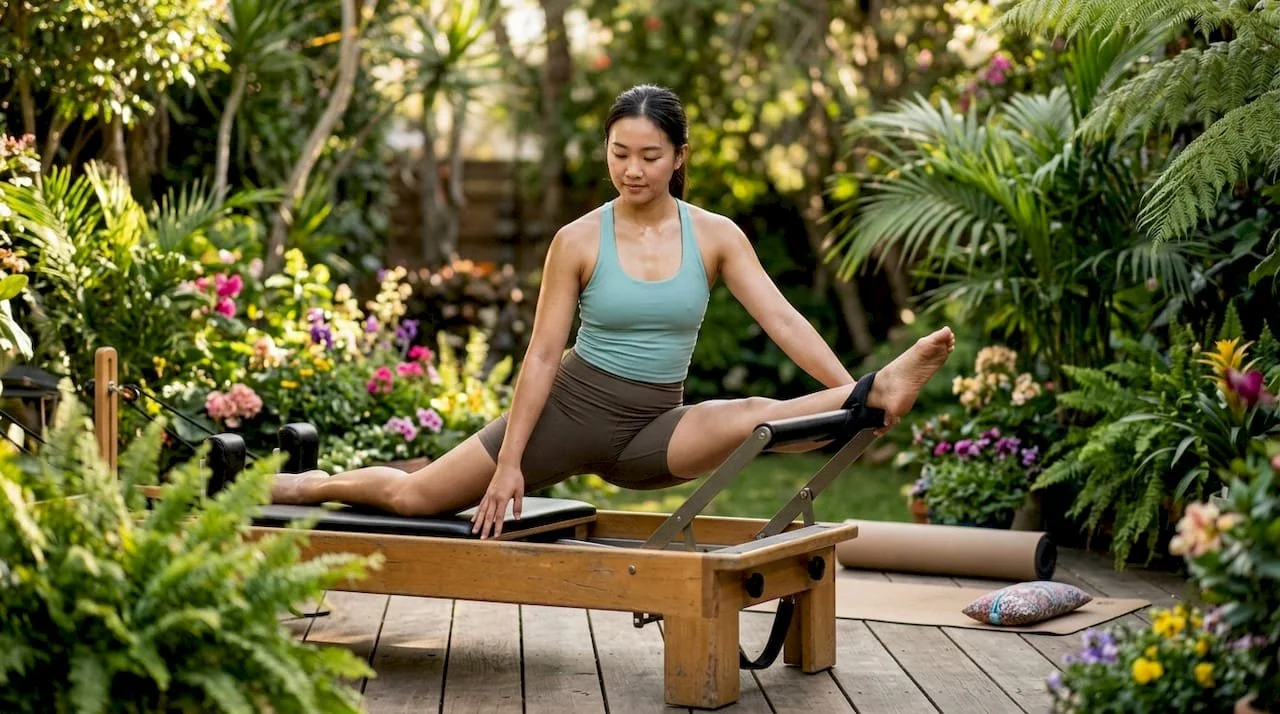
The most direct effect is on your muscles. Warmed muscle tissue stretches farther and with less resistance, which means you access deeper ranges of motion without forcing the movement. That depth is not just about flexibility. It reduces the micro-tearing risk that comes from cold muscles being pushed too hard.
Heat also acts on your joints. Increased synovial fluid production due to warmth allows smoother, less abrasive joint motion and deeper ranges of motion with less initial resistance. Warm joints are simply less prone to strain during Pilates movements. That is a meaningful advantage for anyone who has ever felt stiff at the start of a class.
The cardiovascular effect is real and quantifiable. A 60-minute hot Pilates session typically burns 300–450 calories, compared to 250–350 calories for the same routine at room temperature, with heart rate increasing by 10–20 BPM. That 20–30% increase in calorie burn comes without adding high-impact movements. You get aerobic conditioning inside a low-impact framework, which is a rare combination.
Calorie burn and heart rate: hot vs. room temperature Pilates
| Metric | Room temperature Pilates | Hot Pilates |
|---|---|---|
| Calories burned (60 min) | 250–350 | 300–450 |
| Heart rate increase | Baseline | +10–20 BPM |
| Muscle pliability | Standard | Significantly higher |
| Joint mobility | Standard | Enhanced by synovial fluid |
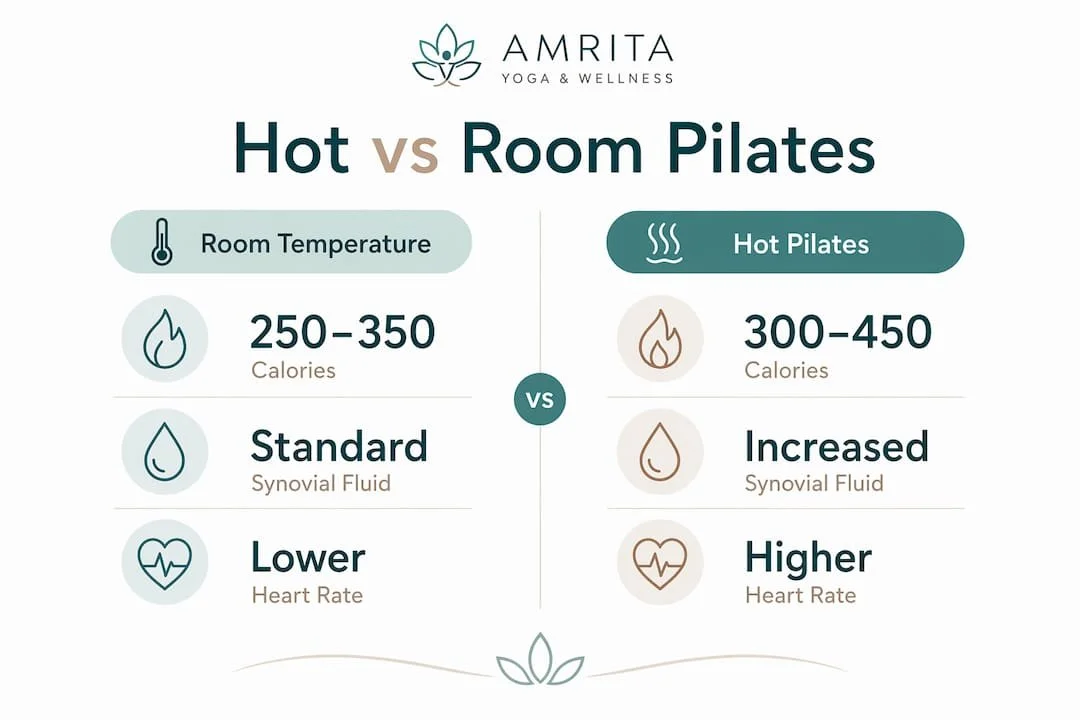
Pro Tip: Arrive at class already warm. A 5-minute brisk walk before entering the studio primes your cardiovascular system and shortens the adjustment period in the heated room.
What are the mental and wellness benefits of hot Pilates?
The mental benefits of hot Pilates are as real as the physical ones, and they come from a specific mechanism. Exercising in heat forces you to control your breath deliberately. That deliberate breathwork shifts your nervous system into a parasympathetic state, which is the rest-and-digest mode associated with calm, recovery, and reduced anxiety.
Mental benefits derive from forced focus on breathing in heat, creating a meditative, moving mindfulness state that activates the parasympathetic nervous system. Students consistently report feeling physically challenged yet mentally reset after class. That combination is not common in most fitness formats.
The mental and emotional advantages practitioners report include:
Reduced stress and anxiety through breath-regulated nervous system activation
Improved mental clarity that carries into the hours after class
Heightened present-moment focus because the heat demands your full attention
Mood improvement linked to endorphin release during elevated heart rate exercise
A sense of accomplishment from completing a physically demanding session without high-impact strain
One misconception worth addressing directly: sweating in hot Pilates does not detox your body in any meaningful clinical sense. Sweat during hot Pilates primarily aids in cooling. The detox narrative is a marketing claim, not a physiological fact. The real value of the sweat response is thermoregulation, and that process does improve with regular practice.
Pro Tip: If your mind wanders during class, return your attention to your exhale. The breath is your anchor in a heated room, and refocusing on it resets both your form and your mental state.
Who benefits most from hot Pilates, and how do you practice it safely?
Hot Pilates works for a wide range of practitioners, but certain groups see outsized results. Beginners benefit because warmed muscles allow access to deeper stretches from the first class, reducing the frustration of feeling tight and limited. Athletes and runners use it specifically for joint health, core strengthening, and active recovery between higher-intensity training days.
The low-impact nature makes hot Pilates a strong option for fitness enthusiasts seeking both aerobic conditioning and muscle toning without the joint stress of running or jumping. That makes it particularly useful for cross-training programs where recovery and mobility matter as much as output.
Safe practice follows a clear set of steps:
Hydrate with electrolytes 1–2 hours before class. Plain water is not enough. Electrolytes prevent the dizziness and cramping that dehydration causes in a heated room.
Enter the room a few minutes early. Gradual acclimatization reduces the shock of the heat and lets your body adjust before the class intensity builds.
Pace your effort in the first few sessions. The heat makes you feel more capable than you may be. Respect that gap between perceived effort and actual muscle readiness.
Never push a stretch to its absolute limit. Heat masks muscle tension, which means you can overstretch without feeling the warning signals. Stop before the end range.
Cool down for 5–10 minutes after class. A post-class cooldown in a cooler, quiet space helps regulate body temperature and heart rate, reducing the risk of fainting or dizziness.
For detailed guidance on staying safe in heated environments, the hot yoga safety tips resource from Amritayogawellness covers medical recommendations and gradual adaptation protocols that apply directly to hot Pilates practice.
How does hot Pilates support joint health and injury prevention?
Joint health is one of the most underappreciated hot pilates advantages, and it works through two reinforcing mechanisms. First, heat widens blood vessels, improving blood flow to muscles and joints, making movements smoother and improving mobility, especially during colder months. Second, Pilates itself trains the deep stabilizing muscles around the knee, hip, and spine, which are the structures most responsible for preventing common overuse injuries.
The combination is more protective than either element alone. Warm joints move more freely, and stronger stabilizers keep those joints aligned under load. That is why athletes recovering from knee or hip issues often find hot Pilates more accessible than weight-based rehabilitation exercises.
The pilates core strength work central to every class also reduces the muscular imbalances that cause strain over time. A weak core forces other structures, like the lower back and hip flexors, to compensate. Hot Pilates addresses that root cause directly.
Hot Pilates vs. traditional Pilates: joint health comparison
| Joint health factor | Traditional Pilates | Hot Pilates |
|---|---|---|
| Synovial fluid production | Standard | Increased by heat |
| Muscle tension reduction | Moderate | Higher due to warmth |
| Range of motion access | Standard | Deeper with less resistance |
| Circulation to joints | Standard | Enhanced by vasodilation |
| Cold-weather stiffness relief | Limited | Significant |
Regular exercise in heated environments also facilitates heat acclimatization over time, reducing heart rate response during general activity and increasing sweat efficiency. Your body becomes better at managing heat, which translates to lower cardiovascular strain in everyday life. That adaptation is a long-term health benefit that most practitioners do not anticipate when they start.
Key Takeaways
Hot Pilates delivers measurably greater physical and mental benefits than room-temperature Pilates by combining heat-induced physiological changes with the core-strengthening and flexibility principles of traditional Pilates.
| Point | Details |
|---|---|
| Higher calorie burn | Hot Pilates burns 300–450 calories per 60-minute session, roughly 20–30% more than room temperature classes. |
| Enhanced joint mobility | Heat increases synovial fluid production, allowing deeper, safer ranges of motion with less strain. |
| Mental reset through breathwork | Forced breath control in heat activates the parasympathetic nervous system, reducing stress and improving clarity. |
| Safe practice requires hydration | Drink electrolytes 1–2 hours before class and cool down for 5–10 minutes after every session. |
| Injury prevention through core training | Strengthening deep stabilizers in a warm environment protects knees, hips, and the lower back from overuse injuries. |
Why hot Pilates is harder to master than it looks
Hot Pilates sits in a category of its own, and I say that having observed practitioners across many fitness formats. The format looks approachable because the movements are controlled and low-impact. That appearance is misleading. The heat adds an endurance layer that exposes weaknesses in breath control and pacing that a room-temperature class never would.
The practitioners who get the most from hot Pilates are the ones who stop treating the heat as something to fight through. When you work with the heat by slowing your breath, softening unnecessary tension, and pacing your effort, the session becomes genuinely restorative. When you fight it, you exhaust yourself before the real work begins.
The biggest mistake I see is skipping the cooldown. People feel fine immediately after class and walk straight out into the cold air. That temperature shift hits the cardiovascular system hard. Five to ten minutes in a temperate space after class is not optional. It is the part of the practice that keeps you coming back without setbacks.
Integrating hot Pilates gradually, starting with one session per week and building from there, produces far better results than jumping in daily. The benefits of Pilates compound over weeks, not days. Patience with the process is what separates practitioners who thrive from those who burn out.
— Juiced
Wellness at Amrita Yoga & Wellness in Philadelphia
Physical fitness and mental well-being reinforce each other, and Amritayogawellness builds its entire program around that connection. If hot Pilates has opened your interest in practices that work on both levels, the studio's offerings extend well beyond the mat.
Amritayogawellness offers tarot readings as a complementary mental wellness practice for members who want to deepen their self-awareness alongside their physical training. The studio's Philadelphia location brings together yoga, Pilates, barre, tai chi, and massage therapy under one roof, making it straightforward to build a complete wellness routine. Class schedules, sign-ups, and full service details are available at Amritayogawellness.
FAQ
What is the main benefit of hot pilates over regular Pilates?
Hot Pilates burns 20–30% more calories per session and allows deeper muscle and joint mobility due to the heated environment, while maintaining the same low-impact structure as traditional Pilates.
Is hot Pilates safe for beginners?
Yes. Warmed muscles allow beginners to access deeper stretches from the first class, but new practitioners should hydrate with electrolytes before class and pace their effort carefully in the first few sessions.
How hot is a hot Pilates class?
Industry-standard studio temperatures for hot Pilates range from 35°C to 40°C (95°F to 104°F), which is the range that optimizes connective tissue pliability and muscle fascia warming.
Does sweating in hot Pilates detox your body?
No. Sweat during hot Pilates primarily regulates body temperature, not detoxification. The real benefit of sweating is thermoregulation, and that process improves with regular practice.
How often should you do hot Pilates to see results?
Starting with one session per week and building gradually produces the most consistent results. The physical and mental benefits compound over weeks of regular practice, not after a single session.
Recommended
Benefits of Wall Pilates: A 2026 Guide for Adults
TL;DR:
Wall Pilates uses a wall for support and feedback to improve posture, core strength, and flexibility. It offers quick visible results within 3-4 weeks while being accessible and low-impact for busy adults. The practice also reduces stress and enhances body awareness through mindful movement and breath control.
Wall Pilates is defined as a low-impact exercise method that uses a flat wall as a support and alignment tool to perform controlled Pilates movements. The benefits of wall pilates include improved posture, deeper core activation, greater flexibility, and reduced stress, all without gym equipment. Unlike reformer Pilates, which requires specialized machinery, or mat Pilates, which offers no external feedback, wall Pilates gives your body immediate tactile cues about spinal position and muscle engagement. Research from 2026 confirms that adults can see visible posture improvements in as little as 3–4 weeks of consistent practice. For busy adults seeking a low-impact, accessible workout, wall Pilates delivers results that are both measurable and sustainable.
1. How does wall Pilates improve posture and spinal alignment?
The wall acts as a biofeedback tool that provides immediate tactile feedback on spinal alignment, something mat-only Pilates simply cannot replicate. When your back, shoulders, or hips drift out of position, the wall tells you instantly. That real-time correction accelerates learning far faster than trying to self-monitor in a mirror.
Deep core muscles, specifically the transverse abdominis and multifidus, activate more reliably when the wall guides your positioning. These muscles wrap around the spine like a corset and are the primary stabilizers of your lower back. Strengthening them reduces the common postural problems adults develop from desk work, including lower back arching and rounded shoulders.
Visible posture improvements appear within 3–4 weeks, with significant deep core activation measurable at 4–6 weeks. That timeline is faster than most adults expect from a bodyweight-only practice. The wall is the reason for that speed.
Pro Tip: Stand with your heels, hips, upper back, and the back of your head all touching the wall. Hold that position for 30 seconds before each session. This teaches your nervous system what neutral spine actually feels like, so you carry that alignment into every exercise.
2. What are the core strengthening and flexibility benefits?
Wall Pilates builds strength in the muscles that most adults neglect: the deep stabilizers rather than the superficial movers. The transverse abdominis, multifidus, and pelvic floor stabilizers all engage during wall-supported movements because the wall removes the option of compensating with larger muscle groups.
Flexibility of the hamstrings and hip flexors improves faster through wall Pilates than through mat-only practice. Gravity-assisted stretches, such as lying on your back with legs extended up the wall, allow a passive, sustained stretch that deepens over time without forcing the joint. Hip flexor tightness, a near-universal problem for adults who sit for long hours, responds particularly well to this approach.
The low-impact nature of wall Pilates protects joint health while building muscular endurance. There is no jumping, no heavy loading, and no sudden directional changes. That makes it appropriate for adults recovering from minor injuries or managing chronic joint sensitivity.
Key physical advantages of wall Pilates include:
Deep core activation targeting the transverse abdominis and pelvic stabilizers
Faster flexibility gains in hamstrings and hip flexors compared to mat-only work
Improved muscular endurance through sustained, controlled movement
Joint protection due to the low-impact, bodyweight-based format
Progressive challenge by adding resistance bands or light weights once fundamentals are solid
Adding resistance toolsonce you master the basics prevents fitness plateaus and keeps the practice challenging. A Pilates ball or light dumbbells can significantly increase the demand on your stabilizers without compromising the low-impact nature of the workout. For a broader look atPilates exercises for all levels, Amritayogawellness has a detailed breakdown worth reading.
3. How does wall Pilates support mental well-being and body awareness?
Wall Pilates reduces stress and improves the mind-body connection through focused breathwork and controlled movement. The breathing patterns central to Pilates activate the parasympathetic nervous system, which is the body's rest-and-recover state. That physiological shift is why adults consistently report feeling calmer after a session, not just physically tired.
The wall enhances proprioception, which is your body's sense of where it is in space. Most adults have poor proprioceptive awareness from years of sedentary habits. The wall's tactile feedback retrains that awareness quickly, making you more conscious of how you hold your body throughout the day, not just during exercise.
Mental well-being benefits from wall Pilates include:
Stress reduction through diaphragmatic breathing and slow, deliberate movement
Improved body awareness from the wall's immediate spatial feedback
Greater focus because each movement requires conscious engagement rather than momentum
Consistency support since the accessibility of the practice makes it easier to maintain a regular routine
Building a meditation routine alongside wall Pilates amplifies these mental health benefits. The two practices share the same core principle: deliberate attention to breath and body. Adults who combine both report faster improvements in stress management than those who practice either alone.
4. What makes wall Pilates practical for busy adults?
Beginner wall Pilates routinestypically last around 15 minutes, making them realistic for adults with packed schedules. A 15-minute session is short enough to fit before work or during a lunch break, yet long enough to produce measurable results when practiced consistently. That combination of brevity and effectiveness is rare in fitness.
The equipment requirement is minimal. You need a clear, flat wall and a mat or folded blanket to protect your joints. No gym membership, no reformer machine, no special footwear. That removes the friction that causes most adults to abandon new fitness habits within the first month.
Getting started safely is straightforward:
Choose a clear wall with no baseboards, outlets, or furniture nearby that could obstruct movement.
Use a mat or folded blanket between your body and hard flooring to protect your spine and hips.
Start with 15-minute sessions three times per week and build from there.
Focus on form before repetitions. One correct repetition beats ten sloppy ones.
Add resistance gradually. Introduce a light resistance band or Pilates ball only after you can perform the basic movements with control.
Wall Pilates is scalable for all fitness levels. Beginners use the wall for stability and alignment cues. More advanced practitioners add resistance tools to increase the challenge. That scalability means you never outgrow the practice.
Pro Tip: Place your mat perpendicular to the wall so you can transition between floor and wall exercises without repositioning. This keeps your session flowing and reduces the temptation to stop and reset.
5. Common misconceptions and safety tips for wall Pilates
The biggest misconception about wall Pilates is that it produces rapid weight loss on its own. Effective weight management requires integrated calorie control and cardiovascular exercise alongside Pilates practice. Wall Pilates tones muscle and improves posture, and consistent practice can reduce waist circumference by an average of 1.7cm over 8–12 weeks. That is a real, meaningful result. It is not the same as rapid fat loss, and conflating the two leads to early dropout.
"Expecting quick fixes from wall Pilates is the primary reason adults quit before seeing results. The practice rewards consistency over weeks, not days. Visible changes in posture and core strength emerge at 3–4 weeks. Significant strength gains follow at 4–6 weeks. Patience is not optional. It is the method."
Safety mistakes to avoid:
Pressing too hard into the wall. The wall is a feedback tool, not a resistance prop. Incorrect technique such as pushing forcefully against the wall can cause neck or lower back strain.
Skipping the warm-up. Cold muscles and connective tissue are more prone to strain. Spend 3–5 minutes on gentle mobility work before beginning.
Ignoring baseboards and outlets. A clear, flat wall surface with appropriate mat coverage is the baseline for safe practice.
Progressing too fast. Adding resistance before mastering bodyweight control increases injury risk without adding proportional benefit.
Neglecting nutrition and cardio. Wall Pilates complements a balanced lifestyle. It does not replace it.
For adults exploring popular Pilates styles beyond wall work, understanding the differences between mat, reformer, and wall formats helps set realistic expectations for each.
Key Takeaways
Wall Pilates delivers measurable posture, strength, and flexibility improvements within 3–6 weeks when practiced consistently, and its low-impact format makes it one of the most accessible fitness methods for busy adults.
| Point | Details |
|---|---|
| Posture improves fast | Visible spinal alignment gains appear within 3–4 weeks of consistent wall Pilates practice. |
| Core strength is deep | The wall activates the transverse abdominis and multifidus, the stabilizers most adults never train. |
| Flexibility gains are real | Gravity-assisted wall stretches improve hamstring and hip flexor mobility faster than mat-only work. |
| 15 minutes is enough | Beginner sessions last around 15 minutes, making the practice sustainable for busy schedules. |
| Weight loss requires more | Wall Pilates tones and improves posture; fat loss also requires cardio and calorie management. |
Why wall Pilates deserves more credit than it gets
Most fitness trends promise fast results and fade within a season. Wall Pilates has stayed relevant because it actually delivers on a narrow but meaningful set of outcomes: better posture, a stronger core, and a calmer nervous system. Those three things affect how you feel every single day, not just during a workout.
What I find most underappreciated is the biofeedback mechanism. Adults who have spent years sitting at desks have genuinely lost the ability to feel when their spine is neutral. The wall gives that sensation back. Once you feel it, you start noticing when you lose it, at your desk, in the car, standing in line. That body awareness carries over into everything.
The realistic timeline matters too. Three to four weeks for posture changes is fast by any standard. But adults who expect results in one week will quit in two. Setting the right expectation upfront is the difference between a practice that sticks and one that doesn't.
My honest advice: treat the wall as a teacher, not a crutch. Use it to learn what correct alignment feels like, then carry that knowledge into mat work, reformer sessions, and daily movement. Wall Pilates is not the destination. It is one of the best starting points in fitness for adults who want results without risk.
— Juiced
Pilates and wellness at Amrita Yoga & Wellness
Amritayogawellness offers Pilates classes and wellness sessions designed for adults at every fitness level, from first-timers to experienced practitioners. Whether you want to build on the wall Pilates fundamentals covered here or explore complementary practices like barre, yoga, or massage therapy, the studio's Philadelphia-based programs provide guided, personalized support.
Amritayogawellness also offers tarot readings as part of its broader approach to well-being, connecting physical practice with self-reflection and spiritual wellness. For adults who want to go beyond the physical benefits of movement, that combination of body-focused and introspective offerings makes Amritayogawellness a genuinely well-rounded wellness hub. Visit amritayogawellness.com to browse classes and book a session.
FAQ
What is wall Pilates?
Wall Pilates is a form of Pilates that uses a flat wall as a support and alignment tool during controlled, low-impact exercises. It differs from mat and reformer Pilates by providing immediate tactile feedback on spinal position and muscle engagement.
How long does it take to see results from wall Pilates?
Visible posture and spinal alignment improvements appear within 3–4 weeks of consistent practice, with significant deep core muscle activation measurable at 4–6 weeks.
Is wall Pilates good for beginners?
Wall Pilates is one of the most beginner-friendly Pilates formats available. Sessions typically last around 15 minutes, require no equipment beyond a mat and a clear wall, and the wall itself provides alignment cues that reduce the learning curve.
Can wall Pilates help with weight loss?
Wall Pilates supports weight management by toning muscle and improving posture, and consistent practice can reduce waist circumference by an average of 1.7cm over 8–12 weeks. Significant fat loss also requires cardiovascular exercise and calorie management.
What are the mental health benefits of wall Pilates?
Wall Pilates reduces stress and improves body awareness through focused breathwork and controlled movement. The practice activates the parasympathetic nervous system, supporting a calmer mental state after each session.
Recommended
Benefits of Pilates Reformer Workout: Full Guide
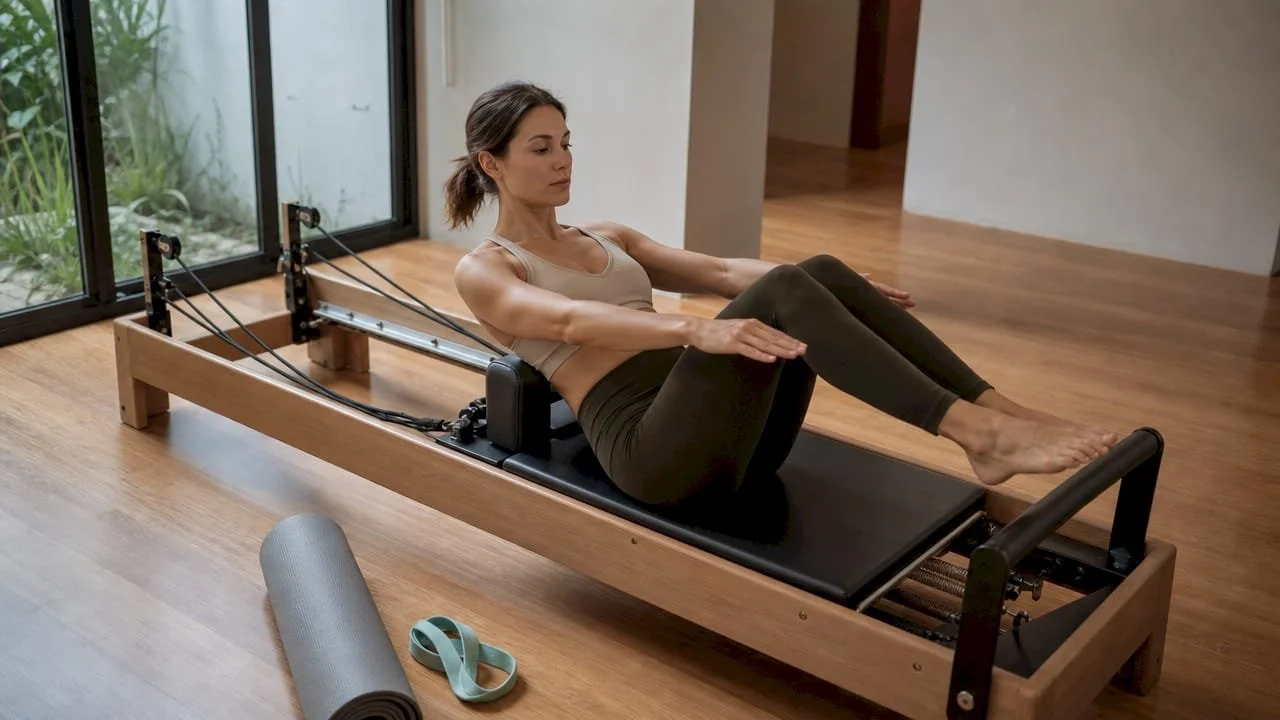
TL;DR:
Pilates reformer workouts are resistance-based exercises that enhance core strength, flexibility, and posture. Regular practice leads to significant pain reduction, improved body composition, and mental well-being within 8 to 12 weeks.
Pilates reformer workouts are defined as resistance-based, low-impact exercise sessions performed on a spring-loaded carriage machine that builds core strength, increases flexibility, reduces chronic pain, and supports full-body conditioning. The reformer machine uses adjustable spring tension to create controlled resistance across every movement, making it far more versatile than mat Pilates alone. Clinical research confirms that structured reformer programs of 8–12 weeks produce consistent improvements in pain, posture, balance, and body composition. Whether you are recovering from an injury, managing back pain, or simply looking for a sustainable fitness method, the benefits of pilates reformer workout practice extend well beyond what most people expect.
How does Pilates reformer improve core strength and stability?
The reformer activates deep core muscles, specifically the transverse abdominis and multifidus, in ways that conventional floor exercises rarely reach. These muscles sit beneath the visible surface muscles and act as the spine's internal support system. When they are weak, the spine compensates with poor movement patterns that lead to injury over time.
Reformer exercises place the body in functional positions, such as kneeling, standing, and lying on a moving surface, which forces the deep stabilizers to engage continuously. Spinal alignment and posture improve within 4–6 weeks of regular practice because the deep muscles learn to hold the spine correctly during movement, not just at rest. That is a meaningful distinction from crunches or planks, which train surface muscles in static positions.
Compared to conventional core training, reformer Pilates produces superior functional gains because the spring resistance is adjustable and the movement patterns mimic real life. A person recovering from surgery can work at low spring tension, while a trained athlete can load the same exercise heavily. This adaptability is what makes the reformer a clinical tool as much as a fitness tool.
Key advantages for core strength include:
Transverse abdominis activation during every exercise, not just dedicated "core" moves
Multifidus recruitment that supports vertebral stability at each spinal segment
Progressive resistance via spring adjustment, allowing safe overload over time
Functional movement patterns that transfer directly to daily activities like lifting and bending
Pro Tip: Start with lighter spring resistance and focus on feeling the deep abdominal muscles draw inward before adding load. Most beginners rush to heavier springs and miss the core activation entirely.
What impact does Pilates reformer have on flexibility and posture?
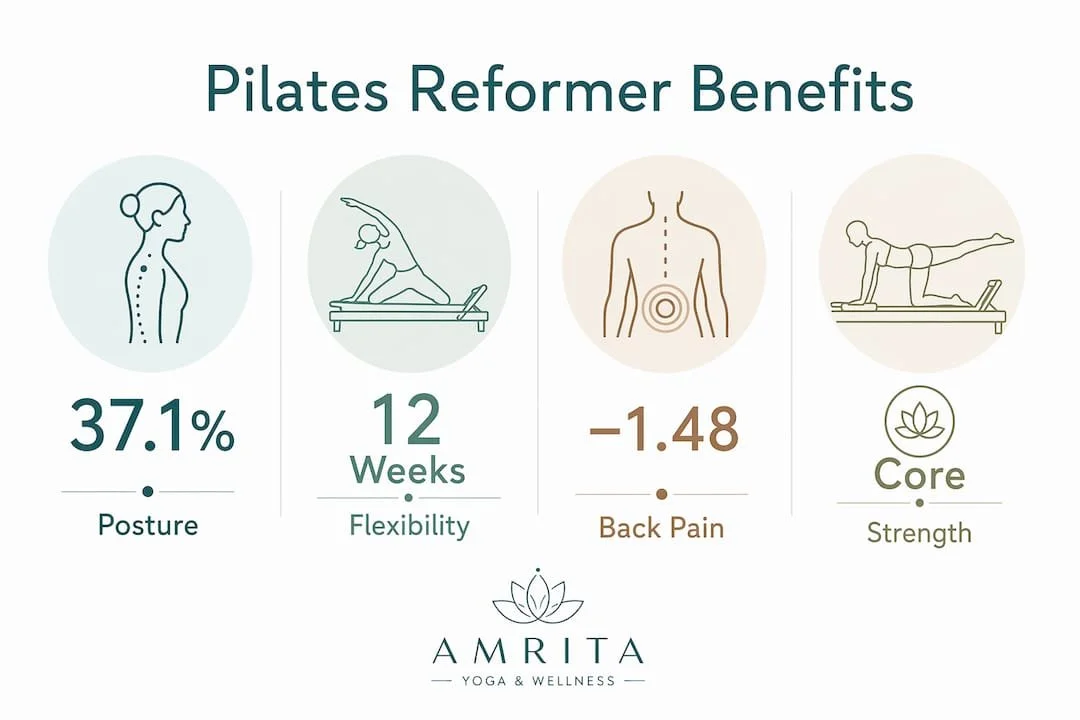
Reformer Pilates improves flexibility through controlled, full-range movements that lengthen muscles under load rather than passive stretching. This method, called eccentric loading, produces more durable flexibility gains than static stretching because the muscle learns to control its length rather than simply tolerate it.
A controlled study with 30 participants found that a 12-week reformer program improved postural symmetry by 37.1% and reduced pain by 50%. That level of postural change is clinically significant. It means the body is not just feeling better but moving differently, with measurable symmetry between left and right sides.
Postural asymmetries are common in people who sit for long hours or favor one side during repetitive activities. The reformer corrects these imbalances because each exercise can be performed unilaterally, isolating one side at a time. This makes it particularly effective for desk workers, athletes with sport-specific imbalances, and people in post-surgical rehabilitation.
| Benefit | What the research shows |
|---|---|
| Postural symmetry | 37.1% improvement after 12 weeks of reformer practice |
| Pain reduction | 50% reduction in pain scores in the same 12-week study |
| Range of motion | Improved joint mobility through eccentric loading across all major joints |
| Spinal alignment | Measurable correction of forward head posture and anterior pelvic tilt |
Pro Tip: Ask your instructor to photograph your posture at the start of a 12-week program. Comparing images at week 4 and week 12 gives you concrete evidence of progress that motivates continued practice.
How does Pilates reformer assist in pain reduction and rehabilitation?
Pilates is one of the most evidence-supported non-pharmacological treatments for chronic low back pain. A meta-analysis of 438 participants across 9 randomized controlled trials found a standardized mean difference of −1.48 for pain reduction compared to control groups. That is a large effect size by clinical standards, placing Pilates among the most effective conservative interventions available.
An 8-week supervised Pilates program reduced pain by 30% and improved functional capacity by 13.4% in women with chronic low back pain compared to usual care. Functional capacity means the ability to perform daily tasks like walking, bending, and carrying. A 13.4% gain in that measure translates directly into quality of life.
One nuance that practitioners and patients both need to understand: symptom relief often arrives before measurable tissue changes. A 4-week Pilates intervention did not significantly alter core muscle tone or stiffness at the tissue level, yet participants still reported meaningful pain and function improvements. This tells us that Pilates improves neuromuscular control and movement quality first, and structural tissue changes follow with longer practice.
"Pilates improves control before complete structural restoration. Pain relief and functional gain appear first, and biomechanical normalization follows with sustained practice." — Clinical research synthesis on Pilates and chronic low back pain
This sequence matters for managing expectations. If you start a reformer program for back pain and feel better within two weeks, that is real and valid. Do not stop there. The deeper tissue and structural benefits require the full 8–12 week commitment to take hold.
Rehabilitation protocols typically use the reformer's spring system to offload body weight during exercises, making movements accessible for people who cannot yet perform them on the floor. The footbar and straps allow precise positioning that protects injured joints while still loading the surrounding muscles. This is why physical therapists and sports medicine clinicians increasingly incorporate reformer Pilates into post-surgical and chronic pain programs.
What are the holistic wellness and mental health benefits of Pilates reformer workouts?
Reformer Pilates is a mind-body practice, not just a physical one. The breath coordination required in every exercise activates the parasympathetic nervous system, which lowers cortisol and shifts the body out of the stress response. That physiological shift is measurable and meaningful, particularly for people managing anxiety, burnout, or chronic stress.
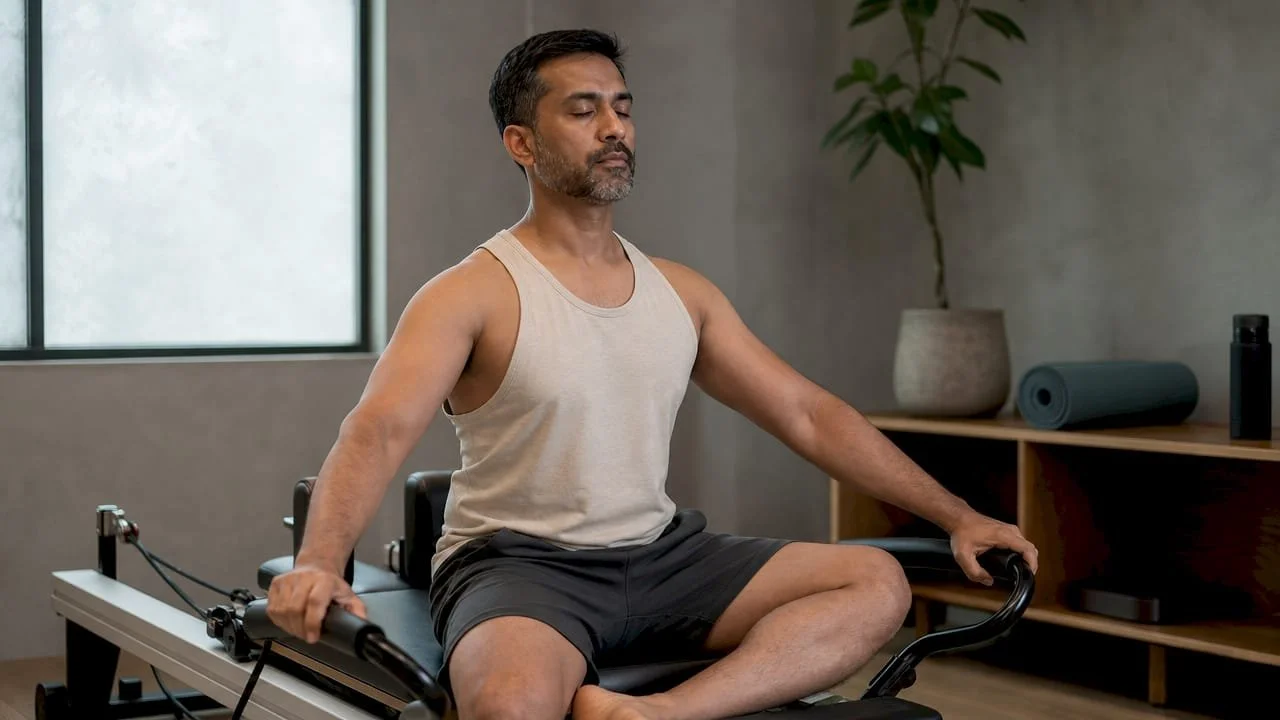
The mental focus required during reformer sessions functions similarly to meditation. You cannot think about your to-do list while coordinating breath, spring resistance, and precise limb movement simultaneously. That enforced presence is one reason practitioners consistently report improved mood and mental clarity after sessions.
Additional wellness benefits include:
Stress reduction through parasympathetic activation during breath-coordinated movement
Improved sleep quality linked to reduced cortisol and physical fatigue from low-impact exertion
Meditative focus that builds mental resilience alongside physical strength
Long-term sustainability because the low-impact format protects joints, making it appropriate for older adults and people with chronic conditions
Improved quality of life scores documented in clinical studies measuring both physical and mental health outcomes
The low-impact nature of reformer Pilates is one of its most underrated advantages. High-impact exercise accumulates joint stress over years. Reformer Pilates builds strength and cardiovascular conditioning without that cumulative wear, which means you can practice it consistently for decades. For older adults especially, that longevity of practice produces compounding wellness benefits that no short-term high-intensity program can match.
How do body measurements change with a structured reformer plan?
A structured reformer Pilates program produces measurable changes in body circumference, not just subjective feelings of being leaner. A 12-week, thrice-weekly program with female participants showed significant reductions in waist, chest, hips, thighs, arms, and leg circumferences. The greatest reductions occurred in the first month, indicating that initial fat loss and toning happen quickly with consistent practice.
These circumference reductions carry cardiometabolic significance beyond aesthetics. Waist circumference reduction specifically correlates with decreased visceral fat, which is the metabolically active fat surrounding internal organs. Reducing visceral fat lowers risk markers for cardiovascular disease and metabolic syndrome. Reformer Pilates, practiced three times per week, produces this effect without the joint stress of high-impact cardio.
| Measurement site | Outcome from 12-week reformer program |
|---|---|
| Waist | Significant reduction, greatest in first 4 weeks |
| Hips | Measurable circumference decrease across program duration |
| Arms | Toning effect with reduced circumference |
| Thighs and legs | Consistent reduction linked to lower body resistance work |
The beginner Pilates guide at Amritayogawellness outlines how to structure those first weeks to maximize early results while building the technique foundation needed for long-term progress.
Key Takeaways
Pilates reformer workouts deliver clinically proven improvements in core strength, posture, pain reduction, body composition, and mental well-being when practiced consistently for 8–12 weeks.
| Point | Details |
|---|---|
| Core strength gains | Deep stabilizers like the transverse abdominis activate in every reformer exercise, improving spinal support. |
| Posture improvement | A 12-week program produces 37.1% better postural symmetry, measurable and lasting. |
| Pain relief comes first | Symptom relief precedes tissue changes; commit to the full program for structural benefits. |
| Body composition changes | Waist, hip, arm, and leg circumferences decrease significantly within 12 weeks of three-weekly sessions. |
| Mental health benefits | Breath coordination activates the parasympathetic nervous system, reducing cortisol and stress. |
What I have learned from watching people use the reformer
Most people walk into their first reformer session expecting gentle stretching. They leave surprised by how hard it is. That gap between expectation and reality is actually the reformer's greatest strength. It meets you exactly where you are physically, then challenges you precisely enough to produce change without injury.
What I have observed consistently is that the people who get the most from reformer Pilates are not the most athletic. They are the most consistent. Showing up three times per week for 12 weeks, even at moderate intensity, produces results that sporadic intense sessions never will. The 2026 beginner guide at Amritayogawellness captures this principle well: structure and repetition matter more than effort level in the early weeks.
The rehabilitation angle also gets underestimated. People assume reformer Pilates is for healthy people who want to look better. Clinical evidence says otherwise. The spring offloading system makes it one of the few exercise modalities where someone with acute back pain can train safely on day one of a program. That is not a small thing.
My honest recommendation: treat the reformer as a long-term practice, not a short-term fix. The 8–12 week evidence base is a floor, not a ceiling. The people who practice for years build a physical resilience that genuinely changes how they age.
— Juiced
Pilates reformer classes at Amrita Yoga & Wellness
Amrita Yoga & Wellness, Philadelphia's community wellness studio, offers Pilates reformer classes alongside yoga, barre, tai chi, and massage therapy. The studio serves practitioners at every level, from first-timers managing back pain to experienced movers building strength and flexibility.
Whether your goal is pain relief, better posture, or a sustainable fitness practice that protects your joints for the long term, Amrita Yoga & Wellness has a class structure that fits. The studio's wellness offerings reflect a commitment to whole-person health, not just physical conditioning. Visit amritayogawellness.com to browse the class schedule and find the right starting point for your practice.
FAQ
What does a Pilates reformer do for your body?
The reformer builds deep core strength, improves flexibility, corrects posture, and reduces chronic pain through adjustable spring resistance. Clinical studies show consistent improvements in pain, function, and body composition within 8–12 weeks of regular practice.
How soon do you see results from reformer Pilates?
Pain relief and functional improvements often appear within 4–8 weeks. Body composition changes like circumference reductions are measurable after a 12-week, three-times-weekly program.
Is reformer Pilates good for back pain?
Yes. A meta-analysis of 9 randomized controlled trials found Pilates produces a standardized mean difference of −1.48 for pain reduction in chronic low back pain patients, making it one of the most effective conservative treatments available.
Can beginners use a Pilates reformer?
Beginners can start reformer Pilates safely by using lighter spring resistance and working with a qualified instructor. The spring system allows full load adjustment, making every exercise accessible regardless of fitness level.
How is reformer Pilates different from mat Pilates?
The reformer adds adjustable spring resistance and a moving carriage, which activates deep stabilizing muscles more effectively than mat work alone. It also allows exercises in standing and kneeling positions that mat Pilates cannot replicate.
Recommended
Benefits of Pilates for Athletes: Performance Guide
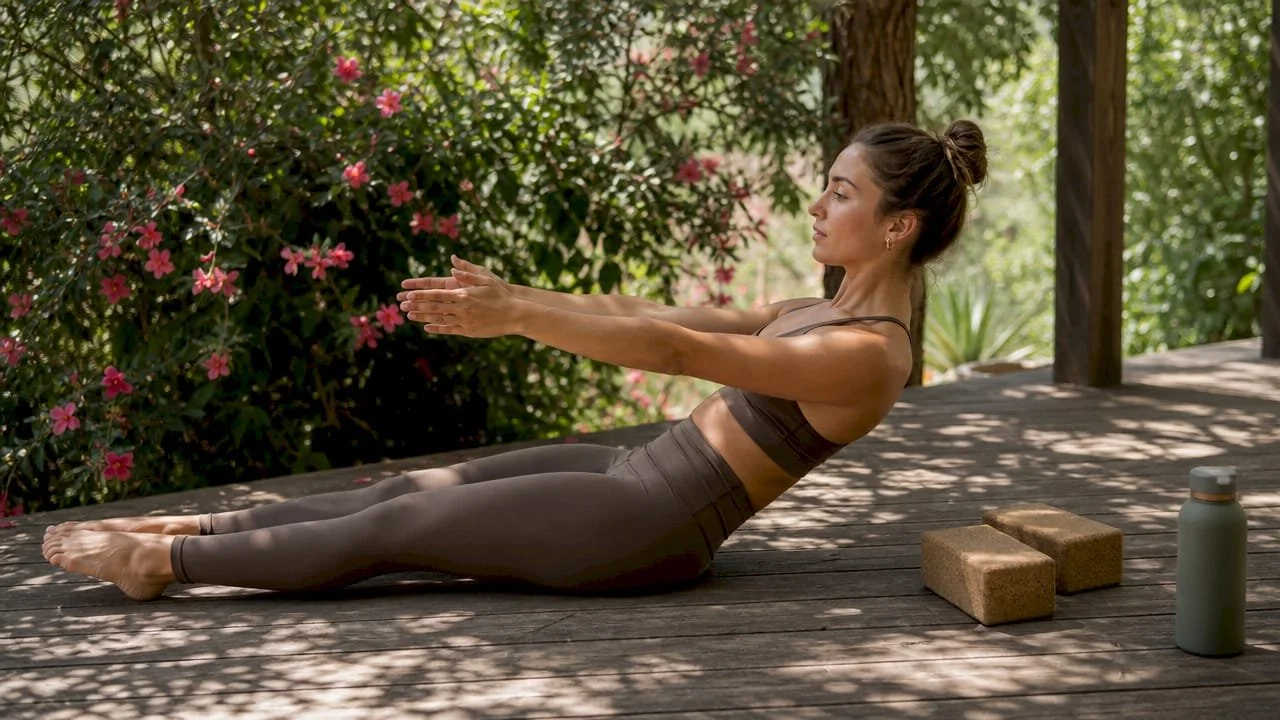
TL;DR:
Pilates enhances athletes' core stability, flexibility, and balance, leading to better performance and injury prevention. It targets deep stabilizing muscles, improves movement efficiency, and promotes recovery when integrated properly into training routines. Consistent practice during the off-season effectively resets imbalances and builds foundational strength.
Pilates is a systematic training method that builds the core stability, flexibility, and dynamic balance athletes need for peak performance and long-term injury prevention. The benefits of Pilates for athletes go well beyond basic stretching. Research on college basketball players shows a 6-week Pilates program produced significant gains in flexibility, balance, muscular strength, and core stability compared to a control group. Pilates targets the deep stabilizing muscles that explosive sports training typically ignores, making it one of the most effective cross-training tools available for athletes at every level.
1. Benefits of Pilates for athletes: core strength and power transfer
Core strength is the foundation of every athletic movement, from a sprinter's drive phase to a basketball player's jump shot. Most athletes train the superficial muscles like the rectus abdominis while neglecting the deep core: the transversus abdominis, multifidus, pelvic floor, and diaphragm. Pilates targets all four directly.
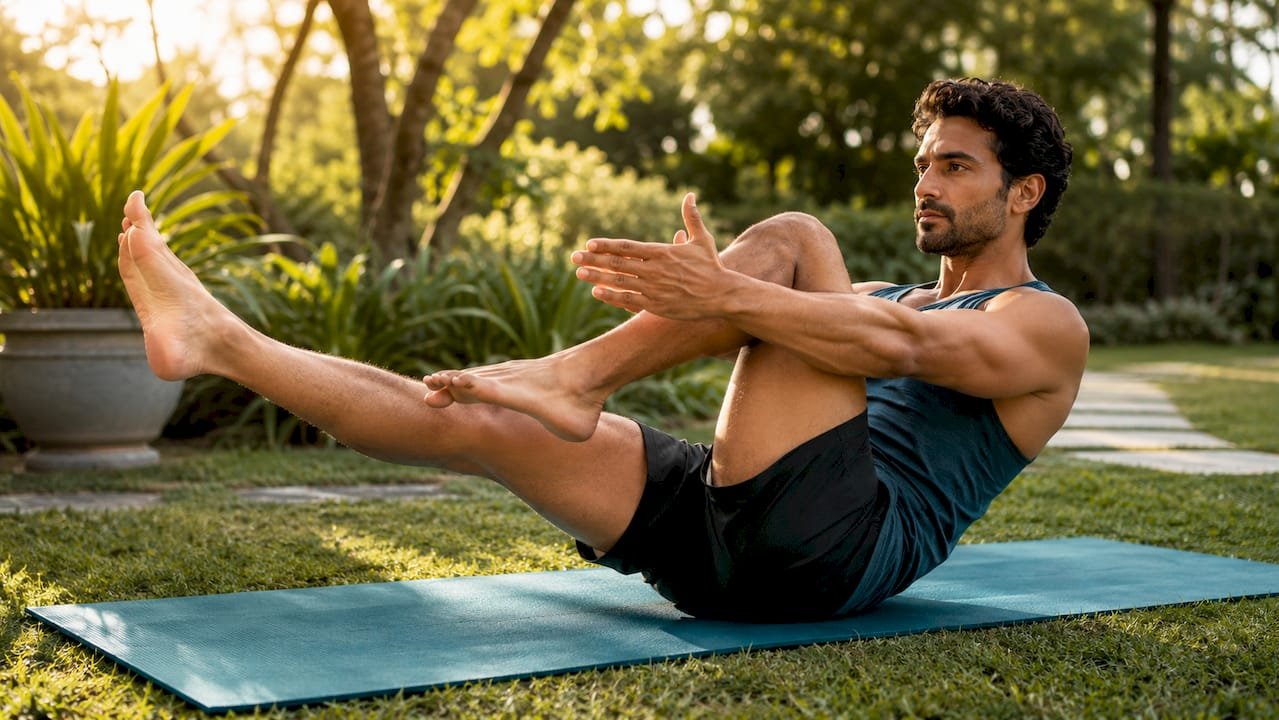
Pilates solves the "energy leak" problem by strengthening these deep muscles and improving force transfer during explosive movements. When your deep core fires correctly, power generated in your legs travels efficiently through your trunk to your arms or the ground. Without that transfer, energy bleeds out at the midsection and performance drops.
An 8-week mat Pilates program significantly improved isometric back and leg strength in male youth soccer players aged 11–13. That result matters because it shows strength gains appear even in young, developing athletes who already train regularly.
Key deep core muscles Pilates develops:
Transversus abdominis: the body's internal weight belt, stabilizing the spine before limb movement
Multifidus: small spinal muscles critical for vertebral stability and posture under load
Pelvic floor: the base of the core cylinder, essential for intra-abdominal pressure control
Diaphragm: the top of the core cylinder, coordinating breathing with spinal stability
Pro Tip: Prioritize Pilates exercises like the Hundred, Dead Bug, and Single Leg Stretch early in your routine. These load the deep core without fatiguing the prime movers you need for sport-specific training later.
2. Flexibility and joint mobility gains for better movement
Dynamic flexibility is the ability to move a joint through its full range under load and at speed. Static stretching builds range of motion at rest. Pilates builds the kind of flexibility athletes actually use during competition.
Pilates lengthens muscles while simultaneously demanding control through that range. A footballer gaining hip flexor length through Pilates does not just stretch the tissue. He trains the nervous system to use that length at full stride. That combination directly improves movement efficiency and reduces the stiffness that slows athletes down in the second half of a game.
The 6-week basketball study recorded significant flexibility improvements across the intervention group. Flexibility gains in athletes translate to faster stride mechanics, deeper squat patterns, and reduced compensatory movement that leads to overuse injuries.
Sports that benefit most from Pilates-driven flexibility gains:
Runners: hip flexor and hamstring length reduces stride restriction and IT band stress
Golfers: thoracic rotation mobility directly increases club head speed
Football players: hip and groin flexibility reduces adductor strain risk during cutting movements
Swimmers: shoulder mobility and thoracic extension improve stroke efficiency and reduce rotator cuff load
Pro Tip: Pair your Pilates session with sport-specific dynamic warm-up drills on the same day. The nervous system is primed after Pilates work, making it the ideal time to reinforce sport-relevant movement patterns.
3. Dynamic balance and neuromuscular control
Dynamic balance is the ability to maintain body position while moving, absorbing force, or changing direction. It is not a talent. It is a trainable skill, and Pilates trains it directly.
A 12-week Pilates intervention significantly improved dynamic balance and lower limb strength in elite fencers, with a strong correlation between quadriceps strength and balance scores. Elite athletes already train hard. The fact that Pilates produced measurable balance gains on top of their existing training shows how much foundational stability typical sports programs leave on the table.
Pilates builds proprioception, the body's ability to sense its own position in space, by demanding precise movement on unstable surfaces and through unfamiliar planes of motion. Better proprioception means faster automatic corrections when you land awkwardly, change direction, or absorb contact. That speed of correction is what separates athletes who stay healthy from those who get hurt.
Balance and strength gains: what the research shows
| Metric | Pre-Pilates | Post-Pilates (12 weeks) |
|---|---|---|
| Dynamic balance score | Baseline | Significantly improved (p<.05) |
| Lower limb strength | Baseline | Significantly improved |
| Quadriceps-balance correlation | Measured | Strong positive correlation |
| Study population | Elite fencers | Elite fencers |
Pro Tip: Add single-leg Pilates exercises like the Standing Leg Press or Side-Lying Leg Series to your routine. These directly challenge the hip stabilizers and ankle proprioceptors most relevant to cutting and landing mechanics.
4. Injury prevention through muscular balance
Most sports injuries do not come from a single catastrophic event. They come from accumulated stress on tissues that are overworked because other muscles are not doing their job. Pilates corrects that imbalance at the source.
Pilates improves gluteal muscle strength and neuromuscular coordination, directly reducing injury risk at the knee, hip, and lower back. Weak glutes force the hamstrings, IT band, and lumbar spine to compensate. That compensation pattern is behind a large share of running injuries, ACL tears, and chronic low back pain in athletes.
Pilates also trains tendons and ligaments through controlled, progressive loading rather than the ballistic stress of sport. That controlled loading builds tissue resilience without the joint overload that heavy lifting or plyometrics can cause. For athletes managing sports injury recovery, Pilates provides a way to maintain conditioning while protecting vulnerable structures.
How Pilates reduces injury risk in athletes:
Corrects muscle imbalances by targeting underactive stabilizers that sport-specific training skips
Trains movement control through full range of motion, reducing the risk of joint stress at end range
Builds tendon resilience through slow, loaded movements that stimulate collagen remodeling
Improves landing mechanics by strengthening the hip and knee stabilizers that absorb ground reaction force
Reduces compensatory patterns that develop when dominant muscles take over for weaker ones
5. Faster recovery and off-season conditioning
Recovery is not passive. Athletes who use their off-season to correct movement faults and rebuild foundational strength return to preseason training ahead of those who simply rest. Pilates is the most effective tool for that work.
Pilates is most effective in the off-season because it addresses movement compensations without adding joint overload. During the competitive season, athletes accumulate asymmetries from repetitive sport-specific patterns. A pitcher's shoulder, a soccer player's dominant kicking hip, a tennis player's dominant forearm all create imbalances that compound over time. Pilates resets those patterns.
Qualitative improvements in movement efficiency and injury resilience typically appear within 8–12 weeks of consistent Pilates practice. That timeline fits neatly into a standard off-season block, making it a practical addition to any periodized training plan.
For athletes recovering from ankle or lower limb injuries, Pilates provides controlled loading that supports ankle sprain rehabilitation while rebuilding the hip and core stability that protects the joint from reinjury.
6. Mental discipline and movement precision
Pilates requires deliberate, precise movements that challenge athletes in ways their regular training does not. NFL players who have added Pilates to their programs describe it as mentally demanding in a completely different way from lifting or conditioning work. That demand is the point.
Pilates emphasizes slow, controlled movement with high concentration on stabilizing muscles. This differs sharply from the explosive, high-load training that dominates most athletic programs. The mental discipline of holding precise positions under fatigue transfers directly to sport. Athletes who can maintain form when tired make fewer technical errors and sustain fewer injuries in the late stages of competition.
The concentration Pilates demands also builds body awareness. Athletes who know exactly where their spine, hips, and shoulders are during movement make faster technical corrections. That awareness is a skill, and Pilates is one of the few training methods that develops it systematically. You can explore Pilates breathing techniques as a starting point for building that internal focus.
7. How to build a Pilates routine for athletes
A Pilates routine for athletes works best when it is treated as a complement to sport-specific training, not a replacement for it. Pilates corrects imbalances and prevents injury. It does not replace heavy lifting or conditioning work.
Practical guidelines for integrating Pilates into athletic training:
Frequency: 2 sessions per week is the minimum effective dose for measurable gains. The basketball and fencer studies used 3 sessions per week over 6–12 weeks.
Duration: 45–60 minutes per session is sufficient. Longer sessions do not produce proportionally better results.
Timing: Schedule Pilates on lower-intensity training days or after technical skill work, not before heavy strength sessions.
Instructor selection: Athletes need instructors experienced with sport-specific biomechanics. A general Pilates class will not address the joint loading patterns specific to your sport.
Progression: Start with mat-based fundamentals like the Pilates exercises for all levels before moving to reformer or equipment-based work.
Periodization: Use higher Pilates volume in the off-season for correction and rebuilding. Reduce to maintenance frequency during the competitive season.
General Pilates classes may not address sport-specific demands. Athletes should seek programs tailored to the biomechanical requirements of their sport to get the most from the method.
Key takeaways
Pilates builds the core stability, dynamic balance, and muscular coordination that athletes need to perform better and stay healthy longer.
| Point | Details |
|---|---|
| Core strength drives performance | Pilates targets deep stabilizers that improve force transfer in every explosive movement. |
| Flexibility gains are functional | Pilates builds dynamic range of motion athletes use at speed, not just at rest. |
| Balance and proprioception improve measurably | A 12-week program produced significant balance gains in elite fencers already in peak training. |
| Injury prevention is the clearest ROI | Correcting gluteal weakness and movement compensations reduces the most common sports injury patterns. |
| Off-season timing maximizes results | Eight to twelve weeks of consistent Pilates resets imbalances and rebuilds foundational stability before preseason. |
What I've learned watching athletes train with Pilates
Athletes walk into their first Pilates session expecting it to be easy. They walk out humbled. That gap between expectation and reality is the most important thing Pilates teaches.
The mental shift is real. Athletes who train with maximum effort in every session learn to push through discomfort. Pilates teaches something different: precision under fatigue, control at the edge of your range, and patience with slow progress. Those qualities show up in competition in ways that are hard to measure but impossible to miss.
What I find most underrated is how Pilates exposes the weak links that athletes have learned to work around. A tight hip flexor, a lazy glute, a spine that locks up instead of rotating. Sport-specific training masks these problems because dominant muscles compensate. Pilates removes the compensation and forces you to address the actual issue.
The athletes who get the most from Pilates are the ones who treat it seriously from the start. Two sessions a week, a qualified instructor who understands your sport, and a willingness to slow down and feel what your body is actually doing. That investment pays off in fewer injuries, better movement quality, and a longer career.
— Juiced
Pilates classes for athletes at Amrita Yoga & Wellness
Athletes in Philadelphia looking to add Pilates to their training have a direct option at Amrita Yoga & Wellness. The studio offers Pilates classes designed to build the core strength, flexibility, and balance that support athletic performance and recovery.
Amritayogawellness provides a range of wellness programs and classes that fit different training schedules and experience levels, from beginners working on foundational stability to experienced athletes refining movement quality. The studio's approach to Pilates fits naturally into a periodized training plan, whether you are in the off-season rebuilding phase or maintaining conditioning during competition. Check the schedule and find a session that works around your sport.
FAQ
What are the main benefits of Pilates for athletes?
Pilates improves core strength, dynamic balance, flexibility, and neuromuscular coordination. Research shows measurable gains in all four areas within 6–12 weeks of consistent practice.
How often should athletes do Pilates?
Two to three sessions per week produces significant results, based on the basketball and fencer studies that used that frequency over 6–12 weeks.
Does Pilates replace strength training for athletes?
Pilates complements strength training but does not replace it. Its primary value is correcting imbalances, preventing injury, and improving core-integrated movement alongside regular sport-specific work.
When is the best time for athletes to add Pilates?
The off-season is the most effective time to start Pilates, as it allows athletes to address movement compensations and rebuild foundational stability without the joint overload of in-season training.
Can Pilates help with sports injury recovery?
Pilates supports recovery by rebuilding hip and core stability through controlled loading that protects vulnerable joints. It is particularly useful for athletes recovering from lower limb injuries and overuse conditions.
Recommended
Different Types of Pilates Reformers: Your 2026 Guide
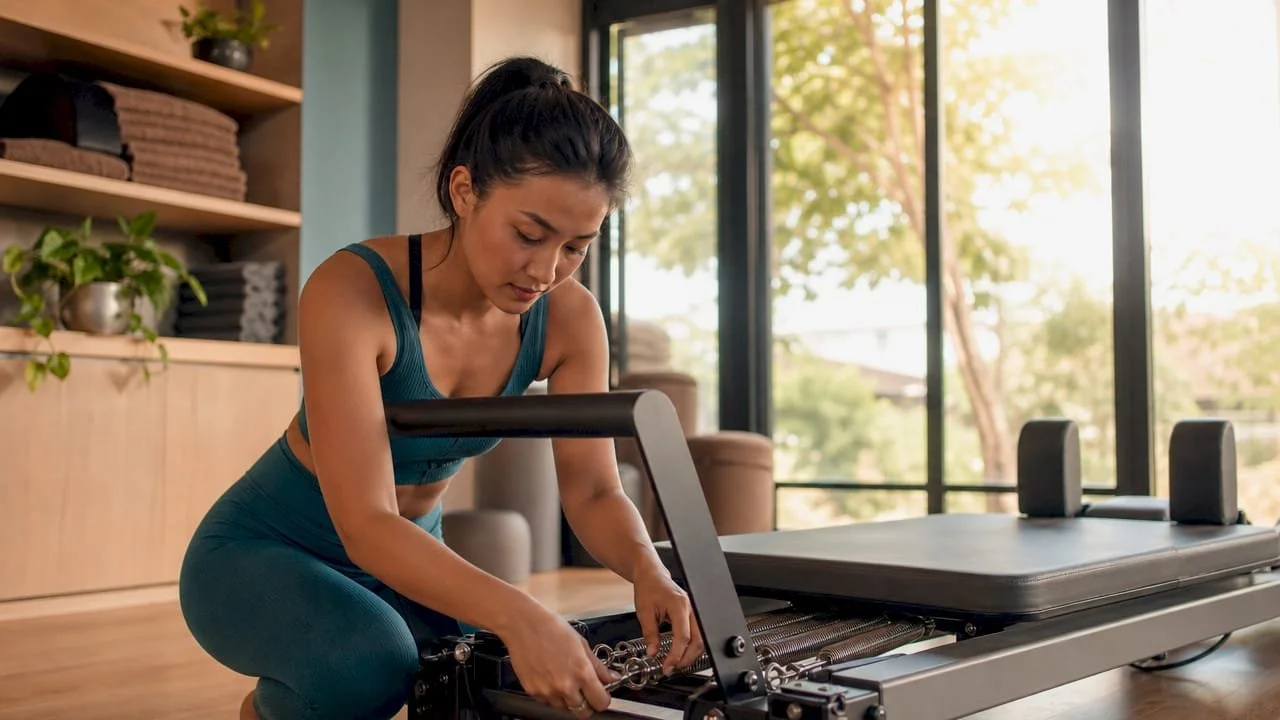
TL;DR:
A Pilates reformer is a spring-resistance machine used for full-body training that varies in design and features. The main types include classical studio, contemporary studio, and home reformers, each differing in carriage width, frame material, spring tension, and accessory options. Choosing the right reformer depends on your goals, experience, space, and budget, with adjustable resistance and accessory compatibility being key considerations.
A Pilates reformer is a spring-resistance machine that uses a sliding carriage, adjustable springs, ropes, and a footbar to create full-body resistance training. The different types of Pilates reformers split into three broad categories: classical studio reformers, contemporary studio reformers, and home or compact reformers. Each category differs in frame material, carriage width, spring tension, and accessory options. Brands like Gratz, Balanced Body, and STOTT Pilates each represent a distinct design philosophy, and choosing the wrong type for your goals or space is a common and costly mistake.
What are the different types of Pilates reformers by design?
Pilates reformer types divide cleanly by structural design, and that structure shapes every workout you do on the machine.
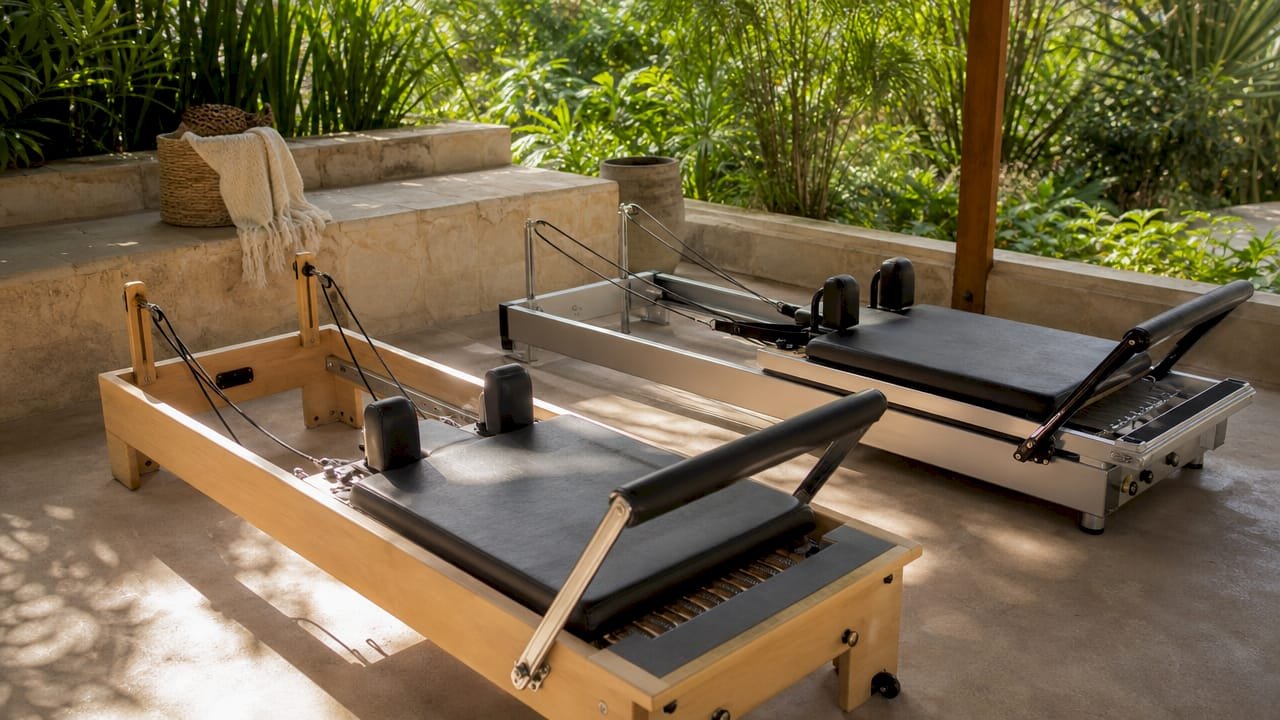
Classical reformers follow the original specifications developed by Joseph Pilates. The Gratz classical reformer is the clearest example: a narrow 22-inch carriage, a heavy steel frame, and firm springs that demand precise body control. That narrower carriage is not a flaw. It creates demanding feedback that forces correct alignment, which is exactly what classical Pilates training requires.
Contemporary studio reformers prioritize comfort and versatility. Balanced Body studio reformers feature a wider 24-inch carriage with smoother bearings and adjustable resistance, making them accessible to beginners and mixed-level classes. The extra two inches of carriage width sounds minor. In practice, it changes the feel of every lateral movement and makes the machine far more forgiving for people still building body awareness.
Home and compact reformers trade some performance for practicality. They use lighter frames, shorter rails, and simplified spring systems. Many fold flat for storage. The trade-off is real: foldable reformers have reduced carriage travel and less stability than studio machines, which limits the range of exercises you can perform safely.
Frame material comparison
| Frame Type | Material | Best For |
|---|---|---|
| Classical studio | Steel | Advanced practitioners, durability |
| Contemporary studio | Aluminum or steel | Mixed-level classes, versatility |
| Home reformer | Wood (maple/oak) or aluminum | Home gyms, space-saving setups |
| Foldable home | Lightweight aluminum | Small apartments, portability |
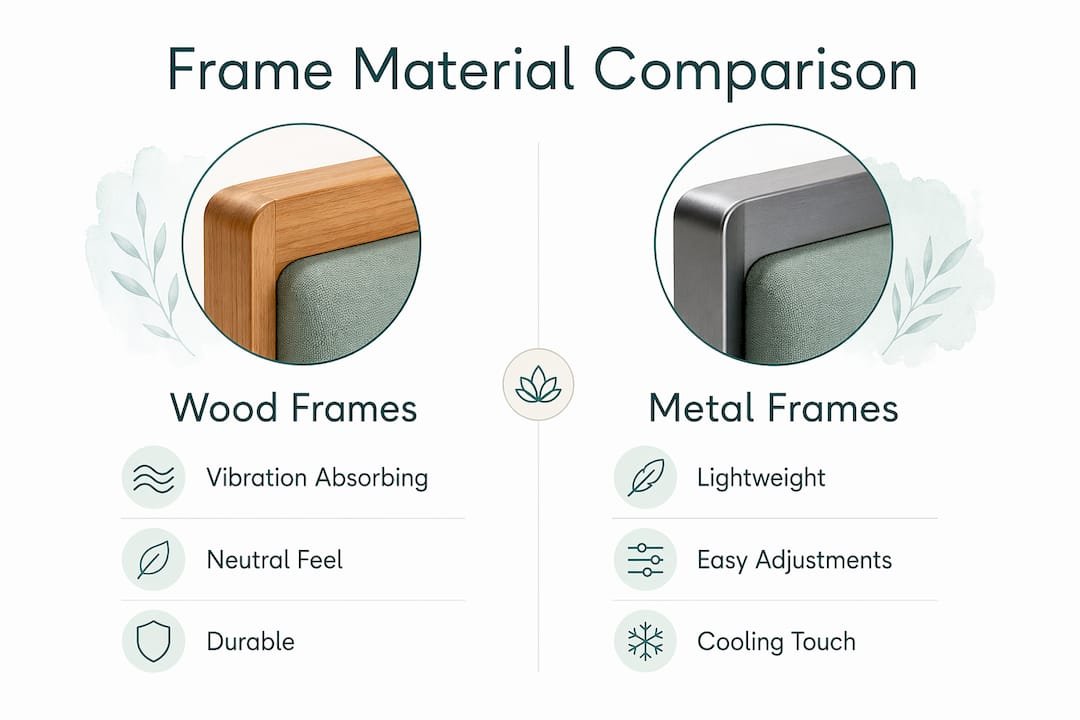
Wood frames absorb vibration and feel neutral under the body. Metal frames are lighter and easier to adjust but feel colder and more industrial. Neither is objectively better. The right choice depends on whether you prioritize feel or portability.
Pro Tip: If you plan to use your reformer daily, choose a steel or solid wood frame. Lightweight aluminum frames work well for occasional use but show wear faster under heavy training loads.
How do resistance systems vary across reformer models?
Spring tension is the single biggest performance variable between Pilates reformer models. Getting it wrong means either fighting the machine or getting no real training stimulus.
Classical reformers use firm springs that measure approximately 40–45 lbs per full spring. That high tension creates immediate, unforgiving feedback. Every misalignment shows up in the resistance. This is ideal for experienced practitioners who want to refine technique, but it can overwhelm beginners.
Contemporary reformers use adjustable spring systems with variable resistance ranges. The STOTT V2 Max Plus, for example, includes a pulley tower and multiple spring configurations that let instructors dial resistance up or down for each exercise. That flexibility makes contemporary machines the standard choice in commercial studios serving clients across all fitness levels.
Classical springs: firm, approximately 40–45 lbs per spring, fixed tension profile
Contemporary springs: adjustable, variable resistance, suitable for all skill levels
Home reformer springs: lighter tension, fewer spring positions, limited range
Tower-equipped reformers: additional vertical spring attachments for expanded resistance options
The spring count also matters. Most studio reformers carry four or five springs. Home models often carry three, which limits the resistance combinations available. Fewer combinations means fewer exercise progressions, which becomes a ceiling for motivated practitioners within months.
Pro Tip: Before buying, count the spring positions and test the lightest and heaviest resistance settings. A machine that feels challenging on day one may feel too easy within six months if it lacks enough spring range.
What accessory configurations expand reformer functionality?
Accessories determine how far a reformer can take your training. A bare-bones machine handles the Pilates fundamentals. A fully configured reformer covers cardio, strength, rehabilitation, and flexibility work in one piece of equipment.
Reformer with Tower: A tower attachment adds vertical spring resistance and a push-through bar above the carriage. Tower systems expand the exercise repertoire well beyond standard reformer moves, adding standing, kneeling, and supine exercises that use gravity differently. This is the most common upgrade in professional studios.
Jumpboard: A jumpboard replaces the footbar with a padded vertical surface. Practitioners push off it with their feet in a horizontal jumping motion, turning the reformer into a low-impact cardio and plyometric tool. This accessory is particularly popular in athletic reformer classes.
Box and straps: A long box placed on the carriage enables prone and seated exercises that the carriage alone cannot support. Short boxes allow rotational and spinal extension work. These are standard accessories on most studio machines.
Foldable rail systems: Some home reformers fold along the rail for vertical storage. This design reduces carriage travel and limits standing exercises, but it solves the space problem for anyone working in a small room or apartment.
Elevated leg rest and headrest: Adjustable headrests and padded shoulder blocks affect comfort during supine exercises. Studio machines typically offer more adjustment positions than home models.
The right accessory set depends on your goals. Rehabilitation work benefits most from a tower. Cardio-focused training benefits from a jumpboard. Pure classical Pilates needs only the box and straps. Buying a machine that cannot accept accessories later is a mistake that limits your training ceiling.
How to choose the right Pilates reformer for your goals and space
Choosing a reformer comes down to four variables: your fitness goals, your experience level, your available space, and your budget. Matching all four correctly is the difference between a machine you use daily and one that collects dust.
Certified instructor Erika Driscoll recommends that beginners prioritize safety and invest in machines with multiple accessories to support skill development over time. A beginner on a classical reformer with 45-lb springs and a narrow carriage is likely to struggle with form before building any real strength. A contemporary machine with adjustable resistance and a wider carriage gives beginners the stability they need to learn correctly.
Form Fitness instructors advise matching equipment to class format: foundational reformers for technique building, athletic reformers for cardio and strength challenges. That same logic applies to home buyers. If your goal is core strength and flexibility, a mid-range contemporary reformer handles it well. If you want to replicate athletic studio classes at home, you need a machine with a jumpboard and enough spring range to challenge you at high intensity.
Goal: rehabilitation or injury recovery. Choose a contemporary reformer with a tower and adjustable springs. Clinical reformers, which you can read more about at Amritayogawellness, are specifically designed for therapeutic use.
Goal: classical Pilates technique. Choose a Gratz or similar classical reformer with a steel frame and firm springs.
Goal: mixed fitness and cardio. Choose a contemporary reformer with a jumpboard attachment and at least four spring positions.
Goal: home use in a small space. Choose a foldable reformer with a solid frame and at least three spring positions. Accept the trade-off in exercise range.
Budget under $1,500. Home reformers in this range work for beginners but lack the spring range and stability of studio machines. Plan to upgrade within two years if your practice grows.
Studio-height reformers sit approximately 14–16 inches off the ground, making mounting and dismounting easier for older adults and those with joint issues. Many home models sit lower, which can be awkward for people with limited hip mobility.
Pro Tip: If possible, take a class on the reformer model you are considering before buying. The feel of the carriage, the spring tension, and the shoulder block position vary enough between brands that a 30-minute session tells you more than any spec sheet.
Key takeaways
Choosing the right Pilates reformer requires matching carriage width, spring tension, frame material, and accessory options to your specific goals, experience level, and available space.
| Point | Details |
|---|---|
| Carriage width defines feel | Classical reformers use a 22-inch carriage; contemporary models use 24 inches for more stability. |
| Spring tension shapes intensity | Classical springs run 40–45 lbs each; contemporary systems offer adjustable ranges for all levels. |
| Frame material affects durability | Wood absorbs vibration; metal frames are lighter but feel less neutral under the body. |
| Accessories expand training range | Tower systems and jumpboards add vertical resistance and cardio options beyond basic reformer work. |
| Match reformer type to goals | Beginners need adjustable resistance; advanced users benefit from firm classical springs and narrow carriages. |
What I've learned after years of watching people choose the wrong reformer
The most common mistake I see is buying for aspiration rather than current reality. Someone who has taken six reformer classes walks into a purchase decision imagining themselves as an advanced practitioner. They buy a classical reformer with firm springs and a narrow carriage because it looks serious and professional. Six weeks later, they are frustrated because the machine is fighting them on every exercise.
The second mistake is ignoring space. A full studio reformer is roughly 8 feet long and 2 feet wide. That sounds manageable until you account for the footbar extension, the carriage travel, and the clearance you need to mount and dismount safely. Measure your room before you buy, not after.
The third thing I want to push back on is the idea that home reformers are always a compromise. A well-built home reformer from a reputable brand, used consistently, produces real results. The core strength and flexibility benefits of reformer Pilates are accessible on a mid-range machine. The gap between a $2,000 home reformer and a $6,000 studio machine matters most to advanced practitioners and instructors. For most people starting out, the gap is smaller than the marketing suggests.
What actually matters in 2026 is whether the machine you buy matches where you are right now, with enough upgrade potential to meet where you are going. A reformer with four spring positions, a solid frame, and accessory compatibility covers most people for years. Start there.
— Juiced
Pilates reformer options at Amritayogawellness
Amritayogawellness, Philadelphia's community wellness studio, offers reformer Pilates classes across skill levels, from foundational technique sessions to athletic formats. Whether you are still deciding which reformer type fits your goals or ready to build a consistent practice, the studio's instructors can guide you toward the right fit.
Amritayogawellness also offers holistic wellness services that complement physical training with mind-body balance. Pilates builds the body. Pairing it with broader wellness support builds the whole practice. Explore the studio's class schedule and services at amritayogawellness.com.
FAQ
What are the main types of Pilates reformers?
The three main types are classical studio reformers, contemporary studio reformers, and home or compact reformers. Each differs in carriage width, spring tension, frame material, and accessory compatibility.
Classical vs. contemporary reformer: which is better for beginners?
Contemporary reformers are better for beginners. They offer wider carriages, adjustable spring resistance, and smoother bearings that support correct form while practitioners build strength and body awareness.
How much space does a Pilates reformer need?
A full studio reformer requires approximately 8 feet of length and 2 feet of width, plus clearance for mounting and dismounting. Foldable home reformers reduce the footprint but limit carriage travel and exercise range.
Do I need a reformer with a tower?
A tower is not required for basic Pilates practice, but it significantly expands your exercise options by adding vertical spring resistance and standing work. Studios and serious home practitioners benefit most from tower configurations.
What spring tension should a beginner look for in a reformer?
Beginners should look for adjustable spring systems rather than fixed classical springs. Classical reformers run approximately 40–45 lbs per spring, which is too demanding for most people learning foundational movement patterns.
Recommended
What Is Reformer Pilates Good For: Real Benefits
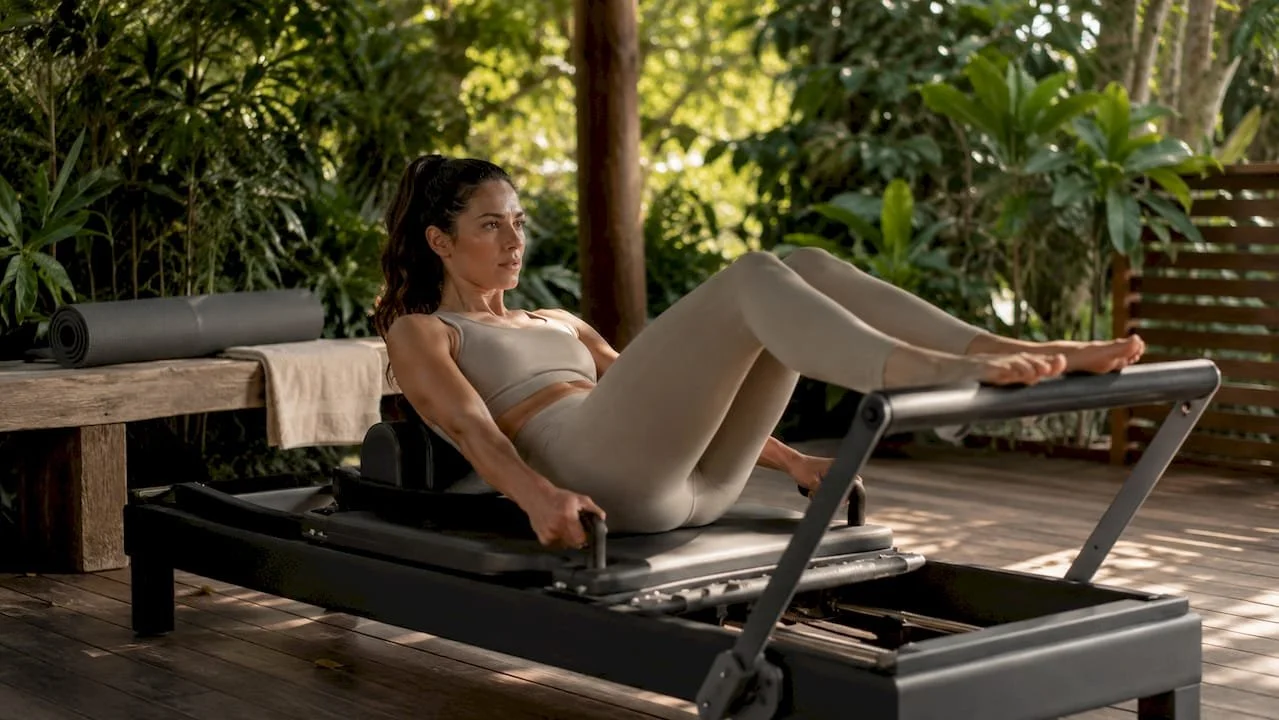
TL;DR:
Reformer Pilates is a resistance exercise system that enhances core strength, flexibility, and posture through controlled movements on a sliding carriage. It produces reliable physical improvements, supporting injury recovery and mental health by targeting stabilizer muscles and reducing anxiety. Beginners should focus on mastering equipment mechanics and commit to consistent sessions to experience its full benefits.
Reformer Pilates is a spring-loaded resistance exercise system, developed from Joseph Pilates' original method, that builds core strength, improves flexibility, and corrects posture through controlled movement on a sliding carriage. The apparatus uses adjustable springs, a footbar, and straps to create resistance in both the pushing and pulling phases of each exercise. This makes it distinctly different from mat Pilates or conventional gym training. Whether you are recovering from an injury, managing chronic pain, or simply looking for a low-impact workout that delivers real results, reformer Pilates addresses all of those goals within a single practice.
What is reformer Pilates good for physically?
Reformer Pilates produces measurable physical improvements across strength, posture, and body composition. A consistent 8-week protocol of two to three sessions per week shows statistically significant gains in muscular strength, endurance, BMI reduction, and fat mass loss, with results reaching p < 0.001. That level of statistical confidence means the improvements are not random. They are reliable and repeatable.
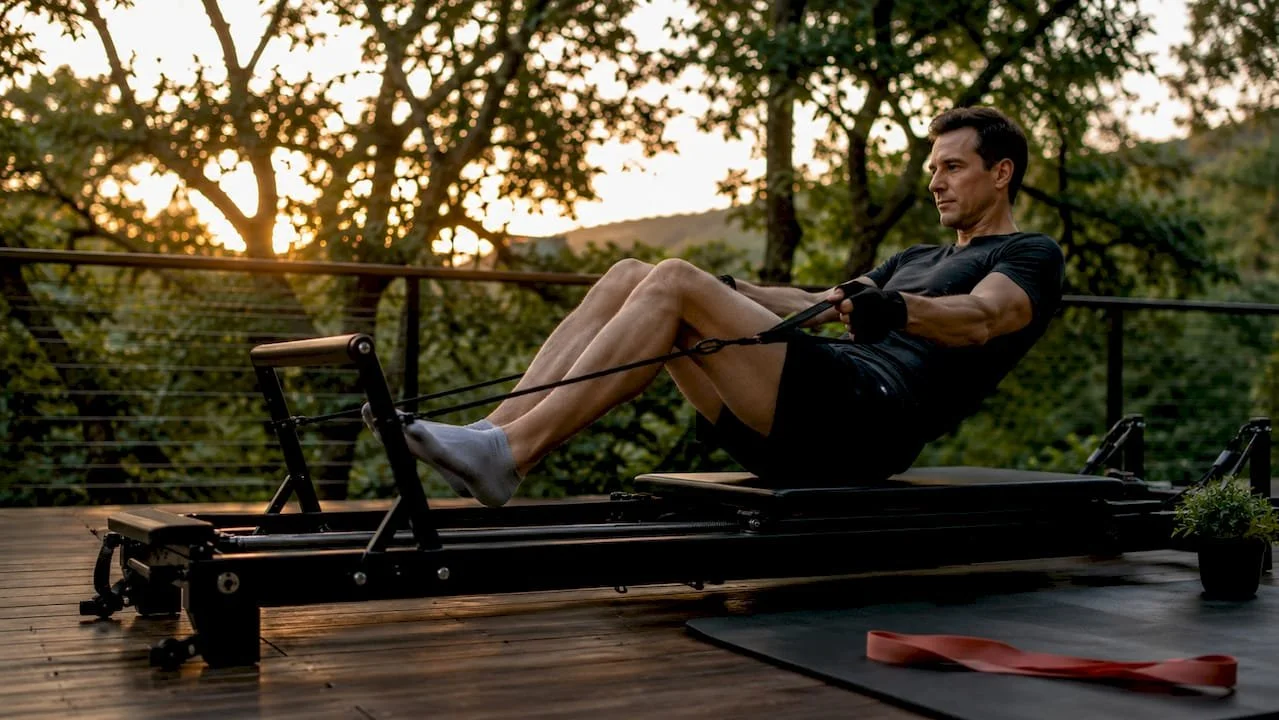
The mechanism behind these results is dual-phase muscle engagement. Reformer Pilates challenges muscles eccentrically and concentrically during every controlled resistance movement. Eccentric loading, the lengthening phase, is where most gym-based training falls short. The reformer forces your muscles to work hard in both directions, which builds functional strength and corrects imbalances that standard weight training misses entirely.
Core activation is another standout benefit. The sliding carriage creates an unstable surface that demands constant engagement from deep stabilizer muscles, including the transverse abdominis and multifidus. These are the muscles that protect your spine and support your posture. Traditional exercises like squats or bench press rarely target them directly.
Key physical benefits include:
Muscular strength and endurance across major and stabilizer muscle groups
Postural alignment with large effect sizes documented in recent research
Body composition improvements including fat mass reduction and BMI changes
Spinal stability through deep core muscle activation
Functional movement patterns that transfer to daily activities
Pro Tip: Start with lighter spring resistance and focus on form before adding load. The reformer rewards precision over power, especially in the first few weeks.
How does reformer Pilates support injury recovery?
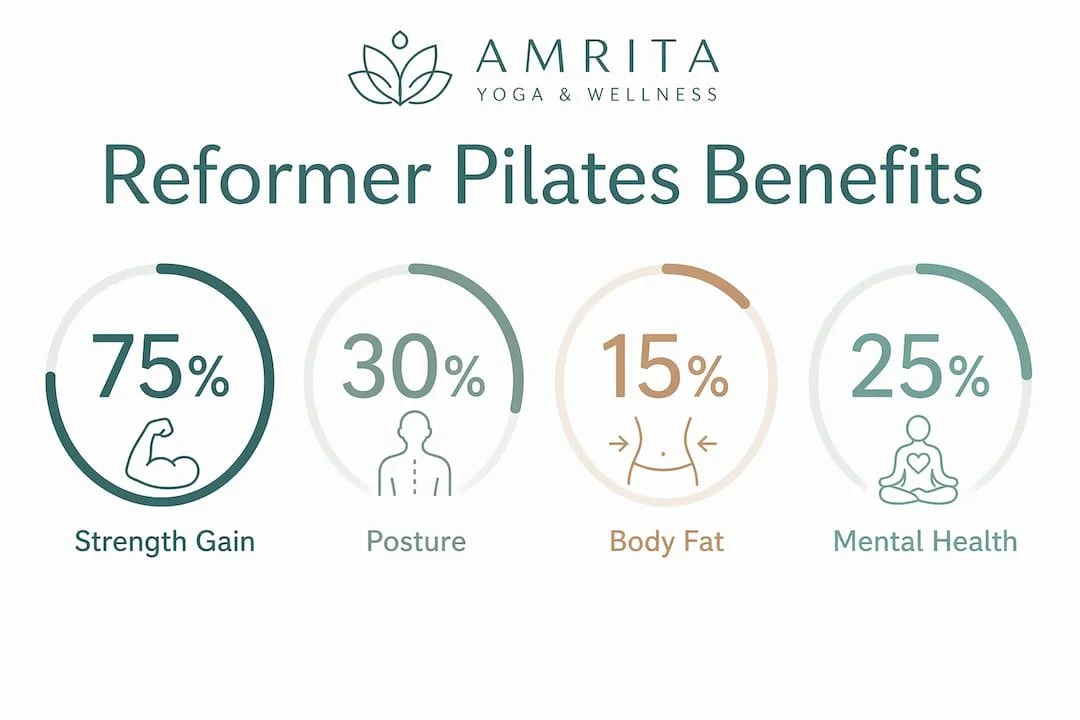
Reformer Pilates is one of the most adaptable rehabilitation tools available for low-impact exercise. The spring resistance system allows a practitioner to reduce load significantly, making it safe for people with joint pain, post-surgical recovery needs, or chronic conditions. Research validates its benefits for older adults at risk of falls, fibromyalgia patients, and people managing chronic pain, across studies spanning 2018 to 2025.
Fall risk reduction is a particularly well-documented outcome. Reformer Pilates improves balance and lower body strength simultaneously, two factors that directly reduce fall incidents in older adults. The controlled, slow movements also retrain neuromuscular coordination, which declines with age and inactivity.
One underappreciated rehabilitation benefit is imbalance detection. Reformer Pilates exposes hidden mobility gaps and muscle weaknesses that conventional training overlooks. Even trained athletes report difficulty controlling the reformer's movements at first. That difficulty is diagnostic. It tells you exactly where your body compensates and where it needs work.
Rehabilitation-specific advantages include:
Graded progression by adjusting spring tension as strength returns
Joint-friendly loading that avoids the compressive forces of free weights
Balance and proprioception training built into every exercise
Chronic pain management for conditions like fibromyalgia and lower back pain
Imbalance correction that prevents re-injury after returning to sport
Pro Tip: Always inform your instructor about any injuries or medical conditions before your first session. A qualified teacher will modify exercises to match your current capacity and keep you safe.
What psychological benefits does reformer Pilates offer?
Reformer Pilates produces measurable mental health improvements alongside its physical effects. A 2025 study on office workers found significant reductions in anxiety, depression, and social appearance anxiety after an 8-week reformer Pilates program. Quality of life scores and body appreciation also improved with moderate to large effect sizes. These are not anecdotal outcomes. They are statistically supported findings.
The mind-body connection built through reformer Pilates is central to these results. Each session requires focused breathing coordinated with precise movement. That level of attention pulls your mind away from external stressors and into the present moment. Over time, this practice builds body awareness that extends beyond the studio.
Sedentary workers benefit especially. Office-based adults who spend most of their day seated accumulate postural stress, muscle tension, and psychological fatigue. Reformer Pilates addresses all three simultaneously. The physical release of tight hip flexors and rounded shoulders has a direct effect on mood and energy levels.
"Reformer Pilates improves psychological wellbeing by reducing anxiety, depression, and social appearance anxiety, and enhancing quality of life and body appreciation among sedentary and older adults." — BMC Sports Science, Medicine and Rehabilitation, 2025
Consistency amplifies these psychological gains. Practitioners who attend two to three sessions per week report faster improvements in mood and body image than those who practice sporadically. The learning curve itself, mastering new movements and building control, contributes to a sense of accomplishment that supports mental resilience.
What should beginners expect from reformer Pilates?
Reformer Pilates for beginners starts with an orientation phase focused entirely on machine mechanics. New users need to master the carriage, spring settings, footbar positions, and strap adjustments before performing full exercises. This is not a weakness. It is a necessary foundation that protects you and makes every subsequent session more effective.
Coordination challenges are normal and temporary. Most beginners resolve them within 3–5 sessions as their neuromuscular system adapts to the machine's demands. The first session often feels more mentally taxing than physically exhausting, because you are learning movement patterns, not just exercising.
Expect delayed onset muscle soreness after your first few sessions. Deep core and stabilizer muscles that rarely get targeted in conventional workouts will feel the work. This soreness decreases quickly as your body adapts.
Here is a practical starting sequence for new practitioners:
Book a beginner or fundamentals class. These sessions teach machine setup and basic movement vocabulary at a safe pace.
Arrive early. Give yourself time to meet the instructor and ask about spring resistance before class starts.
Communicate your health history. Mention any injuries, surgeries, or chronic conditions so the instructor can modify exercises.
Focus on breath and control. Speed and load come later. Precision is the goal in early sessions.
Attend consistently. Two sessions per week for the first month builds the neuromuscular foundation faster than sporadic attendance.
Reformer Pilates vs. mat Pilates: key differences
| Feature | Reformer Pilates | Mat Pilates |
|---|---|---|
| Resistance | Adjustable spring resistance | Bodyweight only |
| Muscle engagement | Eccentric and concentric phases | Primarily concentric |
| Injury adaptability | High, springs reduce joint load | Moderate |
| Equipment required | Reformer machine | Mat only |
| Learning curve | Steeper, machine orientation needed | Gentler for beginners |
| Core activation depth | Deep stabilizers targeted | Surface muscles emphasized |
Pro Tip: If you have done mat Pilates before, do not assume the reformer will feel familiar. The spring resistance changes the movement dynamics completely. Approach it as a new skill.
How does reformer Pilates compare to other exercise types?
Reformer Pilates occupies a unique position in the fitness spectrum. It serves as a comprehensive wellness tool for foundational strength and imbalance correction, but it is not a direct replacement for high-volume sport-specific training. A marathon runner still needs long runs. A powerlifter still needs heavy compound lifts. Reformer Pilates fills the gaps those modalities leave behind.
The dual-phase muscle engagement that defines reformer Pilates is its clearest differentiator. Traditional weight training loads muscles primarily in the concentric phase. Aerobic exercise builds cardiovascular capacity but does little for stabilizer strength. Reformer Pilates targets both the push and pull of every movement, which builds the kind of balanced strength that supports all other physical activities.
| Exercise type | Impact level | Stabilizer engagement | Injury risk | Mental health effect |
|---|---|---|---|---|
| Reformer Pilates | Low | High | Low | Strong positive |
| Mat Pilates | Low | Moderate | Low | Moderate positive |
| Weight training | Low to high | Low to moderate | Moderate | Moderate positive |
| Aerobic exercise | Moderate to high | Low | Moderate to high | Strong positive |
The table above shows why reformer Pilates is particularly well-suited for people returning from injury, managing chronic conditions, or building a fitness base. Its low impact and high stabilizer engagement combination is rare among mainstream exercise options.
Key Takeaways
Reformer Pilates delivers evidence-backed improvements in core strength, posture, body composition, and mental health through low-impact spring resistance training that targets deep stabilizer muscles conventional exercise misses.
| Point | Details |
|---|---|
| Physical strength gains | An 8-week protocol at 2–3 sessions per week produces significant strength, endurance, and posture improvements. |
| Rehabilitation adaptability | Adjustable spring resistance makes it safe and effective for injury recovery, chronic pain, and fall prevention. |
| Mental health benefits | Research shows reduced anxiety, depression, and social appearance anxiety after consistent reformer Pilates practice. |
| Beginner learning curve | Coordination challenges typically resolve within 3–5 sessions once machine mechanics are understood. |
| Not a standalone solution | Reformer Pilates builds foundational fitness best when integrated with other activities suited to your specific goals. |
Why reformer Pilates surprised me
I expected reformer Pilates to feel like a gentler version of gym training. It does not. The first time I worked through a basic footwork sequence on the carriage, my inner thighs and deep abdominals were working harder than they had in months of conventional strength sessions. That is the thing about this practice: the resistance is subtle, but the demand on stabilizer muscles is not.
What I find most compelling is the diagnostic quality of the reformer. The machine does not let you cheat. If one hip is tighter than the other, the carriage will show you. If your core disengages mid-movement, you lose control of the slide. This honest feedback loop accelerates progress in a way that free weights simply cannot replicate.
The mental health angle is also real, not just a wellness marketing claim. The focused breathing and deliberate movement patterns create a meditative quality that reduces mental noise. Practitioners who come in stressed often leave noticeably calmer. That outcome is consistent enough to be considered a feature of the practice, not a side effect.
My advice for anyone considering reformer Pilates: commit to at least six sessions before forming an opinion. The first two are orientation. The next two are adaptation. Sessions five and six are where you start to feel what the practice actually does. Pair it with your existing fitness routine rather than replacing it, and you will notice improvements in how your body moves across everything else you do.
— Juiced
Reformer Pilates classes at Amrita Yoga & Wellness
Amritayogawellness offers reformer Pilates classes designed for practitioners at every level, from complete beginners learning machine fundamentals to experienced movers building on an established practice. The studio's Philadelphia location provides a structured, instructor-led environment where you get personalized attention on spring settings, footbar alignment, and movement technique.
Beginner sessions at Amrita Yoga & Wellness focus on the orientation phase that research identifies as critical for safe, effective progress. Instructors guide you through machine mechanics before any exercise load is added. If you are managing an injury or chronic condition, the team can adapt exercises to your current capacity. Browse the full reformer Pilates class schedule or explore the studio's broader wellness offerings to find the right combination of practices for your goals.
FAQ
What does reformer Pilates do for your body?
Reformer Pilates builds muscular strength, improves posture, reduces body fat, and activates deep stabilizer muscles through spring-loaded resistance. Research shows significant improvements in all these areas after just 8 weeks of consistent practice.
Is reformer Pilates good for beginners with no experience?
Yes. Beginner and fundamentals classes teach machine mechanics and movement basics at a safe pace. Most new practitioners resolve coordination challenges within 3–5 sessions.
Can reformer Pilates help with injury recovery?
Reformer Pilates is validated as a low-impact rehabilitation method for older adults, fibromyalgia patients, and people with chronic pain. Adjustable spring resistance allows graded loading that protects joints while rebuilding strength.
How often should you do reformer Pilates to see results?
Two to three sessions per week for 8 weeks produces statistically significant improvements in strength, endurance, posture, and psychological wellbeing, based on current research findings.
Is reformer Pilates better than mat Pilates?
Reformer Pilates offers greater resistance variety, deeper stabilizer muscle engagement, and higher injury adaptability than mat Pilates. Mat Pilates requires no equipment and has a gentler learning curve, making it a solid complement rather than a direct competitor.
Recommended
Benefits of Yoga and Pilates for Your Fitness and Mind
TL;DR:
Yoga and Pilates are complementary practices that enhance physical fitness, mental well-being, and long-term health. Pilates excels in alleviating chronic back pain and improving core strength, while yoga significantly reduces stress, anxiety, and supports cardiometabolic health. Consistent practice over eight to twelve weeks, combining two to three sessions weekly, maximizes both physical and psychological benefits.
Yoga and Pilates are complementary mind-body exercise systems that deliver distinct and overlapping benefits for physical fitness, mental well-being, and long-term health. Yoga is a practice rooted in postures, breathwork, and focused attention, while Pilates is a controlled movement system built around core strength, posture correction, and muscular endurance. Together, the benefits of yoga and Pilates cover a wide spectrum: from reducing chronic pain and improving flexibility to lowering anxiety and supporting emotional regulation. Recent 2026 meta-analyses confirm both practices produce measurable improvements in stress, back pain, and cardiometabolic health, making them two of the most evidence-supported options for adults pursuing holistic fitness.
What are the main physical benefits of yoga and Pilates?
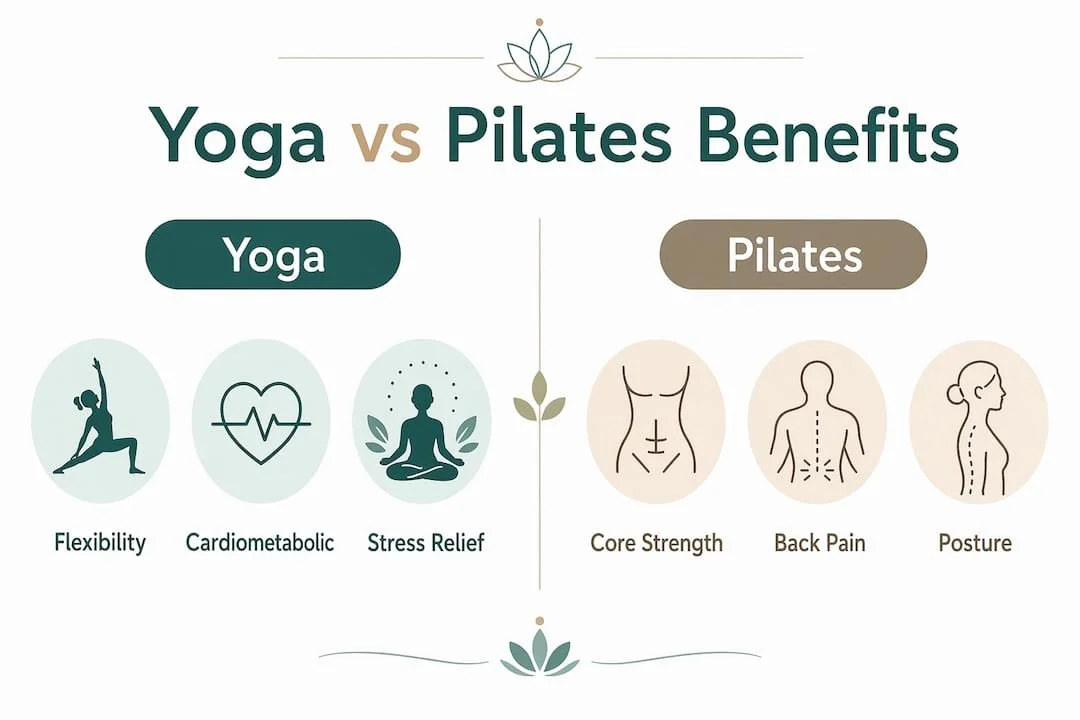
Yoga and Pilates each target physical fitness from a different angle, and understanding that difference helps you get more from both. Yoga builds flexibility, joint mobility, and muscular strength through sustained postures and flowing sequences. Pilates develops core stability, postural alignment, and muscular endurance through precise, controlled movements that demand full-body coordination.
The pain relief evidence for Pilates is particularly strong. A meta-analysis of 35 RCTs involving 2,132 participants found that Pilates produced a mean difference of MD=−1.14 on chronic low back pain, outperforming yoga and most other exercise modalities. That result means Pilates is not just a gentle stretch routine. It is one of the most clinically validated tools for back pain management available to adults without surgery or medication.
Yoga's physical benefits extend into cardiometabolic health. A meta-analysis of 30 RCTs found that yoga reduced systolic blood pressure by 4.35 mmHg and diastolic blood pressure by 2.06 mmHg in adults with overweight or obesity, with additional improvements in LDL and HDL cholesterol. For adults managing cardiovascular risk factors, a consistent yoga practice is a meaningful intervention, not a supplement to real exercise.
| Physical benefit | Yoga | Pilates |
|---|---|---|
| Flexibility | Strong improvement via sustained postures | Moderate, through full-range-of-motion movement |
| Core strength | Moderate, through stabilizing poses | Primary focus of every session |
| Posture correction | Moderate | Strong, especially with reformer work |
| Chronic back pain relief | Moderate evidence | Superior analgesic effect vs. most exercise types |
| Cardiometabolic health | Significant in overweight adults | Limited direct evidence |
| Balance and body awareness | Strong | Strong |
Pro Tip: Aim for at least two to three sessions per week for a minimum of eight weeks before evaluating physical results. Single sessions produce temporary relief. Sustained practice produces structural change.
How do yoga and Pilates benefit mental health?
Both practices produce measurable psychological benefits, and the mechanisms behind them are well understood. Yoga's mental health effects come primarily from breath control, mindfulness cues embedded in class instruction, and the parasympathetic activation that sustained movement and stillness produce. Pilates contributes through mind-body coordination, the concentration required for precise movement, and the sense of physical competence that builds over time.
A systematic review and meta-analysis of 30 controlled studies with 2,288 participants found that yoga interventions produced effect sizes of ES=−0.54 for stress, ES=−0.52 for anxiety, and ES=−0.50 for depression. Those are moderate effect sizes, comparable to many pharmaceutical interventions for mild-to-moderate conditions. The review also found that benefits increased with participant age, meaning adults over 40 tend to see stronger results than younger participants.
Program length is a critical factor that most people underestimate. A meta-analysis of over 24,000 participants found that mindfulness-based programs, including yoga, produced a pooled effect size of Hedges' g=−0.45 for anxiety, stress, and depression combined, with stronger effects for anxiety (g=−0.56) and for programs lasting 8 to 12 weeks. Short programs or irregular attendance produce underwhelming results. The dose matters as much as the practice itself.
The mental health benefits of both practices include:
Stress reduction: Yoga's breathwork directly activates the parasympathetic nervous system, lowering cortisol and heart rate. Pilates achieves similar effects through focused concentration and physical exertion.
Anxiety relief: Structured mindfulness-based programs show the strongest anxiety reductions among all mental health outcomes studied.
Depression support: Both practices improve mood through movement, social connection in group classes, and the neurochemical effects of regular physical activity.
Sleep quality: A four-week Pilates program showed significant sleep improvements (p=0.004) in adults with chronic low back pain, a population where poor sleep is nearly universal.
Emotional regulation: Yoga's emphasis on present-moment awareness builds the same attentional skills that cognitive behavioral therapy targets.
Pro Tip: If mental health is your primary goal, choose a yoga class that explicitly incorporates breathwork and mindfulness cues, such as a restorative, yin, or trauma-informed format. A flow class focused on physical intensity will produce fewer psychological benefits than a slower, breath-centered practice.
What is the difference between yoga and Pilates?
The difference between Pilates and yoga is best understood as a difference in primary emphasis, not a difference in quality or difficulty. Both are mind-body movement systems that develop balance, flexibility, and body awareness. But yoga prioritizes mindfulness, stress reduction, and a spiritual or philosophical framework, while Pilates prioritizes core stability, postural alignment, and controlled muscular engagement.
Yoga sessions typically require only a mat and can range from deeply restorative to physically demanding, depending on the style. Hatha, yin, and restorative yoga are gentle and meditative. Vinyasa, Ashtanga, and hot yoga are vigorous and cardiovascular. Pilates mat classes are accessible and equipment-free, while reformer Pilates uses a spring-resistance machine that adds load and precision to every movement. Reformer sessions tend to be more individualized and are often used in physical therapy settings for rehabilitation.
A common misconception is that both practices are "too gentle" to produce real fitness results. The clinical evidence on Pilates for back pain and the cardiometabolic data on yoga directly contradict that view. Both practices produce measurable physiological changes when practiced consistently at the right intensity.
Here is a practical breakdown of where the two practices differ and overlap:
Breath use: Yoga uses breath as a mindfulness anchor and a guide for movement transitions. Pilates uses breath to stabilize the core and coordinate muscular engagement.
Spiritual dimension: Yoga carries philosophical roots in Indian traditions and often includes meditation, intention-setting, or chanting. Pilates has no spiritual component.
Equipment: Yoga requires a mat. Pilates can use a mat, reformer, Cadillac, or Wunda chair.
Instructor training: Both require specialized certification, but Pilates teacher training, especially for reformer instruction, tends to be more anatomy-focused and longer in duration.
Shared benefits: Both improve balance and body awareness, reduce stress, and build functional movement quality that transfers to daily life.
For a deeper comparison of how to choose between the two based on your specific fitness goals, the yoga vs Pilates guide at Amritayogawellness covers the decision framework in detail.
How to integrate yoga or Pilates into your wellness routine
Choosing between yoga and Pilates, or combining both, depends on your primary health goal. If chronic back pain or postural issues are your main concern, start with Pilates. If stress, anxiety, or emotional regulation is the priority, start with yoga. If you want both physical and mental benefits simultaneously, a combined weekly schedule produces the broadest results.
Here is a practical framework for building a sustainable practice:
Define your primary goal. Back pain relief, core strength, flexibility, stress reduction, and sleep improvement each point toward different starting points and class formats.
Commit to a minimum of eight weeks. Both the Pilates back pain research and the mindfulness meta-analyses confirm that shorter programs produce weaker results. Eight to twelve weeks is the threshold for meaningful change.
Schedule two to three sessions per week. Once-weekly practice produces some benefit but falls below the dose needed for significant physical or psychological outcomes.
Choose qualified instructors. For Pilates, look for instructors certified through the Pilates Method Alliance or a recognized studio training program. For yoga, Yoga Alliance registration (RYT-200 or higher) indicates a baseline standard of training.
Track functional outcomes, not just how you feel after class. Note changes in pain levels, sleep quality, emotional reactivity, and physical performance over four-week intervals. These markers tell you whether the practice is working before you feel the full effect.
Consider combining both. Two Pilates sessions and one yoga session per week covers core strength, postural work, and mindfulness in a manageable schedule. The benefits of Pilates and yoga compound when practiced together rather than treated as competing options.
Pro Tip: If you are new to both practices, start with a beginner Pilates mat class before moving to reformer work. The mat builds the body awareness and core engagement patterns that make reformer sessions far more effective and safe.
For adults managing stress alongside physical fitness goals, pairing your practice with stress reduction techniques from evidence-based frameworks can accelerate the mental health benefits of both yoga and Pilates.
Key takeaways
Both yoga and Pilates produce clinically significant physical and mental health benefits, with Pilates showing superior results for chronic back pain and yoga showing stronger effects for stress, anxiety, and cardiometabolic health.
| Point | Details |
|---|---|
| Pilates leads on back pain | Meta-analysis of 35 RCTs confirms Pilates outperforms yoga and most exercise types for chronic low back pain relief. |
| Yoga targets stress and anxiety | Effect sizes of ES = -0.52 for anxiety and ES = -0.54 for stress make yoga a clinically meaningful mental health tool. |
| Eight to twelve weeks is the minimum | Programs shorter than eight weeks consistently show weaker outcomes across both physical and psychological measures. |
| Combining both practices maximizes results | Pilates covers core strength and posture; yoga covers mindfulness and stress reduction. Together they address the full spectrum. |
| Functional outcomes matter most | Pain levels, sleep quality, and emotional reactivity are better progress markers than how you feel immediately after a session. |
Why I think most people underestimate what these practices actually do
Most adults approach yoga or Pilates expecting a gentle supplement to their "real" workout. That framing is the single biggest reason people quit before they see results. The clinical data tells a different story. A mean difference of MD=−1.14 on chronic back pain from Pilates is not a wellness trend. It is a result that competes with physical therapy protocols. Yoga's effect on blood pressure and anxiety is not anecdotal. It is replicated across thousands of participants in controlled trials.
What I have observed, both personally and through the Amritayogawellness community in Philadelphia, is that the people who get the most from these practices are the ones who stop treating them as interchangeable. Yoga and Pilates are not the same thing done in different clothes. Yoga asks you to regulate your nervous system through attention and breath. Pilates asks you to stabilize your spine through precise muscular control. Both skills are worth developing, and they reinforce each other in ways that neither practice achieves alone.
The other pattern I see consistently: people expect results in two or three weeks and walk away when they do not feel transformed. The research is clear that eight to twelve weeks is the threshold. Patience is not a personality trait here. It is a clinical requirement. If you are exploring these practices for the first time, give yourself a full program cycle before you evaluate whether it is working.
— Juiced
Explore holistic wellness at Amrita Yoga & Wellness
Amritayogawellness offers yoga, Pilates, barre, tai chi, and massage therapy at its Philadelphia studio, with classes designed for every level from complete beginners to advanced practitioners. Whether you are starting with a mat Pilates class to address back pain or exploring restorative yoga for stress relief, the studio provides qualified instruction across all the practices covered in this article.
Beyond movement classes, Amritayogawellness also offers tarot readings as part of its holistic wellness programming. Tarot sessions provide a structured space for personal reflection and self-inquiry, complementing the mindfulness work you develop through yoga and Pilates. For adults who want to integrate physical, mental, and reflective practices into a single wellness routine, Amritayogawellness brings all of those offerings together under one roof in Philadelphia.
FAQ
What are the main benefits of yoga and Pilates together?
Combining yoga and Pilates addresses both core strength and mental well-being simultaneously. Yoga reduces stress and anxiety with effect sizes comparable to mild clinical interventions, while Pilates delivers superior results for chronic back pain and postural alignment.
Is Pilates or yoga better for back pain?
Pilates produces stronger results for chronic low back pain. A meta-analysis of 35 RCTs found Pilates outperformed yoga and most other exercise types on both pain intensity and functional disability measures.
How long does it take to see results from yoga or Pilates?
Meaningful physical and mental health improvements typically require eight to twelve weeks of consistent practice at two to three sessions per week. Programs shorter than eight weeks show significantly weaker outcomes across both practices.
What is the difference between yoga and Pilates for mental health?
Yoga produces moderate effect sizes for stress (ES=−0.54), anxiety (ES=−0.52), and depression (ES=−0.50) through breathwork and mindfulness. Pilates supports mental well-being through physical competence and mind-body coordination, but with less direct evidence for psychological outcomes than yoga.
Can beginners do both yoga and Pilates at the same time?
Yes, and combining both from the start is practical. A beginner schedule of two Pilates mat sessions and one yoga session per week covers core stability, posture, and stress reduction without overloading recovery. Start with mat-based formats in both practices before progressing to reformer Pilates or advanced yoga styles.
Recommended
Yoga and Pilates for Weight Loss: What Really Works
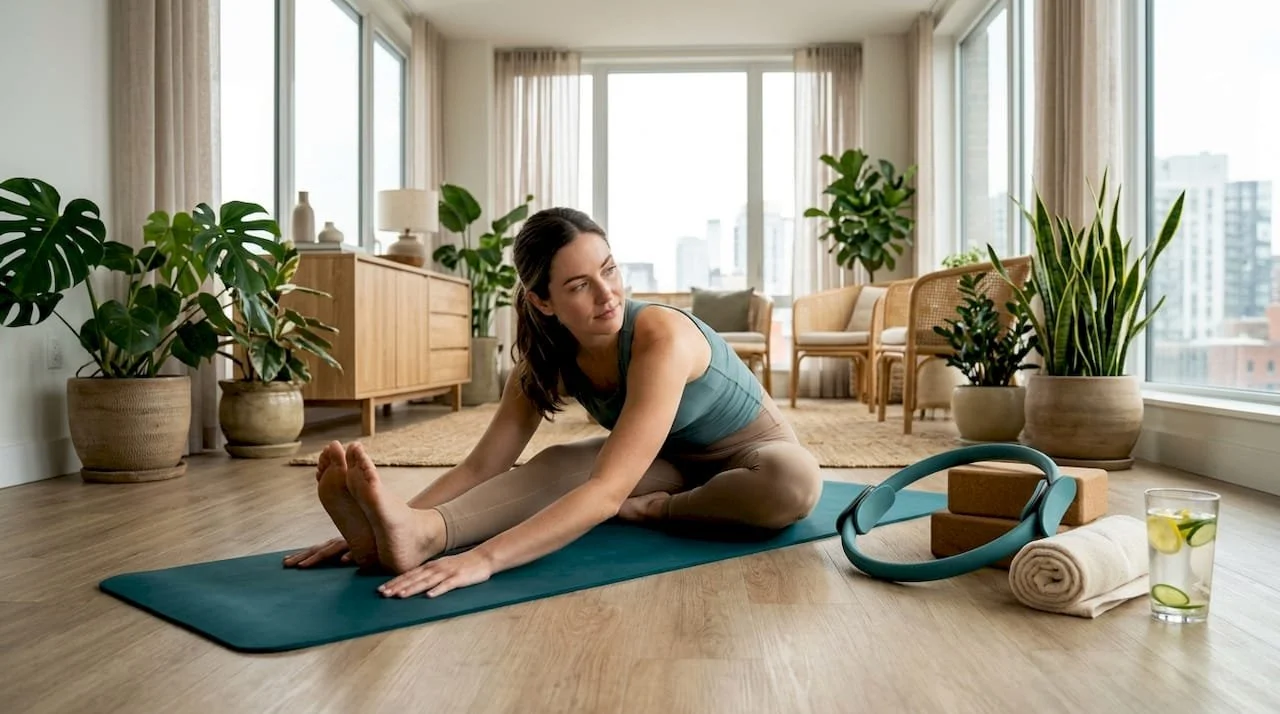
TL;DR:
Yoga and pilates improve physiological and behavioral conditions that support lasting weight loss, rather than directly burning calories. Consistent practice, combined with aerobic exercise and proper nutrition, enhances metabolic health, strength, and stress regulation, facilitating sustainable weight management. Integrating both into a broader fitness plan over several months yields the most meaningful and lasting results.
Most people assume yoga and pilates for weight loss is wishful thinking. The poses look peaceful, the reformer sessions seem almost meditative, and nothing about either practice screams "calorie furnace." That assumption is wrong, but so is the opposite extreme. Yoga and pilates won't replace a brisk run or a caloric deficit. What the research actually shows is more nuanced and, frankly, more useful: these practices create the physiological and behavioral conditions that make lasting weight loss possible.
Table of Contents
Key takeaways
| Point | Details |
|---|---|
| Yoga supports cardiometabolic health | Practicing yoga at least 3 times per week improves blood pressure, lipid profiles, and glucose metabolism in adults with excess weight. |
| Pilates builds the foundation for fat loss | Pilates improves strength, posture, and core function, making aerobic and daily activities more effective and sustainable. |
| Dose and consistency matter most | At least 150 to 180 minutes of moderate activity per week is needed for clinically meaningful weight loss outcomes. |
| Neither practice works alone | Combining yoga or pilates with aerobic exercise and nutrition changes produces the best results for losing weight. |
| Mindful movement improves adherence | Both practices reduce stress and improve body awareness, which directly supports better eating habits and long-term exercise consistency. |
Yoga and pilates for weight loss: what the science says
Let's start with yoga. A lot of people wonder whether yoga can actually move the needle on weight. The short answer is yes, but mostly through indirect pathways that most fitness content never mentions.
A systematic review and meta-analysis of 30 randomized controlled trials involving 2,689 adults with overweight or obesity found that yoga practiced at least three times per week produced measurable reductions in blood pressure and modest improvements in lipid profiles. These are cardiometabolic markers that sit upstream of weight-related disease. Improving them doesn't just reduce health risk. It creates a body that functions better during every other form of exercise you do.
The benefits of yoga for weight loss also show up in fat tissue directly when the practice is structured and sustained. Women who practiced Bikram yoga for six months achieved a 6.17% reduction in fat mass, which crosses the 5% threshold considered metabolically significant. That's not incidental. It reflects what happens when a practice is consistent, progressive, and combined with the lifestyle shifts yoga tends to encourage.
Here's what the research consistently points to as the deciding factors:
Frequency matters. At least 180 minutes per week of yoga practice is the dose associated with measurable cardiometabolic improvements. One class per week won't get you there.
Program selection matters. Not all yoga styles deliver the same physiological load. Iyengar, Vinyasa, and Bikram make different demands on your cardiovascular and muscular systems.
Duration of practice matters. The PATH trial protocol delivers Iyengar yoga twice weekly for 14 weeks, then once weekly for 22 more weeks. That's nearly nine months of sustained exposure, which is a very different commitment than a four-week "yoga challenge."
Behavioral effects matter enormously. Yoga can improve behavioral self-regulation during weight loss efforts, reducing dietary lapses and supporting consistent decision-making around food and activity.
Pro Tip: If you're using yoga as a weight management tool, track your weekly minutes, not just the number of sessions. Hitting 180 minutes per week across three to four sessions is the evidence-backed target.
What pilates actually does for your body composition
Pilates occupies a different lane than yoga in the weight loss conversation. Its reputation as a "core workout" is accurate but incomplete. The fuller picture is that pilates is a resistance-based modality that improves strength, function, and body composition in ways that set the stage for fat loss, even when it doesn't drive fat loss directly.
A narrative review on reformer versus mat Pilates found that reformer pilates may favor muscle hypertrophy mechanically through its spring-resistance system, but the empirical evidence for meaningful muscle mass gains or direct fat reduction is inconsistent. That's not a knock on pilates. It's a realistic framing of what a weight loss pilates workout can and cannot do on its own.
What pilates does reliably:
Builds core strength and postural control that reduces injury risk during higher-intensity exercise
Improves functional movement patterns that make everyday activity more calorie-expensive
Increases muscular endurance, particularly in the posterior chain and deep stabilizers
Supports recovery between more demanding aerobic sessions
The key variable in any pilates routine for fat burning is progressive overload. Static routines at the same resistance level, same tempo, same exercises every week, are unlikely to drive metabolic adaptation. Reformer pilates offers a structural advantage here because the spring system allows you to increase resistance over time. Mat pilates can achieve the same effect through tempo manipulation, added bodyweight leverage, and exercise complexity progression.
Pro Tip: Ask your pilates instructor to document your resistance levels and progressions session by session. Without progressive overload, a mat pilates practice will plateau metabolically within weeks.
If you're newer to pilates, the Pilates for beginners guide at Amrita Yoga & Wellness covers how to build core strength before layering in resistance progression, which is the right order of operations.
Yoga vs. pilates: how to choose or combine them
Most people treat this as an either-or decision. It doesn't need to be. Understanding what each practice prioritizes helps you make a smarter choice based on your goals, current fitness level, and what you'll actually stick with.
| Feature | Yoga | Pilates |
|---|---|---|
| Primary focus | Mind-body connection, flexibility, breath, stress reduction | Core strength, postural alignment, controlled resistance movement |
| Caloric burn (per session) | Moderate: 180 to 360 calories (style-dependent) | Moderate: 175 to 375 calories (equipment and intensity-dependent) |
| Fat loss mechanism | Indirect via cardiometabolic improvement, stress reduction, behavioral regulation | Indirect via strength building, functional movement, and injury prevention |
| Best for | Stress-driven weight gain, adherence challenges, metabolic health support | Core weakness, postural problems, injury recovery, building a strength base |
| Equipment needed | Mat, minimal props | Mat or reformer for greater progression |
| Beginner accessibility | High, especially gentle or restorative styles | High for mat, moderate for reformer |
| Combines well with | Walking, cycling, aerobic classes | Running, HIIT, strength training |
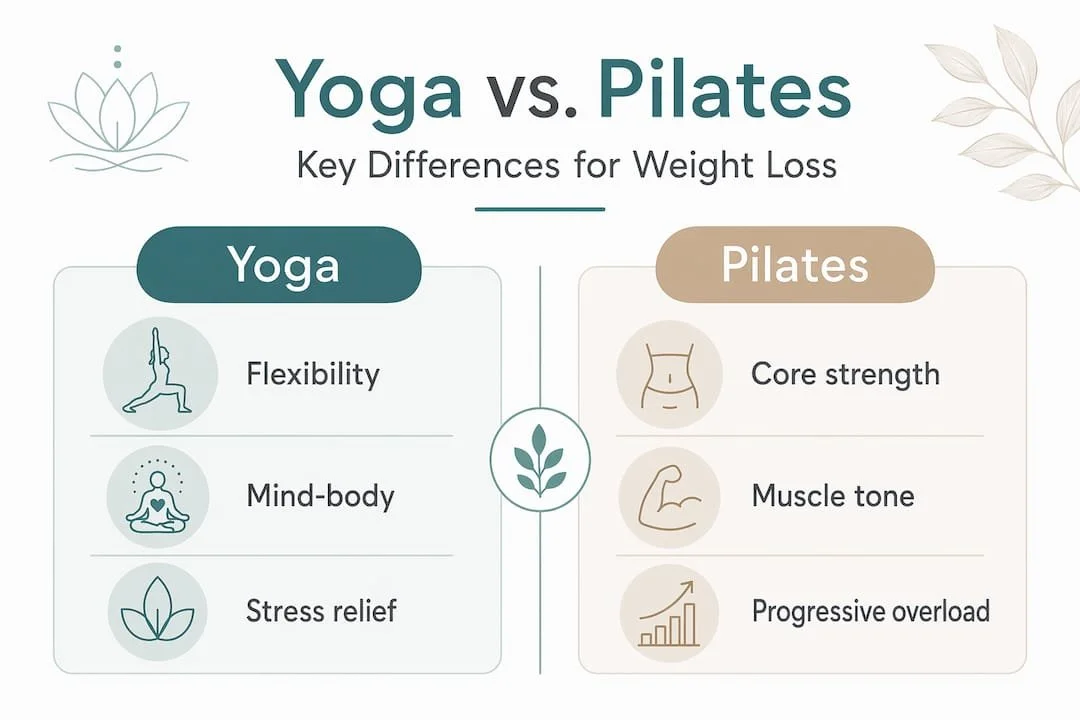
For a deeper look at how these two practices compare across fitness goals, the yoga vs. pilates comparison at Amritayogawellness covers the functional differences in plain language.
The honest answer for most adults trying to lose weight is this: use both, but use them as part of a larger plan, not as the entire plan.
Building a yoga and pilates workout plan that actually produces results
This is where most programs fall short. People show up to yoga twice a week, add a pilates session, and wonder why the scale isn't moving after two months. The issue isn't the practices. It's the dose and the missing pieces.
Here's how to build a yoga and pilates workout plan that supports real, sustainable fat loss:
Hit the activity threshold first. Lifestyle interventions for weight loss target 150 to 180 minutes of moderate activity per week. Yoga and pilates count toward that total, but they typically cannot fill it alone. Add brisk walking, cycling, or swimming on non-practice days.
Treat pilates as your resistance training. Combining aerobic activity with resistance training two to three times per week reduces insulin resistance and supports fat loss more effectively than either approach alone. Pilates counts as your resistance work if it's progressive and challenging.
Schedule yoga for recovery and stress management. Yoga sessions on days after harder aerobic workouts reduce cortisol, improve sleep quality, and support the hormonal environment that makes fat burning easier.
Anchor your nutrition. Exercise alone produces limited initial weight loss. Yoga and pilates are not exceptions. Pair your practice with a modest caloric deficit, not starvation, and the combination becomes genuinely powerful.
Track progress in more than one way. The scale is one metric. Also track energy levels, sleep quality, how your clothes fit, and how far you can walk without fatigue. Yoga and pilates tend to show up first in those measures, well before body weight shifts.
Pro Tip: The biggest mistake people make when losing weight with yoga and pilates is treating either practice as their cardio. If you leave a yoga class barely winded, you've done recovery work, not cardiovascular training. That's valuable, but layer in something that elevates your heart rate for 20 to 30 minutes several times per week.
A realistic six-month arc looks like this: months one and two focus on establishing a consistent three-to-four day per week practice. Months three and four add aerobic sessions and begin progressive overload in pilates. Months five and six, the compounding effect becomes visible in body composition, energy, and metabolic markers.
My honest take after years of watching people use these practices
I've worked alongside enough practitioners to say something that most fitness content won't: the people who succeed with losing weight with yoga and pilates are rarely the ones chasing the fastest result. They're the ones who stopped fighting their bodies and started working with them.
Here's what I've observed consistently. Adults who come to yoga and pilates after burning out on high-intensity programs don't just get more flexible. They get more regulated. Their eating becomes less reactive. Their sleep improves. Their relationship with physical effort shifts from punitive to purposeful. That's not a soft outcome. That's the behavioral infrastructure that makes every other weight loss strategy work better.
What I've also seen is that people underestimate both practices when they go in expecting rapid fat loss, and overestimate them when they forget they need aerobic challenge too. The evidence supports yoga and pilates as facilitative components of a behavioral weight loss program, not replacements for the program itself. The practices that get you to your goal are the ones you can sustain for nine months or two years, not the ones that burn the most calories in a single session.
If you're someone who has tried and quit multiple exercise programs, yoga and pilates may be exactly the right entry point. Not because they're easy, but because they build the kind of body awareness and self-regulation that make everything else more sustainable.
— Juiced
Start your practice at Amrita Yoga & Wellness
Amrita Yoga & Wellness in Philadelphia offers the kind of structured, instructor-led environment where yoga and pilates for weight loss actually sticks. Classes span mat pilates, Iyengar yoga, Vinyasa flows, hot yoga, and blended formats designed for different fitness levels and goals. Whether you're just starting out or returning after a long break, the studio's instructors tailor sessions to where you are, not where you think you should be. The community-driven approach means you're not navigating this alone. Explore class schedules, workshops, and wellness services including holistic wellness offerings that support the mind-body connection at the heart of sustainable weight management. Visit Amrita Yoga & Wellness to find your fit.
FAQ
Can yoga really help with weight loss?
Yes. Yoga supports weight loss primarily through cardiometabolic improvements, stress reduction, and better behavioral self-regulation around food and activity. Structured yoga practiced at least three times per week shows measurable effects in clinical research.
How often should I do pilates to see weight loss results?
Two to three pilates sessions per week, combined with aerobic exercise and a modest caloric deficit, gives you the best chance of seeing body composition changes. Pilates alone, without progressive overload and aerobic activity, is unlikely to drive significant fat loss.
Is a yoga and pilates workout plan enough to lose weight?
It depends on total weekly activity and nutrition. Yoga and pilates contribute meaningfully to a weight loss plan, but most adults need additional moderate aerobic exercise to reach the 150 to 180 minute weekly activity threshold associated with clinically meaningful results.
What is the best yoga style for fat loss?
Higher-intensity styles like Bikram, Vinyasa, and Power yoga generate more cardiovascular demand and caloric expenditure than restorative or Yin yoga. Six months of regular Bikram yoga has been shown to reduce fat mass by over 6% in research settings.
Should beginners start with yoga or pilates for weight loss?
Both are beginner-friendly. Pilates may be the better starting point if core weakness or postural issues are limiting your ability to exercise comfortably. Yoga tends to be more accessible for those dealing with stress-related weight gain or who need to build a consistent movement habit first.
Recommended
What Are Pilates Reformer Classes? a Beginner's Guide
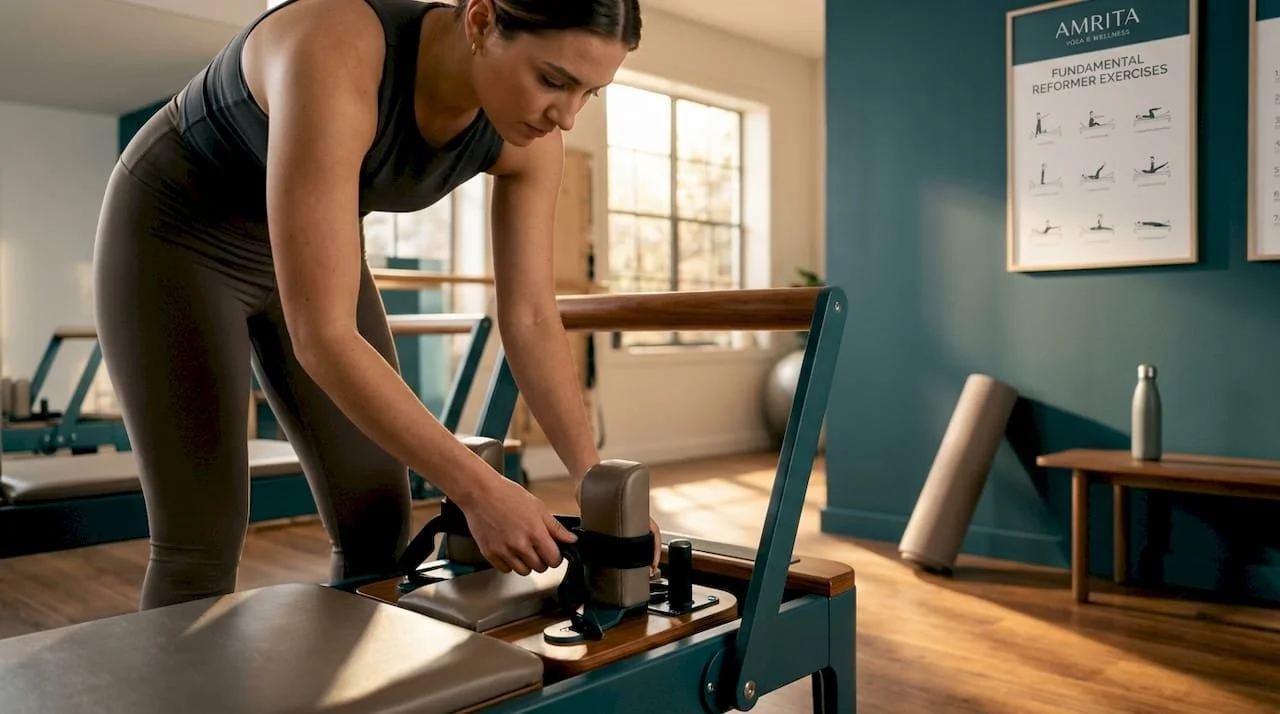
TL;DR:
Reformer Pilates uses spring resistance to engage muscles more deeply than mat exercises, making it effective for most fitness levels. Classes follow a structured routine of warm-up, main exercises, and cool-down, emphasizing control, alignment, and breath, with modifications for individual needs. This low-impact training improves strength, balance, posture, and fall risk reduction, regardless of age or starting fitness level.
If you've walked past a Pilates studio and spotted those sleek, sliding machines and wondered what are Pilates reformer classes, you're not alone. Many fitness-curious adults assume reformer Pilates is reserved for dancers, gymnasts, or people who can already bend themselves into impossible shapes. That assumption is wrong, and it keeps a lot of people from one of the most effective low-impact strength training methods available. This guide breaks down exactly what a Pilates reformer class is, how it works, what to expect when you walk in, and why it might be the smartest addition to your wellness routine.
Table of Contents
Key takeaways
| Point | Details |
|---|---|
| Reformer uses spring resistance | The machine challenges muscles in both directions, creating deeper engagement than mat work alone. |
| Safe for most fitness levels | With proper instruction and spring adjustment, beginners can train effectively and without injury. |
| Benefits go beyond flexibility | Research shows measurable gains in strength, balance, posture, and even fall risk reduction. |
| Form beats speed every time | New practitioners get better results focusing on breath and alignment than rushing through repetitions. |
| Classes are structured and guided | Instructors set pace, correct form, and modify exercises so every student progresses at the right rate. |
What Pilates reformer classes actually are
The reformer is a bed-like frame fitted with a sliding carriage, adjustable springs, a footbar, and straps attached to pulleys. You move the carriage by pushing or pulling against spring tension while lying, sitting, kneeling, or standing on it. That last part surprises most beginners: reformer Pilates is not just lying down doing gentle stretches.
What sets reformer Pilates apart from mat Pilates is the resistance mechanism. Spring resistance works in both directions, meaning your muscles engage on both the push and the pull. Mat Pilates relies primarily on bodyweight, which is valuable but limited in how much it can load the stabilizer muscles. The reformer creates a deeper stability challenge because your core and supporting muscles must control the carriage throughout the full range of motion.
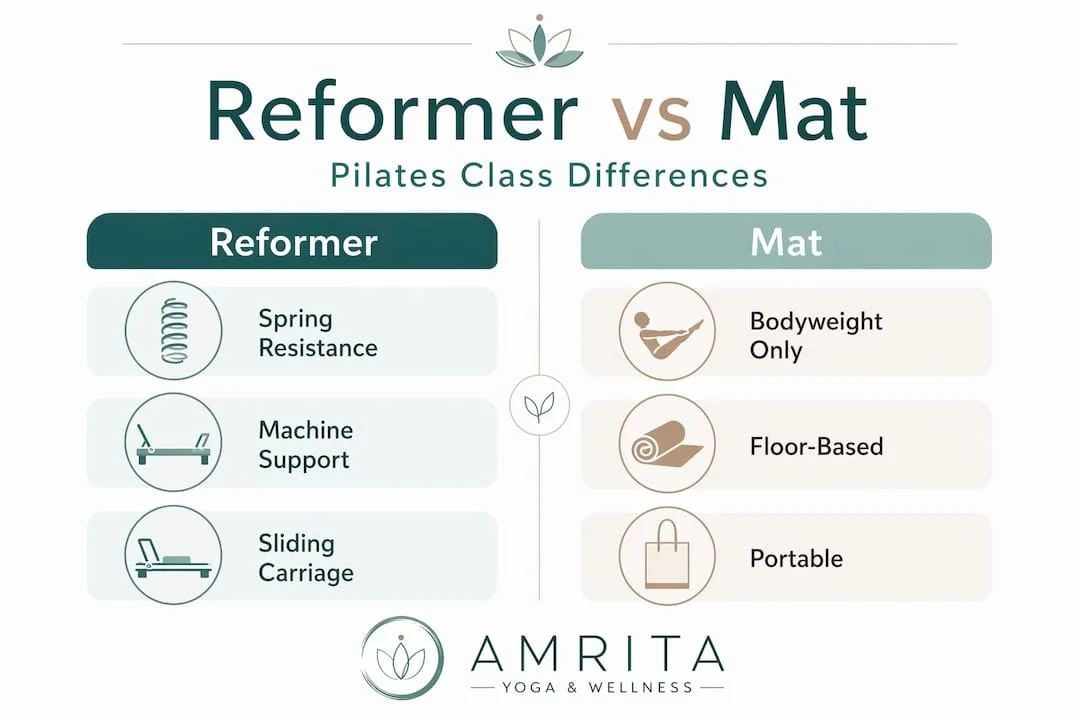
Joseph Pilates originally developed reformer-based exercises for rehabilitation, working with injured dancers and soldiers. That rehabilitation foundation is still visible in modern classes: precision, control, and breath are prioritized over volume and speed.
Here's a quick comparison to clarify the differences:
| Feature | Mat Pilates | Reformer Pilates |
|---|---|---|
| Equipment | Exercise mat | Reformer machine with springs and carriage |
| Resistance type | Bodyweight only | Adjustable spring tension, both directions |
| Body positions | Primarily floor-based | Lying, seated, kneeling, standing |
| Beginner accessibility | Very accessible | Accessible with proper guidance |
| Muscle depth targeted | Surface and core | Deep stabilizers and surface muscles |
Core principles of reformer Pilates:
- Concentration: Full mental attention on each movement
- Control: No momentum; every inch of motion is deliberate
- Centering: All movement originates from the core
- Precision: Quality of movement over quantity of repetitions
- Breath: Coordinated with movement to amplify engagement
The real benefits of reformer Pilates
This is where reform Pilates earns its reputation. People often come in for the flexibility gains and stay because of the strength results. Reformer Pilates engages deep stabilizer muscles that conventional gym training routinely skips, including the muscles along the spine, hip rotators, and inner thighs. These are the muscles that keep you upright, protect your joints, and support every movement you make outside the studio.
The benefits extend well beyond what most beginners expect:
Core strength: Every reformer exercise recruits the core, not as an afterthought but as the foundation.
Posture improvement: Consistent practice retrains the body to hold proper alignment naturally.
Flexibility: Moving through controlled ranges of motion builds functional flexibility, not just passive stretch.
Balance and coordination: The unstable carriage surface demands constant neuromuscular feedback.
Mental focus: Coordinating breath with precise movement builds a mindfulness practice alongside the physical one.
The clinical research on these outcomes is worth knowing. A 10-week reformer program significantly improved functional mobility, balance, and fall risk reduction in adults over 65. That's not a small result. Falls are a leading cause of injury in older adults, and a twice-weekly Pilates reformer practice produced measurable change in just ten weeks.
Pro Tip: If you feel muscle fatigue or mild soreness after your first few reformer classes, that's a sign the deep stabilizers are activating. Most beginners feel this in the inner thighs, glutes, and lower abdominals, not the back or neck. If you feel it in your neck, check your form with your instructor.
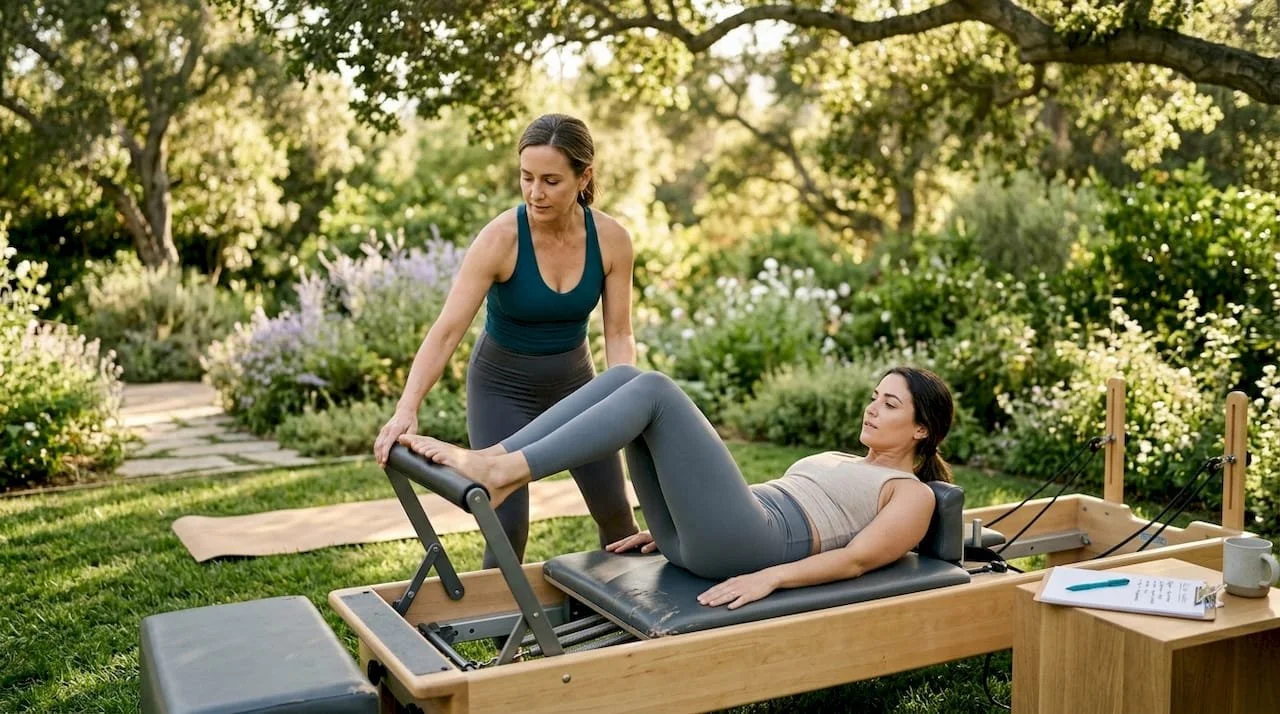
For anyone integrating breathwork into their practice, Pilates breathing and core strength have a direct and documented relationship. Controlled lateral breathing keeps the core engaged while allowing the ribcage to expand, which is a skill that takes a few classes to develop but pays off throughout your training.
What to expect in reformer classes
Knowing the structure of a class removes most of the anxiety beginners feel walking in. A standard reformer Pilates class runs 50 to 55 minutes and follows a clear rhythm.
Warm-up (5 to 10 minutes): Light spring-loaded movements to activate the core and establish breath rhythm. Common openers include footwork on the footbar with the carriage moving against resistance.
Main sequence (35 to 40 minutes): A series of exercises targeting legs, core, upper body, and full-body integration. You change positions frequently, moving from supine to seated to standing. Instructors cue transitions and adjust spring settings between exercises.
Cool down (5 to 10 minutes): Stretching using the straps and footbar, often accompanied by gentle spinal decompression exercises.
Spring resistance is the most technical aspect for beginners. Adjustable spring resistance is calibrated individually, and a good instructor adjusts it based on your fitness level and the specific exercise. Here's the counterintuitive part: more springs often mean more support, not more difficulty. If the carriage feels wobbly and impossible to control, adding more spring resistance actually stabilizes the carriage and helps you engage correctly.
Pro Tip: Before your first class, tell your instructor you're new. They will set your springs, explain transitions, and watch your alignment throughout. Most reformer injuries happen because beginners try to follow experienced practitioners without establishing their own baseline first.
Getting on and off the carriage is also part of the skill set. Rushing transitions on and off the reformer carriage is a common cause of minor accidents. Take it slow, plant your feet firmly, and always confirm your stability before shifting weight.
Safety, myths, and how to get the most out of it
The biggest misconception about reformer Pilates is that the machine makes the practice inherently safe. It does not. Safety in reformer Pilates depends on instruction quality, spring configuration, and the practitioner's body awareness. A machine with the wrong spring setting and no guidance is not safer than a mat.
Common mistakes that beginners make:
Gripping the straps too tightly: Proper force in reformer work travels through correct body lines, not through a white-knuckle grip. Over-gripping creates tension in the neck, shoulders, and wrists that interferes with engagement and causes strain.
Progressing too fast: The reformer looks simple until you're on it. Most seasoned instructors recommend spending at least four to six sessions on foundational exercises before advancing to standing or jumping work.
Skipping breath cues: Breath is not decoration. Beginners who prioritize breath and alignment over speed build stronger foundations and see faster progress in later stages.
Comparing progress to others in class: Reformer Pilates is highly individual. Someone next to you using lighter springs may be working twice as hard if they're managing a recent injury or learning a new movement pattern.
"Reformer Pilates is not 'Pilates lite.' It offers rigorous training that demands focus and control, making it beneficial even for experienced exercisers." Source: Reformer Pilates for Beginners
For wrist and shoulder alignment specifically, kinetic chain positioning during strap use is critical. Wrists should stay neutral, elbows slightly soft, and shoulders drawn away from the ears. This is something an experienced instructor will cue repeatedly in early sessions. See the full breakdown of breathwork mechanics in our guide to breathwork in Pilates to understand how breath and alignment work together.
Pro Tip: If you feel any sharp pain, stop immediately. Reformer Pilates creates muscle fatigue and sometimes mild discomfort as new muscle patterns activate. Sharp or joint pain is different and always warrants a pause and a word with your instructor.
My take on who this is really for
I've worked alongside people exploring reformer Pilates for the first time, and the pattern I see most often is this: they walk in convinced they're too out of shape, too inflexible, or too old to do it well. Within three sessions, they can't imagine going back to their previous routine.
What makes reformer Pilates different is that the machine meets you where you are. The spring system provides support when you need it and challenge when you're ready. I've seen people recovering from hip replacements rebuild functional strength alongside marathon runners correcting years of muscle imbalances. The same machine, the same class structure, completely different spring settings and modifications.
The intimidation factor is real, but it's a perception problem, not a fitness problem. The reformer looks complicated because it is mechanical. But within one class, the logic of the machine becomes clear, and the focus shifts from "how do I operate this" to "what is my body doing." That shift is where the real work begins. It's a form of strength training that asks you to be present, and that combination of physical and mental engagement is rare in fitness.
If you're curious about reformer Pilates, the best thing you can do is take one beginner class and commit to getting through three. The first one is orientation. The second is where you start to feel it. The third is when you understand why people do this for life.
— Amritayogawellness
Start your reformer Pilates practice at Amrita Yoga & Wellness
At Amrita Yoga & Wellness in Philadelphia, reformer Pilates classes are designed with beginners in mind, not as an afterthought but as a central priority. Every session includes instructor guidance on spring settings, movement cues for proper alignment, and modifications that meet each student where they are physically.
Whether you're managing a previous injury, building strength after a long break from exercise, or exploring low-impact training for the first time, Amrita's reformer Pilates classes offer a structured, supportive environment to learn the fundamentals and progress safely. The studio also supports your practice beyond the machine, with resources on technique, community events, and an online hub through Amrita Yoga & Wellness where you can book classes, explore schedules, and connect with the broader wellness community. This is one of those practices that rewards consistency. Starting in a space that takes your safety and progression seriously makes all the difference.
FAQ
What is a Pilates reformer class?
A Pilates reformer class is a structured group or individual session using the reformer machine, a sliding carriage with spring resistance, straps, and a footbar. Classes guide participants through exercises in multiple positions to build strength, flexibility, and core control.
Can anyone do Pilates reformer classes?
Yes. Reformer Pilates is adaptable for most fitness levels, ages, and physical conditions. Spring resistance can be adjusted to provide support or challenge, and experienced instructors modify exercises for beginners, older adults, and those managing injuries.
How do reformer classes work compared to mat Pilates?
Reformer classes use spring tension that challenges muscles in both directions, creating more resistance than bodyweight-only mat Pilates. This produces greater engagement of deep stabilizer muscles and allows more varied body positions, from lying flat to standing.
How many classes before you see results?
Most beginners notice improved body awareness and mild muscle fatigue within two to three sessions. Visible strength and postural changes typically emerge after four to six consistent weeks of weekly practice.
Is reformer Pilates safe for beginners?
Reformer Pilates is safe for beginners when taught by a qualified instructor who sets appropriate spring resistance and corrects form. The machine is not inherently safe on its own; proper instruction and controlled transitions are what make the practice safe and effective.
Recommended
Best Pilates reformer guide for Philadelphia adults
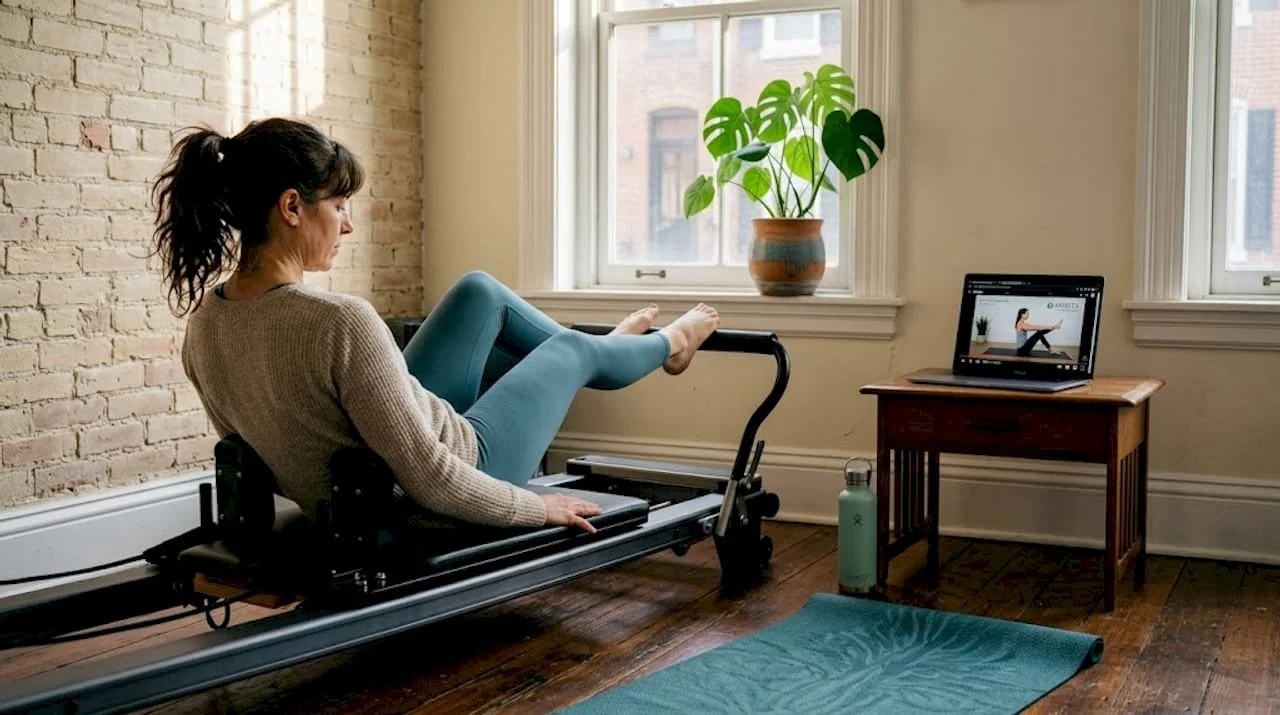
TL;DR:
Choosing the best Pilates reformer depends on features like carriage length, spring system, and adjustability, which impact workout quality. Top models like the Balanced Body Studio Reformer and Merrithew At Home SPX offer studio-grade performance, suited for various space and user needs. Proper maintenance, thoughtful space measurement, and aligning with your fitness goals are essential to maximize benefits from your reformer.
Choosing what is the best Pilates reformer is not as simple as picking the one with the most springs or the sleekest frame. Many people assume all reformers deliver the same workout, but the differences between models can mean the difference between genuine core engagement and a frustrating, plateaued practice. For Philadelphia adults seeking stronger cores, better flexibility, and a low-impact fitness routine that actually sticks, the machine you use matters far more than most people realize. This guide cuts through the noise and helps you find the right fit for your goals, your space, and your lifestyle.
Table of Contents
How to select the best Pilates reformer for your needs in Philadelphia
Why studio-quality engineering matters more than trendy features
Discover Pilates reformer classes and wellness support at Amrita Yoga & Wellness
Understanding Pilates reformers: core features and benefits
To make an informed choice, let's clarify what Pilates reformers are and why their features matter to your fitness and wellness goals.
A Pilates reformer is a spring-loaded, carriage-based machine that guides the body through resistance exercises targeting core strength, posture, and full-body flexibility. Four main components define the machine's quality and usability:
Carriage length and travel. This is the distance the sliding platform moves along the frame. Longer travel allows a fuller range of motion, which is especially important for taller users and for exercises that demand deep hip extension or spinal articulation.
Spring resistance system. Most reformers use between four and five springs in varying tensions (light, medium, and heavy). The ability to combine and swap these springs lets you customize resistance for everything from gentle rehabilitation work to demanding strength training.
Footbar adjustability. A footbar that locks into multiple positions accommodates different leg lengths and exercise types. Without sufficient adjustability, you end up compensating with poor form, which defeats the purpose entirely.
Headrest and shoulder block positioning. These details shape how safely and comfortably you can work through exercises. Shoulder blocks that are too far apart or headrests that don't tilt cause tension in the neck and shoulders, especially during supine (lying down) work.
Understanding these components tells you what to prioritize when reading quality pilates reformer reviews or comparing specs. A machine that looks impressive in photos but has minimal spring variety and a short carriage is going to limit your practice faster than you expect.
Top Pilates reformers for home and studio experience
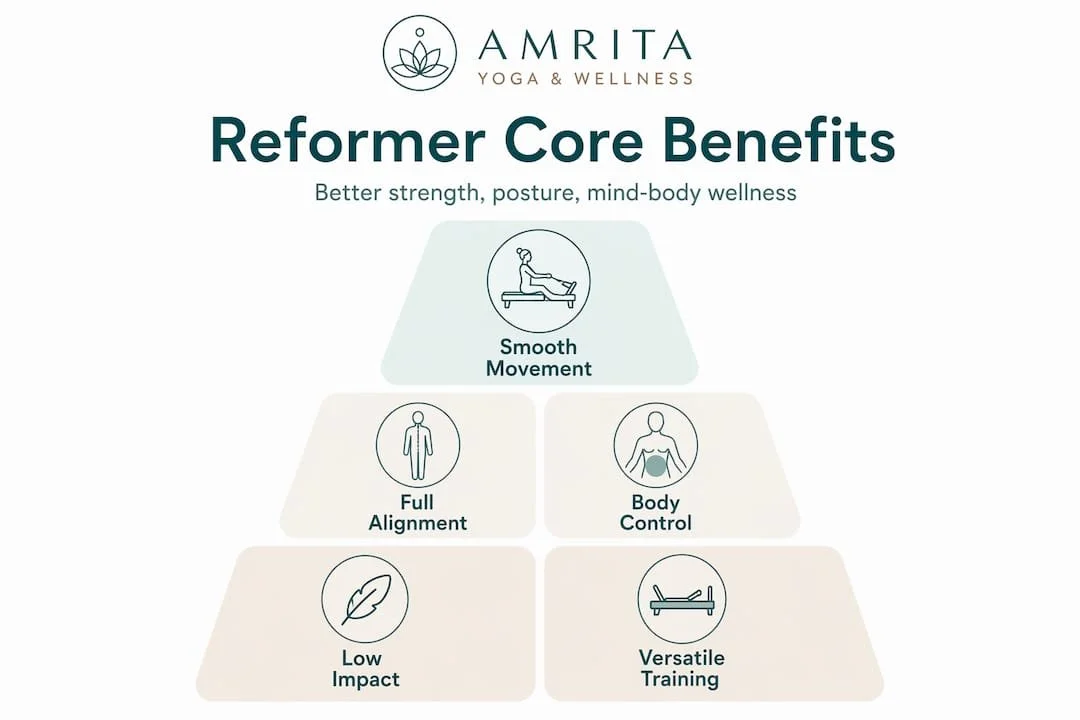
Now that you understand reformer basics, let's explore the top models that stand out for home and studio Pilates practice. These are the names that consistently appear in best pilates reformers 2025 and 2026 roundups for good reason.
| Reformer | Best for | Carriage length | Space needed | Price range |
|---|---|---|---|---|
| Balanced Body Studio Reformer | Studio-quality home practice | Extra-long | Full room | $$$$ |
| Balanced Body Metro IQ | Small apartments, storage ease | Standard | Foldable | $$$ |
| Merrithew At Home SPX | Reliable studio-grade performance | Long | Moderate | $$$$ |
| Balanced Body Allegro STRETCH | Taller users (over 6 ft) | Extended | Full room | $$$$ |
The Balanced Body Studio Reformer is named best overall for its studio-like quality, complete with an extra-long carriage that accommodates nearly any body type without sacrificing movement depth. If you have the space and the budget, this is the benchmark everything else gets measured against.
For Philadelphia residents in rowhouses, condos, or apartments without a dedicated workout room, the Metro IQ folds for easy storage and is notably gentle on the knees, making it an excellent affordable pilates reformer option that doesn't feel like a compromise. The trade-off is a slightly shorter carriage travel, which matters more as your practice advances.
The Merrithew At Home SPX remains one of the closest translations of a professional studio experience available for home use. Its consistent engineering and carriage feel make it a strong pick for anyone who trained in a STOTT Pilates studio and wants to maintain that same quality of movement at home.
You can also browse reformer Pilates options and understand Pilates reformer types before committing to a model.
Pro Tip: Visit a local studio and try at least two different reformer models before buying. What feels smooth and responsive in a showroom can feel entirely different after 20 minutes of continuous footwork.
Nuances to consider: space, user height, and workout goals
To make the best choice, consider individual and environmental factors that can influence workout quality and reformer satisfaction.
Many first-time buyers underestimate how much space a reformer actually needs. Even a "compact" model requires roughly 8 to 10 feet of clear length when you account for getting on and off, standing at the footbar, and performing standing platform exercises. Here's a practical way to think through your decision:
Measure your space first, then shop. Lay a piece of tape on the floor in the exact dimensions of the reformer plus 2 feet on each end. Sit with that reality for a week before buying.
Factor in your height. The Allegro Reformer STRETCH version was designed specifically with a longer and wider carriage and adjustable footbar for users over 6 feet tall, giving them the room to fully extend without pushing against the footbar.
Match the reformer to your goals. If you want to replicate classical Pilates technique with precision, studio-grade machines with traditional spring systems are worth the investment. If your goal is consistent, low-impact movement three times a week without fuss, a compact foldable reformer can trade a little range of motion for genuine daily convenience.
Think two years ahead. Beginners often buy entry-level machines, improve rapidly, and outgrow the resistance range within a year. Buying one level above your current skill often saves money in the long run.
Understanding the reformer Pilates benefits specific to your body and goals will sharpen this decision considerably. Spinal flexibility work demands different spring configurations than targeted core strengthening, and knowing that before you buy shapes which model makes sense.
Pro Tip: If you're over 5'10", always confirm the reformer's published carriage travel length, not just the frame length. Manufacturers list these differently, and the carriage travel number is what actually determines your range of motion.
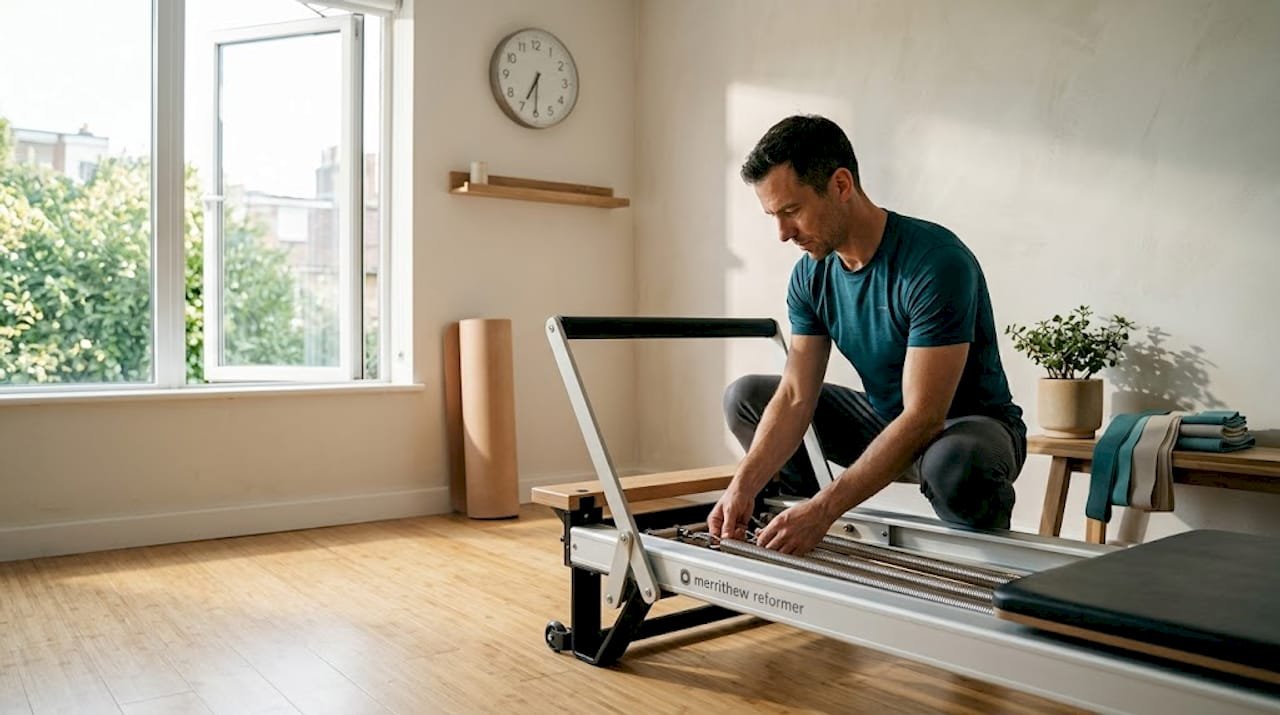
How to select the best Pilates reformer for your needs in Philadelphia
With your needs clear, let's break down practical steps for choosing the reformer that fits your Philadelphia home and wellness goals.
Identify your Pilates training lineage. If you trained under a classical instructor, a Balanced Body machine matches that technique lineage closely. STOTT practitioners typically align better with Merrithew equipment. Matching training background to reformer brand preserves your technique rather than forcing adaptation.
Decide how often you'll practice. Someone committed to four sessions a week needs studio-grade durability. Occasional practitioners can find excellent value in mid-range models.
Set a realistic budget that includes accessories. Reformer pads, foot straps, jump boards, and boxes add $200 to $600 to the total cost. Budget for these upfront rather than discovering them later.
Prioritize carriage smoothness above everything else. A jerky or uneven carriage disrupts the controlled movement that makes Pilates effective. This is the single feature you cannot assess from a product description alone.
Additional factors worth weighing as you finalize your choice:
Weight capacity. Most commercial reformers support 300 to 350 lbs. Confirm this matches your needs.
Frame material. Maple wood frames are traditional and durable. Aluminum frames are lighter but less forgiving over time.
Warranty length. Reputable brands offer 10-year frame warranties. Anything shorter on a premium-priced machine is a red flag.
Resale value. Well-known brands hold value far better than budget alternatives, which matters if your needs change.
You'll find ongoing Pilates reformer guidance on our blog covering everything from beginner setup to advanced spring configurations.
Maintaining and making the most of your Pilates reformer
Once you have your reformer, proper care and community engagement ensure your Pilates practice thrives.
The mechanical simplicity of a reformer is one of its greatest strengths, but it still requires attention. Springs fatigue over time. Ropes fray. Carriage wheels collect debris that creates friction and uneven glide. A neglected machine becomes a safety issue and a workout obstacle.
Here's what consistent maintenance looks like in practice:
Wipe down the carriage and frame after every session with a slightly damp cloth. Salt from sweat accelerates wear on metal components.
Inspect springs monthly for signs of rust, deformation, or uneven tension. Replace springs in matched pairs to preserve balanced resistance.
Check rope or strap integrity every few months. Fraying ropes should be replaced immediately. A snapped strap mid-exercise causes injury.
Lubricate the carriage wheels and rails every six months with a product recommended by the manufacturer. This preserves the smooth glide that defines a quality reformer experience.
Beyond maintenance, your practice improves fastest when you have structured guidance and community accountability. Subscription video libraries from Pilates instructors can add fresh programming to your home sessions, preventing the plateau that often hits three to six months in.
Pro Tip: Join a local Philadelphia Pilates community, whether in-person or online, to stay accountable and learn advanced exercises. Reformer work learned in isolation often develops subtle technique errors that go unnoticed without a trained eye.
Tracking your sessions and reformer Pilates benefits over time also keeps you motivated and helps you recognize when to progress your spring resistance.
Why studio-quality engineering matters more than trendy features
Here's a perspective we've developed after years of watching Philadelphians invest in wellness equipment: the flashiest reformers rarely produce the best results.
The reformer market has filled with machines promising magnetic resistance, smart tracking, app integration, and modular accessories that transform the machine into something else entirely. Most of these features add complexity without improving the fundamental movement quality that makes Pilates effective. Worse, novel mechanisms often mean unfamiliar repair needs and parts that are hard to source three years after purchase.
Studio-grade engineering decisions about carriage length and movement quality matter more than chasing novelty. This is not conservative thinking. It's practical wisdom earned by watching people buy on excitement and then watch their practice stagnate because the machine didn't feel right.
Smooth, consistent carriage travel is what allows the nervous system to develop the precise motor control Pilates demands. When a carriage jerks or resists unevenly, you compensate with larger muscle groups, which is exactly the opposite of what the practice is designed to do. A well-engineered machine from a reputable brand becomes invisible during your workout. You feel your body, not the equipment.
Longer carriage travel is the other non-negotiable. Full spinal articulation, deep hip flexion, and extended leg presses all require room to move without restriction. Cutting carriage length to save money or floor space creates a ceiling on your practice that you'll feel sooner than expected.
For those interested in how clinical applications of reformer work differ from general fitness use, our clinical reformer insights go deeper into engineering specifics and therapeutic applications.
The best reformer is not the most expensive one or the one with the longest feature list. It is the one with the smoothest carriage, appropriate length for your body, and a spring system that gives you room to grow for years.
Discover Pilates reformer classes and wellness support at Amrita Yoga & Wellness
Ready to put your new knowledge into action? At Amrita Yoga & Wellness in Philadelphia, we offer expert-led Pilates reformer classes designed for every fitness level, whether you're stepping onto a reformer for the first time or looking to deepen a practice you've been building for years.
Our community-focused environment means you are never figuring it out alone. Instructors guide your technique session by session, and fellow students become the accountability network that keeps a practice going through busy Philadelphia schedules. We also offer a full range of wellness services that support mind-body balance beyond the reformer. Want to explore what's possible before deciding on a home machine? Try a class first. Visit our reformer Pilates resources to learn more and schedule your first session.
Frequently asked questions
What is the best Pilates reformer for someone with limited home space?
Foldable models like the Balanced Body Metro IQ are ideal, offering studio-quality workouts with easy storage for apartments or smaller homes in Philadelphia.
Which Pilates reformer suits taller users best?
The Balanced Body Allegro STRETCH version features a longer, wider carriage and adjustable footbar, providing comfort and full range of motion for users over 6 feet tall.
Are at-home reformers as effective as studio machines?
High-quality at-home reformers like Merrithew's At Home SPX closely replicate the studio experience with consistent engineering, enabling effective core and flexibility workouts without leaving home.
How often should I practice Pilates on a reformer at home?
Practicing 2 to 4 times weekly supports meaningful progress in strength and flexibility while giving the body adequate recovery time between sessions.
What maintenance does a Pilates reformer require?
Regular cleaning after each session, monthly spring inspections, periodic rope or strap checks, and biannual rail lubrication keep the reformer safe, smooth, and performing well for years.
Recommended
Reformer Pilates benefits for core strength and flexibility
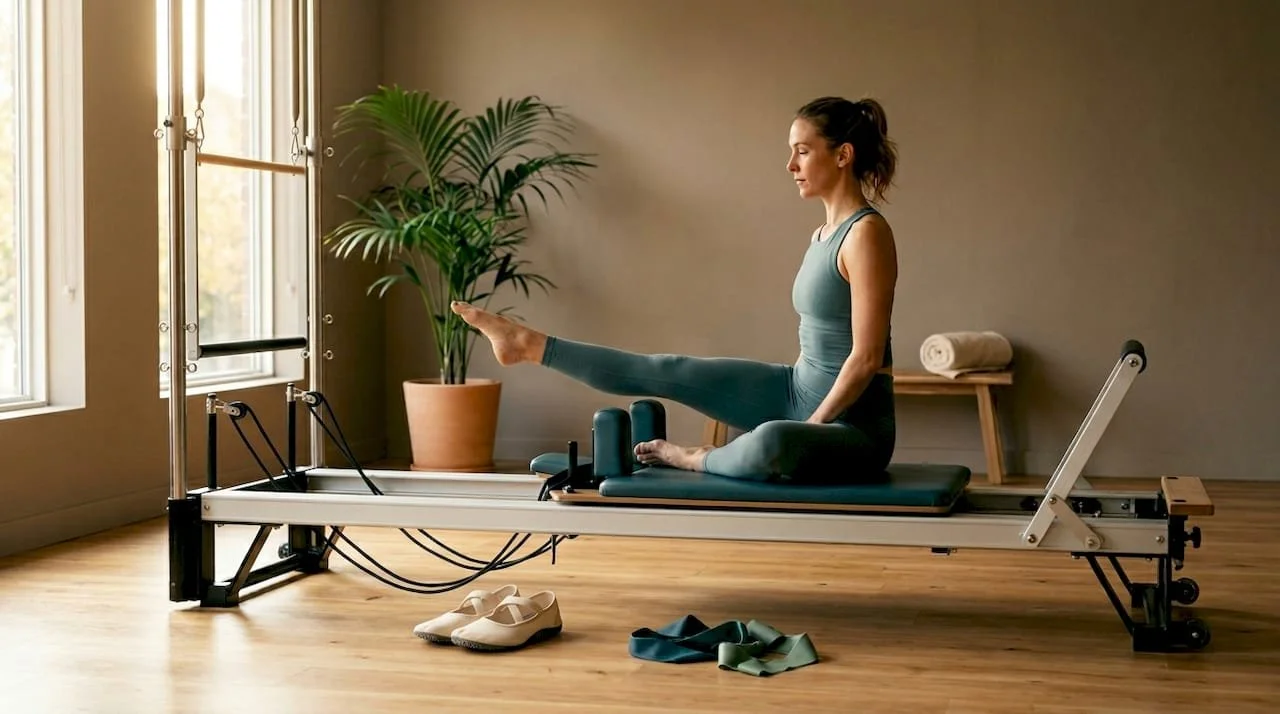
TL;DR:
Reformer Pilates is a scientifically supported method that enhances strength, flexibility, and mental health through controlled, spring-resisted movements. Its equipment promotes precise core engagement and stability, making it suitable for rehabilitation and low-impact exercise. The benefits extend beyond physical gains, actively supporting emotional well-being and long-term fitness sustainability.
If you've ever dismissed reformer Pilates as a gentle stretch session for people who want to avoid "real" exercise, you're not alone in that assumption. But the research tells a completely different story. Reformer Pilates is designed to improve strength, endurance, mobility, flexibility, balance, and mental health through controlled, spring-resisted movements and coordinated breathing. Those aren't soft claims. They're measurable outcomes that show up consistently in clinical studies, and they're exactly what adults in Philadelphia who want powerful results without punishing their joints are looking for.
Table of Contents
Key Takeaways
| Point | Details |
|---|---|
| Low-impact, high results | Reformer Pilates can boost core strength and flexibility without stressing joints. |
| Research-backed benefits | Studies show improvements in endurance, muscle tone, and even mental health outcomes. |
| Adaptable for all levels | Adjustable resistance makes reformer Pilates accessible for beginners to experienced athletes. |
| Instructor guidance matters | Quality instruction and gradual progression maximize safety and effectiveness. |
How reformer Pilates works: Key mechanics and methodology
Understanding what makes reformer Pilates so effective starts with the equipment itself. The reformer is a sliding carriage mounted on a rectangular frame, connected to a series of adjustable springs. Those springs create variable resistance as you push or pull the carriage. You can work with lighter tension for mobility-focused exercises or heavier tension to challenge strength and stability. That simple adjustment changes everything about the difficulty and intent of each movement.
What separates reformer Pilates from most gym machines is that the resistance is never locked into a single plane of motion. You're constantly stabilizing your body against the moving carriage while coordinating your breath with each repetition. This means your core is always engaged, even when the target muscle is your hamstring or shoulder. Controlled movement and spring-resisted ranges allow instructors to cue precise core engagement and stability while adjusting resistance to match exactly where you are right now, not where the average person is.
Key features of a standard reformer include:
Carriage: The sliding platform you lie, sit, kneel, or stand on
Springs: Color-coded for resistance levels, typically ranging from very light to heavy
Footbar: Adjustable bar you push against with your feet or hands
Straps and handles: Used for pulling exercises targeting the back, arms, and hip flexors
Shoulder blocks: Prevent you from sliding during leg-press movements
Pro Tip: Before your first class, ask your instructor to walk you through spring settings. Understanding which color corresponds to which resistance level helps you get more out of every movement.
"Reformer Pilates teaches you to move intentionally. The equipment provides feedback your body simply doesn't get from free weights or cardio machines." This precision is what makes even simple-looking exercises surprisingly demanding.
If you're just getting started, a solid beginner's guide to reformer Pilates will help you understand what to expect from your first few sessions. And if you're curious about how different machines compare, exploring pilates reformer types can help you find the right fit for your goals.
Physical benefits: Core strength, flexibility, and more
With a clear understanding of how the reformer works, the physical outcomes become easier to predict. This isn't equipment that looks impressive and does little. The results are documented and specific.
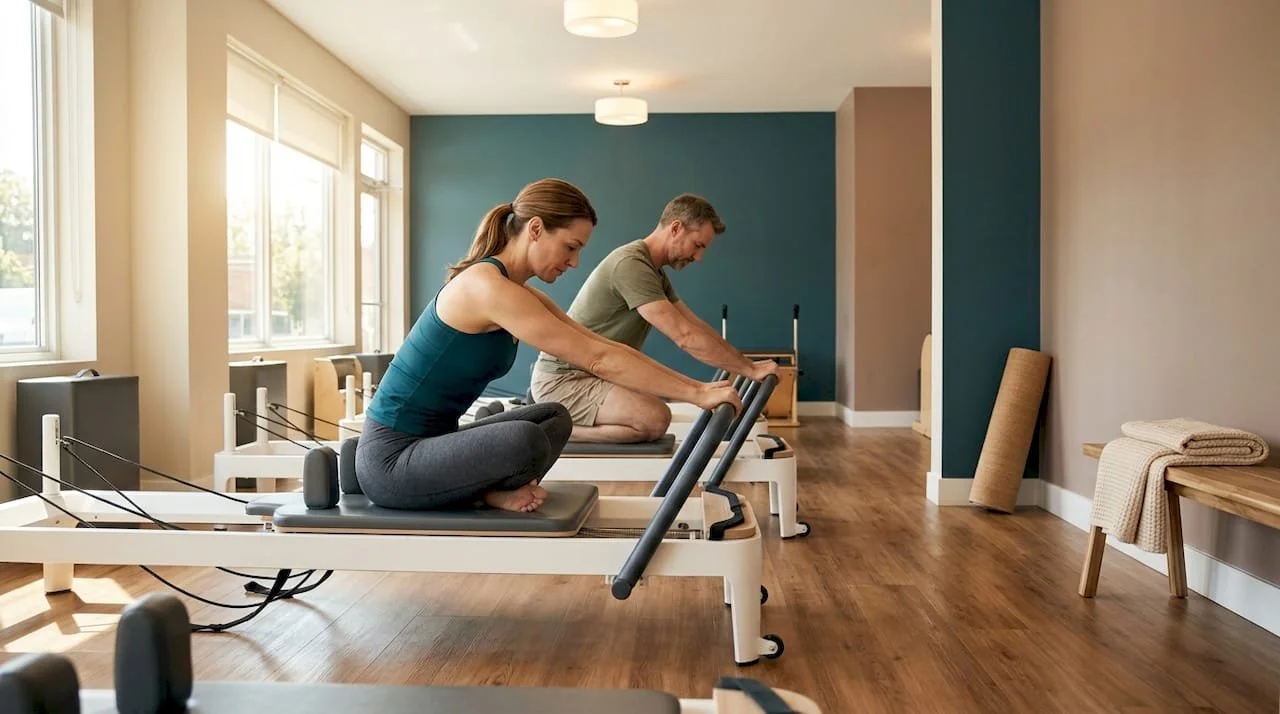
A standout finding from recent research: reformer Pilates improves body composition, upper-extremity strength, muscular endurance, and psychosocial measures including depression and anxiety in overweight and obese adults. That's not a minor benefit list. It means reformer Pilates can shift your physical health across multiple dimensions at once, and it does it without the joint stress of running, lifting heavy loads, or high-impact interval training.
An 8-week structured program produces measurable increases in muscle strength and endurance, with additional improvements in mobility and mental health outcomes. Eight weeks. Three sessions per week. That's a realistic timeline that most people in Philadelphia can actually commit to.
| Physical outcome | What the research shows |
|---|---|
| Core strength | Significant improvement from controlled spring-resistance work |
| Flexibility | Enhanced range of motion in hips, spine, and shoulders |
| Muscle endurance | Documented gains after 8-week programs |
| Body composition | Measurable shifts in overweight and obese participants |
| Balance and coordination | Improved through unstable carriage and multi-plane movement |
| Upper body strength | Demonstrated gains with consistent reformer training |
The benefits go deeper than what a table captures. Improved flexibility in reformer Pilates isn't just about touching your toes. It's about functional mobility, which means the kind of range of motion that makes getting out of a car, reaching overhead, or sitting at a desk for hours without pain actually manageable. The spine, hips, and shoulder girdle all respond well to the long, loaded stretches the reformer enables.
Key physical benefits you can realistically expect:
Stronger, more stable core muscles that support your lower back
Improved posture from consistent spinal alignment cues
Increased muscular endurance without bulk
Better hip mobility and hamstring length
Reduced muscle imbalances that often cause pain or poor movement patterns
Digging into core strength and flexibility benefits gives you a closer look at how these changes happen movement by movement.
Mental health and holistic wellness advantages
Physical gains are only half the story. Reformer Pilates also does something that most strength training programs don't prioritize: it actively supports your mental and emotional health.
The effects on psychosocial wellbeing are real and measurable. Research shows small-to-medium improvements in sleep quality, fatigue levels, and fear of movement, particularly in populations managing chronic pain. Depression and anxiety scores also improve with structured reformer sessions. That's not a wellness buzzword. That's a documented clinical outcome.
Why does moving on a reformer affect your mood and mental clarity? Part of it is the focused attention the practice demands. You cannot ruminate about your to-do list while coordinating your breath with a footbar press on a moving carriage. The reformer forces you into the present moment in a way that passive gym exercises simply don't.
"The mental engagement required by reformer Pilates may be just as therapeutic as the physical work. Presence and precision create a moving meditation that many participants describe as clearing mental noise."
Tips for maximizing mental health outcomes from your reformer sessions:
Arrive five minutes early to transition mentally from your day before class starts
Focus on breath first, movement second during challenging exercises
Keep a session journal noting energy levels and mood before and after class
Practice consistency rather than intensity, since frequency matters more than how hard you push
Pro Tip: If you're managing anxiety or high stress, tell your instructor before class. They can modify pacing and select exercises that feel grounding rather than overwhelming, especially in your first few weeks.
Understanding why reformer Pilates works at a deeper level can help you appreciate why the mental and physical benefits are so closely linked. Movement quality, mindful breathing, and progressive challenge all contribute to an experience that leaves you genuinely feeling better, not just tired.
Reformer vs mat Pilates: Which is better for you?
Seeing both benefits and nuances, you may wonder how reformer Pilates compares to traditional mat work. The honest answer is that neither is universally superior. They serve different purposes and fit different situations. What matters is understanding which one fits your current goals, body, and budget.
| Feature | Reformer Pilates | Mat Pilates |
|---|---|---|
| Resistance | Adjustable spring resistance | Bodyweight only |
| Accessibility | Requires studio or equipment | Practice anywhere |
| Cost | Higher (class or equipment) | Lower |
| Adjustability | High, instructor can modify | Moderate |
| Joint impact | Very low, highly supported | Low |
| Skill range | Beginner to advanced | Beginner to advanced |
| Ideal for | Rehab, precision work, strength | Home practice, travel, basics |
The reformer truly shines for people who need support. If you're recovering from an injury, managing joint sensitivity, or just starting out and worried about form, the springs and carriage provide both assistance and feedback that mat work can't replicate. You can feel when you're misaligned because the carriage will tell you.
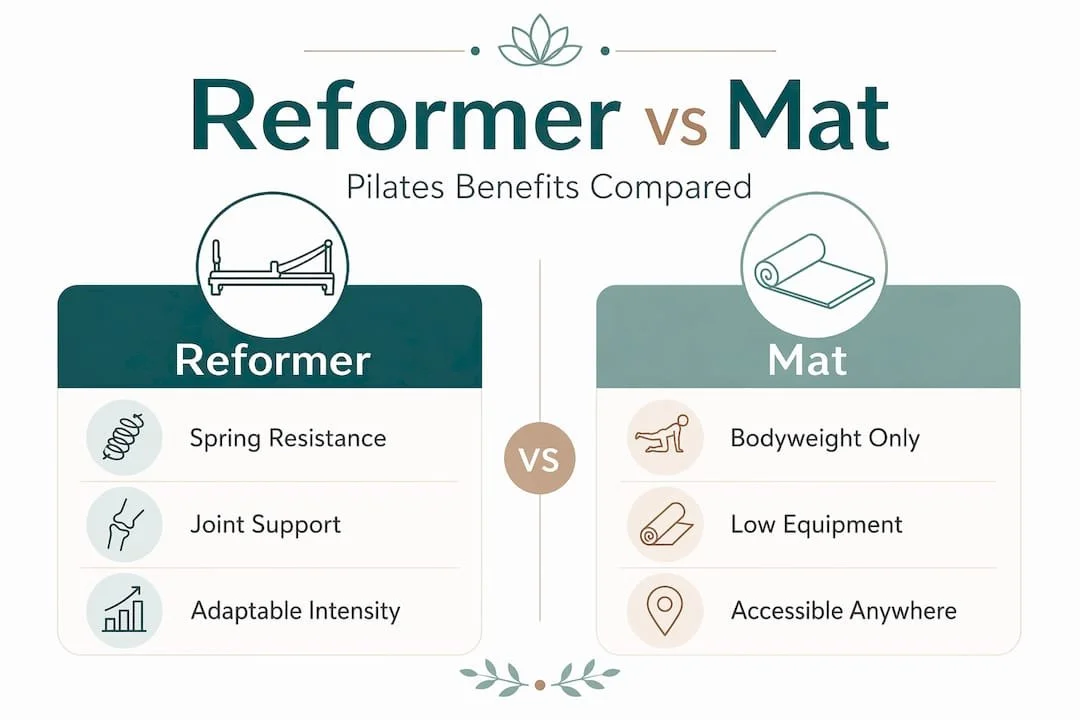
Mat Pilates has its own strengths. It's accessible, free once you know the movements, and effective for building foundational body awareness. Many dedicated reformer practitioners also do mat work at home between sessions to reinforce what they've learned.
Who benefits most from the reformer:
Adults managing chronic low back pain who need spinal support during movement
People with limited mobility who need adjustable resistance to participate safely
Those who want precise feedback on muscle activation and alignment
Athletes seeking controlled supplemental training that doesn't overload joints
Beginners who need instructor-guided progression
Pro Tip: If cost is a barrier, look for studios offering beginner class packages or introductory rates. Many people start with a few reformer sessions to learn the fundamentals and then supplement with mat practice at home.
Explore a detailed reformer vs mat Pilates comparison to help you decide what ratio makes sense for your weekly routine.
Who should (and shouldn't) do reformer Pilates?
Understanding when reformer Pilates fits your life is crucial for safe and optimal results.
The good news is that reformer Pilates is broadly adaptable as a low-impact, whole-body conditioning method. But the effectiveness depends strongly on instruction quality, appropriate progression, and thoughtful modification. It's not a one-size-fits-all solution, and treating it that way increases risk.
Who is a strong candidate for reformer Pilates:
Beginners who want structured, guided movement with a clear learning curve
Adults over 40 seeking low-impact strength work that respects joint health
Post-rehabilitation patients cleared by a physician or physical therapist
People with chronic pain who have been advised to stay active but need supported movement
Fitness enthusiasts looking for a precision-based complement to their current training
Prenatal and postnatal individuals when appropriately modified by a certified instructor
However, certain conditions make some reformer exercises inappropriate without direct medical guidance. Acute pain from a recent injury, post-surgical recovery in early stages, severe spinal structural issues, and unmanaged cardiovascular conditions all warrant caution and, in some cases, a conversation with your doctor before starting.
"Reformer Pilates is adaptable, not automatic. The machine accommodates many bodies, but only thoughtful programming and qualified instruction truly unlock its potential safely."
To start safely:
Work with a certified instructor for your first four to six sessions before attempting any independent practice
Communicate any pain, discomfort, or medical conditions before each class
Resist the urge to progress resistance quickly. Slow, controlled progression delivers better long-term results
Listen to your body and distinguish between productive challenge and warning signals
A helpful beginner pilates guide can help you approach your first sessions with confidence and realistic expectations.
What most people miss about reformer Pilates benefits
Here's a perspective you don't hear often: reformer Pilates is not magic, and the equipment is not the reason it works.
People sometimes walk into a reformer studio expecting the machine itself to deliver results. It won't. What delivers results is the quality of instruction, the intentional program design, and the consistency of practice. Evidence across populations and outcomes is still mixed in some areas. Pilates is not always clearly superior to other forms of exercise for strength and mobility goals. That's an honest finding, and it matters.
What reformer Pilates does better than most modalities is this: it meets you where you are and grows with you. That's not a marketing line. It's the functional value of adjustable resistance, skilled instructors, and a movement system designed around precision rather than intensity. For many people, that adaptability is what finally makes fitness sustainable after years of starting and stopping more demanding programs.
At Amrita Yoga & Wellness, we see this regularly. The students who get the most out of reformer work aren't necessarily the most athletic. They're the most curious. They ask questions, stay consistent, and trust the process long enough to feel the cumulative effect. That's where the real gains live.
The advice worth keeping: don't blend reformer Pilates into a chaotic wellness routine and expect clarity. Use it as a foundation. Add other practices like yoga, walking, or massage therapy around it. Explore deeper clinical reformer insights to understand how your sessions can be progressively designed to support long-term goals rather than just burning calories in a single class.
Explore reformer Pilates with expert guidance
You've seen the evidence. You understand the mechanics, the benefits, and what to watch out for. The logical next step is actually experiencing it with proper guidance rather than just reading about it.
At Amrita Yoga & Wellness, our Philadelphia studio brings together certified instructors, supportive class environments, and a genuine community of people committed to their health. Whether you're brand new to movement or returning after time away, we offer reformer Pilates sessions designed to meet you exactly where you are. Our team will walk you through equipment setup, spring selection, and modifications so your first class feels empowering, not intimidating. Explore our class schedule, workshop offerings, and wellness programs to find the right entry point for your journey.
Frequently asked questions
Is reformer Pilates good for beginners?
Yes, reformer Pilates is highly adaptable for beginners because adjustable resistance and instructor guidance allow you to start at your current fitness level and progress gradually without risking injury.
Does reformer Pilates help with back or neck pain?
Research shows that reformer Pilates may ease pain in both back and neck when exercises are specifically chosen and supervised by a qualified instructor who understands your condition.
How soon can I expect to see results from reformer Pilates?
Many people notice meaningful improvements in strength and flexibility within six to eight weeks, since reformer Pilates improves strength and endurance measurably after consistent three-times-per-week sessions over that period.
Are there risks associated with reformer Pilates?
While generally safe, risks increase with poor technique or inappropriate exercise selection, which is why instruction, progression, and modification are essential components of a safe practice from day one.
Can reformer Pilates support weight loss?
Reformer Pilates can contribute to weight management by improving body composition in overweight adults, especially when combined with balanced nutrition and a consistent overall wellness routine.