The Amrita Journal
Explore thoughtful stories, practical wellness guidance and inspiring ideas to support your movement, mindfulness and everyday wellbeing at Amrita.
Categories of yoga poses: a guide for every level
TL;DR:
Understanding yoga pose categories helps practitioners build balanced, goal-oriented practices rather than plateau.Each category serves specific functions like strength, flexibility, or recovery, and their proper sequencing prevents injury.
Hundreds of yoga poses exist, and jumping in without a map is one of the fastest ways to plateau. Understanding the categories of yoga poses changes that completely. Instead of memorizing poses one by one, you start seeing patterns — how a standing pose builds the strength that makes your balancing work better, or how a twist unlocks the hip mobility your forward bends need. This guide breaks down the major types of yoga poses, explains how to use those groupings to build smarter practices, and gives you practical tools whether you're stepping onto the mat for the first time or deepening a long-term practice in Philadelphia.
Table of Contents
Key Takeaways
| Point | Details |
|---|---|
| Pose categories simplify practice | Grouping poses by type helps you focus on areas needing improvement and build balanced yoga routines. |
| Balance movement types | Alternating categories like forward bends, twists, and backbends avoids imbalances and supports progress. |
| Foundational poses matter | Master basics in standing and seated categories before advancing to complex poses like arm balances or inversions. |
| Restorative poses aid recovery | Incorporating restorative and yin poses helps reduce stress and improves overall well-being. |
How to evaluate and choose yoga pose categories
The first thing to understand about yoga pose classifications is that they exist on two axes: body location and function. Body location asks where you are in space — standing, seated, lying down, inverted. Function asks what the body is actually doing — flexing forward, extending back, rotating, bearing weight on one leg.
Most confusion about yoga for mobility comes from treating every pose as its own isolated event. When you see poses as belonging to families, you start training movements rather than shapes. That shift is everything.
Here is what to look for when evaluating which categories to include in your practice:
Goal alignment: What are you trying to improve? Flexibility, strength, stress relief, balance, or postural correction? Each category serves different goals.
Movement balance: Every category has a counterpart. Backbends balance forward bends. Twists to the right balance twists to the left. Building in both sides prevents the tightness that comes from overtraining one pattern.
Skill progression: Some categories (standing poses, basic seated poses) form the groundwork for more demanding ones like inversions and arm balances. Skipping foundational categories to get to impressive shapes is the most common mistake in yoga practice.
Recovery ratio: Restorative and yin categories are not passive — they are active recovery tools that prevent overuse injuries when mixed into a weekly rotation.
Yoga Journal's pose taxonomygroups poses by type specifically so practitioners can build targeted practice by choosing pose families for specific goals rather than just picking random poses. Similarly,Yoga by Maya's frameworkuses both body location and biomechanics to help learners identify the right pose family for their needs at any given stage.
Pro Tip: Before building a weekly yoga plan, write down your top two goals and then map them to the categories most associated with those outcomes. That single step makes your practice three times more intentional.
With these evaluation criteria in mind, let's explore the main categories of yoga poses.
Major categories of yoga poses and examples
Yoga asanasfall into several distinct families, each with a clear role in a well-rounded practice.Yoga asanas are groupedinto standing, seated, forward bends, backbends, twists, balancing, inverted, and restorative poses. And 12 foundational postures across these categories provide a reliable base before you move into more complex territory.
Here is a breakdown of each major category with representative poses:
Standing poses: Mountain Pose (Tadasana), Warrior I, Warrior II, Triangle Pose. These build leg strength, improve posture, and are the backbone of most active yoga sequences. They are typically taught first because they are accessible and ground the body.
Seated poses: Staff Pose (Dandasana), Bound Angle Pose (Baddha Konasana), Hero Pose (Virasana). Seated work emphasizes hip flexibility and spinal elongation. Many of these poses are excellent entry points for beginners.
Forward bends: Seated Forward Fold (Paschimottanasana), Standing Forward Fold (Uttanasana), Wide-Legged Forward Fold. These poses lengthen the hamstrings and lower back while calming the nervous system, making them useful at the end of a session.
Backbends: Cobra (Bhujangasana), Bridge Pose (Setu Bandhasana), Wheel (Urdhva Dhanurasana). Backbends open the chest, strengthen the spine's extensor muscles, and counterbalance the forward-rounded posture most people carry from desk work.
Twists: Seated Spinal Twist (Ardha Matsyendrasana), Revolved Triangle, Supine Twist. Twists target spinal rotation and are widely credited with improving digestion and reducing lower back tension.
Balancing poses: Tree Pose (Vrksasana), Warrior III, Eagle Pose (Garudasana). These demand concentrated focus and build single-leg stability that carries over into athletic performance and daily movement.
Inversions: Legs-Up-the-Wall (Viparita Karani), Shoulder Stand, Headstand. Inversions shift circulation, calm the nervous system, and build upper body and core strength.
Restorative poses: Child's Pose (Balasana), Savasana, Supported Fish. These poses use props and gravity to release tension. They are not stretches in the athletic sense — they are recovery tools.
| Category | Primary benefit | Example pose |
|---|---|---|
| Standing | Strength and posture | Warrior II |
| Seated | Hip flexibility | Bound Angle Pose |
| Forward bends | Hamstring length, calm | Seated Forward Fold |
| Backbends | Chest opening, spine extension | Bridge Pose |
| Twists | Spinal rotation, digestion | Seated Spinal Twist |
| Balancing | Stability, concentration | Tree Pose |
| Inversions | Circulation, upper body strength | Legs-Up-the-Wall |
| Restorative | Recovery, stress relief | Supported Child’s Pose |
Now that we know the main categories, let’s compare their benefits and how they complement each other in practice.
Comparing yoga pose categories: benefits and practice tips
Understanding the types of yoga poses is one thing. Knowing how to work through them progressively and avoid the most common mistakes is what separates practitioners who improve from those who stall.
Here is a practical progression framework across categories:
Begin with standing and seated poses to build foundational strength and basic body awareness. These beginner yoga poses require no props, no prior flexibility, and teach alignment principles that apply everywhere else.
Add forward bends and gentle twists once you have two to four weeks of regular standing work. Your hamstrings and spine need a baseline of mobility before longer holds feel productive rather than painful.
Introduce backbends carefully. Before you extend the spine deeply, the front body — hip flexors, chest, abdomen — needs to be open. Backbends require front body openness before safe spine extension, and skipping this preparation is the most frequent cause of lower back pain in yoga.
Work on balancing poses concurrently with the above. They are less about raw strength than most people think. Balance is 70% attention and 30% strength, which is why a fixed gaze point (drishti) makes a bigger difference than leg strength alone.
Layer in inversions gradually. Start with passive inversions like Legs-Up-the-Wall before attempting active ones like Headstand. Your nervous system and shoulder stability both need preparation.
Close every session with restorative work. Even five minutes of Savasana or Supported Child's Pose shifts the body from effort to recovery.
"The categories of yoga poses are not a hierarchy to climb — they are a system to balance. Advanced practitioners don't abandon beginner yoga poses; they return to them with more precision."
Common mistakes by category, and how to fix them:
| Category | Common mistake | Fix |
|---|---|---|
| Standing | Locking the knees | Micro-bend both knees to protect joints |
| Forward bends | Rounding from the waist | Hinge from the hips, keep spine long |
| Backbends | Crunching the lower back | Distribute extension across the whole spine |
| Twists | Forcing rotation | Let breath create space, then rotate |
| Balancing | Holding the breath | Steady breath anchors focus better than muscle |
| Inversions | Collapsing into the neck | Engage shoulders and lift away from the floor |
Pro Tip: Before attempting essential yoga poses for beginners, spend one class just observing your body’s default patterns. Do you collapse in standing poses? Grip in twists? That self-awareness is worth more than any pose adjustment.
With this comparison, you can better decide which categories fit your current goals and practice stage.
Situational tips: which categories suit your practice goals?
One of the most practical ways to use yoga pose classifications is to match them directly to your current needs. Your goals will shift across weeks and seasons, and your pose category focus should shift with them.
For stress relief and nervous system recovery: Prioritize restorative and yin yoga categories. Restorative practices use supported poses and breath holds to calm the nervous system, and even a 20-minute session can meaningfully reduce tension after an overwhelming day. Yin yoga uses long-held reclined poses with props for deep stress relief, targeting connective tissue rather than muscle. Both categories belong in anyone's weekly routine, not just in crisis moments.
For building strength: Standing poses, balancing poses, and active backbends are your primary tools. Warrior sequences, Chair Pose, and Boat Pose build the kind of functional strength that transfers to daily movement. These are often underestimated as strength work because they don't look like gym exercises, but sustained holds in Warrior II challenge the same muscles as a leg press.
For improving flexibility and mobility: Forward bends, twists, and hip opener poses (categorized loosely under seated and supine poses) are most relevant here. Progress is slow and non-linear, but consistent work in these categories will open the hips, lengthen the hamstrings, and restore spinal rotation within a few months of regular practice.
For older adults and those returning from injury: Yoga poses for senior mobility offer a clear entry point. Starting with chair-supported standing poses and gentle seated forward bends lets the body adapt safely before introducing categories with more demand.
Pro Tip: Match your most challenging pose categories to the days when you have slept well and feel energetic. Save restorative categories for high-stress or low-energy days. Your practice becomes sustainable when it meets you where you are, not where you think you should be.
Understanding your goals makes it easier to build a sustainable yoga routine using pose categories.
Why balancing pose categories creates a stronger practice
Here is what most articles on how to categorize yoga poses won't tell you: the real skill in yoga isn't mastering any single category. It's knowing how to rotate between categories so no movement pattern goes untrained, and none gets overtrained.
Think about how most people naturally practice. They gravitate toward what feels good. Flexible practitioners do more forward bends. Strong practitioners load up on standing and balancing sequences. The result is a practice that reinforces what you're already capable of and leaves the gaps untouched.
Alternating functional categories like forward bends, twists, and backbends avoids over-conditioning one movement and under-training its counterbalance. This is not a small tweak. It's the difference between a body that moves well in every direction and one that performs beautifully in two planes and is fragile in the others.
The other dimension people miss is the relationship between foundation and advanced categories. Progressing into advanced categories like arm balances and inversions requires a solid foundation in standing, balance, and core poses first. Practitioners who try to shortcut this path end up with impressive-looking shapes built on unstable bases, and often with wrist, shoulder, or neck injuries to show for it.
For anyone working with yoga poses for seniors, this principle is even more critical. Building category variety from the beginning, even at a gentle pace, produces better long-term mobility outcomes than specializing in one area.
Rest is also part of this system. Restorative categories don't just feel nice — they allow the body to integrate the demands of active categories. Skipping them is like training hard at the gym and never sleeping. The adaptation happens in the recovery, not the effort.
Explore yoga categories with Amrita Yoga & Wellness in Philadelphia
Reading about pose categories is a start. Practicing them in an environment designed for your specific level, with teachers who can see what your body actually needs, is where real progress happens.
At Amrita Yoga & Wellness, our Philadelphia studio offers classes built around the full range of pose categories, from foundational work for beginners to advanced postures for experienced practitioners. Whether you're drawn to an active Vinyasa flow that moves through standing and balancing categories, a restorative session to reset after a stressful week, or specialty workshops that go deep into specific pose families, we have something designed for where you are right now. We also offer a range of wellness services, including tarot readings, to support the mental and spiritual dimensions of your practice alongside the physical.
Frequently asked questions
How many categories of yoga poses are there?
Yoga poses are typically grouped into around eight main categories: standing, seated, forward bends, backbends, twists, balancing, inversions, and restorative poses, though some systems use slightly different groupings.
Which yoga pose categories are best for beginners?
Beginners benefit most from standing, seated, and restorative categories, as foundational postures in these families build strength and flexibility without requiring the joint mobility or body awareness that more advanced categories demand.
How can using pose categories enhance my yoga practice?
Organizing your practice by category helps you build balanced routines that target different muscle groups and movement patterns, and alternating categories prevents overtraining one movement while leaving its counterpart underdeveloped.
What are restorative yoga poses and what benefits do they offer?
Restorative yoga poses are supported postures held for longer periods with props, and restorative sequences use these holds alongside focused breathwork to calm the nervous system, reduce stress, and support recovery between more active sessions.
Recommended
Yoga Membership: Unlocking Consistent Wellness Access
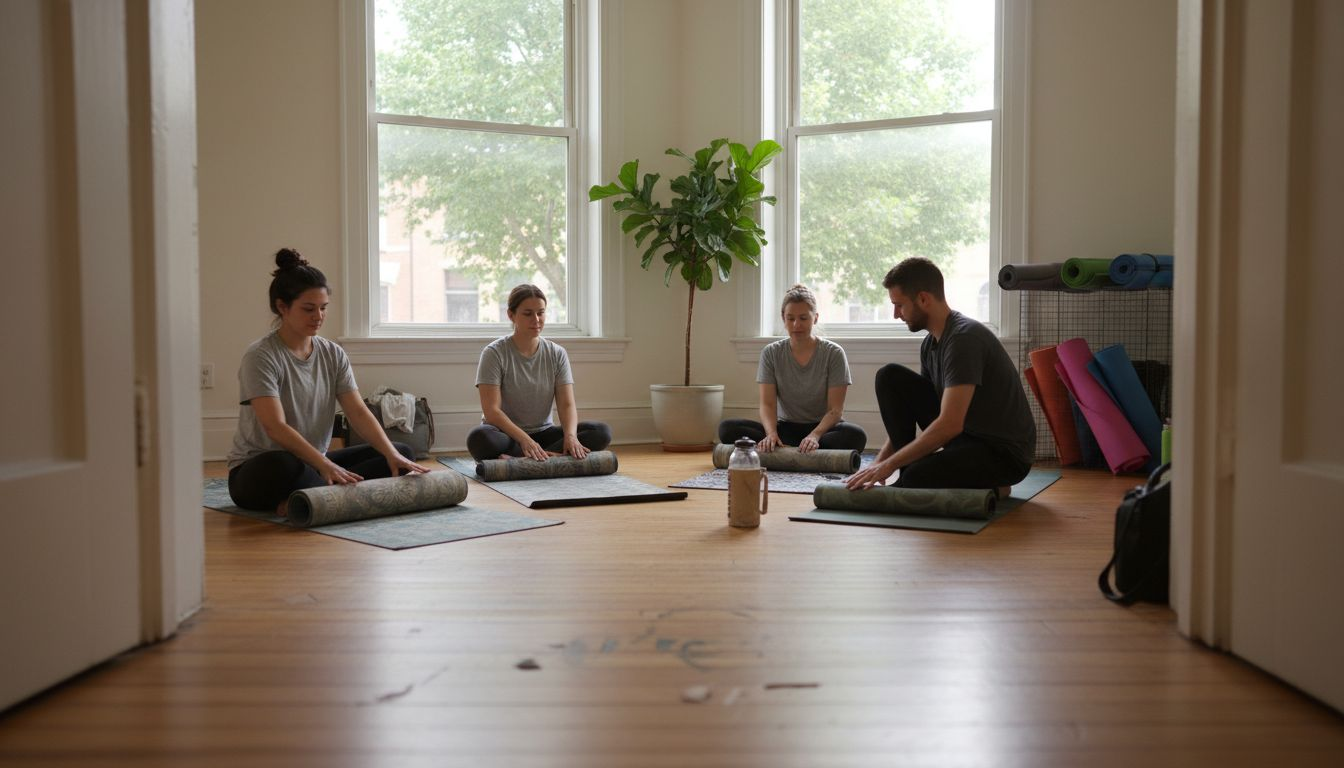
Choosing a yoga membership in Philadelphia can feel complicated when options promise everything from unlimited hot yoga to pilates and specialty workshops. For many health-focused adults, affordability and a welcoming environment matter just as much as variety. Understanding the real value behind a yoga membership unlocks more than just access to classes—it builds consistent wellness routines and connects you with a supportive community. This guide breaks down key benefits and dispels common myths so you can find a membership that fits your personal practice and budget.
Table of Contents
Key Takeaways
| Point | Details |
|---|---|
| Holistic Wellness Benefits | Yoga memberships offer access to diverse practices that promote physical, mental, and spiritual well-being. |
| Myth Busting | Many misconceptions, such as needing to be flexible or experienced, deter people from joining yoga. |
| Diverse Membership Options | Memberships vary by type, offering benefits tailored for individuals, professionals, students, and institutions. |
| Cost Considerations | Understanding pricing structures and potential hidden fees is essential for maximizing value in yoga memberships. |
Yoga Membership Defined and Common Myths
A yoga membership represents more than just a simple fitness subscription - it's a gateway to holistic wellness and personal transformation. By understanding its nuances, practitioners can unlock consistent health benefits and community connection.
At its core, yoga membership provides structured access to diverse practices that extend far beyond physical exercise. Holistic health practices involve multiple wellness dimensions including physical movement, breathing techniques, meditation, and spiritual development. These memberships are designed to support individuals across different experience levels and fitness backgrounds.
Common myths about yoga memberships often prevent potential practitioners from exploring this transformative practice:
Myth 1: Yoga is only for extremely flexible people
Myth 2: You need prior experience to join a membership
Myth 3: Yoga is just stretching or physical exercise
Myth 4: Memberships are too expensive for regular practice
In reality, yoga communities welcome practitioners of all ages, body types, and skill levels. Accessibility remains a fundamental principle of modern yoga practices, emphasizing individual growth and personal journey over rigid performance standards.
Most yoga memberships offer flexible formats including:
In-person group classes
Virtual streaming sessions
Hybrid learning options
One-on-one instruction
Workshop and specialty class opportunities
Membership benefits extend well beyond physical fitness, promoting mental clarity, stress reduction, and community connection. These programs provide structured pathways for consistent personal development, allowing practitioners to progress systematically through various yoga styles and techniques.

Pro tip: Start with a trial membership to explore different class styles and instructors before committing to a long-term program.
Main Yoga Membership Types and Features
Yoga memberships have evolved into sophisticated wellness platforms offering diverse options for practitioners at every level. Professional yoga membership structures support individual growth by providing tailored access to resources, classes, and community connections.
Typically, yoga memberships can be categorized into several primary types:
Individual Memberships: Designed for personal practice and development
Professional Memberships: Targeted at yoga instructors and teachers
Student Memberships: Offering reduced rates for learners and academic participants
Institutional Memberships: For yoga schools and training centers
Corporate Wellness Memberships: Structured for workplace wellness programs
Core membership features typically include:
Unlimited or tiered class access
Virtual and in-person session options
Workshops and specialty class opportunities
Access to online learning resources
Community networking platforms
Professional credentials and continuing education opportunitiesrepresent significant value in advanced membership structures. These programs enable practitioners to expand their skills, maintain professional standards, and connect with a global yoga community.
Membership pricing and structures vary widely, reflecting the complexity of individual practitioner needs. Some studios offer monthly subscriptions, while others provide annual packages with incremental benefits. Flexible formats accommodate different commitment levels and personal wellness goals.
Benefits extend beyond simple class access, creating comprehensive wellness ecosystems that support physical, mental, and spiritual development. Advanced memberships often include additional perks like nutrition consultations, wellness workshops, and personalized coaching.
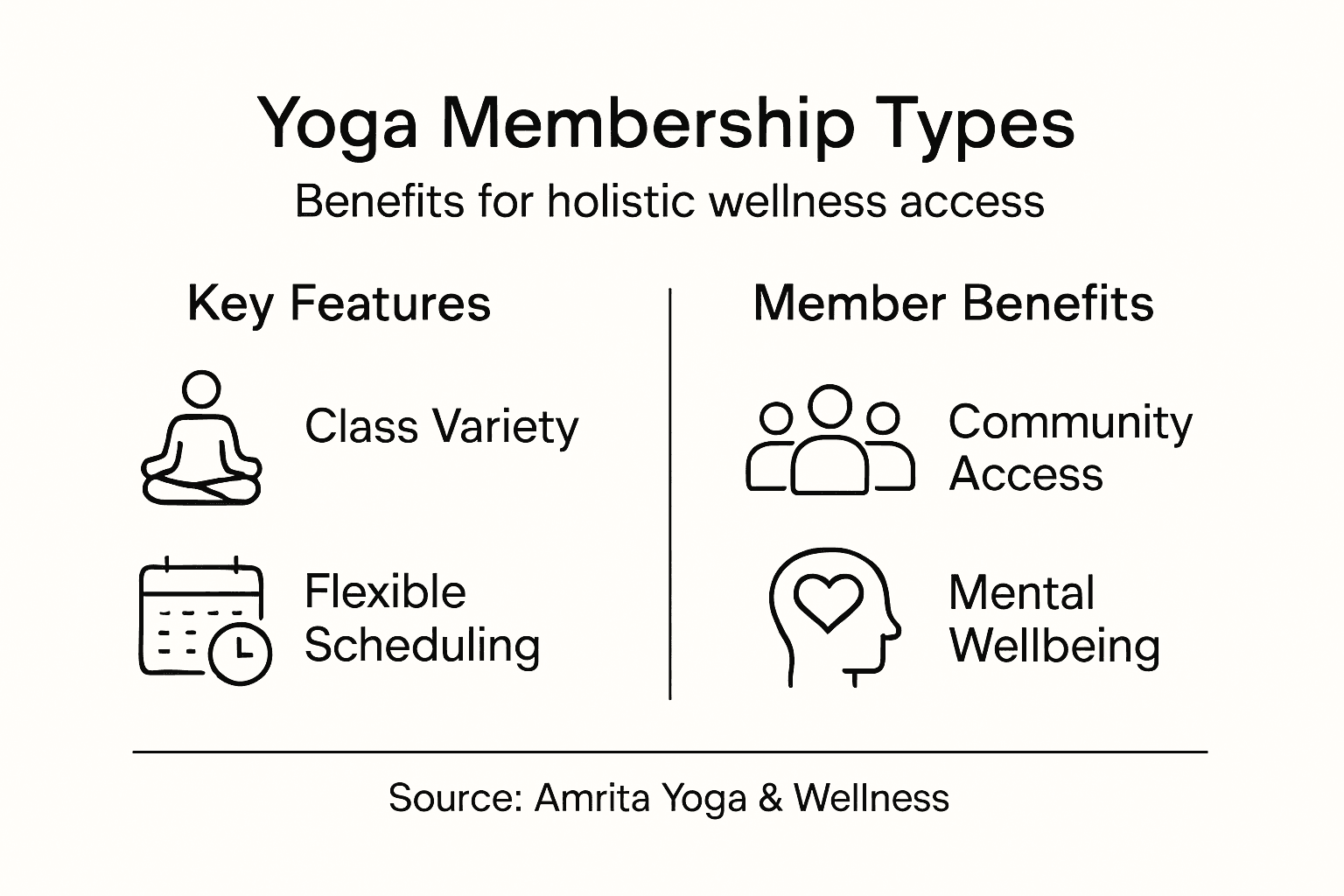
Here's a summary of yoga membership types and unique benefits:
| Membership Type | Who It's For | Distinctive Benefit | Typical Access Level |
|---|---|---|---|
| Individual | Personal practitioners | Custom growth support | Unlimited or tiered classes |
| Professional | Yoga teachers | Credentials & training | Workshops, education resources |
| Student | Learners & academics | Reduced rates & flexibility | Online content, flexible classes |
| Institutional | Schools & centers | Group engagement | Bulk registration, networking |
| Corporate Wellness | Employees/workplaces | Wellness program support | Group packages, workplace events |
Pro tip: Compare multiple membership options and look for introductory packages that allow you to explore different yoga styles before committing to a long-term plan.
How Yoga Memberships Work in Studios
Yoga studio memberships represent a strategic approach to wellness that benefits both practitioners and studios. Studio membership models provide financial stability through predictable revenue streams and consistent community engagement.
Typical membership structures include several key components:
Monthly Unlimited Plans: Provide access to all studio classes
Class Package Memberships: Prepurchased bundles with specific usage limits
Tiered Membership Levels: Offering progressively enhanced benefits
Specialized Workshop Memberships: Access to advanced training sessions
Corporate and Group Membership Options: Designed for workplace wellness programs
Core membership mechanics typically involve:
Initial sign-up process with studio registration
Selection of appropriate membership tier
Payment setup (monthly, quarterly, or annual)
Digital or physical membership card issuance
Access to studio class scheduling systems
Studio memberships create a win-win ecosystem. Practitioners gain consistent access to classes and community, while studios secure reliable income and build lasting relationships with students. The financial model allows studios to invest in quality instructors, maintain facilities, and develop innovative class offerings.
Membership pricing varies based on local market conditions, studio reputation, and included amenities. Most studios offer flexible options to accommodate different budgets and commitment levels, from basic access to premium packages with additional wellness services.
Successful yoga studio memberships transform fitness from a transactional experience into a collaborative wellness journey.
Pro tip: Ask studios about trial periods or introductory packages to test membership benefits before making a long-term commitment.
Financial Costs, Savings, and Common Fees
Understanding the financial landscape of yoga memberships requires careful analysis of multiple pricing components and hidden expenses. Yoga studio pricing varies significantly based on location, studio reputation, and included amenities.
Typical membership fee structures include:
Monthly Unlimited Rates: $75-$250 per month
Drop-in Class Rates: $15-$25 per individual session
Class Package Prices: $100-$200 for 10-20 class bundles
Annual Membership Discounts: Up to 20% off monthly rates
Student/Senior Reduced Rates: 15-30% price reductions
Common additional fees practitioners should anticipate:
Initial registration fee ($25-$50)
Mandatory equipment rental charges
Late cancellation penalties
Temporary freeze membership options
Prorated payment adjustments
Smart practitioners can maximize financial benefits by:
Comparing multiple studio membership options
Negotiating package terms
Understanding cancellation policies
Exploring introductory promotional rates
Evaluating cost per class versus total membership price
Transparent pricing and comprehensive understanding of membership terms can save practitioners significant money in the long term.
Membership cost considerations extend beyond simple monetary investment. The value proposition includes access to professional instruction, community engagement, and holistic wellness opportunities that often outweigh pure financial calculations.
Compare key financial factors for yoga memberships:
| Pricing Option | Typical Cost Range | Potential Savings | Considerations |
|---|---|---|---|
| Monthly Unlimited | $75–$250/month | Lower per-class cost | Continuous access |
| Drop-in Class | $15–$25/class | Pay only when attending | No commitment, less savings |
| Class Package | $100–$200/10–20 classes | Bulk purchase discount | Must use bundle before expiry |
| Annual Membership | Up to 20% off monthly | Significant long-term discount | Higher upfront investment |
Pro tip: Request a detailed fee breakdown and ask about all potential additional charges before committing to any yoga studio membership.
Pitfalls to Avoid and Smart Alternatives
Common barriers to consistent yoga practice can derail even the most well-intentioned wellness journey. Understanding these potential obstacles helps practitioners develop more resilient and adaptable approaches to maintaining their yoga commitment.
Major membership pitfalls include:
Inflexible class schedules
Long-term financial commitments
Limited class variety
Inconvenient studio locations
Rigid cancellation policies
Smart alternative strategies practitioners can employ:
Seek hybrid membership models
Negotiate flexible payment terms
Explore multi-studio membership options
Request trial periods
Prioritize studios with diverse class offerings
Alternative approaches to traditional yoga memberships can provide greater flexibility and engagement:
Virtual Class Platforms: Offer on-demand and live streaming options
Pay-per-class Models: Provide financial flexibility
Community Class Programs: Lower-cost group learning environments
Wellness Passport Memberships: Access multiple studios and fitness venues
Corporate Wellness Partnerships: Employer-subsidized yoga programs
Successful yoga practice requires adaptable strategies that accommodate individual lifestyle constraints and evolving personal wellness goals.
Understanding personal wellness barriers helps create more personalized and sustainable yoga engagement strategies. By critically evaluating membership options and remaining open to innovative approaches, practitioners can design a yoga practice that genuinely fits their unique needs and schedules.
Pro tip: Always request a comprehensive membership breakdown and understand all potential limitations before signing any long-term commitment.
Discover Consistent Wellness with Amrita Yoga & Wellness Memberships
The article highlights common challenges for yoga practitioners such as inflexible class schedules, long-term financial commitments, and limited class variety. If you are looking for a flexible and welcoming yoga membership that supports your personal growth and fits your lifestyle, Amrita Yoga & Wellness offers diverse classes and wellness services tailored to your needs. Whether you want to explore hot yoga, Pilates, barre, or tai chi, our community-focused studio fosters holistic wellbeing with options that work for beginners and advanced practitioners alike.
Join a membership at Amrita Yoga & Wellness today and unlock access to varied yoga styles, workshops, and healing therapies designed to nurture both body and mind. Experience a supportive environment where you can grow at your own pace and enjoy benefits beyond physical exercise. Visit our class scheduling page to choose your perfect fit and start your wellness journey now. Embrace a yoga membership that keeps you consistent, empowered, and connected.
Frequently Asked Questions
What is a yoga membership?
A yoga membership is a subscription that provides structured access to various yoga classes and practices, promoting holistic wellness and personal growth through physical movement, breathing techniques, and meditation.
What are the benefits of having a yoga membership?
Yoga memberships offer numerous benefits including unlimited access to classes, community connection, mental clarity, stress reduction, and structured pathways for consistent personal development.
How do yoga memberships work in studios?
Yoga memberships in studios typically involve an initial sign-up process, selection of a membership tier, payment setup, and access to class scheduling systems, creating a stable ecosystem for both practitioners and studios.
What common pitfalls should I avoid when choosing a yoga membership?
Common pitfalls include inflexible class schedules, long-term financial commitments, limited class variety, inconvenient locations, and rigid cancellation policies. It's important to assess these factors before committing.
Recommended
How to Join a Yoga Community for Lasting Wellness Benefits — Amrita Yoga & Wellness
How to Schedule Yoga Classes for Seamless Wellness — Amrita Yoga & Wellness
Top Aerial Yoga Accessories 2025 – Expert Comparison — Amrita Yoga & Wellness
7 Powerful Reasons Why Yoga Improves Your Wellbeing — Amrita Yoga & Wellness
How to Start Yoga Naturally for Stress Relief and Wellness
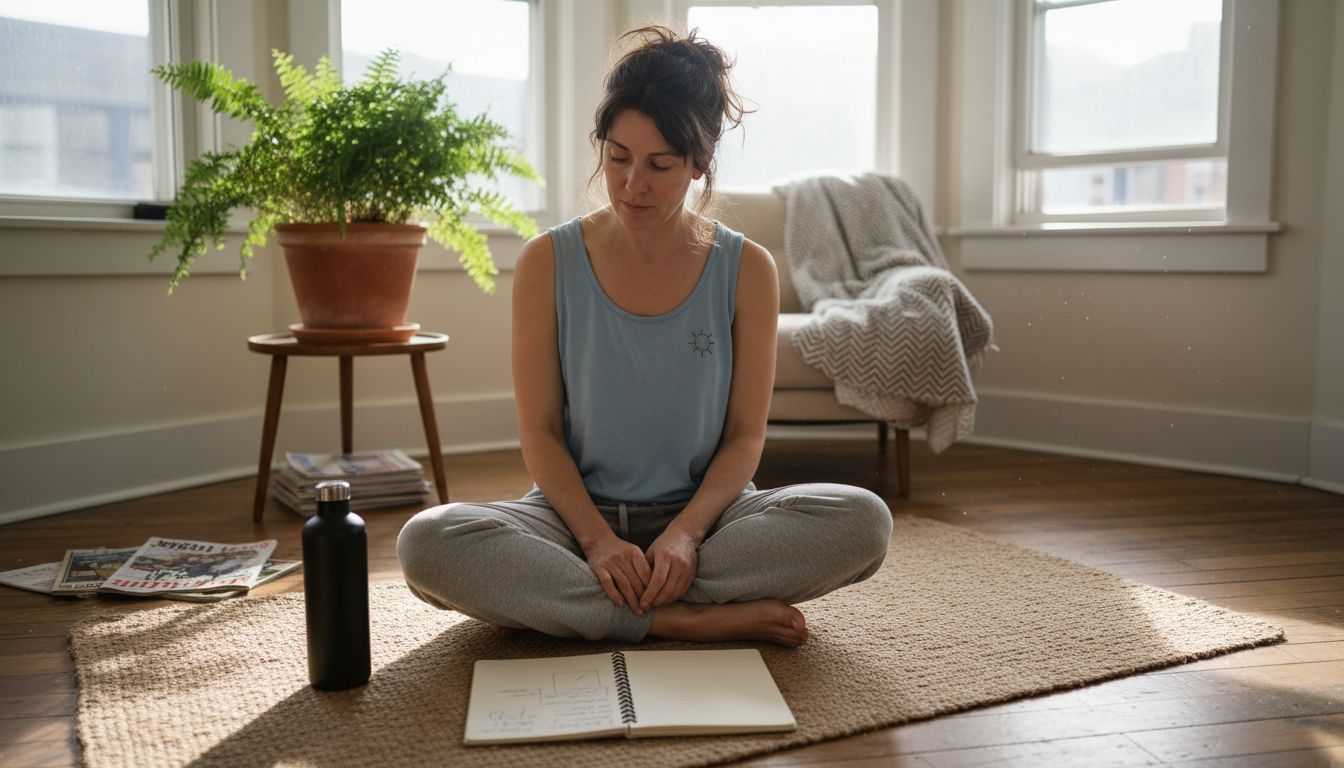
Nearly 80 percent of American adults experience ongoing stress that impacts their health and wellbeing. For busy people in Philadelphia, finding time and space to relax can feel impossible. Creating a simple yoga routine at home offers a practical way to ease tension and support your body, helping you reclaim moments of calm in a hectic week. This guide walks you through every step, from setting up your space to choosing beginner poses, so you can build a soothing practice even in the middle of city life.
Table of Contents
Quick Summary
| Key Insight | Explanation |
|---|---|
| 1. Create a dedicated yoga space | Select a quiet, clutter-free area with natural light to enhance relaxation and mindfulness during practice. |
| 2. Start with beginner-friendly styles | Hatha Yoga is recommended for new practitioners; it focuses on basic postures and proper alignment. |
| 3. Invest in essential yoga equipment | A high-quality yoga mat, blocks, and straps will support comfort, stability, and alignment during practice. |
| 4. Develop a simple initial routine | Focus on a few gentle poses, practicing 10–15 minutes daily to build consistency and body awareness. |
| 5. Track your progress regularly | Maintain a yoga journal to document your physical and emotional growth, adjusting your practice as needed. |
Step 1: Prepare your space for comfortable yoga practice
Creating a calming and inviting yoga space is crucial for developing a consistent and enjoyable practice. Your environment sets the tone for relaxation and mindfulness, transforming an ordinary area into a personal sanctuary where stress melts away. By thoughtfully arranging your space, you signal to your body and mind that this is a dedicated time for self care and wellness.
Start by selecting a quiet area in your home with minimal distractions. Ideally, choose a space with natural light and enough room to fully extend your yoga mat without bumping into furniture. Clear away clutter and unnecessary items that might disrupt your mental focus. If possible, select a spot near a window where soft natural light can create a serene atmosphere. Beginner yoga practices often emphasize the importance of creating a peaceful environment that supports your mental and physical journey.
Consider adding soft elements that enhance relaxation such as a clean yoga mat, comfortable temperature, and minimal noise. Use neutral colored linens or blankets, place a few plants for natural energy, and ensure the room temperature is slightly warm but not hot. Soft background music or nature sounds can also help create a meditative ambiance that supports your practice.
Pro tip: Keep your yoga space consistent and dedicated, treating it as a sacred area for personal growth and wellness transformation.
Step 2: Select beginner-friendly yoga styles and classes
Navigating the world of yoga styles can be overwhelming for newcomers, but choosing the right class is essential for building confidence and establishing a sustainable practice. Your goal is to find a style that matches your fitness level, physical capabilities, and personal wellness objectives.
Beginner yoga classes in Philadelphiatypically recommend Hatha Yoga as the ideal starting point for new practitioners. Hatha Yoga is specifically designed for beginners, focusing on holding positions for several breaths and allowing you to master basic postures comfortably. This style provides a solid foundation by teaching proper alignment, breathing techniques, and helping you develop body awareness without overwhelming intensity.
When exploring yoga styles, consider your personal fitness level and any physical limitations. While more dynamic styles like Vinyasa and hot yoga can be appealing, they require a stronger baseline of strength and flexibility. For absolute beginners, gentler practices such as Yin Yoga or restorative classes offer slower paced environments where you can learn fundamental poses and breathing techniques. Many local studios offer introductory workshops or beginner series that provide structured learning environments with expert guidance.
Pro tip: Always communicate with your yoga instructor about your experience level and any physical concerns before starting a new class.
Here is a comparison of beginner-friendly yoga styles to help you select the best fit for your needs:
| Yoga Style | Pace and Intensity | Key Benefits | Suitability |
|---|---|---|---|
| Hatha Yoga | Slow, gentle | Builds foundation, improves focus | Best for absolute beginners |
| Vinyasa Yoga | Moderate to fast | Boosts stamina, dynamic movement | Good for active beginners |
| Yin Yoga | Very slow, relaxing | Enhances flexibility, deep rest | Ideal for stress reduction |
| Restorative Yoga | Minimal movement | Promotes healing, calms mind | Suited to relaxation seekers |
Step 3: Gather essential supportive yoga equipment
Starting your yoga journey requires some basic equipment that supports comfort, stability, and proper alignment during your practice. Investing in a few key items will help you feel more confident and prepared as you begin exploring yoga techniques and poses.
The most critical piece of equipment is a high quality yoga mat that provides adequate cushioning and grip. Aerial yoga safety recommendations emphasize choosing a mat with good traction to prevent slipping during various poses. Look for a mat that is approximately 1/4 inch thick with a textured surface suitable for beginners. Beyond the mat, consider purchasing supportive accessories like yoga blocks, which help modify poses and provide additional support when flexibility is limited, and a comfortable yoga strap to assist with stretching and alignment.
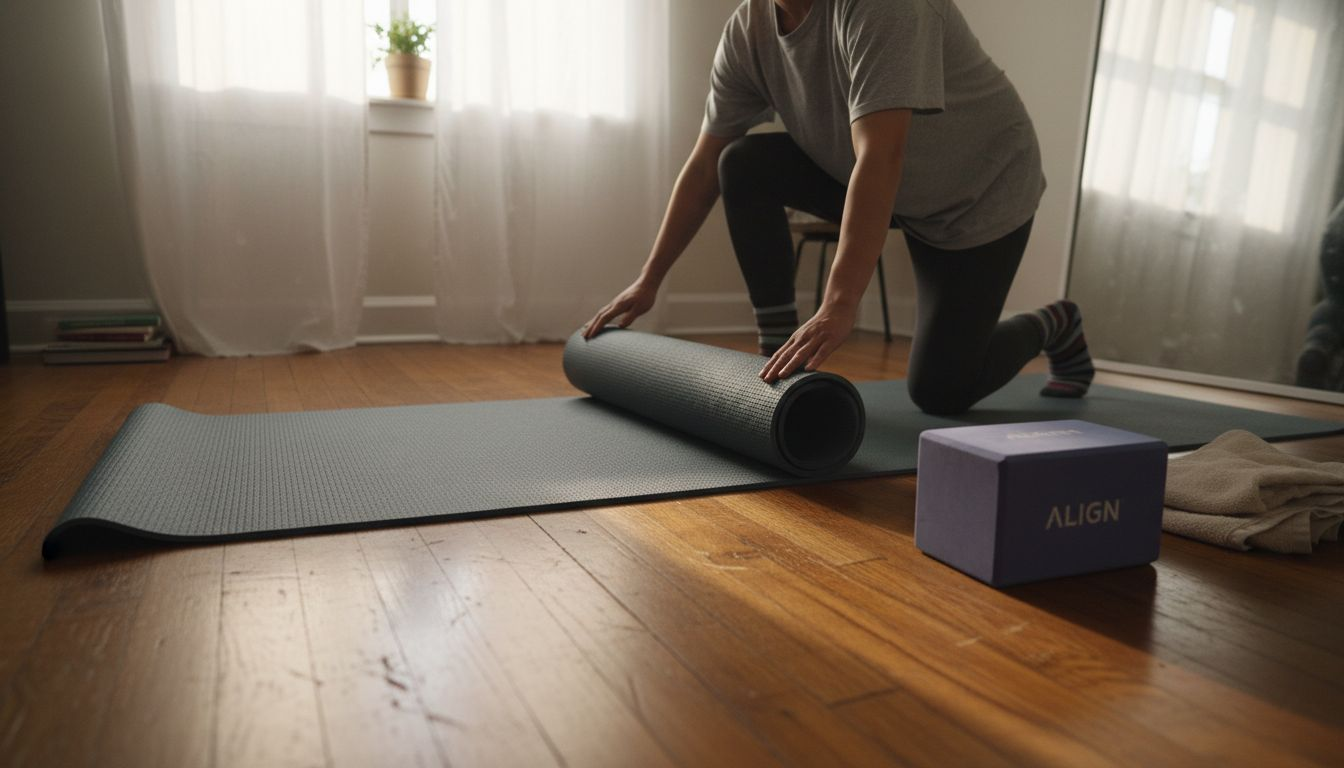
While building your yoga equipment collection, remember that you do not need to purchase expensive or elaborate gear. Start with basic, functional items that support your practice and allow you to move comfortably. Many studios offer equipment rentals, which can be a great way to experiment with different types of props and materials before making a personal investment.
Pro tip: Choose multipurpose yoga equipment that can adapt to different styles and skill levels to maximize your initial investment.
Here is a summary of essential yoga equipment and its role in supporting your practice:
| Equipment | Purpose | Beginner Benefit |
|---|---|---|
| Yoga Mat | Cushioning and stability | Prevents slips, adds comfort |
| Yoga Blocks | Support and pose modification | Aids limited flexibility |
| Yoga Strap | Assists stretches | Improves reach and alignment |
| Blanket | Warmth and comfort | Enhances relaxation in poses |
Step 4: Develop your initial routine with simple poses
Building a foundational yoga practice requires starting with accessible, gentle poses that help you develop body awareness, flexibility, and confidence. Your initial routine will focus on creating a sustainable approach to movement that feels comfortable and supportive.
7 Essential yoga poses for beginnerstypically include fundamental movements like Mountain Pose, Child's Pose, Cat Cow Stretch, and Downward Facing Dog. These poses help you build strength, improve balance, and learn proper breathing techniques without overwhelming your body. Start by holding each pose for 3 to 5 breaths, paying careful attention to your body's alignment and sensations. Remember that yoga is not about perfection but about exploring your body's capabilities with patience and self compassion.
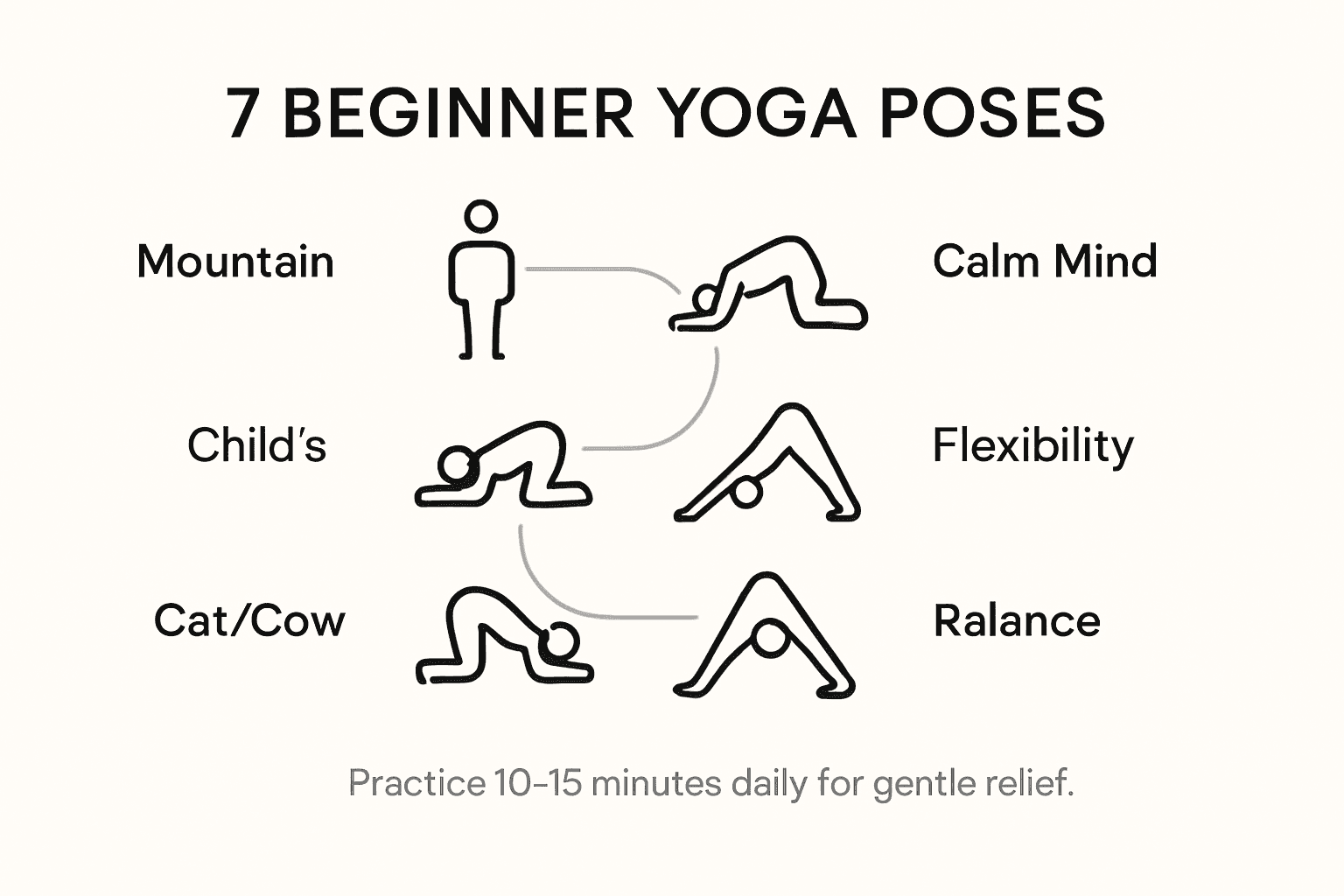
As you develop your routine, focus on consistency rather than complexity. Begin with a short 10 to 15 minute practice, gradually increasing duration as you become more comfortable. Listen to your body and modify poses using yoga blocks or straps if needed. The goal is to create a sustainable practice that feels nurturing and reduces stress, not to achieve advanced postures immediately.
Pro tip: Practice your routine at the same time each day to help establish a consistent and grounding yoga habit.
Step 5: Evaluate your progress and adjust your yoga journey
Tracking your yoga journey is about understanding your physical and mental growth, not achieving perfection. Your practice will naturally evolve as you become more aware of your body's capabilities and limitations, creating opportunities for meaningful personal development.
How to schedule yoga classes for seamless wellnesssuggests maintaining a practice journal to document your experiences and progress. Record details like how you feel before and after each session, which poses challenge you, and any improvements in flexibility, strength, or stress levels. Pay attention to both physical changes and emotional shifts, recognizing that progress in yoga extends beyond physical performance.
Be patient and kind to yourself as you develop your practice. Some weeks you might feel more flexible or strong, while others might feel more challenging. Adjust your routine based on your energy levels, listening to your body and modifying poses as needed. Consider taking occasional classes with experienced instructors who can provide personalized feedback and help you refine your technique. Remember that consistency matters more than intensity, and your yoga journey is a personal path of continuous learning and self discovery.
Pro tip: Review your practice journal every month to identify patterns, celebrate small victories, and mindfully adjust your yoga approach.
Embrace Your Yoga Journey for Lasting Stress Relief and Wellness
Starting yoga can feel overwhelming when trying to create the perfect space and selecting the right practice for your needs. This article highlights common challenges like finding beginner-friendly yoga styles and assembling comfortable equipment that supports your growth. If you are looking to naturally reduce stress while improving flexibility and mental clarity, you are not alone. Many seek a nurturing, consistent yoga routine that fosters personal wellness without adding pressure or complexity.
Discover how Amrita Yoga & Wellness in Philadelphia offers supportive classes tailored to beginners that guide you through foundational poses and mindful breathing techniques. Our welcoming community and expert instructors help you ease into yoga styles such as Hatha and restorative yoga, perfect for cultivating calm and self-awareness.
Take the next step toward a balanced life by exploring beginner-friendly sessions and workshops designed for your wellness goals. Experience firsthand how a dedicated practice space and the right guidance can transform your mental and physical health. Visit this page today to find the perfect class and start your path to lasting stress relief and holistic wellness.
Frequently Asked Questions
How can I create a calming yoga space for stress relief?
Creating a calming yoga space starts by selecting a quiet area in your home where you can practice without distractions. Clear clutter and use calming colors and natural light to set the mood. Consider dedicating this space solely to your yoga practice to help reinforce your commitment to wellness.
What beginner-friendly yoga styles should I try for stress relief?
For stress relief, consider starting with Hatha Yoga, as it’s gentle and perfect for beginners. This style focuses on holding poses and mastering breathing techniques, which can enhance relaxation. Look for classes that cater to new practitioners to ensure a supportive learning environment.
What essential equipment do I need to start yoga?
To start yoga, you will need a good quality yoga mat for cushioning and grip. Additionally, consider acquiring yoga blocks and a strap, which can help you modify poses and enhance your practice. Begin with these basics, and gradually add more equipment as your skills develop.
How can I develop a routine with simple yoga poses?
Start by selecting a few simple poses like Mountain Pose and Child’s Pose, holding each for 3 to 5 breaths. Aim for a routine that lasts 10 to 15 minutes daily, gradually increasing duration as you gain confidence. Consistency is key—practice at the same time each day to establish a grounding habit.
What should I include in my yoga journal to track my progress?
In your yoga journal, record your feelings before and after each session, along with details on which poses challenge you. Note improvements in flexibility and strength, as well as any emotional shifts you experience. Reviewing your entries monthly can help identify patterns and celebrate small victories in your yoga journey.
How do I adjust my yoga practice if I feel challenged?
Listen to your body and adjust your poses if you encounter challenges. Consider using props like blocks or straps for support, and be patient with your progress. Modify your routine based on your energy levels, ensuring it remains a nurturing experience rather than feeling overwhelming.
Recommended
7 Simple Yoga Tips for Beginners to Boost Wellness Fast
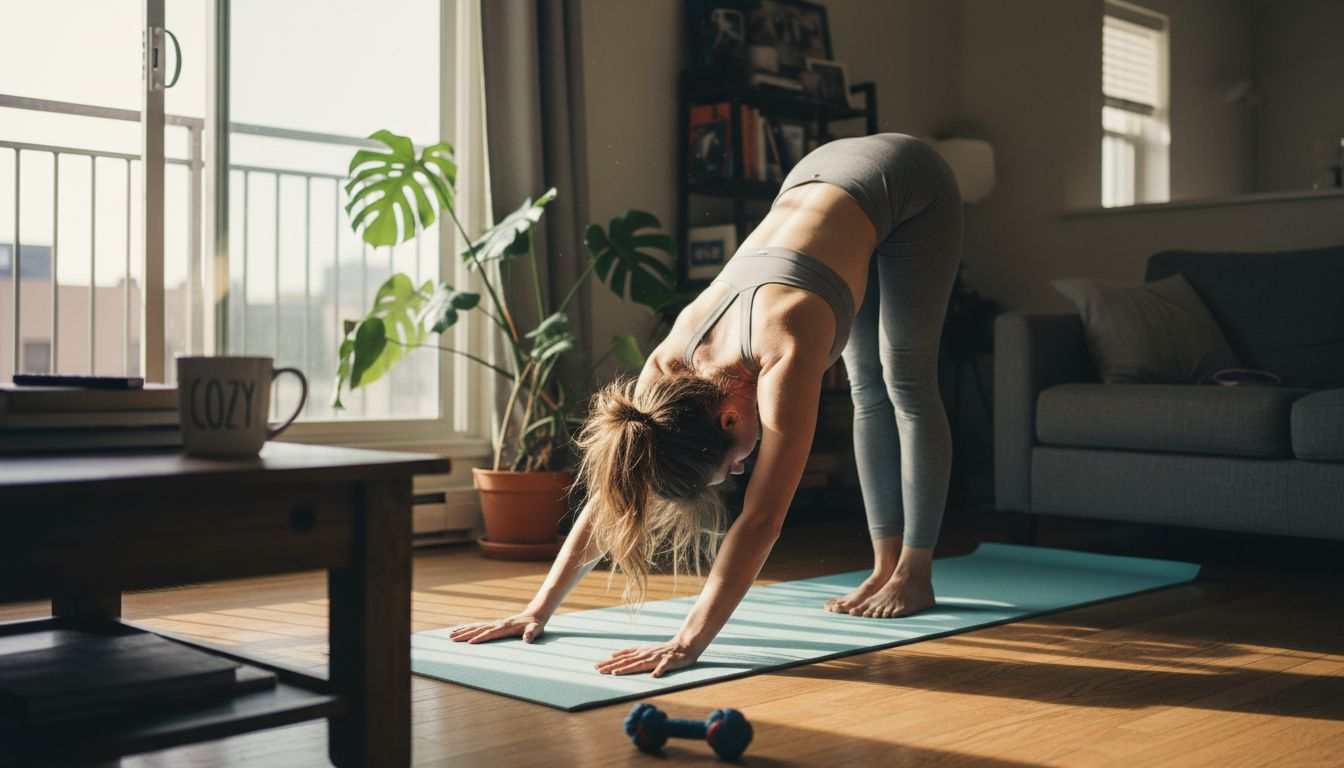
Over half of American adults say they struggle to find time for self care, especially in busy cities like Philadelphia. Stress and tight schedules can quickly take a toll on both body and mind, making it harder to feel your best each day. If you are looking for gentle ways to support your well-being, accessible yoga practices offer simple options that fit easily into daily life and help you feel more balanced, flexible, and relaxed.
Table of Contents
Quick Summary
| Key Message | Explanation |
|---|---|
| 1. Start with Gentle Warm-Ups | Gentle stretches like Happy Baby pose prepare your body, increasing flexibility and helping prevent injury. |
| 2. Learn Basic Poses | Master foundational poses such as Mountain Pose and Forward Fold to build strength and body awareness. |
| 3. Focus on Breathing Techniques | Use diaphragmatic breathing to enhance relaxation and improve movement synchronization during yoga. |
| 4. Create a Comfortable Space | Set up a serene, clutter-free environment with supportive props to promote relaxation during practice. |
| 5. Stay Motivated with Community | Engage in local classes or online groups to connect with others, finding support and inspiration. |
1. Start with Gentle Warm-Up Stretches
Beginning your yoga journey requires a thoughtful approach, especially when it comes to preparing your body for movement. Gentle warm-up stretches are the foundation of a safe and effective yoga practice that helps prevent injury and gradually increases flexibility.
When exploring gentle warm-up techniques, understanding how to properly engage your muscles becomes crucial. These initial movements help transition your body from a stationary state to an active practice, reducing the risk of strain or discomfort.
One particularly beneficial stretch for beginners is the Happy Baby pose. This pose not only helps loosen tight muscles but also promotes relaxation and releases tension in the lower back and hip area. By gently rocking side to side while holding your feet, you can create a soothing stretch that prepares your body for more advanced yoga positions.
For those new to yoga, start with slow, deliberate movements that allow you to tune into your body's signals. Focus on breathing deeply and moving with intention, allowing each stretch to feel like a gentle exploration of your physical capabilities.
Pro tip: Move slowly and listen to your body. If a stretch feels uncomfortable or painful, back off and modify the movement to suit your current flexibility level.
2. Learn Basic Yoga Poses for Everyday Practice
Building a consistent yoga practice starts with mastering a few foundational poses that can transform your daily wellness routine. Understanding and integrating basic yoga poses allows you to create a flexible, accessible approach to movement and mindfulness.
The fundamental yoga poses for beginners offer an excellent starting point for developing strength, flexibility, and body awareness. Two key poses every beginner should learn are Mountain Pose and Forward Fold, which provide a solid foundation for more advanced yoga movements.
Mountain Pose helps improve posture and body alignment by teaching you to stand with intentional awareness. By standing tall with feet together, engaging your core, and distributing weight evenly, you develop a sense of groundedness and balance. Forward Fold complements this by stretching the entire back of your body, releasing tension in the hamstrings and lower back.
Incorporating these poses into your daily routine can be as simple as taking five minutes each morning to move through them mindfully. Focus on your breath, move slowly, and pay attention to how your body feels during each position.
Pro tip: Start with just two or three basic poses and practice them consistently. Consistency matters more than complexity when you are building a sustainable yoga practice.
3. Focus on Easy Breathing Techniques
Breathing is the cornerstone of any successful yoga practice, transforming simple movements into profound moments of mindfulness and connection. Understanding how to control and utilize your breath can dramatically improve both physical and mental wellness.
The integration of mindful breathing with yoga stretches allows practitioners to reduce tension and enhance overall relaxation. By synchronizing breath with movement, you create a powerful tool for managing stress and increasing body awareness.
One fundamental technique is diaphragmatic breathing, where you focus on filling your lower belly with air rather than shallow chest breathing. This approach helps activate the parasympathetic nervous system, signaling your body to relax and release tension. When practicing yoga poses like the Happy Baby pose, concentrating on deep, rhythmic breathing can significantly improve flexibility and promote a sense of inner calm.
Beginners can start by practicing a simple breath counting method. Inhale for four counts, hold for two, then exhale for four counts. This structured approach helps train your mind to stay present and your body to move with intentional, controlled breathing.
Pro tip: Practice breathing techniques for five minutes daily, even when not doing yoga. Consistent practice helps build muscle memory and makes breathing naturally during yoga poses much easier.
4. Practice Mindfulness and Relaxation
Mindfulness transforms yoga from a physical exercise into a powerful practice of self awareness and inner peace. By intentionally connecting your mind and body, you create a sanctuary of calm amidst life's daily chaos.
Mindfulness techniques during yoga can dramatically reduce stress by focusing your attention on the present moment and your body's sensations. This approach helps release accumulated mental tension and promotes a deeper sense of relaxation.
One accessible method for practicing mindfulness is body scanning. Start by sitting comfortably and systematically bringing attention to each part of your body from your toes to your head. Notice any sensations without judgment. During poses like the Happy Baby pose, you can use this technique to increase body awareness and release emotional tension.
Beginners can start with short five minute mindfulness sessions. Choose a quiet space, sit comfortably, and focus on your breath. When your mind wanders, gently redirect your attention back to your breathing. This simple practice trains your brain to stay present and reduces anxiety.
Pro tip: Set a daily reminder on your phone for a two minute mindfulness break. Consistency matters more than duration when developing a mindful practice.
5. Set Up a Safe and Comfortable Yoga Space
Creating the right environment for your yoga practice can transform a simple exercise routine into a powerful wellness experience. Your personal yoga space should be a sanctuary that supports both physical movement and mental relaxation.
Setting up a conducive yoga environment involves more than just clearing floor space. You want to design an area that minimizes distractions and promotes a sense of calm and focus.
Begin by selecting a quiet area in your home with enough room to move freely. Ideally, choose a space with natural light and minimal noise. Use a dedicated yoga mat or soft surface that provides cushioning and grip. Consider adding elements like a small plant, calming artwork, or soft lighting to create a soothing atmosphere.
Props can significantly enhance your comfort and safety during practice. Keep a few essential items nearby such as blocks, a bolster, or a folded blanket. These tools help modify poses like the Happy Baby pose, making them more accessible and supportive for beginners. They also help prevent strain and allow you to explore poses with greater confidence.
Pro tip: Treat your yoga space as a sacred area. Keep it clean, clutter-free, and use it exclusively for your practice to help your mind associate this space with relaxation and mindfulness.
6. Build a Consistent Yoga Routine
Consistency is the secret ingredient that transforms yoga from an occasional activity into a powerful wellness practice. Developing a reliable routine helps you unlock the full potential of yoga for physical and mental transformation.
Building a sustainable yoga practice requires strategic planning and realistic goal setting. Start by committing to short, manageable sessions that fit naturally into your daily schedule, rather than attempting marathon practices that feel overwhelming.
Begin with a realistic commitment of three to four 15-minute sessions per week. This approach allows you to build muscle memory, improve flexibility, and develop a sustainable habit without causing burnout. Choose specific times that align with your energy levels whether that is early morning, lunch break, or evening wind down.
Track your progress using a simple journal or smartphone app. Document how you feel after each session, noting improvements in flexibility, stress levels, and overall well being. This approach helps maintain motivation and provides tangible evidence of your yoga journey.
Pro tip: Pair your yoga routine with another daily habit like morning coffee or evening meditation to help anchor the practice into your existing lifestyle.
7. Stay Motivated with Community Support
Connecting with like minded individuals can transform your yoga journey from a solitary practice into an inspiring and supportive experience. Community engagement provides the accountability, motivation, and encouragement needed to sustain your wellness goals.
Yoga community participation offers more than just social interaction it creates a powerful network of shared learning and mutual inspiration. By surrounding yourself with individuals who are passionate about wellness, you create an environment that naturally propels your personal growth.
Start by exploring local yoga classes, online forums, or group workshops where you can meet practitioners at similar skill levels. These spaces provide opportunities to share experiences, learn from others, and feel part of a supportive wellness ecosystem. Many studios offer beginner friendly group sessions that welcome newcomers and create a judgment free learning environment.
Digital platforms like social media groups, wellness apps, and virtual classes have made community connection more accessible than ever. You can participate in live sessions, join discussion forums, or follow inspiring yoga practitioners who share techniques and motivational content.
Pro tip: Choose a community that aligns with your personal wellness goals and makes you feel comfortable and inspired. The right support network can make your yoga journey enjoyable and sustainable.
Below is a comprehensive table summarizing the main strategies and steps for beginning a successful yoga practice as discussed throughout the article.
| Main Step | Key Points & Actions | Benefits/Outcomes |
|---|---|---|
| Gentle Warm-Up Stretches | Engage muscles with slow, deliberate movements; try poses like Happy Baby. | Prevents injury, releases tension, prepares for advanced poses. |
| Basic Yoga Poses | Learn Mountain Pose and Forward Fold; practice daily. | Improves posture, flexibility, body awareness. |
| Breathing Techniques | Use diaphragmatic breathing; practice breath counting. | Reduces stress, enhances relaxation, improves flexibility. |
| Mindfulness and Relaxation | Practice body scanning; focus on breath awareness. | Reduces anxiety, promotes inner peace. |
| Setting Up Yoga Space | Select a quiet, distraction-free area with props. | Provides a sanctuary for mental and physical relaxation. |
| Consistent Yoga Routine | Commit to 3–4 sessions per week; track progress. | Builds muscle memory, improves wellness. |
| Community Support | Join local or online yoga groups and forums. | Provides motivation, accountability, and shared learning. |
Elevate Your Wellness Journey with Guided Yoga and Community Support
Starting yoga can feel overwhelming when trying to navigate gentle warm-ups, basic poses, and mindful breathing on your own. This article highlights common challenges like building a consistent routine, finding a calm space, and staying motivated. If you want to overcome those hurdles and embrace a sustainable wellness practice, finding the right guidance and community is key.
Discover how Amrita Yoga & Wellness in Philadelphia can help you transform your yoga experience from uncertainty to confidence. With thoughtfully designed classes for beginners, including hot yoga, tai chi, and pilates, you can safely progress through foundational poses, breathing techniques, and mindfulness practices. Take advantage of workshops, supportive group settings, and expert instructors to build a consistent, nurturing routine that fits your lifestyle. Visit Amrita Yoga & Wellness to explore class schedules, sign up for beginner-friendly sessions, and join a welcoming community dedicated to your physical and mental well-being today.
Frequently Asked Questions
What are some gentle warm-up stretches for beginners in yoga?
Starting with gentle warm-up stretches helps prepare your body for movement and prevents injury. Try the Happy Baby pose, which loosens tight muscles and promotes relaxation. Incorporate this stretch before more advanced poses to enhance your flexibility and comfort.
How do I learn the basic yoga poses effectively?
Mastering a few foundational yoga poses is key for building a consistent practice. Focus on Mountain Pose and Forward Fold, which improve posture and stretch your back. Integrate these poses into your daily routine for just five minutes to enhance your overall wellness.
What breathing techniques should beginners practice in yoga?
Breathing techniques are essential for enhancing your yoga experience. Practice diaphragmatic breathing by filling your lower belly with air instead of shallow chest breathing. Start with a simple method: inhale for four counts, hold for two, and exhale for four, practicing for five minutes each day.
How can I create a comfortable yoga space at home?
To set up a safe and comfortable yoga space, choose a quiet area with enough room for movement and natural light. Use a dedicated yoga mat and consider adding calming elements like plants or soft lighting to create a serene atmosphere for your practice.
How often should I practice yoga to see results?
Building a consistent yoga routine is crucial for reaping its benefits. Start with three to four 15-minute sessions per week, gradually increasing duration as you become more comfortable. Track your progress to stay motivated and notice improvements within a few weeks.
How can I find support in my yoga journey?
Connecting with a community can significantly enhance your yoga experience. Look for local classes, online forums, or group workshops where you can share experiences and learn from others. Engaging with supportive individuals helps maintain motivation and enriches your practice.
Recommended
7 Essential Fitness and Yoga Tips for Mind-Body Wellness

Over 60 percent of American adults report searching for ways to boost their mental and physical wellness, yet many feel confused by the sheer number of fitness trends available. Amid busy routines and constant digital distractions, finding clear guidance for real results becomes essential. Discover a practical approach to integrating breathwork, yoga, Pilates, and unique modern methods that help Americans achieve stability, core strength, flexibility, and true recovery.
Table of Contents
Quick Summary
| Takeaway | Explanation |
|---|---|
| 1. Practice Breathwork Daily | Use techniques like the 4-7-8 method to enhance focus and reduce stress through controlled breathing. |
| 2. Incorporate Foundational Yoga Poses | Begin with Mountain Pose, Warrior II, and Plank for improved stability and body awareness. |
| 3. Implement Pilates for Core Strength | Focus on deep muscle engagement to enhance stability and prevent injury while exercising consistently. |
| 4. Explore Hot Yoga for Detoxification | Utilize heated sessions to improve cardiovascular endurance and promote sweat-induced detoxification. |
| 5. Prioritize Restorative Practices | Schedule weekly restorative sessions to lower stress and promote physical recovery with deep relaxation techniques. |
1. Start with Breathwork to Enhance Focus
Breathwork is a powerful mental fitness technique that transforms how your brain processes information and manages attention. By intentionally controlling your breathing patterns, you can unlock significant cognitive improvements and mental clarity.
Scientific research demonstrates that deliberate breathing exercises can dramatically enhance your focus and brain performance. Breath-focused meditation practices can improve cognitive functions by influencing noradrenaline levels in the brain. This neurotransmitter plays a critical role in regulating attention and arousal.
How Breathwork Enhances Mental Performance
When you practice controlled breathing, you activate specific brain regions associated with emotional regulation, attention control, and body awareness. Paced breathing exercises positively affect mood and attentional control by creating a direct neurological connection between your respiratory system and cognitive processes.
Simple Breathwork Technique to Try
Start with a basic 4-7-8 breathing method:
Inhale deeply through your nose for 4 seconds
Hold your breath for 7 seconds
Exhale slowly through your mouth for 8 seconds
Practice this technique for 5-10 minutes daily to experience improved concentration, reduced stress, and enhanced mental clarity. By making breathwork a consistent part of your routine, you can train your brain to maintain focus more effectively and respond to mental challenges with greater resilience.
2. Master Foundational Yoga Poses for Stability
Building physical stability through foundational yoga poses is more than just a fitness goal it is a pathway to holistic body awareness and strength. Yoga provides a systematic approach to developing core strength, balance, and muscular endurance that supports your entire physical framework.
Stability in yoga is not just about holding a pose but understanding how your body creates balance and alignment. 7 essential yoga poses can help beginners establish a solid foundation for their practice, targeting key muscle groups and improving overall body control.
Key Foundational Poses for Stability
Mountain Pose (Tadasana)
Builds awareness of body alignment
Improves posture and balance
Creates a strong foundation for all standing poses
Warrior II (Virabhadrasana II)
Strengthens legs and core muscles
Enhances hip flexibility
Develops mental focus and concentration
Plank Pose
Develops full body strength
Engages core muscles intensely
Builds endurance and muscular stability
Practical Tips for Mastering Stability
Start each pose slowly and focus on proper alignment. Use wall support if needed and listen to your body. Regular practice transforms these poses from challenging movements to natural expressions of strength and balance. Remember that stability is a journey not a destination your body will gradually build strength and coordination with consistent practice.
3. Incorporate Pilates for Core Strength
Pilates represents a revolutionary approach to building core strength that goes far beyond traditional abdominal workouts. This comprehensive fitness method focuses on developing deep muscle groups that stabilize and support your entire body.
Scientific research demonstrates that Pilates exercises effectively enhance core muscle strength with significant benefits for overall physical performance. By targeting muscles deep within the abdomen and lower back, Pilates creates a powerful foundation for functional movement and injury prevention.
Core Benefits of Pilates Practice
Muscular Stability
Strengthens deep core muscles
Improves overall body alignment
Enhances postural control
Full Body Integration
Connects breath with movement
Develops balanced muscle development
Promotes mindful body awareness
Low Impact Conditioning
Minimal joint stress
Suitable for all fitness levels
Adaptable to individual physical needs
Practical Implementation Tips
Begin with foundational mat exercises that require minimal equipment. Focus on precise movements and controlled breathing. Start with 2 to 3 sessions per week, gradually increasing complexity and duration. Remember that consistency matters more than intensity when building core strength.
Whether you are an athlete looking to improve performance or someone seeking better overall fitness, Pilates offers a comprehensive approach to developing a strong and resilient core.
4. Try Hot Yoga for Detox and Endurance
Hot yoga represents a transformative practice that pushes physical boundaries while delivering remarkable health benefits. By practicing yoga in a heated environment, you engage your body in an intense workout that simultaneously challenges and nurtures your overall wellness.
Hot yoga practices can significantly enhance cardiovascular endurance and promote natural detoxification through increased metabolic activity and intense sweating. The heated room creates a unique physiological response that amplifies traditional yoga’s mind body connection.
Key Benefits of Hot Yoga
Enhanced Cardiovascular Performance
Increases heart rate effectively
Improves overall stamina
Boosts metabolic efficiency
Detoxification Process
Promotes intense sweating
Supports natural toxin elimination
Cleanses skin and internal systems
Flexibility and Mental Resilience
Warms muscles for deeper stretching
Develops mental toughness
Reduces stress through intense focus
Practical Implementation Tips
Start with shorter sessions and gradually increase duration. Stay hydrated before, during, and after practice. Listen to your body and take breaks when needed. Wear lightweight, breathable clothing and bring a towel. Remember that consistency matters more than intensity when exploring hot yoga practices.
Whether you are seeking physical conditioning or mental clarity, hot yoga offers a comprehensive approach to wellness that transforms both body and mind.
5. Use Barre Techniques for Full-Body Toning
Barre workouts represent a revolutionary approach to fitness that combines the precision of ballet with the core strengthening principles of Pilates and yoga. This unique exercise method transforms how you understand and engage with full body conditioning.
Barre techniques provide a comprehensive full-body toning regimen through small, controlled movements that sculpt muscles and improve overall body alignment. The method focuses on high repetition, low impact exercises that challenge muscle endurance without creating excessive strain.
Key Benefits of Barre Workout
Muscle Sculpting
Targets hard to reach muscle groups
Creates long and lean muscle definition
Improves overall muscle tone
Posture and Alignment
Strengthens core muscles
Enhances body awareness
Promotes balanced muscle development
Low Impact Conditioning
Minimal joint stress
Suitable for all fitness levels
Adaptable to individual physical needs
Practical Implementation Tips
Begin with basic positions and focus on proper form. Use a chair or wall for support during initial sessions. Integrate 2 to 3 barre workouts weekly, gradually increasing complexity and duration. Pay attention to your body alignment and breathing throughout each movement.
Whether you are a fitness enthusiast or someone seeking a gentle yet effective workout, barre techniques offer a transformative approach to building strength, flexibility, and body confidence.
6. Explore Aerial Yoga for Flexibility
Aerial yoga transforms traditional yoga practice by introducing a suspended hammock that reimagines how we approach movement, flexibility, and body awareness. This innovative practice combines elements of traditional yoga, dance, and acrobatics to create a unique full body experience.
Aerial yoga offers remarkable improvements in flexibility and range of motion through its unique suspended support system. The hammock allows practitioners to explore deeper stretches while reducing joint compression and minimizing physical strain.
Key Benefits of Aerial Yoga
Enhanced Flexibility
Supports deeper stretching
Reduces muscle tension
Increases overall range of motion
Spinal Decompression
Alleviates back pressure
Improves posture alignment
Creates space between vertebrae
Strength and Balance
Develops core muscle engagement
Improves body awareness
Builds muscular endurance
Practical Implementation Tips
Begin with beginner classes that focus on proper hammock technique. Start with basic inversions and gentle stretches. Wear fitted clothing that allows free movement and brings a supportive mindset. Always listen to your body and progress gradually.
Whether you are seeking increased flexibility, stress relief, or a new way to challenge your physical practice, aerial yoga offers a transformative approach to movement and wellness.
7. Balance Your Routine with Restorative Practices
Restorative practices represent a crucial counterpoint to high intensity fitness routines, offering your body and mind essential recovery and rejuvenation. These gentle techniques help prevent burnout and support long term wellness by allowing complete physical and mental restoration.
Restorative yoga practices activate the parasympathetic nervous system to facilitate deep healing and stress reduction. By intentionally creating space for slower, more mindful movement, you can dramatically improve overall health and prevent exercise related fatigue.
Key Benefits of Restorative Practices
Stress Reduction
Lowers cortisol levels
Promotes deep relaxation
Supports emotional balance
Physical Recovery
Reduces muscle tension
Supports joint mobility
Accelerates healing processes
Mental Clarity
Improves focus
Enhances mindfulness
Reduces anxiety symptoms
Practical Implementation Tips
Integrate 1 to 2 restorative sessions weekly. Use props like bolsters, blankets, and blocks to support passive stretching. Hold gentle poses for 5 to 10 minutes, focusing on deep breathing and complete muscular release.
Whether you are an athlete recovering from intense training or a professional managing high stress levels, restorative practices offer a powerful approach to holistic wellness and self care.
Below is a comprehensive table summarizing the main strategies and practices discussed throughout the article for enhancing physical and mental wellness.
| Practice | Description | Benefits |
|---|---|---|
| Breathwork |
Controlled breathing to regulate attention and emotional response. Technique: 4-7-8 breathing method. |
Cognitive improvements, mental clarity, reduced stress. |
| Foundational Yoga | Focuses on core strength, balance, and alignment through poses like Mountain and Warrior II. | Improved stability, posture, and muscular endurance. |
| Pilates | Core strength method targeting deep muscles for functional movement. | Muscular stability, enhanced alignment, low impact. |
| Hot Yoga | Practiced in heated rooms to boost endurance and detoxification. | Cardiovascular improvements, toxin elimination, flexibility. |
| Barre Techniques | Combines ballet and Pilates for full-body toning. | Muscle sculpting, improved posture, low impact. |
| Aerial Yoga | Uses a suspended hammock to promote flexibility and strength. | Enhanced range of motion, spinal decompression, balance. |
| Restorative Practices | Gentle techniques for recovery and stress reduction. | Stress reduction, physical recovery, mental clarity. |
Elevate Your Mind-Body Wellness Journey Today
Are you ready to overcome challenges like maintaining mental focus, building physical stability, and improving core strength? The “7 Essential Fitness and Yoga Tips for Mind-Body Wellness” article highlights the importance of breathwork, foundational yoga poses, Pilates, and restorative practices for holistic well-being. If you want expert guidance and a supportive community to enhance your practice and achieve these goals, Amrita Yoga & Wellness offers tailored classes and wellness services to meet your needs.
Explore our diverse offerings including hot yoga, Pilates, barre, and restorative yoga designed to help you build strength, flexibility, and mental clarity. By joining the Amrita Yoga & Wellness community, you gain access to expert instructors, workshops, and retreats that empower your holistic health journey. Do not wait to invest in your well-being. Visit our class schedule and registration page to find your perfect class and start transforming your mind and body today.
Frequently Asked Questions
How can breathwork improve my focus and mental clarity?
Breathwork enhances focus by controlling your breathing patterns to influence brain functions. Start practicing a simple 4-7-8 breathing technique daily for 5-10 minutes to notice improvements in concentration within weeks.
What foundational yoga poses should I master for better stability?
Key foundational yoga poses like Mountain Pose, Warrior II, and Plank help build stability and strength. Dedicate 10-15 minutes each day to practice these poses, and you’ll start feeling more balanced and strong over time.
How do Pilates exercises contribute to core strength?
Pilates targets deep core muscles that stabilize the body, enhancing overall strength and posture. Commit to 2-3 sessions per week featuring foundational mat exercises to build a more resilient core within a month.
What are the benefits of practicing hot yoga?
Hot yoga improves cardiovascular endurance, promotes detoxification, and enhances flexibility. Begin with shorter sessions and focus on staying hydrated; you will likely feel more energized and flexible within a few classes.
How can I integrate restorative practices into my routine?
Restorative practices support recovery and stress reduction by allowing for deep relaxation and mindful movement. Set aside 1-2 sessions each week for gentle yoga or meditation to experience significant improvement in your stress levels and overall wellness.
What makes barre workouts effective for toning?
Barre workouts combine elements of ballet, Pilates, and yoga to sculpt muscles and improve posture with low-impact exercises. Try integrating 2-3 barre sessions into your week to gradually tone your body and enhance your muscle definition.