12 Basic Yoga Poses for Beginners: Build Real Strength
TL;DR:
Starting yoga can feel overwhelming, but beginners don't need flexibility or experience to begin safely. Props, proper form, and consistency are key to building strength, flexibility, and body awareness over time. Incorporating simple poses like Mountain, Downward Dog, and Child's Pose gradually enhances overall well-being and prepares you for more advanced practice.
Starting yoga can feel like walking into a library where every book is written in a language you almost understand. Yoga practice among U.S. adults grew from 5% in 2002 to 15.8% in 2022, which means millions of people have been exactly where you are right now. Scrolling through poses, wondering if you need to be flexible already, and second-guessing whether you can do this without injuring yourself. You don't need flexibility, experience, or perfect form. You need a smart starting point. These 12 basic yoga poses for beginners give you exactly that.
Table of Contents
Key takeaways
| Point | Details |
|---|---|
| Flexibility is not required | Props like blocks and straps support alignment so beginners can practice safely from day one. |
| Pain signals to stop | Dull muscle aching is normal, but sharp or stabbing pain means you should exit the pose immediately. |
| Savasana is not optional | Skipping the final rest pose reduces anxiety relief and prevents your nervous system from resetting. |
| Props are professional tools | Using a strap or block is not a shortcut. It helps you build correct form faster. |
| Consistency beats intensity | Short, frequent sessions build more lasting strength and flexibility than occasional long practices. |
What to know before picking basic yoga poses for beginners
Not every pose belongs in a beginner's practice. The 12 poses covered here were chosen based on four factors: safety, accessibility, body coverage, and measurable benefit.
Safety first. Sharp, stabbing pain in any joint is your body telling you to stop. Dull muscle aching as you build strength is normal. If you cannot breathe comfortably in a pose, you have gone too far. That line matters more than any Instagram photo of a perfect posture.
Coverage matters. These poses span six categories:
Standing poses (Mountain, Warrior 1, Warrior 2, Standing Forward Bend)
Balancing poses (Tree)
Backbends (Cobra, Bridge)
Forward bends (Seated Forward Bend)
Seated poses (Easy Pose)
Floor and resting poses (Child's Pose, Cat-Cow, Corpse)
Flexibility is a result, not a requirement. Using props like blocks and straps is professional advice, not a sign of weakness. Props help you maintain proper alignment and prevent strain while your flexibility develops naturally over time. Reaching for a strap because your hamstrings are tight is a smart training decision.
Practice frequency. Two to three sessions per week gives your body enough time to adapt without overloading it. As you build confidence, you can increase that to four or five sessions.
Pro Tip: Focus on how a pose feels in your body rather than how it looks. A slightly bent knee with good alignment beats a straight leg with a rounded spine every time.
1. Mountain pose (Tadasana)
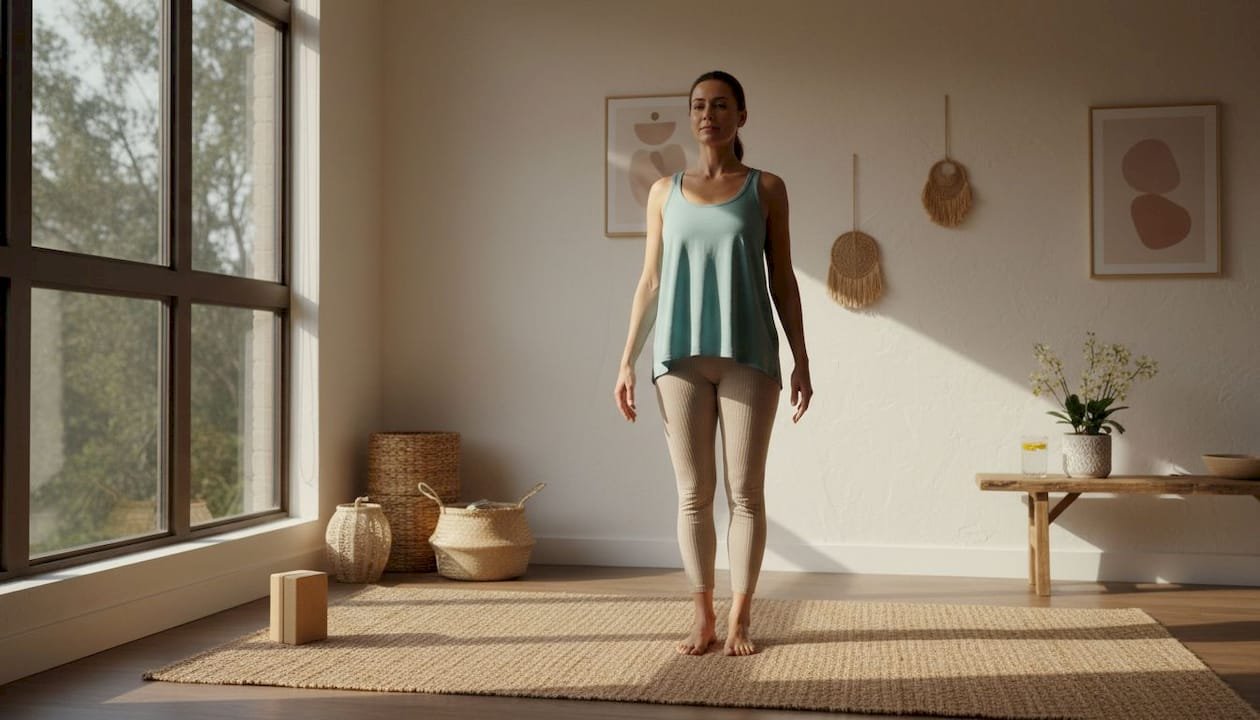
Mountain pose is the foundation for all standing poses, and it teaches you more than it appears to. Stand with your feet hip-width apart, arms at your sides, palms facing forward. Lift through the crown of your head while pressing your feet firmly into the floor. This is where you learn posture alignment, weight distribution, and grounding. Hold it for five to eight slow breaths and notice where your body wants to shift or collapse.
2. Downward facing dog (Adho Mukha Svanasana)
From hands and knees, press your hips up and back to form an inverted V shape. This pose stretches your hamstrings, calves, and spine while building shoulder and arm strength. Beginners often feel tightness in the back of the legs. Keep a generous bend in your knees to keep your spine long rather than forcing your heels to the floor. Hold for five to eight breaths.
3. Warrior 1 (Virabhadrasana I)
Step one foot forward into a lunge, with your back foot turned out at roughly 45 degrees. Bend your front knee to a 90-degree angle and raise your arms overhead. Warrior 1 builds leg strength and hip flexibility while opening the chest. If your back heel lifts, widen your stance. Repeat on both sides, holding for five breaths each.
4. Warrior 2 (Virabhadrasana II)
From Warrior 1, open your hips and arms to the side so your torso faces the long edge of your mat. Your front knee stays stacked over your ankle. Warrior 2 strengthens the thighs and improves stability. Gaze over your front fingertips and keep your shoulders relaxed. Both Warrior poses together give your legs and core a thorough workout with simple instructions anyone can follow.
5. Tree pose (Vrikshasana)
Stand on one foot and place your other foot on your inner calf or inner thigh, never on the knee joint. Bring your palms together at your chest. Tree pose trains your balance and concentration simultaneously. If balancing is difficult, keep your toes on the ground with just your heel resting on your ankle. A wall nearby is a perfectly good tool. Hold for five breaths, then switch sides.
6. Child's pose (Balasana)
Kneel, bring your big toes together, widen your knees, and fold forward with your arms extended or resting alongside your body. Child's pose is your built-in recovery station. Taking breaks during practice is part of healthy yoga. Any time a pose feels overwhelming or you need a moment, this is where you come. It gently stretches the lower back and hips while calming the nervous system.
7. Cat-Cow (Marjaryasana-Bitilasana)
Start on hands and knees. On your inhale, drop your belly, lift your chest, and look slightly up (Cow). On your exhale, round your spine toward the ceiling and tuck your chin (Cat). Move slowly and let your breath lead the movement. This pair improves spinal mobility and is one of the most effective simple yoga exercises for waking up the back in the morning. Do five to ten rounds at your own pace.
Pro Tip: In Cat-Cow, the breath drives the movement. Let the inhale naturally lift your chest and the exhale naturally round your back. You will get more spinal benefit and better body awareness this way.
8. Cobra pose (Bhujangasana)
Lie face down with your hands under your shoulders. On your inhale, press lightly through your palms and lift your chest off the floor. Keep your elbows slightly bent and your lower ribs on the mat. This is a gentle backbend that strengthens the muscles along your spine. Many beginners make the mistake of pushing too high and straining their lower back. A low Cobra, where your navel stays close to the floor, is safer and more effective at this stage.
9. Easy pose (Sukhasana)
Sit cross-legged with your hands resting on your knees. Lengthen your spine, relax your shoulders, and close your eyes. Easy pose is your go-to position for breath work, meditation, and intention setting. If your hips are tight and your knees float high off the floor, sit on a folded blanket or yoga block to level your pelvis. Even five minutes in this pose at the start or end of your session builds the mindfulness habit that makes yoga more than just exercise.
10. Bridge pose (Setu Bandha Sarvangasana)
Lie on your back, bend your knees, and place your feet flat on the floor hip-width apart. Press your feet down and lift your hips toward the ceiling. Clasp your hands underneath your back if comfortable. Bridge pose opens the chest and hip flexors while strengthening your glutes and lower back. It is a beginner-friendly backbend that gives you many of the same spinal benefits as more advanced poses.
11. Standing forward bend (Uttanasana)
From Mountain pose, hinge forward at your hips and let your upper body hang toward the floor. Bend your knees generously if your hamstrings are tight. This pose stretches the entire back of the body and has a calming effect on the nervous system. Let gravity do the work rather than pulling yourself down. Hold for five to eight breaths and roll up slowly to stand.
12. Seated forward bend (Paschimottanasana)
Sit with your legs extended in front of you. Hinge forward from your hips and reach toward your feet, using a strap around your feet if needed. This pose targets hamstring and hip flexibility, two areas where most beginners feel the most tightness. Resist the urge to round your back dramatically just to reach further. A flat back with a shorter reach builds more flexibility over time than a hunched one.
Corpse pose (Savasana) closes every session. Lie on your back, arms at your sides, eyes closed. Do nothing. Skipping Savasana reduces your anxiety relief and prevents the hormonal integration your body needs after practice. Five to ten minutes here is not wasted time. It is where the work gets absorbed.
How the 12 poses compare at a glance
Use this table to plan your sessions based on your personal goals or any physical limitations.
| Pose | Type | Target area | Primary benefit | Beginner modification |
|---|---|---|---|---|
| Mountain | Standing | Full body | Posture and grounding | Stand near a wall |
| Downward Facing Dog | Standing | Hamstrings, shoulders | Full body stretch | Bend knees generously |
| Warrior 1 | Standing | Legs, hips | Strength and stability | Shorten the stance |
| Warrior 2 | Standing | Thighs, core | Strength and focus | Reduce knee bend depth |
| Tree | Balancing | Core, ankles | Balance and concentration | Toes on floor, heel on ankle |
| Child’s Pose | Resting | Lower back, hips | Recovery and calm | Arms alongside body |
| Cat-Cow | Floor | Spine | Mobility and breath | Move at your own pace |
| Cobra | Backbend | Spine, chest | Spinal strengthening | Keep navel near floor |
| Easy Pose | Seated | Hips | Mindfulness and breath | Sit on a folded blanket |
| Bridge | Backbend | Glutes, chest | Hip and spine opening | Keep arms flat, no clasp |
| Standing Forward Bend | Forward bend | Hamstrings, back | Calming and lengthening | Bend knees freely |
| Seated Forward Bend | Forward bend | Hamstrings, hips | Flexibility | Use a strap around feet |
| Savasana | Resting | Full body | Nervous system reset | Blanket under knees |
People with conditions like high blood pressure or glaucoma should check with their healthcare provider before attempting inversions or poses that place weight on the neck. Most of these 12 poses are accessible with simple modifications, but medical guidance is always the right first step if you have existing health concerns.
Building your beginner routine at home
Knowing the poses is step one. Building a habit around them is where real change happens.
Here is what a sustainable beginner session looks like:
Begin sessions with at least two hours after your last meal
Warm up with Cat-Cow and Child's Pose for five minutes before standing poses
Spend 60 minutes total if following a class format, or 20 to 30 minutes for a home session
Use a grippy yoga mat to prevent slipping and reduce joint stress
Always close with Savasana, even if only for five minutes
Practice two to three times per week to start
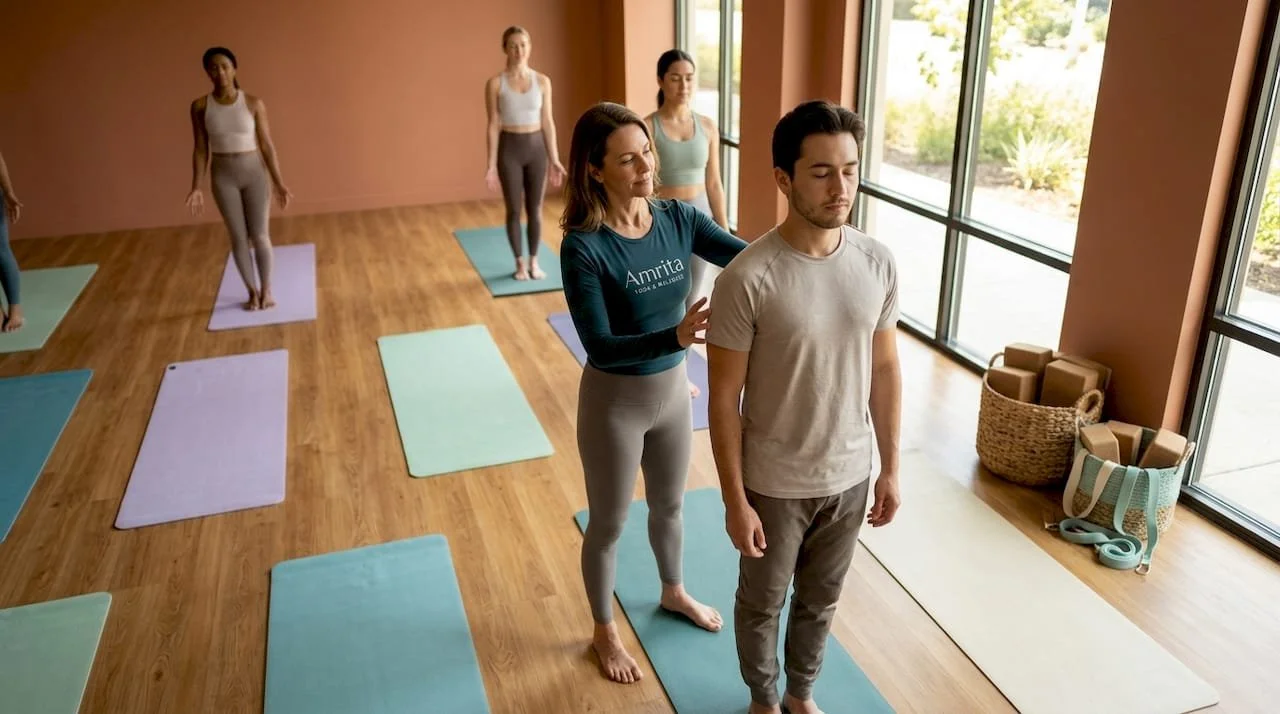
Joining a guided class accelerates your progress faster than solo practice alone. A teacher can spot misalignment you cannot see in yourself, and being in a room with other beginners removes the pressure to be perfect. A yoga guide for Philadelphia can help you understand what to expect before you walk in the door.
Pro Tip: Record a 60-second voice memo after each session noting what felt good and what was uncomfortable. After two weeks, patterns emerge that help you modify smarter, not harder.
The most common beginner mistakes are skipping warm-up, holding the breath during hard poses, and skipping Savasana because it "feels like doing nothing." Breath is the practice. Savasana is the payoff.
My honest take on starting yoga as a beginner
I have worked with hundreds of beginners over the years, and the worry I hear most often is: "I'm not flexible enough for yoga." I used to say flexibility comes with practice. Now I say something more direct. Flexibility is the wrong goal for a beginner. Your real goal is body awareness, and that starts the moment you pay attention to how Mountain pose feels in your feet.
The second hurdle is props. Most beginners feel embarrassed reaching for a block while the person next to them folds cleanly in half. That comparison is a trap. Props support alignment in ways that raw flexibility cannot. The person using a strap correctly is building better habits than the person straining past their range.
Rest poses changed my practice. I used to power through Child's Pose and rush Savasana to get to the "real" work. What I learned, somewhat reluctantly, is that the nervous system resets happen in stillness. The physical strength you build during practice only integrates when you give your body time to absorb it. Treat rest as part of the workout, not a gap in it.
If you take one thing from this perspective: start simpler than you think you need to. Master Mountain pose before you chase Warrior 3. The foundation never stops mattering.
— Amritayogawellness
Start your practice with Amrita Yoga & Wellness
Ready to take these 12 basic yoga poses off the page and into a real session? Amrita Yoga & Wellness in Philadelphia offers beginner-friendly classes built around exactly the kind of safe, accessible practice described here. Whether you are looking for a beginner yoga routine that focuses on relaxation and whole-body wellness, or you want to explore a free beginner class before committing, the studio makes it easy to start without pressure.
Amritayogawellness also offers tarot readings as part of its broader wellness experience, pairing mindfulness with spiritual insight for students who want more than a physical practice. Yoga builds the body. These complementary offerings help you explore the whole picture. Your first step is just showing up.
FAQ
What are the 12 basic yoga poses for beginners?
The 12 foundational poses are Mountain, Downward Facing Dog, Warrior 1, Warrior 2, Tree, Child's Pose, Cat-Cow, Cobra, Easy Pose, Bridge, Standing Forward Bend, Seated Forward Bend, and Savasana. Together they cover all major muscle groups and pose categories a beginner needs.
Do I need to be flexible to start yoga?
No. Flexibility develops through consistent practice rather than being a starting requirement. Props like straps and blocks help beginners maintain correct alignment while flexibility improves naturally over time.
How long should a beginner yoga session last?
Beginner yoga classes typically run 60 minutes. At home, 20 to 30 minutes of consistent practice two to three times per week builds meaningful progress without overloading the body.
Is it safe to practice yoga at home as a beginner?
Yes, practicing yoga at home is safe when you follow basic guidelines: use a grippy mat, avoid forcing poses past your range, and never skip the warm-up or Savasana. If you have a medical condition, consult your healthcare provider before starting.
What if a pose hurts?
Sharp or stabbing pain means you should stop the pose immediately. Mild muscle aching as you build strength is normal. If you cannot breathe comfortably in a pose, back off until you can.