Contact Us

Want to send us a quick message? Use the form on the right to contact us and we'll be in touch within 2 business days!

Please contact Audrey at info@amritayogawellness.com for general inquiries, software issues, in-studio and out-of-studio events and workshops, marketing, and community outreach and donations.

Please contact Heather at heather@amritayogawellness.com for private events, private yoga/pilates requests, and trainings.

1204 Frankford Avenue
North Philadelphia, PA, 19125
United States

(267) 928 3176

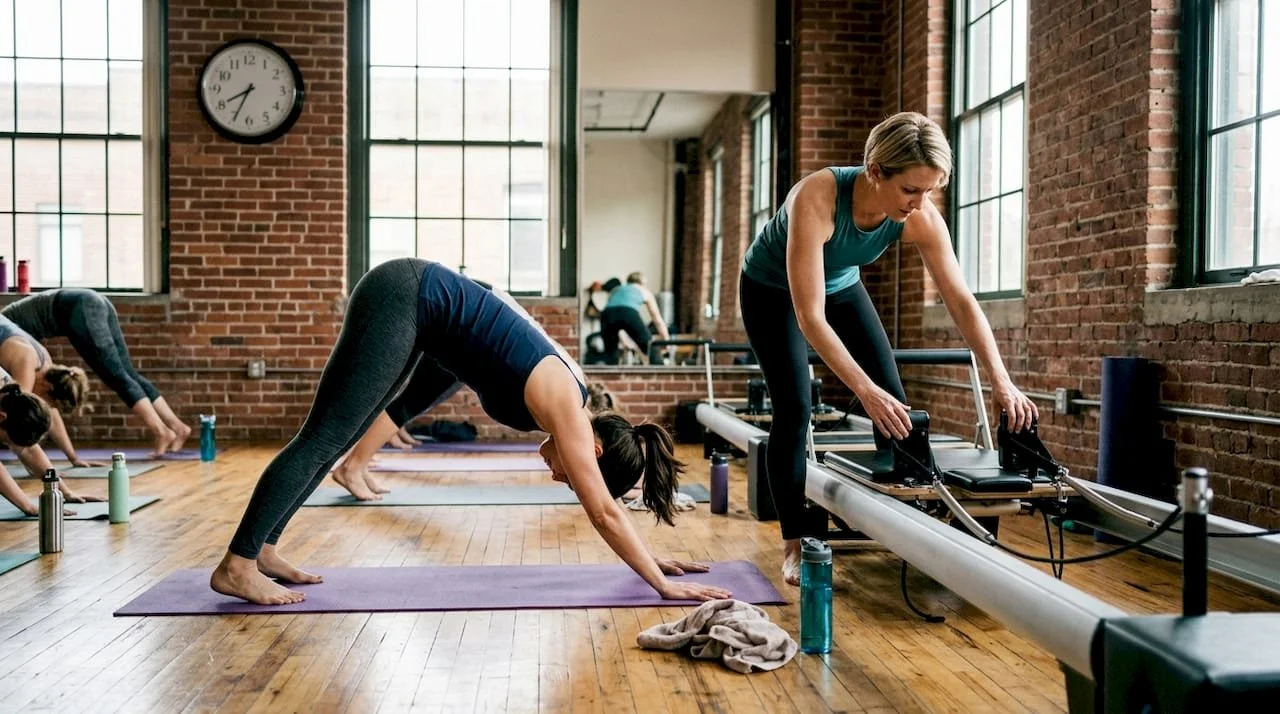
Amrita Yoga & Wellness offers a variety of Yoga traditions, Pilates Mat, Pilates Group Reformer, Tai Chi, and Massage services in a beautiful space. Our studio is located in Philadelphia, Pennsylvania.

Blog

Filtering by Category: Yoga

Your guide to group classes in Philadelphia for wellness

Heather Rice
TL;DR:

Group wellness classes provide social connection, accountability, and structured movement, boosting consistency.Yoga, Pilates, and reformer Pilates differ in focus, equipment, and complexity, accommodating various goals.Regular participation in group classes improves physical health and fosters community, aiding long-term wellness.

Most adults in Philadelphia default to a gym membership, a solo jog along the Schuylkill, or a YouTube workout at home. It works, until it doesn't. Motivation fades, progress stalls, and the whole thing starts to feel like a chore. Group wellness classes flip that script entirely. They combine structured movement with real human connection, giving you accountability, variety, and a sense of belonging that no treadmill can replicate. Whether you're curious about yoga, Pilates, barre, or something more restorative, this guide breaks down what's available in Philadelphia, how these formats differ, and exactly how to get started without feeling lost.

Table of Contents

Key Takeaways

Point Details
Group classes build community Philadelphia wellness studios foster social support and lasting accountability, enhancing holistic health.
Understand your class options Yoga, mat Pilates, and reformer Pilates each provide unique benefits—find the best fit for your needs and goals.
Start smart and safe Begin with certified instructors, try intro offers, and prioritize proper form and communication for the best experience.
Consistency is key Attend 2-3 weekly sessions for at least six weeks to realize lasting improvements in strength and flexibility.

Understanding group classes: What makes them unique?

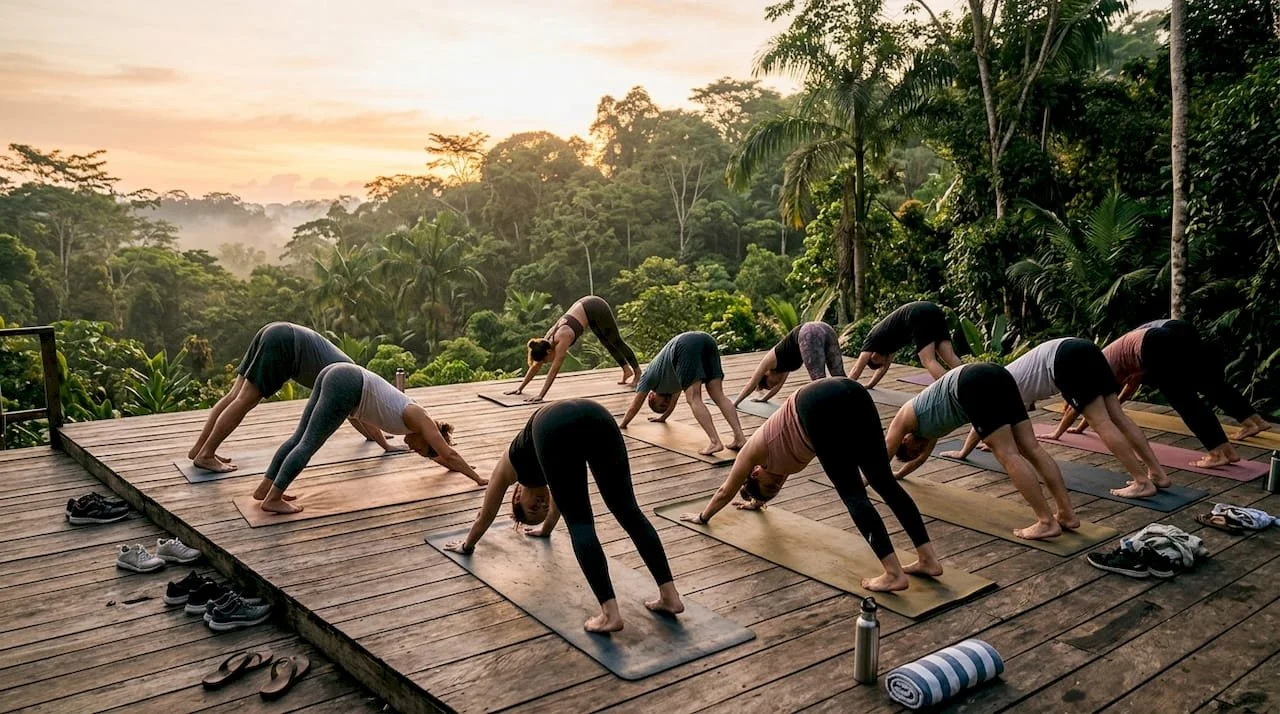
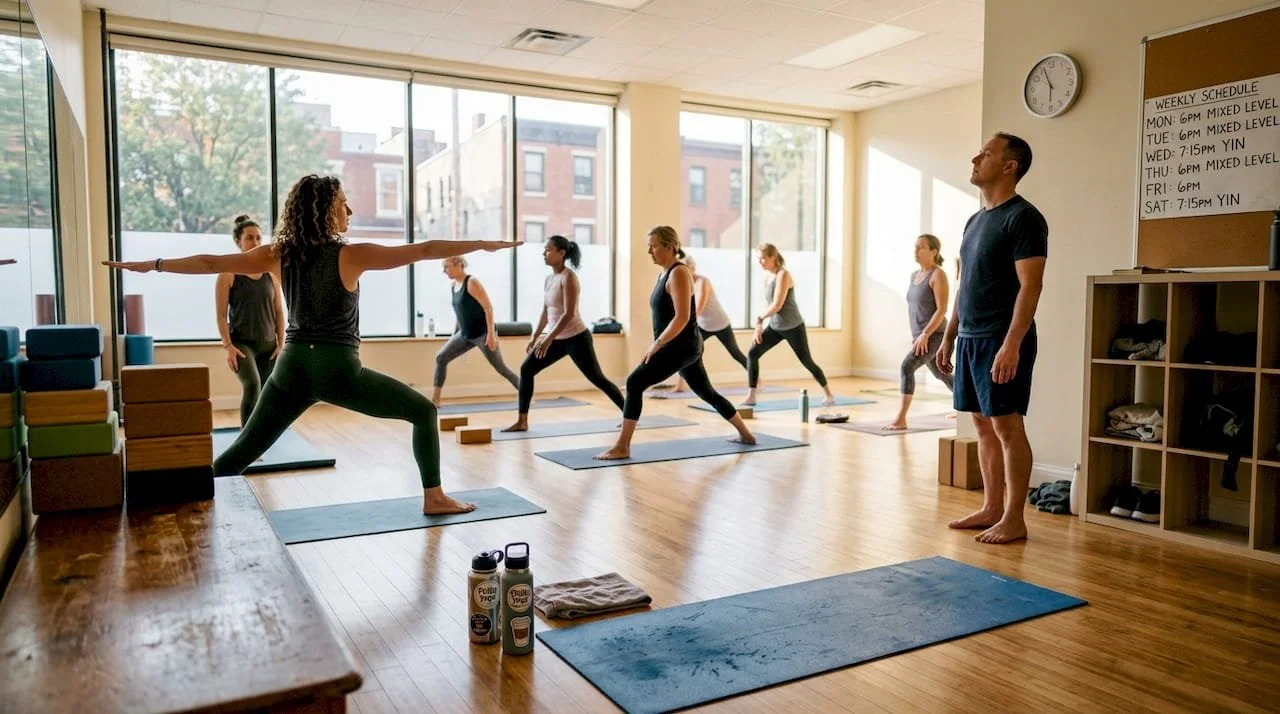
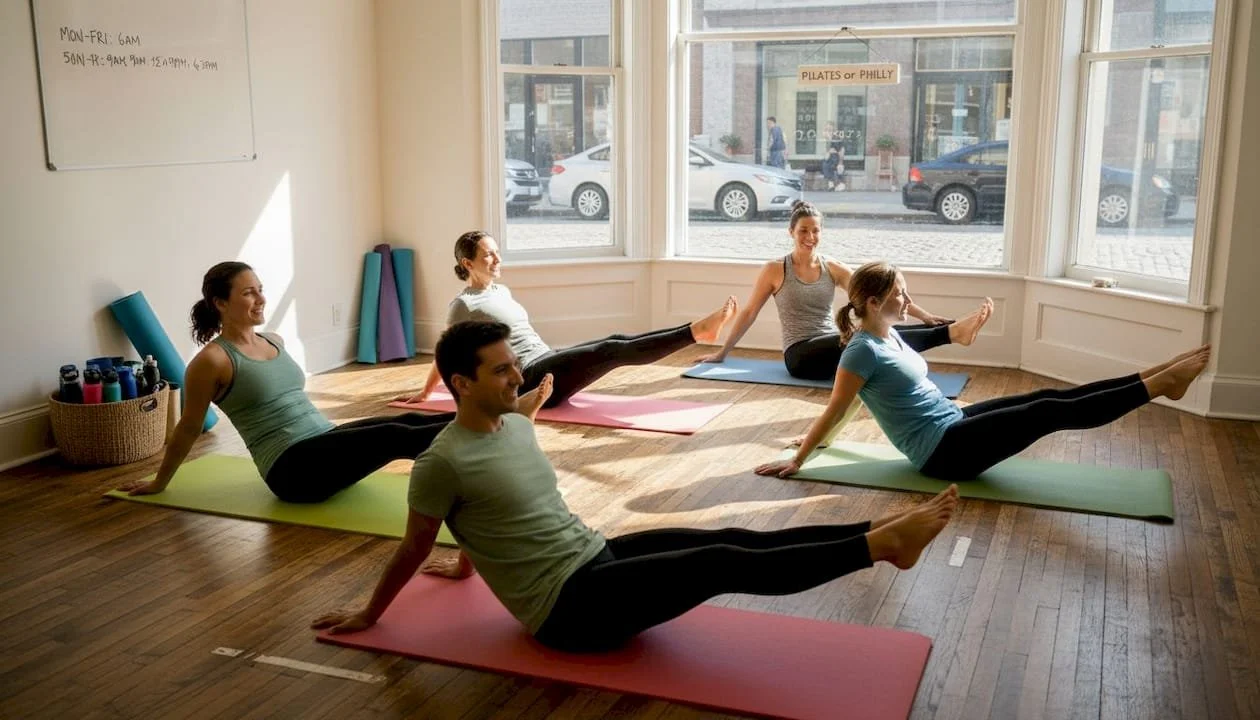
Group classes are instructor-led sessions where a small to mid-sized group moves through a structured practice together. Unlike a gym floor where everyone does their own thing, group classes have a shared rhythm. The instructor cues the movement, manages the pacing, and creates an environment where everyone is working toward the same goal at the same time.

In Philadelphia, the most popular group class formats include:

  • Hatha yoga: Slow, deliberate poses ideal for beginners or anyone wanting a mindful practice

  • Vinyasa yoga: A flowing sequence that links breath to movement, building heat and strength

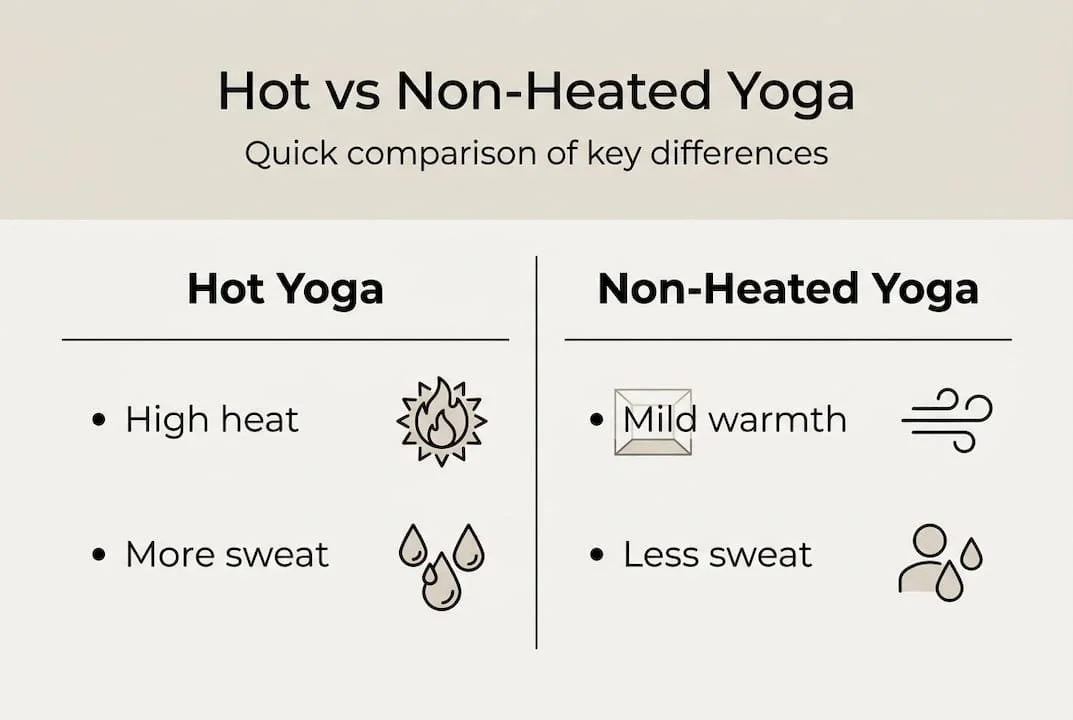
  • Hot yoga: Practiced in a heated room, intensifying the stretch and cardiovascular challenge

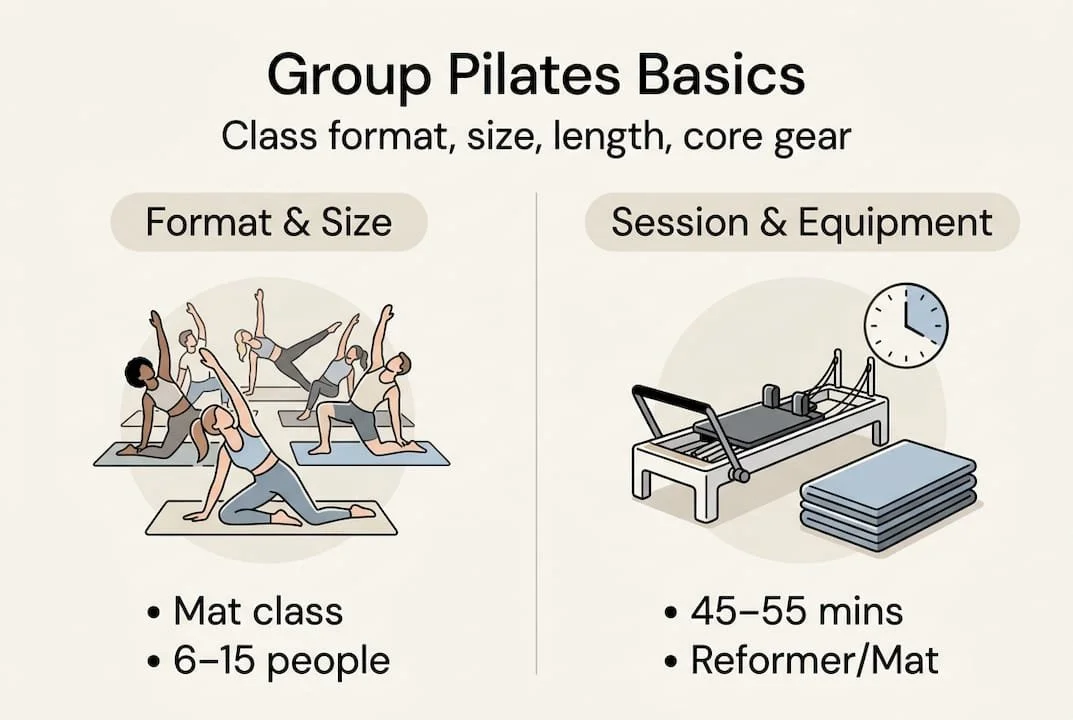
  • Mat Pilates: Bodyweight-based core work done on a mat, no equipment needed

  • Reformer Pilates: Machine-assisted resistance training that targets deep stabilizing muscles

  • Barre: Ballet-inspired movements that tone the lower body and improve posture

A typical yoga session follows a clear arc. Yoga group classes in Philadelphia typically last 60 to 90 minutes, starting with warm-up and breathing, moving through asanas (poses), and closing in savasana (rest). That structure is intentional. It prepares your body, challenges it, then lets it recover.

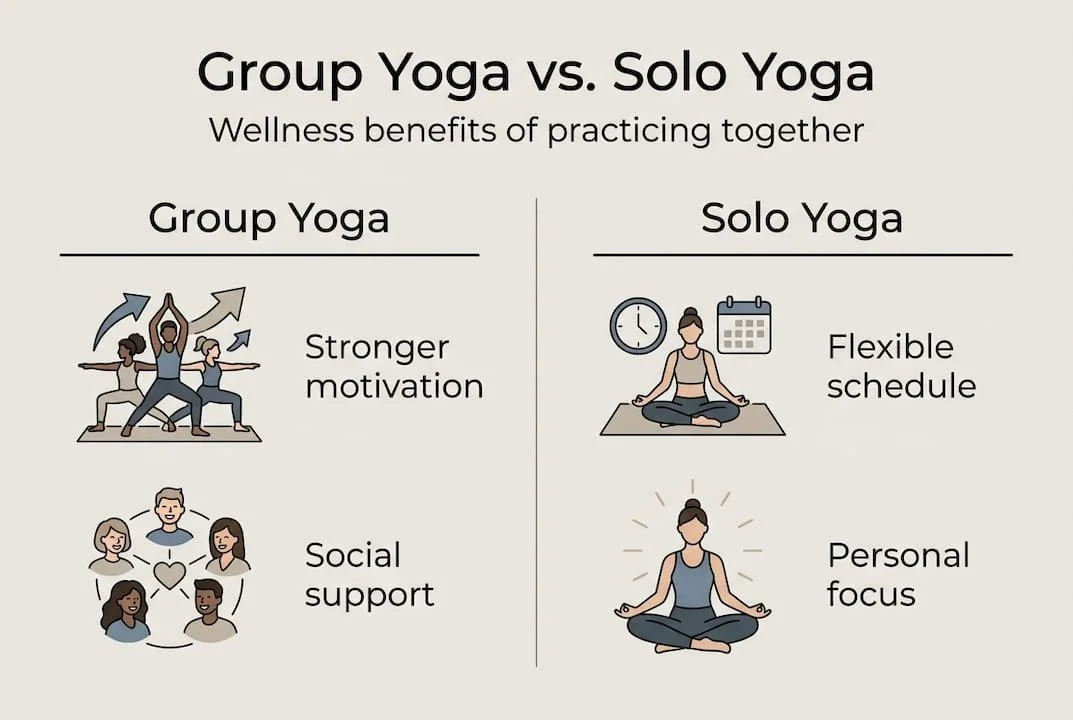
What separates group classes from solo workouts is the social layer. When you show up and see familiar faces, you're less likely to skip. When an instructor calls your name or adjusts your form, you feel seen. That peer accountability is a genuine performance driver, not just a feel-good bonus.

Research consistently shows that people who exercise in group settings report higher adherence and greater gains in holistic health compared to those who train alone. The combination of social encouragement and structured programming makes a measurable difference over time.

If you're just starting out, exploring beginner Pilates tips can help you walk into your first class with confidence rather than anxiety.

Comparing yoga, mat Pilates, and reformer Pilates

Now that you know what to expect from group classes, let's break down the most popular formats and how they differ.

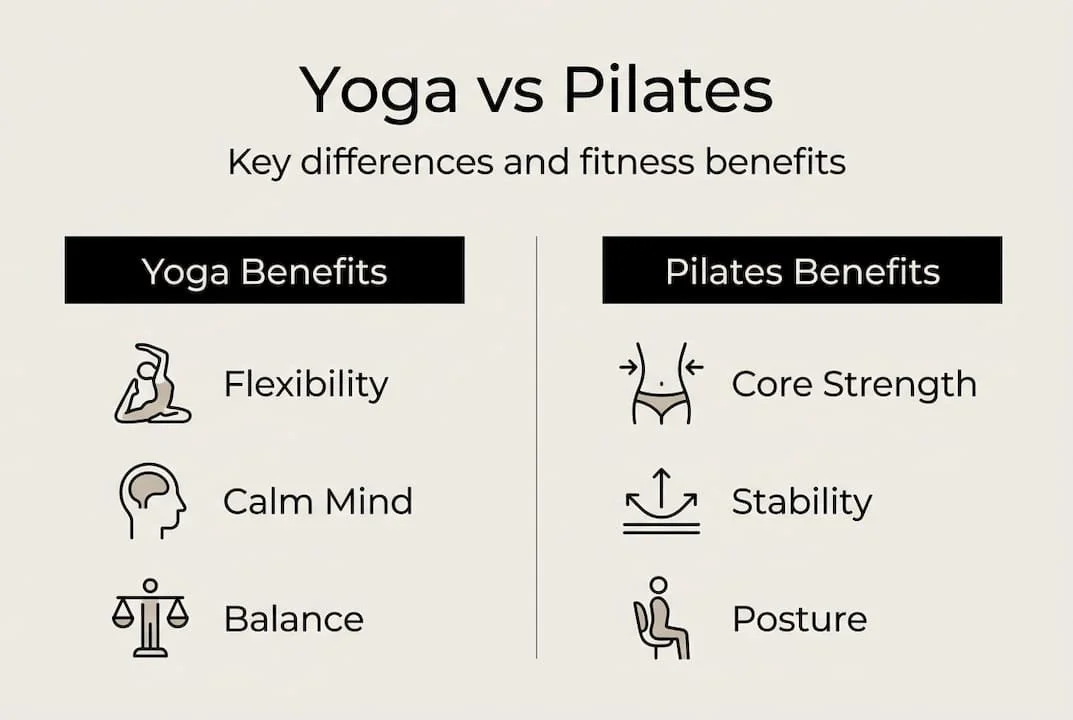
Yoga, mat Pilates, and reformer Pilates each serve a different purpose, even though they overlap in some benefits. Yoga is rooted in breath, mindfulness, and the connection between body and mind. Mat Pilates is precision-driven, targeting the deep core muscles that support your spine and posture. Reformer Pilates adds resistance through a spring-loaded machine, allowing for a wider range of movement patterns and load.

Mat Pilates uses bodyweight on a matfor core strength and flexibility, with structured sequences targeting deep stabilizers. Reformer Pilates uses a machine for resistance and is suitable for all levels with modifications.

Format Accessibility Avg. cost per class Equipment needed Physical challenge Best for
Hatha yoga High $15 to $25 Mat Low to moderate Beginners, stress relief
Vinyasa yoga Moderate $18 to $28 Mat Moderate to high Cardio, flexibility
Mat Pilates High $15 to $22 Mat Moderate Core strength, rehab
Reformer Pilates Moderate $30 to $45 Reformer machine Moderate to high All levels, injury recovery

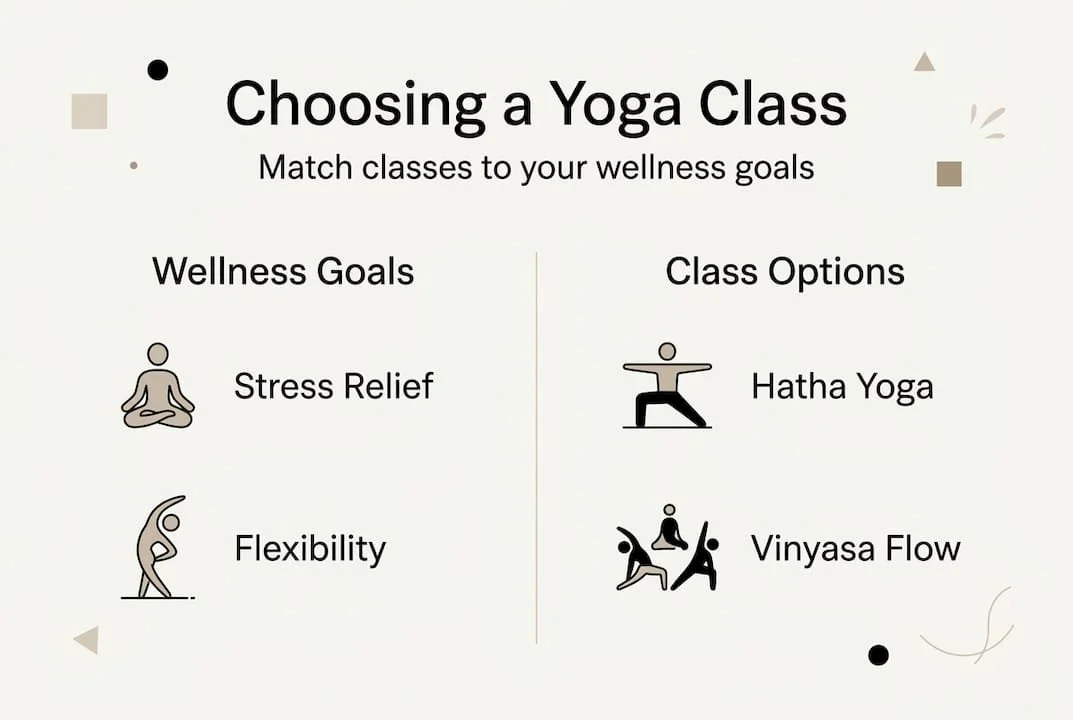
Choosing the right format depends on your goals. Want to manage stress and improve flexibility? Start with Hatha yoga. Looking to build core strength after a back injury? Mat Pilates is a safe entry point. Interested in a more dynamic, resistance-based challenge? Look into reformer Pilates benefits or check out a reformer Pilates beginner guide before booking.

  • Yoga prioritizes breath, meditation, and flexibility

  • Mat Pilates emphasizes core precision and spinal alignment

  • Reformer Pilates adds resistance for strength and rehabilitation

Pro Tip: Most Philadelphia studios offer intro packages at a steep discount. Try two or three different formats in your first month before committing to a membership. Your body will tell you what it needs.

Benefits of group classes for physical health and community

Understanding the core formats, it's important to see how group classes elevate both body and mind together.

The physical benefits are well-documented and significant. Regular participation in yoga and Pilates builds muscular strength, improves flexibility, reduces chronic pain, and supports better posture. A study found that an 8-week combined yoga and Pilates program significantly improved muscular strength, endurance, and body composition in participants compared to a control group. That's not a small result. That's a measurable body transformation in under two months.
For those managing chronic conditions, the evidence is equally strong. Mat Pilates reduced pain and improved function in adults with chronic low back pain and also improved health-related quality of life in older adults managing type 2 diabetes.
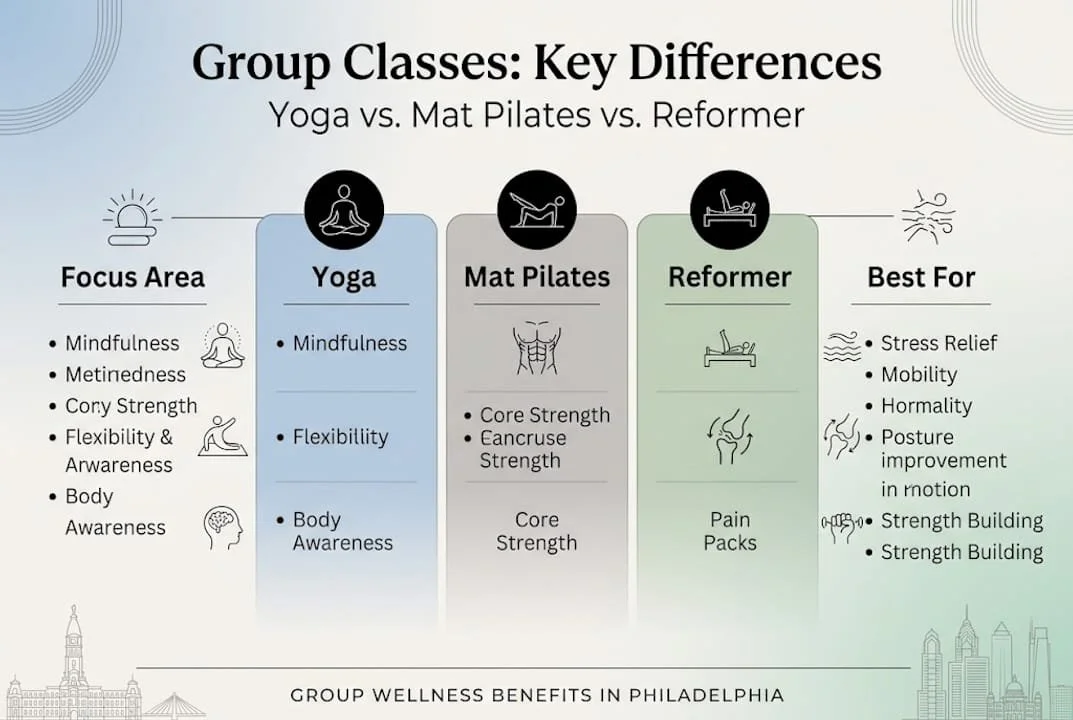
Benefit Yoga Mat Pilates Reformer Pilates
Core strength Moderate High High
Flexibility High Moderate Moderate
Pain reduction High High High
Stress relief Very high Moderate Moderate
Cardiovascular Moderate (hot yoga) Low Low to moderate

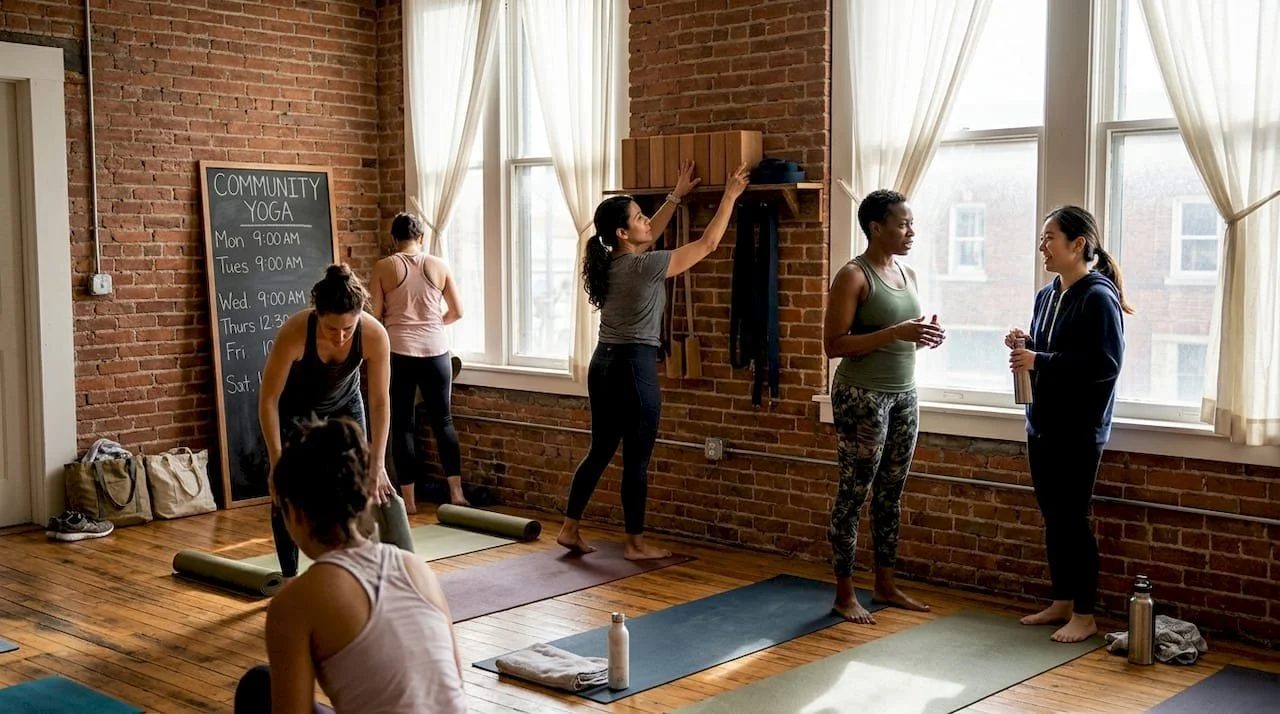
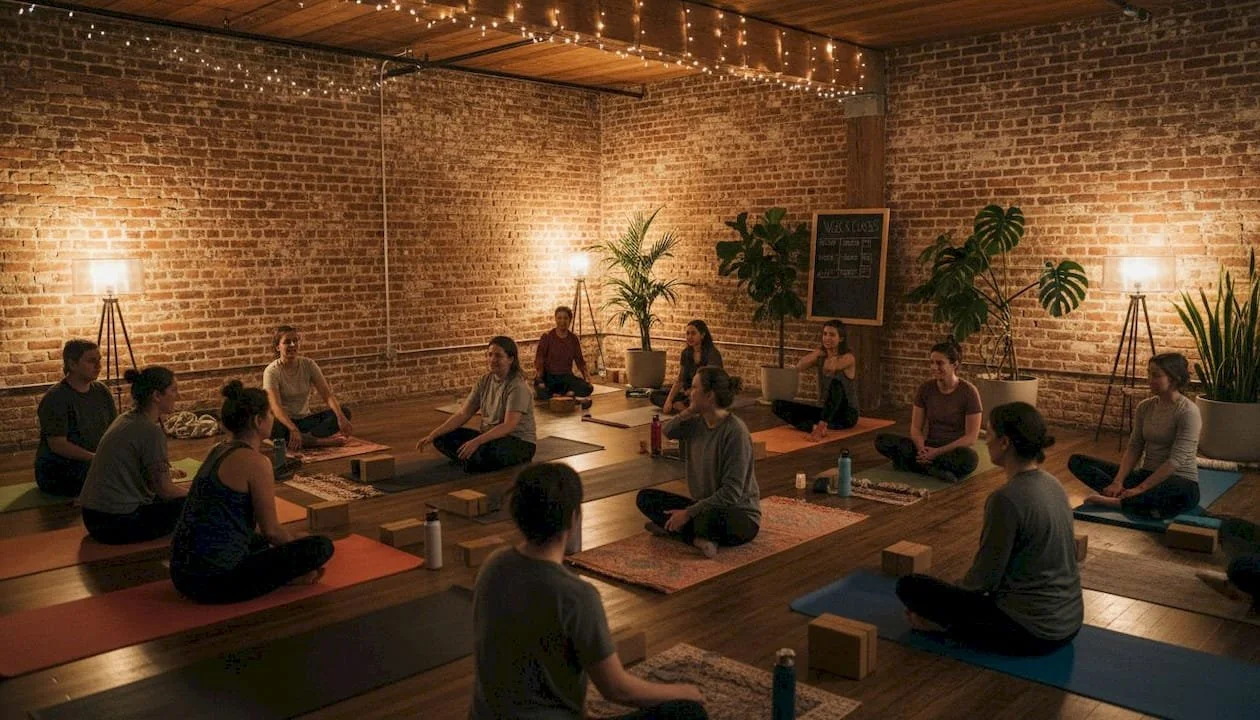
Beyond the physical, the community element is what keeps people coming back long-term. Group classes in Philadelphia create a culture of encouragement. You see the same people week after week. You celebrate each other's progress. Studios often host social events, workshops, and themed classes that deepen those connections.

  • Peer accountability reduces the chance of skipping sessions
  • Instructors provide personalized attention even in a group setting
  • Shared struggle builds genuine camaraderie
  • Community events extend wellness beyond the mat

Exploring Reformer Pilates benefits in more depth can help you understand just how far the physical gains extend, especially for those recovering from injury or managing long-term health goals.

How to choose and get started with group classes in Philadelphia

Armed with an understanding of benefits and formats, you're ready to take the next step.

Getting started doesn't have to be complicated. Follow these steps to find the right class and set yourself up for success:

  1. Define your goal. Are you managing stress, building strength, recovering from an injury, or looking for community? Your goal narrows the format.

  2. Research local studios. Look for certified instructors with 200-plus training hours and read recent reviews on Google or Yelp.

  3. Use intro offers. Philadelphia studios prioritize inclusivity for adults and offer intro deals like $39 for 3 classes at Focus Barre, making it easy to try before committing.

  4. Attend 2 to 3 sessions per week. Experts recommend 2 to 3 sessions per week for 6 to 8 weeks to see meaningful gains in strength and flexibility.

  5. Communicate with your instructor. Always mention injuries, limitations, or pregnancy before class begins.

For your first session, keep these practical tips in mind:

  • Arrive 10 to 15 minutes early to introduce yourself and get oriented

  • Wear comfortable, form-fitting clothes that allow full range of motion

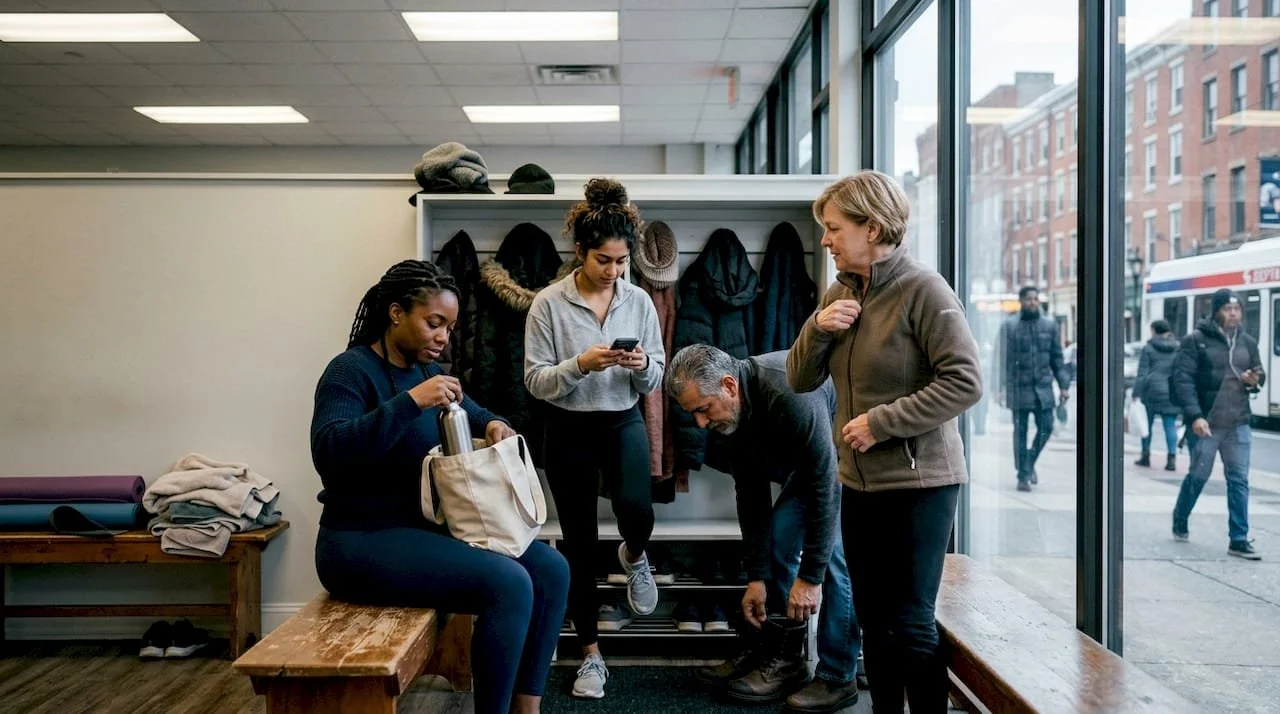
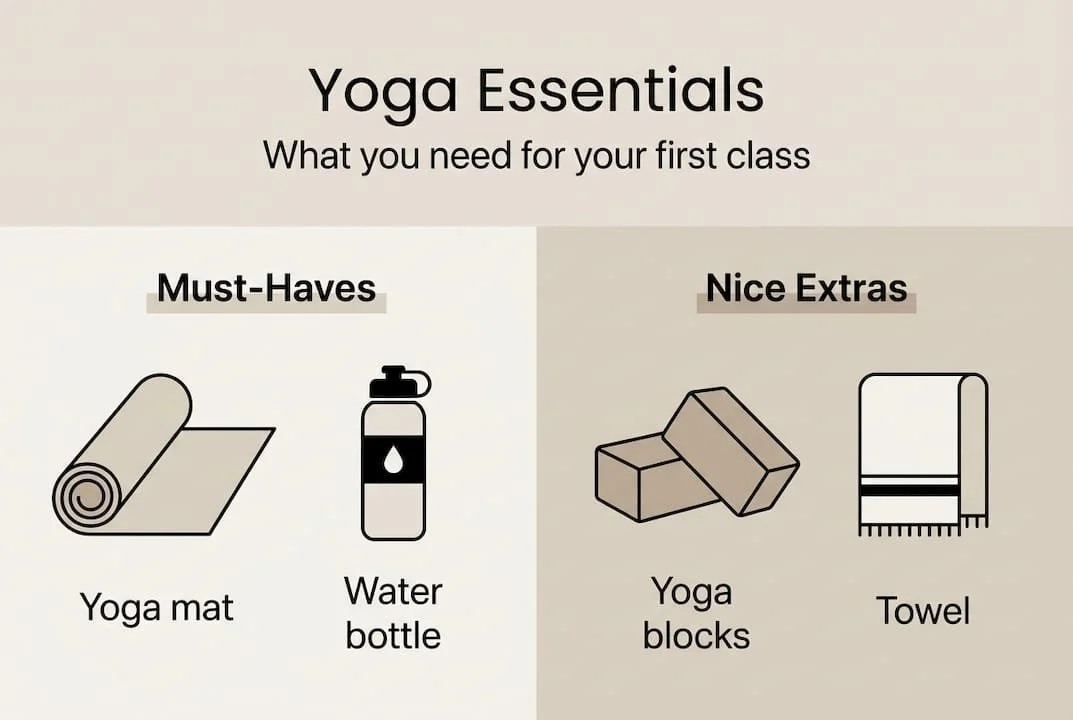
  • Bring water and a mat if the studio doesn't provide one

  • Skip a heavy meal for at least 90 minutes before class

  • Accept modifications without judgment. Every instructor offers them

Pro Tip: Don't judge a format by one class. Instructors vary widely in teaching style. If a session doesn't click, try the same format with a different teacher before writing it off entirely.

You can also browse Reformer Pilates insights to get a clearer picture of what to expect before walking through the studio door.

The real secret to lasting change: More than just exercise

But the story of group classes goes well beyond physical health metrics.

Here's something most wellness content won't tell you: the reason most solo fitness routines fail isn't lack of effort. It's lack of context. When you exercise alone, you're fighting every motivation battle by yourself. There's no one waiting for you. No one notices if you skip. That silence makes it easy to quit.

Group classes solve that problem structurally. Group classes enhance community engagement through accountability, peer encouragement, and social events, all of which are key drivers of long-term holistic health adherence. It's not a soft benefit. It's the mechanism that makes everything else work.

The people who sustain a wellness practice for years aren't always the most disciplined. They're the ones who found a community that made showing up feel natural. That's what a great studio does. It removes friction and replaces it with belonging.

Long-term health is a lifestyle, not a 6-week program. The Pilates group experience and yoga community in Philadelphia offer exactly that kind of sustained, supportive environment. When you feel connected to the people around you, consistency stops being a struggle and starts being something you actually look forward to.

Find your next community class at Amrita Yoga & Wellness

Ready to join a vibrant and welcoming community? Here's how to begin.

Amrita Yoga & Wellnessoffers a full range of group classes in Philadelphia, including yoga, mat Pilates, reformer Pilates, barre, tai chi, and massage therapy. Every class is designed with inclusivity in mind, welcoming beginners and experienced practitioners alike.
Beyond movement, Amrita hosts workshops and special events that deepen your wellness journey in unexpected ways. If you're curious about the spiritual side of well-being, explore tarot reading sessions as a complement to your physical practice. Check the current schedule for intro offers and upcoming community events. Your next step toward lasting wellness starts right here in Philadelphia.

Frequently asked questions

How often should I attend group wellness classes to see results?

Experts recommend 2 to 3 sessions per week for 6 to 8 weeks to notice meaningful gains in strength and flexibility. Consistency matters more than intensity at the start.

What are the main differences between mat and reformer Pilates?

Mat Pilates uses bodyweight and is equipment-free and cost-effective, while reformer Pilates uses a spring-loaded machine for resistance, offering greater control and rehabilitation options.

Are group classes suitable for beginners or people with injuries?

Yes, modifications are offered for all levels in virtually every group class format. Always inform your instructor about injuries or special needs before the session begins.

Which Philadelphia studios offer the best intro deals?

Studios like Club Pilates and Thrive Pilates & Yoga offer free trials or discounted unlimited weeks for new students. Check local studio websites regularly for updated promotions.
Recommended

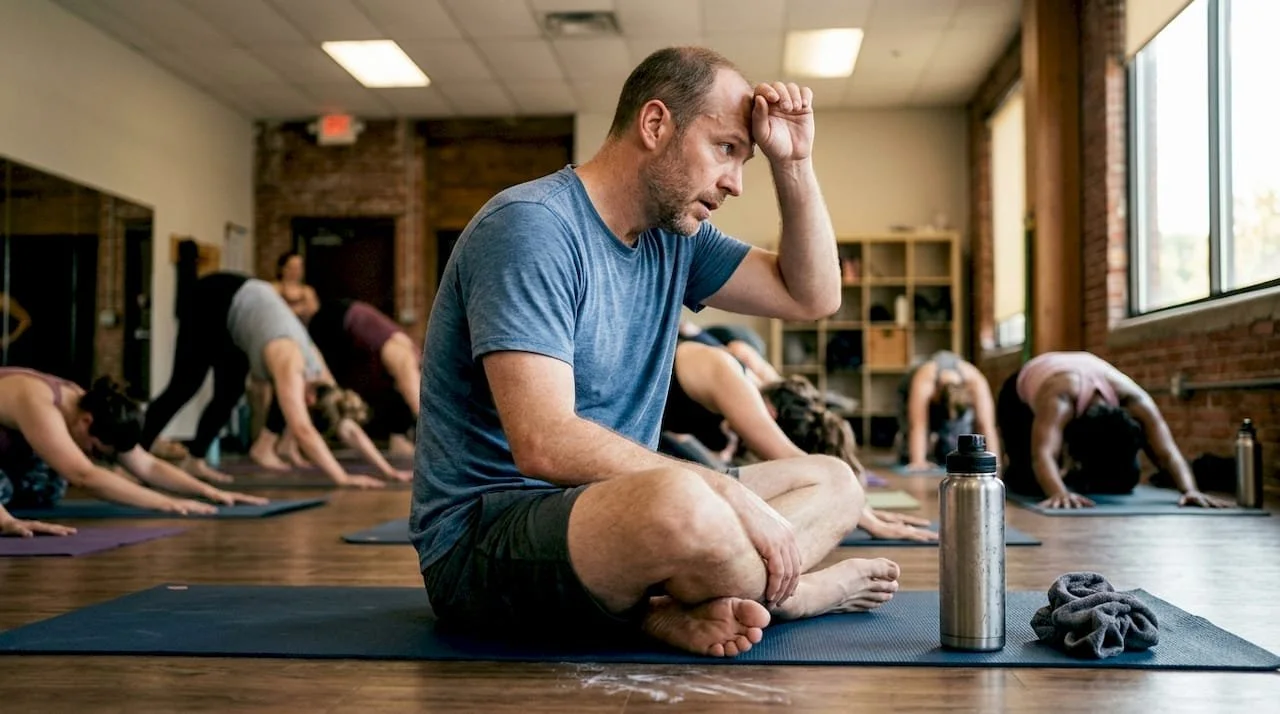
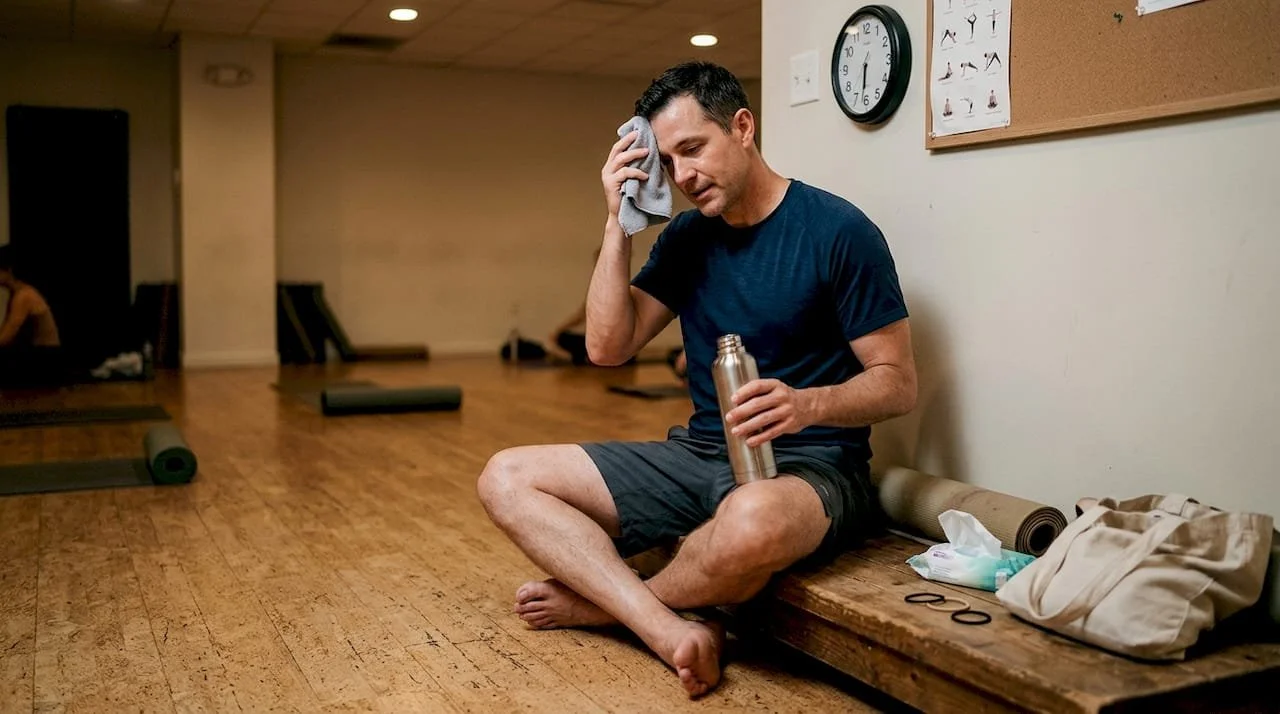
Optimize Your Hot Yoga Sessions with Smart Hydration Tips

Heather Rice

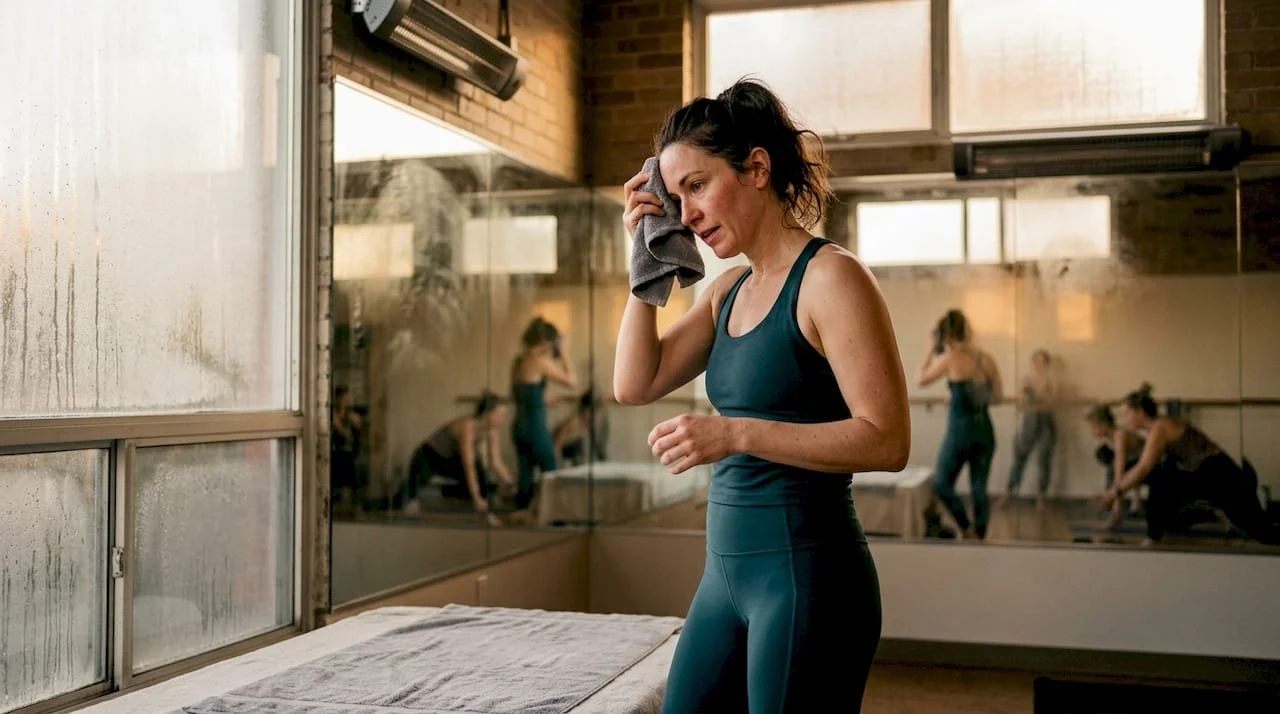
st people. It isn't. Plain water alone won't protect your performance, focus, or safety when you're sweating through 90 minutes in a heated studio. Hot yoga creates fluid and mineral losses that standard hydration advice simply doesn't account for. Whether you're a regular at a Philadelphia studio or just building your heated practice, a targeted hydration strategy makes a real, measurable difference in how you feel during class and how quickly you recover afterward. This guide breaks down exactly what to do before, during, and after every session.

Table of Contents

Key Takeaways

Point Details
Plan hydration ahead Start drinking water and electrolytes hours before your hot yoga class for the best results.
Sip, don’t gulp Frequent small drinks during class help maintain energy and prevent dehydration.
Post-class recovery Replace both fluids and minerals after hot yoga to support muscle recovery and overall wellness.
Adapt to local climate Consider Philadelphia’s seasonal heat and humidity when planning your hydration strategy.

Understanding hydration needs for hot yoga

Hot yoga isn't just yoga with the thermostat turned up. The combination of intense movement and elevated heat pushes your body to sweat at rates far beyond what most workouts demand. Fluid loss through sweat in hot yoga is significant enough to raise your real risk of dehydration within a single class. That's not a warning to scare you off the mat. It's a reason to show up prepared.

Even mild dehydration, as little as 2% of your body weight in fluid loss, can impair coordination, reduce strength, and make it harder to focus on your breath and alignment. In a room held at 95 to 105 degrees Fahrenheit, that threshold arrives faster than most practitioners realize. Your body is working overtime to cool itself while also powering through poses.

Common dehydration symptoms to watch for during class include:

  • Dizziness or lightheadedness during standing poses

  • Muscle cramps, especially in the calves and hamstrings

  • Sudden fatigue or a feeling of "hitting a wall"

  • Headache that builds through the session

  • Dry mouth or reduced urge to urinate after class

Philadelphia's climate adds another layer. Summer humidity makes sweat evaporate more slowly, which reduces your body's cooling efficiency and increases fluid loss. Winter sessions in heated studios can also be deceptively dehydrating because dry indoor air pulls moisture from your skin and breath.

Condition Estimated fluid loss per hour
Hot yoga (heated studio) 1.0 to 1.5 liters
Regular yoga (room temperature) 0.3 to 0.5 liters
Light cardio (gym) 0.5 to 0.8 liters

Those numbers matter when you're planning your hot yoga preparation routine. Replacing a liter or more of fluid during and after class requires intentional effort, not just a few casual sips. The effects of dehydration in exercise are well documented, and hot yoga sits at the higher end of that risk spectrum. Start thinking of hydration as part of your practice, not an afterthought.

Pre-class hydration: Steps to set yourself up for success

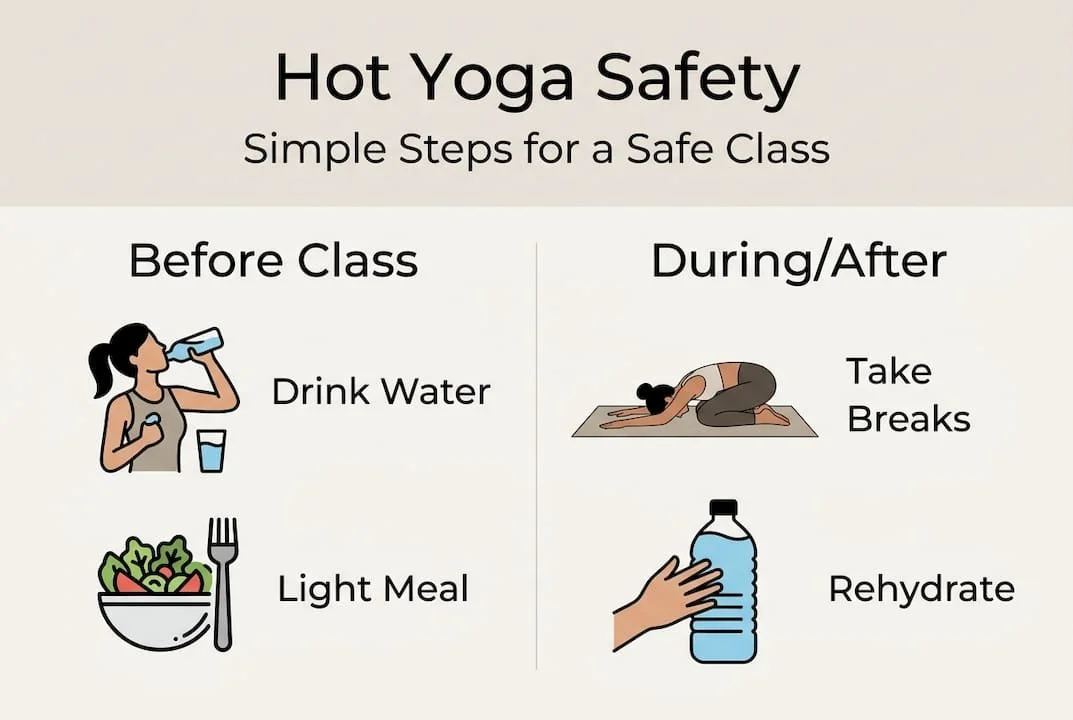
Once you realize how much hot yoga can deplete your fluids, a thoughtful pre-class hydration approach becomes essential. The biggest mistake most practitioners make is trying to hydrate in the 20 minutes before class. By then, it's too late for your body to absorb and distribute that fluid effectively.

Drinking water steadily throughout the dayis far more effective than loading up right before a workout. Your kidneys can only process about 800 milliliters per hour, so chugging 32 ounces right before class mostly means bathroom breaks and a sloshing stomach during downward dog.

Here's a practical pre-class hydration timeline to follow:

  1. Wake up: Drink 16 ounces of water first thing in the morning, even on non-yoga days.

  2. 4 to 5 hours before class: Have a full meal with water-rich foods like cucumber, leafy greens, or fruit.

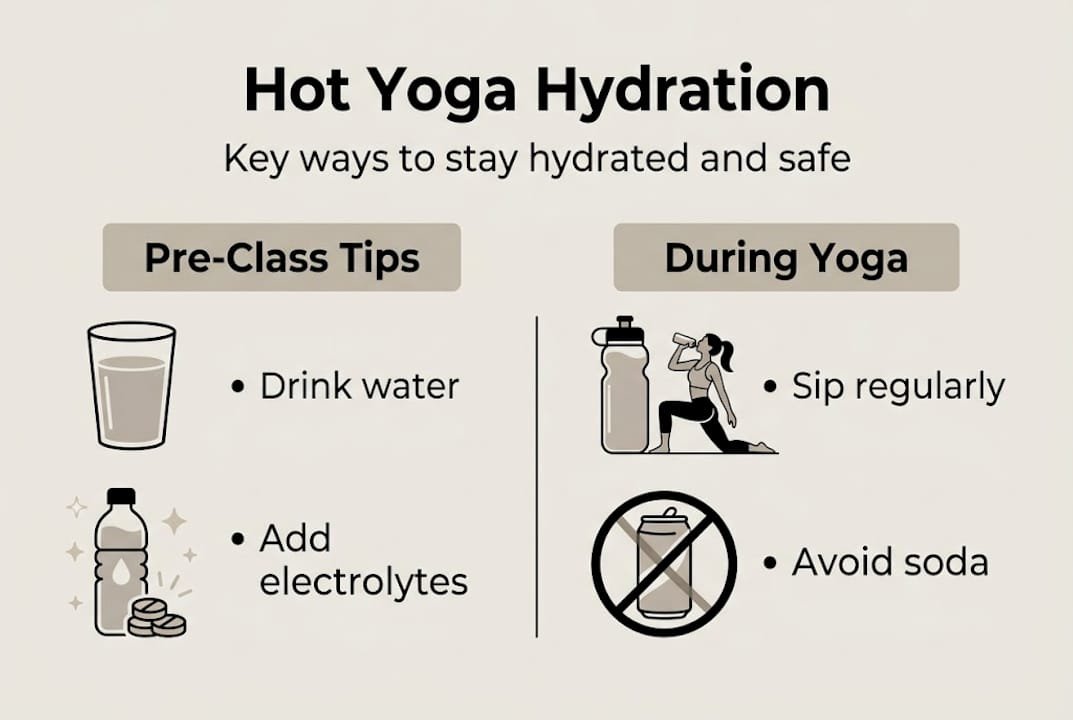
  3. 2 to 3 hours before class: Drink 16 to 20 ounces of water or a light electrolyte drink.

  4. 1 hour before class: Sip 8 ounces if you feel thirsty. Avoid large amounts.

  5. 30 minutes before class: No more large drinks. A few small sips are fine.

Following this approach for how to prepare for hot yoga gives your body time to absorb fluids, balance electrolytes, and arrive at the studio in an optimal state.

Pro Tip: Don't rely only on plain water in the hours before class. Add a pinch of sea salt and a squeeze of lemon to your water, or eat a banana, to top off your sodium and potassium levels before you start sweating.

Electrolytes, specifically sodium, potassium, and magnesium, regulate how your muscles contract and how your cells hold water. Plain water alone doesn't restore those minerals. Starting class with a slight electrolyte edge gives your body a meaningful buffer against cramping and fatigue.

During class: Hydration hacks to stay energized and safe

Equally important is what you do once you walk into the heated studio. Here's how to hydrate smarter during class.

The most common in-class mistake is the "save it all for later" approach, where practitioners avoid drinking until they feel desperate, then gulp down half a bottle at once. Small, frequent sips support better fluid balance than large gulps during exercise. Aim for 3 to 4 ounces every 15 to 20 minutes rather than waiting until thirst becomes urgent.

Thirst is actually a late signal. By the time you feel genuinely thirsty during a hot yoga class, your fluid deficit is already building. Use your body's cues as a prompt to sip, not as a starting gun.

Pro Tip: Before class, mark your water bottle with a permanent marker at intervals. Set a quiet phone timer or use the natural breaks in class, like child's pose or transitions between sequences, as your reminder to take a few sips.

Not all drinks perform equally in a heated studio. Here's how your main options compare:

Drink Best for Drawbacks
Plain water Sessions under 60 minutes, light sweaters No electrolyte replacement
Sports drinks Long sessions, heavy sweaters Often high in added sugar
Coconut water Natural electrolyte boost Lower sodium than sports drinks
Electrolyte tablets in water Customizable, low calorie Taste varies by brand

For most hot yoga tips you’ll find, the recommendation is plain water for shorter sessions and an electrolyte option for anything over 60 minutes or if you're a heavy sweater. Coconut water is a solid middle ground because it delivers potassium and magnesium without artificial ingredients. Following hot yoga safety tips means choosing drinks that support your body, not just quench thirst.

Avoid carbonated drinks, caffeine, and anything with heavy sugar before or during class. These slow gastric emptying and can cause cramping or nausea in the heat.

Post-class recovery: Replenishing fluids and electrolytes

After a demanding hot yoga session, replenishing the fluids and minerals you've lost is your final key step. Many practitioners drink a bottle of water, feel okay, and call it done. That approach misses half the equation.

"Replacing both fluids and electrolytes after intense activity is essential for muscle recovery and avoiding cramps." — Mayo Clinic

The electrolyte recovery tips from Mayo Clinic reinforce what many hot yoga practitioners learn the hard way: water without minerals doesn't fully restore what sweat takes away. Your muscles need sodium, potassium, and magnesium to stop cramping and start recovering.

Here's what a smart post-class recovery routine looks like:

  • Within 30 minutes: Drink 16 to 24 ounces of water or coconut water to begin rehydration.

  • Add electrolytes: Use a sports drink, electrolyte tablet, or homemade mix of water, sea salt, lemon juice, and honey.

  • Eat within an hour: Choose foods that combine water content with natural minerals. Good options include watermelon, oranges, bananas, avocado toast, or a smoothie with leafy greens.

  • Monitor urine color: Pale yellow means you're on track. Dark yellow means you need more fluids. Clear can indicate overhydration.

  • Keep sipping for 2 to 3 hours: Recovery hydration isn't a one-drink fix. Continue sipping steadily.

Maintaining a solid hot yoga routine means treating recovery as seriously as preparation. Your hot yoga safety doesn't end when you roll up your mat. The hour after class is when your body is most receptive to replenishment, so use that window wisely.

Why most hot yoga practitioners in Philly underestimate hydration

Here's something we've observed consistently in the Philadelphia yoga community: most practitioners apply gym workout hydration logic to hot yoga, and it falls short every time. The advice to "drink eight glasses of water a day" was never designed for someone sweating through a 90-minute heated flow.

Philadelphia's seasonal swings make this worse. Summer humidity means your sweat doesn't cool you as efficiently, so your body produces even more of it. Winter sessions in a heated studio feel less intense from the outside, but the dry air and indoor heat still drain your fluids quietly.

We've seen students transform their practice simply by shifting from reactive to proactive hydration. Less cramping, sharper focus in the final sequences, and faster recovery the next day. These aren't dramatic changes. They're the result of consistent, intentional habits applied before, during, and after class.

Pro Tip: For one month, keep a simple log after each class. Note what you drank, when, and how your body felt. Patterns emerge quickly, and you'll start recognizing your personal hydration signals before they become problems. Check out our Philly yoga safety tips for more on building a sustainable practice.

The practitioners who treat hydration as a skill, not a chore, are the ones who show up consistently, progress faster, and enjoy their practice more. That's the real payoff.

Practice smarter at Amrita Yoga & Wellness

For those seeking dedicated support and a like-minded community, here's how Amrita can help.

At Amrita Yoga & Wellness, our instructors don't just guide you through poses. They help you understand how to care for your body in and out of the studio. Hydration guidance, class pacing, and personalized wellness support are woven into the experience we offer every student in Philadelphia.

Whether you're new to heated practice or looking to refine your routine, our team is here to support your goals. We even offer tarot readings and wellness workshops for students who want to explore the full spectrum of well-being. Book your next class and experience the difference that a knowledgeable, community-driven studio makes for your practice and your health.

Frequently asked questions

How much water should I drink before a hot yoga class?

Aim for 16 to 20 ounces of water 2 to 3 hours before class, then take only small sips in the final hour. Steady hydration throughout the day is more effective than drinking large amounts right before you begin.

What are the signs of dehydration during hot yoga?

Dizziness, headache, muscle cramps, and sudden fatigue are the most common warning signs. Because fluid loss in hot yoga happens quickly, don't wait for multiple symptoms before taking a break and sipping water.

Do I need sports drinks or just water for hot yoga?

For sessions over 60 minutes or if you sweat heavily, electrolyte drinks offer real benefits alongside water. Replacing fluids and electrolytes together supports muscle recovery better than water alone.

Are there foods that can help with hot yoga hydration?

Yes. Watermelon, oranges, cucumbers, and bananas all provide water content plus natural electrolytes like potassium and magnesium, making them ideal snacks before or after class.

What's the best hydration strategy during summer hot yoga sessions in Philadelphia?

Start your day well-hydrated, include electrolytes in your pre-class routine, sip small amounts every 15 to 20 minutes during class, and monitor your urine color as a reliable hydration check throughout the day.

Recommended

Why barre classes are the ultimate low-impact workout

Heather Rice

TL;DR:

Barre is a high-repetition, low-impact workout that builds strength, flexibility, and endurance.It is suitable for all levels due to its joint-friendly nature and customizable modifications.Group classes provide social support, accountability, and mental health benefits alongside physical results.

Barre classes have a reputation problem. Many people assume that because there's no jumping, no heavy lifting, and no sprinting involved, the workout must be easy. That assumption is wrong. Barre is a high-repetition, low-impact method that pushes muscles to fatigue in ways that surprise even seasoned gym-goers. For adults in Philadelphia looking for a workout that respects your joints while delivering real results in strength, flexibility, and mental well-being, barre deserves a serious look. This guide breaks down the mechanics, the benefits, and exactly how to get started.

Table of Contents

Key Takeaways

Point Details
Low-impact, high results Barre strengthens and tones your whole body without stress on your joints.
Accessible for all levels Barre is safe and modifiable, making it ideal for beginners and all ages.
Boosts mental health Regular barre practice decreases stress and builds community support.
Community motivation Group classes in Philadelphia foster accountability, fun, and lasting motivation.

What is a barre class? The basics explained

Now that you know barre's reputation doesn't capture its full potential, let's get clear on what actually happens in a barre class.

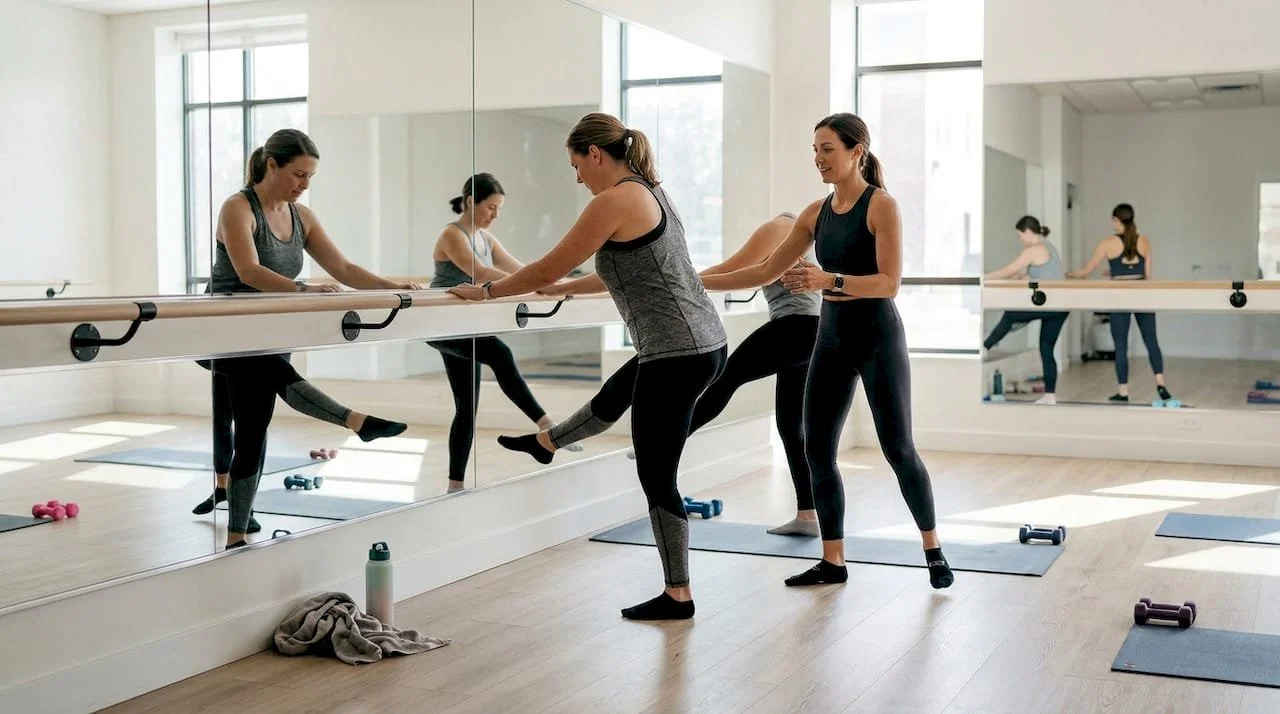
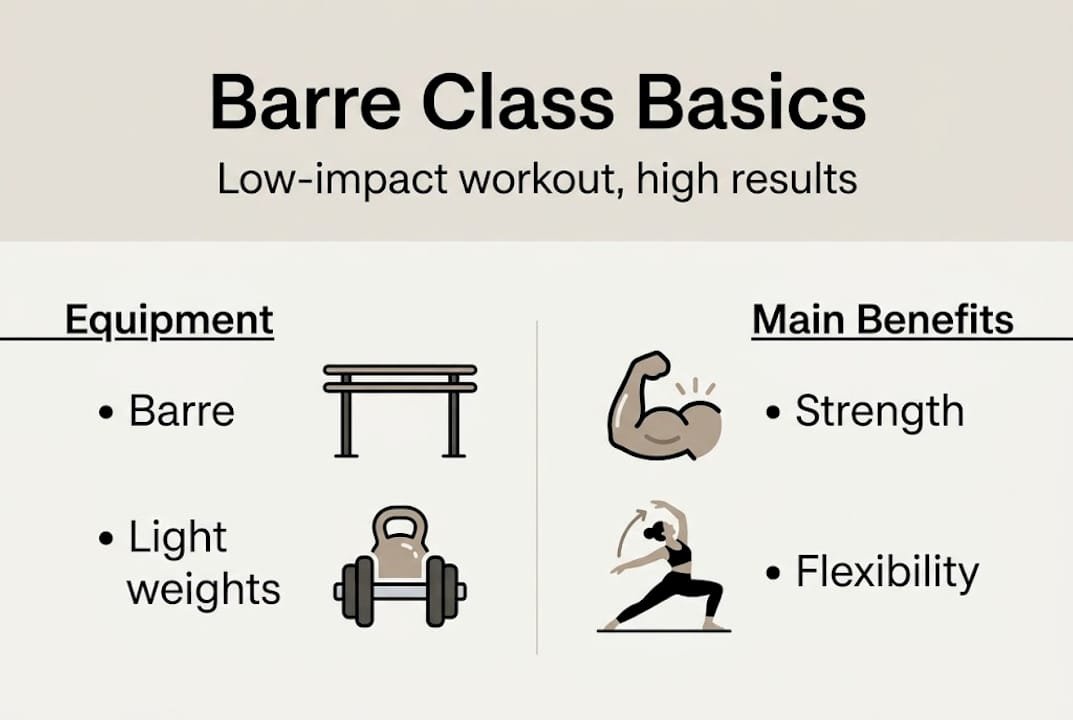
A barre class is a structured group fitness session that uses a ballet barre, a mat, and sometimes light hand weights or resistance bands. Classes typically run 45 to 60 minutes and move through a full-body sequence. You don't need ballet training or dance experience. The barre is simply a prop for balance and support.

The magic of barre comes from its blend of movement styles. As barre fitness basics shows, barre draws from ballet technique, Pilates core work, yoga stretching, and light strength training. These elements combine into a workout that is both precise and demanding. Barre classes utilize high-repetition, small-range isometric holds and pulses at the ballet barre, blending ballet, Pilates, yoga, and light strength training to target full-body muscles with low joint impact.

Here's what a typical barre class looks like from start to finish:

  • Warm-up: Light cardio and mobility work to prepare joints and muscles

  • Upper body section: Arm work with light weights targeting shoulders, biceps, and triceps

  • Barre work: Isometric holds and pulses targeting glutes, thighs, and calves

  • Core section: Pilates-inspired abdominal and back exercises on the mat

  • Cool-down and stretch: Deep stretching to improve flexibility and reduce soreness

Class element Primary muscles targeted Movement style
Warm-up Full body Dynamic mobility
Arm series Shoulders, biceps, triceps Light weights, pulses
Barre standing work Glutes, quads, hamstrings Isometric holds
Mat core work Abs, lower back, hips Pilates-inspired
Stretch and cool-down Full body Yoga-based stretching

For a broader look at class formats and styles, exploring barre classes gives you a solid overview of what different studios offer. The barre benefits explained breakdown also helps set expectations before your first session.

Physical advantages of barre: Strength, flexibility, and more

With a sense of what barre involves, let's examine the science behind its most celebrated physical benefits.

Barre builds lean muscle without bulk. Because you're using light resistance and high repetitions, your muscles reach fatigue without the heavy loading that creates larger muscle mass. This is exactly what many adults are looking for. Muscular strength and endurance improve through high-rep, low-weight fatigue, which trains the slow-twitch muscle fibers responsible for endurance and tone.

Here are the key physical results you can expect from consistent barre practice:

  1. Improved core stability from constant engagement of deep abdominal and back muscles

  2. Better posture as glutes, upper back, and shoulder muscles strengthen

  3. Increased flexibility through integrated stretching after each muscle group is worked

  4. Toned thighs and glutes from isometric holds that few other workouts replicate

  5. Stronger arms without the bulk that comes from heavier training

A clinical barre study found measurable improvements in muscular endurance, flexibility, and body composition in participants who trained consistently. These aren't just anecdotal claims from fitness influencers. The research supports what instructors have observed for years.

The strength and flexibility benefits go beyond aesthetics too. Stronger glutes and core muscles directly improve how you move through daily life, from lifting groceries to sitting at a desk without back pain. Explore barre health outcomes to see how these physical gains translate into real-world function.

Pro Tip: Consistent proper form matters far more than adding extra weight. Lowering your range of motion slightly and holding the position longer will challenge your muscles more effectively than grabbing heavier dumbbells.

Why barre is the go-to low-impact option for all levels

Barre's physical advantages are even more impactful because the format is widely accessible. Let's see why it's the smart choice for so many.

The defining feature of barre is what it doesn't include. There's no jumping, no running, and no high-force movements that stress the knees, hips, or lower back. This makes it genuinely joint-friendly, not just marketed as such. Low-impact barre reduces injury risk, alleviates joint pain, and is suitable for injury recovery, pre and postnatal fitness, beginners, and older adults.

Barre works well for a wide range of people:

  • Adults managing knee or hip pain

  • People returning to exercise after an injury or surgery

  • Pregnant or postpartum individuals looking for safe movement

  • Older adults focused on balance and stability

  • Complete beginners with no prior fitness background

  • Athletes using barre as active recovery between intense training days

Here's how barre compares to two other popular low-impact options:

Feature Barre Pilates Yoga
Joint impact Very low Very low Low
Group class setting Yes Sometimes Yes
Cardio element Mild Minimal Minimal
Strength focus Strong Strong Moderate
Flexibility focus Strong Moderate Strong
Beginner-friendly Yes Yes Yes

Instructors at studios offering barre in Philadelphia are trained to offer modifications in real time. If a movement feels wrong for your body, there’s always an alternative. Starting barre as a beginner is far less intimidating than most people expect, especially in a studio that prioritizes inclusivity.

Pro Tip: Modifications are not a sign of weakness. They’re a sign of smart training. Listening to your body and adjusting the movement keeps you consistent and injury-free over the long term.

Mental health, well-being, and the community effect

Physical improvement only scratches the surface. Barre's real strength may lie in its mental and social advantages.

Group fitness classes create accountability in a way that solo workouts rarely do. When you show up regularly to the same class with the same people, you build relationships that make skipping feel like letting someone down. That social pressure is actually a powerful motivator, and it's one of the most underrated benefits of studio-based barre.

The mental health benefits of barre extend well beyond mood. Research published in a peer-reviewed journal found that barre-style training reduced depression and inflammation, improved cardiovascular and lung function, and even helped with urinary incontinence in clinical populations. These are meaningful health outcomes, not minor perks.
"Participants in structured barre programs showed significant reductions in depression scores and inflammatory markers, alongside improvements in physical function and quality of life." — Journal of Clinical Medicine, 2025

The community advantages of attending group barre classes include:

  • Accountability: Knowing others expect you builds consistency

  • Motivation: Energy in a group setting pushes you further than you'd go alone

  • Social connection: Shared effort creates genuine friendships

  • Fun: Classes with music, movement, and community simply feel better than solo gym sessions

Philadelphia studios, including those reviewed on local community platforms, consistently highlight the welcoming, inclusive atmosphere as one of the top reasons members return week after week.

Getting started with barre: What to expect and practical tips

Ready to experience barre for yourself? Here's exactly how to get started and make the most of your first class.

The barrier to entry for barre is genuinely low. You don't need special equipment, prior experience, or a high fitness level. What you do need is a plan for showing up prepared and confident.

Follow these steps for your first barre class:

  1. Book in advance through the studio's online scheduling system to secure your spot

  2. Wear fitted, stretchy clothing that won't shift during floor work or barre holds

  3. Bring grip socks since most studios require them for hygiene and safety on the barre floor

  4. Arrive 10 minutes early to introduce yourself to the instructor and mention any injuries or limitations

  5. Expect to shake during isometric holds, that's your muscles working, not a sign you're doing it wrong

  6. Use modifications freely and don't compare your range of motion to others in the class

For long-term progress, consistency is key. Two to three classes per week gives your muscles enough stimulus to adapt without overtraining. Philadelphia's studio community supports that consistency by making classes feel like something you look forward to rather than a chore.

Explore the barre for beginners guide for a deeper look at what to expect in your first few weeks. And once you're hooked, the maintaining barre routine resources will help you build a sustainable long-term practice.

Pro Tip: The fastest progress comes from regular attendance, not from pushing harder in a single session. Show up consistently, and the results will follow.

Why barre's reputation as 'gentle fitness' misses its true power

Here's the uncomfortable truth: barre gets dismissed because it doesn't look hard from the outside. No barbells, no sweat-soaked sprints, no dramatic movements. So people assume it's easy. Those people have never held a plie pulse for 90 seconds.

The real barre results tell a different story. Clinical research documents measurable gains in strength, endurance, flexibility, and mental health. Instructors who work with diverse populations, including men, athletes, older adults, and postpartum individuals, consistently report that barre challenges everyone regardless of their starting point.

The "gentle fitness" label also carries a gendered bias that keeps people away who would genuinely benefit. Barre is not a women's workout. It's a precision workout. The same principles of time under tension and controlled range of motion that elite athletes use in physical therapy show up in every barre class.

What separates those who see results from those who don't isn't talent or prior fitness. It's consistency, willingness to use modifications, and openness to instructor cues. Philadelphia's group studio culture makes all three of those easier to maintain because you're not doing it alone.

Try a barre class in Philadelphia

Inspired to discover barre's advantages for yourself?

At Amrita Yoga & Wellness, we offer community-focused barre sessions designed for all fitness levels, including complete beginners. Our Philadelphia studio is built around inclusivity, expert instruction, and a group environment that makes showing up feel genuinely good.

Whether you're managing joint pain, rebuilding fitness after a break, or simply looking for a workout that delivers results without punishment, our local barre classes give you the structure, support, and community to make it stick. Book your first class today and find out firsthand why barre outperforms its reputation every single time.

Frequently asked questions

Is barre effective for weight loss?

Barre supports weight management by building lean muscle, increasing metabolism, and burning calories in a low-impact format that's sustainable long term.

Can beginners try barre classes?

Yes, barre is beginner-friendly with modifications built into every class, making it accessible regardless of your current fitness level or experience.

How often should I take barre classes to see results?

Attending 2 to 3 classes per week is the sweet spot. Consistency drives results, with most people noticing improvements in strength and flexibility within 4 to 6 weeks.

Do you need dance experience for barre?

None at all. Barre is inclusive and requires no prior dance or fitness background, and instructors guide you through every movement from the start.

Recommended

Best yoga mat: top picks for every Philadelphia yogi

Heather Rice

TL;DR:

Choosing the right yoga mat depends on your practice style, body needs, and environment.The Manduka PRO offers superior comfort, durability, and support for long-term use.For hot yoga or eco-conscious choices, mats like Liforme, Jade Harmony, or Lululemon provide optimal grip and sustainability.

Your mat slips mid-warrior pose. Your knees ache through a long yin hold. You roll out a borrowed studio mat that smells like a decade of hot yoga. Sound familiar? Picking the right yoga mat is one of the most personal decisions in your practice, yet most people grab whatever looks good online and hope for the best. With dozens of options across every price point and material, the choice feels overwhelming. This guide cuts through the noise. You'll learn the key criteria that actually matter, get honest reviews of top mats, and find local Philadelphia tips to help you test before you commit.

Table of Contents

Key Takeaways

Point Details
No universal 'best' mat The right yoga mat depends on your practice style, needs, and comfort preferences.
Manduka PRO leads in support Manduka PRO stands out for its comfort and durability, making it suitable for most practices.
Jade Harmony excels in grip Jade Harmony is eco-friendly with outstanding dry grip, perfect for vinyasa and mindful yogis.
Test mats locally Trying yoga mats at Philly studios or shops can help you find your perfect match.

How to choose your ideal yoga mat: Key criteria explained

Before you spend a dollar, you need to know what you're evaluating. There is no single 'best' mat; the right choice depends entirely on your practice style, body, and environment. Here's what to look at:

  • Thickness: A 4-6mm mat works for most practitioners, offering a balance of cushion and floor feel. If you have sensitive knees, wrists, or hips, lean toward 6mm or thicker. Travel mats drop to 1-2mm, which is great for portability but rough on joints.

  • Grip: Natural rubber and polyurethane surfaces lead the pack. Rubber grips well on dry surfaces, while polyurethane handles sweat better. If you practice hot yoga, wet grip is non-negotiable.

  • Material: Natural rubber mats are eco-friendly and grippy but can be heavy and may degrade in sunlight. PVC mats are more durable, easy to wipe clean, and typically cheaper, but they're not biodegradable.

  • Weight and portability: A 7-pound mat is fine for a home studio. If you're biking to class in Fishtown or taking the subway to Center City, you'll want something under 4 pounds.

  • Maintenance: Some mats need air-drying only; others tolerate a quick spray-and-wipe. Check care instructions before buying, especially if you sweat heavily.

  • Price and eco-friendliness: Budget mats start around $25. Premium mats run $80-$200. Eco-conscious options cost more upfront but often last longer.

Pro Tip: Before ordering online, visit a local Philadelphia studio or wellness shop to feel different mat textures and thicknesses in person. You can find expert mat tips and yoga mat safety and durability resources that help narrow your shortlist fast.

Matching your mat to your practice style matters more than chasing the highest-rated product. A mat built for restorative yoga will frustrate a hot yoga devotee, and vice versa.

For a deeper breakdown of what to look for locally, the local tips for choosing mats guide is a solid starting point tailored to Philadelphia practitioners.

Manduka PRO: Ultimate comfort and unmatched durability

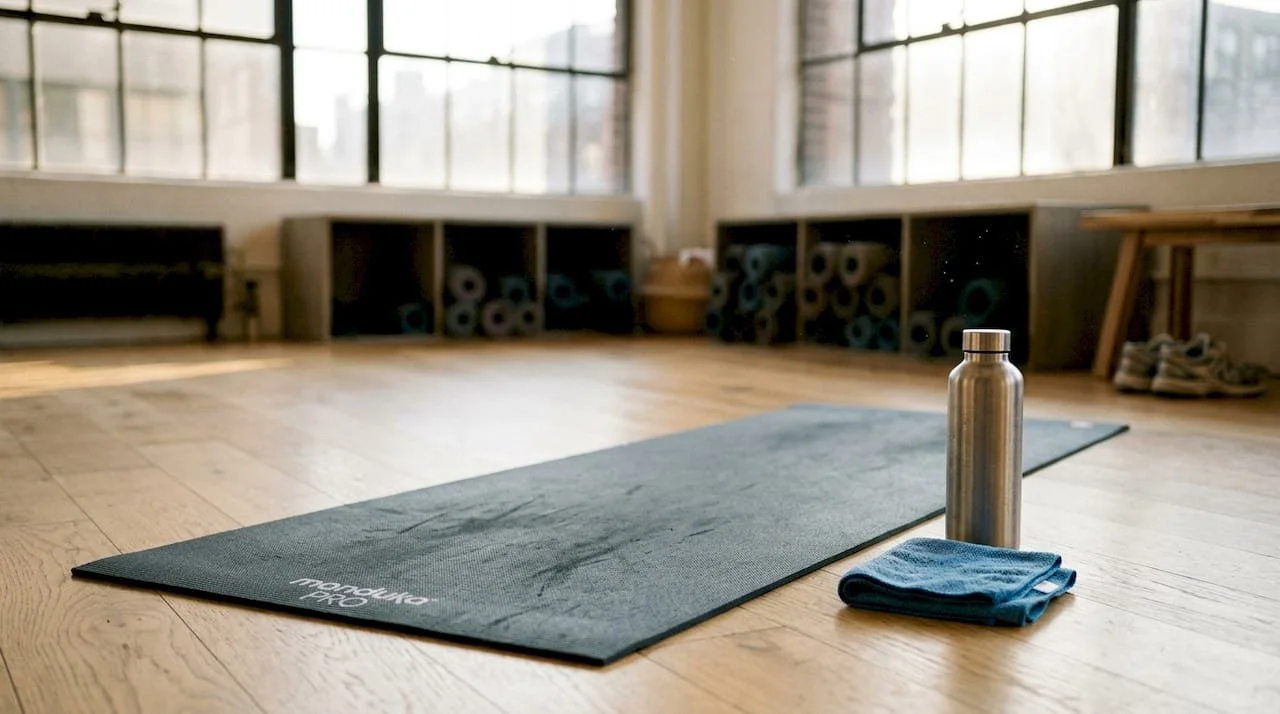
Building on those criteria, let's look at one of the most consistently recommended mats for all-around use. The Manduka PRO is rated top overall for comfort, durability, and support, and it earns that reputation.

Here's what makes it stand out:

  • 6mm cushioning: That extra thickness makes a real difference in long holds, seated poses, and any practice where your knees or wrists take pressure. It's the sweet spot for joint support without losing ground connection.

  • Exceptional lifespan: The Manduka PRO is built to last 15 to 20 years and comes with a lifetime warranty. That's a significant upfront cost justified over time.

  • Grip that improves: New Manduka PRO mats feel slick. This surprises a lot of people. The surface needs a break-in period, typically a few weeks of regular use or a salt scrub treatment. Once broken in, grip is excellent.

  • Weight: At 7.5 pounds, this mat is heavy. It's ideal for a home practice or a studio where you leave your mat. Carrying it across Philadelphia daily will get old fast.

  • Versatility: It works beautifully for vinyasa, Ashtanga, and restorative yoga. For hot yoga, pair it with a thin towel to manage sweat.

Pro Tip: During Philadelphia's humid summer months, wet a small microfiber towel and lay it over your Manduka PRO. The moisture actually activates grip on the mat's surface, making it perform better in sweaty conditions.

You can browse best mat roundups and a detailed PRO mat review to see how it compares across different practice styles. For full performance data, the full review data covers every benchmark in detail.

Jade Harmony and Lululemon The Mat: Grip and eco-friendly picks

For those prioritizing eco materials or supreme grip, here's how the Jade Harmony and Lululemon The Mat stack up against each other and against the Manduka PRO.

Jade Harmony highlights:

  • Made from natural rubber tapped from rubber trees, making it one of the most eco-friendly options available

  • 5mm thick, lighter than the Manduka PRO, easier to carry to class

  • Unbeatable dry grip, even without a break-in period

  • Works well for all yoga styles in dry conditions

  • Mediocre wet grip, so hot yoga practitioners may struggle without a towel

  • Attracts dust and pet hair, and may have a rubbery smell when new

Lululemon The Mat highlights:

  • Reversible design: one side offers more grip, the other more cushion

  • 5mm thick, comparable weight to Jade Harmony

  • Good for hot yoga in moderate sweat conditions

  • Wet grip scores around 4.5 out of 10, which is lower than expected for a premium mat

  • Easy to clean with a damp cloth

If you're a regular at hot yoga classes in Philadelphia, wet grip performance is the number you should care about most. Both mats perform better in dry conditions.

Feature Jade Harmony Lululemon The Mat
Material Natural rubber Polyurethane/rubber blend
Thickness 5mm 5mm
Dry grip Excellent Very good
Wet grip Fair Fair (4.5/10)
Eco-friendly Yes Partial
Reversible No Yes
Weight ~4.2 lbs ~4.9 lbs

For best mat for hot yoga recommendations, both mats benefit from a towel overlay when sweat is heavy. More detailed comparisons are available at more mat reviews.

At-a-glance: Yoga mat comparison for every style

Now that you've seen each mat's strengths, here's a quick side-by-side guide so you can match your practice to the right mat in seconds. Empirical benchmarks from user tests highlight how significantly mats differ in comfort and grip across real conditions.
Mat Thickness Grip (dry) Grip (wet) Weight Eco-friendly Best for
Manduka PRO 6mm Excellent (after break-in) Good with towel 7.5 lbs Partial Home studio, all styles
Jade Harmony 5mm Excellent Fair 4.2 lbs Yes Flow, yin, restorative
Lululemon The Mat 5mm Very good Fair 4.9 lbs Partial Hot yoga, travel
Gaiam Premium 5mm Good Poor 3.5 lbs No Budget, beginners
Liforme 4.2mm Excellent Very good 4.4 lbs Partial Hot yoga, alignment

How to use this table:

  1. Identify your primary practice style (flow, hot yoga, restorative, travel).

  2. Decide how much you care about eco-friendliness and portability.

  3. Match your priorities to the mat column that fits best.

  4. Cross-check grip rating against how much you sweat during class.
  5. Set your budget and pick the highest-performing mat within it.
For 2026 updates on new accessories that complement your mat choice, there's a full breakdown worth bookmarking.

Making the best choice for your practice in Philadelphia

With all the details in mind, here's how to finalize your choice and make it work for you in Philadelphia. There is no one-size-fits-all answer, and no Philly studio recommends a single mat; function for your specific style always comes first.

  • Joint support: If your knees or wrists need extra care, go 6mm or thicker. Manduka PRO is the obvious choice here.

  • Hot yoga: Test wet grip before committing. Liforme and Manduka GRP Adapt are purpose-built for sweat. Jade Harmony and Lululemon The Mat need a towel assist.

  • Eco priorities: Jade Harmony is the clearest choice. It uses sustainably sourced natural rubber and the company plants a tree for every mat sold.

  • Budget: Gaiam mats offer solid performance for beginners at a fraction of the price. They won't last as long, but they're a smart starting point.

  • Travel and commuting: Liforme and Lululemon The Mat are lighter and more packable. If you're heading to class across the city regularly, weight matters.

Pro Tip: Whenever possible, buy from a local Philadelphia yoga shop or studio retail space. You get expert advice, the ability to return if something doesn't work, and the chance to test the mat on a real floor before committing.

For more detailed buying advice tailored to different practice levels and styles, there's a helpful resource that covers common mistakes and overlooked factors.

Why there's no single 'best yoga mat' and what really matters

Every year, review sites publish definitive rankings. And every year, yogis buy the top-rated mat and feel disappointed. Here's the uncomfortable truth: no reviewer can account for your body, your studio's floor surface, your sweat rate, or where you are in your practice.

The mat that feels perfect for a seasoned Ashtanga practitioner in a climate-controlled studio may feel completely wrong for a beginner working through their first hot yoga class in South Philly in July. Your ideal mat will also change as you grow. What you need at month three of practice is rarely what you'll want at year three.

The most valuable thing you can do is borrow mats, try studio loaners, and test options at local shops before spending $150 online. Reading reviews is useful for narrowing your list, but it can't replace the physical experience of standing on a mat and moving through a few poses. For beginner yoga insight and tips from practitioners who have gone through this exact process, the community perspective is far more useful than any star rating.

Focus less on brand prestige and more on how your body feels after a full class. That's the only benchmark that matters.

Ready to enhance your practice? Explore more at Amrita Yoga & Wellness

Nothing in a review article replaces the feeling of rolling out a mat in a real class, surrounded by a supportive community, with an experienced instructor guiding your alignment. At Amrita Yoga & Wellness, we offer a full range of classes across styles, from hot yoga and vinyasa to restorative and barre, so you can discover what your body truly needs.

We also offer wellness experiences beyond the mat, including tarot and wellness sessions that support your mental and spiritual well-being alongside your physical practice. Whether you're a first-time student or a longtime practitioner looking to deepen your work, our Philadelphia studio is the place to find your footing. Come explore what we offer and let your practice lead the way.

Frequently asked questions

What's the best yoga mat for beginners?

The Jade Harmony is well-suited for beginners thanks to its immediate grip and comfortable 5mm cushion, while Gaiam mats offer a budget-friendly entry point. If you're ready to invest once and not replace it, the Manduka PRO's lifetime warranty makes it worth considering from day one.

Which yoga mat is best for hot yoga?

For hot yoga, prioritize wet grip above everything else. Hot yoga demands mats with strong wet grip, and options like Liforme or Manduka GRP Adapt are purpose-built for sweat-heavy sessions. If you already own a Manduka PRO, a thin microfiber towel over the surface solves most grip issues.

How thick should a yoga mat be?

A thickness of 4-6mm suits most practitioners, balancing cushion with a stable floor connection. If you experience knee or wrist discomfort, choose 6mm or thicker to reduce joint strain during longer holds.

Are eco-friendly yoga mats worth it?

Jade Harmony offers top dry grip along with sustainably sourced natural rubber, making it one of the best eco-friendly choices available. If environmental impact matters to you and your practice stays mostly dry, it's absolutely worth the investment.

Can I test yoga mats before buying in Philadelphia?

Yes. Philadelphia studios recommend testing mats locally before purchasing, and many shops allow you to stand on display mats or even try them in class. It's the single best way to avoid buyer's remorse on a premium mat.

Recommended

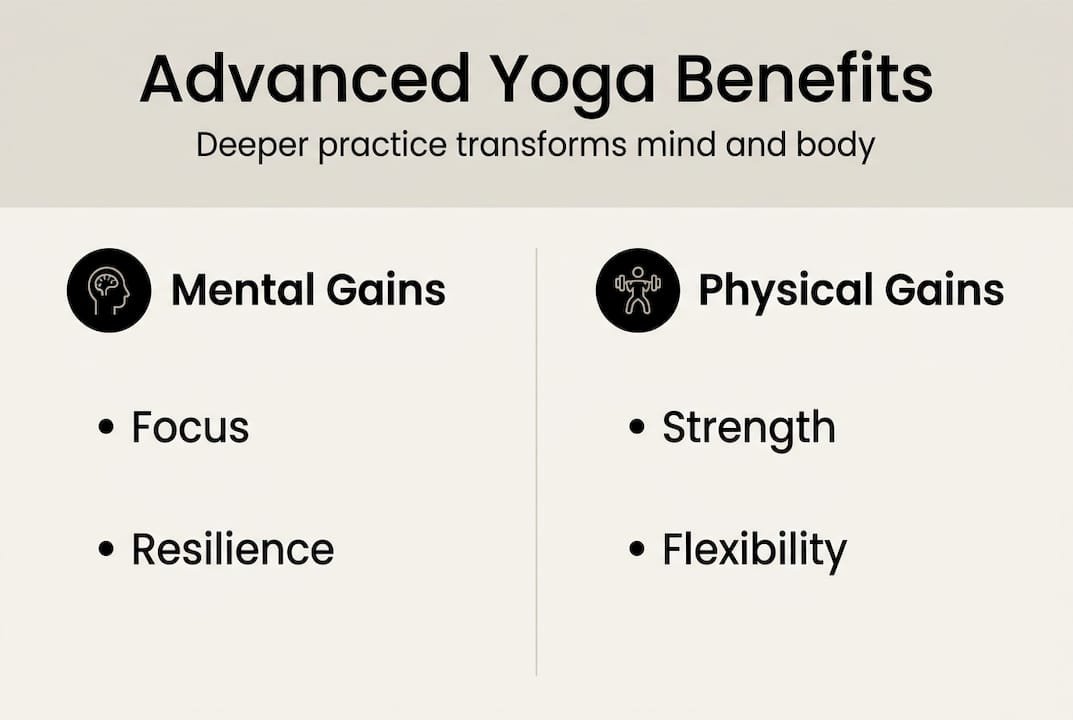
Advanced yoga benefits: why deeper practice transforms you

Heather Rice

TL;DR:

Long-term advanced yoga provides unique physical and psychological benefits through increased neural efficiency, strength, and emotional resilience.It involves complex movements, breath mastery, and sustained mental focus that deepen awareness and promote healthy aging.Practitioners should approach advanced yoga safely with proper guidance, gradual progression, and mindfulness to prevent injury and maximize growth.

Most experienced yogis assume the biggest gains happen early, when a beginner discovers they can finally touch their toes or hold Warrior II without shaking. But research tells a different story. Long-term practitioners who push into advanced territory continue to gain measurable physical and psychological benefits that simply are not available at earlier stages. If you have been practicing for years and wonder whether going deeper is worth the effort, the answer is a clear yes. This guide breaks down what advanced yoga actually does to your brain, your body, and your emotional life, with evidence to back it up.

Table of Contents

Key Takeaways

Point Details
Mind-body integration Advanced yoga unites mental focus, emotional regulation, and physical strength for holistic well-being.
Measurable benefits Long-term practice reduces stress, boosts flexibility, and enhances immune function, as confirmed by research.
Prioritize safety Prevent injury and sustain progress by practicing with patience, preparation, and expert guidance.
Sustainable growth Success in advanced yoga comes from incremental improvements and mindful consistency rather than achieving peak poses alone.

How advanced yoga goes beyond the basics

Advanced yoga is not just harder yoga. It is a qualitatively different experience that engages your nervous system, your breath, and your attention in ways that beginner and intermediate practice cannot replicate. Where a new student focuses on alignment and balance, an advanced practitioner works with subtle energy, breath retention (pranayama), and sustained mental focus under physical stress. The gap between intermediate and advanced is less about the pose itself and more about the depth of awareness you bring to it.

What makes a practice "advanced" generally includes:

  • Complexity: Multi-joint, multi-plane movements that require coordination across the whole body

  • Strength and stamina: Sustained holds, inversions, and arm balances that demand real muscular endurance

  • Breath mastery: Precise control of inhale, exhale, and retention under load

  • Mental challenge: Staying present and composed when the body is at its limit

  • Integration: Combining asana, pranayama, and meditation into a unified experience

Long-term advanced yoga leads to neural and physiological gains, including measurable changes in brain efficiency and body regulation that accumulate over years of dedicated practice. This is not about performing for an audience. It is about building a richer, more resilient version of yourself.

Here is a quick comparison of what shifts as you move through the levels:

Dimension Beginner/Intermediate Advanced
Posture focus Alignment basics Breath-integrated precision
Strength demand Moderate High, sustained
Mental engagement Concentration Sustained mindfulness under stress
Breath work Basic cues Pranayama with retention
Recovery awareness Minimal Active, intentional

The key insight here is that mastery is not a destination. It is an ongoing process of adaptation. Each new challenge your body and mind face creates new neural pathways and physiological responses. Exploring group practice options alongside other advanced practitioners accelerates this process, since the collective energy of a room pushes you further than solo practice often can. Structured formats like Iyengar classes are especially valuable here because they build precision and body awareness in a systematic, evidence-informed way.

Mental benefits: focus, discipline, and emotional strength

The psychological rewards of advanced yoga are where many practitioners are most surprised. You already know yoga reduces stress. But at the advanced level, the mental gains become more specific and more powerful.

Advanced sequences demand that you hold your attention on a single point while your body is working hard. That is a form of cognitive training. Over time, it sharpens your ability to focus in everyday life, whether you are in a difficult meeting, navigating a stressful conversation, or simply trying to sleep. Mental benefits of advanced yoga include reduced stress, improved mood, and stronger emotional regulation, all documented in practitioners with long-term experience.

"Staying with discomfort on the mat is one of the most direct ways to build the emotional muscle you need off the mat."

Here is how the mental transformation tends to unfold for advanced practitioners:

  1. Increased tolerance for discomfort: Holding a challenging pose teaches you that discomfort is temporary and survivable.

  2. Sharper present-moment awareness: Advanced breath work anchors you in the now, reducing rumination.

  3. Greater emotional regulation: The discipline of practice carries over into how you respond to frustration, anxiety, and grief.

  4. Stronger self-trust: Achieving a difficult pose builds a quiet confidence that transfers to other areas of life.

  5. Reduced reactivity: Long-term practitioners often report that situations that used to trigger them simply no longer do.

Think about a time when life threw something genuinely hard at you. Advanced practitioners consistently report that their yoga training gave them a resource, a way to breathe through it, to stay present instead of spiraling. That is not a small thing. That is a life skill.

Pro Tip: Before you begin a complex asana sequence, take 60 seconds to set a specific mental intention. Not "I want to nail this pose" but something like "I want to stay curious when it gets hard." This reframes the session as mental training, not just physical performance.

If you want to track your own psychological progress, checking in with the monthly experience schedule helps you build consistency, which is the single biggest driver of mental gains.

Physical rewards: flexibility, strength, and longevity

While the psychological shifts are remarkable, the physical gains from advanced yoga can't be overlooked. And the data here is genuinely striking.

Physical and physiological improvements after long-term yoga practiceinclude reduced muscle stiffness, improved elasticity, better circulation, and stronger parasympathetic tone, meaning your nervous system gets better at rest and recovery. These are not soft outcomes. They are measurable, functional improvements that affect how you age.

Key physical benefits documented in long-term advanced practitioners:

  • Improved joint mobility: Regular deep stretching and load-bearing maintains cartilage health and range of motion

  • Greater muscle elasticity: Reduced stiffness means less injury risk and faster recovery

  • Parasympathetic activation: Your body spends more time in rest-and-digest mode, supporting immune function

  • Better circulation: Dynamic sequences and inversions improve blood flow throughout the body

  • Healthy aging markers: Long-term practitioners show slower decline in balance, coordination, and bone density

Here is a look at how benefits accumulate over time:

Timeframe Key physical changes
0 to 3 months Improved flexibility, initial strength gains
3 to 6 months Reduced muscle stiffness, better posture
6 to 12 months Measurable parasympathetic improvements, immune support
1 year and beyond Healthy aging markers, sustained joint mobility

Pro Tip: Pair your advanced sessions with intentional active recovery. Gentle yin yoga, restorative poses, or even mat Pilates integration on off days keeps connective tissue healthy and prevents the overuse patterns that sideline even experienced practitioners.

Staying safe: common pitfalls and injury prevention

As you aim for new thresholds, it is wise to balance ambition with awareness and safety best practices. Advanced yoga carries real risks if approached carelessly. The complexity that makes it rewarding also makes it easier to push past your body's actual limits.

Mitigating injury risks in advanced yoga practice requires patience, proper preparation, and conscious progression. That is not a warning to slow down. It is a framework for going further without breaking down.

Five principles every advanced practitioner should follow:

  1. Warm up with intention: Cold muscles and connective tissue do not respond well to deep loading. Spend at least 15 minutes preparing the specific areas you will challenge.

  2. Progress gradually: Adding one new element at a time, whether depth, duration, or complexity, gives your body time to adapt.

  3. Listen to sharp signals: Dull fatigue is normal. Sharp, localized pain is a stop sign, not a challenge to push through.

  4. Seek qualified instruction: Even experienced practitioners benefit from expert eyes. A skilled teacher catches compensations you cannot see yourself.

  5. Rest as part of the practice: Recovery is not optional. It is where adaptation actually happens.

Philadelphia has a strong community of qualified yoga instructors who understand the specific demands of advanced practice. Working with professionals in a structured environment is one of the most effective ways to keep progressing safely. For a deeper look at managing risk in specific formats, the guide on aerial yoga safety offers practical principles that apply broadly to any advanced discipline.

Pro Tip: Keep a yoga journal. Log what you practiced, how your body felt, and any areas of tension or discomfort. Patterns emerge over weeks that are invisible in the moment, and catching a recurring strain early is far better than treating an injury later.

What most practitioners overlook about advanced yoga

Here is something we have observed consistently: the practitioners who get the most out of advanced yoga are rarely the ones chasing the most impressive poses. They are the ones paying attention to what is happening underneath.

The real transformation in advanced practice is not about finally landing a handstand. It is the shift in how you perceive yourself, how you respond to challenge, and how your relationship with your own body evolves over years. That is subtle. It does not photograph well. But it is the change that actually lasts.

Many practitioners get stuck in a performance mindset, measuring progress by what they can do rather than who they are becoming. The cumulative wisdom of a long practice, the ability to stay grounded, to recover quickly, to feel genuinely at home in your body, is worth far more than any single peak pose.

Philadelphia's yoga community offers something rare: a culture of genuine inquiry and shared growth. Showing up consistently for community practice creates accountability and connection that makes the subtle work easier to sustain. That is where the real advanced practice lives.

Deepen your yoga journey with Amrita Yoga & Wellness

Ready to bring these insights from knowledge into practical, fulfilling transformation?

At Amrita Yoga & Wellness, we offer advanced group classes, private sessions, and specialized workshops designed for practitioners who are ready to go deeper. Whether you want structured progression, personalized guidance, or a supportive community to practice alongside, we have a path for you. Beyond yoga, our offerings include holistic wellness experiences like Tarot readings that complement the reflective, inward work of advanced practice. Philadelphia's most dedicated yogis call this studio home, and we would love to support the next chapter of your journey.

Frequently asked questions

What are some scientific benefits of advanced yoga?

Long-term advanced yoga leads to neural and physiological gains, including improved brain efficiency, better emotional regulation, and greater physiological flexibility. These benefits are documented in practitioners with years of consistent advanced practice.

How long does it take to see benefits from advanced yoga?

Noticeable changes in flexibility, mental focus, and stress often appear within 3 to 6 months of regular advanced practice. Six-month studies report reduced muscle stiffness and measurably improved muscle elasticity in consistent practitioners.

Can advanced yoga help with stress management?

Yes. Advanced yoga supports stress reduction and emotional stability by training the nervous system to regulate more effectively under pressure. The effects compound the longer you practice.

Are there risks to practicing advanced yoga without guidance?

Practicing advanced yoga without professional guidance significantly increases the risk of strain and injury. Proper preparation and guidance reduce injury risk and help you progress sustainably rather than setting yourself back.

Recommended

Why alignment matters in aerial yoga: key benefits

Heather Rice

TL;DR:

Proper alignment enhances safety, flexibility, and mental well-being in aerial yoga.Consistent practice with instructor feedback improves posture and structural alignment over time.Mastering foundational positions builds confidence and long-term progress beyond advanced poses.

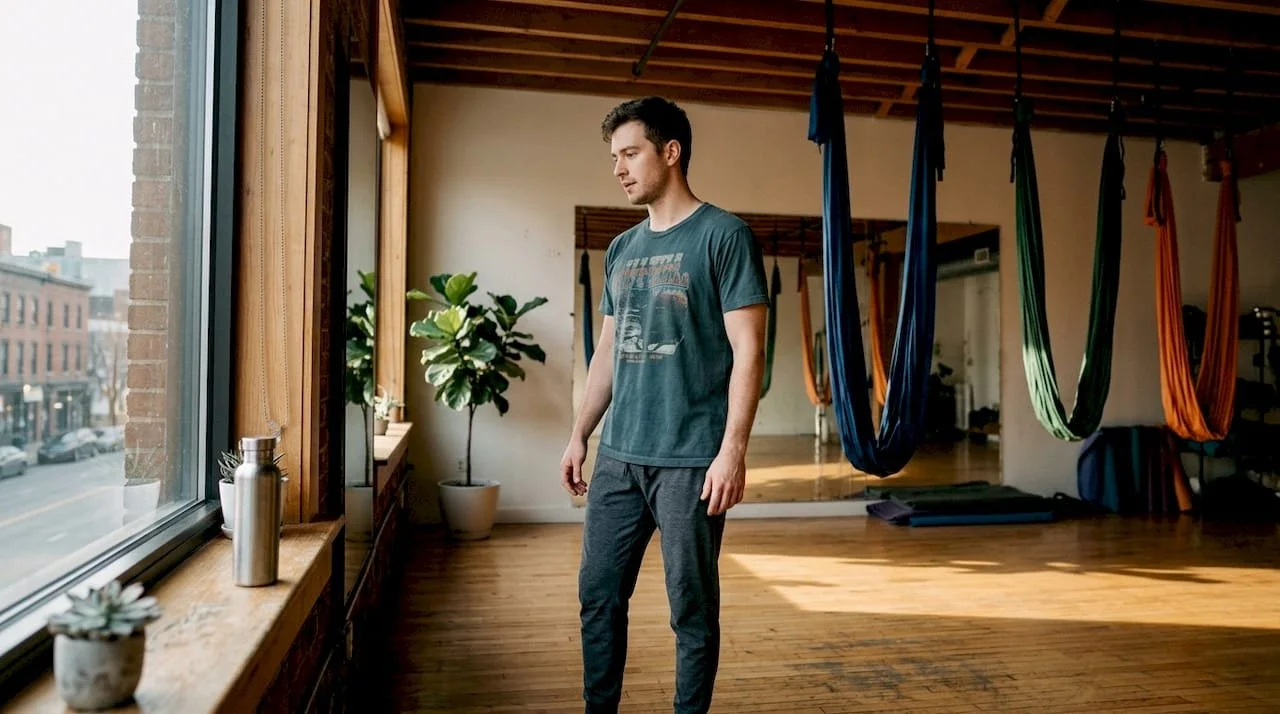
Most people walk into their first aerial yoga class thinking the goal is to nail that perfectly inverted split they saw on social media. The hammock looks like a prop for acrobatics, not a tool for deep body awareness. But here's what actually separates practitioners who thrive from those who plateau or get hurt: alignment. Getting your joints stacked, your core engaged, and your body positioned correctly in the fabric changes everything. It boosts safety, accelerates flexibility gains, and transforms aerial yoga from a party trick into a genuine practice for physical and mental well-being.

Table of Contents

Key Takeaways

Point Details
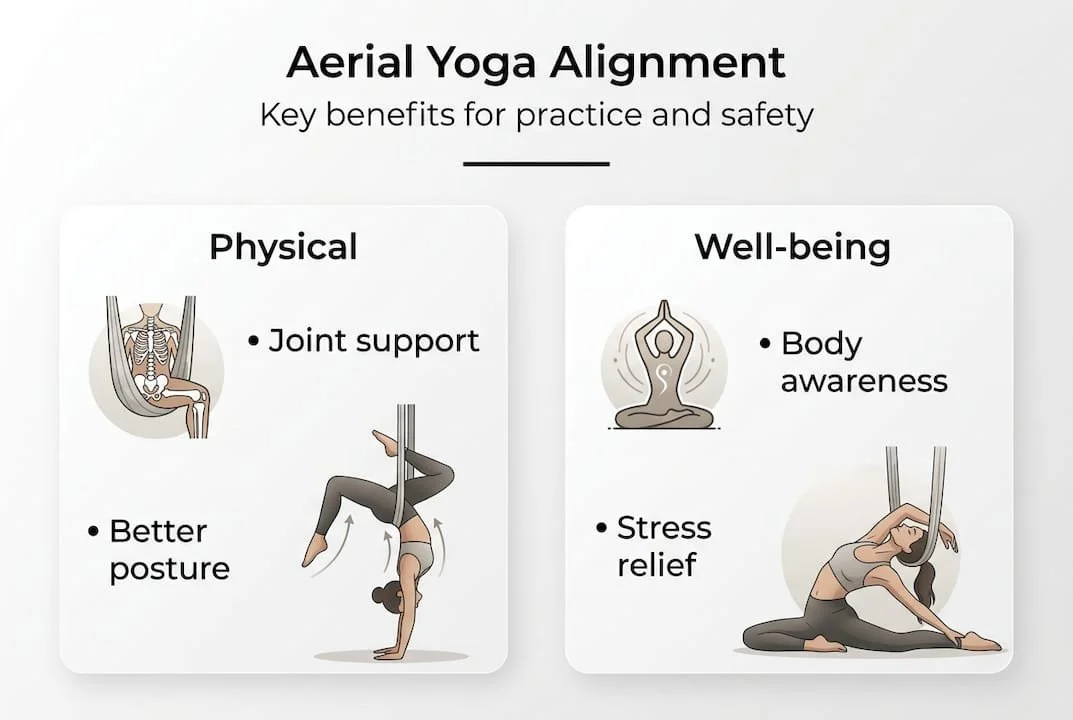
Alignment is foundational Proper alignment in aerial yoga boosts safety, posture, and flexibility for lasting well-being.
Results require consistency Regular, mindful practice delivers noticeable alignment and flexibility improvements over time.
Feedback accelerates progress Using instructor input and self-assessment tools builds awareness and confidence in every session.
Basics beat complexity Mastering basic alignment provides the greatest long-term benefits, more than advanced poses alone.

What does alignment mean in aerial yoga?

Alignment in aerial yoga is not just about standing straight. It means maintaining proper joint stacking, activating core stabilization, and placing your body thoughtfully within the hammock so every pose works with your anatomy rather than against it.

In traditional mat yoga, the floor gives you constant feedback. You feel when your foot rolls in or your hips shift. In aerial yoga, the hammock removes that stable reference point. You are suspended, which means small misalignments get amplified. A slightly rotated hip on the mat is a minor issue. The same rotation mid-air can strain your lower back or throw your entire posture off balance.

Here are some of the most common misalignments instructors see in aerial yoga classes:

  • Shoulders creeping up toward the ears during inversions

  • Hips tilting forward or backward instead of staying neutral

  • Knees collapsing inward during standing or seated hammock poses

  • Gripping the fabric with tension instead of using controlled engagement

  • Letting the lower back arch excessively when the core is not activated

Each of these seems small in isolation. Together, they add up to discomfort, reduced range of motion, and a higher risk of injury over time.

The hammock actually intensifies the need for alignment because it supports your body weight unevenly if you are not positioned correctly. Gravity pulls on whatever part of you is heaviest or most extended. Without proper alignment, the hammock becomes a source of strain rather than support.

Yoga studies show improved posture, muscle elasticity, and reduced pain in spinal conditions with consistent practice, pointing to the real structural benefits alignment-focused movement can deliver.

Think of alignment as the grammar of aerial yoga. You can string words together and sort of communicate, but without grammar, the message breaks down. Alignment is what makes every pose coherent and effective. Exploring strengthening moves for total body power alongside alignment work builds a practice that is both powerful and sustainable.

How alignment shapes safety and well-being

Proper alignment is your first line of defense against injury in aerial yoga. When your body is stacked correctly, your joints share the load evenly. When it is not, specific joints and muscles absorb more stress than they are designed to handle.

Here is a practical sequence of alignment checks to run through before and during any aerial yoga session:

  1. Ground your breath first. Before entering the hammock, take two slow breaths to activate your parasympathetic nervous system and prepare your body for mindful movement.

  2. Check your hip position. Neutral hips are the foundation of most aerial poses. Tuck or tilt, and everything above and below shifts out of balance.

  3. Engage your core lightly. Not a crunch, just a gentle drawing in of the lower abdomen. This protects your lumbar spine throughout the session.

  4. Soften your shoulders. Roll them back and down before entering any pose. Tension here transfers directly to your neck and upper back.

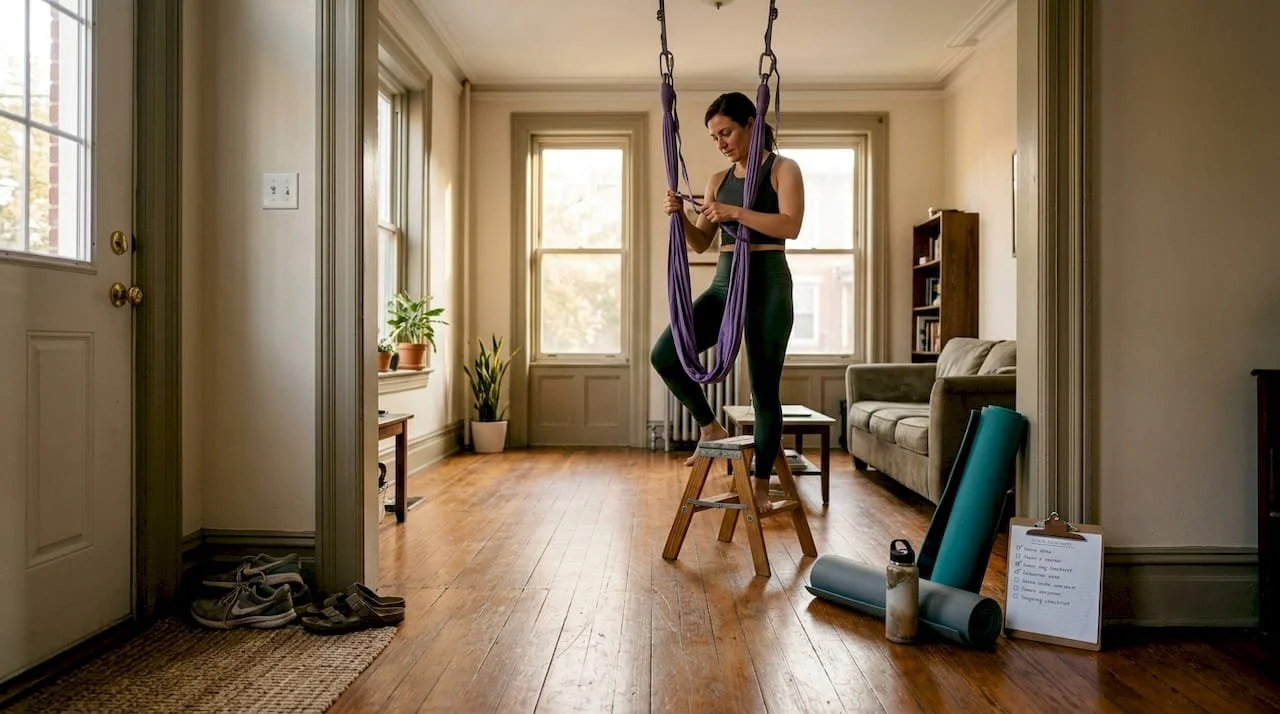
  5. Confirm your hammock placement. The fabric should sit at the correct point on your body for the specific pose, whether at the hips, waist, or mid-back.

When you distribute your body weight correctly through these checks, you protect your joints and allow the hammock to do what it is designed to do: support and decompress.

Research on yoga's effect on posture confirms that consistent practice reduces muscle stiffness and improves structural alignment over time. Specifically, 6-month yoga practice reduced trapezius and hamstring muscle stiffness while improving posture, two areas aerial yoga practitioners commonly struggle with.

Pro Tip: Before attempting any advanced aerial move, ask your instructor to physically check your alignment. A two-second correction from an experienced eye can prevent weeks of recovery from a preventable strain.

The mental well-being benefits are just as real. When your body feels safe and supported in the hammock, your nervous system relaxes. Anxiety about falling or hurting yourself drops. You breathe more deeply. That is when the meditative quality of aerial yoga kicks in, and you get both the physical and mental payoff in a single session. For a thorough breakdown of staying safe in the air, the aerial yoga safety guide is a solid resource to bookmark.

Key alignment principles: What to focus on mid-air

Knowing alignment matters is one thing. Knowing exactly what to focus on during a session is another. Here are the core principles to keep in mind every time you step into the hammock.

Core areas to focus on:

  • Core engagement: Your deep abdominal muscles should be gently active throughout every pose. This is not about holding your breath or tensing up. It is about creating a stable center from which your limbs can move freely.

  • Neutral spine: Avoid over-arching or over-rounding your back. A neutral spine keeps your vertebrae in their natural curves and reduces compression.

  • Relaxed shoulders: Shoulders that creep up toward your ears create neck tension and limit your range of motion. Consciously drop them before and during each pose.

  • Aligned hips and knees: In any standing or seated aerial position, your knees should track over your toes and your hips should be level unless the pose intentionally calls for rotation.

Self-checking alignment mid-practice takes some training, but it becomes second nature quickly. Before entering a pose, mentally scan from your feet to your head. While in the pose, notice where you feel strain versus ease. Strain often signals misalignment. Ease, combined with appropriate muscle engagement, signals you are in the right position.

Every aerial yoga pose has specific alignment cues that maintain safe joint stacking and healthy extension. Your instructor will often call these out verbally, but internalizing them means you can self-correct even when no one is watching.

Consistent practice yields measurable posture and flexibility gains, making alignment-focused sessions one of the most efficient investments you can make in your overall well-being.

Pro Tip: Record a short video of yourself during practice once a month. Watching your own movement from the outside reveals misalignments that are nearly impossible to feel in the moment.

For building the strength that supports lasting alignment, the resources on lasting flexibility tips and training tips offer practical next steps you can apply right away.

Comparing alignment progress: Visual cues and feedback loop

Progress in alignment is not always dramatic. It shows up in subtle ways, and learning to recognize those signs keeps you motivated and on track.

Here is a comparison of what misaligned versus well-aligned practice looks and feels like:

Area Before alignment focus After alignment focus
Body lines in poses Uneven, crooked, or collapsed Clean, extended, symmetrical
Ease of holding positions Fatigues quickly, lots of gripping Controlled, sustainable effort
Comfort during practice Pinching, strain, or discomfort Supported, open sensation
Post-class soreness Sharp or joint-based pain Healthy muscle fatigue only
Breathing quality Shallow, held, or irregular Deep, steady, and rhythmic

The shift from the left column to the right does not happen overnight. It builds over weeks and months of deliberate practice.

Best ways to gather and use alignment feedback:

  • Ask your instructor for a quick alignment check at the start of class

  • Use a mirror when available to observe your body lines in real time

  • Partner with a classmate to give each other visual feedback on symmetry

  • Keep a short practice journal noting where you felt ease or strain

  • Review recorded videos monthly to spot patterns in your movement

Philadelphia studios like Amrita Yoga & Wellness often use spotters and verbal cues during class to help students assess their progress. This kind of guided feedback loop accelerates improvement far faster than solo practice alone.

Women with spinal disorders reported overall postural enhancement through yoga studies, which reinforces how structural feedback and consistent practice combine to create real, lasting change.

Incremental change is the signal that your practice is working. You do not need to nail a perfect inversion to prove progress. Holding a pose two seconds longer, breathing more smoothly, or feeling less tension in your neck are all meaningful wins. For a roadmap on what comes next as your alignment improves, the guide on how to advance in aerial yoga lays out a clear progression path.

A real-world view: Mastery means loving the basics

Here is something the aerial yoga world does not say loudly enough: chasing advanced poses before your alignment is solid is not ambition. It is impatience, and it costs you.

Experienced practitioners know that the practitioners who progress fastest are not the ones drilling the hardest inversions. They are the ones who obsess over their hip position in a basic hammock squat. They feel the difference between a spine that is neutral and one that is slightly extended. That body awareness is the real skill, and it transfers to every pose you will ever attempt.

Beginners often think confidence in aerial yoga comes from doing harder moves. It does not. It comes from trusting your body because you understand how it moves. That trust is built through mastering foundational moves with precision, not rushing past them.

Alignment is not a milestone you reach and move on from. It is a mindset you bring to every single session. The practitioners who treat it that way are the ones still practicing joyfully years later, without chronic injuries or burnout. Celebrate the subtle wins. They are the whole point.

Ready to deepen your aerial yoga journey?

If this article has you thinking about your own alignment habits, the next step is practicing in an environment designed to support that growth.

At Amrita Yoga & Wellness, our Philadelphia studio offers aerial yoga classes led by experienced instructors who prioritize alignment from day one. Whether you are brand new to the hammock or looking to refine your practice, our welcoming community and well-equipped space give you the feedback and support you need to progress safely. Beyond aerial yoga, you can also explore tarot readings and other wellness offerings that complement your physical practice. Come experience what alignment-focused aerial yoga feels like in person.

Frequently asked questions

Can aerial yoga help correct posture issues?

Yes, consistent aerial yoga with an alignment focus can improve posture and reduce muscle stiffness. Yoga improves posture and muscle elasticity with regular practice, and aerial yoga builds on those same principles with the added benefit of spinal decompression.

Is instructor feedback important for alignment in aerial yoga?

Instructor feedback is essential for safe alignment and steady progress. The aerial yoga safety guide highlights how instructor-led corrections help students avoid common mistakes and build good movement habits from the start.

How quickly can alignment improvements be seen?

Some gains, like improved flexibility or reduced tension, can appear within a few weeks of consistent practice. Bigger structural changes, like posture correction, build over months, as 6-month yoga studies on stiffness and posture confirm.

What's the biggest beginner mistake in aerial yoga alignment?

Skipping foundational alignment cues to attempt harder poses too soon is the most common and costly beginner mistake. It slows progress and increases injury risk significantly.

Recommended

Aerial yoga equipment checklist: safe & effective practice

Heather Rice

TL;DR:

Proper load-rated equipment and professional installation are essential for safe aerial yoga practice.Regular inspections, maintenance, and adherence to safety standards reduce injury risk significantly.Community resources and expert guidance in Philadelphia support safe and confident practice.

Aerial yoga is one of the most physically rewarding practices you can try, but it carries real risks when the setup is wrong. A torn hammock, an improperly anchored rigging point, or a ceiling that can't handle dynamic loads can turn a peaceful session into a serious injury. Many practitioners, both beginners and experienced movers, skip crucial steps because the gear looks fine or the setup "worked last time." This guide gives you a complete, step-by-step equipment checklist built around real safety standards, so you can practice with confidence whether you're at home in Philadelphia or walking into a studio for the first time.

Table of Contents

Key Takeaways

Point Details
Prioritize safety first Professional installation, correct load ratings, and regular checks are non-negotiable for a safe aerial yoga setup.
Use a complete gear checklist Every aerial yoga practitioner needs the right equipment and setup for their specific space and experience level.
Inspect and maintain regularly Pre-use inspection and periodic cleaning help prevent the majority of injuries and keep equipment in top condition.
Consult local experts Philadelphians can access studios like Amrita Yoga & Wellness for professional guidance, setup support, and ongoing safety.

Understand aerial yoga safety essentials

Before you gather equipment, it's crucial to understand the standards your setup must meet. Aerial yoga isn't like floor yoga. Every piece of gear is load-bearing, and the forces involved are far greater than your body weight alone. When you swing, invert, or drop into a pose, you create what engineers call dynamic load, which can be two to three times your static weight in an instant.

"Safety standards require professional installation, regular inspections, and equipment rated 3x user weight to protect practitioners at every level."

Here's what every safe aerial yoga setup must include:

  • Load capacity: Your rigging system, anchor points, and hammock must all be rated for at least three times your body weight. A 150-pound person needs gear rated for at least 450 pounds minimum.

  • Certified equipment: Look for CE or TUV certifications on all hardware. These marks confirm the product has been independently tested.

  • Structural integrity: The ceiling beam or mounting surface must be inspected by a professional before installation, not just eyeballed.

  • Professional installation: Even if you're handy, a licensed rigger or structural engineer should sign off on your anchor points.

  • Local compliance: In Philadelphia, home and studio installations must follow both Pennsylvania building codes and any local Philadelphia ordinances related to structural modifications.

Studios like Amrita Yoga & Wellness in Philadelphia set the standard here. They use professionally installed equipment, conduct regular inspections, and ensure every setup meets load requirements before a single class begins. That's the benchmark to hold yourself to.

If you're new to the practice, reviewing a solid aerial yoga safety guide before purchasing anything is a smart first move. It's also worth understanding aerial yoga contraindications, which are the physical conditions that may make certain aerial movements risky for you specifically.

Pro Tip: Never assume a ceiling joist can hold your weight just because it looks solid. A structural engineer can assess load capacity in under an hour, and that one-time cost is far cheaper than an ER visit.

Build your aerial yoga gear checklist

Now that you know the safety requirements, let's list out every piece of equipment you need for a reliable setup. Whether you're building a home rig in a Philadelphia row house or outfitting a dedicated studio space, the core list stays the same.

Essential equipment breakdown:

  • Aerial hammock or silk: Choose a hammock rated for at least 300 to 600 pounds. Nylon and tricot fabric are the most common. Nylon is more durable; tricot is softer on skin.

  • Rigging hardware: This includes carabiners (rated to at least 20kN), swivel hooks, and daisy chains or extension straps. All hardware must be climbing-grade or aerial-specific.

  • Ceiling anchor or mount: A steel ceiling mount bolted into a structural beam is the gold standard. Portable freestanding rigs are an option when ceiling installation isn't possible.

  • Yoga mat: Placed directly beneath the hammock for landing safety. Non-slip, at least 5mm thick.

  • Crash mat or foam pad: Especially important for beginners or anyone learning inversions. Place it under and around your practice area.

  • Safety scissors: Keep a pair nearby to cut fabric in an emergency.

  • Chalk or grip aid: Optional, but helpful for maintaining control during longer holds.

Setting Ceiling height needed Clearance space Rig type
Home (ideal) 9 to 10 feet 5 to 6 feet radius Ceiling mount
Home (minimum) 8 feet 5 feet radius Ceiling or portable rig
Studio 10 to 14 feet 6+ feet radius Professional ceiling mount
Outdoor/portable Variable 6+ feet radius Freestanding rig

Studios in Philadelphia use pro-installed equipment and recommend engineer consults for home rigs, which tells you something important: even the professionals don't skip this step.

For Philly practitioners with older homes or lower ceilings, a portable freestanding rig is a legitimate option. Just confirm it's rated for dynamic loads, not just static weight. Explore aerial yoga best practices to understand how different rig types perform under real movement conditions.

Pro Tip: Measure your ceiling height before buying anything. An 8-foot ceiling is workable, but you'll need a lower hammock mount and should avoid deep drops or swinging poses until you're in a taller space.

Step-by-step setup for safe practice

With everything on your checklist, it's time to put it all together for a safe start. Follow these steps every single time you set up, not just the first time.

  1. Inspect the anchor point. Before attaching anything, visually check your ceiling mount or structural beam for cracks, rust, or looseness. Tug the mount firmly with both hands.

  2. Attach rigging hardware. Connect your carabiner and swivel to the anchor point. Gate-check every carabiner by twisting and pulling to confirm it's locked.

  3. Hang the hammock. Loop the hammock through the rigging at your desired height. For beginners, hip height is a safe starting point.

  4. Test the load gradually. Sit in the hammock before standing or inverting. Apply weight slowly and listen for any creaking or movement in the anchor.

  5. Set up your mat and crash pad. Place your yoga mat directly under the hammock. Add a crash mat for any inversion or drop work.

  6. Clear the space. Remove furniture, sharp objects, and anything within your 5 to 6 foot clearance radius.

  7. Run a pre-session check. Scan the fabric for tears, check all hardware connections, and confirm the hammock hangs evenly.

Situation Adjustment needed
Low ceiling (8 ft) Lower mount, avoid swinging, use portable rig
Children practicing Extra crash mats, lower hammock height, adult supervision
Practitioner with injury Medical consult first, avoid inversions, studio guidance
First-time setup Have a second person present, go slow on load testing

Edge cases like low ceilings, setups for kids, and practice with injuries all require specific adjustments that go beyond the standard setup. Never rush these situations. Review aerial yoga setup tips for detailed guidance on each scenario.

Pro Tip: If your hammock hangs unevenly after setup, don’t just adjust by eye. Use a measuring tape to confirm both sides are at equal height from the floor. An uneven hang shifts your center of gravity and increases fall risk.

Edge cases like low ceilings, setups for kids, and practice with injuries all require specific adjustments that go beyond the standard setup. Never rush these situations. Review aerial yoga setup tips for detailed guidance on each scenario.

Pro Tip: If your hammock hangs unevenly after setup, don't just adjust by eye. Use a measuring tape to confirm both sides are at equal height from the floor. An uneven hang shifts your center of gravity and increases fall risk.

Inspect, maintain, and troubleshoot your setup

Once your setup is complete, ongoing maintenance is key to long-term safety and performance. Most aerial yoga accidents don't happen on day one. They happen weeks or months later, when gear starts to wear and inspections get skipped.

What to check before every session:

  • Run your hands along the full length of the hammock fabric, feeling for thin spots, small tears, or fraying at the edges.

  • Inspect all carabiners and swivel hooks for rust, deformation, or gate issues.

  • Check the ceiling mount or anchor for any movement, new cracks, or signs of stress.

  • Confirm the hammock hangs at the same height as your last session. A drop in height can signal a loosening anchor.

  • Look at the stitching on hammock loops and daisy chains. Pulled threads are an early warning sign.

"Regular inspections reduce injury risk by 35%; wash gear every 4 to 6 weeks and schedule annual professional checks to keep your setup performing safely."

For cleaning, hand wash your hammock in cold water with a mild detergent every 4 to 6 weeks, or more often if you practice frequently. Air dry only. Machine washing can weaken fabric fibers over time, and heat from a dryer accelerates breakdown.

Know when to retire gear. If you see any of these, stop using the equipment immediately: visible tears in the fabric, bent or cracked carabiners, a swivel that no longer rotates smoothly, or any anchor point that has shifted position. No amount of patching or tightening makes compromised gear safe again.

For troubleshooting common issues, an uneven mount usually means one anchor point has shifted or the hammock loops are set at different heights. Mat slippage is typically solved by switching to a higher-grip mat surface or placing a non-slip underlay beneath it.

Philadelphia practitioners can lean on local studios for annual professional inspections. Many studios, including those in the Amrita Yoga & Wellness community, connect students with trusted riggers. Check out dedicated aerial yoga safety tips and resources on aerial yoga risks to stay current on best practices.

Our perspective: why aerial yoga safety is personal

Here's something most aerial yoga content won't tell you: checklists aren't just for beginners. In fact, the practitioners who get hurt most often are the ones who've been doing this long enough to feel comfortable skipping steps.

Complacency is the real enemy. Dynamic loads far exceed static weight calculations, and most accidents occur due to skipped inspections or misguided DIY shortcuts, not inexperience. That's a critical distinction. It means experience alone doesn't protect you. Process does.

We believe the checklist mindset is actually a form of respect for the practice. Every time you run through your pre-session inspection, you're honoring the seriousness of what you're doing. It keeps you present before you even get into the hammock.

Philadelphia practitioners have a genuine advantage here. The local studio community, anchored by spaces like Amrita Yoga & Wellness, offers access to experienced instructors, trusted riggers, and a culture of shared Philadelphia safety lessons that you simply can't replicate from a YouTube tutorial. Use that community. It's one of the best resources you have.

Start your aerial yoga journey with expert guidance

Ready to take everything you've learned and bring your aerial yoga goals to life?

Amrita Yoga & Wellness in Philadelphia offers aerial yoga classes led by experienced instructors who prioritize your safety from the very first session. Whether you want to try a class before committing to a home setup, or you need a professional consultation for your own rigging installation, the team at Amrita is ready to help. You can also explore complementary wellness options like acupuncture services to support recovery and flexibility, or unwind with tarot readings as part of a broader self-care practice. Your next step toward safe, confident aerial yoga starts here.

Frequently asked questions

What is the minimum ceiling height for home aerial yoga in Philadelphia?

The minimum recommended ceiling height is 8 feet, but 8 to 10 feet with clearance of 5 to 6 feet around the hammock is ideal for safe, full-range movement.

Can I install aerial yoga equipment myself, or do I need a professional?

Professional installation is strongly recommended for all home setups, since a licensed rigger or structural engineer can confirm your ceiling can safely handle dynamic loads during practice.

How often should I check or replace my aerial yoga hammock?

Inspect the hammock before every session and wash it every 4 to 6 weeks. Replace it immediately at the first sign of fraying, tears, or thinning fabric, since routine maintenance cuts injury risk significantly.

Is aerial yoga safe for children or people with medical conditions?

Children need lower rigging, extra crash mats, and constant adult supervision, while anyone with a medical condition or injury should get a doctor's clearance and start in a supervised studio setting before practicing at home.

Recommended

Restorative yoga: stress relief & wellness benefits explained

Heather Rice

TL;DR:

Restorative yoga focuses on deep relaxation and recovery using props and sustained poses. It effectively reduces stress, improves flexibility, and enhances emotional well-being. Many Philadelphia studios offer accessible, beginner-friendly restorative classes suitable for all abilities.

Many Philadelphians assume yoga has to be physically demanding to actually work. If you're not sweating through a Vinyasa flow or holding a warrior pose until your legs shake, is it even worth your time? That assumption keeps a lot of people away from one of the most effective wellness practices available. Restorative yoga is slow, supported, and deeply calming, and research backs up its ability to reduce stress, improve flexibility, and support emotional balance. Whether you're brand new to yoga or simply looking for something gentler on your body, this guide walks you through what restorative yoga is, how it compares to other styles, and where to find it right here in Philadelphia.

Table of Contents

Key Takeaways

Point Details
Gentle and inclusive Restorative yoga welcomes all levels and is perfect for those seeking low-impact wellness in Philadelphia.
Deep stress relief Regular restorative yoga practice significantly reduces stress and helps calm the mind and body.
Holistic health benefits This style boosts flexibility, sleep, and emotional balance, supporting both physical and mental wellbeing.
Local access and support Philadelphia offers a range of beginner-friendly restorative yoga options at reputable wellness studios.

Understanding restorative yoga: Gentle path to holistic health

Restorative yoga is a style of yoga that prioritizes rest, recovery, and deep relaxation over physical exertion. Unlike faster-paced classes, restorative yoga uses props like bolsters, blankets, and blocks to fully support your body in each pose. You hold those poses for several minutes at a time, which allows your muscles to release tension without any effort or strain. The result is a practice that feels almost effortless but creates powerful changes in how your body and mind respond to stress.

What makes restorative yoga stand out is its focus on the parasympathetic nervous system, which is the part of your body responsible for the "rest and digest" state. When you slow down and breathe deeply in a supported pose, your body shifts away from the stress response and into genuine recovery mode. This is not passive in the way that lying on the couch is passive. It is intentional, structured rest.

Here's what a typical restorative yoga session includes:

  • Supported poses held for 5 to 20 minutes each

  • Props like bolsters, blankets, straps, and eye pillows

  • Guided breathwork and gentle cues from the instructor

  • A quiet, low-lit environment designed to reduce sensory stimulation

  • A final relaxation period, often called Savasana

Research supports what practitioners have long reported. Restorative yoga promotes holistic health, including better mindfulness, emotional balance, and recovery, with reduced pain and burnout, making it especially valuable for people managing workplace stress.

"The body heals in stillness. Restorative yoga gives you a structured reason to stop, breathe, and let your nervous system do what it was designed to do."

This practice is genuinely accessible for all experience levels. If you're just getting started, our yoga for beginners checklist walks you through everything you need before your first class. And if you're curious about how restorative yoga fits within the broader landscape of wellness options in the city, exploring diverse yoga practices can help you find your ideal fit.

Key benefits: Stress relief, flexibility, and emotional balance

Now that you understand restorative yoga's basics, let's explore exactly how it can help your mind, body, and everyday stress. The benefits are specific and measurable, not vague promises about feeling better.

Here are the core benefits, ranked by how quickly most people notice them:

  1. Stress reduction. Restorative yoga activates the relaxation response, lowering cortisol levels and calming the nervous system within a single session.

  2. Improved flexibility. Long, passive holds allow connective tissue to release gradually, improving range of motion without the risk of injury from forced stretching.

  3. Emotional regulation. Slowing down and focusing on breath helps interrupt the mental loops that fuel anxiety and emotional exhaustion.

  4. Better sleep quality. A regular practice signals to your body that it is safe to fully rest, which translates directly into deeper, more restorative sleep.

  5. Chronic pain relief. Gentle supported poses reduce muscular tension and inflammation over time, offering relief for people with back pain, joint issues, and fibromyalgia.

Meta-analyses on restorative yogashow significant gains in stress management and sleep quality, with tranquility scores that outperform dynamic yoga styles. That's a meaningful finding for anyone who has tried a fast-paced class and walked away feeling more wired than calm.

"Restorative yoga is not about doing less. It is about letting your body receive what it actually needs."

Pro Tip: Consistency matters more than duration. Even two restorative sessions per week can produce noticeable improvements in sleep and stress levels within a month.

For those who want to ease into movement without overwhelming their body, our guide to easy low-impact routines pairs well with a restorative practice. And if you're weighing multiple class options, learning how to choose a yoga class based on your wellness goals makes the decision much easier.

How restorative yoga compares to other styles

Understanding the benefits is one part. Deciding if restorative yoga matches your interests is easier when compared with other common yoga styles. Not all yoga is the same, and the differences matter more than most people realize.

Feature Restorative yoga Vinyasa yoga Hatha yoga
Intensity Very low High Moderate
Heart rate Minimal increase Significant increase Moderate increase
Stress relief Excellent Moderate Good
Flexibility gains Gradual, deep Moderate Moderate
Best for Stress, recovery, beginners Fitness, strength General wellness
Props used Yes, extensively Rarely Sometimes
Calorie burn Low High Moderate

Gentle yoga styles like restorative consistently show higher tranquility scores compared to dynamic forms. Dynamic yoga burns more calories and raises heart rate, but it offers less when stress reduction is the primary goal.

This does not mean Vinyasa or Hatha are inferior. They serve different purposes. But if you are dealing with burnout, anxiety, chronic pain, or you simply want to feel calmer and more grounded, restorative yoga is the more direct path. Here's a quick summary of who each style serves best:

  • Restorative yoga: People managing stress, recovering from illness or injury, beginners, those with limited mobility

  • Vinyasa yoga: People who want a cardio-adjacent workout with a mind-body component

  • Hatha yoga: People who want a balanced, moderate practice that builds strength and flexibility together

If you're also weighing yoga against other fitness modalities, our breakdown of yoga vs pilates is a helpful read. And for a broader picture of what to expect in a class setting, our what is a yoga class guide covers the essentials.

Finding restorative yoga in Philadelphia: Inclusive options for all

Convinced restorative yoga fits your needs? Here's how to get started in Philadelphia, with practical tips and welcoming studios. The city has a strong and growing wellness community, and restorative yoga is well represented across neighborhoods.

Studio Neighborhood Beginner friendly Special features
Amrita Yoga & Wellness Multiple locations Yes Holistic services, community workshops
Studio 34 West Philadelphia Yes Sliding scale pricing, all-levels classes
Unitarian Society Germantown Yes Drop-in options, restorative workshops

Workshops at Studio 34, Unitarian Society, and Amrita Yoga are open to beginners and offer restorative yoga as a low-impact, all-levels practice. That means you do not need prior experience or a specific fitness level to walk in and feel welcome.

When you're ready to start, a few things make the transition smoother. Wear loose, comfortable clothing you can move and breathe in easily. Arrive a few minutes early so you can set up your props and settle in before class begins. Let your instructor know if you have any injuries or areas of concern. Most restorative teachers will offer modifications without hesitation.

Pro Tip: Many studios offer introductory specials, sometimes a full week of classes for a flat rate. Use that window to try two or three different instructors and find the teaching style that resonates most with you.

Our guide to find yoga classes in Philadelphia gives you a step-by-step approach to searching, evaluating, and committing to a studio. For a curated overview of standout studios across the city, the top yoga studios in Philadelphia comparison is a strong starting point.

Our take: Why restorative yoga is the wellness foundation most people overlook

Here's something we see repeatedly in our Philadelphia community: people come in expecting restorative yoga to feel like a warmup. Something you do before the real workout. They leave surprised by how deeply it affected them, and they come back.

The wellness industry has a bias toward effort. More reps, more sweat, more intensity. That bias makes restorative yoga easy to dismiss. But rest is not the absence of progress. It is where progress actually happens. Your nervous system rebuilds during rest. Your connective tissue lengthens during sustained, gentle holds. Your emotional resilience grows when you practice staying present without doing anything.

What we've found working with diverse wellness practices across our community is that restorative yoga works best as a foundation, not a supplement. People who anchor their week with even one restorative session handle stress differently. They sleep better. They show up more consistently to other practices too. It is not a soft option. It is a smart one.

Experience restorative yoga and more at Amrita Yoga & Wellness

If this article has you curious about restorative yoga, the next step is simple: come try it. At Amrita Yoga & Wellness, we offer restorative yoga alongside a full range of holistic wellness services designed for real people with busy lives. Whether you're looking for a low-impact class to start your practice or want to explore complementary services like acupuncture for pain relief and stress support, we have options that meet you where you are.

Our community also includes unique wellness experiences like tarot readings and seasonal workshops that bring people together around shared intentions. Browse our class schedule, explore our offerings, and find the practice that feels right for you. Philadelphia's wellness community is welcoming, and so are we.

Frequently asked questions

Is restorative yoga suitable for complete beginners?

Yes, restorative yoga welcomes all abilities and is specifically designed for those new to yoga or seeking gentle movement. Multiple Philadelphia studios offer all-levels restorative classes with no prior experience required.

How does restorative yoga help with stress?

Restorative yoga's supported poses and focused breathwork activate the body's relaxation response, measurably lowering cortisol and calming the nervous system. Significant stress reduction effects have been documented in restorative and yoga nidra practices across multiple studies.

What's the difference between restorative yoga and yoga nidra?

Restorative yoga uses physical poses held with props for deep muscular and nervous system relaxation, while yoga nidra is a guided meditation performed lying still. Empirical distinctions between the two show different physiological and psychological outcomes, though both emphasize deep rest.

Are there restorative yoga classes in Philadelphia for people with injuries or mobility concerns?

Yes, many restorative yoga classes in Philadelphia are specifically designed to accommodate injuries, chronic pain, and limited mobility. Low-impact, accessible restorative classes are available at several studios across the city, including Amrita Yoga & Wellness.

Recommended

Hot yoga safety tips explained: stay safe and energized

Heather Rice

TL;DR:

Hot yoga enhances flexibility, cardiovascular health, and heat tolerance through heat-induced body responses.Proper hydration with water and electrolytes, along with listening to bodily signals, prevents dehydration and injury.Long-term safety depends on moderation, suited clothing, and medical considerations, not just heat.

Hot yoga fills studios across Philadelphia every week, and the appeal is real: a heated room, a sweating body, and the promise of deeper stretches. But the idea that more heat automatically means more benefit is one of the most persistent myths in the wellness world. Hot yoga offers health benefits without extra risks only when you follow smart safety strategies. This guide walks you through exactly what happens to your body in a heated class, how to hydrate properly, how to avoid injury, and when to sit a session out entirely.

Table of Contents

Key Takeaways

Point Details
Hydration is crucial Drinking, monitoring fluid loss, and replenishing electrolytes can help you avoid heat-related issues during hot yoga.
Listen to your body Modify poses, take breaks, and stop if you feel unwell instead of pushing through discomfort.
Preparation reduces risk Wearing proper clothing, using the right equipment, and acclimating to the heat all increase safety in class.
Consider your health status Check with a healthcare provider before trying hot yoga if you have any underlying health concerns.

How hot yoga affects your body

Step into a hot yoga room and your body immediately starts working overtime. The temperature typically sits between 95°F and 105°F, and your cardiovascular system responds fast. Your heart rate climbs, blood vessels near the skin dilate to release heat, and sweat begins almost immediately. These are normal, short-term adaptations. The question is what happens when you push past them.

Hot yoga acutely raises core temperature and heart rate, but consistent practice over weeks and months can improve flexibility, balance, and cardiometabolic health. That's a meaningful distinction. The acute stress of one class is very different from the cumulative benefit of a regular practice done safely.

Here's a quick look at what changes during a typical hot yoga session:

Body system Acute effect Potential long-term benefit
Cardiovascular Elevated heart rate Improved heart efficiency
Musculoskeletal Increased muscle pliability Greater flexibility and range
Metabolic Higher calorie burn Better blood sugar regulation
Thermoregulatory Heavy sweating Improved heat tolerance

"The heat creates a window of opportunity for deeper movement, but that window can close fast if you ignore your body's signals."


One thing the research makes clear: there is no strong evidence that hot yoga is better than non-heated yoga for most outcomes. The ACSM hot yoga guidelines emphasize that intensity and environment must be matched to your current fitness level. If you're new to heated classes, check out our resources on hot yoga for beginners before your first session. The heat amplifies everything, including mistakes.

Hydration, electrolytes, and heat: what you need to know

Your most important tool in a hot yoga class is not your mat or your flexibility. It's water. Dehydration can sneak up on you because the room is warm enough that you may not notice how much fluid you're losing until symptoms appear.

Drink 16 to 20 ounces of watertwo hours before class, sip as needed during practice, and rehydrate with electrolytes after. That last part matters more than most people realize. Sweat carries sodium, potassium, and magnesium out of your body. Replacing only water without electrolytes can actually worsen how you feel after class.

Timing What to drink How much
2 hours before class Water 16 to 20 oz
During class Water, small sips As needed
After class Water with electrolytes Until urine is pale yellow

Here are the key warning signs of dehydration to watch for:

  • Thirst that feels urgent or persistent

  • Dark yellow or amber urine

  • Headache or lightheadedness during or after class

  • Muscle cramps

  • Fatigue that feels disproportionate to the effort

A reliable way to track your fluid loss is to weigh yourself before and after class. More than 2% fluid loss impairs physical and cognitive performance, so even a modest drop in body weight signals that you need to drink more. Urine color is an equally practical tool: pale yellow means you're well hydrated, dark yellow means drink up.

Pro Tip: Add a pinch of sea salt and a squeeze of lemon to your post-class water for a simple, low-cost electrolyte boost that most people overlook.

For a full breakdown of what to do the day before and morning of class, our guide on preparing for hot yoga covers the complete picture.

Injury prevention and listening to your body

Heat does something interesting to your muscles: it makes them feel more flexible than they actually are. That sensation of ease can trick you into going deeper into a pose than your tendons and ligaments can safely handle. Ligaments don't stretch like muscles do, and in a heated room, overstretching ligaments is a real and common risk.

Here's a practical sequence for staying injury-free:

  1. Warm up gradually. Even in a hot room, your body needs a few minutes to adapt. Don't rush into deep backbends or hip openers in the first ten minutes.

  2. Modify before you struggle. If a pose feels sharp, pinching, or unstable, use a block, strap, or a shallower version of the pose. Modification is skill, not weakness.

  3. Take child's pose freely. Child's pose (a resting posture on hands and knees with hips back toward heels) is always available and always appropriate. Use it whenever you need a reset.

  4. Stop at these symptoms. Dizziness, nausea, a pounding headache, or sudden fatigue are your body's red flags. Step out of the room, sit down, and drink water immediately.

  5. Cool down intentionally. Savasana (the final resting pose lying flat on your back) is not optional. It helps your nervous system shift out of high-alert mode and stabilizes your heart rate.

Pro Tip: Place your mat near the door in your first few classes. It makes stepping out for a break feel less disruptive and more like a normal part of your practice.

Our full collection of hot yoga safety tips and guidance on recognizing heat symptoms can help you build a smarter, longer-lasting practice.

Clothing, equipment, and preparation for safer classes

What you wear and bring to class has a direct impact on how safely you practice. The wrong fabric can trap heat against your skin and accelerate overheating. The wrong mat can make poses unstable and increase fall risk.

Here's what to prioritize:

  • Clothing: Choose moisture-wicking, lightweight fabrics like polyester or nylon blends. Avoid cotton, which absorbs sweat and becomes heavy. Fitted clothing works better than loose styles because loose fabric can shift during poses and interfere with alignment.

  • Mat: Use a non-slip mat designed for hot yoga. Sweat on a standard mat creates a sliding surface that can cause falls or awkward joint positions.

  • Towel: Lay a full-length yoga towel over your mat to absorb sweat and improve grip. A small hand towel for your face is also worth bringing.

  • Water bottle: Bring at least 32 ounces and use an insulated bottle to keep your water cool throughout class.

Moisture-wicking clothing, a non-slip mat, and arriving early to acclimate are among the most practical steps you can take before class even begins. Arriving 10 to 15 minutes early lets your body adjust to the room temperature gradually rather than being shocked by the heat at the start of practice.

Pro Tip: Chill your water bottle in the freezer the night before class. Cold water during practice helps regulate your core temperature from the inside.

For more on building your routine, browse our guides on hot yoga preparation tips and sample hot yoga routines to find a structure that fits your schedule.

Hot yoga isn't for everyone: medical considerations and red flags

Hot yoga is genuinely accessible to a wide range of people, but it is not universally safe. Some conditions significantly increase the risk of heat illness, cardiovascular stress, or injury. Knowing where you fall on that spectrum is not pessimism. It's smart self-care.

Consult a doctor before starting hot yogaif any of the following apply to you:

  • Pregnancy, at any stage

  • High or low blood pressure

  • Heart disease or a history of cardiac events

  • Type 1 or Type 2 diabetes

  • Asthma or other respiratory conditions

  • A history of heat exhaustion or heat stroke

  • Current use of medications that affect sweating or heart rate

  • Active infection or fever

Heat illness exists on a spectrum. Heat cramps are the mildest form. Heat exhaustion involves heavy sweating, weakness, and nausea. Heat stroke is a medical emergency involving confusion, loss of consciousness, or a body temperature above 104°F. The hot yoga medical guidelines are clear: if you experience confusion, stop sweating in a hot room, or feel faint, leave the room immediately and seek help.

Honest self-assessment before each class matters just as much as the initial medical check. If you slept poorly, skipped meals, or are fighting off a cold, that is not the day to push intensity. Your baseline changes daily, and your practice should reflect that.

What most hot yoga guides don't tell you

Here's something worth sitting with: the research consistently shows that hot yoga is not superior to non-heated yoga for most measurable outcomes. Flexibility gains, stress reduction, cardiovascular improvement — regular yoga delivers them too. So why does the "more heat equals more benefit" idea persist? Partly because intensity feels productive. Sweating heavily, working hard, and leaving class exhausted can feel like progress.

But at Amrita Yoga & Wellness, we've seen what actually produces long-term results: consistency, not extremity. The practitioners who show up week after week, who take child's pose without apology, who modify poses without embarrassment — those are the people whose practice transforms over time. The ones who push through every warning signal often end up sidelined by injury or burnout.

The real safety lessons aren't about fear. They're about longevity. A practice you can sustain for years is worth infinitely more than a single intense class that leaves you unable to move for a week. Safety isn't the opposite of progress. It is the foundation of it.

Experience hot yoga safely with expert guidance

Putting these strategies into practice is much easier when you have experienced instructors in the room with you, watching your alignment, offering modifications, and creating a class environment where taking breaks is normalized.

At Amrita Yoga & Wellness in Philadelphia, our hot yoga classes are designed with exactly that in mind. Our instructors prioritize safety without sacrificing the energy and challenge that make heated classes so rewarding. Beyond yoga, we offer acupuncture sessions to support recovery and tarot readings for those exploring a broader wellness practice. Whether you're stepping into a heated room for the first time or refining a practice you've had for years, our Philadelphia community is here to support every part of your journey.

Frequently asked questions

How much water should I drink before and after hot yoga?

Drink 16 to 20 ounces two hours before class and rehydrate with electrolytes afterward, monitoring urine color as your guide to how well you've recovered.

What are the most common injuries in hot yoga?

Ligament overstretching and heat-related symptoms like dizziness or nausea are the most frequent risks; modifying poses and taking breaks significantly reduces both.

Who should avoid hot yoga classes?

If you're pregnant, have heart disease, blood pressure issues, diabetes, or heat sensitivity, consult your doctor before starting hot yoga.

Is hot yoga more effective than regular yoga?

Current research shows hot yoga offers similar benefits to non-heated yoga, so the best choice comes down to personal preference and what your body tolerates safely.

Recommended

Yin aerial yoga: deep relaxation + strength in Philly

Heather Rice

Most people picture aerial yoga as something acrobatic, a high-energy spectacle of flips and inversions. That image keeps a lot of people from ever trying it. But Yin aerial yoga is a completely different experience, one that leans into stillness, deep tissue release, and meditative calm. Research shows Yin yoga reduces anxiety significantly after a single session. When you combine that restorative power with the supportive suspension of an aerial hammock, you get something genuinely special. For Philadelphia wellness seekers looking for a practice that feeds both the body and the community, Yin aerial yoga may be exactly what you have been missing.

Table of Contents

Key Takeaways

Point Details
Deep relaxation Yin aerial yoga offers meditative, anxiety-reducing sessions proven by scientific research.
Physical improvements Expect greater spinal flexibility and moderate upper-body strength gains with regular practice.
Community connection Group classes foster supportive relationships and contribute to Philadelphia’s holistic wellness scene.
Accessible for all Certified equipment and local instructors make Yin aerial yoga approachable even for beginners.

What is Yin aerial yoga?

Yin aerial yoga blends two distinct disciplines into one grounded, restorative experience. To understand it, you need to know what each part brings to the practice.

Yin yoga is a slow, floor-based style where poses are held for two to five minutes at a time. The goal is not muscle activation but deep connective tissue release. You are targeting fascia, ligaments, and joints rather than building strength. It is meditative by nature, and Yin yoga's passive approach has been shown to reduce anxiety while also improving flexibility over time.

Aerial yoga, in its traditional form, uses a fabric hammock suspended from the ceiling to support dynamic movement, inversions, and strength work. The hammock decompresses the spine and allows ranges of motion that are simply not possible on a mat. Studies show aerial yoga improves spinal flexibility by up to 35%, which is a remarkable outcome for any single modality.

Yin aerial yoga takes the long holds and meditative focus of Yin practice and places them inside the hammock. Instead of flipping and flowing, you settle into supported shapes, letting gravity and the silk fabric do the work. The hammock becomes a cocoon rather than a trapeze.

Here is what makes this practice distinct:

  • Poses are held for extended periods, often three to six minutes

  • The hammock provides full-body support, reducing joint strain

  • Sessions emphasize breath, stillness, and nervous system regulation

  • No prior strength or flexibility is required to participate

  • The practice is deeply restorative, not cardio-based

"The hammock in Yin aerial yoga is not a prop for performance. It is a tool for surrender. That shift in mindset changes everything about how the practice feels."

For Philadelphia practitioners, this matters because the city's wellness scene is increasingly drawn to practices that address stress and burnout, not just physical fitness. Learning to work with breathing in aerial yoga is a core skill in Yin aerial sessions, and it carries over into everyday stress management in ways that a spin class simply cannot replicate.

Understanding what Yin aerial yoga is leads us into exploring the measurable advantages for your mental wellbeing, physical health, and local social connections.

Core benefits: mind, body, and community

The benefits of Yin aerial yoga are not just anecdotal. There is growing evidence behind both components of the practice, and the combination amplifies the results.

Mental health benefits

Anxiety is one of the most common reasons people explore yoga in the first place. Yin yoga reduces state and trait anxiety in measurable ways, with participants reporting significant relief even after a single session. State anxiety refers to how you feel right now, while trait anxiety describes your baseline stress level over time. Yin aerial yoga addresses both.

The hammock adds a sensory dimension to this. Being gently cradled and suspended activates the parasympathetic nervous system, the part of your body responsible for rest and recovery. Many practitioners describe a sensation similar to floating, which naturally quiets mental chatter.

Physical benefits

Here is a quick look at what the research and practitioner data show:

Benefit Outcome
Spinal flexibility Up to 35% improvement
Upper-body strength Up to 27% increase
State anxiety reduction Significant post-session
Joint mobility Improved through long holds
Posture Enhanced spinal decompression

Aerial yoga also improves upper-body strength by 27%, even in its more passive Yin form, because stabilizing your body in the hammock engages muscles you rarely use on the mat.

Community benefits

This is where Philadelphia's wellness culture becomes a real advantage. Group Yin aerial classes create a shared experience of vulnerability and trust. You are all doing something unfamiliar together, which builds connection faster than most gym environments.

  • Small class sizes mean instructors can personalize attention

  • Shared stillness creates a unique group atmosphere

  • Beginners feel welcome because no one is performing

  • Post-class conversations tend to be richer and more genuine

Before you sign up, it is worth reviewing aerial yoga safety tips so you walk in prepared and confident. Safety awareness is part of being a good community member in any studio setting.

To make informed choices, it helps to see how Yin aerial yoga stacks up against more energetic aerial practices.

Yin aerial yoga vs. traditional aerial yoga: what's different?

Not all aerial yoga is the same. The distinction matters when you are deciding which class fits your goals and your current fitness level.

Feature Traditional aerial yoga Yin aerial yoga
Pace Dynamic and flowing Slow and held
Primary goal Strength and flexibility Deep release and calm
Energy demand Moderate to high Low
Ideal for Active movers Stress relief seekers
Accessibility Intermediate friendly Beginner friendly
Session feel Energizing Deeply restorative

Aerial yoga is dynamic and strength-focused, while Yin aerial is passive and de-stressing. That is not a value judgment. Both serve real purposes. But if you are coming in after a stressful week, a dynamic aerial class may leave you more wired than when you arrived.

"Choosing between the two is less about fitness level and more about what your nervous system actually needs that day."

Here is a numbered breakdown of how to decide which style is right for you:

  1. Assess your energy. If you feel depleted or anxious, choose Yin aerial. If you feel restless and need to move, traditional aerial may serve you better.

  2. Consider your goals. Strength building and coordination favor traditional aerial. Stress relief, sleep improvement, and joint mobility favor Yin aerial.

  3. Think about experience. Yin aerial yoga is genuinely beginner-friendly. Traditional aerial classes often assume some baseline fitness.

  4. Listen to your body. Both practices require that you communicate with your instructor about any physical limitations.

Pro Tip: Always confirm that your studio uses certified aerial yoga equipment before your first class. Hammock quality and rigging standards vary, and this directly affects your safety and comfort.

For a deeper look at what distinguishes quality Yin aerial sessions, explore best aerial yoga practices to understand what to expect from a well-run class.

Now that you know the unique aspects of Yin aerial yoga, here is how to begin your journey safely and confidently in Philadelphia.

How to get started: Yin aerial yoga in Philadelphia

Starting something new can feel overwhelming, especially when it involves hanging from the ceiling. The good news is that Yin aerial yoga is one of the most accessible entry points into the aerial world.

Follow these steps to get started with confidence:

  1. Research certified studios. Look for studios in Philadelphia that use professionally installed hammocks and certified instructors. The hammock adds accessibility and depth to your practice, but it absolutely requires certified equipment and proper safety protocols.

  2. Check for beginner-specific classes. Many studios offer intro sessions designed specifically for first-timers. These classes move slower and give you time to get comfortable with the fabric.

  3. Wear the right clothing. Fitted, full-length leggings and a long-sleeved top prevent fabric burn on bare skin. Avoid zippers or buttons that could snag the hammock.

  4. Arrive early. Give yourself time to meet the instructor, ask questions, and get oriented to the space before class begins.

  5. Communicate any health concerns. Certain conditions require modification or medical clearance. Review aerial yoga contraindications before your first session so you know what to discuss with your instructor.

Pro Tip: Bring a light snack to eat at least two hours before class. Practicing on a full stomach in an inverted position is uncomfortable and can disrupt your focus during those long, meditative holds.

Once you are in the studio, focus on breath and sensation rather than trying to do the pose perfectly. Yin aerial yoga rewards patience. The deeper releases often come in the final minute of a hold, not the first. For a thorough overview of what safe aerial yoga practice looks like from start to finish, take a few minutes to read up before you go.

Philadelphia has a growing network of wellness studios that take this practice seriously. Finding the right community makes all the difference in whether you stick with it.

Why Yin aerial yoga is transforming Philly's wellness scene

Here is something most fitness articles will not tell you: the real power of Yin aerial yoga is not in the poses. It is in the permission it gives you to slow down in a culture that rewards hustle.

Philadelphia is a city of doers. Traditional gyms thrive here because people want results they can measure. But burnout is also rising, and the demand for restorative, community-centered wellness is outpacing what most conventional fitness spaces can offer. Yin aerial yoga fills that gap in a way that a recovery app or a meditation subscription simply cannot.

What we see at studios like ours is that people come in for the flexibility benefits and stay for the community. The shared stillness of a Yin aerial class creates a kind of trust that is rare in group fitness. You are not competing. You are all just breathing and letting go together.

The Philly aerial yoga safety guide is a great starting point, but the deeper transformation happens when you show up consistently and let the practice work on you over time. That is what conventional fitness trends miss: the compounding value of a slow, intentional practice done in community.

Explore Yin aerial yoga with Amrita Yoga & Wellness

If you are ready to experience what Yin aerial yoga can do for your body and your stress levels, the next step is finding a studio where safety, community, and expertise come together.

Amrita Yoga & Wellness in Philadelphia offers certified aerial yoga classes designed for all levels, from complete beginners to seasoned practitioners. Our instructors prioritize your safety and comfort while guiding you into the deep, restorative holds that make this practice so effective. Whether you are drawn by the flexibility benefits, the anxiety relief, or simply the curiosity of trying something new, our community is here to support your journey. Explore our class schedule and take your first step toward a calmer, stronger, more connected version of yourself.

Frequently asked questions

Is Yin aerial yoga safe for beginners?

Yes, when practiced with certified equipment and trained instructors, Yin aerial yoga is one of the most beginner-friendly aerial practices available, requiring no prior strength or flexibility.

What physical benefits can I expect from Yin aerial yoga?

You can expect improved flexibility, joint mobility, and relaxation, with research showing spinal flexibility improves by up to 35% through consistent aerial yoga practice.

How does Yin aerial yoga reduce anxiety?

Scientific studies report significant reductions in both state and trait anxiety after Yin yoga sessions, and the hammock's sensory support deepens this calming effect by activating the parasympathetic nervous system.

Where can I find Yin aerial yoga classes in Philadelphia?

You can join community-oriented sessions at local studios such as Amrita Yoga & Wellness, which offers certified instructors, safe hammock setups, and welcoming classes for all experience levels.

Recommended

"Choosing between the two is less about fitness level and more about what your nervous system actually needs that day."

Here is a numbered breakdown of how to decide which style is right for you:

  1. Assess your energy. If you feel depleted or anxious, choose Yin aerial. If you feel restless and need to move, traditional aerial may serve you better.

  2. Consider your goals. Strength building and coordination favor traditional aerial. Stress relief, sleep improvement, and joint mobility favor Yin aerial.

  3. Think about experience. Yin aerial yoga is genuinely beginner-friendly. Traditional aerial classes often assume some baseline fitness.

  4. Listen to your body. Both practices require that you communicate with your instructor about any physical limitations.

Pro Tip: Always confirm that your studio uses certified aerial yoga equipment before your first class. Hammock quality and rigging standards vary, and this directly affects your safety and comfort.

For a deeper look at what distinguishes quality Yin aerial sessions, explore best aerial yoga practices to understand what to expect from a well-run class.

Now that you know the unique aspects of Yin aerial yoga, here is how to begin your journey safely and confidently in Philadelphia.

How to get started: Yin aerial yoga in Philadelphia

Starting something new can feel overwhelming, especially when it involves hanging from the ceiling. The good news is that Yin aerial yoga is one of the most accessible entry points into the aerial world.

Follow these steps to get started with confidence:

  1. Research certified studios. Look for studios in Philadelphia that use professionally installed hammocks and certified instructors. The hammock adds accessibility and depth to your practice, but it absolutely requires certified equipment and proper safety protocols.

  2. Check for beginner-specific classes. Many studios offer intro sessions designed specifically for first-timers. These classes move slower and give you time to get comfortable with the fabric.

  3. Wear the right clothing. Fitted, full-length leggings and a long-sleeved top prevent fabric burn on bare skin. Avoid zippers or buttons that could snag the hammock.

  4. Arrive early. Give yourself time to meet the instructor, ask questions, and get oriented to the space before class begins.

  5. Communicate any health concerns. Certain conditions require modification or medical clearance. Review aerial yoga contraindications before your first session so you know what to discuss with your instructor.

Pro Tip: Bring a light snack to eat at least two hours before class. Practicing on a full stomach in an inverted position is uncomfortable and can disrupt your focus during those long, meditative holds.

Once you are in the studio, focus on breath and sensation rather than trying to do the pose perfectly. Yin aerial yoga rewards patience. The deeper releases often come in the final minute of a hold, not the first. For a thorough overview of what safe aerial yoga practice looks like from start to finish, take a few minutes to read up before you go.

Philadelphia has a growing network of wellness studios that take this practice seriously. Finding the right community makes all the difference in whether you stick with it.

Why Yin aerial yoga is transforming Philly's wellness scene

Here is something most fitness articles will not tell you: the real power of Yin aerial yoga is not in the poses. It is in the permission it gives you to slow down in a culture that rewards hustle.

Philadelphia is a city of doers. Traditional gyms thrive here because people want results they can measure. But burnout is also rising, and the demand for restorative, community-centered wellness is outpacing what most conventional fitness spaces can offer. Yin aerial yoga fills that gap in a way that a recovery app or a meditation subscription simply cannot.

What we see at studios like ours is that people come in for the flexibility benefits and stay for the community. The shared stillness of a Yin aerial class creates a kind of trust that is rare in group fitness. You are not competing. You are all just breathing and letting go together.

The Philly aerial yoga safety guide is a great starting point, but the deeper transformation happens when you show up consistently and let the practice work on you over time. That is what conventional fitness trends miss: the compounding value of a slow, intentional practice done in community.

Explore Yin aerial yoga with Amrita Yoga & Wellness

If you are ready to experience what Yin aerial yoga can do for your body and your stress levels, the next step is finding a studio where safety, community, and expertise come together.

Mindfulness activities for adults: easy ways to reduce stress

Heather Rice

Finding time for mindfulness when you're juggling work, commutes, and everything else Philadelphia life throws at you feels nearly impossible. But stress and anxiety reduction are well within reach through short, evidence-based practices that fit real schedules. This guide walks you through how to pick the right mindfulness activity for your personality and lifestyle, gives you a practical menu of exercises you can try today, highlights local Philadelphia resources, and compares which activities work best for stress, sleep, and mood. No hour-long meditation retreats required.

Table of Contents

Key Takeaways

Point Details
Personalize your approach Choose mindfulness activities that suit your personality, routine, and comfort for lasting benefits.
Short breaks work Even brief practices like mindful breathing or sensory check-ins reduce stress and boost mood.
Use local resources Philadelphia offers free and affordable group mindfulness options to support your practice.
Consistency beats perfection Regular, small efforts give more results than aiming for long, perfect sessions.

How to choose the right mindfulness activity for you

Not every mindfulness activity works for every person. The good news is that a simple three-part framework can help you find your fit fast.

Start with these three criteria:

  • Time commitment: Can you spare 5 minutes or 20? Short practices work well for most adults, but knowing your realistic window prevents you from setting yourself up to quit.

  • Preferred setting: Do you recharge alone or with others? Some people thrive in group classes; others need the privacy of solo practice at home or during a lunch break.

  • Personal comfort: Are you drawn to movement, stillness, breathing, or sensory awareness? Your natural preferences predict whether you'll stick with a practice long enough to see results.

Personalization matters more than most guides admit. Research on mindfulness and individual differences shows that factors like ADHD, trauma history, and personality traits affect which approach delivers the best results. For example, people with ADHD often do better with movement-based practices or shorter sessions paired with self-compassion strategies. Those recovering from trauma may need a gentler body scan approach rather than intense breath focus.

One of the most effective strategies for busy Philadelphians is habit stacking, which means attaching a new mindfulness practice to something you already do every day. Pair a two-minute breathing exercise with your morning coffee, or try a body scan right after you sit down at your desk. This removes the friction of carving out separate time.

Explore more mindfulness tips to find approaches that match your lifestyle and goals.

Pro Tip: Sample three different activities for one week each, then commit to your two favorites. Variety at the start prevents early burnout and helps you discover what genuinely resonates.

Top practical mindfulness activities for everyday life

Now that you know how to choose, here is a practical menu of mindfulness practice options you can start today. Each one is backed by research and designed to fit a busy schedule.

  1. Mindful breathing (2 to 5 minutes): Sit comfortably, close your eyes, and focus entirely on the sensation of each breath. When your mind wanders, gently return your attention to the breath. That's it. Simple and immediately calming.

  2. Body scan (5 to 10 minutes): Starting at your feet, slowly move your attention up through each part of your body, noticing tension without trying to fix it. This is especially effective for mindfulness for stress relief before bed.

  3. Five senses exercise (under 3 minutes): Name five things you can see, four you can hear, three you can touch, two you can smell, and one you can taste. This grounds you instantly in the present moment.

  4. Mindful eating (any meal): Eat one meal or snack without screens. Notice the texture, temperature, and flavor of each bite. This practice also supports healthier eating habits as a bonus.

  5. Mindful walking (5 to 15 minutes): On your next walk around the block or through Rittenhouse Square, pay attention to the feeling of each step, the sounds around you, and the air on your skin.

"Micro-pauses, like washing your hands slowly or taking three deep breaths before a meeting, count as real mindfulness practice and add up over the course of a day." This insight from practical mindfulness examples reframes what 'practice' actually means.

These mindfulness tips for stress work because they lower cortisol and activate your parasympathetic nervous system, which is your body's built-in calm response. According to Kaiser Permanente's mindfulness guide, activities like mindful breathing, body scans, and sensory check-ins are among the most accessible and effective options for adults.

Pro Tip: Keep a sticky note at your desk that says "3 breaths." Every time you see it, take three slow, deliberate breaths. This micro-mindfulness habit takes under 30 seconds and genuinely shifts your mental state.

Philadelphia-specific mindfulness resources you can access

Once you have a few activities in your toolkit, connecting with local resources can deepen your practice and keep you consistent. Community settings add accountability that solo practice sometimes lacks.

Here are some accessible Philadelphia options:

  • Roxborough YMCA: Offers group mindfulness and meditation classes on a sliding scale, making it accessible regardless of budget.

  • Penn Memory Center: Provides free mindfulness programming, particularly for older adults and caregivers.

  • Barnes Foundation: Hosts art-based mindfulness sessions. Their equanimity for spring series blends visual art with present-moment awareness in a genuinely unique format.

  • Be MindPhl: A community initiative offering free and low-cost mindfulness events across Philadelphia neighborhoods.

Resource Format Cost Schedule
Roxborough YMCA In-person group Sliding scale Weekly
Penn Memory Center In-person/online Free Monthly
Barnes Foundation In-person workshop Varies Seasonal
Be Mindful Community events Free Ongoing
Amrita Yoga & Wellness Classes and workshops Membership/drop-in Weekly

Group settings work because they create social accountability. When you know others are showing up, you're more likely to follow through. Research on group mindfulness resources confirms that community-based practice supports long-term consistency better than solo efforts alone.

For a broader look at what's available, the Philadelphia wellness resources at Amrita Yoga & Wellness include everything from yoga and tai chi to massage therapy. You can also check out this Philadelphia yoga class guide or explore diverse yoga options Philadelphia residents are using to support their mental well-being.

Comparing mindfulness activities: which is best for stress, sleep, and mood?

Not all mindfulness activities are equally effective for every goal. Here is how the most common practices stack up based on current research.

Activity Stress relief Mood boost Sleep support
Mindful breathing High Moderate Moderate
Body scan Moderate Moderate High
Five senses exercise High High Low
Mindful eating Low Moderate Low
Mindful walking High High Moderate
Structured MBI program Very high High High

The numbers behind these ratings are meaningful. A major meta-analysis on MBIs found that mindfulness-based interventions reduce perceived stress with a standardized mean difference of negative 0.53 post-intervention. That is a clinically significant effect. The same research found that people who practiced daily for just 10 minutes experienced 42% greater anxiety reduction compared to less frequent practitioners.

A digital mindfulness RCT also found that brief, habitual daily practice performed comparably to structured group programs for reducing psychological distress, which is a significant finding for anyone who cannot commit to a weekly class.

Key takeaways based on the research:

  • For stress, mindful breathing and walking deliver the fastest relief with the least time investment.

  • For sleep, the body scan is your best bet, especially practiced in bed before sleep.

  • For mood, the five senses exercise and mindful walking both score high because they combine movement or sensory engagement with present-moment focus.

  • For overall well-being, combining brief daily practices with occasional structured sessions gives you the best of both worlds.

Check out more on mindfulness for stress management to dig deeper into which approaches fit your specific goals.

Why mindful micro-moments beat perfection and what most guides miss

Here is something most mindfulness guides won't tell you: the obsession with "doing it right" is one of the biggest barriers to actually benefiting from mindfulness. We see this constantly in Philadelphia, where driven, busy adults set ambitious goals, miss a few days, and then abandon the practice entirely.

The research is clear. Brief, habitual mindfulness integrated into daily life is just as effective as formal, time-intensive programs for many adults. That means your two-minute breathing break at your desk is not a lesser version of mindfulness. It is the real thing.

Self-compassion is the missing ingredient most guides skip. When you miss a day or get distracted during a session, the way you respond to that moment matters enormously. Beating yourself up creates stress that cancels out the benefits. Treating yourself with the same kindness you'd offer a friend keeps the practice alive.

For Philadelphians with ADHD, trauma histories, or packed schedules, rigid routines often backfire. Flexibility and personalization are not compromises. They are the strategy. Pairing mindfulness with a Philadelphia yoga for mindfulness class once a week, while keeping daily micro-practices as your foundation, is a sustainable model that actually holds up over months and years.

Explore more mindfulness and wellness with us

If this guide has sparked your curiosity, we would love to support the next step in your wellness journey at Amrita Yoga & Wellness. Our Philadelphia studio offers a range of classes and workshops designed to meet you exactly where you are, whether you are brand new to mindfulness or looking to go deeper.

Beyond yoga and movement, we offer holistic tools like Acupuncture services to support your nervous system and Tarot readings as a reflective practice for self-awareness. These offerings complement the mindfulness activities in this guide beautifully, giving you multiple pathways to calm, clarity, and connection. Explore our full schedule and community events to find what resonates with you.

Frequently asked questions

What are the easiest mindfulness activities for beginners?

Mindful breathing, body scans, and the five senses exercise are all easy to start and take only a few minutes, making them ideal first steps for anyone new to mindfulness.

How often should I practice mindfulness for the best results?

Practicing daily, even for just 5 to 10 minutes, has been shown to produce 42% greater anxiety reduction compared to less frequent practice, so consistency matters more than session length.

Are group mindfulness classes more effective than solo practice?

Both approaches help, but group settings add accountability and motivation. Research shows that habitual daily mindfulness is comparable to structured group programs for reducing distress, so the best format is simply the one you will actually stick with.

What if I struggle to stick with mindfulness routines?

Start with the smallest possible version of a practice and pair it with daily habits you already have. Consistency over weeks matters far more than the length of any single session.

Recommended

Yoga for Beginners Checklist: Philadelphia Start Guide

Heather Rice

Starting yoga in Philadelphia can feel overwhelming when you're unsure what to bring, which studio to choose, or how to prepare for your first class. Many beginners worry about looking inexperienced or making mistakes that could lead to injury. This comprehensive checklist removes the guesswork by providing actionable steps, local resources, and expert insights tailored specifically for Philadelphia residents. You'll discover exactly what gear you need, how to find beginner-friendly classes in your neighborhood, and what to expect during your first session so you can step onto the mat with confidence.

Table of Contents

Key Takeaways
Point Details
Start with basics A simple checklist keeps your first yoga experience comfortable and stress-free.
Explore local classes Philadelphia has many beginner-friendly studios—finding the right one boosts your confidence.
Avoid common mistakes Arriving early, listening to your body, and choosing the right gear keep you safe and motivated.
Build consistency Track your practice and connect with local resources to make yoga a regular habit.

What you need to start yoga: Essentials checklist

With your motivation in mind, the right gear is your foundation for a positive yoga experience. You don't need an expensive wardrobe or specialized equipment to begin your practice. The essentials are simple: a sticky yoga mat, comfortable clothing that allows movement, and a water bottle to stay hydrated. If you have latex allergies, opt for non-latex mat materials like TPE or natural rubber alternatives.

Most Philadelphia studios provide props like blocks and straps, so you can wait to purchase these until you understand your preferences. Investing heavily before you know what style resonates with you often leads to buyer's remorse.

Pro Tip: Visit a free yoga class first to test different mat thicknesses and prop styles before buying your own.

Item Purpose Estimated Cost
Yoga mat Provides grip and cushioning $20-$60
Comfortable clothing Allows full range of motion $15-$40
Water bottle Maintains hydration $10-$25
Yoga blocks (optional) Assists with balance and flexibility $10-$20
Yoga strap (optional) Helps deepen stretches safely $8-$15

Proper gear supports both safety and comfort during practice. A quality mat prevents slipping during poses, while breathable clothing regulates body temperature. These foundational items create the physical environment you need to focus on learning essential beginner yoga poses without distraction.

Finding beginner-friendly yoga classes in Philadelphia

Once you have your essentials, finding the right class is your next major step. Philadelphia offers diverse options for beginners, from free community sessions to specialized studio programs. The key is matching your schedule, budget, and learning style with the right environment.

Several Philadelphia studios welcome beginners with dedicated introductory classes. Amrita Yoga & Wellness in North Philadelphia provides beginner-focused instruction across multiple yoga styles. Studio 34 in University City offers accessible classes with experienced teachers. For free options, Calvary Church hosts weekly beginner sessions that require no prior experience.

Studio/Location Class Type Pricing Unique Offerings
Amrita Yoga & Wellness (North Philly) Hatha, Vinyasa, Hot Yoga Drop-in and packages Community focus, wellness services
Studio 34 (University City) Gentle, Hatha $18-$22 per class Small class sizes
Calvary Church (Center City) Gentle Yoga Free Weekly beginner sessions
Yoga Home (Conshohocken) Beginner series Package pricing Structured 4-week program

When evaluating types of yoga in Philadelphia, consider these beginner-friendly styles:

  • Hatha yoga: Slower-paced with emphasis on basic poses and breathing

  • Gentle yoga: Modified poses with extra support for all fitness levels

  • Vinyasa flow: Movement-based sequences that build strength gradually

Pro Tip: Visit three different studios during your first month to discover where you feel most comfortable and supported. Each space has a unique energy and teaching approach.

Online classes offer convenience, but in-person instruction provides immediate feedback on form and alignment. Philadelphia yoga classes also build community connections that enhance motivation. Many beginners find that combining both formats creates the ideal balance between flexibility and guidance.

Understanding yoga styles for beginners helps you choose classes that match your goals, whether you seek relaxation, strength building, or flexibility improvement.

Step-by-step: Your first beginner yoga session

After choosing your class, preparation can ease those initial nerves. Here's what your first session will look like:

  1. Arrive 10-15 minutes early to complete any paperwork, meet your instructor, and set up your mat in a comfortable spot

  2. Check in at the front desk and mention you're new so the instructor can offer modifications

  3. Set up your mat with enough space around you, typically an arm's length from neighbors

  4. Listen to the class introduction where the instructor explains the session's focus and any special considerations

  5. Follow the warm-up sequence with gentle movements that prepare your body for deeper poses

  6. Move through the pose sequence at your own pace, using modifications the instructor demonstrates

  7. Enjoy the cool-down period with restorative poses and final relaxation

  8. Ask questions after class about anything that felt unclear or uncomfortable

Safety Note: Listen to your body throughout the session. Yoga should challenge you without causing pain. If something hurts, back off or ask for a modification. Building a sustainable practice means respecting your current limits.

Philadelphia studios typically welcome questions and encourage beginners to speak up. Arriving early allows you to inform the instructor about any injuries or concerns. Most teachers will check in with new students during class and offer personalized adjustments.

Bring your water bottle and towel, but leave your phone in your bag. Common yoga class experiences include moments of challenge and moments of deep relaxation. Both are normal parts of the learning process.

Hatha yoga basics emphasize proper alignment over advanced poses, making this style particularly suitable for first-timers. The benefits of yoga practice accumulate over time, so focus on consistency rather than perfection during these early sessions.

Studio etiquette in Philadelphia is straightforward: arrive on time, silence your phone, and respect the quiet atmosphere. If you need to leave early, position your mat near the door and exit quietly during a transition between poses.

Common beginner mistakes and how to avoid them

With your first session behind you, it helps to be aware of common challenges and how to sidestep them. New yogis often stumble over the same obstacles, but awareness prevents these issues from derailing your practice.

  • Arriving late: Disrupts both your preparation and the class flow; aim for 10 minutes early instead

  • Ignoring discomfort signals: Pain indicates you've pushed too far; modify or rest in child's pose

  • Overbuying specialized gear: Wait until you understand your preferences before investing in expensive props

  • Skipping modifications: Using blocks and straps isn't cheating; it's smart practice that prevents injury

  • Comparing yourself to others: Everyone's body is different; focus on your own progress

  • Holding your breath: Breathing is central to yoga; if you're not breathing, you're not doing yoga

Pro Tip: Write down one question after each class and ask your instructor next time. This builds your knowledge systematically and shows teachers you're engaged.

In-person studios offer supervision that corrects form before bad habits develop. Home practice is convenient, but without feedback, beginners often reinforce incorrect alignment. Consider studio classes as your foundation, then supplement with home practice once you understand proper technique.

First-class nerves are universal. Combat them by arriving early, positioning your mat where you can see the instructor, and reminding yourself that everyone in the room was once a beginner. Vinyasa yoga for beginners moves faster than Hatha, so if you feel overwhelmed, try a gentler style first.

Celebrate small wins rather than criticizing yourself for what you can't do yet. Touching your toes isn't the goal; building body awareness and reducing stress are the real victories. Many free yoga classes in Philadelphia create supportive environments where beginners feel comfortable learning at their own pace.

How to track progress and stay motivated

Finally, turning yoga into a sustainable habit means building in small, rewarding ways to see your growth. Progress in yoga isn't always linear, but tracking helps you recognize improvements you might otherwise miss.

Simple logging methods work best. Note the date, class type, and one thing you noticed (a pose that felt easier, a moment of calm, or a new challenge). Digital apps, paper journals, or calendar check marks all serve this purpose. The act of recording creates accountability.

Staying consistent requires scheduling classes like any important appointment. Block time in your calendar for yoga sessions, treating them as non-negotiable commitments to yourself. Philadelphia's yoga community offers accountability through buddy systems and studio challenges.

Try multiple studios to keep your practice fresh and discover different teaching styles. What resonates with you may change as your practice evolves.

Ways to stay accountable:

  • Find a yoga buddy who commits to attending classes with you regularly

  • Use a digital log or app to track sessions and notice patterns

  • Join studio challenges that reward consistency with prizes or recognition

  • Set small, specific goals like attending twice weekly for a month

  • Connect with teachers who remember your name and check on your progress

Revisit this checklist monthly and update your goals as you advance. What felt challenging in week one becomes comfortable by week eight. Recognizing this growth fuels motivation to continue. Join a free beginner class to experience different teaching approaches without financial commitment.

Philadelphia's yoga community extends beyond the studio through workshops, outdoor classes in summer, and wellness events. Engaging with this broader network transforms yoga from a solo activity into a social practice that enriches your life beyond the mat.

Discover more resources and take your next step

As you look to deepen your practice or need more support, the right local resources can make all the difference. Amrita Yoga & Wellness provides comprehensive support for beginners through diverse class offerings, experienced instructors, and complementary wellness services that enhance your yoga journey.

Beyond yoga classes, Amrita offers acupuncture for wellness that addresses physical tension and promotes healing. Many students find that combining yoga with acupuncture accelerates their progress and deepens body awareness. For those interested in mindfulness practices beyond the mat, tarot readings for mindfulness provide introspective guidance that complements the self-reflection yoga cultivates.

The studio's community-focused approach means you'll find support whether you're attending your first class or your hundredth. Explore the full range of Amrita Yoga & Wellness classes to discover how yoga, pilates, barre, and tai chi can work together to support your wellness goals in Philadelphia.

Frequently asked questions

What should I bring to my first yoga class in Philadelphia?

Bring a yoga mat, comfortable clothing, and water. Most studios provide extra props, but confirm beforehand to avoid surprises.

Are there free beginner yoga classes in Philadelphia?

Yes, Calvary Church offers weekly sessions and Amrita Yoga & Wellness provides beginner-focused classes. These options let you start without financial barriers.

Is home practice okay for yoga beginners?

Home practice is convenient, but studio instruction helps with form and safety. Start with in-person classes to build proper technique.

How do I track progress in yoga?

Keep a session log noting dates and observations, set small achievable goals, and check in with local instructors for personalized feedback on your development.

What yoga style is best for absolute beginners?

Hatha and gentle yoga offer slower pacing with emphasis on basic poses and breathing, making them ideal starting points before exploring more dynamic styles.

Recommended

What is group Pilates? A guide to community wellness

Heather Rice

Group Pilates is quietly reshaping how Philadelphia adults think about fitness. Research shows that regular Pilates sessions can reduce anxiety and depression in adults, even from once-weekly participation. Yet many people still picture Pilates as a solo, advanced practice reserved for dancers or athletes. That picture is wrong. Group Pilates classes are built around inclusivity, shared energy, and real community connection. This guide breaks down exactly what group Pilates is, how it works, what the science says, and how you can find the right class right here in Philadelphia.

Table of Contents

Key Takeaways

Point Details
Small-group focus Most group Pilates sessions have 4–10 participants, helping foster a supportive and energetic class experience.
Core health benefits Regular attendance improves strength, flexibility, and mental well-being, with clinical support for reduced anxiety and better daily function.
Adaptable to all levels Layered instruction and progressions ensure both beginners and advanced students are appropriately challenged in every session.
Community connection Philadelphia studios leverage group settings to build camaraderie, motivation, and sustained wellness habits.
Clear class choices Understanding the pros and cons of group versus private Pilates helps you find the experience best aligned with your needs.

Defining group Pilates: Structure, equipment, and atmosphere

Group Pilates is a structured fitness format where a small number of participants move through a guided session together under one instructor. Unlike a crowded gym class, the small-group model keeps things personal. Group Pilates classes typically have 4 to 10 participants and use apparatus like Reformers, Towers, or mats for 30 to 60 minute sessions. That size is intentional. It gives your instructor enough eyes on the room to catch alignment issues while still creating a social, energizing atmosphere.

Here is a quick look at the most common equipment you will encounter:

  • Reformer: A sliding carriage with springs and straps that creates resistance and support simultaneously

  • Tower (or Cadillac): A vertical frame with bars and springs for a wide range of exercises

  • Wunda Chair: A compact apparatus that challenges balance and stability

  • Mat: The most accessible option, requiring no equipment beyond your own body weight

If you are exploring Pilates classes near you, knowing which equipment a studio uses helps you choose the right fit. Sessions typically open with a warm-up, move through a progressive sequence of exercises, and close with a cool-down stretch. The instructor cues movement, corrects form, and adjusts intensity for each participant.

Class format Typical size Session length Equipment used
Mat Pilates 6 to 15 people 45 to 60 min Mat only
Reformer group 4 to 8 people 50 to 60 min Reformer
Mixed apparatus 4 to 10 people 45 to 60 min Reformer, Tower, Chair
Barre-Pilates fusion 8 to 15 people 45 to 55 min Mat, barre

The atmosphere in a well-run group class feels supportive rather than competitive. People cheer each other on, laugh through the hard parts, and leave feeling connected. That social layer is not a bonus. It is a core part of why group Pilates works.

Core principles and methodologies in group Pilates

Knowing the logistics, it is essential to understand the underlying principles that make these classes effective and adaptable. Every group Pilates session is built on a foundation of six guiding principles: Breathing, Concentration, Centering, Control, Precision, and Flow. These are not abstract ideas. They shape every single movement you make on the mat or the Reformer.

Here is how each principle shows up in a group setting:

  • Breathing: Coordinated breath patterns help activate deep core muscles and keep the nervous system calm

  • Concentration: Focused attention on each movement builds body awareness faster than mindless repetition

  • Centering: All movement originates from the core, which Pilates calls the "powerhouse"

  • Control: Slow, deliberate movement protects joints and builds functional strength

  • Precision: Quality beats quantity every time. One perfect rep beats ten sloppy ones

  • Flow: Exercises connect smoothly, creating a moving meditation quality that reduces stress

Instructors in group settings layer these principles by offering regressions (easier versions) and progressions (harder versions) of each exercise. A beginner and an experienced practitioner can work side by side on Pilates reformer classes without either person feeling out of place. Contemporary Pilates builds on the classical method by incorporating modern movement science, making it even more adaptable for diverse bodies and fitness levels.

Pro Tip: If you are brand new, tell your instructor before class starts. They will point out the regression options so you can move safely and confidently from your very first session. You can also explore mat Pilates options as a lower-barrier entry point before moving to apparatus-based classes.

The science-backed benefits: Strength, flexibility, and wellness

Armed with the knowledge of how group Pilates works, let us examine what it does for your body and mind. The research is genuinely impressive. After just 8 weeks of regular sessions, participants show measurable improvements in core stability, posture, and spinal range of motion, alongside significant reductions in anxiety and depression. Those are not small wins.

Key physical benefits include:

  • Stronger deep core muscles that support the spine and reduce back pain

  • Improved flexibility in the hips, hamstrings, and shoulders

  • Better posture and body alignment in daily life

  • Enhanced balance and coordination, especially valuable as we age

  • Low-impact movement that protects joints while still building real strength

A recent Pilates health study also highlights improvements in functional movement, meaning the kind of strength and mobility that makes everyday tasks easier. Carrying groceries, climbing stairs, sitting at a desk without pain. These are the real-world payoffs.

The mental health angle is just as compelling. Group settings add a layer of accountability and social connection that solo workouts simply cannot replicate. When you show up for your class, your classmates notice. That sense of belonging keeps people coming back. If you are curious about how Pilates gym workouts compare to studio-based group classes, the community factor is often the deciding difference. For those with specific body composition goals, Pilates for weight loss is also a well-documented benefit when combined with consistent attendance.

Group versus private Pilates: Pros, cons, and who thrives in each

Understanding the outcomes, you might wonder how group sessions compare to private options for different needs. Both formats have real value. The right choice depends on your goals, budget, and starting point.

Group classes are more affordable and social, while private sessions offer personalized pacing and modifications for specific injuries or conditions. Here is a side-by-side look:

Factor Group Pilates Private Pilates
Cost per session Lower (typically $20 to $40) Higher (typically $70 to $150)
Social connection High Low
Instructor attention Shared Fully individual
Customization Moderate Very high
Best for General fitness, community Injury rehab, specific goals
Motivation style Group energy One-on-one accountability

For most healthy adults in Philadelphia who want to build strength, improve flexibility, and connect with a community, group classes are the clear starting point. Here is a simple framework for deciding:

  1. Start with group classes if you are generally healthy and want an affordable, social entry into Pilates

  2. Add private sessions if you have a specific injury, chronic pain, or a goal that needs individual programming

  3. Combine both once you have a foundation. Many dedicated practitioners do group classes weekly and private sessions monthly

  4. Try a private vs. group comparison session at your studio to feel the difference firsthand

Pro Tip: Many Philadelphia studios offer intro packages that include both a group class and a private orientation. This is the smartest way to start because you get personalized setup before joining the group flow.

The role of group classes in long-term wellness goes beyond the physical. Shared effort builds real relationships, and those relationships are what keep people consistent over months and years.

Group Pilates in Philadelphia: Classes, studios, and real community impact

If you are based in Philadelphia, here is how you can take the next step and what the local group Pilates scene offers. The city has a genuinely strong Pilates community spread across multiple neighborhoods.

Studios like Refine A Movement, Amrita Yoga & Wellness, B You Pilates, FS8, and Solidcore in Philadelphia offer community-focused group Pilates with a range of class styles and price points. Each brings something distinct to the table:

  • Amrita Yoga & Wellness: A holistic studio in Philadelphia offering Pilates alongside yoga, barre, and tai chi, with a strong emphasis on inclusivity and personal growth

  • Refine A Movement: Known for classical Reformer-based group sessions with small class sizes

  • B You Pilates: A neighborhood-focused studio with a welcoming vibe for beginners

  • FS8 Center City: A modern studio blending Pilates, yoga, and strength training in a group format

  • Solidcore: High-intensity Reformer classes for those who want a serious challenge

"The group energy in my Wednesday morning class is what gets me out of bed. I started for the core work, but I stayed for the people." — A regular Pilates student in Philadelphia

Philadelphia's Pilates scene spans neighborhoods from Graduate Hospital to Center City to North Philly, making it genuinely accessible no matter where you live. If you want to explore gyms offering Pilates locally or browse gyms with Pilates classes by neighborhood, there are solid options at every price point and experience level.

Try group Pilates in Philadelphia—your next step to wellness

You now have a clear picture of what group Pilates is, how it works, and what it can do for your body and mind. The next move is simple: find a class and show up.

Amrita Yoga & Wellness is a great place to start. The studio offers a welcoming, community-first environment where beginners and experienced movers practice side by side. Beyond Pilates, you will find yoga, barre, tai chi, and massage therapy all under one roof, making it easy to build a well-rounded wellness routine. If you are curious about the full range of holistic offerings available, the studio goes well beyond movement classes. Whether you are stepping onto a mat for the first time or looking for a new community to grow with, Amrita Yoga & Wellness has a class and a group of people ready to welcome you.

Frequently asked questions

How large are typical group Pilates classes?

Most group Pilates classes have between 4 and 10 participants to balance personal attention with group energy. This smaller size means your instructor can actually see and correct your form.

Are group Pilates classes suitable for beginners?

Absolutely. Instructors use layered exercises and regressions so that modifications are available for every skill level, including people who have never done Pilates before. Just let your instructor know it is your first time.

What equipment is commonly used in group Pilates sessions?

Classes use Reformers, Towers, Chairs, or mats depending on the studio and class style. Mat-only classes are the most accessible and require no prior equipment experience.

What are the key health benefits of group Pilates?

Regular group Pilates improves core stability, posture, spinal range of motion, and reduces anxiety and depression. The group setting adds a social accountability layer that supports long-term consistency.

How do Philadelphia studios stand out for group Pilates?

Philadelphia studios prioritize community and small class sizes while offering diverse equipment options. That combination creates an environment where both social connection and personal progress happen at the same time.

Recommended

Hot yoga benefits for wellness and stress relief in 2026

Heather Rice

Hot yoga is one of the most misunderstood practices in the wellness world. Many people assume it's just a punishing workout reserved for athletes or heat-tolerant thrill-seekers. The reality is far more nuanced. Research shows that hot yoga improves functional health markers including bone mineral density, balance, and flexibility, making it accessible and beneficial for a wide range of adults. Whether you're chasing stress relief, better cardiovascular health, or a deeper mind-body connection, hot yoga offers a compelling case. This article breaks down the evidence, compares hot yoga to non-heated alternatives, and gives you a practical roadmap for getting started right here in Philadelphia.

Table of Contents

Key Takeaways

Point Details
Comprehensive wellness Hot yoga provides a blend of physical, mental, and holistic benefits supported by research.
Similar energy demands Energetic demands of hot yoga match those of non-heated yoga despite increased heart rate.
Not for everyone Hot yoga has specific risks and is not suitable for certain health conditions.
Preparation matters Proper hydration and medical clearance make hot yoga safer for new participants.
Community support Philadelphia offers accessible hot yoga studios and resources for holistic well-being.

What is hot yoga? Core concepts and Philadelphia context

Hot yoga is simply yoga practiced in a heated, humid room. That's the core definition, but the details matter. Sessions typically run 20 to 90 minutes at temperatures between 30 and 52 degrees Celsius, with humidity levels ranging from 20 to 60 percent. The most well-known style is Bikram, a fixed sequence of 26 postures. Hot Hatha and hot Vinyasa are also popular, offering more variety in movement and pacing.

Here's a quick breakdown of the most common hot yoga styles:

  • Bikram yoga: 26 postures, 90 minutes, 40°C, highly structured

  • Hot Hatha: Slower pace, foundational poses, great for beginners

  • Hot Vinyasa: Flow-based, dynamic, links breath to movement

  • Infrared hot yoga: Uses infrared panels instead of forced air heating

For those exploring hot yoga for beginners, Philadelphia has a growing number of studios offering introductory classes with experienced instructors. Amrita Yoga & Wellness is one local option that caters to all experience levels. When choosing between hot and non-heated yoga, consider your goals. Hot yoga tends to suit those seeking cardiovascular challenge, deeper muscle relaxation, and detoxification through sweat.

Style Temperature Duration Best for
Bikram 40°C 90 min Structure, consistency
Hot Hatha 32-38°C 60 min Beginners, flexibility
Hot Vinyasa 35-40°C 60-75 min Cardio, flow
Infrared 30-38°C 45-60 min Gentle heat, recovery

Physical wellness benefits: Evidence-backed outcomes

With those basics in mind, let's look at why health professionals increasingly recommend hot yoga for physical wellness. The evidence is more robust than most people expect.

Chronic hot yoga practice improves body composition, lipid profiles, and macrovascular function. That means better cholesterol numbers, reduced body fat, and healthier blood vessels over time. These are not minor cosmetic changes. They represent meaningful improvements in long-term cardiovascular health.

Key physical benefits backed by research include:

  • Improved flexibility and joint range of motion

  • Better balance and proprioception (your body's sense of position)

  • Increased bone mineral density, which matters especially as you age

  • Lower resting heart rate and improved blood pressure

  • Reduced body fat percentage with consistent practice

On the aerobic side, 12 sessions of hot yoga increased VO2 max and HSP70 expression, a protein that helps your cells handle heat stress. VO2 max is the gold standard measure of aerobic fitness, and improving it has wide-ranging benefits for energy, endurance, and longevity.

"Hot yoga improves functional health markers such as bone mineral density, balance, and flexibility." This makes it a strong option for adults seeking a low-impact but high-reward fitness practice.

For those building a consistent practice, exploring hot yoga progression tips can help you advance safely without plateauing. And if you're thinking about structure, creating your hot yoga routine with clear weekly goals makes a measurable difference in outcomes.

Pro Tip: Aim for at least two to three sessions per week for eight or more weeks to see meaningful physical changes. Sporadic classes feel great but won't move the needle on body composition or cardiovascular markers.

Mental health and stress relief: How hot yoga helps

Physical results are just one part of hot yoga's appeal. The mental benefits are equally significant, and they're what keep many Philadelphia practitioners coming back week after week

Research shows that hot yoga has promising effects on alleviating psychological disorders, stress, and improving cognitive function, though scientists note the evidence is still developing. What we do know is that the combination of heat, focused breathing, and mindful movement creates a powerful environment for mental reset.

Here's what practitioners commonly report after regular sessions:

  • Reduced anxiety and a calmer baseline stress response

  • Improved sleep quality, especially falling asleep faster

  • Greater mental clarity and focus during the workday

  • A stronger sense of body awareness and emotional regulation

  • Mood elevation that lasts well beyond the class itself

Hot yoga may reduce stressand improve mental health outcomes in ways similar to traditional yoga, with the added intensity of the heated environment potentially deepening the relaxation response after class. Think of it like a pressure valve. The heat forces you to stay present, because your mind simply cannot wander when your body is working that hard.

"The heated room strips away distraction. You're not thinking about your inbox. You're breathing, moving, and surviving in the best possible way."

It's worth being clear: hot yoga is a complement to mental health care, not a replacement. If you're managing anxiety, depression, or chronic stress, it works best alongside professional support. For a deeper look at how the practice supports overall well-being, the hot yoga wellness benefits resource from Amrita Yoga & Wellness is worth reading.

Hot yoga vs. non-heated yoga: What's the real difference?

But is hot yoga truly superior, or just different? The answer might surprise you.

Acute hot yoga sessions increase core temperature and heart rate, but the energetic demands are similar to non-heated yoga. In other words, you're not necessarily burning dramatically more calories just because you're sweating more. The sweat is largely a thermoregulation response, not a direct indicator of caloric output.

Factor Hot yoga Non-heated yoga
Core temperature Significantly elevated Mildly elevated
Heart rate Higher during session Moderate
Caloric burn Similar overall Similar overall
Flexibility gains Enhanced by heat Moderate
Cardiovascular stress Higher Lower
Accessibility Moderate (heat barrier) High
Mental focus demand Very high Moderate to high

Currently, no substantiated evidence shows that hot yoga provides greater benefits than non-heated yoga or traditional exercise across the board. What it does offer is a distinct experience that many people find more engaging, more meditative, and more effective for their specific goals.

Who should choose hot yoga:

  • Adults who want a more immersive, focused practice

  • Those seeking flexibility gains accelerated by heat

  • People who enjoy the community and ritual of a heated studio

Who might prefer non-heated yoga:

  • Beginners still learning alignment and breath control

  • Those with heat sensitivity or cardiovascular concerns

  • Practitioners who want a gentler recovery-focused session

Pro Tip: Try both formats for at least four sessions each before deciding which fits your lifestyle. Your preference often comes down to how your nervous system responds to heat, and that's deeply personal.

For more on staying safe while you explore, check out the hot yoga safety guidelines available through Amrita Yoga & Wellness.

Risks, safety essentials, and who should avoid hot yoga

Knowing both the benefits and comparisons, it's vital to understand how to practice hot yoga safely. The heat is the variable that changes everything.

Risks include heat-related illness, dehydration, and specific contraindications for pregnant individuals, those with cardiovascular disease, multiple sclerosis, or heat intolerance. These are not rare edge cases. They're real concerns that require honest self-assessment before you step into a heated room.

Here are the essential safety steps every new practitioner should follow:

  1. Hydrate aggressively the day before class, not just the morning of. Your hydration status going in matters more than what you drink during class.

  2. Arrive early to acclimate to the room temperature before the session begins.

  3. Listen to your body without ego. Sitting or lying down mid-class is always acceptable and often smart.

  4. Avoid eating a heavy meal within two hours of class to prevent nausea.

  5. Bring a large water bottle and a full-size towel to manage sweat and stay comfortable on the mat.

  6. Get medical clearance if you have any cardiovascular conditions, are pregnant, or have a history of heat-related illness.

For a thorough breakdown of what to watch for, the hot yoga safety tips guide covers injury prevention in detail. And if you want to feel fully prepared before your first class, preparing for hot yoga walks you through every step.

Pro Tip: If you feel dizzy, nauseous, or your heart is racing uncomfortably, leave the room immediately. No pose or sequence is worth a heat-related emergency.

How to get started with hot yoga in Philadelphia

With safety in mind, you're ready to start your own hot yoga journey. Here's how to make it rewarding from day one.

Before your first class, run through this checklist:

  1. Choose a beginner-friendly class labeled as introductory or open-level.

  2. Hydrate starting 24 hours before your session, aiming for at least 2 to 3 liters of water.

  3. Pack your bag the night before: mat, large towel, water bottle, lightweight moisture-wicking clothes.

  4. Arrive 15 minutes early to meet the instructor and get comfortable in the space.

  5. Set a realistic intention for your first class: survive, breathe, and observe.

For preparing for hot yoga in Philadelphia, the local studio environment matters. Look for instructors who offer modifications, welcome questions, and create a non-competitive atmosphere. That culture makes a significant difference in whether you return for a second class.

What to look for in a Philadelphia hot yoga studio:

  • Clear communication about room temperature and humidity levels

  • Certified instructors with experience teaching beginners

  • Clean, well-ventilated facilities with proper heating systems

  • A welcoming community that supports all fitness levels

For a step-by-step approach to building your practice, hot yoga steps for beginners is a practical resource that takes you from your first class through your first month. Studios like Amrita Yoga & Wellness prioritize hydration guidance and medical clearance support for anyone with health considerations, making it a strong starting point for Philadelphia adults new to the practice.

Experience hot yoga benefits with Amrita Yoga & Wellness

If you've made it this far, you already know that hot yoga is more than a fitness trend. It's a structured, evidence-informed practice with real benefits for your body, your stress levels, and your overall quality of life. The next step is finding the right environment to experience it.

At Amrita Yoga & Wellness in Philadelphia, hot yoga classes are designed to meet you where you are, whether you're stepping onto a mat for the first time or deepening an existing practice. Beyond yoga, the studio offers complementary wellness services including tarot readings for reflection and self-discovery, and acupuncture services to support recovery and holistic health. Together, these offerings create a full-spectrum wellness experience that goes well beyond a single sweaty class. Explore the schedule, connect with the community, and take that first step toward a calmer, stronger version of yourself.

Frequently asked questions

Is hot yoga safe for everyone?

No, hot yoga is not recommended for pregnant individuals, people with cardiovascular disease, multiple sclerosis, or heat intolerance. Risks include heat-related illness and dehydration, so always consult a physician if you have any of these conditions.

How does hot yoga compare to regular yoga in terms of calories burned?

Despite the intense sweating, energetic demands are similar to non-heated yoga. The extra sweat reflects your body cooling itself, not a dramatically higher caloric burn.

What are the most noticeable benefits after a few weeks of hot yoga?

Most practitioners notice improved flexibility, better balance, and a general sense of well-being within the first few weeks. Bone mineral density and balance improvements develop with longer-term consistent practice.

Can hot yoga help reduce stress and improve mental health?

Research shows promising effects on stress and mood, though scientists note more studies are needed for fully conclusive evidence. Most practitioners report meaningful stress relief after regular sessions.

What should I do to prepare for my first hot yoga class?

Hydrate well starting the day before, bring a towel and water bottle, wear lightweight clothing, and consult a physician if you have any medical concerns. Studios like Amrita Yoga & Wellness provide guidance to help first-timers feel confident and safe from the start.

Recommended

Top yoga retreats to transform your 2025 wellness journey

Heather Rice

Finding a yoga retreat that actually delivers on its promise of transformation is harder than it sounds. The wellness travel market has exploded, with hundreds of options ranging from budget ashrams to ultra-luxury eco-resorts, each claiming to be the reset your body and mind need. Not every retreat suits every seeker, and choosing the wrong one can leave you more drained than refreshed. This guide walks you through exactly what to look for, profiles five of the world's most acclaimed retreats, and helps you match the right experience to your personal wellness goals.

Table of Contents

Key Takeaways

Point Details
Selection criteria matter Consider your wellness goals, experience level, and the retreat's setting before booking.
Unique strengths by retreat Each top retreat offers signature experiences—from eco-luxury to in-depth spirituality.
Domestic and global options You can find world-class yoga retreats both in the US and abroad for 2025.
Customization and inclusivity Top retreats support diverse diets and beginner-friendly programming for all guests.

How to evaluate the best yoga retreats in 2025

Before you book anything, get clear on your intention. Are you recovering from burnout, deepening your practice, or simply craving stillness? Your answer shapes everything from the setting you need to the teaching style that will serve you best.

Here are the core criteria worth weighing before you commit:

  • Teacher credentials: Look for instructors with 500-hour certifications or specialized training in the style you want to practice.

  • Group size: Smaller groups (under 20) allow for personalized adjustments and a more intimate experience.

  • Food philosophy: Farm-to-table, sattvic (pure, plant-based), or locally sourced meals signal a retreat that takes holistic wellness seriously.

  • Activity diversity: The best retreats blend yoga with hiking, meditation, breathwork, or spa therapies so you stay engaged throughout.

  • Setting and nature access: Proximity to forests, mountains, or ocean has measurable effects on stress reduction and mental clarity.

Matching retreat style to your level matters just as much. An intensive daily schedule with advanced postures will exhaust a beginner, while a gentle flow-focused program may bore a seasoned practitioner. Read the itinerary carefully and contact the retreat directly if the level description is vague.

Budget and location are practical filters, not afterthoughts. US-based retreats like Omega and Anamaya dominate 2025 rankings for accessibility and diverse levels, while international spots like Costa Rica excel in eco-luxury and Blue Zone longevity benefits. Understanding these wellness retreat criteria before you search saves hours of scrolling and prevents expensive mistakes.

"The best retreat is not the most expensive one. It's the one that meets you exactly where you are."

Pro Tip: Read at least 10 recent guest reviews on independent platforms, not just the retreat's own website. Look for patterns in what people loved and what disappointed them.

Anamaya Resort, Costa Rica: Cliffside yoga and eco-luxury

Few retreats in the world offer the visual drama of Anamaya. Perched on cliffs above the Pacific Ocean in Montezuma, this resort delivers yoga sessions on open-air decks where howler monkeys and ocean breezes are your soundtrack.

Anamaya Resort is frequently highlighted as a top yoga retreat destination for 2025 and 2026, offering cliff-top yoga decks, organic meals, and a full wellness activity menu. The eco-luxury approach means you feel pampered without the guilt of a heavy environmental footprint.

Key highlights at Anamaya include:

  • Organic farm-to-table dining sourced from local Costa Rican farms

  • Infrared sauna and spa treatments available daily

  • Guided waterfall tours, surfing, and zip-lining for adventurous guests

  • Blue Zone location in the Nicoya Peninsula, one of the world's five longevity hotspots

  • All-inclusive packages that simplify planning and budgeting

The Blue Zone factor is genuinely compelling. Nicoya residents consistently rank among the world's longest-lived populations, and the lifestyle principles embedded in the region (plant-rich diet, strong community, purposeful movement) naturally infuse the retreat experience. If you want yoga retreat inspiration rooted in both science and scenery, Anamaya is a strong contender.

Best for: Wellness seekers who want eco-luxury, adventure, and a tropical setting without sacrificing quality instruction.

Omega Institute, New York: Immersive learning and nature connection

Omega Institute in Rhinebeck, New York, proves you don't need a passport for a profound retreat experience. Set on 250 woodland acres with a private lake, it feels worlds away from city life while remaining accessible to the entire East Coast.

Omega Institute ranks among the top US yoga retreat centers in 2025, featuring diverse workshops and deep nature immersion. What sets Omega apart is its sheer breadth of programming. On any given week, you might find workshops in Kundalini yoga, trauma-informed movement, forest bathing, and sound healing running simultaneously.

Standout features include:

  • Lakeside meditation and forest hiking trails across 250 acres

  • Multiple yoga styles from restorative to dynamic Vinyasa

  • Holistic healing workshops covering mindfulness, nutrition, and integrative medicine

  • Accessible pricing tiers including work-study options for budget-conscious seekers

  • Nationally recognized faculty including published authors and master teachers

"Omega is less a retreat and more a living university for the soul, where every walk through the woods is part of the curriculum."

The work-study program is a hidden gem. You contribute a few hours of service daily in exchange for significantly reduced fees, and many participants say the communal work itself becomes part of the healing. Explore wellness retreat experiences like Omega when you want depth, variety, and a sense of belonging.

Best for: Curious learners who want variety, community, and a nature-rich domestic option.

Krishna Village, Australia: Yogic lifestyle and vibrant community

Krishna Village Eco Yoga Retreat in New South Wales offers something rare: a genuine immersion into yogic culture rather than just yoga classes. This is not a resort with yoga on the menu. It's a living community where the philosophy breathes through every meal, conversation, and morning practice.

Krishna Village is praised for its daily classes, philosophy workshops, and sattvic meals that support mental clarity and spiritual growth. The community atmosphere makes it particularly welcoming for solo travelers who arrive not knowing anyone and leave with lifelong connections.

What you can expect:

  • Daily Hatha and Vinyasa yoga at sunrise and throughout the day

  • Yogic philosophy workshops covering the Bhagavad Gita and meditation techniques

  • Sattvic vegetarian meals prepared with mindfulness and seasonal ingredients

  • Eco-friendly accommodations in a lush subtropical setting

  • Inclusive environment for complete beginners through experienced practitioners

Pro Tip: If you're traveling solo to Krishna Village, sign up for a philosophy workshop on your first day. It's the fastest way to connect with fellow guests and get oriented in the community rhythm.

The transformation here tends to be quieter and slower than at high-intensity retreats, but participants consistently report it as more lasting. Check out more Krishna Village experience stories from practitioners who've made the journey.

Best for: Solo travelers, beginners, and anyone seeking genuine yogic community over luxury amenities.

Ananda in the Himalayas: Ayurveda meets ancient yoga

If you're ready to go deep, Ananda in the Himalayas may be the most complete wellness retreat on this list. Located in the Himalayan foothills above Rishikesh, the birthplace of yoga, it combines ancient Indian healing traditions with world-class facilities in a setting that feels genuinely sacred.

Ananda is top-rated for integrating Ayurveda with yoga for holistic wellness. Ayurveda (the traditional Indian system of medicine focused on balancing the body's energies through diet, herbs, and lifestyle) is not an add-on here. It's the foundation of every program.

Signature offerings include:

  • Personalized Ayurvedic consultations with qualified physicians on arrival

  • Yoga programs tailored to your dosha (body-mind constitution)

  • Panchakarma detox therapies for deep cellular cleansing

  • Himalayan hiking and meditation in pristine mountain air

  • Luxury spa facilities including hydrotherapy and traditional Indian treatments

"At Ananda, the mountain doesn't just surround you. It becomes part of the practice."

The personalization at Ananda is exceptional. Rather than following a fixed group schedule, your program is built around your health history and goals after a thorough intake assessment. This Ayurveda and yoga integration approach makes it ideal for anyone dealing with chronic stress, digestive issues, or sleep disruption.

Best for: Those seeking therapeutic depth, Ayurvedic healing, and a luxury experience rooted in ancient tradition.

Art of Living Retreat Center, North Carolina: Mindfulness in the Blue Ridge Mountains

For a domestic retreat that punches well above its weight, the Art of Living Retreat Center in Boone, North Carolina, is hard to beat. Spread across 380 mountain acres with panoramic Blue Ridge views, it offers a genuinely restorative environment without requiring international travel.

Art of Living ranked #20 on Condé Nast Traveler's top destination spas for 2025, a recognition that reflects its consistent quality across yoga, meditation, and Ayurvedic programming. The breathwork programs here, particularly the SKY Breath Meditation technique, have drawn significant attention for their stress-reduction results.

Program highlights include:

  • Daily yoga and meditation across multiple styles and levels

  • SKY Breath Meditation for nervous system regulation and anxiety relief

  • Ayurvedic consultations and treatments with trained practitioners

  • Farm-to-table vegetarian meals prepared on-site

  • Silent retreat options for those wanting deeper inward focus

The 380-acre campus means you're never crowded, even during peak season. Trails wind through forests and meadows, and the mountain air alone feels like part of the treatment. Browse US yoga retreats if you want more options at this level of quality without leaving the country.

Best for: Domestic travelers wanting scenic beauty, breathwork, and accessible Ayurvedic programs.

Comparing the top yoga retreats: Which fits your wellness goals?

Now that you've met the top retreats, here's how they stack up side by side so you can make a faster, clearer decision.

Retreat Location Best for Yoga focus Signature strength
Anamaya Resort Costa Rica Eco-luxury seekers Multi-style Blue Zone setting, adventure
Omega Institute New York, USA Curious learners Multi-style Workshop breadth, nature
Krishna Village Australia Solo travelers, beginners Hatha, Vinyasa Yogic community, philosophy
Ananda in the Himalayas India Therapeutic healing Ayurvedic yoga Personalized Ayurveda
Art of Living North Carolina, USA Domestic travelers Breathwork, meditation SKY technique, mountain setting

High ratings of 4.5 to 5 stars and repeat visitor testimonials indicate strong efficacy across all five retreats, though some advanced practitioners note that most options cater better to beginners and solos than to those seeking high-intensity training. When comparing wellness retreats, use these practical steps to finalize your choice:

  1. Define your primary goal (stress relief, skill building, detox, community) before comparing options.

  2. Set a realistic budget that includes travel, accommodation, and any add-on treatments.

  3. Check the schedule format to confirm it matches your preferred pace (structured vs. flexible).

  4. Verify dietary options if you have restrictions, since most top retreats accommodate plant-based and allergy-sensitive needs.

  5. Contact the retreat directly with one specific question. How they respond tells you a lot about the guest experience you can expect.

Solo travelers tend to thrive at Krishna Village and Omega, where community is built into the design. Luxury seekers get the most value at Anamaya and Ananda. If you're new to retreats entirely, Art of Living's structured programs offer a gentle, well-supported entry point.

Ready for your own transformative retreat?

Your next wellness chapter doesn't have to wait until you've booked a flight. Whether you're preparing for one of these retreats or looking to build a consistent practice closer to home, Amrita Yoga & Wellness in Philadelphia offers the tools to support your journey every step of the way.

From yoga classes across multiple styles to acupuncture wellness sessions that complement any retreat experience, Amrita brings holistic healing into your everyday life. Curious about deepening your self-awareness? Explore tarot readings as a reflective practice that pairs beautifully with the inner work retreats inspire. The community, the care, and the commitment to your whole-person wellness are right here in your own city.

Frequently asked questions

What should I pack for a yoga retreat in 2025?

Bring lightweight yoga attire, a reusable water bottle, a journal, and any personal wellness items you rely on daily. Most retreats supply mats, props, and linens.

Are yoga retreats suitable for beginners?

Absolutely. Most top retreats actively welcome beginners and solo travelers, with structured support and accessible class levels built into the program. Retreats suit beginners and solos best, with advanced practitioners sometimes needing to seek out more intensive specialty programs.

How do I choose between domestic and international yoga retreats?

Base your decision on travel comfort, budget, and the type of experience you want. US retreats lead 2025 rankings for accessibility, while international options like Costa Rica offer unique eco-luxury and Blue Zone benefits.

Do retreats accommodate dietary restrictions?

Yes. Most leading retreats offer customizable menus for vegetarian, vegan, and allergy-sensitive guests. Anamaya offers organic farm-to-table meals and Krishna Village provides sattvic vegetarian dining as a core part of the experience.

What wellness benefits can I expect from a top-tier retreat?

Expect improved relaxation, better sleep, stronger movement habits, and a lifted mood. High ratings and repeat testimonials across top retreats confirm lasting benefits when participants engage fully with the program.

Recommended

Why practice group yoga for wellness and community

Heather Rice

Many people believe yoga is most effective when practiced alone, away from distractions, in quiet solitude. Yet research reveals a different story. Group yoga reduces anxiety and depression more effectively than solo practice, delivering measurable improvements in life satisfaction and emotional regulation. The collective energy of practicing alongside others creates unique benefits that extend far beyond the physical postures. This guide explores why group yoga strengthens mental health, enhances physical outcomes, deepens spiritual wellness, and builds meaningful community connections, especially within Philadelphia's vibrant wellness landscape.

Table of Contents

Key Takeaways

Point Details
Group yoga mental health Practicing with others reduces anxiety and depression more than solo sessions by creating accountability, shared vulnerability, and social feedback.
Physical gains in groups Regular group practice motivates attendance and feedback from instructors leading to improved flexibility and strength.
Spiritual wellness deepened Collective practice deepens sense of purpose and spiritual connection through shared intention and communal practice.
Community belonging and connection Regular group classes build familiarity and social bonds that reduce isolation and increase life satisfaction.

Mental health benefits of group yoga

The psychological advantages of group yoga stem from shared energy and mutual support mechanisms that individual practice cannot replicate. When you step onto your mat surrounded by others, you enter a space where collective intention amplifies personal healing.

Participants report significantly lower anxiety, depression, and stress levels compared to those practicing alone. This phenomenon occurs because group settings create accountability, normalize vulnerability, and provide immediate social feedback. You witness others struggling with challenging poses, which reduces self-judgment and perfectionism. The instructor's guidance reaches everyone simultaneously, creating a shared learning experience that builds confidence.

Scientific studies demonstrate statistically significant improvements in emotional regulation among group yoga participants. The collective breathing patterns and synchronized movements activate mirror neurons, helping your nervous system attune to the calmer states of those around you. This neurological synchronization explains why you might feel more centered after a group class than after practicing the same sequence alone at home.

Philadelphia studios recognize these mental health benefits and design classes specifically to enhance emotional wellness. Instructors trained in yoga for emotional healing create safe spaces where participants can process stress and anxiety within a supportive community framework.

The sense of belonging that develops through regular group attendance combats isolation, a significant contributor to depression and anxiety. You begin to recognize familiar faces, exchange smiles, and share brief conversations that build social bonds. These micro-connections accumulate over time, creating a wellness community that extends beyond the studio walls.

Key mental health advantages include:

  • Enhanced emotional regulation through collective breathing and movement

  • Reduced feelings of isolation via shared vulnerability and support

  • Improved stress management from accountability and consistent attendance

  • Greater life satisfaction through meaningful social connections

"The mutual support and sense of belonging in group yoga classes create psychological safety that allows participants to explore their emotional landscapes more deeply than they might alone."

These mental health improvements compound over time, making group yoga a sustainable practice for long-term emotional wellness.

Physical advantages of practicing yoga in groups

Beyond mental health, group yoga delivers measurable physical benefits that often exceed what individual practice provides. The group dynamic naturally motivates you to attend regularly, push slightly beyond your comfort zone, and maintain proper form through observation and instructor feedback.

Meta-analysis shows physical benefitslike enhanced flexibility and strength demonstrate small but meaningful advantages in group settings. This occurs partly because you unconsciously mirror the effort levels of those around you. When you see someone holding a challenging pose, you find reserves of strength you might not access alone.

The instructor's ability to provide real-time corrections and modifications benefits everyone in the room. You learn not only from adjustments to your own practice but also from observing corrections given to others. This collective learning accelerates skill development and reduces injury risk.

Group practice improves psychosocial functional outcomes with effect sizes that translate to meaningful quality of life improvements. Balance, posture, and coordination all benefit from the structured environment and consistent practice schedule that group classes provide.

Physical Outcome Group Yoga Individual Yoga
Flexibility gains Moderate to high improvement Moderate improvement
Strength building Consistent progressive gains Variable based on self-discipline
Balance enhancement Significant improvement Good improvement
Injury prevention Higher due to instructor oversight Depends on practitioner knowledge

The table illustrates how group settings optimize physical outcomes through external motivation and expert guidance. You benefit from the instructor's trained eye catching misalignments before they become problematic patterns.

Philadelphia's diverse yoga practices for wellness include styles ranging from gentle restorative classes to vigorous vinyasa flows. This variety allows you to match your physical goals with appropriate group settings, whether you seek flexibility, strength, or both.

Physical benefits of group practice:

  • Consistent attendance motivated by scheduled classes and social commitment

  • Proper alignment reinforced through instructor feedback and peer observation

  • Progressive challenge supported by group energy and collective effort

  • Reduced injury risk from expert supervision and modifications

Pro Tip: Position yourself where you can see the instructor clearly and receive direct feedback. Arriving a few minutes early allows you to communicate any physical concerns or limitations, ensuring the instructor can offer appropriate modifications during class.

These physical improvements create a positive feedback loop. As your body grows stronger and more flexible, you feel motivated to attend more regularly, which further enhances your physical outcomes.

Spiritual and community wellness through group yoga

Group yoga nurtures dimensions of wellness that transcend the physical body, touching spiritual growth and community connection in ways that profoundly impact overall life satisfaction. The collective practice creates an energetic container that supports deeper exploration of consciousness and self-awareness.

Group yoga enhances spiritualwell-being and subjective well-being through collective asanas, pranayama, and meditation. When a room full of people breathes together in synchronized rhythm, individual consciousness expands to include awareness of the collective. This experience can be profoundly moving, offering glimpses of interconnectedness that philosophy describes but direct experience confirms.

Spiritual practices amplified in group settings:

  1. Collective pranayama creates rhythmic coherence that deepens meditative states

  2. Group meditation generates a field of focused awareness that supports individual concentration

  3. Synchronized asana sequences build energetic resonance that enhances mind-body integration

  4. Shared intention setting at class beginning amplifies personal commitment to growth

  5. Closing rituals that honor the practice and community foster gratitude and completion

These practices work synergistically to cultivate inner peace, self-awareness, and spiritual insight. You might notice that meditation feels easier in a group setting, as the collective stillness supports your own efforts to quiet mental chatter.

Community engagement and life satisfaction improve significantly in group yoga participants, addressing the epidemic of loneliness affecting modern society. The relationships formed through consistent attendance create social support networks that extend beyond yoga practice into daily life.

Wellness Dimension Group Yoga Benefits Individual Yoga Benefits
Spiritual growth Collective energy deepens practice Personal pace allows introspection
Social connection Community reduces isolation Solitude supports self-reflection
Sense of belonging Shared identity and values Independence and autonomy
Life satisfaction Enhanced through relationships Improved through self-care

Philadelphia studios understand the importance of community wellness. Philadelphia studios like Amrita Yoga & Wellness and Cocoon Philly foster community wellness through intentionally designed group experiences that prioritize inclusivity and mutual support.

The yoga class complete Philadelphia guide reveals how local studios create spaces where diverse individuals find common ground through shared practice. These environments welcome beginners and advanced practitioners alike, recognizing that community strengthens when experience levels mix.

Pro Tip: Arrive early and stay a few minutes after class to connect with fellow practitioners. These informal conversations build relationships that transform a yoga class from a transaction into a community experience. Many lifelong friendships begin with simple exchanges about favorite poses or wellness challenges.

Community yoga class building wellness initiatives demonstrate how studios actively cultivate belonging through workshops, social events, and themed classes that bring people together around shared interests beyond the mat.

"Community is not just a nice addition to yoga practice. It is essential medicine for the isolation and disconnection that plague modern life. When we practice together, we remember our fundamental interconnectedness."

This spiritual and social dimension of group yoga addresses wellness holistically, recognizing that humans thrive when they feel connected to something larger than themselves.

Expert nuances and exceptions in group yoga practice

While group yoga offers substantial benefits, understanding important nuances ensures you make choices aligned with your unique needs and circumstances. Not everyone experiences group settings identically, and recognizing individual differences honors the diversity of human experience.

True group dynamics amplify effects but introverts or those with social anxiety may prefer individual practice, at least initially. The very social elements that benefit some practitioners can feel overwhelming to others. If you feel drained rather than energized after group classes, this does not mean something is wrong with you or with group yoga. It simply means you may need a different approach.

Some individuals benefit more from therapeutic individual sessions, particularly when addressing specific injuries, chronic conditions, or mental health challenges requiring personalized attention. Cognitive behavioral therapy combined with individual yoga practice may serve certain needs better than group classes.

However, trauma-informed group yoga classes address vulnerabilities safely by creating environments where participants can opt in or out of various elements without judgment. These specialized classes recognize that trauma survivors may need extra support to feel safe in group settings.

Situations favoring group versus individual yoga:

  • Group yoga works best when you seek motivation, community, structured learning, and social connection

  • Individual practice serves you better when recovering from specific injuries, managing severe social anxiety, or requiring highly personalized therapeutic intervention

  • Trauma-informed group classes bridge these needs by offering community support within safety-conscious frameworks

  • Hybrid approaches combining group classes with occasional private sessions optimize benefits for many practitioners

Philadelphia's wellness community offers trauma recovery yoga options that acknowledge healing requires both safety and connection. Studios trained in trauma-informed approaches create group experiences that honor individual boundaries while fostering community.

Specialized practices like aerial yoga for healing demonstrate how group classes can be adapted to serve specific populations. Trauma informed aerial yoga for healing recovery shows that innovative approaches make group practice accessible even to those with significant vulnerabilities.

"The accountability and shared energy of group practice keep me consistent in ways that good intentions alone never could. But I also honor that some days I need solitude, and that is equally valid."

Pro Tip: If you are new to yoga or have social anxiety, try trauma-informed group classes specifically designed to create psychological safety. These classes typically offer more options for personal space, clear consent practices, and instructor awareness of activation signs. Starting here can help you build confidence before exploring more traditional group settings.

The most effective approach for many people combines group classes for community and motivation with occasional individual practice or private sessions for personalized attention. This hybrid model leverages the strengths of both formats while minimizing their limitations.

Explore group yoga classes in Philadelphia with Amrita Yoga & Wellness

Ready to experience the transformative benefits of group yoga within a supportive Philadelphia community? Amrita Yoga & Wellness offers inclusive group classes designed specifically for adults seeking physical, mental, and spiritual wellness alongside meaningful social connection.

Located in North Philadelphia, the studio provides diverse class styles ranging from gentle restorative yoga to dynamic vinyasa flows, ensuring you find practices that match your current needs and goals. Experienced instructors create welcoming environments where beginners feel comfortable and advanced practitioners find continued growth.

Beyond yoga, Amrita Yoga & Wellness supports holistic wellness through complementary services including tarot readings for spiritual guidance and acupuncture for physical healing. This integrated approach recognizes that true wellness encompasses multiple dimensions of human experience.

Join a community that values inclusivity, personal growth, and mutual support. Your wellness journey becomes richer when shared with others who understand the challenges and celebrate the victories along the path.

Frequently asked questions

What is group yoga?

Group yoga involves practicing yoga postures, breathing techniques, and meditation alongside other participants under the guidance of a trained instructor in a shared physical space. This format creates synergy through collective energy and intention that individual home practice cannot replicate. The group dynamic provides motivation, accountability, and social connection that enhance both the physical and psychological benefits of yoga practice.

Can group yoga help reduce stress better than solo yoga?

Yes, group yoga reduces anxiety and depression more significantly than solo practice according to comparative research studies. The shared environment enhances emotional regulation through mirror neuron activation and provides immediate social support that buffers against stress. Participants benefit from the calming influence of synchronized breathing and the psychological safety created by practicing vulnerability alongside others facing similar challenges.

Are there group yoga classes suitable for people with PTSD or trauma?

Absolutely. Trauma-informed group yoga classes offer safe environments tailored to people with vulnerabilities by emphasizing choice, consent, and psychological safety. These specialized classes train instructors to recognize activation signs and provide modifications that honor individual boundaries while maintaining the benefits of community practice. Philadelphia studios increasingly offer trauma recovery yoga programs that combine expert trauma knowledge with the healing power of group support.

What should I expect when joining a group yoga class in Philadelphia?

Classes typically involve guided group sessions with diverse attendees ranging from complete beginners to experienced practitioners, all welcomed equally. You can expect a supportive, inclusive community atmosphere where instructors provide modifications for different skill levels and physical abilities. Philadelphia studios offer styles ranging from gentle restorative classes to intense power yoga, with local emphasis on holistic wellness that honors mental, physical, and spiritual dimensions. Review the yoga class Philadelphia guide for detailed information about what to bring, how to prepare, and what happens during a typical session.

Recommended

How to choose a yoga class that fits your wellness goals

Heather Rice

Choosing the right yoga class can feel overwhelming when you're faced with countless styles, schedules, and studios across Philadelphia. Many adults struggle to match their personal wellness goals with the appropriate class format and intensity level. Without proper guidance, you might end up in a class that doesn't align with your experience or objectives, leading to frustration or even injury. This article provides a clear, step-by-step framework to help you select yoga classes that genuinely support your unique wellness journey, whether you're seeking flexibility, stress relief, strength building, or mindful movement.

Table of Contents

Key Takeaways

Point Details
Define wellness goals Define your wellness goals and experience level before choosing a class to guide style and intensity.
Match styles to goals Different goals pair with specific yoga styles and class intensities to help you select the right fit.
Test classes when possible Whenever possible, try a class first to evaluate the environment, instruction quality, and whether it suits your preferences.
Consider policies and location Review policies, instructor qualifications, and studio location to ensure convenience, safety, and alignment with your needs.

Assess your wellness goals and yoga experience

Before browsing class schedules, take time to define what you want from your yoga practice. Your primary wellness objective might be increasing flexibility, building strength, managing stress, cultivating mindfulness, or supporting injury recovery. Each goal pairs naturally with specific yoga styles and class intensities. For example, if you're seeking deep relaxation and stress relief, gentle Hatha or Restorative classes offer slow-paced movements and extended holds. If you want to build muscular strength and cardiovascular endurance, Power Yoga or Vinyasa flow classes provide dynamic sequences that challenge your body.

Next, honestly evaluate your current yoga experience. Beginners benefit from foundational classes that teach proper alignment and basic poses without rushing through sequences. Intermediate practitioners can handle faster-paced flows and more complex postures. Advanced students thrive in challenging classes that incorporate inversions, arm balances, and intricate transitions. Matching your experience level with appropriate class difficulty prevents frustration and reduces injury risk. Knowing your fitness and wellness goals creates a clear filter when evaluating different class options.

Common wellness goals pair with specific class styles:

  • Flexibility improvement: Yin Yoga, Restorative Yoga, gentle Hatha

  • Strength building: Power Yoga, Ashtanga, Vinyasa flow

  • Stress reduction: Restorative Yoga, Yin Yoga, meditation-focused classes

  • Mindfulness cultivation: Hatha Yoga, Iyengar, classes with pranayama emphasis

  • Injury recovery: Therapeutic Yoga, gentle Hatha, private sessions with modifications

  • Weight management: Power Yoga, Hot Yoga, vigorous Vinyasa

Pro Tip: Start with beginner or mixed-level classes if you're unsure about your experience level. Building a solid foundation in alignment and breathing prevents bad habits and keeps you safe as you progress to more challenging practices.

Explore yoga styles and class types available in Philadelphia

Philadelphia studios offer diverse yoga styles, each with distinct characteristics, pacing, and benefits. Hatha Yoga emphasizes foundational poses held for several breaths, making it ideal for beginners learning proper alignment. Vinyasa links breath with movement in flowing sequences that build heat and cardiovascular fitness. Ashtanga follows a set sequence of poses in a rigorous, structured format that appeals to disciplined practitioners. Iyengar focuses on precise alignment using props like blocks and straps, perfect for those recovering from injuries or wanting detailed instruction.

Restorative Yoga uses props to support the body in passive poses held for 5 to 10 minutes, triggering deep relaxation responses. Yin Yoga targets connective tissues through long-held floor poses, increasing flexibility in joints and fascia. Power Yoga delivers athletic, strength-focused sequences without the strict structure of Ashtanga. Understanding yoga class types helps you narrow your search based on what resonates with your personality and goals.

Style Intensity Primary focus Best for
Hatha Low to moderate Foundational poses, alignment Beginners, stress relief
Vinyasa Moderate to high Flowing sequences, breath coordination Fitness, strength
Ashtanga High Set sequence, discipline Advanced practitioners, structure lovers
Iyengar Low to moderate Precise alignment, props Injury recovery, detail-oriented students
Restorative Very low Deep relaxation, nervous system reset Stress management, burnout recovery
Yin Low Connective tissue flexibility Joint health, meditation
Power Yoga High Strength, endurance Athletic goals, weight management

Beyond style, consider class formats. Drop-in classes offer flexibility for unpredictable schedules. Multi-week series build community and allow progressive skill development. Workshops provide deep dives into specific techniques like inversions or arm balances. Private sessions deliver personalized attention for unique needs or goals. Factors to weigh include class pacing, instructor teaching style, class size, and overall studio atmosphere.

Pro Tip: Watch online videos of different yoga styles before attending your first class. Seeing the pacing and movement patterns helps you identify which styles appeal to you and prepares you mentally for what to expect.

Evaluate practical considerations: studio location, policies, and instructor qualifications

Even the perfect yoga style won't serve you well if the studio location disrupts your routine or policies create unnecessary stress. Choose studios within a reasonable distance from your home or workplace to maintain consistent attendance. Morning practitioners benefit from studios near home, while evening class attendees might prefer locations close to work. Check class schedules to ensure multiple options fit your availability, giving you backup choices if your preferred time fills up.

Review studio policies carefully before purchasing class packages or memberships. Understand cancellation windows, typically 4 to 12 hours before class start times. Clarify refund policies for unused classes or packages. Ask about class package expiration dates and whether you can freeze memberships during travel or illness. Studios with flexible policies demonstrate respect for students' lives and reduce financial anxiety.

Instructor qualifications directly impact your safety and learning experience. Reputable teachers complete 200-hour or 500-hour yoga teacher training programs registered with Yoga Alliance. Beyond basic certification, look for instructors with specialized training relevant to your goals, such as prenatal yoga, therapeutic yoga, or specific style certifications. Experienced teachers adapt poses for different body types and limitations, creating inclusive environments where everyone progresses safely.

Factor What to check Why it matters
Location Distance from home/work, parking availability Convenience supports consistent attendance
Schedule Multiple class times, variety of styles offered Flexibility accommodates your changing availability
Cancellation policy Required notice period, late cancel fees Protects you from unexpected charges
Pricing Drop-in rates, package deals, membership options Ensures affordability for your budget
Instructor credentials Yoga Alliance registration, specialized training Guarantees quality instruction and safety
Class size Average number of students per class Smaller classes offer more individual attention

Practical tips for studio evaluation:

  • Visit studios during non-class hours to tour facilities and meet staff

  • Ask about trial offers or discounted first-time packages

  • Read online reviews focusing on instructor quality and studio cleanliness

  • Inquire about prop availability and whether you need to bring your own mat

  • Check if the studio offers modifications for common limitations like tight hamstrings or sensitive knees

  • Confirm whether classes include breathing exercises and meditation or focus purely on physical poses

Try classes and evaluate your experience to select the best fit

Theory only takes you so far. Actually attending classes reveals whether a studio's energy, teaching style, and community align with your needs. Start by booking trial classes at two or three studios offering styles that match your goals. Many Philadelphia studios offer new student specials that let you sample multiple classes at reduced rates. This hands-on approach helps you find and join yoga classes that truly fit.

Follow this step-by-step process:

  1. Research three studios offering your target yoga style and book introductory offers

  2. Arrive 10 minutes early to each class to introduce yourself and inform the instructor of any injuries or limitations

  3. Pay attention to how the instructor explains poses, offers modifications, and circulates to provide adjustments

  4. Notice the class pace and whether it matches your fitness level and preference for challenge versus ease

  5. Observe the studio atmosphere, including cleanliness, temperature control, and fellow students' energy

  6. After class, note how your body feels physically and your mental state emotionally

  7. Compare your experiences across studios using consistent criteria like instructor attentiveness, class difficulty, and community vibe

  8. Select the studio and class format where you felt most comfortable, challenged appropriately, and motivated to return

During trial classes, evaluate instructor style carefully. Some teachers offer hands-on adjustments while others use verbal cues exclusively. Certain instructors incorporate spiritual elements like chanting or philosophy, while others focus purely on physical practice. The best instructor for you communicates clearly, creates a non-judgmental environment, and balances challenge with accessibility. Testing multiple classes ensures you find teaching approaches that resonate with your learning style.

Track your observations systematically. Note which classes left you energized versus depleted. Identify instructors whose cueing helped you understand proper alignment. Record any discomfort or pain that arose during or after class, as this signals either inappropriate difficulty level or need for modifications. Pay attention to whether you felt welcomed by studio staff and other students, as community support enhances long-term commitment.

Pro Tip: Keep a simple yoga journal with entries for each trial class. Write down the studio name, class style, instructor, difficulty level, and your physical and emotional response. After trying several options, review your notes to identify clear patterns about what works best for your body and preferences.

Explore Amrita Yoga & Wellness offerings in Philadelphia

Now that you understand how to evaluate yoga classes systematically, put your knowledge into practice with local options designed for diverse wellness goals. Amrita Yoga & Wellness offers multiple yoga styles, from gentle Hatha to dynamic Vinyasa, plus complementary practices like pilates, barre, and tai chi. Whether you're just beginning your yoga journey or deepening an established practice, you'll find classes taught by experienced, certified instructors who prioritize safe alignment and inclusive teaching.

Take advantage of new student specials that let you explore different class formats affordably while discovering which styles support your specific wellness objectives. Flexible studio policies accommodate your schedule changes and life demands, removing barriers to consistent practice. Join a welcoming Philadelphia community where your individual goals matter and every class helps you progress toward greater physical vitality, mental clarity, and overall well-being.

Frequently asked questions

What yoga style is best for beginners?

Hatha and Restorative yoga work best for beginners because they move at a gentle pace and emphasize foundational poses with clear alignment instruction. These styles build strength and flexibility safely while teaching proper breathing techniques that form the basis of all yoga practice. As you gain confidence and body awareness through beginner-friendly classes, you can gradually explore more dynamic styles like Vinyasa or physically demanding practices like Power Yoga. Starting with yoga class types suited to your current ability prevents injury and builds sustainable habits.

How often should I attend yoga classes to see benefits?

Attending yoga at least two to three times per week balances consistent progress with adequate recovery time for most wellness goals. This frequency allows your body to adapt to new movement patterns, build strength gradually, and develop flexibility without overtraining. Consistency matters more than intensity when establishing a yoga practice, as regular attendance creates lasting benefits like reduced stress, improved posture, and enhanced body awareness. Your specific goals influence ideal frequency: strength building may require three to four sessions weekly, while stress management might benefit from daily gentle practice. Align your schedule with choosing yoga classes for your wellness goals to optimize results.

Can I switch yoga classes if I don't like one?

Yes, switching classes is completely normal and encouraged when searching for your ideal fit. Most studios allow you to try different class times, styles, and instructors without penalty, especially during introductory periods. Check studio policies regarding class cancellations and transfers to understand any time restrictions or fees. Finding the right match between your preferences and a class's pace, style, and instructor dramatically improves your motivation and wellness outcomes. Don't hesitate to explore multiple options until you discover an environment where you feel comfortable, challenged appropriately, and excited to return.

What should I bring to my first yoga class?

Bring a yoga mat if you own one, though most studios provide mats for rent or loan. Wear comfortable, breathable clothing that allows full range of motion without being too loose or restrictive. Arrive with an empty stomach, having eaten a light meal two to three hours before class, and bring a water bottle to stay hydrated. Leave jewelry and watches at home to avoid distractions during practice. Most importantly, bring an open mind and willingness to modify poses as needed, remembering that yoga is a personal practice without competition or comparison to others in the room.

How do I know if a yoga instructor is qualified?

Qualified yoga instructors typically complete 200-hour or 500-hour teacher training programs registered with Yoga Alliance, the industry's main credentialing organization. Look for instructors who display their certifications on studio websites or introduce their training background at the start of class. Beyond basic certification, experienced teachers demonstrate clear communication, offer modifications for different ability levels, and create safe, inclusive environments. Quality instructors also pursue continuing education in specialized areas like anatomy, therapeutic applications, or specific yoga styles. Don't hesitate to ask studio staff about instructor credentials and teaching experience before committing to a class series or package.

Recommended

Why join wellness retreats to enhance well-being in 2026

Heather Rice

Many people dismiss wellness retreats as expensive spa vacations or trendy escapes for the privileged. The reality is far more substantive. Wellness retreats employing yoga, mindfulness, and holistic practices significantly reduce stress, anxiety, and inflammatory biomarkers while improving mental clarity and emotional balance. For Philadelphia adults juggling demanding careers and personal responsibilities, these immersive experiences offer measurable physiological and psychological benefits backed by emerging scientific research. This guide explores why joining a wellness retreat can transform your mental and physical health, clarifies common misconceptions, and highlights accessible local options that fit your schedule and budget.

Table of Contents

Key takeaways

Point Details
Stress reduction Wellness retreats integrating yoga mindfulness and breathwork significantly reduce stress and anxiety while improving emotional balance.
Mental clarity gains Participants report sharper focus and better decision making as the retreat environment reduces distractions and supports metacognitive awareness.
Physiological changes Retreats trigger measurable shifts such as lower inflammatory markers and improved heart rate variability.
Qualified facilitators Choose programs with certified instructors to minimize risks such as retraumatization and ensure safe guidance.
Local Philadelphia options Local retreats offer flexible schedules and budget friendly options tailored to busy adults.

How wellness retreats reduce stress and boost mental clarity

Wellness retreats create an environment where your nervous system can finally downshift from chronic stress mode. Unlike regular vacations where you might still check emails or worry about work, retreats enforce structured disconnection that allows genuine psychological rest. This separation from daily stressors triggers a cascade of beneficial physiological responses.

Your body responds to retreat practices with measurable hormonal shifts. A 3-day mindfulness retreat showed significant reduction in IL-6 and IL-8 inflammatory markers, increased IL-10 anti-inflammatory cytokine, and reduced cortisol levels that correlated strongly with lower anxiety and stress. These aren't subtle changes. The correlation coefficients between biomarker improvements and psychological benefits ranged from 0.56 to 0.92, indicating robust connections between physical and mental health gains.

The combination of yoga, breathwork, and nature exposure works synergistically. Yoga postures release physical tension stored in muscles and fascia. Breathwork activates the parasympathetic nervous system, countering the fight-or-flight response that dominates modern life. Nature immersion reduces rumination and mental fatigue through what researchers call attention restoration theory. Together, these practices create conditions for your body to repair and recalibrate.

Mental clarity emerges as your stress load decreases. Participants consistently report improved focus, better decision making, and enhanced emotional regulation. The retreat environment strips away distractions, allowing you to observe thought patterns without judgment. This metacognitive awareness often persists long after you return home, giving you tools to manage stress more effectively in daily life.

Pro Tip: Maximize retreat benefits by choosing programs with certified yoga instructors holding RYT-200 or higher credentials and facilities offering pre-retreat medical screening to identify any contraindications.

Key mechanisms driving stress reduction include:

  • Cortisol regulation through daily yoga and meditation practice

  • Inflammatory marker reduction via breathwork and mindfulness exercises

  • Nervous system recalibration through structured disconnection from technology

  • Enhanced emotional processing in supportive group settings

  • Sleep quality improvement from reduced stimulation and natural light exposure

Explore more about wellness retreat benefits to understand how different retreat styles address specific health goals.

Scientific evidence for lasting physical and mental health effects

Emerging research reveals that wellness retreats trigger deep physiological changes extending far beyond temporary relaxation. Immersive retreats lead to measurable changes including enhanced neuroplasticity, improved heart rate variability, and gene expression shifts supporting well-being. These findings challenge the notion that retreat benefits are purely psychological or fleeting.

Neuroplasticity improvements mean your brain literally rewires itself during intensive mind-body practices. Meditation and yoga increase gray matter density in regions associated with emotional regulation, memory, and self-awareness. Heart rate variability, a key indicator of autonomic nervous system health, shows sustained improvement weeks after retreat completion. Higher variability correlates with better stress resilience and cardiovascular health.

Gene expression changes represent perhaps the most fascinating discovery. Intensive meditation and yoga practices influence how your genes express themselves, upregulating pathways associated with immune function and downregulating inflammatory responses. These epigenetic shifts don't alter your DNA sequence but change which genes activate, potentially offering protection against stress-related diseases.

Mood and mental health improvements demonstrate remarkable durability. Studies tracking participants for extended periods found sustained benefits up to 2.5 years after retreat participation, particularly when individuals maintained some level of practice. The duration and intensity of retreats matter. Short 2-3 day retreats produce quick biomarker shifts ideal for acute stress relief, while longer 5-7 day programs show superior results for chronic health issues.

Retreat duration Primary benefits Biomarker changes Ideal for
2-3 days Acute stress relief, mental reset Cortisol reduction, immediate mood lift Busy professionals needing quick recharge
4-5 days Deeper relaxation, habit formation IL-6/IL-8 reduction, HRV improvement Those with moderate stress or burnout
6-7 days Chronic issue management, lasting change Gene expression shifts, neuroplasticity gains Individuals with chronic stress or health concerns

Pro Tip: Sustain retreat benefits by establishing a daily 10-15 minute mindfulness practice within the first week of returning home, when motivation and clarity remain high.

Physical health markers showing improvement include:

  • Blood pressure reduction averaging 5-8 mmHg systolic

  • Inflammatory cytokine levels decreasing 15-30%

  • Sleep architecture improvements with increased deep sleep phases

  • Immune cell activity enhancement through stress hormone reduction

  • Metabolic markers like blood glucose showing better regulation

Discover research-backed approaches through yoga retreat studies examining long-term participant outcomes.

Choosing the right wellness retreat in Philadelphia: accessibility and safety

Philadelphia adults have access to several quality wellness retreats within reasonable driving distance, eliminating the need for expensive travel. Local retreats focus on yoga, mindfulness, silent meditation, and nature immersion, typically running 2-4 days with prices ranging $300-1150. Understanding your options helps you select programs aligned with your goals, schedule, and budget.

Retreat name Location Duration Price range Focus areas Accessibility from Philly
Step into Silence Poconos, PA 2-3 days $450-650 Silent meditation, nature walks 2 hours drive
River Mountain Yoga Lancaster, PA 3-4 days $550-850 Vinyasa yoga, breathwork, journaling 1.5 hours drive
Yoga Home at Himalayan Institute Honesdale, PA 2-5 days $300-1150 Traditional yoga, Ayurveda, meditation 2.5 hours drive

Safety considerations deserve serious attention. Risks include retraumatization and scams, with budget retreats below $200 often having hidden fees and unqualified staff. Trauma-informed practices are essential for anyone with PTSD, anxiety disorders, or past adverse experiences. Intensive meditation can surface difficult emotions without proper support structures.

Verifying instructor credentials protects you from ineffective or potentially harmful experiences. Look for yoga teachers with RYT-200 minimum certification from Yoga Alliance, meditation instructors with established lineages or recognized training programs, and facilities offering liability insurance. Legitimate retreats provide transparent information about instructor backgrounds, daily schedules, and cancellation policies.

Pro Tip: Request a pre-retreat consultation call to discuss any health conditions, medications, or concerns, ensuring the program appropriately accommodates your needs.

Key selection criteria include:

  • Instructor qualifications and years of teaching experience

  • Retreat size and student-to-teacher ratio for personalized attention

  • Accommodation quality and dietary options matching your preferences

  • Medical screening protocols for participants with health conditions

  • Refund and cancellation policies protecting your investment

  • Reviews from past participants describing their actual experiences

Compare options through guides like top yoga studios in Philadelphia to understand local quality standards before committing to retreat programs.

Common misconceptions and realistic expectations about wellness retreats

Wellness retreats face considerable hype and misunderstanding in popular culture. Separating evidence-based benefits from marketing claims helps you approach retreats with appropriate expectations and maximize value from your investment.

The physical detox myth persists despite lack of scientific support. Doctors confirm no evidence for physical detox but retreats offer important mood and mental breaks. Your liver and kidneys handle detoxification continuously without special interventions. What retreats actually provide is psychological detox from chronic stress, information overload, and unhealthy patterns.

Miraculous cure expectations set participants up for disappointment. Wellness retreats are not medical treatments for serious physical or mental health conditions. They complement conventional care by reducing stress, improving coping skills, and fostering healthier habits. Benefits are intensity-dependent, with mental health gains often being the primary outcome rather than physical disease reversal.

The vacation comparison misses the fundamental difference in purpose and structure. Vacations provide entertainment and relaxation through external experiences. Retreats facilitate internal work, addressing root causes of stress and dissatisfaction. You might feel challenged or emotionally raw during retreats as you confront patterns you've avoided. This discomfort signals growth rather than failure.

Benefit variability depends on multiple factors beyond retreat quality. Your commitment level, openness to practices, baseline stress levels, and post-retreat habits all influence outcomes. Someone attending a retreat while remaining mentally attached to work will gain less than someone fully engaging with the experience. Similarly, abandoning all practices immediately after returning home erodes benefits quickly.

Realistic expectations include:

  • Temporary increase in emotional sensitivity as defenses soften

  • Gradual rather than instant transformation of habits and patterns

  • Need for ongoing practice to maintain physiological improvements

  • Variable experiences among participants based on individual factors

  • Possibility that certain practices don't resonate with your preferences

Learn more through comprehensive resources like the wellness retreats guide explaining different retreat philosophies and approaches.

Discover wellness options at Amrita Yoga & Wellness

If you're curious about wellness practices but not ready for a multi-day retreat, Amrita Yoga & Wellness offers an accessible entry point right in Philadelphia. Our studio provides diverse holistic services including multiple yoga styles, mindfulness classes, and acupuncture treatments that introduce you to retreat-style practices in manageable doses.

New students can explore our offerings through special introductory packages designed to help you discover which practices resonate most. Whether you're drawn to hot yoga's physical intensity, restorative practices for stress relief, or meditation for mental clarity, our certified instructors guide you safely through each experience. Our flexible studio and cancellation policies accommodate busy schedules, making consistent practice realistic even with demanding professional and personal commitments. Building a foundation through regular classes prepares you to gain maximum benefit from future retreat experiences.

Why join wellness retreats: frequently asked questions

What are the main mental health benefits of wellness retreats?

Wellness retreats significantly reduce anxiety and depression symptoms through intensive mindfulness and yoga practice. Participants report improved emotional regulation, enhanced self-awareness, and better stress coping strategies that persist months after retreat completion. The structured environment allows your nervous system to reset from chronic stress activation.

How do wellness retreats differ from standard vacations?

Retreats focus on internal transformation through structured practices rather than external entertainment or sightseeing. You engage in daily yoga, meditation, and reflective activities designed to address root causes of stress and dissatisfaction. Vacations provide temporary escape, while retreats equip you with tools for lasting well-being changes.

Are wellness retreats safe for beginners or those with health conditions?

Most retreats accommodate beginners with modified practices and clear instruction. However, individuals with serious mental health conditions like PTSD should choose trauma-informed programs with qualified mental health professionals available. Always disclose health conditions during registration and request pre-retreat consultations to ensure appropriate accommodations.

Can local Philadelphia retreats fit into a busy schedule?

Yes, many regional retreats offer weekend or 2-3 day formats specifically designed for working professionals. Locations within 2.5 hours of Philadelphia minimize travel time while providing sufficient immersion for meaningful benefits. Short retreats deliver acute stress relief and introduce practices you can continue independently.

How can I maintain benefits after a retreat ends?

Establish a realistic daily practice within one week of returning, even if only 10-15 minutes of meditation or yoga. Connect with local studios or online communities for accountability and continued learning. Consider periodic retreat attendance annually or semi-annually to deepen your practice and refresh your commitment. Explore mindfulness techniques that integrate easily into daily routines for sustained well-being.

Recommended

Yoga vs Pilates: find your best fitness fit in 2026

Heather Rice

Many people believe yoga and Pilates are essentially the same workout with different names, but this misconception can lead you to miss out on the practice that truly aligns with your wellness goals. While both disciplines improve strength, flexibility, and body awareness, they stem from vastly different origins and serve distinct purposes in your fitness journey. Understanding these differences empowers you to make informed choices about which practice, or combination of both, will best support your physical health, mental clarity, and overall wellness objectives as a Philadelphia resident seeking meaningful movement practices.

Table of Contents

Key Takeaways

Point Details
Origins and aims Yoga traces back over 5000 years in India as a holistic system that blends physical postures, breath control, and meditation to cultivate mind-body awareness.
Pilates foundations Pilates emerged in the early 20th century under Joseph Pilates as a rehabilitation-oriented system that emphasizes core stability and precise, controlled movements.
Different philosophies Yoga follows a holistic philosophy that integrates physical practice with mental, spiritual, and ethical dimensions, while Pilates centers on physical conditioning and biomechanical efficiency.
Practice styles Yoga includes styles like Hatha and Vinyasa with static poses or flowing sequences, whereas Pilates uses mat work or equipment such as Reformer and emphasizes core engagement and precise breathing.
Key benefits Both improve strength, flexibility, and body awareness, but yoga tends to excel at stress reduction and holistic wellness while Pilates strengthens the core and supports injury rehabilitation.

Origins and philosophies of yoga and Pilates

The fundamental differences between yoga and Pilates begin with their origins and underlying philosophies. Yoga originated over 5,000 years ago in ancient India as a comprehensive spiritual practice designed to unite mind, body, and spirit through physical postures called asanas, breath control known as pranayama, and meditation techniques. This ancient system views physical practice as just one component of a broader journey toward self-awareness and inner peace. The traditional eight limbs of yoga encompass ethical guidelines, self-discipline, physical postures, breathing practices, sensory withdrawal, concentration, meditation, and ultimately, a state of blissful union.

In contrast, Pilates was developed in the early 20th century by Joseph Pilates, who initially called his method Contrology to emphasize the mind's control over muscles. He created this system primarily for rehabilitation purposes, helping injured soldiers and dancers recover strength and mobility through precise, controlled movements that activate deep core muscles. The method focuses on six core principles: centering, concentration, control, precision, breath, and flow. Unlike yoga's spiritual dimensions, Pilates remains firmly grounded in physical conditioning and biomechanical efficiency.

The difference between Pilates and yoga becomes clearer when examining their philosophical approaches:

  • Yoga embraces a holistic philosophy integrating physical, mental, and spiritual dimensions for overall wellbeing

  • Pilates emphasizes physical rehabilitation, core stability, and functional movement patterns for daily activities

  • Yoga incorporates meditation, breathwork, and mindfulness as essential practice components

  • Pilates prioritizes anatomical alignment, muscle balance, and controlled movement execution

  • Yoga traditions include ethical guidelines and lifestyle principles beyond physical exercise

  • Pilates focuses exclusively on physical conditioning without spiritual or philosophical frameworks

Practice styles, movements, and physical benefits

The way you move your body differs dramatically between these two disciplines. Yoga includes various styles like Hatha, which emphasizes foundational poses held for longer periods, and Vinyasa, which links breath with flowing sequences that build heat and cardiovascular endurance. Other popular styles include restorative yoga for deep relaxation, power yoga for athletic conditioning, and hot yoga practiced in heated rooms to increase flexibility. Most yoga practices involve holding static poses, transitioning through sequences, and incorporating balance challenges that engage multiple muscle groups simultaneously while cultivating body awareness.

Pilates movements follow a different pattern entirely. Sessions typically involve mat work or specialized equipment like the Reformer, Cadillac, and Wunda Chair that use springs and pulleys to create resistance. Every exercise emphasizes core engagement, spinal alignment, and precise muscle activation patterns. You'll perform controlled repetitions of movements that target specific muscle groups, particularly the deep abdominal muscles, pelvic floor, and back extensors that form your body's powerhouse. The practice demands intense concentration on form, breathing patterns coordinated with movement phases, and maintaining neutral spine alignment throughout exercises.

The benefits of Pilates and yoga overlap in some areas but diverge significantly in others:

Yoga vs Pilates: Key Benefits

Benefit Category Yoga Pilates
Flexibility Excellent for overall flexibility and range of motion Moderate flexibility gains, primarily in targeted areas
Core strength Develops core through holding poses and balance work Superior core strengthening through focused activation
Stress relief Exceptional through meditation and breathwork integration Moderate through movement focus and breathing
Injury rehabilitation Helpful for general mobility and gentle recovery Specifically designed for rehabilitation protocols
Posture improvement Improves through body awareness and alignment cues Excellent through targeted postural muscle strengthening

Both practices improve muscular endurance, body awareness, and coordination, but they achieve these outcomes through different mechanisms. Yoga builds strength by holding your body weight in challenging positions, while Pilates excels in core strength through repetitive, controlled movements that isolate and activate specific muscle groups.

Pro Tip: Many Philadelphia practitioners discover that they can combine yoga and Pilates in their weekly routines to gain comprehensive benefits, using Pilates for core conditioning and injury prevention while relying on yoga for flexibility, stress management, and holistic wellness.

Scientific evidence on health impacts and targeted benefits

Research comparing yoga and Pilates provides valuable insights for choosing your practice. A comprehensive randomized controlled trial examining effectiveness for low back pain found that yoga and Pilates showed no significant difference in correcting pelvic tilt angles in females with chronic pain, suggesting both practices offer comparable benefits for this common condition. The study measured outcomes including pain intensity, functional disability, and postural alignment, demonstrating that either practice can effectively address musculoskeletal issues when practiced consistently.

Recent research on metabolic health reveals particularly interesting findings. A 2025 study published in Diagnostics demonstrated that Pilates improves nutritional status and quality of life in older adults with type 2 diabetes, while combining yoga with Pilates produced even greater improvements in physical fitness parameters. This suggests that integrated approaches may offer superior outcomes for managing chronic conditions compared to single-modality interventions. The research measured body composition, glucose control, nutritional markers, and quality of life indicators across different intervention groups.

Health Outcome Yoga Impact Pilates Impact Combined Approach
Chronic low back pain Significant reduction in pain and disability Comparable pain relief and functional improvement Enhanced outcomes through varied movement patterns
Core muscle activation Moderate improvement through pose holding Superior activation of deep stabilizers Optimal core development
Flexibility and range of motion Excellent gains across all joints Targeted flexibility in specific areas Comprehensive flexibility development
Metabolic health markers Improved glucose control and stress hormones Enhanced body composition and strength Superior overall metabolic improvements
Quality of life Strong improvements in mental and emotional wellbeing Moderate improvements in physical function Comprehensive wellbeing enhancement

The top evidence-based benefits unique to each practice include:

  1. Yoga excels at reducing perceived stress levels through integrated meditation and breathwork techniques that activate the parasympathetic nervous system

  2. Pilates demonstrates superior effectiveness for correcting postural imbalances and treating specific musculoskeletal dysfunctions through targeted exercise protocols

  3. Yoga shows stronger effects on anxiety reduction and emotional regulation through mindfulness components and spiritual practices

  4. Pilates produces faster improvements in core stability and functional strength for daily activities and sports performance

  5. Yoga offers better outcomes for sleep quality and stress-related conditions through relaxation techniques and nervous system regulation

Pro Tip: If you're managing a specific injury or chronic condition, consult with physical therapists or experienced instructors who can recommend modifications and progressions tailored to your situation. Many Fitness and Yoga insights emphasize the importance of individualized programming for optimal therapeutic outcomes.

Choosing the right practice in Philadelphia: practical guidance and local options

Selecting between yoga and Pilates depends on your personal goals, current fitness level, and wellness priorities. Consider your primary objectives: if you're seeking stress relief, spiritual connection, and overall flexibility, yoga aligns better with these intentions. If you're recovering from injury, want to strengthen your core, or need to correct postural problems from desk work, Pilates offers more targeted solutions. Your lifestyle factors also matter, including time availability, budget constraints, and whether you prefer group classes or private instruction.

Philadelphia studios like Amrita Yoga & Wellness and other local wellness centers offer both practices, making it convenient to try each modality before committing. Many studios provide introductory packages or drop-in rates that let you experience different instructors and class formats. This trial approach helps you discover which practice resonates with your body and preferences. Some Philadelphia residents find that their needs change seasonally or based on life circumstances, switching between practices or maintaining both in their routines.

When deciding between practices, consider these factors:

  • Choose Pilates if core stability and rehabilitation are your primary concerns

  • Select yoga if you want comprehensive stress management and spiritual growth alongside physical fitness

  • Try both practices if you want balanced development of strength, flexibility, and mental clarity

  • Consider your injury history and consult professionals about which practice better supports your recovery

  • Evaluate class schedules and locations to ensure consistent attendance, which determines results more than practice type

  • Assess your personality preferences: do you prefer precise, repetitive movements or varied, flowing sequences?

Philadelphia's wellness community offers abundant opportunities to explore both practices. Many instructors hold certifications in multiple modalities and can guide you toward the best fit. Some studios offer fusion classes that blend elements of both practices, providing a taste of each approach in a single session. As you develop your practice, you might discover that combining both yields the most comprehensive benefits for your unique body and goals.

Pro Tip: Start with beginner classes in both disciplines before deciding, and track how you feel physically and mentally after each session. Your body's response provides the best guidance for which practice serves you best. Check out Fitness and Yoga tips and mind-body wellness tips for additional guidance on optimizing your practice journey.

Explore yoga and Pilates in Philadelphia with Amrita Yoga & Wellness

Now that you understand the distinct benefits of yoga and Pilates, experiencing both practices at a welcoming Philadelphia studio makes your wellness journey accessible and enjoyable. Amrita Yoga & Wellness offers comprehensive class schedules featuring diverse yoga styles from gentle restorative sessions to dynamic vinyasa flows, alongside Pilates classes that build core strength and improve posture. The studio's experienced instructors guide practitioners of all levels, ensuring you receive proper alignment cues and modifications suited to your current abilities.

New to the studio? Take advantage of new student specials designed to help you explore different classes and instructors without a large upfront commitment. These introductory offers let you discover which practice resonates most with your body and goals. The studio maintains transparent studio policies regarding class packages, cancellations, and community guidelines, creating a trustworthy environment for your wellness practice. Beyond movement classes, Amrita Yoga & Wellness provides complementary services including acupuncture that enhance your overall wellbeing by addressing energy flow, pain management, and stress reduction through traditional Chinese medicine approaches.

Frequently asked questions

What are the main differences between yoga and Pilates?

Yoga originated as an ancient spiritual practice integrating physical postures, breathwork, and meditation for holistic wellbeing, while Pilates was developed in the 20th century specifically for core strengthening and rehabilitation. Yoga emphasizes flexibility, stress relief, and mind-body connection, whereas Pilates focuses on precise movements that build core stability and correct postural imbalances.

Can beginners start with either yoga or Pilates?

Absolutely, both practices offer beginner-friendly classes with modifications for all fitness levels. Yoga provides more variety in intensity levels from gentle restorative classes to vigorous power yoga, while Pilates maintains consistent moderate intensity with exercises scaled to your abilities. Most Philadelphia studios offer introductory workshops and beginner series to help you learn foundational techniques safely.

Which practice burns more calories and aids weight loss?

Vigorous yoga styles like power yoga and hot yoga typically burn more calories per session than traditional Pilates, ranging from 300 to 600 calories per hour compared to Pilates' 200 to 400 calories. However, Pilates builds lean muscle mass more efficiently, which increases your resting metabolic rate over time. For weight management, consistency matters more than practice type, so choose the discipline you'll actually attend regularly.

Should I do yoga or Pilates for back pain relief?

Research shows both practices effectively reduce chronic low back pain and improve function with no significant difference in outcomes. Pilates may offer faster results for specific postural corrections and core weakness, while yoga provides additional stress reduction benefits that address pain's emotional components. Consult with your healthcare provider or a qualified instructor to determine which approach best suits your specific back condition.

Can I practice both yoga and Pilates in the same week?

Combining both practices creates comprehensive fitness benefits, with Pilates strengthening your core and improving alignment while yoga enhances flexibility and stress management. Many Philadelphia practitioners successfully integrate both into weekly routines, such as two Pilates sessions for core work and two yoga classes for flexibility and relaxation. This balanced approach addresses multiple wellness dimensions and prevents the monotony that sometimes leads to abandoned fitness routines.

Recommended

Join a yoga community in Philadelphia for wellness

Heather Rice

You show up to your mat, follow along with an online video, and roll it back up when you're done. It's convenient, but something feels missing. Practicing yoga alone can leave you without the accountability, inspiration, and shared energy that come from connecting with others. Joining a local yoga community in Philadelphia transforms your practice from a solitary routine into a vibrant journey of personal growth, motivation, and holistic wellness. This guide walks you through every step to find, join, and thrive in a supportive yoga community that aligns with your goals.


Table of Contents

Key Takeaways

Point Details
Define wellness goals Starting with clear wellness goals helps you find a community that supports your unique journey.
Engage for lasting connections Active participation beyond classes builds the lasting connections that sustain your practice.
Explore Philadelphia options Philadelphia offers diverse yoga groups, workshops, and studios suitable for all levels.
Research with Meetup and Yelp Use online resources like Meetup and Yelp to research communities before committing.

Preparing to join: defining your yoga goals and community preferences


Before you start researching studios or showing up to classes, take time to understand what you want from your yoga practice and community. Your wellness goals shape every decision that follows. Are you seeking stress relief after long workdays? Do you want to build strength and flexibility? Perhaps you're drawn to mindfulness and spiritual growth. Clarifying these intentions helps you narrow your choices to communities that align with your deeper motivations.

Identify your current experience level honestly. Beginners benefit from studios offering foundational classes with detailed instruction and modifications. Intermediate practitioners might seek communities that challenge them with varied sequences and workshops. Advanced yogis often look for teacher training programs, specialized styles, or opportunities to deepen their practice through mentorship. Knowing where you stand prevents frustration and helps you find classes that meet you exactly where you are.

Consider the type of community atmosphere you prefer:

  • Small, intimate groups where you'll quickly recognize familiar faces and build close relationships

  • Larger studios with diverse class times, styles, and a broader social network

  • Specialized communities focused on specific practices like hot yoga, restorative yoga, or meditation

  • Hybrid options offering both in-person and online classes for flexibility

Factor in practical details like schedule availability, location convenience, and preferred class styles. If you have injuries or physical limitations, prioritize studios that emphasize modifications and offer gentle or therapeutic classes. Some practitioners thrive in heated environments, while others prefer room temperature practice. The step-by-step process begins by defining wellness goals to ensure your search targets communities that truly serve your growth.

Pro Tip: Balance is essential for sustainable growth. While community practice provides motivation and accountability, maintain a personal home practice to develop self-reliance and deepen your relationship with yoga beyond the studio environment.

Finding the right Philadelphia yoga community: research and first steps

Once you've clarified your goals, start your search using online directories and local resources. Finding yoga classes in Philadelphia becomes straightforward when you follow a systematic research approach. Begin with platforms like Meetup, which hosts yoga groups organizing regular classes, outdoor sessions, and social events. Yelp provides reviews and ratings that reveal what current members appreciate or find lacking in different studios.

Follow these research steps:

  1. Search online directories for yoga studios in your neighborhood or along your commute

  2. Read recent reviews focusing on comments about community atmosphere, instructor quality, and beginner friendliness

  3. Check studio websites for class schedules, pricing, and introductory offers

  4. Join local Facebook groups or Instagram communities where Philadelphia yogis share recommendations and event information

  5. Look for community events like free outdoor classes, meditation groups, or wellness workshops

Social media offers valuable insights into studio culture. Browse Instagram posts and stories to see how studios interact with members, celebrate milestones, and create inclusive spaces. Pay attention to whether studios highlight diverse body types, ages, and skill levels. This visual research reveals whether a community will feel welcoming before you step through the door.

Studio Types Comparison

Studio Type Community Size Specialties Best For
Boutique studios 20-50 regular members Personalized attention, specific styles Deep connections, consistent practice
Larger yoga centers 100+ members Multiple styles, extensive schedule Variety, flexible timing
Community centers 30-80 participants Affordable classes, neighborhood focus Budget-conscious, local connection
Specialty studios 25-60 members Hot yoga, aerial, therapeutic Specific practice goals

Many top Philadelphia yoga studios offer introductory packages or trial passes that let you experience multiple classes at reduced rates. These packages reduce financial risk while you explore whether a community fits your needs. Take advantage of these offers to attend different class times, experience various instructors, and observe the community dynamics.

Plan visits strategically. Attend at least three classes before making a judgment, since individual class experiences can vary based on instructor, time of day, and attendance. Morning classes often attract working professionals seeking energy before their day, while evening sessions draw people looking to unwind. Weekend workshops and special events showcase how studios build community beyond regular classes. Exploring local yoga practices exposes you to the rich variety available in Philadelphia's wellness scene.

Engaging and connecting: how to become an active community member

Showing up to class is just the beginning. Building genuine connections requires intentional engagement beyond your mat. Active engagement beyond classes creates the relationships that transform a studio from a place you visit into a community you belong to. Start by introducing yourself to instructors before or after class. Share your goals, any injuries or concerns, and what drew you to their class. This simple act helps teachers support your practice more effectively and shows you're invested in being part of the community.

Arrive a few minutes early to classes. This buffer time allows you to settle in, chat with other students, and become a familiar face. Regularity matters more than intensity when building connections. Attending the same class time each week helps you recognize the same practitioners, creating natural opportunities for conversation and friendship. You'll find accountability partners who notice when you're absent and celebrate your progress.

Expand your participation beyond regular classes:

  • Attend meditation groups, sound baths, or breathwork workshops offered by your studio

  • Join social events like post-class coffee meetups or community potlucks

  • Volunteer for studio events or help with setup and cleanup

  • Participate in challenges or goal-setting programs that create shared experiences

  • Engage with your studio's social media by commenting on posts and sharing your practice journey
    Understanding the benefits of yoga communities motivates you to invest time in building these connections. Community members become your cheerleaders, offering encouragement during challenging poses and celebrating your breakthroughs. They provide diverse perspectives on practice, share resources, and create a support network that extends beyond the studio walls.

Regular community participation creates accountability that keeps you showing up even when motivation wanes. The connections you build become the foundation for sustained practice, personal growth, and a sense of belonging that enriches every aspect of your wellness journey.

Finding the right yoga programbecomes easier when you're part of a community that shares recommendations and experiences. Members often know about workshops, retreats, and special events before they're widely advertised. This insider knowledge helps you access opportunities that accelerate your growth.

Pro Tip: Balance group practice with solo sessions at home. Community classes provide structure, motivation, and social connection, while personal practice develops self-awareness and allows you to explore at your own pace. Aim for a mix that sustains both your social wellness and individual growth.

Handling challenges and maximizing your community experience

Every yoga journey encounters obstacles. Recognizing common challenges and having strategies to address them keeps your practice sustainable. Beginner anxiety ranks among the most frequent barriers. Walking into a room full of experienced practitioners can feel intimidating, especially if you're uncertain about poses or studio etiquette. Remember that every expert was once a beginner, and welcoming communities actively support newcomers.

Common challenges include:

  • Nervousness about trying new poses or keeping up with the class pace

  • Physical injuries or chronic conditions requiring modifications

  • Scheduling conflicts between work, family, and class times

  • Financial constraints limiting class frequency

  • Feeling disconnected despite attending classes regularly

Injuries and physical limitations require clear communication with instructors. Arrive early to mention any concerns, or send a message through the studio's contact system before your first class. Quality instructors appreciate this information and will offer modifications throughout the session. Many studios provide props like blocks, straps, and bolsters specifically to make poses accessible for different bodies and abilities. Beginners choose gentle or Hatha classes as these styles emphasize foundational poses with detailed alignment instruction.

Class Type Intensity Best For Modifications Available
Gentle Yoga Low Beginners, injury recovery, stress relief Extensive options, including chair support
Hatha Low to Moderate Building foundations, mindful movement Props encouraged, slower pace
Vinyasa Flow Moderate to High Strength building and cardiovascular benefits Some modifications, faster pace
Restorative Very Low Deep relaxation and healing Prop-supported and fully adaptable
Workshops Varies Skill development and focused learning Customized to specific topics
Online Classes Varies Flexible scheduling and home practice Self-guided modifications

Scheduling conflicts become manageable when you explore beginner yoga classes offered at various times throughout the week. Many studios now provide early morning, lunch hour, and late evening options to accommodate different work schedules. If in-person attendance proves consistently difficult, investigate hybrid or online options that maintain community connection while offering location flexibility.

Financial concerns don't have to end your community participation. Look for community class discounts, class packages that reduce per-session costs, or work-trade opportunities where you exchange tasks like cleaning or front desk coverage for class credits. Some studios offer sliding scale pricing or scholarship programs for those facing financial hardship. Searching for yoga class options near me reveals the full range of pricing and package structures available in your area.

Pro Tip: Keep motivation high by setting small, specific goals and sharing them with your community. Whether you're working toward holding a challenging pose, attending classes three times weekly, or simply showing up consistently, verbalizing your intentions creates accountability and gives your yoga friends concrete ways to support your progress.

If you feel disconnected despite regular attendance, evaluate whether you're choosing the right class times and styles. Sometimes switching from evening to morning classes, or from vigorous to gentle practice, connects you with a different group whose energy better matches your own. Don't hesitate to try multiple studios or class formats. The right fit exists, and finding it requires patience and willingness to explore.

Explore Amrita Yoga & Wellness in Philadelphia

Starting or deepening your yoga community journey becomes easier with the right local resources. Amrita Yoga & Wellness creates a welcoming space where practitioners of all levels connect, grow, and support each other's wellness journeys. The studio offers diverse class styles, from gentle and restorative sessions perfect for beginners to challenging flows for experienced yogis seeking to advance their practice.

New students can explore the community through affordable new student specials designed to make your first steps accessible and risk-free. These introductory packages let you experience multiple classes and instructors while discovering which styles resonate with your goals. Clear studio and cancellation policies ensure you understand expectations from the start, creating a positive foundation for your practice. Beyond yoga classes, Amrita offers holistic wellness services including acupuncture that complement your physical practice with additional healing modalities. This integrated approach supports your complete wellness journey within a single, connected community.

Frequently asked questions

What should I look for in a yoga community?

Seek communities that prioritize inclusivity, where instructors offer modifications and welcome questions without judgment. A supportive atmosphere shows through how members interact before and after class, whether newcomers receive warm greetings, and if the space feels psychologically safe for exploration. Community size affects connection quality, with smaller groups fostering deeper relationships while larger studios provide more scheduling flexibility and diverse class options. Regular attendance matters most for building familiarity and trust with both instructors and fellow practitioners.

How can I get involved beyond attending classes?

Participate in workshops, volunteer for studio events, or join social gatherings organized by your yoga community. Many studios host book clubs, meditation circles, or outdoor practice sessions that create connection opportunities outside formal classes. Engaging on social media by sharing your practice journey and commenting on studio posts strengthens your sense of belonging. Some practitioners deepen involvement by training to become instructors themselves, transforming from community members into leaders who guide others.

Can beginners join advanced yoga communities in Philadelphia?

Beginners can absolutely join any yoga community, but should seek studios offering beginner-friendly classes alongside advanced options. Many communities welcome mixed-level participation in workshops and events, creating opportunities to learn from experienced practitioners. Look for studios that clearly label class levels and provide detailed descriptions so you can choose appropriate sessions. Starting with foundational classes builds confidence and skills that prepare you for more challenging practices as you progress.

Are there online yoga community options available?

Many Philadelphia studios now offer online or hybrid classes that maintain community connection while providing location flexibility. These options work well for injury recovery periods, busy schedules, or when you need to practice from home. Online communities often include live-streamed classes with real-time interaction, recorded sessions for flexible timing, and virtual social events. While in-person practice offers unique benefits, online options ensure you stay connected to your community during life transitions or challenging circumstances.

What types of yoga classes are best for injury recovery?

Gentle and Hatha yoga provide the safest foundation for injury recovery, emphasizing slow movements, detailed alignment instruction, and extensive use of props for support. Restorative yoga uses bolsters and blankets to create fully supported poses that promote healing without strain. Always communicate injuries to instructors before class begins, providing specific details about limitations and pain points. Quality instructors will offer personalized modifications throughout the session and can recommend whether a particular class suits your current condition or if you should wait until further healing occurs.

Recommended