The Amrita Journal
Explore thoughtful stories, practical wellness guidance and inspiring ideas to support your movement, mindfulness and everyday wellbeing at Amrita.
Yoga at Every Location: Your 2026 Wellness Guide
TL;DR:
Practicing yoga in various locations enhances physical and mental well-being, fitting diverse lifestyles and preferences.Consistency, proper setup, and structured routines are key to maximizing benefits regardless of the setting.
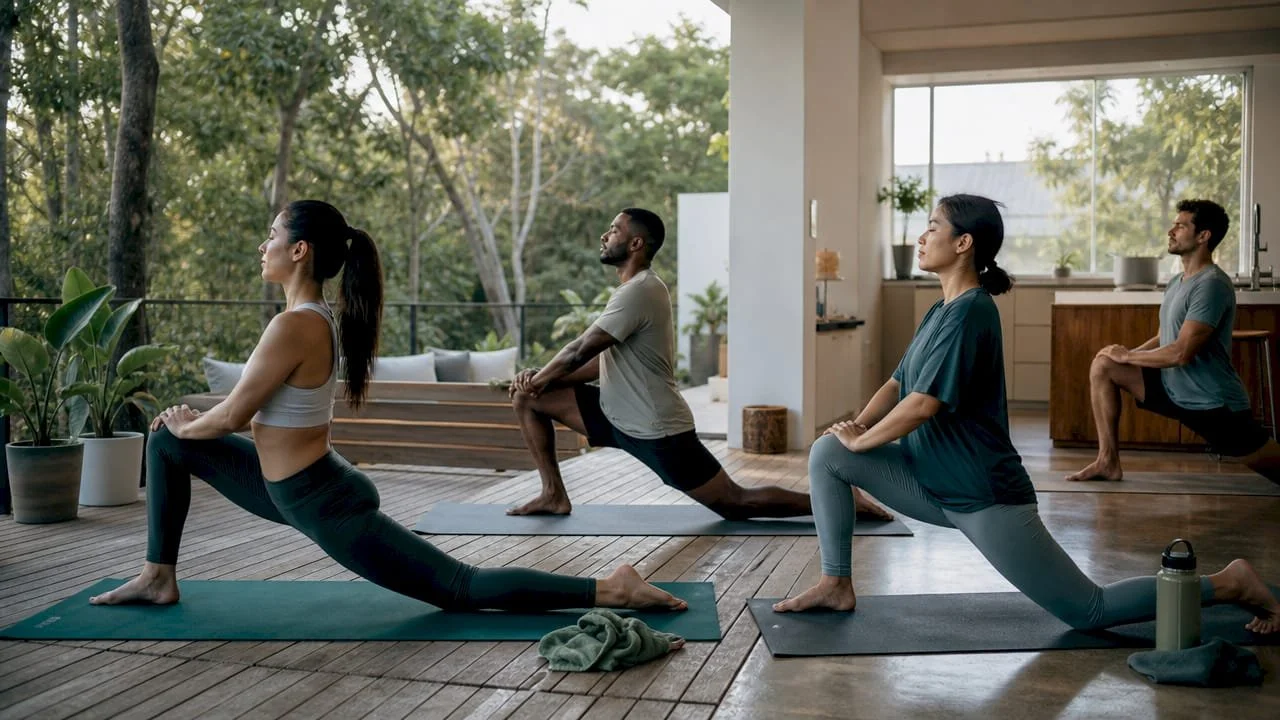
Yoga at a studio, on a beach, in your living room, or at your desk is one of the most location-flexible wellness practices available to adults today. Yoga with Adriene has built a YouTube following of over 12 million subscribers by proving that quality practice requires no commute. Santa Barbara Beach Yoga offers private and group sessions directly on the sand, demonstrating that outdoor settings are fully viable for structured instruction. Whether you are exploring Vinyasa yoga flows or restorative stretching, the setting you choose shapes the experience as much as the poses themselves.
What are the best locations for yoga practice?
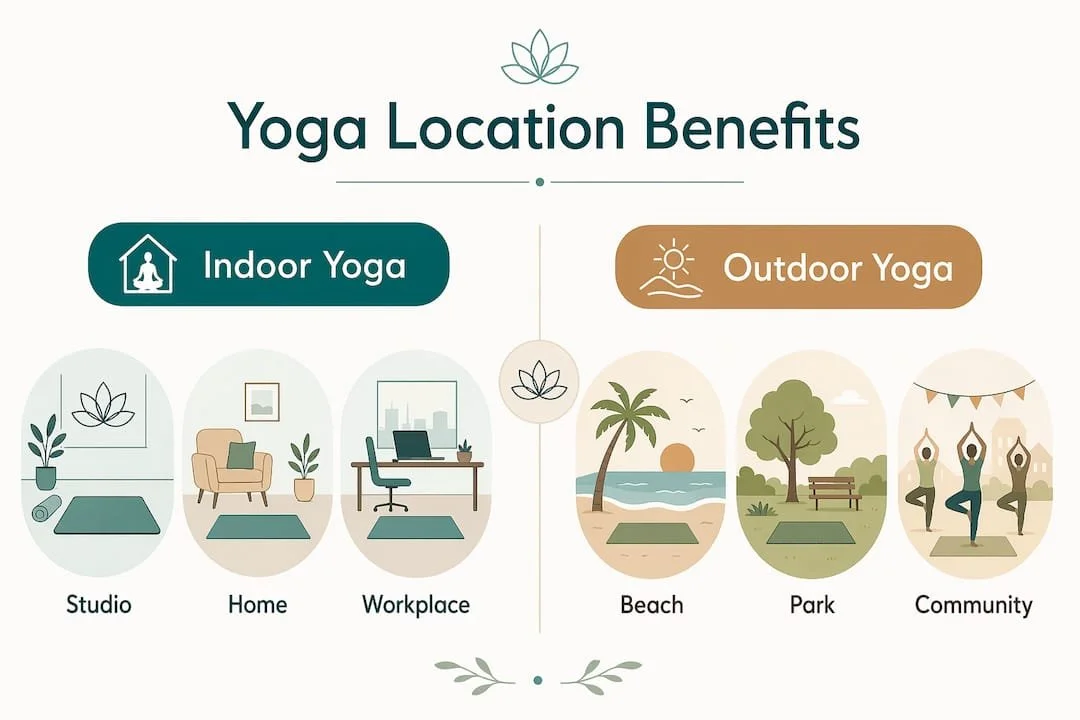
Yoga at a dedicated studio gives you access to certified instructors, climate-controlled space, and a community of fellow practitioners. Group classes run 45 to 90 minutes and cover styles from hot yoga to yin. Private instruction is also widely available. Private yoga packages typically run in increments of 5, 10, or 20 sessions, customizable by location, which means you can book a trainer to meet you at a park, your home, or a corporate office. That flexibility removes the "I have to drive there" barrier that stops many beginners.
Practicing yoga at home has become the default entry point for millions of adults. Digital platforms like Yoga with Adriene and YogaRenew deliver on-demand classes at zero cost or low monthly fees. The tradeoff is accountability. Without a scheduled class and a room full of people, it is easy to skip. Setting a fixed time slot, even 20 minutes before work, solves most of that problem.
Outdoor settings, particularly yoga at the beach or in a park, add sensory richness that no studio can replicate. The sound of waves, natural light, and open air create a meditative environment that deepens relaxation. Community-organized outdoor classes are also common in cities like New York and Tybee Island, Georgia, where free public sessions run on a donation or sponsorship model.
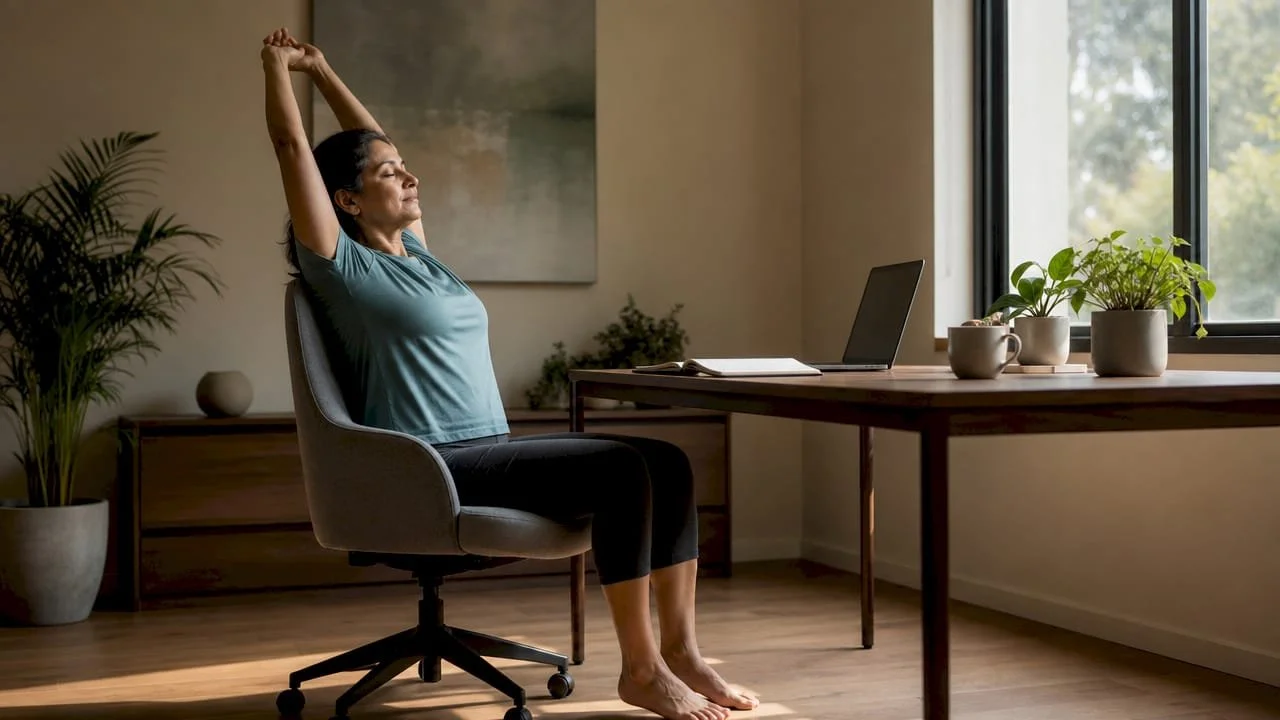
Workplace yoga is the least discussed but arguably the most needed format. Short 15 to 30 minute sessions during lunch breaks or between meetings address the postural damage and stress accumulation that desk work causes. Many corporate wellness programs now include guided yoga breaks, and solo desk stretches require nothing more than a clear patch of floor.
| Location | Session length | Cost range | Key benefit | Main challenge |
|---|---|---|---|---|
| Studio | 45 to 90 min | $15 to $35/class | Expert instruction, community | Schedule and commute |
| Home | 10 to 60 min | Free to $20/month | Convenience, flexibility | Self-motivation |
| Beach or park | 45 to 60 min | Free to $25 | Fresh air, community | Weather, terrain |
| Workplace | 15 to 30 min | Free (employer) | Stress relief, posture | Space, privacy |
How can you get the most out of yoga at home?
The single most important factor in a successful home practice is consistency, not duration. Short, regular sessions of 10 to 30 minutes outperform occasional 90-minute classes in producing lasting flexibility and stress-reduction benefits. That finding reframes the common beginner mistake of waiting until you have a full hour free before rolling out the mat.
A practical home setup requires less than you think. A non-slip yoga mat, roughly six feet of clear floor space, and a reliable internet connection cover the basics. You do not need a dedicated yoga room. A cleared living room corner works just as well, provided you return to the same spot consistently. That physical cue trains your brain to shift into practice mode.
Choosing the right platform matters more than most beginners realize. YogaRenew offers at-home guidance with progress tracking, though users should avoid weight-loss-focused metrics that shift attention away from breath and body awareness. Yoga with Adriene is the gold standard for free, beginner-friendly content. Both platforms cover foundational yoga poses that translate directly to studio classes when you are ready to make that step.
Here is a simple four-step framework for building a home practice that sticks:
Schedule it like a meeting. Pick three to four fixed time slots per week and block them in your calendar. Morning slots before the day's demands accumulate tend to have the highest completion rates.
Start with 15 minutes. A consistent 10 to 30 minute practice three to four times per week produces noticeable benefits within four to six weeks. Fifteen minutes is achievable even on your busiest days.
Follow a structured program. Random pose selection leads to imbalanced practice. Use a platform like YogaRenew or Yoga with Adriene's beginner series to follow a logical progression.
Track how you feel, not how you look. Note energy levels, sleep quality, and stress after each session. These markers keep motivation grounded in real results rather than appearance.
Pro Tip: Avoid apps that center progress metrics around calorie burn or weight loss. These frameworks undermine the mind-body connection that makes yoga effective. Choose platforms that track session frequency, breath quality, and flexibility milestones instead.
What should you know about yoga at the beach or outdoors?
Outdoor yoga, especially yoga at the beach, delivers benefits that go beyond the physical. Natural environments lower cortisol levels more effectively than indoor settings, and the added proprioceptive challenge of uneven sand strengthens stabilizer muscles that flat studio floors never engage. Community classes at locations like Brooklyn Bridge Park and Tybee Island's Free Yoga Fridays make this format accessible to people who cannot afford studio memberships.
Preparation for outdoor practice differs significantly from indoor sessions. Outdoor yoga on beaches or parks demands checking for stable ground, applying sunscreen, and preparing for environmental changes. Arriving 10 minutes early to assess the surface, set up your mat on the flattest patch available, and hydrate before class starts are non-negotiable habits.
Community-organized outdoor classes often require advance registration and a digital fitness waiver. Seasonal fitness waivers for public yoga classes are completed online prior to sessions, which reduces administrative burden on the day and keeps participation smooth. Check the event page for your local class at least 48 hours before attending.
The cost model for outdoor yoga is worth understanding. Beach yoga events are commonly community-sponsored, keeping them free or donation-based and accessible to participants across income levels. Local businesses, parks departments, and wellness brands fund these programs in exchange for community visibility. That sponsorship structure is what makes free weekly classes financially sustainable year after year.
Pro Tip: Wind and uneven terrain require pose modifications. In Tree Pose on sand, widen your stance and lower your gaze to a fixed point on the ground rather than the horizon. This small adjustment prevents the wobbling that discourages beginners from returning to outdoor practice.
How does yoga at work support your health?
Workplace yoga addresses two of the most common physical complaints among desk workers: chronic lower back tension and elevated stress hormones from sustained mental load. A 20-minute midday session targeting hip flexors, thoracic spine rotation, and shoulder mobility directly counteracts the postural patterns that eight hours of sitting creates. The occupational health benefits of regular movement breaks are well-documented, and yoga is one of the most time-efficient formats available.
The formats workplace yoga takes vary by company culture and available space. Common options include:
Group lunch sessions led by a visiting instructor, typically 20 to 30 minutes, held in a conference room or outdoor courtyard.
Guided digital breaks using apps or short YouTube flows that employees follow independently at their desks.
Self-led desk routines focused on neck rolls, seated spinal twists, and wrist stretches that require no mat and no floor space.
If your employer does not yet offer a wellness program, the most effective way to introduce one is to propose a four-week pilot. Frame it around productivity and absenteeism data rather than wellness ideology. HR departments respond to cost arguments. A single instructor session per week for a month is a low-risk test that most managers will approve.
Beginners should prioritize breath awareness over attempting advanced poses, which is especially relevant in a workplace setting where self-consciousness can lead to overreaching. A seated Cat-Cow stretch and a 90-second box breathing exercise are more valuable than attempting a Warrior sequence in business casual clothing. Start with what is practical and build from there.
Key takeaways
Yoga at any location produces real physical and mental benefits when practiced consistently, and the setting you choose should match your schedule, goals, and current fitness level.
| Point | Details |
|---|---|
| Consistency beats duration | Three to four sessions of 10 to 30 minutes per week outperform occasional long classes. |
| Home practice needs structure | Use platforms like YogaRenew or Yoga with Adriene to follow a logical progression. |
| Outdoor yoga requires preparation | Check terrain, apply sunscreen, hydrate, and complete digital waivers before attending. |
| Workplace yoga is underutilized | Even a 20-minute desk routine addresses back tension and stress more effectively than no movement. |
| Free options exist everywhere | Sponsored community classes at parks and beaches make yoga accessible at no cost. |
Why where you practice matters more than you think
Most yoga advice focuses on what to practice. Very little addresses where, and that gap costs people real progress. I have watched students with technically sound form plateau for months because their home environment was too distracting, and I have seen complete beginners make rapid gains simply because they committed to a Tuesday morning park class with a consistent group. The social contract of showing up for other people is a more powerful motivator than any app notification.
My honest recommendation: do not pick one location and stick to it rigidly. Rotate. Use a studio for accountability and instruction, your living room for beginner yoga skills on days when commuting feels impossible, and an outdoor class once a week for the sensory reset that no indoor space can replicate. That combination covers the full spectrum of what yoga offers physically, mentally, and socially.
The one thing I would push back on is the idea that you need to find your "perfect" practice before committing. Your body changes week to week. A restorative session on a Thursday night is not a failure to do power yoga. It is accurate listening. The practitioners I have seen sustain a practice for years are not the ones who found the ideal format. They are the ones who stopped judging their practice against an imaginary standard and just showed up.
— Juiced
Deepen your wellness practice with Amritayogawellness
Yoga builds physical strength and mental clarity, but a truly holistic wellness practice reaches further. Amritayogawellness, Philadelphia's community-centered studio, offers more than mat-based classes. The studio's tarot reading sessions provide a structured space for reflection and self-awareness that complements the introspective work you do in yoga. Many students find that pairing a weekly yoga class with a monthly tarot session creates a rhythm of physical release and mental clarity that neither practice achieves alone.
If you are new to the studio, explore the free yoga class options available through Amritayogawellness to experience the community before committing to a membership. The studio's offerings span hot yoga, pilates, barre, tai chi, and massage therapy, making it a single destination for adults who take their well-being seriously.
FAQ
What is the best time of day to practice yoga?
Morning practice, often called yoga at dawn, builds consistency because fewer schedule conflicts arise before the day starts. Evening sessions support relaxation and sleep quality, making both windows effective depending on your goal.
How often should beginners practice yoga at home?
Three to four sessions per week of 10 to 30 minutes produces noticeable strength and flexibility gains within four to six weeks. Starting with three sessions and adding a fourth once the habit is established prevents burnout.
Do outdoor yoga classes require any special equipment?
A non-slip mat with extra grip is the primary addition for outdoor practice. Outdoor yoga preparation also includes sunscreen, water, and checking the surface for stability before placing your mat.
Are free community yoga classes legitimate?
Yes. Community-sponsored classes at locations like Brooklyn Bridge Park run 60-minute sessions led by certified instructors, funded by local sponsors. Most require advance registration and a digital waiver completed before the session.
Can yoga at work replace a full studio practice?
Workplace yoga addresses specific issues like posture and acute stress but does not replace the full-body conditioning of a studio class. Treat desk-based routines as a supplement to, not a substitute for, a structured weekly practice.
If you are new to the studio, explore the free yoga class options available through Amritayogawellness to experience the community before committing to a membership. The studio's offerings span hot yoga, pilates, barre, tai chi, and massage therapy, making it a single destination for adults who take their well-being seriously.
FAQ
What is the best time of day to practice yoga?
Morning practice, often called yoga at dawn, builds consistency because fewer schedule conflicts arise before the day starts. Evening sessions support relaxation and sleep quality, making both windows effective depending on your goal.
How often should beginners practice yoga at home?
Three to four sessions per week of 10 to 30 minutes produces noticeable strength and flexibility gains within four to six weeks. Starting with three sessions and adding a fourth once the habit is established prevents burnout.
Do outdoor yoga classes require any special equipment?
A non-slip mat with extra grip is the primary addition for outdoor practice. Outdoor yoga preparation also includes sunscreen, water, and checking the surface for stability before placing your mat.
Are free community yoga classes legitimate?
Yes. Community-sponsored classes at locations like Brooklyn Bridge Park run 60-minute sessions led by certified instructors, funded by local sponsors. Most require advance registration and a digital waiver completed before the session.
Can yoga at work replace a full studio practice?
Workplace yoga addresses specific issues like posture and acute stress but does not replace the full-body conditioning of a studio class. Treat desk-based routines as a supplement to, not a substitute for, a structured weekly practice.
Recommended
Yoga centers in Philadelphia for every level and need
TL;DR:
Philadelphia's yoga scene prioritizes accessibility and community over trendiness, serving diverse populations with tailored classes. The best studios feature qualified teachers, varied offerings, and a welcoming environment that fosters progress and inclusivity. Choosing a studio based on alignment with your goals, community connection, and genuine care leads to a lasting and transformative practice.
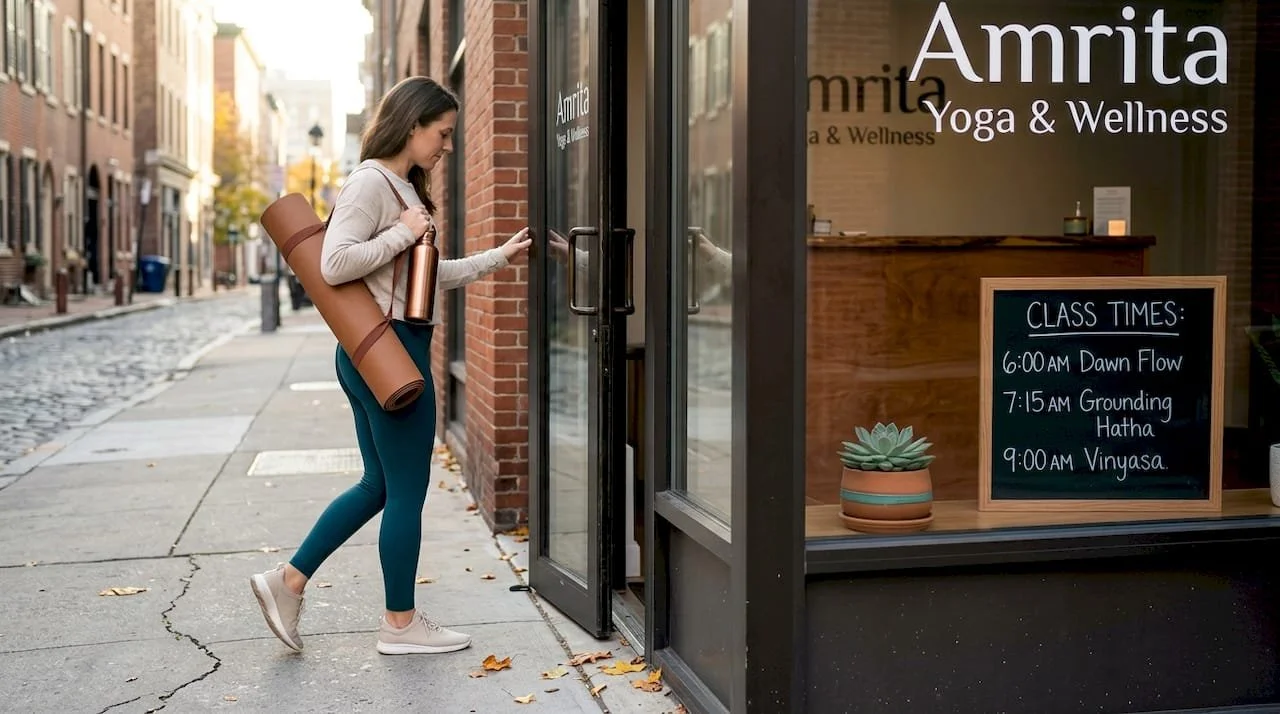
Philadelphia has a reputation for grit and authenticity, and its yoga scene is no exception. Forget the image of bendy practitioners in matching outfits performing impossible poses. The yoga centers spread across this city serve real people: office workers with tight hips, seniors managing arthritis, newcomers intimidated by the whole idea, and seasoned students ready for a deeper challenge. Philadelphia's studios are built around accessibility and results, not performance. This guide breaks down what separates great centers from average ones, what class types actually mean, and how to choose a studio that fits your life.
Table of Contents
Key Takeaways
| Point | Details |
|---|---|
| Yoga centers for all | Philadelphia offers yoga centers that welcome every body, from beginners to advanced practitioners. |
| Diverse class offerings | You’ll find everything from alignment-based to restorative yoga, including programs for seniors and those recovering from injury. |
| Choose mindfully | Selecting a yoga center that fits your needs leads to deeper well-being and a more enjoyable practice. |
| Inclusivity matters | Top centers emphasize accessibility and holistic wellness, supporting a wide range of backgrounds and health goals. |
What makes a great yoga center?
Not all studios are created equal. Walking into the right yoga center should feel like finding a good mechanic: skilled, honest, and genuinely interested in your well-being, not just your wallet. The best yoga centers in Philadelphia share a handful of qualities that separate them from trend-chasing fitness businesses.
A truly outstanding center offers a range of class styles suited for different bodies, goals, and experience levels. Alignment-based instruction is one of the most underrated features to look for. It means teachers are trained to notice how your body is actually positioned and correct you safely, which matters enormously if you have previous injuries or chronic pain. Centers like Maha Yoga Philadelphia have built their reputation on exactly this approach. Their accessibility for all levels, backed by over 60 positive Yelp reviews, shows what consistent, quality instruction looks like in practice.
Beyond instruction quality, great centers create a welcoming physical environment. Clean floors, properly maintained props (blocks, straps, bolsters), good ventilation, and clear signage all matter. A cluttered or poorly maintained space signals that the ownership doesn't prioritize the student experience.
Here are the core qualities to look for in any yoga center:
Qualified, experienced teachers with recognized certifications and ongoing education
Diverse class offerings ranging from gentle and restorative to more dynamic styles
Inclusive atmosphere where all body types, ages, and skill levels feel genuinely welcome
Accessible scheduling with morning, midday, and evening options
Clear communication about what each class involves before you sign up
Adaptation policies for students recovering from injuries or managing chronic conditions
"The best yoga teachers aren't the ones who can demonstrate the most advanced pose. They're the ones who can help the most students feel progress in their own bodies."
This is especially true for beginners. Many people avoid yoga because they assume they need to already be flexible to start. The truth is the opposite: flexibility and mobility improve through consistent practice, and a great center's instructors understand how to guide students through that process safely. Explore accessible yoga programs to see what an inclusive approach actually looks like in a studio setting.
Pro Tip: Before committing to a membership, contact the studio directly and ask whether they offer any introductory classes or welcome sessions for new students. Most quality centers will walk you through their approach and let you experience the culture firsthand.
Types of yoga classes and practices in Philadelphia centers
Philadelphia's yoga scene offers far more than the generic "yoga class" label suggests. Understanding the major styles helps you choose what actually matches your goals, your body, and your schedule.
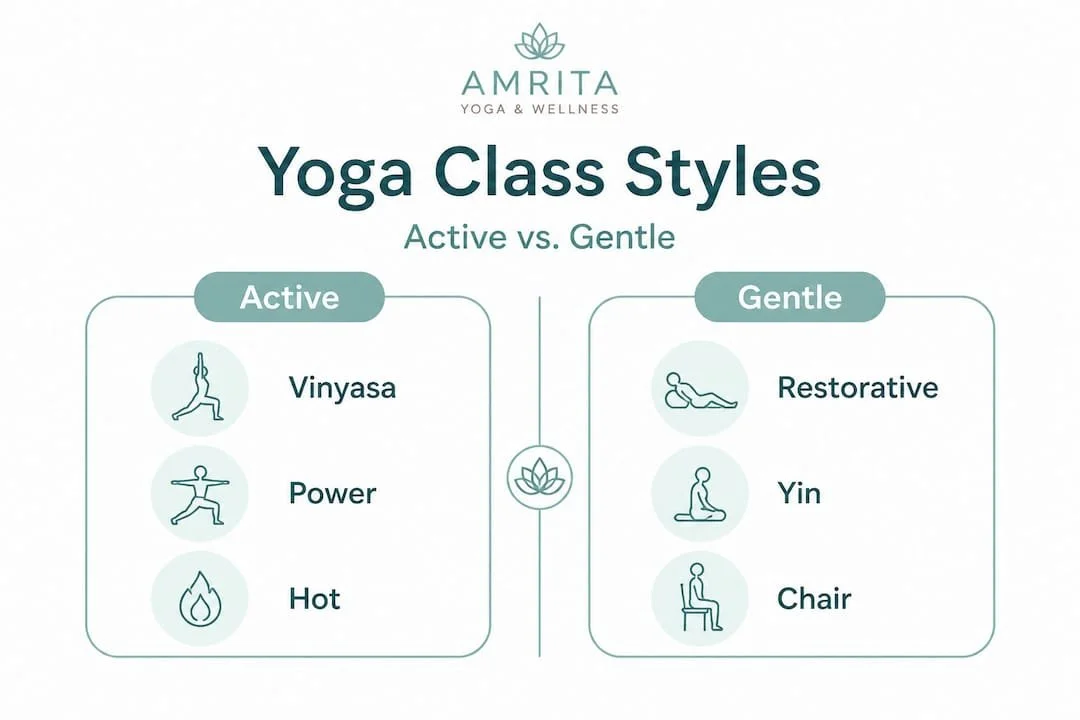
Here’s a practical comparison of the most common class types you’ll encounter:
| Class type | Best for | Key features |
|---|---|---|
| Vinyasa | Active movers, cardio seekers | Flowing sequences linked with breath |
| Hatha | Beginners, those wanting fundamentals | Slower pace, foundational postures |
| Restorative | Stress relief, recovery | Passive poses held with props |
| Alignment-based | Injury recovery, precision learners | Detailed cues, individual corrections |
| Yin yoga | Flexibility, joint health | Long holds targeting deep connective tissue |
| Chair yoga / adaptive | Seniors, limited mobility | Modified poses using a chair for support |
Each style serves a distinct purpose. Vinyasa classes move quickly from one pose to the next, building heat and cardiovascular endurance. Hatha classes slow things down and spend more time teaching individual poses correctly. Restorative yoga is almost meditative, using props to allow the body to release tension over long holds. Alignment-based classes, which are particularly strong at studios like Maha Yoga Philadelphia, focus intensely on how the body is positioned, making them ideal for anyone coming back from injury or dealing with chronic pain.
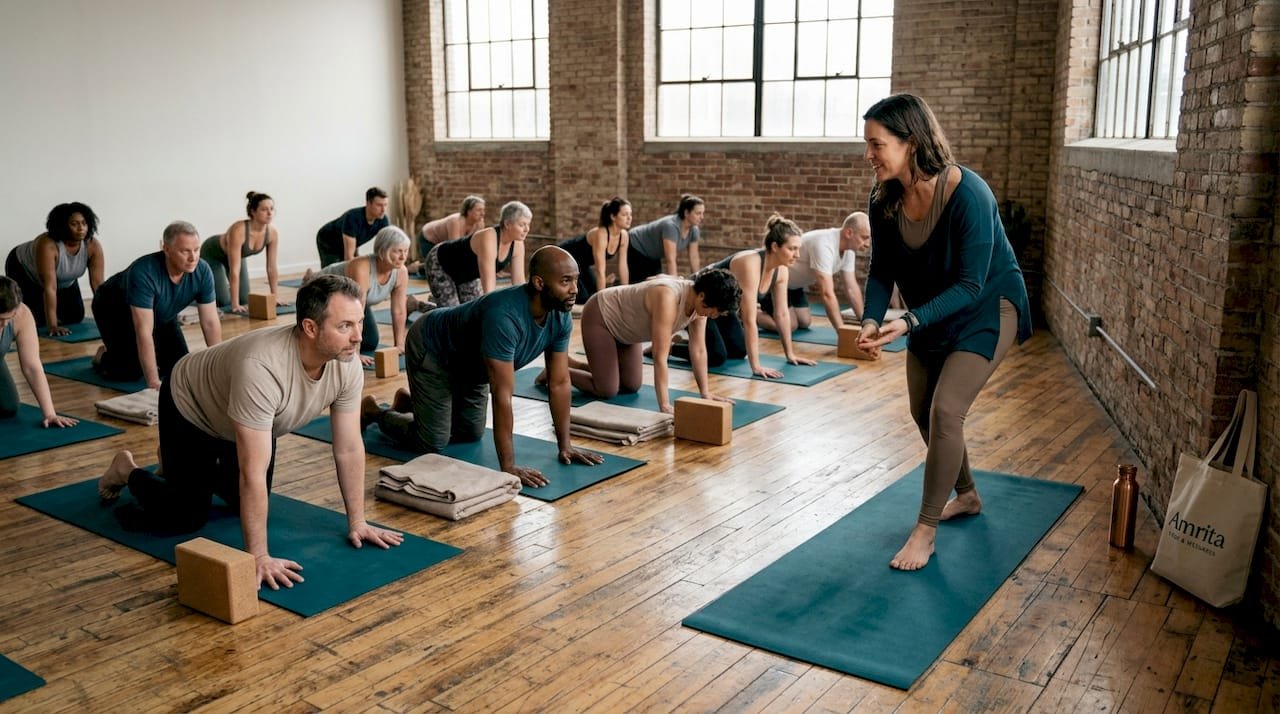
Inclusive and adaptive yoga classes deserve special attention. These aren't "easier" classes in a condescending sense. They're expertly designed to remove barriers. Teachers in these programs understand how to modify poses for different body structures, mobility limitations, and health conditions. If this approach resonates with you, read more about the benefits of inclusive yoga and why it's become a cornerstone of modern practice.
Some additional practices you might find in Philadelphia centers include:
Pranayama (breathwork): Often integrated into class or offered as a standalone session
Meditation: Seated mindfulness or guided visualization, sometimes following a yoga class
Aerial yoga: Poses supported by suspended fabric hammocks, excellent for spinal decompression
Hot yoga: Practiced in a heated room to deepen flexibility and increase sweating
If you're new to the practice and want a visual reference for what different poses look like and how they're modified, browse explore yoga poses as a starting point before you walk into your first class.
Pro Tip: Try at least three different class styles before deciding what you "like." Many students who write off yoga after one Vinyasa class discover they thrive in a Yin or alignment-based setting, and vice versa.
How to choose the right yoga center for your needs
With so many options across Philadelphia's neighborhoods, choosing where to practice can feel genuinely overwhelming. A methodical approach helps you cut through the noise and make a confident decision.
Here's a step-by-step process for evaluating any yoga center:
Define your primary goal. Are you managing back pain? Building strength? Managing stress? Wanting community? Your goal narrows the list significantly.
Check the location and commute. A studio you love but can't consistently reach is a studio you'll stop attending. Proximity matters more than prestige.
Review the class schedule. Even a perfect studio is useless if it only offers classes when you're at work or picking up your kids.
Research the teachers. Look at instructor bios. Check their certifications, years of experience, and any specializations in areas relevant to your needs.
Read community reviews. Look for patterns across multiple reviews, not just the extremes. Consistent praise for cleanliness, teacher quality, and welcoming atmosphere is a strong signal.
Visit in person before committing. Even a brief walk-through tells you a lot about how a studio operates and whether it feels right.
Centers like Maha Yoga Philadelphia stand out in community reviews for their accessibility and clean atmosphere, which is particularly important for students dealing with mobility issues or injury recovery. These details aren't cosmetic. They reflect the values of the people running the studio.
Here's a simplified comparison of what different Philadelphia centers tend to emphasize:
| Feature | Community-focused studios | Specialty/niche studios | Large fitness chain yoga |
|---|---|---|---|
| Class variety | High | Moderate | Moderate |
| Accessibility focus | High | Varies | Low |
| Teacher personalization | High | High | Low |
| Price point | Mid-range | Mid to high | Mid-range |
| Introductory offers | Common | Common | Common |
For seniors or anyone working with mobility considerations, dedicated programming makes a significant difference. Learning more about yoga for seniors can help clarify what a tailored program should include and what questions to ask when you visit a studio.
The article on finding your yoga program in Philadelphia goes even deeper into the local options and how to match them with your personal wellness goals.
Pro Tip: Many studios offer a first class free or a discounted introductory week. Use these offers strategically across two or three studios before making a membership commitment. Pay attention to how teachers interact with new students, not just what the class feels like physically.
Inclusivity, accessibility, and wellness integration in modern yoga centers
The best Philadelphia yoga centers have moved well beyond offering a single class style and calling it a day. Modern studios understand that community wellness means meeting people where they are, physically, emotionally, and culturally.
Several meaningful innovations are now appearing across the city's yoga landscape:
Trauma-informed instruction: Teachers trained to understand how trauma lives in the body and how to offer cues and hands-on adjustments in ways that feel safe, not intrusive
Multi-lingual instruction or materials: Removing language barriers for Philadelphia's diverse immigrant and multilingual communities
Adaptive equipment: Chairs, bolsters, straps, and blocks available at no extra charge, normalized as tools rather than signs of limitation
Sliding scale or community pricing: Making consistent practice financially accessible to people across income levels
Wellness service integration: Combining yoga with massage therapy, meditation workshops, and other healing modalities under one roof
The fact that Maha Yoga Philadelphia is specifically noted for making yoga accessible to those recovering from injuries reflects a broader movement in Philadelphia's wellness culture. Studios are increasingly recognized not just as fitness businesses but as community health resources.
Alignment in yoga deserves a special mention here. Many students don't realize how deeply proper alignment affects outcomes, especially over months and years of practice. Poor alignment in certain poses can create repetitive stress injuries. Proper alignment, guided by a skilled teacher, builds strength and flexibility sustainably. For a detailed look at how this plays out even in specialized formats, read about alignment in yoga and why it belongs at the center of any quality practice.
Wellness integration is the next frontier. Many Philadelphia studios now offer tarot readings, sound baths, Reiki sessions, and seasonal workshops alongside their regular class schedules. These aren't gimmicks. For many students, this kind of multi-dimensional approach deepens the experience of their yoga practice by connecting it to broader questions of meaning, stress relief, and self-understanding. Explore inclusive yoga resources to see the full scope of what a thoughtfully designed studio can offer.
"Inclusivity isn't a feature you add to a yoga studio. It's a philosophy that has to be embedded in every decision, from how teachers are trained to how the front desk staff greets a nervous first-timer."
Why mindful yoga center selection matters more than ever
Here's something most wellness content won't tell you directly: the studio you choose matters more than the specific style of yoga you practice. People are far more likely to maintain a consistent practice when they feel genuinely connected to the community and the instructors around them. Yet most people choose a studio based on Instagram aesthetics, a nearby location, or a discount code.
The wellness industry in 2026 is crowded with beautiful websites and compelling branding. Trendy studios with high production value and influencer partnerships are everywhere. But behind the surface, many of these spaces offer generic instruction, high teacher turnover, and little genuine investment in student progress.
The studios that actually change people's lives tend to look different. They're often the ones that have been in the same neighborhood for years, where teachers know students by name, where the philosophy is consistent rather than chasing whatever's trending. This is where real transformation happens, not in flashy settings but in environments built around genuine care.
We've seen this consistently: students who do their research, visit multiple studios, ask thoughtful questions, and choose based on alignment of values rather than convenience or marketing tend to stick with their practice far longer. They develop relationships with teachers who can actually guide their growth. They build friendships within the community that keep them accountable.
Looking at yoga for mobility insights reveals how much is possible when students find the right environment and commit to it long term. The physical improvements are real, but so are the mental and emotional shifts that come from being part of a community that takes your wellness seriously.
Don't let the flashiest option win by default. Do the research. Visit in person. Ask hard questions. The right studio is the one that actually serves your needs, not the one with the most followers.
Connect with yoga and wellness resources near you
Your journey toward better health doesn't have to begin and end with a single yoga class. A holistic approach to wellness in Philadelphia means weaving together physical practice with tools that support your mental and emotional well-being.
At Amrita Yoga & Wellness, we offer a community hub that goes well beyond the yoga mat. Whether you're exploring diverse class styles, recovering from injury, or simply looking for a meaningful wellness community in Philadelphia, our offerings are designed to meet you exactly where you are. One unexpected resource that many students find genuinely valuable is our tarot readings for wellness, which serve as a thoughtful complement to physical practice by encouraging deeper self-reflection and intentionality. From beginner workshops to advanced sessions, everything we offer is built around the belief that wellness is personal, layered, and worth investing in.
Frequently asked questions
Are yoga centers in Philadelphia suitable for complete beginners?
Yes, many centers specifically design their programs for people with no prior experience, offering foundational instruction and welcoming environments. Studios like Maha Yoga Philadelphia are accessible for all levels, including complete beginners and those in injury recovery.
Can I find yoga classes for seniors or those with limited mobility?
Absolutely. Philadelphia has dedicated programs designed specifically for seniors and individuals with mobility considerations, including chair yoga and adaptive class formats. Maha Yoga Philadelphia, for example, is recognized for accessible instruction that accommodates those navigating physical limitations.
What should I look for in a quality yoga center?
Prioritize experienced teachers, clean and well-maintained spaces, diverse class options, and genuine community reviews that reflect consistent quality. Maha Yoga Philadelphia's 60 positive Yelp reviews highlight exactly these qualities: skilled teachers, a professional atmosphere, and an inclusive student experience.
How do I try out classes before committing to a membership?
Most reputable yoga centers offer a first class free or a discounted introductory week, allowing you to experience the teaching style and studio culture without any long-term financial commitment.
Recommended
Yoga on 4th: Your guide to community wellness in Philadelphia
TL;DR:
Philadelphia's yoga scene emphasizes community-driven, accessible, and neighborhood-based classes.Community yoga near 4th Street offers diverse styles and formats, often free or donation-based.Local groups and pop-up events foster social connection, making yoga welcoming and resilient outside traditional studios.
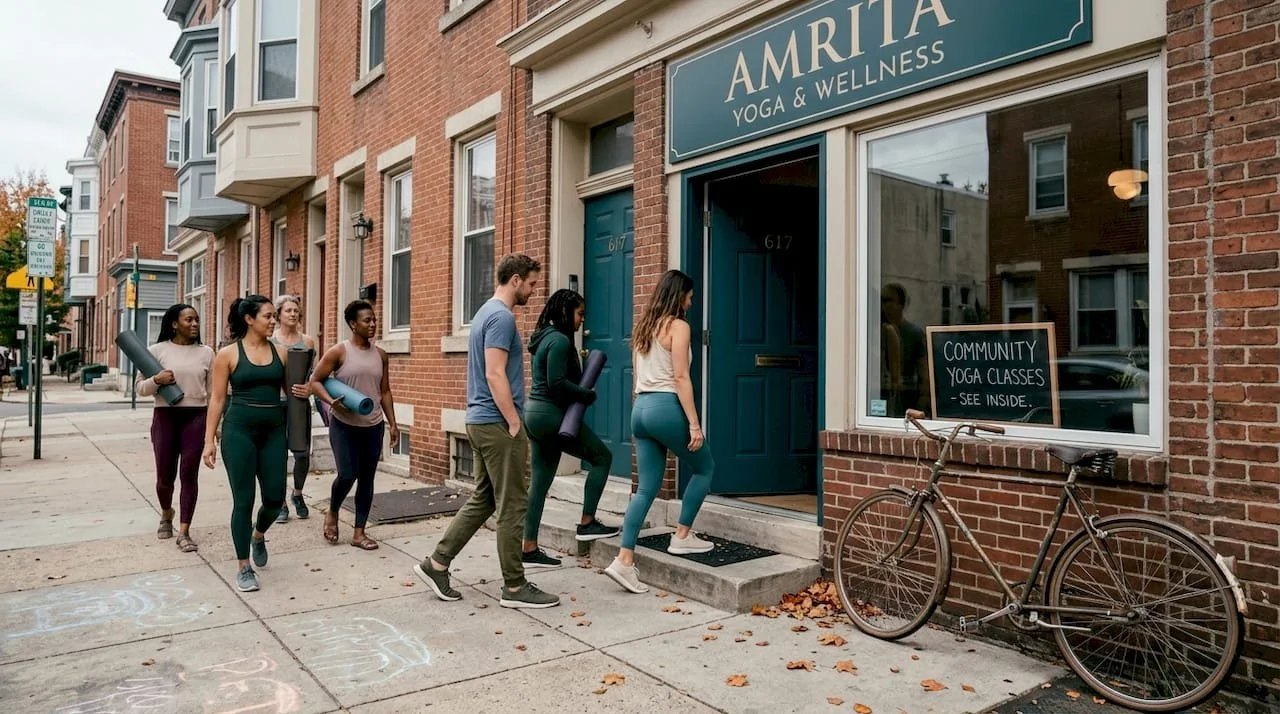
Philadelphia's yoga scene is richer, more accessible, and more rooted in community than most people realize. While expensive studio memberships get most of the attention, a thriving network of classes, pop-up events, and neighborhood gatherings has quietly made yoga available to anyone willing to show up, including Tuesday Night Yoga at Full Moon Blends at 617 South 4th Street. This guide maps out what's really happening in the yoga community on and around 4th Street, so you can find your place in it, no matter your experience level or budget.
Table of Contents
Key Takeaways
| Point | Details |
|---|---|
| No single Yoga on 4th studio | Yoga around 4th Street is a community-driven cluster, not a solo studio. |
| Accessible class options | Classes span vinyasa, chair, and gentle yoga with options for every ability and budget. |
| Wellness and community focus | Community yoga supports mental health, resilience, and social connection. |
| Flexible ways to participate | You can join, volunteer, or simply drop in—no long-term commitment required. |
| Broader wellness opportunities | Amrita Yoga & Wellness and similar providers offer ways to expand your yoga and self-care journey. |
Setting the scene: Yoga on and around 4th Street
If you searched for "Yoga on 4th" expecting to find a single, well-branded studio with a sleek reception desk and a wall of branded water bottles, you might have come up empty. That's because the yoga scene on and around 4th Street in Philadelphia doesn't work that way. Instead, what you'll find is a cluster of community-driven options spread across the neighborhood, each with its own character, audience, and energy.
The anchor of this scene is Tuesday Night Yoga at Full Moon Blends, a recurring class held at 617 South 4th Street. Full Moon Blends is a wellness shop tucked into the South Street corridor, and the yoga classes it hosts reflect the spirit of that street perfectly: eclectic, welcoming, and totally unpretentious. Classes happen weekly, making it a reliable option for building a consistent practice without locking into a studio contract.
Beyond that, organizations like Yoga4Philly operate throughout the broader Philadelphia area, including neighborhoods accessible from the 4th Street corridor. They use parks, community centers, libraries, and other non-traditional spaces to bring yoga to people who might otherwise never set foot in a studio. This is not yoga watered down. It's yoga made real.
For beginners, this setup can feel more approachable than a formal studio. You're not surrounded by people who've been practicing for years. You're among neighbors. That shift in atmosphere alone can make the difference between someone giving yoga a real try and walking away after one session. Our complete Philadelphia yoga guide covers the broader city landscape if you want to see how these community pockets fit into the larger picture.
Here's a quick look at how the community yoga options near 4th Street compare:
| Venue/Program | Format | Cost | Best for |
|---|---|---|---|
| Tuesday Night Yoga at Full Moon Blends | Weekly studio class | Low cost/donation | Consistency seekers |
| Yoga4Philly community events | Pop-up/mobile | Free or donation | Beginners, all levels |
| Free Library of Philadelphia programs | Scheduled series | Free | Budget-conscious adults |
| Parks and rec pop-ups | Seasonal outdoor | Free | Casual practice |
A few things that make this neighborhood yoga cluster stand out:
Classes rotate through different formats, so you're never locked into a single style
Instructors range from certified professionals to experienced volunteers
The neighborhood vibe keeps things relaxed and judgment-free
Events are often tied to seasonal or community calendar themes
Yoga in this part of Philadelphia shows up where people already are, rather than asking people to come to it. That model is worth paying attention to.
Key community yoga options: Types, styles, and what to expect
With a sense of place established, the next question is practical: what kind of yoga will you actually be doing, and how hard is it?
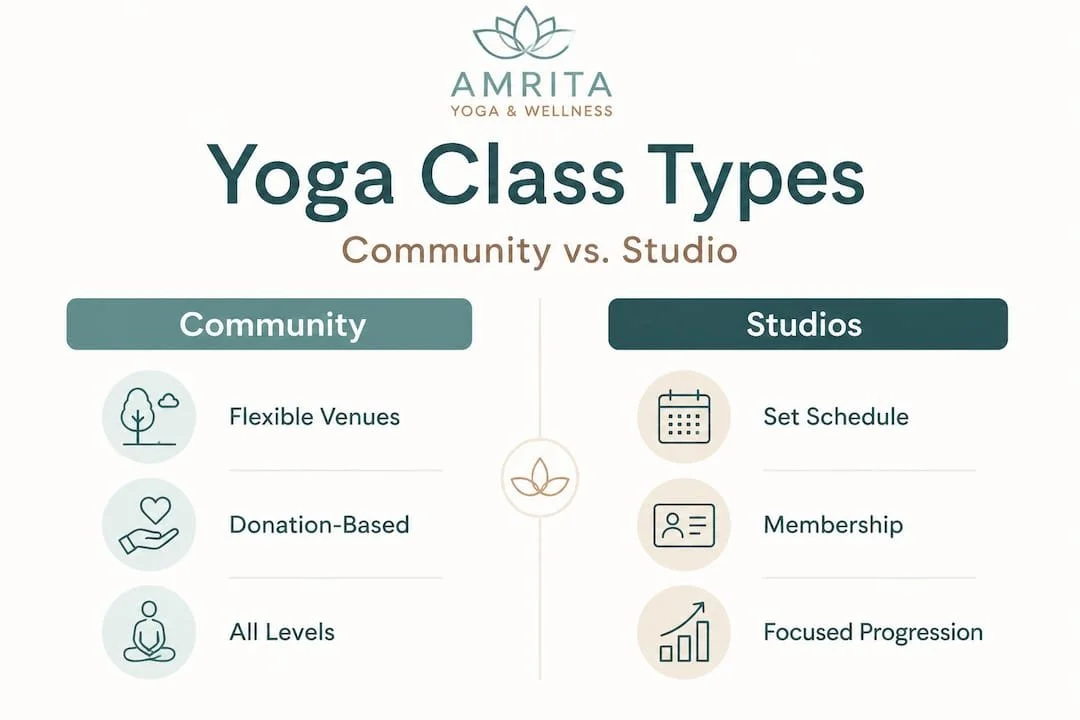
The honest answer is that community yoga near 4th Street covers a wide range. Philadelphia's Free Library yoga calendar lists classes that include all-levels vinyasa flow, chair yoga, gentle yoga, and stretch and strengthen sessions that draw from Vinyasa, Hatha, and Iyengar traditions. That's a meaningful variety, and it means you can find something that fits your body and experience level right now.
Here’s a quick comparison of the most common styles you’ll encounter:
| Style | Intensity | Best for | Key focus |
|---|---|---|---|
| Vinyasa flow | Moderate to high | Active adults | Movement linked to breath |
| Gentle yoga | Low | Beginners, recovery | Slow stretching, relaxation |
| Chair yoga | Low | Limited mobility | Seated or supported poses |
| Hatha | Low to moderate | New practitioners | Basic poses, alignment |
| Iyengar-influenced | Moderate | Detail-oriented learners | Precise alignment with props |
If you're newer to yoga, knowing these differences before you walk into a class reduces a lot of unnecessary anxiety. Vinyasa flow, for example, moves at a rhythm tied to your breathing, which can feel intense at first but quickly becomes intuitive. Chair yoga, on the other hand, modifies traditional poses so that anyone with knee, wrist, or balance concerns can participate fully.
To get started in a community class near 4th Street, here's a practical sequence to follow:
Research first. Check the Free Library calendar, the Full Moon Blends event page, and social media feeds for Yoga4Philly to find a class that fits your schedule.
Arrive 10 to 15 minutes early. Community classes often have limited setup time, and arriving early gives you a chance to meet the instructor and ask questions.
Bring the basics. A mat, water, and comfortable clothes are usually enough. Many community events provide props if you don't own blocks or straps yet.
Tell the instructor about any injuries. Good instructors will offer modifications. This is true at any level, from beginner to seasoned practitioner.
Commit to at least three sessions. The first class is always the hardest. By the third, you start finding your rhythm.
Once you feel comfortable with a format, you can choose your yoga style more deliberately and explore the diverse yoga practices that Philadelphia offers across neighborhoods and studios.
Pro Tip: If cost is a concern, donation-based and library-hosted classes are your best starting point. Many are genuinely free, and showing up consistently matters more than paying a premium rate.
How community yoga supports physical and mental wellness
Understanding what's available practically leads right into why these community classes matter so much for your actual health. Yoga has been studied extensively, but community-based yoga adds a layer that private studio practice often misses: social connection.
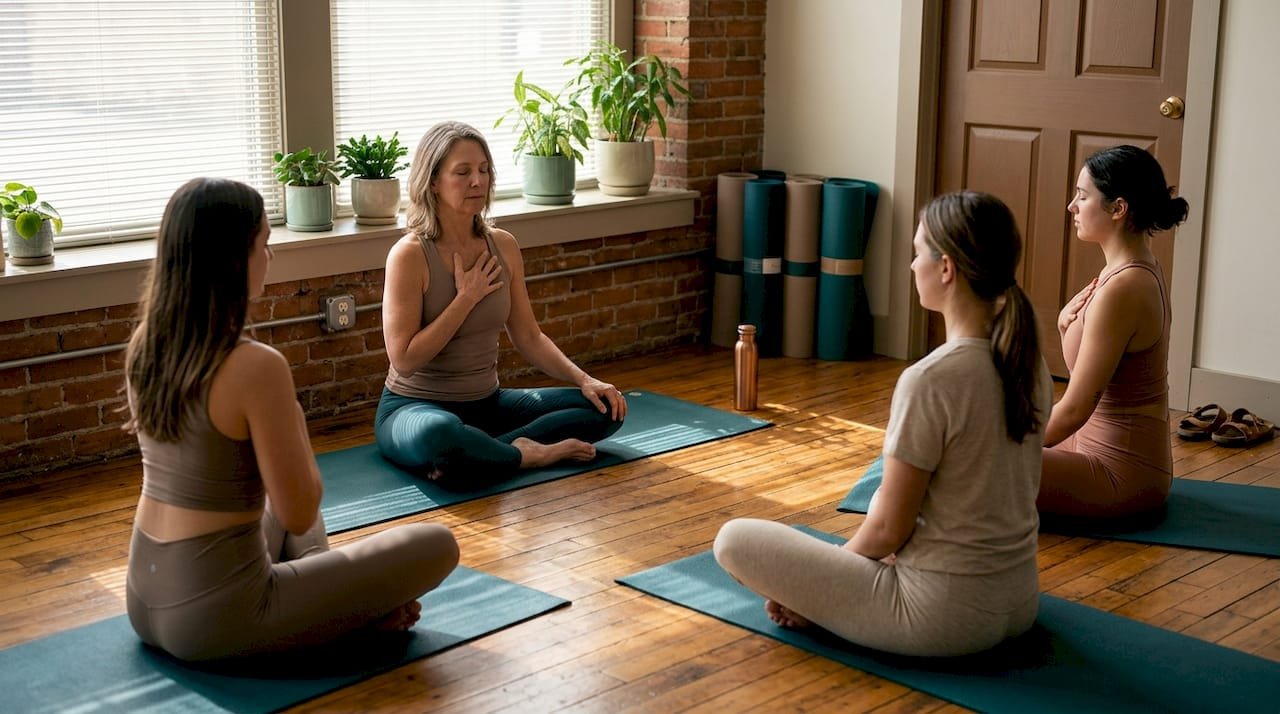
Yoga4Philly offers community-based yoga and meditation classes for all levels, with a specific focus on accessibility and equity. Their mission isn't just to teach poses. It's to make wellness available to people who face economic, geographic, or social barriers to mainstream fitness options. That's a fundamentally different goal than a traditional gym or boutique studio, and it produces different results.
Here's what consistent community yoga practice supports:
Physical flexibility. Even gentle yoga progressively increases range of motion in the hips, hamstrings, and spine over weeks of consistent practice.
Core strength. Vinyasa and Hatha styles build functional strength without heavy equipment or high-impact movement.
Stress reduction. Yoga's combination of breath and movement actively lowers cortisol, the body's primary stress hormone.
Sleep quality. Regular practitioners often report falling asleep faster and waking with more energy.
Social accountability. Seeing the same faces week after week creates soft but real accountability that keeps you coming back.
"Yoga is not about touching your toes. It's about what you learn on the way down." This often-cited framing captures exactly what community yoga offers: a practice that meets you where you are and teaches you something about yourself along the way.
The 6abc feature on Yoga4Philly highlighted how methodologies like vinyasa flow for fitness and movement, chair yoga for those with joint sensitivity, breathwork, pranayama (breath control), and somatic movement in Kundalini-inspired classes all serve different needs within a single community. What's remarkable is that these aren't watered-down alternatives. They're thoughtful adaptations.
The breathwork element, specifically, is worth calling out. Pranayama involves deliberate control of the breath to shift your nervous system from a stress state into a calmer, more regulated one. Learning this skill in a group setting means you have a teacher guiding you and peers practicing alongside you, which makes it easier to stay focused and absorb the technique. Explore how group yoga benefits extend beyond the physical, and learn more about how breathwork supports mental health through consistent practice.
Pro Tip: If stress relief is your primary goal, prioritize classes that include a dedicated breathing segment or end with a longer savasana (the final resting pose). These elements signal a class designed with nervous system recovery in mind, not just fitness output.
Joining and contributing to Philadelphia's yoga community
Once you appreciate the wellness benefits, the natural next step is figuring out how to get involved. This isn't complicated, but it does require a bit of proactive navigation since community yoga doesn't always have the same visibility as a Google-optimized studio.
Yoga4Philly emphasizes recovery-based, equitable access over fixed studio locations, partnering across the city for pop-up and community classes ideal for adults seeking well-being without long-term commitment. That flexibility is a feature, not a flaw. It means classes move to where they're needed most, and new participants can plug in without signing a lease.
Here's how to find and join community yoga near 4th Street:
Follow Yoga4Philly on social media. They post upcoming events, locations, and any schedule changes in real time.
Check the Free Library of Philadelphia calendar. Library branches across the city host regular wellness programming, including yoga, and it's searchable by neighborhood and date.
Visit Full Moon Blends directly. Their in-person community board and staff are great resources for current class schedules and neighborhood wellness events.
Join local Facebook groups or Meetup pages focused on Philadelphia wellness. Pop-up events often spread through these channels before appearing on official websites.
Ask at your first class. Instructors and regular attendees are usually plugged into the broader scene and can point you toward other options.
If you want to give back, there are meaningful ways to contribute:
Volunteer with Yoga4Philly as an assistant or event coordinator
Donate mats or props to organizations that supply them for free classes
Share event information within your own social networks to expand reach
Offer to host a pop-up session in a community space if you have access to one
Staying connected to joining Philadelphia yoga groups ensures you hear about new opportunities as they emerge. The Philadelphia yoga community is active, and being part of it means regular exposure to new teachers, formats, and people who share your commitment to wellness.
Pro Tip: Save the Free Library calendar link and check it at the start of each month. Library programs often fill up or change, and early awareness gives you the best pick of available sessions.
Why community yoga on 4th outshines traditional studios
Here's an opinion worth sitting with: community yoga, in many ways, creates something that a traditional studio model structurally cannot.
In a commercial studio, the economics push toward retention, upsells, and premium pricing. The instructor is often rushing between back-to-back sessions. The student feels like a customer. The relationship is transactional by design. None of this is a criticism of studios as places. Many are genuinely excellent. But the model has inherent limits when it comes to building authentic community.
Community yoga near 4th Street operates differently. When classes happen in a park, a library, or a wellness shop, the physical environment flattens hierarchy. Nobody is walking past a trophy wall of certifications. The instructor is often a neighbor. The regulars are people you might run into at the farmers market. That informality creates real connection in ways that a polished front desk cannot manufacture.
Pop-up and mobile class models also reduce the two biggest barriers to starting yoga: cost and social intimidation. Paying $35 for a drop-in studio class raises the psychological stakes enormously. If you don't love the class, you feel like you wasted money. A free or donation-based community class removes that pressure entirely, which means you're more likely to keep returning until yoga actually clicks for you. That consistency is where transformation happens.
There's also a resilience argument. A scene that doesn't depend on a single physical location can't be closed by a landlord, gutted by a rent increase, or abandoned when an instructor moves on. Group yoga for wellness thrives precisely because it belongs to a community rather than a brand. That's not a small distinction. It's the reason neighborhood yoga scenes outlast even well-funded studios.
If you've ever felt put off by the aesthetic of a high-end yoga studio, or priced out before you even walked through the door, the 4th Street community model is built specifically for you. It's yoga that doesn't ask you to become someone else before you begin.
Explore your next step with Amrita Yoga & Wellness
Community yoga is a powerful entry point, but many practitioners reach a stage where they want structured progression, specialized instruction, and a deeper range of wellness offerings. That's exactly where Amrita Yoga & Wellness steps in.
Amrita Yoga & Wellness in Philadelphia offers a thoughtful range of classes, workshops, and services designed to support every stage of your practice. Whether you're ready to explore hot yoga, pilates, barre, tai chi, or therapeutic massage, you'll find experienced instructors and a genuinely inclusive environment. For those interested in integrating spiritual wellness alongside physical practice, their tarot readings and wellness workshops offer a meaningful complement to movement-based classes. If you've discovered yoga through the community scene on 4th Street and feel ready to go deeper, Amrita Yoga & Wellness is built for exactly that next step.
Frequently asked questions
Is there a dedicated Yoga on 4th studio in Philadelphia?
No dedicated studio by that name exists. The closest match is Tuesday Night Yoga at Full Moon Blends on 4th Street, but most yoga options in that area are community-based or pop-up in format.
What styles of yoga are most common in community classes near 4th Street?
The Free Library of Philadelphia calendar shows that vinyasa, gentle, chair, and Iyengar-inspired flow are the most common formats, all designed to suit different levels and mobility needs.
Are there free or low-cost yoga classes available?
Yes. Many community classes are volunteer-led, donation-based, or completely free, particularly those organized by Yoga4Philly and hosted at local libraries throughout Philadelphia.
How do I find pop-up yoga events in Philadelphia?
Follow organizations like Yoga4Philly on social media, check community event calendars, and ask at local wellness spaces since pop-up events often circulate through neighborhood networks before appearing anywhere official.
Recommended
Diverse yoga practices for wellness in Philadelphia 2026 — Amrita Yoga & Wellness
What is a yoga class: complete Philadelphia guide 2026 — Amrita Yoga & Wellness
Find Yoga Classes in Philadelphia: Your Step-by-Step Guide — Amrita Yoga & Wellness
Join a yoga community in Philadelphia for wellness — Amrita Yoga & Wellness
Why Attend Wellness Workshops? Transform Your Well-Being
TL;DR:
Wellness workshops create immersive experiences that significantly deepen learning and transformation.They offer measurable health benefits, including reduced stress, improved sleep, and greater emotional balance.Community and ongoing support are essential for sustaining the positive changes initiated by workshops.
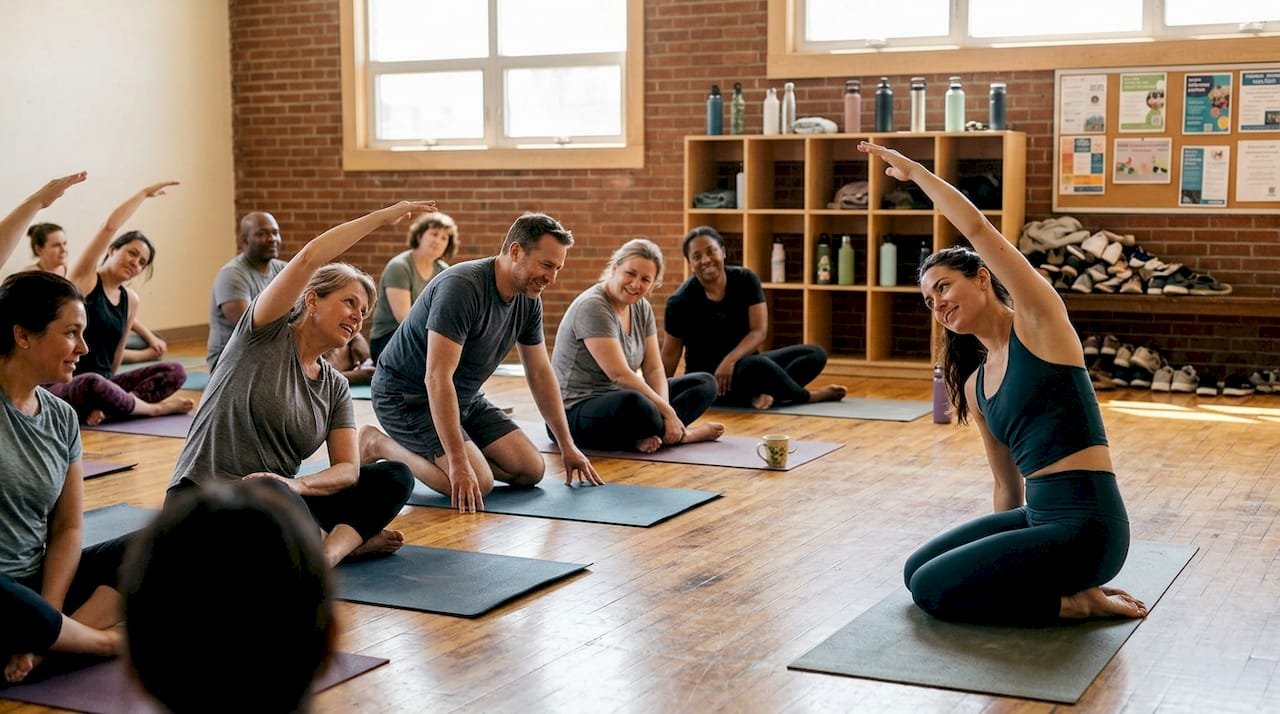
A single weekend wellness workshop can unlock up to five times more learning than months of standard weekly classes. That's not a motivational claim—it's backed by evidence, and it challenges the idea that slow, steady practice is always the best path forward. If you're a Philadelphian looking to manage stress, build resilience, or finally feel at home in your body, wellness workshops offer something a Tuesday evening yoga class simply cannot. They create space for deep transformation, genuine community, and the kind of mind-body integration that sticks. This article breaks down exactly why they work, what science says, and how to make the most of every session.
Table of Contents
Key Takeaways
| Point | Details |
|---|---|
| Workshops amplify results | Single workshops can deliver accelerated learning and deeper transformation than months of regular classes. |
| Science backs the benefits | Research proves workshops lower stress, boost emotional balance, and improve lasting well-being. |
| Community drives success | Group support and accountability in workshops fuel sustainable healthy behavior changes. |
| Choose wisely for impact | Selecting the right workshop and continuing practice ensures real, lasting change. |
Workshops vs. regular classes: What's the real difference?
Most people assume a workshop is just a longer version of a regular class. It isn't. Regular classes are designed for consistency, offering a familiar structure week after week to build gradual skill. Workshops are built differently. They are intensive, immersive experiences—often a full day or an entire weekend—where a single theme or practice gets the full spotlight. That focused attention changes everything.
In a standard 60-minute yoga class, the instructor guides the group, cues alignment, and moves on. In a workshop, you get direct feedback, hands-on adjustments, and time to ask the questions you've been sitting on for months. Peer learning also plays a massive role. When you're surrounded by people all working toward the same goal, you absorb insights from their experiences too—not just from the teacher.
Yoga workshop benefits extend well beyond skill refinement. Workshops foster community that actively reduces isolation, and they promote holistic health integration across psychological, emotional, and physical dimensions. That's a very different outcome than improved flexibility or a calmer Monday morning.
For those drawn to multi-day experiences, yoga retreats take this immersion even further, offering transformation in an environment fully removed from everyday distractions.
Pro Tip: When selecting a workshop, look for facilitators certified at the RYT-200 level or higher. Certification signals both depth of training and a commitment to safe, ethical teaching.
Here's a clear comparison to put the difference in perspective:
| Feature | Regular class | Workshop |
|---|---|---|
| Session format | 60–90 min weekly | Full day or weekend |
| Instructor feedback | General group cues | Direct, personalized |
| Learning depth | Gradual over months | Intensive, accelerated |
| Community building | Passive | Active and intentional |
| Cost efficiency | Lower per session | Higher ROI per event |
| Expected outcomes | Baseline fitness, habit | Skill mastery, resilience |
The takeaway is clear. Workshops aren't a replacement for regular practice—they're a catalyst that supercharges it.
The science-backed benefits of wellness workshops
Now that you understand how workshops differ, let's see what science actually says about lasting benefits and why they're so powerful.
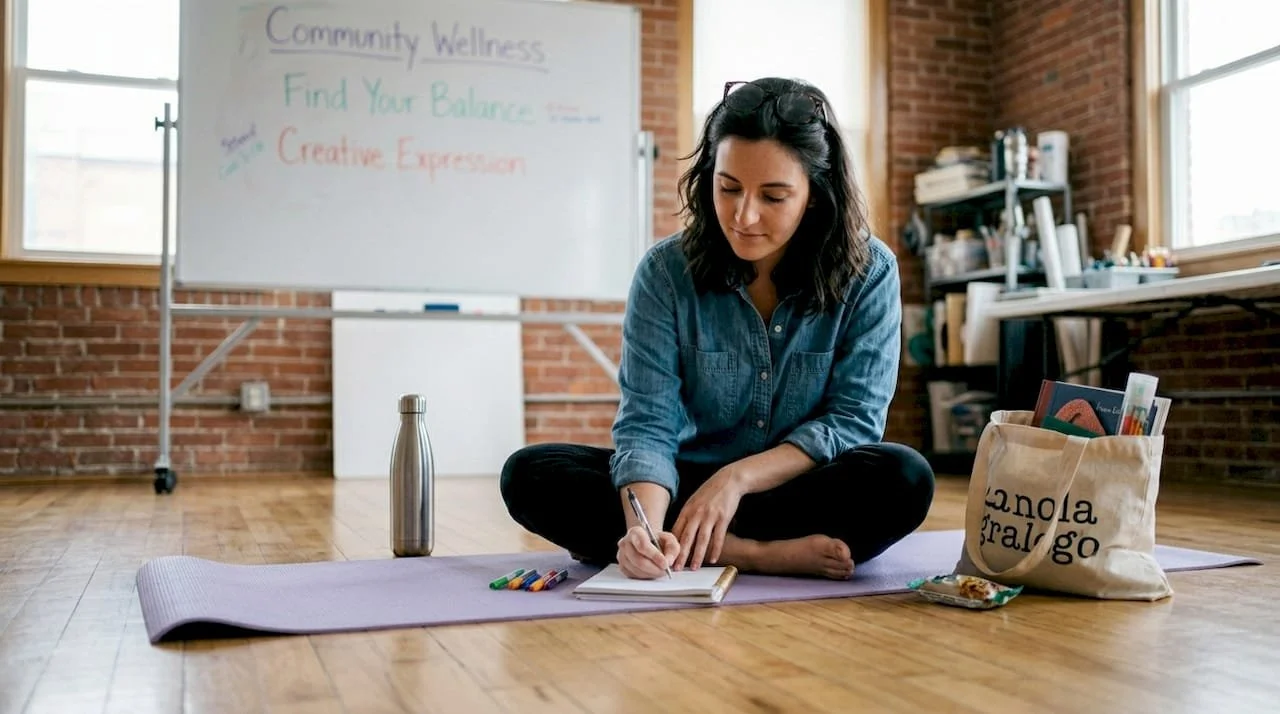
Research consistently shows that wellness workshops and retreats do more than feel good in the moment. They reduce stress and anxiety while also lowering inflammatory biomarkers, improving heart rate variability, and supporting neuroplasticity. These aren't soft outcomes. These are measurable biological changes that show your nervous system is genuinely responding.
What makes workshops especially powerful is the durability of those effects. When participants maintain their practice after the event, improvements in mental clarity and emotional balance persist. The key phrase is when they maintain—a point we'll return to later.
"Over 80% of yoga practitioners report reduced stress, and more than 70% say yoga motivates them to exercise more and eat better."
That statistic from the National Center for Complementary and Integrative Health reframes what workshops can accomplish. They don't just help you feel better on the day—they shift your motivation and behaviors across every area of health.
Philadelphia wellness workshops that use evidence-based protocols draw on exactly this research to design sessions that target stress reduction, emotional regulation, and physical restoration all at once.
Key benefits participants commonly report after attending a wellness workshop:
Noticeably reduced stress and mental tension
Improved sleep quality within the first week
Greater motivation to maintain healthy eating and movement habits
Increased sense of joy and emotional steadiness
Reduced physical symptoms such as tension headaches and muscle tightness
| Benefit area | Reported improvement |
|---|---|
| Stress reduction | Up to 80% of practitioners |
| Exercise motivation | Over 70% increase |
| Emotional balance | Sustained with continued practice |
| Inflammatory markers | Measurably reduced |
| Sleep quality | Improved within days to weeks |
This is not anecdotal. The data makes a strong case for prioritizing workshop attendance as part of your wellness strategy.
Community, accountability, and holistic integration
Scientific evidence is compelling, but how do these benefits play out in real life? Community is the cornerstone.
One of the most underestimated aspects of wellness workshops is what happens between participants. Group wellness classes build community and accountability in ways that solo practice simply cannot replicate. An 8-week yoga or Pilates program in a group format has been shown to improve health metrics and reduce physical pain more effectively than individual practice alone.
For Philadelphians, this matters beyond statistics. City life can feel isolating. Workshops create a room full of people who chose to be there, who share similar goals, and who hold space for each other. That environment activates something different in us. We try harder. We open up. We commit.
Here's how holistic integration actually happens inside a well-designed workshop:
Mindfulness practices anchor attention to the present moment, calming the nervous system and building self-awareness
Movement sequences release stored tension in the body, creating physical relief that complements the mental work
Group sharing normalizes personal struggles and creates genuine connection among participants
Reflective practices such as journaling or meditation help integrate insights so they become part of daily life
Real transformation stories from workshop participants often sound similar. Someone arrives feeling burned out and skeptical. By the second hour, the shared experience of breathwork or a vulnerable conversation during a circle share shifts something. They leave with tools, yes, but also with a sense of belonging that keeps them coming back.
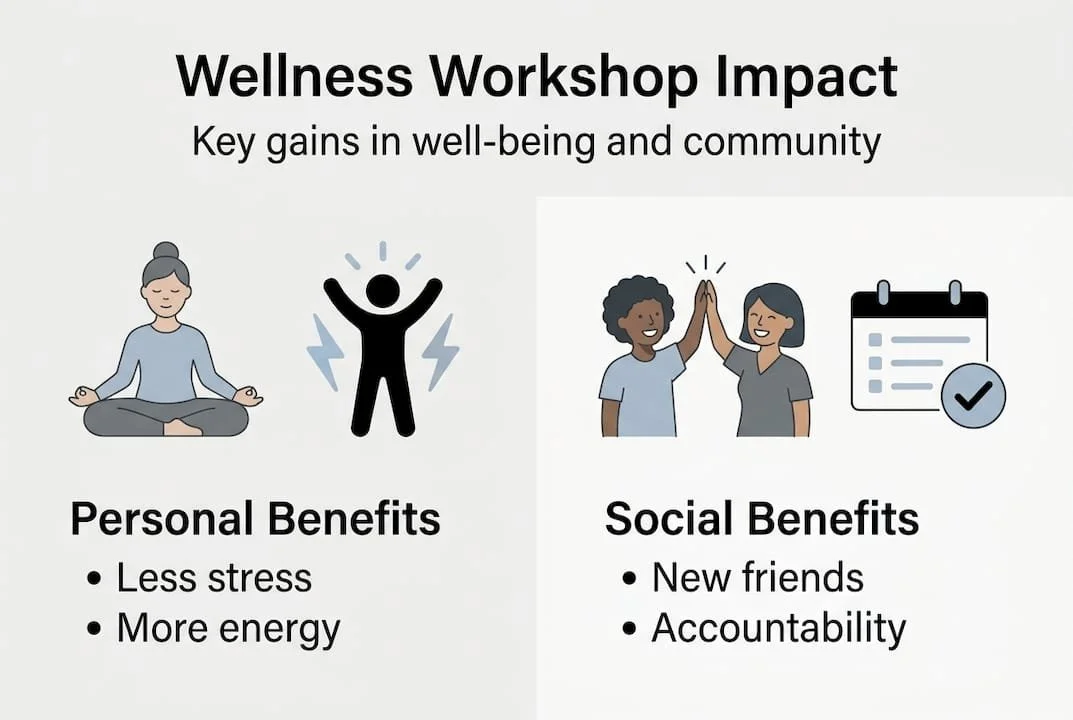
The role of group classes in sustaining this momentum is significant. When you find your yoga community in Philadelphia, the gains from a weekend workshop don't fade as quickly because you have people around you reinforcing the same values.
Choosing the right workshop and maximizing your results
Having seen what community can achieve, let's get practical with how you can identify high-impact workshops and maximize your transformation.
Not every workshop is created equal. The difference between a forgettable afternoon and a genuinely life-changing experience often comes down to a few key factors. Before you register, ask yourself these questions:
Is the facilitator certified with a recognized credential such as RYT-200 or above?
Does the workshop have a specific, clearly defined focus rather than a vague theme?
Is there a track record of positive outcomes, testimonials, or follow-up support?
Will the group size allow for individual attention and meaningful connection?
According to NCCIH guidance on mind-body interventions, certified instructors are essential for minimizing risk and adapting practices safely for different populations. This is especially important if you have injuries, chronic conditions, or are new to the practice.
Pro Tip: Look for workshops that offer post-event support, whether that's a follow-up online group, a resource guide, or a check-in session a few weeks later. That ongoing accountability is often what separates lasting change from a nice weekend.
To get the most out of any workshop you attend, follow these steps:
Set a clear intention before you arrive. Know what you want to work on or open up to.
Communicate with the facilitator ahead of time about any physical limitations or personal goals.
Commit to the full experience—arrive early, stay present, resist the urge to check your phone.
Take notes or journal immediately after each session while insights are still fresh.
Schedule your next practice session before you leave the workshop venue.
Deepening your practice through specialized workshops that focus on community and skill-building gives you the structure to turn one-time insights into a living practice.
Why a single workshop isn't enough—but it sparks the biggest change
Here's our honest take: workshops are not magic. We've seen people leave a transformative Saturday session and return to the exact same patterns by Wednesday. That's not a failure of the workshop. That's the reality of how change works.
A workshop creates a spark. It opens a door you may not have known was there. But walking through it every day—that part is yours to own. Sustained wellness comes from what you do in the weeks after the event, not just during it.
There's also a broader truth that doesn't get discussed enough. Research on workplace wellness programs shows they often fail when they focus only on individual behavior and ignore systemic root causes like overwork, poor management culture, or unsustainable schedules. The same principle applies to personal wellness. A workshop can give you tools. But if your environment—your relationships, your workload, your community—doesn't support the changes you're trying to make, those tools gather dust.
This is why we encourage you to think of workshops as the beginning of a conversation, not the conclusion. Come curious. Leave with commitments. Then find the people, practices, and environments that reinforce what you learned.
Take your next step: Workshops and holistic experiences in Philadelphia
If this article has sparked something in you, you're in the right place to act on it.
Amrita Yoga & Wellness offers a rich calendar of workshops, group classes, retreats, and specialized experiences designed for Philadelphians at every stage of their wellness journey. Whether you're curious about meditation, want to deepen a yoga practice, or are ready to explore something entirely new like tarot readings as a tool for self-reflection, there's a space here for you. Our community is built on the belief that transformation is more powerful when it happens together. Check out upcoming events, register for a workshop, and take the step that makes the rest possible.
Frequently asked questions
What can I expect during my first wellness workshop?
Expect a blend of movement, mindfulness, group activities, and expert guidance tailored to all experience levels. Workshops use intensive sessions with direct instructor feedback and communal sharing to build both skill and emotional resilience.
How soon will I notice benefits from a workshop?
Many people feel less stressed and more energized after just one session; ongoing practice deepens these effects. Stress and anxiety improvements are often felt immediately, with lasting gains tied to continuing your practice afterward.
Are workshops suitable if I'm new to yoga or mindfulness?
Most workshops welcome beginners and incorporate practices accessible to all physical abilities. Certified instructors provide modifications and adaptations to maximize both safety and benefit for every participant.
What's more effective: workshops or regular weekly classes?
Workshops provide intensive learning and community, but pairing them with regular classes yields the best long-term results. Workshops offer up to 5x the learning depth of regular classes, while consistent practice sustains that impact over time.
Can wellness workshops address workplace stress?
They help reduce individual stress significantly, but lasting solutions also require organizational changes. Wellness programs fall short when they ignore root causes like overwork or unsupportive workplace culture, so personal and systemic change work best together.
Recommended
Top yoga retreats to transform your 2025 wellness journey
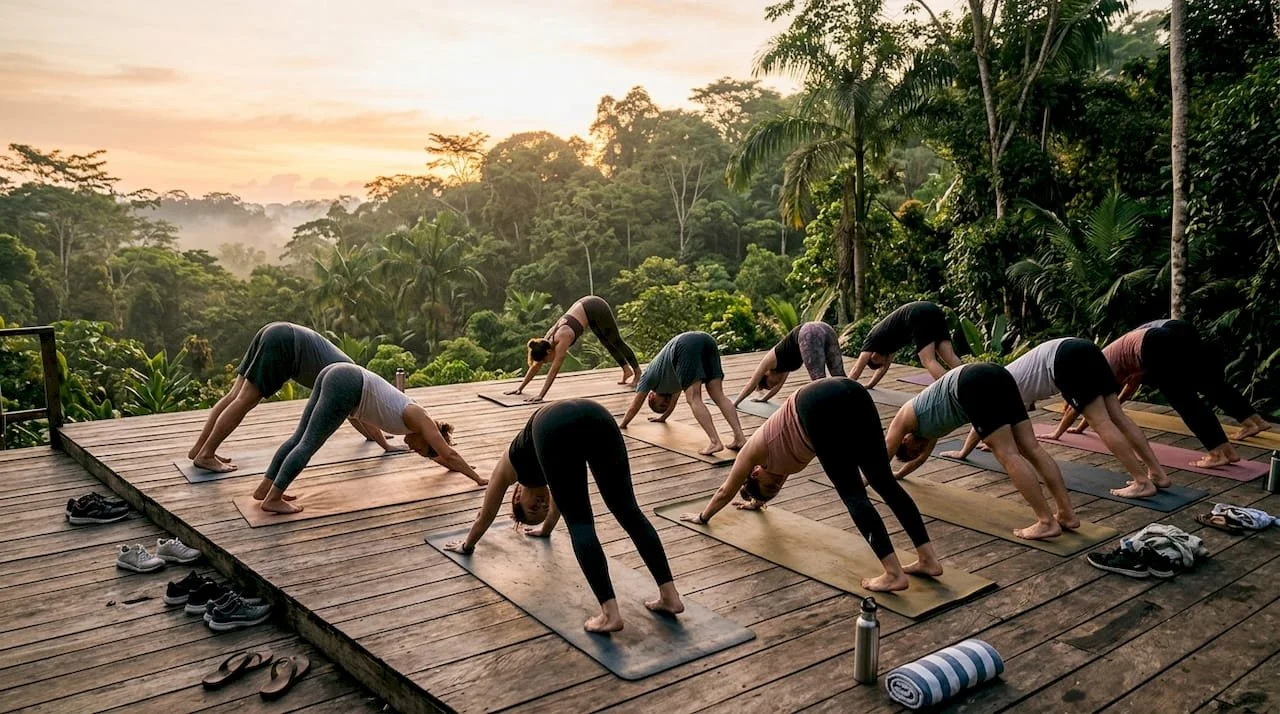
Finding a yoga retreat that actually delivers on its promise of transformation is harder than it sounds. The wellness travel market has exploded, with hundreds of options ranging from budget ashrams to ultra-luxury eco-resorts, each claiming to be the reset your body and mind need. Not every retreat suits every seeker, and choosing the wrong one can leave you more drained than refreshed. This guide walks you through exactly what to look for, profiles five of the world's most acclaimed retreats, and helps you match the right experience to your personal wellness goals.
Table of Contents
Key Takeaways
| Point | Details |
|---|---|
| Selection criteria matter | Consider your wellness goals, experience level, and the retreat's setting before booking. |
| Unique strengths by retreat | Each top retreat offers signature experiences—from eco-luxury to in-depth spirituality. |
| Domestic and global options | You can find world-class yoga retreats both in the US and abroad for 2025. |
| Customization and inclusivity | Top retreats support diverse diets and beginner-friendly programming for all guests. |
How to evaluate the best yoga retreats in 2025
Before you book anything, get clear on your intention. Are you recovering from burnout, deepening your practice, or simply craving stillness? Your answer shapes everything from the setting you need to the teaching style that will serve you best.
Here are the core criteria worth weighing before you commit:
Teacher credentials: Look for instructors with 500-hour certifications or specialized training in the style you want to practice.
Group size: Smaller groups (under 20) allow for personalized adjustments and a more intimate experience.
Food philosophy: Farm-to-table, sattvic (pure, plant-based), or locally sourced meals signal a retreat that takes holistic wellness seriously.
Activity diversity: The best retreats blend yoga with hiking, meditation, breathwork, or spa therapies so you stay engaged throughout.
Setting and nature access: Proximity to forests, mountains, or ocean has measurable effects on stress reduction and mental clarity.
Matching retreat style to your level matters just as much. An intensive daily schedule with advanced postures will exhaust a beginner, while a gentle flow-focused program may bore a seasoned practitioner. Read the itinerary carefully and contact the retreat directly if the level description is vague.
Budget and location are practical filters, not afterthoughts. US-based retreats like Omega and Anamaya dominate 2025 rankings for accessibility and diverse levels, while international spots like Costa Rica excel in eco-luxury and Blue Zone longevity benefits. Understanding these wellness retreat criteria before you search saves hours of scrolling and prevents expensive mistakes.
"The best retreat is not the most expensive one. It's the one that meets you exactly where you are."
Pro Tip: Read at least 10 recent guest reviews on independent platforms, not just the retreat's own website. Look for patterns in what people loved and what disappointed them.
Anamaya Resort, Costa Rica: Cliffside yoga and eco-luxury
Few retreats in the world offer the visual drama of Anamaya. Perched on cliffs above the Pacific Ocean in Montezuma, this resort delivers yoga sessions on open-air decks where howler monkeys and ocean breezes are your soundtrack.
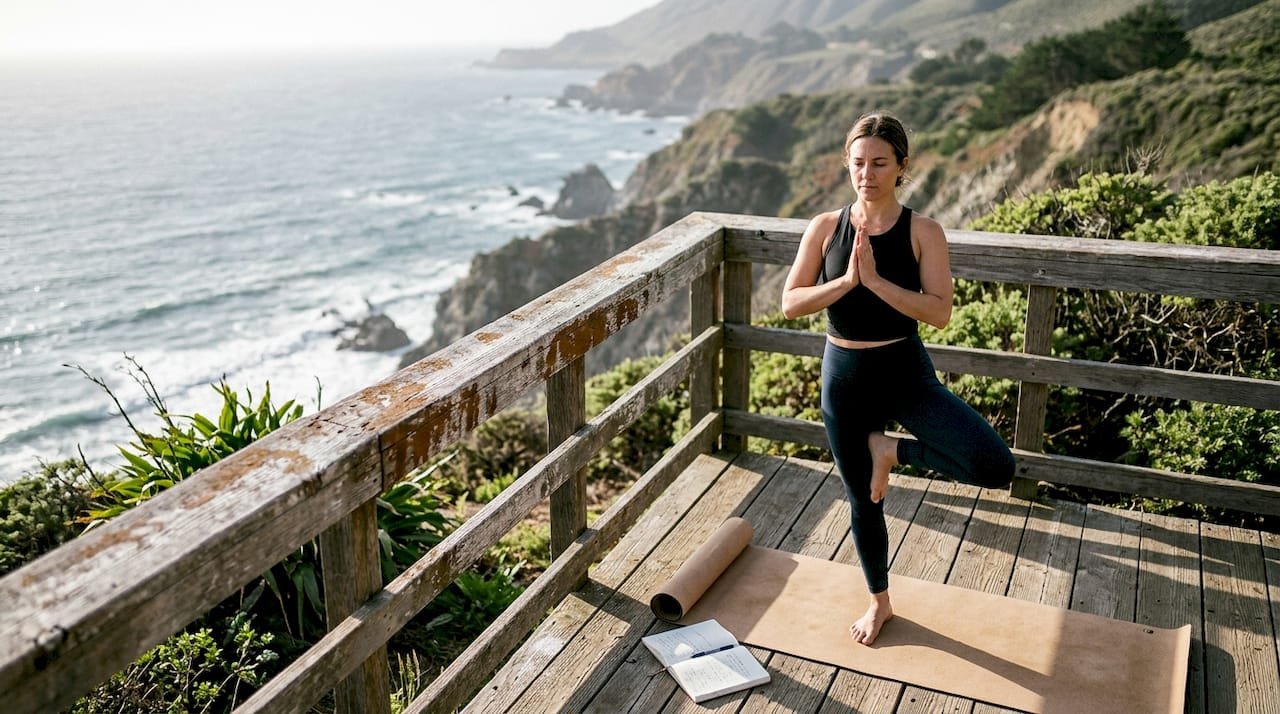
Anamaya Resort is frequently highlighted as a top yoga retreat destination for 2025 and 2026, offering cliff-top yoga decks, organic meals, and a full wellness activity menu. The eco-luxury approach means you feel pampered without the guilt of a heavy environmental footprint.
Key highlights at Anamaya include:
Organic farm-to-table dining sourced from local Costa Rican farms
Infrared sauna and spa treatments available daily
Guided waterfall tours, surfing, and zip-lining for adventurous guests
Blue Zone location in the Nicoya Peninsula, one of the world's five longevity hotspots
All-inclusive packages that simplify planning and budgeting
The Blue Zone factor is genuinely compelling. Nicoya residents consistently rank among the world's longest-lived populations, and the lifestyle principles embedded in the region (plant-rich diet, strong community, purposeful movement) naturally infuse the retreat experience. If you want yoga retreat inspiration rooted in both science and scenery, Anamaya is a strong contender.
Best for: Wellness seekers who want eco-luxury, adventure, and a tropical setting without sacrificing quality instruction.
Omega Institute, New York: Immersive learning and nature connection
Omega Institute in Rhinebeck, New York, proves you don't need a passport for a profound retreat experience. Set on 250 woodland acres with a private lake, it feels worlds away from city life while remaining accessible to the entire East Coast.
Omega Institute ranks among the top US yoga retreat centers in 2025, featuring diverse workshops and deep nature immersion. What sets Omega apart is its sheer breadth of programming. On any given week, you might find workshops in Kundalini yoga, trauma-informed movement, forest bathing, and sound healing running simultaneously.
Standout features include:
Lakeside meditation and forest hiking trails across 250 acres
Multiple yoga styles from restorative to dynamic Vinyasa
Holistic healing workshops covering mindfulness, nutrition, and integrative medicine
Accessible pricing tiers including work-study options for budget-conscious seekers
Nationally recognized faculty including published authors and master teachers
"Omega is less a retreat and more a living university for the soul, where every walk through the woods is part of the curriculum."
The work-study program is a hidden gem. You contribute a few hours of service daily in exchange for significantly reduced fees, and many participants say the communal work itself becomes part of the healing. Explore wellness retreat experiences like Omega when you want depth, variety, and a sense of belonging.
Best for: Curious learners who want variety, community, and a nature-rich domestic option.
Krishna Village, Australia: Yogic lifestyle and vibrant community
Krishna Village Eco Yoga Retreat in New South Wales offers something rare: a genuine immersion into yogic culture rather than just yoga classes. This is not a resort with yoga on the menu. It's a living community where the philosophy breathes through every meal, conversation, and morning practice.
Krishna Village is praised for its daily classes, philosophy workshops, and sattvic meals that support mental clarity and spiritual growth. The community atmosphere makes it particularly welcoming for solo travelers who arrive not knowing anyone and leave with lifelong connections.
What you can expect:
Daily Hatha and Vinyasa yoga at sunrise and throughout the day
Yogic philosophy workshops covering the Bhagavad Gita and meditation techniques
Sattvic vegetarian meals prepared with mindfulness and seasonal ingredients
Eco-friendly accommodations in a lush subtropical setting
Inclusive environment for complete beginners through experienced practitioners
Pro Tip: If you're traveling solo to Krishna Village, sign up for a philosophy workshop on your first day. It's the fastest way to connect with fellow guests and get oriented in the community rhythm.
The transformation here tends to be quieter and slower than at high-intensity retreats, but participants consistently report it as more lasting. Check out more Krishna Village experience stories from practitioners who've made the journey.
Best for: Solo travelers, beginners, and anyone seeking genuine yogic community over luxury amenities.
Ananda in the Himalayas: Ayurveda meets ancient yoga
If you're ready to go deep, Ananda in the Himalayas may be the most complete wellness retreat on this list. Located in the Himalayan foothills above Rishikesh, the birthplace of yoga, it combines ancient Indian healing traditions with world-class facilities in a setting that feels genuinely sacred.
Ananda is top-rated for integrating Ayurveda with yoga for holistic wellness. Ayurveda (the traditional Indian system of medicine focused on balancing the body's energies through diet, herbs, and lifestyle) is not an add-on here. It's the foundation of every program.
Signature offerings include:
Personalized Ayurvedic consultations with qualified physicians on arrival
Yoga programs tailored to your dosha (body-mind constitution)
Panchakarma detox therapies for deep cellular cleansing
Himalayan hiking and meditation in pristine mountain air
Luxury spa facilities including hydrotherapy and traditional Indian treatments
"At Ananda, the mountain doesn't just surround you. It becomes part of the practice."
The personalization at Ananda is exceptional. Rather than following a fixed group schedule, your program is built around your health history and goals after a thorough intake assessment. This Ayurveda and yoga integration approach makes it ideal for anyone dealing with chronic stress, digestive issues, or sleep disruption.
Best for: Those seeking therapeutic depth, Ayurvedic healing, and a luxury experience rooted in ancient tradition.
Art of Living Retreat Center, North Carolina: Mindfulness in the Blue Ridge Mountains
For a domestic retreat that punches well above its weight, the Art of Living Retreat Center in Boone, North Carolina, is hard to beat. Spread across 380 mountain acres with panoramic Blue Ridge views, it offers a genuinely restorative environment without requiring international travel.
Art of Living ranked #20 on Condé Nast Traveler's top destination spas for 2025, a recognition that reflects its consistent quality across yoga, meditation, and Ayurvedic programming. The breathwork programs here, particularly the SKY Breath Meditation technique, have drawn significant attention for their stress-reduction results.
Program highlights include:
Daily yoga and meditation across multiple styles and levels
SKY Breath Meditation for nervous system regulation and anxiety relief
Ayurvedic consultations and treatments with trained practitioners
Farm-to-table vegetarian meals prepared on-site
Silent retreat options for those wanting deeper inward focus
The 380-acre campus means you're never crowded, even during peak season. Trails wind through forests and meadows, and the mountain air alone feels like part of the treatment. Browse US yoga retreats if you want more options at this level of quality without leaving the country.
Best for: Domestic travelers wanting scenic beauty, breathwork, and accessible Ayurvedic programs.
Comparing the top yoga retreats: Which fits your wellness goals?
Now that you've met the top retreats, here's how they stack up side by side so you can make a faster, clearer decision.
| Retreat | Location | Best for | Yoga focus | Signature strength |
|---|---|---|---|---|
| Anamaya Resort | Costa Rica | Eco-luxury seekers | Multi-style | Blue Zone setting, adventure |
| Omega Institute | New York, USA | Curious learners | Multi-style | Workshop breadth, nature |
| Krishna Village | Australia | Solo travelers, beginners | Hatha, Vinyasa | Yogic community, philosophy |
| Ananda in the Himalayas | India | Therapeutic healing | Ayurvedic yoga | Personalized Ayurveda |
| Art of Living | North Carolina, USA | Domestic travelers | Breathwork, meditation | SKY technique, mountain setting |
High ratings of 4.5 to 5 stars and repeat visitor testimonials indicate strong efficacy across all five retreats, though some advanced practitioners note that most options cater better to beginners and solos than to those seeking high-intensity training. When comparing wellness retreats, use these practical steps to finalize your choice:
Define your primary goal (stress relief, skill building, detox, community) before comparing options.
Set a realistic budget that includes travel, accommodation, and any add-on treatments.
Check the schedule format to confirm it matches your preferred pace (structured vs. flexible).
Verify dietary options if you have restrictions, since most top retreats accommodate plant-based and allergy-sensitive needs.
Contact the retreat directly with one specific question. How they respond tells you a lot about the guest experience you can expect.
Solo travelers tend to thrive at Krishna Village and Omega, where community is built into the design. Luxury seekers get the most value at Anamaya and Ananda. If you're new to retreats entirely, Art of Living's structured programs offer a gentle, well-supported entry point.
Ready for your own transformative retreat?
Your next wellness chapter doesn't have to wait until you've booked a flight. Whether you're preparing for one of these retreats or looking to build a consistent practice closer to home, Amrita Yoga & Wellness in Philadelphia offers the tools to support your journey every step of the way.
From yoga classes across multiple styles to acupuncture wellness sessions that complement any retreat experience, Amrita brings holistic healing into your everyday life. Curious about deepening your self-awareness? Explore tarot readings as a reflective practice that pairs beautifully with the inner work retreats inspire. The community, the care, and the commitment to your whole-person wellness are right here in your own city.
Frequently asked questions
What should I pack for a yoga retreat in 2025?
Bring lightweight yoga attire, a reusable water bottle, a journal, and any personal wellness items you rely on daily. Most retreats supply mats, props, and linens.
Are yoga retreats suitable for beginners?
Absolutely. Most top retreats actively welcome beginners and solo travelers, with structured support and accessible class levels built into the program. Retreats suit beginners and solos best, with advanced practitioners sometimes needing to seek out more intensive specialty programs.
How do I choose between domestic and international yoga retreats?
Base your decision on travel comfort, budget, and the type of experience you want. US retreats lead 2025 rankings for accessibility, while international options like Costa Rica offer unique eco-luxury and Blue Zone benefits.
Do retreats accommodate dietary restrictions?
Yes. Most leading retreats offer customizable menus for vegetarian, vegan, and allergy-sensitive guests. Anamaya offers organic farm-to-table meals and Krishna Village provides sattvic vegetarian dining as a core part of the experience.
What wellness benefits can I expect from a top-tier retreat?
Expect improved relaxation, better sleep, stronger movement habits, and a lifted mood. High ratings and repeat testimonials across top retreats confirm lasting benefits when participants engage fully with the program.
Recommended
Diverse yoga practices for wellness in Philadelphia 2026
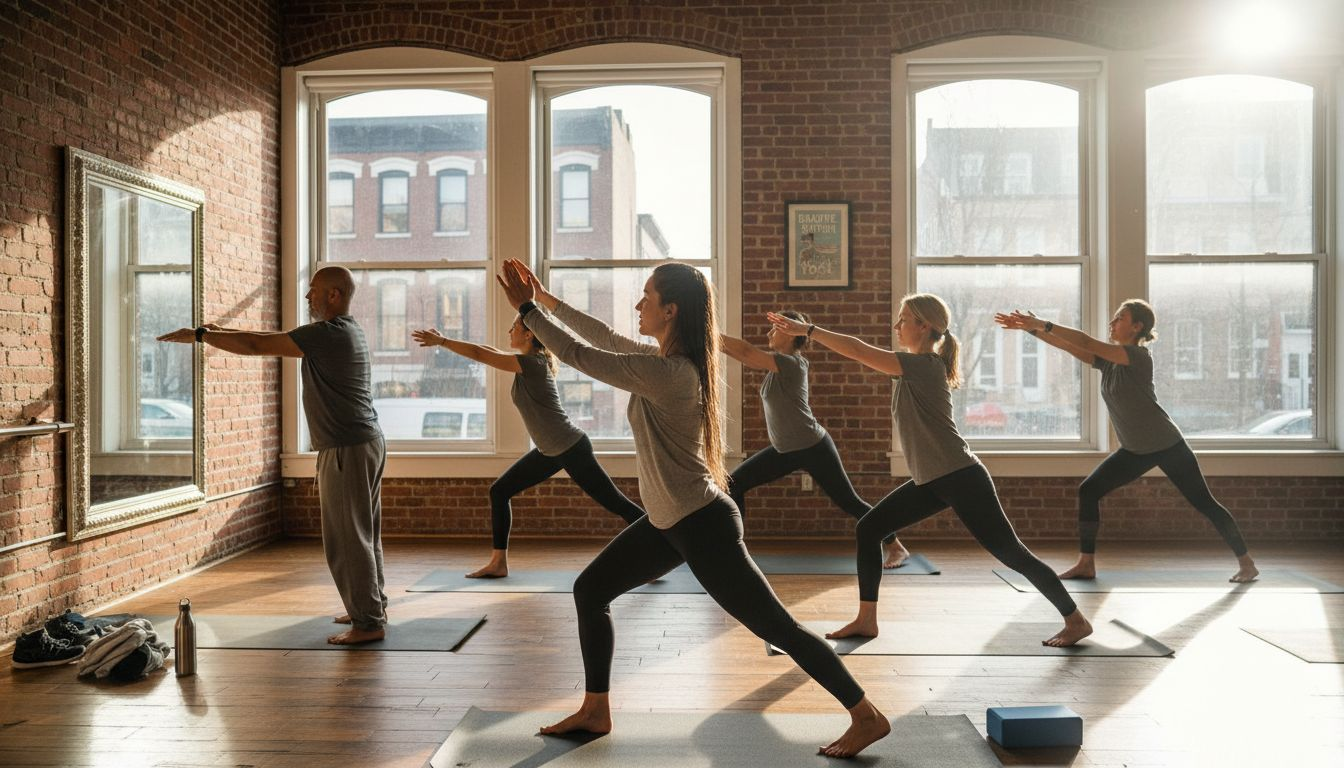
Many people assume yoga requires exceptional flexibility or years of practice, but that's far from reality. Philadelphia's wellness scene offers an incredible variety of yoga styles, from gentle restorative classes to intense hot yoga sessions, plus complementary practices like pilates and barre. Whether you're taking your first class or deepening an advanced practice, understanding the diverse options available helps you choose the path that aligns with your wellness goals, schedule, and fitness level.
Table of Contents
Key takeaways
| Point | Details |
|---|---|
| Holistic approach | Moksha Yoga blends 40 traditional poses with mental and spiritual practices for complete wellness. |
| Stress reduction focus | The practice emphasizes stress management alongside physical strength and flexibility improvements. |
| Accessible to all levels | Beginners and advanced practitioners benefit equally from Moksha Yoga’s adaptable structure. |
| Philadelphia resources | Local studios offer classes, workshops, and guidance to help you start your practice easily. |
| Mind-body-spirit balance | The practice creates harmony between physical health, mental clarity, and spiritual awareness. |
Understanding yoga styles: from beginner to advanced
Philadelphia's yoga studios offer distinct practice styles, each designed for specific wellness goals and experience levels. Hatha yoga provides a foundational approach with slower-paced poses held for several breaths, making it ideal for beginners learning proper alignment and breathing techniques. Vinyasa flows link breath with continuous movement, creating a dynamic practice that builds cardiovascular endurance alongside flexibility.
Hot yoga takes place in studios heated to 95-105 degrees Fahrenheit, intensifying the physical challenge while promoting deep muscle release and detoxification through sweat. This style suits intermediate to advanced practitioners comfortable with sustained physical exertion in challenging conditions. Restorative yoga uses props like bolsters and blankets to support passive poses held for 5-10 minutes, activating the parasympathetic nervous system to reduce stress and promote healing.
Pilates complements yoga by emphasizing precise, controlled movements that strengthen core muscles and improve posture. While not technically yoga, many studios integrate pilates into their schedules because both practices enhance body awareness and functional movement patterns. The controlled, low-impact nature makes pilates accessible to people recovering from injuries or managing chronic pain.
Pro Tip: Start with a beginner Hatha or gentle flow class to learn foundational poses before progressing to more intense styles like hot yoga or advanced Vinyasa sequences.
Choosing between styles depends on your current fitness level, available time, and whether you prioritize physical challenge, stress relief, or a balanced combination. Understanding why choose yoga classes that match your goals prevents frustration and supports consistent practice.
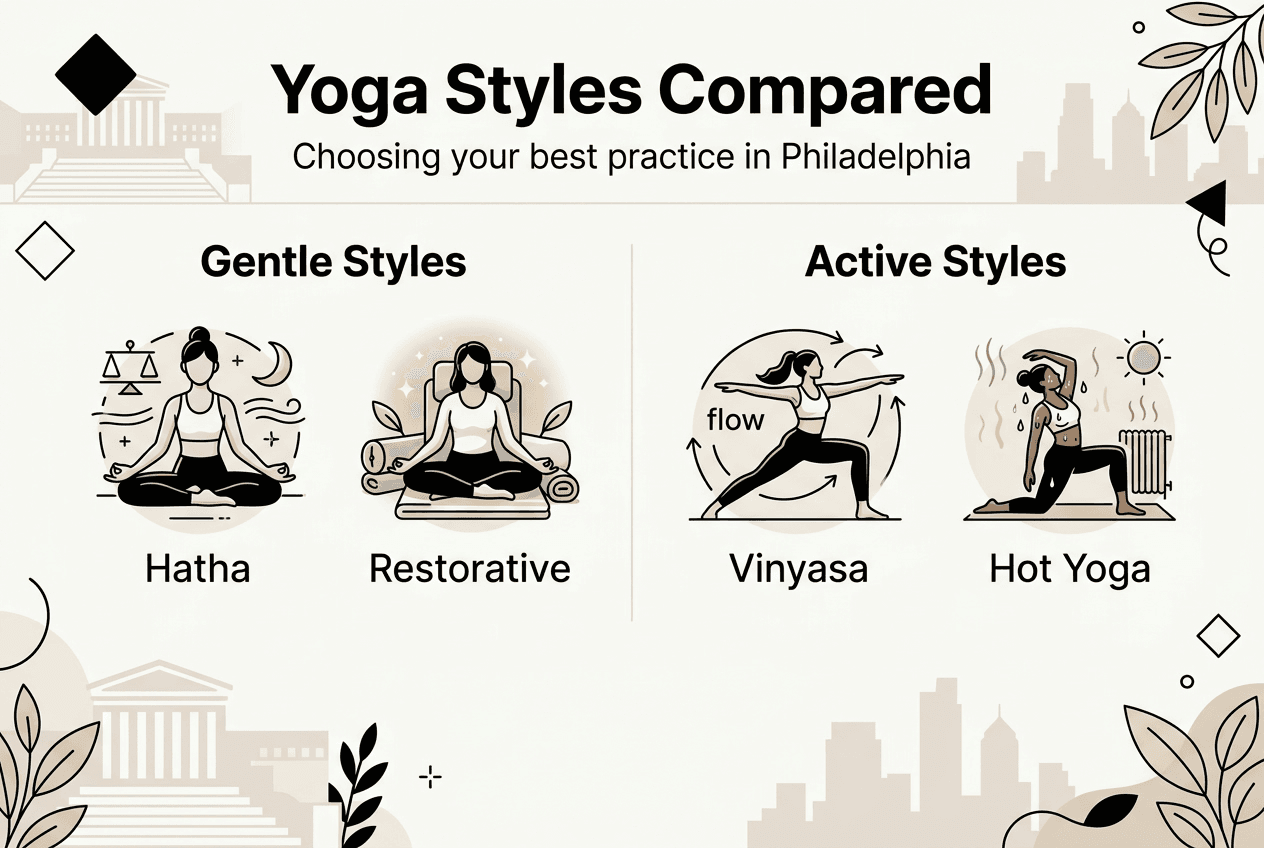
| Yoga Style | Typical Class Length | Intensity Level | Primary Benefits |
|---|---|---|---|
| Hatha | 60–75 minutes | Low to Moderate | Foundational poses, flexibility, stress reduction |
| Vinyasa | 60–90 minutes | Moderate to High | Cardiovascular fitness, strength, mental focus |
| Hot Yoga | 60–90 minutes | High | Deep stretching, detoxification, endurance |
| Restorative | 60–75 minutes | Very Low | Deep relaxation, nervous system healing, recovery |
| Pilates | 45–60 minutes | Moderate | Core strength, posture correction, body control |
Each practice style creates different physical sensations and mental states. Hot yoga practitioners often report feeling energized yet calm after class, while restorative students describe profound relaxation and improved sleep quality. Vinyasa flows challenge coordination and build mental resilience through continuous movement, whereas Hatha’s slower pace allows detailed attention to alignment and breath awareness.
Benefits of yoga and pilates for physical and mental wellness
Regular yoga practice delivers measurable improvements in both physical health and psychological wellbeing. Flexibility and stress reduction improve through consistent attendance, with many practitioners noticing changes within 4-6 weeks. Joint mobility increases as poses gently move limbs through their full range of motion, reducing stiffness and preventing age-related flexibility loss.
Strength building occurs through bodyweight resistance as you hold poses like plank, warrior sequences, and balancing postures. Unlike traditional weightlifting, yoga develops functional strength that supports everyday movements like lifting groceries, climbing stairs, or playing with children. Core muscles engage constantly to maintain stability, creating a strong foundation that protects the spine and improves posture.
Mental health benefits emerge from the mind-body connection yoga cultivates. Focusing on breath and physical sensations during practice trains attention, reducing the mental chatter that fuels anxiety and stress. The parasympathetic nervous system activates during longer holds and final relaxation, lowering cortisol levels and blood pressure. Many practitioners report improved sleep quality, emotional regulation, and resilience when facing daily challenges.
Regular yoga practice reduces perceived stress by 30% and improves overall quality of life markers including energy levels, emotional balance, and physical comfort in daily activities.
Pilates complements yoga by targeting specific muscle imbalances and postural issues. The precise, controlled movements strengthen smaller stabilizing muscles often neglected in conventional exercise. People who sit for extended periods benefit particularly from pilates exercises that counteract rounded shoulders and forward head posture. The benefits of pilates and yoga multiply when practiced together, creating a comprehensive approach to physical wellness.
Key physical improvements from consistent practice include:
Enhanced balance and coordination reducing fall risk, especially important for older adults
Increased bone density through weight-bearing poses that stimulate bone formation
Improved respiratory function as breathing exercises expand lung capacity
Better circulation and cardiovascular health from flowing sequences that elevate heart rate
Reduced chronic pain through gentle movement that releases muscle tension and improves joint function
Mental and emotional benefits extend beyond the mat into daily life. Practitioners develop greater self-awareness, noticing stress signals earlier and responding with healthy coping strategies. The non-competitive environment in most yoga classes fosters self-compassion, teaching students to honor their body's current capabilities rather than forcing progress. This mindset shift often influences other life areas, promoting healthier relationships with food, work, and personal boundaries.
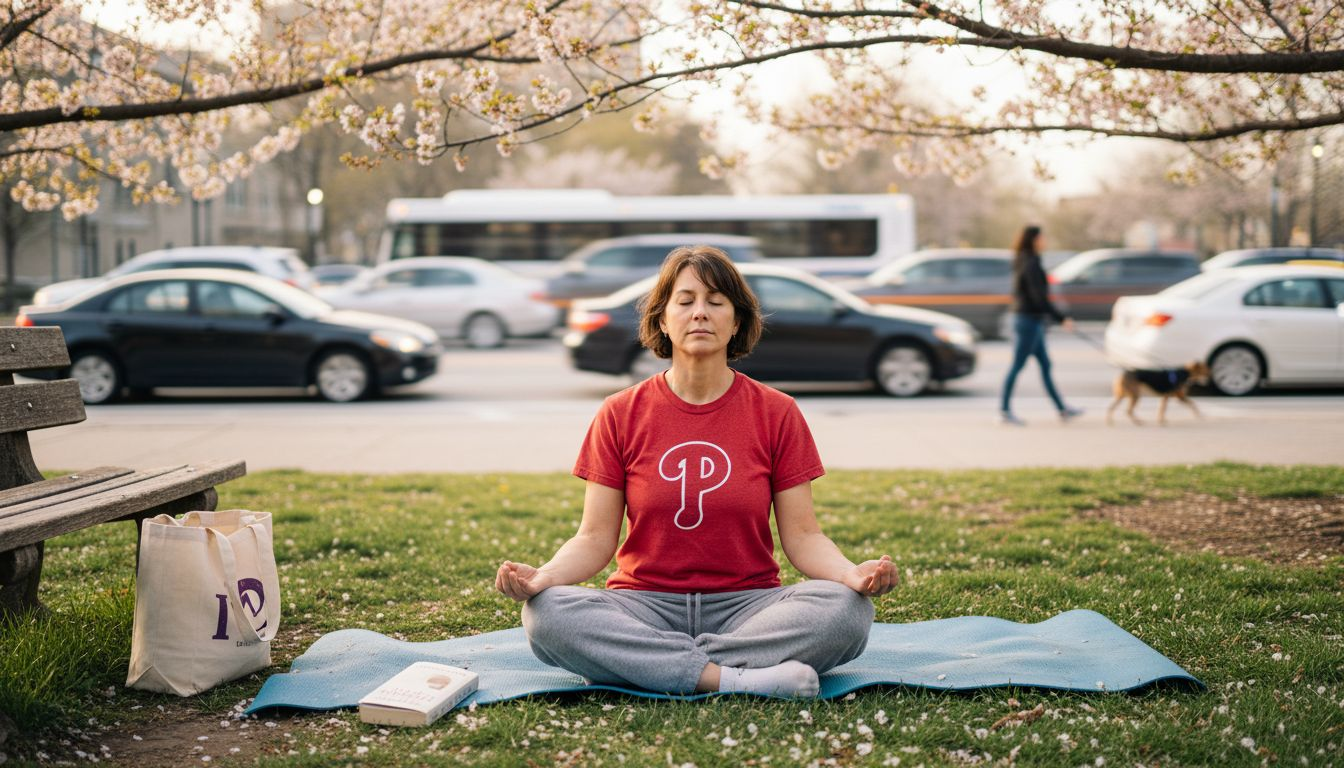
How to choose the right yoga class in Philadelphia
Selecting an appropriate yoga class requires honest assessment of your current fitness level, schedule constraints, and wellness priorities. Follow this systematic approach to find classes that support rather than frustrate your practice:
Evaluate your starting point by considering recent physical activity, existing injuries or limitations, and experience with mind-body practices
Identify primary goals such as stress relief, increased flexibility, strength building, or social connection
Research studio offerings by reading class descriptions, instructor bios, and student reviews on studio websites
Attend introductory or beginner-labeled classes first to experience teaching style and studio atmosphere
Communicate with instructors before class about injuries, concerns, or questions to receive appropriate modifications
Commit to at least 4-6 classes before judging whether a style suits you, as initial discomfort often reflects unfamiliarity rather than poor fit
Pro Tip: Schedule classes during times when your energy naturally peaks. Morning people thrive in sunrise flows, while evening practitioners often prefer unwinding with gentler styles after work.
Philadelphia studios vary in their focus, amenities, and community culture. Some emphasize athletic, fitness-oriented classes with upbeat music and challenging sequences. Others prioritize traditional yoga philosophy, incorporating meditation, chanting, and spiritual teachings. Yoga class selection becomes easier when you understand these distinctions and identify which environment motivates you.
| Consideration | Questions to Ask | Why It Matters |
|---|---|---|
| Class Level | Does the studio clearly label beginner, intermediate, and advanced classes? | Prevents injury and frustration from attempting poses beyond current capability |
| Studio Location | How far is the studio from home or work, and does the commute feel manageable? | Convenience directly impacts attendance consistency and long-term practice sustainability |
| Schedule Flexibility | Are classes offered at multiple times throughout the day and week? | Life demands fluctuate, so varied scheduling prevents missed sessions |
| Instructor Credentials | What training and certifications do teachers hold? | Qualified instructors provide safer guidance and more effective instruction |
| Trial Options | Does the studio offer drop-in rates or introductory packages? | Testing before committing to memberships saves money and ensures good fit |
Beginners should expect some initial awkwardness and muscle soreness, which typically diminishes after 2–3 weeks of regular attendance. Arrive 10 minutes early to introduce yourself to the instructor and familiarize yourself with the studio layout. Most studios provide mats and props, though bringing your own mat ensures hygiene and comfort. Wear fitted, breathable clothing that allows free movement without riding up or slipping during inverted poses.
Exploring yoga for mobility classes helps if joint stiffness or limited range of motion concerns you. These specialized sessions focus on gentle movements that gradually increase flexibility without forcing or straining. Similarly, yoga gym classes blend traditional poses with fitness elements, appealing to people who enjoy structured, goal-oriented workouts.
Community and wellness events enhancing your yoga experience
Philadelphia's yoga community extends beyond regular studio classes through workshops, outdoor gatherings, and special events that deepen practice and build social connections. Community wellness events foster connection while making yoga more accessible through donation-based or free sessions. These gatherings remove financial barriers and create welcoming environments where beginners feel comfortable trying yoga for the first time.
Group workshops focusing on specific topics like arm balances, meditation techniques, or yoga philosophy provide concentrated learning opportunities beyond regular class formats. Spending 2-3 hours exploring one aspect of practice allows deeper understanding and skill development. Many practitioners find workshops reignite motivation when regular classes start feeling routine or plateaued.
Social connections formed through yoga classes and events significantly impact practice consistency. Accountability partners make skipping class harder, while shared experiences create friendships based on common wellness values. Studios hosting community events like potlucks, volunteer days, or seasonal celebrations strengthen these bonds and foster belonging.
Practitioners who participate in community yoga events report 40% higher class attendance rates and greater satisfaction with their overall wellness journey compared to those who only attend regular classes.
Holistic wellness extends beyond physical poses to include complementary therapies that support mental, emotional, and spiritual health. Many Philadelphia yoga studios offer or partner with providers of acupuncture, massage therapy, nutritional counseling, and energy work. Integrating these modalities creates comprehensive self-care routines addressing multiple dimensions of wellbeing.
Community offerings that enhance yoga practice include:
Outdoor classes in parks and public spaces connecting practice with nature and fresh air
Charity events where class proceeds support local organizations, adding purpose to practice
Themed workshops exploring yoga's intersection with art, music, or cultural traditions
Beginner-friendly series providing structured introduction over multiple weeks
Seasonal celebrations marking solstices, equinoxes, or cultural holidays through special classes
Participating in community wellness events exposes you to different teaching styles and practice approaches without committing to regular classes with unfamiliar instructors. This exploration helps identify teachers whose guidance resonates with your learning style and personality. The informal atmosphere of many community events also reduces performance anxiety, allowing authentic engagement with practice.
Beyond yoga-specific gatherings, wellness events incorporating practices like tarot readings, sound baths, or breathwork ceremonies appeal to those interested in holistic personal growth. While not directly related to physical poses, these experiences complement yoga's introspective aspects and support the self-awareness many practitioners seek. The key is finding events and offerings that genuinely interest you rather than forcing participation in activities that feel inauthentic.
Explore yoga classes and wellness services at Amrita Yoga & Wellness
Ready to experience Philadelphia's diverse yoga offerings firsthand? Amrita Yoga & Wellness welcomes practitioners of all levels with new student specials designed to make your first classes affordable and accessible. Our schedule includes hot yoga, pilates, barre, and traditional yoga styles taught by experienced instructors who prioritize safety and individual attention.
Understanding studio and cancellation policies before your first visit ensures a smooth experience and helps you plan your practice schedule effectively. We've created a supportive community where questions are encouraged and modifications are always offered. Beyond yoga classes, explore our acupuncture services and wellness workshops that complement your physical practice with holistic healing modalities.
Frequently asked questions about yoga in Philadelphia
How do I start yoga if I'm a complete beginner?
Begin with classes explicitly labeled beginner, gentle, or foundational at any Philadelphia studio offering these levels. Arrive early to introduce yourself to the instructor and mention your newcomer status so they can provide extra guidance. Most studios offer introductory packages allowing you to try multiple classes at reduced rates before committing to memberships.
Are there yoga classes suitable for seniors or those with limited mobility?
Yes, many Philadelphia studios offer chair yoga, gentle yoga, or senior-specific classes that modify poses for reduced mobility and balance concerns. These classes focus on safe movements that improve flexibility and strength without requiring floor work or challenging balance poses. Instructors trained in adaptive yoga can modify any practice to accommodate physical limitations.
What should I bring to a first hot yoga class?
Bring a large water bottle, a towel for your mat, and wear minimal, moisture-wicking clothing since studios heat to 95-105 degrees. Arrive well-hydrated and avoid eating large meals within two hours before class. Most studios provide mats, but bringing your own ensures comfort and hygiene in the heated environment.
Can I combine pilates and yoga for better results?
Absolutely, combining pilates and yoga creates balanced fitness addressing flexibility, strength, and mind-body awareness from complementary angles. Many practitioners alternate between styles throughout the week or take hybrid classes blending both approaches. The precise core work in pilates enhances stability in challenging yoga poses, while yoga's flexibility training prevents the muscle tightness sometimes resulting from pilates.
Are community yoga events open to all skill levels?
Most community yoga events welcome all levels and explicitly state this in their descriptions. These gatherings typically feature slower-paced classes with detailed instruction suitable for beginners while offering variations for experienced practitioners. The inclusive atmosphere makes community events ideal for trying yoga without the pressure of formal studio settings.
Recommended
6 Tips for Choosing Good Yoga Mats for Every Practice
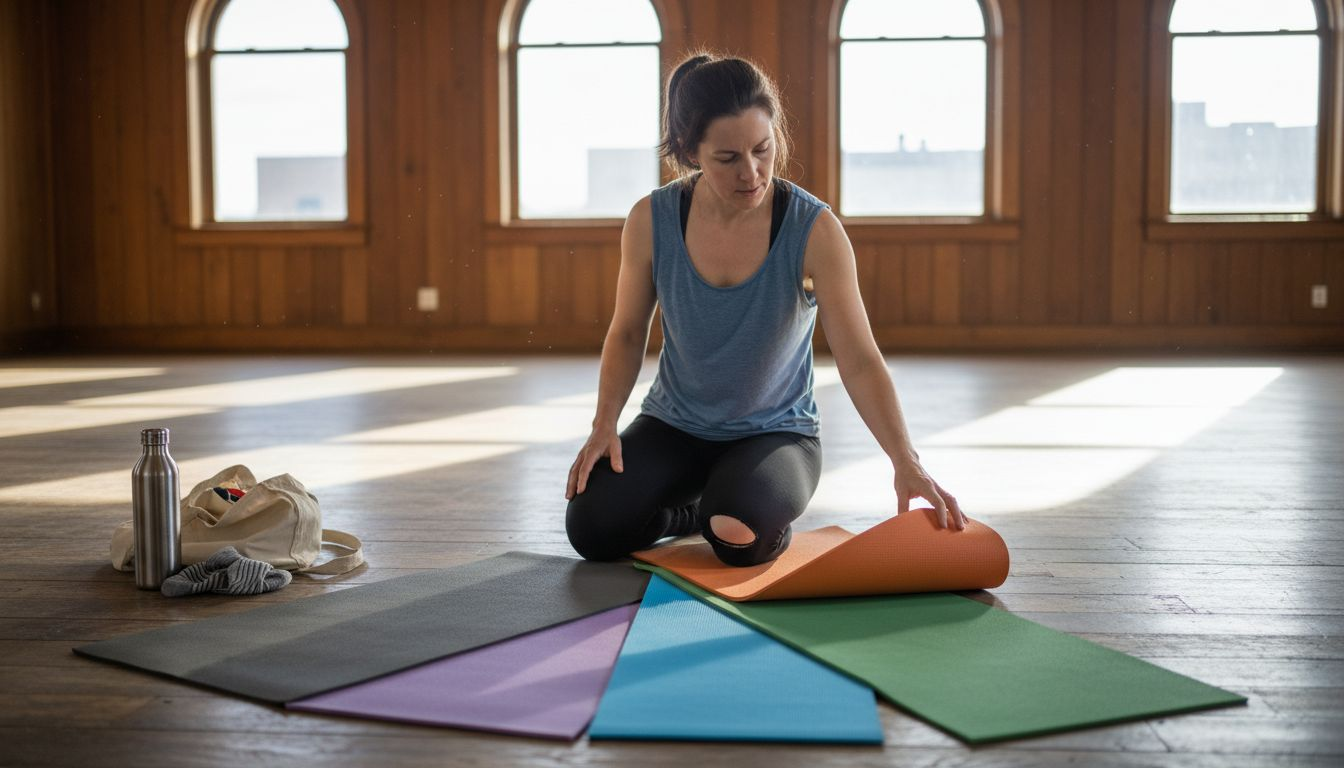
Choosing the perfect yoga mat can feel confusing when you face endless options for thickness, size, and materials. If your mat leaves your knees aching or slips during sweat-heavy classes, your practice and comfort suffer. Whether you’re practicing in Philadelphia or ready to join Amrita Yoga & Wellness, finding the right mat makes every session safer and more enjoyable.
This guide will help you unlock the key factors that impact comfort, stability, and long-term durability. You’ll discover actionable insights backed by material science and expert recommendations. Get ready to learn how to select a mat that protects your joints, supports your poses, and fits both your body and budget. The next steps will show you what to look for and how to avoid mistakes so you can practice with confidence.
Table of Contents
Quick Summary
| Key Message | Explanation |
|---|---|
| 1. Choose mat thickness wisely | The thickness of your yoga mat impacts comfort and stability. Consider your practice style and body needs when selecting the right thickness. |
| 2. Select appropriate material | Different materials affect grip and durability. Evaluate your practice intensity, sweat levels, and environmental values when choosing a mat material. |
| 3. Ensure proper mat size | A suitable mat size allows for full-body movement. Align your mat length and width with your height and practice space requirements for comfort. |
| 4. Maintain hygiene regularly | Keeping your mat clean is crucial for hygiene and grip performance. Develop a cleaning routine based on how often you practice to prolong mat life. |
| 5. Assess budget against needs | Consider initial costs, lifespan, and quality when selecting a mat. Invest in a mat that meets your practice frequency and aligns with your values. |
1. Understand Thickness and Cushioning Needs
Yoga mat thickness directly affects your comfort, stability, and how well your body is protected during practice. The right thickness depends on your individual needs, body type, and the yoga style you practice.
Thickness typically ranges from 1.5 mm to 6 mm, and each measurement serves a different purpose. Think of it as finding the sweet spot between cushioning and stability.
How Thickness Affects Your Practice
Thicker mats (5-6 mm) provide excellent cushioning and joint protection. They work best for restorative yoga, Yin yoga, and Hatha yoga where you spend extended time in floor poses. If you have sensitive knees, ankles, or a heavier body frame, extra cushioning reduces impact and strain.
Thinner mats (1.5-3 mm) offer better stability and ground contact. These excel during standing sequences, balancing poses, and dynamic flows like Ashtanga or hot yoga. You'll feel more grounded and connected to the floor, which improves alignment in poses like Warrior or Tree pose.
The key is balancing comfort without sacrificing stability. Too much cushioning can actually destabilize your standing poses, while too little leaves your joints without protection during floor work.
Finding Your Ideal Thickness
Consider these factors when choosing:
Your practice style: What yoga classes do you typically attend at Amrita Yoga & Wellness? Hot yoga and flow classes benefit from thinner mats, while restorative and gentle classes prefer thicker ones.
Body weight and joint sensitivity: Heavier practitioners and those with knee or back issues generally prefer thicker cushioning.
Floor conditions: Hard studio floors benefit from thicker mats, while cushioned flooring allows thinner options.
Portability needs: Thinner mats are lighter and easier to carry to class.
The relationship between thickness and stabilityis crucial to understand when making your selection.
Most Philadelphia-based yoga practitioners benefit from a 4-5 mm mat as a versatile middle ground. This thickness provides solid cushioning for floor poses while maintaining enough stability for standing sequences.
Pro tip: If you practice multiple yoga styles, start with a 4 mm mat—it gives you balanced cushioning and stability across different classes, making it the most practical choice for varied practice routines.
2. Pick the Right Material for Grip and Durability
Your yoga mat material determines how well you stay grounded during practice and how long your investment lasts. Different materials offer distinct advantages, and the best choice depends on your practice style, values, and how intensely you use your mat.
Material science has transformed yoga mats over the past decade. Modern options balance performance with environmental responsibility, giving you choices that align with your wellness philosophy.
Material Comparison
Natural rubber delivers superior grip, especially in sweaty conditions. It's ideal for hot yoga and vinyasa flow classes where perspiration is inevitable. Natural rubber mats are eco-friendly and durable, though they can be heavier and carry a stronger smell when new.
Cork surfaces offer excellent traction and are naturally antimicrobial. Many practitioners pair cork with rubber for a hybrid mat that combines grip with comfort. Cork is sustainable and adds a premium feel to your practice.
Thermoplastic elastomers (TPE) are engineered materials that provide outstanding grip and flexibility. TPE mats are lightweight, environmentally conscious, and maintain performance even during sweaty sessions. They're an excellent middle-ground option for most practitioners.
PVC mats are highly durable and affordable, but they can become slippery when wet and raise environmental concerns. These work best for dry practices like gentle or restorative yoga.
Advanced material innovations now deliver superior grip and cushioning simultaneously, making premium performance accessible to all practitioners.
What to Consider
Practice intensity: Hot yoga and flow classes demand excellent grip; gentle classes allow more flexibility in material choice
Environmental values: Natural rubber and cork are sustainable; TPE offers eco-friendly durability
Durability needs: How often do you practice? Daily practitioners benefit from premium materials
Sweat and moisture: Natural materials excel in humid conditions
Portability: TPE and PVC mats are lighter than natural rubber
When choosing your mat at Amrita Yoga & Wellness, consider what style of yoga you practice most frequently. Your grip needs vary dramatically between Yin yoga and hot yoga classes.
Pro tip: Test your mat on a studio floor before buying—bring your mat to a class and feel how it performs during your typical practice to ensure the grip matches your needs.
3. Check Mat Size for Comfort and Space
Mat size directly impacts your comfort, stability, and freedom of movement during practice. Getting the right dimensions means you'll have adequate space for full-body stretches without limbs hanging off the edge.
Standard mats measure 68 inches long by 24 inches wide, designed for average-sized practitioners. However, not everyone fits the standard mold, and that's perfectly fine.
Finding Your Ideal Dimensions
Standard-sized mats work well for most people and fit easily in yoga studios and homes. They're lightweight, affordable, and practical for daily transportation to class at Amrita Yoga & Wellness.
Longer mats ranging from 80 to 85 inches accommodate taller practitioners. If you're over six feet tall, a standard mat may leave your head or feet unsupported during stretches. Extra length gives you confidence in poses like Extended Child's Pose or Forward Fold.
Wider mats offer 26 to 30+ inches of width, providing additional stability and space. These benefit broader-framed individuals and create a larger personal boundary in crowded classes. Wider mats also improve balance during standing sequences.
Proper mat sizing aligned with your body dimensions enhances comfort, stability, and your overall practice quality.
Measuring Your Needs
Consider these factors when selecting size:
Your height: Taller yogis should measure from head to toe and add a few inches
Practice space at home: Ensure your mat fits in your dedicated practice area
Studio classes: Check if wider mats fit comfortably alongside other practitioners
Portability: Remember that longer and wider mats are heavier
Pose preferences: If you practice lots of stretching, extra length is beneficial
A simple test helps determine your ideal size. Stand on your mat in Mountain Pose and extend your arms overhead, then lie down in Savasana. Your entire body should fit comfortably with a few inches of margin.
Pro tip: Before purchasing, measure yourself lying down and add six inches to account for head and foot positioning—this ensures you'll have enough mat for any stretch without feeling cramped.
4. Prioritize Easy Cleaning and Maintenance
A clean yoga mat is a healthy yoga mat. Regular maintenance preserves grip, prevents odor, extends your mat's lifespan, and protects your skin from bacteria buildup during practice.
The good news is that proper mat care doesn't require complicated routines or expensive products. Simple, consistent cleaning keeps your mat in top condition for years.
Why Cleaning Matters
Hygiene is critical when you're in direct contact with your mat daily. Sweat, dust, and bacteria accumulate quickly, especially during hot yoga at Amrita Yoga & Wellness. A clean mat prevents skin irritations and infections.
Grip performance deteriorates without proper maintenance. Buildup on the mat's surface reduces traction, making standing poses less stable. Regular cleaning restores the surface texture your feet need for secure footing.
Material longevity depends on care. Different materials respond to different cleaning methods, so understanding your mat's composition helps you clean safely and effectively.
Cleaning Frequency and Methods
Your cleaning schedule depends on how intensely you practice:
Light users (1-2 times weekly): Wipe down with a damp cloth after each session, deep clean monthly
Regular practitioners (3-5 times weekly): Quick wipe after each class, thorough cleaning every two weeks
Hot yoga enthusiasts: Clean after every session due to increased sweat and moisture
Deep cleaning: Use mild soap and water every few weeks, then air dry completely
Proper cleaning techniques protect both hygiene and material quality. Avoid harsh chemicals, bleach, and abrasive scrubbers that damage your mat's surface and grip.
Essential Maintenance Tips
Simple practices keep your mat in excellent condition:
Use non-abrasive microfiber cloths for wiping
Air dry completely before rolling it up to prevent mold
Store in a cool, dry location away from direct sunlight
Never put your mat in the washing machine or dryer
Check manufacturer guidelines for your specific material
Pro tip: Keep a small spray bottle of water and mild soap in your yoga bag so you can quickly wipe your mat immediately after class when sweat is fresh—this takes 30 seconds and prevents odor buildup.
5. Choose Mats for Studio or Home Use
Studio mats and home mats serve different purposes and face different demands. Understanding the differences helps you select the right mat for your specific practice environment, whether you're attending classes at Amrita Yoga & Wellness or creating a personal sanctuary at home.
Studio and home mats prioritize different qualities. Studios need durability and hygiene for diverse practitioners and frequent use. Home practitioners value comfort, aesthetic appeal, and personal preferences.
Studio Mat Requirements
Commercial environments demand toughness. Studio mats endure multiple users daily, frequent cleaning with harsh protocols, and constant exposure to sweat and moisture. They must resist odor absorption and microbial growth over time.
Closed-cell construction is standard for studio mats. This design prevents sweat from absorbing into the mat's layers, making cleaning easier and preventing bacterial accumulation. Studios prioritize this feature because it extends mat life and maintains hygiene standards.
Standardized sizing and bulk purchasing simplify studio operations. Consistent dimensions ensure mats fit studio spaces perfectly and create uniformity for students. Studios develop supplier relationships to manage replacement schedules and costs efficiently.
Home Mat Priorities
Personal comfort drives home mat selection. You choose thickness, material, color, and aesthetic based on your preferences rather than universal functionality. Your mat becomes part of your practice space's ambiance.
Portability matters more at home. You're less likely to carry a heavy commercial mat to classes. A lighter mat that still meets your cushioning and grip needs works perfectly for home practitioners who occasionally attend studio classes.
Individual preferences shape choices. Home yogis can select eco-friendly materials, premium cushioning, or specialized designs without compromising for group use. Your mat reflects your wellness values and practice style.
Key Differences
Understanding structural differences between studio and home matshelps you select appropriately:
Studio mats: Closed-cell, sweat-resistant, highly durable, standardized, budget-conscious
Home mats: Open or closed-cell options, prioritizes personal comfort, aesthetic choices, material preferences
Durability: Studio mats handle high-frequency use; home mats focus on longevity for one user
Cleaning: Studios use aggressive protocols; home cleaning is gentler
Cost: Studios balance bulk purchasing power; home buyers invest in personal preference
Pro tip: If you practice both at home and studio, choose a mat with closed-cell construction and solid grip—it performs well in both environments and handles frequent cleaning without degrading.
6. Consider Budget and Value for Money
Price doesn't always determine quality when selecting a yoga mat. A smart investment balances your budget with the features and durability you actually need for your practice style and commitment level.
Yoga mats range from budget options under $30 to premium mats exceeding $150. Understanding what you get at each price point helps you make an informed decision that aligns with your practice.
Understanding Price Tiers
Budget mats (under $50) work well for beginners or occasional practitioners. These use basic materials like NBR foam or EVA foam and provide decent cushioning and grip. They may wear out faster or feel less premium, but they're practical for testing your commitment to yoga.
Mid-priced mats ($50-$100) balance performance and cost effectively. You get better durability, improved grip, thicker cushioning, and often superior materials. This range offers solid longevity for regular practitioners without premium pricing.
Premium mats ($100+) feature eco-friendly materials, enhanced durability, superior grip, and often longer warranties. They excel for serious practitioners who practice frequently and value environmental responsibility. Premium mats typically last years longer than budget options.
Evaluating True Value
Don't confuse price with longevity. A $35 mat used three times yearly might outlast a $80 mat used daily without proper care. Your practice frequency and maintenance habits dramatically affect how long any mat lasts.
Material quality matters for value. Natural rubber, cork, and TPE offer better long-term value than low-grade synthetic materials. Check inexpensive mat options that balance quality to identify budget mats worth purchasing.
Read reviews from users like you. Someone practicing hot yoga at Amrita Yoga & Wellness has different needs than someone practicing gentle yoga at home. Look for reviews from practitioners with your style and frequency.
Cost-Value Considerations
Think about value across these dimensions:
Initial cost: What fits your budget right now?
Lifespan: How long will this mat last with your usage?
Replacement frequency: Will you replace it yearly or every five years?
Material quality: Does the construction match your practice needs?
Environmental impact: Do eco-friendly materials matter to your values?
Warranty: Does the manufacturer stand behind the product?
Pro tip: Buy the best mat you can afford that meets your actual practice needs, not the most expensive option—a $70 mat you use daily provides better value than a $150 mat gathering dust in your closet.
Below is a comprehensive table summarizing the main concept, recommendations, and considerations discussed throughout the article focusing on choosing the optimal yoga mat for practice.
Find the Perfect Yoga Mat to Enhance Your Practice at Amrita Yoga & Wellness
Choosing the right yoga mat can feel overwhelming with so many options for thickness, material, size, and maintenance. This article breaks down common challenges you may face such as balancing cushioning with stability or selecting a material that offers excellent grip without compromising durability. You want a mat that supports your unique practice style whether you attend hot yoga, restorative sessions, or dynamic flows at our studio in Philadelphia.
Explore our supportive community and expert guidance at Amrita Yoga & Wellness where you can discover classes tailored to your needs and receive personalized advice on the best mat characteristics for your body and goals. Don’t let discomfort or slippery mats hold you back. Visit our website today to join classes, workshops, and find practical tips that ensure your yoga equipment elevates your entire wellness journey. Feel confident and grounded every time you step onto your mat.
Frequently Asked Questions
How do I choose the right thickness for my yoga mat?
Choosing the right thickness depends on your practice style and body needs. For extra cushioning during floor poses, opt for a thicker mat (5-6 mm). For better stability during standing poses and dynamic flows, a thinner mat (1.5-3 mm) is preferable. Consider what feels comfortable during your yoga sessions and test different options.
What material should I look for in a yoga mat for sweaty conditions?
Natural rubber and TPE are excellent materials for sweaty conditions since they provide superior grip. If you practice hot yoga or vinyasa flow, choose these materials to enhance safety and performance. Assess your practice environment and select a material that can withstand moisture without becoming slippery.
How do I determine the right size for my yoga mat?
To find the right size, measure your height and choose a mat that adds extra length—usually around 6 inches more than your height. For broader frames, consider wider mats (26-30 inches) for added stability. Ensure you have enough space to move freely during your poses without hanging off the edge.
How often should I clean my yoga mat and what method should I use?
You should clean your yoga mat frequently based on usage: light users can clean it weekly, while hot yoga practitioners should clean it after each class. Use a damp cloth with mild soap and water for general cleaning. Spot clean immediately after use to prevent odor and buildup, maintaining grip and hygiene.
What factors should I consider when choosing a yoga mat for studio use versus home use?
For studio use, prioritize durability and hygiene, opting for closed-cell mats that resist moisture absorption. For home use, focus on comfort and personal preferences regarding thickness and material. Think about how often you'll clean the mat and whether you'll be sharing it with others as you make your decision.
How can I ensure my yoga mat lasts a long time?
To extend your mat’s lifespan, clean it regularly and avoid exposing it to direct sunlight, which can degrade the material. Store it rolled up in a cool, dry place and never put it in the washing machine. With proper maintenance, you can ensure your mat stays in good condition for many sessions.
Recommended
7 Expert Tips for Choosing the Best Yoga Mat Online — Amrita Yoga & Wellness
Essential Tips for Yoga Beginners to Build Confidence — Amrita Yoga & Wellness
How to Do Yoga From Home for Busy Professionals — Amrita Yoga & Wellness
How to Start Yoga Naturally for Stress Relief and Wellness — Amrita Yoga & Wellness
Yoga Workshop: Deepening Practice and Building Community
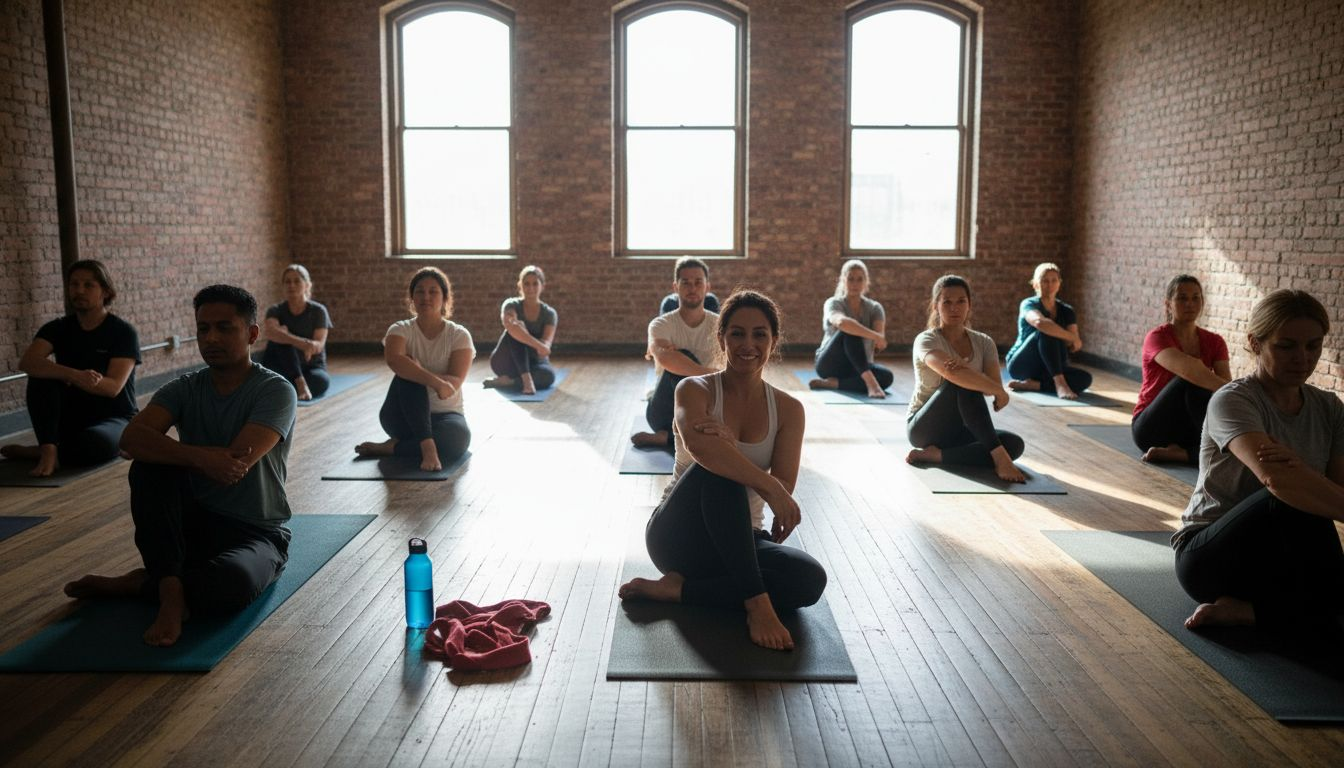
A standard yoga class often feels familiar, but a yoga workshop invites you to step into a deeper, immersive experience that goes beyond regular routines. For Health-conscious adults in Philadelphia, these workshops offer a structured blend of lecture, practice, and discussion, nurturing both personal transformation and connection with others. By exploring specific yoga themes and techniques in focused sessions, you gain a rich understanding and a stronger sense of community.
Table of Contents
Key Takeaways
| Point | Details |
|---|---|
| Yoga Workshops Offer Immersive Learning | Unlike regular classes, workshops provide deeper exploration into yoga themes, techniques, and philosophies through comprehensive learning experiences. |
| Workshops Foster Community and Individual Growth | The collaborative environment encourages personal transformation and mastery, creating connections among participants. |
| Preparation is Essential for Success | Participants should come with an open mindset and appropriate fitness level, as well as clear personal goals to enhance their experience. |
| Balancing Theory and Practice is Key | Effective workshops blend theoretical instruction with hands-on practice to maximize engagement and learning outcomes. |
Defining a Yoga Workshop Experience
A yoga workshop transcends traditional fitness classes by offering an immersive, transformative learning environment. Unlike standard yoga sessions, workshops are designed to provide deeper learning experiences through comprehensive exploration of specific yoga themes, techniques, and philosophies.
These specialized sessions typically combine multiple learning modalities to create a rich, multifaceted experience:
Lecture components that explore theoretical yoga principles
Interactive discussions allowing participants to share insights
Guided physical practice integrating learned concepts
Mindfulness and meditation techniques
Workshops differ from regular yoga classes by offering extended time frames and focused content. They enable participants to dive deeper into specific aspects of yoga practice, whether that's mastering complex poses, understanding philosophical underpinnings, or exploring mind-body connections.
Yoga workshops transform passive learning into an embodied, holistic experience that nurtures both individual growth and community connection.
The structure of a yoga workshop typically spans several hours or even multiple days, allowing for comprehensive exploration and meaningful skill development. Participants engage in immersive learning that goes beyond physical postures, incorporating breathwork, meditation, and philosophical discussions.
Here's a comparison of yoga workshops versus regular yoga classes to highlight their unique benefits:
| Aspect | Yoga Workshops | Regular Yoga Classes |
|---|---|---|
| Duration | Several hours or days | 45–90 minutes |
| Focus | In-depth exploration | General practice |
| Content | Thematic, comprehensive learning | Broad, routine sessions |
| Interaction | Small group, collaborative | Larger groups, limited sharing |
| Goal | Personal transformation, mastery | Maintenance, gradual progress |
Pro tip: Before attending a yoga workshop, come prepared with an open mind and comfortable clothing that allows unrestricted movement.
Types of Yoga Workshops and Themes
Yoga workshops offer an incredible range of specialized experiences designed to meet diverse practitioner needs and interests. Specialized yoga workshops can target specific goals, skills, and personal growth objectives, transforming traditional yoga practice into a deeply intentional journey.
These workshops typically encompass various thematic focuses:
Athletic Performance Workshops
Yoga for runners and cyclists
Strength and conditioning yoga
Sport-specific mobility training
Mind-Body Wellness Workshops
Stress reduction techniques
Meditation and mindfulness practices
Emotional healing through yoga
Technical Skill Workshops
Arm balances and inversions
Advanced alignment techniques
Breathwork and pranayama
Each workshop type provides a unique opportunity for practitioners to explore yoga beyond standard class structures. Thematic yoga workshops center around specific intentions, allowing participants to dive deep into particular aspects of yoga philosophy, physical practice, or personal development.
Yoga workshops are not just classes - they are transformative experiences that unlock potential and foster profound personal growth.
The diversity of workshop themes reflects the multifaceted nature of yoga as a holistic practice. Whether a participant seeks physical challenge, mental clarity, spiritual connection, or technical mastery, there exists a specialized workshop designed to meet those specific needs.
Pro tip: Research workshop descriptions carefully and choose experiences that align with your current practice goals and personal interests.
Structure and Flow of Workshop Sessions
A well-crafted yoga workshop is more than a simple class - it's a carefully orchestrated learning experience. Yoga workshops follow a progressive sequence designed to maximize participant engagement and learning through intentional structure and thoughtful progression.
Typical workshop sessions are strategically organized into key components:
Opening Segment
Group introductions
Intention setting
Preliminary breathwork
Learning Modules
Theoretical instruction
Demonstration of techniques
Guided practice sessions
Integration Phase
Personal reflection
Partner or group exercises
Q&A opportunities
Workshop planning requires careful content mappingto ensure a balance between informative lectures and hands-on practice. Each segment builds upon the previous one, creating a holistic learning journey that challenges and supports participants simultaneously.
A masterfully structured workshop transforms individual learning into a collective experience of growth and discovery.
The flow typically moves from broader concepts to specific techniques, allowing participants to gradually absorb and embody new knowledge. This progression helps practitioners integrate intellectual understanding with physical experience, making the learning process both comprehensive and deeply personal.
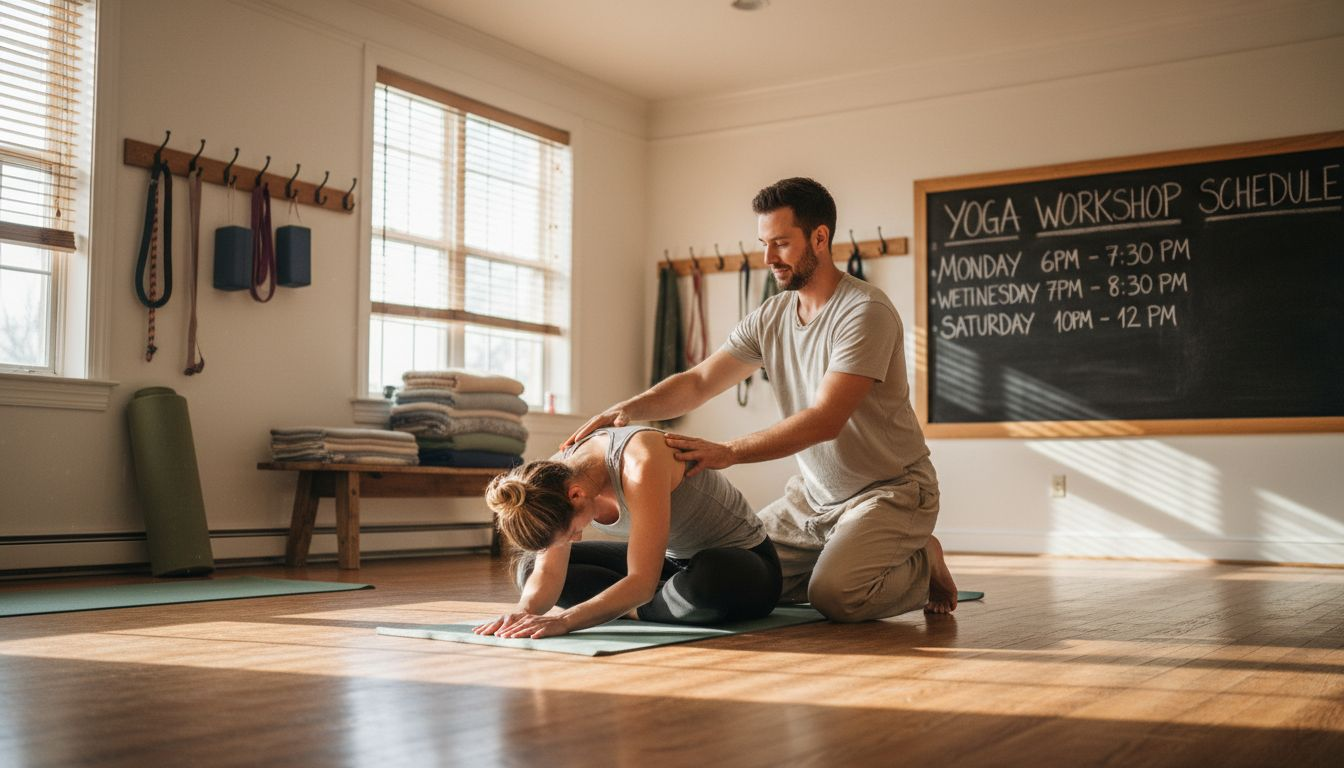
Pro tip: Arrive early to workshops and position yourself where you can clearly see the instructor, maximizing your ability to observe and learn intricate details.
Participation Requirements and Preparation
Yoga workshop participation requires thoughtful preparationto ensure a meaningful and enriching experience. Each workshop has unique prerequisites and expectations that participants should carefully consider before enrolling.
Essential preparation elements include:
Physical Readiness
Basic yoga experience recommended
Appropriate fitness level for workshop intensity
Understanding of fundamental yoga poses
Equipment and Attire
High-quality yoga mat
Comfortable, flexible clothing
Water bottle
Optional props (blocks, straps, towels)
Mental Preparation
Open mindset
Willingness to learn
Ability to receive constructive feedback
Commitment to personal growth
Workshops often have specific skill level requirements that range from beginner-friendly to advanced practitioner sessions. Participants should carefully review workshop descriptions to ensure they match their current practice level and personal objectives.
Successful workshop participation begins with honest self-assessment and a genuine commitment to personal development.
Most workshops communicate prerequisites clearly in advance, allowing participants to make informed decisions about their suitability. Some may require pre-workshop communication or questionnaires to assess readiness and customize the experience.
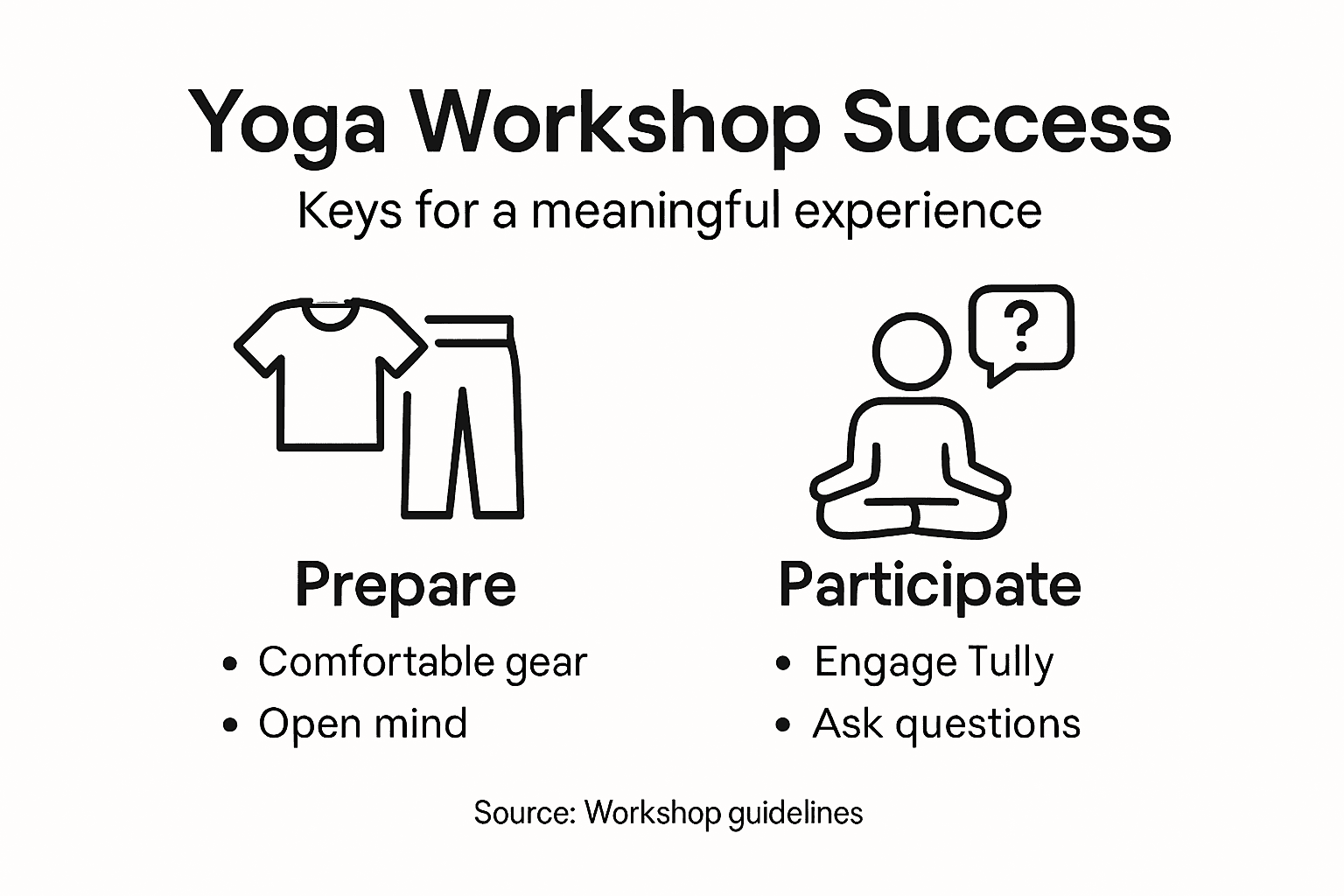
Pro tip: Contact the workshop organizer directly if you are uncertain about your qualification level or have specific physical considerations.
Common Pitfalls and How to Avoid Them
Yoga workshop challenges can significantly impact learning effectiveness, requiring participants and instructors to be proactively aware of potential obstacles. Understanding these common pitfalls is crucial for creating a transformative workshop experience.
Key challenges and strategic solutions include:
Engagement Barriers
Passive learning approaches
Lack of interactive elements
Minimal participant input
Content Delivery Issues
Overwhelming lecture formats
Insufficient practical application
Complex theoretical explanations
Personal Limitations
Rigid mindset
Fear of vulnerability
Resistance to feedback
Workshop effectiveness depends on balanced content delivery that maintains participant interest through dynamic interaction. Instructors must carefully design experiences that blend theoretical knowledge with hands-on practice, creating opportunities for personal reflection and skill integration.
Successful workshops transform potential obstacles into opportunities for profound personal growth and learning.
Participants can mitigate these challenges by maintaining an open mindset, actively participating in discussions, and approaching the workshop with curiosity and willingness to explore new perspectives. Communication with instructors before and during the workshop can help address individual concerns and customize the learning experience.
Below is a summary of common pitfalls in yoga workshops and the strategies to overcome them:
| Pitfall | Workshop Impact | How to Avoid |
|---|---|---|
| Passive participation | Limits engagement | Foster open discussion |
| Overly theoretical content | Reduces practice benefits | Balance lecture with movement |
| Rigid mindset | Blocks learning | Encourage acceptance and curiosity |
| Lack of preparation | Hinders progress | Review requirements and goals |
Pro tip: Arrive with specific learning goals and be prepared to step outside your comfort zone to maximize workshop benefits.
Deepen Your Yoga Practice and Connect with a Supportive Community Today
Are you ready to transcend ordinary yoga classes and embrace the transformative power of a focused yoga workshop? If you seek personal growth, mastery of techniques like breathwork and inversions, or a space to cultivate mindfulness and meaningful connections, a workshop experience is your gateway. At Amrita Yoga & Wellness, we understand the challenges of finding workshops that balance theory with physical practice while fostering open engagement and growth.
Join our vibrant community in Philadelphia by exploring our range of classes and specialized workshops designed to meet your unique goals. Whether you want to build strength, reduce stress, or deepen your mind-body connection, our programs encourage curiosity, openness, and skill development. Start your journey now by visiting Amrita Yoga & Wellness to view detailed class descriptions, sign up for immersive workshops, and experience holistic wellness like never before. Your path to transformation and community awaits—take the next step today.
Frequently Asked Questions
What is a yoga workshop?
A yoga workshop is an immersive learning experience that transcends traditional fitness classes, offering an in-depth exploration of specific yoga themes, techniques, and philosophies.
How long do yoga workshops typically last?
Yoga workshops usually span several hours or even multiple days, allowing for comprehensive exploration of themes and meaningful skill development.
What should I prepare for a yoga workshop?
To prepare for a yoga workshop, ensure you have basic yoga experience, wear comfortable clothing, bring a high-quality yoga mat, and maintain an open mindset ready for learning and personal growth.
What are the benefits of attending a yoga workshop?
Attending a yoga workshop offers personal transformation, enhanced understanding of yoga principles, and the opportunity to build community connections through collaborative learning and practice.