The Amrita Journal
Explore thoughtful stories, practical wellness guidance and inspiring ideas to support your movement, mindfulness and everyday wellbeing at Amrita.
How to Start Yoga for Beginners: A Safe, Simple Guide
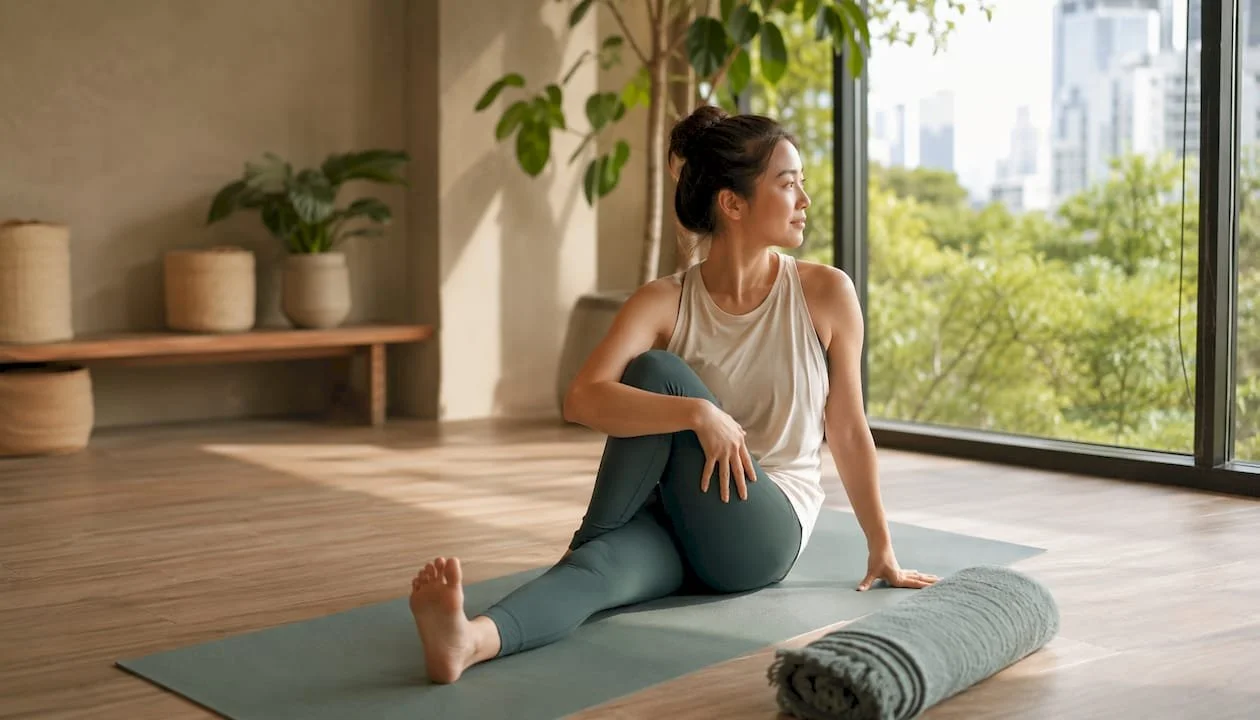
What every beginner needs to know before their first yoga session
Starting yoga safely comes down to three things: short sessions, a forgiving style, and zero pressure to be flexible. Experts recommend that beginners practice two to three times per week, with each session lasting 15–30 minutes. That cadence builds the habit without overwhelming your body or your schedule.
Flexibility is not a prerequisite. It's a result. Many people put off starting because they can't touch their toes, but beginner classes are specifically designed to improve mobility gradually, not to test it on day one. Walk in stiff. That's the whole point.
Here's what to focus on from the start:
Start small. Two to three sessions per week, 15–30 minutes each, is the sweet spot for beginners.
Pick a gentle style. Hatha, Restorative, and Yin yoga are the most accessible entry points. Avoid fast-paced flows until you have the basics down.
Breathe first, pose second. Breath control is the foundation of every yoga practice. If you lose your breath, the pose isn't working for you.
Use props without apology. Blocks, straps, and folded blankets exist to make poses accessible, not to signal weakness.
Modify everything. No pose is mandatory in its full expression. A modified version done with good form beats a strained version done "correctly."
Learn a few foundational poses first. Mountain pose, Child's pose, Cobra, Forward Fold, and Plank give you a complete beginner sequence you can repeat for weeks.
Stop at sharp pain. Mild muscle fatigue is normal. Sharp or radiating pain is a signal to back off immediately.
Skip the comparison trap. Yoga is not a performance. What you see on social media is not your benchmark.
The mindset shift that matters most: yoga rewards consistency, not intensity. Showing up for a 20-minute session three times a week will do more for you than one ambitious 90-minute class you dread repeating.
Which yoga style is right for you as a beginner?
Not all yoga is the same, and picking the wrong style early on is one of the most common reasons beginners quit. The good news is that a few styles are genuinely built for people who are just starting out.
Hatha yogais the most widely recommended starting point. It moves slowly, holds poses long enough for you to actually feel what's happening in your body, and keeps the focus on alignment and breath rather than speed. Yoga therapist Valerie Williams, E-RYT 500, puts it plainly: Hatha lets you learn how a pose feels and which muscles it engages without rushing into the next movement. That's exactly what a beginner needs.
Other styles worth knowing:
Restorative yoga uses props heavily and focuses on deep relaxation. Poses are held for several minutes, which activates the parasympathetic nervous system and helps reduce stress. It's an excellent choice if you're coming to yoga for recovery or anxiety relief.
Yin yoga targets connective tissue with long holds, typically three to nearly ten minutes per pose. The slow pace suits beginners who want to work on flexibility without the intensity of a flow class.
Gentle Vinyasa links breath to movement in a slower, more accessible version of the traditional flow format. Once you've built some body awareness through Hatha, this is a natural next step.
Pro Tip: Try at least two or three different styles and teachers before deciding yoga "isn't for you." If your first class felt unwelcoming or confusing, that's almost certainly a reflection of the teaching style, not your ability. Different instructors create very different experiences.
For learning formats, you have real options. A studio beginner class gives you live feedback and the energy of a group. Online guided videos let you practice at home on your own schedule, which removes every logistical excuse. Private instruction is the fastest way to learn correct alignment, though it costs more. Many beginners do well starting with labeled "beginner" or "gentle" classes, either in person or online, because those classes build alignment and breathing habits from the ground up rather than assuming prior knowledge.
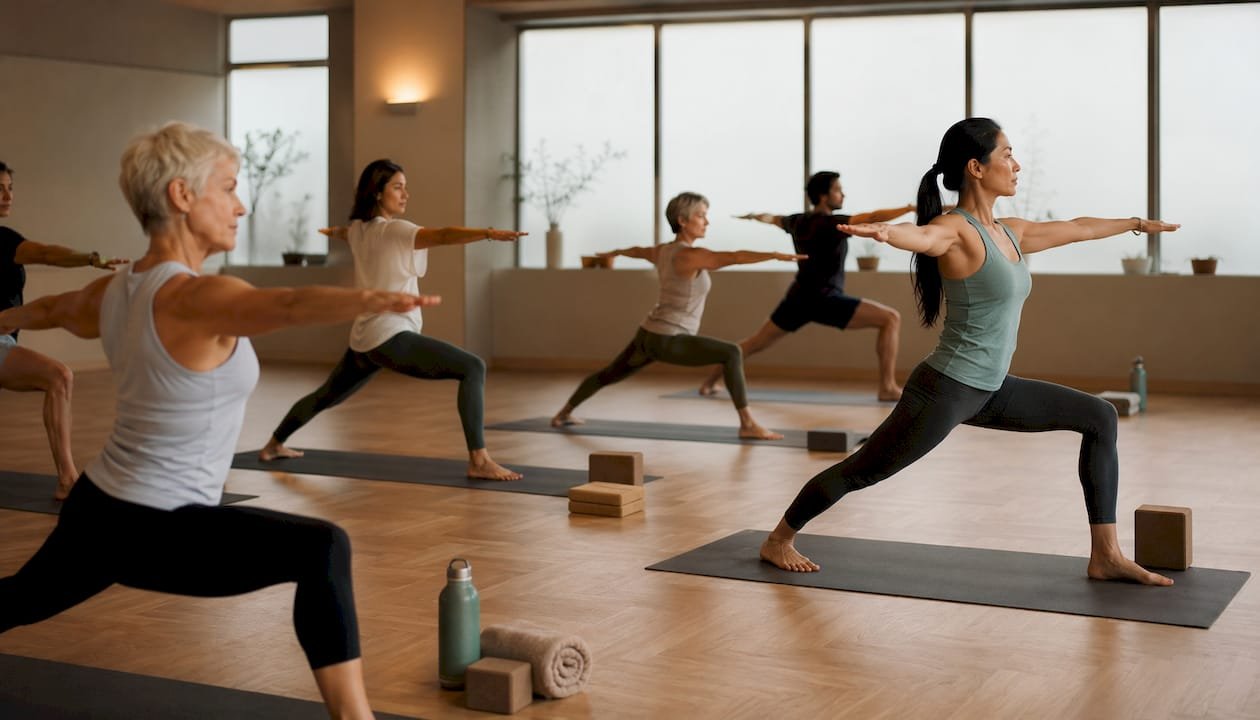
Amritayogawellness offers a range of beginner-friendly yoga styles that walk you through the differences so you can make an informed choice before you ever step on a mat.
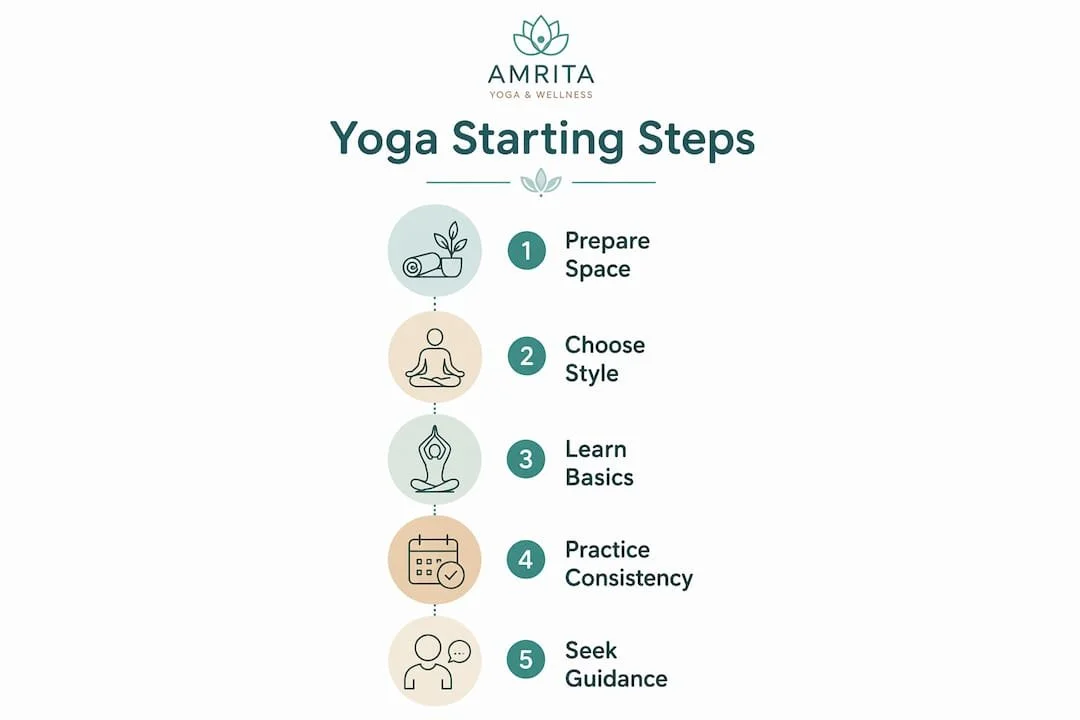
How to set up a home yoga practice that actually sticks
The biggest barrier to starting yoga at home isn't flexibility or knowledge. It's the false belief that you need the perfect setup first. You don't.
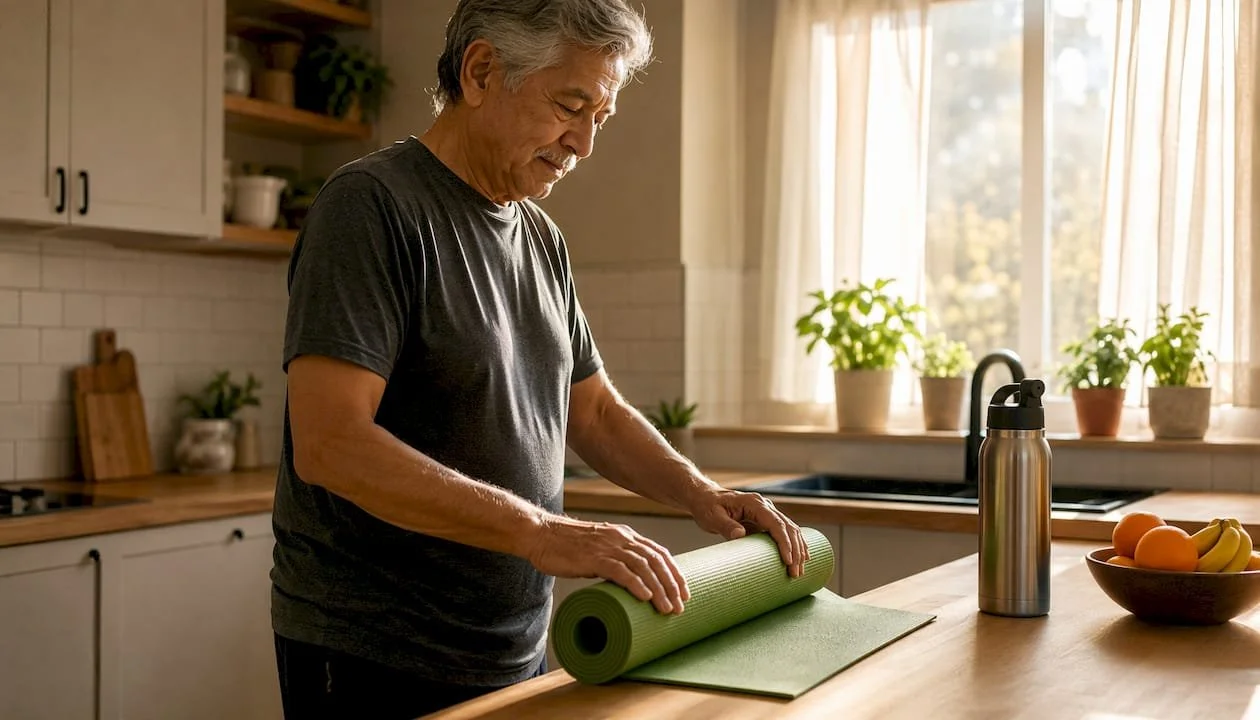
Effective practice starts with whatever you have. A towel on carpet works. A clear patch of floor works. Waiting until you have a dedicated yoga room, a premium mat, and matching gear is what yoga teachers call "optimization paralysis," and it's the most reliable way to never start.
What you actually need:
A mat or towel. A basic yoga mat costs around $20–$30 and provides enough grip and cushioning for all beginner poses. A folded towel on carpet is a legitimate substitute.
Comfortable clothing. Anything you can move freely in works. Fitted clothes make it easier for you (and an instructor) to see your alignment.
Props if available. Two yoga blocks and a strap cover nearly every modification a beginner will need. If you don't have them, hardcover books and a belt work fine.
A clutter-free space. You need roughly a 6-by-4-foot area. Clear it before each session so you're not stepping around furniture mid-pose.
Building the routine:
Frequency and duration. Start with two to three sessions per week of 15–30 minutes. Short, frequent sessions build the habit and let your body adapt without soreness that discourages you from coming back.
Warm up for 3–5 minutes. Gentle neck rolls, shoulder circles, Cat-Cow stretches on all fours, and a few slow spinal twists prepare your joints before any standing or weight-bearing poses.
Cool down for 5 minutes. End every session with Child's pose or a simple Savasana (lying flat on your back, arms relaxed at your sides). This signals to your nervous system that the work is done.
Breathing from day one. Start each session with three to five slow, deep breaths before you move. Ujjayi breathing, a gentle constriction at the back of the throat that creates a soft ocean sound, is a foundational pranayama technique worth learning early. It anchors your attention and regulates your pace throughout the practice.
Consistency beats duration every time. A 20-minute session three times a week will produce more progress than a two-hour session once a month.
How to stay motivated when yoga feels hard or intimidating
The hardest part of yoga for most beginners isn't the poses. It's showing up when you feel stiff, self-conscious, or like everyone else in the room knows something you don't. That feeling is almost universal, and it fades faster than you'd expect.
Yoga is fundamentally personal. The practice is a mirror, not a competition. What the person on the next mat is doing has no bearing on what your body needs today. Many beginners feel intimidated by the advanced poses that dominate social media, but a single conscious breath in Mountain pose counts as a successful yoga practice. That's not a consolation prize. That's the actual point.
Practical strategies that help:
Use breath and body sensation as your guide. If you're breathing steadily and feel a productive stretch, you're doing it right. If you're holding your breath to force a deeper pose, you've gone too far.
Accept modifications as the default, not the fallback. Props and modified versions of poses are not training wheels. They're how you build the strength and flexibility to eventually access the full pose safely.
Know the difference between discomfort and pain. Muscle fatigue, mild burning, and the sensation of a deep stretch are all normal. Sharp, shooting, or joint pain means stop and modify immediately.
Start with sessions short enough that skipping feels harder than doing them. A 15-minute session has almost no excuse. Once the habit is there, you'll naturally extend it.
Try different teachers before giving up on yoga entirely. Teaching style varies enormously. A teacher whose cues don't click for you isn't evidence that yoga doesn't work for you.
Track small wins. Notice when a pose that felt impossible last week now feels manageable. Progress in yoga is often subtle and cumulative.
Burnout at the beginner stage almost always comes from doing too much too soon. Three short sessions a week, done consistently for a month, will build more real progress than daily two-hour sessions that leave you exhausted and sore. Start smaller than you think you need to.
Why qualified instruction makes a real difference for beginners
Self-guided practice has its place, but for beginners, qualified instruction changes the trajectory of the practice in ways that are hard to replicate alone.
Lisa Blum, Doctor of Physical Therapy, identifies a qualified yoga teacher who provides clear, accessible cues and individual modifications as the most valuable investment a beginner can make for safety and confidence. The reason is straightforward: misalignment in basic poses, repeated over weeks, creates the kind of overuse injuries that sideline people for months. A good teacher catches those patterns before they become problems.
| Feature | Structured beginner program | Self-guided practice |
|---|---|---|
| Alignment feedback | Real-time correction from instructor | None; relies on mirrors or video review |
| Injury prevention | Modifications offered proactively | Depends on self-awareness |
| Progression | Structured, sequenced skill-building | Ad hoc; easy to plateau or skip steps |
| Motivation | Group energy and accountability | Requires strong self-discipline |
| Community | Built-in peer support | Isolated unless you seek it out |
| Accessibility | Labeled beginner classes remove guesswork | Requires research to find appropriate content |
Community matters more than most beginners expect. Practicing alongside others at a similar level normalizes the struggle, reduces self-consciousness, and creates accountability that's hard to manufacture alone. Workshops and group sessions also expose you to teaching perspectives and pose variations you wouldn't find in a solo practice.
Pro Tip: Look for beginner programs that explicitly describe their progression structure. A program that moves from foundational poses to more complex sequences over several weeks, with clear feedback mechanisms, will build your skills faster and more safely than a general "all levels" class.
Amritayogawellness builds its beginner programs around exactly this model: accessible entry points, individual modifications, and a community structure that keeps new practitioners engaged past the first few sessions. The studio's classes cover a range of styles, from Hatha to Restorative, with instructors trained to adapt poses for different bodies and ability levels. For beginners in the Philadelphia area, or anyone exploring structured online resources, Amritayogawellness offers a grounded, welcoming starting point.
Ready to take the first step? Amritayogawellness offers beginner classes, workshops, and wellness services including tarot readings for those looking to complement their yoga practice with broader self-care. Visit amritayogawellness.com to explore current class schedules and find the right entry point for where you are right now.
Key Takeaways
Starting yoga as a beginner requires short, consistent sessions in a gentle style, with qualified instruction and a patient mindset focused on breath and body awareness rather than flexibility or performance.
| Point | Details |
|---|---|
| Session frequency and duration | Begin with 2–3 sessions per week, each lasting 15–30 minutes, to build habit and allow safe body adaptation. |
| Best styles for beginners | Hatha yoga is the most recommended starting style; Restorative and Yin are strong alternatives for recovery and flexibility. |
| Flexibility is not required | Flexibility develops through consistent practice; it is never a prerequisite for starting yoga. |
| Props and modifications | Blocks, straps, and modified poses are standard tools, not workarounds, and reduce injury risk for new practitioners. |
| Qualified instruction matters | A trained teacher providing individual modifications is the most effective investment a beginner can make for safety and progress. |
Yoga Flow for Beginners: Build Strength and Flexibility
TL;DR:
A beginner yoga flow emphasizes foundational poses, breath awareness, and slow practice to build strength and flexibility. Practitioners need only a mat, loose clothing, and patience, with props supporting safety and alignment. Regular practice of simple poses and breath work leads to noticeable physical and mental improvements within weeks.
A yoga flow for beginners is a breath-synchronized sequence of foundational poses designed to build body awareness, strength, and flexibility from your very first session. Unlike advanced practices, beginner yoga sequences require nothing more than a mat, comfortable clothing, and a willingness to move at your own pace. Routines as short as 5–20 minutes covering 10 foundational poses can begin producing real benefits. Amritayogawellness, a Philadelphia-based yoga and wellness studio, sees new practitioners make steady progress when they commit to simple, consistent flows before attempting complex sequences.
What do you need to start a yoga flow for beginners?
Starting a beginner yoga flow requires less than most people expect. A non-slip mat is the one piece of gear you genuinely need. Beyond that, loose, stretchy clothing and a quiet corner of your home are enough to get moving.
Optional props make a real difference in comfort and safety:
Yoga blocks: Bring the floor closer when your hands cannot reach it in poses like Forward Fold or Low Lunge.
A strap: Extends your reach in seated stretches and helps you maintain alignment without straining.
A blanket or bolster: Supports your hips in seated poses and cushions your knees on hard floors.
Layers: A light hoodie or long-sleeved shirt keeps muscles warm during slower sequences.
Yoga props increase accessibility and safetyfor practitioners of all body types. Using a block is not a shortcut. It is a sign that you understand your body's current range and respect it.
The right mindset matters as much as the right gear. Moving at your own pace and focusing on physical sensations, rather than copying an instructor's exact shape, improves both safety and practice quality. Patience is the most underrated tool in any beginner's kit.
Pro Tip: Set your mat up the night before. Removing the setup step makes it far easier to practice consistently, especially on low-motivation mornings.
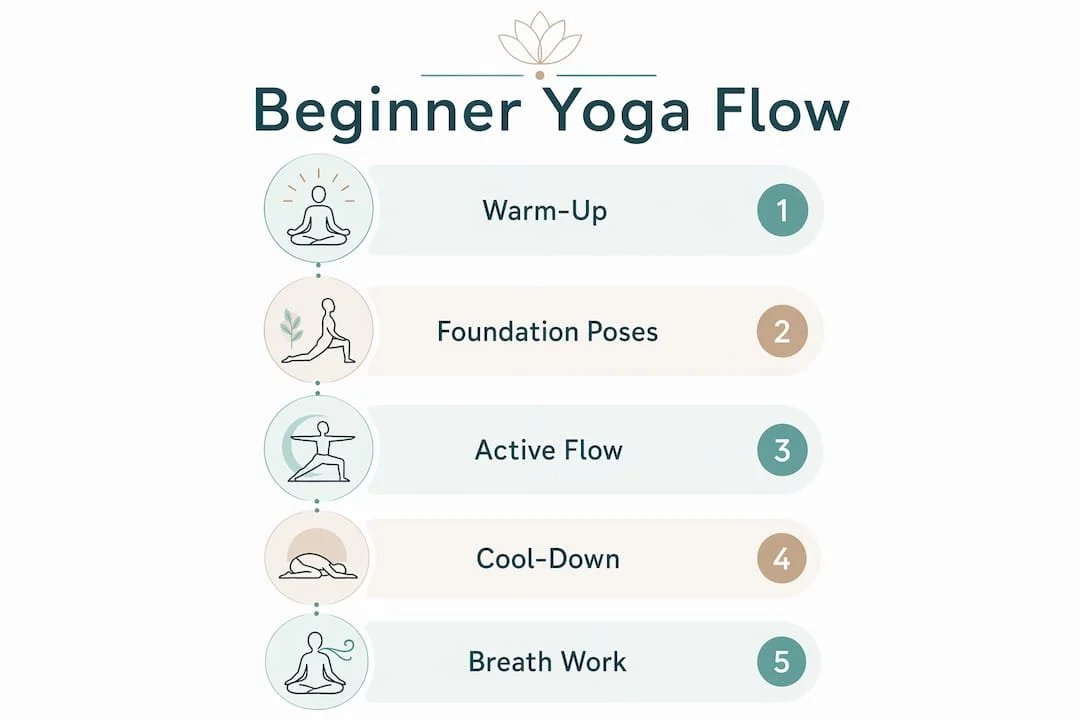
What are the key foundational poses in a beginner yoga sequence?
Prioritizing 8–10 foundation poses before attempting complex flows prevents the most common beginner injuries and frustrations. Each pose below builds a specific physical quality while teaching you how breath and movement connect.
Core poses and their benefits
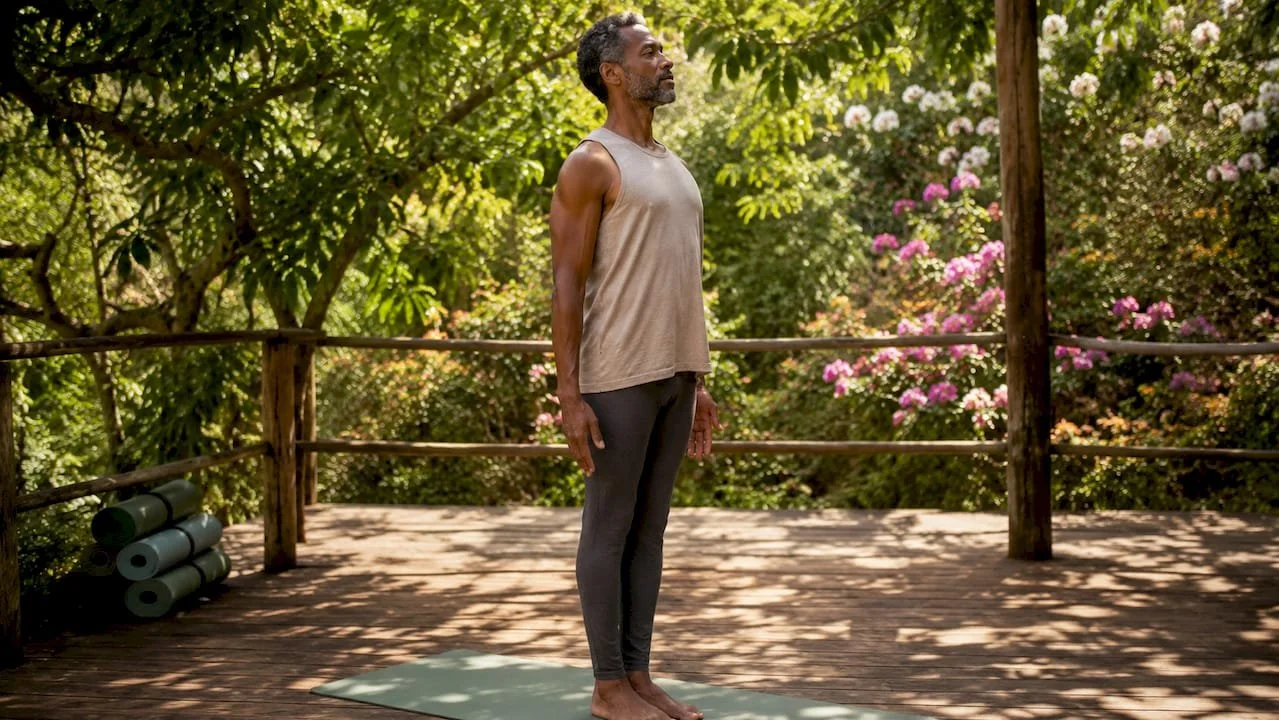
Mountain Pose (Tadasana) is the starting point for nearly every standing sequence. Stand with feet hip-width apart, arms at your sides, and spine tall. It trains posture awareness and grounds your attention before movement begins.
Cat-Cow (Marjaryasana-Bitilasana) is a paired spinal warm-up performed on hands and knees. Inhale as you drop your belly and lift your gaze (Cow), then exhale as you round your spine toward the ceiling (Cat). This sequence loosens the spine and introduces breath-to-movement coordination from the very start.
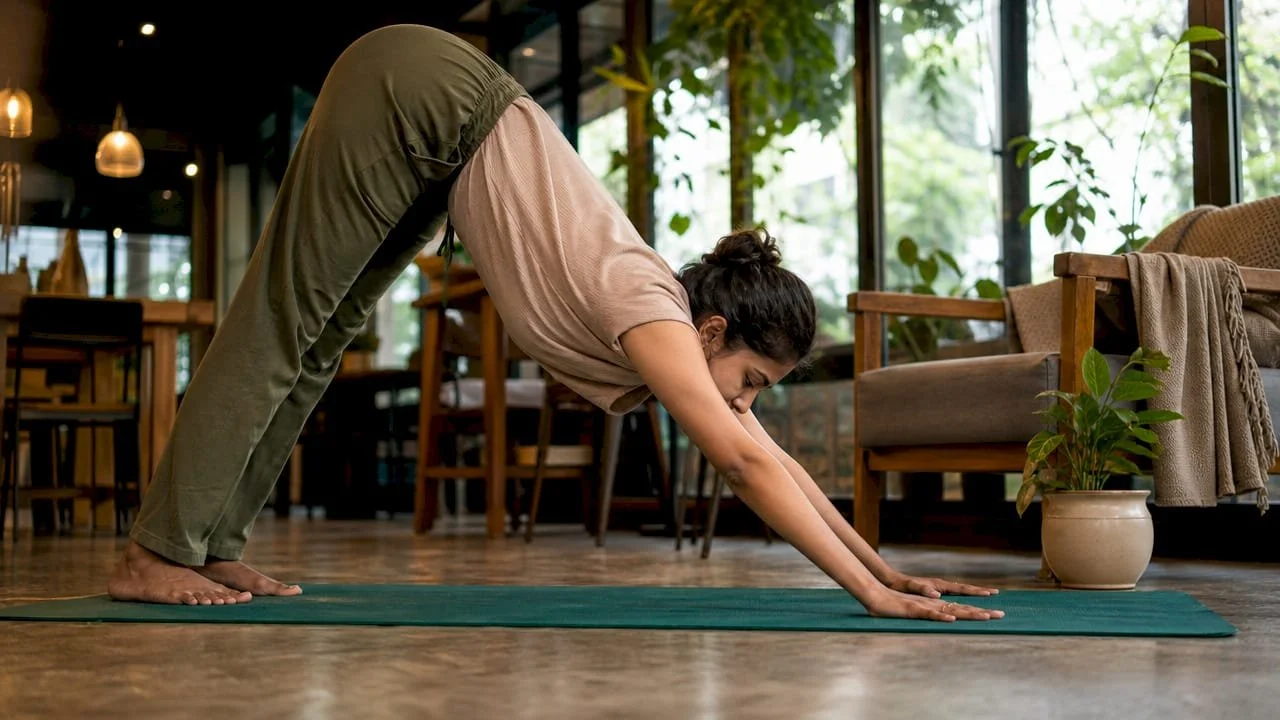
Downward-Facing Dog (Adho Mukha Svanasana) is the signature pose of most flows. From hands and knees, press your hips up and back to form an inverted V shape. It stretches the hamstrings and calves while building shoulder and core strength.
Child's Pose (Balasana) is your rest position. Kneel, sit back toward your heels, and extend your arms forward on the mat. Return to it any time you need to recover your breath or reduce intensity.
Warrior I (Virabhadrasana I) builds leg strength and hip flexibility. Step one foot forward into a lunge, bend the front knee to 90 degrees, and raise both arms overhead. Hold for 3–5 breaths per side.
Warrior II (Virabhadrasana II) opens the hips and chest. From Warrior I, open your arms wide and turn your gaze over your front hand. This pose builds endurance and focus simultaneously.
Cobra (Bhujangasana) strengthens the lower back and opens the chest. Lie face down, place your hands under your shoulders, and press your chest up while keeping your elbows slightly bent.
Plank Pose is the foundation of core strength in yoga. Hold a push-up position with wrists under shoulders and body in a straight line. Even 10–20 seconds builds meaningful stability.
Standing Forward Fold (Uttanasana) releases the hamstrings and calms the nervous system. Hinge at the hips, let your torso hang, and bend your knees as much as needed.
| Pose | Primary benefit | Hold time |
|---|---|---|
| Mountain Pose | Posture and grounding | 5–8 breaths |
| Cat-Cow | Spinal mobility and breath sync | 5–8 rounds |
| Downward-Facing Dog | Full-body stretch and strength | 5–8 breaths |
| Child's Pose | Rest and recovery | As needed |
| Warrior I | Leg strength and hip flexibility | 3–5 breaths per side |
| Warrior II | Hip opening and endurance | 3–5 breaths per side |
| Cobra | Back strength and chest opening | 3–5 breaths |
| Plank Pose | Core stability | 10–20 seconds |
| Standing Forward Fold | Hamstring release and calm | 5–8 breaths |
Pro Tip: In Downward Dog, bend your knees generously if your hamstrings are tight. A flat back matters more than straight legs in this pose.
How do you structure a beginner yoga flow sequence?
A well-structured beginner yoga sequence follows a clear arc: warm-up, active poses, and cool-down. A 15–20 minute session is the right target for new practitioners. Slow flow and Hatha styles reduce injury risk and give you time to settle into each posture before moving on.
Breath is the thread that holds the sequence together. A 4-count inhale paired with a 6-count exhale activates the parasympathetic nervous system, which reduces stress and sharpens focus. Controlled breathing transforms yoga from simple stretching into genuine nervous system regulation. Ujjayi breath, a soft ocean-sounding breath created by slightly constricting the throat, is the technique most teachers recommend for linking movement and breath in flow sequences.
A sample 20-minute beginner flow looks like this:
Arrive in Mountain Pose (2 minutes). Stand still, close your eyes, and take 10 slow breaths. Set an intention for the practice.
Cat-Cow warm-up (3 minutes). Move through 8–10 rounds, matching each movement to an inhale or exhale.
Downward-Facing Dog (1 minute). Pedal your heels alternately for the first 5 breaths, then hold still.
Warrior I, right side (1 minute). Step your right foot forward, rise into the pose, and hold for 5 breaths.
Warrior II, right side (1 minute). Open your arms and hold for 5 breaths.
Repeat Warriors on the left side (2 minutes). Mirror the same sequence.
Plank Pose (30 seconds). Hold steady, then lower to the mat.
Cobra (1 minute). Press up slowly on an inhale, lower on an exhale. Repeat 3 times.
Child's Pose (2 minutes). Rest completely and let your breath return to normal.
Standing Forward Fold (1 minute). Roll up slowly, one vertebra at a time.
Savasana, or final relaxation (3 minutes). Lie flat on your back, arms at your sides, and do nothing. This is not optional. It is when your nervous system integrates the work you just did.
Beginners who practice 3 times per week for 20–30 minutes each session report noticeable improvements, including reduced morning stiffness, within 4 weeks. Consistency matters far more than session length.
What are the most common beginner yoga challenges?
New practitioners face a predictable set of obstacles. Knowing them in advance removes most of the frustration.
Fear of injury: Skipping alignment basics and breath coordination is the primary cause of beginner injuries. Mastering fundamental alignment before adding speed or complexity eliminates most of this risk.
Comparing yourself to others: Every body has different proportions, flexibility, and history. A pose that looks effortless on someone else may require a block or a bent knee for you. That is not a limitation. It is good practice.
Muscle stiffness: Flexibility is not a prerequisite for yoga. It develops over time. Even 5 foundational poses practiced for 10 minutes begin producing benefits regardless of how stiff you feel on day one.
Inconsistency: Practicing once a week produces slow results. Three shorter sessions per week build momentum faster than one long session.
Skipping breath work: Practitioners who ignore breath cues and focus only on pose shapes miss the most important part of yoga. Breath is what makes a sequence a flow rather than a series of stretches.
"Yoga educator Maya Collins emphasizes functionality and awareness over appearance, encouraging practitioners to use props as positive aids that support proper alignment rather than signs of limitation."
The most sustainable habit is a short, consistent one. Building confidence as a beginner comes from showing up regularly, not from performing perfect poses. Ten minutes every day beats one hour on the weekend.
Key Takeaways
A beginner yoga flow built on foundational poses, consistent breath work, and a steady practice schedule produces measurable gains in flexibility, strength, and mindfulness within weeks.
| Point | Details |
|---|---|
| Start with 9 core poses | Mountain, Cat-Cow, Downward Dog, Child's Pose, Warriors I and II, Cobra, Plank, and Forward Fold cover all beginner needs. |
| Use Ujjayi breath | A 4-count inhale and 6-count exhale activates the parasympathetic nervous system and deepens focus. |
| Practice 3 times per week | Three 20-minute sessions per week produce noticeable results within 4 weeks. |
| Props are tools, not crutches | Blocks and straps support alignment and prevent injury for all body types. |
| Consistency beats intensity | Short, regular sessions build strength and flexibility faster than infrequent long ones. |
What I've learned watching beginners find their flow
The biggest shift I see in new practitioners is not physical. It happens when someone stops watching themselves in the mirror and starts feeling the pose from the inside. That moment usually arrives somewhere around the third or fourth week, and it changes everything.
New practitioners almost always underestimate breath. They focus on getting their legs into the right position and forget to exhale. Then they wonder why they feel tense after a yoga class. The breath is not decoration. It is the mechanism. Once you treat it that way, the poses start to feel different, and the practice starts to feel like something you actually want to do again.
My honest advice: do not rush into faster flows. A slow, deliberate Hatha yoga or gentle Vinyasa sequence practiced with full attention will build more real strength and body awareness than a 45-minute power flow done with poor alignment. The practitioners who progress fastest are the ones who stay curious about the basics longest.
Self-compassion is not a soft concept in yoga. It is a practical one. The days when you feel stiff, distracted, or clumsy are the days your practice matters most. Show up anyway. The mat is not a performance stage.
— Juiced
Wellness at Amritayogawellness goes beyond the mat
Amritayogawellness offers a full range of classes and wellness services designed to support practitioners at every level, from first-timers to experienced movers. Whether you are ready to step into a guided yoga class or want to deepen your self-awareness through complementary practices, the studio has something for you.
Mindfulness does not stop when you roll up your mat. Amritayogawellness also offers tarot reading sessions as a reflective wellness tool that pairs naturally with a new yoga practice. These sessions support the same inner awareness you build on the mat. If you are ready to explore what a consistent, guided practice looks like, Amritayogawellness in Philadelphia is a strong next step.
FAQ
What is a yoga flow for beginners?
A yoga flow for beginners is a breath-linked sequence of foundational poses practiced at a slow, accessible pace. It builds flexibility, strength, and mindfulness without requiring prior experience or advanced fitness.
How long should a beginner yoga session be?
Beginners should aim for 20–30 minute sessions practiced 3 times per week. Completing just 10 sessions over 4 weeks establishes a consistent pattern with noticeable physical improvements.
Do I need to be flexible to start yoga?
Flexibility is not required to begin yoga. It develops through consistent practice, and even a 10-minute routine with 5 foundational poses produces benefits regardless of your starting point.
What is Ujjayi breath and why does it matter?
Ujjayi breath is a soft, ocean-sounding breath created by slightly constricting the throat on the exhale. Mastering it supports long-term progress more than achieving perfect pose alignment.
What is the best yoga style for new practitioners?
Slow flow and Hatha yoga are the best starting styles for beginners. These approaches emphasize breath-linked movement with about 15 key poses and give practitioners time to settle into proper alignment before moving on.
Recommended
Yoga Set for Beginners: Build Your Practice Right
TL;DR:
A beginner yoga set includes a mat, a yoga block, and a strap to support comfort and stability. Choosing eco-friendly materials like natural rubber or TPE provides better grip and safety, while a 4-5mm thick mat balances joint support and ground feel. Proper care and gradual prop addition help build confidence, with a quality mat being the most important investment.
A yoga set for beginners is a curated collection of gear designed to give new practitioners the comfort, stability, and physical support they need to build a consistent practice. The right beginner yoga kit removes the guesswork from your first sessions and lets you focus on learning poses, not managing discomfort. Brands like Manduka, Gaiam, and JadeYoga have built entire product lines around this need. Choosing well from the start protects your joints, builds confidence, and sets the tone for a practice that actually sticks.
What are the essential components of a yoga set for beginners?
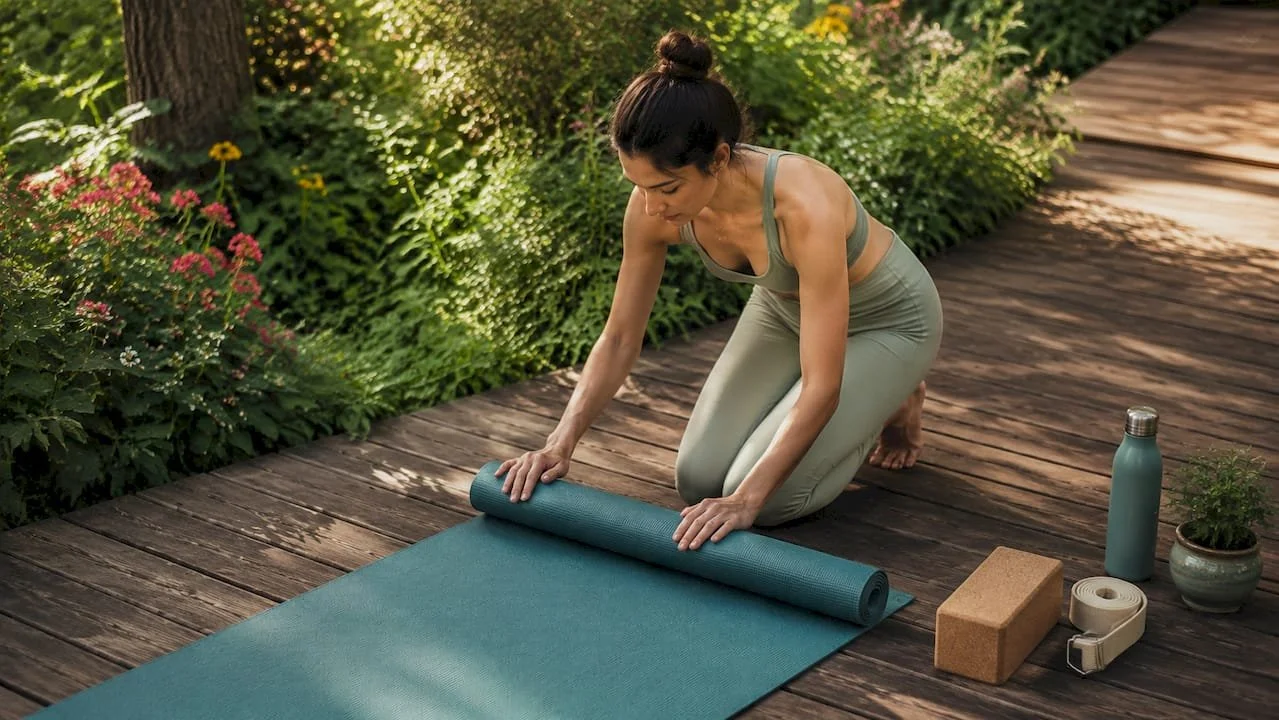
A complete yoga starter set contains three core items: a mat, at least one block, and a strap. Standard beginner kits include a yoga mat in the 4–6mm thickness range, a foam or cork yoga block, and a 6-foot yoga strap. Each item solves a specific problem that new practitioners face in their first weeks.
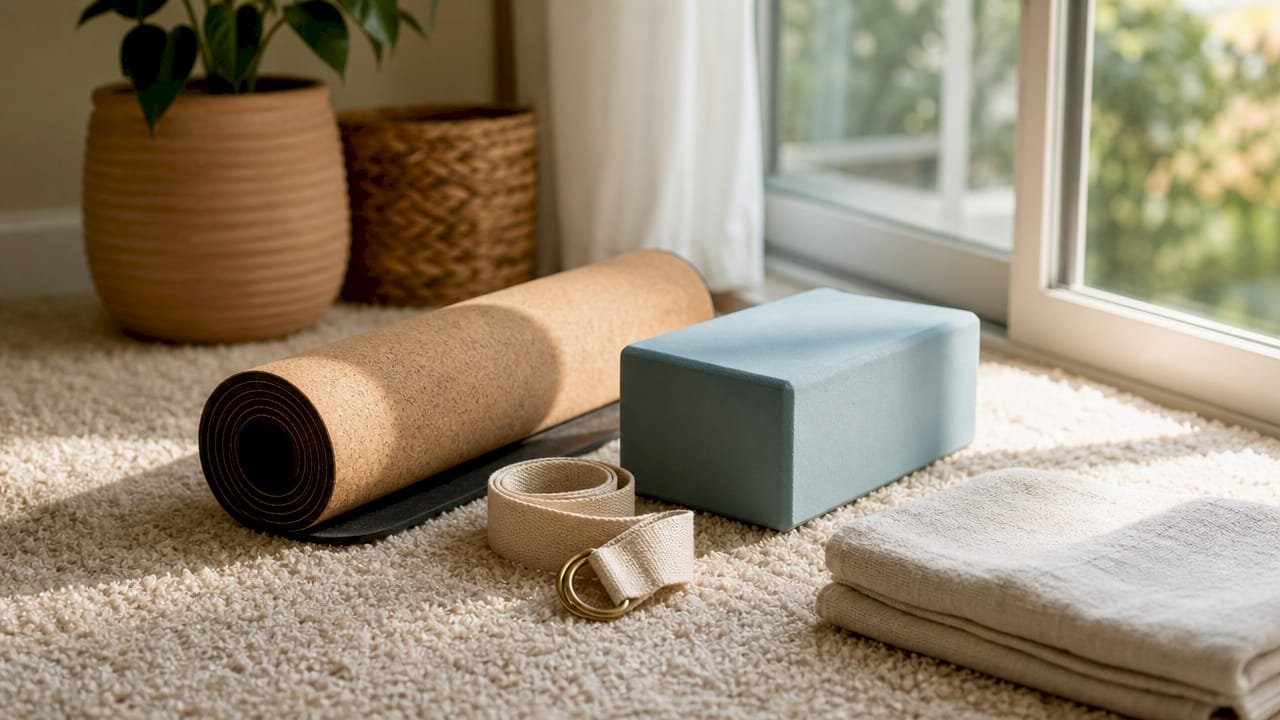
The yoga mat is your foundation. It provides grip, cushioning, and a defined personal space during class. Without adequate grip, you spend mental energy preventing slips instead of focusing on alignment.
Yoga blocks close the gap between your body and the floor. If you cannot reach the ground in a standing forward fold, a block brings the floor to you. This keeps your spine long and your joints safe. Foam blocks are lighter and more affordable; cork blocks are firmer and more durable.
The yoga strap extends your reach. Yoga straps double as flexibility tools and carrying slings, making them one of the most versatile props in any beginner yoga kit. A standard 6-foot strap lets you hold a hamstring stretch without rounding your back.
Optional additions worth considering:
A microfiber yoga towel for hot yoga or sweaty sessions
A foam roller for post-practice muscle recovery
A resistance band for hip and shoulder mobility work
A yoga mat bag or sling for easy transport
Pro Tip: Start with a mat, one block, and a strap. Add extras only after you have practiced consistently for four to six weeks and know what your body actually needs.
How to choose the best yoga mat for beginners
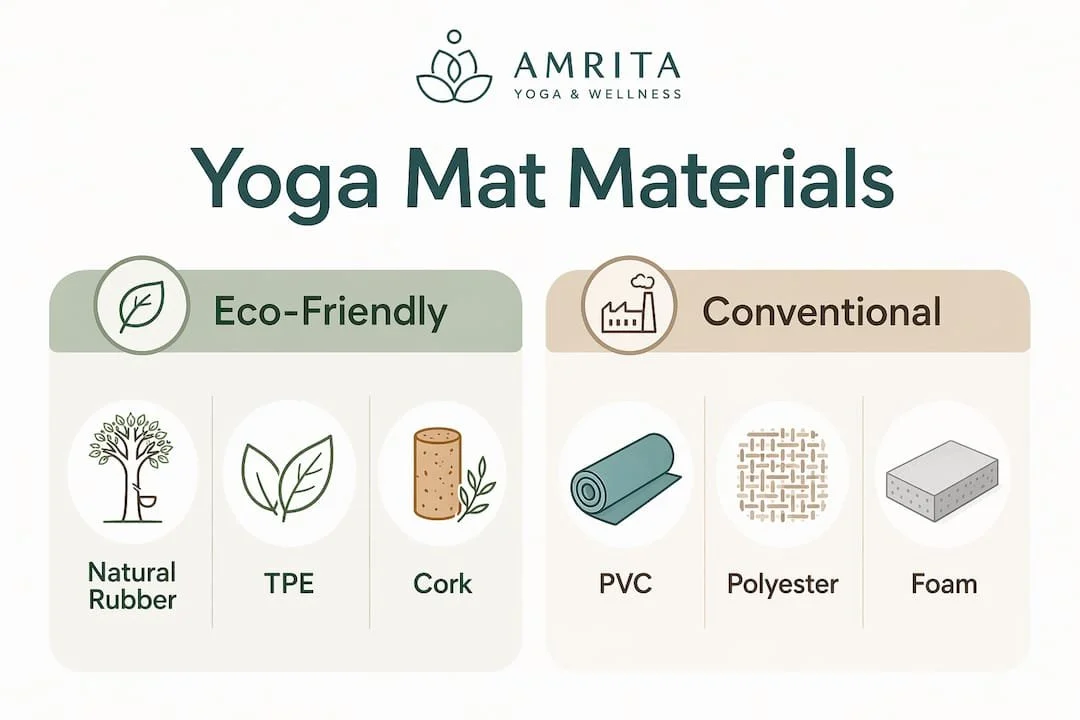
The mat is the single most important item in your beginner yoga kit. Every other prop is secondary. Getting the mat right means understanding four variables: material, thickness, surface texture, and construction type.
Material: natural rubber, TPE, and PVC compared
| Material | Grip | Eco-Friendly | Durability | Best For |
|---|---|---|---|---|
| Natural rubber | Excellent | Yes | High | Studio and home practice |
| TPE | Good | Yes | Medium | Budget-conscious beginners |
| PVC | Moderate | No | High | Budget entry-level mats |
| Cork surface | Excellent | Yes | Medium | Hot yoga and sweaty practice |
Eco-conscious materials like TPE and natural rubber are preferred over PVC because they offer better grip and eliminate harmful chemicals. Natural rubber mats from brands like Manduka and JadeYoga deliver reliable traction on both sides and hold up through years of daily use.
Thickness: finding the right balance
A 4–5mm mat thicknessis the sweet spot for most beginners, balancing joint cushioning with pose stability. Thicker mats at 6mm or above add comfort for sensitive knees but reduce your connection to the floor, which can make balance poses harder. KURMA recommends 4–5mm for new practitioners who want both support and ground feel.
Construction and hygiene
Closed-cell mat construction prevents sweat and bacteria from soaking into the material. Closed-cell mats are easier to clean, requiring only a wipe-down with a yoga mat spray or damp cloth after each session. Open-cell mats absorb moisture, which creates odor and bacteria buildup over time.
Alignment guides and reversible designs
Alignment stripes on beginner mats provide visual cues that help new practitioners position their hands and feet correctly. The Manduka Begin Mat uses this feature to build muscle memory from day one. Reversible mats offer two surface textures in one product, which adds value for beginners still figuring out their preferred grip level.
Pro Tip: If you practice at a studio like Amrita Yoga & Wellness in Philadelphia, check whether the studio provides mats before buying. You may want to test a few surfaces before committing to a purchase.
How to use and maintain your beginner yoga set
Proper care extends the life of your gear and keeps your practice hygienic. Most beginners skip this step and end up with a slippery, smelly mat within a few months.
Clean your mat after every session. Spray it lightly with a yoga mat cleaner or a diluted mix of water and mild soap. Wipe with a soft cloth. Never soak the mat or submerge it in water.
Store natural rubber mats away from sunlight. Natural rubber mats require storage away from sun and moisture to maintain their grip and structure. Roll them loosely and keep them in a cool, dry space.
Use blocks under your hands, not just your knees. New practitioners often place blocks only under their knees in seated poses. Blocks are equally useful in standing poses like Triangle or Half Moon to keep the spine aligned.
Use your strap before you feel you need it. Forcing a stretch without a strap strains the lower back and hamstrings. The strap lets you hold a position longer with correct form, which builds flexibility faster.
Replace your mat when grip fails. A mat that slides during Downward Dog is a safety hazard. Most quality mats last two to three years with regular use and proper care.
"The props are not a sign that you are less advanced. They are the tools that let you practice correctly from the very first session." — Yoga instruction principle widely shared across Iyengar and Hatha traditions.
A common beginner mistake is rolling the mat up wet after a sweaty class. This traps moisture inside and degrades the material quickly. Always let the mat air dry flat before rolling it for storage.
How do popular beginner yoga kits compare in price and contents?
The market for yoga essentials for newbies ranges from simple three-piece sets under $30 to premium eco-friendly bundles that cost significantly more. Understanding what you get at each price point prevents overspending and under-equipping.
Basic beginner kits often cost $60–$70 for the mat alone, while comprehensive premium sets can reach $165 or more depending on materials and included accessories. That price gap reflects real differences in material quality, durability, and what is included.
Brands like Gaiam, JadeYoga, and Manduka offer kits focused on quality mats paired with essential props. Here is how the tiers break down:
Budget kits ($20–$45): Typically a PVC mat, one foam block, and a basic strap. Good for testing whether yoga sticks before investing more.
Mid-range kits ($50–$100): TPE or entry-level rubber mat, two blocks, a strap, and sometimes a carrying bag. Gaiam's Studio Select kit falls in this range.
Premium kits ($100–$165+): Natural rubber or cork mat, two cork blocks, a cotton strap, and extras like a towel or foam roller. Manduka Begin packages and eco-focused bundles like the Shakti Warrior Begin Within Bundle sit here.
The accessories that add real value are blocks and a strap. Extras like resistance bands and foam rollers are useful but not necessary in your first kit. A towel matters if you practice hot yoga. Everything else is optional until your practice demands it.
Pro Tip: Choosing the right mat matters more than buying a complete kit. A quality mat with a single block and strap outperforms a full budget kit every time.
Key takeaways
A quality mat paired with a block and strap gives beginners everything they need to practice safely, build confidence, and develop consistent alignment from day one.
| Point | Details |
|---|---|
| Core kit components | Every beginner needs a mat, one block, and a 6-foot strap before anything else. |
| Mat thickness sweet spot | A 4–5mm mat balances joint cushioning and pose stability for most new practitioners. |
| Material matters | Natural rubber and TPE outperform PVC in grip, safety, and environmental impact. |
| Maintenance is non-negotiable | Wipe your mat after every session and store natural rubber away from sunlight and moisture. |
| Prioritize mat quality | A high-quality mat with basic props beats a full budget kit for long-term practice. |
What I have learned after watching hundreds of beginners start their practice
Most new practitioners buy too much gear too soon. They show up with a seven-piece kit, two blocks, a bolster, and a strap they have never used, and then quit after six weeks because the practice felt complicated before it felt good.
The truth is that mat quality drives confidence more than any other factor in the first three months. A slip-resistant mat with alignment guides lets you focus on your breath and your body. A cheap mat that slides pulls your attention to the floor every thirty seconds.
I also think the eco-conscious material conversation is undersold. Beginners often dismiss natural rubber or TPE mats as a premium splurge. They are not. A non-toxic mat means you are pressing your face, hands, and bare skin against a surface that is not off-gassing chemicals during a heated class. That matters more than the price difference.
The one piece of advice I give every new practitioner: buy the best mat you can afford, add one block and a strap, and explore aerial yoga and stress relief or other complementary practices only after you have a solid foundation. Upgrade your props gradually as your practice deepens and your body tells you what it needs. The gear should serve the practice, not the other way around.
— Juiced
Yoga gear and wellness resources at Amrita Yoga & Wellness
Amritayogawellness offers beginner-friendly classes across yoga, pilates, barre, and tai chi at its Philadelphia studio, making it a strong home base for new practitioners building their first routine.
Whether you are selecting your first yoga mat for beginners or looking for guidance on which props suit your practice style, Amritayogawellness connects you with instructors who work with new students every day. The studio also offers wellness services that go beyond the mat. If you are curious about the mental and spiritual side of your practice, the tarot readings at Amrita Yoga & Wellness offer a unique way to deepen your self-awareness alongside your physical work.
FAQ
What does a yoga set for beginners include?
A standard beginner yoga set includes a mat in the 4–6mm thickness range, at least one foam or cork block, and a 6-foot yoga strap. Some kits add a towel, carrying bag, or resistance band depending on the price point.
What is the best mat thickness for a beginner?
A 4–5mm mat is the best choice for most beginners. It provides enough cushioning for joints while keeping you close enough to the floor for balance and stability in standing poses.
Are natural rubber mats worth the extra cost?
Natural rubber mats offer superior grip, non-toxic materials, and longer durability compared to PVC options. For beginners who plan to practice regularly, the investment pays off within the first year of use.
How often should I clean my yoga mat?
Clean your mat after every session with a light spray and a soft cloth. Never soak it or submerge it in water, and always let it air dry flat before rolling it up for storage.
Do I need a full kit or just a mat to start?
A quality mat, one block, and a strap cover everything a new practitioner needs. Full kits are convenient but not necessary. Prioritize mat quality first and add props as your practice develops.
Recommended
Best Type of Yoga for Beginners: A Practical Guide
TL;DR:
Gentle yoga styles like hatha, restorative, and yin are best for beginners because they focus on slow movement, breath awareness, and proper alignment. They help build strength, flexibility, and mental calm without pressure, making them accessible and safe. Choosing the right style depends on your goals, flexibility, and how your body feels each day.
Hatha, restorative, and yin yoga are the best types of yoga for beginners because they move slowly, emphasize breath awareness, and give you time to learn each pose without pressure. These gentle beginner yoga styles build strength, flexibility, and mental calm at the same time. The best yoga style for beginners is ultimately the one that fits your current fitness level, your goals, and how your body feels on any given day. This guide breaks down each style, compares them directly, and helps you decide where to start.
What is the best type of yoga for beginners?
The best type of yoga for beginners is a gentle style that holds poses long enough for you to feel them, breathe through them, and understand your body's response. Beginners prefer gentler styles that hold poses longer, which eases them into more active yoga without feeling lost or rushed. Fast-paced styles like power yoga or Ashtanga demand that you already know the poses. Starting there is like learning to drive on a highway.
The three styles most recommended for new practitioners are hatha, restorative, and yin yoga. Each one prioritizes breath coordination, body awareness, and gradual progress over athletic performance. Vinyasa yoga is sometimes listed as beginner-friendly, but its continuous flow format can feel overwhelming without a foundation in basic poses first.
What makes a yoga style beginner-friendly?
A yoga style is beginner-friendly when it slows down enough for you to actually learn what you are doing. Four specific characteristics define these styles:
Slow pace with longer holds. Holding a pose for several breaths lets you feel which muscles are working and where your alignment needs adjustment. This builds body awareness faster than moving through poses quickly.
Breath coordination. Every beginner-friendly style ties movement or stillness to the breath. This keeps your nervous system calm and teaches you to use breathing as a tool, not just a background function.
Prop use. Blocks, bolsters, straps, and blankets allow your body to reach positions it cannot yet access on its own. Restorative yoga in particular relies on props so you can relax fully into a pose without strain.
Alignment focus. Slower styles give instructors time to correct your form. Good alignment prevents injury and makes each pose more effective.
These features work together to build confidence. You leave class knowing what you did and why, rather than just surviving the hour.
Pro Tip: Before your first class, tell the instructor you are new. A good teacher will watch your alignment and offer modifications. This one step prevents most beginner injuries.
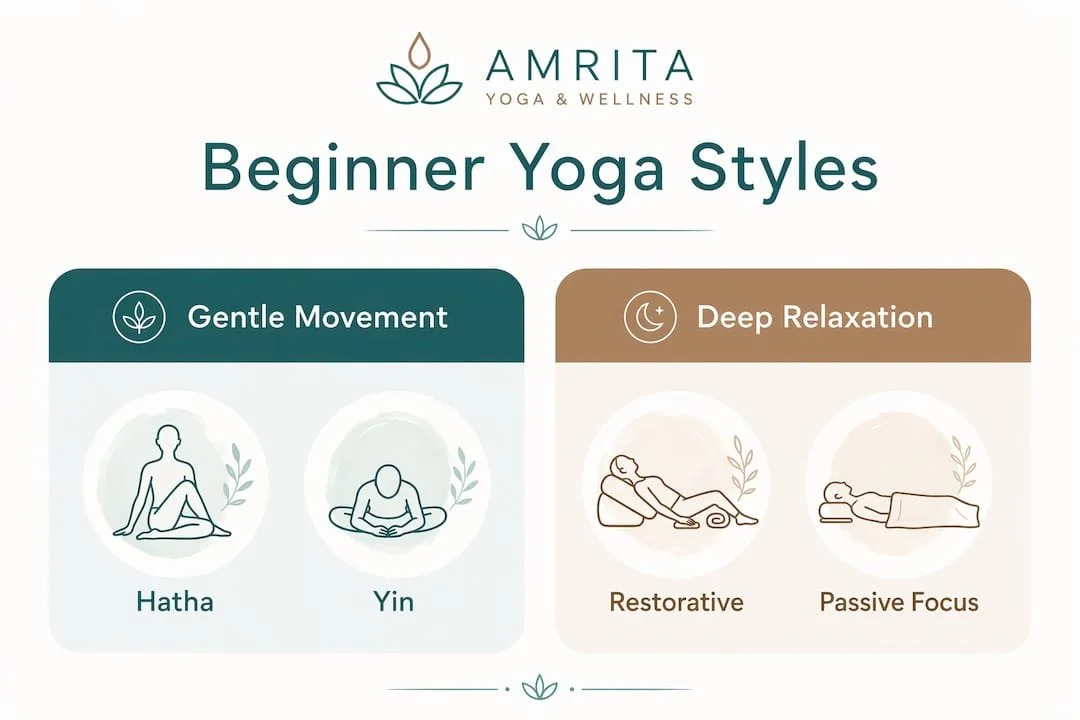
Hatha, restorative, and yin yoga: which one fits you?
These three styles share a slow pace but feel very different in practice. Understanding each one helps you pick the right starting point.
Hatha yoga
Hatha yogais the most widely recommended starting point for absolute beginners. Hatha focuses on movement with poses held long enough to learn muscle engagement without rushing. A typical hatha class moves through standing poses, seated stretches, and simple balances, pausing at each one to explain alignment and breath. You build real strength and flexibility because you spend enough time in each position to feel it working. Hatha is also where most yoga teachers learn to teach, so classes tend to be well-structured and clear.
Restorative yoga
Restorative yoga is the most physically passive of the three styles. Restorative yoga activates the parasympathetic nervous system, which is linked to lower blood pressure and heart rate. That means it is not just relaxing in a general sense. It produces measurable physical changes. A class typically involves five to seven poses, each held for five to twenty minutes, fully supported by props. Restorative yoga is the right choice if you are dealing with stress, recovering from illness, or simply need to slow down before you can build up.
Yin yoga
Yin yoga sits between hatha and restorative in terms of effort. Yin yoga holds poses for three to ten minutes, targeting connective tissue rather than muscle. Connective tissue, which includes fascia, ligaments, and joint capsules, responds to slow, sustained pressure rather than dynamic movement. This makes yin yoga particularly good for joint mobility and flexibility that other styles cannot reach. The long holds are meditative, which also trains mental focus and patience.
Side-by-side comparison
| Style | Pace | Physical intensity | Primary benefit | Best for |
|---|---|---|---|---|
| Hatha | Slow | Low to moderate | Strength, alignment, flexibility | Most beginners |
| Restorative | Very slow | Very low | Deep relaxation, stress relief | High stress, recovery |
| Yin | Slow | Low | Joint mobility, connective tissue | Flexibility, mindfulness |
Pro Tip: Try hatha first for two to three weeks. Once you know the basic poses by name and feel, yin and restorative will make much more sense because you will already understand the shapes your body is making.
How to choose the right yoga style for your needs
No single beginner yoga style fits everyone, so the selection process matters. Work through these four steps before signing up for a class.
Assess your physical starting point. If you have tight hips, lower back pain, or limited flexibility, start with restorative or yin yoga. If you are reasonably mobile and want to build strength alongside flexibility, hatha is the better fit. If you have a specific injury, check with your doctor before starting any style.
Clarify your primary goal. Stress relief and sleep improvement point toward restorative yoga. Building a physical practice with visible strength and flexibility gains points toward hatha. Improving joint range of motion and deepening body awareness points toward yin.
Try at least two different styles. Experts advise beginners to explore different classes because pace and energy vary even within the same style depending on the teacher. A hatha class with one instructor can feel very different from hatha with another. Sampling two or three classes before committing gives you real data.
Talk to the instructor before class. Tell them your experience level, any physical limitations, and what you hope to get from the practice. A qualified teacher will adjust their cues and offer modifications throughout the session. This conversation takes two minutes and changes the entire experience.
Once you find a style that feels right, starting yoga for stress relief and overall wellness becomes a natural, sustainable habit rather than a chore.
How to start yoga safely and build a lasting practice
Starting well matters more than starting fast. These principles keep beginners safe and help the practice stick.
Begin with breath, not poses. Beginners should start with breath-focused warm-ups and simple movements before attempting full poses. Even five minutes of conscious breathing before a session changes how your body responds to the practice.
Never force flexibility. Avoid forcing flexibility early and instead progress by holding poses with deep breath awareness. Pushing past your current range does not speed progress. It creates injury and sets you back weeks.
Practice briefly but consistently. A little yoga daily, even 10 minutes, beats infrequent long sessions for building confidence and physical adaptation. Ten minutes every day produces better results than a ninety-minute class once a week.
Include rest and stillness. Savasana, the final resting pose, is not optional. It is when your nervous system processes the session. Skipping it is like closing a document without saving.
Watch for signs a class fits you. You should leave feeling calmer and slightly more open in your body, not exhausted or sore. Mild muscle fatigue is normal. Sharp pain, dizziness, or feeling worse than when you arrived means the class is not the right match yet.
Pro Tip: If you practice at home, follow a structured sequence rather than random poses. A simple format of breath work, warm-up, three to five main poses, and a final rest gives your body a complete session in under twenty minutes.
A recommended progression for new practitioners is to start with foundational hatha poses and breath work, then move to flowing dynamic classes like vinyasa yoga once the basic holds feel comfortable. This gives you controlled movement instead of scrambling to keep up.
Key Takeaways
Hatha, restorative, and yin yoga are the most effective beginner yoga styles because they prioritize slow movement, breath awareness, and alignment over athletic performance.
| Point | Details |
|---|---|
| Best starting style | Hatha yoga suits most beginners with its slow pace, foundational poses, and alignment focus. |
| Restorative for stress | Restorative yoga activates the parasympathetic nervous system, lowering blood pressure and heart rate. |
| Yin for joint mobility | Yin yoga holds poses for 3–10 minutes to target connective tissue and improve joint range of motion. |
| Try before committing | Pace and energy vary by instructor, so sampling two or three classes gives you real information. |
| Consistency beats duration | Ten minutes of daily practice builds confidence and physical adaptation faster than weekly long sessions. |
What I have learned from watching beginners find their practice
Most beginners make the same mistake. They pick a style based on what looks impressive rather than what their body actually needs right now. They sign up for a fast-paced class because it seems more serious, then feel defeated when they cannot keep up. That experience convinces them yoga is not for them. It is not. It is just the wrong style at the wrong time.
The practitioners I have seen build the most consistent, rewarding practices almost always started with something gentle. They spent weeks in hatha or yin before they ever tried a flow class. By the time they got to faster styles, they already knew their body. They knew which hip was tighter, how their lower back responded to forward folds, and how to breathe when a pose got hard. That foundation made everything else easier.
Patience is not a personality trait in yoga. It is a skill you practice. The same way you hold a pose a little longer each week, you learn to stay with discomfort without reacting. That skill transfers directly to daily life, which is why so many people describe yoga as changing how they handle stress off the mat.
Find a teacher you trust. That matters more than the style. A great hatha teacher will serve you better than a mediocre yin teacher, even if yin is technically the better fit for your body. The relationship and the environment shape the practice as much as the poses do.
— Juiced
Beginner yoga classes at Amritayogawellness
Amritayogawellness, the Philadelphia-based yoga and wellness studio, offers beginner yoga classes across multiple styles, including hatha and restorative formats taught by experienced instructors who understand how to work with new practitioners. Every class is designed to meet you where you are, with modifications available so you never feel out of place.
Beyond yoga, Amritayogawellness also offers wellness services that complement a new practice. If you want to deepen your self-awareness alongside your physical work, the studio's tarot reading sessions offer a reflective, grounded way to explore your intentions and personal growth. Amritayogawellness brings together physical practice and broader wellness support under one roof in Philadelphia.
FAQ
What is the best yoga style for absolute beginners?
Hatha yoga is the most recommended starting point for absolute beginners because its slow pace and longer pose holds give you time to learn alignment and breath coordination without feeling rushed.
Is yin yoga good for beginners with no flexibility?
Yes. Yin yoga uses passive, supported holds lasting 3–10 minutes that gently work connective tissue, making it well-suited for beginners with limited flexibility who want gradual, sustainable improvement.
How often should a beginner practice yoga?
Short daily sessions produce better results than infrequent long ones. Even ten minutes of consistent daily practice builds confidence and physical adaptation more effectively than a single weekly class.
Can beginners do yoga at home?
Beginners can practice at home by starting with breath-focused warm-ups and simple poses, moving slowly without forcing flexibility. A structured sequence with a clear rest period at the end keeps home sessions safe and effective.
What is the difference between hatha and restorative yoga?
Hatha yoga builds strength and flexibility through active poses held for several breaths, while restorative yoga uses full prop support and very long holds to activate the parasympathetic nervous system and produce deep physical relaxation.
Recommended
Hot Yoga Renton: Your Complete Beginner's Guide
TL;DR:
Hot yoga in Renton is available in two formats: traditional heated classes and infrared sessions. Infrared yoga offers a dry environment with shorter sessions, making it more beginner-friendly and accessible.
Hot yoga is defined as any yoga practice performed in a heated room, typically between 95°F and 105°F, designed to deepen stretching and accelerate calorie burn. In Renton, WA, adults now have access to two distinct formats: traditional heated studio classes at Hot Yoga Renton downtown and infrared sessions at HOTWORX Benson Hill. Both options serve beginners and experienced practitioners, but they deliver very different experiences. This guide breaks down your local choices, explains what sets each format apart, and gives you the practical knowledge to walk into your first class with confidence.
What hot yoga studios are available in Renton, WA?
Renton residents can practice hot yoga at two main locations, each with a distinct approach to heat and class structure. Hot Yoga Renton is located at 222 Williams Ave S, Suite 200, Renton, WA 98057, offering traditional heated studio sessions with live instructors and scheduled class times. HOTWORX Benson Hill sits at 10713 SE Carr Road, Suite 16, Renton, WA 98055, and focuses on infrared technology with a very different scheduling model.
The biggest practical difference between these two Renton yoga studios is access. HOTWORX operates 24/7 with virtually instructed workouts available any time of day or night. That flexibility makes it a strong fit for shift workers, parents, or anyone whose schedule does not align with fixed class times. Hot Yoga Renton runs scheduled sessions, which suits people who prefer the energy and accountability of a live group class.
Class length also differs significantly between the two formats. HOTWORX infrared sessions run 30 minutes, roughly half the duration of traditional 60–90 minute hot yoga classes. That shorter window makes infrared sessions easier to fit into a lunch break or a busy evening without sacrificing a real workout.
Pricing and membership options
Pricing in the Renton and greater Seattle area varies by studio and membership tier. Regional infrared studios have launched with introductory rates around $49 bi-weekly for unlimited classes, rising to $69 bi-weekly after the founding period ends. That pricing model reflects a broader trend in the Pacific Northwest toward subscription-based fitness access. Drop-in options are also available at most studios for those who want to try before committing.
| Feature | Hot Yoga Renton (Traditional) | HOTWORX Benson Hill (Infrared) |
|---|---|---|
| Heat source | Heated air | Infrared panels |
| Class length | 60–90 minutes | 30 minutes |
| Scheduling | Fixed class times | 24/7 virtual access |
| Humidity level | High | Low |
| Best for | Community, live instruction | Flexibility, recovery |
How do traditional hot yoga and infrared hot yoga differ?
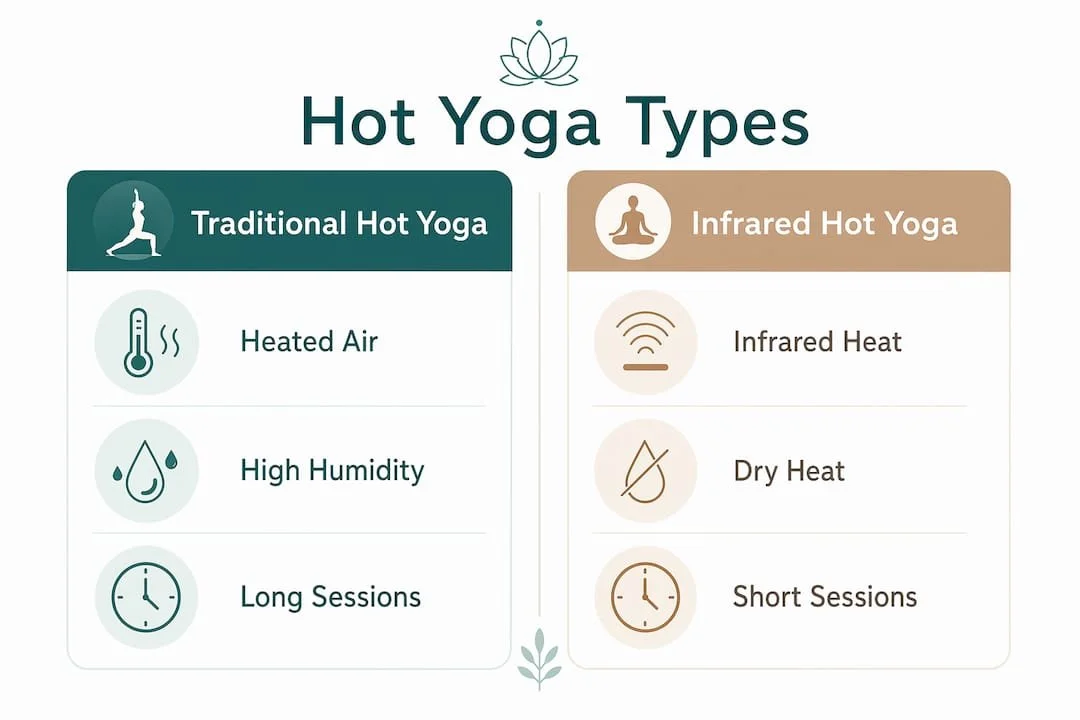
Traditional hot yoga heats the entire room using forced air systems, which raises both temperature and humidity. That combination creates the signature "sweat room" feel most people associate with Bikram or Baptiste-style classes. The heat loosens muscles quickly, but the high humidity can make breathing feel labored, especially in the first few sessions.
Infrared heat works differently. Infrared panels heat the body directly without significantly raising the ambient air humidity. The result is a warm, dry environment where breathing stays more comfortable throughout the session. This distinction matters most for beginners or anyone with respiratory sensitivities.
Here is a quick breakdown of what each format delivers:
Traditional hot yoga: Higher humidity, longer sessions, live instructor energy, strong community atmosphere, deeper sweat detox effect
Infrared hot yoga: Dry heat, shorter sessions, 24/7 access, easier breathing, gentler introduction for newcomers
Recovery focus: Infrared heat penetrates deeper into muscle tissue, which many practitioners find accelerates post-workout recovery compared to surface-level heated air
The trend toward infrared reflects real consumer demand. People want the muscle recovery and flexibility benefits of hot yoga without the overwhelming humidity that can cut a session short. If you have tried traditional hot yoga and found the air too thick to breathe comfortably, infrared is worth testing.
Pro Tip: If you are new to heated yoga, start with an infrared session at HOTWORX before moving to a traditional studio. The lower humidity gives your body time to adapt to exercising in heat without the added respiratory challenge.
What are the physical and mental health benefits of hot yoga?
Practicing hot yoga regularly delivers documented improvements across flexibility, strength, detoxification, stress relief, and cardiovascular health. Each benefit compounds over time, which is why consistent practitioners often report feeling stronger and calmer within just a few weeks. Here are the four core benefits worth understanding before you start:
Increased flexibility and strength. Heat allows muscles to stretch further with less risk of strain. Over time, poses that felt impossible become accessible, and the isometric holds build functional strength throughout the core, legs, and shoulders.
Detoxification through sweating. A single hot yoga session produces significant sweat output. Sweating flushes metabolic waste through the skin, and the heat encourages circulation that supports lymphatic drainage. This is one reason practitioners often report clearer skin and reduced bloating after consistent practice.
Stress relief and mental clarity. The focused breathing required in a heated room forces the nervous system to slow down. Controlled breathwork activates the parasympathetic nervous system, which is the body's rest-and-digest mode. Many Renton practitioners cite this mental reset as the primary reason they return week after week.
Improved cardiovascular health. Exercising in heat elevates heart rate similarly to moderate aerobic activity. A 30-minute infrared session or a 60-minute traditional class both challenge the cardiovascular system in ways that support heart health over time.
The mental benefits deserve equal weight alongside the physical ones. Yoga for flexibility in Renton is a common search goal, but the stress relief and mental clarity outcomes are what keep most people practicing long after they hit their flexibility goals.
What should beginners know before their first Renton hot yoga class?
Preparation is the single biggest factor in whether a first hot yoga class feels manageable or miserable. Most people who quit after one session do so because they arrived unprepared, not because the practice is wrong for them. Beginners benefit most from studios that offer pose modifications, and both Renton options provide instructor support for newcomers.
Follow these preparation steps before your first class:
Hydrate aggressively the day before. Drink at least 64 ounces of water in the 24 hours leading up to class. Arriving dehydrated in a heated room is the fastest route to dizziness or nausea.
Eat light. A small meal two to three hours before class is ideal. A full stomach in 100°F heat is deeply uncomfortable.
Know what to wear for hot yoga. Lightweight, moisture-wicking fabrics are the standard. For women, a fitted tank or sports bra with shorts or leggings works well. For men, compression shorts or lightweight athletic shorts are the go-to. Avoid cotton, which absorbs sweat and becomes heavy.
Bring a large water bottle and a towel. A non-slip yoga towel placed over your mat prevents sliding as sweat builds up. Most studios sell or rent these if you do not own one yet.
Tell the instructor you are new. A good instructor will watch for you and offer modifications. Inclusive classes with pose adjustments are standard at quality studios, so do not hesitate to ask for help.
For a deeper look at preparation, Amritayogawellness has a detailed resource on preparing for hot yoga that covers hydration, attire, and mindset in one place.
Pro Tip: Sit or lie down on your mat if you feel lightheaded during class. Leaving the room is always an option. Pushing through dizziness is never worth it, and experienced instructors expect beginners to need breaks.
How to choose the best hot yoga class in Renton for your goals
Choosing between Renton's hot yoga options comes down to three factors: your schedule, your heat tolerance, and what you want from the practice. There is no universally better option. The right class is the one you will actually attend consistently.
Consider these decision points:
Schedule flexibility: If your work hours vary or you travel frequently, HOTWORX's 24/7 virtual access removes the barrier of fixed class times entirely. Traditional studios require you to plan around their schedule.
Session length: A 30-minute infrared session fits easily into a lunch break. A 90-minute traditional class requires more time commitment and recovery time afterward.
Heat sensitivity: If you have asthma, sinus issues, or simply find high humidity uncomfortable, infrared is the more accessible starting point. The lower ambient humidity makes the transition to heated practice far less overwhelming for most beginners.
Community vs. solo practice: Traditional studios offer the energy of a live group class and the social accountability that keeps many people consistent. Infrared studios are quieter and more self-directed.
Budget: Compare drop-in rates against monthly memberships at each location. If you plan to practice three or more times per week, a membership almost always costs less per session than drop-in pricing.
For those also exploring hot yoga in Bellevue, Washington, options like Oxygen Yoga & Fitness are expanding the infrared market across the greater Seattle area, giving you additional comparison points if you work or live near the Eastside.
Key takeaways
Hot yoga in Renton delivers real physical and mental benefits through two distinct formats, and choosing the right studio depends on your schedule, heat tolerance, and practice goals.
| Point | Details |
|---|---|
| Two local formats | Hot Yoga Renton offers traditional heated classes; HOTWORX Benson Hill offers infrared sessions. |
| Infrared vs. traditional heat | Infrared produces less humidity, making breathing easier and sessions more beginner-friendly. |
| Session length matters | HOTWORX runs 30-minute sessions; traditional classes run 60–90 minutes. |
| Preparation is non-negotiable | Hydrate the day before, wear moisture-wicking fabrics, and inform your instructor you are new. |
| Benefits compound over time | Regular practice builds flexibility, strength, cardiovascular health, and stress resilience. |
Why I think most people overthink their first hot yoga class
The most common thing I hear from people who have never tried hot yoga is that they are waiting until they are "more flexible" or "more fit." That logic is backwards. Hot yoga is the tool that builds flexibility and fitness. You do not need to arrive ready for it. You just need to arrive.
What I have seen consistently is that the first class is the hardest, and it is hard for reasons that have nothing to do with yoga. The heat is unfamiliar. The room smells like effort. You do not know where to put your mat or how the flow works. All of that disappears by the second class. By the third, you start to feel the actual benefits.
The infrared option at HOTWORX is genuinely useful for people who are intimidated by traditional hot yoga. The dry heat environment is less aggressive, and the 30-minute format removes the mental barrier of committing to a 90-minute session. I would recommend it as a starting point for anyone who has bounced off traditional studios before.
One thing I would push back on is the idea that hot yoga is only for the already-athletic. The inclusivity built into modern classes means instructors are trained to meet you where you are. Every pose has a modification. Every instructor has seen a beginner. You are not a burden in that room. You are exactly who the class is designed for.
Show up, drink water, and give it three sessions before you decide. That is the only advice that actually matters.
— Juiced
Explore yoga and wellness with Amritayogawellness
Ready to take your wellness practice further? Amritayogawellness offers a full range of yoga styles, workshops, and holistic services designed for every level of practitioner. Whether you are stepping onto the mat for the first time or deepening an existing practice, the resources at Amritayogawellness connect you with expert guidance and community support.
Beyond yoga classes, Amritayogawellness offers tarot readings as a complementary wellness service for those exploring mindfulness and self-reflection alongside their physical practice. For anyone starting out, the hot yoga for beginners blog is a strong first resource. Visit amritayogawellness.com to browse classes, book a session, or connect with the community.
FAQ
What is hot yoga, and how is it different from regular yoga?
Hot yoga is practiced in a room heated to 95°F–105°F, which increases flexibility and sweat output compared to room-temperature yoga. The heat also raises heart rate, adding a cardiovascular component to the session.
Is hot yoga in Renton safe for beginners?
Yes. Both Hot Yoga Renton and HOTWORX Benson Hill offer modifications for beginners, and instructors are trained to support new practitioners. Hydrating well before class and informing your instructor you are new are the two most important safety steps.
How often should I practice hot yoga to see results?
Most practitioners notice improved flexibility and reduced stress within two to three weeks of attending two to three sessions per week. Consistency matters more than session length.
What should I bring to my first hot yoga class in Renton?
Bring a large water bottle, a non-slip yoga towel, and wear lightweight moisture-wicking clothing. Avoid cotton fabrics, which absorb sweat and become uncomfortable in a heated room.
Is infrared hot yoga better than traditional hot yoga for beginners?
Infrared hot yoga produces less ambient humidity, which makes breathing easier and the overall experience less overwhelming. For most beginners, starting with an infrared session at HOTWORX is a lower-barrier entry point than a traditional heated studio class.
Recommended
How to Start Yoga at Home: A Beginner's Guide
TL;DR:
Starting yoga at home requires only a mat, minimal space, and short, consistent sessions focusing on breath and foundational poses. A structured 15 to 20-minute routine, including breathwork, warm-up, core poses, and relaxation, promotes habit formation and physical progress. Prioritizing breath connection over pose complexity enhances long-term success and safety for beginners.
Starting yoga at home means building a simple, consistent practice with the right setup, foundational poses, and breathwork to develop strength, flexibility, and mental clarity. You do not need a studio membership, expensive gear, or prior experience to begin. A yoga mat, six feet of clear floor space, and 15 minutes a day are enough to get started. Australia's Department of Health and Aged Care 2024 review confirms yoga delivers measurable physical and mental health benefits, making it one of the most evidence-backed wellness practices you can adopt at home.
How to start yoga at home: what you actually need
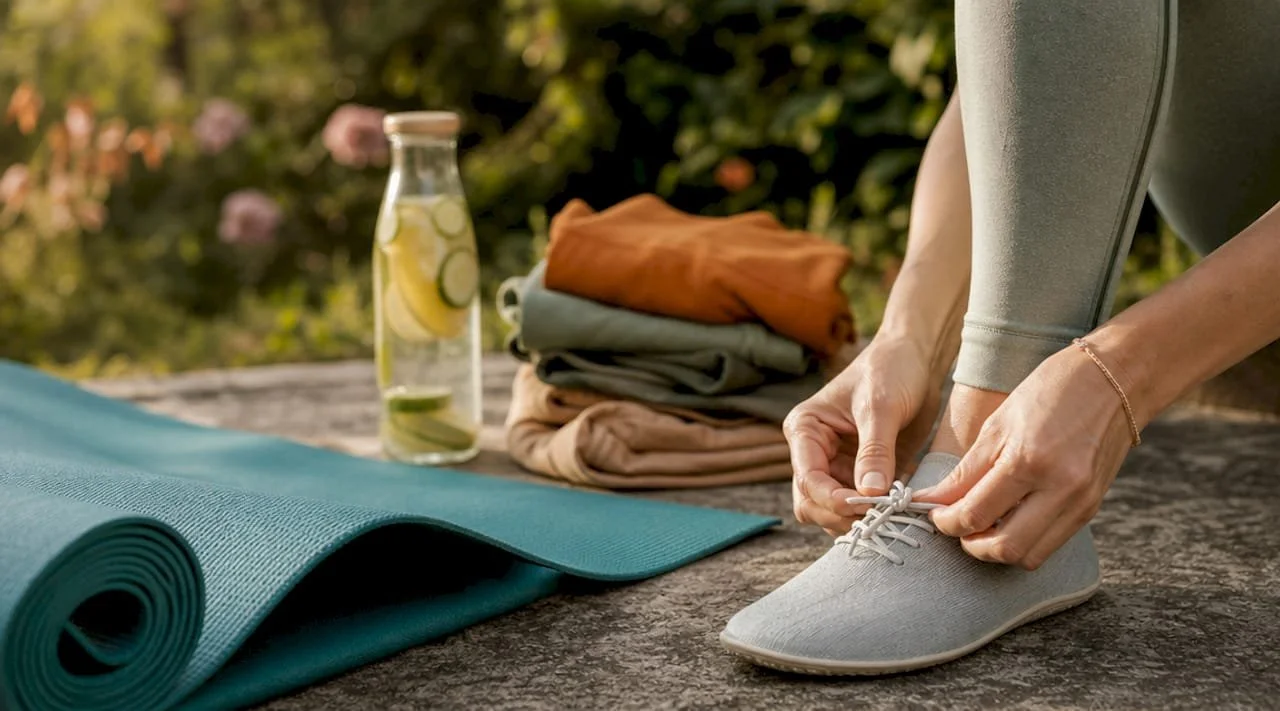
The barrier to beginning a home yoga practice is lower than most people expect. You need a non-slip surface, clothing that allows a full range of movement, and a space roughly 6 by 4 feet cleared of furniture and hazards. That is the entire minimum requirement.
Choosing your mat and clothing
A dedicated yoga mat gives you grip, cushioning, and a defined practice zone. If you are not ready to invest, a folded towel on carpet works for your first few sessions. Many university wellness programs recommend personal mats for hygiene and consistency. Wear fitted or stretchy clothing that does not bunch up during forward folds or inversions. Loose sweatpants and a fitted top work well.
Setting up your space
Pick a spot with natural light and ventilation if possible. A quiet, distraction-free space is one of the strongest predictors of a consistent home practice. Turn your phone to silent, close the door, and remove clutter from your field of vision. These small steps signal to your brain that practice time is different from the rest of your day.
Optional props that make a real difference
Yoga blocks (2): Bring the floor closer to your hands in standing poses like Triangle or Half Moon
A strap: Extends your reach in seated forward folds without forcing your spine to round
A folded blanket: Supports your hips in seated poses and cushions your knees in low lunges
A bolster or firm pillow: Ideal for restorative poses and Savasana
Props are not training wheels. Using blocks and straps to maintain alignment actually prevents the wrist and hamstring injuries that sideline beginners most often. Check out these beginner yoga tips from Amrita Yoga & Wellness for more on building a safe setup.
Pro Tip: Place your mat in the same spot every time. Physical consistency reinforces the mental habit of showing up.
How to structure a beginner yoga session
A well-structured session does not require a yoga beginners course or a live instructor. The sequence below follows the format recommended by experienced home practice guides and takes 15 to 20 minutes total.
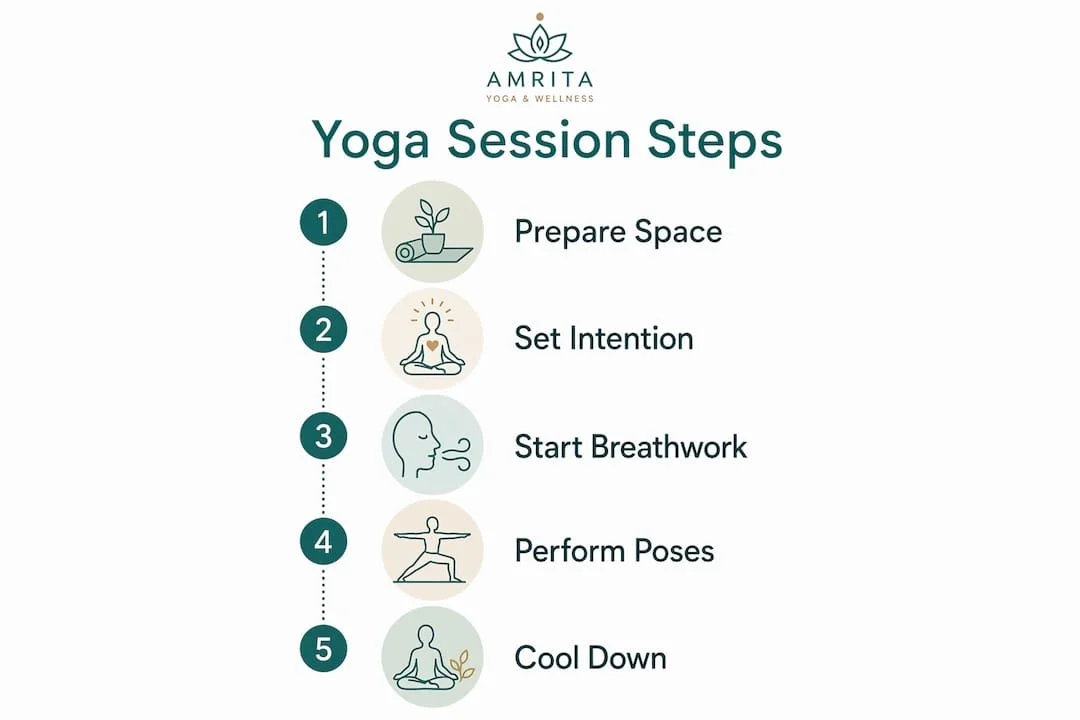
The five-part session flow
Breathwork (0 to 3 minutes): Sit comfortably and practice diaphragmatic breathing. Inhale slowly through your nose, letting your belly rise first, then your chest. Exhale fully. This activates your parasympathetic nervous system and shifts your attention inward before any movement begins.
Warm-up (3 to 7 minutes): Move through gentle neck rolls, shoulder circles, Cat-Cow on all fours, and hip circles. These prepare your joints and connective tissue for load-bearing poses.
Core poses (7 to 16 minutes): Work through 5 to 7 foundational postures. See the table below for a starter selection.
Seated stretches (16 to 18 minutes): Transition to the floor for a seated forward fold or Supine Twist to release the lower back and hamstrings.
Savasana (18 to 20 minutes): Lie flat on your back, arms slightly away from your body, and rest completely. This session structure is not optional. Savasana is where your nervous system integrates the session's work.
Foundational poses for beginners
| Pose | What it trains | Key alignment note |
|---|---|---|
| Mountain Pose (Tadasana) | Posture, body awareness | Press all four corners of each foot into the mat |
| Child's Pose (Balasana) | Hip flexors, lower back | Rest forehead on mat; arms forward or alongside body |
| Downward Dog (Adho Mukha) | Hamstrings, shoulders, spine | Bend knees generously if hamstrings are tight |
| Warrior I (Virabhadrasana I) | Legs, hip flexors, core | Back foot at 45 degrees; front knee over ankle |
| Seated Forward Fold (Paschimottanasana) | Hamstrings, spine | Use a strap around feet; never force the fold |
| Bridge Pose (Setu Bandha) | Glutes, spine, chest | Press feet flat; avoid turning the head |
Hatha yoga is the style best suited to this kind of session. Its slow pace and emphasis on alignment make it the right starting point before exploring Power, Vinyasa, or Hot yoga. For breathwork that deepens your practice further, the Amrita Yoga & Wellness guide on aerial yoga breathing offers transferable techniques for any beginner.
Pro Tip: Set a single intention before each session, such as "I will focus on my breath" or "I will stay patient with myself." Intention setting measurably increases mindfulness and session engagement.
How to build a routine that actually sticks
The most common reason beginners quit yoga at home is not lack of motivation. It is starting with too much, too fast. Sustainable practice means beginning with 3 sessions per week at 15 minutes each, not daily 60-minute flows. That frequency is enough to build noticeable flexibility and mental calm within four to six weeks.
Here is what makes the difference between a two-week experiment and a lasting habit:
Anchor your practice to an existing habit. Practice right after your morning coffee or immediately before your shower. Habit stacking removes the decision of when to practice.
Track your sessions in a simple journal. Write the date, the poses you did, and one sentence about how you felt. Reviewing three weeks of entries is genuinely motivating.
Use free resources strategically. Free yoga for beginners on YouTube channels like Yoga With Adriene gives you structured guidance without cost. Pair video sessions with solo practice days to build independence.
Adjust poses gradually, not all at once. Add one new pose per week rather than overhauling your entire sequence. Gradual progression prevents overwhelm and reduces injury risk.
Set a phone reminder for your practice time. It sounds trivial, but a consistent alarm trains your body clock the same way a gym schedule does.
The 10 to 20 minute session window is not a beginner compromise. It is the scientifically supported sweet spot for building a habit without the burnout that longer sessions create in the early weeks. Explore the Amrita Yoga & Wellness yoga routine blog for sequencing ideas as your practice grows.
Pro Tip: Missing one session is normal. Missing two in a row is the start of quitting. If you skip a day, practice for just five minutes the next day to keep the streak alive.
Common mistakes beginners make at home
Practicing yoga at home without any guidance creates specific risks that a studio setting naturally prevents. Knowing these pitfalls in advance keeps you safe and progressing.
Skipping the warm-up. Cold muscles tear. Even five minutes of Cat-Cow and shoulder rolls before your first standing pose reduces injury risk significantly.
Forcing depth in poses. Deeper is not better. A Downward Dog with bent knees and a long spine is more effective than a straight-legged version with a rounded back.
Practicing on a full stomach. Wait at least two hours after a full meal. Twists and inversions on a full stomach cause discomfort and reduce your ability to breathe deeply.
Ignoring existing injuries. If you have a history of lower back, knee, or shoulder issues, consult a physical therapist or physician before beginning. Yoga is therapeutic when practiced correctly and harmful when it is not.
Comparing your practice to online videos. Instructors on YouTube and social media have practiced for years. Their range of motion is not your starting point.
"Yoga is not about touching your toes. It is about what you learn on the way down." This perspective, widely attributed to Jigar Gor, captures the mindset that separates beginners who progress from those who quit. The goal is awareness, not performance.
For busy schedules, the Amrita Yoga & Wellness guide on home yoga for professionals addresses how to maintain practice quality even in short windows.
Key takeaways
Starting yoga at home requires only a mat, clear floor space, and consistent short sessions built around breathwork, foundational poses, and gradual progression.
| Point | Details |
|---|---|
| Minimal setup is enough | A non-slip mat, comfortable clothing, and 6x4 feet of space are all you need to begin. |
| Session structure matters | Follow the five-part flow: breathwork, warm-up, core poses, seated stretches, and Savasana. |
| Start with Hatha style | Hatha yoga's slow pace and alignment focus make it the safest entry point for beginners. |
| Three days per week is optimal | Short, frequent sessions build habit faster than occasional long ones. |
| Props prevent injury | Blocks and straps support correct alignment and protect wrists and hamstrings from strain. |
Why breath matters more than any pose
Most people who want to learn yoga for beginners focus entirely on the physical shapes. That is understandable. Poses are visible, measurable, and easy to compare. But after years of observing how beginners progress, the single clearest predictor of long-term success is not flexibility or strength. It is whether someone learns to connect movement to breath in the first two weeks.
Yoga is a mind-body discipline, not a fitness format. When you rush through poses while holding your breath, you are doing calisthenics with Sanskrit names. When you slow down and let each inhale and exhale guide your movement, something genuinely different happens in your nervous system. Stress responses quiet. Attention sharpens. The body feels safer moving into unfamiliar positions.
The practical implication is this: if you can only focus on one thing in your first month of home practice, make it your breath. Not the depth of your forward fold. Not how close your heels get to the floor in Downward Dog. Just breathe slowly, breathe fully, and let the poses follow. The physical results, including improved flexibility, better posture, and reduced tension, arrive faster when you stop chasing them directly.
I also want to address the question of online resources honestly. Free yoga for beginners on YouTube is genuinely excellent for structure and variety. But it works best as a complement to understanding the principles, not a replacement for them. Watch a video, then practice the same sequence without the video the next day. That gap between guided and solo practice is where real learning happens.
— Juiced
Explore yoga and wellness at Amrita Yoga & Wellness
Ready to take your home practice further with expert guidance and a supportive community?
Amrita Yoga & Wellness, Philadelphia's studio for yoga, pilates, barre, tai chi, and massage therapy, offers beginner-friendly classes and resources designed for exactly where you are right now. Whether you want structured sessions to complement your home practice or are curious about integrating holistic wellness tools, Amrita Yoga & Wellness has options built for every starting point. Explore their tarot readings and wellness services to deepen the mind-body connection your yoga practice is already building. Community, guidance, and growth are all available when you are ready.
FAQ
What do I need to start yoga at home?
You need a non-slip yoga mat or towel, comfortable clothing that allows full movement, and roughly 6 by 4 feet of clear floor space. Optional props like blocks and straps help with alignment but are not required for your first sessions.
How long should a beginner yoga session be?
Beginner sessions of 10 to 20 minutes are the recommended starting point. Short sessions reduce overwhelm and make it easier to practice consistently several times per week.
Which yoga style is best for beginners at home?
Hatha yoga is the best starting style because of its slow pace and strong emphasis on alignment and breath. Avoid Power yoga, Vinyasa flow, or Hot yoga until you have built a solid foundation over several weeks.
Can I lose weight doing yoga at home?
Yoga supports weight management through improved body awareness, stress reduction, and consistent physical activity. Styles like Vinyasa and Power yoga burn more calories per session, but any regular home practice contributes to overall wellness and healthier habits over time.
Where can I find free yoga classes for beginners?
YouTube channels like Yoga With Adriene offer structured, free yoga for beginners with sessions ranging from 10 to 45 minutes. Pair these with the session structure outlined in this guide to build both guided and independent practice skills.
Recommended
Easy Yoga Poses for 2 Beginners: Boost Connection
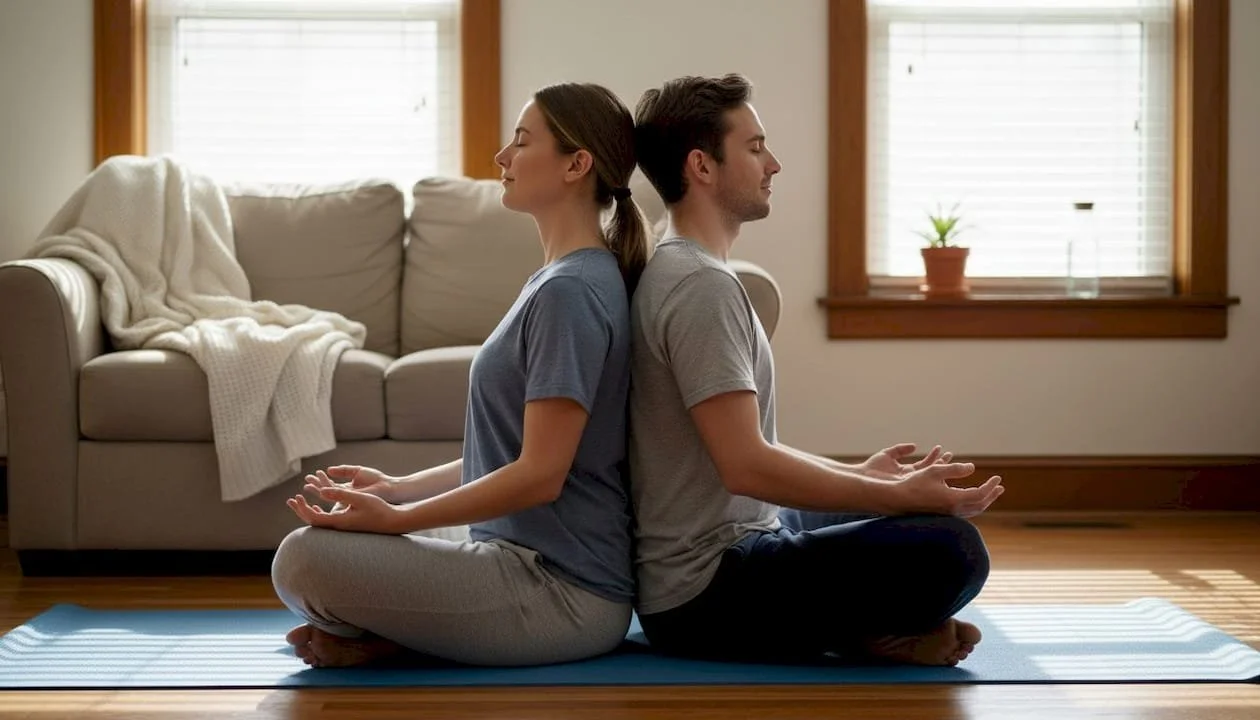
TL;DR:
Beginner partner yoga emphasizes simple, supportive poses that foster trust, connection, and mindfulness.Communication, breath synchronization, and proper modifications are essential for safe, enjoyable practice.These practices can enhance stress relief, improve mood, and strengthen relationships regardless of flexibility or experience.
Choosing the right yoga poses as a pair can feel overwhelming when you're both new to the mat. Where do you even start? The good news is that partner yoga for beginners emphasizes simple seated, standing, and supine poses that use mutual support for balance and deeper stretches. Practicing together does more than improve flexibility. It builds trust, sharpens focus, and creates a shared experience that solo practice simply can't replicate. This guide walks you through everything you need to know, from what makes a pose beginner-friendly, to the top five poses to try today, plus tips on personalizing your sessions for maximum comfort and connection.
Table of Contents
Key Takeaways
| Point | Details |
|---|---|
| Choose beginner-friendly poses | Look for poses that are easy to enter and exit, and emphasize mutual support. |
| Prioritize communication | Clear verbal and non-verbal cues between partners boost safety and connection. |
| Modify for accessibility | Props and flexible posture options make partner yoga welcoming for all abilities. |
| Enjoy the process | Focusing on shared mindfulness and enjoyment matters far more than perfect form. |
| Health and connection benefits | Partner yoga reduces stress, increases endorphins, and helps deepen relationships. |
What makes a yoga pose beginner-friendly for two?
Before jumping into specific poses, it helps to know what makes a partner yoga pose truly accessible for beginners. Not every pose works well for two people who are new to yoga. Some require strength, flexibility, or body awareness that takes months to build. The right beginner pose removes those barriers entirely.
Here are the core qualities to look for:
Easy to enter and exit without strain or awkward transitions
Mutually supportive, meaning both partners actively help each other rather than one person doing all the work
Clear setup instructions that don't require guessing
Minimal injury risk, even if alignment isn't perfect from the start
Adjustable using props like blocks, pillows, or blankets
Communication is everything in partner yoga. You and your partner should check in verbally throughout each pose. Ask "Does this feel okay?" or "Do you want more or less pressure?" Non-verbal cues matter too. Watching your partner's face or feeling tension in their body can tell you when to ease up. Partner yoga mechanics rely on synchronized breath, verbal and non-verbal communication, spinal alignment, and avoiding forced stretches, with modifications like bent knees or props as needed.
Breath synchronization is one of the most underrated tools in partner yoga. When both of you inhale and exhale together, the practice becomes almost meditative. It naturally slows you down and keeps you present with each other. This is also why partner yoga works so well as yoga for stress relief, since the shared focus quiets mental chatter fast.
Pro Tip: Before your first session, spend two minutes simply sitting back to back and breathing together. This single habit builds trust and sets the tone for a calm, connected practice.
Understanding what makes a pose safe and accessible helps you make smart choices instead of defaulting to the most impressive-looking poses online. Simple always wins when you're starting out.
Top 5 easy yoga poses for 2 beginners
With the main criteria in mind, here are five foundational partner yoga poses anyone can try safely, even as a total beginner. These common beginner poses include seated back-to-back breathing, partner seated twist, partner forward fold, partner boat pose, and back-to-back chair, and each one builds a different skill.
Seated back-to-back breathing. Sit cross-legged facing away from each other with your backs touching. Close your eyes and breathe together for two to five minutes. This pose builds awareness and sets a mindful tone without any physical challenge.
Partner seated twist. Sit cross-legged back to back. Both partners twist in opposite directions and reach for each other's knees or hands. Hold for five breaths, then switch sides. This gently improves spinal mobility and feels great after long periods of sitting.
Partner forward fold. Sit facing each other with legs extended and feet touching. Hold each other's wrists and take turns gently leaning back to offer a hamstring stretch to the other. Go slowly. Let your partner control the depth of the stretch.
Partner boat pose. Sit facing each other, bend your knees, and press the soles of your feet together. Hold each other's wrists and slowly straighten your legs to form a "V" shape. This builds core strength and requires real teamwork to stay balanced.
Back-to-back chair pose. Stand back to back with your feet hip-width apart. Lean into each other and slowly walk your feet forward as you both lower into a seated position, like sitting in an invisible chair. This works your legs and requires synchronized effort.
"The beauty of partner yoga is that neither person needs to be an expert. The poses work because of what you do together, not despite what you can't do alone."
For extra guidance on foundational postures, check out these essential yoga poses to build your base before pairing up.
Pro Tip: Start with just two or three poses per session. Rushing through all five can make the practice feel like a workout rather than a shared experience.
Comparison: Features of the best beginner partner yoga poses
After reviewing instructions for each pose, it helps to compare them side by side to select what best suits your needs. The table below summarizes key features so you can match each pose to your current goals.
| Pose | Primary benefit | Difficulty | Muscles targeted |
|---|---|---|---|
| Seated back-to-back breathing | Mindfulness and calm | Very easy | Core, posture muscles |
| Partner seated twist | Spinal mobility | Easy | Spine, obliques |
| Partner forward fold | Hamstring flexibility | Easy to moderate | Hamstrings, lower back |
| Partner boat pose | Core strength | Moderate | Core, hip flexors |
| Back-to-back chair pose | Lower body strength | Moderate | Quads, glutes, calves |
Partner yoga for beginners uses mutual support, which is what separates these poses from solo practice. That support changes how the stretch or challenge feels, often making it more accessible than the solo version.
Here's a quick guide to matching poses with your goals:
Want to reduce anxiety or stress? Start with seated back-to-back breathing every session.
Focused on flexibility? Prioritize partner forward fold and partner seated twist.
Building strength together? Partner boat pose and back-to-back chair pose are your go-to options.
New to yoga entirely? Stick with the first two poses for the first few sessions before adding more.
You can also mix and match from a broader list of yoga poses to expand your shared practice once you feel comfortable with the basics. Progression comes naturally when you focus on what feels good now.
Situational tips: Personalizing your partner yoga practice
Not every pair is the same. Here's how to personalize your practice whether you want to adapt for mobility, age, or emotional support.
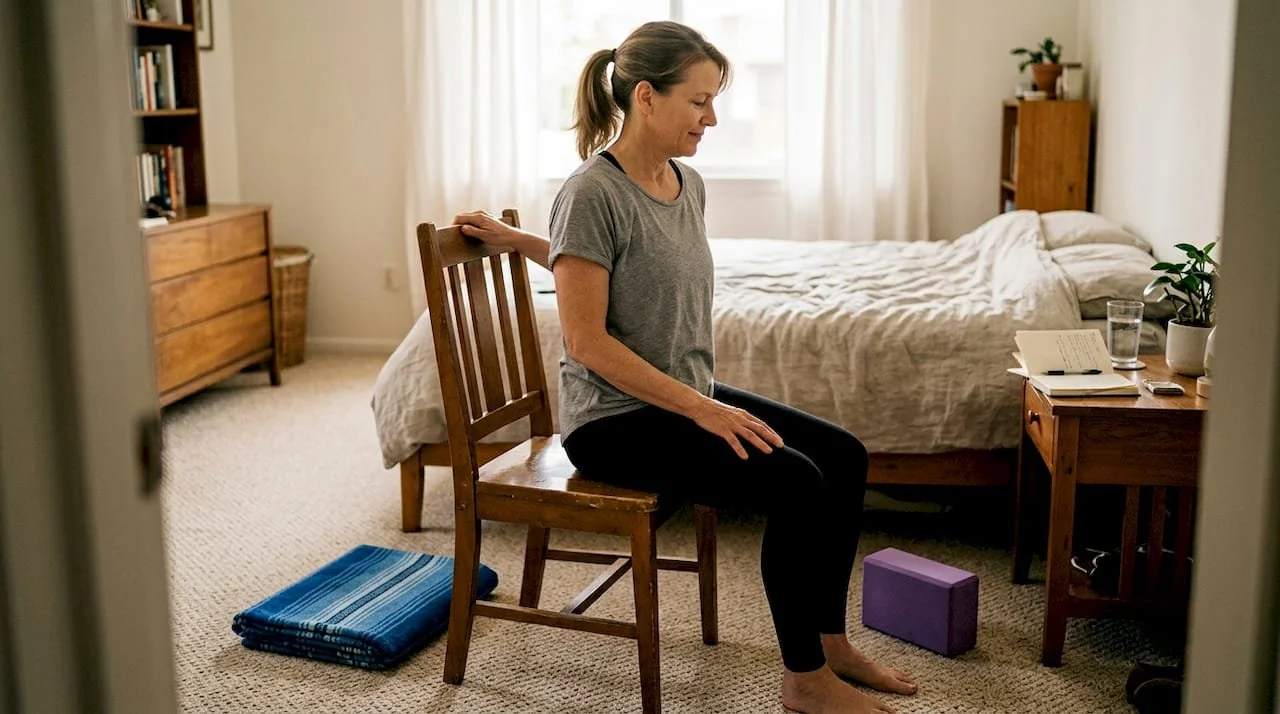
Flexibility differences are common between partners, and they don't have to be a problem. Use props generously. A folded blanket under the hips in seated poses reduces strain for anyone with tight hips or lower back tension. Yoga blocks can bring the ground closer, so neither person has to strain to reach. Check out these yoga for mobility tips for more ways to adapt your setup.
Age and mobility gaps between partners also deserve attention:
Avoid deep forward folds for anyone with osteoporosis or herniated discs
Use chair-supported versions of standing poses for older adults or those with balance concerns
Explore yoga for seniors to find modifications that keep older practitioners safe and engaged
Keep sessions shorter (15 to 20 minutes) when starting with anyone who fatigues easily
The emotional side of partner yoga is just as important as the physical side. Research shows that shared positive emotions in couples are linked to lower cortisol levels, and partner yoga reduces stress while boosting endorphins. That means the time you spend on the mat together has measurable effects on your mood and your relationship.
| Health benefit | What the research shows |
|---|---|
| Stress reduction | Lower cortisol through shared positive experiences |
| Mood boost | Increased endorphins from movement and connection |
| Relationship quality | Stronger bond through nonverbal communication and trust |
Pro Tip: If one partner is recovering from an injury or dealing with high stress, let that person lead the pace. The stronger or more mobile partner should always adapt to the other, not the other way around.
Personalizing your practice isn't about lowering your standards. It's about making the practice sustainable for both of you long term.
Why most beginners overthink partner yoga (and what really matters)
Even with all the right techniques, many new yoga pairs miss the deeper lessons. The most common thing we see is couples or friends showing up to their first partner yoga session convinced they need to be flexible, coordinated, or somehow "yoga people" before they can enjoy it. That belief is both common and completely wrong.
What actually matters is your willingness to communicate and show up without an agenda. Every pose is a real-time experiment in trust. You're learning how your partner moves, where they hold tension, and how they respond to gentle pressure. That's not a yoga skill. It's a life skill.
Partner yogaenhances physical, mental, and relational well-being through flexibility, mindfulness, and communication. But the flexibility grows over time. The connection and enjoyment? Those are available from day one, even if your forward fold barely reaches your shins.
Let go of performance. The goal is not a perfect pose. It's a shared experience that leaves both of you feeling better than when you started. If you laughed, breathed together, or simply felt more relaxed, the session was a success. These stress relief tips apply to partner practice just as much as solo yoga. Start with what feels good, and trust that the rest will follow.
Get personalized support for your yoga journey
Ready to experience more support and guidance in your partner yoga practice? Practicing with a skilled instructor makes a real difference, especially when you're figuring out pose adjustments for two people at once.
At Amrita Yoga & Wellness, we offer beginner-friendly classes, live sessions, and wellness resources designed to support every body and every level. Whether you're looking for in-studio guidance in Philadelphia or want to explore on-demand options from home, our experienced instructors make it easy and welcoming for pairs and solo practitioners alike. Your first session together could be the one that changes everything.
Frequently asked questions
What equipment do two beginners need for partner yoga?
All you need is a yoga mat and comfortable clothing. Props like blocks or pillows can help with modifications for accessibility if either partner needs extra support.
How do beginners avoid injury when trying these poses?
Listen to your body, communicate clearly with your partner, and never force a stretch. Partners should avoid forcing stretches and check in often to stay safe and comfortable.
Are these partner yoga poses suitable for all ages?
Yes, all five poses highlighted here can be modified for different ages and mobility levels. Resources like yoga poses for seniors show how to adapt even standard poses for gentle, safe practice.
Can practicing yoga with a partner help reduce stress?
Absolutely. Partner yoga reduces stress by boosting endorphins and lowering cortisol, especially when shared positive emotions are part of the experience.
Recommended
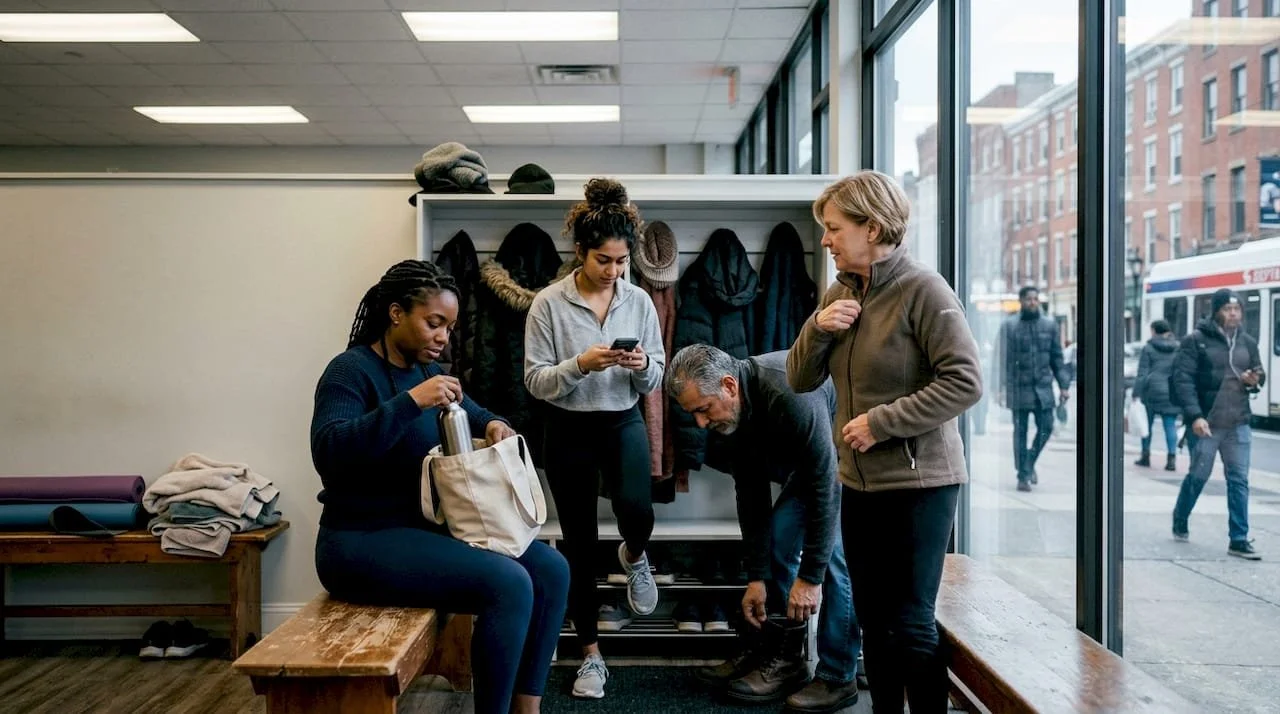
Yoga for Beginners Checklist: Philadelphia Start Guide
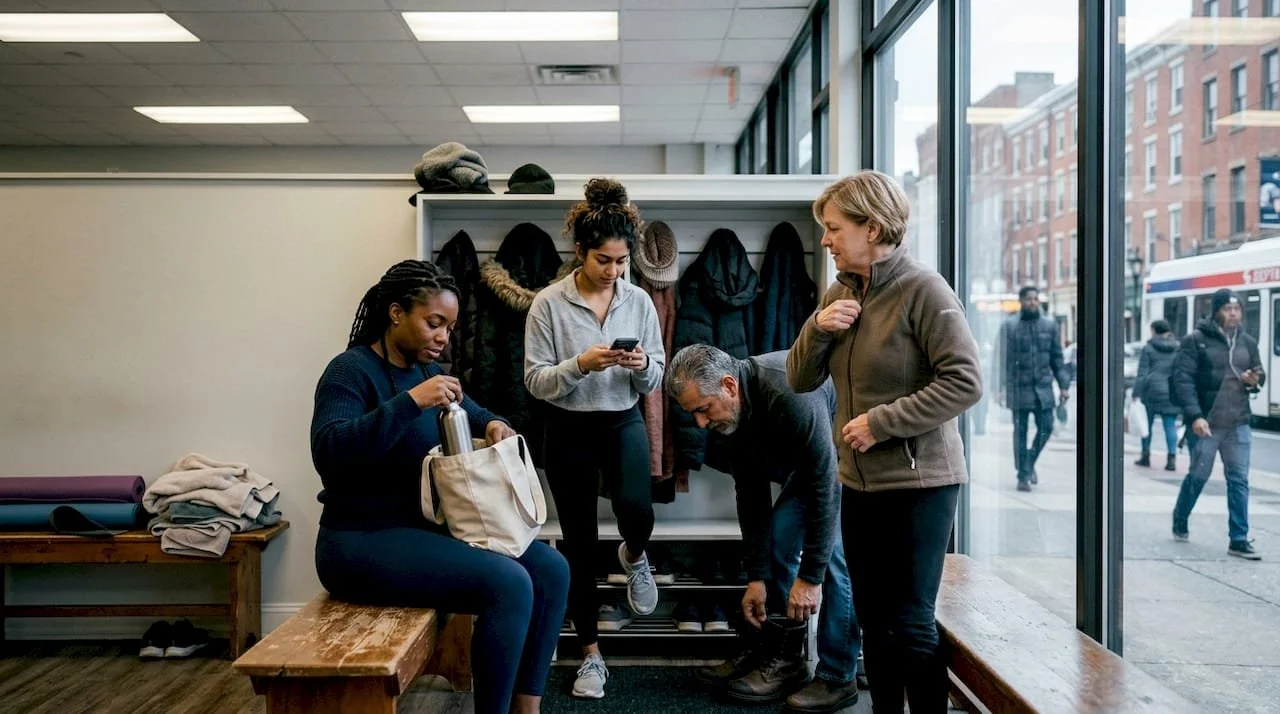
Starting yoga in Philadelphia can feel overwhelming when you're unsure what to bring, which studio to choose, or how to prepare for your first class. Many beginners worry about looking inexperienced or making mistakes that could lead to injury. This comprehensive checklist removes the guesswork by providing actionable steps, local resources, and expert insights tailored specifically for Philadelphia residents. You'll discover exactly what gear you need, how to find beginner-friendly classes in your neighborhood, and what to expect during your first session so you can step onto the mat with confidence.
Table of Contents
| Key Takeaways | |
|---|---|
| Point | Details |
| Start with basics | A simple checklist keeps your first yoga experience comfortable and stress-free. |
| Explore local classes | Philadelphia has many beginner-friendly studios—finding the right one boosts your confidence. |
| Avoid common mistakes | Arriving early, listening to your body, and choosing the right gear keep you safe and motivated. |
| Build consistency | Track your practice and connect with local resources to make yoga a regular habit. |
What you need to start yoga: Essentials checklist
With your motivation in mind, the right gear is your foundation for a positive yoga experience. You don't need an expensive wardrobe or specialized equipment to begin your practice. The essentials are simple: a sticky yoga mat, comfortable clothing that allows movement, and a water bottle to stay hydrated. If you have latex allergies, opt for non-latex mat materials like TPE or natural rubber alternatives.
Most Philadelphia studios provide props like blocks and straps, so you can wait to purchase these until you understand your preferences. Investing heavily before you know what style resonates with you often leads to buyer's remorse.
Pro Tip: Visit a free yoga class first to test different mat thicknesses and prop styles before buying your own.
| Item | Purpose | Estimated Cost |
|---|---|---|
| Yoga mat | Provides grip and cushioning | $20-$60 |
| Comfortable clothing | Allows full range of motion | $15-$40 |
| Water bottle | Maintains hydration | $10-$25 |
| Yoga blocks (optional) | Assists with balance and flexibility | $10-$20 |
| Yoga strap (optional) | Helps deepen stretches safely | $8-$15 |
Proper gear supports both safety and comfort during practice. A quality mat prevents slipping during poses, while breathable clothing regulates body temperature. These foundational items create the physical environment you need to focus on learning essential beginner yoga poses without distraction.
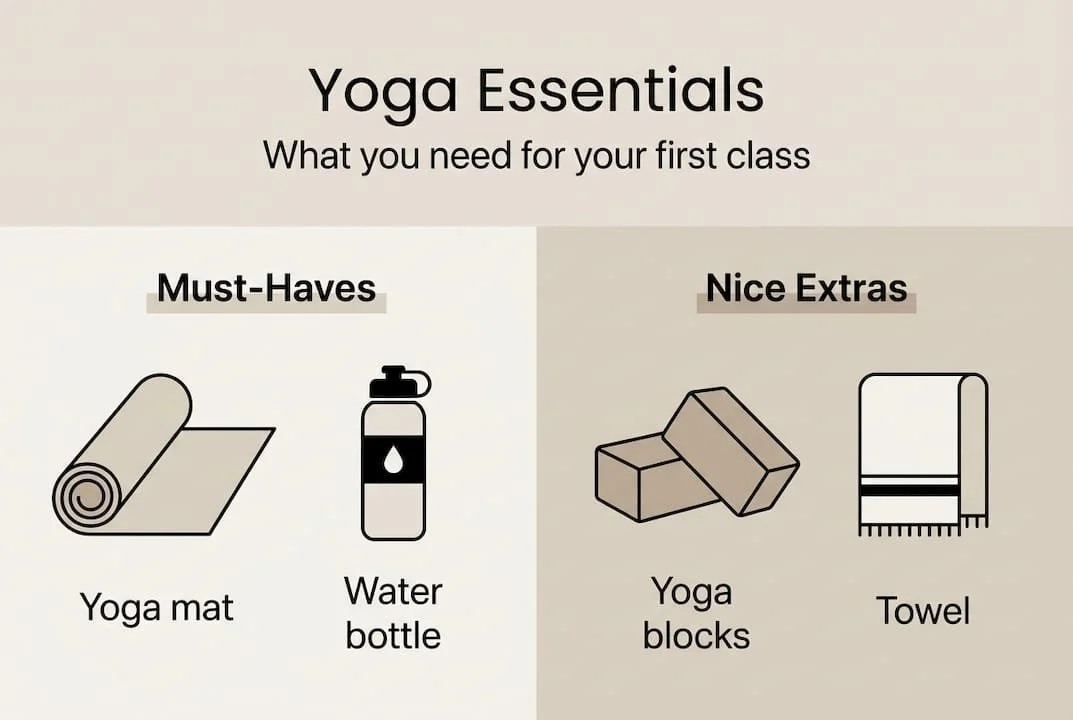
Finding beginner-friendly yoga classes in Philadelphia
Once you have your essentials, finding the right class is your next major step. Philadelphia offers diverse options for beginners, from free community sessions to specialized studio programs. The key is matching your schedule, budget, and learning style with the right environment.
Several Philadelphia studios welcome beginners with dedicated introductory classes. Amrita Yoga & Wellness in North Philadelphia provides beginner-focused instruction across multiple yoga styles. Studio 34 in University City offers accessible classes with experienced teachers. For free options, Calvary Church hosts weekly beginner sessions that require no prior experience.
| Studio/Location | Class Type | Pricing | Unique Offerings |
|---|---|---|---|
| Amrita Yoga & Wellness (North Philly) | Hatha, Vinyasa, Hot Yoga | Drop-in and packages | Community focus, wellness services |
| Studio 34 (University City) | Gentle, Hatha | $18-$22 per class | Small class sizes |
| Calvary Church (Center City) | Gentle Yoga | Free | Weekly beginner sessions |
| Yoga Home (Conshohocken) | Beginner series | Package pricing | Structured 4-week program |
When evaluating types of yoga in Philadelphia, consider these beginner-friendly styles:
Hatha yoga: Slower-paced with emphasis on basic poses and breathing
Gentle yoga: Modified poses with extra support for all fitness levels
Vinyasa flow: Movement-based sequences that build strength gradually
Pro Tip: Visit three different studios during your first month to discover where you feel most comfortable and supported. Each space has a unique energy and teaching approach.
Online classes offer convenience, but in-person instruction provides immediate feedback on form and alignment. Philadelphia yoga classes also build community connections that enhance motivation. Many beginners find that combining both formats creates the ideal balance between flexibility and guidance.
Understanding yoga styles for beginners helps you choose classes that match your goals, whether you seek relaxation, strength building, or flexibility improvement.
Step-by-step: Your first beginner yoga session
After choosing your class, preparation can ease those initial nerves. Here's what your first session will look like:
Arrive 10-15 minutes early to complete any paperwork, meet your instructor, and set up your mat in a comfortable spot
Check in at the front desk and mention you're new so the instructor can offer modifications
Set up your mat with enough space around you, typically an arm's length from neighbors
Listen to the class introduction where the instructor explains the session's focus and any special considerations
Follow the warm-up sequence with gentle movements that prepare your body for deeper poses
Move through the pose sequence at your own pace, using modifications the instructor demonstrates
Enjoy the cool-down period with restorative poses and final relaxation
Ask questions after class about anything that felt unclear or uncomfortable
Safety Note: Listen to your body throughout the session. Yoga should challenge you without causing pain. If something hurts, back off or ask for a modification. Building a sustainable practice means respecting your current limits.
Philadelphia studios typically welcome questions and encourage beginners to speak up. Arriving early allows you to inform the instructor about any injuries or concerns. Most teachers will check in with new students during class and offer personalized adjustments.
Bring your water bottle and towel, but leave your phone in your bag. Common yoga class experiences include moments of challenge and moments of deep relaxation. Both are normal parts of the learning process.
Hatha yoga basics emphasize proper alignment over advanced poses, making this style particularly suitable for first-timers. The benefits of yoga practice accumulate over time, so focus on consistency rather than perfection during these early sessions.
Studio etiquette in Philadelphia is straightforward: arrive on time, silence your phone, and respect the quiet atmosphere. If you need to leave early, position your mat near the door and exit quietly during a transition between poses.
Common beginner mistakes and how to avoid them
With your first session behind you, it helps to be aware of common challenges and how to sidestep them. New yogis often stumble over the same obstacles, but awareness prevents these issues from derailing your practice.
Arriving late: Disrupts both your preparation and the class flow; aim for 10 minutes early instead
Ignoring discomfort signals: Pain indicates you've pushed too far; modify or rest in child's pose
Overbuying specialized gear: Wait until you understand your preferences before investing in expensive props
Skipping modifications: Using blocks and straps isn't cheating; it's smart practice that prevents injury
Comparing yourself to others: Everyone's body is different; focus on your own progress
Holding your breath: Breathing is central to yoga; if you're not breathing, you're not doing yoga
Pro Tip: Write down one question after each class and ask your instructor next time. This builds your knowledge systematically and shows teachers you're engaged.
In-person studios offer supervision that corrects form before bad habits develop. Home practice is convenient, but without feedback, beginners often reinforce incorrect alignment. Consider studio classes as your foundation, then supplement with home practice once you understand proper technique.
First-class nerves are universal. Combat them by arriving early, positioning your mat where you can see the instructor, and reminding yourself that everyone in the room was once a beginner. Vinyasa yoga for beginners moves faster than Hatha, so if you feel overwhelmed, try a gentler style first.
Celebrate small wins rather than criticizing yourself for what you can't do yet. Touching your toes isn't the goal; building body awareness and reducing stress are the real victories. Many free yoga classes in Philadelphia create supportive environments where beginners feel comfortable learning at their own pace.
How to track progress and stay motivated
Finally, turning yoga into a sustainable habit means building in small, rewarding ways to see your growth. Progress in yoga isn't always linear, but tracking helps you recognize improvements you might otherwise miss.
Simple logging methods work best. Note the date, class type, and one thing you noticed (a pose that felt easier, a moment of calm, or a new challenge). Digital apps, paper journals, or calendar check marks all serve this purpose. The act of recording creates accountability.
Staying consistent requires scheduling classes like any important appointment. Block time in your calendar for yoga sessions, treating them as non-negotiable commitments to yourself. Philadelphia's yoga community offers accountability through buddy systems and studio challenges.
Try multiple studios to keep your practice fresh and discover different teaching styles. What resonates with you may change as your practice evolves.
Ways to stay accountable:
Find a yoga buddy who commits to attending classes with you regularly
Use a digital log or app to track sessions and notice patterns
Join studio challenges that reward consistency with prizes or recognition
Set small, specific goals like attending twice weekly for a month
Connect with teachers who remember your name and check on your progress
Revisit this checklist monthly and update your goals as you advance. What felt challenging in week one becomes comfortable by week eight. Recognizing this growth fuels motivation to continue. Join a free beginner class to experience different teaching approaches without financial commitment.
Philadelphia's yoga community extends beyond the studio through workshops, outdoor classes in summer, and wellness events. Engaging with this broader network transforms yoga from a solo activity into a social practice that enriches your life beyond the mat.
Discover more resources and take your next step
As you look to deepen your practice or need more support, the right local resources can make all the difference. Amrita Yoga & Wellness provides comprehensive support for beginners through diverse class offerings, experienced instructors, and complementary wellness services that enhance your yoga journey.
Beyond yoga classes, Amrita offers acupuncture for wellness that addresses physical tension and promotes healing. Many students find that combining yoga with acupuncture accelerates their progress and deepens body awareness. For those interested in mindfulness practices beyond the mat, tarot readings for mindfulness provide introspective guidance that complements the self-reflection yoga cultivates.
The studio's community-focused approach means you'll find support whether you're attending your first class or your hundredth. Explore the full range of Amrita Yoga & Wellness classes to discover how yoga, pilates, barre, and tai chi can work together to support your wellness goals in Philadelphia.
Frequently asked questions
What should I bring to my first yoga class in Philadelphia?
Bring a yoga mat, comfortable clothing, and water. Most studios provide extra props, but confirm beforehand to avoid surprises.
Are there free beginner yoga classes in Philadelphia?
Yes, Calvary Church offers weekly sessions and Amrita Yoga & Wellness provides beginner-focused classes. These options let you start without financial barriers.
Is home practice okay for yoga beginners?
Home practice is convenient, but studio instruction helps with form and safety. Start with in-person classes to build proper technique.
How do I track progress in yoga?
Keep a session log noting dates and observations, set small achievable goals, and check in with local instructors for personalized feedback on your development.
What yoga style is best for absolute beginners?
Hatha and gentle yoga offer slower pacing with emphasis on basic poses and breathing, making them ideal starting points before exploring more dynamic styles.
Recommended
What is a yoga class: complete Philadelphia guide 2026 — Amrita Yoga & Wellness
Simple yoga for beginners: easy low-impact routines — Amrita Yoga & Wellness
How to choose a yoga class that fits your wellness goals — Amrita Yoga & Wellness
Diverse yoga practices for wellness in Philadelphia 2026 — Amrita Yoga & Wellness
Simple yoga for beginners: easy low-impact routines
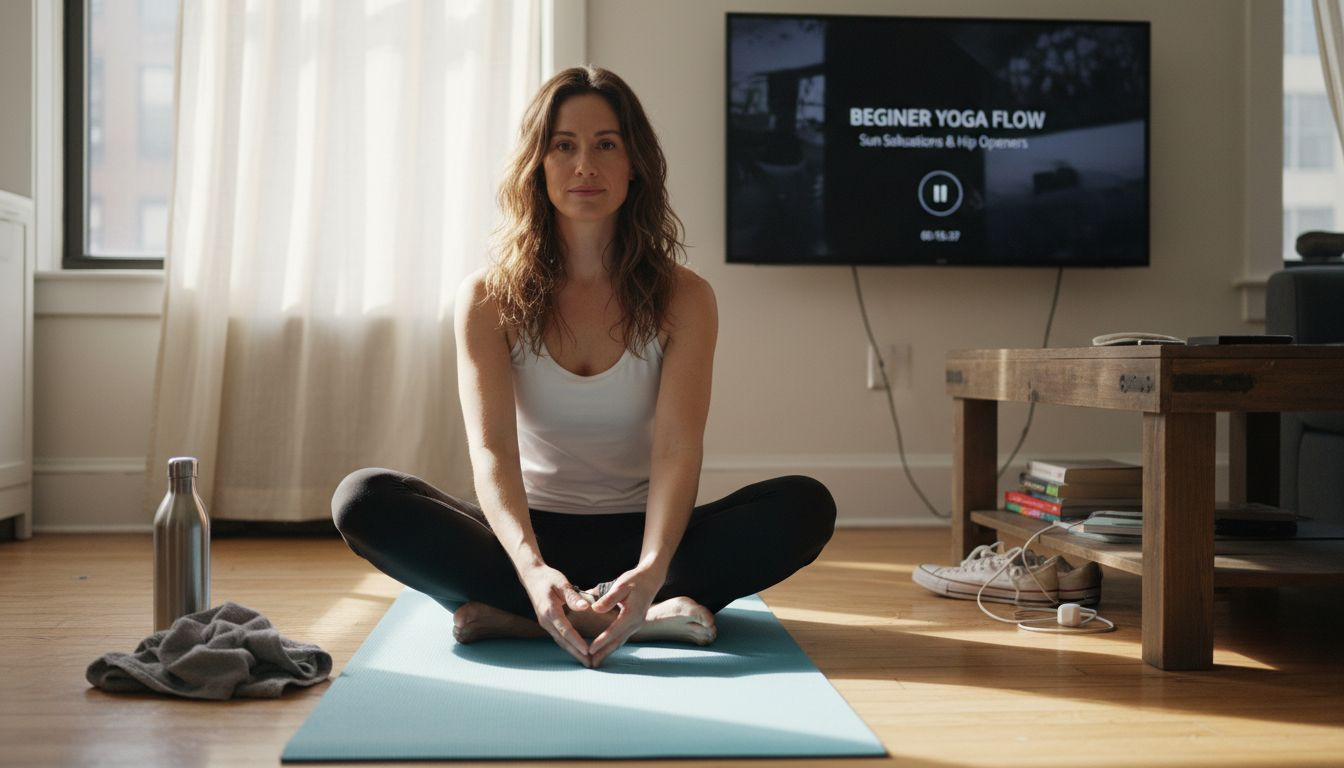
Feeling overwhelmed by complicated yoga poses or worried about getting hurt? You're not alone. Many beginners abandon yoga before experiencing its benefits because they fear injury or feel intimidated by complex sequences. Simple yoga offers a solution: accessible, low-impact routines designed specifically for people new to the practice. These gentle movements build strength, flexibility, and mindfulness without the stress of advanced poses. Whether you're in Philadelphia or anywhere else, simple yoga provides a safe entry point into wellness that fits your life.
Table of Contents
Key takeaways
| Point | Details |
|---|---|
| Safe wellness approach | Simple yoga uses low-impact movements that reduce injury risk while improving flexibility, strength, and mental health. |
| Minimal requirements | You need just 10-20 minutes daily, a yoga mat, comfortable clothes, and a quiet space to start practicing effectively. |
| Beginner-friendly poses | Twelve foundational poses like Cobra and Downward Dog build your practice safely with modifications for all fitness levels. |
| Avoid common mistakes | Skipping warm-ups, poor alignment, and pushing too hard increase injury risk and slow progress unnecessarily. |
| Realistic progress timeline | Consistent practice 2-3 times weekly delivers visible flexibility and strength improvements within 6-8 weeks. |
Introduction to simple yoga and its benefits
Simple yoga strips away intimidating elements and focuses on beginner-friendly, low-impact movements suitable for all body types and fitness levels. Unlike advanced practices requiring extreme flexibility or balance, simple yoga emphasizes accessible poses that anyone can perform safely. This approach welcomes people with mobility concerns, joint issues, or those simply new to exercise.
The physical benefits are substantial and measurable:
Improved flexibility through gentle stretching that gradually increases range of motion
Enhanced muscle strength from holding poses that engage core, legs, and upper body
Better joint mobility without the high-impact stress of running or jumping
Reduced pain from chronic conditions through gentle movement and alignment correction
Mental health improvements match the physical gains. Yoga is a low-impact exercise that can reduce pain, boost mood, lower blood pressure, and promote better sleep, making it ideal for people with mobility or joint issues. Regular practice cultivates stress relief through focused breathing and present-moment awareness. You'll notice mood improvements as endorphins increase and cortisol decreases. Many practitioners report better sleep patterns within weeks of starting a consistent routine.
The low-impact nature makes simple yoga perfect for beginners who worry about injury. Unlike high-intensity workouts that stress joints and muscles, yoga movements flow smoothly with controlled breathing. This gentleness accommodates people recovering from injuries or managing chronic conditions like arthritis.
Philadelphia's wellness community values accessible fitness options that fit busy urban lifestyles. Simple yoga meets this need by requiring minimal space and equipment while delivering maximum health benefits. You can practice at home, in a park, or at a local studio, making it adaptable to your schedule and preferences.
Prerequisites and preparation for simple yoga
Before rolling out your mat, proper preparation ensures safety and maximizes your practice benefits. Physical readiness starts with basics: wear comfortable, breathable clothing that allows free movement without restriction. Leggings or loose pants work better than jeans. Drink water before practice, but avoid heavy meals within two hours of starting.
Essential equipment keeps costs low:
Non-slip yoga mat providing cushioning and stability for floor poses
Yoga blocks supporting proper alignment when flexibility limits reach
Yoga strap assisting in stretches without straining muscles
Blanket or bolster for seated poses and final relaxation
You don't need expensive gear to start. A basic mat costs $20-40 and lasts years with proper care. Props help but aren't mandatory for beginners.
| Preparation Element | Purpose | Cost |
|---|---|---|
| Yoga mat | Cushioning and grip | $20-40 |
| Comfortable clothing | Freedom of movement | $0-30 (use existing clothes) |
| Props (blocks, strap) | Pose modifications | $15-25 (optional) |
| Quiet space | Focus and safety | Free |
Environmental setup matters as much as equipment. Find a quiet space with enough room to extend arms and legs fully without hitting furniture. A bedroom, living room, or outdoor area works perfectly. Ensure the surface is level and free from sharp objects. Temperature should feel comfortable, neither too hot nor too cold.
If you have chronic conditions, injuries, or health concerns, consult your doctor before starting yoga. Most people can practice safely, but medical clearance provides peace of mind and helps identify necessary modifications.
Philadelphia offers numerous beginner-friendly resources. Finding yoga classes in Philadelphia connects you with instructors who can assess your form and answer questions. Community classes provide motivation and social support that home practice sometimes lacks.
Step-by-step simple yoga routine
Yoga for beginners does not require pre-existing flexibility or expensive equipment and can start effectively with just a 10-minute daily routineincluding foundational poses and breathwork. This practical routine builds strength, flexibility, and mindfulness through consistent practice.
Daily routine structure (15-20 minutes):
Warm-up (3 minutes): Gentle neck rolls, shoulder circles, and hip rotations prepare muscles and joints
Breath awareness (2 minutes): Sit comfortably, focus on deep inhales through nose, slow exhales through mouth
Foundation poses (10 minutes): Perform each pose for 30-60 seconds with modifications as needed
Cool-down (3 minutes): Gentle stretches and relaxation in Corpse Pose
Twelve essential beginner poses:
| Pose Name | Primary Benefit | Modification |
|---|---|---|
| Mountain Pose | Posture and alignment | Use wall for balance |
| Child’s Pose | Spine stretch and relaxation | Place bolster under torso |
| Cat-Cow Pose | Spine mobility | Reduce range of motion |
| Downward Facing Dog | Full body strength | Bend knees slightly |
| Cobra Pose | Back strength | Keep elbows bent |
| Bridge Pose | Hip and glute strength | Use block under sacrum |
| Warrior I | Leg strength and balance | Shorten stance |
| Triangle Pose | Side body stretch | Hand on block instead of floor |
| Tree Pose | Balance and focus | Foot on ankle, not knee |
| Seated Forward Fold | Hamstring flexibility | Bend knees generously |
| Butterfly Pose | Hip opening | Sit on folded blanket |
| Corpse Pose | Final relaxation | Cover body with blanket |
Simple low-impact yoga poses such as Butterfly Pose, Cobra Pose, and Downward Facing Dog effectively improve flexibility, relieve stress, and build strength suitable for beginner levels without risk of injury if executed carefully.
Breath control techniques enhance every pose. Inhale during expansive movements like lifting arms or arching back. Exhale during contracting movements like folding forward or twisting. This coordination creates rhythm and keeps you present. Try counting breaths: inhale for four counts, exhale for four counts.
Pro Tip: Listen to your body signals carefully and never push through sharp pain. Mild discomfort during stretching is normal, but pain indicates you've gone too far. Back off immediately and modify the pose using props or reduced range of motion. Progress comes from consistent gentle practice, not forcing your body into positions it's not ready for.
Props support safe execution. Blocks bring the floor closer in standing forward folds. Straps extend reach in seated stretches. These tools aren't crutches but intelligent aids that prevent injury while building strength and flexibility.
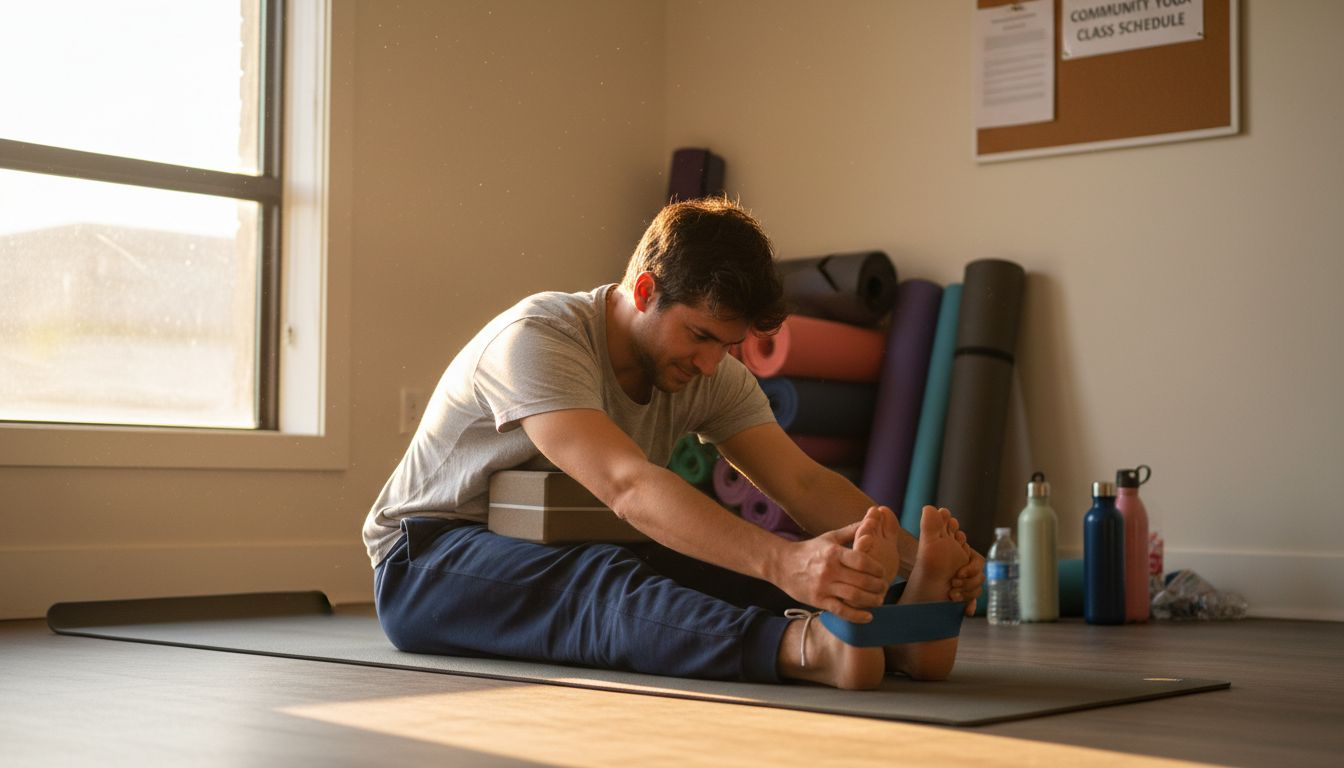
A beginner yoga routine should feel challenging but achievable. You'll notice muscles engaging and breath deepening without feeling exhausted or strained.
Common mistakes and how to avoid them safely
Beginner enthusiasm often leads to preventable errors that increase injury risk and slow progress. Understanding these pitfalls helps you practice safely and effectively from day one.
Frequent mistakes beginners make:
Skipping warm-ups and jumping directly into challenging poses without preparing muscles and joints
Holding breath during difficult poses instead of maintaining steady breathing rhythm
Pushing too hard to match others or achieve perfect form before body is ready
Poor alignment that places stress on vulnerable joints like knees, lower back, and neck
Ignoring pain signals and continuing to practice through sharp or shooting sensations
Each mistake carries specific consequences. Common yoga injuries in the US involve muscle strain and overstretching of the neck, shoulders, spine, legs, and knees; injury risk can be reduced by warming up, choosing appropriate class levels, and listening to body signals. Skipping warm-ups leaves muscles cold and tight, making strains likely. Breath holding raises blood pressure and creates tension instead of relaxation. Pushing beyond current ability damages connective tissue that needs weeks or months to heal.
Poor alignment deserves special attention. In Downward Dog, rounded shoulders strain the neck. In Warrior poses, knee extending past ankle stresses the joint. In forward folds, rounding the lower back compresses discs. These subtle misalignments accumulate over time, causing chronic issues.
Yoga-related injuries have increased significantly as popularity has grown. Most injuries affect the musculoskeletal system, particularly the spine, knees, and shoulders. Proper instruction and gradual progression prevent the majority of these preventable injuries.
Pro Tip: Use a mirror or ask an instructor to check your alignment regularly. What feels correct often isn't when you're learning new movement patterns. Video recording yourself or attending classes with hands-on adjustments accelerates proper form development.
Evidence-based injury prevention strategies:
Always warm up with 3-5 minutes of gentle movement before deeper poses
Choose beginner-appropriate classes that match your current fitness level
Focus on breath as your primary guide; if breathing becomes strained, ease back
Build strength gradually over weeks and months rather than forcing flexibility
Stop immediately if you feel sharp pain, then modify or skip that pose
Building yoga skills safelyrequires patience and self-awareness. Your practice should challenge you without overwhelming your body's current capacity. Recovery between sessions matters as much as the practice itself.
Expected outcomes and progress timelines
Realistic expectations keep you motivated through the learning curve. Simple yoga delivers measurable benefits, but understanding typical timelines helps you celebrate progress appropriately.
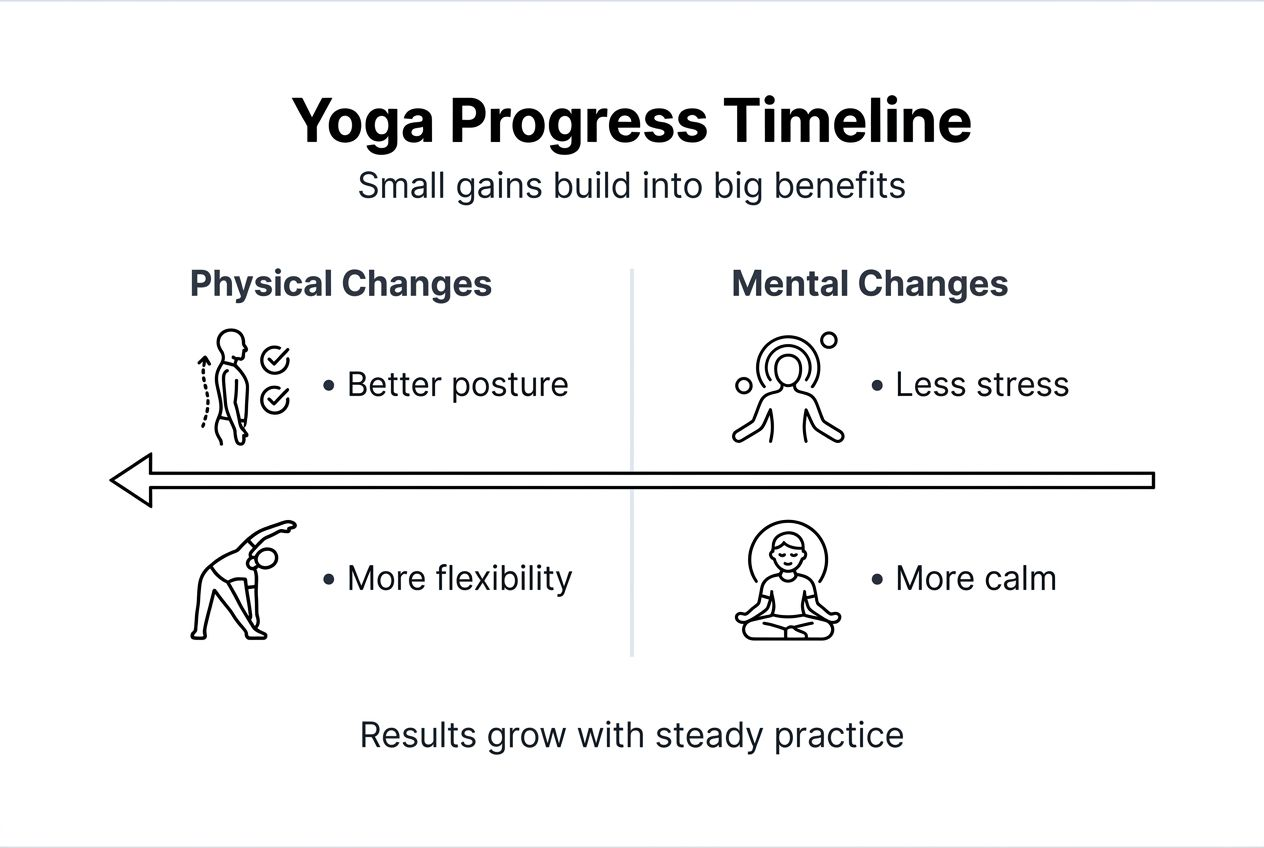
A 7-day beginner yoga starter plan improves beginner flexibility, strength, and stress relief with consistent practice, using 12 beginner poses and a simple routine printable PDF. Physical improvements typically emerge within 6-8 weeks when practicing 2-3 times weekly. You'll notice easier movement in daily activities as flexibility increases. Muscles feel stronger and more toned. Balance improves noticeably, making you steadier on your feet.
Mental health benefits appear faster:
Reduced anxiety after individual sessions from breath work and present-moment focus
Improved mood within 2-3 weeks as regular practice regulates stress hormones
Enhanced mindfulness carrying over into daily life situations and relationships
Better sleep quality within 4-6 weeks from reduced physical tension and mental relaxation
Progress benchmarks by timeframe:
| Timeline | Physical Changes | Mental Changes | Practice Milestones |
|---|---|---|---|
| Week 1 | Muscle soreness (normal), increased body awareness | Immediate post-practice calm, reduced stress | Learning basic poses, establishing routine |
| Week 4 | Noticeable flexibility gains, reduced stiffness | Improved mood, better stress management | Holding poses longer, smoother transitions |
| Week 8 | Significant strength and balance improvement | Enhanced mindfulness, better sleep patterns | Attempting variations, deeper stretches |
| Week 12 | Visible muscle tone, improved posture | Sustained emotional regulation | Consistent practice habit, ready for intermediate poses |
Consistent practice matters more than session length. Three 15-minute sessions weekly produce better results than one 60-minute weekly session. Your body adapts through regular stimulus, not occasional intense effort.
Set realistic goals that match your starting point. If you can't touch your toes now, expect to reach mid-shin after four weeks, then eventually knees, and finally toes after months of practice. Rushing this progression invites injury.
Yoga programs for beginners structure progression logically, building on previous skills. Following proven sequences helps you advance safely while maintaining motivation. Many practitioners notice yoga tips for wellness accelerate their progress when applied consistently.
Progress isn't always linear. Some weeks feel easier than others. Plateaus are normal and temporary. Trust the process and maintain consistency even when improvements seem to slow.
Alternative approaches and choosing the right path
Simple yoga forms one path among many. Understanding alternatives helps you select the approach that best matches your goals, physical condition, and lifestyle preferences.
Popular yoga styles for beginners:
Hot yoga: Practiced in heated rooms (95-105°F) to increase flexibility and detoxification through sweating
Restorative yoga: Uses props extensively for passive stretching held 5-10 minutes per pose for deep relaxation
Prenatal yoga: Modified specifically for pregnant women to maintain fitness and prepare for childbirth
Yin yoga: Targets connective tissue through long-held passive poses, complementing active practices
At-home practice versus studio classes:
| Factor | At-Home Practice | Studio Classes |
|---|---|---|
| Cost | Minimal (mat and optional props) | $15-30 per class or monthly membership |
| Convenience | Practice anytime, no travel required | Fixed schedule, commute time needed |
| Instruction | Self-guided or video-based | Live feedback and hands-on adjustments |
| Community | Solo practice | Social connection and motivation |
| Intensity | Self-paced, easily modified | Instructor-led, group energy |
Each approach offers distinct advantages. Home practice provides ultimate flexibility for busy schedules. You control the environment, music, and pace completely. However, you miss expert guidance that prevents bad habits from forming.
Studio classes offer professional instruction that accelerates learning. Instructors correct alignment issues you can't see yourself. The community aspect creates accountability and motivation. Many Philadelphia studios offer yoga class options designed specifically for beginners with smaller class sizes and extra attention.
Hot yoga suits people who enjoy sweating and want increased flexibility quickly. The heat allows deeper stretches but requires careful hydration. It's not ideal if you have cardiovascular concerns or heat sensitivity.
Restorative yoga appeals to stressed individuals needing deep relaxation more than physical challenge. It's perfect for recovery days or people with chronic pain conditions. The gentle nature makes it accessible for almost everyone.
Situational recommendations:
Joint issues or arthritis: Choose restorative or gentle yoga with props
Busy schedule: Start with 10-minute home routines, then add studio classes when possible
Social preference: Join studio classes for community support and motivation
Heat sensitivity: Avoid hot yoga, choose regular temperature classes
Pregnancy: Seek certified prenatal yoga instructors for safe modifications
Finding yoga classes in Philadelphia connects you with local options suited to your specific needs. Try different styles and instructors before committing to one approach. Many studios offer introductory packages letting you explore various classes affordably.
Amrita Yoga & Wellnessprovides diverse class options from gentle beginner sessions to more challenging practices, allowing you to grow within one supportive community.
Explore yoga classes and wellness support in Philadelphia
Reading about yoga builds knowledge, but practicing with expert guidance accelerates your progress dramatically. Philadelphia offers vibrant wellness communities where beginners find support, instruction, and motivation to maintain consistent practice.
Amrita Yoga & Wellness serves as a trusted local resource offering beginner-friendly yoga gym classes designed specifically for people starting their wellness journey. Experienced instructors provide hands-on adjustments and modifications ensuring you learn proper form from day one.
Finding and joining yoga classes near you is simpler than you might think. Start by visiting studio websites to review class schedules and instructor backgrounds. Look for terms like "beginner," "gentle," or "all levels" indicating accessible sessions.
New students often hesitate due to cost concerns. New student specials at Amrita Yoga & Wellness provide affordable introductory offers letting you experience professional instruction without major financial commitment. These packages typically include multiple classes at reduced rates, giving you time to develop a practice habit.
Studio practice offers benefits home routines can't replicate. You'll meet others on similar wellness journeys, creating accountability and friendship. Instructors spot alignment issues immediately, preventing injuries before they develop. The dedicated space removes home distractions, deepening your focus and practice quality.
Frequently asked questions
How long does it take to see benefits from simple yoga?
You'll feel immediate benefits like reduced stress and increased calm after your first session. Physical improvements including flexibility and strength typically become noticeable within 4-6 weeks of practicing 2-3 times weekly. Mental health benefits like improved mood and better sleep often emerge within 2-3 weeks of consistent practice.
Do I need expensive equipment to start simple yoga?
No, you only need a basic yoga mat costing $20-40 and comfortable clothing you likely already own. Props like blocks and straps help but aren't required initially. Many poses can be modified using household items like books instead of blocks or belts instead of straps until you decide to invest in dedicated equipment.
Can I modify poses if I'm not flexible?
Absolutely, modifications are essential for safe practice regardless of flexibility level. Use props to bring the floor closer in forward folds, bend your knees generously in standing poses, and reduce your range of motion in any stretch. Flexibility develops gradually over months, so working within your current range prevents injury while building capacity safely.
How do I know when I'm ready for more advanced yoga styles?
You're ready to progress when you can hold basic poses for 30-60 seconds with proper alignment and steady breathing, when you've practiced consistently for 8-12 weeks, and when simple routines no longer challenge you physically. Discuss progression with an instructor who can assess your form and readiness objectively before moving to intermediate practices.
What should I do if I feel pain during a yoga pose?
Stop immediately if you experience sharp or shooting pain, which signals potential injury rather than normal stretching sensation. Come out of the pose gently, then either skip it entirely or try a modified version with props or reduced depth. Mild muscle discomfort is normal when stretching, but joint pain or sharp sensations require stopping and possibly consulting a healthcare provider.
Recommended
How to Start Hot Yoga Naturally for Stress Relief Success
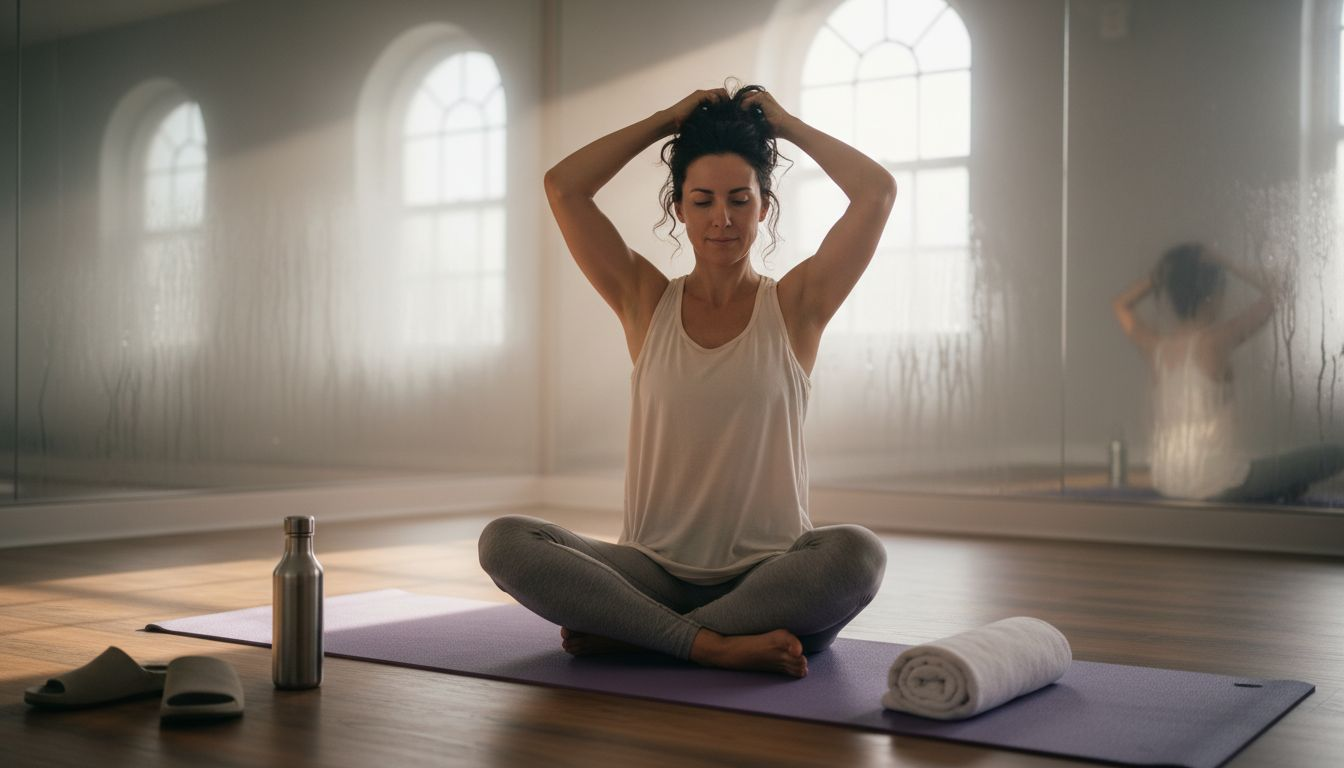
Many Philadelphia adults feel the strain of city living and search for fresh ways to manage stress while building healthier habits. Hot yoga has become a popular option for those seeking a holistic approach to wellness and flexibility. Before getting started, assessing your readiness ensures you experience the transformative benefits of heated yoga practice while keeping safety and self-care as top priorities.
Table of Contents
Quick Summary
| Important Insight | Explanation |
|---|---|
| 1. Assess Your Readiness for Hot Yoga | Evaluate your medical history and fitness level to ensure a safe practice. Consult a healthcare professional if unsure. |
| 2. Gather Essential Hot Yoga Gear | Choose functional, moisture-wicking clothing and a high-grip mat to enhance comfort and safety during sessions. |
| 3. Hydrate Strategically Before Class | Drink adequate water and electrolytes prior to class to ensure proper hydration and avoid fatigue. |
| 4. Choose the Right Class for You | Opt for beginner-friendly classes with experienced instructors to build confidence and skills safely. |
| 5. Track Your Progress Consistently | Monitor physical and mental development to understand your body's needs and make informed adjustments in practice. |