Contact Us

Want to send us a quick message? Use the form on the right to contact us and we'll be in touch within 2 business days!

Please contact Audrey at info@amritayogawellness.com for general inquiries, software issues, in-studio and out-of-studio events and workshops, marketing, and community outreach and donations.

Please contact Heather at heather@amritayogawellness.com for private events, private yoga/pilates requests, and trainings.

1204 Frankford Avenue
North Philadelphia, PA, 19125
United States

(267) 928 3176

Amrita Yoga & Wellness offers a variety of Yoga traditions, Pilates Mat, Pilates Group Reformer, Tai Chi, and Massage services in a beautiful space. Our studio is located in Philadelphia, Pennsylvania.

Blog

How to Advance in Aerial Yoga for Greater Mastery
Heather Rice

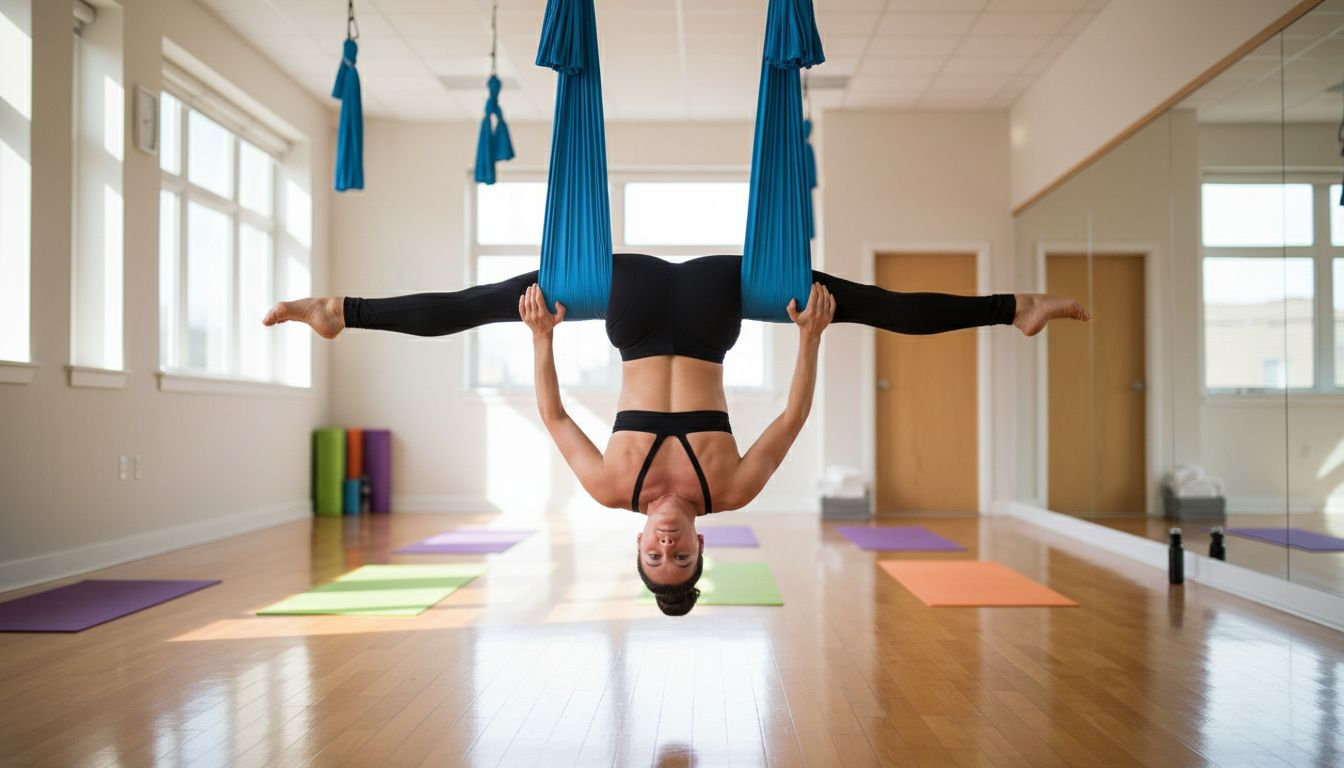
Many American adults in Philadelphia push past plateaus in aerial yoga, yet only a small percentage actually reach advanced mastery through targeted self assessment and community support. When you have experience but crave greater flexibility, strength, and connection, knowing exactly where you stand becomes the catalyst for growth. Discover how seasoned practitioners shape their aerial yoga journeys with proven methods that help track progress, deepen technique, and spark meaningful local engagement.

Table of Contents

Quick Summary

Quick Summary

Key Insight Explanation
1. Assess Your Aerial Yoga Skills Evaluate your core strength, flexibility, and balance through self-recordings to establish a tailored progression strategy.
2. Prioritize Alignment and Safety Focus on maintaining core stability and proper body mechanics to create a safe aerial yoga practice.
3. Integrate Advanced Techniques Break down complex poses into manageable parts, mastering each movement before combining for full sequences.
4. Consistent Targeted Practice Schedule regular training sessions that focus on specified skill areas, balancing intensity with recovery time.
5. Seek Instructor Feedback Regularly consult a qualified instructor for professional evaluation and guidance to refine technique and progress.

Step 1: Assess Your Current Aerial Yoga Skills

Self evaluation is critical for advancing in aerial yoga and understanding your current skill level. By systematically analyzing your strength, flexibility, coordination, and existing movement patterns, you can create a targeted progression strategy that addresses your unique needs.

To begin your assessment, start by recording yourself performing fundamental aerial yoga poses and transitions. Look for key indicators of skill development such as stability in suspended positions, smoothness of movements, and overall body control. Researchers emphasize tracking progress through structured practice observation and coordination evaluations. Focus on examining your performance across several key dimensions:

  • Core strength and stability

  • Upper body endurance

  • Flexibility in shoulder and hip regions

  • Ability to execute smooth transitions

  • Balance and spatial awareness while suspended

Documenting these observations will help you identify specific areas requiring improvement and allow you to set measurable goals for your aerial yoga journey.

Here's a comparison of key focus areas at beginner, intermediate, and advanced aerial yoga levels:

Practice Levels
Practice Level Primary Focus Typical Challenges
Beginner Foundational strength, safety awareness Building confidence, learning alignment
Intermediate Enhancing transitions, increasing flexibility Coordination, mastering flow
Advanced Complex poses, creative sequencing Precision, consistency, mental focus

Pro Tip: Consider working with an experienced aerial yoga instructor who can provide professional insights and help you objectively assess your current skill level.

Step 2: Refine Foundational Alignment and Safety

Mastering aerial yoga requires developing precise body mechanics and understanding safety protocols that protect both your physical and mental well-being. Foundational skills demand biomechanical attention to create a secure and effective practice environment.

Start by focusing on core stabilization and proper body positioning. This means learning to engage your core muscles consistently while suspended, maintaining neutral spine alignment, and distributing your weight evenly across the aerial hammock. Practice fundamental poses slowly and mindfully, checking your body positioning from multiple angles. Pay special attention to:

  • Shoulder blade engagement

  • Spine neutrality

  • Weight distribution

  • Hand and foot placement

  • Breathing technique during suspension

Additionally, understand the psychological aspects of aerial yoga safety. Creating a mental framework of confidence and self awareness helps you navigate complex movements with greater precision and reduced risk of injury.

Pro Tip: Always inspect your aerial yoga equipment before each session and practice new movements with a qualified instructor nearby for immediate guidance and support.

Step 3: Integrate Advanced Poses and Transitions

Progressing in aerial yoga requires thoughtful integration of complex movements that challenge your strength, balance, and spatial awareness. Advanced aerial yoga postures push physical boundaries by combining traditional yoga elements with innovative aerial techniques.

Begin by breaking down advanced transitions into smaller components. Focus on mastering each individual movement separately before attempting full sequences. This approach allows you to build muscle memory and confidence gradually. Key advanced techniques to explore include:

  • Inverted poses with minimal hammock support

  • Fluid transitions between suspended and ground positions

  • Complex wrapping techniques

  • Sequences that combine strength and flexibility

  • Movements requiring asymmetrical body positioning

Mental preparation is equally important as physical skill. Visualize each movement before attempting it, understand the biomechanical requirements, and maintain a calm yet focused mindset. Work with experienced instructors who can provide personalized guidance and help you safely expand your aerial yoga practice.

Pro Tip: Practice new advanced movements near a wall or with a spotter until you develop complete confidence in your technique and body control.

Step 4: Develop Consistency Through Targeted Practice

Building a sustainable aerial yoga practice requires strategic planning and intentional skill development. Consistent practice promotes strength gains by creating neurological pathways and muscle memory that enhance your overall performance.

Establish a structured training approach that balances intensity with proper recovery. Create a weekly schedule that includes specific focus areas targeted to your skill development. This might involve dedicating certain sessions to strength training, flexibility work, technique refinement, and mental conditioning. Key components of a consistent practice include:

  • Regular scheduled training times

  • Varied workout intensities

  • Progressive skill challenges

  • Mindful rest and recovery periods

  • Cross training to support aerial yoga skills

Motivation plays a critical role in maintaining consistency. Track your progress through journaling, video recordings, and periodic skill assessments. Celebrate small victories and understand that progression is a gradual process requiring patience and commitment.

Pro Tip: Schedule your aerial yoga sessions in advance and treat them like important appointments you cannot miss.

Step 5: Verify Progress with Instructor Feedback

Advancing in aerial yoga requires more than personal assessment you need external expert perspectives to truly understand your progression. Instructor student relationship quality plays a critical role in motivating and supporting your aerial yoga development.

Schedule quarterly or biannual comprehensive skill assessments with a qualified aerial yoga instructor. During these sessions, request a detailed technical evaluation of your technique, body mechanics, and overall progression. Prepare specific questions and areas where you want focused feedback. Important elements to discuss include:

  • Precision of your movement patterns

  • Strength and flexibility improvements

  • Technique refinement opportunities

  • Mental focus and body awareness

  • Safety and alignment consistency

Approach these feedback sessions with an open mind and genuine curiosity. Understand that constructive criticism is a pathway to growth. Take detailed notes during the assessment and create a targeted improvement plan based on your instructor's professional recommendations.

Consider these strategies for progressing with effective practice:

Progress Strategies
Strategy How It Improves Progress When to Apply
Video self-assessment Reveals technical flaws quickly After solo practice
Instructor feedback Professional error correction Every quarter or biannually
Skill journaling Tracks subtle improvements After each session

Pro Tip: Record video of your aerial yoga sessions to review alongside your instructor and gain more objective insights into your performance.

Elevate Your Aerial Yoga Practice with Expert Guidance and Community Support

Advancing in aerial yoga means overcoming challenges like mastering foundational alignment, building strength, and integrating complex poses safely. If you are seeking to refine your technique, enhance your flexibility, and boost your confidence in suspended movements, embracing a structured and supportive environment is key. At Amrita Yoga & Wellness, we understand the journey of skill progression and the importance of consistency, self-awareness, and expert feedback highlighted in the article "How to Advance in Aerial Yoga for Greater Mastery".

Explore our diverse classes and workshops designed to meet all levels from beginner to advanced aerial practitioners. With personalized instructor insights and a welcoming community, you gain the tools for:

  • Improving core strength and body control

  • Learning safe transitions and advanced poses

  • Building mental focus and confidence

Do not wait to unlock your full potential. Visit Amrita Yoga & Wellness today, sign up for a class, and start transforming your aerial yoga experience with expert support and inclusive community energy.

Frequently Asked Questions

How can I assess my current aerial yoga skills?

Start by recording yourself performing fundamental aerial yoga poses and transitions. Look for stability, smoothness of movements, and overall body control to identify areas needing improvement.

What should I focus on to improve my foundational alignment and safety in aerial yoga?

Concentrate on engaging your core, maintaining a neutral spine, and distributing your weight evenly across the aerial hammock. Practice fundamental poses slowly and mindfully to develop correct body mechanics and safety protocols.

How do I integrate advanced poses and transitions into my aerial yoga practice?

Break down advanced transitions into smaller components to master each movement before attempting full sequences. This gradual approach will help build your confidence and muscle memory effectively.

How can I develop consistency in my aerial yoga practice?

Establish a structured training schedule that includes various focus areas such as strength training, flexibility work, and technique refinement. Aim for specific sessions dedicated to each skill to create a balanced practice.

Why is instructor feedback important for my aerial yoga development?

Instructor feedback provides expert perspectives that can identify technical flaws and offer correction strategies. Schedule assessments regularly and ask specific questions about your progress to inform your improvement plan.

What techniques can I use to track my progress in aerial yoga?

Utilize video self-assessment to observe your movement patterns objectively and track subtle improvements over time. Consider maintaining a skill journal to document your practice after each session to enhance your growth.

Recommended