
Trauma-Informed Aerial Yoga for Healing Recovery

Most American trauma survivors face persistent barriers when seeking physical and mental healing in Philadelphia. Trauma-informed aerial yoga stands out as a gentle yet powerful practice, offering safe movement and emotional support to those who need it most. Studies show participant-led techniques in trauma-sensitive yoga can decrease anxiety and increase trust. This guide highlights key strategies and safety practices unique to aerial yoga, spotlighting tools for recovery and renewed well-being in the Philadelphia area.
Table of Contents
Key Takeaways
| Point | Details |
|---|---|
| Trauma-Informed Approach | Aerial yoga is tailored to address the unique needs of trauma survivors, emphasizing safety and participant control. |
| Principles of Practice | Effective practices include predictable structures, consent-focused interactions, and sensory-safe environments. |
| Instructor Training | Instructors must be specially trained in trauma awareness to ensure safe and supportive experiences for participants. |
| Emotional Benefits | Regular practice of trauma-informed aerial yoga can significantly improve mental health, fostering emotional regulation and body awareness. |
Defining Trauma-Informed Aerial Yoga Practices
Trauma-informed aerial yoga represents a specialized approach that recognizes the profound impact of traumatic experiences on an individual's physical and psychological well-being. Unlike traditional yoga practices, this method centers on creating a safe, empowering environment where participants can explore movement and healing with intentional sensitivity. Trauma-sensitive yoga techniques fundamentally prioritize participant agency, consent, and personal boundaries.
At its core, trauma-informed aerial yoga acknowledges that trauma survivors may experience physical and emotional challenges during movement practices. Instructors trained in this approach understand that traditional yoga poses or physical adjustments could potentially trigger uncomfortable or re-traumatizing responses. They implement specific strategies such as offering clear verbal instructions, providing multiple movement options, avoiding physical assists without explicit consent, and creating environments where participants feel complete control over their bodily experience.
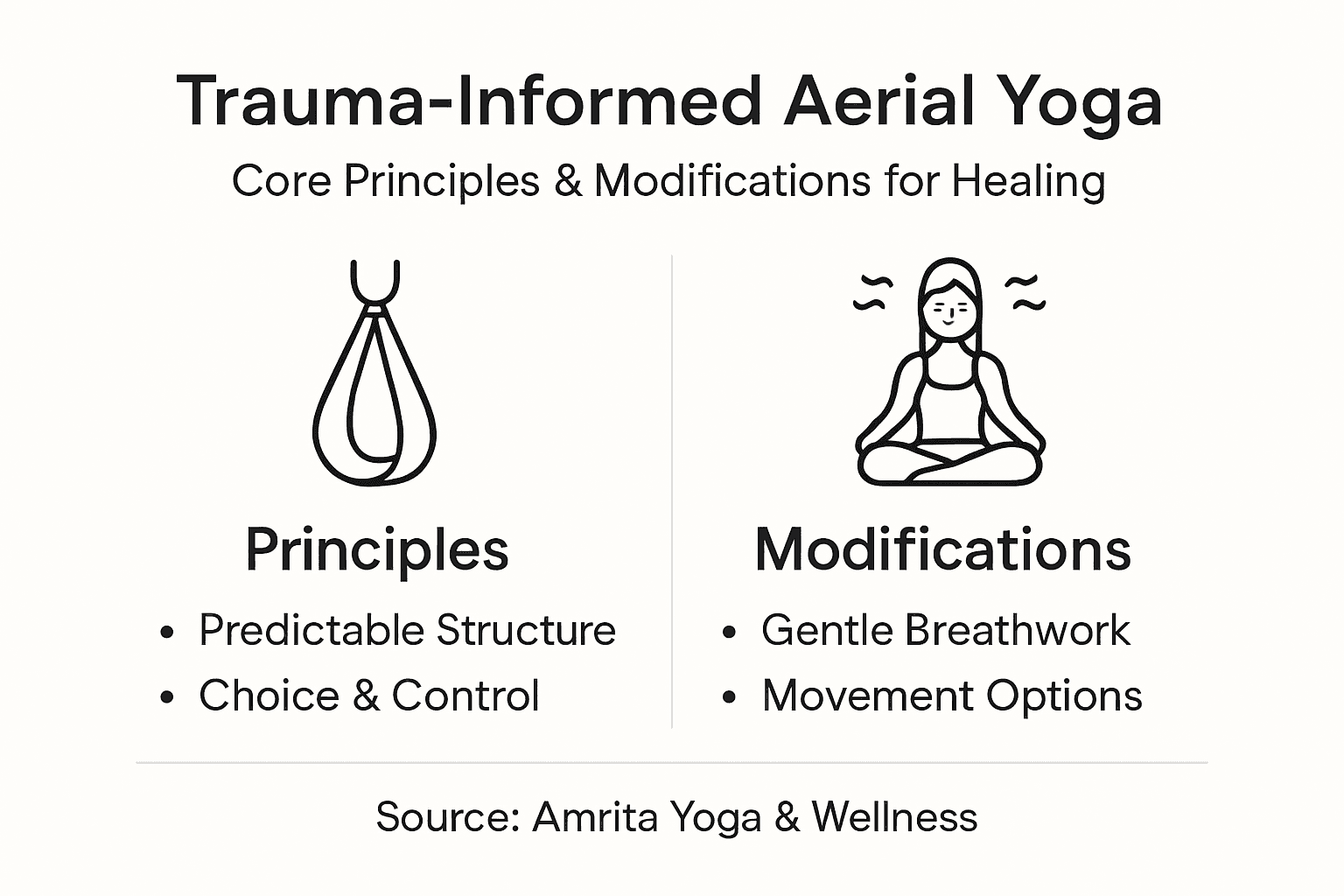
The primary principles of trauma-informed aerial yoga include establishing predictable class structures, offering multiple modification choices, emphasizing participant autonomy, and creating sensory-safe spaces. Practitioners learn to approach each session with an understanding that trauma manifests differently for each individual. Some key elements include allowing participants to choose their level of engagement, providing clear communication about what will happen during class, and creating opportunities for participants to make independent choices about their movement and comfort.
Here is a summary of trauma-informed aerial yoga principles and their practical classroom application:
| Principle | Practical Application | Participant Impact |
|---|---|---|
| Predictable structure | Clear class agenda and flow | Reduces anxiety, builds trust |
| Multiple movement options | Ground-based or aerial alternatives | Supports autonomy, inclusivity |
| Emphasis on consent | Verbal check-ins before assists | Prevents re-traumatization |
| Sensory-safe environment | Controlled lighting, low noise | Minimizes sensory overwhelm |
Pro tip: Before attending a trauma-informed aerial yoga class, communicate privately with the instructor about your specific comfort needs and potential triggers to ensure a supportive experience.
Integrating Trauma Awareness in Aerial Classes
Integrating trauma awareness into aerial yoga classes requires a comprehensive approach that goes beyond traditional teaching methods. Trauma-informed yoga principles emphasize creating environments that support healing and empower participants through mindful, sensitive instruction. This approach recognizes that trauma survivors may have unique physiological and psychological responses to movement and physical space.
Key strategies for trauma-aware aerial yoga instruction include establishing clear communication, providing consistent class structures, and offering multiple movement options. Instructors must develop skills in reading nonverbal cues, understanding potential triggers, and creating spaces where participants feel complete autonomy over their physical experience. This might involve offering detailed explanations of class activities, allowing participants to choose their level of engagement, and ensuring that physical adjustments or assists are always optional and preceded by explicit consent.
The physical setup of an aerial yoga class becomes crucial in trauma-informed practice. This includes creating predictable environments with minimal sensory overwhelm, offering multiple options for silk height and support, and ensuring participants understand they can modify or stop any movement at any time. Instructors are trained to recognize signs of potential re-traumatization and create supportive frameworks that prioritize individual comfort and safety. The goal is to transform aerial yoga from a potentially triggering physical practice into a healing, empowering experience that supports both physical and emotional recovery.

This table highlights differences between traditional aerial yoga and trauma-informed aerial yoga:
| Aspect | Traditional Aerial Yoga | Trauma-Informed Aerial Yoga |
|---|---|---|
| Instructor approach | One-size-fits-all cues | Personalized, invitational cues |
| Physical assists | Common without explicit consent | Only with explicit permission |
| Class environment | May vary, not always predictable | Highly predictable and structured |
| Emotional support focus | Limited | Core part of practice |
Pro tip: Always communicate with your aerial yoga instructor beforehand about any specific needs or concerns to ensure a personalized, supportive class experience.
Key Techniques and Supportive Modifications
Trauma-informed aerial yoga demands a nuanced approach to physical modifications and movement techniques. Trauma-sensitive yoga modifications provide practitioners with critical strategies to create safe, empowering experiences for individuals recovering from traumatic experiences. These techniques go beyond traditional yoga adaptations, focusing specifically on supporting participants' emotional and physical autonomy.
Specific supportive modifications in aerial yoga include providing multiple movement options, allowing participants to control their silk height and engagement level, and creating predictable class structures. Instructors might offer variations like ground-based alternatives, reduced silk elevation, or modified aerial poses that minimize potential triggering sensations. Key techniques involve offering clear verbal instructions without commanding language, using invitational cues that emphasize personal choice, and maintaining a consistent, calm teaching environment that allows participants to feel completely in control of their bodily experience.
Breath work and grounding techniques become essential components of trauma-informed aerial yoga modifications. Practitioners can integrate gentle breathwork exercises, offer opportunities for participants to pause or reset during class, and create visual and auditory environments that minimize potential sensory overwhelm. These approaches help participants develop internal regulation skills, build body awareness, and create a sense of safety throughout their aerial yoga practice. The ultimate goal is transforming aerial yoga from a potentially challenging physical practice into a healing, empowering experience of self-discovery and resilience.
Pro tip: Practice gentle self-compassion by selecting aerial yoga classes that explicitly advertise trauma-informed approaches and communicate your specific needs with instructors beforehand.
Mental Health Benefits and Healing Outcomes
Aerial yoga offers profound mental health benefits for trauma survivors, providing a unique somatic approach to healing and emotional recovery. Trauma-informed yoga outcomes demonstrate significant improvements in psychological well-being, including reduced symptoms of anxiety, depression, and post-traumatic stress disorder. The suspended nature of aerial yoga creates a unique therapeutic environment that supports emotional regulation and body awareness in ways traditional ground-based practices cannot.
The healing process in trauma-informed aerial yoga involves multiple interconnected psychological mechanisms. Participants experience enhanced emotional regulation through controlled, mindful movements that promote a sense of safety and personal agency. The physical suspension provides a metaphorical and literal sense of support, allowing individuals to explore movement and emotional boundaries with reduced physical and psychological threat. Practitioners often report increased self-confidence, improved body awareness, and a greater capacity to manage stress and emotional triggers through consistent practice.
Research indicates that trauma-informed aerial yoga can be particularly effective in addressing complex psychological challenges. The practice supports neurological healing by engaging the parasympathetic nervous system, reducing hypervigilance, and creating opportunities for safe emotional processing. By combining physical movement, breath work, and mindful awareness, aerial yoga becomes a powerful tool for rebuilding a sense of safety, trust, and connection with one's body after traumatic experiences. The holistic approach addresses not just symptoms, but underlying patterns of emotional and physical disregulation.
Pro tip: Start with short, gentle aerial yoga sessions and prioritize classes specifically designed for trauma recovery to build confidence and comfort gradually.
Safety, Instructor Training, and Common Missteps
Safety in trauma-informed aerial yoga begins with comprehensive instructor training that goes far beyond standard yoga certification. Trauma-informed instructor qualifications require specialized knowledge of psychological triggers, ethical communication, and adaptive teaching techniques that prioritize participant safety and autonomy. These instructors must develop sophisticated skills in reading nonverbal cues, understanding trauma responses, and creating environments that support healing without retraumatization.
Common missteps in trauma-informed aerial yoga often stem from well-intentioned but misguided approaches. Instructors might inadvertently trigger trauma responses through inappropriate physical assists, commanding language, or failure to provide clear communication about class activities. Critical errors include assuming all participants have the same physical or emotional capacity, using forceful adjustments without consent, or creating unpredictable class environments that can overwhelm sensitive nervous systems. Effective trauma-informed instructors learn to offer multiple movement options, use invitational language, and create predictable, supportive class structures that empower participants.
Comprehensive safety protocols in aerial yoga for trauma survivors extend beyond physical techniques. They require a holistic approach that addresses psychological safety, sensory experiences, and individual autonomy. This includes careful attention to class setup, silk height adjustments, communication styles, and creating environments that allow participants to feel complete control over their bodily experience. Instructors must be trained to recognize signs of potential dysregulation, offer immediate support options, and create spaces that feel inherently safe and supportive for individuals with complex trauma histories.
Pro tip: Always research an instructor's specific trauma-informed training and certification before attending an aerial yoga class designed for trauma recovery.
Discover Healing Through Trauma-Informed Aerial Yoga at Amrita Yoga & Wellness
Trauma can deeply affect both mind and body leaving you searching for a safe and supportive path to recovery. This article highlights the importance of trauma-informed aerial yoga practices that emphasize participant autonomy clear communication and sensory-safe environments. If you are looking to reclaim control over your body and emotions while experiencing gentle empowering movement options consider joining trauma-sensitive classes tailored to your unique healing journey.
Take the first step toward emotional balance and physical confidence by exploring our inclusive offerings at Amrita Yoga & Wellness. Our expert instructors are trained to provide a trauma-aware atmosphere with multiple movement modifications and mindful instruction designed to honor your boundaries. Whether you are new or experienced use our class scheduling options to find a session that fits your comfort level and start building resilience today. Visit us online to learn more about how trauma-informed aerial yoga can support your well-being and become part of a compassionate community focused on personal growth.
Frequently Asked Questions
What is trauma-informed aerial yoga?
Trauma-informed aerial yoga is a specialized approach that prioritizes creating a safe, empowering environment for individuals who have experienced trauma. It focuses on participant agency, consent, and personal boundaries during movement practices to support healing.
How does trauma-informed aerial yoga differ from traditional aerial yoga?
Trauma-informed aerial yoga emphasizes personalized, invitational cues, maintains predictable class structures, and requires explicit consent for physical assists, whereas traditional aerial yoga may not prioritize these elements.
What are some key principles of trauma-informed aerial yoga?
Key principles include establishing predictable class structures, offering multiple movement options, emphasizing consent, and creating sensory-safe environments to minimize discomfort for participants.
What are the mental health benefits of practicing trauma-informed aerial yoga?
Practicing trauma-informed aerial yoga can lead to significant improvements in psychological well-being, including reduced symptoms of anxiety, depression, and PTSD, while enhancing emotional regulation and body awareness.