The Amrita Journal
Explore thoughtful stories, practical wellness guidance and inspiring ideas to support your movement, mindfulness and everyday wellbeing at Amrita.
Restorative yoga: stress relief & wellness benefits explained
TL;DR:
Restorative yoga focuses on deep relaxation and recovery using props and sustained poses. It effectively reduces stress, improves flexibility, and enhances emotional well-being. Many Philadelphia studios offer accessible, beginner-friendly restorative classes suitable for all abilities.
Many Philadelphians assume yoga has to be physically demanding to actually work. If you're not sweating through a Vinyasa flow or holding a warrior pose until your legs shake, is it even worth your time? That assumption keeps a lot of people away from one of the most effective wellness practices available. Restorative yoga is slow, supported, and deeply calming, and research backs up its ability to reduce stress, improve flexibility, and support emotional balance. Whether you're brand new to yoga or simply looking for something gentler on your body, this guide walks you through what restorative yoga is, how it compares to other styles, and where to find it right here in Philadelphia.
Table of Contents
Understanding restorative yoga: Gentle path to holistic health
Key benefits: Stress relief, flexibility, and emotional balance
Finding restorative yoga in Philadelphia: Inclusive options for all
Our take: Why restorative yoga is the wellness foundation most people overlook
Experience restorative yoga and more at Amrita Yoga & Wellness
Key Takeaways
| Point | Details |
|---|---|
| Gentle and inclusive | Restorative yoga welcomes all levels and is perfect for those seeking low-impact wellness in Philadelphia. |
| Deep stress relief | Regular restorative yoga practice significantly reduces stress and helps calm the mind and body. |
| Holistic health benefits | This style boosts flexibility, sleep, and emotional balance, supporting both physical and mental wellbeing. |
| Local access and support | Philadelphia offers a range of beginner-friendly restorative yoga options at reputable wellness studios. |
Understanding restorative yoga: Gentle path to holistic health
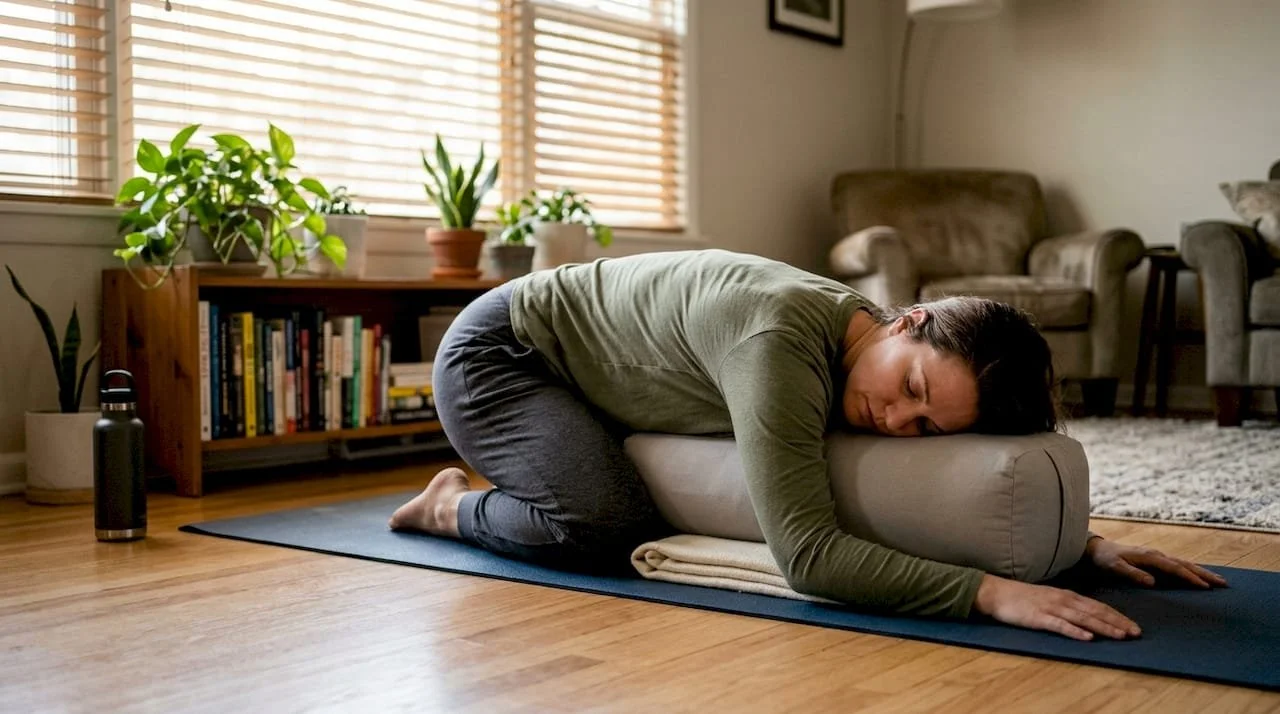
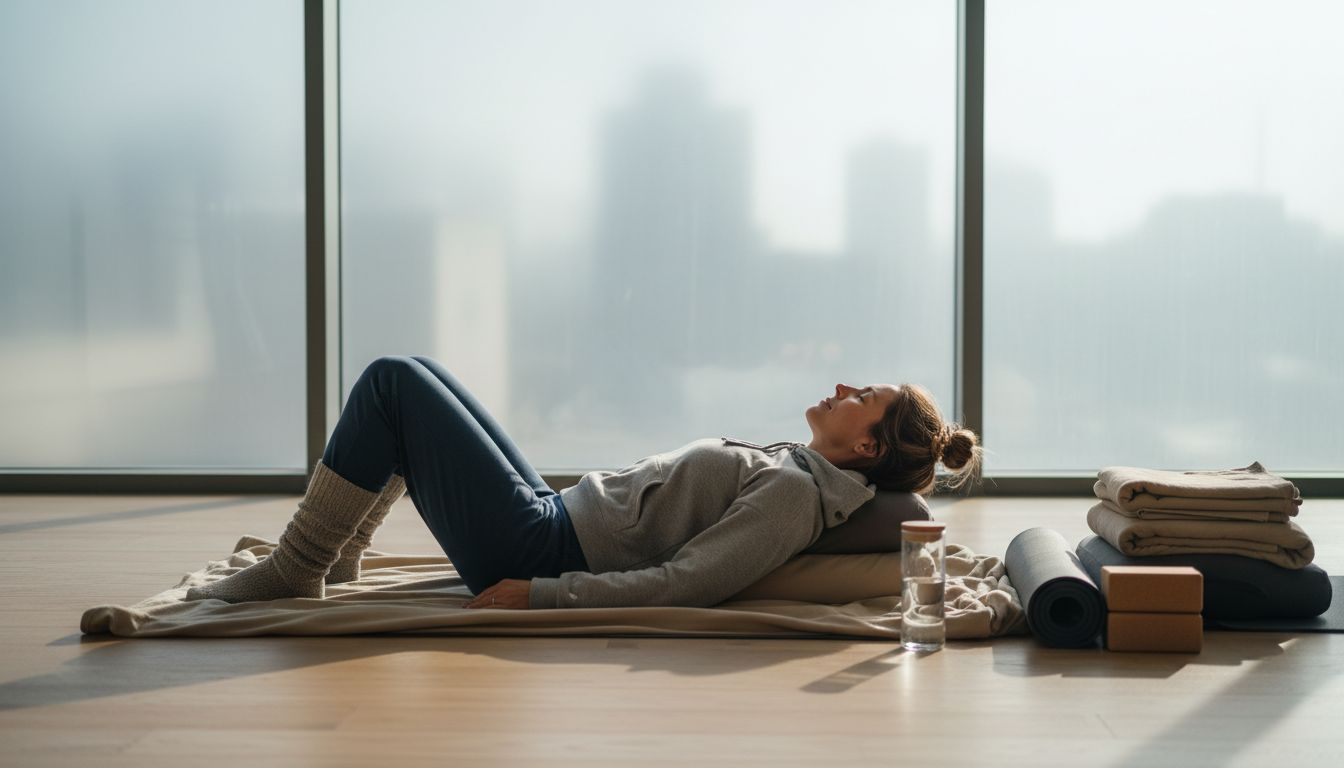
Restorative yoga is a style of yoga that prioritizes rest, recovery, and deep relaxation over physical exertion. Unlike faster-paced classes, restorative yoga uses props like bolsters, blankets, and blocks to fully support your body in each pose. You hold those poses for several minutes at a time, which allows your muscles to release tension without any effort or strain. The result is a practice that feels almost effortless but creates powerful changes in how your body and mind respond to stress.
What makes restorative yoga stand out is its focus on the parasympathetic nervous system, which is the part of your body responsible for the "rest and digest" state. When you slow down and breathe deeply in a supported pose, your body shifts away from the stress response and into genuine recovery mode. This is not passive in the way that lying on the couch is passive. It is intentional, structured rest.
Here's what a typical restorative yoga session includes:
Supported poses held for 5 to 20 minutes each
Props like bolsters, blankets, straps, and eye pillows
Guided breathwork and gentle cues from the instructor
A quiet, low-lit environment designed to reduce sensory stimulation
A final relaxation period, often called Savasana
Research supports what practitioners have long reported. Restorative yoga promotes holistic health, including better mindfulness, emotional balance, and recovery, with reduced pain and burnout, making it especially valuable for people managing workplace stress.
"The body heals in stillness. Restorative yoga gives you a structured reason to stop, breathe, and let your nervous system do what it was designed to do."
This practice is genuinely accessible for all experience levels. If you're just getting started, our yoga for beginners checklist walks you through everything you need before your first class. And if you're curious about how restorative yoga fits within the broader landscape of wellness options in the city, exploring diverse yoga practices can help you find your ideal fit.
Key benefits: Stress relief, flexibility, and emotional balance
Now that you understand restorative yoga's basics, let's explore exactly how it can help your mind, body, and everyday stress. The benefits are specific and measurable, not vague promises about feeling better.
Here are the core benefits, ranked by how quickly most people notice them:
Stress reduction. Restorative yoga activates the relaxation response, lowering cortisol levels and calming the nervous system within a single session.
Improved flexibility. Long, passive holds allow connective tissue to release gradually, improving range of motion without the risk of injury from forced stretching.
Emotional regulation. Slowing down and focusing on breath helps interrupt the mental loops that fuel anxiety and emotional exhaustion.
Better sleep quality. A regular practice signals to your body that it is safe to fully rest, which translates directly into deeper, more restorative sleep.
Chronic pain relief. Gentle supported poses reduce muscular tension and inflammation over time, offering relief for people with back pain, joint issues, and fibromyalgia.
Meta-analyses on restorative yogashow significant gains in stress management and sleep quality, with tranquility scores that outperform dynamic yoga styles. That's a meaningful finding for anyone who has tried a fast-paced class and walked away feeling more wired than calm.
"Restorative yoga is not about doing less. It is about letting your body receive what it actually needs."
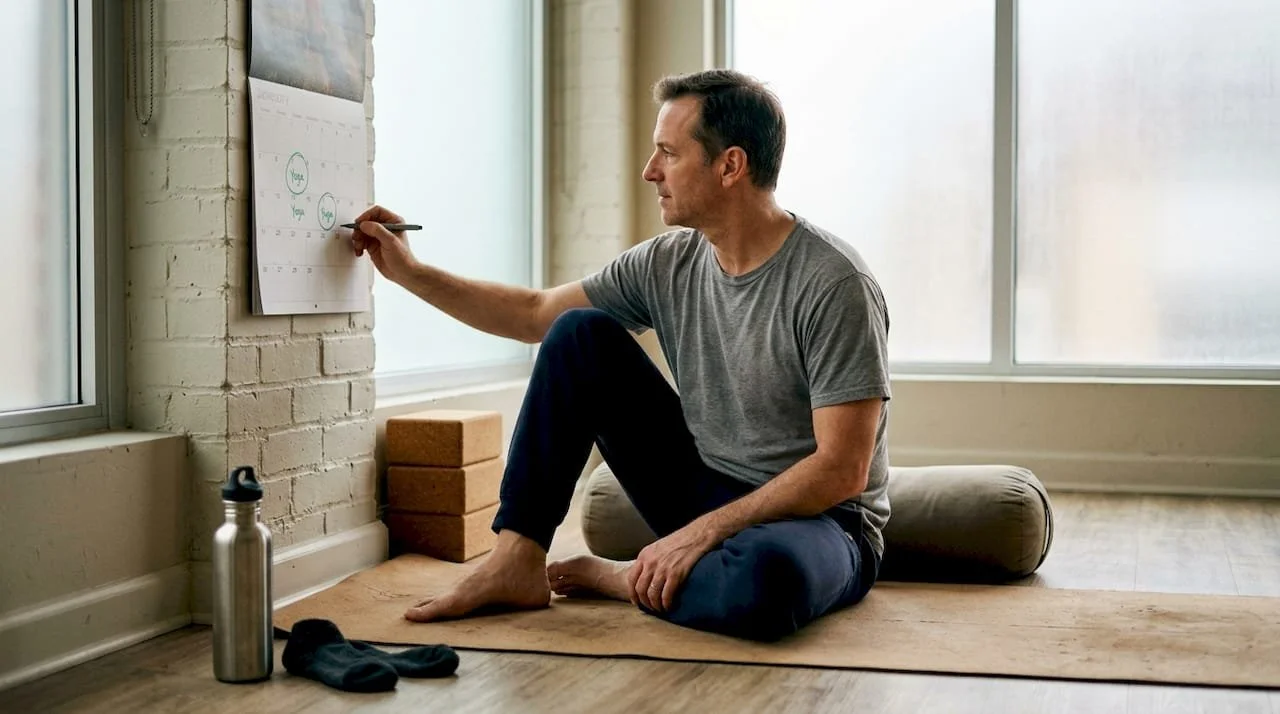
Pro Tip: Consistency matters more than duration. Even two restorative sessions per week can produce noticeable improvements in sleep and stress levels within a month.
For those who want to ease into movement without overwhelming their body, our guide to easy low-impact routines pairs well with a restorative practice. And if you're weighing multiple class options, learning how to choose a yoga class based on your wellness goals makes the decision much easier.
How restorative yoga compares to other styles
Understanding the benefits is one part. Deciding if restorative yoga matches your interests is easier when compared with other common yoga styles. Not all yoga is the same, and the differences matter more than most people realize.
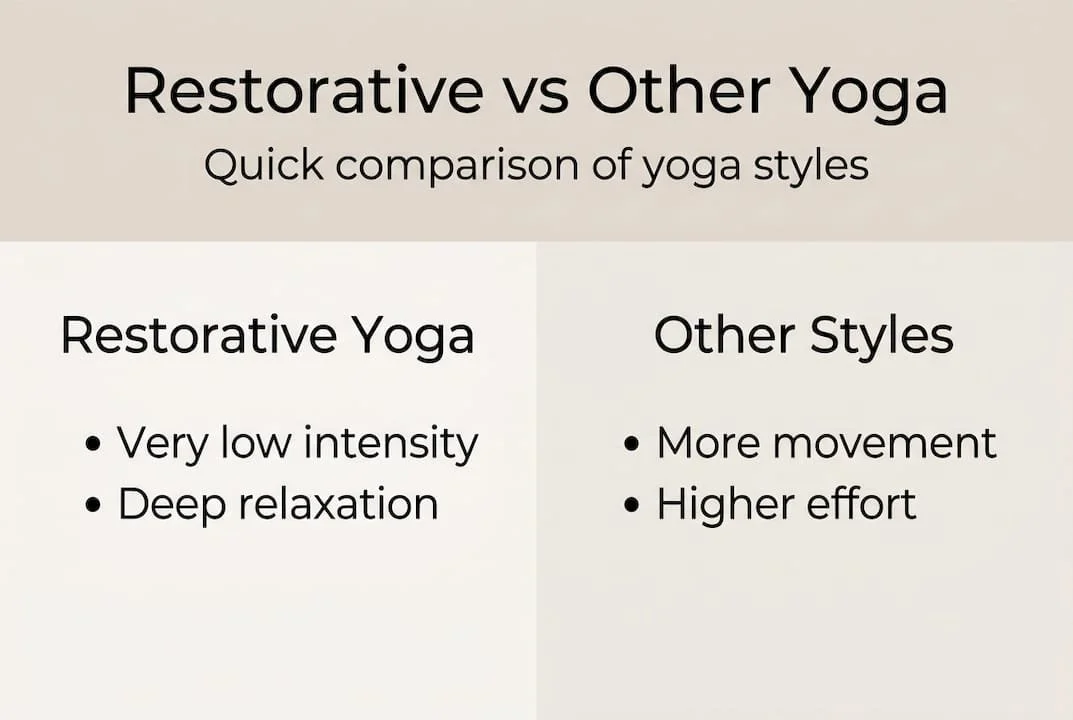
| Feature | Restorative yoga | Vinyasa yoga | Hatha yoga |
|---|---|---|---|
| Intensity | Very low | High | Moderate |
| Heart rate | Minimal increase | Significant increase | Moderate increase |
| Stress relief | Excellent | Moderate | Good |
| Flexibility gains | Gradual, deep | Moderate | Moderate |
| Best for | Stress, recovery, beginners | Fitness, strength | General wellness |
| Props used | Yes, extensively | Rarely | Sometimes |
| Calorie burn | Low | High | Moderate |
Gentle yoga styles like restorative consistently show higher tranquility scores compared to dynamic forms. Dynamic yoga burns more calories and raises heart rate, but it offers less when stress reduction is the primary goal.
This does not mean Vinyasa or Hatha are inferior. They serve different purposes. But if you are dealing with burnout, anxiety, chronic pain, or you simply want to feel calmer and more grounded, restorative yoga is the more direct path. Here's a quick summary of who each style serves best:
Restorative yoga: People managing stress, recovering from illness or injury, beginners, those with limited mobility
Vinyasa yoga: People who want a cardio-adjacent workout with a mind-body component
Hatha yoga: People who want a balanced, moderate practice that builds strength and flexibility together
If you're also weighing yoga against other fitness modalities, our breakdown of yoga vs pilates is a helpful read. And for a broader picture of what to expect in a class setting, our what is a yoga class guide covers the essentials.
Finding restorative yoga in Philadelphia: Inclusive options for all
Convinced restorative yoga fits your needs? Here's how to get started in Philadelphia, with practical tips and welcoming studios. The city has a strong and growing wellness community, and restorative yoga is well represented across neighborhoods.
| Studio | Neighborhood | Beginner friendly | Special features |
|---|---|---|---|
| Amrita Yoga & Wellness | Multiple locations | Yes | Holistic services, community workshops |
| Studio 34 | West Philadelphia | Yes | Sliding scale pricing, all-levels classes |
| Unitarian Society | Germantown | Yes | Drop-in options, restorative workshops |
Workshops at Studio 34, Unitarian Society, and Amrita Yoga are open to beginners and offer restorative yoga as a low-impact, all-levels practice. That means you do not need prior experience or a specific fitness level to walk in and feel welcome.
When you're ready to start, a few things make the transition smoother. Wear loose, comfortable clothing you can move and breathe in easily. Arrive a few minutes early so you can set up your props and settle in before class begins. Let your instructor know if you have any injuries or areas of concern. Most restorative teachers will offer modifications without hesitation.
Pro Tip: Many studios offer introductory specials, sometimes a full week of classes for a flat rate. Use that window to try two or three different instructors and find the teaching style that resonates most with you.
Our guide to find yoga classes in Philadelphia gives you a step-by-step approach to searching, evaluating, and committing to a studio. For a curated overview of standout studios across the city, the top yoga studios in Philadelphia comparison is a strong starting point.
Our take: Why restorative yoga is the wellness foundation most people overlook
Here's something we see repeatedly in our Philadelphia community: people come in expecting restorative yoga to feel like a warmup. Something you do before the real workout. They leave surprised by how deeply it affected them, and they come back.
The wellness industry has a bias toward effort. More reps, more sweat, more intensity. That bias makes restorative yoga easy to dismiss. But rest is not the absence of progress. It is where progress actually happens. Your nervous system rebuilds during rest. Your connective tissue lengthens during sustained, gentle holds. Your emotional resilience grows when you practice staying present without doing anything.
What we've found working with diverse wellness practices across our community is that restorative yoga works best as a foundation, not a supplement. People who anchor their week with even one restorative session handle stress differently. They sleep better. They show up more consistently to other practices too. It is not a soft option. It is a smart one.
Experience restorative yoga and more at Amrita Yoga & Wellness
If this article has you curious about restorative yoga, the next step is simple: come try it. At Amrita Yoga & Wellness, we offer restorative yoga alongside a full range of holistic wellness services designed for real people with busy lives. Whether you're looking for a low-impact class to start your practice or want to explore complementary services like acupuncture for pain relief and stress support, we have options that meet you where you are.
Our community also includes unique wellness experiences like tarot readings and seasonal workshops that bring people together around shared intentions. Browse our class schedule, explore our offerings, and find the practice that feels right for you. Philadelphia's wellness community is welcoming, and so are we.
Frequently asked questions
Is restorative yoga suitable for complete beginners?
Yes, restorative yoga welcomes all abilities and is specifically designed for those new to yoga or seeking gentle movement. Multiple Philadelphia studios offer all-levels restorative classes with no prior experience required.
How does restorative yoga help with stress?
Restorative yoga's supported poses and focused breathwork activate the body's relaxation response, measurably lowering cortisol and calming the nervous system. Significant stress reduction effects have been documented in restorative and yoga nidra practices across multiple studies.
What's the difference between restorative yoga and yoga nidra?
Restorative yoga uses physical poses held with props for deep muscular and nervous system relaxation, while yoga nidra is a guided meditation performed lying still. Empirical distinctions between the two show different physiological and psychological outcomes, though both emphasize deep rest.
Are there restorative yoga classes in Philadelphia for people with injuries or mobility concerns?
Yes, many restorative yoga classes in Philadelphia are specifically designed to accommodate injuries, chronic pain, and limited mobility. Low-impact, accessible restorative classes are available at several studios across the city, including Amrita Yoga & Wellness.
Recommended
Restorative Yoga: Deep Relaxation for Modern Stress
More than 70 percent of American adults report high stress levels affecting their mental and physical health. For those living in Philadelphia and searching for gentler ways to manage stress, restorative yoga offers a calm alternative. This practice challenges common myths by providing deep relaxation and real healing beyond a typical workout. If you want real stress relief and a quieter mind, discover how restorative yoga might become your next wellness habit.
Table of Contents
Key Takeaways
| Point | Details |
|---|---|
| Restorative Yoga Focus | Restorative yoga emphasizes deep relaxation and healing through gentle, supported poses without muscular effort. |
| Health Benefits | Regular practice can significantly reduce stress, anxiety, and depression while improving flexibility and body awareness. |
| Accessibility | This practice is ideal for individuals managing stress, chronic pain, or recovering from injuries, regardless of fitness level. |
| Essential Props | Utilizing props like bolsters and blankets is crucial for creating comfort and support during restorative sessions. |
Restorative Yoga Defined and Common Myths
Restorative yoga represents a profound approach to wellness that goes far beyond simple stretching or relaxation. Developed by pioneers like Judith Lasater, this practice emphasizes mindful stillness and deep physiological healing through carefully supported physical postures. Unlike more dynamic yoga styles, restorative yoga invites practitioners to hold poses for extended periods using props like bolsters, blankets, and blocks.
The core philosophy of restorative yoga centers on allowing the body to enter a state of complete relaxation without muscular effort. Research from the National Center for Complementary and Integrative Health confirms that yoga practices can significantly reduce stress and promote overall wellness. This approach challenges common misconceptions about yoga being exclusively a physical workout. Instead, restorative yoga creates a meditative environment where practitioners can release tension and cultivate inner calm.
Several persistent myths often discourage people from exploring restorative yoga. Many believe it is simply glorified napping or that it provides no real physical benefits. In reality, this practice offers profound physiological and psychological advantages. By supporting the body in gentle postures and encouraging deep, intentional breathing, restorative yoga activates the parasympathetic nervous system, which helps counteract the harmful effects of chronic stress. The deliberate, slow-paced nature of the practice allows for deep muscular release and mental restoration.
Pro tip: Start your restorative yoga journey by dedicating just 15 minutes per session and using plenty of supportive props to help your body feel completely comfortable and supported.
How Restorative Yoga Works in Practice
Restorative yoga is a deeply intentional practice that transforms relaxation into a therapeutic experience. Carefully designed sessions involve holding gentle poses for extended periods, typically 5 to 10 minutes, using comprehensive body support. This approach allows practitioners to release muscular tension without active engagement, creating a profound state of physical and mental surrender.
The technical mechanics of restorative yoga revolve around strategic prop usage and environmental design. Practitioners utilize bolsters, blankets, blocks, and sometimes eye coverings to create a nurturing space that encourages complete relaxation. For individuals managing chronic pain or seeking healing, these extended pose holds can help calm the nervous system and improve overall energy levels. By minimizing muscular effort and maximizing supportive positioning, the practice allows the body to enter a deep recuperative state.
Unlike more dynamic yoga styles, restorative yoga emphasizes passive stretching and mindful breathing. The practice creates a meditative environment where practitioners can explore internal sensations without judgment. Instructors often incorporate soft lighting, gentle music, and carefully curated sequences that guide participants toward a state of profound stillness. This approach helps counteract the constant stimulation of modern life, offering a sanctuary of calm and introspection.
Pro tip: Create a dedicated restorative yoga space at home with soft lighting, comfortable props, and minimal distractions to enhance your practice's therapeutic potential.
Major Benefits for Mind and Body
Restorative yoga delivers a comprehensive wellness approach that simultaneously nurtures mental and physical health. Scientific studies demonstrate yoga's profound capacity to reduce perceived stress and dramatically improve overall quality of life. By activating the parasympathetic nervous system, this gentle practice helps practitioners transition from fight-or-flight responses to a state of deep relaxation and healing.
The mental health benefits are particularly remarkable. Regular restorative yoga practice can significantly lower anxiety and depression symptoms, providing a natural approach to emotional regulation. Clinical research reveals that consistent practitioners experience improved mindfulness, enhanced self-awareness, and better sleep patterns. The practice creates a meditative space where individuals can observe their internal landscape without judgment, developing greater emotional resilience and psychological flexibility.
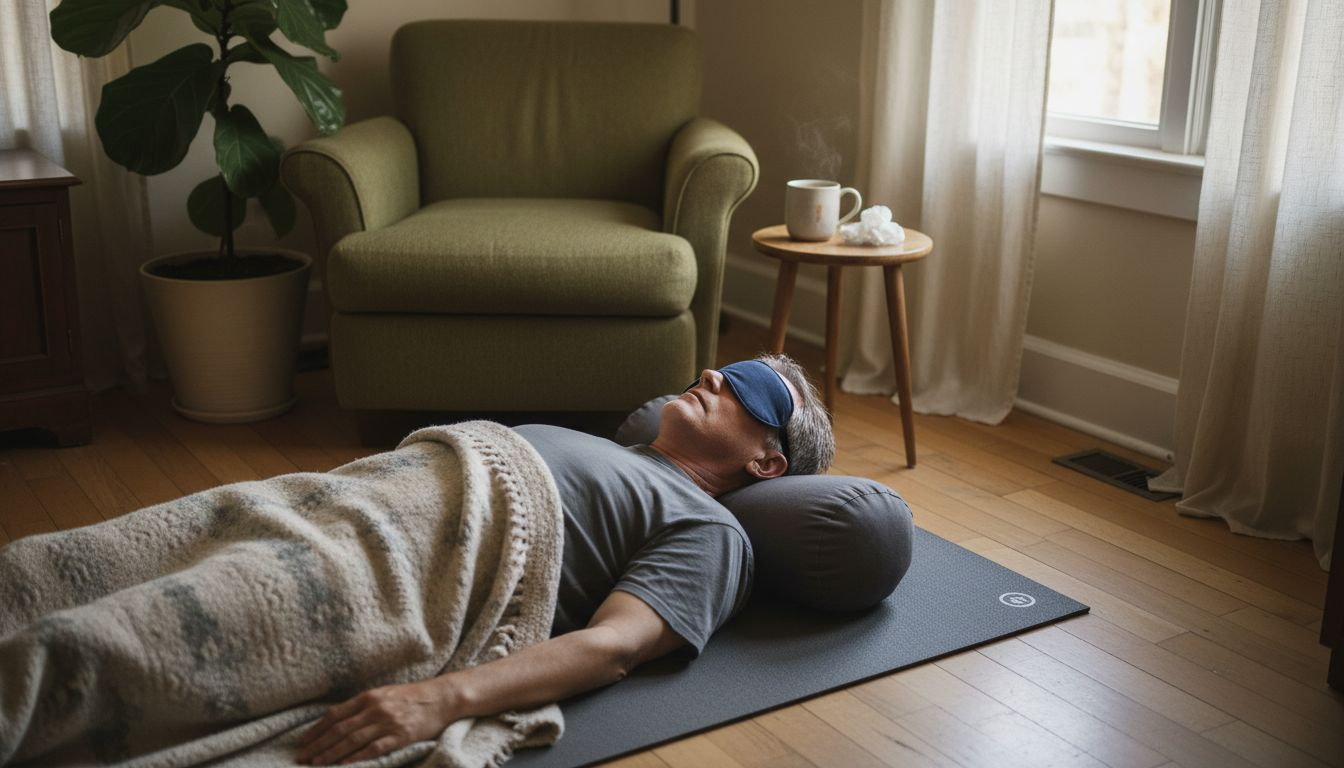
Physically, restorative yoga offers transformative benefits beyond traditional exercise. The carefully supported poses improve flexibility, strengthen core muscles, and support pain management. Unlike high-intensity workouts, this practice allows the body to heal and realign without strain. Practitioners often report increased body awareness, improved posture, and a deeper connection between physical sensations and emotional states. The combination of gentle stretching, deliberate breathing, and complete muscular relaxation creates a holistic healing experience that addresses both physiological and psychological wellness.
Here's a clear summary of restorative yoga's major mental and physical benefits:
| Benefit Type | Impact on Mind | Impact on Body |
|---|---|---|
| Stress Reduction | Encourages deep relaxation | Lowers chronic muscle tension |
| Mental Clarity | Promotes mindfulness and focus | Enhances body awareness |
| Emotional Health | Reduces anxiety and depression | Supports gentle pain management |
| Sleep Quality | Improves sleep patterns | Aids recovery and realignment |
Pro tip: Begin your restorative yoga journey by dedicating just 15-20 minutes per week, gradually increasing duration as you become more comfortable with the practice.
Tools and Poses Used in Restorative Yoga
Restorative yoga relies on specialized props and carefully selected poses to create a deeply supportive practice. The primary goal is to provide complete physical support, allowing practitioners to release tension without muscular effort. Essential props include bolsters, blankets, blocks, straps, and pillows, each strategically positioned to minimize strain and maximize relaxation.
The most transformative restorative yoga poses are designed to promote deep rest and gentle opening. Key poses include Supta Baddha Konasana (Reclining Bound Angle), which opens the hips and lower back, and Legs up the Wall, a powerful position for reducing lower body tension. Supported Child's Pose offers gentle spine and shoulder release, while Shavasana with carefully placed props creates a cocoon of total relaxation. Each pose is typically held for 5 to 10 minutes, allowing the nervous system to shift from active stress response to a state of profound calm.
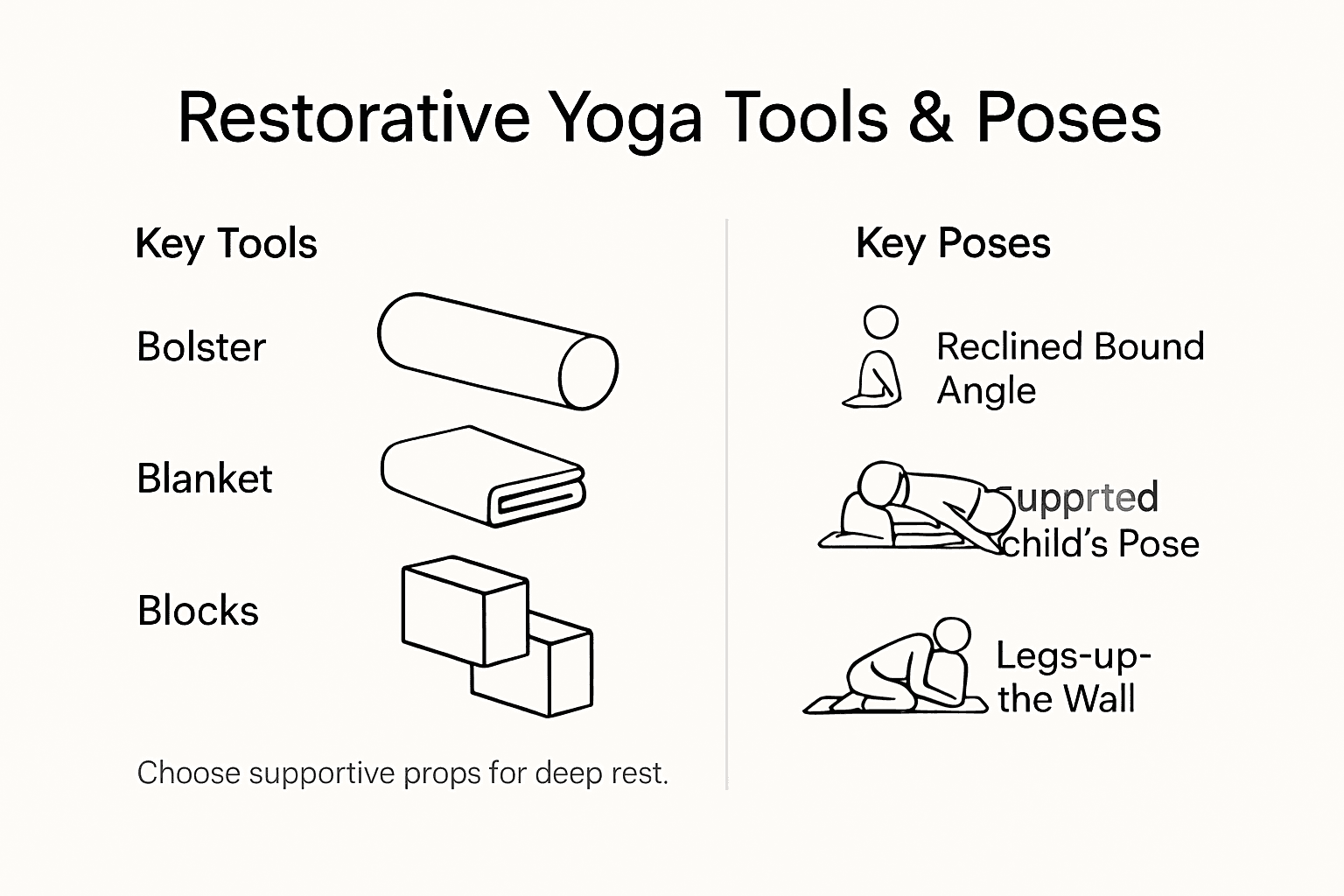
Prop selection is an art form in restorative yoga. Bolsters provide primary support for the spine and joints, while folded blankets offer cushioning and warmth. Blocks help modify poses for different body types, and straps assist in gentle stretching without overextension. The key is creating a personalized support system that meets individual physical needs, making the practice accessible to people of all flexibility levels and physical conditions.
Pro tip: Invest in versatile, firm props like a high-quality bolster and multiple yoga blankets to create a comprehensive home restorative yoga setup.
Key Differences From Yin and Other Styles
Restorative yoga stands distinctly apart from other yoga styles, particularly Yin yoga, with fundamental differences in philosophy and practice approach. While both practices involve long-held poses and prop usage, their intentions diverge significantly. Yin yoga targets connective tissues through moderate stretching, aiming to increase joint mobility, whereas restorative yoga prioritizes complete nervous system relaxation and healing.
The primary distinctions emerge in pose duration, intention, and muscular engagement. Yin yoga typically holds poses for 3-5 minutes with a subtle sensation of stretch, encouraging practitioners to approach a mild edge of discomfort. Restorative yoga, by contrast, emphasizes total physical support and comfort, with poses held for 5-15 minutes to activate the parasympathetic nervous system. The goal shifts from physical manipulation to creating a deeply nurturing environment that allows total mental and physical surrender.
Other yoga styles like Vinyasa or Power Yoga focus on dynamic movement, muscular strength, and cardiovascular engagement. Restorative yoga deliberately rejects this approach, creating a meditative practice that minimizes physical effort. The practice uniquely concentrates on nervous system regulation, using props to create a completely supported experience that allows practitioners to release tension without active stretching. This makes restorative yoga particularly beneficial for individuals recovering from injury, experiencing high stress, or seeking profound relaxation.
This side-by-side comparison shows key differences between restorative yoga, Yin yoga, and dynamic styles:
| Aspect | Restorative Yoga | Yin Yoga | Dynamic Yoga Styles |
|---|---|---|---|
| Main Goal | Deep relaxation, healing | Stretching connective tissue | Build strength, endurance |
| Pose Duration | 5–15 minutes | 3–5 minutes | Few seconds to 1 minute |
| Muscular Effort | None, fully supported | Mild engagement, moderate edge | Active movement required |
| Target Audience | Stress/pain recovery | Mobility/flexibility seekers | Fitness-focused |
Pro tip: When transitioning between different yoga styles, approach restorative yoga with an open mind and release expectations of physical intensity or achievement.
Who Should Practice and What to Avoid
Restorative yoga offers remarkable accessibility for diverse populations, making it an ideal practice for individuals managing stress, chronic pain, or seeking gentle physical restoration. Particularly beneficial for those recovering from injuries, experiencing high stress levels, or managing chronic health conditions, this practice provides a compassionate approach to wellness that does not demand physical intensity or complex movements.
Certain populations should approach restorative yoga with specific considerations. Older adults, individuals with chronic diseases, and those managing physical limitations can find significant benefits from this gentle practice. Practitioners with underlying health conditions must consult healthcare providers before beginning, ensuring the practice aligns with their individual medical needs. It is crucial to avoid any poses that produce pain or excessive discomfort, prioritizing personal comfort and safety above strict adherence to traditional pose structures.
Some critical considerations include avoiding restorative yoga during acute injury phases, immediately following surgical procedures, or when experiencing severe inflammatory conditions. Practitioners should steer clear of more physically demanding yoga styles like Ashtanga, Bikram, or Power Yoga when seeking the healing benefits of restorative practice. Always communicate openly with instructors about physical limitations, recent medical histories, and current health status to receive appropriate modifications and support.
Pro tip: Begin your restorative yoga journey by attending classes with certified instructors who specialize in adaptive and therapeutic yoga practices.
Experience True Deep Relaxation with Restorative Yoga at Amrita Yoga & Wellness
If you are seeking relief from modern stress and longing for profound relaxation, restorative yoga can transform your well-being. This practice gently activates your parasympathetic nervous system to ease tension and promote healing without muscular effort. At Amrita Yoga & Wellness, we understand the challenges of chronic stress and physical discomfort and offer tailored classes that use supportive props and calming environments to help you unwind completely.
Discover how our expert-led sessions at Amrita Yoga & Wellness can guide you into states of deep mental clarity and physical restoration. Start your journey today by exploring our restorative yoga classes and workshops designed for all levels. Prioritize your healing now by visiting our class schedule and reserve your spot to embrace calm and renewal.
Frequently Asked Questions
What is restorative yoga?
Restorative yoga is a gentle practice that focuses on relaxation and healing through supported poses held for extended periods, typically using props like bolsters and blankets. It aims to activate the parasympathetic nervous system and promote deep relaxation without muscular effort.
How does restorative yoga differ from other yoga styles?
Restorative yoga emphasizes total relaxation and healing, contrasting with styles like Yin yoga that focus on stretching connective tissues or dynamic styles that promote strength and cardiovascular fitness. In restorative yoga, poses are held longer with complete physical support, creating a meditative environment.
What are the benefits of practicing restorative yoga?
Practicing restorative yoga can lead to significant reductions in stress, anxiety, and depression. It also enhances sleep quality, increases body awareness, and supports gentle pain management, making it beneficial for overall mental and physical health.
Who should consider practicing restorative yoga?
Restorative yoga is ideal for individuals managing stress, chronic pain, injuries, or those seeking a gentler, therapeutic approach to wellness. However, it's recommended that individuals with specific health concerns consult their healthcare providers before beginning the practice.