
The Amrita Journal
Explore thoughtful stories, practical wellness guidance and inspiring ideas to support your movement, mindfulness and everyday wellbeing at Amrita.
Essential Hot Yoga Safety Tips for Injury-Free Practice

Over 35 percent of American hot yoga enthusiasts report skipping key safety steps before their first class. For health-conscious adults in Philadelphia, practicing hot yoga can boost wellness but ignoring hydration or injury risks may cut you short. This guide shares actionable strategies to help you prepare, practice, and recover safely so you can enjoy every sweaty session while protecting your body and peace of mind.
Table of Contents
Quick Summary
| Key Insight | Explanation |
|---|---|
| 1. Assess Your Physical Readiness | Evaluate your health conditions and fitness level before starting hot yoga. Consult a healthcare professional for personalized advice. |
| 2. Hydrate and Nourish Properly | Start hydrating well before class and eat a balanced meal after to recover effectively and maintain performance. |
| 3. Choose Appropriate Gear | Wear lightweight, moisture-wicking clothing and use a quality mat for better comfort and performance during yoga sessions. |
| 4. Adapt Movements for Safety | Modify poses based on your body’s signals to prevent injury and respect your physical limitations during practice. |
| 5. Monitor Well-Being During Class | Stay aware of your physical state by checking for signs of distress and take necessary breaks to maintain a safe practice. |
Step 1: Assess your physical readiness and health needs
Before stepping into a hot yoga studio, understanding your body's current condition is critical. Comprehensive health evaluations help determine whether hot yoga matches your wellness goals and physical capabilities.
Starting your hot yoga journey requires honest self reflection about your current fitness level, existing health conditions, and potential physical limitations. While hot yoga offers incredible benefits like increased flexibility and strength, individual health considerations are paramount. Consider consulting a healthcare professional who can provide personalized guidance based on your medical history. Important factors to assess include cardiovascular health, respiratory function, heat tolerance, hydration levels, and any chronic conditions that might impact your practice.
Your physical readiness checklist should include reviewing recent medical records, understanding any prior injuries, and recognizing your body's current stress and flexibility thresholds. Pay special attention to conditions like hypertension, respiratory issues, pregnancy, or recent surgeries that could make hot yoga challenging or potentially risky.
Expert Advice: Always listen to your body and progress gradually when exploring hot yoga practices.
Here's a quick summary of key physical considerations for hot yoga readiness:
| Health Factor | Why It Matters | Recommended Action |
|---|---|---|
| Cardiovascular | Increases heart workload | Consult a doctor if concerns arise |
| Respiratory | Hot air can challenge breathing | Assess asthma or allergies early |
| Heat Tolerance | Risk of overheating | Start slow and monitor reactions |
| Hydration Status | Critical for safe sweating | Pre-hydrate before class |
| Chronic Conditions | May impact exercise safety | Share relevant information with the instructor |
Step 2: Prepare your hydration and nutrition routine
Hydration and nutrition are your secret weapons for successfully navigating a hot yoga practice. Strategic fluid intake helps prevent heat illness and maintains peak performance during intense physical activity.
Your hydration strategy begins well before you step into the hot yoga studio. Experts recommend drinking 17-20 ounces of water a few hours before class, followed by 8 ounces 20-30 minutes prior to starting. During your practice, aim to consume 4-8 ounces of water every 15-20 minutes, adjusting based on the class intensity and your individual sweat rate. Focus on balanced nutrition that includes complex carbohydrates, lean proteins, and electrolyte rich foods to support your body's energy needs and recovery.
After class, prioritize replenishing fluids and nutrients. Drink water consistently, consume a small meal with protein and carbohydrates within 45 minutes of finishing, and consider adding electrolyte rich beverages to restore mineral balance lost through sweating.
Pro Tip: Prepare a hydration kit with a large water bottle, electrolyte supplements, and a small towel to keep yourself comfortable and well hydrated throughout your hot yoga experience.
Step 3: Select proper gear for hot yoga sessions
Choosing the right gear can make or break your hot yoga experience, transforming a potentially uncomfortable session into a comfortable and enjoyable practice. Appropriate clothing is essential for managing heat and maintaining comfort during intense yoga sessions.
Lightweight, moisture-wicking attire helps regulate body temperature and prevents skin irritation during hot yoga. Look for yoga pants and tops made from breathable, quick-drying fabrics that allow maximum movement and flexibility. Opt for fitted but not restrictive clothing that will stay in place during various poses. Your mat is equally important select a high quality mat with excellent grip to prevent slipping from increased perspiration. Consider investing in a specialized hot yoga towel that can be placed over your mat for additional traction and hygiene.
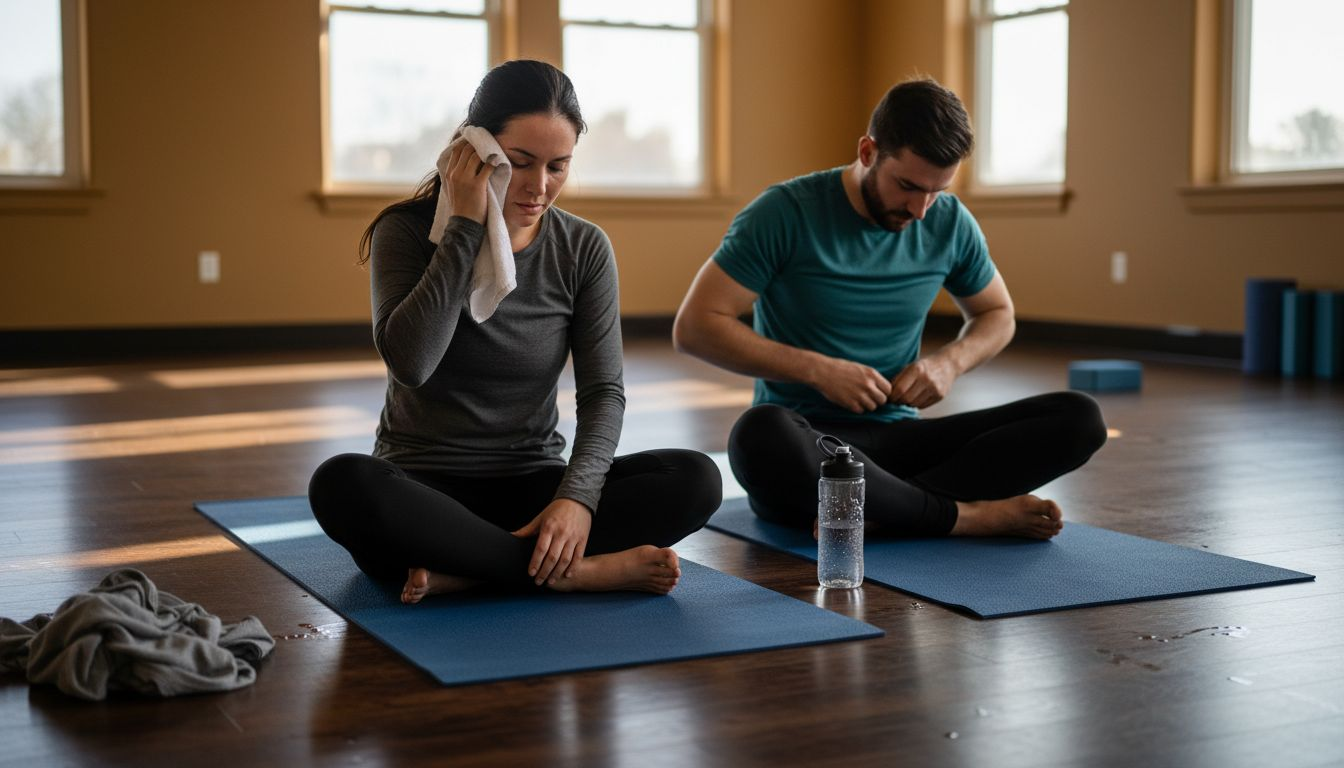
Accessorize wisely by bringing a large water bottle, extra towel for wiping sweat, and a change of clothes for after class. While you wont wear shoes during practice, having comfortable slip on shoes for before and after class can be helpful. Prioritize gear that supports your comfort and allows you to focus entirely on your practice.
Pro Tip: Bring a spare set of dry clothes and pack them in a sealed waterproof bag to ensure youre comfortable after an intense sweaty session.
Step 4: Adapt your movements to support safety
Successfully navigating hot yoga requires understanding how to modify your practice to prevent injury and respect your body's unique limitations. Yoga practice demands careful adaptation to individual capabilities to minimize potential risks.
Safe yoga movements involve recognizing your body's current flexibility and strength levelsand making intelligent modifications accordingly. Start by paying close attention to your body's signals during practice. If a pose feels uncomfortable or causes sharp pain, immediately modify or skip it. Use props like blocks, straps, or blankets to support your practice and provide additional stability. Focus on maintaining proper alignment rather than achieving the deepest possible stretch. In the heated environment of hot yoga, your muscles will feel more flexible, which increases the risk of overstretching. Move slowly, breathe deliberately, and prioritize controlled movements over extreme range of motion.
Remember that every yoga practice is personal. Some days you might feel strong and flexible, while other days you may need more gentle modifications. Learning to listen to your body and honor its current state is the most important skill in creating a sustainable and safe hot yoga practice.
Pro Tip: Practice each new pose near a wall or with an instructor nearby to ensure you can modify quickly if you lose balance or feel strain.
Step 5: Monitor your well-being during class
Navigating a hot yoga class requires constant awareness of your physical and mental state to ensure a safe and beneficial practice. Understanding the critical signs of potential overexertion is fundamental to maintaining your health during intense yoga sessions.
Monitoring your bodily signals involves staying alert to symptoms like dizziness, excessive fatigue, breathing difficulties, or sudden discomfort. Start by establishing a baseline awareness of your physical condition when entering the class. Pay attention to your breath rhythm, muscle tension, and overall energy levels. If you experience lightheadedness, stop moving and sit or lie down immediately. Position yourself near the door or a wall for quick access if you need to exit. Recognize that it is perfectly acceptable to take breaks, drink water, or modify poses when your body signals distress. The goal is not to push through pain but to maintain a balanced and mindful practice.
Develop a personal check in system where you pause briefly between poses to assess your comfort level. Some practitioners find it helpful to mentally scan their body from head to toe, noting any areas of tension or strain. Trust your intuition and understand that each yoga session is unique your body may respond differently depending on hydration, stress levels, and overall health.
Pro Tip: Create a personal code with your instructor beforehand using a discrete signal that indicates you need help or want to modify your practice.
Step 6: Evaluate recovery and adjust future practice
After completing a hot yoga session, understanding your body's response is crucial for developing a sustainable and safe practice. Post practice recovery involves carefully analyzing your physical and mental state to inform future yoga experiences.
Effective recovery evaluation requires a holistic approach that considers both physical sensations and overall wellness. Begin by performing a gentle body scan within 24 hours after your class, noting any muscle soreness, stiffness, or unusual fatigue. Pay attention to areas of potential strain or discomfort. Hydration and nutrition play significant roles in recovery track your fluid intake and consider how your diet might support muscle recovery and reduce inflammation. If you experienced challenges during the class like overheating, muscle tension, or balance issues, document these observations to help you modify future practices.
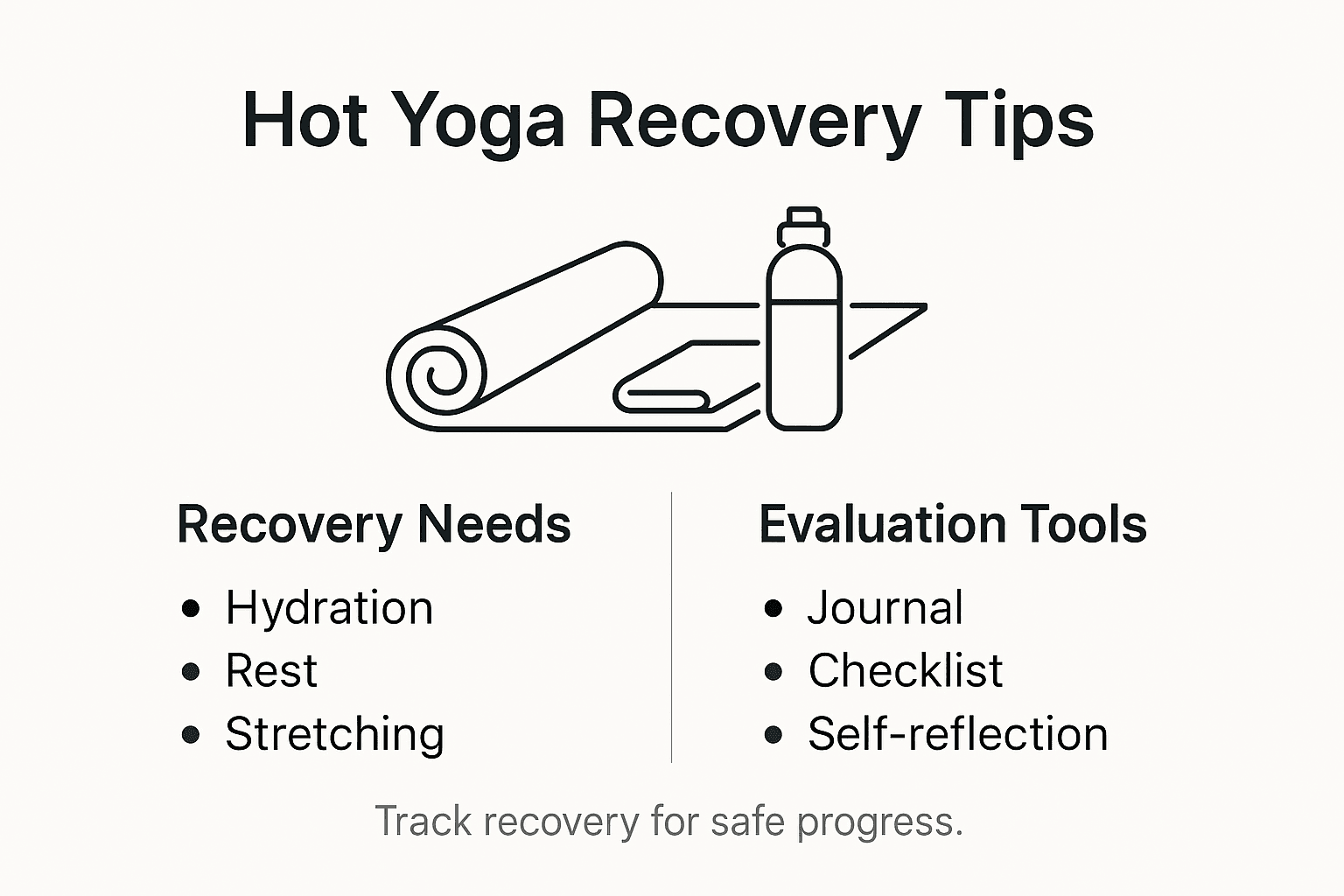
Treat your recovery process as a learning opportunity. Some days you might feel more resilient, while other times you may need gentler modifications. Communicate with your yoga instructor about your observations and seek personalized guidance on adjusting your approach. Remember that progress in yoga is not about pushing to extreme limits but about consistent, mindful practice that respects your body's current capabilities.
Pro Tip: Keep a short yoga journal to track your physical responses, helping you identify patterns and make informed adjustments to your practice.
Below is an overview of recovery strategies and their benefits after a hot yoga session:
| Recovery Strategy | Purpose | Tips for Best Results |
|---|---|---|
| Hydration | Replace fluids lost in sweat | Drink water and electrolytes |
| Nutrition | Restore energy and aid healing | Consume protein and carbohydrates |
| Gentle Body Scans | Detect soreness or strain | Check muscles within 24 hours |
| Journaling | Track progress and reactions | Record observations post class |
| Instructor Feedback | Personalize future practice | Discuss challenges or adjustments |
Stay Safe and Confident in Your Hot Yoga Journey with Amrita Yoga & Wellness
Navigating the challenges of hot yoga like hydration management, movement adaptations, and recovery can feel overwhelming. If you want to build your strength and flexibility while prioritizing safety, Amrita Yoga & Wellness offers supportive classes and expert guidance that align perfectly with essential hot yoga safety tips. From understanding your body's limits to selecting proper gear, our welcoming community in Philadelphia helps you honor your unique wellness needs.
Ready to embrace injury-free hot yoga practice today Explore diverse class options and personalized workshops designed to empower your safe progress at Amrita Yoga & Wellness. Take the first step toward mindful movement and lasting well-being by checking out our class schedules and offerings. Your safest, most rewarding hot yoga experience is just a click away.
Frequently Asked Questions
What should I assess before starting hot yoga?
Before starting hot yoga, assess your physical readiness by reflecting on your current fitness level, existing health conditions, and any possible limitations. Consider reviewing recent medical records and consulting a healthcare professional for personalized guidance.
How can I stay hydrated during a hot yoga class?
To stay hydrated during a hot yoga class, drink 17-20 ounces of water a few hours before practice and consume 4-8 ounces every 15-20 minutes during class. Start this hydration routine to ensure your body is well-prepared for the heat.
What type of clothing is best for hot yoga?
Wear lightweight, moisture-wicking clothing designed for quick-drying to maintain comfort during hot yoga. Choose fitted yet flexible attire that allows maximum movement, helping you focus on your practice without distractions.
How can I modify poses to ensure safety during hot yoga?
Modify poses by paying attention to your body’s signals and using props like blocks or straps for support. If any pose feels uncomfortable or painful, skip it or adjust the position to prevent injury and respect your body’s limits.
What signs indicate I should stop or take a break during hot yoga?
Signs that indicate you should stop or take a break include dizziness, excessive fatigue, or any breathing difficulties. Upon noticing these signals, position yourself near a wall and take a moment to rest and assess your condition.
How can I evaluate my recovery after a hot yoga session?
Evaluate your recovery by conducting a gentle body scan within 24 hours after your session, noting any soreness or unusual fatigue. Use this assessment to inform your future practice and adjust as needed for comfort and safety.
Recommended
How to Prepare for Hot Yoga: Essential Steps for Success
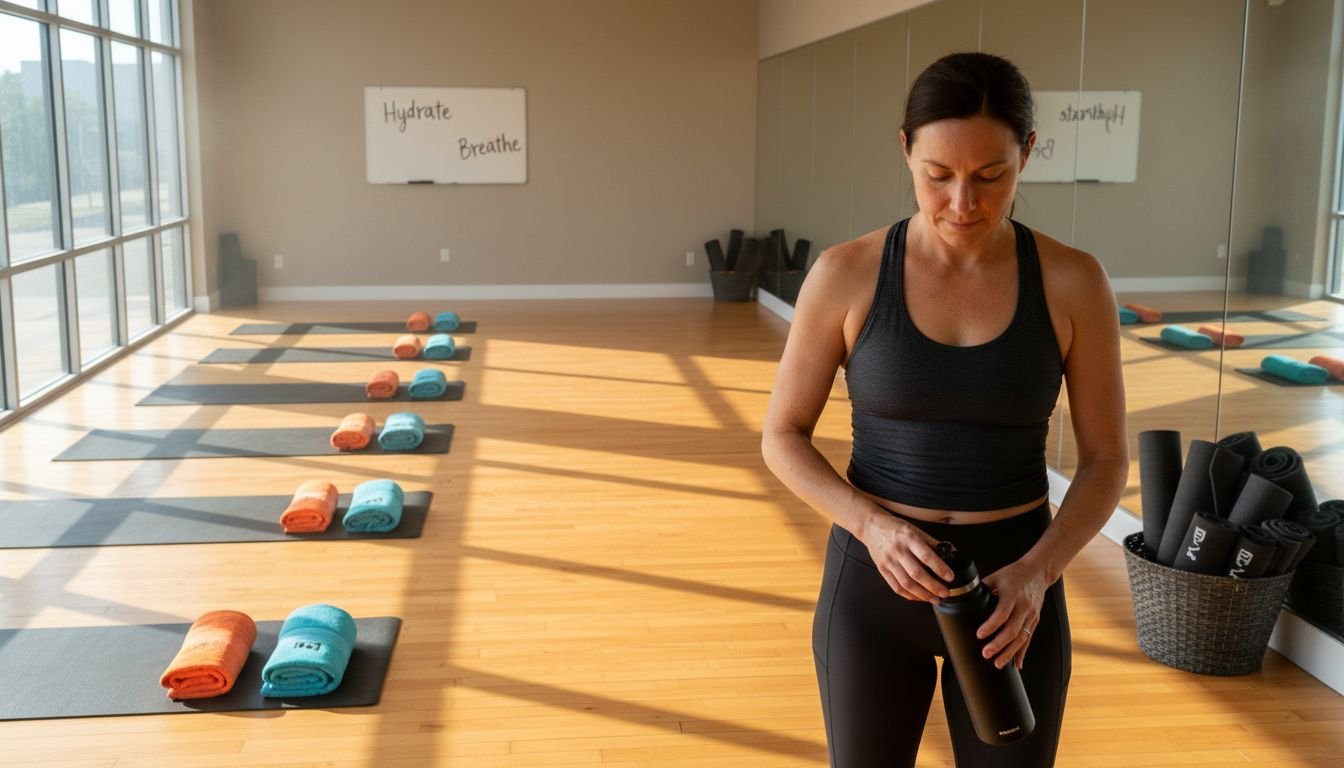
Over 40 million american adults have tried yoga, yet hot yoga brings unique challenges that demand careful preparation before stepping into a heated studio. The intense heat pushes your limits and can overwhelm even experienced yogis without the right plan. This guide breaks down simple, proven steps for choosing supportive gear, staying hydrated, and building routines that help you thrive during every sweaty session.
Table of Contents
Key Takeaways
| Key Point | Explanation |
|---|---|
| 1. Choose moisture-wicking gear | Select lightweight, breathable fabrics that manage sweat and enhance movement. Performance-focused apparel prevents discomfort in hot conditions. |
| 2. Prioritize hydration before class | Drink 16 to 20 ounces of water within two hours before your session to ensure you are adequately hydrated for intense sweating. |
| 3. Establish a pre-class routine | Arrive early to mentally prepare and perform gentle stretches. Set intentions to enhance focus and calm your mind before practice. |
| 4. Understand your physical limits | Assess your heat tolerance and be mindful of your body signals to avoid potential health risks while practicing hot yoga. |
| 5. Replenish nutrients post-practice | Consume water with electrolytes and a light meal with protein and carbohydrates within 45 minutes after class to support recovery. |
Step 1: Gather the Right Hot Yoga Gear
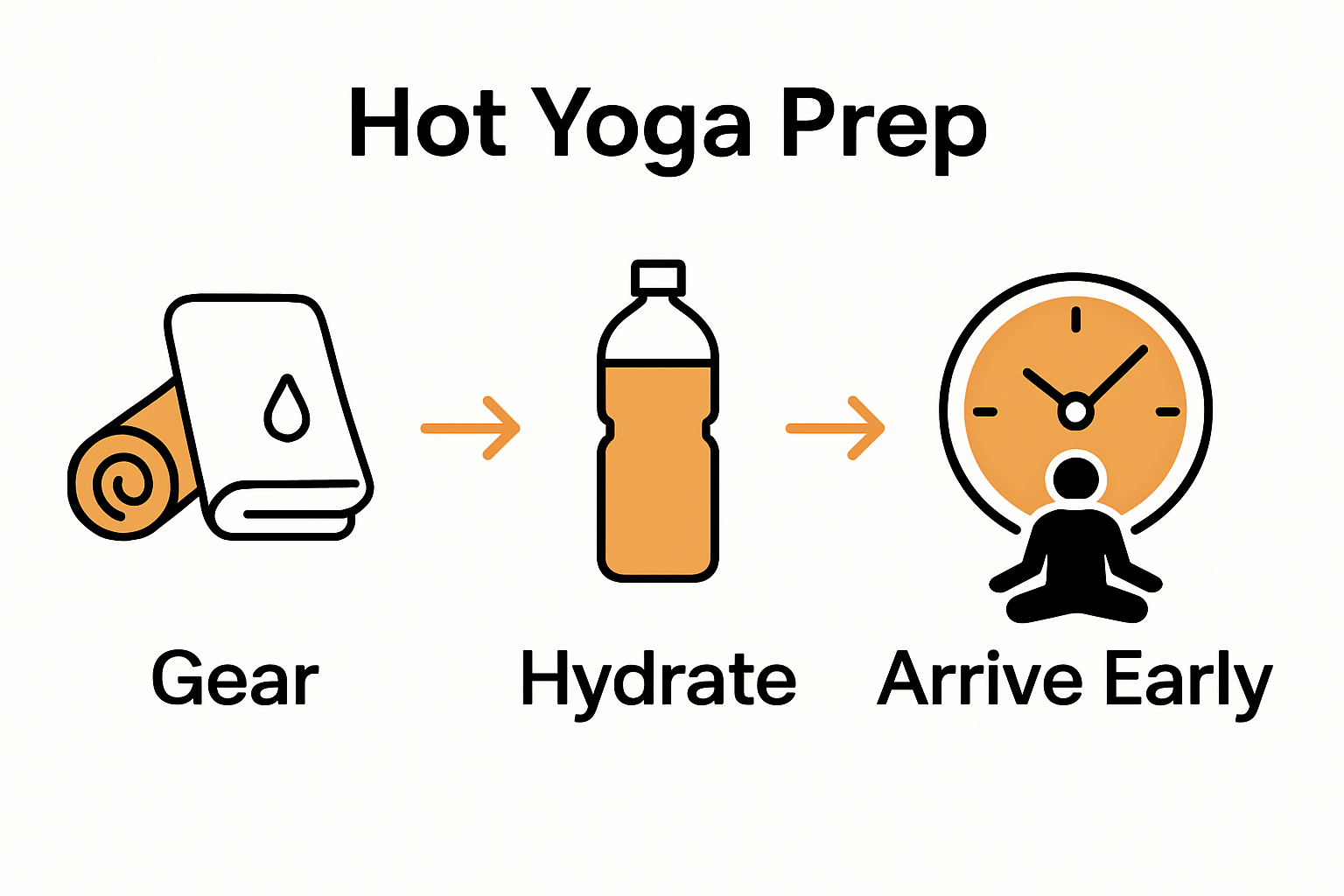
Preparing for hot yoga starts with selecting the right gear that supports your practice and helps you stay comfortable during intense sessions. The key is choosing moisture-wicking clothing that allows maximum breathability and movement while keeping you cool.
Your hot yoga wardrobe should prioritize performance-focused apparel with temperature regulation to manage the challenging environment. Look for lightweight, stretchy materials like spandex blends or specialized performance fabrics that quickly draw sweat away from your body. Women might prefer high-waisted yoga leggings or fitted shorts, while men can opt for compression shorts or breathable athletic pants. A supportive sports bra or fitted tank top completes the outfit for women, and a moisture-wicking athletic shirt works best for men.
Beyond clothing, pack essential accessories that will enhance your hot yoga experience. A large towel to place over your mat, a separate small towel for wiping sweat, and a high-quality water bottle with at least 32 ounces of capacity are crucial. Your yoga mat should be specifically designed for hot yoga environments, featuring extra grip and sweat resistance to prevent slipping during challenging poses. Pro tip: Bring an extra set of dry clothes to change into after class, as you will be completely drenched in sweat.
With the right gear prepared, you are now ready to step confidently into your hot yoga session.
Step 2: Hydrate and Nourish Your Body
Successful hot yoga preparation extends far beyond selecting the right gear it requires strategic hydration and nutrition to support your intense practice. Preparing your body through proper fluid intake becomes crucial for maintaining performance and preventing potential health risks.
The hydration process starts well before you step into the heated studio. Experts recommend drinking approximately 16 to 20 ounces of water in the two hours leading up to your class. During the session, maintaining electrolyte balance becomes paramount for sustained performance as you will lose significant amounts of fluid through intense sweating. Aim to consume small sips of water throughout the practice without overwhelming your system. Avoid heavy meals within two hours of class choose instead light snacks like a banana, a small smoothie, or a handful of almonds that provide steady energy without causing digestive discomfort.
Post-practice nutrition is equally critical. Immediately after your hot yoga session, focus on replenishing both fluids and nutrients. Drink water enhanced with electrolytes to restore what you have lost through sweating. Consider a protein-rich snack or light meal within 45 minutes of completing your practice to support muscle recovery and help regulate your body temperature. A blend of complex carbohydrates and lean proteins works best think Greek yogurt with berries, a protein shake, or whole grain toast with avocado.
With your body properly hydrated and nourished, you are now ready to maximize your hot yoga experience.
Step 3: Dress Appropriately for Heat
Choosing the right clothing for hot yoga is more than a fashion statement it is a critical component of your practice that directly impacts your comfort and performance. Selecting lightweight performance wear becomes your first line of defense against the intense heat and potential discomfort.
Your hot yoga outfit should prioritize minimal design elements that prevent chafing and maximize movement. Women might opt for high-waisted compression leggings or fitted shorts paired with a supportive sports bra or tank top. Men can choose compression shorts or breathable athletic pants with a moisture-wicking athletic shirt. The key is finding garments that fit snugly without restricting your range of motion. Look for technical fabrics engineered to draw sweat away from your body quickly and dry rapidly these materials will help regulate your body temperature and prevent that uncomfortable clingy feeling during challenging poses.

Beyond clothing selection, consider additional comfort strategies. A small sweat towel can be your best accessory helping you manage moisture during intense sequences. If you are prone to sweating heavily, consider wearing darker colors that hide moisture and bring an extra top to change into post-class. Remember that your clothing should make you feel confident and comfortable as you move through your hot yoga practice.
With the right outfit prepared, you are ready to face the heat and fully immerse yourself in your yoga session.
Step 4: Plan Your Pre-Class Routine
Successfully preparing for hot yoga goes beyond physical readiness it requires strategic planning and mindful preparation. Establishing a consistent pre-class hydration routine becomes your foundation for a successful practice.
Begin by timing your arrival strategically. Aim to reach the studio 15 to 20 minutes before class starts this gives you ample time to check in, change, set up your mat, and mentally transition into your practice space. Avoid eating heavy meals within two hours of class opt instead for a light snack like a banana or handful of almonds about 60 to 90 minutes before your session. Your pre-class routine should include gentle stretching or mobility work to warm up your muscles and increase flexibility. Consider planning your class schedule to ensure consistent practice and mental preparation.
Mental preparation is just as crucial as physical readiness. Take a few moments before class to sit quietly center your breath and set an intention for your practice. This brief meditation can help calm your nervous system and prepare you for the intense physical experience ahead. Pro tip bring a small journal to jot down any reflections or intentions before class this can help you stay focused and mindful throughout your hot yoga journey.
With your pre-class routine established, you are now ready to step confidently into your hot yoga experience.
Step 5: Check Your Physical Readiness
Preparing for hot yoga requires more than enthusiasm it demands a thoughtful assessment of your physical condition and potential limitations. Evaluating your personal tolerance to heat and understanding your body’s signals becomes crucial to preventing potential health risks during your practice.
Start by conducting an honest self assessment of your current physical state. If you have any recent injuries persistent medical conditions or chronic health challenges consult with your healthcare provider before beginning hot yoga. Pay close attention to your bodys response to heat sensitivity some individuals are more prone to heat exhaustion than others. Professional yoga instructors recommend monitoring your physical responses closely during the initial sessions. This means listening to your body and being willing to modify or stop if you experience dizziness excessive fatigue or unusual discomfort.
Beyond basic health screening develop a personal awareness of your physical limits. Notice how your body responds to heat and intense physical activity during practice. Keep track of your hydration levels energy reserves and overall comfort. A pro tip is to position yourself near the studio door or a cooler area during your first few classes this allows you an easy exit if you need to take a break or cool down. Remember that hot yoga is a practice of listening and respecting your bodys signals not a competition or endurance test.
With a clear understanding of your physical readiness you are now prepared to approach your hot yoga practice with confidence and self awareness.
Master Your Hot Yoga Practice with Expert Support and Community
Preparing for hot yoga involves overcoming key challenges such as managing intense heat, staying well hydrated, dressing appropriately, and respecting your physical limits. If you are ready to take your hot yoga journey beyond just preparation and experience guided support from experienced instructors who understand these unique demands, explore the resources and classes at Amrita Yoga & Wellness. Their welcoming community and expert-led sessions create the perfect environment to safely build endurance, confidence, and a deeper connection to your practice.
Join a supportive space where every step is designed to empower your body and mind. Visit Amrita Yoga & Wellness now to browse class schedules tailored for all levels, including hot yoga. Take advantage of workshops that help refine your pre- and post-class routines, and discover quality yoga accessories to enhance your experience. Start your journey with confidence today and turn the challenges of hot yoga into your personal triumph.
Frequently Asked Questions
What clothing should I wear for hot yoga?
Wear moisture-wicking and lightweight clothing that allows for breathability and movement. Look for high-waisted leggings or fitted shorts for women, and compression shorts or breathable athletic pants for men.
How much water should I drink before hot yoga?
Aim to drink approximately 16 to 20 ounces of water in the two hours leading up to your class. This ensures your body is adequately hydrated to handle the intense heat during your practice.
What should I eat before a hot yoga class?
Opt for light snacks like a banana or a handful of almonds about 60 to 90 minutes before your session. Avoid heavy meals to prevent digestive discomfort during yoga.
How can I prepare mentally for hot yoga?
Take a few moments before class to sit quietly, center your breath, and set an intention for your practice. This brief meditation will help you transition into the right mindset for an intense physical experience.
How can I assess my physical readiness for hot yoga?
Conduct an honest self-assessment of your current physical state, paying attention to any recent injuries or health conditions. Notice how your body responds to heat and high-intensity exercises during your initial sessions to ensure you stay safe.
What accessories are essential for hot yoga?
Bring a large towel for your mat, a smaller towel for wiping sweat, and a high-quality water bottle with at least 32 ounces of capacity. Consider also packing an extra set of dry clothes for after your class to help you feel more comfortable.
Recommended
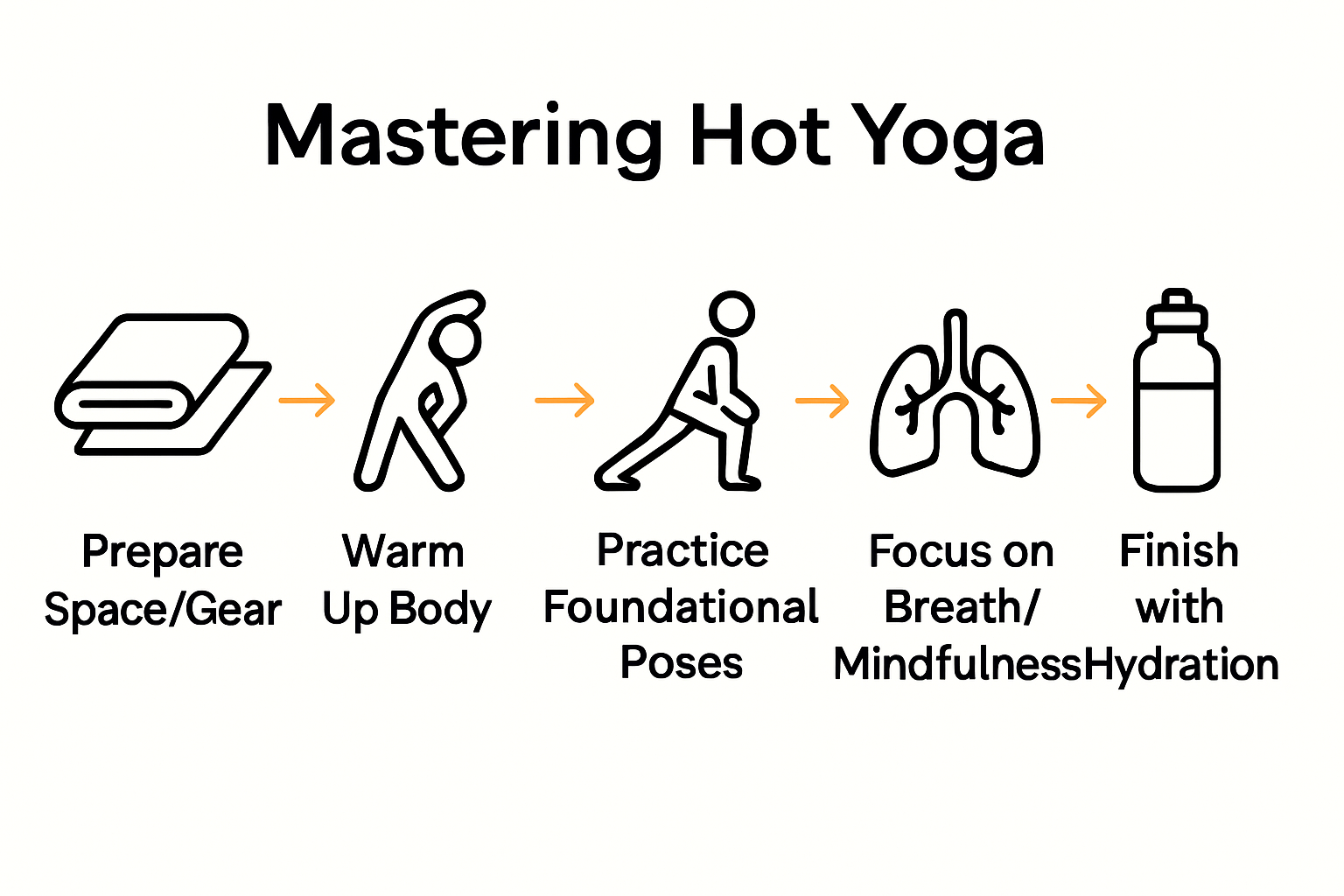
Master Hot Yoga Step by Step for Optimal Wellness Results

More than 36 million american adults engage in yoga, but hot yoga takes the experience to a whole new level of challenge and reward. From finding the right space to selecting the proper gear, each step matters for safety and results. With smart preparation and practical guidance, you can transform any home or studio session into a powerful hot yoga practice that truly supports your wellness journey.
Table of Contents
Quick Summary
| Key Insight | Explanation |
|---|---|
| 1. Prepare Your Yoga Space | A dedicated, well-ventilated area enhances your practice, ensuring a temperature-controlled environment for optimal performance. |
| 2. Warm Up Properly | Engage in gentle dynamic stretches to improve flexibility and reduce injury risk before starting your yoga session. |
| 3. Master Foundational Poses | Focus on core postures like Standing Deep Breathing and Eagle Pose to build strength and balance effectively. |
| 4. Prioritize Your Breathing | Maintain a steady breathing rhythm to connect your movements with mindfulness and enhance your overall yoga experience. |
| 5. Hydrate After Practice | Rehydrate gradually and restore electrolytes post-session to support recovery and counteract fluid loss from sweating. |
Step 1: Prepare Your Space and Gear for Hot Yoga
Gearing up for hot yoga requires strategic preparation to ensure a safe and transformative practice. According to research from MDPI, a well-prepared environment significantly enhances your flexibility, strength, and overall performance.
Your hot yoga space needs precise attention to detail. As insights from Wikipedia reveal, traditional hot yoga environments like Bikram are heated to 105°F with specific humidity levels. Start by selecting a dedicated area with excellent ventilation and temperature control. Clear at least a 6 x 4 foot space for your yoga mat, ensuring no obstructions that could interrupt your practice.
Gear selection is equally critical. Invest in moisture-wicking clothing that allows maximum breathability - think lightweight, stretchy fabrics that move with you. Pack a large microfiber towel to place over your mat, preventing slipping during intense sweating. Bring at least two water bottles to stay hydrated, and consider a waterproof yoga mat specifically designed for hot yoga practices. Pro tip: Place a small hand towel nearby for quick sweat management during your session.
Ready to transform your wellness journey? Your perfectly prepared space sets the foundation for an incredible hot yoga experience.
Step 2: Warm Up Your Body to Prevent Injury
Successful hot yoga practice starts with a strategic warm up that prepares your body and minimizes injury risk. IJYSHS research confirms that targeted yoga warm up routines can dramatically improve joint mobility and muscle activation.
Begin your warm up with gentle dynamic stretches that progressively increase your body temperature and flexibility. Start with slow neck rolls to release tension, followed by shoulder circles and arm swings to awaken your upper body. Incorporate gentle twists to activate your core and spine. Move into standing side bends and slow lunges to open your hip flexors and quadriceps. Your goal is creating a smooth transition from a resting state to an active practice.
Research from Zenodo highlights that comprehensive yoga warm ups enhance not just flexibility, but also balance, strength, endurance, and reaction time. Focus on controlled breathing during these preparatory movements to center your mind and increase oxygen flow. Key areas to target include your spine, shoulders, hips, and hamstrings. Pro tip: Move slowly and mindfully, listening to your body and never pushing into pain.
With these targeted warm up techniques, you are now primed and ready to dive into your transformative hot yoga session.
Step 3: Practice Foundational Hot Yoga Poses
Mastering hot yoga begins with understanding its core foundational poses. According to Wikipedia, Bikram Yoga follows a precise sequence of 26 specific postures designed to systematically work every muscle group and internal organ in the body.
Start with standing poses that build strength and balance. The first key posture is the Standing Deep Breathing pose, which helps regulate your breath and prepare your body for the heated environment. Next, move into the Half Moon pose with gentle side stretches, focusing on alignment and controlled movement. Follow this with the Eagle pose to challenge your balance and build core strength. Each pose should be performed slowly and mindfully, paying close attention to your body's signals and maintaining steady breathing.
Research from ArXiv highlights the importance of understanding pose mechanics through comprehensive datasets like 3DYoga90. For beginners, concentrate on proper form over complexity. Keep your movements deliberate and controlled, especially in the heated studio environment. Pro tip: Always listen to your body and modify poses as needed. If a full expression of a pose feels uncomfortable, use props or gentler variations to support your practice.
With these foundational poses, you are building a strong yoga practice that will transform your physical and mental wellness.

Step 4: Focus on Breath and Mindfulness Throughout
Breath is the cornerstone of a transformative hot yoga practice, connecting your physical movements with your mental landscape. ArXiv research highlights how personalized yoga practices integrate breath control and mindfulness techniques to enhance overall well-being and inner balance.
Begin by establishing a consistent breathing rhythm that matches your movements. Inhale deeply through your nose for four counts, feeling your lungs expand fully. Exhale slowly through your mouth for four counts, releasing tension and creating space in your body. Throughout your practice, maintain this deliberate breathing pattern even when poses become challenging. Your breath becomes an anchor, helping you stay present and calm in the heated studio environment.
Drawing inspiration from Wikipedia's exploration of advanced meditative practices, visualize your breath as a source of inner energy and warmth. During challenging poses, return your attention to your breath when your mind starts to wander. Pro tip: If you feel overwhelmed, pause in a resting pose and focus solely on your breathing until you regain your center. Remember that mindfulness is not about perfection but about consistent compassionate awareness.
By cultivating this mindful breathing practice, you transform your hot yoga session from a physical workout into a deeply transformative experience.
Step 5: Finish Safely and Hydrate for Recovery
Successfully completing your hot yoga practice requires strategic post-practice recovery. PubMed research confirms that hot yoga induces significant cardiovascular and cellular adaptations, making proper recovery critical for long-term wellness.
Begin your recovery immediately after your final pose. Slowly roll up your mat and take several deep breaths to center yourself. Grab your water bottle and start rehydrating gradually. Aim to drink at least 20 to 24 ounces of water within the first hour after your practice. Your body will have lost substantial fluids through intense sweating, so replenishing electrolytes becomes crucial. Consider adding a pinch of sea salt or drinking coconut water to restore mineral balance more effectively.
Research from MDPI underscores the importance of recovery practices in heated yoga environments. Pay attention to your body temperature and gradually cool down. Pro tip: Keep a lightweight, moisture-wicking towel nearby to pat yourself dry and prevent potential chills. If you feel lightheaded or extremely fatigued, sit or lie down in a comfortable position and continue slow, controlled breathing.
By mindfully concluding your hot yoga session, you set the stage for optimal physical recovery and continued wellness.
Elevate Your Hot Yoga Journey with Expert Guidance and Support
Mastering hot yoga involves more than just learning poses and breathing techniques. As this article highlights, preparing your space, warming up properly, focusing on breath, and safe recovery are essential steps you cannot overlook. Many practitioners struggle with maintaining the right environment, balancing mindfulness with physical challenge, and ensuring safe hydration after intense sessions. These challenges can leave you feeling overwhelmed or unsure about progressing confidently.
At Amrita Yoga & Wellness, we understand these pain points and are here to help you build strength, flexibility, and calm through carefully guided hot yoga classes tailored for all levels. From expert instruction on foundational poses to personalized breathwork and mindfulness coaching, our Philadelphia studio offers the tools and community support you need to transform your practice safely and effectively.
Discover the power of a holistic approach to your wellness journey by joining our welcoming classes and workshops. Visit Amrita Yoga & Wellness today for detailed class descriptions and seamless scheduling options. Start mastering hot yoga the right way and embrace lasting physical and mental well-being.
Take the next step toward your best hot yoga experience now. Explore our offerings and sign up for a class or workshop at Amrita Yoga & Wellness. Transform your practice, refresh your mind, and feel renewed with support tailored to your goals.
Frequently Asked Questions
What should I prepare for my hot yoga session?
To prepare for your hot yoga session, set up a dedicated space with good ventilation and a clear area for your mat. Equip yourself with moisture-wicking clothing, a large microfiber towel, and at least two water bottles to stay hydrated during your practice.
How can I warm up effectively before hot yoga?
Start your warm-up with gentle dynamic stretches such as neck rolls, shoulder circles, and standing side bends to increase your body temperature and flexibility. Aim to spend at least 10 minutes on your warm-up to ensure your muscles and joints are ready for the yoga session.
Which foundational poses should I focus on as a beginner?
As a beginner, concentrate on foundational poses like Standing Deep Breathing and Half Moon. Spend adequate time familiarizing yourself with each pose, ensuring that you maintain proper form and alignment throughout the practice.
How can I maintain mindfulness and breathing during hot yoga?
Establish a consistent breathing pattern by inhaling deeply through your nose and exhaling slowly through your mouth. Focus on coordinating your breath with your movements throughout the session, and don't hesitate to pause in a resting pose if needed.
What should I do after completing my hot yoga practice?
After your session, gradually roll up your mat and take deep breaths to center yourself. Begin rehydrating with at least 20 to 24 ounces of water within the first hour and consider consuming electrolytes to replenish minerals lost during practice.
How can I manage discomfort or lightheadedness during a hot yoga class?
If you start feeling lightheaded or uncomfortable, pause in a resting pose and focus on your breathing. If symptoms persist, sit or lie down comfortably until you feel steadier before resuming your practice.