The Amrita Journal
Explore thoughtful stories, practical wellness guidance and inspiring ideas to support your movement, mindfulness and everyday wellbeing at Amrita.
Aerial yoga equipment checklist: safe & effective practice
TL;DR:
Proper load-rated equipment and professional installation are essential for safe aerial yoga practice.Regular inspections, maintenance, and adherence to safety standards reduce injury risk significantly.Community resources and expert guidance in Philadelphia support safe and confident practice.
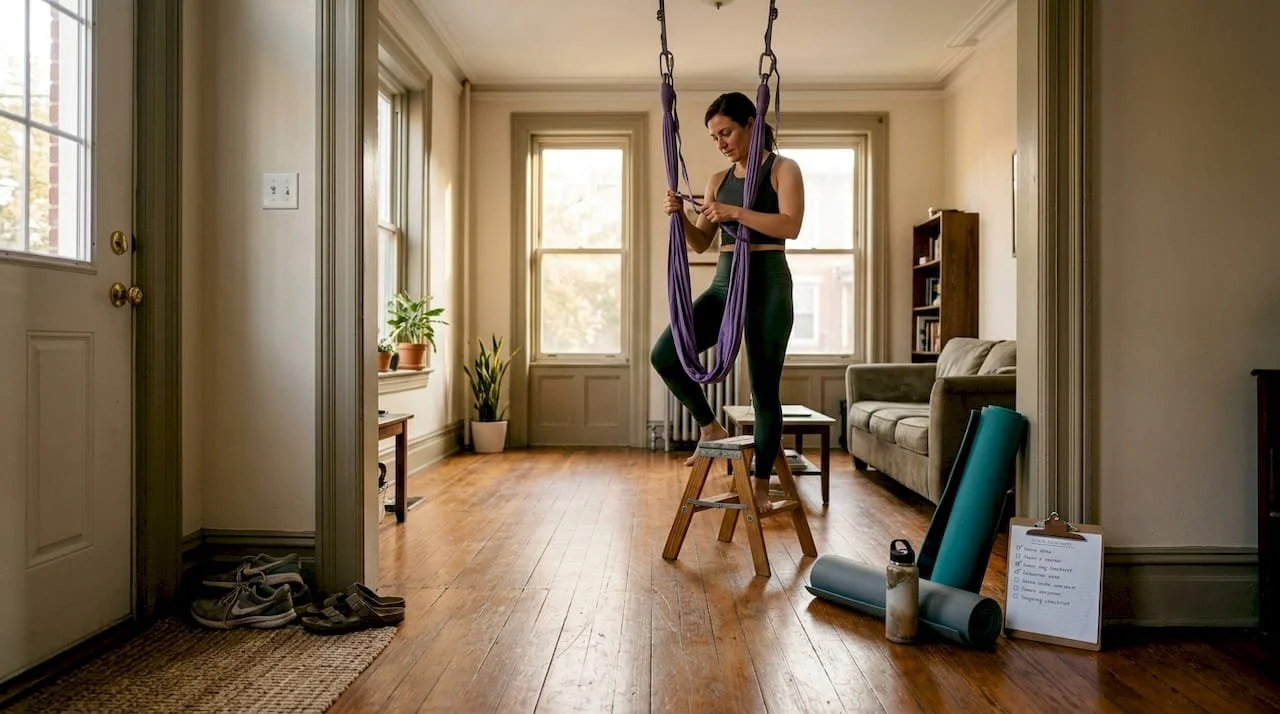
Aerial yoga is one of the most physically rewarding practices you can try, but it carries real risks when the setup is wrong. A torn hammock, an improperly anchored rigging point, or a ceiling that can't handle dynamic loads can turn a peaceful session into a serious injury. Many practitioners, both beginners and experienced movers, skip crucial steps because the gear looks fine or the setup "worked last time." This guide gives you a complete, step-by-step equipment checklist built around real safety standards, so you can practice with confidence whether you're at home in Philadelphia or walking into a studio for the first time.
Table of Contents
Key Takeaways
| Point | Details |
|---|---|
| Prioritize safety first | Professional installation, correct load ratings, and regular checks are non-negotiable for a safe aerial yoga setup. |
| Use a complete gear checklist | Every aerial yoga practitioner needs the right equipment and setup for their specific space and experience level. |
| Inspect and maintain regularly | Pre-use inspection and periodic cleaning help prevent the majority of injuries and keep equipment in top condition. |
| Consult local experts | Philadelphians can access studios like Amrita Yoga & Wellness for professional guidance, setup support, and ongoing safety. |
Understand aerial yoga safety essentials
Before you gather equipment, it's crucial to understand the standards your setup must meet. Aerial yoga isn't like floor yoga. Every piece of gear is load-bearing, and the forces involved are far greater than your body weight alone. When you swing, invert, or drop into a pose, you create what engineers call dynamic load, which can be two to three times your static weight in an instant.
"Safety standards require professional installation, regular inspections, and equipment rated 3x user weight to protect practitioners at every level."
Here's what every safe aerial yoga setup must include:
Load capacity: Your rigging system, anchor points, and hammock must all be rated for at least three times your body weight. A 150-pound person needs gear rated for at least 450 pounds minimum.
Certified equipment: Look for CE or TUV certifications on all hardware. These marks confirm the product has been independently tested.
Structural integrity: The ceiling beam or mounting surface must be inspected by a professional before installation, not just eyeballed.
Professional installation: Even if you're handy, a licensed rigger or structural engineer should sign off on your anchor points.
Local compliance: In Philadelphia, home and studio installations must follow both Pennsylvania building codes and any local Philadelphia ordinances related to structural modifications.
Studios like Amrita Yoga & Wellness in Philadelphia set the standard here. They use professionally installed equipment, conduct regular inspections, and ensure every setup meets load requirements before a single class begins. That's the benchmark to hold yourself to.
If you're new to the practice, reviewing a solid aerial yoga safety guide before purchasing anything is a smart first move. It's also worth understanding aerial yoga contraindications, which are the physical conditions that may make certain aerial movements risky for you specifically.
Pro Tip: Never assume a ceiling joist can hold your weight just because it looks solid. A structural engineer can assess load capacity in under an hour, and that one-time cost is far cheaper than an ER visit.
Build your aerial yoga gear checklist
Now that you know the safety requirements, let's list out every piece of equipment you need for a reliable setup. Whether you're building a home rig in a Philadelphia row house or outfitting a dedicated studio space, the core list stays the same.
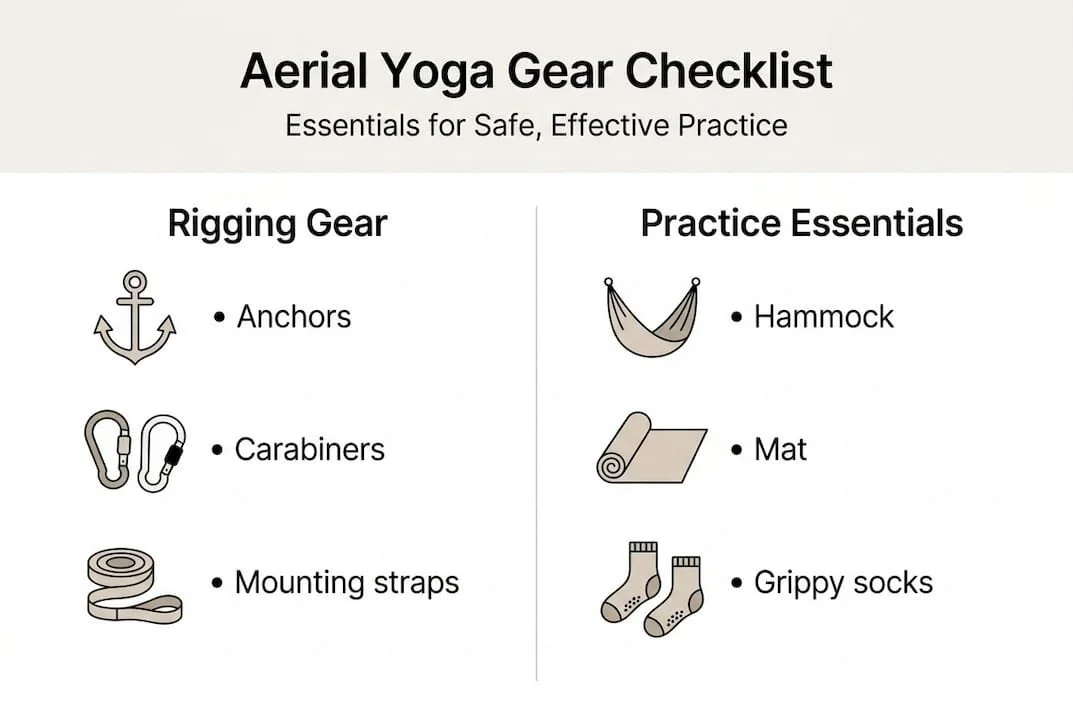
Essential equipment breakdown:
Aerial hammock or silk: Choose a hammock rated for at least 300 to 600 pounds. Nylon and tricot fabric are the most common. Nylon is more durable; tricot is softer on skin.
Rigging hardware: This includes carabiners (rated to at least 20kN), swivel hooks, and daisy chains or extension straps. All hardware must be climbing-grade or aerial-specific.
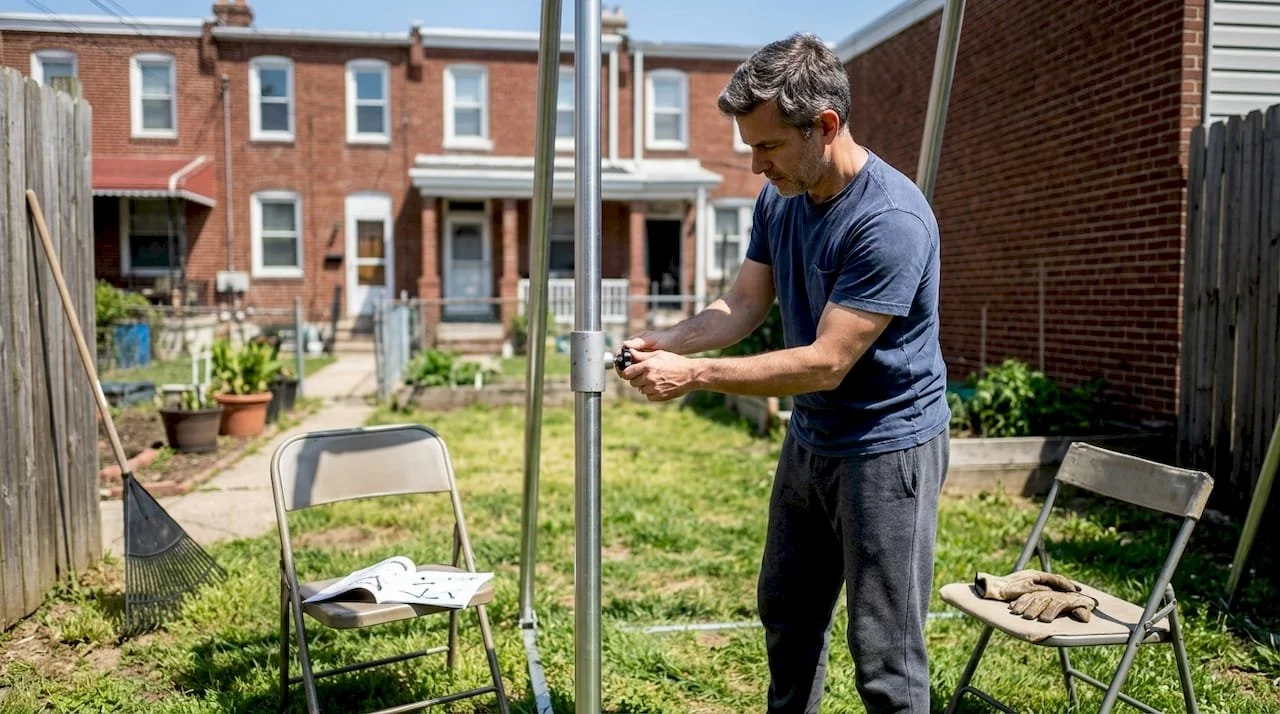
Ceiling anchor or mount: A steel ceiling mount bolted into a structural beam is the gold standard. Portable freestanding rigs are an option when ceiling installation isn't possible.
Yoga mat: Placed directly beneath the hammock for landing safety. Non-slip, at least 5mm thick.
Crash mat or foam pad: Especially important for beginners or anyone learning inversions. Place it under and around your practice area.
Safety scissors: Keep a pair nearby to cut fabric in an emergency.
Chalk or grip aid: Optional, but helpful for maintaining control during longer holds.
| Setting | Ceiling height needed | Clearance space | Rig type |
|---|---|---|---|
| Home (ideal) | 9 to 10 feet | 5 to 6 feet radius | Ceiling mount |
| Home (minimum) | 8 feet | 5 feet radius | Ceiling or portable rig |
| Studio | 10 to 14 feet | 6+ feet radius | Professional ceiling mount |
| Outdoor/portable | Variable | 6+ feet radius | Freestanding rig |
Studios in Philadelphia use pro-installed equipment and recommend engineer consults for home rigs, which tells you something important: even the professionals don't skip this step.
For Philly practitioners with older homes or lower ceilings, a portable freestanding rig is a legitimate option. Just confirm it's rated for dynamic loads, not just static weight. Explore aerial yoga best practices to understand how different rig types perform under real movement conditions.
Pro Tip: Measure your ceiling height before buying anything. An 8-foot ceiling is workable, but you'll need a lower hammock mount and should avoid deep drops or swinging poses until you're in a taller space.
Step-by-step setup for safe practice
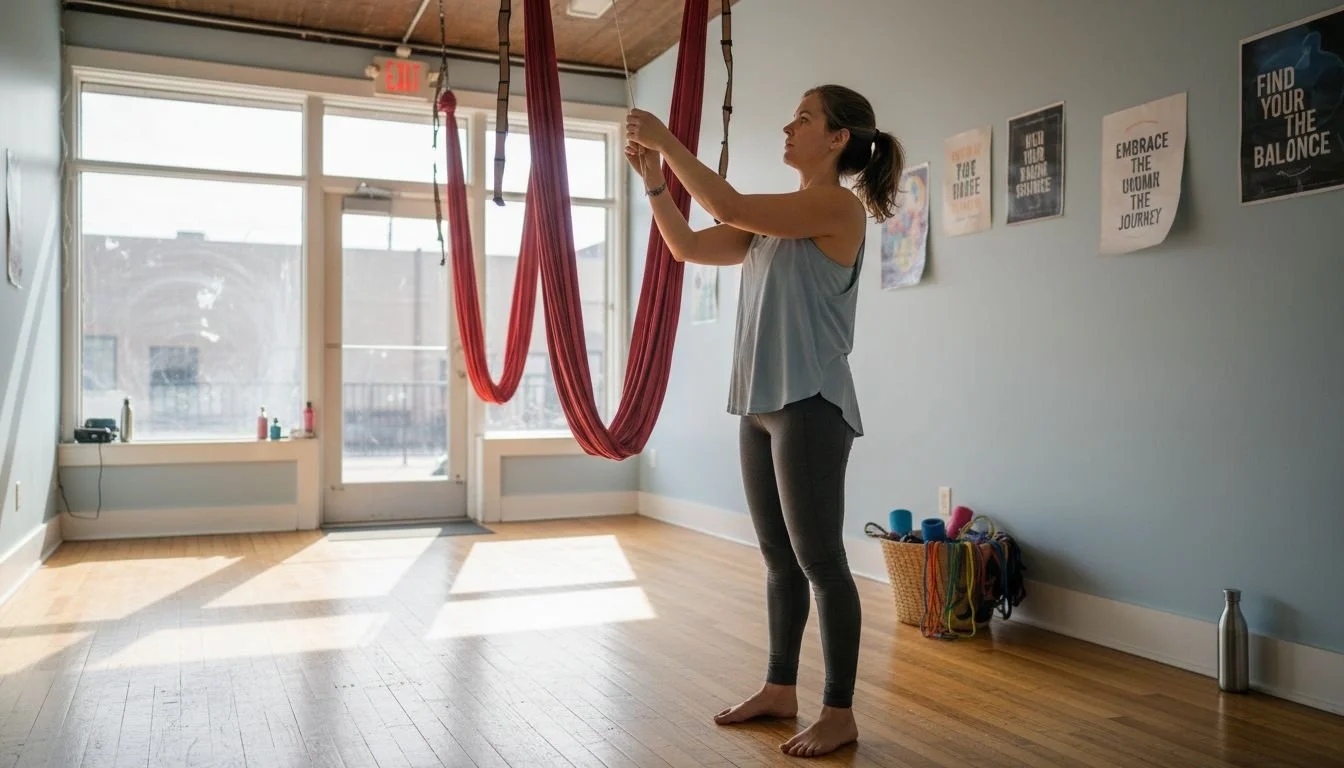
With everything on your checklist, it's time to put it all together for a safe start. Follow these steps every single time you set up, not just the first time.
Inspect the anchor point. Before attaching anything, visually check your ceiling mount or structural beam for cracks, rust, or looseness. Tug the mount firmly with both hands.
Attach rigging hardware. Connect your carabiner and swivel to the anchor point. Gate-check every carabiner by twisting and pulling to confirm it's locked.
Hang the hammock. Loop the hammock through the rigging at your desired height. For beginners, hip height is a safe starting point.
Test the load gradually. Sit in the hammock before standing or inverting. Apply weight slowly and listen for any creaking or movement in the anchor.
Set up your mat and crash pad. Place your yoga mat directly under the hammock. Add a crash mat for any inversion or drop work.
Clear the space. Remove furniture, sharp objects, and anything within your 5 to 6 foot clearance radius.
Run a pre-session check. Scan the fabric for tears, check all hardware connections, and confirm the hammock hangs evenly.
| Situation | Adjustment needed |
|---|---|
| Low ceiling (8 ft) | Lower mount, avoid swinging, use portable rig |
| Children practicing | Extra crash mats, lower hammock height, adult supervision |
| Practitioner with injury | Medical consult first, avoid inversions, studio guidance |
| First-time setup | Have a second person present, go slow on load testing |
Edge cases like low ceilings, setups for kids, and practice with injuries all require specific adjustments that go beyond the standard setup. Never rush these situations. Review aerial yoga setup tips for detailed guidance on each scenario.
Pro Tip: If your hammock hangs unevenly after setup, don’t just adjust by eye. Use a measuring tape to confirm both sides are at equal height from the floor. An uneven hang shifts your center of gravity and increases fall risk.
Edge cases like low ceilings, setups for kids, and practice with injuries all require specific adjustments that go beyond the standard setup. Never rush these situations. Review aerial yoga setup tips for detailed guidance on each scenario.
Pro Tip: If your hammock hangs unevenly after setup, don't just adjust by eye. Use a measuring tape to confirm both sides are at equal height from the floor. An uneven hang shifts your center of gravity and increases fall risk.
Inspect, maintain, and troubleshoot your setup
Once your setup is complete, ongoing maintenance is key to long-term safety and performance. Most aerial yoga accidents don't happen on day one. They happen weeks or months later, when gear starts to wear and inspections get skipped.
What to check before every session:
Run your hands along the full length of the hammock fabric, feeling for thin spots, small tears, or fraying at the edges.
Inspect all carabiners and swivel hooks for rust, deformation, or gate issues.
Check the ceiling mount or anchor for any movement, new cracks, or signs of stress.
Confirm the hammock hangs at the same height as your last session. A drop in height can signal a loosening anchor.
Look at the stitching on hammock loops and daisy chains. Pulled threads are an early warning sign.
"Regular inspections reduce injury risk by 35%; wash gear every 4 to 6 weeks and schedule annual professional checks to keep your setup performing safely."
For cleaning, hand wash your hammock in cold water with a mild detergent every 4 to 6 weeks, or more often if you practice frequently. Air dry only. Machine washing can weaken fabric fibers over time, and heat from a dryer accelerates breakdown.
Know when to retire gear. If you see any of these, stop using the equipment immediately: visible tears in the fabric, bent or cracked carabiners, a swivel that no longer rotates smoothly, or any anchor point that has shifted position. No amount of patching or tightening makes compromised gear safe again.
For troubleshooting common issues, an uneven mount usually means one anchor point has shifted or the hammock loops are set at different heights. Mat slippage is typically solved by switching to a higher-grip mat surface or placing a non-slip underlay beneath it.
Philadelphia practitioners can lean on local studios for annual professional inspections. Many studios, including those in the Amrita Yoga & Wellness community, connect students with trusted riggers. Check out dedicated aerial yoga safety tips and resources on aerial yoga risks to stay current on best practices.
Our perspective: why aerial yoga safety is personal
Here's something most aerial yoga content won't tell you: checklists aren't just for beginners. In fact, the practitioners who get hurt most often are the ones who've been doing this long enough to feel comfortable skipping steps.
Complacency is the real enemy. Dynamic loads far exceed static weight calculations, and most accidents occur due to skipped inspections or misguided DIY shortcuts, not inexperience. That's a critical distinction. It means experience alone doesn't protect you. Process does.
We believe the checklist mindset is actually a form of respect for the practice. Every time you run through your pre-session inspection, you're honoring the seriousness of what you're doing. It keeps you present before you even get into the hammock.
Philadelphia practitioners have a genuine advantage here. The local studio community, anchored by spaces like Amrita Yoga & Wellness, offers access to experienced instructors, trusted riggers, and a culture of shared Philadelphia safety lessons that you simply can't replicate from a YouTube tutorial. Use that community. It's one of the best resources you have.
Start your aerial yoga journey with expert guidance
Ready to take everything you've learned and bring your aerial yoga goals to life?
Amrita Yoga & Wellness in Philadelphia offers aerial yoga classes led by experienced instructors who prioritize your safety from the very first session. Whether you want to try a class before committing to a home setup, or you need a professional consultation for your own rigging installation, the team at Amrita is ready to help. You can also explore complementary wellness options like acupuncture services to support recovery and flexibility, or unwind with tarot readings as part of a broader self-care practice. Your next step toward safe, confident aerial yoga starts here.
Frequently asked questions
What is the minimum ceiling height for home aerial yoga in Philadelphia?
The minimum recommended ceiling height is 8 feet, but 8 to 10 feet with clearance of 5 to 6 feet around the hammock is ideal for safe, full-range movement.
Can I install aerial yoga equipment myself, or do I need a professional?
Professional installation is strongly recommended for all home setups, since a licensed rigger or structural engineer can confirm your ceiling can safely handle dynamic loads during practice.
How often should I check or replace my aerial yoga hammock?
Inspect the hammock before every session and wash it every 4 to 6 weeks. Replace it immediately at the first sign of fraying, tears, or thinning fabric, since routine maintenance cuts injury risk significantly.
Is aerial yoga safe for children or people with medical conditions?
Children need lower rigging, extra crash mats, and constant adult supervision, while anyone with a medical condition or injury should get a doctor's clearance and start in a supervised studio setting before practicing at home.
Recommended
Aerial Yoga: Unlocking Strength and Flexibility Safely
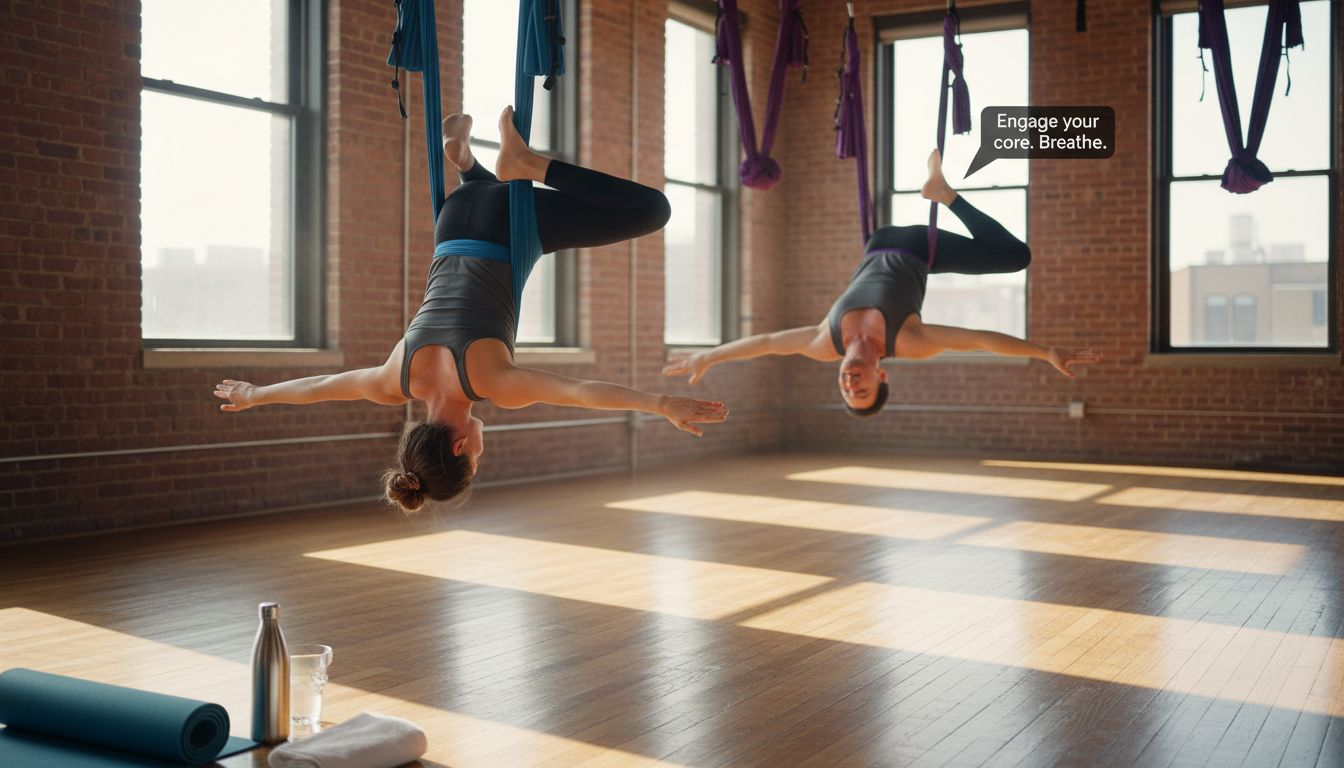
Stepping into a new fitness routine often brings a mix of curiosity and caution, especially for those in Philadelphia looking to regain strength or recover from an injury. Many beginners are drawn to aerial yoga’s supportive fabric hammock because it allows greater ease and comfort while performing stretches and poses. With its foundation in traditional yoga, pilates, and dance, this practice offers a gentle path to improved flexibility, muscle balance, and a calmer mind—all while minimizing joint stress and making challenging movements accessible.
Table of Contents
Key Takeaways
| Point | Details |
|---|---|
| Aerial Yoga Essentials | Aerial yoga combines traditional yoga, dance, and pilates using a suspended hammock to enhance physical and mental wellness. |
| Myths and Realities | It’s not a circus act or exclusive to athletes; it caters to various fitness levels and offers substantial conditioning benefits. |
| Class Types | Various formats, such as Beginner Suspension Yoga and Restorative Aerial Yoga, address different fitness goals and capabilities. |
| Safety First | Always consult with professionals and ensure proper equipment and instructor qualifications to minimize risks during practice. |
Aerial Yoga Defined and Common Misconceptions
Aerial yoga represents a dynamic fusion of traditional yoga practices, dance, and pilates that uses a suspended hammock as a primary training tool. Developed in 2006, this innovative fitness approach transforms standard yoga movements by introducing an elevated, supportive apparatus that enables practitioners to explore poses with reduced gravitational stress. Aerial yoga techniques challenge traditional mat-based practices by providing unique physical and psychological engagement opportunities.
Understanding aerial yoga requires dispelling several prevalent misconceptions about its nature and benefits:
Not a circus performance: Despite using suspended equipment, aerial yoga is a structured fitness practice
Not exclusively for athletes: Suitable for various fitness levels and body types
Not just another workout trend: Offers genuine physical and mental conditioning
While physical benefits are significant, practitioners should recognize that scientific research remains limited. Yoga practices have demonstrated potential for stress reduction and minor pain management, but aerial yoga specifically requires more comprehensive clinical evaluation.
Key characteristics that distinguish aerial yoga include:
Use of a fabric hammock suspended from ceiling anchors
Incorporation of traditional yoga poses with aerial support
Enhanced flexibility and strength training opportunities
Reduced joint compression compared to mat-based practices
Aerial yoga requires specialized training and proper technique. Participants must learn correct form, understand equipment limitations, and progress gradually to prevent potential injuries. Certified instructors play a crucial role in guiding newcomers through safe and effective practice.
Pro tip: Always verify instructor credentials and studio safety standards before beginning aerial yoga practice.
Types of Aerial Yoga and Class Formats
Aerial yoga represents a multifaceted practice with diverse class formats designed to meet various fitness goals and practitioner skill levels. Yoga practice types demonstrate remarkable versatility, particularly in aerial variations that integrate physical movement with holistic wellness approaches.
The primary aerial yoga class formats include:
Beginner Suspension Yoga: Gentle introduction focusing on basic hammock techniques and foundational poses
Power Aerial Yoga: High-intensity workout emphasizing strength training and cardiovascular endurance
Restorative Aerial Yoga: Slow-paced, meditative practice concentrating on relaxation and deep stretching
Aerial Pilates Fusion: Combines traditional Pilates movements with aerial apparatus for enhanced core conditioning
Each class format offers unique benefits and challenges, catering to different physical capabilities and fitness objectives. Hammock configuration plays a crucial role in determining the class experience, with some formats using single-point suspensions for greater movement complexity, while others utilize double-point setups for increased stability.
Here's a side-by-side summary of popular aerial yoga class formats and their key features:
| Format | Primary Focus | Key Challenge | Ideal For |
|---|---|---|---|
| Beginner Suspension | Technique, safety, basics | Hammock familiarity | Newcomers, low impact needs |
| Power Aerial | Strength, cardio endurance | High intensity movement | Fitness enthusiasts |
| Restorative Aerial | Relaxation, deep stretch | Flexibility, patience | Stress relief, recovery |
| Aerial Pilates Fusion | Core, posture integration | Core stability demands | Pilates or yoga regulars |
Participants should consider their personal fitness level, physical limitations, and wellness goals when selecting an appropriate aerial yoga class format. Certified instructors typically assess individual capabilities and recommend suitable class types to ensure safe and effective practice.
Pro tip: Consult with a qualified aerial yoga instructor to determine the most appropriate class format based on your current fitness level and specific health objectives.
How Aerial Yoga Works in Practice
Aerial yoga transforms traditional yoga practice by introducing a suspended hammock that revolutionizes movement and body mechanics. Aerial yoga techniques leverage a specialized fabric apparatus to support, challenge, and enhance physical practice through unique biomechanical approaches.
The fundamental mechanics of aerial yoga involve several key components:
Hammock Suspension: Fabric sling anchored to ceiling supports
Body Weight Distribution: Utilizing gravity and support for pose execution
Range of Motion: Enhanced flexibility through reduced gravitational constraints
Spinal Decompression: Allowing deeper stretches with minimal joint stress
Pose Execution differs significantly from traditional mat-based yoga. Practitioners can explore inversions, backbends, and complex stretches with greater ease and reduced physical strain. The hammock provides multiple points of contact, enabling practitioners to modify poses dynamically and safely.
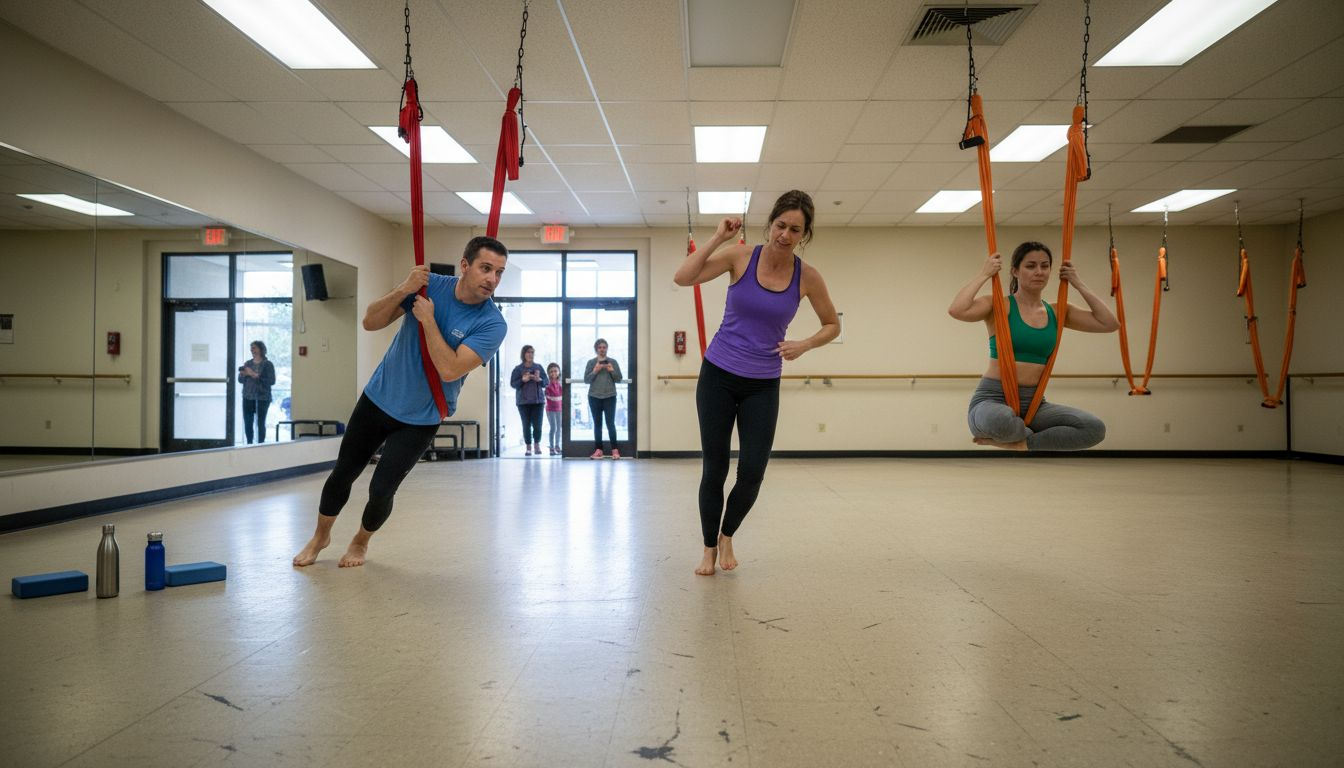
Physical engagement in aerial yoga encompasses multiple fitness dimensions. Full-body workout techniques integrate elements of Pilates, dance, and gymnastics, creating a comprehensive exercise method that challenges strength, balance, and core stability simultaneously.
Key practice elements include:
Initial equipment familiarization
Gradual skill progression
Breath synchronization with movement
Controlled, mindful transitions
Pro tip: Begin with introductory classes and always communicate any physical limitations to your instructor before attempting advanced aerial techniques.
Physical and Mental Benefits for Beginners
Aerial yoga offers transformative experiences for novice practitioners, providing unique physical and mental wellness opportunities. Yoga benefits for beginners demonstrate remarkable potential for holistic health improvement through gentle, supportive movement techniques.
Physical benefits for beginners include:
Enhanced Flexibility: Hammock support allows deeper stretches
Core Strength Development: Engages stabilizing muscles continuously
Spinal Decompression: Reduces back tension and improves alignment
Low-Impact Movement: Minimizes joint stress during exercise
Improved Balance: Challenges proprioceptive skills safely
Mental Wellness Advantages extend beyond physical conditioning. The suspended practice creates a unique meditative environment that promotes stress reduction and mindfulness. Practitioners experience a sense of weightlessness that can dramatically alter psychological perception, helping release tension and anxiety.
This table highlights physical, mental, and cognitive benefits beginners gain from aerial yoga:
| Benefit Type | Description | Lasting Impact |
|---|---|---|
| Physical | Supported stretching and strength building | Increased flexibility, spinal health |
| Mental | Enhanced mood, reduced anxiety | Lower stress, improved focus |
| Cognitive | Better body awareness and breathing control | Mindfulness, coordination, confidence |
“Aerial yoga transforms physical exercise into a holistic mind-body experience, offering beginners a gentle yet profound pathway to wellness.”
Cognitive benefits are equally significant. Aerial yoga techniques stimulate mental engagement through focused breathing, body awareness, and controlled movements that challenge both physical and psychological boundaries.
Pro tip: Start with beginner-friendly classes and communicate any physical limitations to ensure a safe, personalized aerial yoga experience.
Essential Safety Tips and Practical Requirements
Safety is paramount in aerial yoga, requiring careful preparation and understanding of potential risks and preventive measures. Aerial yoga safety guidelines emphasize the importance of informed, cautious practice to protect practitioners from potential injuries.
Critical safety considerations include:
Medical Consultation: Check with healthcare professionals before beginning practice
Equipment Verification: Ensure hammocks are professionally installed and rated
Instructor Qualifications: Choose classes led by certified, experienced instructors
Personal Limitations: Understand and respect individual physical constraints
Proper Attire: Wear fitted clothing that prevents fabric slippage
Pre-Practice Health Screening is essential for identifying potential risks. Individuals with the following conditions should consult medical professionals before participating:
Cardiovascular disorders
Glaucoma
Severe joint issues
Recent surgical procedures
Pregnancy
Aerial yoga safety depends on mindful practice, proper equipment, and understanding personal physical limits.
Aerial yoga class protocolsrequire rigorous attention to technique and environmental safety. Practitioners must focus on controlled movements, proper warm-up procedures, and gradual skill progression to minimize injury risks.
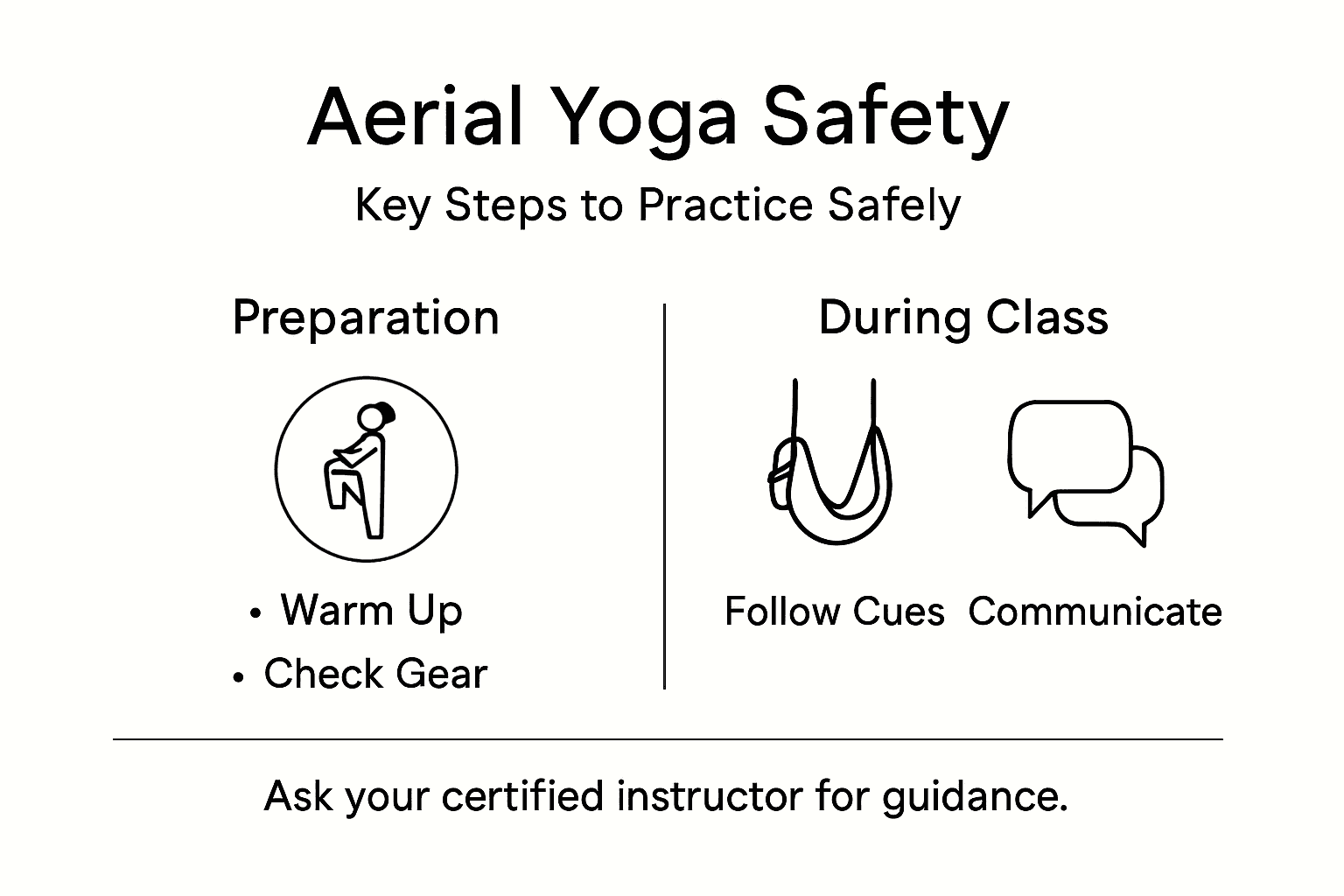
Pro tip: Always perform a thorough equipment check and communicate any health concerns with your instructor before each aerial yoga session.
Experience Strength and Flexibility the Safe Way with Aerial Yoga
Discover how aerial yoga can unlock your potential by building strength and enhancing flexibility while protecting your joints and spine. If you are looking to transform your physical and mental well-being through a supportive, low-impact practice that respects your body limits this is your opportunity. At Amrita Yoga & Wellness, we understand the importance of guided instruction and quality equipment to practice aerial yoga safely and effectively.
Join our welcoming community in Philadelphia and explore beginner to advanced aerial yoga classes designed to meet your personal fitness goals. Benefit from certified instructors who emphasize proper technique and gradual progression so you can enjoy the full physical and mental advantages discussed in the article. Visit Amrita Yoga & Wellness today to find detailed class descriptions, schedule your sessions easily, and start your journey of holistic wellness with confidence.
Frequently Asked Questions
What is aerial yoga and how is it different from traditional yoga?
Aerial yoga is a dynamic fusion of traditional yoga, dance, and Pilates that utilizes a suspended hammock to perform poses, allowing for reduced gravitational stress and enhanced flexibility compared to mat-based yoga.
What are the physical benefits of practicing aerial yoga?
Practicing aerial yoga can enhance flexibility, develop core strength, decompress the spine, minimize joint stress, and improve balance through supported movements.
How should I prepare for my first aerial yoga class?
To prepare for your first aerial yoga class, consult with a healthcare professional if you have any medical conditions, wear fitted clothing to prevent slippage, and communicate any physical limitations to your instructor for a safe practice.
Are there different types of aerial yoga classes available?
Yes, there are various aerial yoga class formats such as Beginner Suspension Yoga, Power Aerial Yoga, Restorative Aerial Yoga, and Aerial Pilates Fusion, each catering to different fitness levels and goals.
Recommended
Aerial Yoga Class Checklist for a Confident Studio Start
Over 40 million Americans practice some form of yoga, yet trying aerial yoga for the first time can leave even seasoned practitioners with questions. Understanding class prerequisites and preparing physically are crucial steps for American beginners who want a safe and positive introduction to aerial yoga. By taking the right steps before your first session, you will walk into the studio feeling informed and ready to soar above the mat.
Table of Contents
Quick Summary
| Key Point | Explanation |
|---|---|
| 1. Assess your physical readiness | Evaluate your fitness level and any existing health conditions before attending an aerial yoga class. |
| 2. Follow studio requirements | Ensure you meet age, weight, and clothing guidelines specified by the studio to ensure safety and comfort. |
| 3. Prepare appropriate gear and attire | Wear form-fitting, moisture-wicking clothing and bring essential items such as a water bottle for your session. |
| 4. Arrive early for logistics | Arrive 15–20 minutes early to familiarize yourself with the studio, complete paperwork, and set up your hammock. |
| 5. Communicate with your instructor | Inform your instructor about any discomfort or concerns during class to ensure a safe and enjoyable experience. |
Step 1: Assess readiness and review class requirements
Preparing for your first aerial yoga class requires understanding your physical readiness and the specific requirements for participation. This section will help you confidently evaluate whether you are prepared and what you need to know before stepping into the studio.
Start by assessing your general physical health and fitness level. Aerial yoga involves suspended movements that require basic core strength and flexibility. If you have any pre-existing injuries or medical conditions like back problems, recent surgeries, or balance disorders, consult your healthcare provider first. Some physical considerations include being able to support your body weight, having reasonable mobility, and feeling comfortable with potential inversions and hanging positions.
Next, review the specific class requirements. Most aerial yoga studios have standard prerequisites such as minimum age restrictions (typically 16 or older), weight limits for hammock safety (usually between 250-350 pounds), and clothing recommendations. You will want to wear form-fitting athletic clothing without zippers or sharp accessories that could damage the aerial silk. Avoid loose pants or shirts that might get tangled in the equipment. Bring a water bottle, wear form-fitting clothing, and remove jewelry that could snag on the fabric.
Pro tip: Call the studio in advance to discuss any personal physical concerns and verify their specific class readiness guidelines. A quick conversation can help ensure you are fully prepared and comfortable before your first aerial yoga experience.
Here is a quick summary of common aerial yoga studio requirements:
| Requirement Type | Typical Standard | Reason |
|---|---|---|
| Minimum Age | 16 years or older | Ensures safe participation |
| Weight Limit | 250–350 pounds | Protects hammock integrity |
| Clothing | Form-fitting, no zippers | Prevents fabric damage |
| Jewelry | Removed before class | Reduces risk of snags |
Step 2: Prepare essential aerial yoga gear and attire
Gearing up for an aerial yoga class requires thoughtful preparation to ensure comfort, safety, and optimal performance. This section will guide you through selecting the right clothing and equipment to set yourself up for a successful aerial yoga experience.
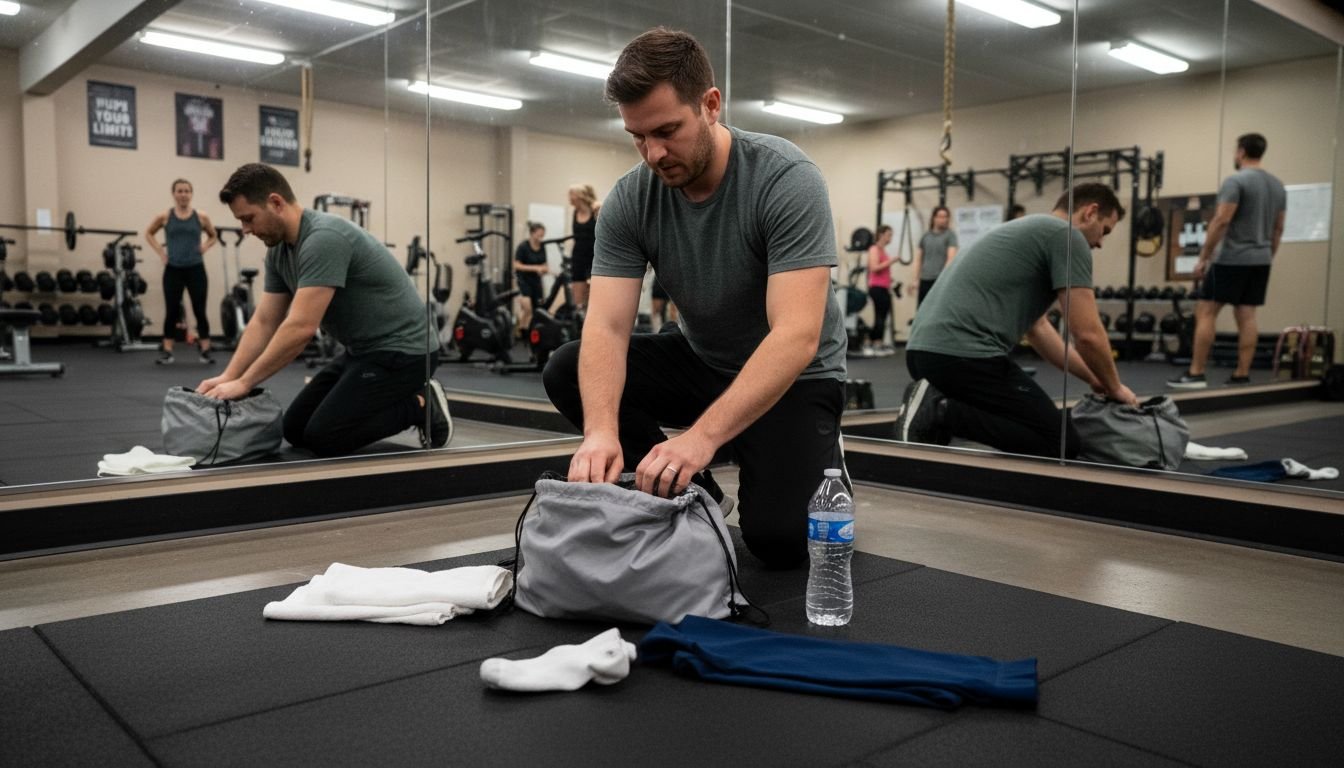
Start by choosing the appropriate attire. Your clothing should be form-fitting and flexible, allowing unrestricted movement while preventing potential fabric entanglement in the aerial hammock. Opt for moisture-wicking, stretchy athletic wear like fitted yoga pants, leggings, and a snug top that covers your armpits. Avoid loose clothing, zippers, or anything with decorative elements that could catch on the silk. For aerial yoga safety, wear items that provide coverage and protect your skin from potential friction against the hammock fabric.
Beyond clothing, gather a few essential accessories. Bring a water bottle to stay hydrated, a small towel for wiping away sweat, and grip socks or gloves if you prefer extra traction. Some studios recommend bringing a light jacket or layer for cooldown periods. Check with your specific studio about any additional recommended items like a personal yoga mat for pre or post hammock stretching. Arrive at least 15 minutes early to set up and familiarize yourself with the equipment.
Pro tip: Invest in a pair of form-fitting, seamless leggings or shorts that provide both coverage and flexibility. Avoid clothing with rough seams or embellishments that might snag on the aerial silk during your practice.
Below is a reference table for essential gear versus optional additions for your first aerial yoga class:
| Item Type | Example | Purpose |
|---|---|---|
| Essential | Fitted leggings | Prevents entanglement |
| Essential | Water bottle | Maintains hydration |
| Optional | Grip socks | Adds foot traction |
| Optional | Light jacket | Keeps warm during cooldown |
Step 3: Check studio location, schedule, and registration
Preparing for your first aerial yoga class involves more than just physical readiness it requires strategic planning around logistics and scheduling. This section will walk you through navigating the crucial steps of finding the right class time, understanding studio location, and completing your registration smoothly.
Begin by exploring the studio’s aerial yoga guide for beginners to understand their specific class offerings and schedules. Most studios have online booking systems that allow you to view available time slots, instructor details, and class levels. Pay close attention to beginner or introductory classes specifically designed for first-time aerial yoga participants. These classes typically provide more detailed instruction and slower pacing to help you feel comfortable with the unique equipment and techniques.
Next, verify the studio’s exact physical location and parking options. Some yoga studios are located in complex buildings or have specific entrance requirements. Call ahead or check their website for precise directions, parking instructions, and any access codes or special entry procedures. Consider doing a practice run to the location before your first class to familiarize yourself with the route and reduce potential morning stress. Most studios recommend arriving 15-20 minutes early for your first session to complete any necessary paperwork, meet the instructor, and get oriented with the space.
Pro tip: Screenshot or save the studio’s class confirmation and location details on your phone. Having this information easily accessible will help you stay organized and reduce last minute confusion about your aerial yoga class details.
Step 4: Set up your aerial hammock and workspace
Successfully setting up your aerial hammock is critical to ensuring a safe and enjoyable aerial yoga experience. This section will guide you through the essential steps of preparing your workspace and positioning your hammock with precision and care.
First, understand the fundamental requirements for proper aerial hammock setup. Your workspace needs to be clear of obstacles with sufficient overhead clearance typically 8 to 10 feet high. The hammock should be securely attached to a professionally installed rigging point capable of supporting your full body weight. Inspect the mounting hardware carefully ensure it can handle dynamic movements and potential weight shifts during your practice. Check that the fabric is made from high quality breathable material specifically designed for aerial yoga supports.
When positioning your hammock, create a buffer zone around the equipment of at least three feet on all sides. This provides safe space for swinging movements and prevents potential collisions with furniture or walls. Adjust the hammock height so it sits approximately at your hip level when you are standing. Most studios use adjustable suspension systems that allow fine tuning to individual practitioner heights. If you are practicing at home ensure you have consulted a professional rigger to verify the safety and load capacity of your installation point.
Pro tip: Always do a gentle test bounce and weight check before fully committing to the hammock. Start with light movements to confirm the stability and security of your setup before attempting more complex aerial yoga poses.
Step 5: Verify equipment safety and comfort before starting
Before launching into your aerial yoga practice, performing a comprehensive safety and comfort check is absolutely essential. This critical step ensures you can confidently engage in your aerial yoga experience without unnecessary risks or unexpected discomfort.
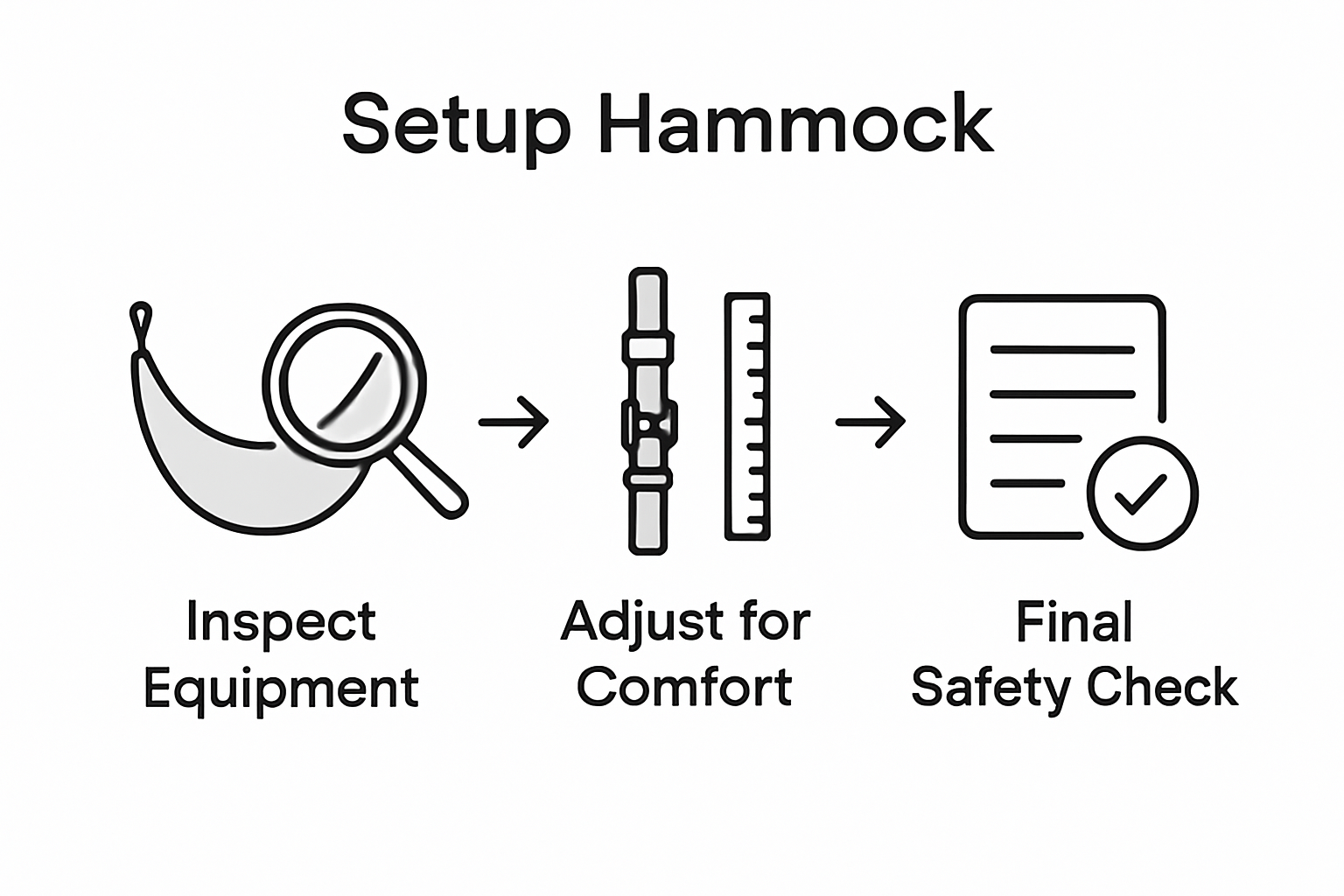
Begin by thoroughly inspecting your aerial hammock for any signs of wear or damage. Check the fabric for fraying, small tears, or weak spots that could compromise structural integrity. Run your hands along the entire length of the hammock, feeling for any rough areas or potential snag points. Aerial yoga safety guidelines recommend testing the hammock’s suspension points and ensuring all carabiners and attachment mechanisms are securely fastened. Gently apply your body weight incrementally test the hammock’s responsiveness and stability before fully committing to any poses.
Next, assess your personal comfort and physical readiness. Adjust the hammock height to match your body proportions typically positioning it at hip level when standing. Perform a few gentle test movements to understand how the fabric moves and responds to your weight. Check that the fabric feels smooth against your skin and that you have sufficient clearance around you to move freely. Pay attention to any pressure points or areas of potential discomfort particularly around your hips, lower back, and shoulders where the hammock will support your body weight.
Pro tip: Always keep a pair of safety scissors within reach during your practice. In the unlikely event that you need to quickly exit the hammock, having a cutting tool nearby can provide an additional layer of personal safety.
Step 6: Follow class guidelines for a safe, rewarding experience
Navigating your first aerial yoga class successfully requires understanding and adhering to specific studio guidelines that ensure both your safety and an enjoyable experience. This section will help you confidently integrate into the class environment and maximize your aerial yoga practice.
Pay close attention to the instructor’s initial instructions and class workflow recommendations. Most aerial yoga classes begin with a brief orientation where the instructor explains fundamental safety protocols and movement techniques. Listen carefully to guidance about proper hammock positioning, weight distribution, and basic entry and exit strategies. Respect personal space boundaries and maintain awareness of other practitioners around you. Follow the instructor’s lead during warm up sequences and modifications, understanding that each movement should be performed with controlled and deliberate motions.
Maintain open communication with your instructor throughout the class. If you feel uncomfortable, experience pain, or have difficulty executing a pose, signal the instructor immediately. Do not push yourself beyond your comfort level or attempt advanced movements without proper guidance. Stay hydrated, move slowly and mindfully, and focus on your individual progress rather than comparing yourself to other participants. Remember that aerial yoga is a progressive practice where you gradually build strength, flexibility, and confidence.
Pro tip: Always arrive at least 10 minutes early to your first few classes. This extra time allows you to acclimate to the studio environment, ask the instructor any preparatory questions, and settle into a calm mental state before beginning your practice.
Start Your Aerial Yoga Journey with Confidence and Support
Preparing for your first aerial yoga class can feel overwhelming with all the safety checks, gear choices, and studio logistics involved. This article highlights key challenges like assessing your physical readiness, mastering proper hammock setup, and following essential safety guidelines. At Amrita Yoga & Wellness, we understand that starting something new requires guidance, encouragement, and a welcoming community that helps you grow step by step.
Ready to transform your confidence into practice? Explore beginner-friendly classes tailored to ease you into aerial yoga safely. Our experienced instructors will guide you through every pose and help you personalize your practice to fit your unique needs. Visit Amrita Yoga & Wellness to discover available classes and schedule your first session today. Take advantage of a supportive environment focused on your wellness and success. Don’t wait to make your wellness goals a reality—start now with our Aerial Yoga Guide for Beginners and check out helpful resources like our Aerial Yoga Safety Explained to prepare yourself fully.
Embrace the confidence that comes from knowing you are supported. Take the first step toward a stronger, more flexible, and joyful you at Amrita Yoga & Wellness. Your aerial yoga journey awaits.
Frequently Asked Questions
What should I assess before attending my first aerial yoga class?
Before attending your first aerial yoga class, assess your physical readiness, including your core strength and flexibility. Ensure you feel comfortable with potential inversions and any pre-existing conditions by consulting with a healthcare provider if necessary.
What clothing is recommended for an aerial yoga class?
Wear form-fitting athletic clothing without zippers or sharp accessories to prevent damage to the aerial hammock. Choose moisture-wicking fabrics that allow unrestricted movement and provide coverage during your practice.
How early should I arrive at the studio for my first class?
Aim to arrive 15-20 minutes early for your first aerial yoga class to complete any paperwork and familiarize yourself with the studio environment. This extra time will help you relax and settle into your practice before it starts.
How can I ensure my aerial hammock is set up safely before class?
Inspect your aerial hammock for any signs of damage and ensure it’s securely attached to a suitable rigging point. Perform a gentle test bounce to verify stability and comfort before starting your practice.
What should I communicate to the instructor during class?
Maintain open communication with the instructor about your comfort level throughout the class. If you experience discomfort or have difficulty with any poses, signal to the instructor immediately for assistance or modifications.
What essential items should I bring to my aerial yoga class?
Bring a water bottle, a small towel, and consider grip socks for extra traction. Ensure you’re also wearing the appropriate attire to enhance your comfort and safety during the session.
Recommended
Master the Aerial Yoga Class Workflow for Success — Amrita Yoga & Wellness
Aerial Yoga Safety Explained: Complete Guide — Amrita Yoga & Wellness
Aerial Yoga Guide for Beginners: Step-by-Step Practice Success — Amrita Yoga & Wellness
Master Aerial Yoga Flexibility Exercises for Mobility — Amrita Yoga & Wellness