Mat Pilates: Core Strength & Flexibility Benefits 2026
TL;DR:
Mat Pilates is a highly accessible, low-cost workout that requires only a mat and floor space.It effectively builds core strength, improves flexibility, and reduces chronic pain through controlled movements.Consistent practice offers significant benefits for posture, stability, and overall body awareness.
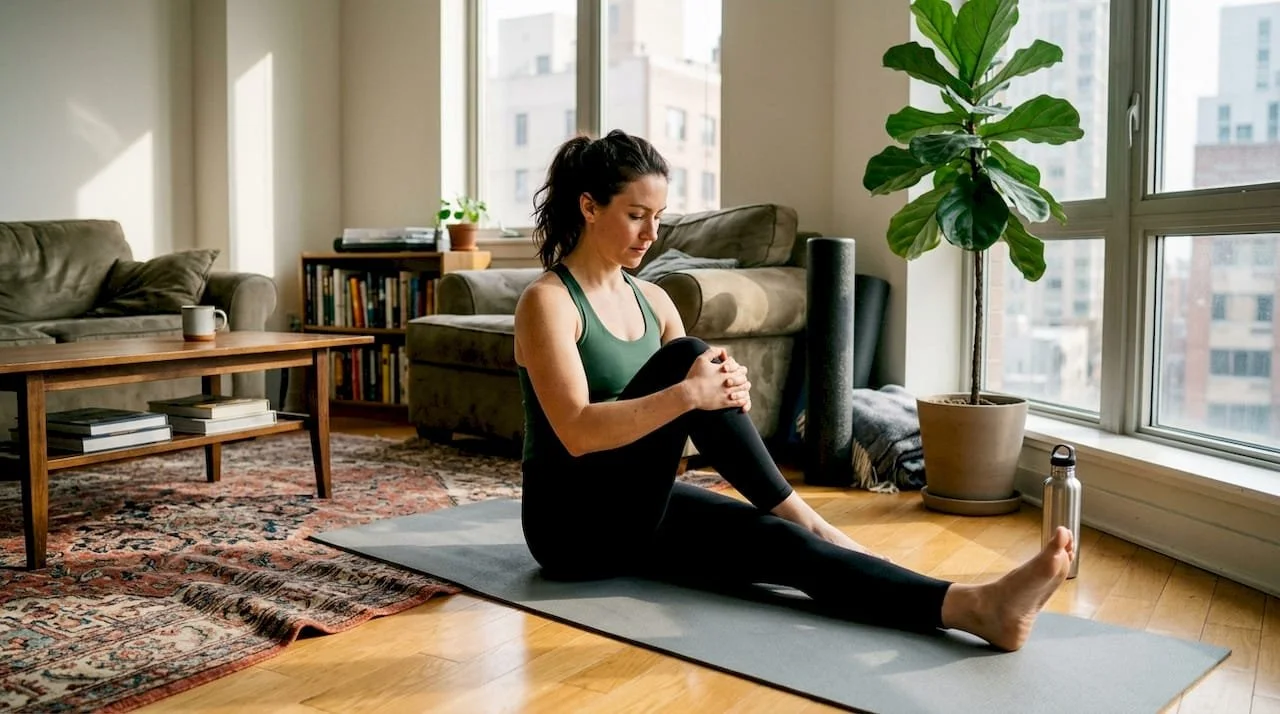
Many people assume Pilates means expensive reformer machines, a fancy studio membership, or a fitness background that most of us simply don't have. That assumption keeps a lot of Philadelphia adults from ever trying it. Mat Pilates flips that script entirely. All you need is a supportive mat and a small patch of floor. Research consistently shows it builds genuine core strength, improves flexibility, and even reduces chronic pain, making it one of the most accessible, low-impact workouts available to beginners and busy professionals alike. This guide breaks down exactly what mat Pilates is, what the science says, and how you can start this week.
Table of Contents
Key Takeaways
| Point | Details |
|---|---|
| Accessible for all | Mat Pilates builds core strength and flexibility without machines, making it easy for busy adults to start. |
| Backed by science | Research shows mat Pilates relieves pain, enhances movement, and supports joint health. |
| Perfect for busy lives | You can see real benefits from consistent 2-3x/week practice, fitting sessions into any schedule. |
| Empowers self-awareness | With no external equipment, mat Pilates develops deep core control and body awareness. |
What is mat Pilates and why is it unique?
Mat Pilates is a floor-based exercise system developed from Joseph Pilates' original method, sometimes called "Contrology." Every movement uses your own bodyweight as resistance. There are no springs, cables, or sliding carriages involved. A typical session runs 45 to 60 minutes and moves through a sequence of controlled exercises targeting the core, hips, back, and shoulders.
What makes it stand out among Pilates for wellness options is the sheer accessibility. You can practice at a boutique studio, in your living room, or even in a hotel room while traveling for work. For urban adults in Philadelphia juggling packed schedules, that flexibility matters enormously.
Here is what a standard mat Pilates session typically includes:
Breathing and alignment warm-up to activate deep core muscles before any movement begins
Core-focused exercises like the Hundred, Roll-Up, and Single Leg Stretch
Hip and glute work using Bridge variations and Side-Lying Leg Series
Spinal mobility sequences including Swan and Spine Stretch Forward
Cool-down stretches to lengthen muscles and release tension
Now, how does this compare to reformer Pilates? The reformer machine uses spring-based resistance to assist or challenge movement. That external support actually makes some exercises easier to perform with correct form, especially for people recovering from injury. Mat Pilates, on the other hand, offers no external support, which means your intrinsic core muscles must work harder to stabilize every single movement. That builds a deeper, more functional body awareness over time. You can explore reformer Pilates basics if you are curious about how the two approaches overlap, but for most beginners, the mat is the best starting point.
Mat Pilates suits a wide range of people: those new to structured exercise, professionals who need something they can fit into a lunch break, anyone dealing with mild joint discomfort, and even athletes looking to improve control and balance.
Pro Tip: Commit to 2 to 3 mat Pilates sessions per week for at least six weeks before judging your progress. Consistency matters far more than session length, especially in the early stages.
Core strength, flexibility, and pain relief: Science-backed benefits
Understanding what mat Pilates is sets the stage, but what do the studies really say about its impact?
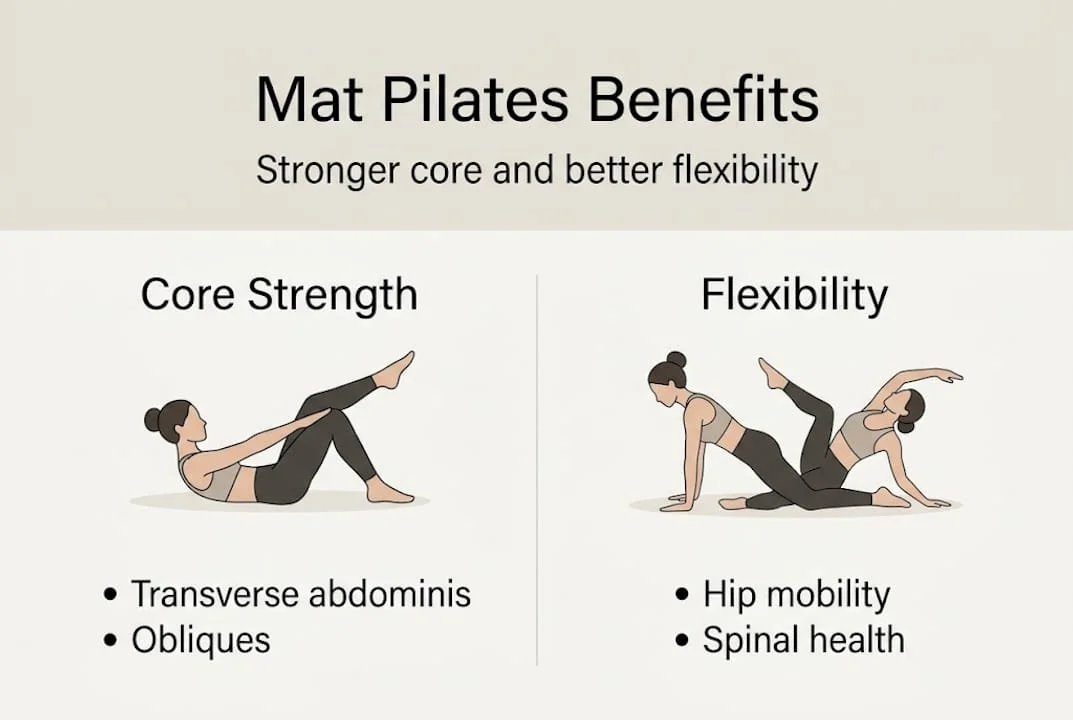
The core benefits are the most well-documented. Mat Pilates targets the deep stabilizing muscles, specifically the transverse abdominis and multifidus, that most conventional gym workouts barely touch. Strengthening these muscles improves posture, reduces spinal compression, and creates the kind of stable foundation that protects your joints during everyday movement. You can explore sample Pilates exercises to see exactly which movements activate these deeper layers.
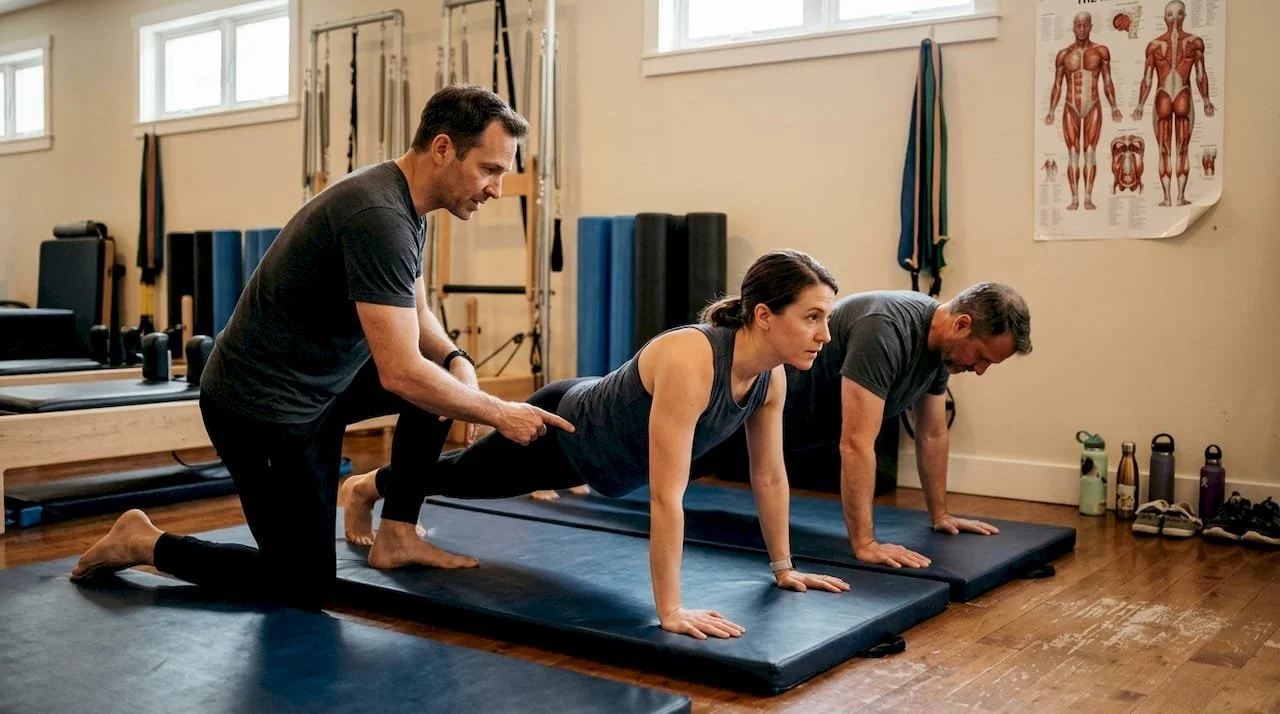
Flexibility gains are equally impressive. Unlike static stretching, where you hold a position for 30 seconds and call it done, mat Pilates improves flexibility through controlled, dynamic movements that enhance range of motion in the hamstrings, shoulders, and spine simultaneously. This dynamic approach trains your nervous system to accept greater range under load, which translates to real-world mobility improvements.
The pain relief evidence is particularly compelling for anyone dealing with chronic discomfort. Research published in a randomized controlled trial found that mat Pilates reduced pain and improved physical function in middle-aged women with chronic low back pain. A separate meta-analysis found that Pilates reduced knee pain in people with osteoarthritis compared to no intervention, with a standardized mean difference of 1.09.
Here is a quick summary of the top science-backed reasons busy adults stick with mat Pilates:
Core activation goes deeper than crunches or planks, targeting stabilizers that protect the spine
Dynamic flexibility improves range of motion without the boredom of static stretching routines
Pain reduction in the lower back and knees is supported by multiple peer-reviewed studies
Improved posture from consistent practice reduces neck and shoulder tension common in desk workers
Low injury risk makes it sustainable for people who have had to stop other workouts due to soreness or strain
"The beauty of mat Pilates is that it meets you where you are. Whether you are managing pain or training for performance, the same principles of control, breath, and precision apply."
Check out Pilates workout routines to see how these principles translate into structured weekly programs.
Mat Pilates vs. reformer: Comparing versatility and outcomes
To make your best choice, let's compare mat Pilates to the ever-popular reformer approach.
| Factor | Mat Pilates | Reformer Pilates |
|---|---|---|
| Equipment needed | Mat only | Reformer machine |
| Average cost per class | Lower | Higher |
| Space required | Minimal | Dedicated studio space |
| Core engagement | Deep intrinsic muscles | Assisted by springs |
| Balance and control | High demand | Moderate demand |
| Power and agility | Moderate | Higher potential |
| Best for | Beginners, flexibility, control | Rehab, power, variety |
| Accessibility | Home or studio | Studio only |
Beyond Pilates, the studio brings together yoga, barre, massage therapy, and even mind-body wellness options that support your overall well-being. Whether you want to try a single mat Pilates class or explore a fuller wellness routine, Amrita makes it easy to start. Browse the schedule, sign up for a class, and experience firsthand why so many Philadelphia adults have made this studio their wellness home.
Frequently asked questions
Is mat Pilates effective for core strength compared to reformer Pilates?
Yes, mat Pilates requires greater intrinsic core control since there is no external support, making it equally effective for building strength and flexibility as reformer Pilates.
Can mat Pilates help with chronic back or knee pain?
Yes, a randomized controlled trial found mat Pilates reduced pain and improved function in people with chronic low back pain, and a meta-analysis confirmed Pilates reduced knee pain in osteoarthritis patients compared to no intervention.
How often should I practice mat Pilates for best results?
Most experts recommend starting 2 to 3 times per week to see sustained core strength and flexibility improvements without overtraining.
Do I need any special equipment for mat Pilates?
No, only a supportive mat is required. No machines, springs, or special tools are needed to get started or to see meaningful results.