Optimize Your Hot Yoga Sessions with Smart Hydration Tips
st people. It isn't. Plain water alone won't protect your performance, focus, or safety when you're sweating through 90 minutes in a heated studio. Hot yoga creates fluid and mineral losses that standard hydration advice simply doesn't account for. Whether you're a regular at a Philadelphia studio or just building your heated practice, a targeted hydration strategy makes a real, measurable difference in how you feel during class and how quickly you recover afterward. This guide breaks down exactly what to do before, during, and after every session.
Table of Contents
Key Takeaways
| Point | Details |
|---|---|
| Plan hydration ahead | Start drinking water and electrolytes hours before your hot yoga class for the best results. |
| Sip, don’t gulp | Frequent small drinks during class help maintain energy and prevent dehydration. |
| Post-class recovery | Replace both fluids and minerals after hot yoga to support muscle recovery and overall wellness. |
| Adapt to local climate | Consider Philadelphia’s seasonal heat and humidity when planning your hydration strategy. |
Understanding hydration needs for hot yoga
Hot yoga isn't just yoga with the thermostat turned up. The combination of intense movement and elevated heat pushes your body to sweat at rates far beyond what most workouts demand. Fluid loss through sweat in hot yoga is significant enough to raise your real risk of dehydration within a single class. That's not a warning to scare you off the mat. It's a reason to show up prepared.
Even mild dehydration, as little as 2% of your body weight in fluid loss, can impair coordination, reduce strength, and make it harder to focus on your breath and alignment. In a room held at 95 to 105 degrees Fahrenheit, that threshold arrives faster than most practitioners realize. Your body is working overtime to cool itself while also powering through poses.
Common dehydration symptoms to watch for during class include:
Dizziness or lightheadedness during standing poses
Muscle cramps, especially in the calves and hamstrings
Sudden fatigue or a feeling of "hitting a wall"
Headache that builds through the session
Dry mouth or reduced urge to urinate after class
Philadelphia's climate adds another layer. Summer humidity makes sweat evaporate more slowly, which reduces your body's cooling efficiency and increases fluid loss. Winter sessions in heated studios can also be deceptively dehydrating because dry indoor air pulls moisture from your skin and breath.
| Condition | Estimated fluid loss per hour |
|---|---|
| Hot yoga (heated studio) | 1.0 to 1.5 liters |
| Regular yoga (room temperature) | 0.3 to 0.5 liters |
| Light cardio (gym) | 0.5 to 0.8 liters |
Those numbers matter when you're planning your hot yoga preparation routine. Replacing a liter or more of fluid during and after class requires intentional effort, not just a few casual sips. The effects of dehydration in exercise are well documented, and hot yoga sits at the higher end of that risk spectrum. Start thinking of hydration as part of your practice, not an afterthought.
Pre-class hydration: Steps to set yourself up for success
Once you realize how much hot yoga can deplete your fluids, a thoughtful pre-class hydration approach becomes essential. The biggest mistake most practitioners make is trying to hydrate in the 20 minutes before class. By then, it's too late for your body to absorb and distribute that fluid effectively.
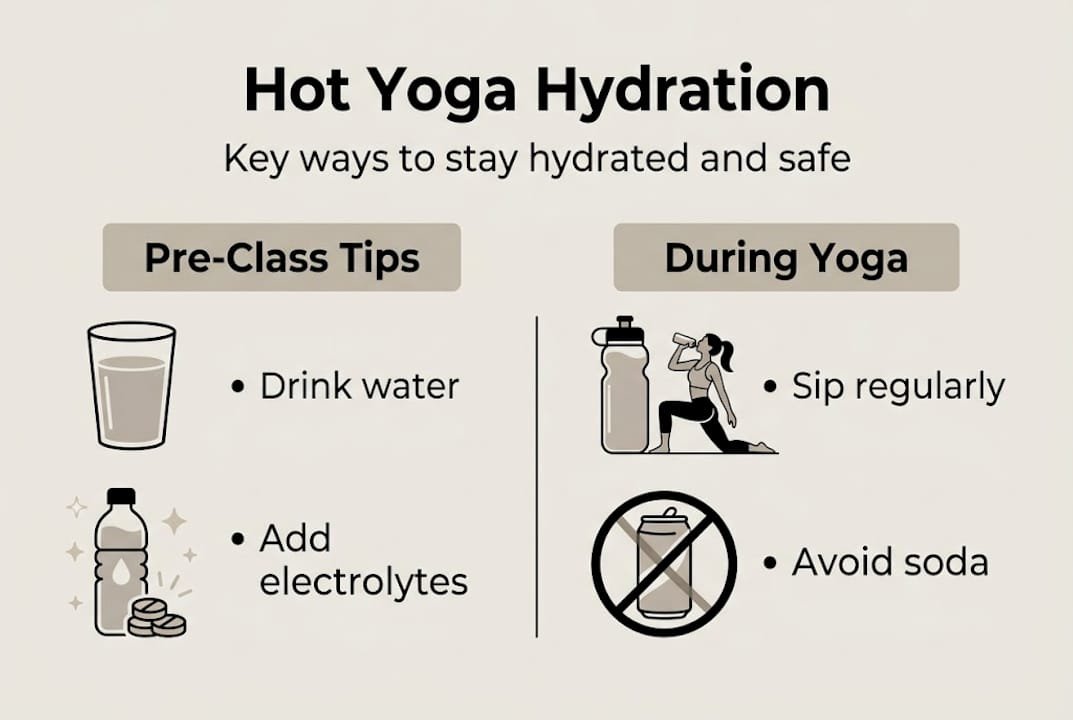
Drinking water steadily throughout the dayis far more effective than loading up right before a workout. Your kidneys can only process about 800 milliliters per hour, so chugging 32 ounces right before class mostly means bathroom breaks and a sloshing stomach during downward dog.
Here's a practical pre-class hydration timeline to follow:
Wake up: Drink 16 ounces of water first thing in the morning, even on non-yoga days.
4 to 5 hours before class: Have a full meal with water-rich foods like cucumber, leafy greens, or fruit.
2 to 3 hours before class: Drink 16 to 20 ounces of water or a light electrolyte drink.
1 hour before class: Sip 8 ounces if you feel thirsty. Avoid large amounts.
30 minutes before class: No more large drinks. A few small sips are fine.
Following this approach for how to prepare for hot yoga gives your body time to absorb fluids, balance electrolytes, and arrive at the studio in an optimal state.
Pro Tip: Don't rely only on plain water in the hours before class. Add a pinch of sea salt and a squeeze of lemon to your water, or eat a banana, to top off your sodium and potassium levels before you start sweating.
Electrolytes, specifically sodium, potassium, and magnesium, regulate how your muscles contract and how your cells hold water. Plain water alone doesn't restore those minerals. Starting class with a slight electrolyte edge gives your body a meaningful buffer against cramping and fatigue.
During class: Hydration hacks to stay energized and safe
Equally important is what you do once you walk into the heated studio. Here's how to hydrate smarter during class.
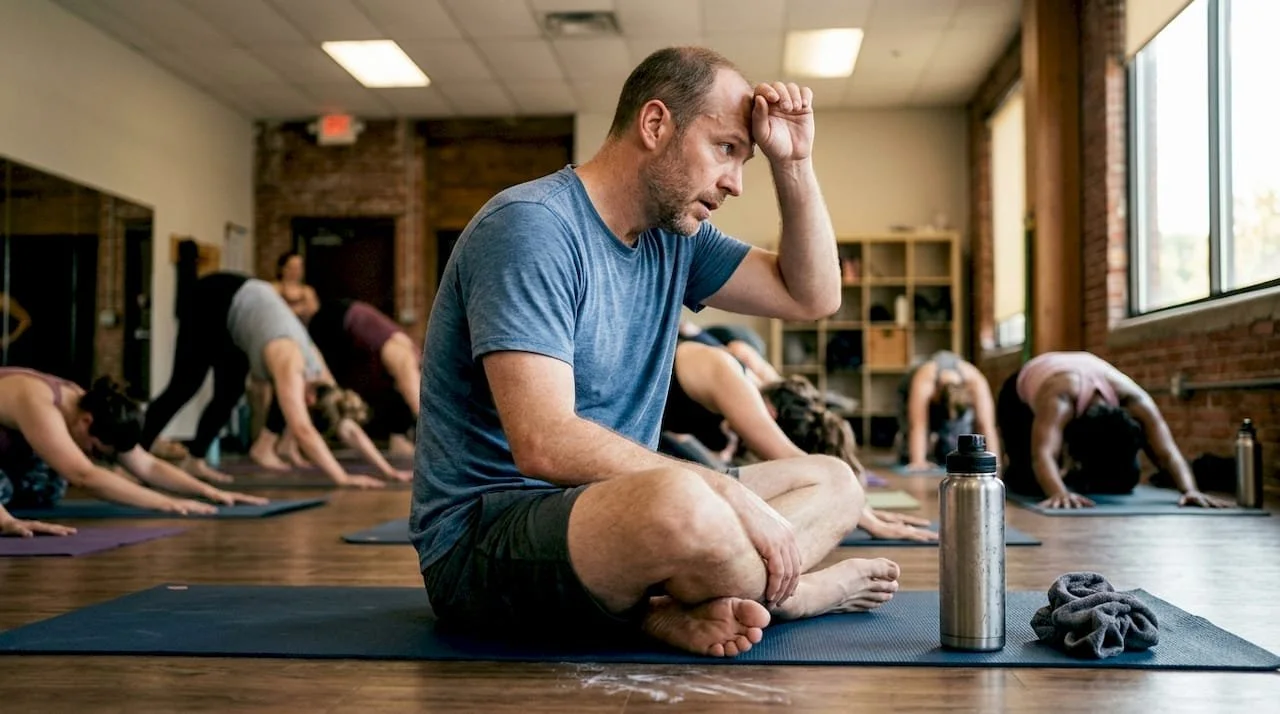
The most common in-class mistake is the "save it all for later" approach, where practitioners avoid drinking until they feel desperate, then gulp down half a bottle at once. Small, frequent sips support better fluid balance than large gulps during exercise. Aim for 3 to 4 ounces every 15 to 20 minutes rather than waiting until thirst becomes urgent.
Thirst is actually a late signal. By the time you feel genuinely thirsty during a hot yoga class, your fluid deficit is already building. Use your body's cues as a prompt to sip, not as a starting gun.
Pro Tip: Before class, mark your water bottle with a permanent marker at intervals. Set a quiet phone timer or use the natural breaks in class, like child's pose or transitions between sequences, as your reminder to take a few sips.
Not all drinks perform equally in a heated studio. Here's how your main options compare:
| Drink | Best for | Drawbacks |
|---|---|---|
| Plain water | Sessions under 60 minutes, light sweaters | No electrolyte replacement |
| Sports drinks | Long sessions, heavy sweaters | Often high in added sugar |
| Coconut water | Natural electrolyte boost | Lower sodium than sports drinks |
| Electrolyte tablets in water | Customizable, low calorie | Taste varies by brand |
For most hot yoga tips you’ll find, the recommendation is plain water for shorter sessions and an electrolyte option for anything over 60 minutes or if you're a heavy sweater. Coconut water is a solid middle ground because it delivers potassium and magnesium without artificial ingredients. Following hot yoga safety tips means choosing drinks that support your body, not just quench thirst.
Avoid carbonated drinks, caffeine, and anything with heavy sugar before or during class. These slow gastric emptying and can cause cramping or nausea in the heat.
Post-class recovery: Replenishing fluids and electrolytes
After a demanding hot yoga session, replenishing the fluids and minerals you've lost is your final key step. Many practitioners drink a bottle of water, feel okay, and call it done. That approach misses half the equation.
"Replacing both fluids and electrolytes after intense activity is essential for muscle recovery and avoiding cramps." — Mayo Clinic
The electrolyte recovery tips from Mayo Clinic reinforce what many hot yoga practitioners learn the hard way: water without minerals doesn't fully restore what sweat takes away. Your muscles need sodium, potassium, and magnesium to stop cramping and start recovering.
Here's what a smart post-class recovery routine looks like:
Within 30 minutes: Drink 16 to 24 ounces of water or coconut water to begin rehydration.
Add electrolytes: Use a sports drink, electrolyte tablet, or homemade mix of water, sea salt, lemon juice, and honey.
Eat within an hour: Choose foods that combine water content with natural minerals. Good options include watermelon, oranges, bananas, avocado toast, or a smoothie with leafy greens.
Monitor urine color: Pale yellow means you're on track. Dark yellow means you need more fluids. Clear can indicate overhydration.
Keep sipping for 2 to 3 hours: Recovery hydration isn't a one-drink fix. Continue sipping steadily.
Maintaining a solid hot yoga routine means treating recovery as seriously as preparation. Your hot yoga safety doesn't end when you roll up your mat. The hour after class is when your body is most receptive to replenishment, so use that window wisely.
Why most hot yoga practitioners in Philly underestimate hydration
Here's something we've observed consistently in the Philadelphia yoga community: most practitioners apply gym workout hydration logic to hot yoga, and it falls short every time. The advice to "drink eight glasses of water a day" was never designed for someone sweating through a 90-minute heated flow.
Philadelphia's seasonal swings make this worse. Summer humidity means your sweat doesn't cool you as efficiently, so your body produces even more of it. Winter sessions in a heated studio feel less intense from the outside, but the dry air and indoor heat still drain your fluids quietly.
We've seen students transform their practice simply by shifting from reactive to proactive hydration. Less cramping, sharper focus in the final sequences, and faster recovery the next day. These aren't dramatic changes. They're the result of consistent, intentional habits applied before, during, and after class.
Pro Tip: For one month, keep a simple log after each class. Note what you drank, when, and how your body felt. Patterns emerge quickly, and you'll start recognizing your personal hydration signals before they become problems. Check out our Philly yoga safety tips for more on building a sustainable practice.
The practitioners who treat hydration as a skill, not a chore, are the ones who show up consistently, progress faster, and enjoy their practice more. That's the real payoff.
Practice smarter at Amrita Yoga & Wellness
For those seeking dedicated support and a like-minded community, here's how Amrita can help.
At Amrita Yoga & Wellness, our instructors don't just guide you through poses. They help you understand how to care for your body in and out of the studio. Hydration guidance, class pacing, and personalized wellness support are woven into the experience we offer every student in Philadelphia.
Whether you're new to heated practice or looking to refine your routine, our team is here to support your goals. We even offer tarot readings and wellness workshops for students who want to explore the full spectrum of well-being. Book your next class and experience the difference that a knowledgeable, community-driven studio makes for your practice and your health.
Frequently asked questions
How much water should I drink before a hot yoga class?
Aim for 16 to 20 ounces of water 2 to 3 hours before class, then take only small sips in the final hour. Steady hydration throughout the day is more effective than drinking large amounts right before you begin.
What are the signs of dehydration during hot yoga?
Dizziness, headache, muscle cramps, and sudden fatigue are the most common warning signs. Because fluid loss in hot yoga happens quickly, don't wait for multiple symptoms before taking a break and sipping water.
Do I need sports drinks or just water for hot yoga?
For sessions over 60 minutes or if you sweat heavily, electrolyte drinks offer real benefits alongside water. Replacing fluids and electrolytes together supports muscle recovery better than water alone.
Are there foods that can help with hot yoga hydration?
Yes. Watermelon, oranges, cucumbers, and bananas all provide water content plus natural electrolytes like potassium and magnesium, making them ideal snacks before or after class.
What's the best hydration strategy during summer hot yoga sessions in Philadelphia?
Start your day well-hydrated, include electrolytes in your pre-class routine, sip small amounts every 15 to 20 minutes during class, and monitor your urine color as a reliable hydration check throughout the day.