Why barre classes are the ultimate low-impact workout
TL;DR:
Barre is a high-repetition, low-impact workout that builds strength, flexibility, and endurance.It is suitable for all levels due to its joint-friendly nature and customizable modifications.Group classes provide social support, accountability, and mental health benefits alongside physical results.
Barre classes have a reputation problem. Many people assume that because there's no jumping, no heavy lifting, and no sprinting involved, the workout must be easy. That assumption is wrong. Barre is a high-repetition, low-impact method that pushes muscles to fatigue in ways that surprise even seasoned gym-goers. For adults in Philadelphia looking for a workout that respects your joints while delivering real results in strength, flexibility, and mental well-being, barre deserves a serious look. This guide breaks down the mechanics, the benefits, and exactly how to get started.
Table of Contents
Key Takeaways
| Point | Details |
|---|---|
| Low-impact, high results | Barre strengthens and tones your whole body without stress on your joints. |
| Accessible for all levels | Barre is safe and modifiable, making it ideal for beginners and all ages. |
| Boosts mental health | Regular barre practice decreases stress and builds community support. |
| Community motivation | Group classes in Philadelphia foster accountability, fun, and lasting motivation. |
What is a barre class? The basics explained
Now that you know barre's reputation doesn't capture its full potential, let's get clear on what actually happens in a barre class.
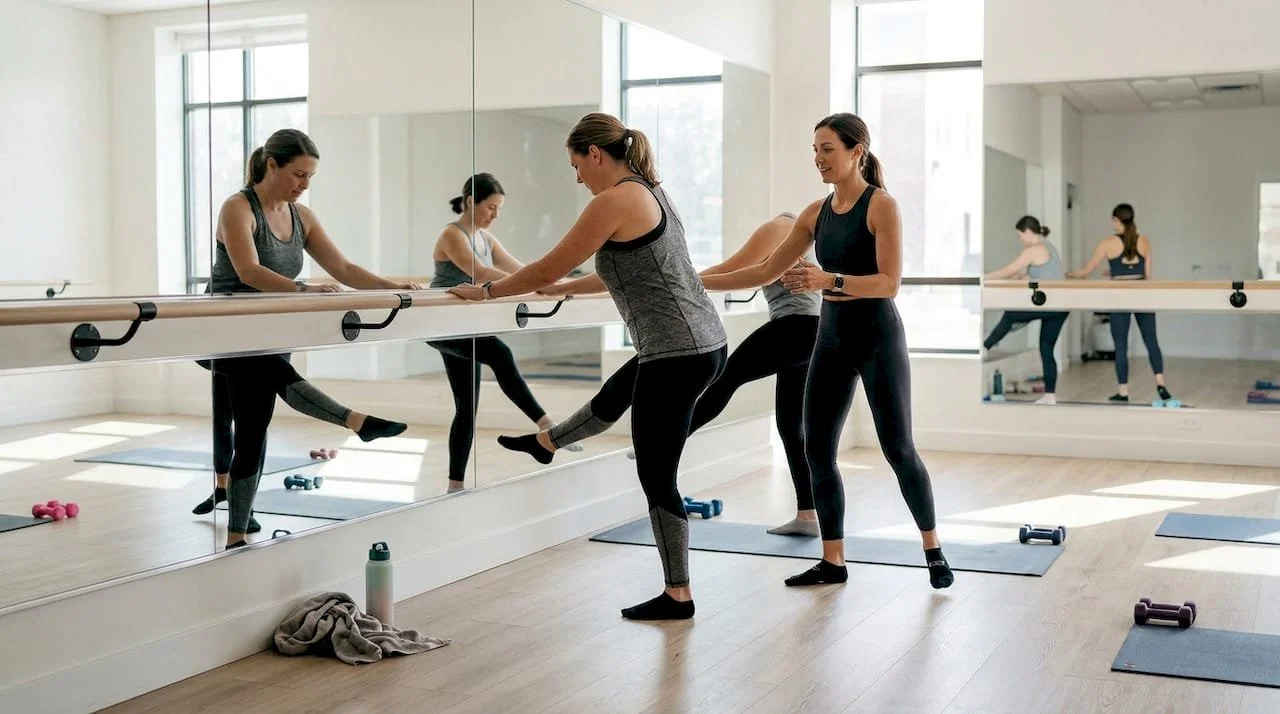
A barre class is a structured group fitness session that uses a ballet barre, a mat, and sometimes light hand weights or resistance bands. Classes typically run 45 to 60 minutes and move through a full-body sequence. You don't need ballet training or dance experience. The barre is simply a prop for balance and support.
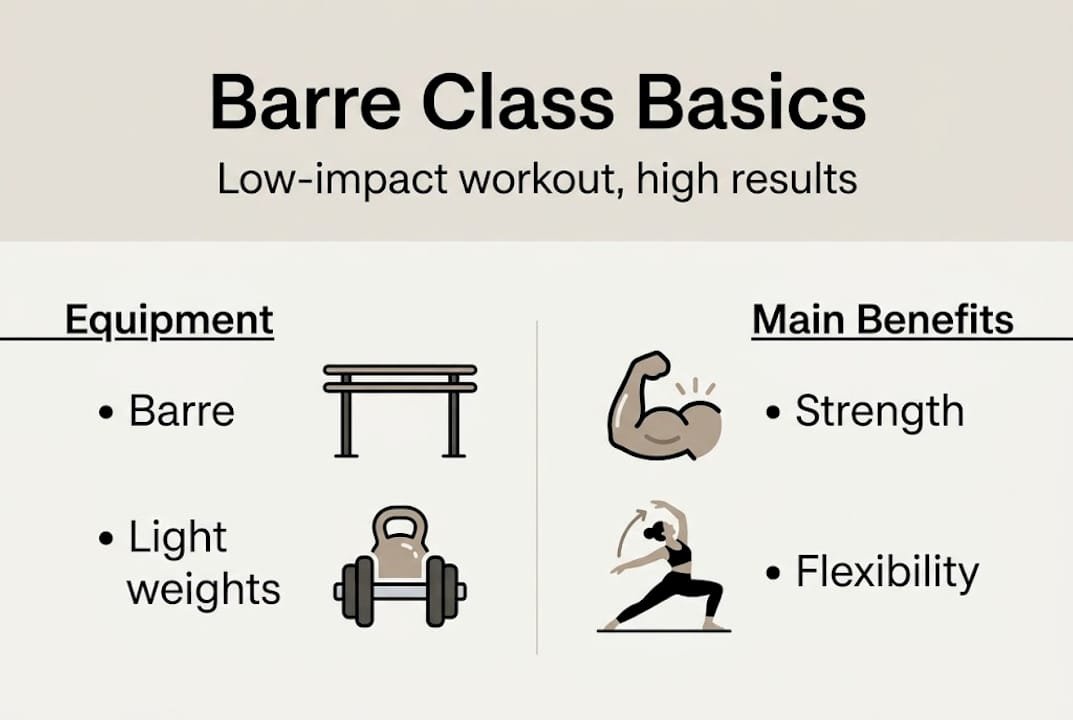
The magic of barre comes from its blend of movement styles. As barre fitness basics shows, barre draws from ballet technique, Pilates core work, yoga stretching, and light strength training. These elements combine into a workout that is both precise and demanding. Barre classes utilize high-repetition, small-range isometric holds and pulses at the ballet barre, blending ballet, Pilates, yoga, and light strength training to target full-body muscles with low joint impact.
Here's what a typical barre class looks like from start to finish:
Warm-up: Light cardio and mobility work to prepare joints and muscles
Upper body section: Arm work with light weights targeting shoulders, biceps, and triceps
Barre work: Isometric holds and pulses targeting glutes, thighs, and calves
Core section: Pilates-inspired abdominal and back exercises on the mat
Cool-down and stretch: Deep stretching to improve flexibility and reduce soreness
| Class element | Primary muscles targeted | Movement style |
|---|---|---|
| Warm-up | Full body | Dynamic mobility |
| Arm series | Shoulders, biceps, triceps | Light weights, pulses |
| Barre standing work | Glutes, quads, hamstrings | Isometric holds |
| Mat core work | Abs, lower back, hips | Pilates-inspired |
| Stretch and cool-down | Full body | Yoga-based stretching |
For a broader look at class formats and styles, exploring barre classes gives you a solid overview of what different studios offer. The barre benefits explained breakdown also helps set expectations before your first session.
Physical advantages of barre: Strength, flexibility, and more
With a sense of what barre involves, let's examine the science behind its most celebrated physical benefits.
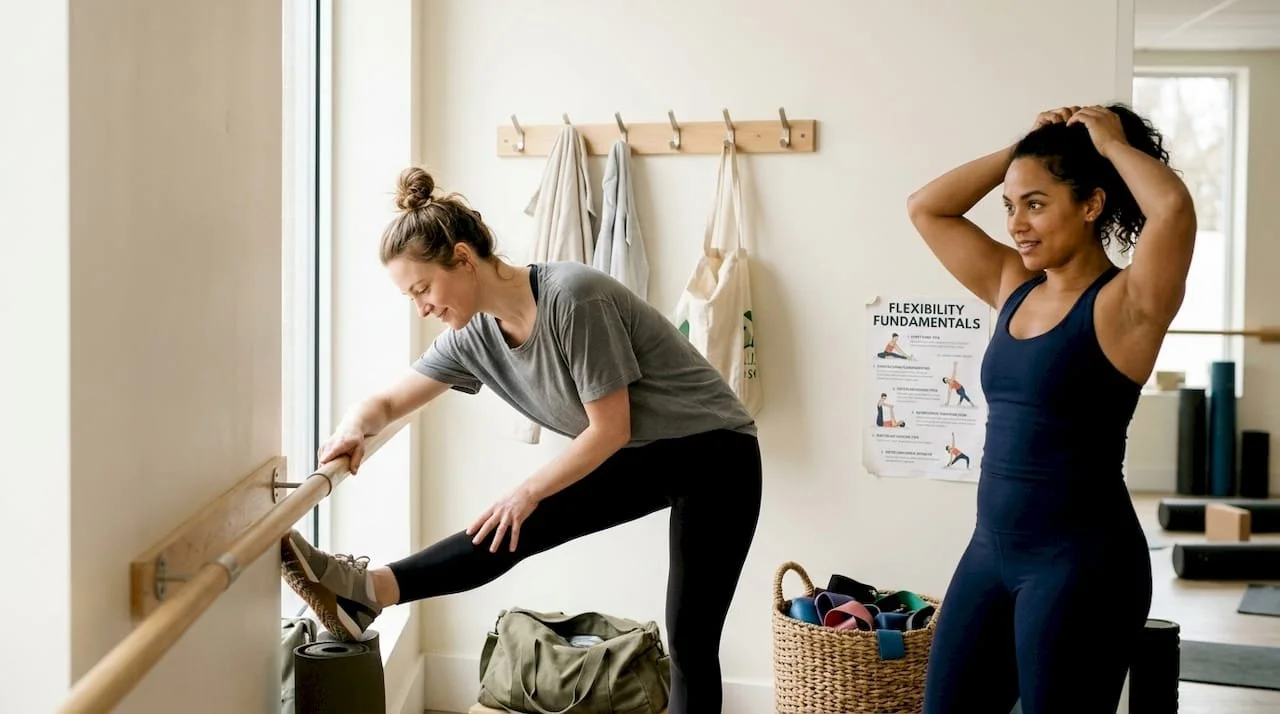
Barre builds lean muscle without bulk. Because you're using light resistance and high repetitions, your muscles reach fatigue without the heavy loading that creates larger muscle mass. This is exactly what many adults are looking for. Muscular strength and endurance improve through high-rep, low-weight fatigue, which trains the slow-twitch muscle fibers responsible for endurance and tone.
Here are the key physical results you can expect from consistent barre practice:
Improved core stability from constant engagement of deep abdominal and back muscles
Better posture as glutes, upper back, and shoulder muscles strengthen
Increased flexibility through integrated stretching after each muscle group is worked
Toned thighs and glutes from isometric holds that few other workouts replicate
Stronger arms without the bulk that comes from heavier training
A clinical barre study found measurable improvements in muscular endurance, flexibility, and body composition in participants who trained consistently. These aren't just anecdotal claims from fitness influencers. The research supports what instructors have observed for years.
The strength and flexibility benefits go beyond aesthetics too. Stronger glutes and core muscles directly improve how you move through daily life, from lifting groceries to sitting at a desk without back pain. Explore barre health outcomes to see how these physical gains translate into real-world function.
Pro Tip: Consistent proper form matters far more than adding extra weight. Lowering your range of motion slightly and holding the position longer will challenge your muscles more effectively than grabbing heavier dumbbells.
Why barre is the go-to low-impact option for all levels
Barre's physical advantages are even more impactful because the format is widely accessible. Let's see why it's the smart choice for so many.
The defining feature of barre is what it doesn't include. There's no jumping, no running, and no high-force movements that stress the knees, hips, or lower back. This makes it genuinely joint-friendly, not just marketed as such. Low-impact barre reduces injury risk, alleviates joint pain, and is suitable for injury recovery, pre and postnatal fitness, beginners, and older adults.
Barre works well for a wide range of people:
Adults managing knee or hip pain
People returning to exercise after an injury or surgery
Pregnant or postpartum individuals looking for safe movement
Older adults focused on balance and stability
Complete beginners with no prior fitness background
Athletes using barre as active recovery between intense training days
Here's how barre compares to two other popular low-impact options:
| Feature | Barre | Pilates | Yoga |
|---|---|---|---|
| Joint impact | Very low | Very low | Low |
| Group class setting | Yes | Sometimes | Yes |
| Cardio element | Mild | Minimal | Minimal |
| Strength focus | Strong | Strong | Moderate |
| Flexibility focus | Strong | Moderate | Strong |
| Beginner-friendly | Yes | Yes | Yes |
Instructors at studios offering barre in Philadelphia are trained to offer modifications in real time. If a movement feels wrong for your body, there’s always an alternative. Starting barre as a beginner is far less intimidating than most people expect, especially in a studio that prioritizes inclusivity.
Pro Tip: Modifications are not a sign of weakness. They’re a sign of smart training. Listening to your body and adjusting the movement keeps you consistent and injury-free over the long term.
Mental health, well-being, and the community effect
Physical improvement only scratches the surface. Barre's real strength may lie in its mental and social advantages.
Group fitness classes create accountability in a way that solo workouts rarely do. When you show up regularly to the same class with the same people, you build relationships that make skipping feel like letting someone down. That social pressure is actually a powerful motivator, and it's one of the most underrated benefits of studio-based barre.
The mental health benefits of barre extend well beyond mood. Research published in a peer-reviewed journal found that barre-style training reduced depression and inflammation, improved cardiovascular and lung function, and even helped with urinary incontinence in clinical populations. These are meaningful health outcomes, not minor perks.
"Participants in structured barre programs showed significant reductions in depression scores and inflammatory markers, alongside improvements in physical function and quality of life." — Journal of Clinical Medicine, 2025
The community advantages of attending group barre classes include:
Accountability: Knowing others expect you builds consistency
Motivation: Energy in a group setting pushes you further than you'd go alone
Social connection: Shared effort creates genuine friendships
Fun: Classes with music, movement, and community simply feel better than solo gym sessions
Philadelphia studios, including those reviewed on local community platforms, consistently highlight the welcoming, inclusive atmosphere as one of the top reasons members return week after week.
Getting started with barre: What to expect and practical tips
Ready to experience barre for yourself? Here's exactly how to get started and make the most of your first class.
The barrier to entry for barre is genuinely low. You don't need special equipment, prior experience, or a high fitness level. What you do need is a plan for showing up prepared and confident.
Follow these steps for your first barre class:
Book in advance through the studio's online scheduling system to secure your spot
Wear fitted, stretchy clothing that won't shift during floor work or barre holds
Bring grip socks since most studios require them for hygiene and safety on the barre floor
Arrive 10 minutes early to introduce yourself to the instructor and mention any injuries or limitations
Expect to shake during isometric holds, that's your muscles working, not a sign you're doing it wrong
Use modifications freely and don't compare your range of motion to others in the class
For long-term progress, consistency is key. Two to three classes per week gives your muscles enough stimulus to adapt without overtraining. Philadelphia's studio community supports that consistency by making classes feel like something you look forward to rather than a chore.
Explore the barre for beginners guide for a deeper look at what to expect in your first few weeks. And once you're hooked, the maintaining barre routine resources will help you build a sustainable long-term practice.
Pro Tip: The fastest progress comes from regular attendance, not from pushing harder in a single session. Show up consistently, and the results will follow.
Why barre's reputation as 'gentle fitness' misses its true power
Here's the uncomfortable truth: barre gets dismissed because it doesn't look hard from the outside. No barbells, no sweat-soaked sprints, no dramatic movements. So people assume it's easy. Those people have never held a plie pulse for 90 seconds.
The real barre results tell a different story. Clinical research documents measurable gains in strength, endurance, flexibility, and mental health. Instructors who work with diverse populations, including men, athletes, older adults, and postpartum individuals, consistently report that barre challenges everyone regardless of their starting point.
The "gentle fitness" label also carries a gendered bias that keeps people away who would genuinely benefit. Barre is not a women's workout. It's a precision workout. The same principles of time under tension and controlled range of motion that elite athletes use in physical therapy show up in every barre class.
What separates those who see results from those who don't isn't talent or prior fitness. It's consistency, willingness to use modifications, and openness to instructor cues. Philadelphia's group studio culture makes all three of those easier to maintain because you're not doing it alone.
Try a barre class in Philadelphia
Inspired to discover barre's advantages for yourself?
At Amrita Yoga & Wellness, we offer community-focused barre sessions designed for all fitness levels, including complete beginners. Our Philadelphia studio is built around inclusivity, expert instruction, and a group environment that makes showing up feel genuinely good.
Whether you're managing joint pain, rebuilding fitness after a break, or simply looking for a workout that delivers results without punishment, our local barre classes give you the structure, support, and community to make it stick. Book your first class today and find out firsthand why barre outperforms its reputation every single time.
Frequently asked questions
Is barre effective for weight loss?
Barre supports weight management by building lean muscle, increasing metabolism, and burning calories in a low-impact format that's sustainable long term.
Can beginners try barre classes?
Yes, barre is beginner-friendly with modifications built into every class, making it accessible regardless of your current fitness level or experience.
How often should I take barre classes to see results?
Attending 2 to 3 classes per week is the sweet spot. Consistency drives results, with most people noticing improvements in strength and flexibility within 4 to 6 weeks.
Do you need dance experience for barre?
None at all. Barre is inclusive and requires no prior dance or fitness background, and instructors guide you through every movement from the start.