The Amrita Journal
Explore thoughtful stories, practical wellness guidance and inspiring ideas to support your movement, mindfulness and everyday wellbeing at Amrita.
How to start online yoga classes: a step-by-step guide
TL;DR:
Starting small with live classes and authentic community-building creates a sustainable online yoga practice.Preparing your setup, testing feedback, and focusing on trust over follower count leads to long-term success.
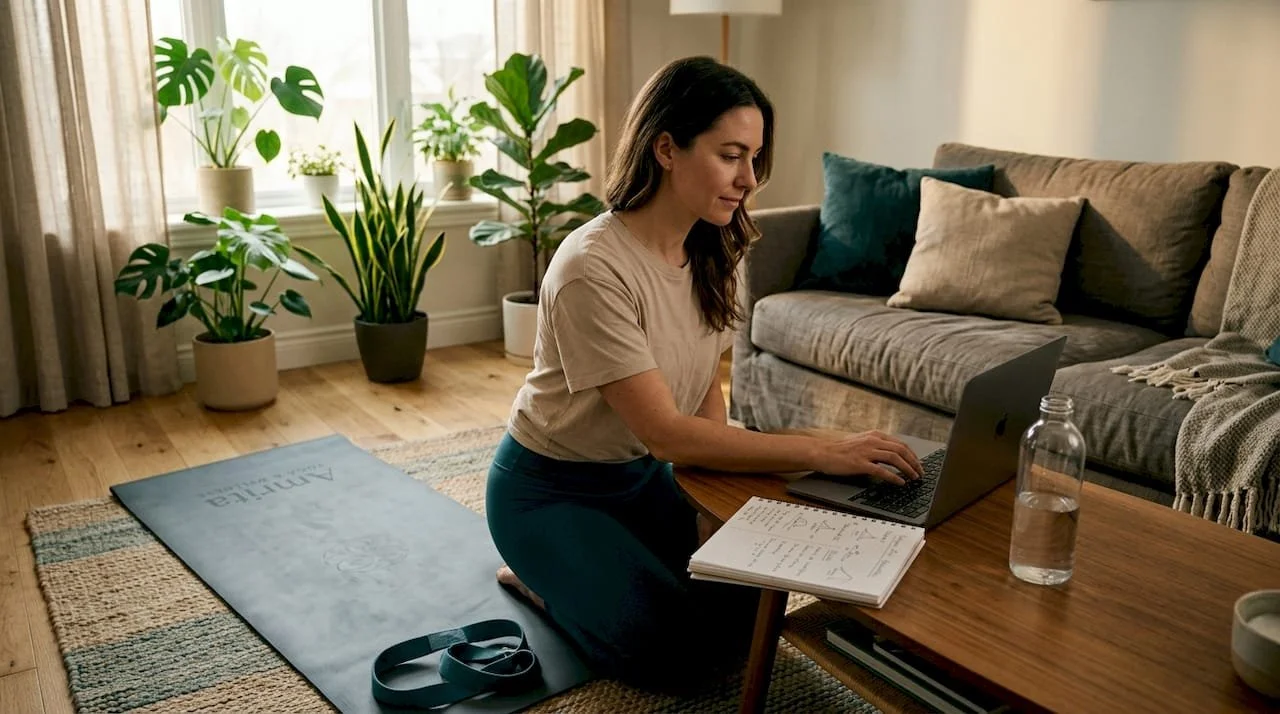
You've been practicing or teaching yoga for a while now, and the idea of offering classes online feels both exciting and completely overwhelming. The tech questions pile up fast: Which platform? What camera? How do you keep students engaged when you can't physically adjust their posture? If you're a Philadelphia-based yoga enthusiast or emerging teacher, this guide walks you through every stage of launching online yoga classes that feel authentic, community-centered, and built to last.
Table of Contents
Key Takeaways
| Point | Details |
|---|---|
| Start with a pilot group | Begin with 5–15 students for valuable feedback and a lower-risk launch. |
| Focus on community | Cohort-based classes and discussion spaces boost engagement and completion. |
| Invest in clear audio and video | Prioritize camera angles, lighting, and a reliable mic to improve safety and communication. |
| Consider credentials for credibility | If you plan to use Yoga Alliance branding, ensure you meet all certification and compliance requirements. |
| Build sustainable revenue | Recurring memberships, combined with an owned platform, lead to higher long-term earnings. |
Clarifying your vision and requirements
Before you film a single downward dog, you need a clear picture of what you're building. The biggest mistake new online teachers make is jumping straight to "which platform should I use?" before answering more fundamental questions: Who are you teaching? What style of yoga? And what kind of experience do you want your students to have?
Start by writing down your teaching focus. Are you leaning into restorative yoga for busy Philly professionals? Hot yoga fundamentals? A blend of barre, pilates, and vinyasa? When you define your niche early, choosing the right yoga classes for your audience becomes much cleaner. Your niche also shapes your entire tech and format decision.
Next, decide on your class delivery model:
Live classes via Zoom or Google Meet offer real-time feedback and community energy
Recorded classes let students practice on their schedule, but require higher production quality
Hybrid models give you both: a live session that gets repurposed as an on-demand recording
According to a practical framework for online yoga businesses, you should plan your offer including live versus recorded format, pricing, and the fundamental tech and space requirements before anything else. Skipping this step leads to expensive pivots later.
Here's a quick-reference comparison for your home studio setup:
| Class model | Camera needed | Lighting priority | Internet speed | Platform examples |
|---|---|---|---|---|
| Live only | Webcam or smartphone | Natural or ring light | 10+ Mbps upload | Zoom, Google Meet |
| Recorded only | DSLR or mirrorless | Full studio lighting | Standard | Vimeo, Teachable |
| Hybrid | Webcam or DSLR | Natural or ring light | 10+ Mbps upload | Zoom plus Teachable |
| On-demand library | DSLR preferred | Full studio lighting | Standard | Kajabi, Podia |
Your at-home studio doesn't need to be perfect from day one. A clean background, solid natural light, a stable internet connection, and a phone or laptop camera are genuinely enough to start. Also think early about scheduling online yoga classes so students can build consistent habits around your offerings.
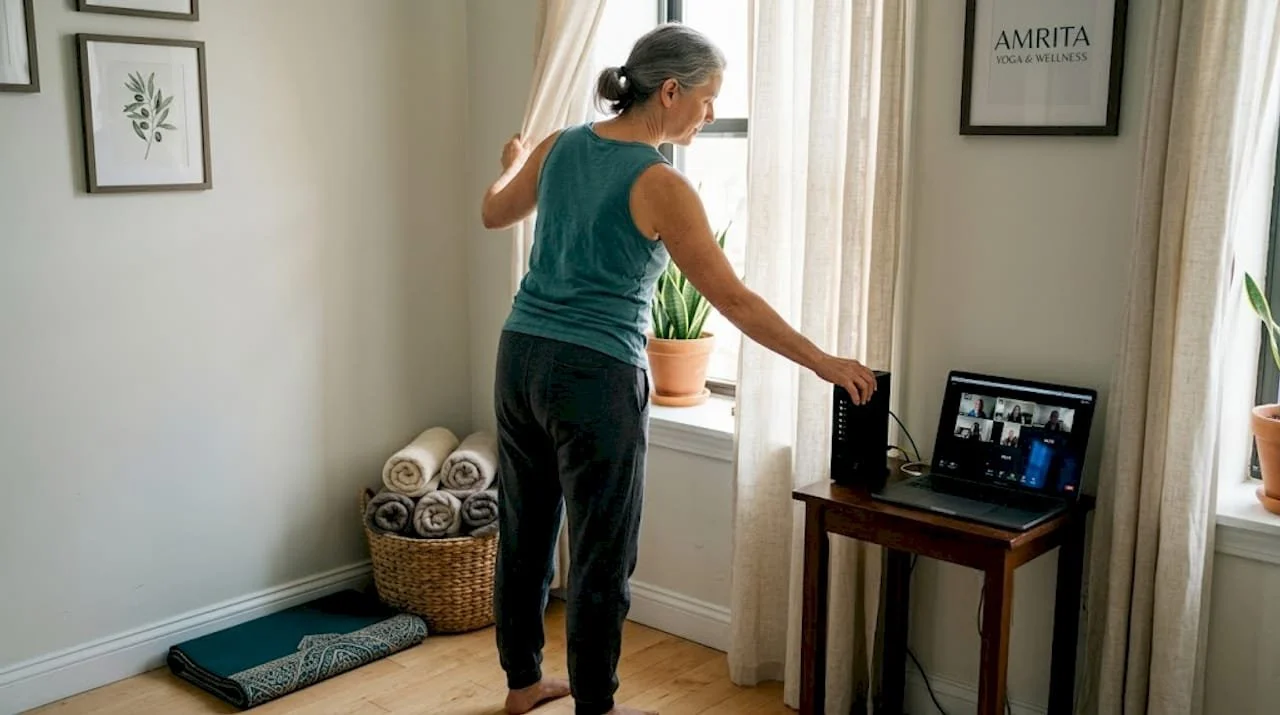
Pro Tip: Start with what you already own and record a short five-minute test video to identify your biggest weak spots. Most of the time it's audio, not video quality, that makes or breaks the student experience.
Crafting your first offerings and gathering feedback
With your vision mapped out, the next move is not to build a polished 12-week course. It's to test your teaching live, with real people, in a low-pressure environment. This protects your time and gives you the honest feedback that no amount of planning can replace.
The goal is a pilot group: a small set of students who agree to take your initial classes at a reduced price in exchange for their detailed feedback. Here's exactly how to run it:
Identify 5 to 15 people from your existing network, social community, or local Philadelphia contacts
Offer a 2 to 4 week introductory series at 50% of your planned price
Run every session live so you can observe engagement in real time
After each class, send a short follow-up form with open-ended questions
After the full pilot, hold a 15-minute group debrief call to collect verbal impressions
Document every piece of feedback and group themes before building your next iteration
The reasoning is simple: starting small reduces risk, and running a pilot group with genuine feedback before scaling any course or larger offering is what separates instructors who grow sustainably from those who burn out after month three.
What kinds of feedback actually matter? Focus on:
Was the pacing too fast, too slow, or just right?
Could students hear you clearly throughout the session?
Did the class structure feel welcoming to different experience levels?
What was the single most valuable moment of the class?
What would they change if they could change one thing?
Pro Tip: Avoid yes/no survey questions. Ask things like "Describe a moment during class when you felt confused" or "What would have made today's session more effective for your practice?" Open-ended questions surface the insights that multiple-choice answers completely hide.
Most successful online yoga teachers use live teaching first to build their authentic library of cues, sequences, and student responses. Once you've refined your live sessions, you can record evergreen content that reflects your actual teaching style, not a polished but hollow performance. For more on scaling this into a thriving practice, explore tips for growing a yoga business.
Designing engaging, community-driven classes
Launching your first classes is only half the challenge. Keeping students coming back, week after week, requires intentional curriculum design and a genuine sense of community. This is where many online yoga programs fall apart: they focus entirely on content quality and forget that students stay for connection, not just sequences.
The structure of your program matters enormously. Here's how the three main models compare:
| Model | Completion rate | Community feel | Flexibility | Best for |
|---|---|---|---|---|
| Scheduled cohort | Highest | Strong | Low | New teachers building trust |
| Open access | Moderate | Moderate | High | Established brands |
| On-demand only | Lowest | Weak | Highest | Supplemental content |
"Online yoga courses that include cohort structure and community tend to have higher completion rates than open access or on-demand-only models, with discussion spaces alone showing completion rates of 65.5% versus 42.6%."
The data makes a strong case: when students feel accountable to a group and a schedule, they finish what they start. For a Philadelphia audience that values neighborhood connection and shared wellness experiences, a cohort model mirrors the studio environment in a way that solo on-demand watching simply cannot.
To build genuine community into your online class design:
Open every live session with a two-minute check-in question (something personal, not yoga-related)
Create a private Facebook group, Discord server, or forum where students post between sessions
Use breakout rooms during longer Zoom classes so students briefly connect in pairs
Celebrate milestones publicly, a student's tenth class, their first crow pose
End classes with a short cool-down circle where students share one word about their experience
One critical curriculum note: not all of your students will be watching their screen during practice. Strong verbal cueing is not optional when teaching online. Describe every transition and alignment cue as if your students have their eyes closed, because many of them do. Read more about building consistent wellness access through membership models that support this kind of sustained engagement.
You can also browse yoga membership ideas to see how other teachers are structuring recurring student relationships around both live and asynchronous content.
Ensuring safety, professionalism, and credibility
Engagement matters, but nothing derails an online yoga career faster than a safety incident, a credential misrepresentation, or unclear instruction that causes a student to get hurt. Professionalism is not just about polished graphics or a clean website. It's about earning trust through clarity, competence, and honest communication.
Start with your technical setup. To give real alignment feedback during live classes, your filming setup must allow the teacher to clearly see students' postures. That means:
Position your camera at mat height, not desk height, so you see the body at the same level
Use a wide-angle lens or back your camera up far enough to capture your full body in frame
Ensure the background behind you is uncluttered so postures read clearly
Test your microphone volume at conversational pace, loud cuing often clips and distorts
Light your face AND body from the front, never from behind (no window at your back)
On credentials: if you plan to market yourself using titles like RYT-200 or RYT-500, Yoga Alliance's RYT registration requires completing training at an officially registered yoga school (called an RYS), and your certificate must include the RYS name, authorized signature, training hours, and proper documentation.
"Non-compliance with Yoga Alliance standards, including misuse of RYT trademarks or failure to meet documentation requirements, risks credential revocation and public suspension from the Yoga Alliance registry."
This matters because students increasingly check credentials before committing to an online program. Even if you choose not to register with Yoga Alliance, being honest about your training background builds far more long-term trust than vague language about experience. Check out resources around online yoga compliance and yoga safety and instructor success to stay current on best practices.
Earning sustainably: Memberships, marketing, and revenue streams
Once your teaching is solid and your community is forming, it's time to think about sustainable income. The goal is to build a business that doesn't collapse the moment your social media reach dips.
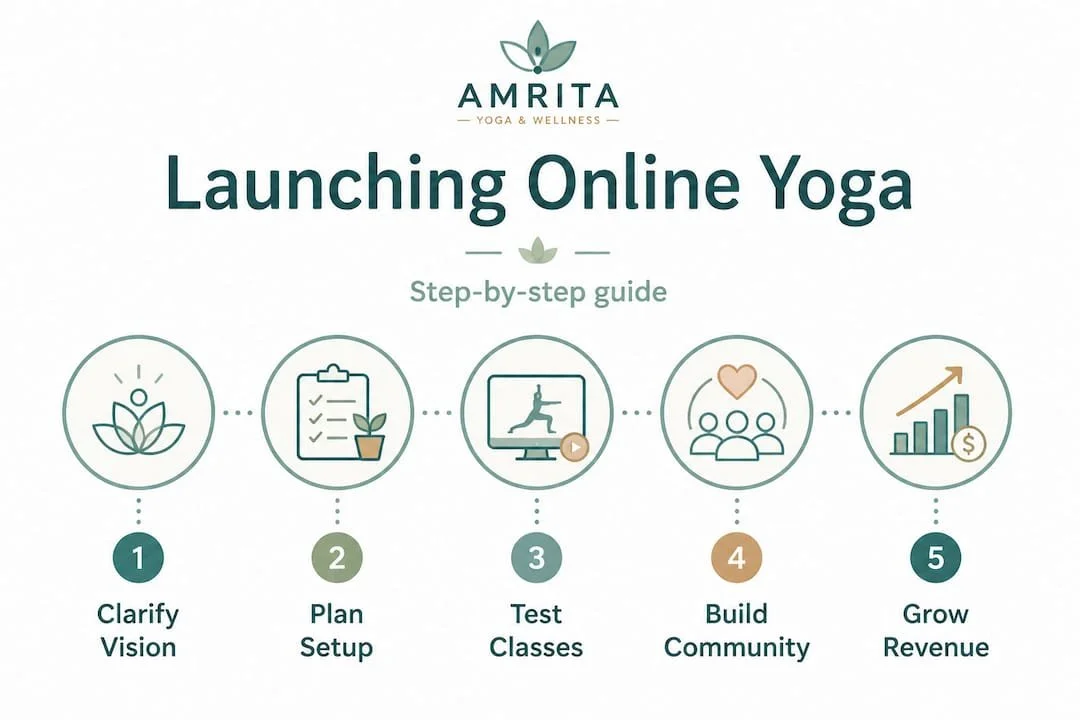
A well-designed membership goes beyond just a video library. A practical membership structure for online yoga includes recurring weekly live practice, an on-demand content library, and a community space. That combination keeps students engaged at multiple levels and justifies consistent monthly pricing.
Here's a realistic income progression for online yoga teachers based on industry data:
| Business maturity | Monthly income range | Key driver |
|---|---|---|
| Year 1 | $300 to $1,500 | Small pilot groups, early memberships |
| Years 2 to 3 | $2,000 to $5,000 | Growing library, referrals, tiered offers |
| Year 4 and beyond | $5,000 to $15,000+ | Brand authority, passive content, larger cohorts |
These income benchmarks vary based on niche, marketing consistency, and how well you retain students month over month. Don't compare your year one to someone else's year four.
For sustainable marketing and revenue growth, build your own platform and audience rather than relying exclusively on Instagram or TikTok algorithms. Own your email list from day one.
Essential local and digital marketing basics for Philadelphia-based teachers:
Partner with local wellness spaces, coffee shops, and community centers for cross-promotion
Collect email addresses at every touchpoint and send a short weekly wellness note
Post consistently on one social platform rather than spreading thin across five
Ask every satisfied student for a testimonial and display it prominently
Offer a free one-class trial to remove the barrier for first-time online students
More on building your recurring revenue model lives in the yoga membership resources section of our blog.
Pro Tip: Your email list is the only audience you truly own. Social platforms change their algorithms constantly. A list of 200 engaged students who open your emails is worth far more than 2,000 passive followers who never click anything.
Why starting small and community-first always wins in online yoga
Here's an uncomfortable truth that most "how to build a yoga business" content glosses over: follower counts mean almost nothing when it comes to building a sustainable, fulfilling online yoga practice.
We've seen this pattern repeatedly among Philadelphia-area instructors. Teachers who launched with a big Instagram push but skipped the pilot group phase often ended up with polished content that nobody finished, expensive platforms they didn't fully use, and a creeping sense that online yoga just doesn't work. The problem was never online yoga. The problem was launching big before building trust.
The teachers who build something lasting almost always start the same way: a small group, live sessions, genuine conversations, and an honest feedback loop. This mirrors what growing a yoga business actually looks like in practice, not theory.
Live classes are the foundation. When you teach live, you feel the rhythm of your students. You notice when silence means confusion versus contemplation. You adapt in real time. That responsiveness is exactly what builds the trust that converts a one-time attendee into a yearly member. Recorded content, no matter how beautiful, cannot replicate that exchange.
Chasing social media numbers before you've nailed your live teaching is like rehearsing a performance before you've written the script. The metrics look like momentum, but they don't translate to revenue or community. Five students who show up every week and tell three friends about your class will build your business faster than 500 passive followers who double-tap a reel.
The Philadelphia yoga community, in particular, responds to authenticity and neighborhood roots. Start with the people already around you. Offer them something real, small, and personal. The growth follows from there, not the other way around.
Ready to start your own online yoga journey?
Taking your yoga practice or teaching online doesn't have to be a solo effort. The knowledge, community, and local expertise you need are already here.
At Amrita Yoga & Wellness, we've built a space where holistic wellness practitioners and students of every level can connect, learn, and grow. Whether you're looking to deepen your own practice before teaching, explore our diverse class offerings, or add a unique experience like tarot readings to your wellness journey, our Philadelphia studio supports you every step of the way. Browse our current schedule, community workshops, and member resources to find your ideal starting point.
Frequently asked questions
What essential equipment do I need to teach online yoga classes?
You'll need a device with a camera, strong and front-facing lighting, a stable internet connection, and a dedicated external microphone for clear audio. A practical setup also includes a quiet, uncluttered space where your full body is visible on camera.
How many students should I start with for my first online yoga class?
A pilot group of 5 to 15 students gives you the most honest feedback with the lowest financial and operational risk. Starting with this size lets you run the full program, gather detailed responses, and refine before opening to a larger audience.
Do I need a Yoga Alliance credential to teach online yoga?
No formal registration is required to teach online, but if you want to market yourself as an RYT or use Yoga Alliance trademarks, you must meet their full credentialing standards and documentation requirements.
How much can I expect to earn teaching online yoga?
First-year teachers typically earn between $300 and $1,500 per month, scaling to $2,000 to $5,000 in years two and three. With a deeper library and community, experienced teachers can reach $5,000 to $15,000 or more per month.
What helps students stick with online yoga classes?
Scheduled live sessions with a community component keep students far more consistent than on-demand formats alone. Courses with discussion spaces show completion rates of 65.5% compared to 42.6% for those without community features.
Recommended
Yoga in Philadelphia City Center: Classes and Community
TL;DR:
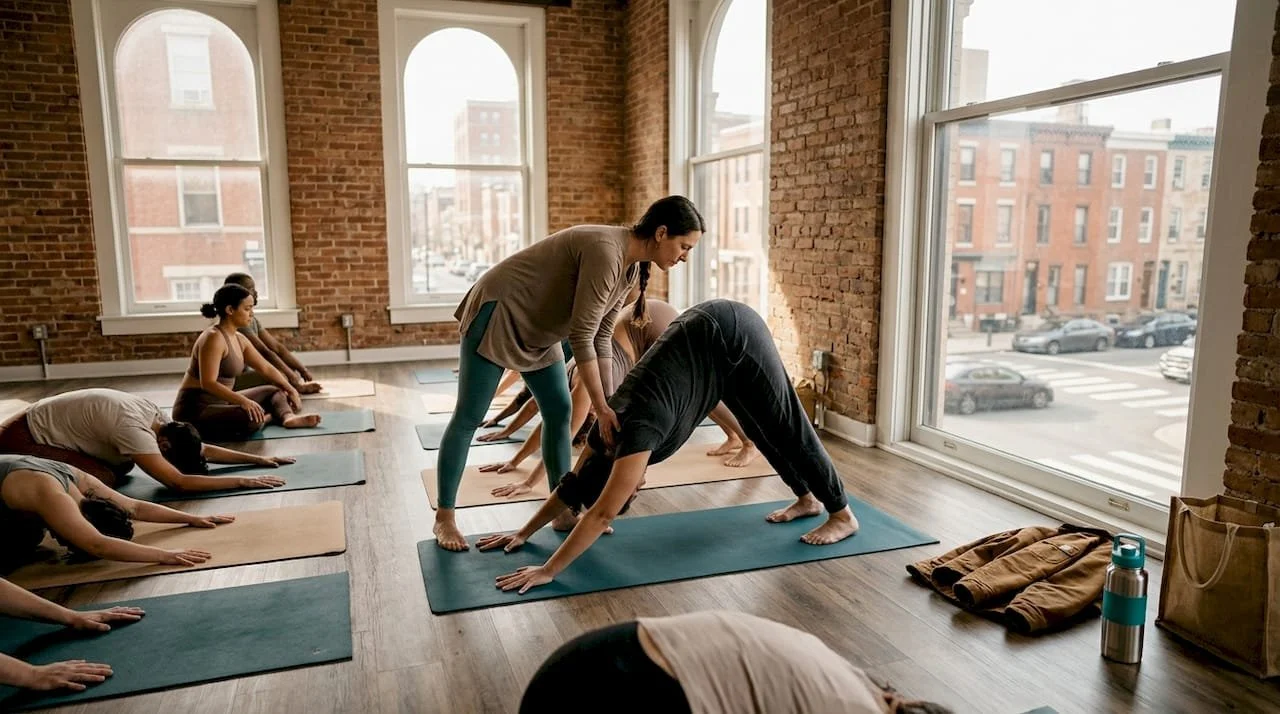
Many people believe Philadelphia's city-center yoga studios are expensive, crowded, or only for advanced practitioners, which discourages new students. In reality, these studios are accessible, diverse, and welcoming for all experience levels, offering flexible schedules and community connections that promote long-term practice. Building relationships and exploring different styles in these urban spaces can transform your wellness routine and enhance your overall resilience and presence.
Many people assume that yoga studios in Philadelphia's city center are crowded, expensive, or strictly for advanced practitioners who can already touch their toes. That assumption keeps a lot of people on the sidelines. The truth is, city-center yoga in Philadelphia is more accessible, welcoming, and varied than most people expect. Whether you're brand new to the mat or you've been practicing for years, the neighborhood studios tucked into Center City and Rittenhouse Square offer something genuinely worth showing up for.
Table of Contents
Key Takeaways
| Point | Details |
|---|---|
| City-center yoga is accessible | Philadelphia's city center offers welcoming studios for all experience levels. |
| Choose the right style | Explore different yoga styles to find classes that suit your goals and personality. |
| Community matters | Joining a yoga community boosts motivation, well-being, and lasting transformation. |
| Try before you commit | Most city studios offer introductory sessions or weeks for new students to experience different classes. |
Why choose yoga in Philadelphia city center?
Philadelphia's city center is not just a place to commute through. It's a full wellness ecosystem. The density of studios within walking distance of public transit means you can fit a yoga class into a Tuesday lunch break, an early Saturday morning, or a weekday evening without rearranging your entire schedule. That accessibility alone changes the game for a lot of people who've always meant to start but never found the right moment.
What makes this stretch of the city especially appealing is the variety of teaching approaches available in a compact area. You'll find studios focused on alignment, others built around high-energy flow, and community spaces that feel more like gathering places than gyms. This means you're not locked into one style just because it's the only option nearby.
Here's a quick look at what city-center yoga consistently delivers:
Multiple class times daily, often from early morning through evening
Transit-accessible locations near SEPTA bus and subway stops
Beginner-friendly programs alongside advanced offerings
Workshops, events, and community gatherings beyond regular classes
Instructors with diverse training backgrounds and teaching styles
Smaller class sizes that allow for more personal attention
The community you build in a city-center studio tends to feel more sustained than what you'd find at a one-off gym class. You see the same faces week after week. Instructors learn your name and your practice. That familiarity builds real accountability.
One great example of this is what practitioners say about Maha Yoga in Rittenhouse Square, which is praised for its welcoming studio community and alignment-based approach that works especially well for people recovering from injuries or just starting out. The vibe is described as low-key, the instructors as chill and knowledgeable, and the class variety as genuinely suited to all levels.
"The classes are really approachable. I walked in nervous and walked out feeling like I'd found my people." — a common sentiment from city-center yoga newcomers.
If you're still weighing your options, reading up on choosing a Philadelphia yoga program can help you narrow things down before you even step inside a studio door. And if you'd rather browse by neighborhood first, exploring local yoga classes gives you a useful starting point.
Popular yoga studios and what they offer
Now that you know why city-center yoga is worth exploring, here's a clearer picture of what you'll actually find when you walk through the door.
The studios concentrated in Center City and Rittenhouse range from boutique alignment-focused spaces to larger community studios with packed schedules. The distinction matters because it shapes your experience entirely. A studio focused on precise alignment will slow things down and correct your form carefully. A flow-based studio will move you through sequences at a brisker pace. Neither is better. They serve different needs.
Here's a general overview of what you can expect from the most common studio types in this area:
| Studio type | Class style | Price range | Best for |
|---|---|---|---|
| Alignment-based studio | Slow, methodical, detailed cueing | $20–$30 per class | Beginners, injury recovery |
| Vinyasa flow studio | Dynamic, breath-linked movement | $18–$28 per class | All levels, stress relief |
| Community yoga studio | Mixed levels, affordable drop-in | $10–$20 per class | Budget-conscious students |
| Hot yoga studio | Heated room, detox-focused | $22–$35 per class | Those seeking intensity |
| Specialty/fusion studio | Yoga plus barre, pilates, or tai chi | $20–$32 per class | Practitioners wanting variety |
The welcoming community at Maha Yoga is a recurring theme in local recommendations, especially for people who feel anxious about walking into a new studio. That matters more than most people realize before they try it. A good teacher in a supportive room can shift your relationship with your own body in a single class.
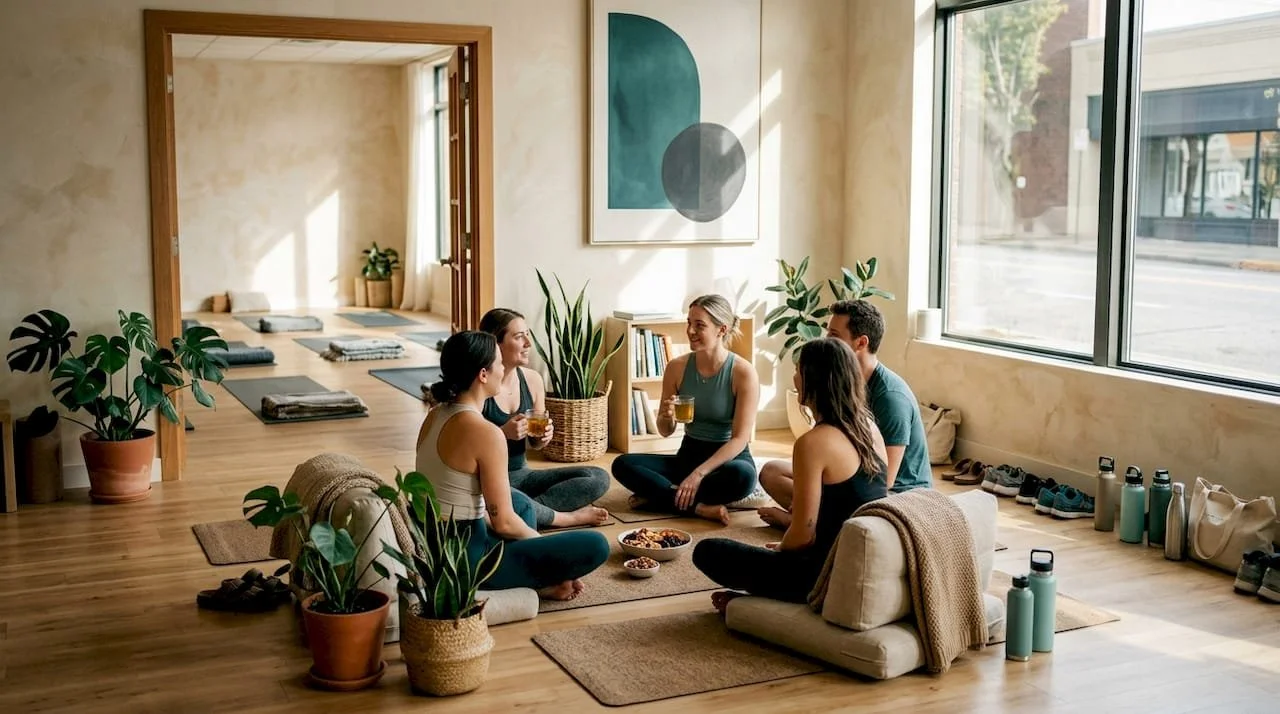
When you're looking at studios, pay close attention to whether they offer community-focused programming beyond regular classes. Studios that host workshops, seasonal events, or wellness talks tend to attract students who stay engaged over time. You can learn more about why that consistency matters by reading about community yoga benefits and browsing community yoga options available in Philadelphia.
Pro Tip: Many city-center studios offer a beginner week or free intro session. Take advantage of these before committing to a membership or class pack. It's the fastest way to know if the studio's energy matches yours.
Traditional vs. modern yoga styles: finding your fit
With your studio options in view, the next step is understanding the actual yoga styles you'll encounter downtown.
This is where a lot of people get stuck. They hear words like Ashtanga or Vinyasa and assume these are just different names for the same stretching routine. They're not. Each style carries a distinct philosophy, pace, and physical demand.
Ashtanga is structured and repetitive by design. You practice the same sequence of postures in the same order, class after class. That repetition is intentional. It builds discipline and body awareness over time, and many practitioners say it's the style that genuinely transformed their confidence. It rewards consistency. If you show up regularly, you will progress, and you'll feel it clearly.
Vinyasa is more fluid and adaptable. The teacher creates a sequence that changes each class, linking breath to movement throughout. It's more creative, more varied, and often more accessible for people who are newer to yoga or whose bodies need modification on a given day. Community discussion around Ashtanga versus Vinyasa for city yogis reflects exactly this split: some practitioners love the discipline of traditional Ashtanga, while others find modern Vinyasa is the style they can actually sustain.
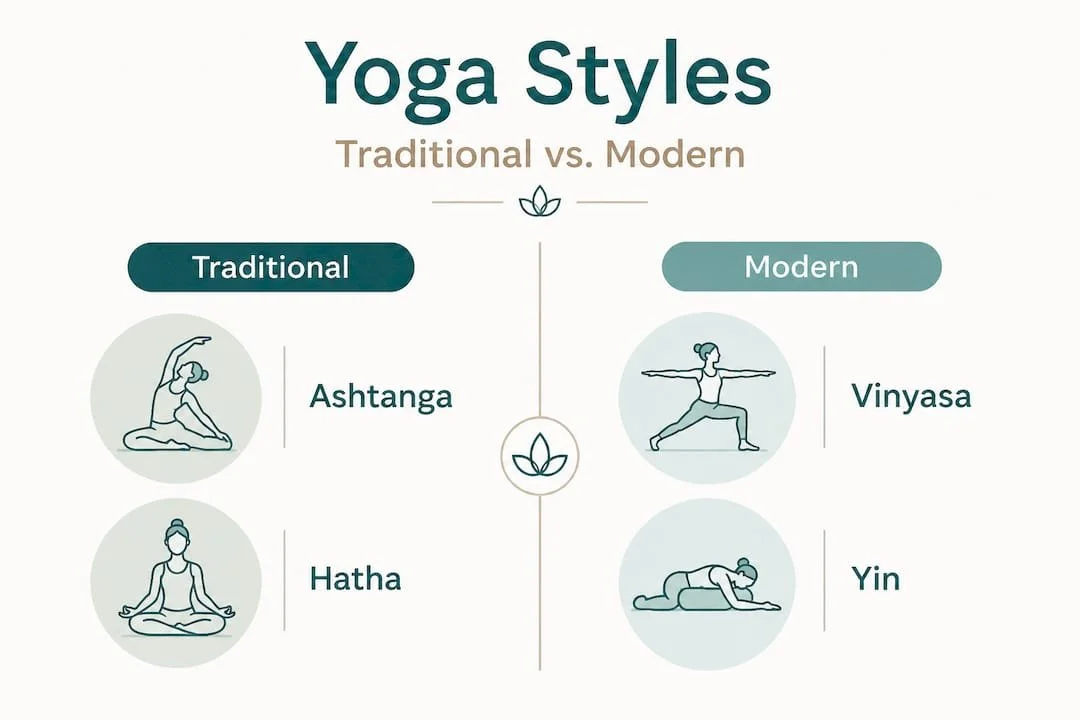
| Style | Class structure | Key benefits | Best for |
|---|---|---|---|
| Ashtanga | Fixed sequence, progressive | Discipline, strength, focus | Dedicated beginners, serious practitioners |
| Vinyasa | Variable, teacher-led | Flexibility, stress relief, variety | All levels, those new to yoga |
| Yin | Long holds, floor-based | Deep fascia release, calm | Recovery, anxiety management |
| Restorative | Supported, minimal effort | Nervous system reset | Burnout, chronic stress |
Here's a simple step-by-step approach to trying a new yoga style without overwhelming yourself:
Choose a style based on your primary goal, whether that's stress reduction, strength building, or flexibility.
Commit to at least three classes in that style before deciding whether it's right for you. One class is never enough data.
Tell the teacher before class that you're new to the style. Good instructors will offer guidance throughout.
Notice how you feel in the 24 hours after class, not just during it. That delayed response often tells you the most.
Compare two or three styles over a month if you're unsure. Many studios let you drop in for varied classes.
Practicing with others in group yoga settings adds an extra layer of motivation that's hard to replicate at home. It's also one of the reasons that group yoga for wellness has become one of the most effective pathways for people to actually maintain a regular practice rather than abandoning it after a few weeks.
Joining and thriving in a city-center yoga community
Exploring different yoga styles is one thing. Building a real sense of belonging in a studio is another. Here's how to actually do it.
Practitioners who stick with yoga long-term almost universally point to one thing: the people around them. Not the perfect pose or the right gear. The confidence gains and strength improvements that members describe most often come from showing up consistently in a community that expects to see them. Accountability is underrated in wellness conversations, and it's something a good studio provides naturally.
Here's a practical framework for going from newcomer to genuinely connected member:
Introduce yourself to the teacher before your first few classes. A brief exchange makes a big difference in how seen you feel.
Attend regularly at the same time each week. Patterns help you meet the same people and build recognition quickly.
Show up a few minutes early and stay a few minutes late. The conversations before and after class are where community actually forms.
Sign up for a workshop or event. A single workshop can introduce you to a dozen regulars who share your interests.
Use the studio's digital community tools, whether that's an app, a newsletter, or a social group. Staying connected between classes keeps momentum alive.
"The biggest shift in my practice wasn't physical. It was realizing I had people rooting for me every week." — shared experience from a longtime yoga community member.
The mental rewards of this kind of consistency are significant. Students who engage with a studio community report greater emotional resilience, less anxiety, and stronger follow-through on other health goals. You can explore more about building yoga connections and strategies for joining a yoga community to deepen your approach.
Pro Tip: Engage in post-class discussions or community events to deepen your connections. Even a five-minute conversation about what challenged you in class can create a real bond with another student. Don't rush out every time.
If you're not sure you're ready to invest in a full membership, starting with free yoga training resources can help you build confidence before you commit.
Perspective: The hidden value of city-center yoga
Here's something worth saying plainly: city-center yoga has an image problem that doesn't reflect reality.
People assume it's expensive, exclusive, or intimidating. They picture a room full of hyper-flexible people in expensive gear who started practicing at age five. That picture is almost entirely wrong. In our experience watching students walk through the door at studios across Philadelphia, the most consistent thing we see is ordinary people figuring it out alongside each other.
The real transformation in yoga isn't flexibility or strength. Those things come, but they're byproducts. The actual shift is learning to stay present in a room when something feels hard. That skill transfers everywhere. It transfers to difficult conversations, stressful workdays, and moments when your body doesn't cooperate with your plans.
City-center studios are uniquely positioned to deliver that because they exist inside the noise of urban life. You walk in from a chaotic commute or a tense meeting, and within ten minutes, you're breathing intentionally and paying attention to your body. The contrast is powerful. That's not something a home video can replicate.
What we also know is that modern studios are actively reimagining what yoga looks like for city people. They're combining practices, shortening class lengths to fit lunch hours, offering sliding-scale pricing, and creating genuine community events. If you haven't checked what's available recently, the landscape has changed more than you might expect. Reading about wellness and connection in group yoga is a good way to recalibrate your expectations and see what's actually on offer.
The bottom line is this: the barrier to entry for city-center yoga is lower than it's ever been. The only thing keeping most people out is the assumption that they don't belong there yet. They do.
Discover your next step on the mat
You've got the framework now. You understand the styles, the studios, and the community dynamics that make city-center yoga worth pursuing. The next step is actually showing up.
At Amrita Yoga & Wellness, we offer a full range of yoga, pilates, barre, tai chi, and massage therapy services designed for exactly the kind of person reading this guide. Whether you're stepping onto a mat for the first time or looking to deepen a practice you've had for years, our Philadelphia studio has the classes, teachers, and community to support you. We also offer wellness sessions beyond movement, including tarot and wellness sessions for those interested in a more holistic approach to self-care. Come find your next step with us.
Frequently asked questions
Are there yoga classes for beginners in Philadelphia city center?
Yes, several studios in the city center offer beginner-friendly classes with alignment-based instruction and supportive environments. Studios like Maha Yoga in Rittenhouse are specifically praised for welcoming newcomers at all experience levels.
How do I find the right yoga style for me?
Try at least two or three class types before deciding. Traditional Ashtanga suits those who want structure and discipline, while Vinyasa is often easier to access and sustain for newer students.
Will I fit in if I'm not experienced or flexible?
Absolutely. Most city-center studios actively prioritize inclusivity, and the welcoming community at studios like Maha Yoga means you're likely to feel at home faster than you expect.
What should I bring to my first city-center yoga class?
Wear comfortable, stretchy clothing, bring a water bottle, and check with the studio ahead of time about mat availability. Many studios loan mats to first-time visitors.
How important is the sense of community in yoga studios?
Community is one of the strongest predictors of long-term practice. Member stories consistently highlight confidence gains and resilience as the most meaningful outcomes of sustained studio participation.
Recommended
How to choose a yoga class that fits your wellness goals

Choosing the right yoga class can feel overwhelming when you're faced with countless styles, schedules, and studios across Philadelphia. Many adults struggle to match their personal wellness goals with the appropriate class format and intensity level. Without proper guidance, you might end up in a class that doesn't align with your experience or objectives, leading to frustration or even injury. This article provides a clear, step-by-step framework to help you select yoga classes that genuinely support your unique wellness journey, whether you're seeking flexibility, stress relief, strength building, or mindful movement.
Table of Contents
Key Takeaways
| Point | Details |
|---|---|
| Define wellness goals | Define your wellness goals and experience level before choosing a class to guide style and intensity. |
| Match styles to goals | Different goals pair with specific yoga styles and class intensities to help you select the right fit. |
| Test classes when possible | Whenever possible, try a class first to evaluate the environment, instruction quality, and whether it suits your preferences. |
| Consider policies and location | Review policies, instructor qualifications, and studio location to ensure convenience, safety, and alignment with your needs. |
Assess your wellness goals and yoga experience
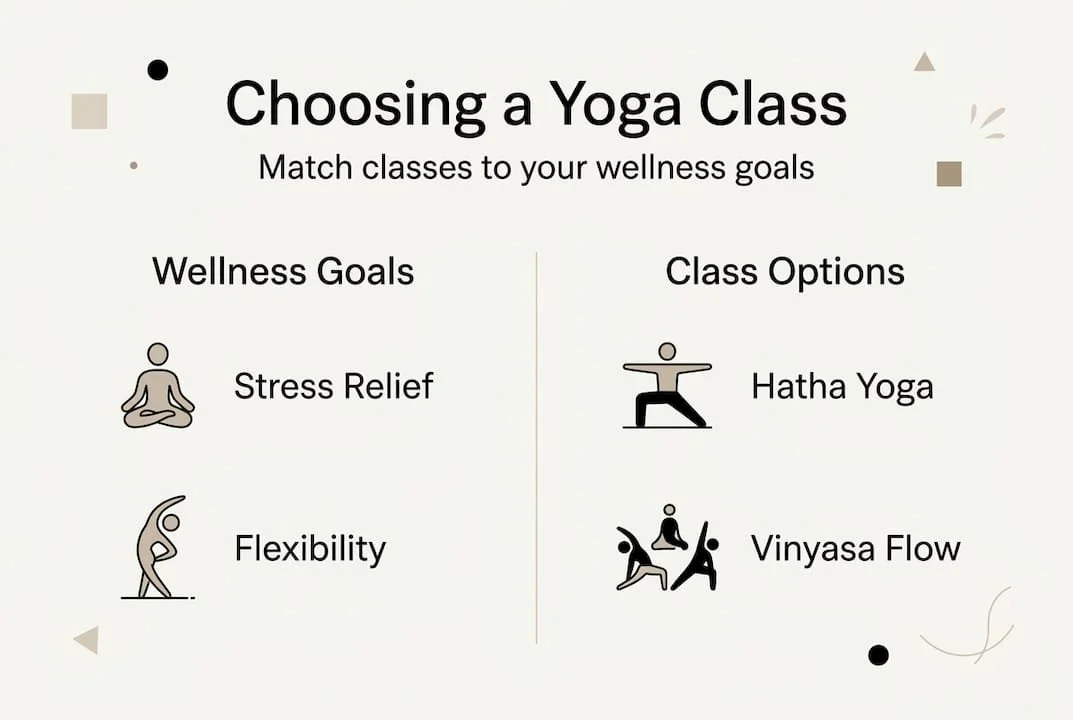
Before browsing class schedules, take time to define what you want from your yoga practice. Your primary wellness objective might be increasing flexibility, building strength, managing stress, cultivating mindfulness, or supporting injury recovery. Each goal pairs naturally with specific yoga styles and class intensities. For example, if you're seeking deep relaxation and stress relief, gentle Hatha or Restorative classes offer slow-paced movements and extended holds. If you want to build muscular strength and cardiovascular endurance, Power Yoga or Vinyasa flow classes provide dynamic sequences that challenge your body.
Next, honestly evaluate your current yoga experience. Beginners benefit from foundational classes that teach proper alignment and basic poses without rushing through sequences. Intermediate practitioners can handle faster-paced flows and more complex postures. Advanced students thrive in challenging classes that incorporate inversions, arm balances, and intricate transitions. Matching your experience level with appropriate class difficulty prevents frustration and reduces injury risk. Knowing your fitness and wellness goals creates a clear filter when evaluating different class options.
Common wellness goals pair with specific class styles:
Flexibility improvement: Yin Yoga, Restorative Yoga, gentle Hatha
Strength building: Power Yoga, Ashtanga, Vinyasa flow
Stress reduction: Restorative Yoga, Yin Yoga, meditation-focused classes
Mindfulness cultivation: Hatha Yoga, Iyengar, classes with pranayama emphasis
Injury recovery: Therapeutic Yoga, gentle Hatha, private sessions with modifications
Weight management: Power Yoga, Hot Yoga, vigorous Vinyasa
Pro Tip: Start with beginner or mixed-level classes if you're unsure about your experience level. Building a solid foundation in alignment and breathing prevents bad habits and keeps you safe as you progress to more challenging practices.
Explore yoga styles and class types available in Philadelphia
Philadelphia studios offer diverse yoga styles, each with distinct characteristics, pacing, and benefits. Hatha Yoga emphasizes foundational poses held for several breaths, making it ideal for beginners learning proper alignment. Vinyasa links breath with movement in flowing sequences that build heat and cardiovascular fitness. Ashtanga follows a set sequence of poses in a rigorous, structured format that appeals to disciplined practitioners. Iyengar focuses on precise alignment using props like blocks and straps, perfect for those recovering from injuries or wanting detailed instruction.
Restorative Yoga uses props to support the body in passive poses held for 5 to 10 minutes, triggering deep relaxation responses. Yin Yoga targets connective tissues through long-held floor poses, increasing flexibility in joints and fascia. Power Yoga delivers athletic, strength-focused sequences without the strict structure of Ashtanga. Understanding yoga class types helps you narrow your search based on what resonates with your personality and goals.
| Style | Intensity | Primary focus | Best for |
|---|---|---|---|
| Hatha | Low to moderate | Foundational poses, alignment | Beginners, stress relief |
| Vinyasa | Moderate to high | Flowing sequences, breath coordination | Fitness, strength |
| Ashtanga | High | Set sequence, discipline | Advanced practitioners, structure lovers |
| Iyengar | Low to moderate | Precise alignment, props | Injury recovery, detail-oriented students |
| Restorative | Very low | Deep relaxation, nervous system reset | Stress management, burnout recovery |
| Yin | Low | Connective tissue flexibility | Joint health, meditation |
| Power Yoga | High | Strength, endurance | Athletic goals, weight management |
Beyond style, consider class formats. Drop-in classes offer flexibility for unpredictable schedules. Multi-week series build community and allow progressive skill development. Workshops provide deep dives into specific techniques like inversions or arm balances. Private sessions deliver personalized attention for unique needs or goals. Factors to weigh include class pacing, instructor teaching style, class size, and overall studio atmosphere.
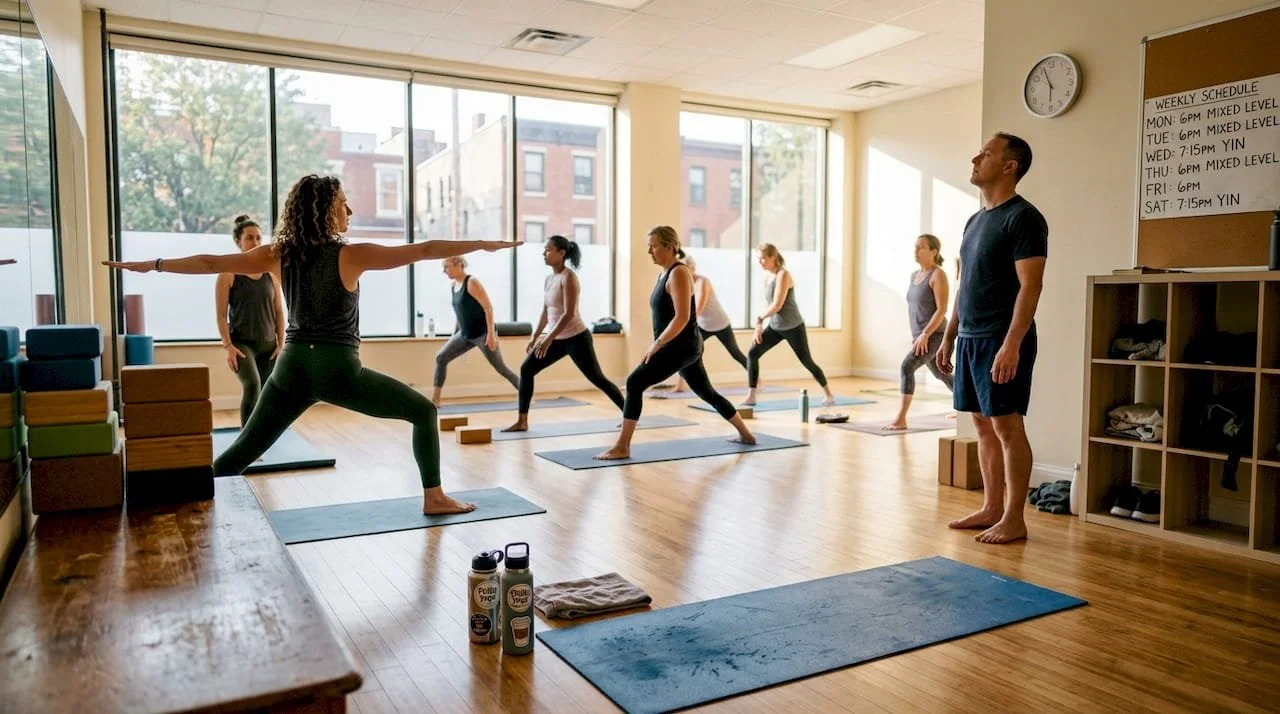
Pro Tip: Watch online videos of different yoga styles before attending your first class. Seeing the pacing and movement patterns helps you identify which styles appeal to you and prepares you mentally for what to expect.
Evaluate practical considerations: studio location, policies, and instructor qualifications
Even the perfect yoga style won't serve you well if the studio location disrupts your routine or policies create unnecessary stress. Choose studios within a reasonable distance from your home or workplace to maintain consistent attendance. Morning practitioners benefit from studios near home, while evening class attendees might prefer locations close to work. Check class schedules to ensure multiple options fit your availability, giving you backup choices if your preferred time fills up.
Review studio policies carefully before purchasing class packages or memberships. Understand cancellation windows, typically 4 to 12 hours before class start times. Clarify refund policies for unused classes or packages. Ask about class package expiration dates and whether you can freeze memberships during travel or illness. Studios with flexible policies demonstrate respect for students' lives and reduce financial anxiety.
Instructor qualifications directly impact your safety and learning experience. Reputable teachers complete 200-hour or 500-hour yoga teacher training programs registered with Yoga Alliance. Beyond basic certification, look for instructors with specialized training relevant to your goals, such as prenatal yoga, therapeutic yoga, or specific style certifications. Experienced teachers adapt poses for different body types and limitations, creating inclusive environments where everyone progresses safely.
| Factor | What to check | Why it matters |
|---|---|---|
| Location | Distance from home/work, parking availability | Convenience supports consistent attendance |
| Schedule | Multiple class times, variety of styles offered | Flexibility accommodates your changing availability |
| Cancellation policy | Required notice period, late cancel fees | Protects you from unexpected charges |
| Pricing | Drop-in rates, package deals, membership options | Ensures affordability for your budget |
| Instructor credentials | Yoga Alliance registration, specialized training | Guarantees quality instruction and safety |
| Class size | Average number of students per class | Smaller classes offer more individual attention |
Practical tips for studio evaluation:
Visit studios during non-class hours to tour facilities and meet staff
Ask about trial offers or discounted first-time packages
Read online reviews focusing on instructor quality and studio cleanliness
Inquire about prop availability and whether you need to bring your own mat
Check if the studio offers modifications for common limitations like tight hamstrings or sensitive knees
Confirm whether classes include breathing exercises and meditation or focus purely on physical poses
Try classes and evaluate your experience to select the best fit
Theory only takes you so far. Actually attending classes reveals whether a studio's energy, teaching style, and community align with your needs. Start by booking trial classes at two or three studios offering styles that match your goals. Many Philadelphia studios offer new student specials that let you sample multiple classes at reduced rates. This hands-on approach helps you find and join yoga classes that truly fit.
Follow this step-by-step process:
Research three studios offering your target yoga style and book introductory offers
Arrive 10 minutes early to each class to introduce yourself and inform the instructor of any injuries or limitations
Pay attention to how the instructor explains poses, offers modifications, and circulates to provide adjustments
Notice the class pace and whether it matches your fitness level and preference for challenge versus ease
Observe the studio atmosphere, including cleanliness, temperature control, and fellow students' energy
After class, note how your body feels physically and your mental state emotionally
Compare your experiences across studios using consistent criteria like instructor attentiveness, class difficulty, and community vibe
Select the studio and class format where you felt most comfortable, challenged appropriately, and motivated to return
During trial classes, evaluate instructor style carefully. Some teachers offer hands-on adjustments while others use verbal cues exclusively. Certain instructors incorporate spiritual elements like chanting or philosophy, while others focus purely on physical practice. The best instructor for you communicates clearly, creates a non-judgmental environment, and balances challenge with accessibility. Testing multiple classes ensures you find teaching approaches that resonate with your learning style.
Track your observations systematically. Note which classes left you energized versus depleted. Identify instructors whose cueing helped you understand proper alignment. Record any discomfort or pain that arose during or after class, as this signals either inappropriate difficulty level or need for modifications. Pay attention to whether you felt welcomed by studio staff and other students, as community support enhances long-term commitment.
Pro Tip: Keep a simple yoga journal with entries for each trial class. Write down the studio name, class style, instructor, difficulty level, and your physical and emotional response. After trying several options, review your notes to identify clear patterns about what works best for your body and preferences.
Explore Amrita Yoga & Wellness offerings in Philadelphia
Now that you understand how to evaluate yoga classes systematically, put your knowledge into practice with local options designed for diverse wellness goals. Amrita Yoga & Wellness offers multiple yoga styles, from gentle Hatha to dynamic Vinyasa, plus complementary practices like pilates, barre, and tai chi. Whether you're just beginning your yoga journey or deepening an established practice, you'll find classes taught by experienced, certified instructors who prioritize safe alignment and inclusive teaching.
Take advantage of new student specials that let you explore different class formats affordably while discovering which styles support your specific wellness objectives. Flexible studio policies accommodate your schedule changes and life demands, removing barriers to consistent practice. Join a welcoming Philadelphia community where your individual goals matter and every class helps you progress toward greater physical vitality, mental clarity, and overall well-being.
Frequently asked questions
What yoga style is best for beginners?
Hatha and Restorative yoga work best for beginners because they move at a gentle pace and emphasize foundational poses with clear alignment instruction. These styles build strength and flexibility safely while teaching proper breathing techniques that form the basis of all yoga practice. As you gain confidence and body awareness through beginner-friendly classes, you can gradually explore more dynamic styles like Vinyasa or physically demanding practices like Power Yoga. Starting with yoga class types suited to your current ability prevents injury and builds sustainable habits.
How often should I attend yoga classes to see benefits?
Attending yoga at least two to three times per week balances consistent progress with adequate recovery time for most wellness goals. This frequency allows your body to adapt to new movement patterns, build strength gradually, and develop flexibility without overtraining. Consistency matters more than intensity when establishing a yoga practice, as regular attendance creates lasting benefits like reduced stress, improved posture, and enhanced body awareness. Your specific goals influence ideal frequency: strength building may require three to four sessions weekly, while stress management might benefit from daily gentle practice. Align your schedule with choosing yoga classes for your wellness goals to optimize results.
Can I switch yoga classes if I don't like one?
Yes, switching classes is completely normal and encouraged when searching for your ideal fit. Most studios allow you to try different class times, styles, and instructors without penalty, especially during introductory periods. Check studio policies regarding class cancellations and transfers to understand any time restrictions or fees. Finding the right match between your preferences and a class's pace, style, and instructor dramatically improves your motivation and wellness outcomes. Don't hesitate to explore multiple options until you discover an environment where you feel comfortable, challenged appropriately, and excited to return.
What should I bring to my first yoga class?
Bring a yoga mat if you own one, though most studios provide mats for rent or loan. Wear comfortable, breathable clothing that allows full range of motion without being too loose or restrictive. Arrive with an empty stomach, having eaten a light meal two to three hours before class, and bring a water bottle to stay hydrated. Leave jewelry and watches at home to avoid distractions during practice. Most importantly, bring an open mind and willingness to modify poses as needed, remembering that yoga is a personal practice without competition or comparison to others in the room.
How do I know if a yoga instructor is qualified?
Qualified yoga instructors typically complete 200-hour or 500-hour teacher training programs registered with Yoga Alliance, the industry's main credentialing organization. Look for instructors who display their certifications on studio websites or introduce their training background at the start of class. Beyond basic certification, experienced teachers demonstrate clear communication, offer modifications for different ability levels, and create safe, inclusive environments. Quality instructors also pursue continuing education in specialized areas like anatomy, therapeutic applications, or specific yoga styles. Don't hesitate to ask studio staff about instructor credentials and teaching experience before committing to a class series or package.
Recommended
Yoga class signup guide in Philadelphia 2026
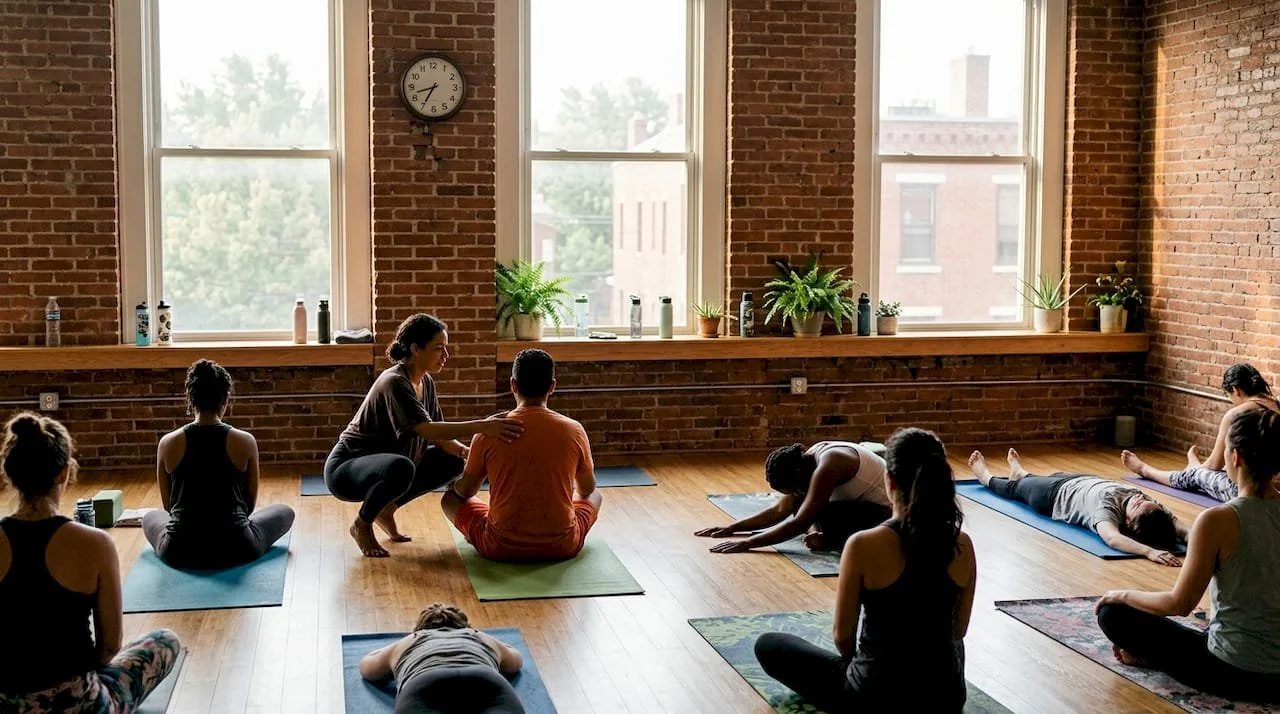
Choosing and signing up for yoga classes in Philadelphia can feel overwhelming when you're faced with dozens of studios, unfamiliar styles, and different registration systems. Whether you're a complete beginner or exploring new wellness practices, understanding what to expect before you commit makes all the difference. This guide walks you through selecting the right yoga style for your goals, preparing for signup, navigating online registration, and setting yourself up for success in Philadelphia's vibrant yoga community.
Table of Contents
Key takeaways
| Point | Details |
|---|---|
| Start with beginner-friendly styles | Hatha or gentle yoga classes teach alignment and breath control, minimizing injury risk for newcomers. |
| Explore diverse wellness options | Philadelphia studios offer hot yoga, trauma-informed practices, restorative sessions, and fusion classes like pilates and barre. |
| Understand studio policies | Read cancellation rules carefully, most studios require 48-hour notice to avoid fees or lost credits. |
| Prepare essential items | Bring a yoga mat, towel, water bottle, and comfortable clothing to your first class. |
| Match classes to your goals | Choose styles based on whether you prioritize fitness, mental health, injury recovery, or stress relief. |
Understanding yoga styles and choosing the right class
Philadelphia's yoga scene offers remarkable variety, from heated power classes to gentle trauma-informed sessions. Knowing which style aligns with your wellness goals helps you make confident signup decisions and avoid classes that might feel too intense or too slow for your needs.
Hatha and gentle yoga classesprovide the ideal foundation for beginners. These sessions emphasize proper alignment, controlled breathing, and modifications that prevent injury while building strength and flexibility. Studios like Amrita Yoga & Wellness, Yoga Home, and Maha welcome all levels with basics classes that move at a manageable pace. You'll learn foundational poses, understand how to use props like blocks and straps, and develop body awareness without feeling rushed.
Philadelphia also features specialized practices for different wellness priorities. Hot yoga classes operate at 95-105°F, promoting detoxification and cardiovascular endurance at studios like Hot Yoga Philly and Healthy Philly Yoga. Trauma-informed classes at Soul Haum specifically support individuals managing PTSD or anxiety through carefully sequenced movements and mindful breathing. Vinyasa and power yoga at Lumos and Yoga Habit deliver fitness-focused workouts, while restorative and yin styles offer deep relaxation and stress relief.
| Style | Temperature | Intensity | Primary Benefits | Example Studios |
|---|---|---|---|---|
| Hatha/Gentle | Room temp | Low to moderate | Alignment, breath control, injury prevention | Amrita, Yoga Home, Maha |
| Hot Yoga | 95-105°F | Moderate to high | Detox, cardiovascular endurance, flexibility | Hot Yoga Philly, HPY |
| Vinyasa/Power | Room temp or heated | Moderate to high | Strength, fitness, dynamic flow | Lumie, Yoga Habit |
| Trauma-Informed | Room temp | Low to moderate | PTSD support, anxiety relief, emotional healing | Soul Haum |
| Restorative/Yin | Room temp | Low | Deep relaxation, stress relief, flexibility | Various studios |
When selecting your first style, consider these factors:
Current fitness level and any physical limitations or injuries
Whether you prefer vigorous movement or gentle stretching
Sensitivity to heat or preference for climate-controlled spaces
Mental health goals like anxiety reduction or trauma recovery
Interest in complementary practices like pilates or barre
Pro Tip: Call studios directly to ask about beginner modifications and instructor experience with specific conditions. Most welcoming studios happily discuss how they accommodate new students, injuries, or special needs before you sign up.
Choosing between fitness-oriented and healing-focused practices represents a key decision point. Power and vinyasa classes build strength and endurance through challenging sequences, while trauma-informed and restorative sessions prioritize nervous system regulation and emotional processing. Neither approach is superior, they serve different purposes. Many practitioners eventually combine both, attending vigorous classes for physical conditioning and gentle sessions for mental restoration.
For those interested in trauma recovery yoga or yoga for emotional healing, Philadelphia offers several specialized options. Trauma-informed yoga uses invitational language, emphasizes student choice, and avoids physical adjustments that might trigger stress responses. These classes create safe spaces for individuals working through past trauma or managing anxiety disorders. If you're exploring local yoga classes with therapeutic focus, look for instructors trained in trauma-sensitive methods.
Preparing for your yoga class signup
Successful yoga registration starts with research and preparation. Understanding studio policies, gathering necessary items, and knowing what questions to ask prevents confusion and helps you feel confident walking into your first class.
Before signing up, assemble these essentials:
Yoga mat (studios often provide rentals, but personal mats ensure hygiene)
Large towel for hot yoga or to cover studio mats
Water bottle to stay hydrated, especially in heated classes
Comfortable, breathable clothing that allows full range of motion
Hair ties if you have long hair
Small towel for wiping sweat during intense sessions
Reading cancellation policies saves headaches later. Most studios require 48-hour notice for cancellations to avoid fees or lost class credits. Some offer makeup classes if you cancel within policy guidelines, while others enforce strict forfeiture rules. Understanding these details upfront prevents frustration when schedule conflicts arise.
| Policy Type | Typical Requirement | Consequence of Violation | Makeup Options |
|---|---|---|---|
| Cancellation Notice | 48 hours before class | Fee charged or credit lost | Usually not available |
| Late Cancellation | 24-48 hours before | Partial credit or reduced fee | Sometimes offered |
| No-Show | Failure to attend or cancel | Full credit lost, possible fee | Rarely available |
| Package Expiration | 30-90 days from purchase | Unused classes forfeited | Extensions sometimes granted |
Researching studios online involves several practical steps:
Visit studio websites to review class schedules and descriptions
Compare pricing for drop-in classes, multi-class packages, and monthly memberships
Read student reviews focusing on beginner experiences and instructor approachability
Check location and parking availability near your home or workplace
Look for new student specials or introductory offers
Verify whether the studio offers the specific style you want to try
Pro Tip: If you're managing an injury, pregnancy, or postpartum recovery, contact studios to inquire about private sessions before joining group classes. Individual instruction allows teachers to provide personalized modifications and ensure your safety while building foundational skills.
Scheduling yoga classesrequires attention to your energy patterns and daily routine. Morning classes energize your day but require early wake times. Lunchtime sessions offer midday stress relief but may feel rushed. Evening classes provide post-work decompression but can interfere with dinner or family time. Experiment with different time slots to discover what feels sustainable long term.
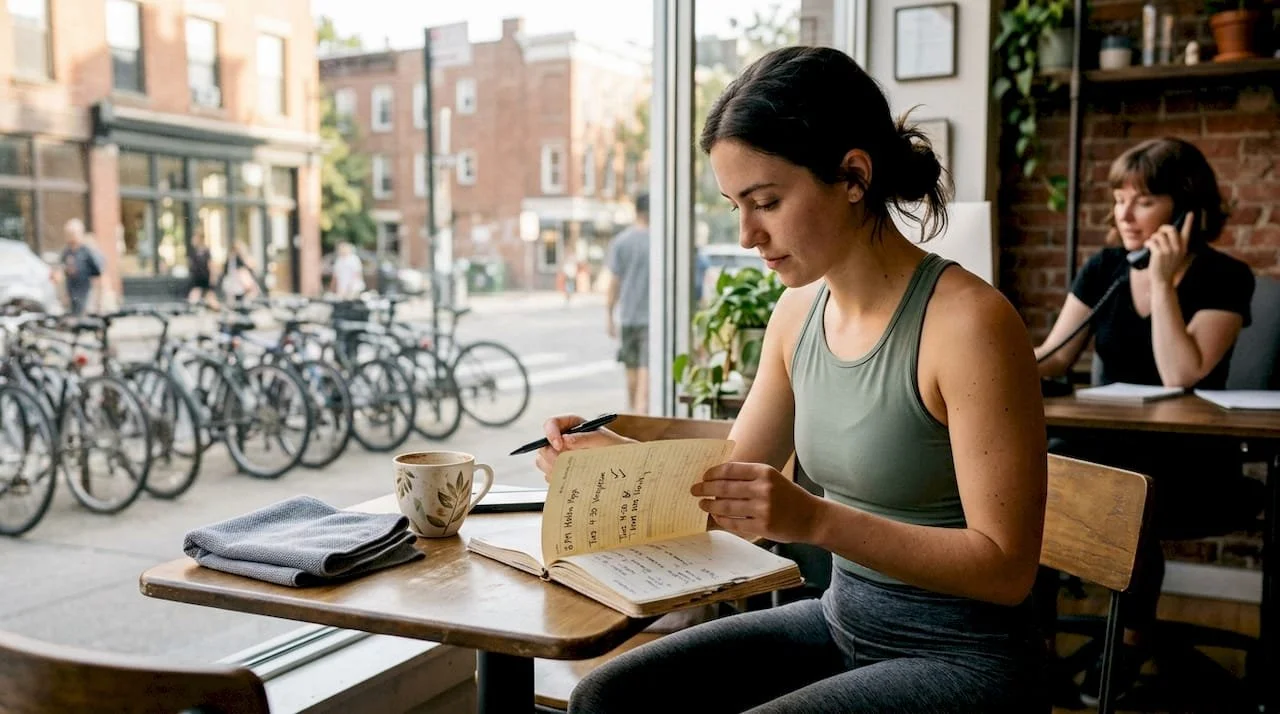
For heat-sensitive individuals, starting with non-heated classes prevents overwhelming experiences. You can always progress to hot yoga after building stamina and comfort with basic poses. Many students find that joining yoga classes gradually, beginning with one session per week, creates sustainable habits without burnout.
When preparing for local yoga class attendance, arrive 10 to 15 minutes early for your first visit. This buffer allows time to complete any required paperwork, meet the instructor, set up your space, and acclimate to the studio environment without feeling rushed.
Step-by-step guide to signing up for yoga classes in Philadelphia
Navigating the actual registration process becomes straightforward once you understand the typical workflow. Most Philadelphia studios use online systems, though a few still accept walk-in signups or phone registrations.
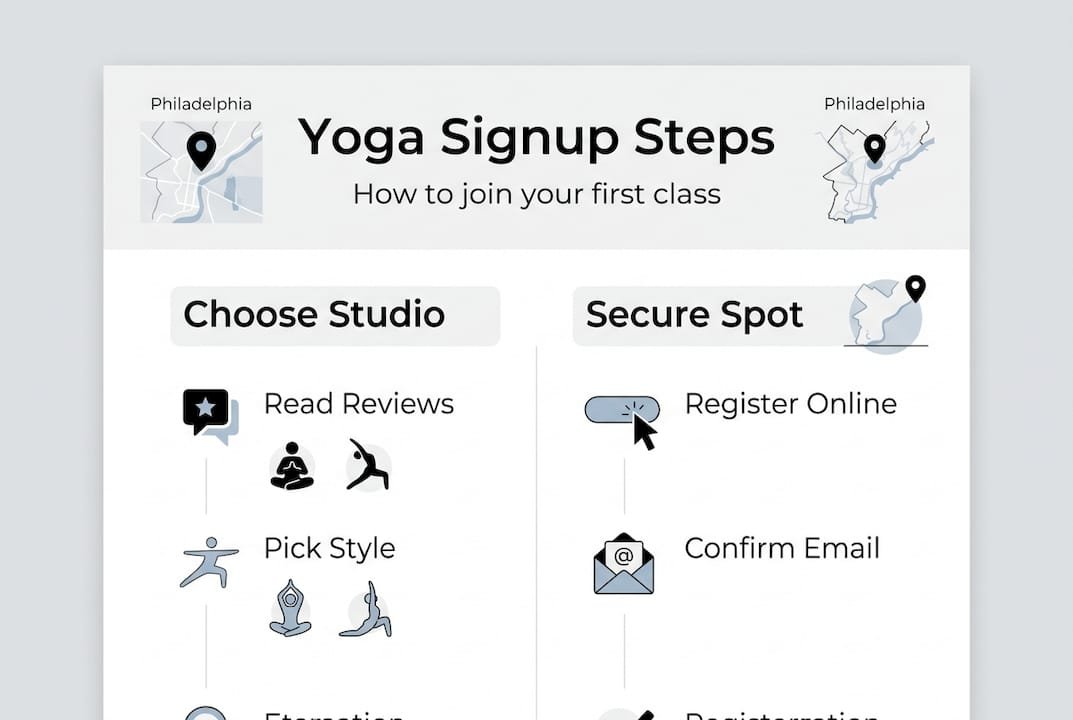
Follow these steps for smooth enrollment:
Search for studios and classes using Google Maps, studio websites, or yoga directories specific to Philadelphia
Review each studio's class schedule, filtering by style, time, and instructor if options exist
Compare pricing structures, including drop-in rates, class packages, and unlimited monthly memberships
Read cancellation and refund policies carefully before committing to packages
Register through the studio's website or Eventbrite for workshops and special events
Check your email for confirmation with class details, location, and any special instructions
Add the class to your calendar with reminders to prevent no-shows
Prepare your gear the night before to ensure you're not scrambling last minute
Understanding pricing models helps you choose cost-effective options. Drop-in classes offer flexibility for irregular schedules but cost more per session, typically $18 to $28 in Philadelphia. Multi-class packages (5, 10, or 20 classes) reduce per-class costs and usually expire within 60 to 90 days. Unlimited monthly memberships provide the best value for frequent practitioners, ranging from $100 to $180 depending on the studio and included amenities.
Online registration dominates Philadelphia's yoga scene. Studios maintain their own booking platforms where you create an account, add payment information, and reserve spots in upcoming classes. Some studios use scheduling software like Mindbody or Momence, which allows you to manage bookings across multiple studios through a single app. Eventbrite handles signups for pop-up classes, outdoor sessions, and special workshops that fall outside regular studio schedules.
Pro Tip: Create accounts with your preferred studios before you need to book a class. Saving your information in advance streamlines future signups and helps you grab spots in popular classes that fill quickly.
Keeping confirmation emails organized prevents confusion about class times and locations. Create a dedicated email folder for yoga confirmations or screenshot important details to your phone. Many students find success setting calendar alerts for 24 hours before class (to review cancellation windows) and 2 hours before class (to prepare and travel).
When you're ready to find and join yoga classes, prioritize studios with clear communication and responsive customer service. Studios that answer questions promptly and provide detailed class descriptions typically offer better overall experiences. Reading recent reviews helps identify which studios genuinely welcome beginners versus those that cater primarily to advanced practitioners.
For ongoing practice, understanding yoga class signup steps and building consistent booking habits supports your wellness journey. Many successful practitioners schedule their next week's classes every Sunday evening, treating yoga appointments with the same commitment as work meetings or doctor visits.
What to expect after signing up and attending your first class
Your first yoga class brings new sensations, terminology, and social dynamics. Knowing what typically happens helps you feel prepared rather than anxious.
Common beginner experiences include:
Learning to coordinate breath with movement, which feels awkward initially but becomes natural with practice
Using props like blocks, straps, and bolsters to make poses accessible for your current flexibility
Feeling muscle soreness 24 to 48 hours after class, especially in core, legs, and shoulders
Noticing mental chatter during meditation or savasana as your mind adjusts to stillness
Comparing yourself to other students, then gradually releasing that tendency as you focus inward
Discovering poses that feel surprisingly easy and others that challenge you unexpectedly
If schedule changes arise, handle cancellations promptly and courteously. Log into your studio account as soon as you know you can't attend, ideally more than 48 hours in advance. When emergencies prevent adequate notice, contact the studio directly to explain. While policies exist for fairness, many studios show flexibility for genuine emergencies, especially for regular students who typically follow guidelines.
Yoga's benefits accumulate gradually rather than appearing overnight. Most practitioners notice improved flexibility within 4 to 6 weeks of consistent practice. Strength gains become apparent around the same timeframe, particularly in stabilizing muscles. Mental benefits often emerge faster, with students reporting better stress management and emotional regulation within 2 to 3 weeks.
Research supports these experiential benefits:
Mindfulness-based interventions including yoga show medium effect sizes for reducing PTSD symptoms and depression, with standardized mean differences of 0.41, while hot yoga specifically improves cardiovascular fitness and flexibility beyond traditional practice.
Maintaining open communication with instructors enhances your experience significantly. Before class, briefly mention any injuries, physical limitations, or concerns. Most teachers appreciate this information and can suggest modifications during class. After class, ask questions about poses that confused you or request alternatives for movements that caused discomfort.
Philadelphia studios consistently receive positive reviews for welcoming environments. Students rate studios between 4.0 and 5.0 stars, frequently praising instructors who remember names, offer hands-on adjustments (with permission), and create inclusive spaces. These community aspects often prove as valuable as the physical practice itself, providing social connection and accountability that support long-term commitment.
For those pursuing trauma recovery yoga benefits, patience with the process matters enormously. Healing-focused practices work subtly on the nervous system, and progress may feel non-linear. Some sessions bring emotional release, others provide calm stability, and both serve important functions in recovery.
Explore yoga classes and specials at Amrita Yoga & Wellness
Now that you understand how to choose and sign up for yoga classes, Amrita Yoga & Wellness offers an ideal starting point for your Philadelphia practice. The studio provides beginner-friendly Hatha classes alongside diverse options including hot yoga, pilates, and barre, all designed to welcome students at every level.
Amrita's new student specials make trying multiple classes affordable while you discover which styles resonate with your goals. The studio maintains transparent cancellation policies that respect your schedule flexibility while ensuring fair access for all members. Beyond yoga, Amrita offers complementary wellness services like acupuncture to support holistic health. Browse the current schedule online and sign up with confidence, knowing you're joining a community that prioritizes both your physical practice and overall well-being.
FAQ
What if I'm new to yoga and worried about injury?
Beginner Hatha classes minimize injury risk through careful attention to alignment and controlled progressions. Instructors demonstrate proper form and offer modifications using props like blocks and straps to accommodate different flexibility levels. Most studios welcoming all levels encourage questions and provide hands-on adjustments to ensure safe positioning.
How do I find yoga classes that focus on mental health or trauma recovery?
Trauma-informed classes at Soul Haum specifically address PTSD and anxiety through specialized teaching methods. These sessions use invitational language and student-led pacing to create psychologically safe environments. You can also explore trauma recovery yoga resources to understand how different practices support emotional healing and nervous system regulation.
What should I bring to my first yoga class?
Bring a yoga mat (or confirm the studio provides rentals), a large towel, water bottle, and comfortable clothing that allows free movement. For hot yoga, pack an extra towel for sweat management. Most studios provide props like blocks and straps, but verify beforehand if you want to bring personal equipment.
How much do yoga classes typically cost in Philadelphia?
Drop-in classes range from $18 to $28 per session. Multi-class packages reduce costs to approximately $12 to $20 per class depending on quantity purchased. Unlimited monthly memberships cost between $100 and $180, offering the best value for students attending three or more classes weekly.
Can I try different yoga styles at the same studio?
Most Philadelphia studios offer multiple styles throughout their weekly schedule. This variety allows you to experiment with hot yoga, vinyasa, restorative sessions, and specialty classes without purchasing separate memberships. New student packages often include access to all class types, making exploration affordable and convenient.
Recommended
What is a yoga class: complete Philadelphia guide 2026 — Amrita Yoga & Wellness
Find Yoga Classes in Philadelphia: Your Step-by-Step Guide — Amrita Yoga & Wellness
Diverse yoga practices for wellness in Philadelphia 2026 — Amrita Yoga & Wellness
Simple yoga for beginners: easy low-impact routines — Amrita Yoga & Wellness