The Amrita Journal
Explore thoughtful stories, practical wellness guidance and inspiring ideas to support your movement, mindfulness and everyday wellbeing at Amrita.
Hot Yoga Renton WA: What to Expect and How to Choose
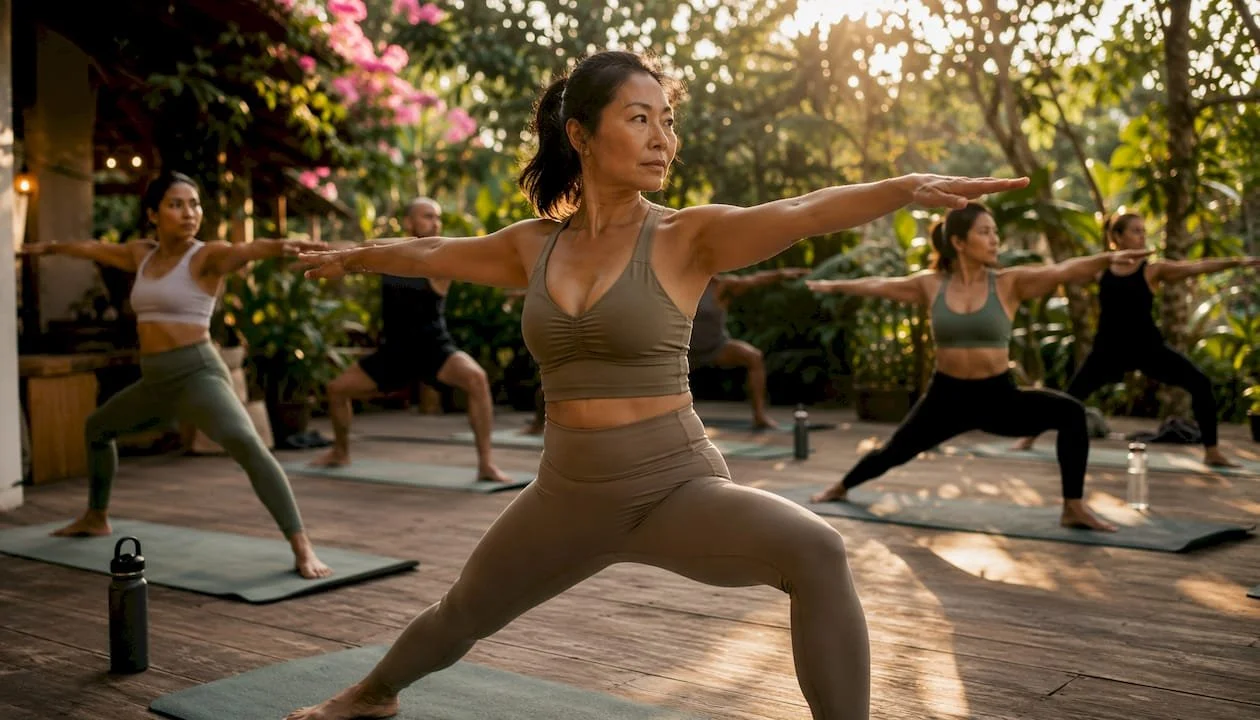
What hot yoga in Renton, WA actually looks like
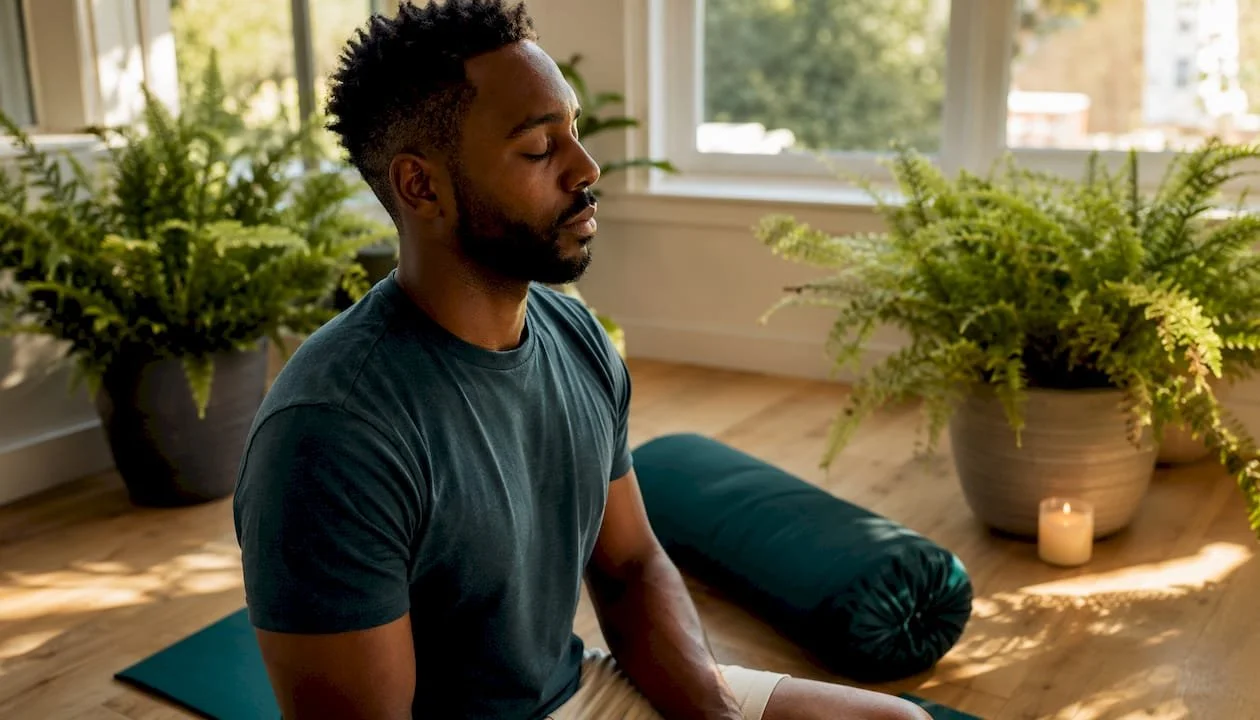
Hot yoga in Renton, WA is genuinely built for everyone. Studios here welcome all ages, body types, and experience levels, with the explicit goal of healing and building inner confidence rather than pushing competitive fitness. If you've never set foot on a mat, that's fine. If you've practiced for years, there's room for you too.
A few things to know before your first class:
Doors open 30 minutes before class and lock at start time, so plan to arrive early
Classes focus on stress relief, joint mobility, toxin flushing, and energy rather than performance
New students can typically start with a $39 30-day new student special to ease in without long-term commitment
Beginner-friendly formats are standard, not an afterthought
If online booking or payment causes any friction, studios prefer you come in person for quick, stress-free resolution
The practice itself combines concentration, patience, and physical benefits like increased metabolism, improved range of motion, and thyroid balance. It's less about sweating through a workout and more about what happens when heat, breath, and stillness work together.
Pro Tip: Arriving 15 minutes early on your first visit gives you time to meet the instructor, ask questions, and settle in before the room heats up.
Table of Contents
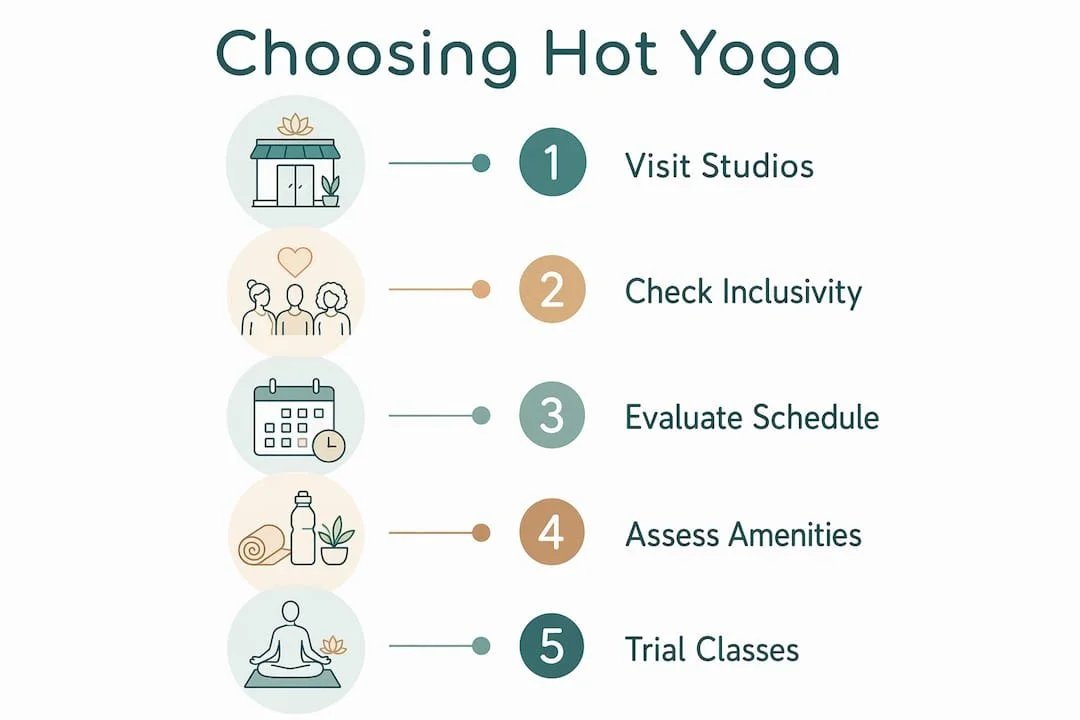
How to choose a hot yoga studio in Renton, WA
The right studio comes down to more than just location. Here's what actually separates a good fit from a frustrating one:
Inclusivity and atmosphere: Look for studios that explicitly welcome all fitness levels. Reviews on ClassPass and Google give you an honest read on community vibe before you commit
Class schedule and formats: Check whether the hot yoga schedule includes early morning, evening, and weekend slots, plus beginner-specific classes
Amenities: Showers and lockers matter more than you'd think after a heated session. Confirm these are available before signing up
Pricing and intro offers: A 30-day new student package lets you try multiple class formats without locking into a membership
Safety guidance: Good studios address contraindications openly, particularly for pregnancy, cardiovascular conditions, and heat sensitivity
Staff accessibility: Studios that prioritize face-to-face help for booking or billing questions signal a genuinely student-first culture
| Factor | What to look for |
|---|---|
| Inclusivity | All ages, sizes, and experience levels welcomed |
| Schedule | Early, evening, and weekend slots; beginner classes available |
| Amenities | Showers, lockers, towel service on site |
| Pricing | $39 30-day introductory offer with no long-term pressure |
| Safety | Clear contraindication guidance from instructors |
| Community | Positive third-party reviews on ClassPass or Google |
The studios that stand out in Renton treat administrative friction, like a billing glitch or a scheduling question, as something they solve for you, not something you figure out alone.
Amritayogawellness brings holistic yoga depth beyond the studio
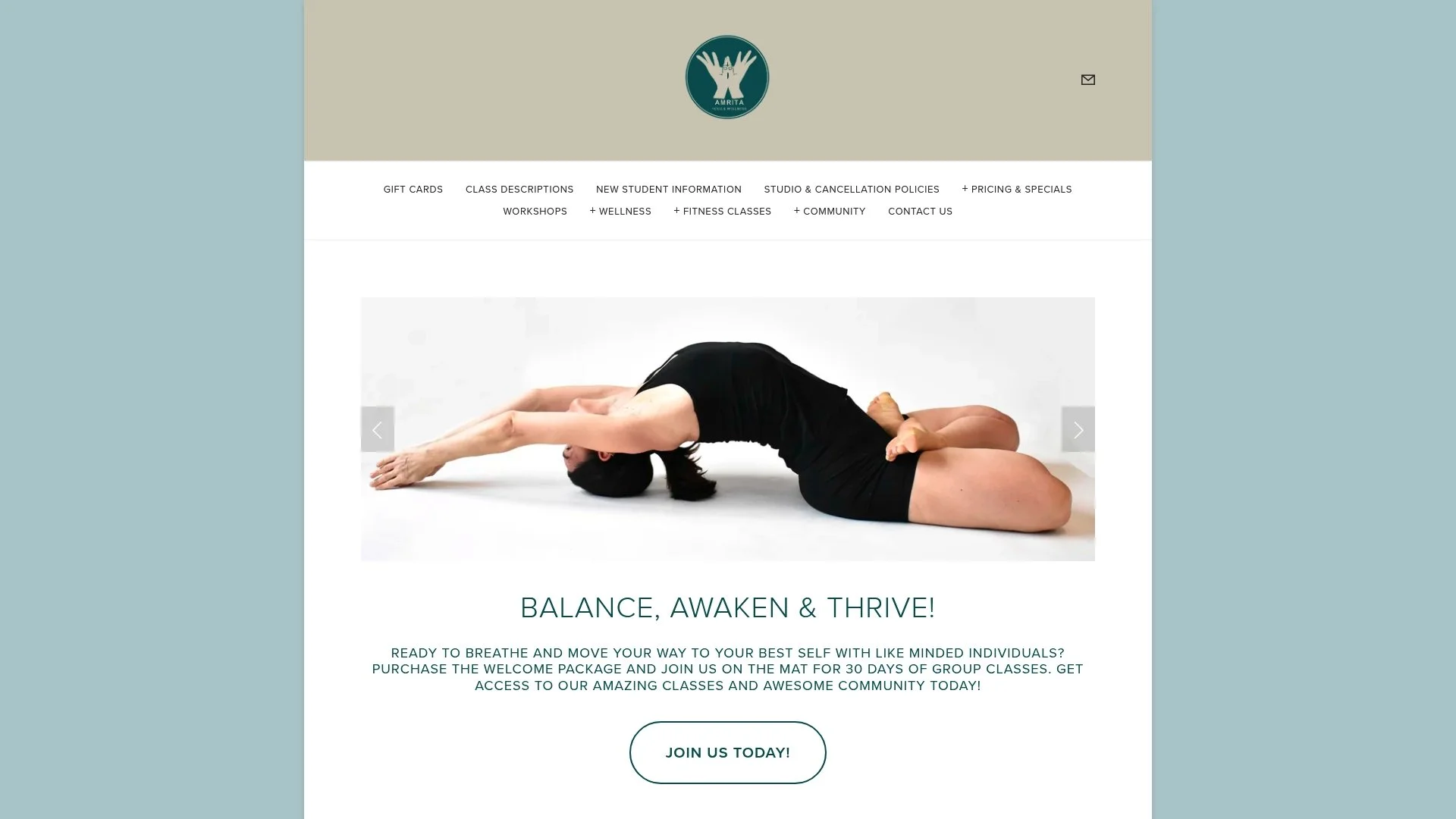
Amritayogawellness is a Philadelphia-based wellness hub that goes well past a single heated room. Where most studios offer one or two formats, Amritayogawellness covers hot yoga, pilates, barre, tai chi, and massage therapy under one roof, with detailed class descriptions written for beginners and experienced practitioners alike.
The blog is genuinely useful. You’ll find step-by-step hot yoga guidance for newcomers, beginner-specific resources, and in-depth breakdowns of physical benefits. Workshops extend into areas like tarot readings, which rounds out the mind-body-spirit focus that sets the community apart from a standard fitness studio.
Ready to go deeper? Explore classes and workshops at Amritayogawellness and find the practice that fits where you are right now.
Key Takeaways
Hot yoga in Renton, WA is accessible, structured around healing rather than competition, and best approached with early arrival and a beginner-friendly intro package.
| Point | Details |
|---|---|
| Arrive early | Doors lock at class start time; plan to arrive 30 minutes before. |
| Beginner-friendly pricing | A $39 30-day new student introductory special lets newcomers try classes without long-term pressure. |
| Check amenities | Confirm showers and lockers are available before committing to a studio. |
| Use third-party reviews | ClassPass and Google reviews reveal community atmosphere before you visit. |
| Amritayogawellness | Offers hot yoga resources, diverse class formats, and beginner guides for all levels. |
Pilates Class Formats in Philadelphia: 2026 Guide
TL;DR:
Philadelphia offers a variety of Pilates classes, including mat, reformer, and specialty formats for different goals. Beginners should choose smaller classes with experienced instructors or private sessions for better guidance. Amritayogawellness provides diverse Pilates options along with other wellness services in a community-focused environment.
What Pilates class formats are available in Philadelphia?
Philadelphia offers a solid range of Pilates formats, from floor-based mat work to equipment-driven reformer sessions and specialty classes built around specific goals. Here's a quick breakdown of what you'll find locally:
Mat Pilates: Bodyweight exercises on a mat, typically in group fitness classes of 8–20+ participants. Affordable, widely available, and great for building foundational core strength.
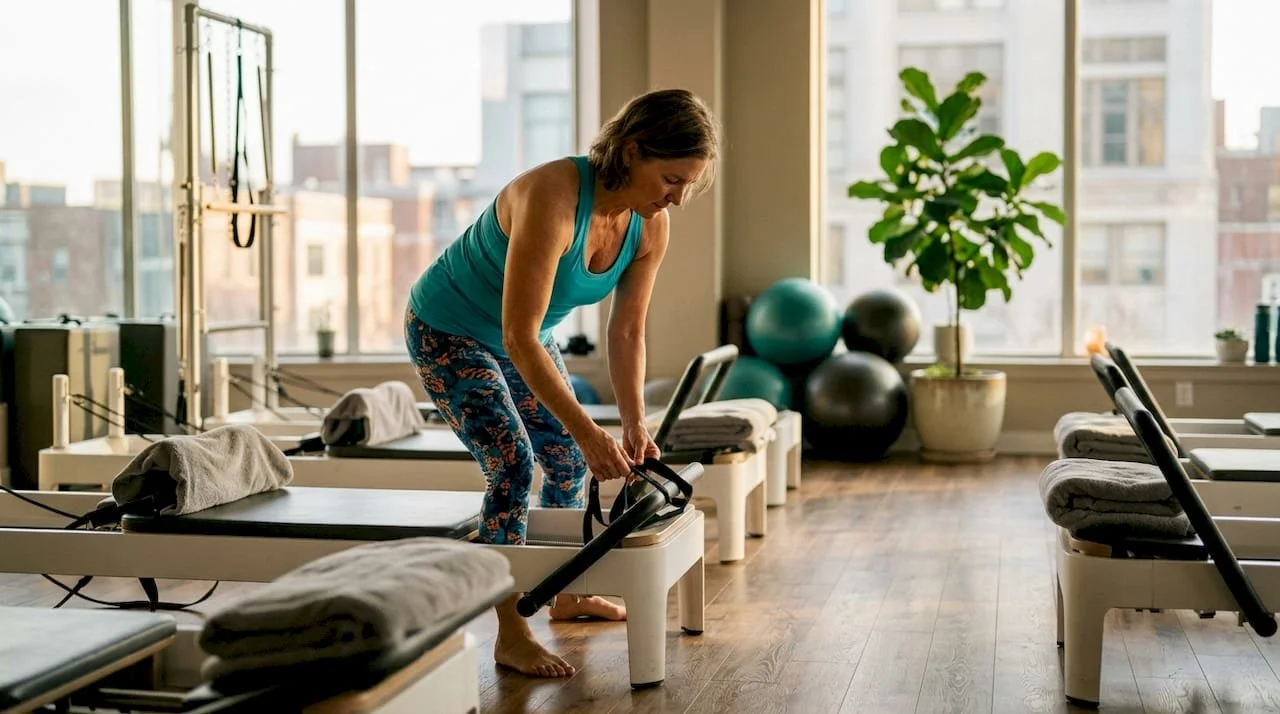
Reformer Pilates: Uses a spring-resistance machine for controlled, full-body work. Group reformer classes run 6–12 participants, offering more individual attention than large mat sessions.
Springboard Pilates: A wall-mounted apparatus with springs and bars. Targets the full body with a focus on alignment and controlled resistance, often used in smaller class settings.
Chair/Tower fusion classes: Combines the Pilates chair and tower apparatus for targeted work on stability, balance, and functional strength.
Cardio-focused Reformer classes: Incorporate a jumpboard attachment for low-impact plyometrics. These add dynamic intensity while keeping stress off the joints.
Prenatal and postnatal Pilates: Specialty formats led by instructors with additional training in prenatal movement and safety modifications.
Rehabilitation-focused Pilates: Often called clinical or therapeutic Pilates, these classes require instructors with relevant healthcare training and are suited to post-injury recovery.
Athletic performance Pilates: Designed for athletes seeking cross-training benefits, focusing on power, mobility, and sport-specific movement patterns.
Amrita Yoga & Wellnessin Philadelphia offers diverse formats across these categories, making it a practical starting point for anyone exploring local options.
Pro Tip: If a class label sounds unfamiliar, ask the studio directly: what equipment is used, who the class is designed for, and what progression looks like. Nusu's 2025 guidance makes this the single most useful step for anyone new to Pilates.
How to choose the right Pilates class in Philadelphia
Start with your goal, not the class name. Nusu's 2025 guidance recommends asking studios about format, target audience, expectations, and coaching structure before committing, especially if you're new to Pilates.
A few practical considerations:
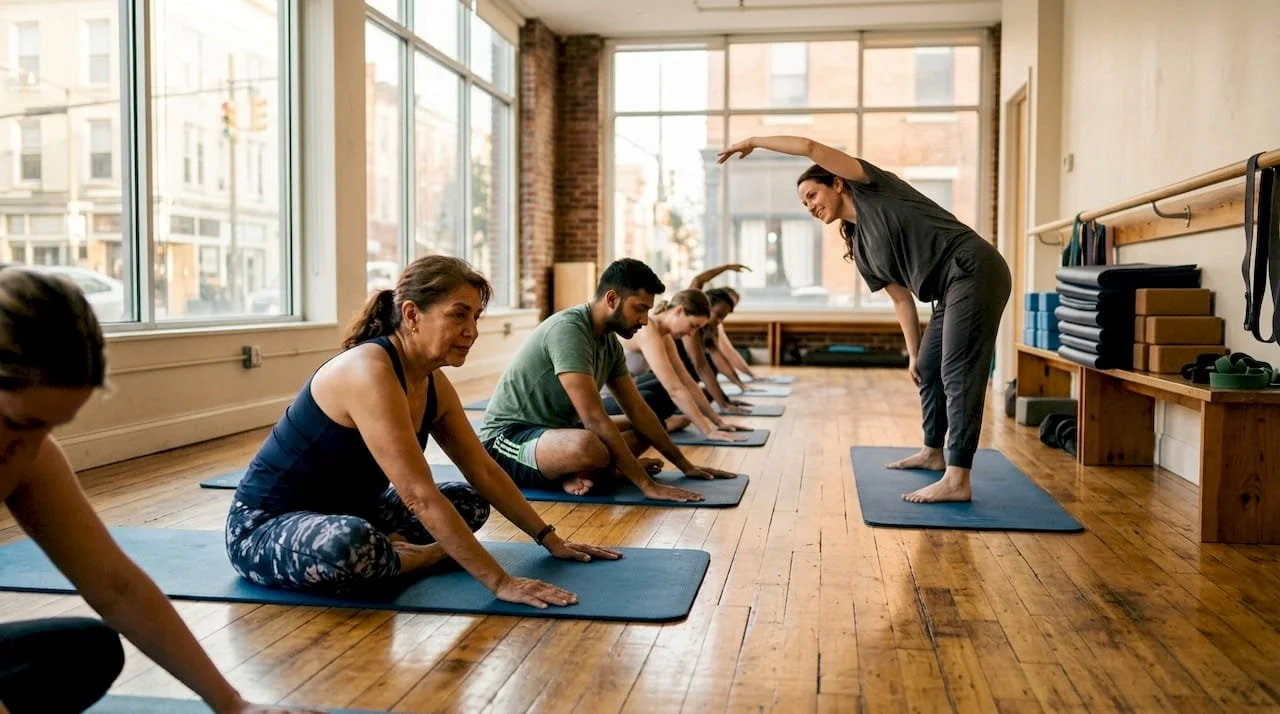
Experience level: Beginners benefit from a beginner Pilates guide and smaller class sizes where instructors can correct form. A group mat class of 20 people isn't the best place to learn the basics.
Group vs. private: Private and semi-private sessions offer tailored instruction adapted to your goals and any physical limitations, with direct feedback that group classes can't always provide. They cost more, but the personalization is real.
Class duration: Standard sessions run 50–60 minutes, which includes warm-up, main exercises, and enough time for proper instruction.
Accessibility: Most studios offer modifications for different fitness levels and physical limitations. Ask upfront whether the format accommodates your specific needs.
Specialty classes: Prenatal, rehab, and athletic formats require instructors with additional relevant training. Verify credentials before signing up.
Pricing and scheduling: Look for studios offering flexible membership options or drop-in rates that fit your routine without locking you into a rigid commitment.
Amritayogawellness brings Pilates and wellness together in Philadelphia
Pilates is one piece of a larger wellness picture, and Amritayogawellness builds that picture in one place. The studio offers Pilates alongside yoga, barre, tai chi, and massage therapy, so you're not piecing together a routine from multiple locations.
Whether you're starting with mat work or ready to try reformer classes, Amritayogawellness provides class options for beginners through advanced practitioners, with a community-focused environment that makes showing up easier. The studio also offers workshops and wellness services, including tarot readings, for those interested in a broader approach to self-care. Visit amritayogawellness.com to browse the current class schedule and book your first session.
Key Takeaways
Philadelphia's Pilates class formats range from accessible mat sessions to specialty equipment-based classes, and matching the format to your goal is what determines results.
| Point | Details |
|---|---|
| Format variety | Philadelphia offers mat, reformer, springboard, chair/tower, cardio reformer, and specialty classes. |
| Group class size | Mat classes run 8–20+ participants; reformer classes are capped at 6–12 for more attention. |
| Private sessions | One-on-one and semi-private formats offer personalized programming and direct feedback. |
| Class duration | Standard Pilates sessions run 50–60 minutes, including warm-up and main exercises. |
| Amritayogawellness | Offers diverse Pilates formats in Philadelphia alongside yoga, barre, and wellness services. |
How to Start Yoga for Beginners: A Safe, Simple Guide
What every beginner needs to know before their first yoga session
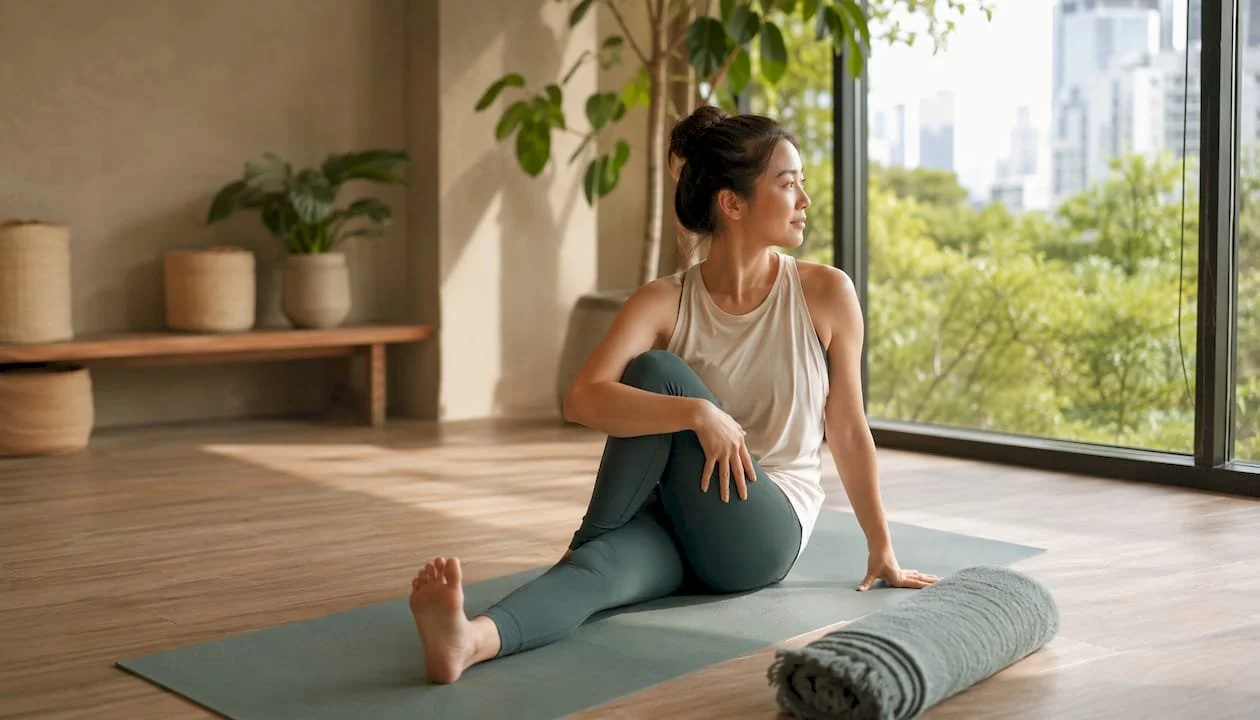
Starting yoga safely comes down to three things: short sessions, a forgiving style, and zero pressure to be flexible. Experts recommend that beginners practice two to three times per week, with each session lasting 15–30 minutes. That cadence builds the habit without overwhelming your body or your schedule.
Flexibility is not a prerequisite. It's a result. Many people put off starting because they can't touch their toes, but beginner classes are specifically designed to improve mobility gradually, not to test it on day one. Walk in stiff. That's the whole point.
Here's what to focus on from the start:
Start small. Two to three sessions per week, 15–30 minutes each, is the sweet spot for beginners.
Pick a gentle style. Hatha, Restorative, and Yin yoga are the most accessible entry points. Avoid fast-paced flows until you have the basics down.
Breathe first, pose second. Breath control is the foundation of every yoga practice. If you lose your breath, the pose isn't working for you.
Use props without apology. Blocks, straps, and folded blankets exist to make poses accessible, not to signal weakness.
Modify everything. No pose is mandatory in its full expression. A modified version done with good form beats a strained version done "correctly."
Learn a few foundational poses first. Mountain pose, Child's pose, Cobra, Forward Fold, and Plank give you a complete beginner sequence you can repeat for weeks.
Stop at sharp pain. Mild muscle fatigue is normal. Sharp or radiating pain is a signal to back off immediately.
Skip the comparison trap. Yoga is not a performance. What you see on social media is not your benchmark.
The mindset shift that matters most: yoga rewards consistency, not intensity. Showing up for a 20-minute session three times a week will do more for you than one ambitious 90-minute class you dread repeating.
Which yoga style is right for you as a beginner?
Not all yoga is the same, and picking the wrong style early on is one of the most common reasons beginners quit. The good news is that a few styles are genuinely built for people who are just starting out.
Hatha yogais the most widely recommended starting point. It moves slowly, holds poses long enough for you to actually feel what's happening in your body, and keeps the focus on alignment and breath rather than speed. Yoga therapist Valerie Williams, E-RYT 500, puts it plainly: Hatha lets you learn how a pose feels and which muscles it engages without rushing into the next movement. That's exactly what a beginner needs.
Other styles worth knowing:
Restorative yoga uses props heavily and focuses on deep relaxation. Poses are held for several minutes, which activates the parasympathetic nervous system and helps reduce stress. It's an excellent choice if you're coming to yoga for recovery or anxiety relief.
Yin yoga targets connective tissue with long holds, typically three to nearly ten minutes per pose. The slow pace suits beginners who want to work on flexibility without the intensity of a flow class.
Gentle Vinyasa links breath to movement in a slower, more accessible version of the traditional flow format. Once you've built some body awareness through Hatha, this is a natural next step.
Pro Tip: Try at least two or three different styles and teachers before deciding yoga "isn't for you." If your first class felt unwelcoming or confusing, that's almost certainly a reflection of the teaching style, not your ability. Different instructors create very different experiences.
For learning formats, you have real options. A studio beginner class gives you live feedback and the energy of a group. Online guided videos let you practice at home on your own schedule, which removes every logistical excuse. Private instruction is the fastest way to learn correct alignment, though it costs more. Many beginners do well starting with labeled "beginner" or "gentle" classes, either in person or online, because those classes build alignment and breathing habits from the ground up rather than assuming prior knowledge.
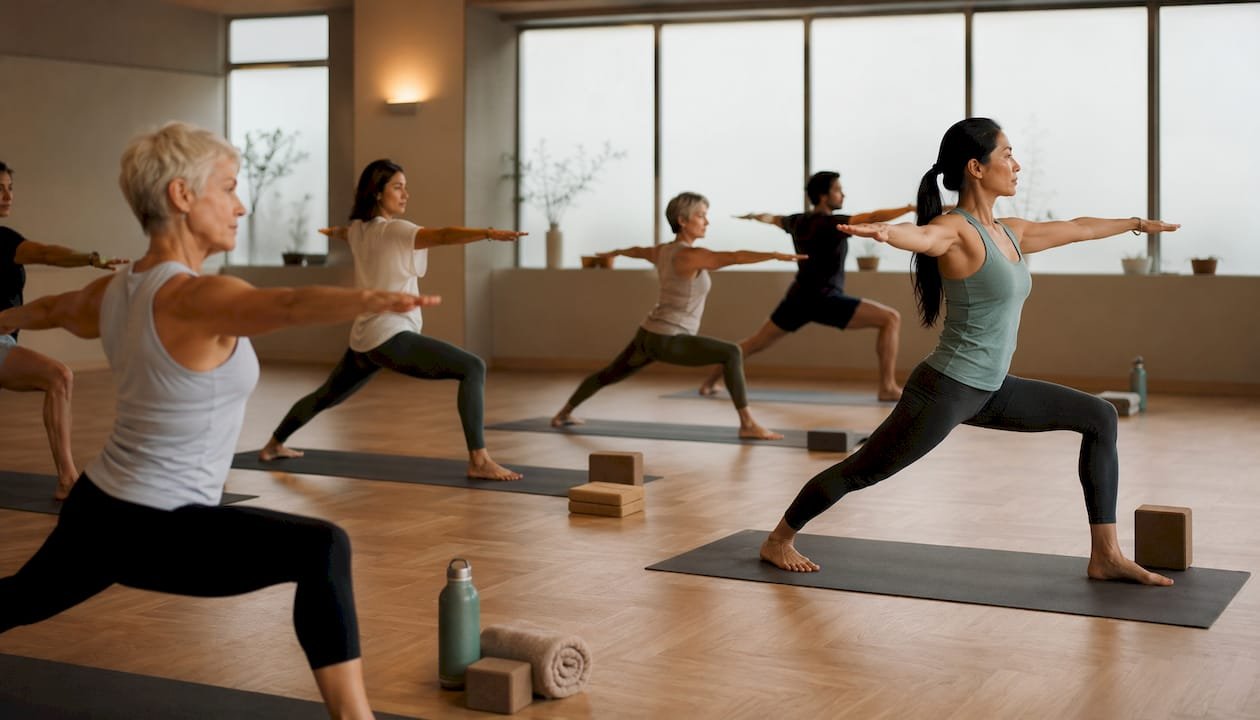
Amritayogawellness offers a range of beginner-friendly yoga styles that walk you through the differences so you can make an informed choice before you ever step on a mat.
How to set up a home yoga practice that actually sticks
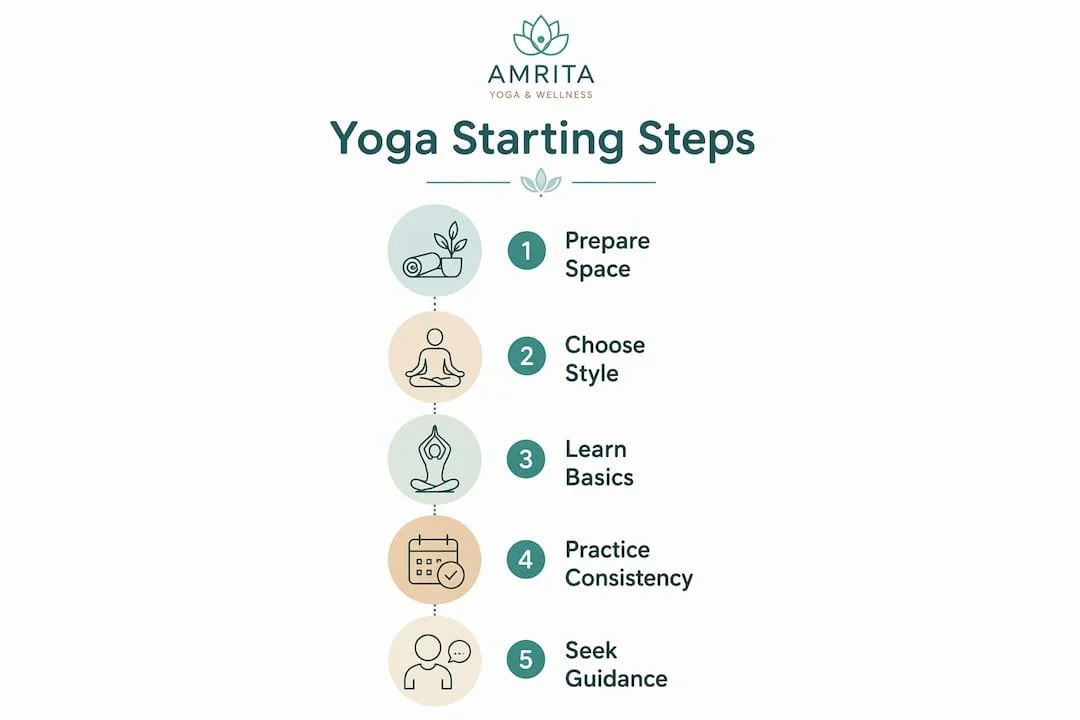
The biggest barrier to starting yoga at home isn't flexibility or knowledge. It's the false belief that you need the perfect setup first. You don't.
Effective practice starts with whatever you have. A towel on carpet works. A clear patch of floor works. Waiting until you have a dedicated yoga room, a premium mat, and matching gear is what yoga teachers call "optimization paralysis," and it's the most reliable way to never start.
What you actually need:
A mat or towel. A basic yoga mat costs around $20–$30 and provides enough grip and cushioning for all beginner poses. A folded towel on carpet is a legitimate substitute.
Comfortable clothing. Anything you can move freely in works. Fitted clothes make it easier for you (and an instructor) to see your alignment.
Props if available. Two yoga blocks and a strap cover nearly every modification a beginner will need. If you don't have them, hardcover books and a belt work fine.
A clutter-free space. You need roughly a 6-by-4-foot area. Clear it before each session so you're not stepping around furniture mid-pose.
Building the routine:
Frequency and duration. Start with two to three sessions per week of 15–30 minutes. Short, frequent sessions build the habit and let your body adapt without soreness that discourages you from coming back.
Warm up for 3–5 minutes. Gentle neck rolls, shoulder circles, Cat-Cow stretches on all fours, and a few slow spinal twists prepare your joints before any standing or weight-bearing poses.
Cool down for 5 minutes. End every session with Child's pose or a simple Savasana (lying flat on your back, arms relaxed at your sides). This signals to your nervous system that the work is done.
Breathing from day one. Start each session with three to five slow, deep breaths before you move. Ujjayi breathing, a gentle constriction at the back of the throat that creates a soft ocean sound, is a foundational pranayama technique worth learning early. It anchors your attention and regulates your pace throughout the practice.
Consistency beats duration every time. A 20-minute session three times a week will produce more progress than a two-hour session once a month.
How to stay motivated when yoga feels hard or intimidating
The hardest part of yoga for most beginners isn't the poses. It's showing up when you feel stiff, self-conscious, or like everyone else in the room knows something you don't. That feeling is almost universal, and it fades faster than you'd expect.
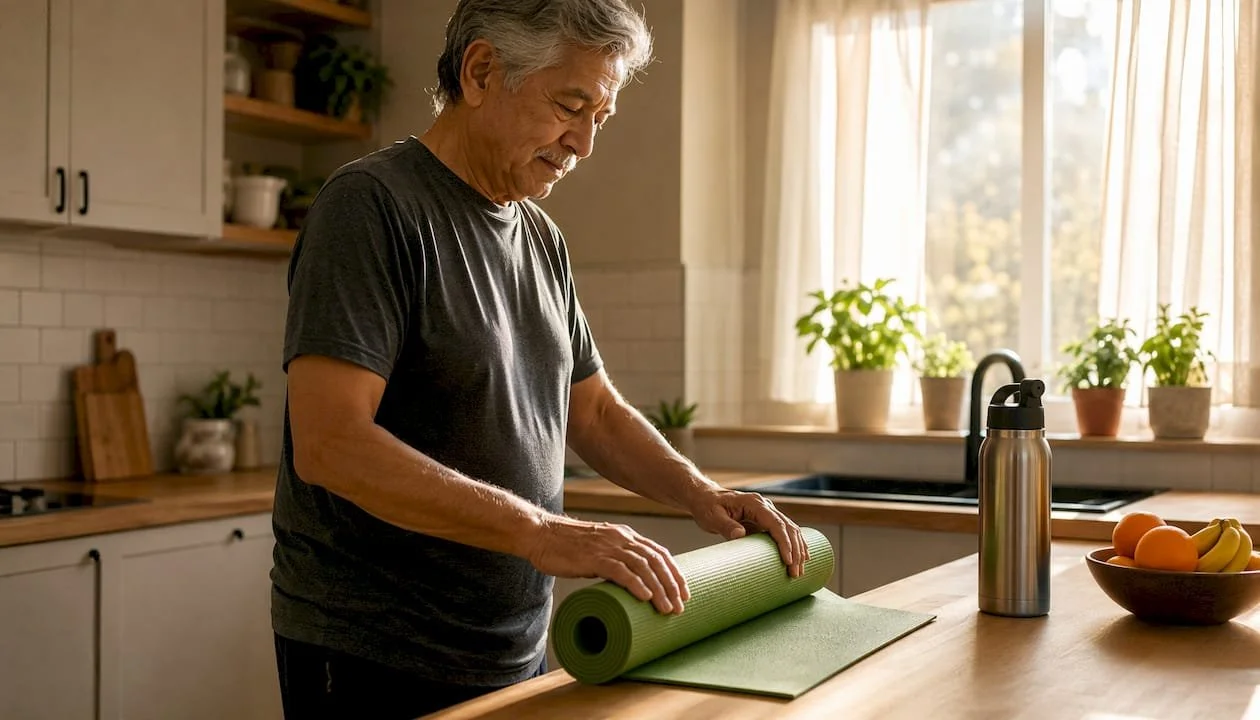
Yoga is fundamentally personal. The practice is a mirror, not a competition. What the person on the next mat is doing has no bearing on what your body needs today. Many beginners feel intimidated by the advanced poses that dominate social media, but a single conscious breath in Mountain pose counts as a successful yoga practice. That's not a consolation prize. That's the actual point.
Practical strategies that help:
Use breath and body sensation as your guide. If you're breathing steadily and feel a productive stretch, you're doing it right. If you're holding your breath to force a deeper pose, you've gone too far.
Accept modifications as the default, not the fallback. Props and modified versions of poses are not training wheels. They're how you build the strength and flexibility to eventually access the full pose safely.
Know the difference between discomfort and pain. Muscle fatigue, mild burning, and the sensation of a deep stretch are all normal. Sharp, shooting, or joint pain means stop and modify immediately.
Start with sessions short enough that skipping feels harder than doing them. A 15-minute session has almost no excuse. Once the habit is there, you'll naturally extend it.
Try different teachers before giving up on yoga entirely. Teaching style varies enormously. A teacher whose cues don't click for you isn't evidence that yoga doesn't work for you.
Track small wins. Notice when a pose that felt impossible last week now feels manageable. Progress in yoga is often subtle and cumulative.
Burnout at the beginner stage almost always comes from doing too much too soon. Three short sessions a week, done consistently for a month, will build more real progress than daily two-hour sessions that leave you exhausted and sore. Start smaller than you think you need to.
Why qualified instruction makes a real difference for beginners
Self-guided practice has its place, but for beginners, qualified instruction changes the trajectory of the practice in ways that are hard to replicate alone.
Lisa Blum, Doctor of Physical Therapy, identifies a qualified yoga teacher who provides clear, accessible cues and individual modifications as the most valuable investment a beginner can make for safety and confidence. The reason is straightforward: misalignment in basic poses, repeated over weeks, creates the kind of overuse injuries that sideline people for months. A good teacher catches those patterns before they become problems.
| Feature | Structured beginner program | Self-guided practice |
|---|---|---|
| Alignment feedback | Real-time correction from instructor | None; relies on mirrors or video review |
| Injury prevention | Modifications offered proactively | Depends on self-awareness |
| Progression | Structured, sequenced skill-building | Ad hoc; easy to plateau or skip steps |
| Motivation | Group energy and accountability | Requires strong self-discipline |
| Community | Built-in peer support | Isolated unless you seek it out |
| Accessibility | Labeled beginner classes remove guesswork | Requires research to find appropriate content |
Community matters more than most beginners expect. Practicing alongside others at a similar level normalizes the struggle, reduces self-consciousness, and creates accountability that's hard to manufacture alone. Workshops and group sessions also expose you to teaching perspectives and pose variations you wouldn't find in a solo practice.
Pro Tip: Look for beginner programs that explicitly describe their progression structure. A program that moves from foundational poses to more complex sequences over several weeks, with clear feedback mechanisms, will build your skills faster and more safely than a general "all levels" class.
Amritayogawellness builds its beginner programs around exactly this model: accessible entry points, individual modifications, and a community structure that keeps new practitioners engaged past the first few sessions. The studio's classes cover a range of styles, from Hatha to Restorative, with instructors trained to adapt poses for different bodies and ability levels. For beginners in the Philadelphia area, or anyone exploring structured online resources, Amritayogawellness offers a grounded, welcoming starting point.
Ready to take the first step? Amritayogawellness offers beginner classes, workshops, and wellness services including tarot readings for those looking to complement their yoga practice with broader self-care. Visit amritayogawellness.com to explore current class schedules and find the right entry point for where you are right now.
Key Takeaways
Starting yoga as a beginner requires short, consistent sessions in a gentle style, with qualified instruction and a patient mindset focused on breath and body awareness rather than flexibility or performance.
| Point | Details |
|---|---|
| Session frequency and duration | Begin with 2–3 sessions per week, each lasting 15–30 minutes, to build habit and allow safe body adaptation. |
| Best styles for beginners | Hatha yoga is the most recommended starting style; Restorative and Yin are strong alternatives for recovery and flexibility. |
| Flexibility is not required | Flexibility develops through consistent practice; it is never a prerequisite for starting yoga. |
| Props and modifications | Blocks, straps, and modified poses are standard tools, not workarounds, and reduce injury risk for new practitioners. |
| Qualified instruction matters | A trained teacher providing individual modifications is the most effective investment a beginner can make for safety and progress. |
Hatha Yoga: Meaning, History, and Practice Explained
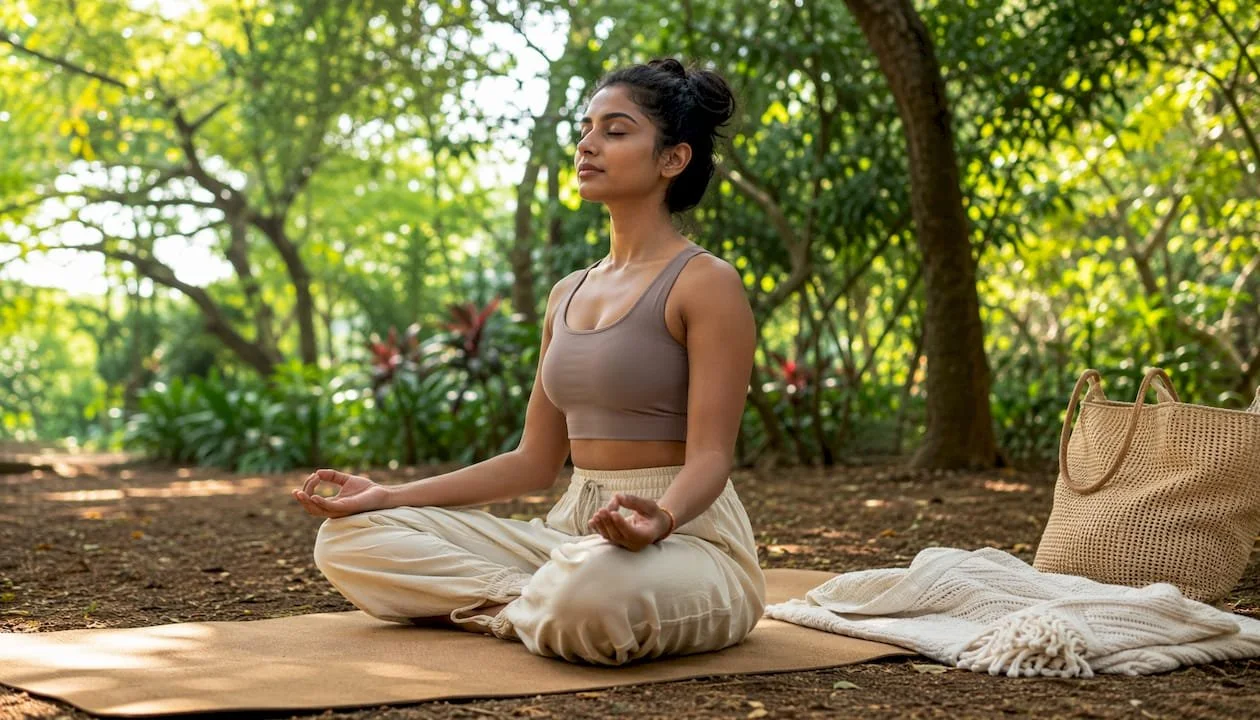
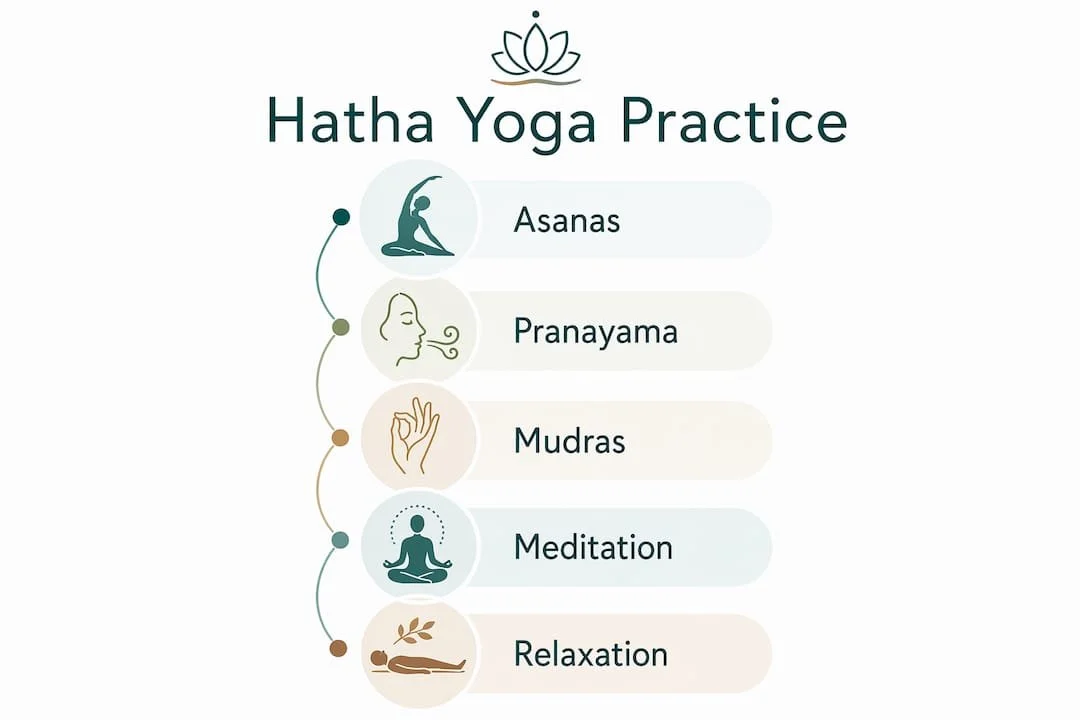
Hatha Yoga is a branch of yoga that combines physical postures (asanas), breath control (pranayama), and meditation to balance the body's energy and prepare the mind for deeper awareness. The word "Hatha" carries two layers of meaning: in Sanskrit it literally means "force," pointing to its active, disciplined nature, and it is also interpreted as the union of "ha" (sun) and "tha" (moon), symbolizing the balance of opposing energies within the body. What most Americans encounter in studios today is a slower, alignment-focused style of yoga that uses that name as a broad umbrella, covering everything from gentle beginner classes to more structured traditional practice.
Modern Hatha classes emphasize steady postures held with mindful attention rather than flowing sequences, making them one of the most accessible entry points for newcomers. A typical session moves through breathwork, a series of postures, and a closing meditation or relaxation period, lasting a standard class length.
Core components of Hatha Yoga practice include:
Asanas — physical postures that build strength, flexibility, and body awareness
Pranayama — conscious breath regulation that calms the nervous system
Mudras — hand or body gestures that direct energy flow
Bandhas — internal energy locks that concentrate vital force
Shatkarmas — traditional cleansing techniques for purification
Meditation — focused mental practice that anchors the session's physical work
How Hatha Yoga developed through history
Hatha Yoga originatedaround the 11th century, with the oldest dated text, the Amṛtasiddhi, emerging from a tantric Buddhist context. Some techniques, however, appear even earlier, traceable to the 1st century CE in Hindu Sanskrit epics and Buddhism's Pali canon. The tradition was not a single, unified system from the start. It grew through centuries of overlapping influences from Hindu and Buddhist tantric lineages.

The earliest Hatha Yoga methods focused on preserving bindu, the vital force believed to reside in the body and sustain life. Practitioners used inverted postures like viparītakaraṇī to physically reverse the downward flow of this energy, or used mudras to redirect the breath through the body's central channel. Over time, the framework shifted. Later texts layered the Kaula tradition's model of Kundalini energy rising through a system of chakras onto the earlier bindu-centered approach, broadening both the philosophy and the practice.
Key milestones in Hatha Yoga's development:
1st century CE — Early techniques appear in Hindu epics and Buddhist Pali texts
11th century — Amṛtasiddhi, the oldest dated Hatha Yoga text, emerges from tantric Buddhism
11th–13th centuries — Hindu Hatha texts appear; early focus on bindu preservation
15th century — Haṭhayogapradīpikā codifies asanas, pranayama, mudras, and bandhas
19th–20th centuries — Indian teachers bring Hatha Yoga to Western audiences
Late 20th century — "Hatha" becomes a catch-all term in American studios for alignment-based yoga
| Period | Development |
|---|---|
| 1st century CE | Earliest technique references in Hindu and Buddhist texts |
| 11th century | Amṛtasiddhi, oldest Hatha Yoga text, from tantric Buddhism |
| 11th–15th centuries | Classical texts including Haṭhayogapradīpikā formalize practice |
| 19th–20th centuries | Indian teachers introduce Hatha Yoga to the West |
| Late 20th century | “Hatha” adopted as a broad studio category in the United States |
What a Hatha Yoga practice actually looks like
Traditional Hatha Yogaencompasses far more than postures. Its classical toolkit includes asanas, pranayama, mudras, bandhas, and shatkarmas, the six internal cleansing practices: dhauti (cleansing the teeth and body), basti (cleansing the rectum), neti (cleansing the nasal passages), trataka (cleansing the eyes), nauli (abdominal massage), and kapalabhati (clearing phlegm). Most modern classes skip the shatkarmas entirely and concentrate on postures and breath, but knowing the full picture helps you understand why classical teachers treat Hatha Yoga as a complete system, not just exercise.
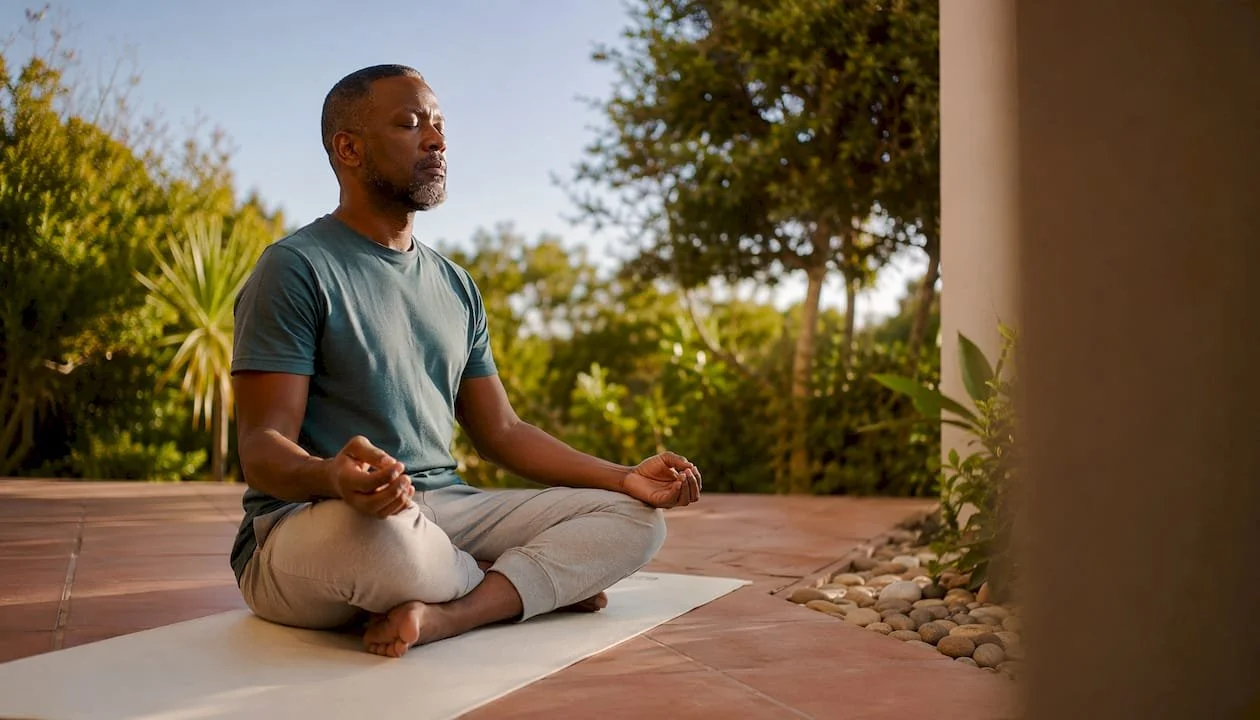
A typical class structure follows a clear arc. Sessions open with breathwork to settle the mind, move into a warm-up sequence, build through standing and floor postures held for alignment and endurance, and close with meditation or Savasana (final relaxation). Because postures are held rather than flowed through, the practice demands sustained focus. Beginners often find this more physically demanding than expected.
Practice components at a glance:
Asanas — held steadily, not flowed; build strength and alignment
Pranayama — often taught at the start and woven through the session
Mudras and bandhas — used in classical and more advanced classes to direct prana
Shatkarmas — traditional purification; rare in modern Western classes
Meditation and Savasana — anchor the session's closing
Pro Tip: If you find a Hatha class surprisingly tiring, that's by design. Holding a Warrior II for several breaths recruits more sustained muscular effort than moving through it quickly in a flow class. Give yourself three or four sessions before judging the difficulty level.
No standardized sequence exists for Hatha Yoga, unlike some other styles. What you experience depends heavily on the teacher's training and lineage, so two classes labeled "Hatha" at different studios can feel quite different.
What are the real benefits of practicing Hatha Yoga?
Hatha Yoga was originally designed to prepare the body and mind for meditation and spiritual realization, not primarily for physical fitness. That original purpose shapes the benefits practitioners actually report: a calmer, more focused mind alongside genuine physical gains.
Practicing Hatha Yogaregularly builds flexibility, strength, and balance while reducing stress and supporting mental health. The slow, deliberate pace gives the nervous system time to downshift, which is part of why many practitioners describe feeling both physically worked and mentally clear after a session. For people who want to develop a meditation practice, Hatha Yoga serves as a natural on-ramp: the body becomes comfortable sitting still, and the breath becomes a familiar anchor.
Benefits practitioners commonly experience:
Increased flexibility and joint mobility
Greater muscular strength and endurance, especially in the core
Improved posture and spinal alignment
Reduced stress and anxiety through breath-focused movement
Better sleep quality
Heightened body awareness and proprioception
Preparation for seated meditation through physical ease and breath control
Support for mental health and emotional regulation
The physical and mental benefits reinforce each other. A body that moves without pain sits more comfortably in stillness, and a mind trained to follow the breath during a challenging posture carries that skill into daily life.
Diet in the Hatha Yoga tradition
Classical Hatha Yoga texts treat diet as part of the practice, not a separate lifestyle choice. The traditional recommendation is a sattvic diet, meaning foods that are pure, light, fresh, and easy to digest. The reasoning is practical within the system: heavy, processed, or stimulating foods are believed to agitate the mind and disrupt the subtle energy channels that pranayama and asana work to refine.
Classical dietary principles from the Hatha tradition include:
Favor fresh, plant-based foods — fruits, vegetables, grains, legumes, and dairy
Eat in moderation — classical texts recommend filling the stomach halfway with food, a quarter with water, and leaving a quarter empty
Avoid heavy, fried, or processed foods — believed to dull awareness and slow energy
Limit meat, alcohol, and stimulants — traditionally discouraged for serious practitioners
Eat at regular times — consistency supports digestive fire (agni) and stable energy
Modern practitioners take a flexible approach. Many follow a broadly plant-forward diet without strict adherence to classical rules, and teachers rarely mandate specific eating patterns in Western studio settings. The underlying principle, eating in a way that supports clarity and energy rather than heaviness, translates well regardless of how literally you follow the tradition.
Practical tips for starting your Hatha Yoga practice
Beginners do well in Hatha Yoga when they prioritize breath and alignment over how a posture looks. The most common mistake is forcing range of motion before the body is ready, which leads to strain rather than progress. A good teacher will offer modifications for every posture, and using them is a sign of intelligence, not weakness.
For equipment, you need very little: a non-slip yoga mat and comfortable, form-fitting athletic wear that lets the teacher see your alignment. Loose, baggy clothing can obscure whether your hips are square or your spine is neutral, which matters in a style where alignment is the point. You can explore wellness scheduling strategies to build a consistent practice into your week without overcommitting early on.
When selecting a class or teacher, look for someone who cues breath alongside movement and who offers hands-on or verbal adjustments. A teacher trained in a recognized lineage, whether Iyengar-influenced, Sivananda, or another classical school, will typically give you more structural guidance than a generalist. Start with a beginner or "all levels" Hatha class rather than jumping into an intermediate session.
Pro Tip: Hatha Yoga often feels harder than it looks. Static holds demand more from your muscles and mind than flowing through the same postures. Set your expectation at "steady effort" rather than "easy stretch," and you'll enjoy the practice far more from session one.
Consistency matters more than frequency at the start. Two or three sessions per week builds the body awareness and breath habits that make the practice genuinely useful, and it gives your muscles time to adapt between sessions.
Classical Hatha Yoga texts and philosophy
The Haṭhayogapradīpikā, composed in the 15th century by Svātmārāma, is the most widely studied classical Hatha Yoga text in the world today. It systematizes four main practices: asanas, pranayama, mudras, and samadhi (meditative absorption), and it draws explicitly from earlier sources including the Goraksha Shataka and the work of the Nath tradition. The text frames the entire physical practice as a vehicle for spiritual liberation, not an end in itself.
Other foundational texts include the Gheranda Samhita, which organizes practice into seven limbs and gives detailed instructions for shatkarmas, and the Shiva Samhita, which emphasizes the subtle body, chakras, and the role of the guru. Together, these texts establish that Hatha Yoga's philosophy is inseparable from its techniques. Breath control, for example, is not just a relaxation tool in this framework. It is a method for directing prana through the nadis (energy channels) to awaken Kundalini energy and ultimately dissolve the individual self into universal awareness.
The philosophical backbone of Hatha Yoga connects to the broader Shaiva Tantra tradition and shares significant ground with Patanjali's Yoga Sutras, though with different emphases. Patanjali's system dwells deeply on meditation methodology; Hatha texts dwell on the body and breath as the primary instruments of transformation.
What are the main styles and schools within Hatha Yoga?
Because no single standardized Hatha sequence exists, the tradition has branched into distinct schools, each with its own emphasis and teaching methodology.
Iyengar Yoga places extraordinary attention on precise alignment, using props like blocks, straps, and bolsters to help practitioners access postures correctly regardless of their current flexibility. It traces directly to B.K.S. Iyengar, one of the most influential yoga teachers of the 20th century.
Sivananda Yoga follows a fixed sequence of 12 basic postures developed by Swami Sivananda and popularized in the West by Swami Vishnudevananda. It integrates the five points of yoga: proper exercise, breathing, relaxation, diet, and positive thinking, making it one of the more explicitly philosophical Western Hatha schools.
Kundalini Yoga, as taught in the West by Yogi Bhajan, emphasizes breath, chanting, and specific kriyas (action sets) designed to awaken Kundalini energy. It sits at the more spiritually intensive end of the Hatha spectrum.
Bikram and hot yoga formats apply Hatha postures in a heated room, typically 95–105°F, to increase flexibility and intensify the cardiovascular effect. Amritayogawellness offers hot Hatha yoga as one of its class formats, combining the alignment focus of traditional Hatha with the added challenge of heat.
Restorative Yoga uses long-held, fully supported postures to activate the parasympathetic nervous system. It draws from Hatha principles but prioritizes deep rest over muscular engagement.
Who should be cautious with Hatha Yoga?
Hatha Yoga is generally safe for most adults, but certain conditions call for modifications or medical clearance before starting. The slow pace makes it less risky than high-intensity styles, yet static holds can still stress joints and connective tissue when done without proper guidance.
Situations that warrant extra care:
Recent surgery or injury — especially to the spine, knees, hips, or shoulders; get clearance from a physician before joining a class
Osteoporosis — some forward folds and twists can compress vertebrae; an experienced teacher can modify these
Pregnancy — many postures are safe with modification, but deep twists, strong inversions, and prone postures need adjustment, particularly in the second and third trimesters
Glaucoma or high blood pressure — inversions like Shoulderstand or Headstand can temporarily raise intraocular and arterial pressure
Severe anxiety or trauma history — breath retention techniques (kumbhaka) can trigger panic responses in some people; a trauma-informed teacher helps
The most practical precaution for anyone starting out is to tell your teacher about any injuries or health conditions before class begins. A qualified Hatha teacher will adjust your practice, not push you past your limits.
How does Hatha Yoga differ from Ashtanga, Iyengar, and Kundalini?
The clearest way to understand the difference between Hatha and other styles is to look at pace, structure, and emphasis.
Hatha vs. Ashtanga: Ashtanga follows a fixed, progressive sequence of postures linked by breath in a continuous flow. The pace is demanding and the sequence never changes. Hatha has no fixed sequence, moves at a slower pace, and holds postures rather than flowing through them. Ashtanga is physically intense by design; Hatha can range from gentle to moderately challenging depending on the teacher.
Hatha vs. Iyengar: Iyengar is technically a Hatha style, but it is distinguished by its extreme precision in alignment and its systematic use of props. A general Hatha class may cue alignment verbally; an Iyengar class will spend significant time on a single posture until it is correct. Iyengar is particularly well-suited for people recovering from injury.
Hatha vs. Kundalini: Kundalini yoga, as practiced in Western lineages, incorporates repetitive movements, chanting (mantras), and specific breathing patterns called pranayama kriyas that are rarely found in a standard Hatha class. The goal is explicitly energetic and spiritual awakening rather than physical conditioning. Hatha can lead toward the same spiritual aims, but through a more gradual, body-centered path.
Hatha vs. Vinyasa: Vinyasa links postures with breath in a continuous flow, creating heat and cardiovascular demand. Hatha holds postures statically. Both use the same foundational poses, but the experience feels entirely different. Vinyasa tends to feel athletic; Hatha tends to feel deliberate and meditative. You can deepen your understanding of pranayama's role in both styles by exploring how breath anchors each approach differently.
How often and how long should you practice Hatha Yoga?
Typical Hatha classes run 45–90 minutes, and that range suits most practitioners well. A 60-minute class gives enough time for a meaningful breathwork opening, a solid sequence of postures, and a proper closing relaxation. Ninety minutes allows for more depth in individual postures and a longer meditation.
For frequency, two to three sessions per week is a practical starting point for beginners. That schedule builds body awareness and breath habits without overtaxing muscles that are adapting to new demands. Daily practice is traditional in classical Hatha lineages, but for most people integrating yoga into a busy American schedule, consistency over months matters far more than daily sessions in the short term.
Progress in Hatha Yoga is not linear. Flexibility gains can plateau and then suddenly jump. Breath awareness develops quietly over weeks before it becomes noticeable. The practitioners who benefit most are those who treat the practice as a long-term habit rather than a short-term fix, showing up regularly even when sessions feel unremarkable. Exploring patient wellness resources can help you build the broader health habits that support a sustainable yoga routine.
Key Takeaways
Hatha Yoga is the foundational physical branch of yoga, combining asanas, pranayama, and meditation to balance body and mind, with roots dating to 11th-century tantric texts and a modern presence in studios across the United States.
| Point | Details |
|---|---|
| Meaning of Hatha | “Force” in Sanskrit; also interpreted as the union of sun and moon energies. |
| Historical roots | Oldest text, the Amṛtasiddhi, dates to the 11th century from a tantric Buddhist tradition. |
| Class structure | Sessions typically include breathwork, asanas held for alignment, then meditation, covering a standard class length. |
| Core benefits | Builds flexibility, strength, and stress resilience while preparing the mind for meditation. |
| Practice frequency | Two to three sessions per week is a solid starting point for most beginners. |
Ready to experience Hatha Yoga firsthand? Amritayogawellness offers classes, workshops, and wellness services in Philadelphia designed for every level, from first-timers to dedicated practitioners. Whether you want to explore traditional Hatha, try a hot yoga format, or complement your practice with something unexpected like a tarot reading for personal reflection, the studio brings together a community of people serious about their well-being.
Restorative Yin Yoga: What It Is and How to Practice It
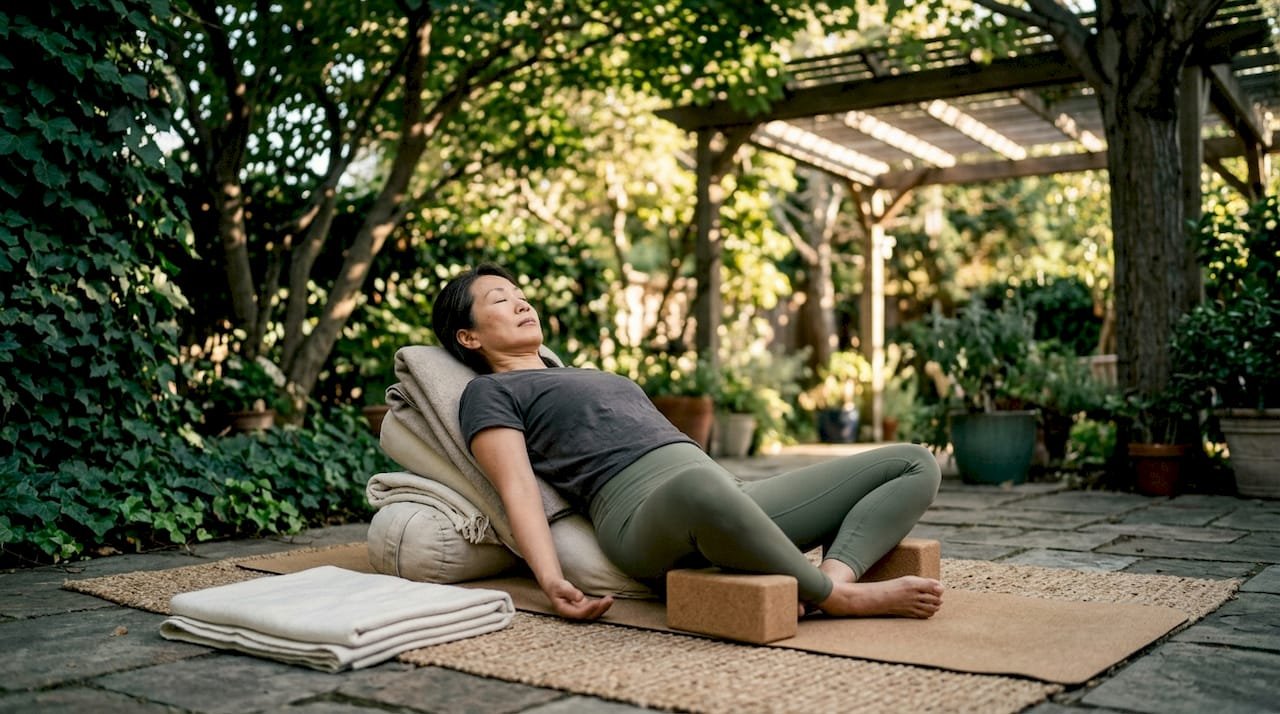
Restorative yin yoga is a hybrid practice that combines the long-held connective tissue work of yin yoga with the full prop-supported relaxation of restorative yoga. You hold floor-based poses for several minutes, fully supported by bolsters, blocks, blankets, and eye pillows, so your muscles can disengage completely while your connective tissues receive a gentle, sustained release. The result is something neither practice delivers alone: deep tissue work happening simultaneously with a profound nervous system reset.
What makes this hybrid distinct is the intention behind the props. In traditional yin yoga, props assist your position but you still feel a working edge of sensation. In restorative yoga, props eliminate all sensation entirely. Restorative yin yoga lands between those two poles, using props generously enough to remove muscular effort while still allowing mild connective tissue engagement to occur passively over time.
This practice suits anyone chasing flexibility, stress relief, or a nervous system reset, particularly people who find pure restorative yoga too passive but find traditional yin too demanding.
At a glance, restorative yin yoga:
Holds poses for 3–10 minutes in fully supported positions
Uses bolsters, blocks, blankets, and eye pillows to eliminate muscular effort
Targets deep connective tissues (fascia, ligaments, joint capsules) passively
Activates the parasympathetic nervous system for deep rest
Blends yin's tissue focus with restorative yoga's surrender and comfort
Suits flexibility goals, stress recovery, and emotional processing
What is yin yoga and why does it matter?
Yin yoga is a slow, floor-based practice that targets the body's deep connective tissues rather than its muscles. Where most movement practices work the muscular layer, yin goes deeper, reaching fascia, ligaments, and joint capsules through long, still holds. The practice was popularized in the West by Paul Grilley and Sarah Powers, drawing on both Taoist principles and anatomical understanding of how connective tissue responds to sustained, gentle load.
The defining concept in yin is the "working edge." You move into a pose until you feel a mild to moderate sensation, then stop there and stay. Not pain, not numbness, just a noticeable pull that you breathe through for several minutes. That sustained, low-level stress is what prompts connective tissue to adapt and lengthen over time, which is why yin yoga benefits include improved joint mobility and tissue health that other styles rarely touch.
Props appear in yin, but their role is positioning rather than comfort. A block under your hip might help you reach the floor, but you're still feeling the stretch. The mental side of yin is real too: staying with sensation for several minutes builds a kind of quiet resilience, training your nervous system to tolerate discomfort without reacting.
Core characteristics of yin yoga:
Poses held several minutes at a mild working edge of sensation
Targets fascia, ligaments, and joint capsules rather than muscles
Props used for alignment assistance, not to remove sensation
Builds flexibility, joint health, and connective tissue adaptation
Cultivates mental stillness and breath awareness under mild stress
Best suited for active practitioners wanting tissue-focused recovery
What restorative yoga actually does for your body
Restorative yoga operates on a completely different premise. The goal is not adaptation through stress but recovery through the complete absence of it. Every prop, every blanket fold, every bolster angle exists to remove physical load from the body until muscles have nothing left to do but let go.
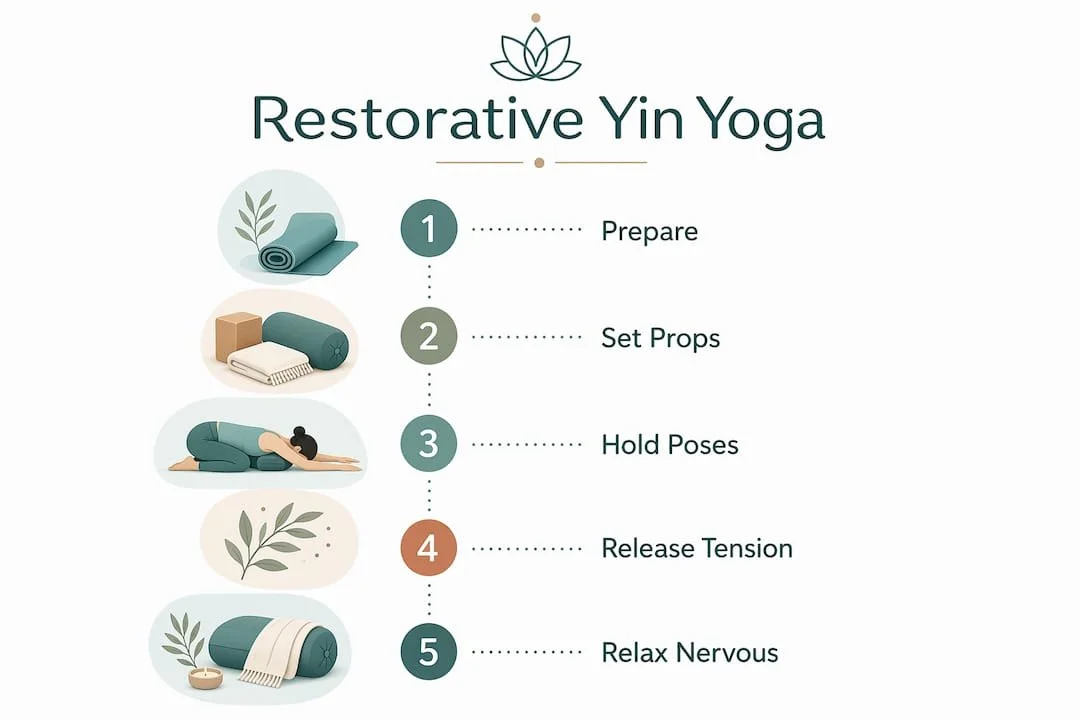
Pose durations run longer here because the nervous system needs time to shift from sympathetic (fight-or-flight) to parasympathetic (rest-and-digest) mode. A well-set-up restorative pose feels like being held rather than stretched. Restorative yoga sessions use props like two blankets, two blocks, a bolster, and often an eye pillow to create that nest of support, and even a 10-minute session can produce measurable emotional relief.
The mental approach is surrender rather than endurance. You're not staying with anything uncomfortable. You're practicing the skill of letting go, which turns out to be harder than it sounds for most people. Restorative yoga is particularly effective during burnout, illness recovery, or any period when the body's reserves are genuinely depleted.
Core characteristics of restorative yoga:
Poses held 5–20 minutes with full prop support and zero sensation
Props fill every gap so muscles disengage completely
Activates the parasympathetic nervous system for deep recovery
Benefits include stress relief, improved sleep, emotional balance, and injury recovery
No stretch sensation should be present; props are adjusted until comfort is total
Suited for burnout, stress recovery, and nervous system restoration
How yin yoga and restorative yoga actually differ
The clearest way to separate these two practices is by asking one question: are you supposed to feel something? In yin yoga, yes. In restorative yoga, no. That single distinction drives every other difference between them.
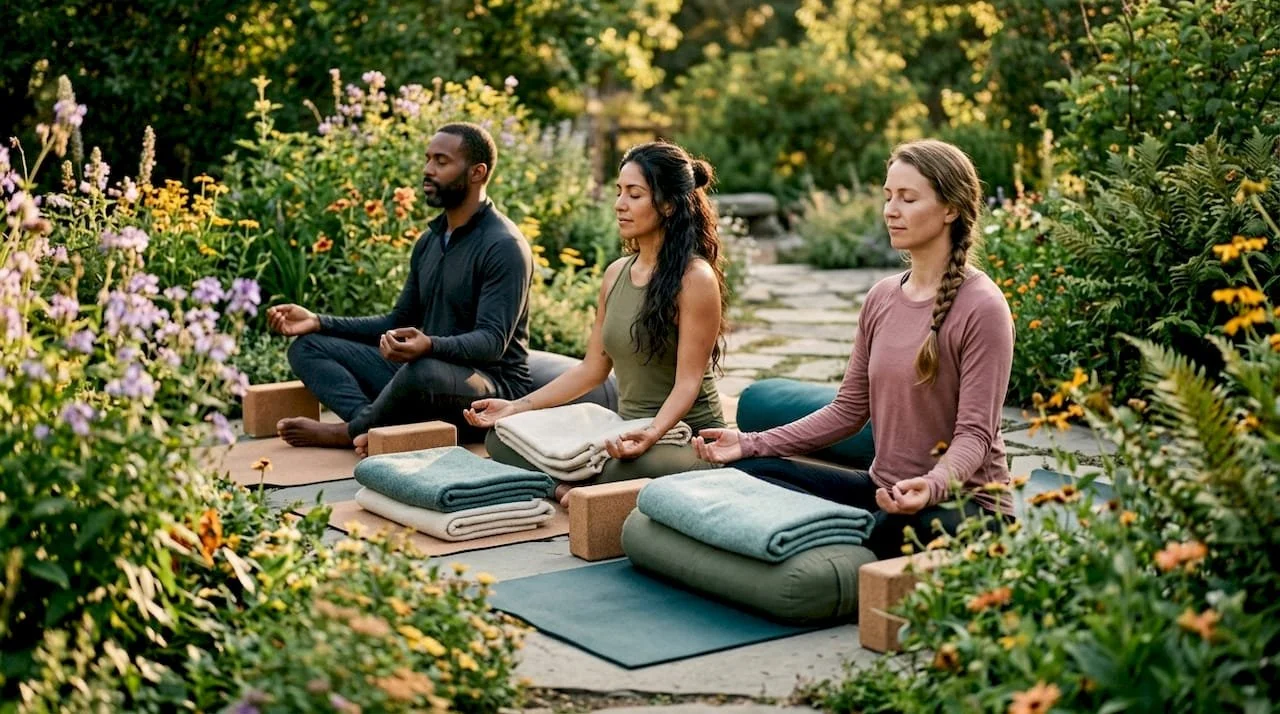
Yin yoga introduces mild sustained stress to connective tissues to stimulate adaptation, while restorative yoga uses extensive props to remove all physical load for total relaxation. The prop use reflects this: yin uses props moderately to help you reach a position, while restorative yoga's prop approach fills every negative space in the body until muscles disengage completely. A restorative setup can involve sandbags, multiple bolsters, and carefully folded blankets under every limb.
Philosophically, yin builds resilience through controlled sensation. Restorative rehearses rest by removing all challenge. Both activate the parasympathetic nervous system, but through opposite mechanisms: yin applies gentle stress for tissue adaptation, while restorative removes stress entirely for deep recovery. They're complementary, not interchangeable, and confusing them leads to either under-supporting a restorative pose or over-supporting a yin one.
| Dimension | Yin yoga | Restorative yoga |
|---|---|---|
| Philosophy | Resilience through sustained sensation | Surrender and deep rest |
| Stress vs. rest | Mild connective tissue stress for adaptation | Complete removal of physical stress |
| Alignment | Functional; props assist positioning | Comfort-first; props fill all gaps |
| Time per pose | 3–5 minutes | 5–20 minutes |
| Use of props | Moderate; sensation remains | Extensive; sensation eliminated |
| Intended benefits | Flexibility, joint health, mental resilience | Stress relief, recovery, nervous system reset |
Common misconceptions worth clearing up:
- Yin yoga is not the same as restorative yoga, even though both are slow and floor-based.
- Restorative yoga is not a beginner version of yin; it serves a different physiological purpose.
- Using more props does not make a yin pose restorative; the intention and sensation level define the practice.
- Both practices can and do activate the parasympathetic nervous system, just through different pathways.
Benefits of restorative yin yoga and how to start safely
The hybrid practice earns its place precisely because it delivers what neither parent practice does alone. Yin restorative yoga offers deep tissue work alongside complete relaxation and nervous system calming, with poses typically held up to 10 minutes in full prop support. You get the connective tissue release of yin without the mental demand of staying with sharp sensation, because the props reduce that sensation to something mild and manageable.
Mentally and emotionally, this practice creates space that active yoga rarely offers. Long, supported holds give the nervous system time to process stress rather than just suppress it. Many practitioners find that emotions surface during extended floor poses, which is a sign the body is releasing stored tension rather than a reason to stop. Breath awareness is the primary tool for navigating that experience: slow, deliberate exhales signal safety to the nervous system and deepen the relaxation response.
For beginners, the biggest obstacle is usually mental rather than physical. Stillness feels unproductive at first, especially for people accustomed to movement-based exercise. Breath focus is the primary technique instructors teach overcoming restlessness and settle into the hold. Start with shorter holds of 3–5 minutes and build gradually. Pair restorative yin yoga with more active practices on alternating days for a balanced approach to both flexibility and recovery. Exploring a holistic wellness routine that includes movement variety can make the stillness of restorative yin feel more natural over time.
Practical tips and precautions for beginners:
Start with classic poses: Supported Child's Pose, Reclined Butterfly, Legs Up the Wall, Supported Fish, and Melting Heart
Use a bolster under the spine, blocks under the knees, and blankets under the head to build full support
Aim for mild tissue sensation at most; if you feel sharp or joint pain, add props or exit the pose
Avoid restorative yin yoga during acute injury, late-stage pregnancy, or severe osteoporosis without medical guidance
Keep the room warm and dim; cold muscles and bright light work against the parasympathetic shift
Allow 5–10 minutes of stillness after your final pose before returning to activity
Pro Tip: Before settling into any pose, spend 60–90 seconds adjusting your props until you feel no muscular effort at all. Most beginners under-prop and then wonder why they can't relax. The setup is the practice.
Key Takeaways
Restorative yin yoga is the most accessible entry point for practitioners who want connective tissue release and nervous system recovery in a single session, without the mental demand of traditional yin or the complete passivity of pure restorative yoga.
| Point | Details |
|---|---|
| Hybrid practice definition | Restorative yin yoga blends yin's connective tissue focus with restorative yoga's full prop support and relaxation. |
| Pose duration | Poses are held 3–10 minutes, fully supported, to release tension without muscular effort. |
| Key distinction from yin | Yin requires a working edge of sensation; restorative yin minimizes that sensation through generous prop use. |
| Key distinction from restorative | Restorative yoga removes all sensation; restorative yin allows mild passive tissue engagement to occur. |
| Beginner priority | Adjust props until muscular effort disappears, and use breath awareness to navigate mental restlessness during holds. |
Amritayogawellness offers classes, workshops, and community events in Philadelphia designed to support exactly this kind of layered wellness practice. Whether you're drawn to the deep tissue work of yin, the nervous system reset of restorative yoga, or the restorative yoga techniques that bridge both, the studio's offerings meet you where you are. You can also explore Amritayogawellness's wellness workshops for community-centered ways to deepen your self-care practice beyond the mat.
Anti Gravity Yoga Benefits: What You Need to Know
TL;DR:
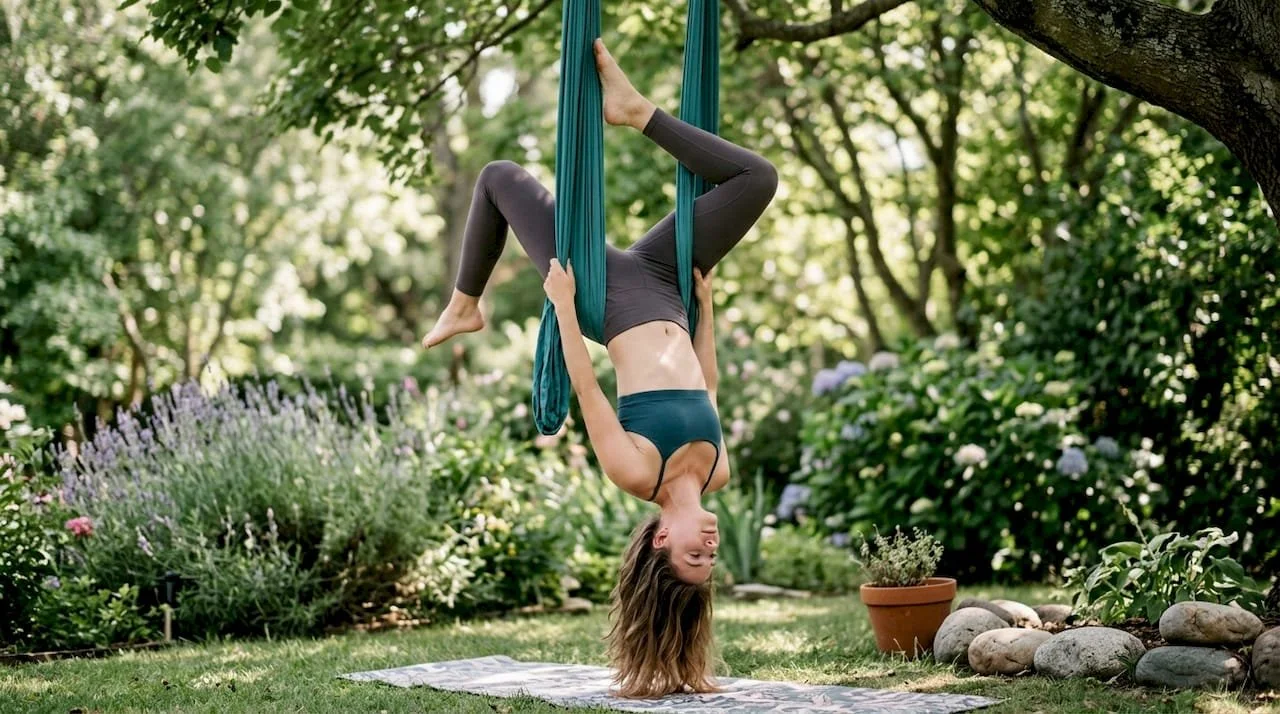
Anti-gravity yoga uses a silk hammock to enhance strength, flexibility, and mental well-being through inversions and suspension. It offers significant benefits like spinal decompression, increased core and upper body strength, and greater flexibility than traditional yoga. The practice also reduces cortisol levels and improves mood, though beginners should consider safety precautions and proper instruction.
Anti-gravity yoga is defined as a practice that uses a silk suspension hammock to support the body through inversions, strength poses, and flexibility work that traditional floor yoga cannot replicate. The anti gravity yoga benefits span from measurable spinal decompression to reduced cortisol levels, making it one of the most physically and mentally complete fitness methods available to adults today. Aerial yoga, the widely recognized industry term for this practice, combines classical yoga alignment with aerial acrobatics and physical therapy principles. Research from 2024–2026 confirms quantifiable gains in strength, flexibility, and psychological well-being that go well beyond what most people expect from a hammock class.
What physical benefits does anti-gravity yoga offer?
Aerial yoga delivers physical results that traditional yoga simply cannot match, largely because suspension changes how the body loads and moves. When you hang in a hammock, gravity works with you rather than against you, allowing deeper stretches and more honest alignment.
Spinal decompression and joint relief
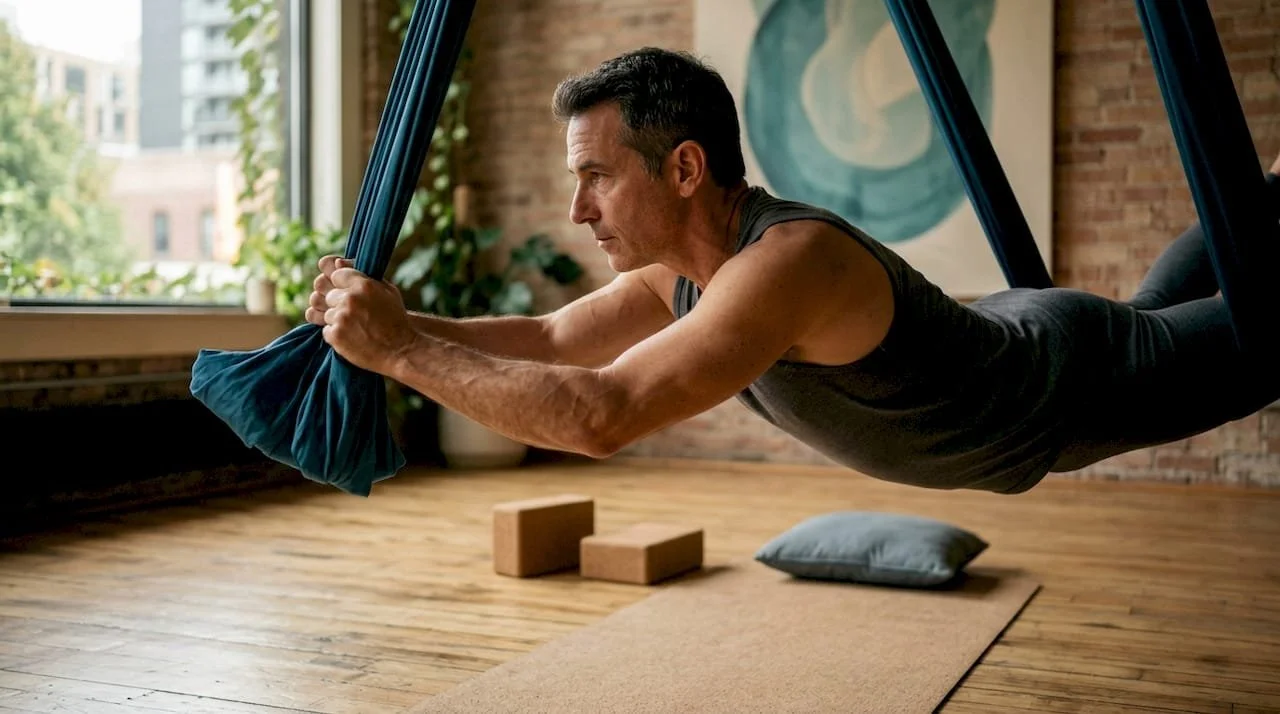
Spinal decompression is the most cited physical benefit of aerial yoga, and the biomechanics behind it are straightforward. Intradiscal pressure in the lumbar spine decreases by 35–50% during full inversion, reducing paraspinal muscle activity and promoting spinal relaxation. That pressure drop mimics the disc height recovery your spine experiences during sleep, but it happens actively and consciously during practice. The result is reduced muscle tension along the spine and a noticeable sense of length after class.
One detail worth knowing: acute spinal decompression during inversion does not produce permanent disc changes. The benefits come from mechanical unloading and muscle relaxation, not structural remodeling. That distinction matters if you have a disc condition and are weighing aerial yoga against other therapies.
Strength and core activation
Aerial yoga activates 30% more core muscles than traditional floor yoga because the hammock creates constant instability. Your stabilizing muscles fire continuously to keep you balanced in the air. That sustained activation builds functional strength faster than static poses on a mat.
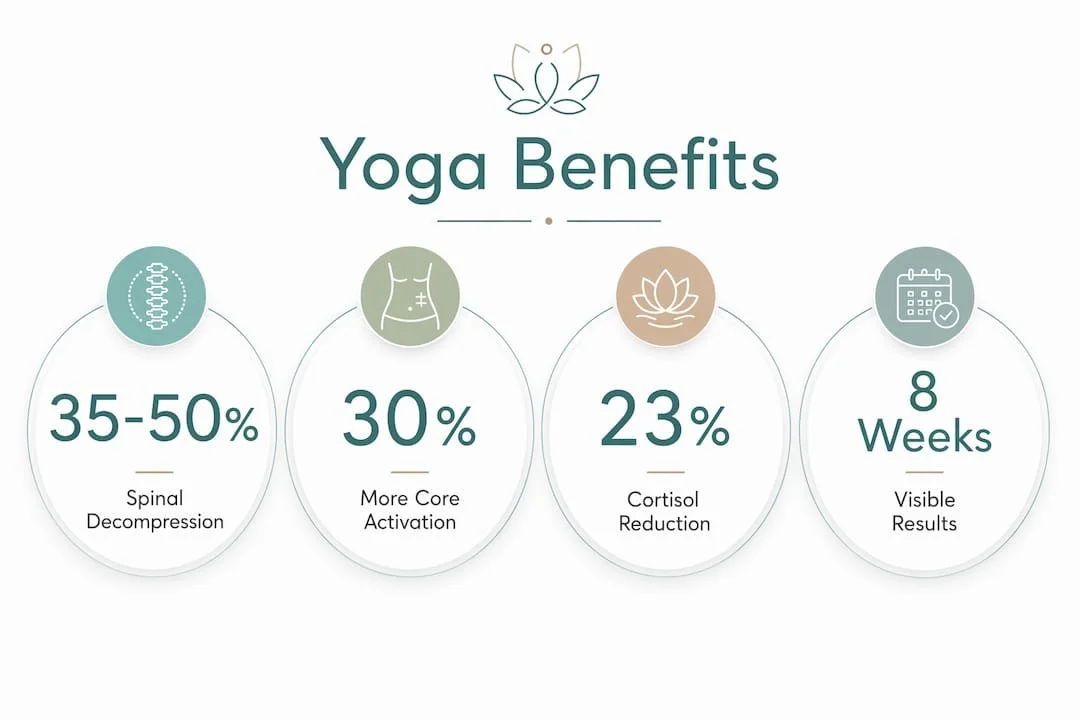
Upper body gains are equally significant. Practitioners who train twice weekly for 8 weeks improve upper body strength by 27% and spinal flexibility by 35% compared to traditional yoga participants. Eight weeks is a short window for that level of change. It reflects how much harder the body works when it cannot rely on the floor for support.
Flexibility gains
Flexibility improvements in aerial yoga are concentrated in the hamstrings and spine, two areas where traditional yoga often plateaus. Biomechanics research shows a 41% average increase in hamstring flexibility within 3 months for aerial yoga practitioners, nearly double the rate seen in traditional yoga. The hammock allows practitioners to release into a stretch without the muscular bracing that floor poses often trigger. That passive release is why gains accumulate faster.
Pro Tip: If hamstring tightness has been your plateau in traditional yoga, try a supported aerial forward fold in the hammock at the start of class. The suspension removes the need to "hold yourself up," so the hamstrings can actually let go.
| Benefit | What the research shows |
|---|---|
| Spinal decompression | Lumbar intradiscal pressure drops 35–50% during full inversion |
| Core strength | 30% more core muscle activation than floor yoga |
| Upper body strength | 27% improvement after 8 weeks of twice-weekly practice |
| Hamstring flexibility | 41% average increase within 3 months |
| Spinal flexibility | 35% improvement over 8 weeks compared to traditional yoga |
How does aerial yoga improve mental well-being?
The mental health case for aerial yoga is grounded in neuroscience, not just anecdote. Suspension and inversion activate the parasympathetic nervous system, which is the branch responsible for rest, digestion, and recovery. That activation is the physiological reason practitioners consistently report feeling calmer after class.
Cortisol reduction and anxiety relief
Aerial yoga reduces cortisol levels by 23% more than traditional yoga. Lower cortisol means less physiological stress, which translates directly into reduced anxiety symptoms over time. For adults carrying chronic stress, that difference between aerial and traditional yoga is clinically meaningful, not just a wellness talking point.
The psychological benefits of aerial yoga also include improved mood, reduced anxiety, and increased self-efficacy. Self-efficacy, the belief that you can handle challenges, grows when you repeatedly do something that initially felt impossible. Hanging upside down in a hammock qualifies.
Inversion, blood flow, and mood
Supported inversions temporarily increase cerebral blood flow, improving alertness, reducing mental fatigue, and elevating mood shortly after practice. The effect is brief but consistent. Practitioners often describe the post-class mental clarity as sharper than what they get from a standard yoga session.
"Aerial yoga combines physical challenge with playful movement, creating unique mood-boosting effects rarely matched by traditional yoga. The novelty of the environment, the vestibular stimulation, and the sense of accomplishment after each class work together to produce psychological benefits that go beyond simple relaxation."
The vestibular system, which governs balance and spatial orientation, gets a genuine workout during aerial practice. That stimulation is linked to improved mood regulation and reduced anxiety in adults. The playfulness built into aerial yoga is not incidental. It is part of what makes the practice neurologically effective.
Realistic expectations
Aerial yoga is not a clinical treatment for anxiety or depression. The stress relief and mood benefits are real and measurable, but they work best as part of a broader wellness routine. Consistency matters more than intensity. Two sessions per week produces better cumulative results than occasional drop-in classes.
Are there any risks to consider before trying aerial yoga?
Aerial yoga is safe for most healthy adults, but a few specific conditions require attention before your first class. Knowing these upfront lets you modify intelligently rather than push through discomfort.
Vestibular sensitivity. Beginners may experience mild motion sickness from vestibular stimulation during inversions. This is common and usually resolves within the first two or three sessions as the nervous system adapts.
Inner-ear conditions. Tell your instructor before class if you have a history of vertigo, labyrinthitis, or Meniere's disease. Instructors can modify or skip inversion sequences entirely.
Certain back conditions. Spinal decompression benefits most people with general back tension, but specific conditions like severe osteoporosis, spinal stenosis, or recent disc surgery require medical clearance first.
Acrobatic progressions. Practitioners should build foundational skills before attempting advanced acrobatic moves. Skipping the basics to try advanced sequences is the most common source of aerial yoga injuries.
Blood pressure concerns. Full inversions temporarily shift blood pressure. Adults with uncontrolled hypertension or glaucoma should consult a physician before practicing.
Pro Tip: Book an introductory or beginner-specific aerial yoga class for your first session. Instructors in these classes spend more time on hammock adjustment and body positioning, which dramatically reduces the learning curve and the risk of strain.
Who benefits most from aerial yoga, and how do you start?
Aerial yoga suits a wide range of adults, but certain groups see the fastest and most meaningful results.
Adults with chronic back tension benefit from the spinal decompression and paraspinal muscle relaxation that inversions provide. Many report reduced discomfort after just a few sessions.
People with joint sensitivity find aerial yoga gentler than weight-bearing exercise because the hammock absorbs a significant portion of body load during standing and balancing poses.
Stress-heavy professionals benefit from the cortisol reduction and parasympathetic activation that aerial yoga produces more reliably than many other fitness formats.
Traditional yoga practitioners who have plateaued in flexibility or strength often find aerial yoga breaks through those ceilings within weeks, particularly in hamstring and spinal mobility.
Adults who find conventional gym workouts boring respond well to aerial yoga's novelty. The playful, exploratory quality of the practice keeps attendance consistent, which is the real driver of long-term results.
For starting out, two sessions per week is the research-backed frequency for meaningful strength and flexibility gains. Pair aerial yoga with a complementary practice like pilates or barre to build the foundational core strength that makes aerial poses more accessible. Working with a certified instructor for the first 4–6 sessions is the fastest path to correct hammock setup, safe inversion technique, and confident progression.
You can read more about aerial yoga strengthening moves to understand which poses build the most functional strength before your first class. For a direct comparison of what aerial yoga offers that traditional yoga does not, the breakdown of aerial vs. traditional yoga is worth reading before you book.
Key Takeaways
Aerial yoga produces measurable physical and mental benefits that traditional yoga cannot replicate, primarily because suspension and inversion change how the body loads, stretches, and recovers.
| Point | Details |
|---|---|
| Spinal decompression | Lumbar pressure drops 35–50% during inversion, relieving back tension without permanent structural change. |
| Strength and core gains | Twice-weekly practice for 8 weeks improves upper body strength by 27% and activates 30% more core muscles than floor yoga. |
| Flexibility acceleration | Hamstring flexibility increases by 41% within 3 months, nearly double the rate of traditional yoga. |
| Cortisol and stress reduction | Aerial yoga lowers cortisol 23% more than traditional yoga, producing measurable anxiety relief over time. |
| Safety and progression | Build foundational skills first, disclose health conditions to your instructor, and start with beginner-specific classes. |
What I've learned from watching people discover aerial yoga
The most consistent thing I observe when adults try aerial yoga for the first time is the gap between what they expect and what they actually feel. Most people expect a circus trick. What they get is a genuine physical challenge that exposes every weakness in their core and shoulder stability within the first ten minutes.
The mental shift is equally predictable. The first session is usually dominated by sensory discomfort: the unfamiliar pressure of the hammock, the mild disorientation of being partially inverted, the effort of trusting fabric to hold your weight. By the third or fourth session, that discomfort converts into confidence. That conversion is where the real psychological benefit lives. It is not just stress relief. It is the experience of doing something your nervous system initially flagged as dangerous and coming out fine.
The adults who get the most out of aerial yoga are not the most flexible or the most athletic. They are the most consistent. Two sessions a week, a willingness to stay in beginner classes longer than feels necessary, and the patience to let the hammock teach you rather than forcing poses. The stress relief benefits of aerial yoga compound over weeks, not days. The practitioners who understand that come back. The ones who expect instant results usually do not.
The blend of playfulness and discipline in aerial yoga is genuinely rare in fitness. Most workouts are either serious and grinding or light and ineffective. Aerial yoga manages to be both fun and physically demanding in the same session. That combination is why retention rates in aerial yoga classes tend to outpace most other group fitness formats.
— Juiced
Aerial yoga classes at Amritayogawellness
Amritayogawellness offers aerial yoga classes in Philadelphia designed for adults at every level, from first-timers to experienced practitioners looking to deepen their practice. Certified instructors guide each session with attention to safe hammock setup, proper inversion technique, and modifications for individual needs.
Whether your goal is back pain relief, stress reduction, or a strength and flexibility challenge that actually holds your attention, the Amritayogawellness class schedule has options that fit. The studio also offers pilates, barre, and massage therapy for adults who want to build a well-rounded wellness routine around their aerial practice. Booking an introductory class is the most direct way to experience what the research describes.
FAQ
What are the main anti gravity yoga benefits for beginners?
Beginners typically experience spinal decompression, reduced back tension, and improved core activation within the first few sessions. Cortisol reduction and mood improvement become more pronounced with consistent twice-weekly practice over 8–12 weeks.
How does aerial yoga reduce stress better than traditional yoga?
Aerial yoga reduces cortisol by 23% more than traditional yoga by combining parasympathetic nervous system activation through inversion with the mood-boosting effects of novel, playful movement. The vestibular stimulation from suspension adds a neurological dimension that floor yoga does not produce.
Is aerial yoga safe for people with back pain?
Aerial yoga is generally safe for adults with general back tension because inversion reduces lumbar intradiscal pressure by 35–50%. Adults with specific conditions like severe osteoporosis, spinal stenosis, or recent disc surgery should get medical clearance before practicing.
How quickly do you see results from aerial yoga?
Research shows measurable strength and flexibility improvements within 8 weeks of twice-weekly practice. Hamstring flexibility gains of up to 41% appear within 3 months. Stress and mood benefits often appear sooner, sometimes after just a few sessions.
Who should avoid aerial yoga?
Adults with uncontrolled hypertension, glaucoma, severe vertigo, or recent spinal surgery should consult a physician before practicing. Beginners with inner-ear sensitivity should inform their instructor so inversions can be modified or skipped.
Recommended
4 Types of Yoga in the Bhagavad Gita Explained
TL;DR:
The four primary yoga paths in the Bhagavad Gita are Karma, Bhakti, Jnana, and Raja Yoga, each suited to different temperaments. These internal disciplines aim for self-realization and complement each other to foster balanced spiritual growth. Practitioners are encouraged to start with the path that aligns with their nature and incorporate others as they progress.
The Bhagavad Gita defines four primary yoga paths: Karma, Bhakti, Jnana, and Raja Yoga, each designed for a distinct human temperament and all aimed at the same goal of self-realization. These are not physical fitness styles. They are internal psychological disciplines that address the full spectrum of human nature. Swami Vivekananda formalized the 4 types of yoga Bhagavad Gita framework in the late 19th century, integrating Raja Yoga from Patanjali's Yoga Sutras into the classical three-path structure. Understanding all four paths gives you a map for spiritual growth that no single practice can provide on its own.
1. What are the 4 types of yoga in the Bhagavad Gita?
The four yogic paths are Karma Yoga (action), Bhakti Yoga (devotion), Jnana Yoga (knowledge), and Raja Yoga (meditation). Each path corresponds to a different psychological tendency. Active, duty-driven people gravitate toward Karma Yoga. Heart-led, emotionally expressive people find Bhakti Yoga natural. Analytical thinkers pursue Jnana Yoga. Those drawn to stillness and mental discipline practice Raja Yoga.
The Gita does not present these as competing options. It presents them as complementary routes to the same destination. Most practitioners will find one path more natural at first, then draw from the others as their practice deepens. That progression is not a sign of inconsistency. It is a sign of growth.
2. Karma Yoga: the path of selfless action
Karma Yoga is the yoga of action performed without attachment to results. The Bhagavad Gita's most cited verse on this path, BG 2.47, states: "You have a right to your actions, never to the fruits of those actions." That principle is the entire foundation of the path. You act fully, give your best effort, and release the outcome.

This path suits people who are naturally active, duty-driven, and engaged with the world. It does not require retreat from daily life. Instead, it transforms ordinary work into spiritual practice by changing the motivation behind the action.
Core Karma Yoga practices include:
Seva (selfless service): volunteering, community work, or helping others without expectation of reward
Nishkama karma: performing professional and personal duties as an offering rather than a transaction
Mindful engagement: bringing full attention and care to every task, however small
Pro Tip: If you feel spiritually dry or mentally scattered, adding a weekly seva practice regrounds the other paths. Karma Yoga keeps knowledge and devotion from becoming abstract.
Karma Yoga is also the most accessible entry point for practitioners who feel disconnected from meditation or devotional practice. Yoga therapy frameworks often use Karma Yoga principles to help people find meaning in daily routines, which supports both mental health and spiritual development.
3. How Bhakti Yoga cultivates devotion and transformation
Bhakti Yoga is the path of love and surrender to the Divine. It channels all emotional energy, including longing, grief, and joy, toward a higher source. Bhakti Yoga is often considered the easiest path because it requires an open heart rather than intellectual rigor or physical discipline. That does not make it shallow. Emotional surrender at depth is one of the most demanding spiritual acts a person can undertake.
Bhakti Yoga is not mere ritual. The difference between ritual and Bhakti is intention. Ritual performed mechanically stays on the surface. Bhakti performed with genuine love transforms the practitioner from the inside out.
Common Bhakti practices include:
Mantra repetition: chanting names of the Divine to focus and purify the mind
Kirtan: call-and-response devotional singing that builds communal spiritual energy
Puja: ritual offerings made with sincere devotion rather than obligation
Prayer: direct, personal communication with the Divine as a living relationship
Bhakti Yoga suits emotionally expressive, heart-led individuals who connect more easily through feeling than through analysis. It also serves as a corrective for Jnana practitioners who risk becoming intellectually arrogant. Devotion keeps knowledge humble.
4. What makes Jnana Yoga the most intellectually demanding path?
Jnana Yoga is the path of discriminative wisdom, called viveka in Sanskrit. Jnana Yoga uses the intellect to transcend the intellect, leading ultimately to the realization that the individual self (Atman) and the universal consciousness (Brahman) are one. That is not a metaphor. It is the central philosophical claim of the Upanishads, which the Bhagavad Gita draws from directly.
This path is considered the most rigorous because it demands sustained mental discipline over years, not weeks. Practitioners must hold a question in the mind with total seriousness and refuse to settle for comfortable answers.
Core Jnana Yoga practices include:
Atma Vichara: the self-inquiry practice of asking "Who am I?" and tracing every thought back to its source
Scriptural study: deep reading of the Bhagavad Gita, Upanishads, and Brahma Sutras with a qualified teacher
Viveka-Vairagya: cultivating discernment between the real and the unreal, and detachment from what is unreal
Contemplation: sustained, silent reflection on philosophical questions rather than surface-level reading
Pro Tip: Jnana Yoga without Bhakti or Karma Yoga produces dry intellectualism. Pair scriptural study with a service practice or devotional ritual to keep insights grounded in lived experience.
Jnana Yoga suits analytical, philosophical temperaments. It appeals to people who find meditation frustrating without a conceptual framework to work within. For practitioners interested in yoga therapy for mental health, Jnana Yoga's self-inquiry tools offer a structured way to examine thought patterns and their roots.
5. How Raja Yoga provides systematic meditation for mental mastery
Raja Yoga is the "royal" path of meditation and mental control. Its systematic framework comes from Patanjali's eight limbs, known as Ashtanga Yoga, which provide a complete program for training the mind from ethical conduct through to deep meditative absorption. Swami Vivekananda integrated this system into the Bhagavad Gita's framework in the 1890s, creating the modern four-path structure most practitioners study today.
Raja Yoga suits people who are naturally drawn to structure, stillness, and measurable inner progress. It is the path most directly concerned with the mechanics of the mind.
Key Raja Yoga practices include:
Yama and Niyama: ethical disciplines and personal observances that create the foundation for stable meditation
Asana: physical posture practiced to prepare the body for long periods of stillness
Pranayama: breath regulation that directly influences the nervous system and mental state
Dharana and Dhyana: concentration and sustained meditation leading toward samadhi (union)
Raja Yoga does not stand alone. It provides the mental stability that makes Karma Yoga more focused, Bhakti Yoga more absorbed, and Jnana Yoga more penetrating. Practitioners who struggle with scattered attention often find that a consistent Raja Yoga practice transforms every other aspect of their spiritual life.
6. How the four yoga paths interrelate and benefit modern practitioners
The four yogas are complementary disciplines, not competing schools. The Gita teaches integration, not exclusive mastery of one path. A Jnana yogi needs Karma Yoga's grounding in real-world action. A Bhakti yogi benefits from Raja Yoga's mental focus. Knowledge informs selfless action, and devotion supports meditation. Practicing only one path creates imbalance over time.
Spiritual progression through the paths is often natural and evolving. Many practitioners begin with Karma Yoga because it requires no special conditions, just showing up and doing the work. Over time, that work generates questions that Jnana Yoga addresses. Devotion arises naturally as understanding deepens. Meditation becomes possible once the mind is steadied by action and knowledge.
| Path | Temperament | Core focus | Key practice |
|---|---|---|---|
| Karma Yoga | Active, duty-driven | Selfless action | Seva, nishkama karma |
| Bhakti Yoga | Emotional, heart-led | Devotion and surrender | Kirtan, mantra, puja |
| Jnana Yoga | Intellectual, analytical | Discriminative wisdom | Atma Vichara, scriptural study |
| Raja Yoga | Structured, stillness-seeking | Mental mastery | Pranayama, meditation |
A common pitfall for Western practitioners is treating these paths as physical style choices rather than lifelong philosophical disciplines. Hatha and Vinyasa yoga are physical practices. The Bhagavad Gita's four paths are psychological and spiritual frameworks that address the full depth of human experience. Confusing the two leads to a practice that stays permanently on the surface.
Pro Tip: Assess your dominant temperament honestly, then choose one path as your primary practice. Add elements from the other three as needed. Rigid adherence to one path is itself a form of attachment the Gita warns against.
For practitioners exploring yoga styles and their best fit, understanding the Bhagavad Gita's four paths provides a philosophical foundation that makes every physical practice more meaningful.
Key takeaways
The four yoga paths of the Bhagavad Gita are complementary disciplines suited to different temperaments, and integrating all four produces more balanced and sustainable spiritual growth than any single path alone.
| Point | Details |
|---|---|
| Four distinct paths | Karma, Bhakti, Jnana, and Raja Yoga each address a different human temperament. |
| Not physical styles | These paths are internal psychological disciplines, not fitness or movement practices. |
| Integration is the goal | The Gita teaches synthesis of all four paths, not exclusive mastery of one. |
| Temperament guides entry | Start with the path that matches your nature, then draw from the others as you grow. |
| Progression is natural | Many practitioners move through the paths organically, from action to knowledge to devotion to meditation. |
What I've learned from watching practitioners choose just one path
Most beginners arrive with a strong preference for one path and treat it as the whole picture. The Karma Yoga practitioner volunteers constantly but never sits still long enough to examine why. The Jnana Yoga student reads every text but struggles to feel anything. The Bhakti practitioner overflows with devotion but avoids the hard questions that Jnana Yoga demands. The Raja Yoga meditator achieves stillness but disconnects from the world.
The Bhagavad Gita's real teaching is not "find your path." It is "develop all four capacities." Krishna does not tell Arjuna to pick one yoga and ignore the rest. He describes each path in detail because Arjuna, like every human being, needs all of them at different moments.
What I find most striking is how the paths correct each other's weaknesses. Karma Yoga keeps Jnana Yoga honest. Bhakti Yoga keeps Raja Yoga warm. Jnana Yoga keeps Bhakti Yoga from becoming sentimental. Raja Yoga keeps Karma Yoga from becoming frantic. That mutual correction is the architecture of a balanced spiritual life.
The modern tendency to specialize, to become a "meditation person" or a "service person," misses this entirely. The Gita describes a complete human being, not a spiritual specialist. The practitioners I have seen grow most consistently are the ones who hold all four paths lightly and move between them as life demands.
— Juiced
Spiritual guidance at Amrita Yoga & Wellness in Philadelphia
Amritayogawellness offers classes, workshops, and services that support practitioners at every stage of their yogic path, whether you are just beginning to understand the Bhagavad Gita's teachings or deepening a long-standing practice.
For seekers who want personalized spiritual insight alongside their yoga practice, tarot readings at Amritayogawellness offer a reflective tool for examining where you are on your path and what the next step might look like. The studio's Philadelphia community brings together practitioners across all four yogic temperaments, creating a space where action, devotion, knowledge, and meditation all have a home. Connect with the Amritayogawellness community and find the guidance that fits where you are right now.
FAQ
What are the 4 types of yoga in the Bhagavad Gita?
The four types are Karma Yoga (selfless action), Bhakti Yoga (devotion), Jnana Yoga (knowledge), and Raja Yoga (meditation). Each path suits a different temperament and all lead toward self-realization.
Are these yoga paths the same as physical yoga styles like Hatha or Vinyasa?
No. The Bhagavad Gita's four paths are internal psychological and spiritual disciplines, not physical movement practices. Hatha and Vinyasa are physical styles; the Gita's yogas address the full depth of human consciousness.
Which of the four yogas is considered the easiest?
Bhakti Yoga is widely considered the most accessible path because it requires an open heart rather than intellectual rigor or physical discipline. It channels emotion directly into spiritual practice through devotion and love.
Can you practice more than one yoga path at the same time?
Yes. The Bhagavad Gita teaches integration rather than exclusive mastery of one path. Combining all four prevents one-sidedness and produces more balanced spiritual growth over time.
Who formalized the four-path yoga framework?
Swami Vivekananda formalized the four-path framework in the late 19th century by integrating Raja Yoga from Patanjali's Yoga Sutras into the Bhagavad Gita's classical three-path structure of Karma, Bhakti, and Jnana Yoga.
Recommended
Wall Yoga for Beginners: Build Strength Safely
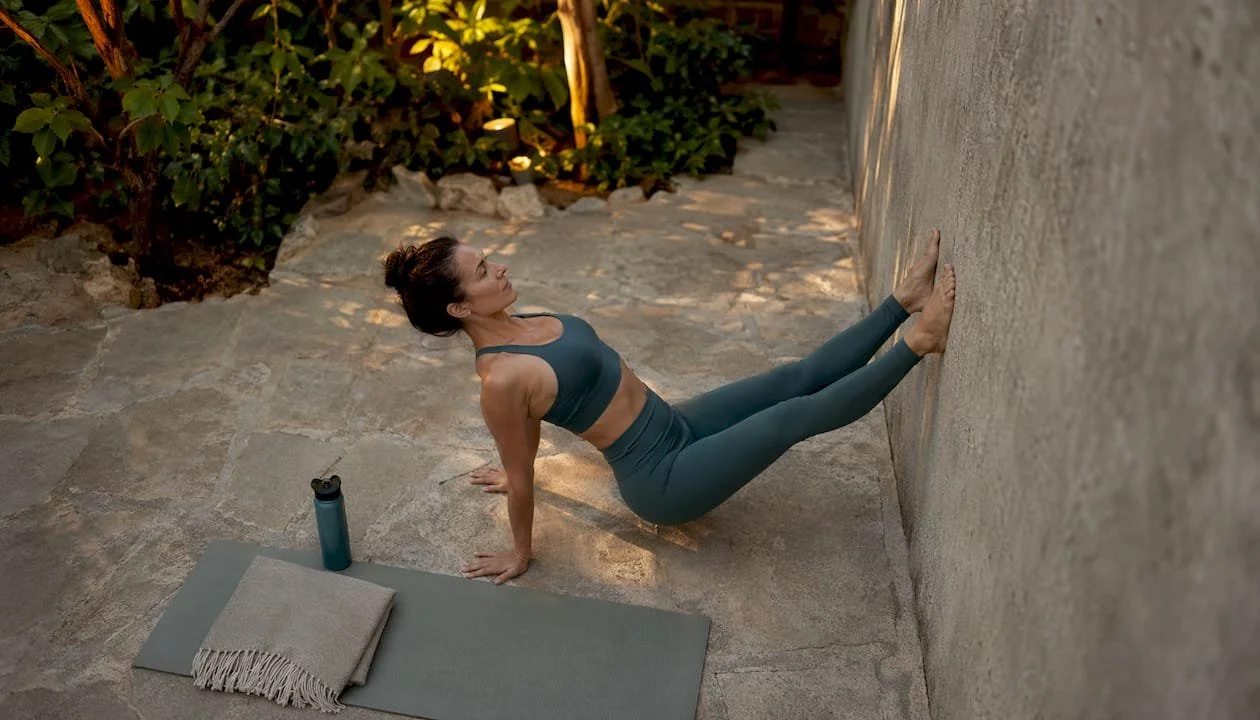
TL;DR:
Wall yoga for beginners uses a wall as a prop to improve balance, alignment, and flexibility safely. Practicing 15 to 25 minutes, four to five days weekly, helps build strength and correct posture while emphasizing slow, breath-led movements. The wall provides tactile feedback that enhances proprioception and supports steady progress without dependency.
Wall yoga for beginners is a practice that uses a flat wall as a prop to improve balance, alignment, and flexibility while protecting your joints. You need no special equipment, no prior yoga experience, and no gym membership. The wall acts as a stable guide that lets you feel correct body position from your very first session. Practices rooted in Hatha and restorative yoga principles use this same concept, emphasizing slow movement and breath connection over speed or intensity. Amritayogawellness recommends 15–25 minutes of practice, 4–5 days per week, as the ideal starting point for building strength and flexibility safely.
What are the essential wall yoga poses for beginners?
Five foundational poses form the backbone of any beginner wall yoga routine. Each one teaches your body a key alignment principle while the wall keeps you steady enough to actually feel it.
Wall Mountain Pose (30–60 seconds). Stand with your back flat against the wall, heels about two inches away from the baseboard, and feet hip-width apart. Press your shoulder blades and the back of your head lightly into the wall. This pose trains spinal stacking, the skill every other pose depends on. Hold for 30–60 seconds and breathe slowly.
Wall Forward Stretch (30 seconds). Face the wall and place both palms flat at shoulder height. Walk your feet back until your torso is parallel to the floor. Keep your spine long and your hips directly over your heels. This stretch opens the hamstrings and lengthens the entire back line of the body.
Wall Downward Dog (30–45 seconds). From the forward stretch position, walk your hands slightly higher on the wall and press your hips back and up. Your body forms an inverted V shape with the wall as your anchor. The wall distributes weight so you can explore the full length of the pose without straining your wrists or shoulders.
Wall Chair Pose (20–30 seconds). Stand with your back against the wall and slowly slide down until your thighs are parallel to the floor. Keep your knees directly over your ankles. This position builds quad and glute strength faster than most floor-based beginner poses. Hold for 20–30 seconds, then press through your heels to stand.
Legs Up the Wall (1–3 minutes). Sit sideways next to the wall, then swing your legs up as you lower your back to the floor. Let your arms rest at your sides, palms up. This restorative pose reduces leg fatigue, calms the nervous system, and is one of the most studied yoga stretches for beginners in both Hatha and restorative traditions.
Pro Tip: Place your heels two inches from the wall rather than flush against it. That small gap forces your legs to stay active instead of collapsing into the wall, which protects your knees and builds real strength.
How often and how long should beginners practice wall yoga?
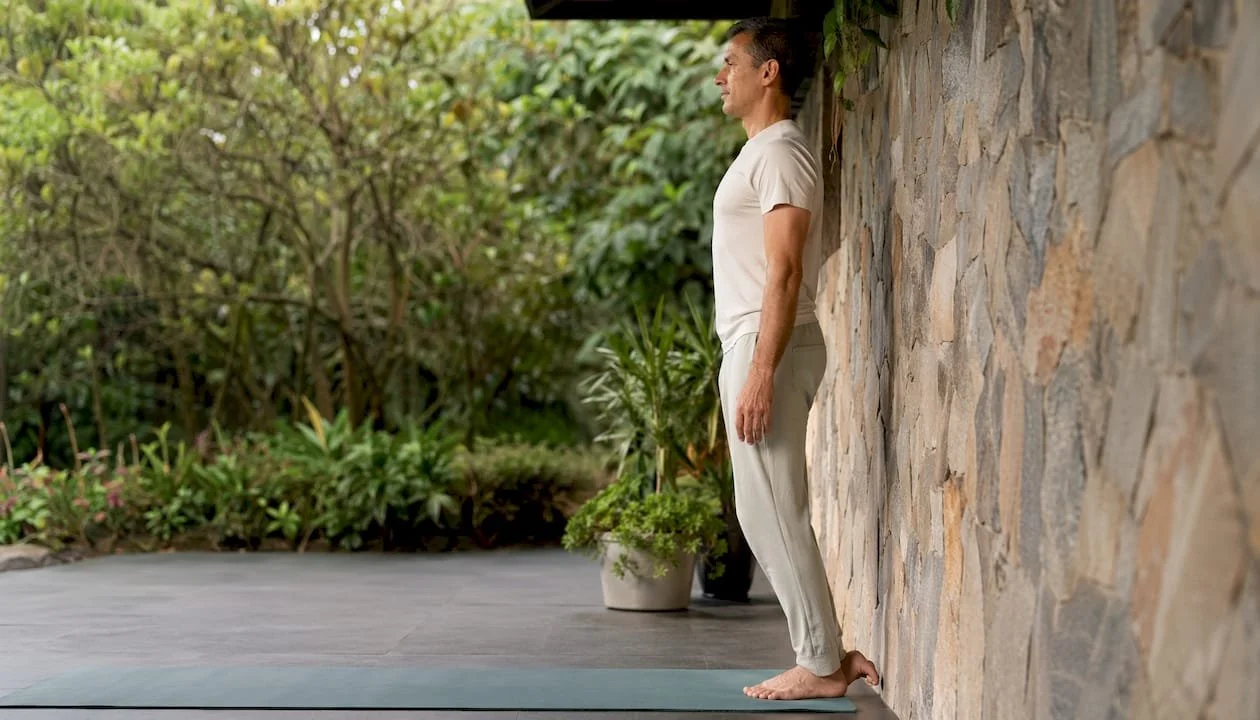
Consistency beats duration every time. Short daily sessions build better habits and produce more measurable physical results than infrequent longer sessions. That finding holds true across beginner yoga populations, and wall yoga is no exception.
The recommended starting point is 15–25 minutes per session, practiced 4–5 days per week. That range is short enough to fit into a lunch break but long enough to complete all five foundational poses with proper hold times and rest between sets.
Here is what an effective beginner schedule looks like in practice:
Days 1, 3, 5: Full five-pose sequence, 15–20 minutes total
Days 2, 4: Shorter 10-minute session focused on one or two poses you find challenging
Day 6 or 7: Full rest, or gentle Legs Up the Wall for 3–5 minutes
Slow, breath-led sessions of 15 minutes produce more progress for beginners than longer, sporadic high-intensity sessions. The reason is simple: your nervous system needs repetition, not volume, to rewire movement patterns.
Wall yoga follows Hatha yoga principles, which prioritize longer holds and slower transitions. That pacing gives your muscles time to release and your breath time to regulate. Rushing through poses defeats the purpose entirely.
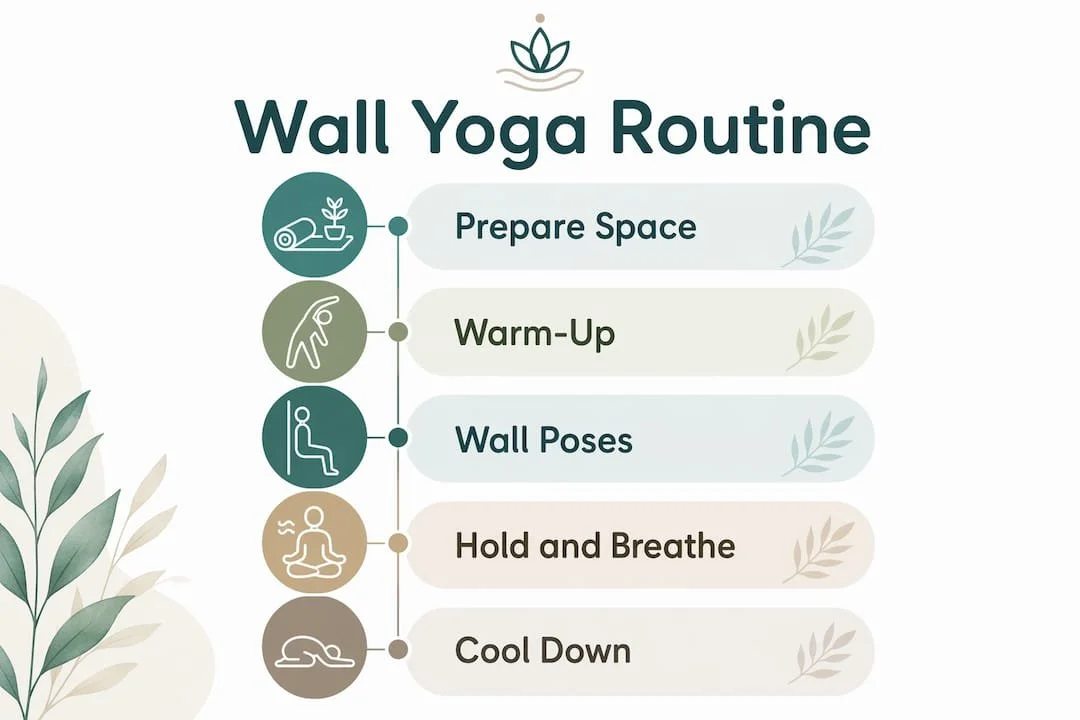
Pro Tip: Set a timer for each pose rather than counting in your head. Counting splits your attention. A timer lets you stay fully present in the stretch.
What common mistakes should beginners avoid in wall yoga?
Most beginners make the same four errors in their first few weeks. Knowing them in advance keeps you safe and speeds up your progress.
Leaning fully into the wall. The wall is a guide, not a crutch. Beginners should position heels slightly away from the wall to maintain active leg engagement. Full reliance on the wall shuts off the stabilizer muscles you are trying to build.
Holding your breath. Breath is not optional in yoga. Holding it triggers a stress response that tightens the very muscles you are trying to open. Inhale to prepare, exhale to deepen every pose.
Pushing into pain. Discomfort from a deep stretch is normal. Sharp or joint-level pain is a signal to back off immediately. The wall makes it easy to overextend because you feel more stable than you actually are.
Locking the knees. Straight legs do not mean rigid legs. Micro-bend your knees in standing poses to keep the joint safe and the surrounding muscles engaged.
Skipping warm-up. Two minutes of gentle walking in place or shoulder rolls before your first pose prepares your connective tissue and reduces injury risk significantly.
The wall gives you confidence, but confidence without awareness creates bad habits. Stay curious about what you feel, not just what you can achieve.
The goal is active participation, not passive leaning. Every pose should feel like a conversation between your body and the wall, not a collapse into it. That distinction separates beginners who progress quickly from those who plateau.
How does wall yoga improve body awareness and alignment?
The wall provides tactile feedback that free-standing poses simply cannot replicate. Pressing into the wall activates stabilizing muscles and refines alignment in ways that are difficult to achieve without a fixed reference point. That physical contact is called proprioceptive feedback, and it is the reason wall yoga works so well for beginners.
Proprioception is your body's ability to sense its own position in space. Most beginners have underdeveloped proprioception, which is why their posture collapses the moment they stop thinking about it. The wall interrupts that pattern by giving your nervous system a clear, constant signal about where your spine, hips, and shoulders actually are.
When you feel the wall against your back, you stop guessing about alignment. You know exactly where you are, and that knowledge transfers to every other movement you make off the mat.
The table below shows how specific wall contact points improve alignment in each foundational pose.
| Pose | Wall contact point | Alignment benefit |
|---|---|---|
| Wall Mountain | Full back, head | Trains neutral spinal curve |
| Wall Chair | Lower back, upper back | Prevents forward lean in squats |
| Wall Downward Dog | Both palms | Distributes shoulder load evenly |
| Wall Forward Stretch | Both palms | Keeps hips stacked over heels |
| Legs Up the Wall | Both legs | Decompresses lumbar spine |
Wall yoga also builds confidence in balance-dependent poses. When you know the wall is there, you take risks you would avoid on an open mat. Those risks, taken safely, are exactly how your balance improves. Amritayogawellness offers yoga for mobility resources that extend this principle into more advanced movement patterns for practitioners ready to progress. The physical and mental benefits of consistent yoga practice also extend beyond the mat, with research noting connections between regular yoga and overall skin and body wellness.
Key Takeaways
Wall yoga for beginners builds real strength and flexibility when you practice consistently, use the wall as a guide rather than full support, and follow Hatha-inspired slow, breath-led sessions of 15–25 minutes, 4–5 days per week.
| Point | Details |
|---|---|
| Optimal session length | Practice 15–25 minutes per session, 4–5 days per week for safe, steady progress. |
| Wall as guide, not crutch | Keep heels slightly away from the wall to maintain active muscle engagement in every pose. |
| Five foundational poses | Wall Mountain, Forward Stretch, Downward Dog, Chair Pose, and Legs Up the Wall cover all key alignment principles. |
| Breath is non-negotiable | Holding your breath tightens muscles and slows progress; exhale to deepen every pose. |
| Consistency over intensity | Short daily sessions produce better results than infrequent longer workouts. |
Why the wall changed how I think about beginner yoga
Most beginner yoga programs throw people into open-mat sequences and expect them to figure out alignment by watching an instructor from across the room. That approach works for some people. For most, it creates frustration and bad habits that take months to undo.
Wall yoga solves that problem at the root. The wall gives beginners immediate, honest feedback about where their body actually is versus where they think it is. That gap is usually surprising. I have watched people who swore their back was straight discover, the moment they pressed against a wall, that they had been rounding their shoulders for years.
What I find most underrated about this practice is the confidence effect. Beginners who feel unstable in open-mat balances often give up before they build any real skill. The wall removes that instability long enough for the body to learn the pattern. Once the pattern is learned, the wall becomes optional. That progression from supported to independent is far more satisfying than grinding through poses you are not ready for.
The slow pace is also not a compromise. It is the point. Breath-led movement at a Hatha-inspired tempo teaches your nervous system to stay calm under physical challenge. That skill carries into every other area of your life. Patience in a Wall Chair Pose is the same skill as patience in a difficult conversation. The gentle yoga poses that seem too easy at first are often the ones that create the deepest change.
— Juiced
Wellness at Amritayogawellness goes beyond the mat
Amritayogawellness, Philadelphia's community-centered wellness studio, offers more than yoga classes. If your wall yoga practice has sparked curiosity about your inner life as much as your physical body, the studio's tarot reading sessions offer a thoughtful complement to your movement practice.
Tarot readings at Amrita Yoga & Wellness are designed for people who take their self-care seriously and want to explore wellness from multiple angles. Pairing a grounded physical practice like wall yoga with reflective tools creates a fuller picture of where you are and where you want to go. Browse the full range of classes, workshops, and wellness services at Amritayogawellness to find what fits your practice right now.
FAQ
What is wall yoga and why is it good for beginners?
Wall yoga is a yoga practice that uses a flat wall as a prop to support balance, alignment, and safe stretching. It suits beginners because it reduces joint strain and provides immediate feedback about body position.
How long should a beginner wall yoga session last?
Beginners should practice for 15–25 minutes per session, 4–5 days per week. That duration is enough to complete foundational poses with proper hold times without overloading the body.
Can wall yoga help with posture?
Wall yoga directly improves posture by training spinal alignment through tactile feedback. Regular practice of Wall Mountain Pose and Wall Chair Pose resets habitual rounding in the shoulders and lower back.
Do I need any equipment for beginner wall yoga poses?
No equipment is required beyond a clear wall space and a yoga mat or non-slip surface. Bare feet work best for grip and proprioceptive feedback during standing poses.
How is wall yoga different from regular yoga?
Wall yoga uses the wall as a fixed reference point that activates stabilizing muscles and corrects alignment in ways free-standing poses cannot. The wall distributes weight and supports balance, making deeper stretches accessible to beginners from the very first session.
Recommended
Why Do Yoga? Real Benefits for Body, Mind, and Spirit
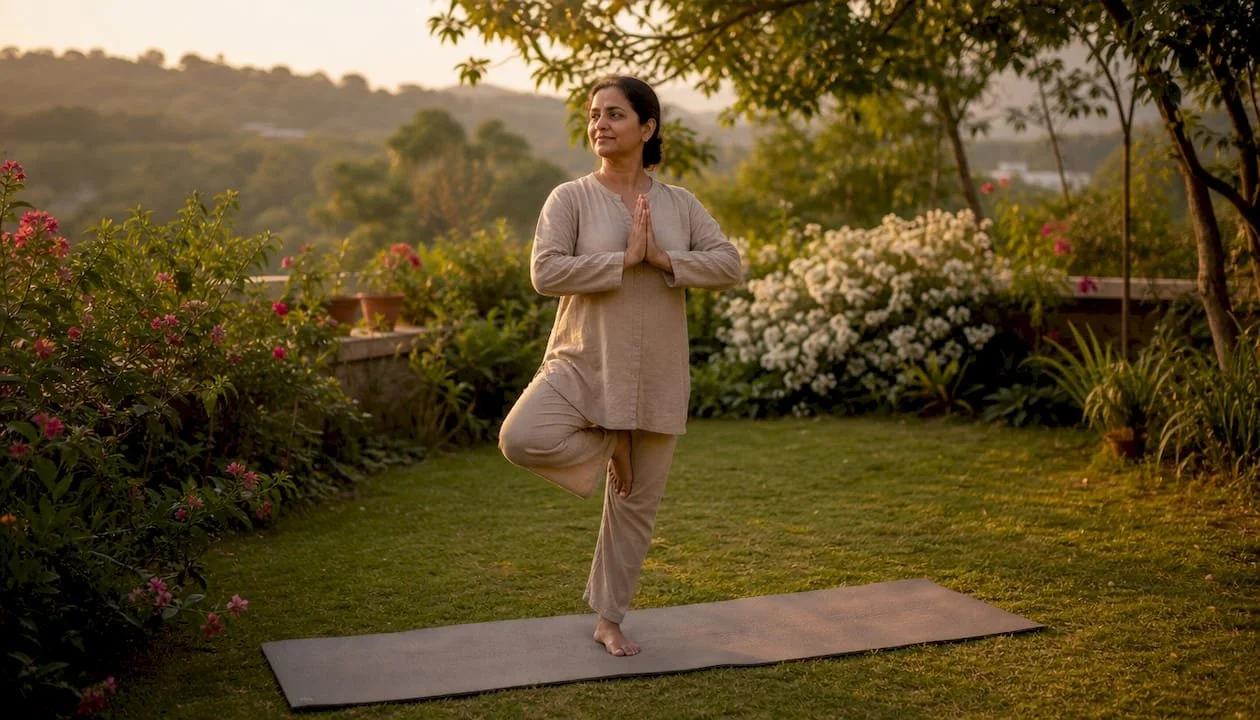
TL;DR:
Yoga combines physical postures, breathwork, and mindfulness to improve health and reduce stress. Regular practice lowers cortisol, enhances strength and flexibility, and supports emotional balance. Different styles serve specific physical and mental goals, with consistency being key for lasting benefits.
Yoga is a practice that unites physical postures, breathwork, and mindfulness to build strength, reduce stress, and support emotional balance. Millions of people practice yoga precisely because it delivers results across multiple dimensions of health at once. A 12-week yoga program significantly reduces cortisol, the body's primary stress hormone. That single finding explains why so many people who start yoga for flexibility end up staying for the mental clarity. Whether you are brand new or returning after a long break, understanding why practice yoga matters gives you a foundation to build on.
Why do yoga for physical health and strength?
Yoga builds physical fitness through mechanisms most people overlook. Unlike weight training, yoga uses prolonged bodyweight holds to create muscular tension. Holding Warrior II for 60 seconds recruits the same stabilizing muscles as a loaded squat, without the joint compression. Over time, that sustained effort increases muscular strength and mobility while reducing the systemic inflammation linked to chronic diseases.
The cardiovascular evidence is stronger than most people expect. A meta-analysis of 37 studies found that yoga reduced LDL cholesterol, blood pressure, and resting heart rate comparably to aerobic exercise. That result challenges the assumption that you need to run or cycle to protect your heart. Yoga achieves those outcomes partly through stress reduction, which lowers the hormonal load that drives arterial inflammation.
Chronic pain is another area where yoga earns its reputation. A 2017 Cochrane Review of 12 randomized controlled trials found that yoga improves chronic low back pain with effects lasting up to six months. That durability matters because most pain interventions lose their effect quickly. Yoga works by improving movement tolerance and regulating the nervous system, not by masking pain.
Key physical benefits include:
Flexibility and joint health: Stiffness is often the reason yoga feels so beneficial. Movement lubricates connective tissue and strengthens the structures around joints.
Balance and fall prevention: A 12-week study showed yoga improves balance and reduces fear of falls in older adults through better proprioception.
Inflammation reduction: Regular practice lowers markers of systemic inflammation, which contributes to conditions like heart disease and type 2 diabetes.
Functional strength: Poses like Plank, Chaturanga, and Chair build real-world strength that transfers to daily movement.
Pro Tip: If your goal is pain relief, prioritize consistency over intensity. Three shorter sessions per week outperform one long session for nervous system regulation.
In what ways does yoga support mental and emotional wellbeing?
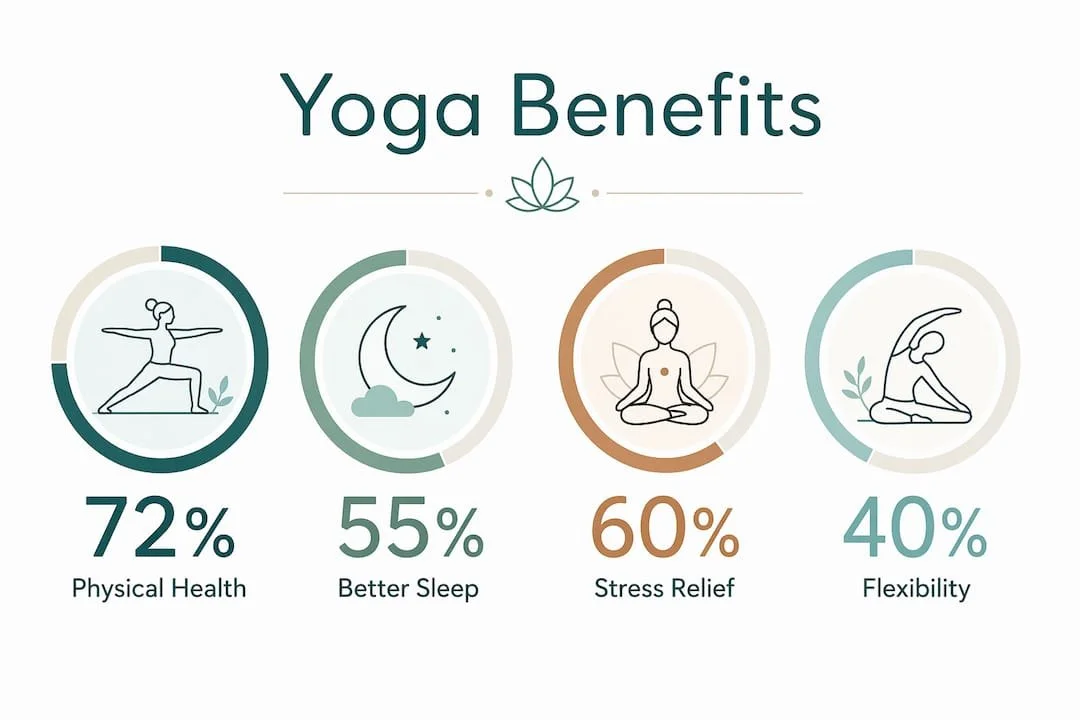
Yoga's mental health benefits operate through direct neurological pathways, not just relaxation. The practice activates the parasympathetic nervous system, the branch responsible for rest and recovery, while suppressing the fight-or-flight response. A 2018 systematic review found that yoga increases GABA neurotransmission and reduces activity in brain networks linked to rumination and depression. That is a measurable brain change, not a mood metaphor.
Sleep is one of the clearest downstream benefits. 55% of yoga practitioners report better sleep, and Yoga Nidra, a guided relaxation technique, reduces insomnia symptoms over eight weeks. Better sleep then reduces pain sensitivity, which in turn lowers anxiety. Stress reduction, improved sleep, and pain relief work together in a reinforcing cycle, each benefit strengthening the others.
The breath is the mechanism most people underestimate. Slow, controlled breathing during yoga practice directly lowers heart rate and blood pressure within minutes. That physiological shift is why a single session can change your mood, even before any long-term adaptation occurs.
A structured approach to mental health benefits through yoga looks like this:
Start with breath awareness. Even five minutes of diaphragmatic breathing before a session primes the nervous system for down-regulation.
Hold poses longer than feels comfortable. Discomfort tolerance in yoga trains the same emotional regulation circuits used during anxiety.
Practice Yoga Nidra before sleep. This body-scan technique lowers physiological arousal more effectively than passive rest.
Attend group classes regularly. Social connection during group yoga practice amplifies the stress-reduction effect through shared nervous system co-regulation.
Track mood, not just flexibility. Progress in yoga for mental health shows up in emotional patterns weeks before it shows up in physical range of motion.
Yoga's greatest mental health contribution is not relaxation. It is teaching the nervous system that discomfort is survivable. That lesson transfers to every area of life.
What are the different styles of yoga and how do they affect outcomes?
Not all yoga produces the same results. The style you choose determines whether you are training your cardiovascular system, your nervous system, or both. That distinction matters when you are selecting a class or building a weekly routine.
| Style | Intensity | Primary benefit | Best for |
|---|---|---|---|
| Vinyasa | High | Cardiovascular fitness, strength | Active adults, weight management |
| Ashtanga | High | Endurance, discipline, core strength | Structured learners, athletes |
| Hatha | Moderate | Flexibility, foundational alignment | Beginners, general wellness |
| Yin | Low | Deep tissue release, stress relief | Recovery, sleep improvement |
| Yoga Nidra | Very low | Nervous system reset, insomnia relief | Anxiety, burnout, chronic pain |
Vigorous styles like Vinyasa and Ashtanga push heart rate into aerobic zones of 130–150 BPM, which supports cardiovascular fitness. Yin yoga, by contrast, holds passive poses for three to five minutes, targeting connective tissue and the parasympathetic nervous system. Neither is superior. They serve different goals, and the most effective weekly practice combines both.
Beginners often default to the gentlest option available, which makes sense for building confidence. Hatha yoga is the most practical starting point because it teaches alignment principles that apply across all other styles. Once those foundations are solid, adding one Vinyasa session per week creates a balanced physical and mental training effect.
Pro Tip: Combine one vigorous style and one gentle style each week. The vigorous session builds fitness; the gentle session builds recovery. Together, they prevent burnout and sustain long-term practice.
How can beginners start and maintain an effective yoga practice?
The most common reason people delay starting yoga is the belief that they need to be flexible first. Flexibility is not a prerequisite for yoga. Stiffness is often exactly why yoga feels so beneficial, because movement lubricates joints and strengthens the connective tissue that surrounds them. You do not need to touch your toes to benefit from a forward fold.
Consistency matters far more than duration or intensity in the early stages. Three sessions of 30 minutes per week produce more cumulative benefit than one 90-minute session. The nervous system adapts through repetition, not volume. That means showing up regularly, even imperfectly, is the single most important factor in building a lasting practice.
Practical steps for beginners:
Choose Hatha or gentle Vinyasa first. These styles teach foundational poses without overwhelming pace or complexity.
Use props without apology. Blocks, straps, and bolsters are not signs of weakness. They allow correct alignment, which is where the benefit lives.
Set a specific time slot. Morning practice before other commitments have a higher completion rate than evening sessions for most beginners.
Follow beginner yoga tips from credible sources. Structured guidance prevents the common mistakes that cause early frustration or injury.
Measure progress in awareness, not poses. Noticing how your body feels before and after practice is more useful data than whether you can do a handstand.
Yoga's effectiveness depends strongly on practitioner mindset and personal goals. People who approach yoga as a process rather than a performance milestone report greater satisfaction and longer-term commitment. That shift in expectation is often the difference between someone who quits after six weeks and someone who practices for years.
Pro Tip: Write down one specific reason you want to practice yoga before your first class. Revisit that reason after 30 days. The gap between what you expected and what you actually experienced is where the real learning begins.
What are yoga's spiritual and philosophical foundations?
The word "yoga" comes from the Sanskrit root "yuj," meaning to yoke or unite. That etymology points directly to yoga's core purpose: the union of body, mind, and spirit into a coherent whole. Classical texts like the Yoga Sutras of Patanjali define yoga as "the stilling of the fluctuations of the mind," a goal that physical postures serve but do not complete on their own.
Understanding these foundations does not require adopting any religious belief. The philosophical framework simply provides a reason to practice that outlasts physical goals. When flexibility plateaus or motivation dips, a practitioner with a clear philosophical anchor keeps showing up.
Core principles from classical yoga philosophy that enhance modern practice:
Ahimsa (non-harm): Applied to your own body, this principle prevents the ego-driven pushing that causes injury in beginners.
Svadhyaya (self-study): The practice of observing your own patterns, physical and mental, without judgment. This is what makes yoga a tool for personal growth, not just exercise.
Santosha (contentment): Accepting where you are in your practice today. This principle directly counters the comparison culture that makes many beginners quit.
Pranayama (breath control): Breath is the bridge between the physical and mental dimensions of yoga. Controlling breath controls the nervous system.
Mindfulness and meditation integrate naturally with physical postures when practitioners understand these principles. The deeper benefits of advanced practice become accessible only when the philosophical layer is engaged alongside the physical one.
Key Takeaways
Yoga delivers its strongest results when physical practice, breathwork, and mindful intention work together rather than separately.
| Point | Details |
|---|---|
| Physical benefits are evidence-backed | A Cochrane Review confirms yoga relieves chronic low back pain for up to six months. |
| Mental health gains are neurological | Yoga increases GABA and reduces brain activity linked to rumination and depression. |
| Style selection determines outcomes | Vigorous styles build cardio fitness; gentle styles support stress relief and sleep. |
| Flexibility is not required to start | Stiffness is a reason to begin yoga, not a reason to wait. |
| Consistency beats intensity | Three shorter sessions per week outperform one long session for lasting adaptation. |
What I've learned from watching people start and stick with yoga
Most people who try yoga once and quit do so because they measured the wrong thing. They expected to feel more flexible after two weeks and felt nothing. The practitioners who stay are the ones who notice that they slept better on the nights after class, or that they handled a stressful meeting differently. Those are the real early returns, and they show up before any physical change is visible.
The philosophical layer is what separates yoga from a fitness class. I have seen people with serious athletic backgrounds struggle with yoga not because of physical limitation, but because yoga asks you to observe discomfort rather than push through it. That is a genuinely different skill. Once it clicks, the practice becomes self-sustaining because the mental benefits are immediate and repeatable.
The best advice I can give anyone starting out is to pick one style, commit to it for 60 days, and track how you feel rather than how you look. The physical and mental wellbeing gains compound over time in ways that are genuinely hard to predict at the start. Trust the process long enough to see the data.
— Juiced
Yoga classes and wellness services at Amritayogawellness
Amritayogawellness offers classes across a full range of styles and experience levels at its Philadelphia studio. Whether you are drawn to the physical challenge of hot yoga, the grounding pace of Hatha, or the meditative depth of Yin, the studio structures its program so that beginners and experienced practitioners can both find their footing.
The studio's approach combines physical practice with broader wellness services, including massage therapy, barre, tai chi, and pilates. For those interested in the spiritual and reflective dimensions of wellness, Amritayogawellness also offers tarot reading sessions as a complementary tool for self-inquiry. Class schedules, membership options, and workshop details are available directly on the Amritayogawellness website.
FAQ
Why do yoga if I'm not flexible?
Flexibility is not a requirement for yoga. Stiffness is often the reason yoga feels most beneficial, because movement lubricates joints and strengthens the connective tissue around them.
How often should a beginner practice yoga?
Three sessions per week of 30 minutes each produces consistent, cumulative benefit. The nervous system adapts through repetition, so regularity matters more than session length.
What is the best yoga style for stress relief?
Yin yoga and Yoga Nidra are the most effective styles for stress relief. Both activate the parasympathetic nervous system and lower cortisol, with Yoga Nidra specifically shown to reduce insomnia symptoms over eight weeks.
Can yoga replace cardio exercise?
Vigorous styles like Vinyasa and Ashtanga push heart rate into aerobic zones of 130–150 BPM, which supports cardiovascular fitness. For most people, yoga works best as a complement to other forms of movement rather than a full replacement.
How long before yoga produces noticeable mental health benefits?
A 12-week yoga program produces statistically significant reductions in cortisol. Many practitioners report improved sleep and mood within the first two to four weeks of consistent practice.
Recommended
Bikram Yoga for Weight Loss: What Really Works
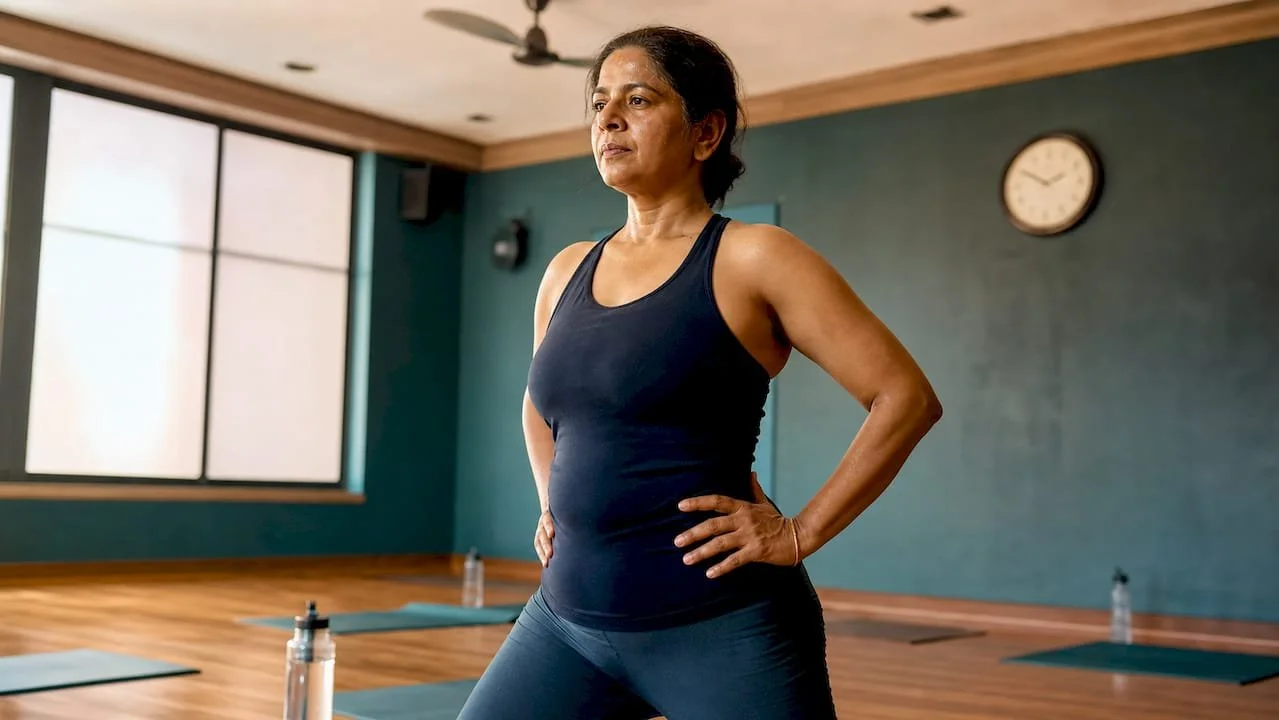
TL;DR:
Bikram yoga can support fat loss when practiced consistently three times weekly over six months, mainly through metabolic and caloric expenditure. Immediate weight loss after sessions is mostly water, while fat reduction requires weeks of steady practice and proper hydration. Combining Bikram with strength training and proper recovery enhances long-term body composition improvements.
Bikram yoga for weight loss is defined as a structured practice using 26 postures and two breathing exercises performed in a room heated to 104–105°F, producing measurable fat reduction over consistent months of practice. A single 90-minute session burns 330 to 460 calories depending on body size and effort level. That caloric output, combined with the metabolic stress of sustained heat, makes Bikram one of the more demanding yoga formats available. A six-month longitudinal study found an average body fat reduction of 6.07% in adult women practicing three sessions per week. The results are real, but they require patience, consistency, and a clear understanding of how the practice actually works.
How Bikram yoga sessions are structured for weight loss
The standard Bikram protocol consists of 26 postures and two pranayama breathing exercises, performed in sequence over 90 minutes at 40°C (104°F) with 40% humidity. Every class follows the exact same order, which means your body learns the sequence but never fully adapts to the heat. That predictability is a feature, not a flaw. It lets you track progress precisely and push harder within a familiar framework.
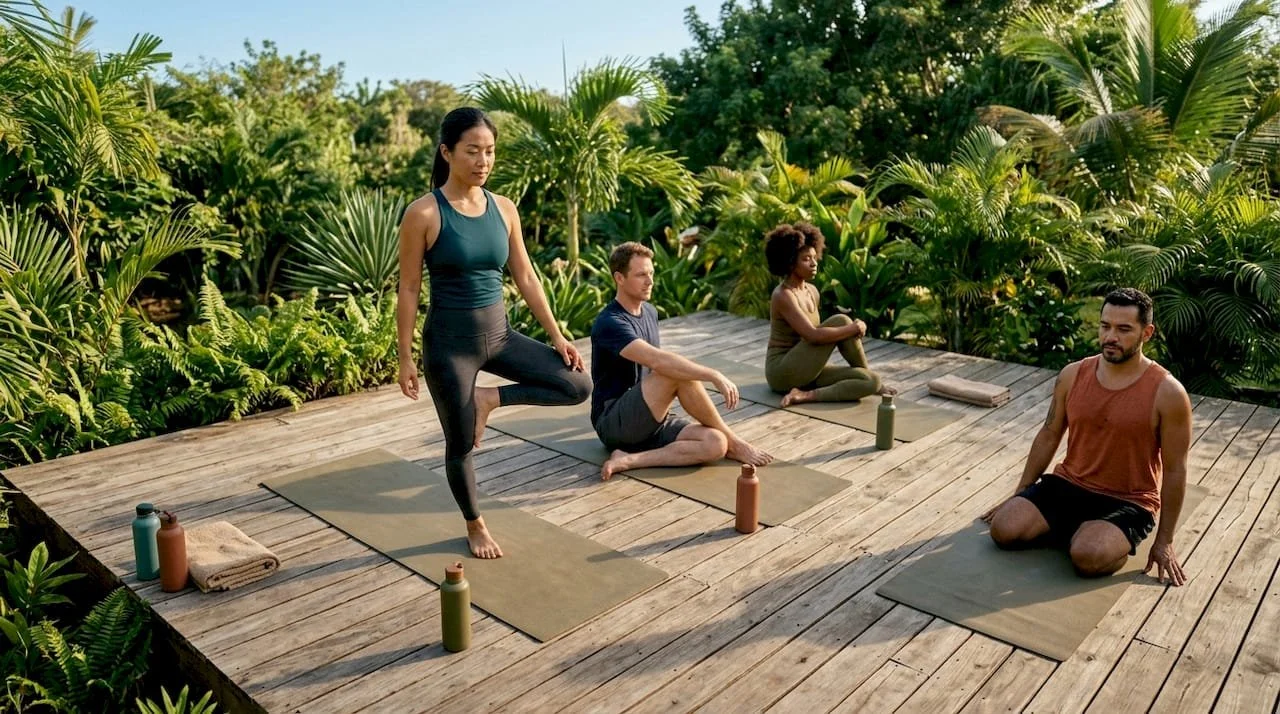
The heat does specific work in this context. It raises your heart rate earlier in the session, increases blood flow to muscles, and forces your body to regulate temperature while simultaneously holding challenging postures. Heat acts as a catalyst for cardiovascular activation, but the real metabolic work comes from sustained muscular effort across all 26 poses. Think of the heat as a multiplier, not the engine.
What the 26 postures actually demand
The sequence moves through standing series poses like Half Moon, Eagle, and Standing Bow, then transitions to a floor series including Camel, Rabbit, and Spine Twist. Each posture targets specific muscle groups while demanding balance, core engagement, and breath control simultaneously. That multi-system demand is why the calorie burn is higher than most people expect from a yoga class.
Standing series: Builds leg strength, balance, and cardiovascular endurance
Floor series: Targets spinal flexibility, core compression, and hip mobility
Breathing exercises: Kapalbhati and standing deep breathing regulate oxygen delivery and activate the diaphragm
Heat exposure: Elevates heart rate to aerobic training zones without high-impact movement
Pro Tip: Arrive 10 minutes early to acclimate to the room temperature before class starts. Your first few postures will feel significantly more controlled, and you will sweat more efficiently throughout the session.
For adults new to Bikram hot yoga, the first two weeks feel overwhelming. That is normal. Your body is adapting to heat stress, new movement patterns, and a longer session duration than most fitness classes.
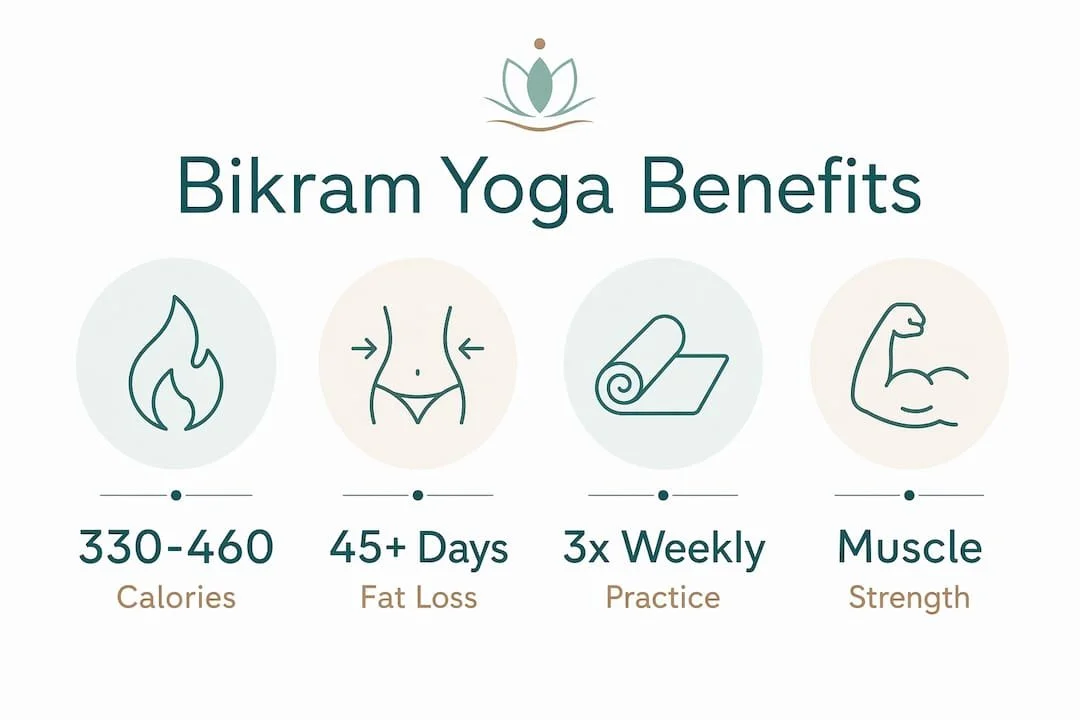
Is the weight you lose after class actually fat?
Immediate weight loss after a Bikram session is mostly water weight lost through sweating, not fat. You can lose one to three pounds of fluid in a single class. That number reappears on the scale as soon as you rehydrate properly.
Fat loss works through a completely different mechanism. Your body breaks down stored triglycerides through lipolysis, and the byproducts are exhaled as carbon dioxide and excreted as water over time. That process accelerates with consistent caloric deficit and sustained aerobic effort, both of which Bikram yoga supports across weeks and months of practice.
Effective weight loss through Bikram yoga depends heavily on consistency, allowing metabolic and body composition adaptations to accumulate over months, not days.
Tracking your weight daily after Bikram classes will mislead you. The scale fluctuates by two to four pounds based on hydration alone. A more accurate approach is to measure body fat percentage every four to six weeks and track how your clothes fit. The six-month study showing a 6.07% body fat reduction used body composition measurements, not scale weight, for exactly this reason.
Pro Tip: Weigh yourself once per week, on the same morning, after using the bathroom and before eating. This removes daily hydration noise and gives you a cleaner trend line over time.
How often should you practice to see real results?
Research supports three sessions per week over six months as the protocol that produces measurable body fat reduction. That frequency gives your body enough stimulus to adapt metabolically while leaving room for recovery between sessions.
Weeks 1–2: Practice two sessions per week. Focus on finishing the class and staying in the room. Heat adaptation is the primary goal.
Weeks 3–6: Add a third weekly session. Your heart rate will stabilize faster in the heat, and you will hold postures longer.
Months 2–4: Maintain three sessions per week. Body composition changes become visible around the 45-day mark based on study data.
Months 4–6: Consider adding a fourth session if recovery feels complete. Watch for signs of overtraining: persistent fatigue, disrupted sleep, or declining performance in class.
Rest days are not optional. Muscle repair and metabolic stabilization happen during recovery, not during the session itself. Skipping rest days in pursuit of faster results typically produces the opposite outcome: inflammation, fatigue, and reduced performance.
Combining Bikram yoga with strength training increases resting metabolic rate beyond what yoga alone achieves. Two strength sessions per week, focused on compound movements like squats, deadlifts, and rows, build lean muscle mass. More muscle means more calories burned at rest, which compounds the fat loss effect of your Bikram practice.
Pro Tip: Schedule strength training on non-Bikram days or at least six hours apart from a Bikram session. Combining both in the same window without adequate recovery blunts the benefit of each.
For more on staying safe while pushing your limits in the heat, the hot yoga safety guide from Amritayogawellness covers the key precautions every practitioner needs.
Hydration and nutrition strategies that support Bikram weight loss
Proper hydration before, during, and after Bikram yoga is not optional. It directly affects muscle recovery, metabolic function, and your ability to complete the session safely. Dehydration reduces performance, increases injury risk, and slows the metabolic adaptations that drive fat loss.
| Timing | Hydration target | Key nutrients |
|---|---|---|
| 2 hours before class | 16–20 oz of water | Sodium, potassium |
| During class | Small sips only, 4–8 oz total | Electrolytes if sweating heavily |
| Within 30 minutes after | 20–24 oz of water or electrolyte drink | Magnesium, sodium, potassium |
| 2 hours after class | Continue hydrating to clear urine | Whole food minerals preferred |
Electrolytes matter as much as water volume. Sweating heavily depletes sodium, potassium, and magnesium. Replacing only water without electrolytes can cause cramping, dizziness, and hyponatremia in extreme cases. A simple electrolyte drink or a meal with mineral-rich foods like leafy greens, bananas, and nuts handles this effectively.
Pre-class nutrition affects your energy and your fat-burning capacity. Eating a large meal within 90 minutes of class typically causes nausea in the heat. A light snack of 150–200 calories, such as a banana with almond butter or a small bowl of oatmeal, provides fuel without digestive stress. Post-class, prioritize protein within 45 minutes to support muscle repair. Twenty to thirty grams of protein from eggs, Greek yogurt, or a quality protein shake works well.
Avoid alcohol the night before class. It accelerates dehydration and impairs heat tolerance.
Limit caffeine within two hours of class if you are heat-sensitive.
Eat whole foods rather than processed snacks around your practice days to support metabolic health.
How consistent practice transforms body composition over time
The body composition changes from regular Bikram practice extend well beyond the scale. The six-month study documented a 6.07% average body fat reduction in adult women, with measurable changes appearing as early as 45 days into the program. That timeline holds across different age groups, which means the practice is not limited to younger adults.
| Benefit | Timeframe | Mechanism |
|---|---|---|
| Initial fat loss | 45–60 days | Caloric deficit plus heat-driven metabolic activation |
| Improved cardiovascular endurance | 30–45 days | Sustained aerobic effort in heated environment |
| Increased flexibility | 2–4 weeks | Repeated deep stretching in warm muscles |
| Resting metabolic rate increase | 2–3 months | Lean muscle gain from sustained posture work |
| Sustained body fat reduction | 6 months | Cumulative metabolic adaptation and caloric output |
The afterburn effect, formally called excess post-exercise oxygen consumption (EPOC), extends calorie burning for one to three hours after a Bikram session ends. That means the 330–460 calories burned during class underestimates the total metabolic cost of each session. The heated environment amplifies this effect by keeping core temperature elevated longer than a standard workout.
The heat-induced sweating in Bikram yoga primarily facilitates cardiovascular activation and detoxification, but sustained muscular effort across the 26-posture sequence is what drives lasting fat loss and body composition change.
The heated yoga and stress reduction connection also matters for weight loss. Chronic stress elevates cortisol, which promotes fat storage, particularly around the abdomen. Regular Bikram practice lowers perceived stress and supports better sleep, both of which create a more favorable hormonal environment for fat loss.
Key Takeaways
Bikram yoga produces measurable, sustained fat loss when practiced three times per week over at least six months, supported by proper hydration, recovery, and complementary strength training.
| Point | Details |
|---|---|
| Caloric burn per session | Each 90-minute class burns 330–460 calories, depending on body size and effort. |
| Fat loss vs. water weight | Post-class scale drops reflect fluid loss; true fat reduction takes consistent weeks of practice. |
| Optimal frequency | Three sessions per week over six months produces an average 6.07% body fat reduction. |
| Recovery is non-negotiable | Rest days allow muscle repair and metabolic stabilization that drive long-term results. |
| Strength training amplifies results | Adding two resistance sessions per week raises resting metabolic rate beyond yoga alone. |
What I've learned about Bikram yoga and lasting weight loss
Most people walk into their first Bikram class expecting to sweat off weight. They walk out five pounds lighter on the scale and think it worked. Then they rehydrate, the number climbs back, and they feel cheated. That misunderstanding kills more Bikram weight loss attempts than any physical limitation.
The practice works, but it works slowly and cumulatively. I have seen adults who committed to three sessions per week for six months achieve body composition changes that years of gym work had not produced. The difference was not the heat alone. It was the combination of consistent aerobic effort, the discipline the sequence demands, and the recovery habits they built around it.
What most articles skip is the mental recalibration required. You have to stop measuring success by the post-class scale and start measuring it by how you move, how you recover, and how your clothes fit after 60 days. The 45-day mark in the longitudinal research is real. That is roughly when practitioners start noticing visible changes, and it is also when most people quit if they have been chasing the wrong metric.
Hydration and rest are the two factors I see people undervalue most. Skipping electrolytes after class, training six days a week without rest, and eating too little to fuel recovery all stall results. Bikram is demanding. Treat it like the serious training it is, and it delivers.
Wellness resources at Amrita Yoga & Wellness in Philadelphia
Amritayogawellness offers hot yoga classes, wellness workshops, and complementary services designed for adults who want more than a workout.
If you are building a weight loss practice around Bikram yoga, pairing it with intentional recovery and reflection makes a real difference. Amritayogawellness provides tarot reading sessions as part of its broader wellness offerings, giving practitioners a space to reconnect with their goals and mental state between physically demanding weeks. The studio also offers class scheduling, beginner-friendly descriptions, and a community built around inclusive, evidence-informed practice. Visit Amrita Yoga & Wellness to find classes and services that fit where you are right now.
FAQ
How many calories does a Bikram yoga session burn?
A 90-minute Bikram session burns approximately 330 to 460 calories, depending on body weight and effort level. The heated environment and sustained posture work together to keep caloric output higher than most yoga formats.
How long does it take to lose weight with Bikram yoga?
Measurable body fat reduction typically appears around 45 days into a consistent three-sessions-per-week program. A six-month study documented an average 6.07% body fat reduction in adult women following this protocol.
Is the weight lost after a Bikram class real fat loss?
No. The immediate post-class weight drop is water weight lost through sweating and returns with rehydration. Actual fat loss accumulates over weeks of consistent practice and caloric deficit.
Does combining Bikram yoga with strength training improve results?
Yes. Adding strength training to a Bikram practice increases resting metabolic rate by building lean muscle, which amplifies fat loss beyond what yoga alone produces. Two resistance sessions per week on non-Bikram days works well for most adults.
How important is hydration for Bikram yoga weight loss?
Hydration is critical. Replacing fluids and electrolytes before, during, and after class supports muscle recovery, metabolic function, and safe heat tolerance. Dehydration reduces performance and slows the adaptations that drive fat loss.
— Juiced
Recommended
Gentle Flow Yoga: Benefits, Tips, and How to Start
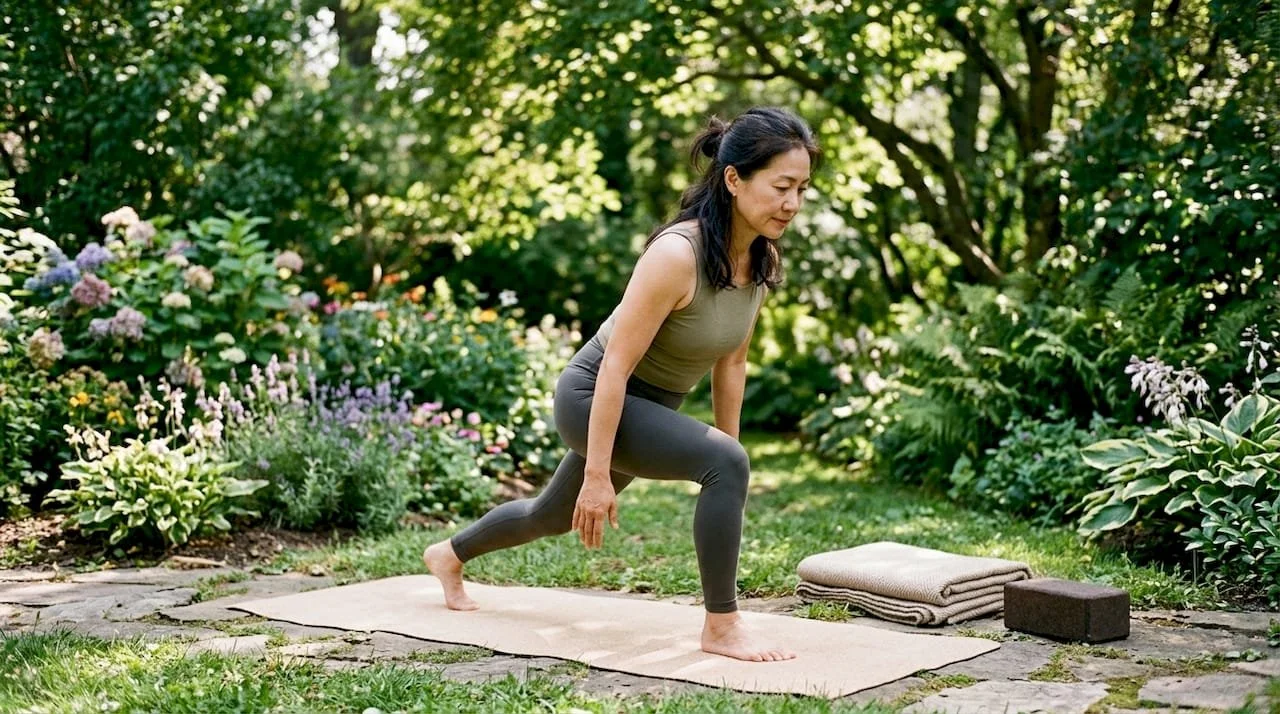
TL;DR:
Gentle flow yoga is a low-intensity practice that links slow movements to controlled breathing for stress relief. It promotes joint mobility, muscle release, and mental calmness while being accessible to beginners and those recovering from injury. Regular practice enhances emotional regulation, reduces tension, and supports long-term wellness through mindful movement.
Gentle flow yoga is defined as a low-intensity, breath-led practice that links slow, deliberate movements to controlled breathing, making it accessible to nearly anyone regardless of fitness level. Unlike high-intensity styles, it prioritizes joint mobility, mental calm, and body awareness over speed or strength. A standard session runs 45–60 minutes, though home practices often fall in the 20–45 minute range. Rooted in Hatha principles, gentle flow yoga adapts traditional poses for accessibility, focusing on how movement feels rather than how it looks. Amritayogawellness, based in Philadelphia, offers guided instruction in this style as part of a broader wellness approach that includes yoga, pilates, and mindfulness practices.
What is gentle flow yoga and why does it matter?
Gentle flow yoga is a low-intensity, beginner-friendly practice built on slow transitions between poses, each one linked to an inhale or exhale. The "flow" refers to continuity of movement, not speed. Poses connect smoothly, one after another, without the jarring stops or demanding holds found in power or vinyasa styles.
The practice directly targets the body's stress response. Gentle flow stimulates the parasympathetic nervous system and lowers cortisol levels, which reduces chronic tension held in the neck, shoulders, and hips. That physiological shift is why practitioners often feel noticeably calmer after a single session, not just physically looser.
A common misconception is that slower movement means less benefit. The opposite is true. Slowing down allows deeper muscular release and safer joint engagement than faster-paced styles. The body has time to respond, adapt, and release tension without triggering a protective stress reaction.
Gentle flow also adapts Hatha principles for accessibility, prioritizing body confidence over perfect form. That makes it a natural entry point for beginners, older adults, people recovering from injury, and anyone who finds traditional yoga classes too demanding.
What are the main benefits of gentle flow yoga?
The physical and mental benefits of this practice are well-documented and wide-ranging. Here is what consistent practice delivers:
Stress reduction. The slow pace prevents the nervous system from entering a stress response during movement. Dr. Joel, cited in research on gentle flow yoga, explains that slow pacing maintains nervous system regulation, which directly supports emotional balance and a more positive mental outlook.
Improved joint mobility. Gradual, repeated movement through a joint's range of motion lubricates cartilage and reduces stiffness. This is especially valuable for adults with arthritis, desk-related tension, or post-injury tightness.
Muscle release. Longer holds and slower transitions give muscles time to soften. Chronic holding patterns in the hips, hamstrings, and lower back respond particularly well.
Mental clarity. Breath-focused movement trains attention. Practitioners report improved concentration and reduced mental chatter after regular sessions.
Emotional regulation. The gentle yoga benefits extend beyond the mat. Reduced cortisol and a calmer nervous system carry over into daily life, making stress feel more manageable.
"The slow pace of gentle flow yoga is not a limitation. It is the mechanism. When movement slows, the nervous system settles, and the body can finally release what it has been holding."
Gentle flow yoga also supports injury prevention. Because poses never demand force or extreme range, the risk of strain is low. That makes it a sustainable long-term practice, not just a temporary fix.
How does gentle flow yoga differ from restorative or yin yoga?
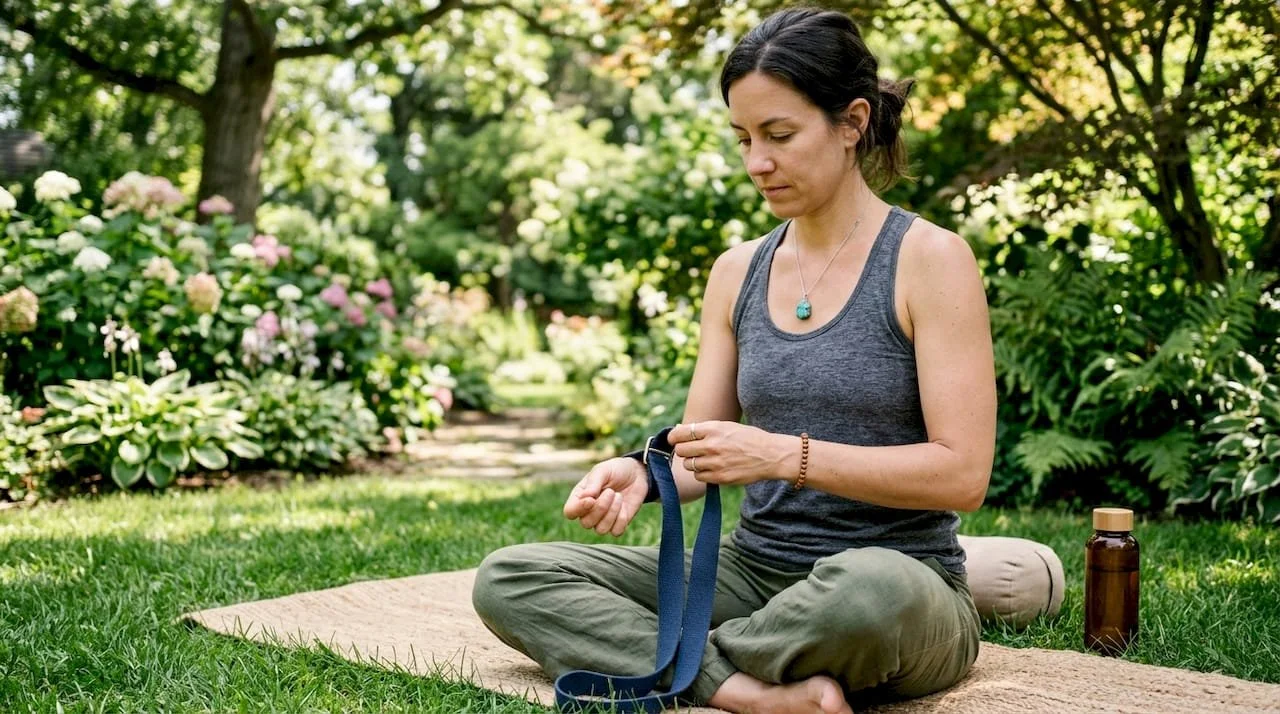
Understanding the differences between gentle yoga styles prevents frustration and helps you choose the right class for your goals. Gentle flow, restorative yoga, yin yoga, and gentle Hatha each serve different purposes.
| Style | Movement level | Pose duration | Prop use | Best for |
|---|---|---|---|---|
| Gentle flow | Active, slow | 30–90 seconds | Moderate | Beginners, stress relief, mobility |
| Restorative yoga | Passive | 5–20 minutes | Heavy | Deep rest, recovery, nervous system reset |
| Yin yoga | Passive to mild | 3–5 minutes | Moderate | Connective tissue, deep hip and spine work |
| Gentle Hatha | Mild to moderate | 30–60 seconds | Light to moderate | General fitness, foundational poses |
| Chair yoga | Seated, mild | 20–45 seconds | Chair as primary prop | Seniors, limited mobility, office workers |
Gentle flow is active, whereas restorative yoga involves supported stillness for extended periods. In a restorative class, you might hold a single supported pose for 15 minutes with bolsters, blankets, and blocks fully supporting your weight. In gentle flow, you move through poses continuously, staying connected to breath throughout.
Yin yoga targets connective tissue rather than muscle. It requires holding poses for 3–5 minutes to reach the deeper fascial layers. That is a different physical demand than gentle flow, which works primarily with muscle and joint mobility through movement.
Gentle Hatha is the closest relative to gentle flow. The key difference is continuity. Hatha typically involves discrete poses with pauses between them. Gentle flow links poses together so the breath guides the transition.
Pro Tip: If you feel exhausted and need deep rest, choose restorative yoga. If you want to move, breathe, and gradually build flexibility, gentle flow is the better fit.
What does a typical gentle flow yoga session look like?
A standard gentle flow session runs 45–60 minutes in a studio setting. Home practices often run shorter, from 20–45 minutes, depending on the practitioner's schedule and energy level.
A typical session follows this structure:
Settling in (3–5 minutes). Seated or lying down, focusing on breath and releasing the pace of the day.
Joint warm-up (5–10 minutes). Gentle circles and movements through the wrists, ankles, neck, and hips to prepare the body.
Standing poses (10–15 minutes). Slow transitions through foundational poses like Mountain, Warrior I, and Tree, held briefly and linked by breath.
Seated and floor poses (15–20 minutes). Forward folds, twists, and hip openers held for 30–90 seconds each.
Final relaxation, or Savasana (5–10 minutes). Complete stillness to allow the nervous system to integrate the practice.
Props are standard in gentle flow, not optional extras. Blocks, bolsters, blankets, and chairs support alignment and reduce strain. Using a block under your hand in a standing pose is not a sign of weakness. It is correct technique that protects your joints and makes the pose sustainable.
Pro Tip: Set up your props before class begins. Having a block, blanket, and strap within reach means you never have to rush or strain to grab support mid-pose.
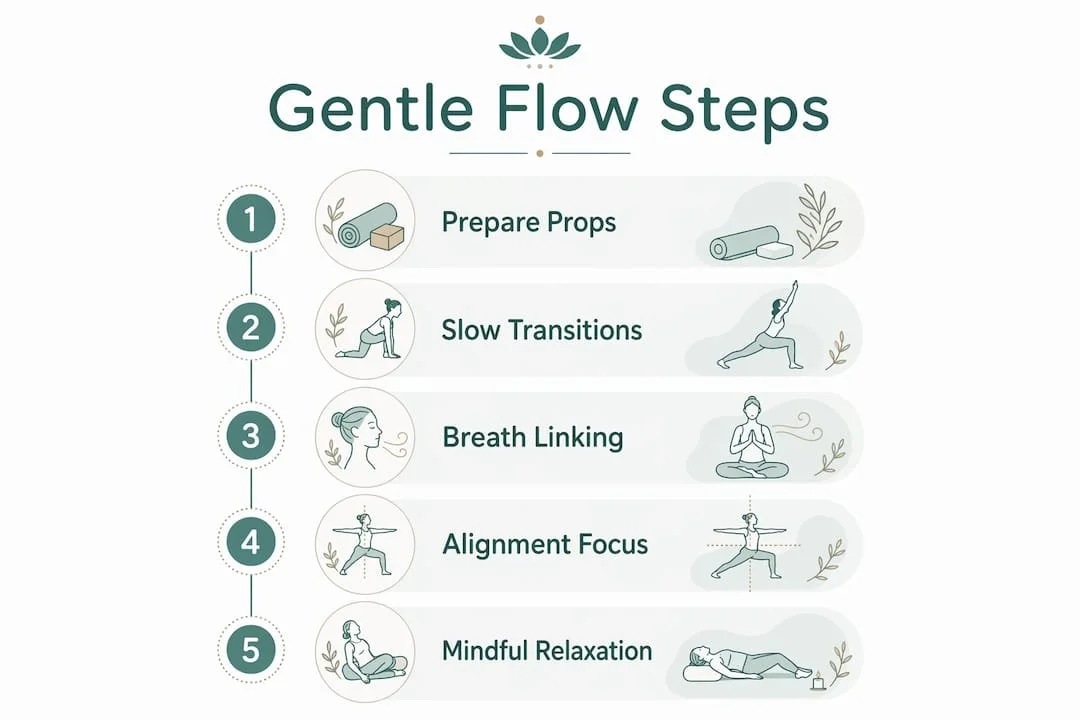
How can beginners start practicing gentle flow yoga safely?
Starting gently is not just advice for beginners. It is the correct approach for anyone new to this style. Follow these steps to build a safe and effective practice:
Start with breath awareness. Before attempting any pose, spend two to three minutes simply observing your inhale and exhale. Breath is the foundation of gentle flow. Every movement follows it.
Gather your props. A yoga mat, one or two blocks, a blanket, and a strap cover most needs. Props prevent strain and allow you to hold poses longer without compensating with poor alignment.
Begin with 20-minute sessions. Three sessions per week at 20 minutes builds consistency without overwhelming the body. Increase duration as comfort grows.
Sync movement to breath. Inhale as you open or extend. Exhale as you fold or release. This pairing is what makes gentle flow distinct from simple stretching.
Resist the urge to rush. The biggest mental barrier for most beginners is slowing down. Habitual rushing undermines the practice's core benefit. Staying slow is the work.
Seek qualified instruction. A live or video-guided class with an experienced teacher accelerates learning and prevents common alignment mistakes. Amritayogawellness offers beginner-friendly yoga guidance that supports safe, gradual progress.
One misconception worth addressing directly: gentle yoga does not produce results slowly. Slower movement fosters deeper release and safer joint work than faster styles. Practitioners often notice meaningful changes in tension and mood within two to three weeks of consistent practice.
Pro Tip: After each session, write one sentence about how your body feels. This simple habit builds body awareness faster than any pose sequence.
Key Takeaways
Gentle flow yoga is the most accessible entry point to yoga for adults seeking stress relief, flexibility, and mindfulness, because its slow, breath-led structure supports the nervous system directly.
| Point | Details |
|---|---|
| Core definition | Gentle flow links slow, deliberate poses to controlled breathing for low-intensity movement. |
| Primary benefit | It stimulates the parasympathetic nervous system and lowers cortisol, reducing chronic tension. |
| Session length | Standard classes run 45–60 minutes; home sessions work well at 20–45 minutes. |
| Props are required | Blocks, bolsters, and blankets support alignment and make poses sustainable for all bodies. |
| Beginner strategy | Start with 20-minute sessions three times per week and prioritize breath over pose perfection. |
What I have learned from watching beginners find their pace
The most consistent pattern I see in people new to gentle flow yoga is the same every time. They arrive expecting to feel like they are not doing enough. The pace feels almost uncomfortably slow at first. They want to push further, hold longer, move faster. That impulse is understandable. Most of us have been conditioned to equate effort with value.
What shifts things is the moment a practitioner stops fighting the pace and actually follows the breath. The body softens in a way that no amount of pushing produces. I have watched people with years of chronic shoulder tension release it in a single session, not because they worked harder, but because they finally stopped bracing.
The gentle yoga accessibility conversation matters here too. This practice is not a consolation prize for people who cannot do "real" yoga. It is a distinct discipline with its own demands, primarily the demand to stay present and resist the habit of rushing. That is harder than it sounds, and it is where the real growth happens.
My honest advice: give it six sessions before you judge it. The first two sessions feel unfamiliar. By session four, most people notice something has shifted in how they carry tension through the day. By session six, they stop asking whether it is working.
— Juiced
Gentle yoga classes at Amritayogawellness in Philadelphia
Amritayogawellness offers gentle flow yoga classes designed for adults at every starting point, from complete beginners to those returning after injury or a long break from movement.
The studio's instructors in Philadelphia guide practitioners through breath-led sequences with clear alignment cues and prop support built into every class. Beyond yoga, Amritayogawellness connects physical practice to broader wellness through offerings like tarot readings for those exploring mindfulness and self-reflection from multiple angles. Whether you are stepping onto a mat for the first time or looking to deepen a low-impact practice, the studio provides structure, community, and expert guidance to support your progress.
FAQ
What is gentle flow yoga in simple terms?
Gentle flow yoga is a slow, low-intensity yoga style that links poses together using breath. It prioritizes joint mobility, stress relief, and body awareness over strength or flexibility demands.
Is gentle flow yoga good for beginners?
Gentle flow yoga is one of the best starting points for beginners because it requires no prior fitness or flexibility. Its slow pace and use of props make it safe and approachable from the first session.
How long is a gentle flow yoga class?
A standard gentle flow class runs 45–60 minutes. Home practices often run 20–45 minutes and still deliver meaningful benefits with consistent practice.
Is gentle flow yoga meditative?
Gentle flow yoga is meditative in practice. The combination of breath-linked movement and slow transitions trains focused attention, which produces many of the same calming effects as seated meditation.
How is gentle flow yoga different from restorative yoga?
Gentle flow involves active, continuous movement through poses. Restorative yoga uses passive, fully supported holds lasting 5–20 minutes. Both reduce stress, but through different mechanisms and levels of physical engagement.
Recommended
North End Yoga: Best Classes for Philadelphia Adults
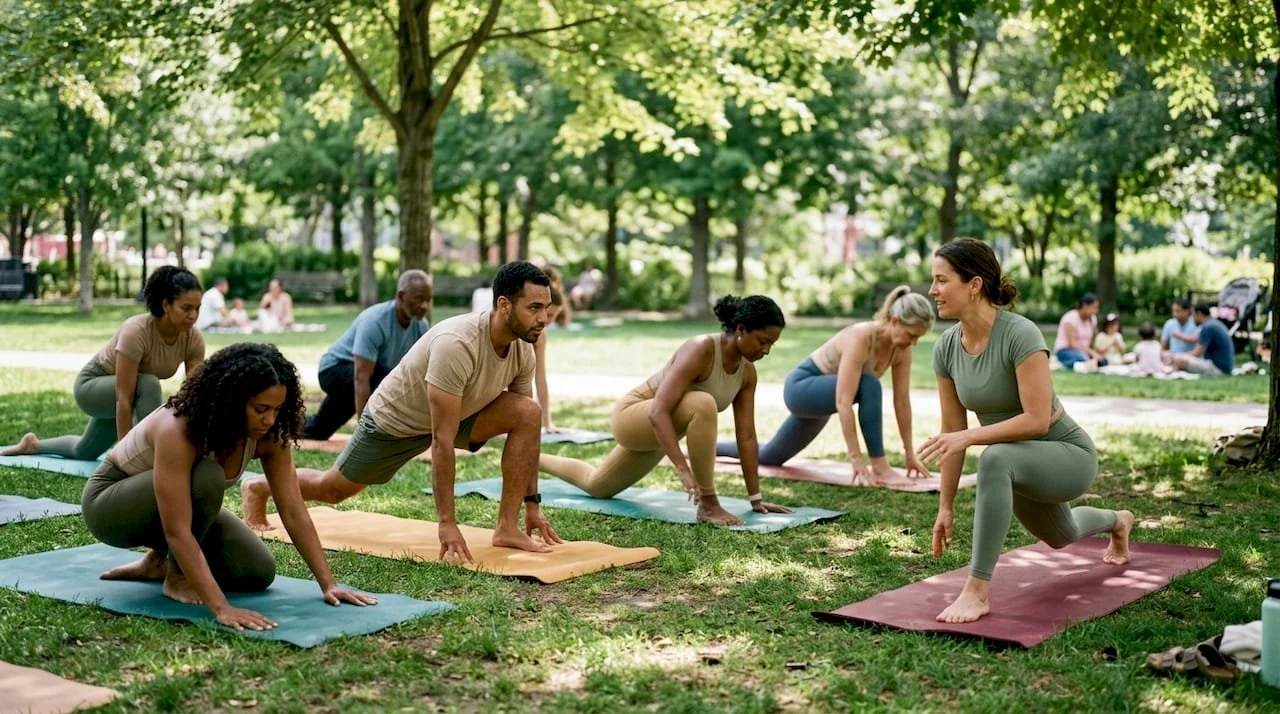
TL;DR:
North End yoga offers accessible classes for adults of all levels, emphasizing community and breath-led practice. Community involvement through outdoor sessions fosters accountability and motivation, making yoga a social routine. Beginners should choose classes aligned with their goals, check accessibility, and take advantage of trial offers for lasting wellness benefits.
North end yoga is a community-centered approach to wellness that brings together adults seeking physical strength, mental clarity, and social connection through structured yoga practice. Philadelphia adults looking for accessible, welcoming classes will find that the North End offers a range of studio sessions, outdoor pop-ups, and beginner-friendly programs designed to meet people exactly where they are. Whether you have never set foot on a mat or you practice regularly, the local yoga scene gives you real options grounded in both classical technique and modern accessibility. Amritayogawellness understands this need and supports adults on every step of that path.
What yoga classes are available in Philadelphia's North End?
The North End yoga scene covers a wide range of class types, from beginner-friendly flows to restorative sessions built around recovery and deep stretching. Studios in the area offer structured programming that builds strength and flexibility over time, with instructors who adapt poses to different ability levels. You do not need prior experience to walk into most of these classes and feel at home.
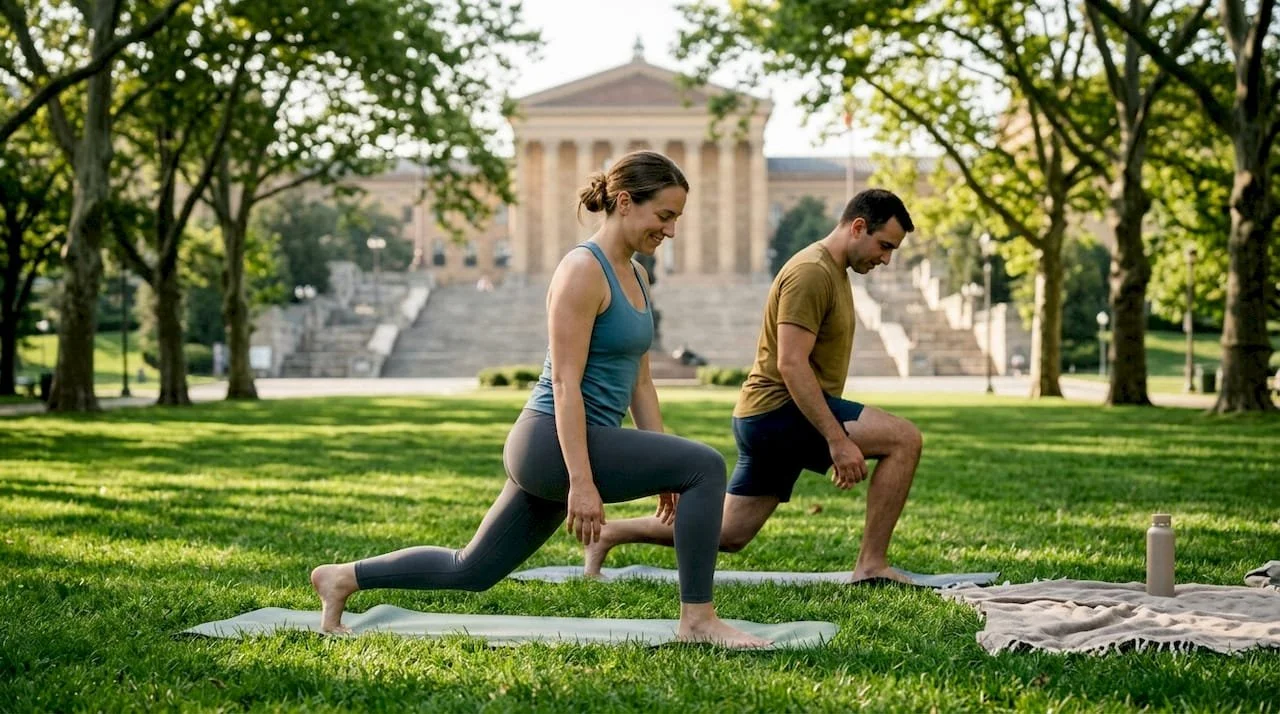
Outdoor and pop-up sessions add another layer of access. The Rose Kennedy Greenway hosts public fitness schedules that include outdoor yoga and Pilates in open plazas, designed for all levels. These sessions lower the barrier for adults who feel uncertain about committing to a studio right away.
Studio-based classes typically run on consistent weekly schedules, making it easier to build a routine. Established venues like Soma Yoga Center at 256 Hanover St offer varied sessions covering beginner to restorative formats, improving both strength and flexibility. Scheduling options often include morning, midday, and evening slots to fit working adults.
Here is what you can typically expect from local class formats:
Beginner flows: Slow-paced sessions focused on foundational poses and breath awareness
Restorative yoga: Longer holds with props that release tension and support recovery
Strength-building vinyasa: Linked movement sequences that build cardiovascular endurance
Outdoor pop-up classes: Free or low-cost sessions in public spaces like the Greenway
Midday reset classes: Shorter sessions designed for working professionals needing a mental break
Pro Tip: Check whether a studio offers a trial period before you commit to a monthly membership. Many studios provide a 30-day unlimited introductory offer that lets you sample multiple instructors and class styles at a reduced rate.
How does community involvement enhance the North End yoga experience?
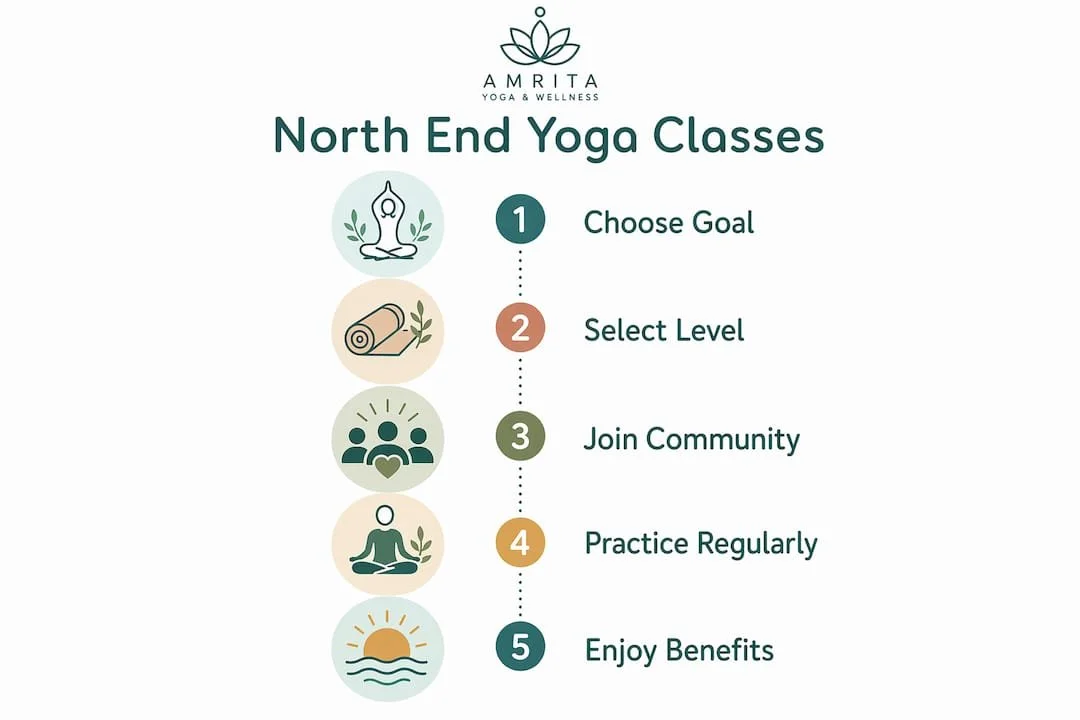
Group yoga practice produces benefits that solo home practice simply cannot replicate. When you practice alongside others, the shared energy of the room creates accountability, encourages consistency, and reduces the isolation that often accompanies stress and anxiety. Community-oriented programming turns a physical workout into a social wellness ritual.
Outdoor seasonal classes on the Rose Kennedy Greenway serve as a lower-barrier entry point for adults who feel intimidated by studio commitments. These free and low-cost sessions grow community engagement by making yoga visible and approachable in everyday public spaces. Seeing neighbors practice together normalizes the habit.
Recurring sessions matter more than one-off events. When a class meets every Tuesday morning or every Saturday at noon, participants build relationships with instructors and fellow practitioners. That consistency is what turns a casual interest into a lasting wellness practice. Research on yoga and stress relief confirms that community-based practice improves both adherence and mental wellbeing outcomes for adults.
The four strongest community benefits of group yoga practice are:
Social accountability: Knowing others expect you at class increases follow-through on attendance.
Shared motivation: Practicing alongside people at different levels shows you what is possible over time.
Instructor feedback: Group settings give teachers the chance to offer real-time corrections that improve form and prevent injury.
Mental health support: Group environments reduce feelings of isolation, which directly supports emotional regulation and stress reduction.
What expert insights explain the benefits of practicing yoga in the North End?
Yoga practice is cumulative. Each session builds on the last, gradually improving cardiovascular health, weight-bearing strength, and mental focus. This is not a fitness trend with a short shelf life. It is a practice with documented physical and psychological returns that compound over months and years.
Breath-led movement sits at the core of effective yoga instruction. Instructor Therlande Louissaint, whose approach is documented through the Stretch and the City program, focuses classes on breath, flow, and non-judgmental movement for both mental and physical flexibility. That framework creates an intentional space where adults can reset, recover, and build strength without pressure.
"Yoga is not about touching your toes. It is about what you learn on the way down. Breath-led movement and curated sound create an intentional, restorative experience that meets practitioners exactly where they are, regardless of ability level. Flexibility is not a prerequisite. It is a result."
Classical lineage training adds another layer of quality assurance. Instructors trained in established lineages follow rigorous, safe teaching methods that reduce injury risk and maximize long-term benefits. That standard matters when you are new to practice and learning how your body responds to unfamiliar movement patterns.
Yoga also functions as both cardiovascular and weight-bearing exercise. Adults who practice regularly report improvements in balance, joint stability, and resting heart rate. For those managing yoga for stress, the combination of physical exertion and mindful breathing produces measurable reductions in cortisol levels. The practice works on multiple systems at once.
What should beginners know before starting yoga classes in North End?
The single biggest misconception about yoga is that you need to be flexible before you start. Flexibility is not a requirement. It is a result of consistent practice. Yoga suits all ability levels and builds strength gradually, which means your first class does not need to look like anyone else's.
Introductory trial periods are your best tool for getting started without pressure. Many studios offer 30-day unlimited promotions that give new practitioners consistent exposure to multiple class styles and instructors. That first month is where habits form, so taking advantage of discounted unlimited access is a practical move.
Physical accessibility deserves attention before you book. Some studios in historic districts occupy upper floors in older buildings. Soma Yoga Center, for example, sits on the third floor without elevator access. Always check building access details before your first visit, especially if mobility is a consideration.
| Factor | What to check before you go |
|---|---|
| Class level | Confirm the session is labeled beginner or all-levels |
| Building access | Ask about floor level and elevator availability |
| Trial offer | Look for a 30-day unlimited introductory rate |
| Class length | Choose 45–60 minute sessions to start |
| Instructor background | Ask whether instructors hold lineage-based certifications |
Selecting a class aligned with your personal goals makes a real difference in early motivation. If stress relief is your priority, restorative or yin yoga gives you the most return. If you want physical conditioning, a beginner vinyasa or flow class builds strength faster. Resources like healthy yoga practices can help you match class style to your specific health goals before you commit.
Pro Tip: Arrive 10 minutes early to your first class. Introduce yourself to the instructor, mention any injuries or limitations, and ask which modifications apply to you. Instructors trained in classical lineages will always have answers ready.
Key Takeaways
North End yoga delivers the strongest results when adults combine consistent studio practice with community-based programming and instructor-guided breathwork from the very first class.
| Point | Details |
|---|---|
| Flexibility is not required | Yoga builds flexibility over time; beginners can start any class without prior experience. |
| Trial periods build habits | A 30-day unlimited introductory offer gives new practitioners the consistent exposure needed to form a lasting routine. |
| Community practice improves adherence | Group settings create accountability and social connection that solo practice cannot replicate. |
| Check building accessibility | Studios in historic districts may lack elevator access; confirm floor level before your first visit. |
| Breathwork drives results | Breath-led movement and classical lineage instruction reduce injury risk and maximize long-term physical and mental benefits. |
What I have learned from years of watching people start yoga
Most adults who quit yoga in the first month quit because they picked the wrong class, not because yoga was wrong for them. They walked into an advanced flow class expecting a gentle stretch, felt lost, and never came back. That is a scheduling problem, not a fitness problem.
The community element is what I have seen change that pattern most reliably. When a studio runs consistent outdoor sessions or beginner series with the same group of faces each week, people stay. They show up not just for the practice but for the people. The breathwork component is what keeps them coming back once the novelty wears off. Breath awareness is a skill that transfers directly into daily stress management, and adults notice that transfer quickly.
The cultural integration in North End yoga offerings is also worth naming. Classes that blend movement with mindfulness, sound, and community ritual give adults something a gym class cannot. That depth is what separates a wellness practice from a workout. If you are on the fence, start with one outdoor class on the Greenway. The barrier is low and the payoff is immediate.
— Juiced
Wellness beyond the mat at Amritayogawellness
Amritayogawellness offers more than yoga classes. For adults ready to deepen their wellness practice, the studio pairs physical movement with complementary services that address mental and spiritual wellbeing.
One standout offering is the tarot reading service at Amrita Yoga & Wellness, which gives adults a structured space for reflection and self-inquiry alongside their physical practice. The studio's welcoming environment makes it easy to explore these services without prior experience. Whether you are new to wellness practices or looking to add depth to an existing routine, Amritayogawellness provides a full range of options in one accessible location.
FAQ
What types of yoga classes are available in the North End?
North End yoga studios typically offer beginner flows, restorative sessions, and strength-building vinyasa classes. Outdoor pop-up classes on the Rose Kennedy Greenway provide free, all-levels options for adults who prefer open-air practice.
Do I need to be flexible to start yoga classes in North End?
Flexibility is not a prerequisite for yoga. Regular practice builds flexibility over time, and most North End yoga studios offer beginner-friendly classes that accommodate all ability levels from the first session.
Are there free or low-cost yoga options near the North End?
The Rose Kennedy Greenway hosts seasonal outdoor yoga and Pilates classes that are free or low-cost, making community wellness programming accessible to adults without a studio membership.
How do I choose the right yoga class as a beginner?
Match your class choice to your primary goal: restorative yoga works best for stress relief, while beginner vinyasa builds physical strength faster. Always confirm a class is labeled all-levels or beginner before attending.
Is there yoga in North End for adults with mobility concerns?
Some studios in historic North End buildings are located on upper floors without elevator access. Always contact the studio directly to ask about floor level and building accessibility before booking your first class.
Recommended
Yoga One Charlotte: What Happened and What's Next

TL;DR:
Yoga One Charlotte was a foundational studio that closed after 14 years, leaving a lasting legacy through its instructors. Today, Charlotte's yoga scene features over 45 weekly classes, diverse styles, and accessible entry options like introductory passes. The community has become more decentralized, with a variety of studios and events fostering resilience, connection, and personalized wellness experiences.
Yoga One Charlotte is defined as the city's foundational Baptiste Power Vinyasa studio that shaped the local yoga culture for over a decade before closing both of its Charlotte locations. Its closure left a real gap in the Charlotte yoga community, but that community has responded with resilience. New studios, teacher-led collectives, and pop-up yoga events have filled the space Yoga One left behind. Charlotte's yoga scene in 2026 is broader, more varied, and more accessible than ever before.
What is Yoga One Charlotte and what happened to it?
Yoga One closedafter 14 years of operation, ending a chapter that had defined Baptiste Power Vinyasa yoga in Charlotte. Baptiste Power Vinyasa is a style built on breath-linked movement, meaning every pose connects to an inhale or exhale. That approach made Yoga One's classes physically demanding and mentally grounding at the same time. The studio also partnered with local athletic organizations, including triathlon racing groups, which showed how seriously it took yoga as cross-training for real athletes.
The closure hit the Charlotte yoga community hard. Longtime students lost their home studio, and several teachers who trained there went on to lead their own classes and collectives. That ripple effect is actually one of Yoga One's most lasting contributions. The teachers it developed are now embedded across Charlotte's current studio scene, carrying the same breath-focused philosophy into new spaces.
Searching for "yoga one Charlotte" today reflects that legacy. People want to know if it still exists, where its community went, and what the best current options are. The answer is clear: the studio is gone, but the practice it championed lives on through the instructors and students it shaped.
What yoga options are available in Charlotte now?
Charlotte's 2026 yoga scene features a strong lineup of studios serving every level, from first-timers to advanced practitioners. The city offers over 45 classes per week at individual studios alone, covering styles that range from hot yoga and power vinyasa to restorative and specialty workshops. That volume means you can practice every day without repeating the same class twice in a week.
The variety across Charlotte studios breaks down into several clear categories:
Hot yoga and circuit training: Heated rooms that build endurance and flexibility simultaneously, often paired with strength-based circuits
Power vinyasa: Breath-linked flow classes that carry on the tradition Yoga One established in Charlotte
Restorative yoga: Slower, supported postures focused on recovery and stress relief
Specialty workshops: Targeted sessions for athletes, beginners, or specific goals like hip mobility or core endurance
Pop-up outdoor classes: Low-pressure, community-style events held in parks and public spaces across the city
Introductory pricing makes entry easy. A 14-day unlimited pass for $49 is one example of how studios lower the barrier for newcomers. That price point lets you sample multiple class styles and instructors before committing to a membership.
Pro Tip: Before buying a monthly membership anywhere, use an introductory pass to attend at least three different class styles at the same studio. You will learn more about your preferences in two weeks than you would from reading a dozen reviews.
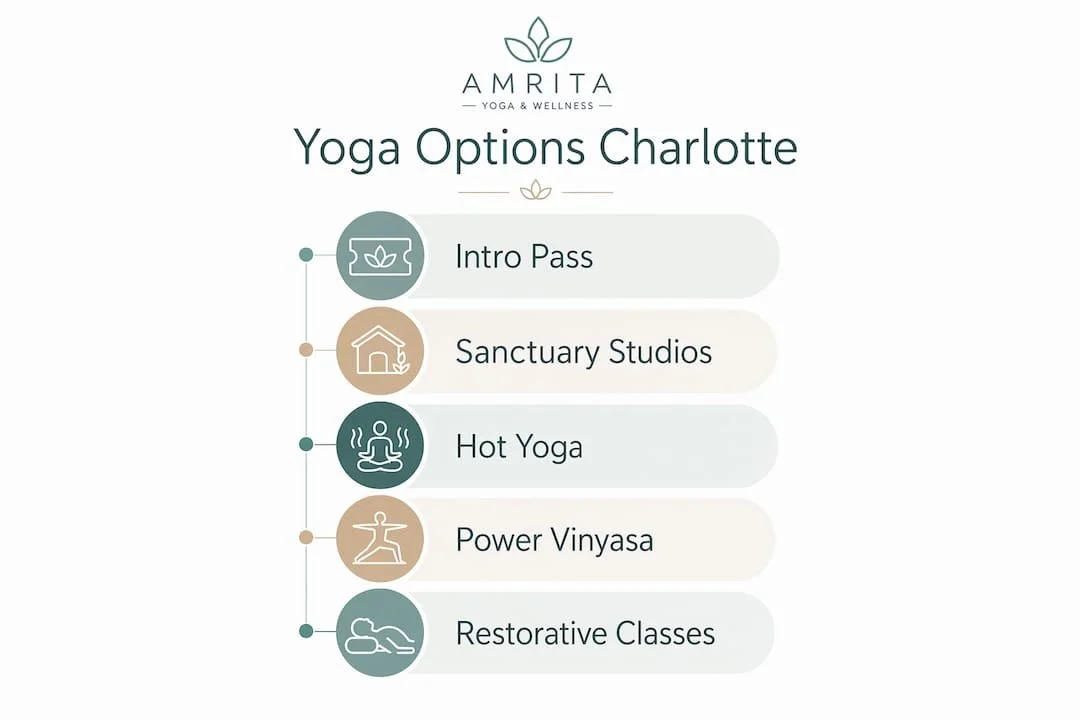
Sanctuary-style studios are a growing trend in Charlotte. These spaces avoid mirrors and loud music, which pushes your attention inward rather than outward. When a studio opens its garage doors to let in a natural breeze instead of blasting air conditioning, that is a deliberate design choice to keep the environment calm and focused. For practitioners who found Yoga One's community atmosphere meaningful, these spaces offer the closest equivalent.
How do yoga classes in Charlotte support physical and mental wellness?
Yoga's physical benefits go well beyond flexibility. Regular practice builds functional strength, improves balance, and develops the kind of core endurance that supports every other athletic activity. Yoga serves as cross-training for athletes specifically because breath-linked movement teaches the body to stay efficient under physical stress. That is why Yoga One originally partnered with triathlon organizations, and why Charlotte's current studios continue to offer athlete-focused workshops.
The mental health case for yoga is equally strong. Sanctuary-style environments without mirrors or distracting music reduce external stimulation and allow practitioners to focus on breath and sensation. That internal focus is the mechanism behind yoga's well-documented stress reduction effects. When you remove the visual noise of a mirror and the auditory noise of a playlist, the practice becomes genuinely meditative even in a group setting.
"Yoga's value as cross-training lies in its breath-linked approach. When movement connects to breath, the nervous system learns to stay regulated under physical and mental pressure. That regulation carries over into daily life, not just athletic performance."
The specific benefits Charlotte practitioners report most consistently include:
Reduced anxiety and stress from breath-focused, low-distraction class environments
Improved injury resilience through better body awareness and movement mechanics
Core strength and endurance built through sustained poses and transitions
Better sleep quality linked to the parasympathetic activation that restorative classes produce
Increased body awareness that translates directly into safer performance in other sports
Amritayogawellness covers the breathwork principles behind these benefits in depth, which applies directly to what Charlotte studios teach in their breath-centered classes.
Practical tips for newcomers finding the right yoga practice in Charlotte
Starting yoga in Charlotte is straightforward if you approach it with a clear plan. The biggest mistake new practitioners make is committing to one studio or one style before they have enough information. Charlotte's current scene is diverse enough that the right fit for you depends heavily on your personality, fitness background, and wellness goals.
Follow these steps to build a consistent practice from the start:
Use introductory offers first. A two-week unlimited pass lets you attend daily without financial pressure. Attend at least five to six classes before forming a strong opinion about a studio.
Bring a friend on a guest pass. Guest passes lower the barrier for both of you and create built-in accountability. You are far more likely to show up consistently when someone else is counting on you.
Try at least two different class styles. A hot power class and a restorative class feel completely different. Sampling both early helps you understand which direction your practice needs to go.
Prioritize location and schedule over aesthetics. The most beautiful studio in Charlotte does not help you if it is 30 minutes from your home and only offers classes at inconvenient times. Consistency depends on convenience.
Attend a pop-up yoga event before committing to a studio. Outdoor pop-up classes are free or low-cost and give you a feel for the Charlotte yoga community without any membership pressure.
Pro Tip: If you are coming from a gym background, start with a power vinyasa or hot yoga class. If you are managing stress or recovering from an injury, start with restorative or a beginner-specific class. Matching your entry point to your current state makes the first month far more sustainable.
Choosing between studios also means thinking about what a yoga studio environment actually offers beyond the physical space. Teacher quality, class size, and community culture matter as much as the style on the schedule. A smaller studio with a tight-knit community often produces better long-term results than a large facility with more class options but less personal attention.
How does Charlotte's yoga community enrich wellness beyond the mat?
Charlotte's yoga community has grown more decentralized since Yoga One closed. That decentralization is actually a strength. Instead of one dominant studio setting the tone, multiple communities now coexist, each with its own culture and focus. Former Yoga One teachers have launched independent classes, and community collectives have organized events that bring practitioners together outside of any single studio's walls.
The community layer of yoga practice produces benefits that solo practice cannot replicate. Accountability, shared motivation, and social connection all contribute to long-term consistency. Research on habit formation consistently shows that social environments accelerate behavior change. Joining a yoga community in Charlotte means you are not just signing up for classes. You are entering a network of people who share your wellness priorities.
Opportunities to deepen your connection to the Charlotte yoga community include:
Teacher training programs that develop your practice and open pathways to teaching
Workshops and retreats focused on specific techniques, themes, or wellness goals
Pop-up yoga events in parks and public spaces that welcome all levels without studio membership
Online community groups organized by local studios and collectives for scheduling, tips, and social connection
Specialty series such as yoga for runners, yoga for stress, or yoga for beginners that create cohort-style learning experiences
Community yogais defined as practice that prioritizes collective experience alongside individual benefit. Charlotte's current scene embodies that definition more fully than it did when one or two dominant studios controlled the culture. The post-Yoga One era has produced a more distributed, more accessible, and arguably more resilient yoga community across the city.
Key Takeaways
Charlotte's yoga scene in 2026 is more accessible and community-driven than at any point in its history, with introductory passes, sanctuary-style studios, and decentralized collectives replacing the single-studio model Yoga One once represented.
| Point | Details |
|---|---|
| Yoga One has closed | Both Charlotte locations are permanently closed after 14 years of operation. |
| Current studios offer strong variety | Charlotte studios run 45+ weekly classes covering hot, vinyasa, restorative, and specialty formats. |
| Introductory passes lower the entry barrier | A 14-day unlimited pass for $49 lets newcomers sample styles before committing to membership. |
| Yoga supports both body and mind | Breath-linked movement builds core endurance, reduces injury risk, and lowers stress through focused environments. |
| Community accelerates consistency | Pop-up events, teacher collectives, and workshops create accountability that solo practice cannot provide. |
What Yoga One's closure taught me about finding a lasting practice
Yoga One's closure was genuinely significant. I have seen studios come and go, but a 14-year run built on Baptiste Power Vinyasa and real community engagement leaves a mark. What struck me most was not the loss itself but what happened next. The teachers scattered, the students regrouped, and within a relatively short time, Charlotte's yoga scene became richer and more varied than it had been when one flagship studio dominated the conversation.
The lesson I take from that is uncomfortable for people who want a single definitive answer: there is no "best" studio in Charlotte, and there never was. Yoga One was great for what it was. The studios operating now are great for what they are. The practitioners who thrive long-term are the ones who stop searching for the perfect studio and start building a consistent relationship with whatever practice fits their actual life.
The sanctuary-style trend I see growing across Charlotte is the most encouraging development. Removing mirrors is not a gimmick. It is a direct response to the reality that most people come to yoga carrying stress, self-criticism, and distraction. A room that removes those triggers produces a fundamentally different experience than a gym-style yoga class. Charlotte studios are getting that right.
My honest advice: stop optimizing your studio choice and start showing up. The Charlotte yoga community will meet you where you are, whether that is a $49 introductory pass, a free pop-up in a park, or a teacher training that changes your life. The infrastructure is there. Use it.
— Juiced
Amritayogawellness and the wellness path beyond Charlotte studios
Yoga practice does not stop at the studio door. Amritayogawellness offers a range of wellness services designed to complement and deepen what you build on the mat, whether you are just starting out or looking to add new dimensions to an established practice.
One of the most distinctive offerings at Amritayogawellness is tarot readings, which support personal reflection and self-awareness in ways that pair naturally with a mindful yoga practice. For practitioners who want to go deeper into the mental and spiritual side of wellness, this kind of guided introspection adds real value. Amritayogawellness also covers topics like choosing yoga studios downtown that apply directly to the decisions Charlotte practitioners face right now. The resources are practical, the services are personal, and the community is welcoming.
FAQ
Is Yoga One Charlotte still open?
Yoga One Charlotte has permanently closed both of its locations after operating for 14 years. Former teachers and students have continued the practice through independent classes and community collectives across Charlotte.
What are the best yoga studios in Charlotte in 2026?
Charlotte's top studios in 2026 include a range of options covering hot yoga, power vinyasa, restorative, and specialty formats. Many offer introductory passes of two weeks of unlimited classes for $49, making it easy to find the right fit before committing.
What yoga style did Yoga One Charlotte teach?
Yoga One Charlotte taught Baptiste Power Vinyasa Yoga, a style defined by breath-linked movement, physical intensity, and community-focused practice. Several current Charlotte instructors trained in this tradition and continue teaching it.
How do I start yoga in Charlotte as a beginner?
Start with an introductory unlimited pass at a studio that offers beginner-specific classes or all-levels formats. Attending a free or low-cost pop-up yoga event first is also a low-pressure way to experience the Charlotte yoga community before joining a studio.
Are there free or low-cost yoga events in Charlotte?
Charlotte Pop-Up Yoga runs a regular schedule of indoor and outdoor events accessible to all levels. These events offer a community atmosphere without membership fees and are a practical starting point for newcomers to the Charlotte yoga scene.
Recommended
Hatha Style Yoga: A Complete Guide for All Levels
TL;DR:
Hatha yoga combines breath control, physical postures, and meditation to balance the body and mind. It typically involves slow, deliberate poses held for multiple breaths, followed by final relaxation to promote mental clarity and physical strength. Regular practice leads to improvements in flexibility, stress reduction, and overall wellness.
Hatha style yoga is a complete system that combines breath control, physical postures, and meditative awareness to balance the body and mind. Known formally as Hatha Yoga, the practice draws its name from two Sanskrit roots: "Ha," meaning sun energy, and "Tha," meaning moon energy. Balancing these two forces is the central goal of every session. The foundational text, the Hatha Yoga Pradipika, written in the 15th century, outlines this system as a path toward inner stillness and, ultimately, meditation. Whether you are stepping onto the mat for the first time or returning after years of practice, understanding what Hatha yoga is at its core changes how you experience every class.
What is hatha style yoga and how is a class structured?
A typical hatha style yoga class runs between 30 and 90 minutes and follows a consistent sequence: pranayama (breath work), asanas (physical postures), and Savasana (final relaxation). That structure is not arbitrary. Each phase prepares the body and mind for the next, so skipping pranayama at the start is like skipping a warm-up before a run.
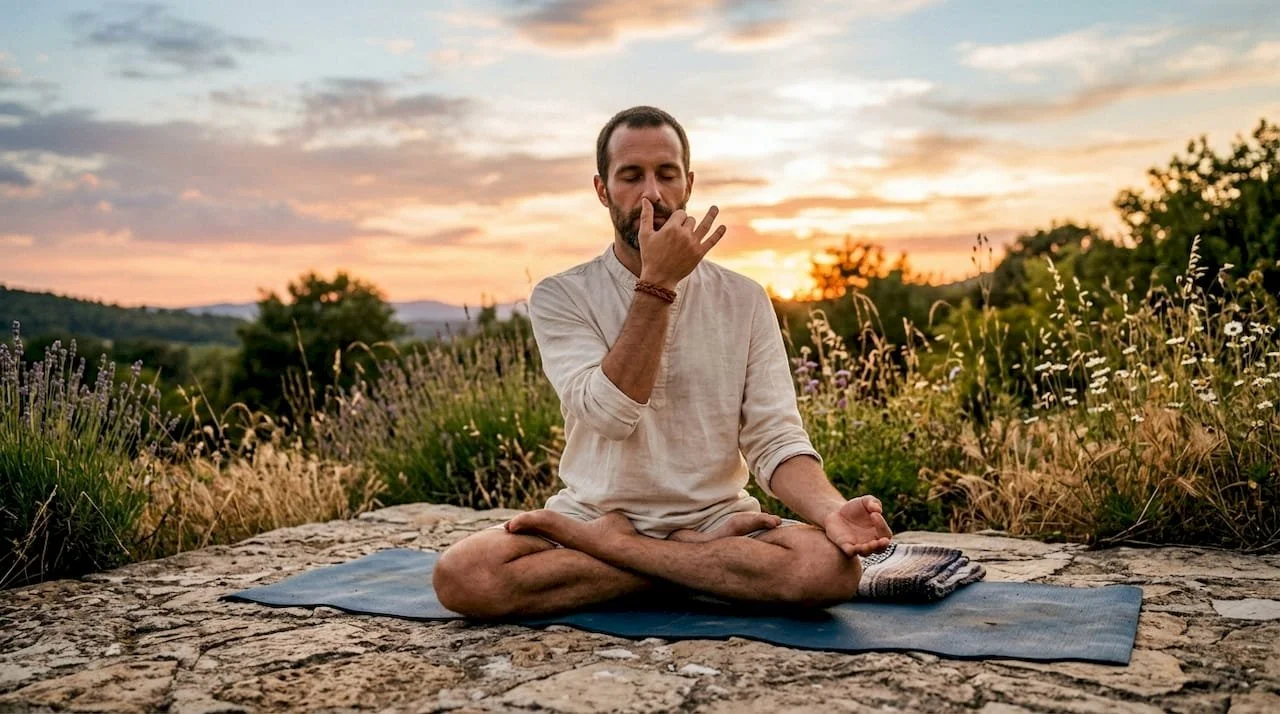
The class opens with pranayama to settle the nervous system and draw attention inward. Techniques such as Nadi Shodhana (alternate nostril breathing) and Ujjayi (victorious breath) are common openers. Pranayama is considered more powerful than asanas in the classical tradition, which is why it anchors the session rather than finishing it.
Asanas follow, and this is where Hatha's defining quality becomes clear. Poses are held for multiple breaths, not cycled through quickly. That stillness gives teachers time to offer alignment cues and gives practitioners time to feel what is actually happening in the body. A Warrior II held for five full breaths teaches far more about hip alignment than one held for a single count.
The session closes with Savasana, a full-body rest that lets the nervous system absorb the practice. Skipping Savasana is the most common beginner mistake. It is not a reward for finishing. It is a required part of the sequence.
Pranayama: Breath work to regulate the nervous system and focus the mind.
Asanas: Held postures with alignment focus and sustained muscle engagement.
Savasana: Final relaxation to integrate the physical and mental work of the session.
Pro Tip: If you arrive late and miss the pranayama opening, spend two minutes in Child's Pose with slow nasal breathing before joining the asana sequence. It replicates the settling effect and keeps your practice intentional.
What health and mental benefits does Hatha yoga provide?
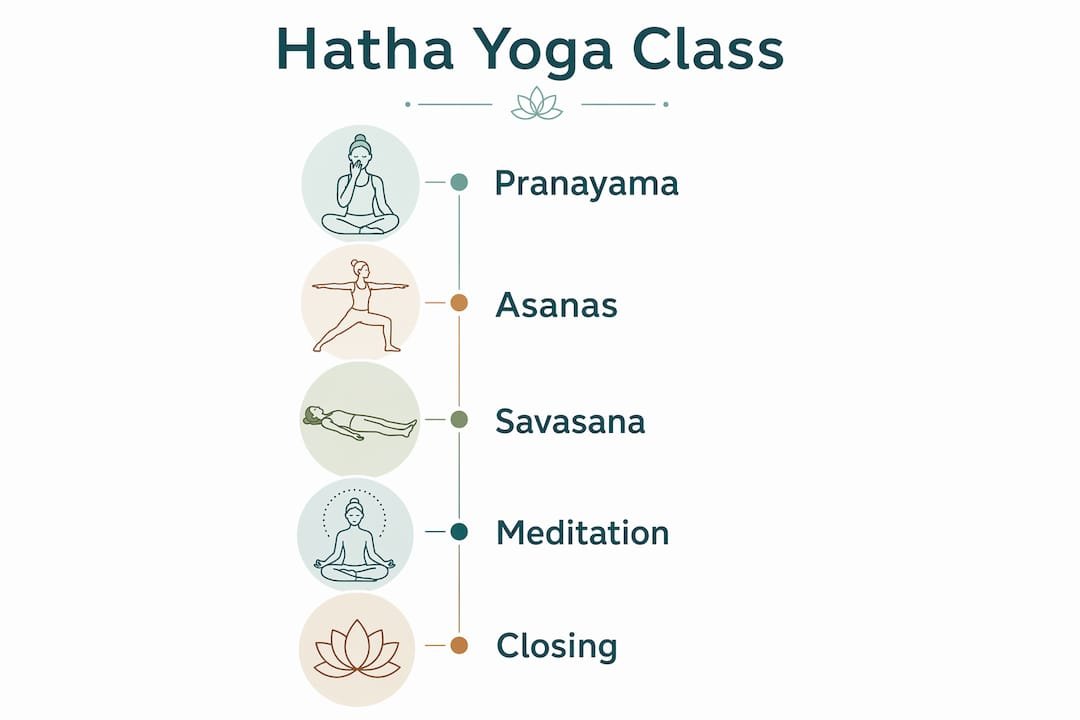
Hatha yoga produces measurable physical results faster than most practitioners expect. Beginners who practice consistently show improvements in strength, flexibility, and cardio-respiratory fitness within 8 weeks. Eight weeks is a short window. That timeline makes Hatha one of the most accessible entry points into structured physical conditioning.
The mental benefits are equally well-supported. Slow, conscious breathing activates the parasympathetic nervous system, which reduces stress hormones, improves sleep quality, and sharpens mental clarity. This is not a vague wellness claim. It is a direct physiological response to controlled breath. The meditation benefits of breathwork extend well beyond the mat, supporting emotional regulation and focus throughout the day.
"The breath is the bridge between the body and the mind. In Hatha yoga, learning to control the breath is learning to control the quality of your attention, your stress response, and your inner state."
That insight captures why Hatha yoga is not simply a flexibility class. The physical postures are a vehicle. The breath is the engine. Practitioners who treat the asanas as the point often miss the deeper shift that happens when breath and movement align.
Hatha also supports practitioners dealing with chronic stress. The gentle yoga practice format makes it accessible for people who find high-intensity exercise counterproductive during stressful periods. The body responds to sustained, low-load movement and breath work in ways that vigorous exercise cannot replicate.
How does Hatha style yoga differ from Vinyasa and Hatha Flow?
The clearest difference between Hatha and Vinyasa is the breath-to-movement ratio. Hatha holds poses for multiple breaths, allowing deep focus on alignment and grounding. Vinyasa links each movement to a single breath, creating a continuous, flowing sequence. One is deliberate and still. The other is dynamic and rhythmic.
That difference in pacing changes the entire experience of a class. In Hatha, you might hold Triangle Pose for five breaths while your teacher adjusts your shoulder alignment. In Vinyasa, you move through Triangle, Warrior II, and Extended Side Angle in the time it takes to exhale twice. Neither is superior. They serve different needs.
| Feature | Hatha yoga | Hatha Flow | Vinyasa yoga |
|---|---|---|---|
| Pace | Slow, deliberate | Moderate, mindful | Fast, continuous |
| Breath style | Held poses, multiple breaths | Steady movement with breath | One breath per movement |
| Best for | Beginners, alignment focus | Intermediate, gentle flow | Active, fitness-oriented |
| Stillness emphasis | High | Moderate | Low |
Hatha Flow sits between the two. It is a mindful hybrid style that blends steady movement with moments of stillness. Practitioners who find pure Hatha too static but feel rushed in Vinyasa often find Hatha Flow the right fit. It preserves the breath awareness of traditional Hatha without the pressure of speed.
Hatha yoga: Best for learning alignment, building a foundation, and reducing stress.
Hatha Flow: Best for practitioners who want gentle movement without static holds.
Vinyasa yoga: Best for those seeking cardiovascular challenge and fluid sequencing.
Understanding what Vinyasa yoga is helps clarify why Hatha remains the preferred starting point for most new practitioners. The slower pace creates space for learning that faster styles cannot provide.
What are the deeper aspects of Hatha yoga for experienced practitioners?
Hatha yoga is not a single technique. It is a comprehensive system that integrates body, breath, and mind as preparation for meditation and spiritual awareness. Styles like Ashtanga and Iyengar yoga both fall under the Hatha umbrella. That context matters for experienced practitioners who want to understand where their practice sits within the broader tradition.
The pranayama techniques used in classical Hatha go well beyond basic breathing. Bhastrika (bellows breath) generates heat and energy. Sitali (cooling breath) lowers body temperature and calms the mind. Kumbhaka, or breath retention, is considered the most advanced technique. It creates internal pressure that, according to the classical texts, purifies the energy channels and prepares the practitioner for deeper states of concentration.
The classical texts describe Hatha as a preparatory practice for Raja Yoga, the path of meditation. The physical postures and breath work are not the destination. They are the preparation. Samadhi, a state of complete meditative absorption, is the classical goal. Most modern practitioners never frame their practice this way, but understanding it changes how you approach even a basic standing pose.
Isometric muscle engagement: Holding poses recruits deep stabilizing muscles that dynamic movement misses.
Breath retention (Kumbhaka): Advanced technique that builds concentration and internal awareness.
Purification practices (Shatkarmas): Classical cleansing techniques that precede asana in traditional sequences.
Philosophical framework: Hatha as preparation for Raja Yoga and the state of Samadhi.
Pro Tip: If you have practiced Hatha for more than a year, ask your teacher to introduce Nadi Shodhana with brief Kumbhaka holds. Even a two-second retention after inhalation noticeably deepens the meditative quality of the session.
Holding poses with full breath awareness shifts the experience from muscular effort to ease and concentration. That shift is the marker of an advancing practice.
How can beginners safely start a Hatha yoga practice?
Hatha yoga is accessible, but accessible does not mean risk-free. People with injuries or chronic conditions should consult a healthcare professional before starting, even at a gentle pace. Sustained isometric holds create real physical load. A knee injury that feels manageable in daily life can become aggravated in a held Warrior pose.
Props are not a sign of weakness. Blocks, straps, and bolsters allow the body to access the correct alignment without forcing range of motion. A block under the hand in Triangle Pose keeps the spine long. A strap around the foot in seated forward folds protects the lower back. Using props correctly is a sign of good instruction, not beginner limitation.
Start with two sessions per week and build to three or four as the body adapts.
Use props consistently until alignment feels natural without them.
Avoid pushing through pain. Discomfort from muscle engagement is normal. Sharp or joint pain is not.
Find a qualified teacher who offers hands-on adjustments and clear verbal cues.
Listen to your body rather than matching the person on the next mat.
Beginners and older adults benefit most from Hatha's adaptable pace, but the practice still demands respect. The 7 yoga styles for beginners resource from Amritayogawellness provides useful context for choosing the right entry point among the many options available.
Pro Tip: Tell your teacher about any injuries before class, not after. A good teacher will offer specific modifications before the session starts, so you are never caught off guard mid-pose.
Key Takeaways
Hatha yoga is the foundational system from which most modern yoga styles derive, combining breath control, held postures, and meditative awareness to build strength, reduce stress, and prepare the mind for deeper concentration.
| Point | Details |
|---|---|
| Core structure | Classes run 30–90 minutes and follow a pranayama, asana, and Savasana sequence. |
| Physical benefits | Consistent practice produces measurable gains in strength and flexibility within 8 weeks. |
| Mental benefits | Controlled breathing activates the parasympathetic nervous system, reducing stress and improving sleep. |
| Hatha vs. Vinyasa | Hatha holds poses for multiple breaths; Vinyasa links each movement to a single breath. |
| Safety for beginners | Consult a healthcare professional before starting if you have injuries or chronic conditions. |
Why Hatha keeps pulling me back
Every style of yoga I have practiced traces back to Hatha. Ashtanga, Iyengar, even the occasional Vinyasa flow. They all borrow their architecture from the same source. But what keeps me returning to a pure Hatha class is something harder to name than flexibility gains or stress reduction.
It is the quality of attention that a held pose demands. When you stay in Warrior I for six breaths instead of two, the first three breaths are physical. You feel the quad burn, the hip stretch, the shoulder fatigue. But somewhere around breath four, something shifts. The effort becomes quieter. You stop fighting the pose and start inhabiting it. That shift is what the classical texts mean by moving from effort to ease, and it does not happen in a faster practice.
The community dimension matters too. A Hatha class moves slowly enough that you actually notice the people around you. There is a shared quality of attention in the room that a fast-paced class rarely produces. That collective stillness is underrated as a wellness tool. Healthy habits built in community tend to stick longer than solo routines, and a consistent Hatha practice is one of the most sustainable habits I have seen people build.
My honest advice: do not let the word "gentle" mislead you. Hatha is not easy. It is slow. Those are very different things.
— Juiced
Hatha yoga classes and wellness at Amritayogawellness
Amritayogawellness offers Hatha yoga classes designed for practitioners at every level, from first-timers to those with years of mat experience. The Philadelphia studio provides structured guidance on breath work, alignment, and meditation, so each class builds on the last rather than repeating the same sequence indefinitely.
Beyond yoga, Amritayogawellness supports a full wellness practice. Workshops cover breathwork and mindfulness, and the studio also offers tarot readings as a complementary tool for self-reflection and inner awareness. For practitioners who want to deepen their understanding of Hatha yoga beyond the physical postures, the studio's community and programming provide a clear path forward.
FAQ
What is Hatha yoga, exactly?
Hatha yoga is a traditional system that combines physical postures, breath control, and meditation to balance the body and mind. The name comes from Sanskrit: "Ha" (sun energy) and "Tha" (moon energy), reflecting the practice's goal of internal balance.
How long is a typical Hatha yoga class?
A standard Hatha yoga class runs between 30 and 90 minutes, structured as pranayama, asanas, and a closing Savasana. The exact duration varies by studio and instructor.
Is Hatha yoga good for beginners?
Hatha yoga is one of the best starting points for beginners because its slower pace allows time for alignment instruction and body awareness. Beginners with injuries or chronic conditions should consult a healthcare professional before starting.
What is Hatha Flow yoga?
Hatha Flow is a hybrid style that blends the steady breath awareness of traditional Hatha with gentle, continuous movement. It suits practitioners who find pure Hatha too static but feel rushed in a Vinyasa class.
How quickly will I see results from Hatha yoga?
Research shows measurable improvements in strength, flexibility, and cardio-respiratory fitness after 8 weeks of consistent Hatha practice. Mental benefits such as reduced stress and better sleep often appear sooner.
Recommended
YouTube Beginners Meditation: Your 2026 Starter Guide
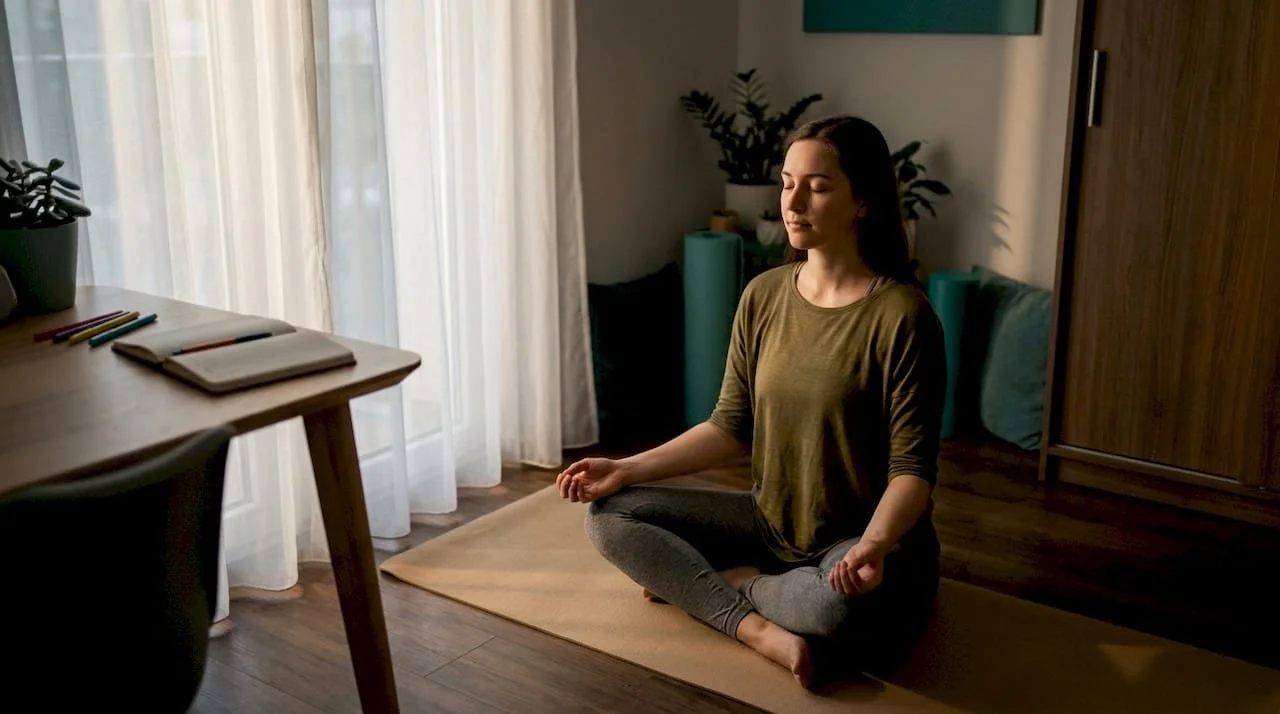
TL;DR:
YouTube provides free guided meditation videos ideal for beginners to establish a consistent practice. Starting with short sessions and focusing on breath awareness helps build familiarity and reduces frustration. Staying committed to one channel and practicing patience ensures long-term progress in mindfulness.
YouTube beginners meditation is defined as guided mindfulness practice delivered through free video content, designed to give complete novices a structured, low-barrier entry into meditation. The most effective starting point is breath awareness and body scan techniques, both of which provide clear focal points that prevent the mental drift beginners fear most. Daily sessions of 10–20 minutes deliver the most significant improvements in stress and focus, though even 2–5 minutes builds a real habit. YouTube removes the financial barrier entirely, letting you curate a personal practice without spending a dollar.
1. What are the most effective beginner meditation types on YouTube?
Guided meditation on YouTubeoutperforms unguided silence for beginners because it provides structure and reduces self-consciousness. You are not left alone with a blank mind. Instead, a voice walks you through each step, which is exactly what novices need.
The four meditation types best suited for beginners on YouTube are breath awareness, body scan, visualization, and loving-kindness (metta). Each serves a different need, and understanding the difference helps you pick the right video on any given day.
| Meditation Type | Core Focus | Session Length | Best For |
|---|---|---|---|
| Breath awareness | Noticing the inhale and exhale | 5–15 minutes | Calming an anxious mind |
| Body scan | Moving attention through body parts | 10–20 minutes | Releasing physical tension |
| Visualization | Guided imagery and mental scenes | 10–20 minutes | Creativity and relaxation |
| Loving-kindness (metta) | Sending compassion to self and others | 10–15 minutes | Emotional resilience |
Breath awareness is the foundation of most beginner content. You simply follow the sensation of breathing, and when your mind wanders, you return. That return is the practice, not a failure.
Body scan guides your attention from head to toe, noticing sensations without trying to change them. It is especially effective for people who carry stress in their shoulders, jaw, or lower back.
Visualization uses guided imagery to anchor attention. A narrator might describe a forest path or a calm beach. This style works well for beginners who find pure breath focus too abstract.
Loving-kindness meditation asks you to silently repeat phrases of goodwill toward yourself and others. Research links this practice to reduced anxiety and improved social connection over time.
Pro Tip: Start with breath awareness for your first two weeks. It requires no imagination and no equipment. Once you feel comfortable returning your focus after distraction, layer in body scan or visualization.
You can explore the full range of meditation types to find what fits your temperament before committing to a single style.
2. How can beginners set up an effective YouTube meditation practice?
A consistent setup matters more than a perfect environment. Waiting for ideal silence creates mental friction that blocks regular practice. A reasonably quiet corner of your home, a pair of headphones, and a chair are enough to begin.
Follow these steps to build a practice that actually sticks:
Choose a dedicated spot. Sit in the same location each time. Your brain begins to associate that spot with calm, which makes settling down faster.
Decide on your posture. Sitting upright in a chair with feet flat on the floor is perfectly acceptable. Lying down works too, as long as you stay alert. You do not need a lotus posture to meditate well.
Start with 5–10 minute videos. Short sessions build the habit without demanding too much time. Extend to 15–20 minutes only after two or three weeks of daily practice.
Pick one or two channels and commit for two weeks. Committing to a single channel for at least two weeks helps your nervous system adapt to the instructor's pace and style. Switching constantly resets that familiarity.
Build a YouTube playlist. Organize videos by length or theme. A "morning calm" playlist and a "stress relief" playlist give you a ready option for any mood.
Anchor meditation to an existing habit. Meditate right after brushing your teeth or before your morning coffee. Habit stacking removes the decision of when to practice.
Pro Tip: Set your phone to Do Not Disturb before pressing play. One notification can break a session and train your brain to expect interruptions.
Pairing your video practice with mindfulness exercises off-screen deepens the effect faster than video alone.
3. Which YouTube channels and resources are most trusted for beginners?
Trusted beginner channels share three qualities: the instructor holds verifiable credentials or extensive teaching experience, the video production is clear without being distracting, and the community in the comments is supportive rather than promotional.
When evaluating a channel, look for these markers:
Instructor background. Certified mindfulness teachers, licensed therapists, or yoga instructors with documented training carry more weight than anonymous narrators.
Consistent upload schedule. Channels that post regularly signal commitment and give you fresh content as your practice grows.
Comment section tone. Community engagement in comments and live sessions boosts adherence for beginners. A channel where people share their experiences and encourage each other functions as informal accountability.
Narration style. Some instructors use a slow, soft cadence. Others are more direct and conversational. Neither is wrong. Pick the voice that keeps you present rather than irritated.
Video length variety. A good beginner channel offers both 5-minute and 20-minute options. This flexibility lets you practice on busy days without skipping entirely.
Avoid the trap of sampling 10 channels in your first week. Choosing a small selection and staying with it reduces overwhelm and builds the familiarity that makes meditation feel natural. Think of it like learning from one good teacher rather than auditing every class in a university catalog.
YouTube also offers free playlist curation, meaning you can organize sessions by theme without paying for any app or subscription. That accessibility is one of the strongest arguments for starting your practice here.
4. What common challenges do beginners face with YouTube meditation?
Mind wandering is the most universal beginner challenge, and it is also the most misunderstood. Experts emphasize observing thoughts without judgment rather than trying to clear the mind completely. The goal is never a blank mind. The goal is noticing when you have drifted and returning gently.
"Meditation is a skill to develop, not a task to complete. Every time you notice your mind has wandered and bring it back, you are doing exactly what meditation asks of you. That moment of noticing is the practice."
This reframe changes everything for beginners. Each refocus act trains your attention the same way a bicep curl trains your arm. The wandering is not the problem. Staying lost in the thought is.
Other common challenges include:
Impatience. Beginners often expect calm within the first session. Real shifts in stress and focus build over weeks, not days. Trust the process.
Physical discomfort. Sitting still can surface aches you normally ignore. Adjust your posture without guilt. Comfort supports focus better than rigid adherence to form.
Video hopping. Clicking through five videos in one session is avoidance dressed as exploration. Commit to finishing one video before deciding it is not right for you.
Inconsistency. Missing a day feels like failure. It is not. Daily consistency matters more than perfect streaks. Return the next morning without self-criticism.
The meditation for stress relief resources at Amritayogawellness address many of these early-stage frustrations with practical, grounded guidance.
Key Takeaways
Guided breath awareness and body scan sessions on YouTube are the most effective starting point for beginners, with daily consistency delivering better results than occasional longer sessions.
| Point | Details |
|---|---|
| Start with guided sessions | Guided YouTube meditation provides structure that unguided silence cannot offer beginners. |
| 5–10 minutes is enough | Short daily sessions build habit faster than sporadic longer ones. |
| Commit to one channel | Staying with one instructor for two weeks builds familiarity and reduces overwhelm. |
| Mind wandering is normal | Noticing distraction and returning focus is the actual practice, not a sign of failure. |
| Anchor to existing habits | Pairing meditation with a daily routine removes the friction of deciding when to practice. |
Why patience is the real beginner skill
Most beginners I have worked with quit within the first two weeks. Not because meditation is hard. Because they expected to feel different immediately and did not. The honest truth is that a 10-minute breath awareness session on Monday will not transform your Tuesday. But 30 days of 10-minute sessions will change how you respond to stress in ways that surprise you.
The single best thing I have seen beginners do is lower the bar aggressively. Two minutes counts. A distracted session counts. A session where you fell half asleep counts. Showing up is the skill you are building first. The depth comes later.
YouTube is genuinely one of the best tools for this because it meets you where you are. You do not need a studio, a teacher, or a subscription. You need a screen and five minutes. The mindfulness meditation content available for free is as good as anything behind a paywall, provided you choose your channel with care and stick with it.
The one thing I would add that most articles skip: your practice will feel boring before it feels good. That boredom is not a sign to stop. It is a sign your nervous system is finally slowing down enough to notice stillness. Stay in it.
— Juiced
Amritayogawellness and your meditation practice
Amritayogawellness, Philadelphia's community wellness studio, supports practitioners at every stage of their mindfulness path. Whether you are three days into your first YouTube practice or three years in, the studio's offerings extend what screen-based sessions start.
One underrated complement to meditation is a tarot reading session at Amritayogawellness. Tarot works as a reflective tool, surfacing questions and themes your meditation practice may be circling without naming. Many practitioners find that pairing regular meditation with periodic tarot sessions sharpens their self-awareness in ways neither practice achieves alone. The studio's 7 types of meditation practices guide is also a strong next read for anyone ready to move beyond YouTube basics.
FAQ
What is YouTube beginners meditation?
YouTube beginners meditation refers to free, guided mindfulness sessions on YouTube designed for people with no prior experience. These sessions typically use breath awareness or body scan techniques to provide structure and reduce self-consciousness.
How long should a beginner meditate on YouTube each day?
Starting with 5–10 minutes daily is enough to build a consistent habit. Daily consistency matters more than session length, and you can extend to 10–20 minutes after a few weeks.
What if my mind keeps wandering during meditation?
Mind wandering is normal and expected. Observing thoughts without judgment and gently returning focus is the practice itself, not a failure to meditate correctly.
How do I choose the best YouTube meditation channel for beginners?
Look for instructors with verifiable credentials, a consistent upload schedule, and a supportive comment community. Commit to one channel for at least two weeks before switching.
Is YouTube meditation as effective as paid apps or in-person classes?
Free YouTube resources deliver high-quality guided content comparable to paid options for beginners. The key factor is consistency, not the platform you use.
Recommended
Reformer Pilates for Weight Loss: What Really Works
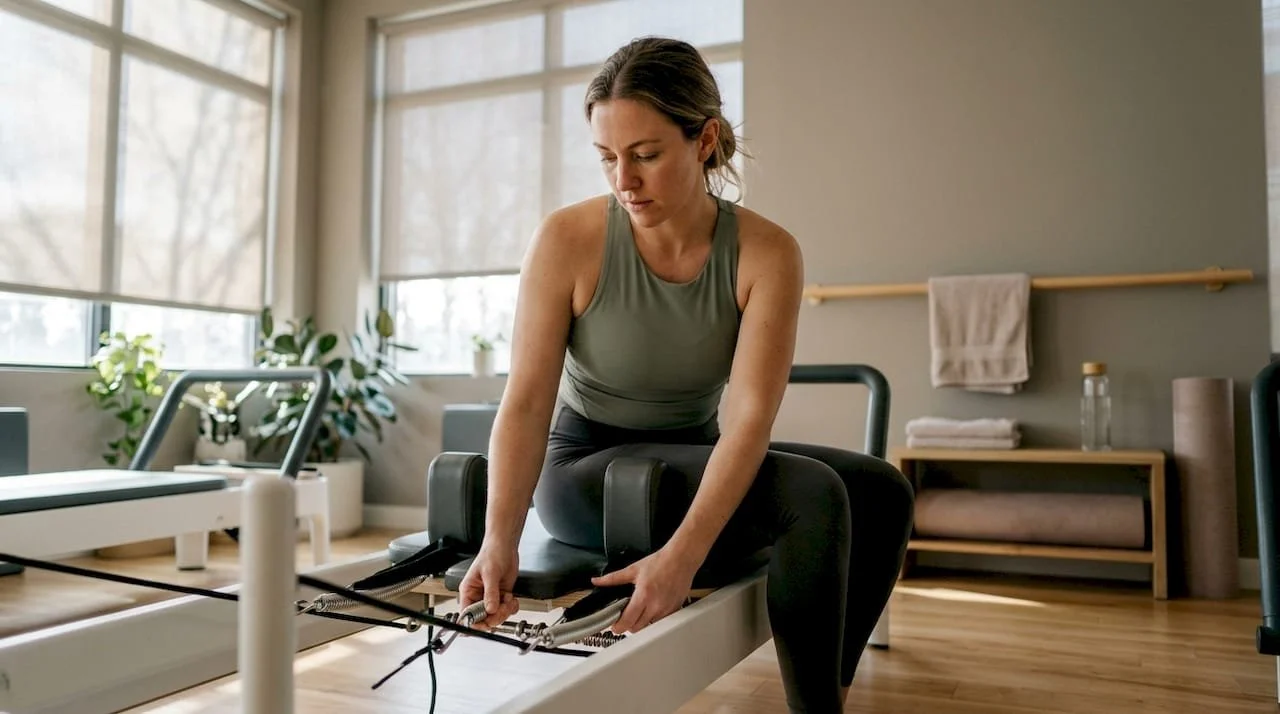
TL;DR:
Reformer Pilates builds lean muscle and improves body composition through low-impact resistance training, supporting fat loss over time. A 12-week routine of three weekly sessions can reduce waist, hip, and chest circumferences by 1 to 3 kilograms. Combining reformer Pilates with moderate cardio and a calorie deficit results in sustainable weight loss and body shaping within 6 to 8 weeks.
Reformer Pilates is a low-impact resistance training method that supports weight loss primarily by building lean muscle and improving body composition, not by burning large numbers of calories alone. A 12-week protocol of three sessions per week produces statistically significant reductions in waist, hip, and chest circumference, with 1–3 kg of weight loss. The scale tells only part of the story. Reformer Pilates reshapes the body from the inside out, making it one of the most sustainable fat loss tools available for adults who want results without punishing their joints.
How many calories does reformer Pilates burn?
Calorie burn is the first question most people ask, and the honest answer is: it depends heavily on class style and your body weight. A 70 kg adult burns approximately 175–200 kcal per 30 minutes doing a standard reformer session. That number sits below running and cycling, but it is not the whole picture.
A typical 50-minute reformer class burns 250–450 calories depending on intensity. Fast-paced classes using jumpboards can push that figure above 500 calories, while classical style sessions land closer to 200–280 calories. The range is wide because reformer Pilates is not a single workout. It is a spectrum.
| Exercise type | Approx. calories (50 min) |
|---|---|
| Reformer Pilates (classical) | 200–280 kcal |
| Reformer Pilates (standard) | 250–450 kcal |
| Reformer Pilates (jumpboard) | 500+ kcal |
| Brisk walking | 200–250 kcal |
| Running (moderate pace) | 450–550 kcal |
| HIIT | 400–600 kcal |
Wearable devices consistently undercount Pilates calorie burn because the movements are controlled and isometric rather than aerobic. Do not rely on your fitness tracker as a precise measure. The real weight loss value of reformer Pilates comes from what it does to your body between sessions, not just during them.
How reformer Pilates improves body composition and supports fat loss
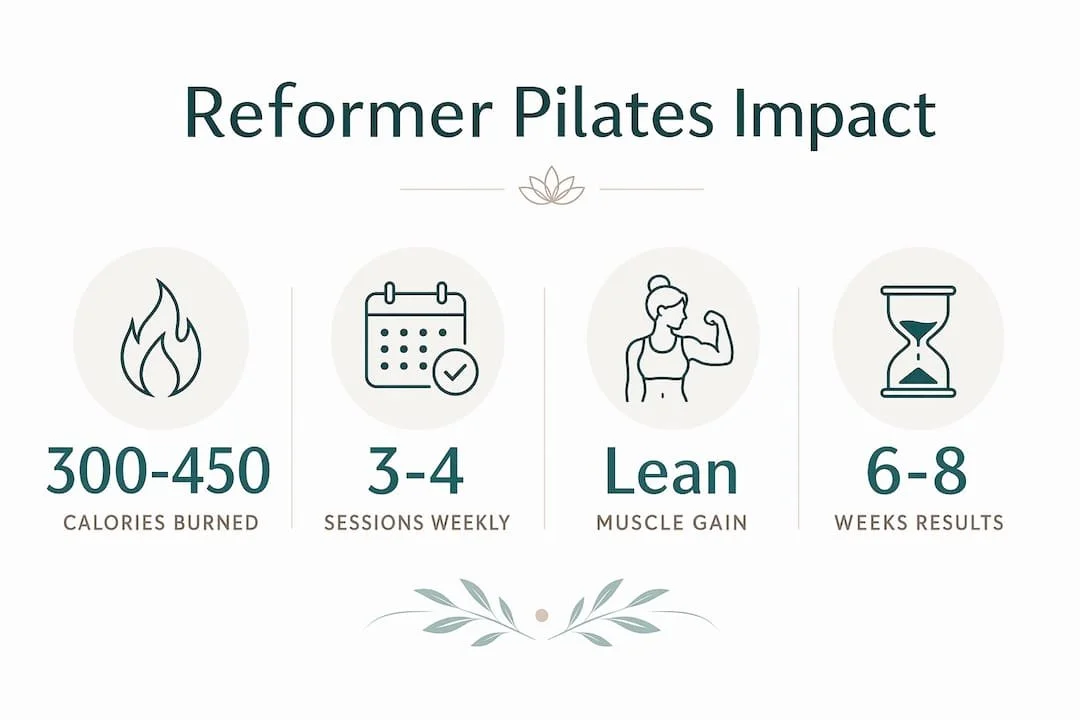
Body composition change is where reformer Pilates earns its reputation. Building lean muscle through consistent reformer training raises resting metabolism by roughly 100–200 calories per day. That means your body burns more fuel around the clock, even while you sleep.
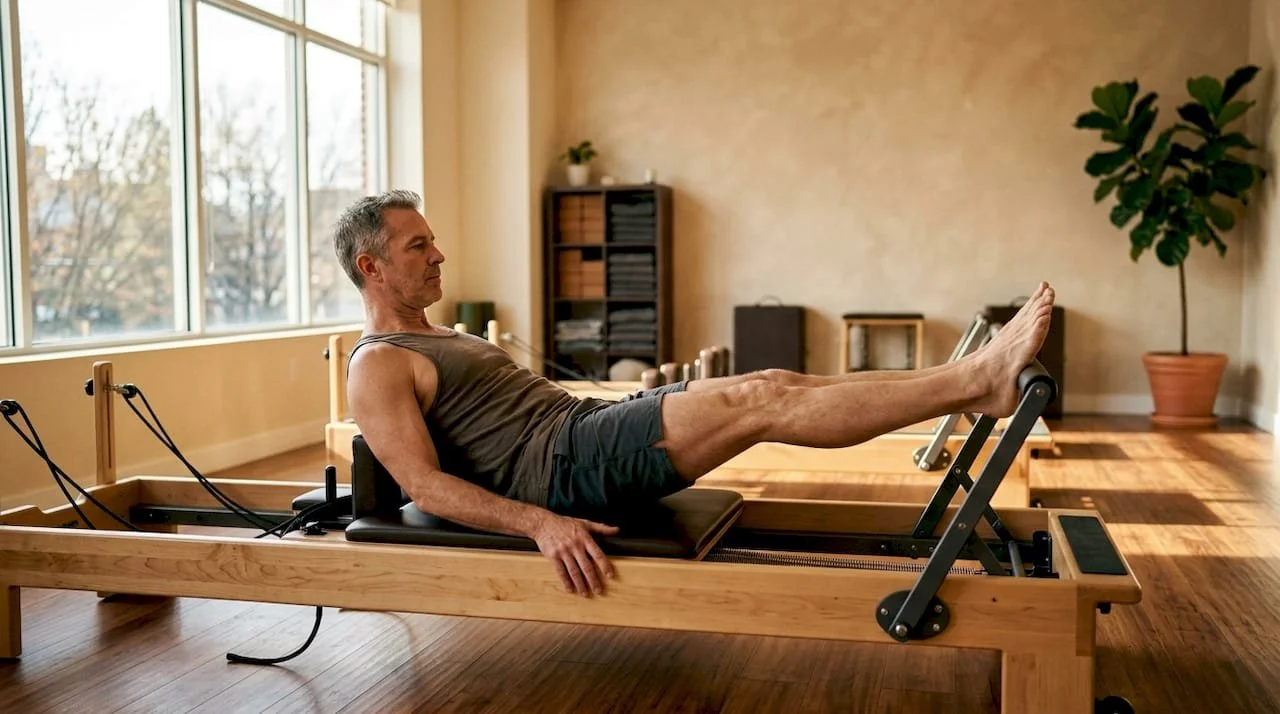
The reformer's spring resistance system is the key mechanism here. Progressive overload through spring resistance enhances lean muscle hypertrophy in a way that mat Pilates cannot replicate. More muscle means a higher resting metabolic rate, which compounds over weeks and months into meaningful fat loss.
Several visible changes happen before the scale moves:
Posture correction pulls the spine into alignment, making the abdomen appear flatter almost immediately.
Core strengthening tightens the deep stabilizers, creating visible abdominal definition.
Circumference reductions in the waist, hips, and chest appear within 8–12 weeks of consistent practice.
Clothing fit changes before body weight does, because fat loss and muscle gain can offset each other on the scale.
Pro Tip: Track your progress with a tape measure around your waist and hips every two weeks. The scale may not move for the first month, but your measurements almost certainly will.
Reformer Pilates also preserves lean mass during periods of calorie restriction, which is critical. Losing muscle while dieting slows metabolism and makes long-term weight maintenance harder. The lean mass preservation advantage of reformer over mat Pilates makes it the smarter choice when fat loss is the goal.
How often should you do reformer Pilates for weight loss?
Frequency is where most people either undercommit or overdo it. The research is clear: 3–4 reformer sessions per week, combined with 1–2 moderate cardio sessions and a 200–400 kcal daily calorie deficit, produces visible changes within 6–8 weeks. That combination is the most effective weight loss Pilates routine for adults who want sustainable results.
Here is a practical weekly structure that works:
Monday: Reformer Pilates (45–50 minutes, full body)
Tuesday: Moderate cardio (30 minutes of brisk walking, cycling, or swimming)
Wednesday: Reformer Pilates (45–50 minutes, emphasis on lower body)
Thursday: Rest or gentle yoga
Friday: Reformer Pilates (45–50 minutes, upper body and core focus)
Saturday: Moderate cardio or a second reformer session if energy allows
Sunday: Full rest
Consistency matters far more than intensity. Three to four weekly sessions yield better results than sporadic high-intensity efforts, and pairing reformer Pilates with low-impact cardio helps break through plateaus when progress stalls.
The most common mistakes people make are skipping rest days and ignoring nutrition. Reformer Pilates is demanding on the stabilizer muscles, and those muscles need recovery time. Overtraining leads to fatigue, poor form, and a higher injury risk, especially in the lower back and shoulders. A 200–400 kcal daily deficit from food is far easier to sustain than trying to burn everything off in the studio.
Pro Tip: If you are new to reformer Pilates, start with two sessions per week for the first month. Let your body adapt to the spring resistance before adding a third or fourth session.
Pairing your reformer practice with yoga for weight loss on rest days adds active recovery, reduces cortisol, and keeps you moving without taxing the same muscle groups.
What are the best reformer exercises for burning fat and toning?
The best reformer workouts for fat loss combine full-body muscle engagement with controlled breathing and progressive resistance. These exercises are the foundation of any effective weight loss Pilates routine:
The Hundred: A core-intensive breathing exercise that elevates heart rate and activates the deep abdominals. It is the standard warm-up in most reformer classes for good reason.
Long Stretch Series: A plank-based sequence performed on the moving carriage. It challenges the core, shoulders, and glutes simultaneously, burning more calories per minute than most mat exercises.
Frog and Leg Circles: Targets the inner thighs, hip flexors, and glutes with spring resistance. These movements sculpt the lower body while improving hip mobility.
Elephant: A hamstring and core exercise that builds posterior chain strength, which is critical for posture and metabolism.
Knee Stretches: A high-rep, low-load exercise that elevates heart rate and targets the glutes and quads.
Circuit-style reformer sessions combining these movements burn 250–350 calories per session and build functional strength when done 3–4 times weekly. That calorie burn adds up to 750–1,400 calories per week from reformer alone, before accounting for the metabolic boost from added muscle.
| Exercise | Primary muscles | Calorie contribution |
|---|---|---|
| The Hundred | Core, hip flexors | High (heart rate elevation) |
| Long Stretch Series | Core, shoulders, glutes | High (full body load) |
| Frog and Leg Circles | Inner thighs, glutes | Moderate |
| Elephant | Hamstrings, core | Moderate |
| Knee Stretches | Glutes, quads | Moderate to high |
Beginners should prioritize form over speed. A complete beginner's guide to reformer classes covers what to expect in your first sessions, including how to set spring resistance and carriage position correctly. Poor form on the reformer reduces muscle activation and increases injury risk, which defeats the purpose entirely.
Mindful breathing during every exercise also matters more than most people realize. Controlled breathing during Pilates reduces cortisol, the stress hormone directly linked to abdominal fat accumulation. That is an indirect but real weight loss benefit that no calorie counter captures.
Key Takeaways
Reformer Pilates supports sustainable fat loss by building lean muscle that raises resting metabolism, improving body composition, and reducing cortisol, making it most effective when combined with moderate cardio and a modest calorie deficit.
| Point | Details |
|---|---|
| Calorie burn varies widely | A 50-minute session burns 250–450 kcal; jumpboard classes can exceed 500 kcal. |
| Muscle raises metabolism | Each pound of lean muscle added increases resting calorie burn by 100–200 calories per day. |
| Frequency drives results | Three to four sessions per week with 1–2 cardio days produces visible changes in 6–8 weeks. |
| Measure circumference, not just weight | Waist and hip measurements reveal fat loss that the scale often masks early on. |
| Form before speed | Correct spring resistance and movement quality maximize muscle engagement and reduce injury risk. |
The scale is the wrong scorecard
After years of watching people start and stop fitness programs, the pattern is always the same. They step on the scale after three weeks of consistent reformer Pilates, see a number that has barely moved, and conclude it is not working. That conclusion is almost always wrong.
The mind-body awareness that reformer Pilates builds is genuinely different from what you get in a cardio class. You learn to feel your body moving through space, to notice tension, to breathe deliberately. That awareness carries into the rest of your day. People who practice reformer Pilates consistently tend to eat more mindfully and respond to hunger differently. That is not a small thing when weight management is the goal.
The reformer is also uniquely honest. You cannot fake good form on a moving carriage. The spring resistance exposes every muscular imbalance, every weak stabilizer, every tight hip flexor. Fixing those things makes every other form of exercise more effective. Reformer Pilates is best understood as a supporting act that makes the whole production better, not just a standalone calorie-burning tool.
My honest recommendation: commit to 8 weeks before judging results. Take photos, measure your waist, and notice how your clothes fit. The scale will catch up. And when it does, you will have built a body that holds its results because the muscle is there to support them.
— Juiced
Reformer Pilates classes at Amrita Yoga & Wellness
Amritayogawellness offers reformer Pilates classes in Philadelphia designed for adults at every fitness level, from complete beginners to experienced practitioners looking to push their results further.
The studio's instructors guide you through progressive spring resistance work, proper form, and class structures built around real fat loss and body composition goals. Amritayogawellness also offers a broader wellness approach that includes integrated wellness services connecting physical practice with mental and emotional balance. Whether you are starting your first reformer session or adding structure to an existing routine, the community and expert instruction at Amritayogawellness give you the foundation to see consistent, lasting results.
FAQ
How long does it take to see weight loss results from reformer Pilates?
Most people see visible circumference reductions and clothing fit changes within 6–8 weeks of three to four sessions per week. Scale weight changes typically follow at the 8–12 week mark.
Is reformer Pilates better than mat Pilates for fat loss?
Reformer Pilates produces greater lean mass preservation and higher calorie burn than mat Pilates because the spring resistance system enables progressive overload and full-body muscle engagement.
How many calories does a reformer Pilates class burn?
A standard 50-minute reformer class burns 250–450 calories depending on intensity. Jumpboard-style classes can exceed 500 calories, while classical sessions burn closer to 200–280 calories.
Can beginners do reformer Pilates for weight loss?
Yes. Beginners benefit from reformer Pilates because the spring resistance is adjustable, making exercises accessible at any fitness level. Starting with two sessions per week and focusing on beginner Pilates fundamentals builds the foundation for safe, effective fat loss.
Do I need to change my diet to lose weight with reformer Pilates?
A 200–400 kcal daily calorie deficit from nutrition significantly accelerates results. Reformer Pilates alone produces modest weight loss. Pairing it with a moderate calorie reduction and 1–2 cardio sessions per week delivers the most consistent fat loss outcomes.
Recommended
Yoga in Practice: Build a Lasting Daily Routine
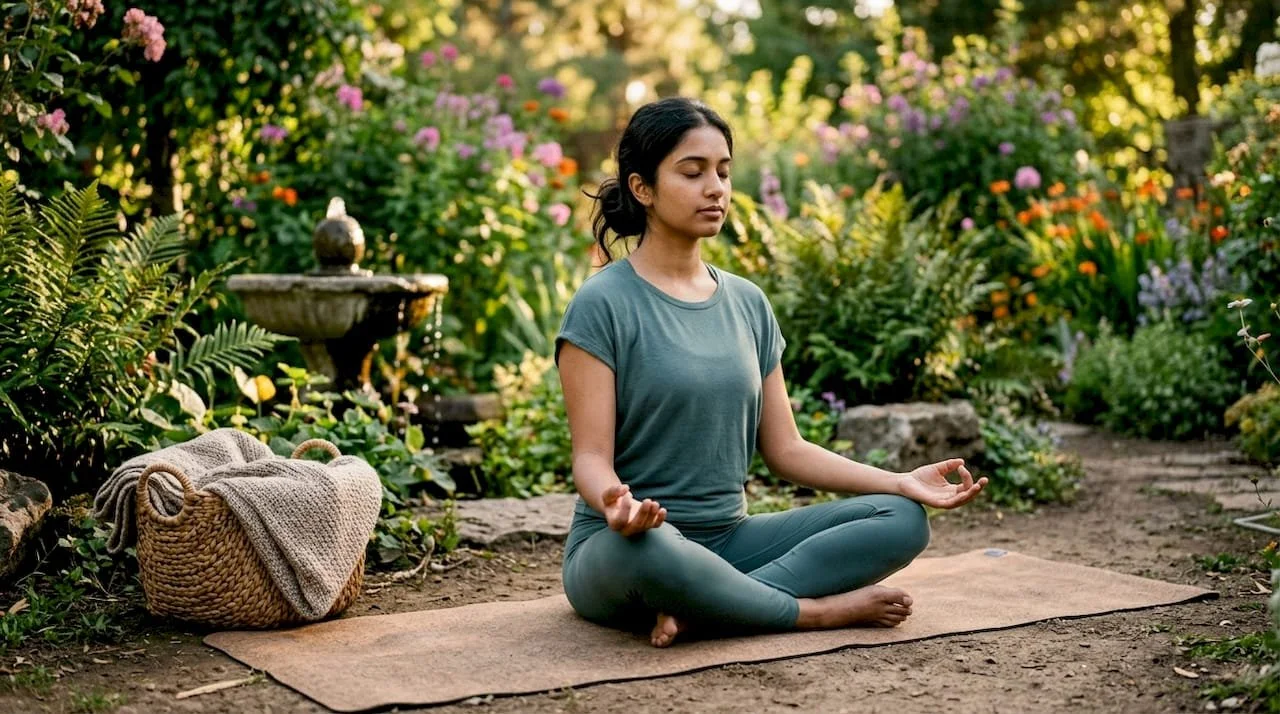
TL;DR:
Yoga integrates postures, breathwork, and mindfulness as a system to improve physical and mental health. Evidence shows that regular practice reduces stress, anxiety, depression, and enhances strength, balance, and cognitive function across all ages. Safe progression, consistency, and adaptable approaches make yoga accessible and sustainable for everyone.
Yoga in practice is the regular, intentional engagement with asanas (postures), pranayama (breathwork), and dhyana (mindfulness) to improve physical and mental well-being at any experience level. These three components work together as a system, not as separate exercises. Health organizations worldwide recognize this integration as clinically meaningful, not just culturally popular. A meta-analysis of 30 studies covering 2,288 participants aged 13 to 82 found that yoga effectively reduces stress, anxiety, and depression, with benefits increasing with age. That finding alone reframes yoga from a fitness trend into a lifelong health tool.
What are the proven benefits of yoga in practice?
The benefits of yoga extend well beyond flexibility. Clinical reviews confirm that yoga regulates the HPA axis and enhances GABA neurotransmitter activity, which directly reduces systemic inflammation and improves cognitive function. This means yoga is not just exercise. It actively changes the chemistry of your stress response.
The mental health case for yoga is now backed by substantial evidence:
Stress and anxiety reduction: The 2026 meta-analysis found consistent improvements across age groups, with older adults showing the strongest gains.
Depression relief: Participants in structured yoga programs reported measurable reductions in depressive symptoms across multiple study designs.
Cognitive function: Regular practice supports memory, focus, and mental clarity, particularly in adults over 50.
Strength and balance: WHO recognizes yoga as a low-cost tool for building strength, balance, and mobility across all age groups.
Chronic pain management: Randomized trials show yoga programs deliver benefits comparable to physical therapy for low back pain in diverse populations.
The physical and mental benefits reinforce each other. When your nervous system calms through pranayama, your muscles release tension more effectively during asanas. When your body feels stronger, your mindfulness practice deepens. This feedback loop is what makes consistent yoga practice so powerful over time.
Pro Tip: If you are new to yoga, prioritize breathwork alongside postures from day one. Practitioners who learn pranayama early build a stronger foundation for both physical progress and stress management.
How do you safely progress toward advanced yoga postures?
Safe progression in yoga requires honest self-assessment before ambition. Advanced yoga postures like arm balances, deep backbends, and inversions demand specific strength baselines. Attempting them without those baselines is the most common cause of yoga-related injury.
Readiness screens are the most practical tool for safe progression. Before attempting advanced poses, assess these two physical baselines:
Wrist extension strength: Many arm balances require full wrist extension under load. Test this by holding a plank position for 30 seconds with wrists flat. If you feel sharp pain or collapse, build wrist strength first with targeted exercises before moving to poses like Crow or Handstand.
Hip flexor stability: Deep hip flexor control is required for poses like Hanumanasana (full splits) and Eka Pada Rajakapotasana (King Pigeon). A readiness screen involves holding a low lunge with the back knee lifted for 20 seconds without compensating through the lower back.
Core engagement under load: Inversions like Headstand and Forearm Stand require the ability to brace the core while the spine is vertical. Practice hollow body holds on the floor before attempting any inversion.
Shoulder stability: Poses like Chaturanga and Pincha Mayurasana (Forearm Stand) place significant load on the rotator cuff. Assess this with a controlled lowering from plank to the floor, keeping elbows tracking back, not flaring out.
Session duration guidelinesfor intermediate to advanced practitioners recommend 30–60 minutes per session. Shorter sessions are not failures. They are smart training when used intentionally. Props like blocks, straps, and bolsters are not beginner tools. They are alignment tools that every level of practitioner benefits from using.
Pro Tip: Film yourself in a pose once a month. What you feel in your body and what is actually happening structurally are often very different. Video feedback accelerates safe progression faster than any other single habit.
How do you build a consistent yoga routine that lasts?
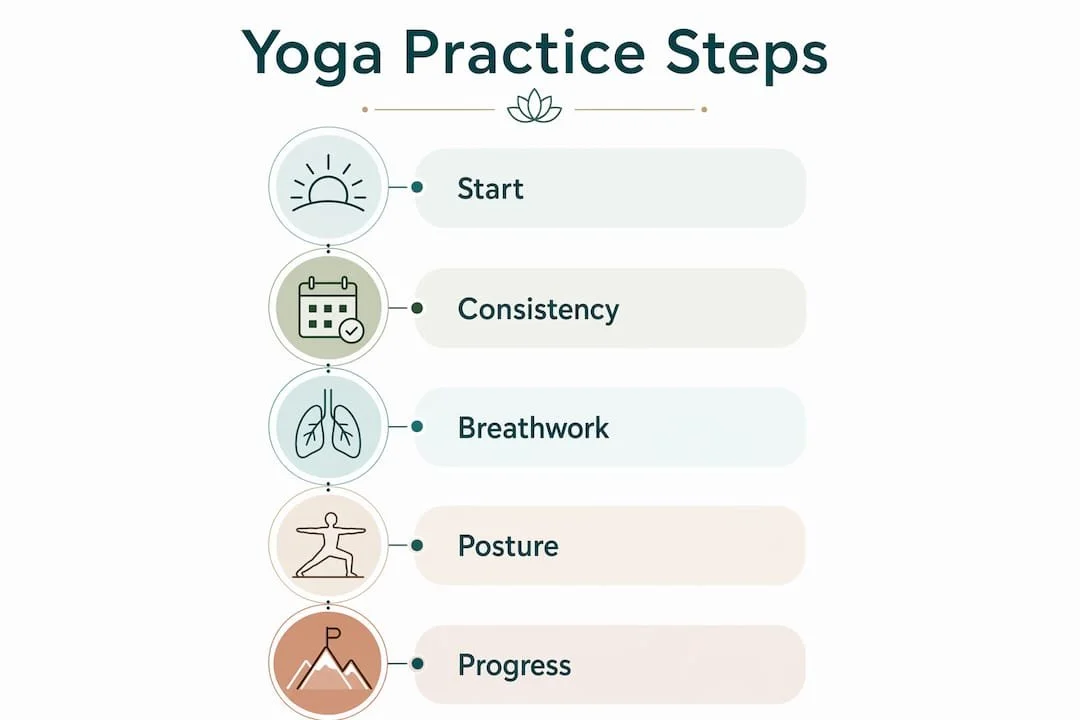
Consistency beats intensity every time. A practitioner who does 10 minutes of yoga six days a week will outpace someone who does a 90-minute class once a week, both in physical results and mental health outcomes. The research supports this clearly: short "exercise snacks" of as little as 4 minutes can sustain practice momentum better than longer but irregular sessions.
Building a sustainable yoga routine comes down to a few concrete strategies:
Set a minimum, not a maximum: Commit to the smallest version of your practice you can do on your worst day. Five minutes of breathwork counts. Meeting your minimum builds the identity of someone who practices daily.
Separate content from context: The specific sequence you follow (content) matters less than the environment and mindset you practice in (context). A distraction-free environment often predicts long-term consistency more reliably than the quality of your chosen sequence.
Use a 90-day outlook: Short-term goals create short-term habits. Commit to 90 days of consistent practice before evaluating whether your routine is working. Most practitioners quit in weeks 3 and 4, right before the habit solidifies.
Plan for setbacks: Missing two days is normal. Missing two weeks requires a reset. Build a "reentry protocol," a short, familiar sequence you return to after any break, so the barrier to restarting stays low.
Yoga for mindfulness works best when you treat the practice as a non-negotiable appointment rather than an optional activity. Anchor your practice to an existing habit, such as morning coffee or an evening shower, to reduce the mental friction of starting. This behavioral technique, called habit stacking, is one of the most reliable methods for building any new routine.
Pro Tip: Track your practice in a simple notebook, not an app. Writing "10 min breathwork, felt distracted" takes 10 seconds and creates a physical record that builds accountability without the screen time that undermines the mindfulness you are trying to cultivate.
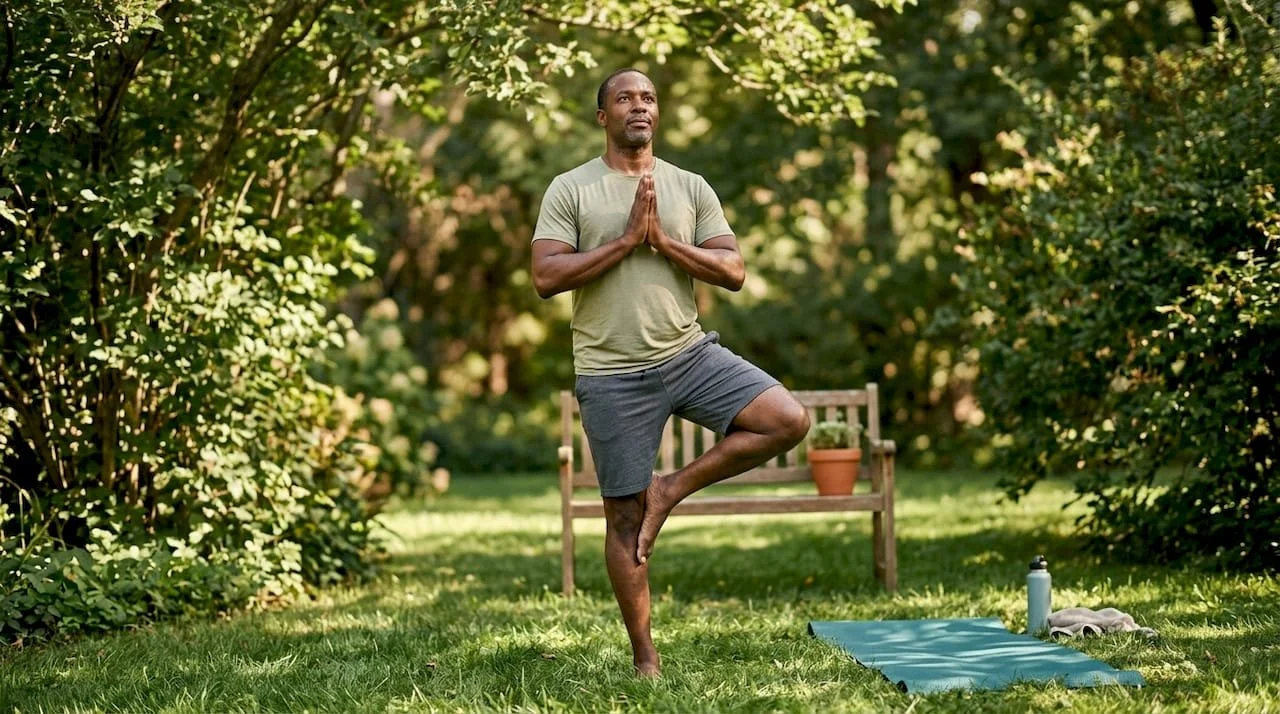
How can yoga practice be adapted for different ages and abilities?
Yoga's adaptability is one of its defining strengths. The WHO explicitly endorses yoga as a global tool for healthy aging, recognizing its ability to meet practitioners where they are physically and cognitively. This is not a marketing claim. It is a clinical position backed by population-level evidence.
The table below shows how yoga techniques shift across different practitioner profiles:
| Practitioner profile | Recommended focus | Key techniques |
|---|---|---|
| Beginners (all ages) | Foundation and breath awareness | Mountain Pose, Cat-Cow, basic pranayama |
| Active adults (30s–50s) | Strength, mobility, and stress relief | Warrior series, Pigeon Pose, Yoga Nidra |
| Seniors (60+) | Balance, joint health, and cognitive function | Chair yoga, gentle flow, senior yoga exercises |
| Limited mobility | Accessibility and pain management | Supine poses, wall-supported inversions, restorative yoga |
| Advanced practitioners | Skill development and depth | Arm balances, inversions, advanced pranayama |
Older adults see some of the strongest benefits from regular practice. The 2026 meta-analysis found that stress-reduction effects increase with age, meaning a 70-year-old practitioner gains more from the same session than a 30-year-old. That is a counterintuitive finding with real implications for how seniors should prioritize yoga in their weekly routines.
Inclusive yoga approachesremove the barriers that keep people from starting. Chair yoga, for example, delivers measurable balance and strength improvements for practitioners with limited standing tolerance. Yoga Nidra, a guided body-scan meditation, provides deep relaxation benefits for people managing grief, anxiety, or chronic stress without requiring any physical movement at all.
Key Takeaways
Consistent, adapted yoga practice is the most evidence-backed, low-cost method for improving both physical health and mental well-being across every age group and ability level.
| Point | Details |
|---|---|
| Mental health benefits are real | A meta-analysis of 2,288 participants confirms yoga reduces stress, anxiety, and depression at every age. |
| Consistency beats session length | Short daily practices of 4–10 minutes outperform infrequent long sessions for long-term results. |
| Readiness screens prevent injury | Assess wrist, hip, and core strength before attempting advanced postures to avoid setbacks. |
| Environment shapes consistency | A distraction-free practice space predicts long-term adherence more reliably than any specific sequence. |
| Yoga adapts to every body | WHO-endorsed adaptations make yoga accessible for seniors, beginners, and those with mobility limitations. |
What I have learned from years of watching people practice
Most people approach yoga like a project with a finish line. They want to nail a handstand, touch their toes, or complete a 30-day challenge. Then they hit a plateau or a busy week, and the practice disappears entirely.
The practitioners I have seen build genuinely lasting practices share one trait: they stopped measuring success by what they could do and started measuring it by whether they showed up. A five-minute breathwork session on a hard Tuesday is worth more than a perfect 90-minute class on a relaxed Saturday. The body responds to frequency. The mind responds to commitment.
The other thing most articles will not tell you: your practice environment is a decision, not a circumstance. Clearing a corner of a room, putting your mat out the night before, and turning your phone face-down are not small details. They are the actual practice. The poses happen inside the container you build around them.
Yoga is also not a linear progression. Some weeks you will feel stronger and more focused. Other weeks, restorative poses and breathwork are the right call. Listening to that signal is not weakness. It is the most advanced skill in the practice.
— Juiced
Yoga resources and classes at Amritayogawellness
Amritayogawellness offers a full range of yoga classes and programs designed for practitioners at every level, from complete beginners to those working toward advanced postures. The Philadelphia studio provides expert-led instruction across multiple yoga styles, including hot yoga, restorative yoga, and specialty workshops, all within a community built around inclusivity and personal growth.
Whether you are building your first consistent routine or refining a long-standing practice, Amritayogawellness connects you with teachers who understand both the science and the art of yoga. Explore class schedules, workshops, and wellness offerings at Amrita Yoga & Wellness and find the format that fits your life right now.
FAQ
What does "yoga in practice" actually mean?
Yoga in practice refers to the regular, intentional performance of asanas, pranayama, and mindfulness techniques as an integrated daily or weekly routine. It goes beyond occasional classes to become a consistent personal discipline.
How long should a yoga session be for beginners?
Beginners benefit most from sessions of 15–30 minutes focused on foundational poses and breathwork. Consistency matters more than duration, so a short daily session outperforms a long weekly one.
What are the most important benefits of yoga for mental health?
A 2026 meta-analysis of 30 studies found yoga consistently reduces stress, anxiety, and depression, with effects that strengthen as practitioners age. The mechanism involves HPA axis regulation and increased GABA activity in the brain.
How do you know if you are ready for advanced yoga postures?
Readiness for advanced poses depends on specific strength baselines, including wrist extension, hip flexor stability, and core control under load. Readiness screens assess these before you attempt poses like arm balances or inversions.
Can yoga be practiced safely by seniors and people with limited mobility?
Yes. WHO endorses yoga as a global tool for healthy aging, and chair yoga and restorative formats deliver measurable benefits for seniors and those with mobility limitations. Stress-reduction benefits are actually strongest in older adult populations.
Recommended
Learn Yoga Poses: A Beginner's Complete 2026 Guide
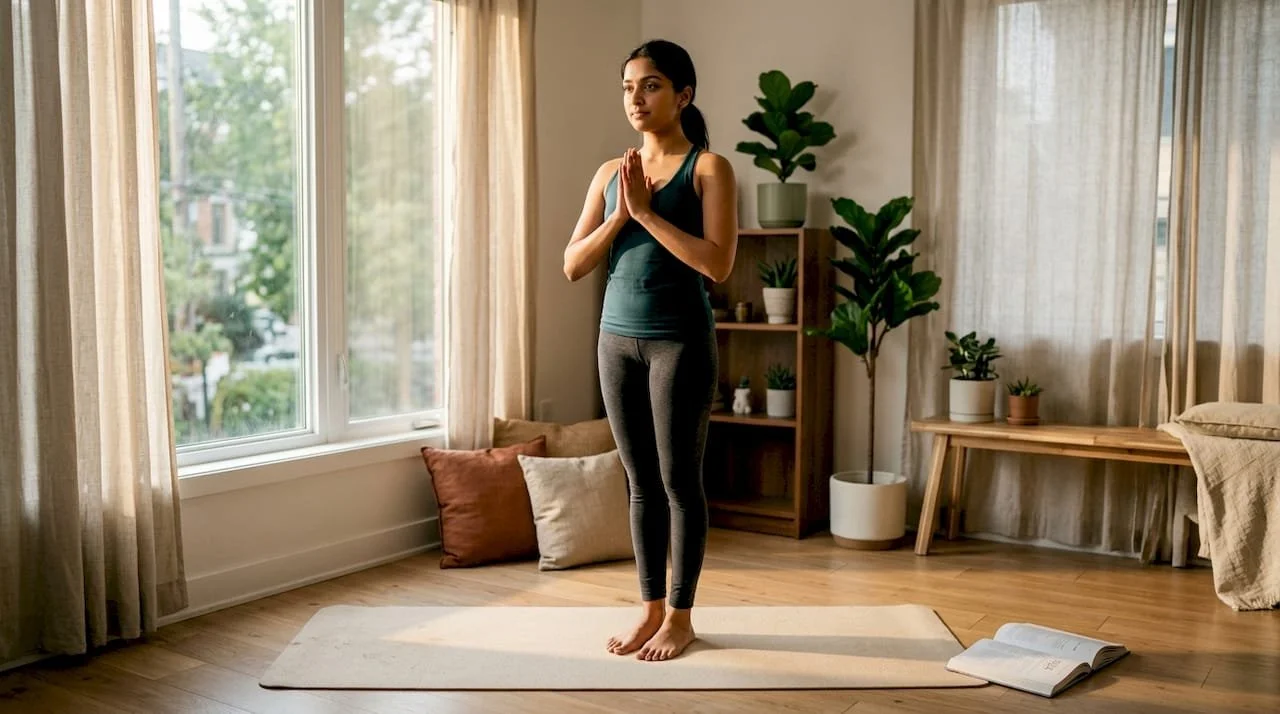
TL;DR:
Mastering 12 to 15 foundational yoga poses builds strength, flexibility, and calm for beginners. Consistent practice with correct alignment and steady breath prevents injuries and fosters progress. Guidance from a qualified instructor enhances safety and helps develop a lasting, effective yoga routine.
Learning yoga poses means mastering a set of foundational asanas, the Sanskrit term for body postures, that build strength, flexibility, balance, and calm through mindful movement and breath. These postures are not just exercise. They are a structured physical practice with clear alignment rules, breath cues, and progression paths that make them safe for nearly any body. Yoga experts recommend beginners start with 12–15 foundational postures representing major movement categories: standing, backbends, twists, seated, hip openers, and relaxation poses. Amritayogawellness, based in Philadelphia, teaches exactly this kind of structured, accessible approach to help practitioners at every level build a real practice.
What are the essential yoga poses beginners should learn first?
The best place to learn yoga poses is with a short list of core postures that cover every major movement pattern. Mountain Pose (Tadasana) is the foundational standing pose and the reset point for your entire practice. It aligns the spine, engages the core, and calms the breath. Every other standing pose grows from it.
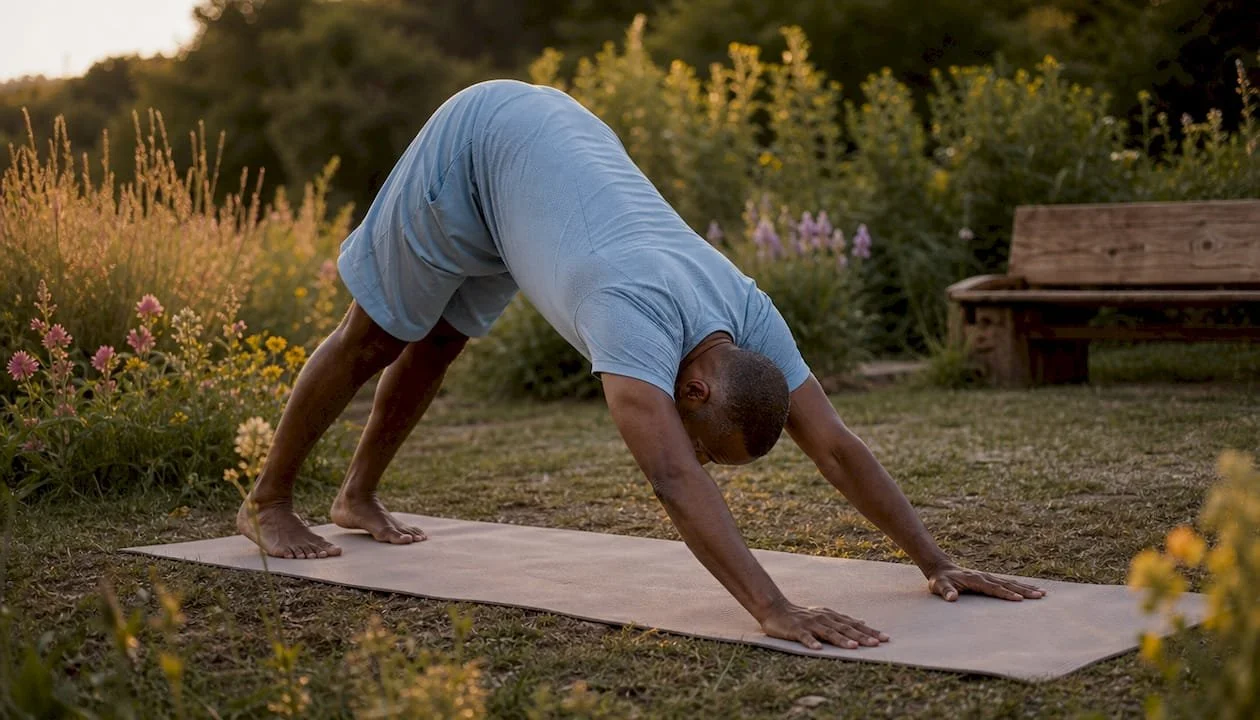
Here are the core beginner postures organized by category:
Standing poses
Mountain Pose (Tadasana): stand tall, feet together, arms at sides, spine long
Warrior I (Virabhadrasana I): front knee bent, back leg straight, arms overhead
Warrior II (Virabhadrasana II): arms open wide, gaze over front hand
Triangle Pose (Trikonasana): legs straight, torso long, one hand reaching down
Backbends
Cobra Pose (Bhujangasana): lie face down, press palms into mat, lift chest gently
Bridge Pose (Setu Bandhasana): lie on back, feet flat, lift hips toward ceiling
Twists and hip openers
Seated Spinal Twist (Ardha Matsyendrasana): sit tall, rotate torso, keep spine long
Low Lunge (Anjaneyasana): front knee over ankle, back knee down, hips square
Seated and floor poses
Downward Facing Dog (Adho Mukha Svanasana): inverted V shape, heels pressing toward floor
Child's Pose (Balasana): kneel, fold forward, arms extended or alongside body
Relaxation
Corpse Pose (Savasana): lie flat on your back, eyes closed, body completely still
Child's Pose and Corpse Pose are not optional extras. They are recovery tools built into every session. Child's Pose resets your nervous system mid-practice. Savasana at the end allows your body to absorb the work you just did.
Pro Tip: Every time you feel lost or overwhelmed during a session, return to Mountain Pose. It recalibrates your posture and breath in under 30 seconds.
What equipment and preparation do you need to start?
A yoga mat is the only essential piece of equipment for beginners practicing at home. No specialized props are required to get started. That said, a few optional tools make early practice more comfortable and safe.
| Item | Purpose | Required? |
|---|---|---|
| Yoga mat | Grip, cushion, and defined space | Yes |
| Yoga blocks (2) | Bring the floor closer in standing poses | Optional |
| Yoga strap | Extend reach in seated stretches | Optional |
| Blanket | Extra cushion under knees or hips | Optional |
| Comfortable clothes | Allow full range of motion | Yes |
Beyond gear, your environment matters. Choose a quiet space with enough room to extend your arms and legs fully in all directions. Turn off notifications. Keep water nearby. A consistent spot in your home trains your brain to shift into practice mode faster each time you show up.
Warm up for 3–5 minutes before your first pose. Simple neck rolls, shoulder circles, and gentle spinal movements prepare your joints and reduce the risk of strain.
How to learn yoga poses effectively and safely
Structured sequences are safer and more effective than randomly picking poses from social media. Random selection skips the logical progression that protects your joints and builds strength in the right order. A structured approach looks like this:
Start with relaxation. Begin in Mountain Pose or a simple seated position. Take 5 slow breaths to arrive in your body before moving.
Learn the entry of each pose first. Know how to get into a pose before you think about going deeper. Rushing depth before stability causes most beginner injuries.
Establish your foundation. Press your feet, sitting bones, or hands firmly into the mat before activating any other muscle group. Pressing down the foundation before engaging other muscles is the single most important alignment principle in yoga.
Build alignment from the ground up. Once your foundation is set, work upward: ankles, knees, hips, spine, shoulders, head. Never skip a layer.
Hold for 3–5 breaths. Holding poses for 3 to 5 breaths maintains stability without risking injury. Count breaths, not seconds.
Exit with control. Come out of each pose as deliberately as you entered it. Collapsing out of a pose undoes the alignment work you just built.
Rest between effort. Return to Mountain Pose or Child's Pose between challenging postures. Your nervous system needs those moments.
Maintaining calm, even breath through a hold matters more than deepening the pose. If your breath becomes ragged or stops, reduce the intensity until breathing is steady again. Breath is the real measure of whether a pose is working for you.
Iyengar yoga is particularly well suited for beginners because it focuses on detailed alignment and uses props extensively. If you want a style that teaches you exactly how each pose should feel in your body, Iyengar classes are worth exploring.
Pro Tip: Record yourself in a pose with your phone once a week. What you feel and what you look like are often very different. Video feedback replaces the mirror a studio instructor would provide.
Check out these beginner yoga tips from Amritayogawellness for more on building a structured home practice.
Common mistakes beginners make and how to avoid them
Most beginner injuries and plateaus come from a short list of repeatable errors. Knowing them in advance puts you ahead of the curve.
Ignoring the foundation. Improper weight stacking and failing to engage the foundation causes joint strain in knees, wrists, and lower back. Press down before you lift up, every time.
Holding your breath. Stopping the breath during challenging holds reduces the effectiveness of the pose and raises injury risk. If you cannot breathe steadily, back out of the pose slightly.
Chasing advanced poses too soon. Arm balances and deep backbends require months of foundational work. Attempting them from week one based on an online image is the fastest route to a shoulder or wrist injury.
Skipping rest poses. Child's Pose and Savasana are not signs of weakness. They are built-in recovery that makes the harder poses possible.
Practicing without any instruction. Following a random video without understanding alignment cues is like learning to drive from watching car commercials. Structured guidance from a qualified teacher changes the quality of your practice immediately.
The single most overlooked mistake is breath suppression. Beginners focus so hard on the shape of a pose that they forget to breathe. Breath is not a side effect of yoga. It is the practice itself.
For a deeper look at foundational postures and how to approach them safely, Amritayogawellness has a dedicated guide worth reading before your first session.
How to build a beginner yoga routine using core poses
A consistent routine beats an occasional intense session every time. Sandwiching strenuous movement between guided relaxation, starting and ending with Mountain Pose and Corpse Pose, builds a mental association between yoga and calm. That association keeps you coming back.
Here is a sample 30-minute beginner sequence:
Mountain Pose (Tadasana) — 5 breaths, set intention
Child's Pose (Balasana) — 5 breaths, open hips and spine
Downward Facing Dog — 5 breaths, full body stretch
Low Lunge (right side) — 5 breaths, hip flexor opener
Low Lunge (left side) — 5 breaths
Warrior I (right side) — 5 breaths, standing strength
Warrior I (left side) — 5 breaths
Triangle Pose (both sides) — 5 breaths each
Bridge Pose — 5 breaths, gentle backbend
Seated Spinal Twist (both sides) — 5 breaths each
Child's Pose — 5 breaths, cool down
Corpse Pose (Savasana) — 3–5 minutes, full rest
| Session phase | Poses | Duration |
|---|---|---|
| Opening and grounding | Mountain Pose, Child's Pose | 3–5 minutes |
| Active standing work | Warriors, Triangle, Lunge | 12–15 minutes |
| Floor and backbend work | Bridge, Twist, Dog | 8–10 minutes |
| Closing relaxation | Child's Pose, Savasana | 5–7 minutes |
Adapt this sequence as your strength and flexibility grow. Add one new pose per week rather than overhauling the entire routine. Consistency with a short sequence beats variety with no depth. Aim for three sessions per week to start. Your body needs recovery time between sessions, especially in the first month.
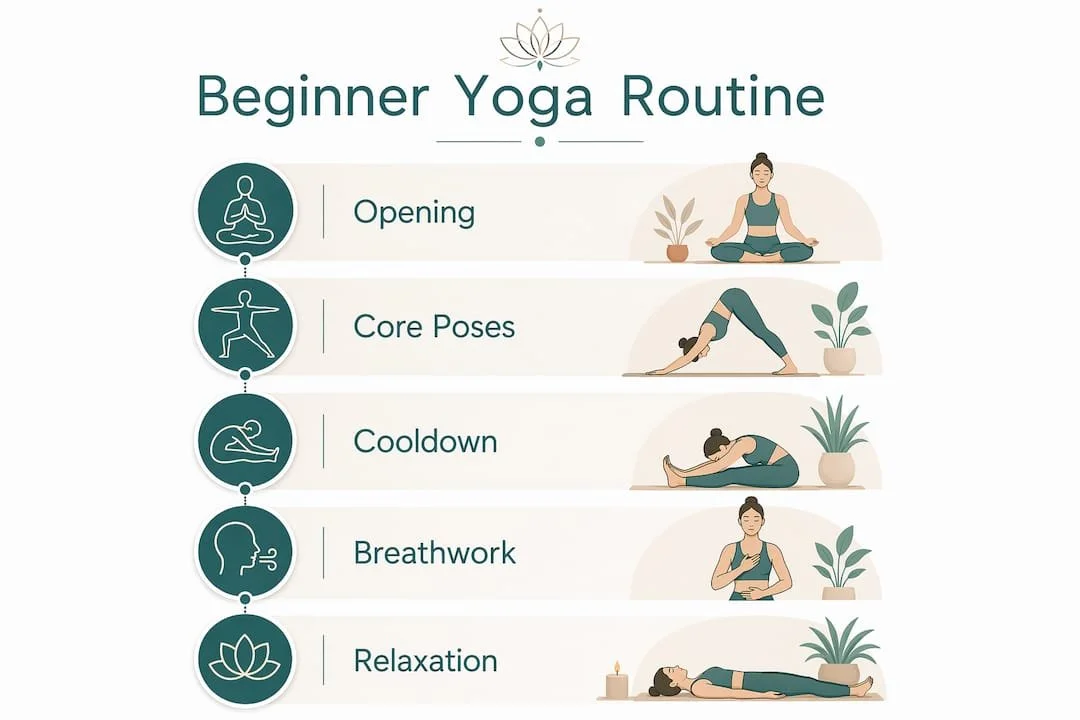
Explore these basic yoga poses from Amritayogawellness to see how Mountain Pose anchors a full beginner sequence.
Key Takeaways
The most effective way to learn yoga poses is to start with 12–15 foundational postures, build alignment from the ground up, and prioritize steady breath over pose depth at every stage.
| Point | Details |
|---|---|
| Start with core postures | Begin with 12–15 foundational poses across standing, backbend, twist, and relaxation categories. |
| Foundation first | Press feet or sitting bones into the mat before engaging any other muscle group. |
| Breath over depth | If your breath stops, reduce the pose intensity until steady breathing returns. |
| Hold for 3–5 breaths | This standard hold time builds stability without overloading joints or muscles. |
| Structure beats random selection | A planned sequence protects alignment and prevents the injuries that random pose picking causes. |
What I've learned from years of watching beginners practice
The most common thing I see in new practitioners is the rush. People want Warrior III in week two. They want the splits by month one. And every time that rush shows up, so does the injury, the frustration, and the dropout.
The practitioners who stay are the ones who fall in love with Mountain Pose. That sounds almost absurd, but it's true. When you understand what Tadasana is actually asking of your body, every other pose makes more sense. The alignment principles stack. The breath becomes natural. The harder poses arrive on their own timeline.
Breath is the part most people skip in their reading and most instructors underemphasize in beginner classes. If you take one thing from this guide, let it be this: your breath is the quality control system for your entire practice. The moment it becomes labored or stops, your pose is too deep. Back out. Breathe. Try again.
Structured instruction matters more than equipment, more than the style of mat you buy, and more than how flexible you are on day one. A free beginner yoga class with a qualified teacher gives you alignment feedback that no video can replicate. Seek that out early. It compresses months of solo trial and error into a single session.
Patience is not a soft skill in yoga. It is a technical requirement.
— Juiced
Amritayogawellness: where beginners build real practice
Amritayogawellness offers beginner-focused classes in Philadelphia designed around exactly the foundational approach this guide describes. Structured sequences, expert alignment cues, and a welcoming community make it easier to build consistency from your very first session.
The studio's beginner yoga classes cover standing poses, breath work, and relaxation in a format that keeps new practitioners safe and engaged. For those looking to complement their physical practice with mindfulness and reflection, Amritayogawellness also offers tarot readings as part of its broader wellness programming. Whether you are stepping onto a mat for the first time or returning after a long break, Amritayogawellness gives you the structure and support to make it stick.
FAQ
What yoga poses should a complete beginner learn first?
Beginners should start with Mountain Pose, Child's Pose, Downward Facing Dog, Warrior I, and Corpse Pose. These five postures cover the core movement patterns and give you a complete, safe practice from day one.
How long should beginners hold each yoga pose?
Hold each pose for 3 to 5 breaths. This standard hold time builds stability and alignment without overloading muscles or joints.
Do I need special equipment to start learning yoga at home?
A yoga mat is the only required piece of equipment. Blocks and straps are helpful but optional, and most beginner poses work fine without them.
How often should beginners practice yoga poses?
Three sessions per week is a strong starting point. Your body needs recovery time between sessions, especially in the first four to six weeks of practice.
Why is breath so important when learning yoga poses?
Holding your breath during poses reduces effectiveness and raises injury risk. Steady breath is the clearest signal that your body is working with the pose rather than fighting it.
Recommended
What Does a Pilates Reformer Do for Your Body?
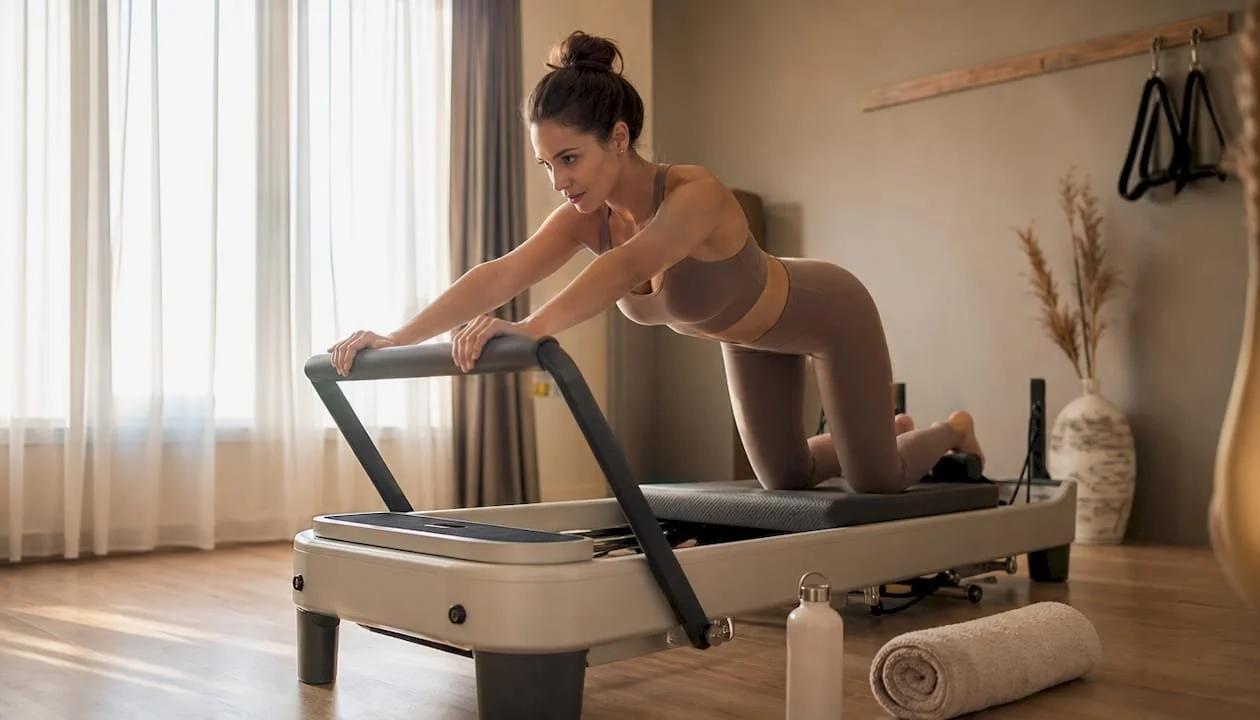
TL;DR:
A Pilates reformer is a spring-resistance machine that enhances core strength, posture, and mobility through controlled movement. It activates deep stabilizers, corrects muscle imbalances, and trains functional mobility, making it effective for injury recovery and long-term conditioning. Most noticeable results include improved posture, stronger stabilizer muscles, and better movement habits over weeks of consistent practice.
A Pilates reformer is a spring-resistance exercise machine that builds core strength, corrects posture, increases functional mobility, and conditions your entire body through controlled, low-impact movement. Understanding what does pilates reformer do for your body goes far beyond the common assumption that it is just a stretching tool. The reformer uses a sliding carriage, adjustable springs, and a pulley system to create resistance that challenges your muscles through full ranges of motion. Clinical research confirms measurable improvements in strength, posture, and pain reduction, making it one of the most versatile training tools available for beginners and experienced practitioners alike.
How does the Pilates reformer improve core strength and muscle balance?
The reformer targets deep core stabilizers that most traditional gym exercises miss entirely. Specifically, it activates the transversus abdominis and lumbar multifidus, the two muscles most responsible for spinal stability and injury prevention. A 2015 study confirmed that deep core activation improved significantly after just 8 weeks of consistent reformer use. That result matters because these muscles are chronically underactive in people who sit for long periods or rely on surface-level abdominal exercises like crunches.
Traditional strength training tends to reinforce dominant muscle groups, which creates imbalances over time. The reformer corrects this by requiring stabilization against a moving carriage, which forces your weaker, underused muscles to engage. Your hips, legs, and posterior chain all work together rather than in isolation. This whole-body recruitment pattern is what makes reformer Pilates benefits so distinct from standard resistance training.
The spring system also increases resistance dynamically as the springs stretch. That means your muscles work through the full arc of motion rather than only at peak contraction. The result is more complete muscle development and better neuromuscular coordination over time.
Deep core muscles (transversus abdominis, lumbar multifidus) are activated more effectively than in traditional training
The moving carriage demands stabilization, correcting overuse of dominant muscles
Hips, legs, and the posterior chain are engaged simultaneously, not in isolation
Dynamic spring resistance trains muscles through their full range of motion
Pro Tip: Focus on slow, controlled movement rather than speed during your first sessions. Precision activates the deep stabilizers. Speed lets your surface muscles take over and defeats the purpose.
What does the Pilates reformer do for posture and spinal alignment?
The reformer produces measurable postural improvements that few other exercise methods can match. A 12-week reformer Pilates program increased postural symmetry by 37.1%, reduced pain by 50%, and lowered disability scores by 42.5% in a study of 30 adults aged 18–45. Those numbers reflect real structural change, not just subjective comfort.
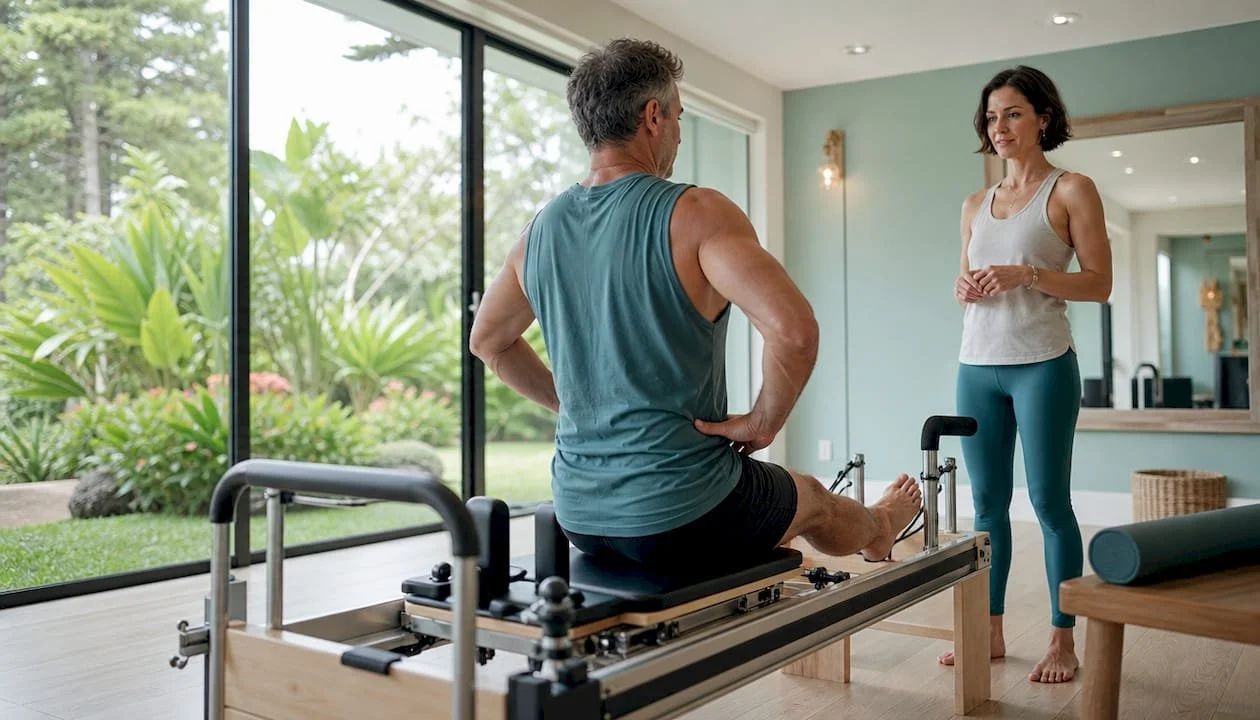
The mechanism behind this is straightforward. Spring resistance creates constant feedback during movement. Your body learns to self-correct alignment because any deviation from neutral spine immediately changes how the springs feel. That sensory loop retrains postural awareness faster than most static exercises.
Most practitioners notice posture improvements within 4–6 weeks of consistent practice. The muscles weakened by sedentary habits, particularly the deep spinal extensors and hip stabilizers, begin to reactivate and hold the body more efficiently upright.
| Benefit | What the research shows |
|---|---|
| Postural symmetry | 37.1% improvement after 12 weeks |
| Pain reduction | 50% decrease in reported pain scores |
| Disability index | 42.5% reduction in functional limitations |
| Onset of visible change | Posture improvements typically within 4–6 weeks |
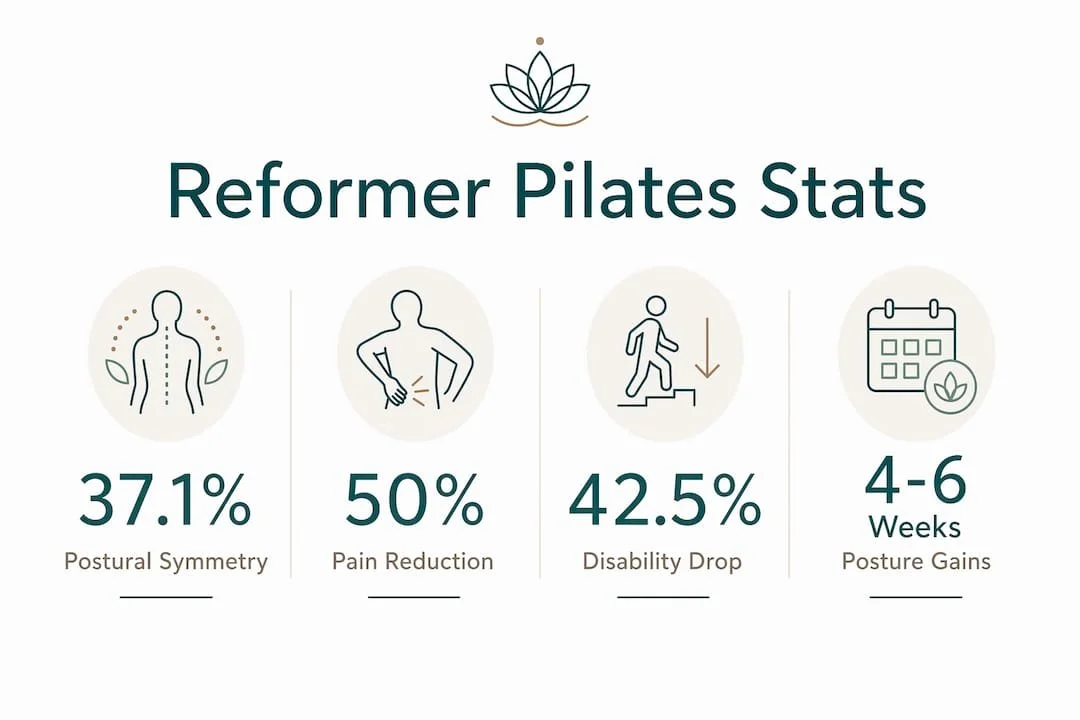
Pro Tip: Ask your instructor to film a side-view video of your posture on week one. Repeat at week six. The visual difference is often more motivating than any number on a scale.
In what ways does the reformer enhance flexibility and functional mobility?
Functional mobility and passive flexibility are not the same thing. Passive flexibility means your muscles can lengthen when relaxed. Functional mobility means you can control movement through a full range of motion while under load. The reformer trains the second, which is far more useful in daily life and athletic performance.
The moving carriage and spring resistance create what researchers describe as controlled ranges of motion under load. Your muscles lengthen and contract simultaneously, which builds strength at end ranges where most people are weakest. This is especially valuable for people with stiffness from desk work, past injuries, or age-related mobility restrictions.
The reformer is also one of the few training tools that makes mobility work accessible to people who cannot yet perform bodyweight movements comfortably. Springs can assist you through a range of motion rather than just resist it. That means someone recovering from a hip replacement and a competitive athlete can both use the same machine productively.
Functional mobility trains strength through full ranges of motion, not just passive lengthening
Spring assistance allows people with restrictions to safely access greater movement ranges
Muscles lengthen under load, building strength at end ranges where injuries most often occur
Tension relief and muscle lengthening happen simultaneously, not sequentially
People with stiffness, prior injuries, or limited mobility benefit without high joint stress
How does the reformer support injury recovery and long-term conditioning?
The reformer's adjustable spring system is its most clinically significant feature. Springs can be set to assist movement, making exercises easier, or to resist movement, making them harder. This dual function means the same machine works for someone in early rehabilitation and someone training at an advanced level. Scalable spring resistance accommodates injury recovery and high-level conditioning without requiring different equipment.
For people with chronic low back pain, the evidence is particularly strong. A 12-week reformer course produced lasting pain and function improvements that held at a 6-month follow-up. That durability suggests the reformer does not just mask symptoms. It retrains the movement patterns that caused the problem in the first place.
The low-impact nature of reformer training also protects joints. Unlike running or heavy lifting, the carriage absorbs much of the compressive force that would otherwise travel through knees, hips, and the spine. This makes it a practical long-term fitness option for people across all ages and fitness levels.
Set springs for assistance first. Beginners and those in rehab should use lighter spring loads to build movement patterns before adding challenge.
Progress gradually. Increase spring resistance only when you can complete each movement with full control and no compensations.
Prioritize consistency over intensity. Practicing 2–3 times per week over several months produces functional strength gains that occasional hard sessions cannot replicate.
Use the reformer alongside physical therapy. For clinical populations, the clinical reformer approach integrates reformer work with targeted rehab protocols for faster recovery.
Track your range of motion, not just your weight. Functional improvements show up in how you move before they show up on a scale.
What are common misconceptions about reformer Pilates?
The most persistent myth is that reformer Pilates is easy. It is not. It is controlled, low-impact strength training that demands precision and deep muscular engagement. The effort is less visible than lifting heavy weights, but the internal demand on stabilizing muscles is significant. Many people leave their first session surprised by how much they feel the next day.
A second misconception is that the reformer is only for flexibility. Flexibility is a byproduct, not the goal. The primary adaptation is neuromuscular control, which means your brain and muscles learn to coordinate more efficiently. That coordination improvement is what drives the posture, strength, and mobility gains that practitioners report.
Beginners also tend to underestimate the learning curve. The reformer requires you to manage your body position, breathing, and spring resistance simultaneously. That coordination takes time to develop.
Reformer Pilates is strength training, not stretching. Expect muscle fatigue, not just a relaxed stretch.
Precision matters more than range. A small movement done correctly outperforms a large movement done sloppily.
Results require consistency. Attending once a week produces awareness. Attending 2–3 times per week produces physical change.
Springs that feel easy are not always set correctly. Ask your instructor to assess your spring load before assuming the workout is too simple.
Pro Tip: If your first few sessions feel manageable, that is normal. The reformer's learning curve means your nervous system is adapting before your muscles are fully challenged. Stick with it past week three before drawing conclusions.
Key takeaways
The Pilates reformer builds functional strength, corrects posture, and supports injury recovery through adjustable spring resistance that targets deep stabilizing muscles traditional training consistently misses.
| Point | Details |
|---|---|
| Core muscle activation | The reformer targets transversus abdominis and lumbar multifidus more effectively than standard gym exercises. |
| Posture improvement | A 12-week program produced a 37.1% increase in postural symmetry and a 50% reduction in pain. |
| Functional mobility | Spring resistance trains strength through full ranges of motion, not just passive flexibility. |
| Injury recovery | Adjustable springs make the reformer effective for both early rehabilitation and advanced conditioning. |
| Consistency requirement | Practicing 2–3 times per week over several months is necessary for lasting functional strength gains. |
People come to reformer Pilates expecting flexibility. What they get is something harder to name but more useful: control. After working with practitioners at various levels, the pattern I notice most is not dramatic weight loss or visible muscle gain in the first weeks. It is the moment someone realizes they are standing differently. Their shoulders are back without effort. Their lower back is not aching after a long day. That shift happens quietly, usually around week four or five, and it tends to stick.
What surprises people most is how demanding precision actually is. Slowing down a movement and holding it at the end range with spring resistance is genuinely hard work. The reformer does not let you cheat the way a barbell or a machine does. The carriage will slide if your stabilizers are not engaged. That honest feedback is what makes the tool so effective and so humbling for people who consider themselves already fit.
The deeper benefit I have observed is the retraining of movement habits. People stop hiking one hip when they walk. They stop collapsing through the shoulder when they reach overhead. Those corrections carry into everything they do outside the studio. That is the kind of conditioning that holds up over years, not just weeks. If you are curious about how reformer Pilates works at a deeper level, the research behind it is worth reading.
— Juiced
Reformer Pilates at Amrita Yoga & Wellness in Philadelphia
Amritayogawellness offers reformer Pilates classes designed for both first-time practitioners and those with an established practice. The studio's approach integrates physical conditioning with broader wellness principles, so your training connects to how you feel and move in everyday life, not just during class.
Classes are structured to accommodate different fitness levels, with instructors who adjust spring resistance and movement progressions to match where you are right now. Whether you are managing a past injury, building strength from scratch, or looking to deepen an existing practice, the sessions are built around your body's actual needs. Amritayogawellness also offers complementary wellness services, including tarot readings, for those who want to support their physical practice with intentional self-reflection. Visit amritayogawellness.com to view the current class schedule and reserve your spot.
FAQ
What muscles does the Pilates reformer work?
The reformer primarily targets deep core stabilizers including the transversus abdominis and lumbar multifidus, along with the hips, legs, and posterior chain. It engages multiple muscle groups simultaneously rather than isolating single muscles.
How quickly will I see results from reformer Pilates?
Most practitioners notice posture improvements within 4–6 weeks of consistent practice. Meaningful functional strength gains require 2–3 sessions per week sustained over several months.
Is the Pilates reformer good for back pain?
A 12-week reformer Pilates program produced a 50% reduction in pain and a 42.5% drop in disability scores in clinical populations. Benefits were maintained at a 6-month follow-up, suggesting lasting improvement rather than temporary relief.
Can beginners use the Pilates reformer safely?
Beginners benefit directly from the adjustable spring system, which can assist movement rather than resist it. This makes the reformer accessible and low-risk for people new to exercise or returning from injury.
Is reformer Pilates the same as mat Pilates?
Reformer Pilates uses spring resistance and a moving carriage to create dynamic load through full ranges of motion. Mat Pilates relies on bodyweight only, which limits the depth of core activation and the range of exercises available.
Recommended
Hot Pilates Benefits: Your Complete Fitness Guide
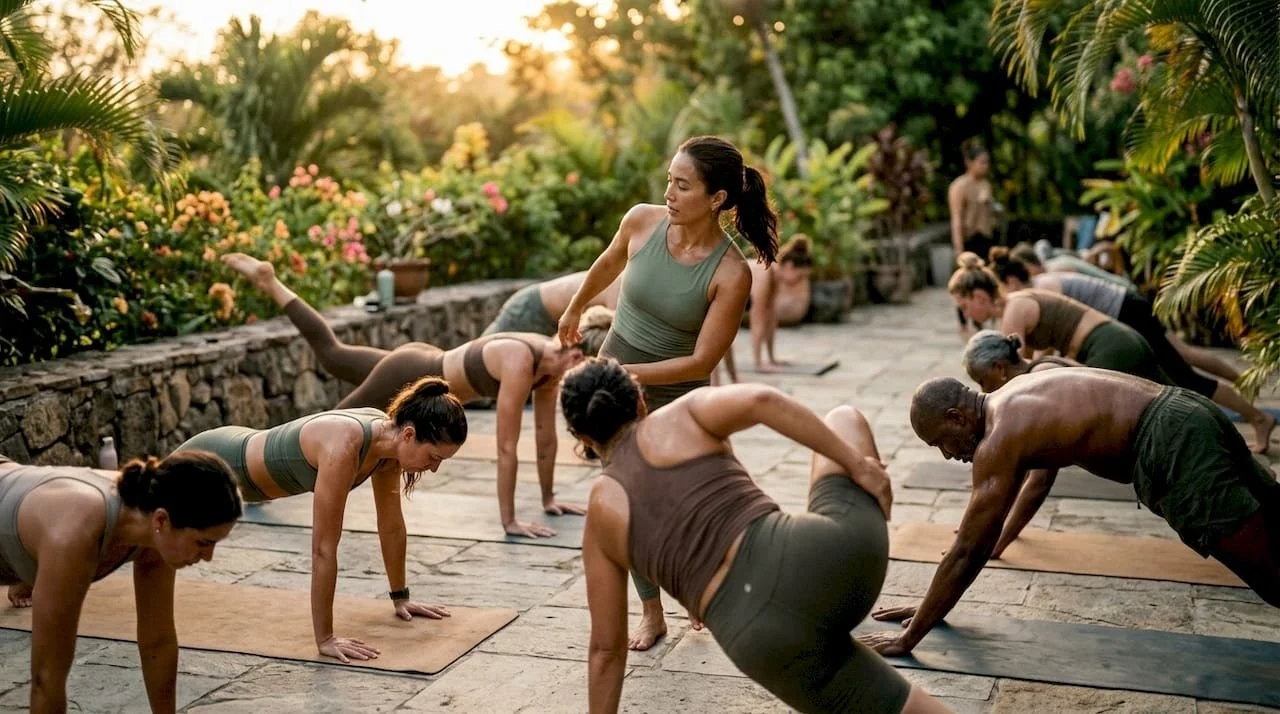
TL;DR:
Hot Pilates is performed in a heated room to enhance flexibility, calorie burn, and mental focus. The heat increases muscle pliability, joint mobility, and cardiovascular effort without high-impact movements, providing unique physical and mental benefits. To practice safely, hydrate well, enter gradually, and cool down after each session, especially for beginners and those with joint concerns.
Hot Pilates is defined as a Pilates practice performed in a room heated to 35°C–40°C (95°F–104°F), and the benefit of hot pilates goes well beyond what you get from a standard mat class. The heat amplifies every core Pilates advantage: deeper flexibility, higher calorie burn, and sharper mental focus. Where traditional Pilates builds strength and control, the heated environment adds a cardiovascular layer and a meditative intensity that changes the entire experience. Amritayogawellness offers heated Pilates and yoga classes in Philadelphia for practitioners at every level, from first-timers to seasoned athletes.
What is the core benefit of hot pilates for your body?
Hot Pilates delivers a measurably higher physical output than room-temperature Pilates, and the science behind that difference is straightforward. Heat raises your core temperature, which triggers a cascade of physiological changes that make every movement more effective.
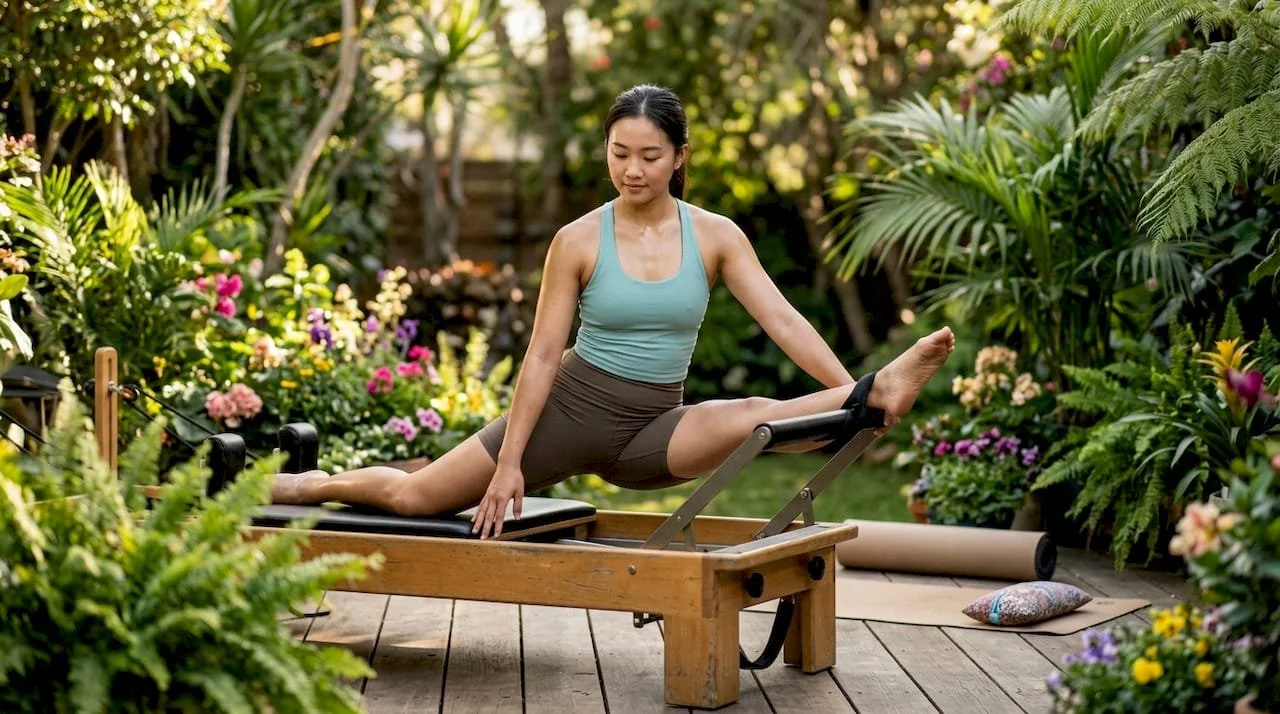
The most direct effect is on your muscles. Warmed muscle tissue stretches farther and with less resistance, which means you access deeper ranges of motion without forcing the movement. That depth is not just about flexibility. It reduces the micro-tearing risk that comes from cold muscles being pushed too hard.
Heat also acts on your joints. Increased synovial fluid production due to warmth allows smoother, less abrasive joint motion and deeper ranges of motion with less initial resistance. Warm joints are simply less prone to strain during Pilates movements. That is a meaningful advantage for anyone who has ever felt stiff at the start of a class.
The cardiovascular effect is real and quantifiable. A 60-minute hot Pilates session typically burns 300–450 calories, compared to 250–350 calories for the same routine at room temperature, with heart rate increasing by 10–20 BPM. That 20–30% increase in calorie burn comes without adding high-impact movements. You get aerobic conditioning inside a low-impact framework, which is a rare combination.
Calorie burn and heart rate: hot vs. room temperature Pilates
| Metric | Room temperature Pilates | Hot Pilates |
|---|---|---|
| Calories burned (60 min) | 250–350 | 300–450 |
| Heart rate increase | Baseline | +10–20 BPM |
| Muscle pliability | Standard | Significantly higher |
| Joint mobility | Standard | Enhanced by synovial fluid |
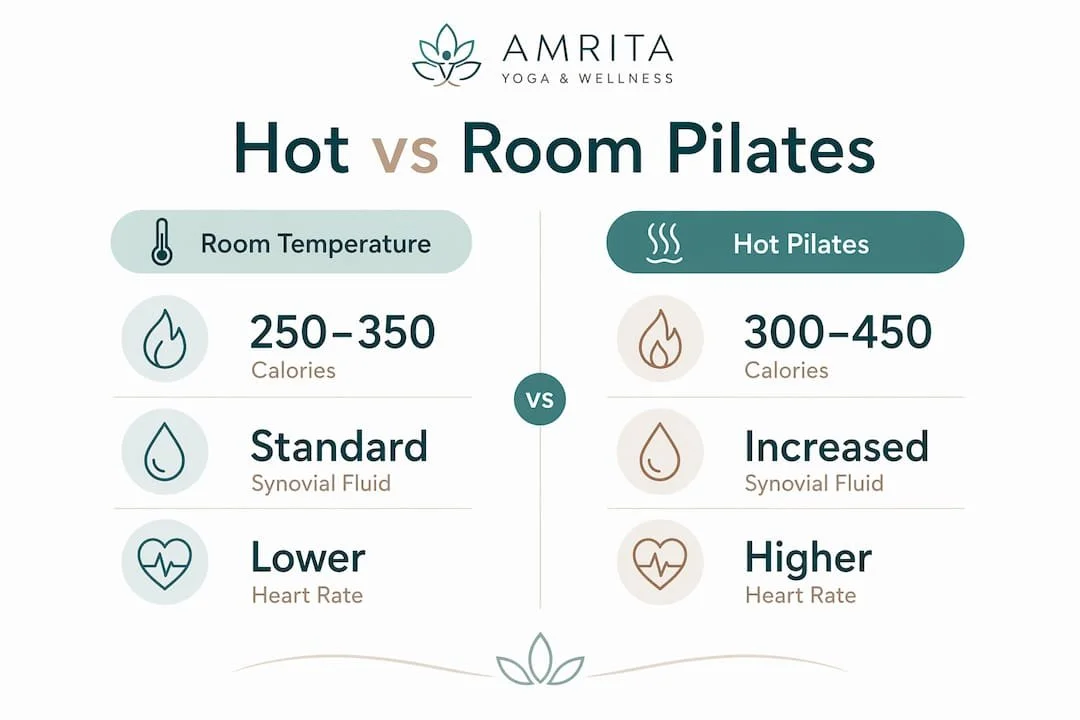
Pro Tip: Arrive at class already warm. A 5-minute brisk walk before entering the studio primes your cardiovascular system and shortens the adjustment period in the heated room.
What are the mental and wellness benefits of hot Pilates?
The mental benefits of hot Pilates are as real as the physical ones, and they come from a specific mechanism. Exercising in heat forces you to control your breath deliberately. That deliberate breathwork shifts your nervous system into a parasympathetic state, which is the rest-and-digest mode associated with calm, recovery, and reduced anxiety.
Mental benefits derive from forced focus on breathing in heat, creating a meditative, moving mindfulness state that activates the parasympathetic nervous system. Students consistently report feeling physically challenged yet mentally reset after class. That combination is not common in most fitness formats.
The mental and emotional advantages practitioners report include:
Reduced stress and anxiety through breath-regulated nervous system activation
Improved mental clarity that carries into the hours after class
Heightened present-moment focus because the heat demands your full attention
Mood improvement linked to endorphin release during elevated heart rate exercise
A sense of accomplishment from completing a physically demanding session without high-impact strain
One misconception worth addressing directly: sweating in hot Pilates does not detox your body in any meaningful clinical sense. Sweat during hot Pilates primarily aids in cooling. The detox narrative is a marketing claim, not a physiological fact. The real value of the sweat response is thermoregulation, and that process does improve with regular practice.
Pro Tip: If your mind wanders during class, return your attention to your exhale. The breath is your anchor in a heated room, and refocusing on it resets both your form and your mental state.
Who benefits most from hot Pilates, and how do you practice it safely?
Hot Pilates works for a wide range of practitioners, but certain groups see outsized results. Beginners benefit because warmed muscles allow access to deeper stretches from the first class, reducing the frustration of feeling tight and limited. Athletes and runners use it specifically for joint health, core strengthening, and active recovery between higher-intensity training days.
The low-impact nature makes hot Pilates a strong option for fitness enthusiasts seeking both aerobic conditioning and muscle toning without the joint stress of running or jumping. That makes it particularly useful for cross-training programs where recovery and mobility matter as much as output.
Safe practice follows a clear set of steps:
Hydrate with electrolytes 1–2 hours before class. Plain water is not enough. Electrolytes prevent the dizziness and cramping that dehydration causes in a heated room.
Enter the room a few minutes early. Gradual acclimatization reduces the shock of the heat and lets your body adjust before the class intensity builds.
Pace your effort in the first few sessions. The heat makes you feel more capable than you may be. Respect that gap between perceived effort and actual muscle readiness.
Never push a stretch to its absolute limit. Heat masks muscle tension, which means you can overstretch without feeling the warning signals. Stop before the end range.
Cool down for 5–10 minutes after class. A post-class cooldown in a cooler, quiet space helps regulate body temperature and heart rate, reducing the risk of fainting or dizziness.
For detailed guidance on staying safe in heated environments, the hot yoga safety tips resource from Amritayogawellness covers medical recommendations and gradual adaptation protocols that apply directly to hot Pilates practice.
How does hot Pilates support joint health and injury prevention?
Joint health is one of the most underappreciated hot pilates advantages, and it works through two reinforcing mechanisms. First, heat widens blood vessels, improving blood flow to muscles and joints, making movements smoother and improving mobility, especially during colder months. Second, Pilates itself trains the deep stabilizing muscles around the knee, hip, and spine, which are the structures most responsible for preventing common overuse injuries.
The combination is more protective than either element alone. Warm joints move more freely, and stronger stabilizers keep those joints aligned under load. That is why athletes recovering from knee or hip issues often find hot Pilates more accessible than weight-based rehabilitation exercises.
The pilates core strength work central to every class also reduces the muscular imbalances that cause strain over time. A weak core forces other structures, like the lower back and hip flexors, to compensate. Hot Pilates addresses that root cause directly.
Hot Pilates vs. traditional Pilates: joint health comparison
| Joint health factor | Traditional Pilates | Hot Pilates |
|---|---|---|
| Synovial fluid production | Standard | Increased by heat |
| Muscle tension reduction | Moderate | Higher due to warmth |
| Range of motion access | Standard | Deeper with less resistance |
| Circulation to joints | Standard | Enhanced by vasodilation |
| Cold-weather stiffness relief | Limited | Significant |
Regular exercise in heated environments also facilitates heat acclimatization over time, reducing heart rate response during general activity and increasing sweat efficiency. Your body becomes better at managing heat, which translates to lower cardiovascular strain in everyday life. That adaptation is a long-term health benefit that most practitioners do not anticipate when they start.
Key Takeaways
Hot Pilates delivers measurably greater physical and mental benefits than room-temperature Pilates by combining heat-induced physiological changes with the core-strengthening and flexibility principles of traditional Pilates.
| Point | Details |
|---|---|
| Higher calorie burn | Hot Pilates burns 300–450 calories per 60-minute session, roughly 20–30% more than room temperature classes. |
| Enhanced joint mobility | Heat increases synovial fluid production, allowing deeper, safer ranges of motion with less strain. |
| Mental reset through breathwork | Forced breath control in heat activates the parasympathetic nervous system, reducing stress and improving clarity. |
| Safe practice requires hydration | Drink electrolytes 1–2 hours before class and cool down for 5–10 minutes after every session. |
| Injury prevention through core training | Strengthening deep stabilizers in a warm environment protects knees, hips, and the lower back from overuse injuries. |
Why hot Pilates is harder to master than it looks
Hot Pilates sits in a category of its own, and I say that having observed practitioners across many fitness formats. The format looks approachable because the movements are controlled and low-impact. That appearance is misleading. The heat adds an endurance layer that exposes weaknesses in breath control and pacing that a room-temperature class never would.
The practitioners who get the most from hot Pilates are the ones who stop treating the heat as something to fight through. When you work with the heat by slowing your breath, softening unnecessary tension, and pacing your effort, the session becomes genuinely restorative. When you fight it, you exhaust yourself before the real work begins.
The biggest mistake I see is skipping the cooldown. People feel fine immediately after class and walk straight out into the cold air. That temperature shift hits the cardiovascular system hard. Five to ten minutes in a temperate space after class is not optional. It is the part of the practice that keeps you coming back without setbacks.
Integrating hot Pilates gradually, starting with one session per week and building from there, produces far better results than jumping in daily. The benefits of Pilates compound over weeks, not days. Patience with the process is what separates practitioners who thrive from those who burn out.
— Juiced
Wellness at Amrita Yoga & Wellness in Philadelphia
Physical fitness and mental well-being reinforce each other, and Amritayogawellness builds its entire program around that connection. If hot Pilates has opened your interest in practices that work on both levels, the studio's offerings extend well beyond the mat.
Amritayogawellness offers tarot readings as a complementary mental wellness practice for members who want to deepen their self-awareness alongside their physical training. The studio's Philadelphia location brings together yoga, Pilates, barre, tai chi, and massage therapy under one roof, making it straightforward to build a complete wellness routine. Class schedules, sign-ups, and full service details are available at Amritayogawellness.
FAQ
What is the main benefit of hot pilates over regular Pilates?
Hot Pilates burns 20–30% more calories per session and allows deeper muscle and joint mobility due to the heated environment, while maintaining the same low-impact structure as traditional Pilates.
Is hot Pilates safe for beginners?
Yes. Warmed muscles allow beginners to access deeper stretches from the first class, but new practitioners should hydrate with electrolytes before class and pace their effort carefully in the first few sessions.
How hot is a hot Pilates class?
Industry-standard studio temperatures for hot Pilates range from 35°C to 40°C (95°F to 104°F), which is the range that optimizes connective tissue pliability and muscle fascia warming.
Does sweating in hot Pilates detox your body?
No. Sweat during hot Pilates primarily regulates body temperature, not detoxification. The real benefit of sweating is thermoregulation, and that process improves with regular practice.
How often should you do hot Pilates to see results?
Starting with one session per week and building gradually produces the most consistent results. The physical and mental benefits compound over weeks of regular practice, not after a single session.