Hatha Style Yoga: A Complete Guide for All Levels
TL;DR:
Hatha yoga combines breath control, physical postures, and meditation to balance the body and mind. It typically involves slow, deliberate poses held for multiple breaths, followed by final relaxation to promote mental clarity and physical strength. Regular practice leads to improvements in flexibility, stress reduction, and overall wellness.
Hatha style yoga is a complete system that combines breath control, physical postures, and meditative awareness to balance the body and mind. Known formally as Hatha Yoga, the practice draws its name from two Sanskrit roots: "Ha," meaning sun energy, and "Tha," meaning moon energy. Balancing these two forces is the central goal of every session. The foundational text, the Hatha Yoga Pradipika, written in the 15th century, outlines this system as a path toward inner stillness and, ultimately, meditation. Whether you are stepping onto the mat for the first time or returning after years of practice, understanding what Hatha yoga is at its core changes how you experience every class.
What is hatha style yoga and how is a class structured?
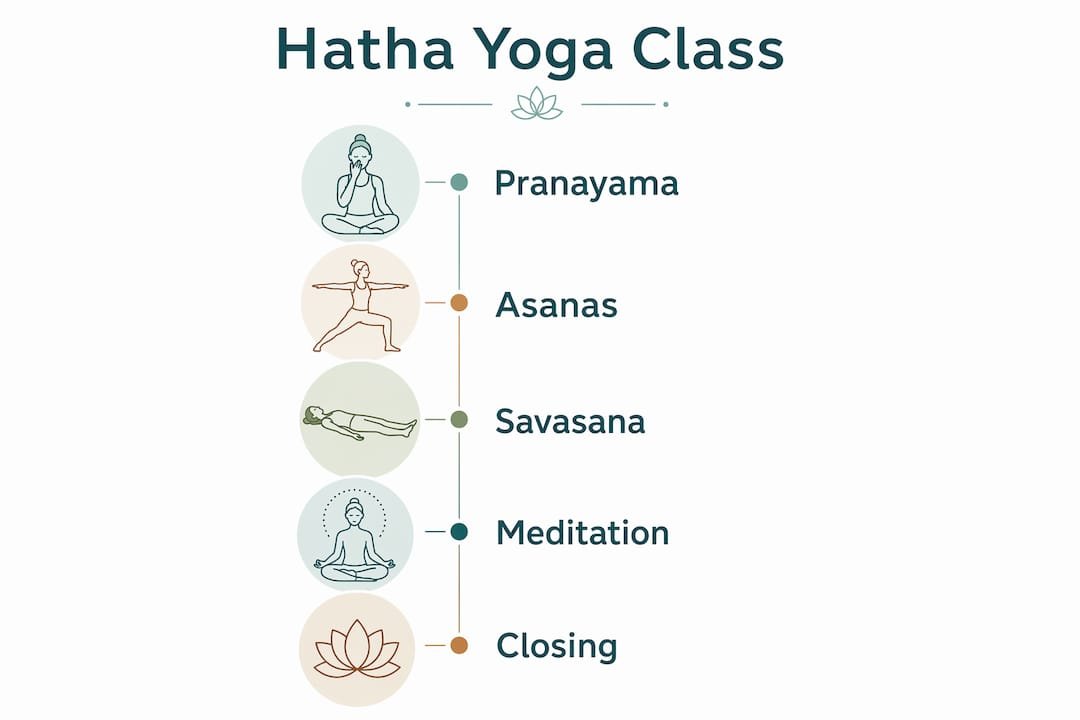
A typical hatha style yoga class runs between 30 and 90 minutes and follows a consistent sequence: pranayama (breath work), asanas (physical postures), and Savasana (final relaxation). That structure is not arbitrary. Each phase prepares the body and mind for the next, so skipping pranayama at the start is like skipping a warm-up before a run.
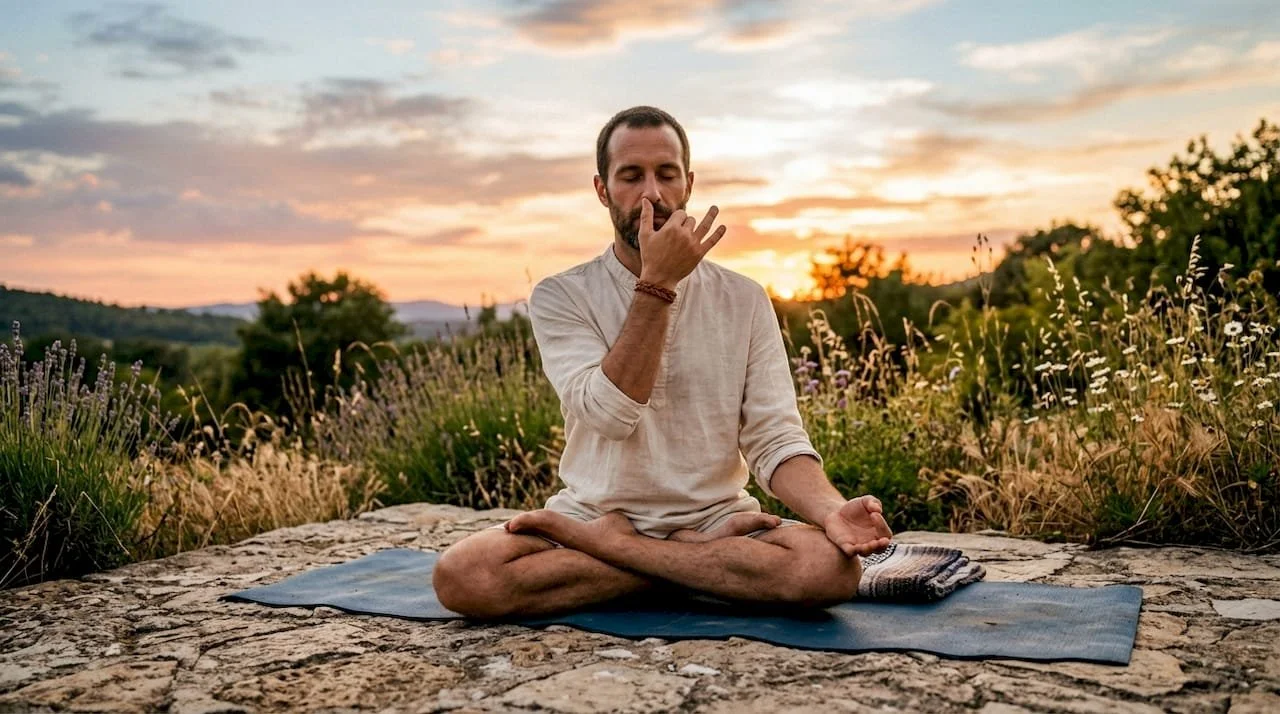
The class opens with pranayama to settle the nervous system and draw attention inward. Techniques such as Nadi Shodhana (alternate nostril breathing) and Ujjayi (victorious breath) are common openers. Pranayama is considered more powerful than asanas in the classical tradition, which is why it anchors the session rather than finishing it.
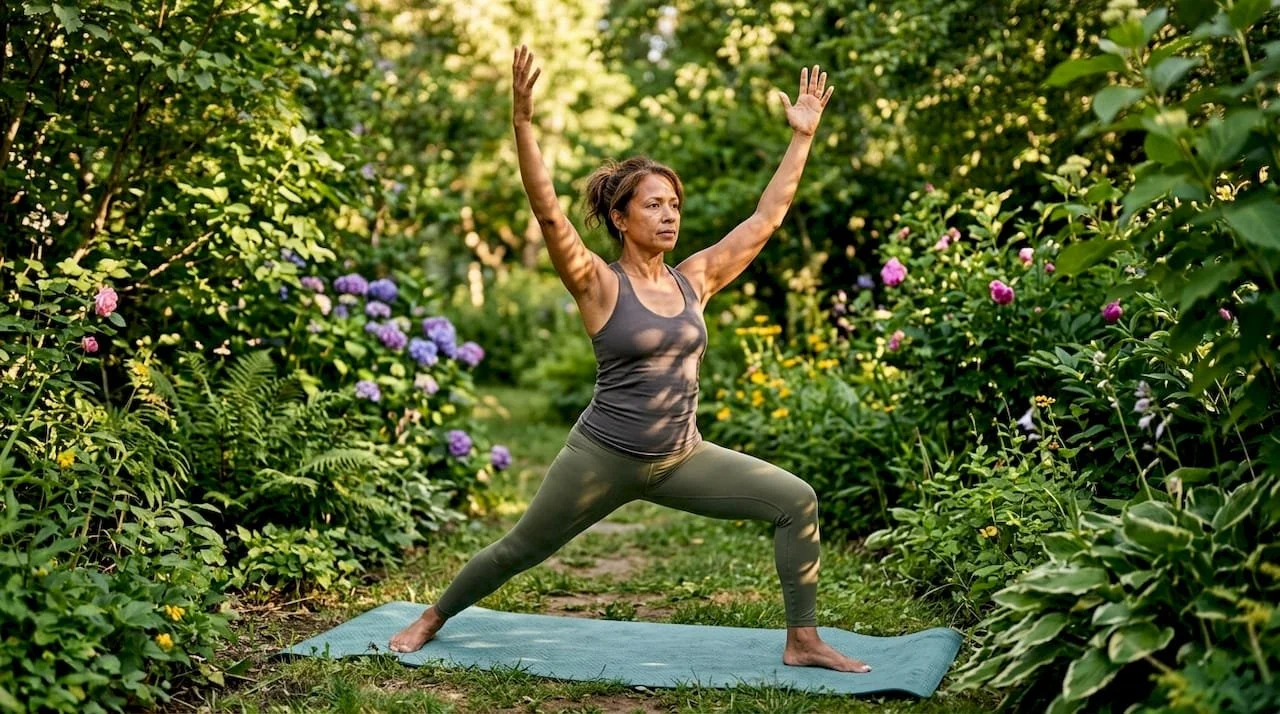
Asanas follow, and this is where Hatha's defining quality becomes clear. Poses are held for multiple breaths, not cycled through quickly. That stillness gives teachers time to offer alignment cues and gives practitioners time to feel what is actually happening in the body. A Warrior II held for five full breaths teaches far more about hip alignment than one held for a single count.
The session closes with Savasana, a full-body rest that lets the nervous system absorb the practice. Skipping Savasana is the most common beginner mistake. It is not a reward for finishing. It is a required part of the sequence.
Pranayama: Breath work to regulate the nervous system and focus the mind.
Asanas: Held postures with alignment focus and sustained muscle engagement.
Savasana: Final relaxation to integrate the physical and mental work of the session.
Pro Tip: If you arrive late and miss the pranayama opening, spend two minutes in Child's Pose with slow nasal breathing before joining the asana sequence. It replicates the settling effect and keeps your practice intentional.
What health and mental benefits does Hatha yoga provide?
Hatha yoga produces measurable physical results faster than most practitioners expect. Beginners who practice consistently show improvements in strength, flexibility, and cardio-respiratory fitness within 8 weeks. Eight weeks is a short window. That timeline makes Hatha one of the most accessible entry points into structured physical conditioning.
The mental benefits are equally well-supported. Slow, conscious breathing activates the parasympathetic nervous system, which reduces stress hormones, improves sleep quality, and sharpens mental clarity. This is not a vague wellness claim. It is a direct physiological response to controlled breath. The meditation benefits of breathwork extend well beyond the mat, supporting emotional regulation and focus throughout the day.
"The breath is the bridge between the body and the mind. In Hatha yoga, learning to control the breath is learning to control the quality of your attention, your stress response, and your inner state."
That insight captures why Hatha yoga is not simply a flexibility class. The physical postures are a vehicle. The breath is the engine. Practitioners who treat the asanas as the point often miss the deeper shift that happens when breath and movement align.
Hatha also supports practitioners dealing with chronic stress. The gentle yoga practice format makes it accessible for people who find high-intensity exercise counterproductive during stressful periods. The body responds to sustained, low-load movement and breath work in ways that vigorous exercise cannot replicate.
How does Hatha style yoga differ from Vinyasa and Hatha Flow?
The clearest difference between Hatha and Vinyasa is the breath-to-movement ratio. Hatha holds poses for multiple breaths, allowing deep focus on alignment and grounding. Vinyasa links each movement to a single breath, creating a continuous, flowing sequence. One is deliberate and still. The other is dynamic and rhythmic.
That difference in pacing changes the entire experience of a class. In Hatha, you might hold Triangle Pose for five breaths while your teacher adjusts your shoulder alignment. In Vinyasa, you move through Triangle, Warrior II, and Extended Side Angle in the time it takes to exhale twice. Neither is superior. They serve different needs.
| Feature | Hatha yoga | Hatha Flow | Vinyasa yoga |
|---|---|---|---|
| Pace | Slow, deliberate | Moderate, mindful | Fast, continuous |
| Breath style | Held poses, multiple breaths | Steady movement with breath | One breath per movement |
| Best for | Beginners, alignment focus | Intermediate, gentle flow | Active, fitness-oriented |
| Stillness emphasis | High | Moderate | Low |
Hatha Flow sits between the two. It is a mindful hybrid style that blends steady movement with moments of stillness. Practitioners who find pure Hatha too static but feel rushed in Vinyasa often find Hatha Flow the right fit. It preserves the breath awareness of traditional Hatha without the pressure of speed.
Hatha yoga: Best for learning alignment, building a foundation, and reducing stress.
Hatha Flow: Best for practitioners who want gentle movement without static holds.
Vinyasa yoga: Best for those seeking cardiovascular challenge and fluid sequencing.
Understanding what Vinyasa yoga is helps clarify why Hatha remains the preferred starting point for most new practitioners. The slower pace creates space for learning that faster styles cannot provide.
What are the deeper aspects of Hatha yoga for experienced practitioners?
Hatha yoga is not a single technique. It is a comprehensive system that integrates body, breath, and mind as preparation for meditation and spiritual awareness. Styles like Ashtanga and Iyengar yoga both fall under the Hatha umbrella. That context matters for experienced practitioners who want to understand where their practice sits within the broader tradition.
The pranayama techniques used in classical Hatha go well beyond basic breathing. Bhastrika (bellows breath) generates heat and energy. Sitali (cooling breath) lowers body temperature and calms the mind. Kumbhaka, or breath retention, is considered the most advanced technique. It creates internal pressure that, according to the classical texts, purifies the energy channels and prepares the practitioner for deeper states of concentration.
The classical texts describe Hatha as a preparatory practice for Raja Yoga, the path of meditation. The physical postures and breath work are not the destination. They are the preparation. Samadhi, a state of complete meditative absorption, is the classical goal. Most modern practitioners never frame their practice this way, but understanding it changes how you approach even a basic standing pose.
Isometric muscle engagement: Holding poses recruits deep stabilizing muscles that dynamic movement misses.
Breath retention (Kumbhaka): Advanced technique that builds concentration and internal awareness.
Purification practices (Shatkarmas): Classical cleansing techniques that precede asana in traditional sequences.
Philosophical framework: Hatha as preparation for Raja Yoga and the state of Samadhi.
Pro Tip: If you have practiced Hatha for more than a year, ask your teacher to introduce Nadi Shodhana with brief Kumbhaka holds. Even a two-second retention after inhalation noticeably deepens the meditative quality of the session.
Holding poses with full breath awareness shifts the experience from muscular effort to ease and concentration. That shift is the marker of an advancing practice.
How can beginners safely start a Hatha yoga practice?
Hatha yoga is accessible, but accessible does not mean risk-free. People with injuries or chronic conditions should consult a healthcare professional before starting, even at a gentle pace. Sustained isometric holds create real physical load. A knee injury that feels manageable in daily life can become aggravated in a held Warrior pose.
Props are not a sign of weakness. Blocks, straps, and bolsters allow the body to access the correct alignment without forcing range of motion. A block under the hand in Triangle Pose keeps the spine long. A strap around the foot in seated forward folds protects the lower back. Using props correctly is a sign of good instruction, not beginner limitation.
Start with two sessions per week and build to three or four as the body adapts.
Use props consistently until alignment feels natural without them.
Avoid pushing through pain. Discomfort from muscle engagement is normal. Sharp or joint pain is not.
Find a qualified teacher who offers hands-on adjustments and clear verbal cues.
Listen to your body rather than matching the person on the next mat.
Beginners and older adults benefit most from Hatha's adaptable pace, but the practice still demands respect. The 7 yoga styles for beginners resource from Amritayogawellness provides useful context for choosing the right entry point among the many options available.
Pro Tip: Tell your teacher about any injuries before class, not after. A good teacher will offer specific modifications before the session starts, so you are never caught off guard mid-pose.
Key Takeaways
Hatha yoga is the foundational system from which most modern yoga styles derive, combining breath control, held postures, and meditative awareness to build strength, reduce stress, and prepare the mind for deeper concentration.
| Point | Details |
|---|---|
| Core structure | Classes run 30–90 minutes and follow a pranayama, asana, and Savasana sequence. |
| Physical benefits | Consistent practice produces measurable gains in strength and flexibility within 8 weeks. |
| Mental benefits | Controlled breathing activates the parasympathetic nervous system, reducing stress and improving sleep. |
| Hatha vs. Vinyasa | Hatha holds poses for multiple breaths; Vinyasa links each movement to a single breath. |
| Safety for beginners | Consult a healthcare professional before starting if you have injuries or chronic conditions. |
Why Hatha keeps pulling me back
Every style of yoga I have practiced traces back to Hatha. Ashtanga, Iyengar, even the occasional Vinyasa flow. They all borrow their architecture from the same source. But what keeps me returning to a pure Hatha class is something harder to name than flexibility gains or stress reduction.
It is the quality of attention that a held pose demands. When you stay in Warrior I for six breaths instead of two, the first three breaths are physical. You feel the quad burn, the hip stretch, the shoulder fatigue. But somewhere around breath four, something shifts. The effort becomes quieter. You stop fighting the pose and start inhabiting it. That shift is what the classical texts mean by moving from effort to ease, and it does not happen in a faster practice.
The community dimension matters too. A Hatha class moves slowly enough that you actually notice the people around you. There is a shared quality of attention in the room that a fast-paced class rarely produces. That collective stillness is underrated as a wellness tool. Healthy habits built in community tend to stick longer than solo routines, and a consistent Hatha practice is one of the most sustainable habits I have seen people build.
My honest advice: do not let the word "gentle" mislead you. Hatha is not easy. It is slow. Those are very different things.
— Juiced
Hatha yoga classes and wellness at Amritayogawellness
Amritayogawellness offers Hatha yoga classes designed for practitioners at every level, from first-timers to those with years of mat experience. The Philadelphia studio provides structured guidance on breath work, alignment, and meditation, so each class builds on the last rather than repeating the same sequence indefinitely.
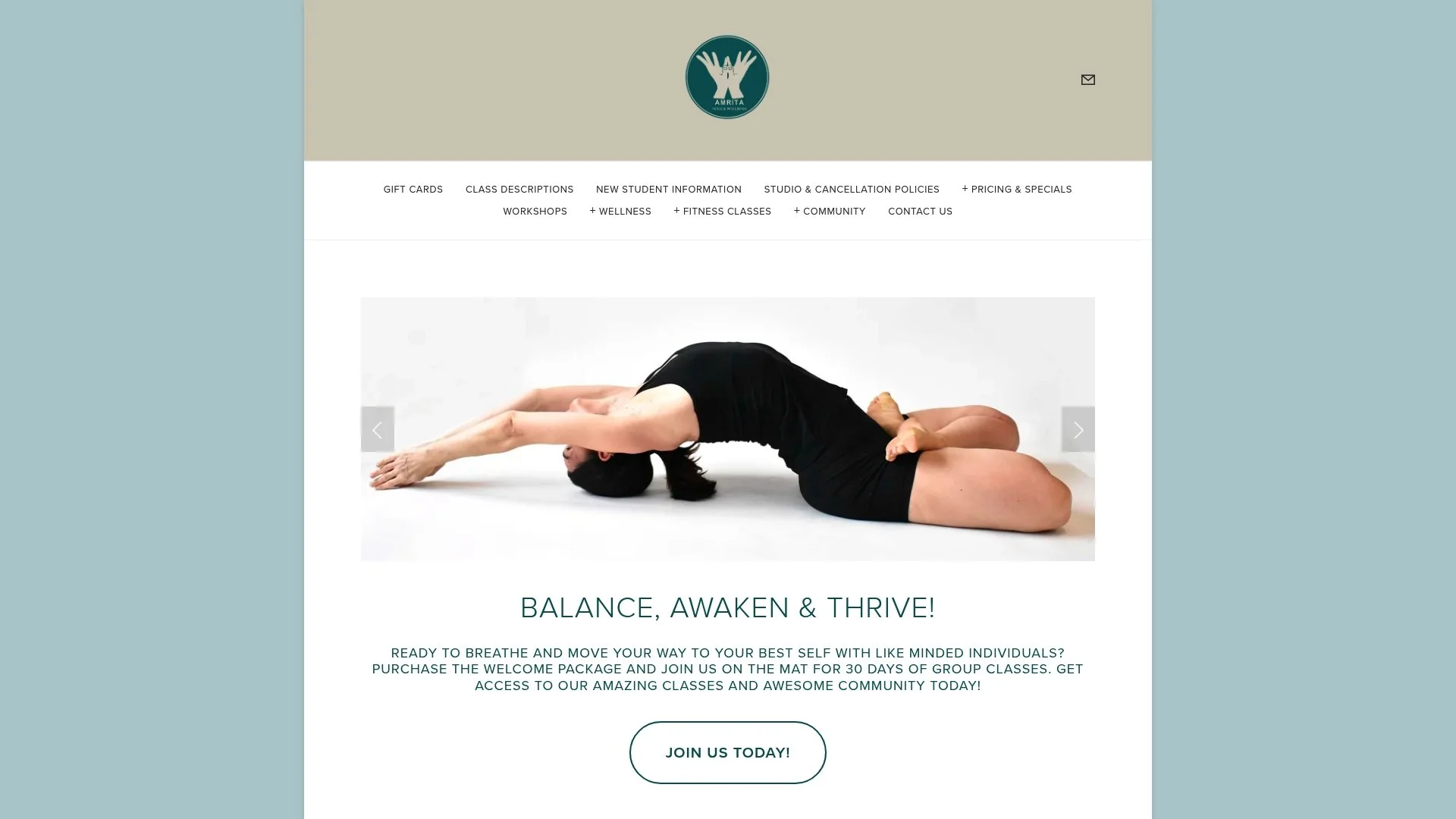
Beyond yoga, Amritayogawellness supports a full wellness practice. Workshops cover breathwork and mindfulness, and the studio also offers tarot readings as a complementary tool for self-reflection and inner awareness. For practitioners who want to deepen their understanding of Hatha yoga beyond the physical postures, the studio's community and programming provide a clear path forward.
FAQ
What is Hatha yoga, exactly?
Hatha yoga is a traditional system that combines physical postures, breath control, and meditation to balance the body and mind. The name comes from Sanskrit: "Ha" (sun energy) and "Tha" (moon energy), reflecting the practice's goal of internal balance.
How long is a typical Hatha yoga class?
A standard Hatha yoga class runs between 30 and 90 minutes, structured as pranayama, asanas, and a closing Savasana. The exact duration varies by studio and instructor.
Is Hatha yoga good for beginners?
Hatha yoga is one of the best starting points for beginners because its slower pace allows time for alignment instruction and body awareness. Beginners with injuries or chronic conditions should consult a healthcare professional before starting.
What is Hatha Flow yoga?
Hatha Flow is a hybrid style that blends the steady breath awareness of traditional Hatha with gentle, continuous movement. It suits practitioners who find pure Hatha too static but feel rushed in a Vinyasa class.
How quickly will I see results from Hatha yoga?
Research shows measurable improvements in strength, flexibility, and cardio-respiratory fitness after 8 weeks of consistent Hatha practice. Mental benefits such as reduced stress and better sleep often appear sooner.