Why Do Yoga? Real Benefits for Body, Mind, and Spirit
TL;DR:
Yoga combines physical postures, breathwork, and mindfulness to improve health and reduce stress. Regular practice lowers cortisol, enhances strength and flexibility, and supports emotional balance. Different styles serve specific physical and mental goals, with consistency being key for lasting benefits.
Yoga is a practice that unites physical postures, breathwork, and mindfulness to build strength, reduce stress, and support emotional balance. Millions of people practice yoga precisely because it delivers results across multiple dimensions of health at once. A 12-week yoga program significantly reduces cortisol, the body's primary stress hormone. That single finding explains why so many people who start yoga for flexibility end up staying for the mental clarity. Whether you are brand new or returning after a long break, understanding why practice yoga matters gives you a foundation to build on.
Why do yoga for physical health and strength?
Yoga builds physical fitness through mechanisms most people overlook. Unlike weight training, yoga uses prolonged bodyweight holds to create muscular tension. Holding Warrior II for 60 seconds recruits the same stabilizing muscles as a loaded squat, without the joint compression. Over time, that sustained effort increases muscular strength and mobility while reducing the systemic inflammation linked to chronic diseases.
The cardiovascular evidence is stronger than most people expect. A meta-analysis of 37 studies found that yoga reduced LDL cholesterol, blood pressure, and resting heart rate comparably to aerobic exercise. That result challenges the assumption that you need to run or cycle to protect your heart. Yoga achieves those outcomes partly through stress reduction, which lowers the hormonal load that drives arterial inflammation.
Chronic pain is another area where yoga earns its reputation. A 2017 Cochrane Review of 12 randomized controlled trials found that yoga improves chronic low back pain with effects lasting up to six months. That durability matters because most pain interventions lose their effect quickly. Yoga works by improving movement tolerance and regulating the nervous system, not by masking pain.
Key physical benefits include:
Flexibility and joint health: Stiffness is often the reason yoga feels so beneficial. Movement lubricates connective tissue and strengthens the structures around joints.
Balance and fall prevention: A 12-week study showed yoga improves balance and reduces fear of falls in older adults through better proprioception.
Inflammation reduction: Regular practice lowers markers of systemic inflammation, which contributes to conditions like heart disease and type 2 diabetes.
Functional strength: Poses like Plank, Chaturanga, and Chair build real-world strength that transfers to daily movement.
Pro Tip: If your goal is pain relief, prioritize consistency over intensity. Three shorter sessions per week outperform one long session for nervous system regulation.
In what ways does yoga support mental and emotional wellbeing?
Yoga's mental health benefits operate through direct neurological pathways, not just relaxation. The practice activates the parasympathetic nervous system, the branch responsible for rest and recovery, while suppressing the fight-or-flight response. A 2018 systematic review found that yoga increases GABA neurotransmission and reduces activity in brain networks linked to rumination and depression. That is a measurable brain change, not a mood metaphor.
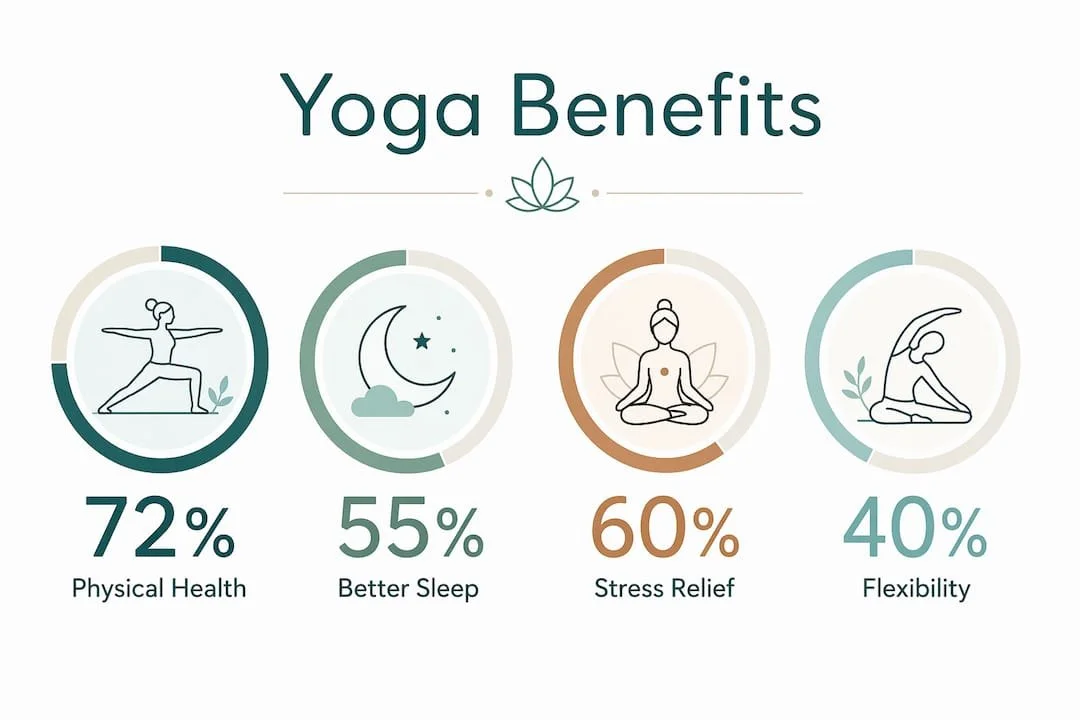
Sleep is one of the clearest downstream benefits. 55% of yoga practitioners report better sleep, and Yoga Nidra, a guided relaxation technique, reduces insomnia symptoms over eight weeks. Better sleep then reduces pain sensitivity, which in turn lowers anxiety. Stress reduction, improved sleep, and pain relief work together in a reinforcing cycle, each benefit strengthening the others.
The breath is the mechanism most people underestimate. Slow, controlled breathing during yoga practice directly lowers heart rate and blood pressure within minutes. That physiological shift is why a single session can change your mood, even before any long-term adaptation occurs.
A structured approach to mental health benefits through yoga looks like this:
Start with breath awareness. Even five minutes of diaphragmatic breathing before a session primes the nervous system for down-regulation.
Hold poses longer than feels comfortable. Discomfort tolerance in yoga trains the same emotional regulation circuits used during anxiety.
Practice Yoga Nidra before sleep. This body-scan technique lowers physiological arousal more effectively than passive rest.
Attend group classes regularly. Social connection during group yoga practice amplifies the stress-reduction effect through shared nervous system co-regulation.
Track mood, not just flexibility. Progress in yoga for mental health shows up in emotional patterns weeks before it shows up in physical range of motion.
Yoga's greatest mental health contribution is not relaxation. It is teaching the nervous system that discomfort is survivable. That lesson transfers to every area of life.
What are the different styles of yoga and how do they affect outcomes?
Not all yoga produces the same results. The style you choose determines whether you are training your cardiovascular system, your nervous system, or both. That distinction matters when you are selecting a class or building a weekly routine.
| Style | Intensity | Primary benefit | Best for |
|---|---|---|---|
| Vinyasa | High | Cardiovascular fitness, strength | Active adults, weight management |
| Ashtanga | High | Endurance, discipline, core strength | Structured learners, athletes |
| Hatha | Moderate | Flexibility, foundational alignment | Beginners, general wellness |
| Yin | Low | Deep tissue release, stress relief | Recovery, sleep improvement |
| Yoga Nidra | Very low | Nervous system reset, insomnia relief | Anxiety, burnout, chronic pain |
Vigorous styles like Vinyasa and Ashtanga push heart rate into aerobic zones of 130–150 BPM, which supports cardiovascular fitness. Yin yoga, by contrast, holds passive poses for three to five minutes, targeting connective tissue and the parasympathetic nervous system. Neither is superior. They serve different goals, and the most effective weekly practice combines both.
Beginners often default to the gentlest option available, which makes sense for building confidence. Hatha yoga is the most practical starting point because it teaches alignment principles that apply across all other styles. Once those foundations are solid, adding one Vinyasa session per week creates a balanced physical and mental training effect.
Pro Tip: Combine one vigorous style and one gentle style each week. The vigorous session builds fitness; the gentle session builds recovery. Together, they prevent burnout and sustain long-term practice.
How can beginners start and maintain an effective yoga practice?
The most common reason people delay starting yoga is the belief that they need to be flexible first. Flexibility is not a prerequisite for yoga. Stiffness is often exactly why yoga feels so beneficial, because movement lubricates joints and strengthens the connective tissue that surrounds them. You do not need to touch your toes to benefit from a forward fold.
Consistency matters far more than duration or intensity in the early stages. Three sessions of 30 minutes per week produce more cumulative benefit than one 90-minute session. The nervous system adapts through repetition, not volume. That means showing up regularly, even imperfectly, is the single most important factor in building a lasting practice.
Practical steps for beginners:
Choose Hatha or gentle Vinyasa first. These styles teach foundational poses without overwhelming pace or complexity.
Use props without apology. Blocks, straps, and bolsters are not signs of weakness. They allow correct alignment, which is where the benefit lives.
Set a specific time slot. Morning practice before other commitments have a higher completion rate than evening sessions for most beginners.
Follow beginner yoga tips from credible sources. Structured guidance prevents the common mistakes that cause early frustration or injury.
Measure progress in awareness, not poses. Noticing how your body feels before and after practice is more useful data than whether you can do a handstand.
Yoga's effectiveness depends strongly on practitioner mindset and personal goals. People who approach yoga as a process rather than a performance milestone report greater satisfaction and longer-term commitment. That shift in expectation is often the difference between someone who quits after six weeks and someone who practices for years.
Pro Tip: Write down one specific reason you want to practice yoga before your first class. Revisit that reason after 30 days. The gap between what you expected and what you actually experienced is where the real learning begins.
What are yoga's spiritual and philosophical foundations?
The word "yoga" comes from the Sanskrit root "yuj," meaning to yoke or unite. That etymology points directly to yoga's core purpose: the union of body, mind, and spirit into a coherent whole. Classical texts like the Yoga Sutras of Patanjali define yoga as "the stilling of the fluctuations of the mind," a goal that physical postures serve but do not complete on their own.
Understanding these foundations does not require adopting any religious belief. The philosophical framework simply provides a reason to practice that outlasts physical goals. When flexibility plateaus or motivation dips, a practitioner with a clear philosophical anchor keeps showing up.
Core principles from classical yoga philosophy that enhance modern practice:
Ahimsa (non-harm): Applied to your own body, this principle prevents the ego-driven pushing that causes injury in beginners.
Svadhyaya (self-study): The practice of observing your own patterns, physical and mental, without judgment. This is what makes yoga a tool for personal growth, not just exercise.
Santosha (contentment): Accepting where you are in your practice today. This principle directly counters the comparison culture that makes many beginners quit.
Pranayama (breath control): Breath is the bridge between the physical and mental dimensions of yoga. Controlling breath controls the nervous system.
Mindfulness and meditation integrate naturally with physical postures when practitioners understand these principles. The deeper benefits of advanced practice become accessible only when the philosophical layer is engaged alongside the physical one.
Key Takeaways
Yoga delivers its strongest results when physical practice, breathwork, and mindful intention work together rather than separately.
| Point | Details |
|---|---|
| Physical benefits are evidence-backed | A Cochrane Review confirms yoga relieves chronic low back pain for up to six months. |
| Mental health gains are neurological | Yoga increases GABA and reduces brain activity linked to rumination and depression. |
| Style selection determines outcomes | Vigorous styles build cardio fitness; gentle styles support stress relief and sleep. |
| Flexibility is not required to start | Stiffness is a reason to begin yoga, not a reason to wait. |
| Consistency beats intensity | Three shorter sessions per week outperform one long session for lasting adaptation. |
What I've learned from watching people start and stick with yoga
Most people who try yoga once and quit do so because they measured the wrong thing. They expected to feel more flexible after two weeks and felt nothing. The practitioners who stay are the ones who notice that they slept better on the nights after class, or that they handled a stressful meeting differently. Those are the real early returns, and they show up before any physical change is visible.
The philosophical layer is what separates yoga from a fitness class. I have seen people with serious athletic backgrounds struggle with yoga not because of physical limitation, but because yoga asks you to observe discomfort rather than push through it. That is a genuinely different skill. Once it clicks, the practice becomes self-sustaining because the mental benefits are immediate and repeatable.
The best advice I can give anyone starting out is to pick one style, commit to it for 60 days, and track how you feel rather than how you look. The physical and mental wellbeing gains compound over time in ways that are genuinely hard to predict at the start. Trust the process long enough to see the data.
— Juiced
Yoga classes and wellness services at Amritayogawellness
Amritayogawellness offers classes across a full range of styles and experience levels at its Philadelphia studio. Whether you are drawn to the physical challenge of hot yoga, the grounding pace of Hatha, or the meditative depth of Yin, the studio structures its program so that beginners and experienced practitioners can both find their footing.
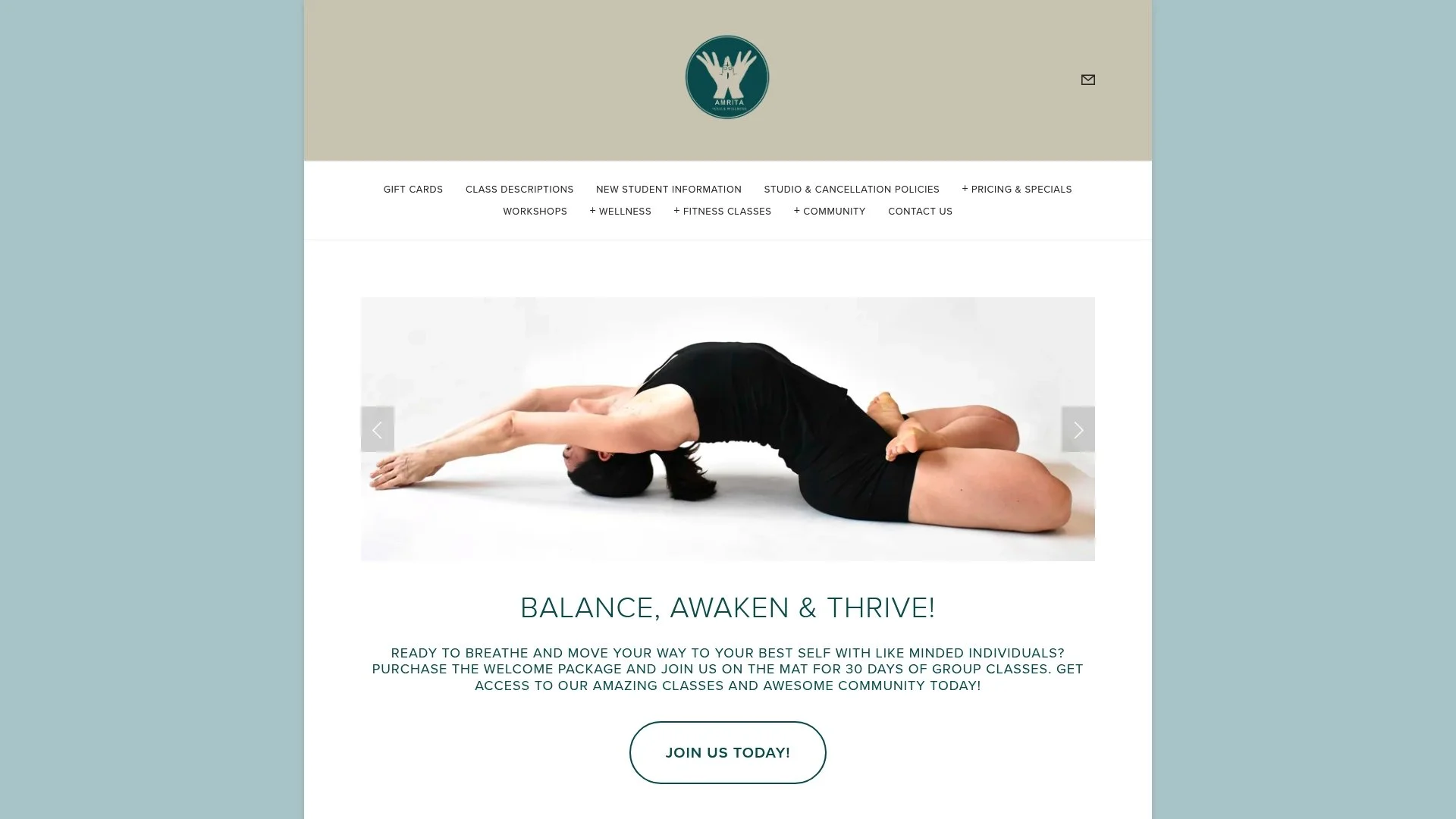
The studio's approach combines physical practice with broader wellness services, including massage therapy, barre, tai chi, and pilates. For those interested in the spiritual and reflective dimensions of wellness, Amritayogawellness also offers tarot reading sessions as a complementary tool for self-inquiry. Class schedules, membership options, and workshop details are available directly on the Amritayogawellness website.
FAQ
Why do yoga if I'm not flexible?
Flexibility is not a requirement for yoga. Stiffness is often the reason yoga feels most beneficial, because movement lubricates joints and strengthens the connective tissue around them.
How often should a beginner practice yoga?
Three sessions per week of 30 minutes each produces consistent, cumulative benefit. The nervous system adapts through repetition, so regularity matters more than session length.
What is the best yoga style for stress relief?
Yin yoga and Yoga Nidra are the most effective styles for stress relief. Both activate the parasympathetic nervous system and lower cortisol, with Yoga Nidra specifically shown to reduce insomnia symptoms over eight weeks.
Can yoga replace cardio exercise?
Vigorous styles like Vinyasa and Ashtanga push heart rate into aerobic zones of 130–150 BPM, which supports cardiovascular fitness. For most people, yoga works best as a complement to other forms of movement rather than a full replacement.
How long before yoga produces noticeable mental health benefits?
A 12-week yoga program produces statistically significant reductions in cortisol. Many practitioners report improved sleep and mood within the first two to four weeks of consistent practice.