Antigravity Yoga Explained: Benefits, Techniques, Risks
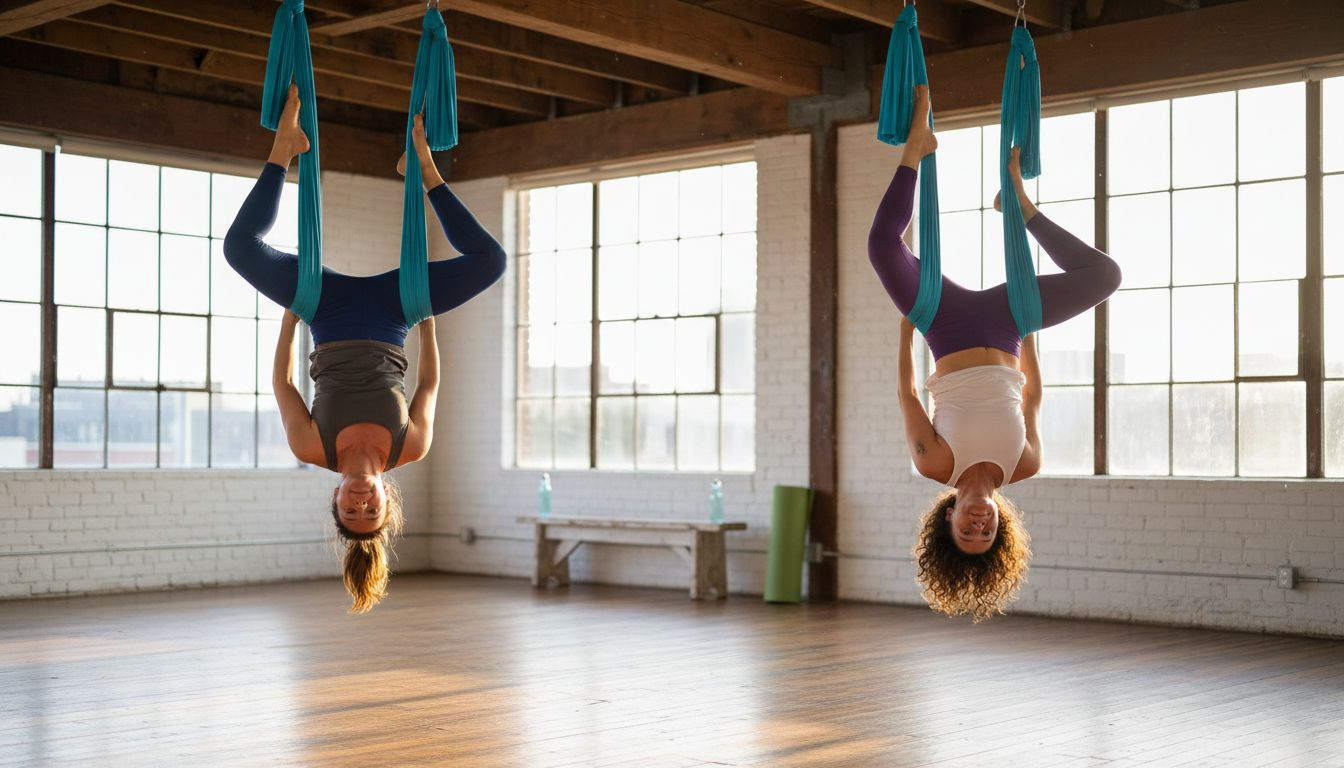
Most American adults experience ongoing stress that affects both body and mind, yet finding relief often feels out of reach in busy cities like Philadelphia. Antigravity yoga offers a fresh path for health-conscious residents seeking to blend gentle movement, flexibility, and emotional release. With its supportive hammock, this practice brings people together and transforms what beginners expect from wellness routines, introducing a relaxing and playful way to connect and recharge.
Table of Contents
Key Takeaways
| Point | Details |
|---|---|
| Innovative Approach | Antigravity yoga incorporates aerial techniques using a supportive hammock to enhance strength, flexibility, and body awareness. |
| Diverse Styles | There are various types of antigravity yoga, including Classic AntiGravity, Restorative Aerial Yoga, Aerial Pilates, and Aerial Dance Yoga, each catering to different fitness goals and experience levels. |
| Holistic Benefits | The practice offers physical benefits like improved flexibility and mental advantages such as stress reduction and mindfulness enhancement. |
| Safety Considerations | Proper technique, gradual progression, and communication with instructors are essential to minimize risks and ensure a safe practice. |
Antigravity yoga definition and core concepts
Antigravity yoga represents an innovative fitness practice that transforms traditional yoga by incorporating aerial suspension techniques. First developed by Christopher Harrison in New York, this unique exercise method utilizes a specialized hammock that allows practitioners to perform yoga poses and movements while suspended above the ground.
The core concept of antigravity yoga centers on using a supportive fabric hammock as a primary training apparatus. This hammock enables practitioners to explore movements with reduced gravitational pressure, creating opportunities for deeper stretches, enhanced flexibility, and unique body positioning not possible on a standard yoga mat. By suspending participants slightly off the ground, the practice provides a combination of strength training, flexibility work, and aerial arts that challenges traditional workout paradigms.
At its fundamental level, antigravity yoga integrates elements from multiple disciplines, including traditional yoga, Pilates, dance, and acrobatics. Participants use the hammock to perform inverted poses, spinal decompressions, and dynamic movements that engage multiple muscle groups simultaneously. The suspended environment allows for reduced joint compression, increased range of motion, and a playful approach to fitness that makes challenging physical practices more accessible and enjoyable.
Pro tip: Begin your antigravity yoga journey by attending an introductory class with a certified instructor who can guide you through proper hammock techniques and safety protocols.
Types of antigravity yoga and their differences
Antigravity yoga encompasses a diverse range of styles, each offering unique approaches to aerial fitness and wellness. Practitioners can explore multiple variants that adapt the core hammock technique to different fitness goals and experience levels.
The primary types of antigravity yoga include classic AntiGravity Fitness, the original trademarked format that emphasizes fitness and spinal decompression. Restorative aerial yoga focuses on gentle stretching and relaxation, using the hammock to support deeper, more comfortable poses with minimal physical strain. Aerial Pilates integrates core strengthening techniques with the hammock, creating a dynamic workout that challenges balance and stability while providing joint support.
More advanced practitioners might gravitate toward aerial dance yoga, which incorporates acrobatic movements and choreographed sequences. Different styles of aerial yoga vary significantly in their pace, therapeutic focus, and movement complexity, ranging from slow, meditative practices to high-energy, dance-inspired workouts. Some variations prioritize therapeutic stretching, while others emphasize dynamic movement and athletic performance.
A comprehensive approach to antigravity yoga involves understanding these different styles and selecting a practice that aligns with individual fitness levels, physical goals, and personal preferences. Many studios offer introductory classes that allow practitioners to explore various approaches and find the style that resonates most with their wellness journey.
Here's a summary of popular types of antigravity yoga and their primary focuses:
| Style | Main Focus | Typical Participants |
|---|---|---|
| Classic AntiGravity | Spinal decompression, fitness | Beginners to intermediates |
| Restorative Aerial Yoga | Deep stretching, relaxation | All levels, injury recovery |
| Aerial Pilates | Core strength, joint support | Fitness seekers |
| Aerial Dance Yoga | Choreographed movements, acrobatics | Advanced practitioners |
Pro tip: Consult with a certified aerial yoga instructor to determine which style of antigravity yoga best matches your current fitness level and personal wellness objectives.
How antigravity yoga works in practice
In a typical antigravity yoga class, practitioners use a specially designed hammock that transforms traditional exercise routines. The suspended fabric support enables participants to explore movements with reduced gravitational pressure, creating unique opportunities for physical engagement and body awareness.
Classes typically begin with gentle warm-up exercises that help participants become familiar with the hammock's dynamics. Instructors guide students through a progressive sequence that includes floor-based and suspended poses, carefully adjusting the hammock height and pose complexity to match individual skill levels. The practice systematically builds strength, flexibility, and confidence by introducing increasingly challenging movements while maintaining a supportive environment.
The hammock serves multiple functional purposes during the practice. It reduces compressive forces on joints, enables deeper stretches, and provides additional support for balance and stability. Practical sessions blend breathwork, mobility exercises, and mindful movement, creating a holistic approach that balances physical exertion with mental relaxation. Participants might transition from gentle inversions to more dynamic aerial maneuvers, always under careful instructor guidance.
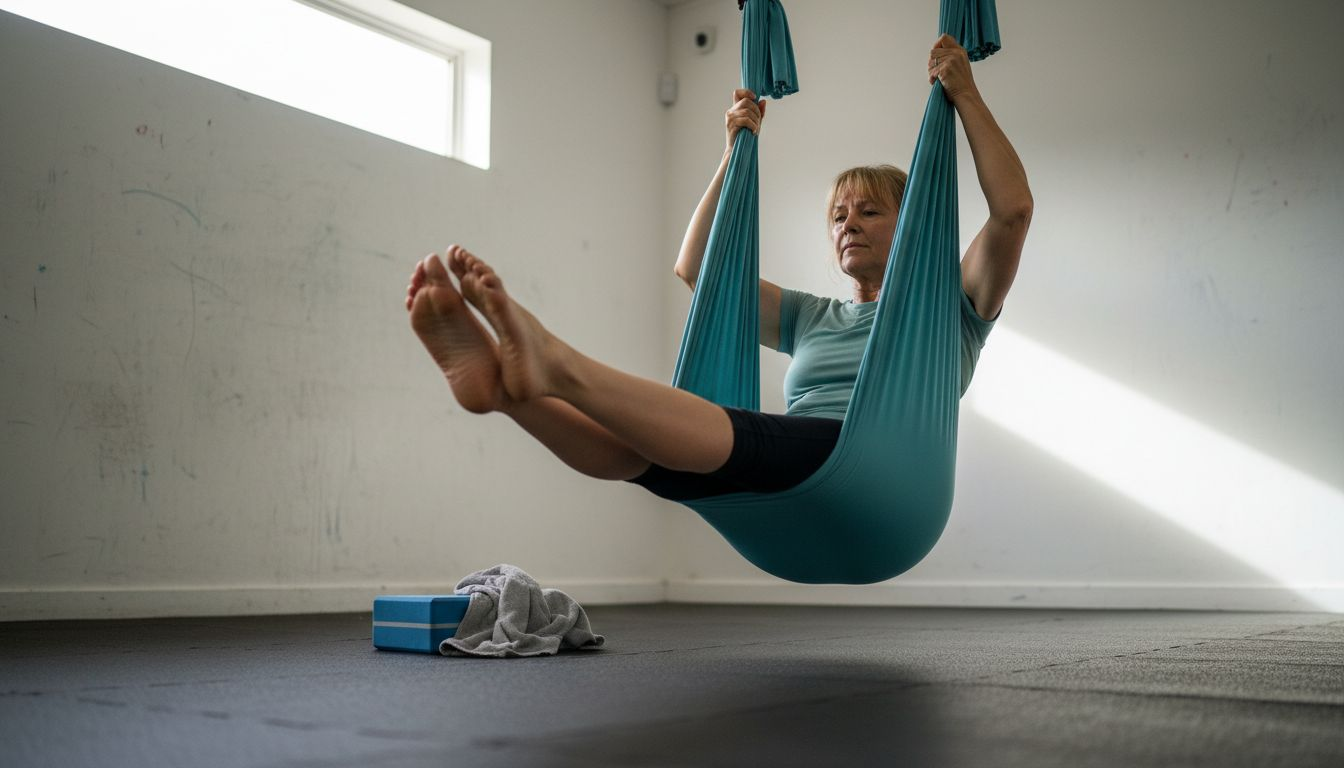
Each class typically concludes with restorative poses and meditation, allowing practitioners to experience complete physical and mental release while suspended in the hammock. This unique approach makes deep relaxation accessible, even for beginners who might find traditional meditation challenging.
Pro tip: Wear form-fitting, comfortable clothing without zippers or loose accessories that could snag the hammock fabric during your practice.
Health benefits and wellness impacts
Antigravity yoga delivers a comprehensive range of physical and mental health benefits that extend far beyond traditional exercise methods. The unique suspended practice provides practitioners with opportunities for holistic wellness improvement, targeting both physiological and psychological dimensions of health.
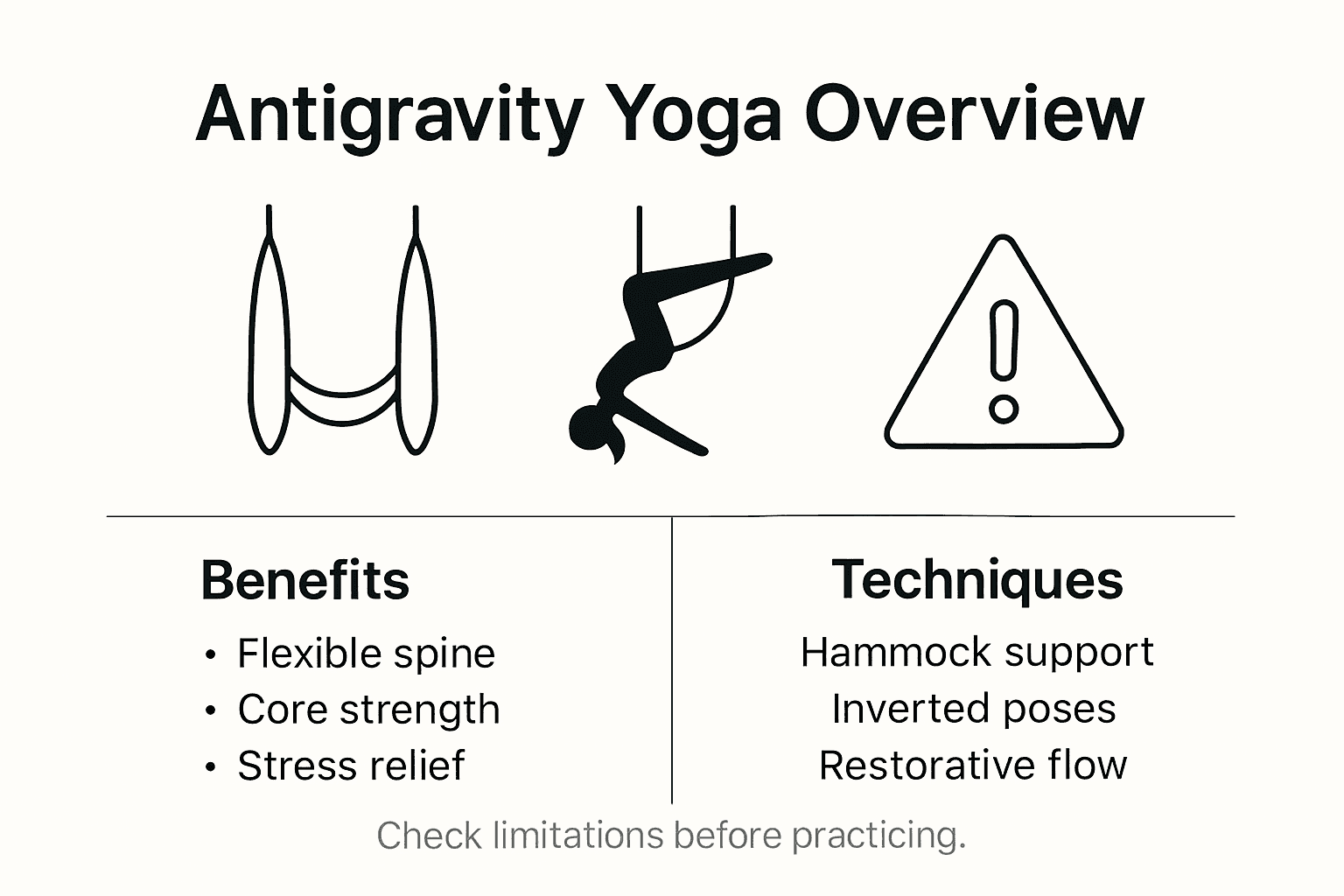
Physically, the practice offers significant advantages in flexibility, strength, and joint health. The hammock's support enables practitioners to perform movements with reduced gravitational pressure, which helps decompress the spine and minimize joint strain. Core strength develops naturally through the balance and stability required to maintain poses, while the suspended environment allows for deeper muscle engagement and more expansive stretching than traditional ground-based yoga practices.
The psychological benefits of antigravity yoga are equally compelling, with practitioners reporting enhanced mental well-being and stress reduction. The playful and novel approach to exercise promotes mindfulness, increases focus, and provides a sense of accomplishment. By combining physical challenge with meditative elements, the practice creates a unique environment for mental reset and emotional processing.
Particularly notable is antigravity yoga's accessibility for diverse populations. Individuals recovering from injuries, those with limited mobility, and practitioners across different fitness levels can modify the practice to suit their needs. The low-impact nature combined with the supportive hammock environment makes it an inclusive form of exercise that promotes healing, strength building, and overall wellness.
Pro tip: Start with beginner classes and communicate any physical limitations to your instructor to ensure a safe and personalized antigravity yoga experience.
Safety risks and common mistakes to avoid
Antigravity yoga presents unique safety considerations that practitioners must carefully navigate to prevent potential injuries and complications. Understanding these risks is crucial for maintaining a safe and enjoyable practice that promotes wellness without compromising physical health.
The most prevalent safety risks are related to improper technique, equipment misuse, and overexertion. Muscle strains, sprains, and potential exacerbation of pre-existing musculoskeletal conditions can occur when practitioners attempt advanced movements without proper progression or professional guidance. Systematic reviews of yoga injury epidemiology highlight that most adverse events involve the back, neck, and shoulder regions, often resulting from incorrect alignment or pushing beyond individual physical limitations.
Key mistakes to avoid include rushing into advanced poses, neglecting equipment inspection, and failing to communicate physical constraints with instructors. The hammock requires precise setup and understanding, and practitioners should never ignore pain signals or attempt movements beyond their current skill level. Gradual skill progression, seeking qualified instruction, and maintaining awareness of one's body are essential strategies for minimizing potential risks.
Pre-existing medical conditions, recent injuries, or physical limitations demand extra caution. Individuals with cardiovascular issues, balance disorders, or orthopedic concerns should consult healthcare professionals before beginning an antigravity yoga practice. Proper warm-up, consistent technique refinement, and a patient approach to learning can transform potential risks into opportunities for safe, transformative physical development.
Consider these key safety tips and potential risks to enhance your antigravity yoga practice:
| Safety Aspect | Why It Matters | Recommended Action |
|---|---|---|
| Equipment inspection | Prevents accidents | Check hammock and rigging before use |
| Gradual progression | Reduces injury risk | Learn poses step-by-step |
| Communicate health | Personalizes practice | Inform instructor about conditions |
| Professional guidance | Ensures proper technique | Attend classes with certified staff |
Pro tip: Always perform a thorough equipment check before each session and communicate any physical concerns to your instructor.
Elevate Your Wellness Journey with Antigravity Yoga at Amrita Yoga & Wellness
If you are ready to explore the unique benefits of antigravity yoga while avoiding common risks and mistakes, Amrita Yoga & Wellness in Philadelphia offers expert guidance and supportive classes that help you start safely. Whether you want to improve spinal decompression, build core strength, or simply enjoy a gentle restorative practice, our experienced instructors tailor sessions to your personal goals and fitness level. By integrating mindful movement, breathwork, and suspension techniques, you will discover new ways to enhance flexibility and mental clarity.
Take the next step toward a transformative fitness experience with our diverse yoga classes. Join a welcoming community that supports your physical and mental well-being. Visit Amrita Yoga & Wellness today to sign up for introductory sessions and unlock the full potential of aerial fitness. Begin your path to strength, balance, and tranquility now.
Frequently Asked Questions
What is antigravity yoga?
Antigravity yoga is a unique fitness practice that incorporates aerial suspension techniques, using a specialized hammock to perform yoga poses and movements while suspended above the ground, enhancing flexibility and strength.
What are the benefits of practicing antigravity yoga?
Antigravity yoga offers numerous benefits, including improved flexibility, strength, spinal decompression, stress reduction, and enhanced mental well-being, along with being accessible for individuals of varying fitness levels.
How does a typical antigravity yoga class work?
In a typical class, participants use a hammock for support as instructors guide them through warm-ups, floor-based poses, and suspended movements, gradually increasing complexity while ensuring safety and proper technique.
What are the safety risks associated with antigravity yoga?
Common safety risks include improper technique, equipment misuse, and overexertion. It is essential to communicate any physical limitations, avoid rushing into advanced poses, and seek guidance from certified instructors.