Gentle Flow Yoga: Benefits, Tips, and How to Start
TL;DR:
Gentle flow yoga is a low-intensity practice that links slow movements to controlled breathing for stress relief. It promotes joint mobility, muscle release, and mental calmness while being accessible to beginners and those recovering from injury. Regular practice enhances emotional regulation, reduces tension, and supports long-term wellness through mindful movement.
Gentle flow yoga is defined as a low-intensity, breath-led practice that links slow, deliberate movements to controlled breathing, making it accessible to nearly anyone regardless of fitness level. Unlike high-intensity styles, it prioritizes joint mobility, mental calm, and body awareness over speed or strength. A standard session runs 45–60 minutes, though home practices often fall in the 20–45 minute range. Rooted in Hatha principles, gentle flow yoga adapts traditional poses for accessibility, focusing on how movement feels rather than how it looks. Amritayogawellness, based in Philadelphia, offers guided instruction in this style as part of a broader wellness approach that includes yoga, pilates, and mindfulness practices.
What is gentle flow yoga and why does it matter?
Gentle flow yoga is a low-intensity, beginner-friendly practice built on slow transitions between poses, each one linked to an inhale or exhale. The "flow" refers to continuity of movement, not speed. Poses connect smoothly, one after another, without the jarring stops or demanding holds found in power or vinyasa styles.
The practice directly targets the body's stress response. Gentle flow stimulates the parasympathetic nervous system and lowers cortisol levels, which reduces chronic tension held in the neck, shoulders, and hips. That physiological shift is why practitioners often feel noticeably calmer after a single session, not just physically looser.
A common misconception is that slower movement means less benefit. The opposite is true. Slowing down allows deeper muscular release and safer joint engagement than faster-paced styles. The body has time to respond, adapt, and release tension without triggering a protective stress reaction.
Gentle flow also adapts Hatha principles for accessibility, prioritizing body confidence over perfect form. That makes it a natural entry point for beginners, older adults, people recovering from injury, and anyone who finds traditional yoga classes too demanding.
What are the main benefits of gentle flow yoga?
The physical and mental benefits of this practice are well-documented and wide-ranging. Here is what consistent practice delivers:
Stress reduction. The slow pace prevents the nervous system from entering a stress response during movement. Dr. Joel, cited in research on gentle flow yoga, explains that slow pacing maintains nervous system regulation, which directly supports emotional balance and a more positive mental outlook.
Improved joint mobility. Gradual, repeated movement through a joint's range of motion lubricates cartilage and reduces stiffness. This is especially valuable for adults with arthritis, desk-related tension, or post-injury tightness.
Muscle release. Longer holds and slower transitions give muscles time to soften. Chronic holding patterns in the hips, hamstrings, and lower back respond particularly well.
Mental clarity. Breath-focused movement trains attention. Practitioners report improved concentration and reduced mental chatter after regular sessions.
Emotional regulation. The gentle yoga benefits extend beyond the mat. Reduced cortisol and a calmer nervous system carry over into daily life, making stress feel more manageable.
"The slow pace of gentle flow yoga is not a limitation. It is the mechanism. When movement slows, the nervous system settles, and the body can finally release what it has been holding."
Gentle flow yoga also supports injury prevention. Because poses never demand force or extreme range, the risk of strain is low. That makes it a sustainable long-term practice, not just a temporary fix.
How does gentle flow yoga differ from restorative or yin yoga?
Understanding the differences between gentle yoga styles prevents frustration and helps you choose the right class for your goals. Gentle flow, restorative yoga, yin yoga, and gentle Hatha each serve different purposes.
| Style | Movement level | Pose duration | Prop use | Best for |
|---|---|---|---|---|
| Gentle flow | Active, slow | 30–90 seconds | Moderate | Beginners, stress relief, mobility |
| Restorative yoga | Passive | 5–20 minutes | Heavy | Deep rest, recovery, nervous system reset |
| Yin yoga | Passive to mild | 3–5 minutes | Moderate | Connective tissue, deep hip and spine work |
| Gentle Hatha | Mild to moderate | 30–60 seconds | Light to moderate | General fitness, foundational poses |
| Chair yoga | Seated, mild | 20–45 seconds | Chair as primary prop | Seniors, limited mobility, office workers |
Gentle flow is active, whereas restorative yoga involves supported stillness for extended periods. In a restorative class, you might hold a single supported pose for 15 minutes with bolsters, blankets, and blocks fully supporting your weight. In gentle flow, you move through poses continuously, staying connected to breath throughout.
Yin yoga targets connective tissue rather than muscle. It requires holding poses for 3–5 minutes to reach the deeper fascial layers. That is a different physical demand than gentle flow, which works primarily with muscle and joint mobility through movement.
Gentle Hatha is the closest relative to gentle flow. The key difference is continuity. Hatha typically involves discrete poses with pauses between them. Gentle flow links poses together so the breath guides the transition.
Pro Tip: If you feel exhausted and need deep rest, choose restorative yoga. If you want to move, breathe, and gradually build flexibility, gentle flow is the better fit.
What does a typical gentle flow yoga session look like?
A standard gentle flow session runs 45–60 minutes in a studio setting. Home practices often run shorter, from 20–45 minutes, depending on the practitioner's schedule and energy level.
A typical session follows this structure:
Settling in (3–5 minutes). Seated or lying down, focusing on breath and releasing the pace of the day.
Joint warm-up (5–10 minutes). Gentle circles and movements through the wrists, ankles, neck, and hips to prepare the body.
Standing poses (10–15 minutes). Slow transitions through foundational poses like Mountain, Warrior I, and Tree, held briefly and linked by breath.
Seated and floor poses (15–20 minutes). Forward folds, twists, and hip openers held for 30–90 seconds each.
Final relaxation, or Savasana (5–10 minutes). Complete stillness to allow the nervous system to integrate the practice.
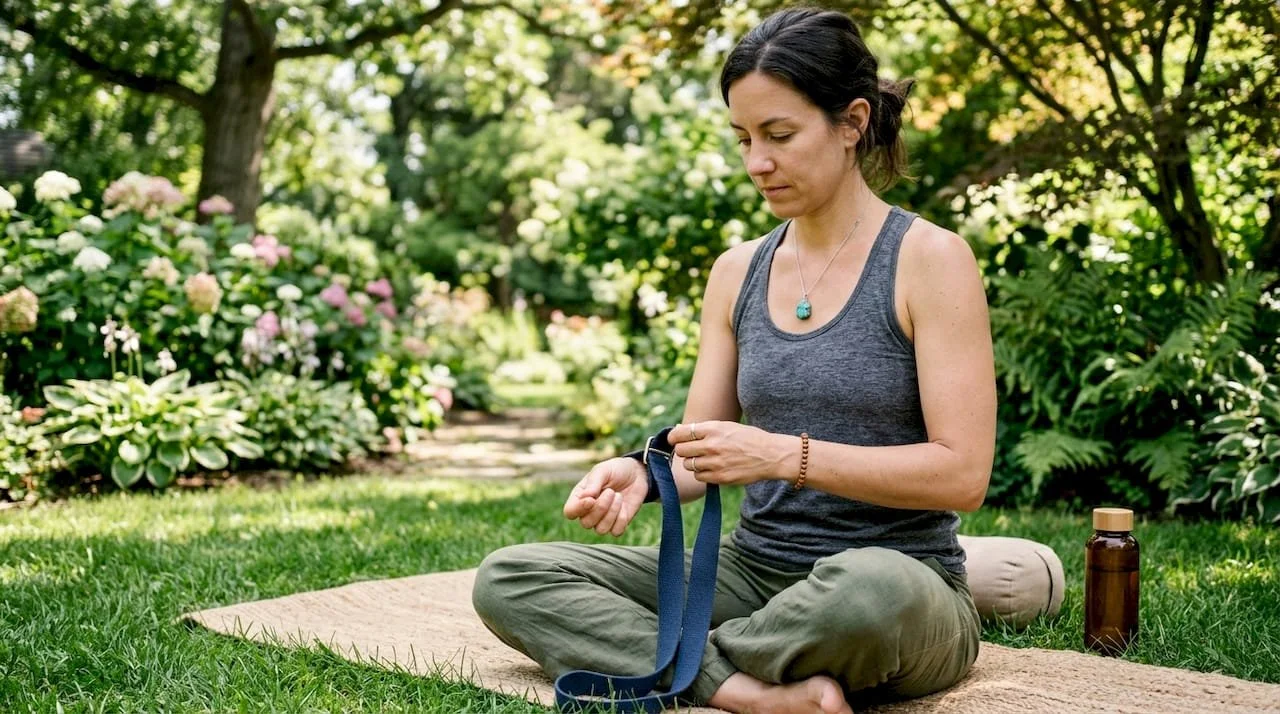
Props are standard in gentle flow, not optional extras. Blocks, bolsters, blankets, and chairs support alignment and reduce strain. Using a block under your hand in a standing pose is not a sign of weakness. It is correct technique that protects your joints and makes the pose sustainable.
Pro Tip: Set up your props before class begins. Having a block, blanket, and strap within reach means you never have to rush or strain to grab support mid-pose.
How can beginners start practicing gentle flow yoga safely?
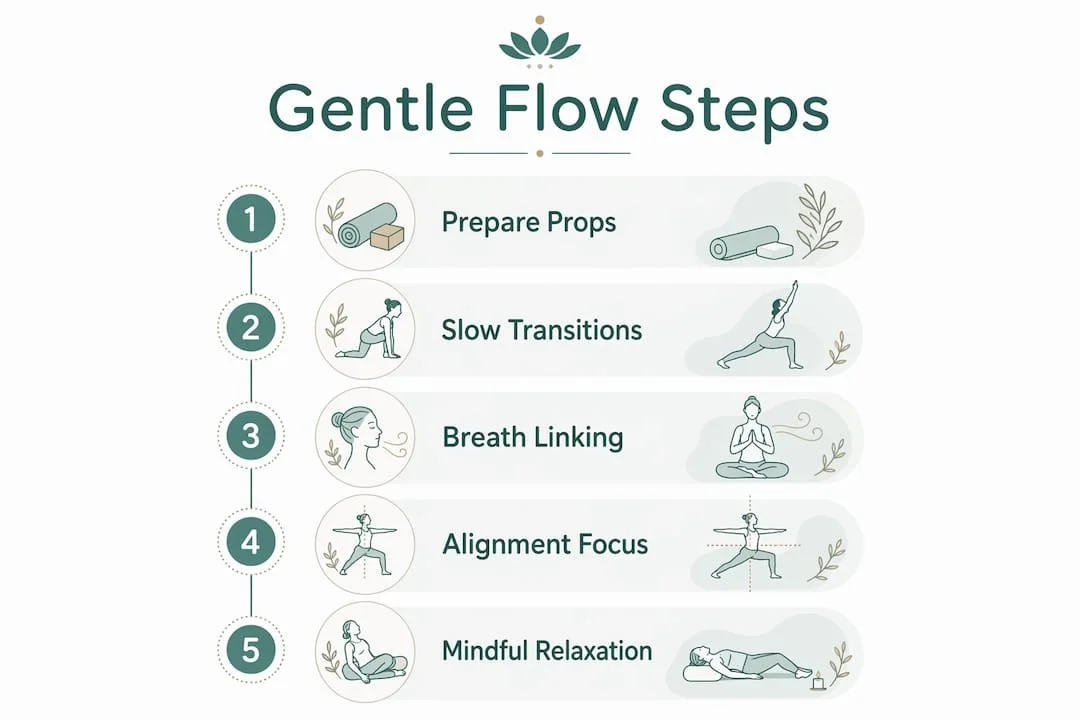
Starting gently is not just advice for beginners. It is the correct approach for anyone new to this style. Follow these steps to build a safe and effective practice:
Start with breath awareness. Before attempting any pose, spend two to three minutes simply observing your inhale and exhale. Breath is the foundation of gentle flow. Every movement follows it.
Gather your props. A yoga mat, one or two blocks, a blanket, and a strap cover most needs. Props prevent strain and allow you to hold poses longer without compensating with poor alignment.
Begin with 20-minute sessions. Three sessions per week at 20 minutes builds consistency without overwhelming the body. Increase duration as comfort grows.
Sync movement to breath. Inhale as you open or extend. Exhale as you fold or release. This pairing is what makes gentle flow distinct from simple stretching.
Resist the urge to rush. The biggest mental barrier for most beginners is slowing down. Habitual rushing undermines the practice's core benefit. Staying slow is the work.
Seek qualified instruction. A live or video-guided class with an experienced teacher accelerates learning and prevents common alignment mistakes. Amritayogawellness offers beginner-friendly yoga guidance that supports safe, gradual progress.
One misconception worth addressing directly: gentle yoga does not produce results slowly. Slower movement fosters deeper release and safer joint work than faster styles. Practitioners often notice meaningful changes in tension and mood within two to three weeks of consistent practice.
Pro Tip: After each session, write one sentence about how your body feels. This simple habit builds body awareness faster than any pose sequence.
Key Takeaways
Gentle flow yoga is the most accessible entry point to yoga for adults seeking stress relief, flexibility, and mindfulness, because its slow, breath-led structure supports the nervous system directly.
| Point | Details |
|---|---|
| Core definition | Gentle flow links slow, deliberate poses to controlled breathing for low-intensity movement. |
| Primary benefit | It stimulates the parasympathetic nervous system and lowers cortisol, reducing chronic tension. |
| Session length | Standard classes run 45–60 minutes; home sessions work well at 20–45 minutes. |
| Props are required | Blocks, bolsters, and blankets support alignment and make poses sustainable for all bodies. |
| Beginner strategy | Start with 20-minute sessions three times per week and prioritize breath over pose perfection. |
What I have learned from watching beginners find their pace
The most consistent pattern I see in people new to gentle flow yoga is the same every time. They arrive expecting to feel like they are not doing enough. The pace feels almost uncomfortably slow at first. They want to push further, hold longer, move faster. That impulse is understandable. Most of us have been conditioned to equate effort with value.
What shifts things is the moment a practitioner stops fighting the pace and actually follows the breath. The body softens in a way that no amount of pushing produces. I have watched people with years of chronic shoulder tension release it in a single session, not because they worked harder, but because they finally stopped bracing.
The gentle yoga accessibility conversation matters here too. This practice is not a consolation prize for people who cannot do "real" yoga. It is a distinct discipline with its own demands, primarily the demand to stay present and resist the habit of rushing. That is harder than it sounds, and it is where the real growth happens.
My honest advice: give it six sessions before you judge it. The first two sessions feel unfamiliar. By session four, most people notice something has shifted in how they carry tension through the day. By session six, they stop asking whether it is working.
— Juiced
Gentle yoga classes at Amritayogawellness in Philadelphia
Amritayogawellness offers gentle flow yoga classes designed for adults at every starting point, from complete beginners to those returning after injury or a long break from movement.
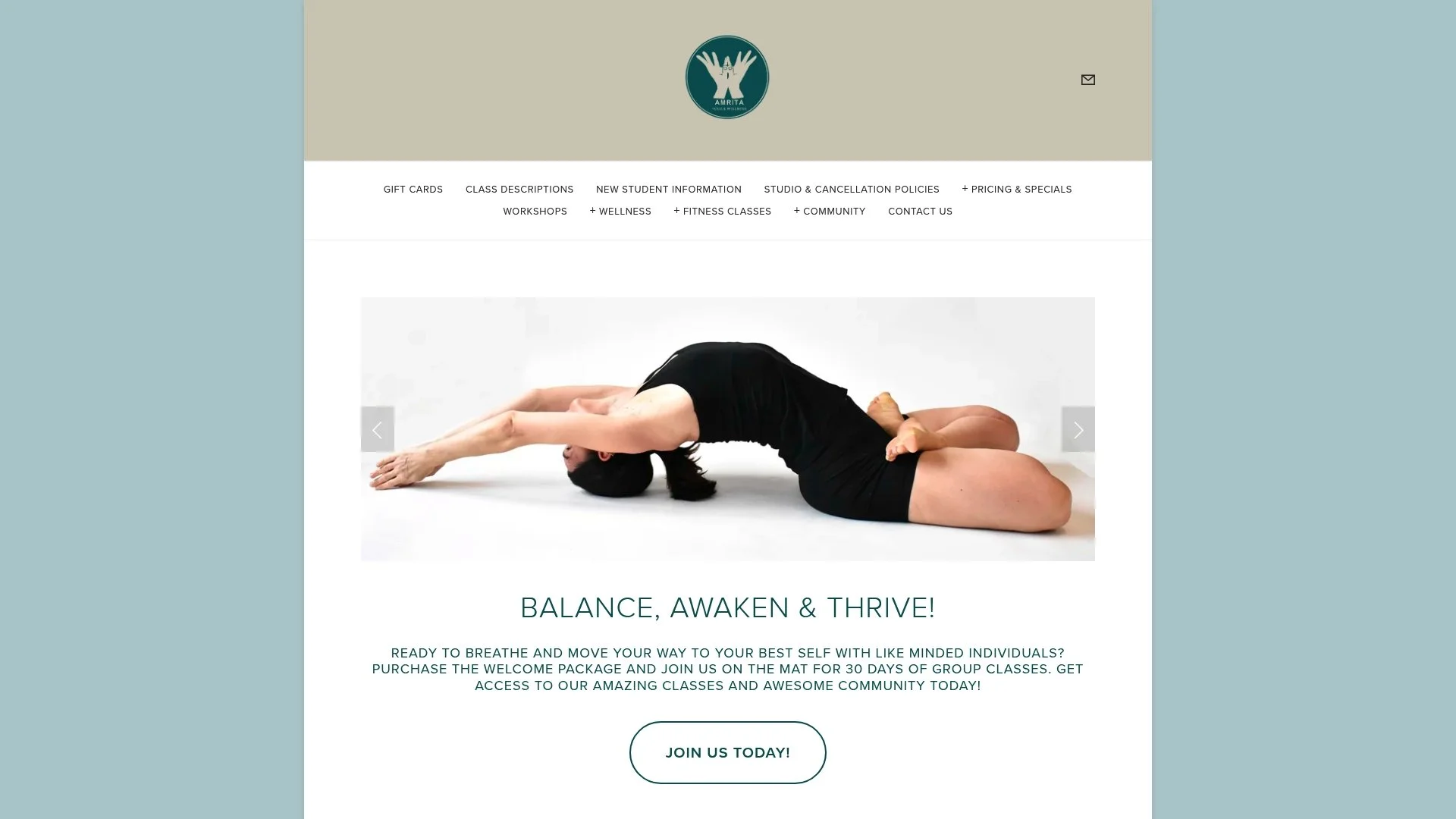
The studio's instructors in Philadelphia guide practitioners through breath-led sequences with clear alignment cues and prop support built into every class. Beyond yoga, Amritayogawellness connects physical practice to broader wellness through offerings like tarot readings for those exploring mindfulness and self-reflection from multiple angles. Whether you are stepping onto a mat for the first time or looking to deepen a low-impact practice, the studio provides structure, community, and expert guidance to support your progress.
FAQ
What is gentle flow yoga in simple terms?
Gentle flow yoga is a slow, low-intensity yoga style that links poses together using breath. It prioritizes joint mobility, stress relief, and body awareness over strength or flexibility demands.
Is gentle flow yoga good for beginners?
Gentle flow yoga is one of the best starting points for beginners because it requires no prior fitness or flexibility. Its slow pace and use of props make it safe and approachable from the first session.
How long is a gentle flow yoga class?
A standard gentle flow class runs 45–60 minutes. Home practices often run 20–45 minutes and still deliver meaningful benefits with consistent practice.
Is gentle flow yoga meditative?
Gentle flow yoga is meditative in practice. The combination of breath-linked movement and slow transitions trains focused attention, which produces many of the same calming effects as seated meditation.
How is gentle flow yoga different from restorative yoga?
Gentle flow involves active, continuous movement through poses. Restorative yoga uses passive, fully supported holds lasting 5–20 minutes. Both reduce stress, but through different mechanisms and levels of physical engagement.