Bikram Yoga for Weight Loss: What Really Works

TL;DR:
Bikram yoga can support fat loss when practiced consistently three times weekly over six months, mainly through metabolic and caloric expenditure. Immediate weight loss after sessions is mostly water, while fat reduction requires weeks of steady practice and proper hydration. Combining Bikram with strength training and proper recovery enhances long-term body composition improvements.
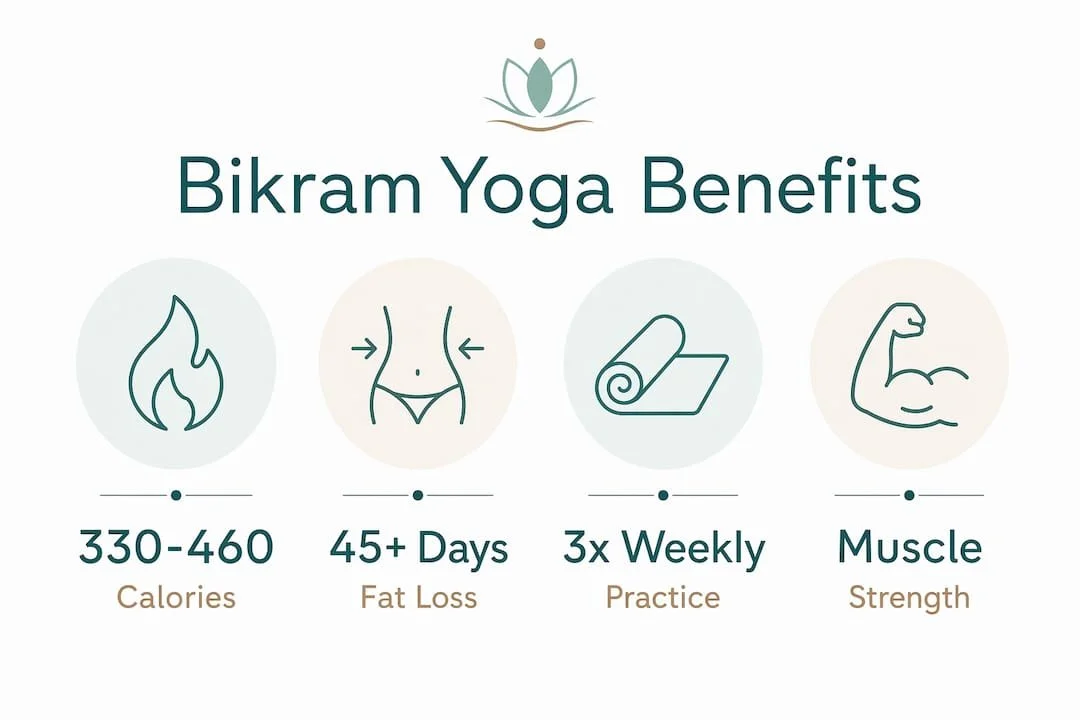
Bikram yoga for weight loss is defined as a structured practice using 26 postures and two breathing exercises performed in a room heated to 104–105°F, producing measurable fat reduction over consistent months of practice. A single 90-minute session burns 330 to 460 calories depending on body size and effort level. That caloric output, combined with the metabolic stress of sustained heat, makes Bikram one of the more demanding yoga formats available. A six-month longitudinal study found an average body fat reduction of 6.07% in adult women practicing three sessions per week. The results are real, but they require patience, consistency, and a clear understanding of how the practice actually works.
How Bikram yoga sessions are structured for weight loss
The standard Bikram protocol consists of 26 postures and two pranayama breathing exercises, performed in sequence over 90 minutes at 40°C (104°F) with 40% humidity. Every class follows the exact same order, which means your body learns the sequence but never fully adapts to the heat. That predictability is a feature, not a flaw. It lets you track progress precisely and push harder within a familiar framework.

The heat does specific work in this context. It raises your heart rate earlier in the session, increases blood flow to muscles, and forces your body to regulate temperature while simultaneously holding challenging postures. Heat acts as a catalyst for cardiovascular activation, but the real metabolic work comes from sustained muscular effort across all 26 poses. Think of the heat as a multiplier, not the engine.
What the 26 postures actually demand
The sequence moves through standing series poses like Half Moon, Eagle, and Standing Bow, then transitions to a floor series including Camel, Rabbit, and Spine Twist. Each posture targets specific muscle groups while demanding balance, core engagement, and breath control simultaneously. That multi-system demand is why the calorie burn is higher than most people expect from a yoga class.
Standing series: Builds leg strength, balance, and cardiovascular endurance
Floor series: Targets spinal flexibility, core compression, and hip mobility
Breathing exercises: Kapalbhati and standing deep breathing regulate oxygen delivery and activate the diaphragm
Heat exposure: Elevates heart rate to aerobic training zones without high-impact movement
Pro Tip: Arrive 10 minutes early to acclimate to the room temperature before class starts. Your first few postures will feel significantly more controlled, and you will sweat more efficiently throughout the session.
For adults new to Bikram hot yoga, the first two weeks feel overwhelming. That is normal. Your body is adapting to heat stress, new movement patterns, and a longer session duration than most fitness classes.
Is the weight you lose after class actually fat?
Immediate weight loss after a Bikram session is mostly water weight lost through sweating, not fat. You can lose one to three pounds of fluid in a single class. That number reappears on the scale as soon as you rehydrate properly.
Fat loss works through a completely different mechanism. Your body breaks down stored triglycerides through lipolysis, and the byproducts are exhaled as carbon dioxide and excreted as water over time. That process accelerates with consistent caloric deficit and sustained aerobic effort, both of which Bikram yoga supports across weeks and months of practice.
Effective weight loss through Bikram yoga depends heavily on consistency, allowing metabolic and body composition adaptations to accumulate over months, not days.
Tracking your weight daily after Bikram classes will mislead you. The scale fluctuates by two to four pounds based on hydration alone. A more accurate approach is to measure body fat percentage every four to six weeks and track how your clothes fit. The six-month study showing a 6.07% body fat reduction used body composition measurements, not scale weight, for exactly this reason.
Pro Tip: Weigh yourself once per week, on the same morning, after using the bathroom and before eating. This removes daily hydration noise and gives you a cleaner trend line over time.
How often should you practice to see real results?
Research supports three sessions per week over six months as the protocol that produces measurable body fat reduction. That frequency gives your body enough stimulus to adapt metabolically while leaving room for recovery between sessions.
Weeks 1–2: Practice two sessions per week. Focus on finishing the class and staying in the room. Heat adaptation is the primary goal.
Weeks 3–6: Add a third weekly session. Your heart rate will stabilize faster in the heat, and you will hold postures longer.
Months 2–4: Maintain three sessions per week. Body composition changes become visible around the 45-day mark based on study data.
Months 4–6: Consider adding a fourth session if recovery feels complete. Watch for signs of overtraining: persistent fatigue, disrupted sleep, or declining performance in class.
Rest days are not optional. Muscle repair and metabolic stabilization happen during recovery, not during the session itself. Skipping rest days in pursuit of faster results typically produces the opposite outcome: inflammation, fatigue, and reduced performance.
Combining Bikram yoga with strength training increases resting metabolic rate beyond what yoga alone achieves. Two strength sessions per week, focused on compound movements like squats, deadlifts, and rows, build lean muscle mass. More muscle means more calories burned at rest, which compounds the fat loss effect of your Bikram practice.
Pro Tip: Schedule strength training on non-Bikram days or at least six hours apart from a Bikram session. Combining both in the same window without adequate recovery blunts the benefit of each.
For more on staying safe while pushing your limits in the heat, the hot yoga safety guide from Amritayogawellness covers the key precautions every practitioner needs.
Hydration and nutrition strategies that support Bikram weight loss
Proper hydration before, during, and after Bikram yoga is not optional. It directly affects muscle recovery, metabolic function, and your ability to complete the session safely. Dehydration reduces performance, increases injury risk, and slows the metabolic adaptations that drive fat loss.
| Timing | Hydration target | Key nutrients |
|---|---|---|
| 2 hours before class | 16–20 oz of water | Sodium, potassium |
| During class | Small sips only, 4–8 oz total | Electrolytes if sweating heavily |
| Within 30 minutes after | 20–24 oz of water or electrolyte drink | Magnesium, sodium, potassium |
| 2 hours after class | Continue hydrating to clear urine | Whole food minerals preferred |
Electrolytes matter as much as water volume. Sweating heavily depletes sodium, potassium, and magnesium. Replacing only water without electrolytes can cause cramping, dizziness, and hyponatremia in extreme cases. A simple electrolyte drink or a meal with mineral-rich foods like leafy greens, bananas, and nuts handles this effectively.
Pre-class nutrition affects your energy and your fat-burning capacity. Eating a large meal within 90 minutes of class typically causes nausea in the heat. A light snack of 150–200 calories, such as a banana with almond butter or a small bowl of oatmeal, provides fuel without digestive stress. Post-class, prioritize protein within 45 minutes to support muscle repair. Twenty to thirty grams of protein from eggs, Greek yogurt, or a quality protein shake works well.
Avoid alcohol the night before class. It accelerates dehydration and impairs heat tolerance.
Limit caffeine within two hours of class if you are heat-sensitive.
Eat whole foods rather than processed snacks around your practice days to support metabolic health.
How consistent practice transforms body composition over time
The body composition changes from regular Bikram practice extend well beyond the scale. The six-month study documented a 6.07% average body fat reduction in adult women, with measurable changes appearing as early as 45 days into the program. That timeline holds across different age groups, which means the practice is not limited to younger adults.
| Benefit | Timeframe | Mechanism |
|---|---|---|
| Initial fat loss | 45–60 days | Caloric deficit plus heat-driven metabolic activation |
| Improved cardiovascular endurance | 30–45 days | Sustained aerobic effort in heated environment |
| Increased flexibility | 2–4 weeks | Repeated deep stretching in warm muscles |
| Resting metabolic rate increase | 2–3 months | Lean muscle gain from sustained posture work |
| Sustained body fat reduction | 6 months | Cumulative metabolic adaptation and caloric output |
The afterburn effect, formally called excess post-exercise oxygen consumption (EPOC), extends calorie burning for one to three hours after a Bikram session ends. That means the 330–460 calories burned during class underestimates the total metabolic cost of each session. The heated environment amplifies this effect by keeping core temperature elevated longer than a standard workout.
The heat-induced sweating in Bikram yoga primarily facilitates cardiovascular activation and detoxification, but sustained muscular effort across the 26-posture sequence is what drives lasting fat loss and body composition change.
The heated yoga and stress reduction connection also matters for weight loss. Chronic stress elevates cortisol, which promotes fat storage, particularly around the abdomen. Regular Bikram practice lowers perceived stress and supports better sleep, both of which create a more favorable hormonal environment for fat loss.
Key Takeaways
Bikram yoga produces measurable, sustained fat loss when practiced three times per week over at least six months, supported by proper hydration, recovery, and complementary strength training.
| Point | Details |
|---|---|
| Caloric burn per session | Each 90-minute class burns 330–460 calories, depending on body size and effort. |
| Fat loss vs. water weight | Post-class scale drops reflect fluid loss; true fat reduction takes consistent weeks of practice. |
| Optimal frequency | Three sessions per week over six months produces an average 6.07% body fat reduction. |
| Recovery is non-negotiable | Rest days allow muscle repair and metabolic stabilization that drive long-term results. |
| Strength training amplifies results | Adding two resistance sessions per week raises resting metabolic rate beyond yoga alone. |
What I've learned about Bikram yoga and lasting weight loss
Most people walk into their first Bikram class expecting to sweat off weight. They walk out five pounds lighter on the scale and think it worked. Then they rehydrate, the number climbs back, and they feel cheated. That misunderstanding kills more Bikram weight loss attempts than any physical limitation.
The practice works, but it works slowly and cumulatively. I have seen adults who committed to three sessions per week for six months achieve body composition changes that years of gym work had not produced. The difference was not the heat alone. It was the combination of consistent aerobic effort, the discipline the sequence demands, and the recovery habits they built around it.
What most articles skip is the mental recalibration required. You have to stop measuring success by the post-class scale and start measuring it by how you move, how you recover, and how your clothes fit after 60 days. The 45-day mark in the longitudinal research is real. That is roughly when practitioners start noticing visible changes, and it is also when most people quit if they have been chasing the wrong metric.
Hydration and rest are the two factors I see people undervalue most. Skipping electrolytes after class, training six days a week without rest, and eating too little to fuel recovery all stall results. Bikram is demanding. Treat it like the serious training it is, and it delivers.
Wellness resources at Amrita Yoga & Wellness in Philadelphia
Amritayogawellness offers hot yoga classes, wellness workshops, and complementary services designed for adults who want more than a workout.

If you are building a weight loss practice around Bikram yoga, pairing it with intentional recovery and reflection makes a real difference. Amritayogawellness provides tarot reading sessions as part of its broader wellness offerings, giving practitioners a space to reconnect with their goals and mental state between physically demanding weeks. The studio also offers class scheduling, beginner-friendly descriptions, and a community built around inclusive, evidence-informed practice. Visit Amrita Yoga & Wellness to find classes and services that fit where you are right now.
FAQ
How many calories does a Bikram yoga session burn?
A 90-minute Bikram session burns approximately 330 to 460 calories, depending on body weight and effort level. The heated environment and sustained posture work together to keep caloric output higher than most yoga formats.
How long does it take to lose weight with Bikram yoga?
Measurable body fat reduction typically appears around 45 days into a consistent three-sessions-per-week program. A six-month study documented an average 6.07% body fat reduction in adult women following this protocol.
Is the weight lost after a Bikram class real fat loss?
No. The immediate post-class weight drop is water weight lost through sweating and returns with rehydration. Actual fat loss accumulates over weeks of consistent practice and caloric deficit.
Does combining Bikram yoga with strength training improve results?
Yes. Adding strength training to a Bikram practice increases resting metabolic rate by building lean muscle, which amplifies fat loss beyond what yoga alone produces. Two resistance sessions per week on non-Bikram days works well for most adults.
How important is hydration for Bikram yoga weight loss?
Hydration is critical. Replacing fluids and electrolytes before, during, and after class supports muscle recovery, metabolic function, and safe heat tolerance. Dehydration reduces performance and slows the adaptations that drive fat loss.
— Juiced