Anti Gravity Yoga Benefits: What You Need to Know
TL;DR:
Anti-gravity yoga uses a silk hammock to enhance strength, flexibility, and mental well-being through inversions and suspension. It offers significant benefits like spinal decompression, increased core and upper body strength, and greater flexibility than traditional yoga. The practice also reduces cortisol levels and improves mood, though beginners should consider safety precautions and proper instruction.
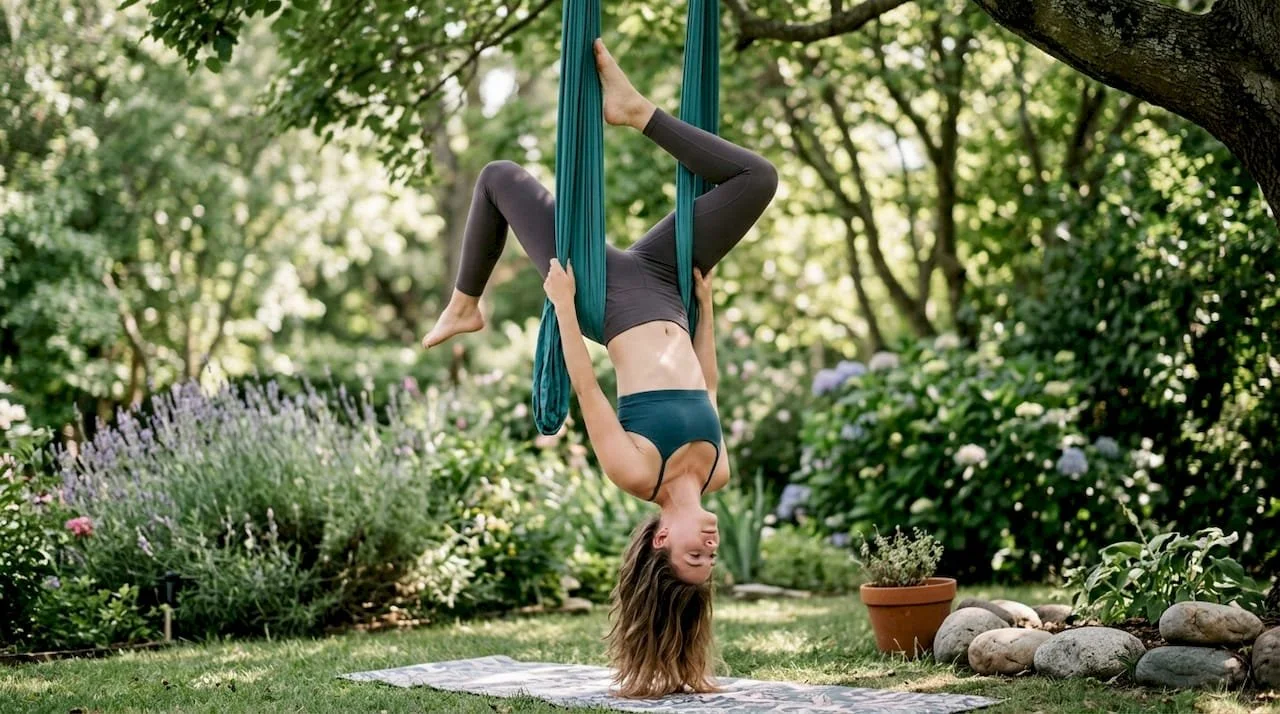
Anti-gravity yoga is defined as a practice that uses a silk suspension hammock to support the body through inversions, strength poses, and flexibility work that traditional floor yoga cannot replicate. The anti gravity yoga benefits span from measurable spinal decompression to reduced cortisol levels, making it one of the most physically and mentally complete fitness methods available to adults today. Aerial yoga, the widely recognized industry term for this practice, combines classical yoga alignment with aerial acrobatics and physical therapy principles. Research from 2024–2026 confirms quantifiable gains in strength, flexibility, and psychological well-being that go well beyond what most people expect from a hammock class.
What physical benefits does anti-gravity yoga offer?
Aerial yoga delivers physical results that traditional yoga simply cannot match, largely because suspension changes how the body loads and moves. When you hang in a hammock, gravity works with you rather than against you, allowing deeper stretches and more honest alignment.
Spinal decompression and joint relief
Spinal decompression is the most cited physical benefit of aerial yoga, and the biomechanics behind it are straightforward. Intradiscal pressure in the lumbar spine decreases by 35–50% during full inversion, reducing paraspinal muscle activity and promoting spinal relaxation. That pressure drop mimics the disc height recovery your spine experiences during sleep, but it happens actively and consciously during practice. The result is reduced muscle tension along the spine and a noticeable sense of length after class.
One detail worth knowing: acute spinal decompression during inversion does not produce permanent disc changes. The benefits come from mechanical unloading and muscle relaxation, not structural remodeling. That distinction matters if you have a disc condition and are weighing aerial yoga against other therapies.
Strength and core activation
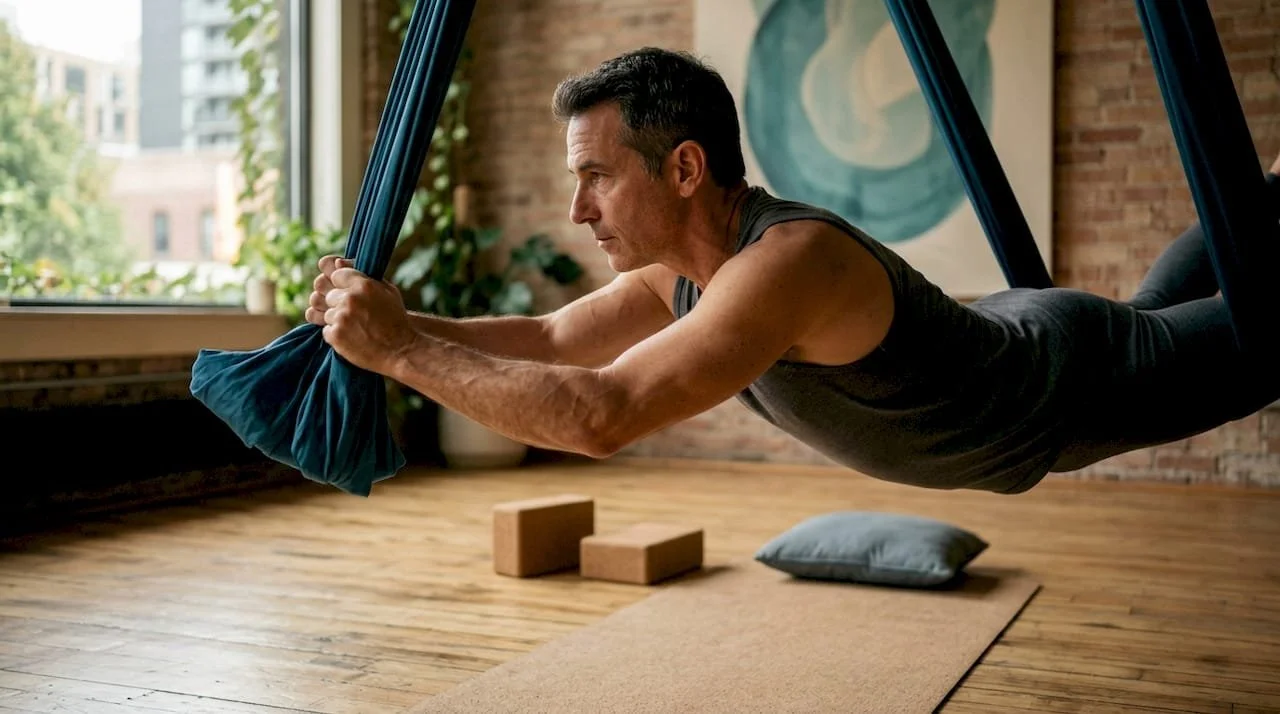
Aerial yoga activates 30% more core muscles than traditional floor yoga because the hammock creates constant instability. Your stabilizing muscles fire continuously to keep you balanced in the air. That sustained activation builds functional strength faster than static poses on a mat.
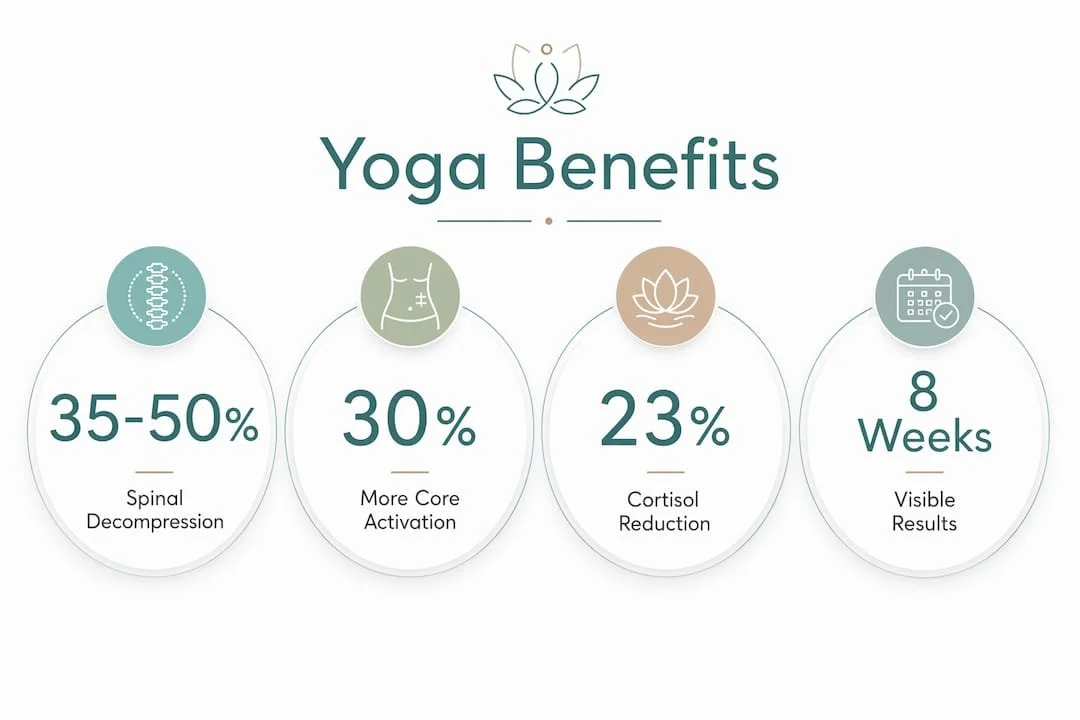
Upper body gains are equally significant. Practitioners who train twice weekly for 8 weeks improve upper body strength by 27% and spinal flexibility by 35% compared to traditional yoga participants. Eight weeks is a short window for that level of change. It reflects how much harder the body works when it cannot rely on the floor for support.
Flexibility gains
Flexibility improvements in aerial yoga are concentrated in the hamstrings and spine, two areas where traditional yoga often plateaus. Biomechanics research shows a 41% average increase in hamstring flexibility within 3 months for aerial yoga practitioners, nearly double the rate seen in traditional yoga. The hammock allows practitioners to release into a stretch without the muscular bracing that floor poses often trigger. That passive release is why gains accumulate faster.
Pro Tip: If hamstring tightness has been your plateau in traditional yoga, try a supported aerial forward fold in the hammock at the start of class. The suspension removes the need to "hold yourself up," so the hamstrings can actually let go.
| Benefit | What the research shows |
|---|---|
| Spinal decompression | Lumbar intradiscal pressure drops 35–50% during full inversion |
| Core strength | 30% more core muscle activation than floor yoga |
| Upper body strength | 27% improvement after 8 weeks of twice-weekly practice |
| Hamstring flexibility | 41% average increase within 3 months |
| Spinal flexibility | 35% improvement over 8 weeks compared to traditional yoga |
How does aerial yoga improve mental well-being?
The mental health case for aerial yoga is grounded in neuroscience, not just anecdote. Suspension and inversion activate the parasympathetic nervous system, which is the branch responsible for rest, digestion, and recovery. That activation is the physiological reason practitioners consistently report feeling calmer after class.
Cortisol reduction and anxiety relief
Aerial yoga reduces cortisol levels by 23% more than traditional yoga. Lower cortisol means less physiological stress, which translates directly into reduced anxiety symptoms over time. For adults carrying chronic stress, that difference between aerial and traditional yoga is clinically meaningful, not just a wellness talking point.
The psychological benefits of aerial yoga also include improved mood, reduced anxiety, and increased self-efficacy. Self-efficacy, the belief that you can handle challenges, grows when you repeatedly do something that initially felt impossible. Hanging upside down in a hammock qualifies.
Inversion, blood flow, and mood
Supported inversions temporarily increase cerebral blood flow, improving alertness, reducing mental fatigue, and elevating mood shortly after practice. The effect is brief but consistent. Practitioners often describe the post-class mental clarity as sharper than what they get from a standard yoga session.
"Aerial yoga combines physical challenge with playful movement, creating unique mood-boosting effects rarely matched by traditional yoga. The novelty of the environment, the vestibular stimulation, and the sense of accomplishment after each class work together to produce psychological benefits that go beyond simple relaxation."
The vestibular system, which governs balance and spatial orientation, gets a genuine workout during aerial practice. That stimulation is linked to improved mood regulation and reduced anxiety in adults. The playfulness built into aerial yoga is not incidental. It is part of what makes the practice neurologically effective.
Realistic expectations
Aerial yoga is not a clinical treatment for anxiety or depression. The stress relief and mood benefits are real and measurable, but they work best as part of a broader wellness routine. Consistency matters more than intensity. Two sessions per week produces better cumulative results than occasional drop-in classes.
Are there any risks to consider before trying aerial yoga?
Aerial yoga is safe for most healthy adults, but a few specific conditions require attention before your first class. Knowing these upfront lets you modify intelligently rather than push through discomfort.
Vestibular sensitivity. Beginners may experience mild motion sickness from vestibular stimulation during inversions. This is common and usually resolves within the first two or three sessions as the nervous system adapts.
Inner-ear conditions. Tell your instructor before class if you have a history of vertigo, labyrinthitis, or Meniere's disease. Instructors can modify or skip inversion sequences entirely.
Certain back conditions. Spinal decompression benefits most people with general back tension, but specific conditions like severe osteoporosis, spinal stenosis, or recent disc surgery require medical clearance first.
Acrobatic progressions. Practitioners should build foundational skills before attempting advanced acrobatic moves. Skipping the basics to try advanced sequences is the most common source of aerial yoga injuries.
Blood pressure concerns. Full inversions temporarily shift blood pressure. Adults with uncontrolled hypertension or glaucoma should consult a physician before practicing.
Pro Tip: Book an introductory or beginner-specific aerial yoga class for your first session. Instructors in these classes spend more time on hammock adjustment and body positioning, which dramatically reduces the learning curve and the risk of strain.
Who benefits most from aerial yoga, and how do you start?
Aerial yoga suits a wide range of adults, but certain groups see the fastest and most meaningful results.
Adults with chronic back tension benefit from the spinal decompression and paraspinal muscle relaxation that inversions provide. Many report reduced discomfort after just a few sessions.
People with joint sensitivity find aerial yoga gentler than weight-bearing exercise because the hammock absorbs a significant portion of body load during standing and balancing poses.
Stress-heavy professionals benefit from the cortisol reduction and parasympathetic activation that aerial yoga produces more reliably than many other fitness formats.
Traditional yoga practitioners who have plateaued in flexibility or strength often find aerial yoga breaks through those ceilings within weeks, particularly in hamstring and spinal mobility.
Adults who find conventional gym workouts boring respond well to aerial yoga's novelty. The playful, exploratory quality of the practice keeps attendance consistent, which is the real driver of long-term results.
For starting out, two sessions per week is the research-backed frequency for meaningful strength and flexibility gains. Pair aerial yoga with a complementary practice like pilates or barre to build the foundational core strength that makes aerial poses more accessible. Working with a certified instructor for the first 4–6 sessions is the fastest path to correct hammock setup, safe inversion technique, and confident progression.
You can read more about aerial yoga strengthening moves to understand which poses build the most functional strength before your first class. For a direct comparison of what aerial yoga offers that traditional yoga does not, the breakdown of aerial vs. traditional yoga is worth reading before you book.
Key Takeaways
Aerial yoga produces measurable physical and mental benefits that traditional yoga cannot replicate, primarily because suspension and inversion change how the body loads, stretches, and recovers.
| Point | Details |
|---|---|
| Spinal decompression | Lumbar pressure drops 35–50% during inversion, relieving back tension without permanent structural change. |
| Strength and core gains | Twice-weekly practice for 8 weeks improves upper body strength by 27% and activates 30% more core muscles than floor yoga. |
| Flexibility acceleration | Hamstring flexibility increases by 41% within 3 months, nearly double the rate of traditional yoga. |
| Cortisol and stress reduction | Aerial yoga lowers cortisol 23% more than traditional yoga, producing measurable anxiety relief over time. |
| Safety and progression | Build foundational skills first, disclose health conditions to your instructor, and start with beginner-specific classes. |
What I've learned from watching people discover aerial yoga
The most consistent thing I observe when adults try aerial yoga for the first time is the gap between what they expect and what they actually feel. Most people expect a circus trick. What they get is a genuine physical challenge that exposes every weakness in their core and shoulder stability within the first ten minutes.
The mental shift is equally predictable. The first session is usually dominated by sensory discomfort: the unfamiliar pressure of the hammock, the mild disorientation of being partially inverted, the effort of trusting fabric to hold your weight. By the third or fourth session, that discomfort converts into confidence. That conversion is where the real psychological benefit lives. It is not just stress relief. It is the experience of doing something your nervous system initially flagged as dangerous and coming out fine.
The adults who get the most out of aerial yoga are not the most flexible or the most athletic. They are the most consistent. Two sessions a week, a willingness to stay in beginner classes longer than feels necessary, and the patience to let the hammock teach you rather than forcing poses. The stress relief benefits of aerial yoga compound over weeks, not days. The practitioners who understand that come back. The ones who expect instant results usually do not.
The blend of playfulness and discipline in aerial yoga is genuinely rare in fitness. Most workouts are either serious and grinding or light and ineffective. Aerial yoga manages to be both fun and physically demanding in the same session. That combination is why retention rates in aerial yoga classes tend to outpace most other group fitness formats.
— Juiced
Aerial yoga classes at Amritayogawellness
Amritayogawellness offers aerial yoga classes in Philadelphia designed for adults at every level, from first-timers to experienced practitioners looking to deepen their practice. Certified instructors guide each session with attention to safe hammock setup, proper inversion technique, and modifications for individual needs.
Whether your goal is back pain relief, stress reduction, or a strength and flexibility challenge that actually holds your attention, the Amritayogawellness class schedule has options that fit. The studio also offers pilates, barre, and massage therapy for adults who want to build a well-rounded wellness routine around their aerial practice. Booking an introductory class is the most direct way to experience what the research describes.
FAQ
What are the main anti gravity yoga benefits for beginners?
Beginners typically experience spinal decompression, reduced back tension, and improved core activation within the first few sessions. Cortisol reduction and mood improvement become more pronounced with consistent twice-weekly practice over 8–12 weeks.
How does aerial yoga reduce stress better than traditional yoga?
Aerial yoga reduces cortisol by 23% more than traditional yoga by combining parasympathetic nervous system activation through inversion with the mood-boosting effects of novel, playful movement. The vestibular stimulation from suspension adds a neurological dimension that floor yoga does not produce.
Is aerial yoga safe for people with back pain?
Aerial yoga is generally safe for adults with general back tension because inversion reduces lumbar intradiscal pressure by 35–50%. Adults with specific conditions like severe osteoporosis, spinal stenosis, or recent disc surgery should get medical clearance before practicing.
How quickly do you see results from aerial yoga?
Research shows measurable strength and flexibility improvements within 8 weeks of twice-weekly practice. Hamstring flexibility gains of up to 41% appear within 3 months. Stress and mood benefits often appear sooner, sometimes after just a few sessions.
Who should avoid aerial yoga?
Adults with uncontrolled hypertension, glaucoma, severe vertigo, or recent spinal surgery should consult a physician before practicing. Beginners with inner-ear sensitivity should inform their instructor so inversions can be modified or skipped.