7 Basic Yoga Poses for Beginners to Start Your Practice
More than 36 million American adults practice yoga, yet many beginners feel unsure about where to start. For those in Philadelphia craving a simple way to boost both physical and mental well-being, accessible poses in a supportive community setting can make all the difference. This guide spotlights foundational movements taught at Amrita Yoga & Wellness, designed to help new practitioners build confidence, balance, and a deeper sense of calm.
Table of Contents
Quick Summary
| Takeaway | Explanation |
|---|---|
| 1. Master Mountain Pose for Alignment | This foundational pose enhances body awareness, balance, and posture through thoughtful weight distribution and relaxation. |
| 2. Utilize Downward Facing Dog for Strength | This powerful pose stretches and strengthens multiple muscle groups while relieving spinal tension and improving circulation. |
| 3. Incorporate Cat-Cow for Spinal Flexibility | This dynamic sequence promotes spinal mobility and prepares your body for deeper yoga stretches through rhythmic movement. |
| 4. Use Child’s Pose for Restoration | A restorative posture that calms the nervous system, encourages introspection, and provides a moment of stillness in your practice. |
| 5. Practice Tree Pose to Enhance Focus | This balancing pose improves body awareness and mental concentration, helping you stay centered and calm during challenges. |
1. Mountain Pose: Building Strong Posture
Mountain Pose, known in yoga as Tadasana, is the foundational standing posture that serves as a blueprint for all other yoga positions. This seemingly simple stance is your gateway to understanding body alignment, balance, and inner strength.
At its core, Mountain Pose is about creating a strong, stable foundation that connects you with the ground beneath your feet. By practicing this pose, you learn to distribute your weight evenly and develop body awareness that translates into better overall posture. Mountain pose helps improve balance and stability, particularly beneficial for individuals seeking to enhance their physical resilience.
To practice Mountain Pose, stand with your feet together or hip width apart, ground down through all four corners of your feet, and engage your leg muscles. Imagine a line of energy running from the center of your feet up through your spine, lifting your chest and drawing your shoulders back. The key is to remain relaxed yet alert, creating a sense of strength without tension.
This pose offers multiple benefits beyond physical alignment. It teaches mindfulness, helps reduce stress, and provides a moment of centering in your practice. By focusing on your breath and body position, you create a moving meditation that connects mind and body.
Pro tip: Practice Mountain Pose near a mirror to check your alignment and imagine a gentle string pulling you upward from the crown of your head, helping you stand tall and confident.
2. Downward Facing Dog: Stretch and Strengthen
Downward Facing Dog is a powerhouse yoga pose that transforms how your body moves and feels. Known in Sanskrit as Adho Mukha Svanasana, this iconic pose is more than just a stretch it is a full body reset that strengthens, lengthens, and energizes.
In this inverted V shape, you create a powerful alignment that stretches multiple muscle groups simultaneously. Your arms and shoulders bear weight, building upper body strength, while your hamstrings and calves receive a deep, therapeutic stretch. The pose naturally decompresses the spine, offering relief from daily tension and promoting better posture.
To practice Downward Facing Dog, start on your hands and knees. Spread your fingers wide, tuck your toes, and lift your hips toward the ceiling. Imagine creating an inverted V shape with your body. Press your hands firmly into the ground, engage your core, and focus on creating length through your spine and legs. The goal is not perfect execution but mindful movement.
This versatile pose offers remarkable benefits beyond physical stretching. It increases blood flow to the brain, helping to calm the mind and reduce stress. By inverting your body, you shift perspective both literally and metaphorically, creating space for mental clarity and renewed energy.
Pro tip: If your hamstrings are tight, slightly bend your knees to maintain proper spine alignment and prevent overstraining.
3. Cat-Cow Pose: Warming Up the Spine
Cat-Cow is a dynamic and fluid yoga sequence that acts like a gentle massage for your entire spine. This gentle movement combines two complementary poses designed to increase flexibility, release tension, and prepare your body for deeper practice.
Marjaryasana-Bitilasana helps improve spinal mobilitythrough a rhythmic dance between arching and rounding your back. As you move between these positions, you create a wave-like motion that lubricates the joints, awakens the core muscles, and promotes better body awareness. The pose encourages you to sync breath with movement, turning a simple stretch into a meditative experience.
To practice Cat-Cow, start on your hands and knees with your wrists directly under your shoulders and knees under your hips. As you inhale, drop your belly toward the mat, lift your chin and chest, and gaze upward creating the Cow position. On the exhale, round your spine toward the ceiling, tuck your chin to your chest, and draw your belly in creating the Cat position.
This pose offers multiple benefits beyond physical stretching. It helps reduce back stiffness, stimulates the kidneys and adrenal glands, and can provide relief from menstrual discomfort. By promoting spinal flexibility, Cat-Cow prepares your body for more advanced yoga poses and helps counteract the effects of prolonged sitting.
Pro tip: Move slowly and breathe deeply, allowing each movement to feel like a gentle wave flowing through your spine.
4. Child's Pose: Restoring Calm and Focus
Child's Pose, known in Sanskrit as Balasana, is the sanctuary of yoga poses where rest meets gentle healing. Think of it as your personal reset button a moment of surrender where your body can completely let go and breathe.
Child's Pose triggers the parasympathetic nervous system, helping to reduce stress and calm your entire nervous system. By folding forward with your forehead resting on the mat, you create a physical posture that symbolizes emotional release and inner peace. This simple yet profound pose invites you to turn inward, disconnect from external stimuli, and reconnect with your breath.
To practice Child's Pose, kneel on your mat with your big toes touching and knees spread wide. Sit back toward your heels and extend your arms forward or alongside your body. Allow your forehead to rest on the mat and breathe deeply. The position gently stretches your lower back, hips, and shoulders while providing a sense of safety and comfort.
This restorative pose is more than just a physical stretch. It teaches patience, acceptance, and the power of stillness. In our fast-paced world, Child's Pose reminds us that sometimes the most powerful action is to pause and simply breathe. Whether used as a resting position between more challenging poses or as a standalone moment of calm, Balasana offers a profound opportunity for mental and physical restoration.
Pro tip: If your forehead doesn't comfortably reach the mat, use a yoga block or folded blanket for support, allowing you to fully relax into the pose.
5. Warrior I Pose: Boosting Confidence and Strength
Warrior I Pose is more than just a physical position it is a powerful statement of inner strength and resilience. Named after the mythical warrior Virabhadra, this pose transforms your yoga practice into a journey of personal empowerment.
Warrior I cultivates full body strength and mental focus, engaging multiple muscle groups while challenging your balance and concentration. By stepping one foot forward into a deep lunge, squaring your hips, and lifting your arms overhead, you create a posture that embodies courage and determination. The pose works your quadriceps, stretches your hip flexors, and opens your chest, allowing energy to flow through your entire body.
To practice Warrior I, start in a standing position and step one foot back, turning it slightly outward. Bend your front knee directly over your ankle, keeping your back leg straight and grounded. Raise your arms overhead, palms facing each other, and gaze up toward your hands. The key is to maintain a strong, steady breath while holding the pose, allowing your inner warrior to emerge.
Beyond physical benefits, Warrior I teaches valuable life lessons about standing your ground, building confidence, and maintaining balance during challenging moments. It reminds you that strength is not just about muscular power, but about mental resilience and the ability to remain centered under pressure.
Pro tip: If you struggle with balance, practice near a wall or use a chair for support, gradually building strength and stability in the pose.
6. Tree Pose: Improving Balance and Focus
Tree Pose, or Vrikshasana, is the yogic equivalent of finding your center in a world of constant motion. This elegant balancing posture teaches you how to stand strong, steady, and serene even when life tries to knock you off balance.
Tree Pose enhances body awareness and mindfulnessby challenging your physical and mental equilibrium. As you root one foot into the ground and lift the other, you engage multiple muscle groups while training your mind to maintain focus. The pose requires you to find a steady gaze point, known as a drishti, which helps calm your mind and improve concentration.
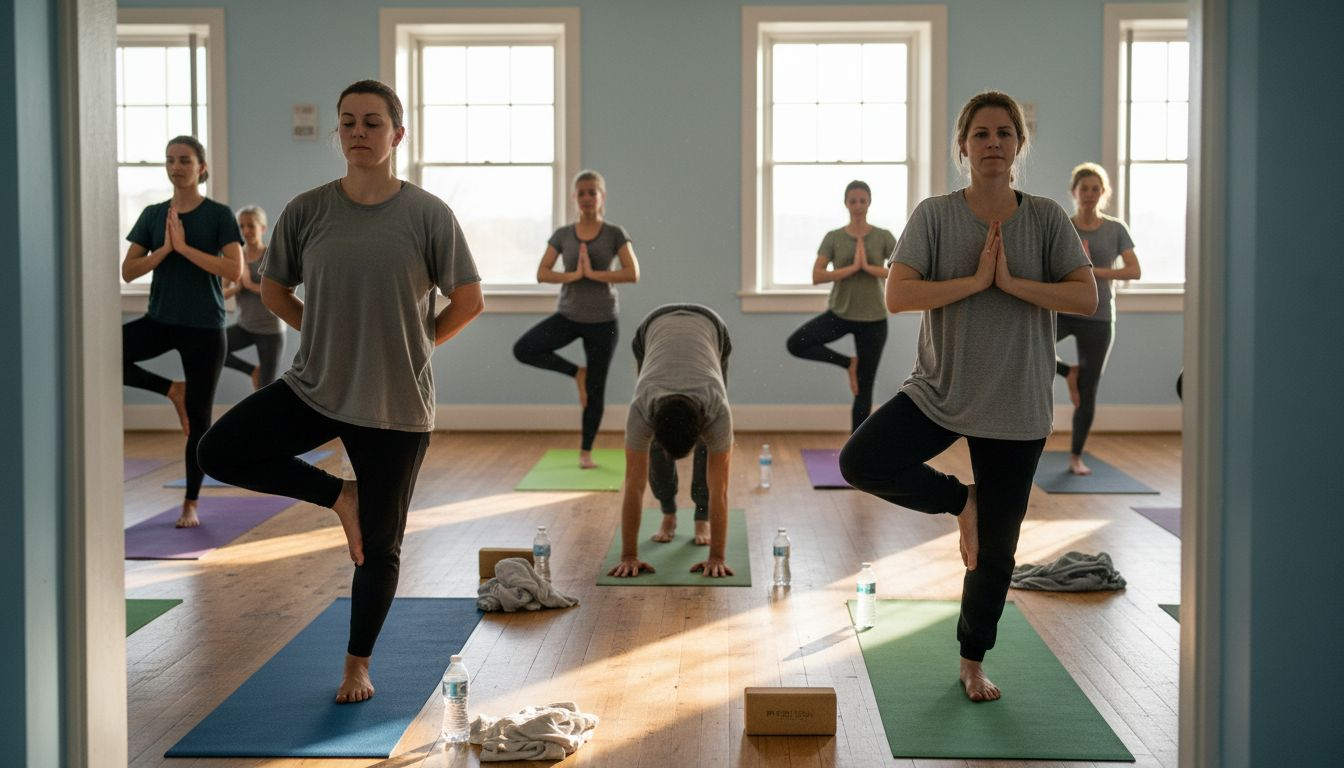
To practice Tree Pose, start by standing tall with your feet together. Slowly shift your weight onto one leg, then gently place the sole of your other foot either on your inner ankle, calf, or upper thigh depending on your balance level. Avoid pressing directly on the knee joint. Bring your hands together at your heart center or raise them overhead like branches reaching toward the sky.
Beyond physical benefits, Tree Pose is a powerful metaphor for personal growth. Just as a tree remains rooted during strong winds, you learn to stay centered and calm amid life's challenges. The pose teaches patience, builds confidence, and reminds you that balance is not about perfection but about continuous adjustment and mindful presence.
Pro tip: If balance feels challenging, practice near a wall or chair for support, and remember that wobbling is part of the learning process.
7. Seated Forward Bend: Increasing Flexibility
Seated Forward Bend, known in Sanskrit as Paschimottanasana, is the ultimate yoga pose for releasing tension and discovering your body's hidden flexibility. It is a transformative posture that invites you to literally fold into yourself, creating space and calm.
This pose deeply stretches the entire back of the bodywhile promoting profound mental and physical relaxation. As you extend forward, you engage your hamstrings, lower back, and spine, creating a gentle yet powerful stretch that encourages both physical and emotional surrender. The pose is less about touching your toes and more about the journey of letting go.
To practice Seated Forward Bend, sit on the floor with your legs extended straight in front of you. Inhale and lengthen your spine, then exhale and hinge forward from your hips, reaching toward your feet. If you cannot reach your toes, simply rest your hands wherever they naturally fall on your legs. The key is maintaining a long spine and breathing deeply into the stretch.
Beyond physical benefits, this pose offers a moment of introspection and stillness. It teaches patience, helps calm the mind, and can improve digestion by gently massaging internal organs. Regular practice gradually increases flexibility while providing a sanctuary of quiet reflection.
Pro tip: Use a yoga strap or towel around your feet if you cannot reach them directly, allowing you to maintain proper alignment without straining.
Below is a comprehensive table summarizing the key points about various yoga poses as discussed in the article.
| Yoga Pose | Primary Benefits | Practice Guidelines |
|---|---|---|
| Mountain Pose (Tadasana) | Enhances posture, balance, and mindfulness. | Stand evenly on both feet, engage your muscles, and visualize being lifted upward for steady alignment. |
| Downward Facing Dog (Adho Mukha Svanasana) | Strengthens the entire body while providing a deep stretch to muscles. | Create an inverted V shape with your body, pressing into your hands and stretching your back and legs. |
| Cat-Cow Pose (Marjaryasana–Bitilasana) | Improves spinal flexibility and loosens tension, supports stress relief. | Alternate between arching and rounding the spine while synchronized with slow, deep breaths. |
| Child’s Pose (Balasana) | Promotes relaxation, stress reduction, and gentle spine and hip stretching. | Sit back on your heels, extend your arms, and rest your forehead on the mat to facilitate deep relaxation. |
| Warrior I Pose (Virabhadrasana I) | Builds physical strength and enhances concentration and confidence. | Step into a lunge position, raise your arms upward, and ensure a stable stance while maintaining balance. |
| Tree Pose (Vrikshasana) | Develops balance, focus, and a sense of grounding. | Balance on one leg, with the other foot resting on the inner leg (not the knee), and stretch your arms upwards. |
| Seated Forward Bend (Paschimottanasana) | Improves flexibility in the spine and hamstrings, fosters relaxation and introspection. | Sit with straight legs, hinge forward from your hips while keeping your back straight, and breathe deeply. |
This table encapsulates the descriptions, benefits, and practice steps for seven distinct yoga poses detailed in the article.
Start Your Yoga Journey with Confidence and Support
The article "7 Basic Yoga Poses for Beginners to Start Your Practice" highlights the importance of mastering foundational poses like Mountain Pose, Downward Facing Dog, and Warrior I to build strength, balance, and mindfulness. Many beginners face challenges such as maintaining proper alignment, improving flexibility, and developing mental focus. These pain points can make starting yoga feel overwhelming or discouraging without the right guidance.
At Amrita Yoga & Wellness, we understand these hurdles and offer beginner-friendly classes designed to help you overcome them with personalized support. Whether you want to deepen your practice through guided sessions or explore complementary wellness activities like barre, tai chi, or massage therapy, our community welcomes you to grow at your own pace.
Experience the power of consistent practice supported by expert instructors who focus on alignment, breathing, and mindfulness.
Discover how our offerings can transform your journey from tentative first steps to confident flow. Visit Amrita Yoga & Wellness today, explore class descriptions, and sign up for workshops and sessions that match your goals. Start building strength, flexibility, and inner peace now with a supportive community committed to your holistic well-being.
Frequently Asked Questions
What are the benefits of practicing Mountain Pose?
Mountain Pose helps improve balance and stability while enhancing body awareness. To experience these benefits, practice this pose regularly and focus on distributing your weight evenly for at least a few minutes daily.
How can I safely transition into Downward Facing Dog?
To safely transition into Downward Facing Dog, start on your hands and knees, then tuck your toes and lift your hips. Focus on creating an inverted V shape with your body and engage your core for at least 5–10 breaths to build strength and stability.
What should I do if I can't do Cat-Cow Pose perfectly?
If you can't perform Cat-Cow Pose perfectly, focus on moving gently between arching and rounding your back at your own pace. Aim to synchronize your breath with each movement, even if it means starting with a simpler version of the pose for better spinal mobility.
How can Child's Pose help reduce stress?
Child's Pose triggers the body's relaxation response by calming the nervous system. To harness its stress-reducing effects, enter the pose and focus on your breath for 3–5 minutes to promote a sense of calm and inner peace.
What tips can improve my practice of Warrior I Pose?
To improve your practice of Warrior I Pose, ensure your front knee is directly over your ankle and maintain a steady breath throughout. For extra stability, practice near a wall to help build your strength and confidence in this empowering pose.
How often should I practice Tree Pose to see improvements in balance?
Practice Tree Pose regularly, aiming for approximately 3–4 times per week to increase your balance and focus. Spend at least 30 seconds in the pose, gradually increasing your time as you feel more stable and centered.