

The Amrita Journal
Explore thoughtful stories, practical wellness guidance and inspiring ideas to support your movement, mindfulness and everyday wellbeing at Amrita.
Yoga Therapy: Personalized Healing for Mind and Body

Nearly half of American adults face ongoing physical or mental health challenges that impact daily life. If you live in Philadelphia and want a holistic approach to healing, yoga therapy offers more than just gentle stretching. This personalized method blends mindful movement, breathwork, and emotional support to enhance recovery, support long-term wellness, and empower you on your journey toward balance and resilience.
Table of Contents
Key Takeaways
| Point | Details |
|---|---|
| Yoga Therapy is Personalized | Unlike regular yoga classes, yoga therapy is tailored to individual health profiles and specific wellness goals. |
| Diverse Techniques for Healing | Yoga therapy employs various techniques, including asanas, pranayama, and meditation, to address both physical and emotional challenges. |
| Professional Guidance is Essential | It is important to work with a certified yoga therapist who has undergone extensive training to ensure safe and effective practice. |
| Ideal for Various Populations | Yoga therapy can benefit individuals facing chronic pain, emotional challenges, and significant life transitions, offering a holistic healing approach. |
Defining Yoga Therapy and Key Principles
Yoga therapy represents a deeply personalized healing approach that goes far beyond traditional exercise. At its core, yoga therapy applies targeted yogic principles to address specific mental, physical, and spiritual wellness goals for individuals.
Unlike generic fitness practices, yoga therapy is distinguished by its holistic, individualized methodology. Practitioners carefully assess each person's unique constitution, considering factors such as age, strength, occupation, medical history, and current health status. The goal is not merely symptom management, but comprehensive transformation that integrates physical movement, psychological support, and spiritual growth.
Key principles of yoga therapy include respecting individual differences and tailoring practices to meet specific needs. This might involve creating custom sequences of asanas (physical postures), pranayama (breathing techniques), meditation, chanting, or visualization exercises. Therapeutic yoga practices are intelligently designed to address everything from chronic pain management to stress reduction, emotional healing, and overall wellness optimization.
Pro tip: When exploring yoga therapy, seek a certified practitioner who takes time to understand your complete health profile and designs a practice specifically tailored to your individual needs.
Types of Yoga Therapy and Targeted Approaches
Yoga therapy encompasses a diverse range of specialized approaches designed to address specific health conditions and individual needs. Multiple therapeutic yoga styles target unique populations ranging from pregnancy-related anxiety to neurological disorders like Parkinson's disease, cognitive dysfunction in older adults, and chronic conditions such as diabetes and migraines.
Therapeutic approaches can be delivered through individual sessions or small group settings, utilizing various techniques tailored to each person's physical capabilities and health objectives. These methods might include traditional yoga postures, specialized breathing exercises, meditation, guided imagery, and targeted relaxation techniques. Personalized yoga interventions are carefully designed to provide holistic healing that addresses both physical symptoms and psychological well-being.
Some prominent types of yoga therapy include restorative yoga for stress management, adaptive yoga for individuals with mobility challenges, trauma-informed yoga for emotional healing, and medical yoga targeting specific health conditions. Each approach is meticulously crafted to create a safe, supportive environment that promotes healing, self-awareness, and transformation through mindful movement and breathwork.

Here is a summary showing how major types of yoga therapy target different needs:
| Type of Yoga Therapy | Target Population | Primary Goal |
|---|---|---|
| Restorative Yoga | Stressed individuals | Deep relaxation response |
| Adaptive Yoga | People with mobility challenges | Improve safe movement |
| Trauma-Informed Yoga | Emotional trauma survivors | Emotional stability |
| Medical Yoga | Chronic illness patients | Symptom management |
| Seniors Yoga | Older adults | Maintain flexibility |
Pro tip: When exploring yoga therapy, request a comprehensive initial consultation that thoroughly assesses your individual health history, current physical condition, and specific wellness goals.
How Yoga Therapy Differs from Regular Classes
Unlike traditional yoga classes that focus primarily on fitness and general wellness, yoga therapy represents a highly specialized and targeted approach to healing. Personalized yoga practices are designed with specific therapeutic goals in mind, addressing individual physical, mental, and emotional health challenges through carefully crafted interventions.
While standard yoga classes typically follow a generalized sequence of poses suitable for a broader group, yoga therapy involves a comprehensive assessment of an individual's unique health profile. A yoga therapist conducts an in-depth evaluation of your medical history, current physical condition, emotional state, and specific wellness objectives. This personalized approach allows for creating a customized practice that goes beyond generic fitness routines, focusing instead on targeted healing and rehabilitation.
Key differences between yoga therapy and regular yoga classes include the level of personalization, therapeutic intent, and professional guidance. In a yoga therapy session, the practitioner acts more like a healthcare professional, adapting techniques to address specific conditions such as chronic pain, anxiety, post-injury recovery, or neurological disorders. The sequences are meticulously designed to support healing, improve functional movement, and promote holistic well-being, rather than simply providing a workout or general stress relief.
Compare the unique focus of yoga therapy sessions versus regular yoga classes:
| Aspect | Yoga Therapy | Regular Yoga Class |
|---|---|---|
| Personalization | Highly customized | Generalized sequence |
| Assessment | Comprehensive intake | Basic fitness screening |
| Therapeutic Intent | Targeted healing | General wellness/fitness |
| Professional Role | Therapist as guide | Instructor as teacher |
Pro tip: Always discuss your specific health concerns and medical history with a yoga therapist before beginning a personalized practice to ensure the most effective and safe therapeutic approach.
Common Techniques and Real-World Benefits
Yoga therapy employs a sophisticated array of therapeutic techniques targeting holistic wellness, integrating physical postures, specialized breathing exercises, meditation, guided imagery, and targeted relaxation methods. Each technique is carefully selected and customized to address an individual's specific health challenges, ensuring a personalized approach to healing and wellness.
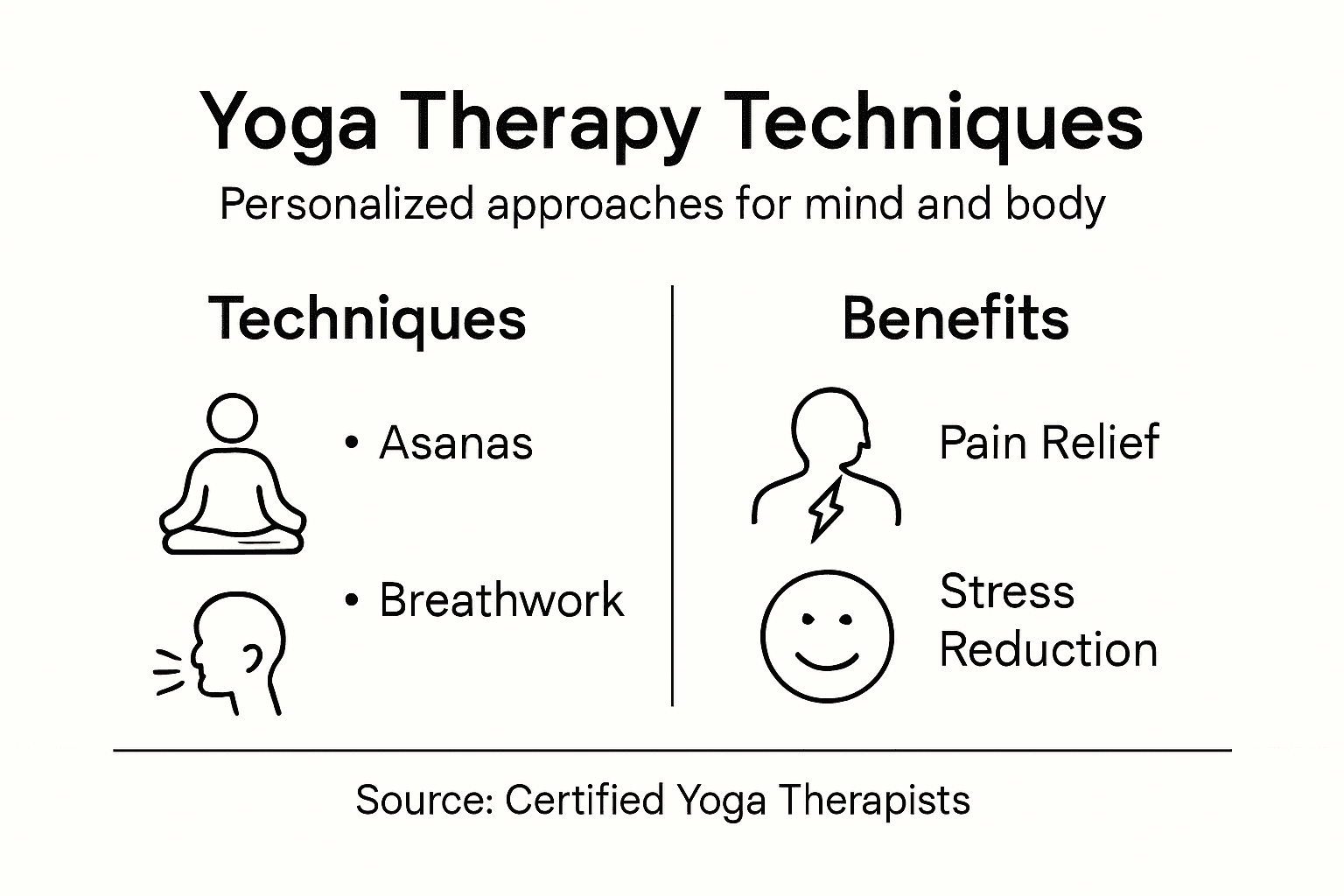
The core techniques utilized in yoga therapy include precise physical postures (asanas) designed to improve flexibility, strength, and body awareness, alongside specialized breathing practices (pranayama) that help regulate the nervous system and emotional responses. Meditation and mindfulness techniques are strategically incorporated to enhance cognitive function, reduce stress, and promote emotional balance. These practices work synergistically to create a comprehensive healing experience that goes beyond traditional exercise or mental health interventions.
Long-term yoga practice produces measurable neural benefits, demonstrating significant improvements in autonomic regulation, emotional resilience, and overall physiological functioning. Research indicates that consistent yoga therapy can positively impact hormonal balance, cognitive performance, and emotional reactivity, offering a powerful approach to managing chronic conditions, reducing stress, and supporting comprehensive mind-body healing.
Pro tip: Keep a detailed journal documenting your yoga therapy experience, tracking physical sensations, emotional shifts, and progress to help your practitioner fine-tune your personalized healing approach.
Who Can Benefit and When to Seek Care
Yoga therapy offers comprehensive healing across diverse populations, providing targeted support for individuals facing various physical, mental, and emotional challenges. This holistic approach is particularly beneficial for people managing chronic conditions, experiencing significant life transitions, or seeking alternative methods to support their overall wellness and healing journey.
Specific populations that can significantly benefit from yoga therapy include individuals struggling with chronic pain, mental health disorders, autoimmune conditions, digestive issues, cancer recovery, heart disease, and those experiencing high levels of stress. University students and professionals dealing with anxiety and emotional burnout may also find remarkable stress reduction through specialized yoga interventions, which provide structured techniques for emotional regulation and psychological resilience.
Critical indicators that suggest it might be time to explore yoga therapy include persistent physical discomfort, recurring stress-related symptoms, difficulty managing emotional challenges, limited mobility, post-injury recovery needs, and a desire for a more integrative approach to health that addresses mind-body connections. Veterans, seniors, and individuals navigating major life transitions can particularly benefit from the personalized, compassionate approach of yoga therapy, which emphasizes individual healing potential and holistic well-being.
Pro tip: Consult with a healthcare professional and a certified yoga therapist to develop a comprehensive, personalized approach that complements your existing medical treatment and addresses your unique health objectives.
Risks, Costs, and Certification Essentials
Yoga therapy is a specialized field with critical professional standards, requiring comprehensive training and certification to ensure safe and effective practice. Potential clients should understand the rigorous qualifications needed to become a legitimate yoga therapist, which involve extensive education and clinical experience beyond traditional yoga instructor training.
Certification programs typically demand substantial time and financial investment, with accredited programs requiring a minimum of 800 training hours, including supervised clinical experience and comprehensive examinations. Costs can range from $5,000 to $15,000, depending on the program's depth and institutional affiliation. Importantly, yoga therapy is considered a complementary approach and should not be viewed as a replacement for licensed medical or psychological treatment.
Potential risks in yoga therapy include potential physical injury from improper technique, inappropriate adaptations for individual health conditions, and unrealistic expectations about healing outcomes. Clients should always disclose complete medical history, seek practitioners with verifiable credentials, and maintain open communication with both their yoga therapist and primary healthcare providers. Ethical practitioners will clearly communicate the scope of their practice and refer clients to medical professionals when necessary.
Pro tip: Before committing to a yoga therapy program or practitioner, verify their professional credentials, ask about their specific training, and request references from previous clients.
Experience Personalized Healing with Yoga Therapy at Amrita Yoga & Wellness
If you are seeking a holistic approach to manage chronic pain, reduce stress, or enhance emotional balance yoga therapy could be the solution you need. This specialized practice focuses on customizing sequences of asanas breathing techniques and mindful meditation tailored to your unique health profile. At Amrita Yoga & Wellness in Philadelphia we understand the importance of addressing individual wellness goals through compassionate expert guidance.

Discover how our dedicated therapists create personalized practices that support your physical mental and spiritual well-being. Start your healing journey now to experience sustained relaxation improved mobility and emotional resilience. Visit Amrita Yoga & Wellness to learn about our offerings and schedule a consultation. Empower your transformation today by joining our community and exploring yoga classes and workshops designed to elevate your health and spirit.
Frequently Asked Questions
What is yoga therapy?
Yoga therapy is a personalized healing approach that utilizes targeted yogic principles to address specific mental, physical, and spiritual wellness goals for individuals, focusing on holistic transformation rather than just symptom management.
How does yoga therapy differ from traditional yoga classes?
Yoga therapy is highly personalized with a focus on specific therapeutic goals, while traditional yoga classes typically follow a general sequence of poses without individualized assessments. Yoga therapy considers a participant's unique health profile to tailor the practice accordingly.
Who can benefit from yoga therapy?
Various individuals can benefit from yoga therapy, especially those facing chronic pain, mental health disorders, or significant life transitions. It is also valuable for people seeking alternative methods for managing stress or improving overall wellness.
What should I look for in a yoga therapist?
When seeking a yoga therapist, look for certification from accredited programs, extensive training in therapeutic techniques, and a proven ability to create personalized practices based on your health history and wellness goals.