Hot Pilates Benefits: Your Complete Fitness Guide

TL;DR:
Hot Pilates is performed in a heated room to enhance flexibility, calorie burn, and mental focus. The heat increases muscle pliability, joint mobility, and cardiovascular effort without high-impact movements, providing unique physical and mental benefits. To practice safely, hydrate well, enter gradually, and cool down after each session, especially for beginners and those with joint concerns.
Hot Pilates is defined as a Pilates practice performed in a room heated to 35°C–40°C (95°F–104°F), and the benefit of hot pilates goes well beyond what you get from a standard mat class. The heat amplifies every core Pilates advantage: deeper flexibility, higher calorie burn, and sharper mental focus. Where traditional Pilates builds strength and control, the heated environment adds a cardiovascular layer and a meditative intensity that changes the entire experience. Amritayogawellness offers heated Pilates and yoga classes in Philadelphia for practitioners at every level, from first-timers to seasoned athletes.
What is the core benefit of hot pilates for your body?
Hot Pilates delivers a measurably higher physical output than room-temperature Pilates, and the science behind that difference is straightforward. Heat raises your core temperature, which triggers a cascade of physiological changes that make every movement more effective.
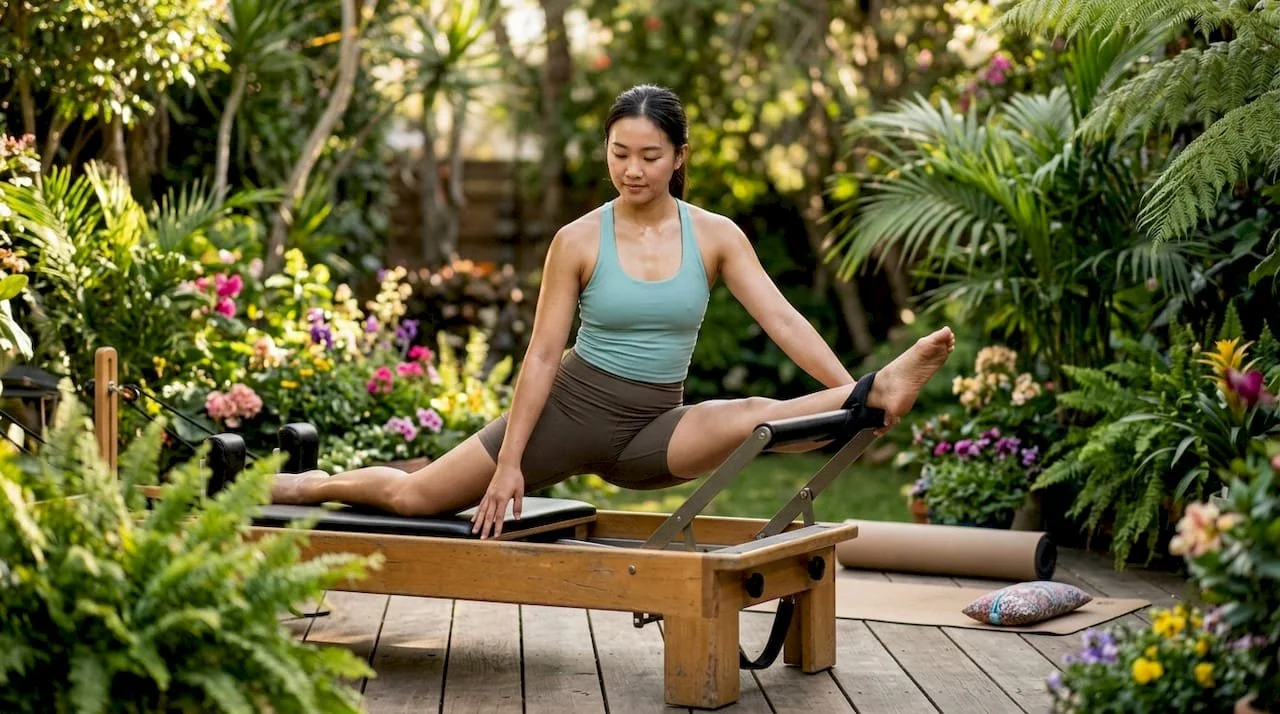
The most direct effect is on your muscles. Warmed muscle tissue stretches farther and with less resistance, which means you access deeper ranges of motion without forcing the movement. That depth is not just about flexibility. It reduces the micro-tearing risk that comes from cold muscles being pushed too hard.
Heat also acts on your joints. Increased synovial fluid production due to warmth allows smoother, less abrasive joint motion and deeper ranges of motion with less initial resistance. Warm joints are simply less prone to strain during Pilates movements. That is a meaningful advantage for anyone who has ever felt stiff at the start of a class.
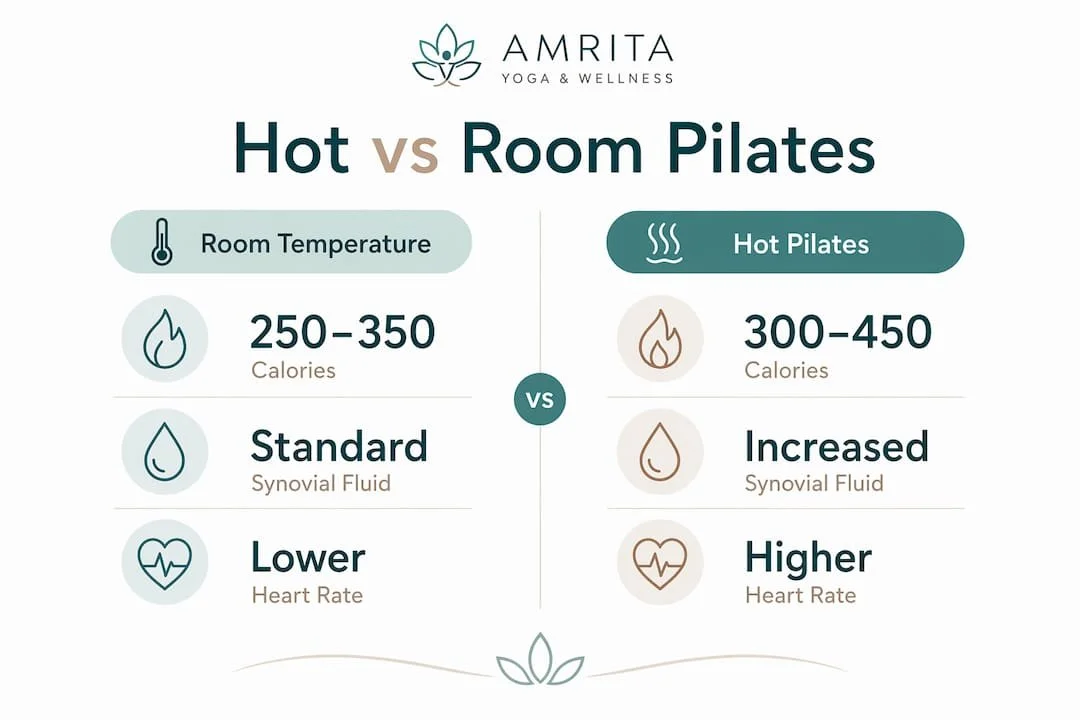
The cardiovascular effect is real and quantifiable. A 60-minute hot Pilates session typically burns 300–450 calories, compared to 250–350 calories for the same routine at room temperature, with heart rate increasing by 10–20 BPM. That 20–30% increase in calorie burn comes without adding high-impact movements. You get aerobic conditioning inside a low-impact framework, which is a rare combination.
Calorie burn and heart rate: hot vs. room temperature Pilates
| Metric | Room temperature Pilates | Hot Pilates |
|---|---|---|
| Calories burned (60 min) | 250–350 | 300–450 |
| Heart rate increase | Baseline | +10–20 BPM |
| Muscle pliability | Standard | Significantly higher |
| Joint mobility | Standard | Enhanced by synovial fluid |
Pro Tip: Arrive at class already warm. A 5-minute brisk walk before entering the studio primes your cardiovascular system and shortens the adjustment period in the heated room.
What are the mental and wellness benefits of hot Pilates?
The mental benefits of hot Pilates are as real as the physical ones, and they come from a specific mechanism. Exercising in heat forces you to control your breath deliberately. That deliberate breathwork shifts your nervous system into a parasympathetic state, which is the rest-and-digest mode associated with calm, recovery, and reduced anxiety.
Mental benefits derive from forced focus on breathing in heat, creating a meditative, moving mindfulness state that activates the parasympathetic nervous system. Students consistently report feeling physically challenged yet mentally reset after class. That combination is not common in most fitness formats.
The mental and emotional advantages practitioners report include:
Reduced stress and anxiety through breath-regulated nervous system activation
Improved mental clarity that carries into the hours after class
Heightened present-moment focus because the heat demands your full attention
Mood improvement linked to endorphin release during elevated heart rate exercise
A sense of accomplishment from completing a physically demanding session without high-impact strain
One misconception worth addressing directly: sweating in hot Pilates does not detox your body in any meaningful clinical sense. Sweat during hot Pilates primarily aids in cooling. The detox narrative is a marketing claim, not a physiological fact. The real value of the sweat response is thermoregulation, and that process does improve with regular practice.
Pro Tip: If your mind wanders during class, return your attention to your exhale. The breath is your anchor in a heated room, and refocusing on it resets both your form and your mental state.
Who benefits most from hot Pilates, and how do you practice it safely?
Hot Pilates works for a wide range of practitioners, but certain groups see outsized results. Beginners benefit because warmed muscles allow access to deeper stretches from the first class, reducing the frustration of feeling tight and limited. Athletes and runners use it specifically for joint health, core strengthening, and active recovery between higher-intensity training days.
The low-impact nature makes hot Pilates a strong option for fitness enthusiasts seeking both aerobic conditioning and muscle toning without the joint stress of running or jumping. That makes it particularly useful for cross-training programs where recovery and mobility matter as much as output.
Safe practice follows a clear set of steps:
Hydrate with electrolytes 1–2 hours before class. Plain water is not enough. Electrolytes prevent the dizziness and cramping that dehydration causes in a heated room.
Enter the room a few minutes early. Gradual acclimatization reduces the shock of the heat and lets your body adjust before the class intensity builds.
Pace your effort in the first few sessions. The heat makes you feel more capable than you may be. Respect that gap between perceived effort and actual muscle readiness.
Never push a stretch to its absolute limit. Heat masks muscle tension, which means you can overstretch without feeling the warning signals. Stop before the end range.
Cool down for 5–10 minutes after class. A post-class cooldown in a cooler, quiet space helps regulate body temperature and heart rate, reducing the risk of fainting or dizziness.
For detailed guidance on staying safe in heated environments, the hot yoga safety tips resource from Amritayogawellness covers medical recommendations and gradual adaptation protocols that apply directly to hot Pilates practice.
How does hot Pilates support joint health and injury prevention?
Joint health is one of the most underappreciated hot pilates advantages, and it works through two reinforcing mechanisms. First, heat widens blood vessels, improving blood flow to muscles and joints, making movements smoother and improving mobility, especially during colder months. Second, Pilates itself trains the deep stabilizing muscles around the knee, hip, and spine, which are the structures most responsible for preventing common overuse injuries.
The combination is more protective than either element alone. Warm joints move more freely, and stronger stabilizers keep those joints aligned under load. That is why athletes recovering from knee or hip issues often find hot Pilates more accessible than weight-based rehabilitation exercises.
The pilates core strength work central to every class also reduces the muscular imbalances that cause strain over time. A weak core forces other structures, like the lower back and hip flexors, to compensate. Hot Pilates addresses that root cause directly.
Hot Pilates vs. traditional Pilates: joint health comparison
| Joint health factor | Traditional Pilates | Hot Pilates |
|---|---|---|
| Synovial fluid production | Standard | Increased by heat |
| Muscle tension reduction | Moderate | Higher due to warmth |
| Range of motion access | Standard | Deeper with less resistance |
| Circulation to joints | Standard | Enhanced by vasodilation |
| Cold-weather stiffness relief | Limited | Significant |
Regular exercise in heated environments also facilitates heat acclimatization over time, reducing heart rate response during general activity and increasing sweat efficiency. Your body becomes better at managing heat, which translates to lower cardiovascular strain in everyday life. That adaptation is a long-term health benefit that most practitioners do not anticipate when they start.
Key Takeaways
Hot Pilates delivers measurably greater physical and mental benefits than room-temperature Pilates by combining heat-induced physiological changes with the core-strengthening and flexibility principles of traditional Pilates.
| Point | Details |
|---|---|
| Higher calorie burn | Hot Pilates burns 300–450 calories per 60-minute session, roughly 20–30% more than room temperature classes. |
| Enhanced joint mobility | Heat increases synovial fluid production, allowing deeper, safer ranges of motion with less strain. |
| Mental reset through breathwork | Forced breath control in heat activates the parasympathetic nervous system, reducing stress and improving clarity. |
| Safe practice requires hydration | Drink electrolytes 1–2 hours before class and cool down for 5–10 minutes after every session. |
| Injury prevention through core training | Strengthening deep stabilizers in a warm environment protects knees, hips, and the lower back from overuse injuries. |
Why hot Pilates is harder to master than it looks
Hot Pilates sits in a category of its own, and I say that having observed practitioners across many fitness formats. The format looks approachable because the movements are controlled and low-impact. That appearance is misleading. The heat adds an endurance layer that exposes weaknesses in breath control and pacing that a room-temperature class never would.
The practitioners who get the most from hot Pilates are the ones who stop treating the heat as something to fight through. When you work with the heat by slowing your breath, softening unnecessary tension, and pacing your effort, the session becomes genuinely restorative. When you fight it, you exhaust yourself before the real work begins.
The biggest mistake I see is skipping the cooldown. People feel fine immediately after class and walk straight out into the cold air. That temperature shift hits the cardiovascular system hard. Five to ten minutes in a temperate space after class is not optional. It is the part of the practice that keeps you coming back without setbacks.
Integrating hot Pilates gradually, starting with one session per week and building from there, produces far better results than jumping in daily. The benefits of Pilates compound over weeks, not days. Patience with the process is what separates practitioners who thrive from those who burn out.
— Juiced
Wellness at Amrita Yoga & Wellness in Philadelphia
Physical fitness and mental well-being reinforce each other, and Amritayogawellness builds its entire program around that connection. If hot Pilates has opened your interest in practices that work on both levels, the studio's offerings extend well beyond the mat.
Amritayogawellness offers tarot readings as a complementary mental wellness practice for members who want to deepen their self-awareness alongside their physical training. The studio's Philadelphia location brings together yoga, Pilates, barre, tai chi, and massage therapy under one roof, making it straightforward to build a complete wellness routine. Class schedules, sign-ups, and full service details are available at Amritayogawellness.
FAQ
What is the main benefit of hot pilates over regular Pilates?
Hot Pilates burns 20–30% more calories per session and allows deeper muscle and joint mobility due to the heated environment, while maintaining the same low-impact structure as traditional Pilates.
Is hot Pilates safe for beginners?
Yes. Warmed muscles allow beginners to access deeper stretches from the first class, but new practitioners should hydrate with electrolytes before class and pace their effort carefully in the first few sessions.
How hot is a hot Pilates class?
Industry-standard studio temperatures for hot Pilates range from 35°C to 40°C (95°F to 104°F), which is the range that optimizes connective tissue pliability and muscle fascia warming.
Does sweating in hot Pilates detox your body?
No. Sweat during hot Pilates primarily regulates body temperature, not detoxification. The real benefit of sweating is thermoregulation, and that process improves with regular practice.
How often should you do hot Pilates to see results?
Starting with one session per week and building gradually produces the most consistent results. The physical and mental benefits compound over weeks of regular practice, not after a single session.