The Amrita Journal
Explore thoughtful stories, practical wellness guidance and inspiring ideas to support your movement, mindfulness and everyday wellbeing at Amrita.
Benefits of Wall Pilates: A 2026 Guide for Adults
TL;DR:
Wall Pilates uses a wall for support and feedback to improve posture, core strength, and flexibility. It offers quick visible results within 3-4 weeks while being accessible and low-impact for busy adults. The practice also reduces stress and enhances body awareness through mindful movement and breath control.
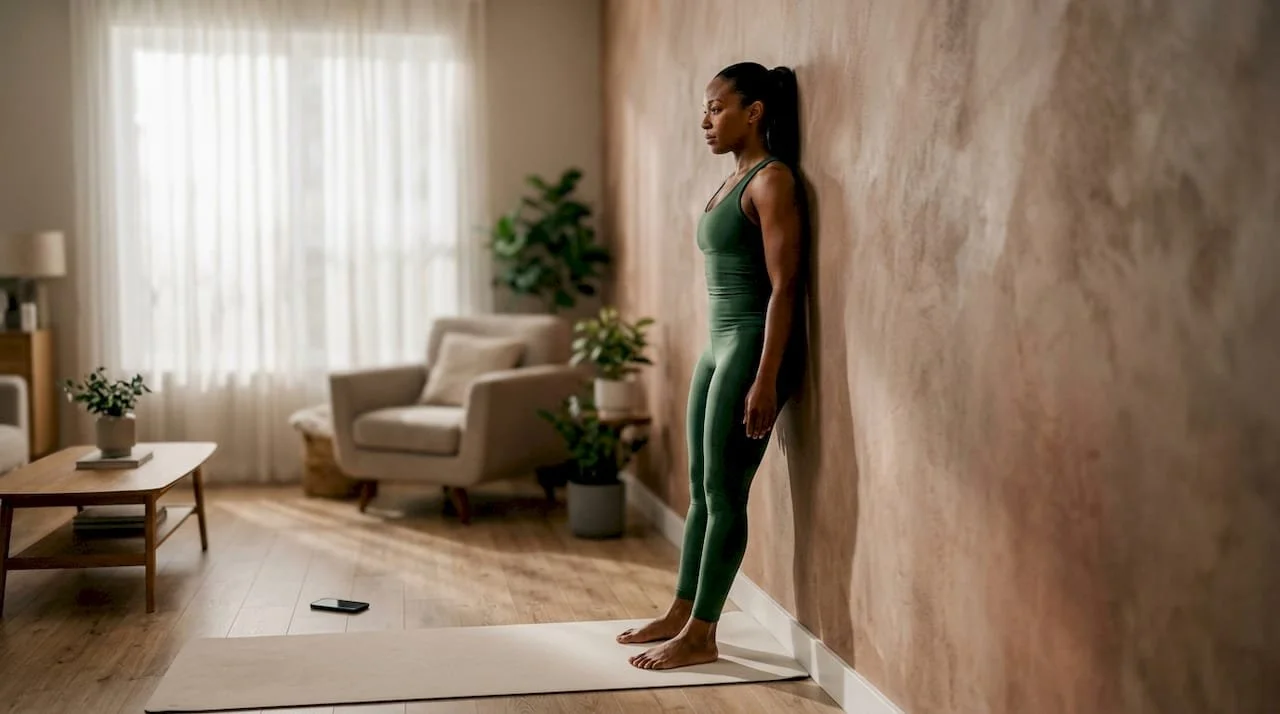
Wall Pilates is defined as a low-impact exercise method that uses a flat wall as a support and alignment tool to perform controlled Pilates movements. The benefits of wall pilates include improved posture, deeper core activation, greater flexibility, and reduced stress, all without gym equipment. Unlike reformer Pilates, which requires specialized machinery, or mat Pilates, which offers no external feedback, wall Pilates gives your body immediate tactile cues about spinal position and muscle engagement. Research from 2026 confirms that adults can see visible posture improvements in as little as 3–4 weeks of consistent practice. For busy adults seeking a low-impact, accessible workout, wall Pilates delivers results that are both measurable and sustainable.
1. How does wall Pilates improve posture and spinal alignment?
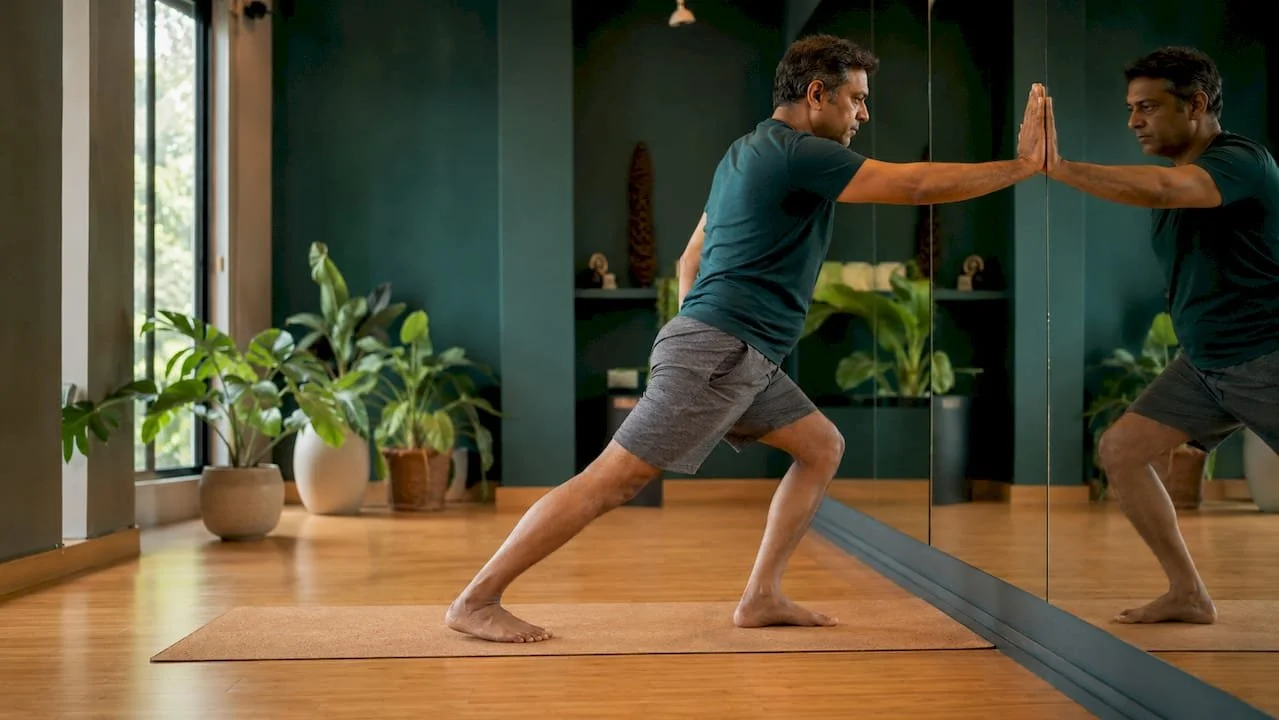
The wall acts as a biofeedback tool that provides immediate tactile feedback on spinal alignment, something mat-only Pilates simply cannot replicate. When your back, shoulders, or hips drift out of position, the wall tells you instantly. That real-time correction accelerates learning far faster than trying to self-monitor in a mirror.
Deep core muscles, specifically the transverse abdominis and multifidus, activate more reliably when the wall guides your positioning. These muscles wrap around the spine like a corset and are the primary stabilizers of your lower back. Strengthening them reduces the common postural problems adults develop from desk work, including lower back arching and rounded shoulders.
Visible posture improvements appear within 3–4 weeks, with significant deep core activation measurable at 4–6 weeks. That timeline is faster than most adults expect from a bodyweight-only practice. The wall is the reason for that speed.
Pro Tip: Stand with your heels, hips, upper back, and the back of your head all touching the wall. Hold that position for 30 seconds before each session. This teaches your nervous system what neutral spine actually feels like, so you carry that alignment into every exercise.
2. What are the core strengthening and flexibility benefits?
Wall Pilates builds strength in the muscles that most adults neglect: the deep stabilizers rather than the superficial movers. The transverse abdominis, multifidus, and pelvic floor stabilizers all engage during wall-supported movements because the wall removes the option of compensating with larger muscle groups.
Flexibility of the hamstrings and hip flexors improves faster through wall Pilates than through mat-only practice. Gravity-assisted stretches, such as lying on your back with legs extended up the wall, allow a passive, sustained stretch that deepens over time without forcing the joint. Hip flexor tightness, a near-universal problem for adults who sit for long hours, responds particularly well to this approach.
The low-impact nature of wall Pilates protects joint health while building muscular endurance. There is no jumping, no heavy loading, and no sudden directional changes. That makes it appropriate for adults recovering from minor injuries or managing chronic joint sensitivity.
Key physical advantages of wall Pilates include:
Deep core activation targeting the transverse abdominis and pelvic stabilizers
Faster flexibility gains in hamstrings and hip flexors compared to mat-only work
Improved muscular endurance through sustained, controlled movement
Joint protection due to the low-impact, bodyweight-based format
Progressive challenge by adding resistance bands or light weights once fundamentals are solid
Adding resistance toolsonce you master the basics prevents fitness plateaus and keeps the practice challenging. A Pilates ball or light dumbbells can significantly increase the demand on your stabilizers without compromising the low-impact nature of the workout. For a broader look atPilates exercises for all levels, Amritayogawellness has a detailed breakdown worth reading.
3. How does wall Pilates support mental well-being and body awareness?
Wall Pilates reduces stress and improves the mind-body connection through focused breathwork and controlled movement. The breathing patterns central to Pilates activate the parasympathetic nervous system, which is the body's rest-and-recover state. That physiological shift is why adults consistently report feeling calmer after a session, not just physically tired.
The wall enhances proprioception, which is your body's sense of where it is in space. Most adults have poor proprioceptive awareness from years of sedentary habits. The wall's tactile feedback retrains that awareness quickly, making you more conscious of how you hold your body throughout the day, not just during exercise.
Mental well-being benefits from wall Pilates include:
Stress reduction through diaphragmatic breathing and slow, deliberate movement
Improved body awareness from the wall's immediate spatial feedback
Greater focus because each movement requires conscious engagement rather than momentum
Consistency support since the accessibility of the practice makes it easier to maintain a regular routine
Building a meditation routine alongside wall Pilates amplifies these mental health benefits. The two practices share the same core principle: deliberate attention to breath and body. Adults who combine both report faster improvements in stress management than those who practice either alone.
4. What makes wall Pilates practical for busy adults?
Beginner wall Pilates routinestypically last around 15 minutes, making them realistic for adults with packed schedules. A 15-minute session is short enough to fit before work or during a lunch break, yet long enough to produce measurable results when practiced consistently. That combination of brevity and effectiveness is rare in fitness.
The equipment requirement is minimal. You need a clear, flat wall and a mat or folded blanket to protect your joints. No gym membership, no reformer machine, no special footwear. That removes the friction that causes most adults to abandon new fitness habits within the first month.
Getting started safely is straightforward:
Choose a clear wall with no baseboards, outlets, or furniture nearby that could obstruct movement.
Use a mat or folded blanket between your body and hard flooring to protect your spine and hips.
Start with 15-minute sessions three times per week and build from there.
Focus on form before repetitions. One correct repetition beats ten sloppy ones.
Add resistance gradually. Introduce a light resistance band or Pilates ball only after you can perform the basic movements with control.
Wall Pilates is scalable for all fitness levels. Beginners use the wall for stability and alignment cues. More advanced practitioners add resistance tools to increase the challenge. That scalability means you never outgrow the practice.
Pro Tip: Place your mat perpendicular to the wall so you can transition between floor and wall exercises without repositioning. This keeps your session flowing and reduces the temptation to stop and reset.
5. Common misconceptions and safety tips for wall Pilates
The biggest misconception about wall Pilates is that it produces rapid weight loss on its own. Effective weight management requires integrated calorie control and cardiovascular exercise alongside Pilates practice. Wall Pilates tones muscle and improves posture, and consistent practice can reduce waist circumference by an average of 1.7cm over 8–12 weeks. That is a real, meaningful result. It is not the same as rapid fat loss, and conflating the two leads to early dropout.
"Expecting quick fixes from wall Pilates is the primary reason adults quit before seeing results. The practice rewards consistency over weeks, not days. Visible changes in posture and core strength emerge at 3–4 weeks. Significant strength gains follow at 4–6 weeks. Patience is not optional. It is the method."
Safety mistakes to avoid:
Pressing too hard into the wall. The wall is a feedback tool, not a resistance prop. Incorrect technique such as pushing forcefully against the wall can cause neck or lower back strain.
Skipping the warm-up. Cold muscles and connective tissue are more prone to strain. Spend 3–5 minutes on gentle mobility work before beginning.
Ignoring baseboards and outlets. A clear, flat wall surface with appropriate mat coverage is the baseline for safe practice.
Progressing too fast. Adding resistance before mastering bodyweight control increases injury risk without adding proportional benefit.
Neglecting nutrition and cardio. Wall Pilates complements a balanced lifestyle. It does not replace it.
For adults exploring popular Pilates styles beyond wall work, understanding the differences between mat, reformer, and wall formats helps set realistic expectations for each.
Key Takeaways
Wall Pilates delivers measurable posture, strength, and flexibility improvements within 3–6 weeks when practiced consistently, and its low-impact format makes it one of the most accessible fitness methods for busy adults.
| Point | Details |
|---|---|
| Posture improves fast | Visible spinal alignment gains appear within 3–4 weeks of consistent wall Pilates practice. |
| Core strength is deep | The wall activates the transverse abdominis and multifidus, the stabilizers most adults never train. |
| Flexibility gains are real | Gravity-assisted wall stretches improve hamstring and hip flexor mobility faster than mat-only work. |
| 15 minutes is enough | Beginner sessions last around 15 minutes, making the practice sustainable for busy schedules. |
| Weight loss requires more | Wall Pilates tones and improves posture; fat loss also requires cardio and calorie management. |
Why wall Pilates deserves more credit than it gets
Most fitness trends promise fast results and fade within a season. Wall Pilates has stayed relevant because it actually delivers on a narrow but meaningful set of outcomes: better posture, a stronger core, and a calmer nervous system. Those three things affect how you feel every single day, not just during a workout.
What I find most underappreciated is the biofeedback mechanism. Adults who have spent years sitting at desks have genuinely lost the ability to feel when their spine is neutral. The wall gives that sensation back. Once you feel it, you start noticing when you lose it, at your desk, in the car, standing in line. That body awareness carries over into everything.
The realistic timeline matters too. Three to four weeks for posture changes is fast by any standard. But adults who expect results in one week will quit in two. Setting the right expectation upfront is the difference between a practice that sticks and one that doesn't.
My honest advice: treat the wall as a teacher, not a crutch. Use it to learn what correct alignment feels like, then carry that knowledge into mat work, reformer sessions, and daily movement. Wall Pilates is not the destination. It is one of the best starting points in fitness for adults who want results without risk.
— Juiced
Pilates and wellness at Amrita Yoga & Wellness
Amritayogawellness offers Pilates classes and wellness sessions designed for adults at every fitness level, from first-timers to experienced practitioners. Whether you want to build on the wall Pilates fundamentals covered here or explore complementary practices like barre, yoga, or massage therapy, the studio's Philadelphia-based programs provide guided, personalized support.
Amritayogawellness also offers tarot readings as part of its broader approach to well-being, connecting physical practice with self-reflection and spiritual wellness. For adults who want to go beyond the physical benefits of movement, that combination of body-focused and introspective offerings makes Amritayogawellness a genuinely well-rounded wellness hub. Visit amritayogawellness.com to browse classes and book a session.
FAQ
What is wall Pilates?
Wall Pilates is a form of Pilates that uses a flat wall as a support and alignment tool during controlled, low-impact exercises. It differs from mat and reformer Pilates by providing immediate tactile feedback on spinal position and muscle engagement.
How long does it take to see results from wall Pilates?
Visible posture and spinal alignment improvements appear within 3–4 weeks of consistent practice, with significant deep core muscle activation measurable at 4–6 weeks.
Is wall Pilates good for beginners?
Wall Pilates is one of the most beginner-friendly Pilates formats available. Sessions typically last around 15 minutes, require no equipment beyond a mat and a clear wall, and the wall itself provides alignment cues that reduce the learning curve.
Can wall Pilates help with weight loss?
Wall Pilates supports weight management by toning muscle and improving posture, and consistent practice can reduce waist circumference by an average of 1.7cm over 8–12 weeks. Significant fat loss also requires cardiovascular exercise and calorie management.
What are the mental health benefits of wall Pilates?
Wall Pilates reduces stress and improves body awareness through focused breathwork and controlled movement. The practice activates the parasympathetic nervous system, supporting a calmer mental state after each session.
Recommended
Benefits of Pilates Reformer Workout: Full Guide
TL;DR:
Pilates reformer workouts are resistance-based exercises that enhance core strength, flexibility, and posture. Regular practice leads to significant pain reduction, improved body composition, and mental well-being within 8 to 12 weeks.
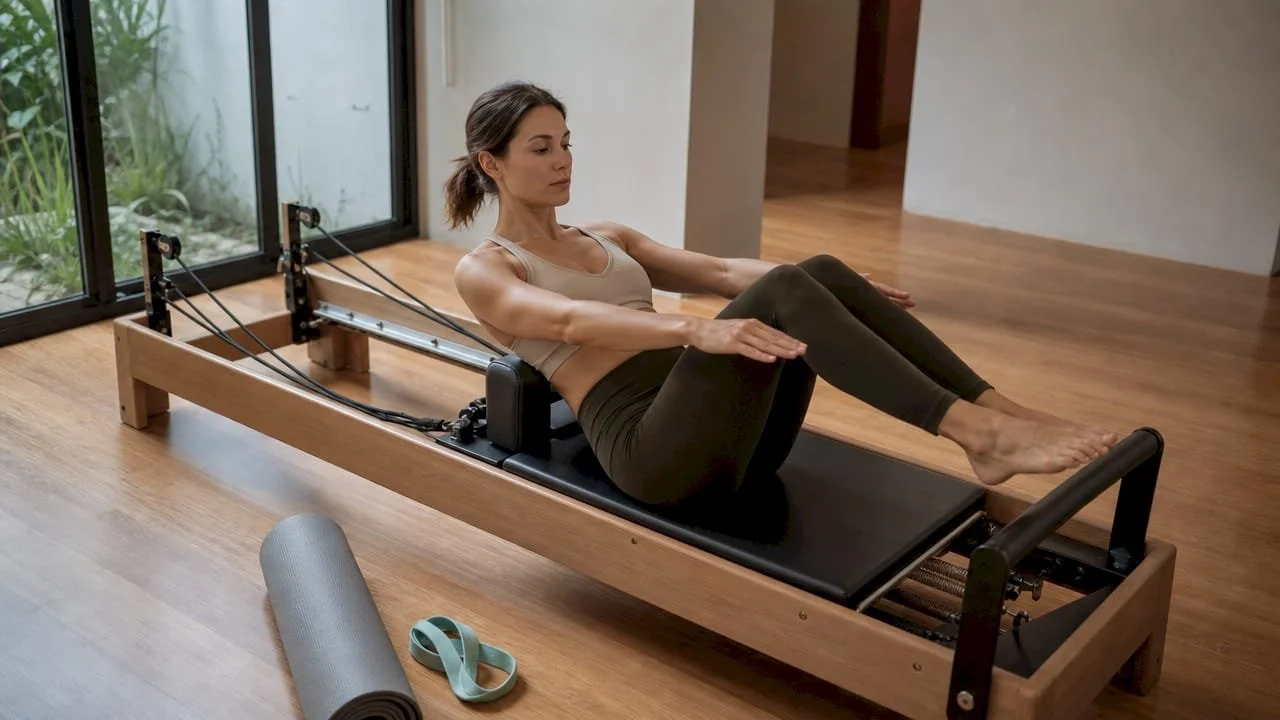
Pilates reformer workouts are defined as resistance-based, low-impact exercise sessions performed on a spring-loaded carriage machine that builds core strength, increases flexibility, reduces chronic pain, and supports full-body conditioning. The reformer machine uses adjustable spring tension to create controlled resistance across every movement, making it far more versatile than mat Pilates alone. Clinical research confirms that structured reformer programs of 8–12 weeks produce consistent improvements in pain, posture, balance, and body composition. Whether you are recovering from an injury, managing back pain, or simply looking for a sustainable fitness method, the benefits of pilates reformer workout practice extend well beyond what most people expect.
How does Pilates reformer improve core strength and stability?
The reformer activates deep core muscles, specifically the transverse abdominis and multifidus, in ways that conventional floor exercises rarely reach. These muscles sit beneath the visible surface muscles and act as the spine's internal support system. When they are weak, the spine compensates with poor movement patterns that lead to injury over time.
Reformer exercises place the body in functional positions, such as kneeling, standing, and lying on a moving surface, which forces the deep stabilizers to engage continuously. Spinal alignment and posture improve within 4–6 weeks of regular practice because the deep muscles learn to hold the spine correctly during movement, not just at rest. That is a meaningful distinction from crunches or planks, which train surface muscles in static positions.
Compared to conventional core training, reformer Pilates produces superior functional gains because the spring resistance is adjustable and the movement patterns mimic real life. A person recovering from surgery can work at low spring tension, while a trained athlete can load the same exercise heavily. This adaptability is what makes the reformer a clinical tool as much as a fitness tool.
Key advantages for core strength include:
Transverse abdominis activation during every exercise, not just dedicated "core" moves
Multifidus recruitment that supports vertebral stability at each spinal segment
Progressive resistance via spring adjustment, allowing safe overload over time
Functional movement patterns that transfer directly to daily activities like lifting and bending
Pro Tip: Start with lighter spring resistance and focus on feeling the deep abdominal muscles draw inward before adding load. Most beginners rush to heavier springs and miss the core activation entirely.
What impact does Pilates reformer have on flexibility and posture?
Reformer Pilates improves flexibility through controlled, full-range movements that lengthen muscles under load rather than passive stretching. This method, called eccentric loading, produces more durable flexibility gains than static stretching because the muscle learns to control its length rather than simply tolerate it.
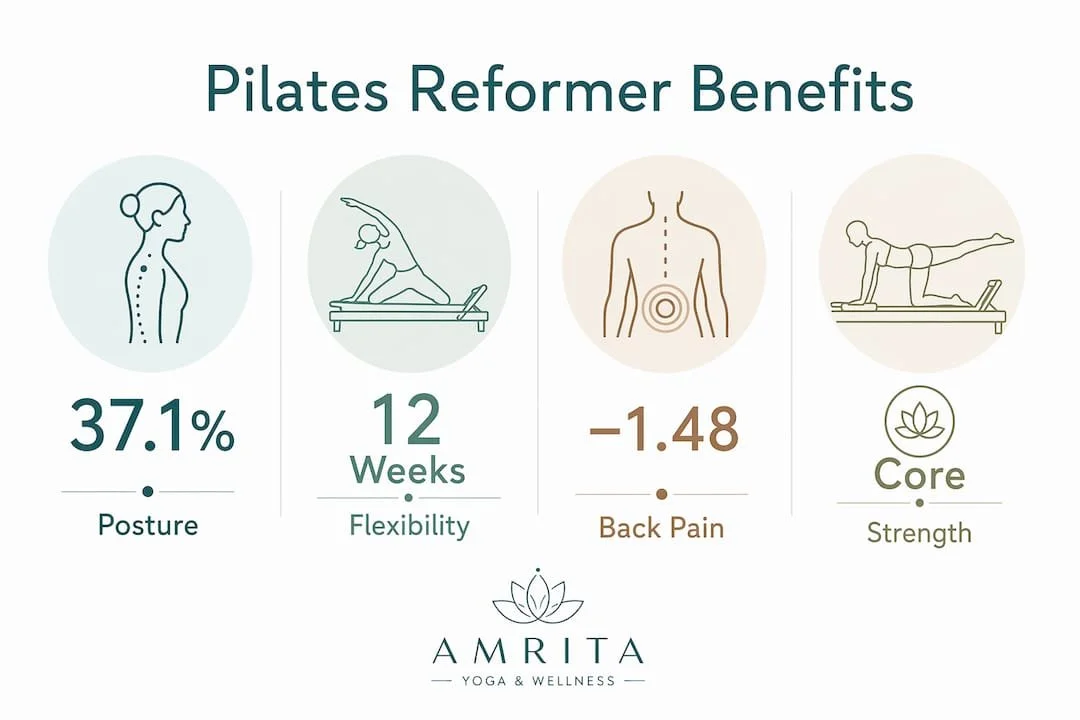
A controlled study with 30 participants found that a 12-week reformer program improved postural symmetry by 37.1% and reduced pain by 50%. That level of postural change is clinically significant. It means the body is not just feeling better but moving differently, with measurable symmetry between left and right sides.
Postural asymmetries are common in people who sit for long hours or favor one side during repetitive activities. The reformer corrects these imbalances because each exercise can be performed unilaterally, isolating one side at a time. This makes it particularly effective for desk workers, athletes with sport-specific imbalances, and people in post-surgical rehabilitation.
| Benefit | What the research shows |
|---|---|
| Postural symmetry | 37.1% improvement after 12 weeks of reformer practice |
| Pain reduction | 50% reduction in pain scores in the same 12-week study |
| Range of motion | Improved joint mobility through eccentric loading across all major joints |
| Spinal alignment | Measurable correction of forward head posture and anterior pelvic tilt |
Pro Tip: Ask your instructor to photograph your posture at the start of a 12-week program. Comparing images at week 4 and week 12 gives you concrete evidence of progress that motivates continued practice.
How does Pilates reformer assist in pain reduction and rehabilitation?
Pilates is one of the most evidence-supported non-pharmacological treatments for chronic low back pain. A meta-analysis of 438 participants across 9 randomized controlled trials found a standardized mean difference of −1.48 for pain reduction compared to control groups. That is a large effect size by clinical standards, placing Pilates among the most effective conservative interventions available.
An 8-week supervised Pilates program reduced pain by 30% and improved functional capacity by 13.4% in women with chronic low back pain compared to usual care. Functional capacity means the ability to perform daily tasks like walking, bending, and carrying. A 13.4% gain in that measure translates directly into quality of life.
One nuance that practitioners and patients both need to understand: symptom relief often arrives before measurable tissue changes. A 4-week Pilates intervention did not significantly alter core muscle tone or stiffness at the tissue level, yet participants still reported meaningful pain and function improvements. This tells us that Pilates improves neuromuscular control and movement quality first, and structural tissue changes follow with longer practice.
"Pilates improves control before complete structural restoration. Pain relief and functional gain appear first, and biomechanical normalization follows with sustained practice." — Clinical research synthesis on Pilates and chronic low back pain
This sequence matters for managing expectations. If you start a reformer program for back pain and feel better within two weeks, that is real and valid. Do not stop there. The deeper tissue and structural benefits require the full 8–12 week commitment to take hold.
Rehabilitation protocols typically use the reformer's spring system to offload body weight during exercises, making movements accessible for people who cannot yet perform them on the floor. The footbar and straps allow precise positioning that protects injured joints while still loading the surrounding muscles. This is why physical therapists and sports medicine clinicians increasingly incorporate reformer Pilates into post-surgical and chronic pain programs.
What are the holistic wellness and mental health benefits of Pilates reformer workouts?
Reformer Pilates is a mind-body practice, not just a physical one. The breath coordination required in every exercise activates the parasympathetic nervous system, which lowers cortisol and shifts the body out of the stress response. That physiological shift is measurable and meaningful, particularly for people managing anxiety, burnout, or chronic stress.
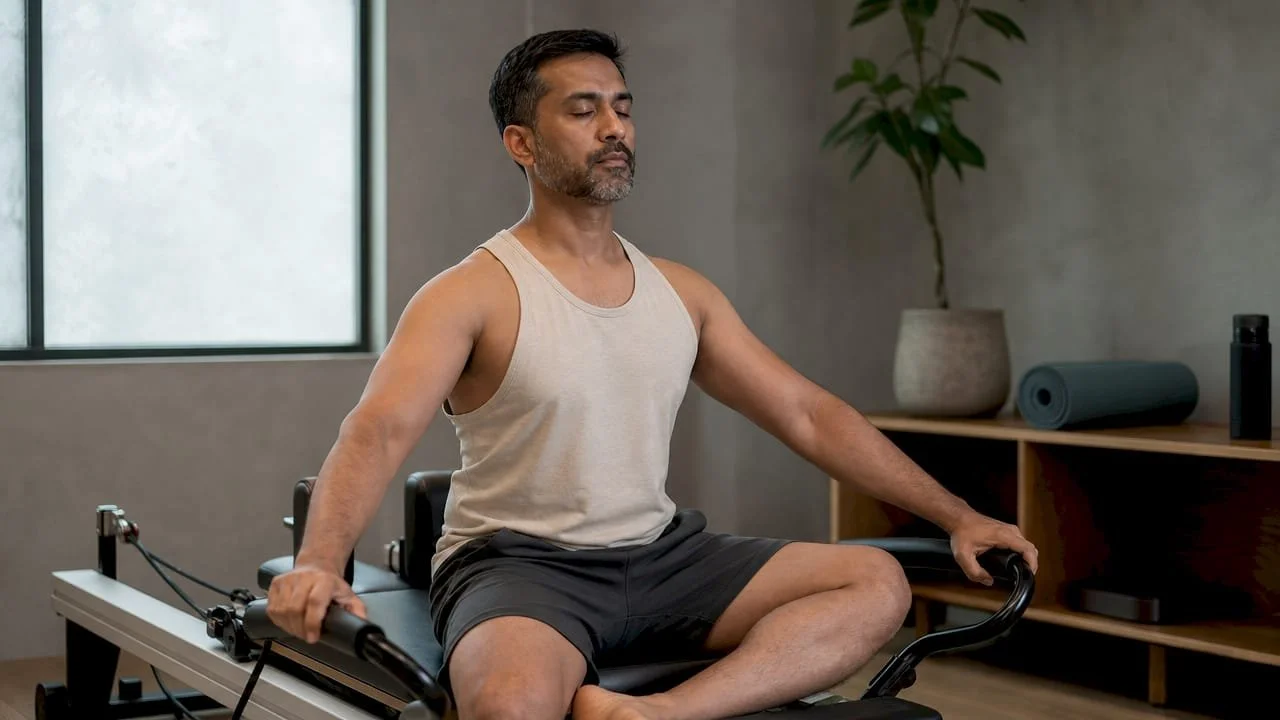
The mental focus required during reformer sessions functions similarly to meditation. You cannot think about your to-do list while coordinating breath, spring resistance, and precise limb movement simultaneously. That enforced presence is one reason practitioners consistently report improved mood and mental clarity after sessions.
Additional wellness benefits include:
Stress reduction through parasympathetic activation during breath-coordinated movement
Improved sleep quality linked to reduced cortisol and physical fatigue from low-impact exertion
Meditative focus that builds mental resilience alongside physical strength
Long-term sustainability because the low-impact format protects joints, making it appropriate for older adults and people with chronic conditions
Improved quality of life scores documented in clinical studies measuring both physical and mental health outcomes
The low-impact nature of reformer Pilates is one of its most underrated advantages. High-impact exercise accumulates joint stress over years. Reformer Pilates builds strength and cardiovascular conditioning without that cumulative wear, which means you can practice it consistently for decades. For older adults especially, that longevity of practice produces compounding wellness benefits that no short-term high-intensity program can match.
How do body measurements change with a structured reformer plan?
A structured reformer Pilates program produces measurable changes in body circumference, not just subjective feelings of being leaner. A 12-week, thrice-weekly program with female participants showed significant reductions in waist, chest, hips, thighs, arms, and leg circumferences. The greatest reductions occurred in the first month, indicating that initial fat loss and toning happen quickly with consistent practice.
These circumference reductions carry cardiometabolic significance beyond aesthetics. Waist circumference reduction specifically correlates with decreased visceral fat, which is the metabolically active fat surrounding internal organs. Reducing visceral fat lowers risk markers for cardiovascular disease and metabolic syndrome. Reformer Pilates, practiced three times per week, produces this effect without the joint stress of high-impact cardio.
| Measurement site | Outcome from 12-week reformer program |
|---|---|
| Waist | Significant reduction, greatest in first 4 weeks |
| Hips | Measurable circumference decrease across program duration |
| Arms | Toning effect with reduced circumference |
| Thighs and legs | Consistent reduction linked to lower body resistance work |
The beginner Pilates guide at Amritayogawellness outlines how to structure those first weeks to maximize early results while building the technique foundation needed for long-term progress.
Key Takeaways
Pilates reformer workouts deliver clinically proven improvements in core strength, posture, pain reduction, body composition, and mental well-being when practiced consistently for 8–12 weeks.
| Point | Details |
|---|---|
| Core strength gains | Deep stabilizers like the transverse abdominis activate in every reformer exercise, improving spinal support. |
| Posture improvement | A 12-week program produces 37.1% better postural symmetry, measurable and lasting. |
| Pain relief comes first | Symptom relief precedes tissue changes; commit to the full program for structural benefits. |
| Body composition changes | Waist, hip, arm, and leg circumferences decrease significantly within 12 weeks of three-weekly sessions. |
| Mental health benefits | Breath coordination activates the parasympathetic nervous system, reducing cortisol and stress. |
What I have learned from watching people use the reformer
Most people walk into their first reformer session expecting gentle stretching. They leave surprised by how hard it is. That gap between expectation and reality is actually the reformer's greatest strength. It meets you exactly where you are physically, then challenges you precisely enough to produce change without injury.
What I have observed consistently is that the people who get the most from reformer Pilates are not the most athletic. They are the most consistent. Showing up three times per week for 12 weeks, even at moderate intensity, produces results that sporadic intense sessions never will. The 2026 beginner guide at Amritayogawellness captures this principle well: structure and repetition matter more than effort level in the early weeks.
The rehabilitation angle also gets underestimated. People assume reformer Pilates is for healthy people who want to look better. Clinical evidence says otherwise. The spring offloading system makes it one of the few exercise modalities where someone with acute back pain can train safely on day one of a program. That is not a small thing.
My honest recommendation: treat the reformer as a long-term practice, not a short-term fix. The 8–12 week evidence base is a floor, not a ceiling. The people who practice for years build a physical resilience that genuinely changes how they age.
— Juiced
Pilates reformer classes at Amrita Yoga & Wellness
Amrita Yoga & Wellness, Philadelphia's community wellness studio, offers Pilates reformer classes alongside yoga, barre, tai chi, and massage therapy. The studio serves practitioners at every level, from first-timers managing back pain to experienced movers building strength and flexibility.
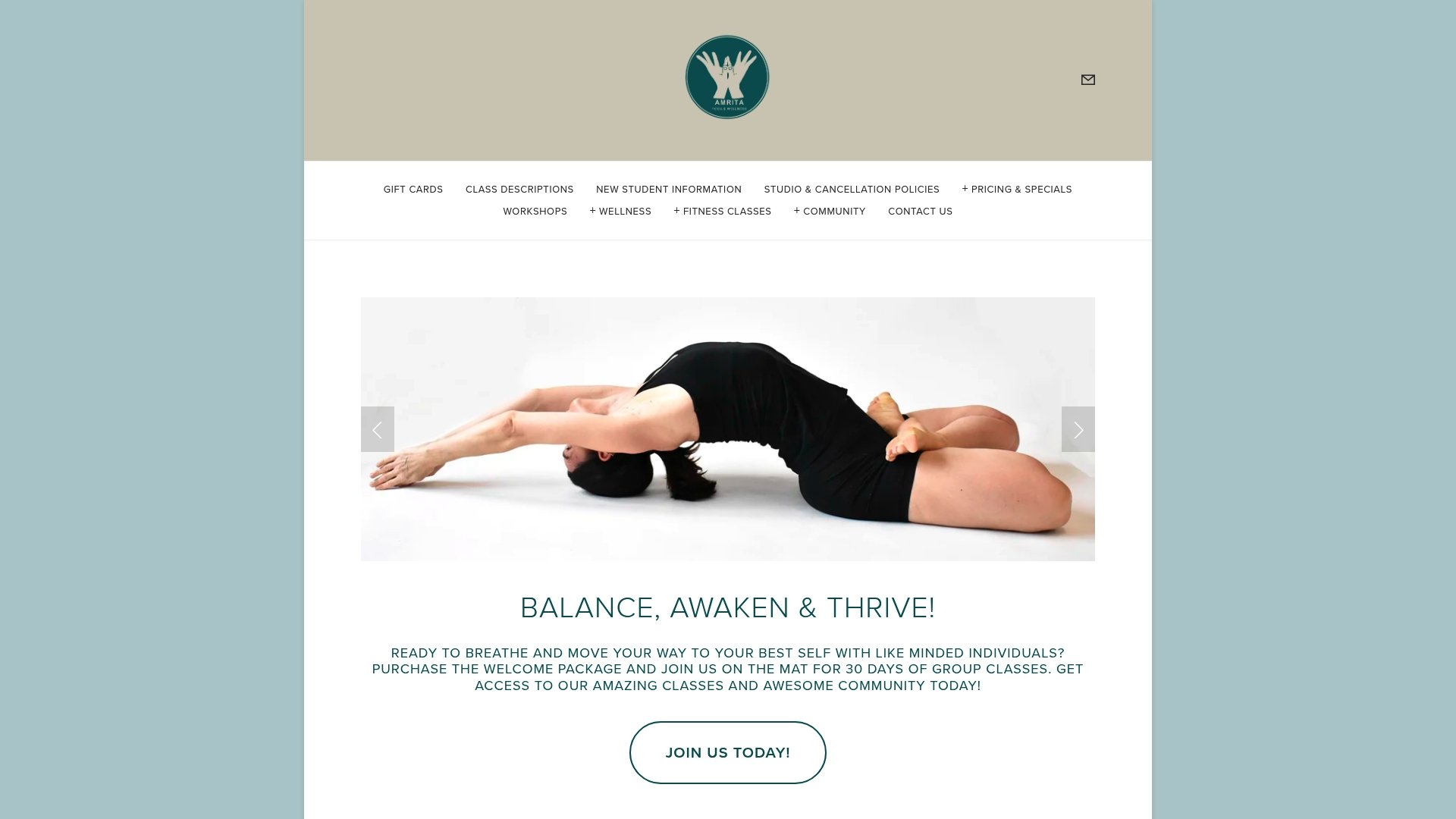
Whether your goal is pain relief, better posture, or a sustainable fitness practice that protects your joints for the long term, Amrita Yoga & Wellness has a class structure that fits. The studio's wellness offerings reflect a commitment to whole-person health, not just physical conditioning. Visit amritayogawellness.com to browse the class schedule and find the right starting point for your practice.
FAQ
What does a Pilates reformer do for your body?
The reformer builds deep core strength, improves flexibility, corrects posture, and reduces chronic pain through adjustable spring resistance. Clinical studies show consistent improvements in pain, function, and body composition within 8–12 weeks of regular practice.
How soon do you see results from reformer Pilates?
Pain relief and functional improvements often appear within 4–8 weeks. Body composition changes like circumference reductions are measurable after a 12-week, three-times-weekly program.
Is reformer Pilates good for back pain?
Yes. A meta-analysis of 9 randomized controlled trials found Pilates produces a standardized mean difference of −1.48 for pain reduction in chronic low back pain patients, making it one of the most effective conservative treatments available.
Can beginners use a Pilates reformer?
Beginners can start reformer Pilates safely by using lighter spring resistance and working with a qualified instructor. The spring system allows full load adjustment, making every exercise accessible regardless of fitness level.
How is reformer Pilates different from mat Pilates?
The reformer adds adjustable spring resistance and a moving carriage, which activates deep stabilizing muscles more effectively than mat work alone. It also allows exercises in standing and kneeling positions that mat Pilates cannot replicate.
Recommended
Benefits of Pilates for Athletes: Performance Guide
TL;DR:
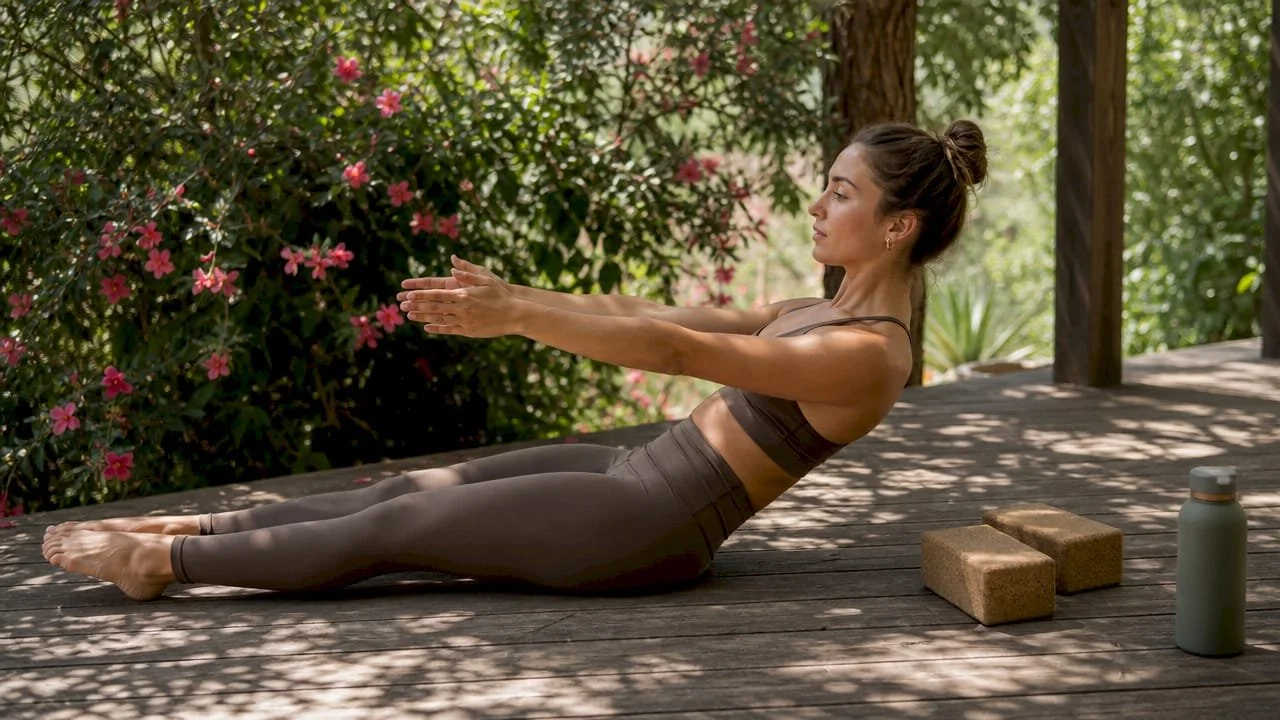
Pilates enhances athletes' core stability, flexibility, and balance, leading to better performance and injury prevention. It targets deep stabilizing muscles, improves movement efficiency, and promotes recovery when integrated properly into training routines. Consistent practice during the off-season effectively resets imbalances and builds foundational strength.
Pilates is a systematic training method that builds the core stability, flexibility, and dynamic balance athletes need for peak performance and long-term injury prevention. The benefits of Pilates for athletes go well beyond basic stretching. Research on college basketball players shows a 6-week Pilates program produced significant gains in flexibility, balance, muscular strength, and core stability compared to a control group. Pilates targets the deep stabilizing muscles that explosive sports training typically ignores, making it one of the most effective cross-training tools available for athletes at every level.
1. Benefits of Pilates for athletes: core strength and power transfer
Core strength is the foundation of every athletic movement, from a sprinter's drive phase to a basketball player's jump shot. Most athletes train the superficial muscles like the rectus abdominis while neglecting the deep core: the transversus abdominis, multifidus, pelvic floor, and diaphragm. Pilates targets all four directly.
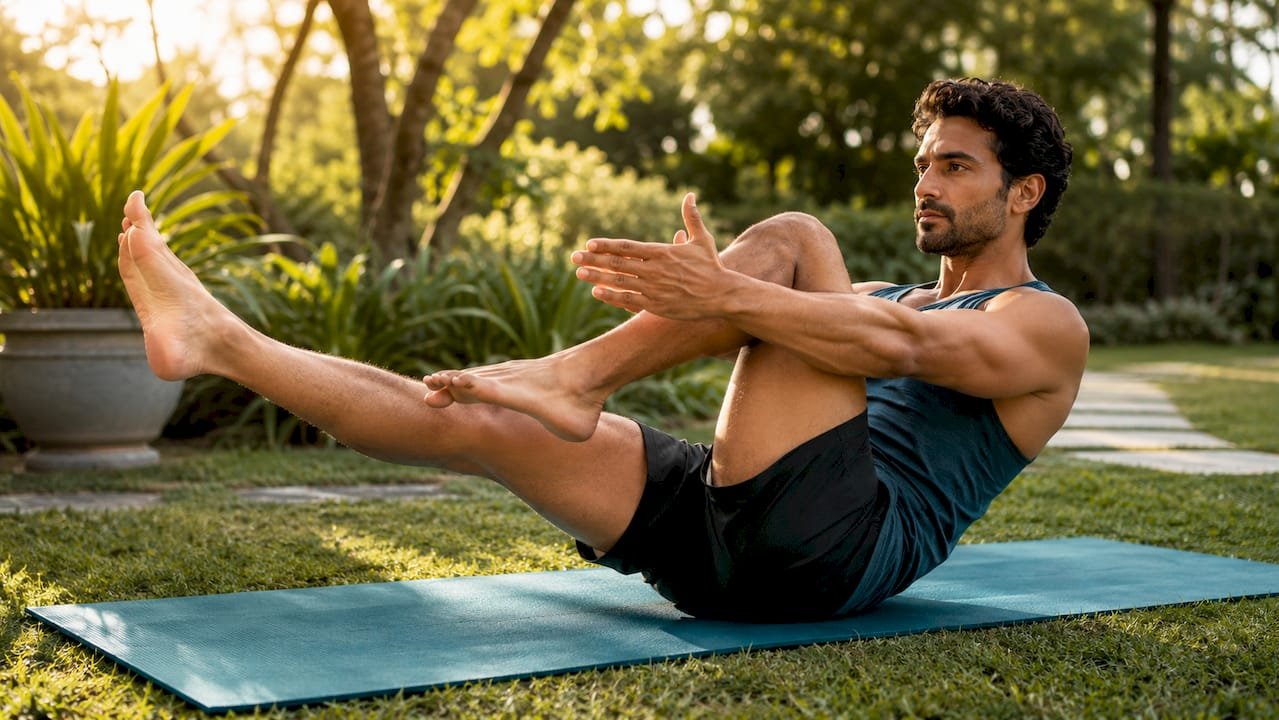
Pilates solves the "energy leak" problem by strengthening these deep muscles and improving force transfer during explosive movements. When your deep core fires correctly, power generated in your legs travels efficiently through your trunk to your arms or the ground. Without that transfer, energy bleeds out at the midsection and performance drops.
An 8-week mat Pilates program significantly improved isometric back and leg strength in male youth soccer players aged 11–13. That result matters because it shows strength gains appear even in young, developing athletes who already train regularly.
Key deep core muscles Pilates develops:
Transversus abdominis: the body's internal weight belt, stabilizing the spine before limb movement
Multifidus: small spinal muscles critical for vertebral stability and posture under load
Pelvic floor: the base of the core cylinder, essential for intra-abdominal pressure control
Diaphragm: the top of the core cylinder, coordinating breathing with spinal stability
Pro Tip: Prioritize Pilates exercises like the Hundred, Dead Bug, and Single Leg Stretch early in your routine. These load the deep core without fatiguing the prime movers you need for sport-specific training later.
2. Flexibility and joint mobility gains for better movement
Dynamic flexibility is the ability to move a joint through its full range under load and at speed. Static stretching builds range of motion at rest. Pilates builds the kind of flexibility athletes actually use during competition.
Pilates lengthens muscles while simultaneously demanding control through that range. A footballer gaining hip flexor length through Pilates does not just stretch the tissue. He trains the nervous system to use that length at full stride. That combination directly improves movement efficiency and reduces the stiffness that slows athletes down in the second half of a game.
The 6-week basketball study recorded significant flexibility improvements across the intervention group. Flexibility gains in athletes translate to faster stride mechanics, deeper squat patterns, and reduced compensatory movement that leads to overuse injuries.
Sports that benefit most from Pilates-driven flexibility gains:
Runners: hip flexor and hamstring length reduces stride restriction and IT band stress
Golfers: thoracic rotation mobility directly increases club head speed
Football players: hip and groin flexibility reduces adductor strain risk during cutting movements
Swimmers: shoulder mobility and thoracic extension improve stroke efficiency and reduce rotator cuff load
Pro Tip: Pair your Pilates session with sport-specific dynamic warm-up drills on the same day. The nervous system is primed after Pilates work, making it the ideal time to reinforce sport-relevant movement patterns.
3. Dynamic balance and neuromuscular control
Dynamic balance is the ability to maintain body position while moving, absorbing force, or changing direction. It is not a talent. It is a trainable skill, and Pilates trains it directly.
A 12-week Pilates intervention significantly improved dynamic balance and lower limb strength in elite fencers, with a strong correlation between quadriceps strength and balance scores. Elite athletes already train hard. The fact that Pilates produced measurable balance gains on top of their existing training shows how much foundational stability typical sports programs leave on the table.
Pilates builds proprioception, the body's ability to sense its own position in space, by demanding precise movement on unstable surfaces and through unfamiliar planes of motion. Better proprioception means faster automatic corrections when you land awkwardly, change direction, or absorb contact. That speed of correction is what separates athletes who stay healthy from those who get hurt.
Balance and strength gains: what the research shows
| Metric | Pre-Pilates | Post-Pilates (12 weeks) |
|---|---|---|
| Dynamic balance score | Baseline | Significantly improved (p<.05) |
| Lower limb strength | Baseline | Significantly improved |
| Quadriceps-balance correlation | Measured | Strong positive correlation |
| Study population | Elite fencers | Elite fencers |
Pro Tip: Add single-leg Pilates exercises like the Standing Leg Press or Side-Lying Leg Series to your routine. These directly challenge the hip stabilizers and ankle proprioceptors most relevant to cutting and landing mechanics.
4. Injury prevention through muscular balance
Most sports injuries do not come from a single catastrophic event. They come from accumulated stress on tissues that are overworked because other muscles are not doing their job. Pilates corrects that imbalance at the source.
Pilates improves gluteal muscle strength and neuromuscular coordination, directly reducing injury risk at the knee, hip, and lower back. Weak glutes force the hamstrings, IT band, and lumbar spine to compensate. That compensation pattern is behind a large share of running injuries, ACL tears, and chronic low back pain in athletes.
Pilates also trains tendons and ligaments through controlled, progressive loading rather than the ballistic stress of sport. That controlled loading builds tissue resilience without the joint overload that heavy lifting or plyometrics can cause. For athletes managing sports injury recovery, Pilates provides a way to maintain conditioning while protecting vulnerable structures.
How Pilates reduces injury risk in athletes:
Corrects muscle imbalances by targeting underactive stabilizers that sport-specific training skips
Trains movement control through full range of motion, reducing the risk of joint stress at end range
Builds tendon resilience through slow, loaded movements that stimulate collagen remodeling
Improves landing mechanics by strengthening the hip and knee stabilizers that absorb ground reaction force
Reduces compensatory patterns that develop when dominant muscles take over for weaker ones
5. Faster recovery and off-season conditioning
Recovery is not passive. Athletes who use their off-season to correct movement faults and rebuild foundational strength return to preseason training ahead of those who simply rest. Pilates is the most effective tool for that work.
Pilates is most effective in the off-season because it addresses movement compensations without adding joint overload. During the competitive season, athletes accumulate asymmetries from repetitive sport-specific patterns. A pitcher's shoulder, a soccer player's dominant kicking hip, a tennis player's dominant forearm all create imbalances that compound over time. Pilates resets those patterns.
Qualitative improvements in movement efficiency and injury resilience typically appear within 8–12 weeks of consistent Pilates practice. That timeline fits neatly into a standard off-season block, making it a practical addition to any periodized training plan.
For athletes recovering from ankle or lower limb injuries, Pilates provides controlled loading that supports ankle sprain rehabilitation while rebuilding the hip and core stability that protects the joint from reinjury.
6. Mental discipline and movement precision
Pilates requires deliberate, precise movements that challenge athletes in ways their regular training does not. NFL players who have added Pilates to their programs describe it as mentally demanding in a completely different way from lifting or conditioning work. That demand is the point.
Pilates emphasizes slow, controlled movement with high concentration on stabilizing muscles. This differs sharply from the explosive, high-load training that dominates most athletic programs. The mental discipline of holding precise positions under fatigue transfers directly to sport. Athletes who can maintain form when tired make fewer technical errors and sustain fewer injuries in the late stages of competition.
The concentration Pilates demands also builds body awareness. Athletes who know exactly where their spine, hips, and shoulders are during movement make faster technical corrections. That awareness is a skill, and Pilates is one of the few training methods that develops it systematically. You can explore Pilates breathing techniques as a starting point for building that internal focus.
7. How to build a Pilates routine for athletes
A Pilates routine for athletes works best when it is treated as a complement to sport-specific training, not a replacement for it. Pilates corrects imbalances and prevents injury. It does not replace heavy lifting or conditioning work.
Practical guidelines for integrating Pilates into athletic training:
Frequency: 2 sessions per week is the minimum effective dose for measurable gains. The basketball and fencer studies used 3 sessions per week over 6–12 weeks.
Duration: 45–60 minutes per session is sufficient. Longer sessions do not produce proportionally better results.
Timing: Schedule Pilates on lower-intensity training days or after technical skill work, not before heavy strength sessions.
Instructor selection: Athletes need instructors experienced with sport-specific biomechanics. A general Pilates class will not address the joint loading patterns specific to your sport.
Progression: Start with mat-based fundamentals like the Pilates exercises for all levels before moving to reformer or equipment-based work.
Periodization: Use higher Pilates volume in the off-season for correction and rebuilding. Reduce to maintenance frequency during the competitive season.
General Pilates classes may not address sport-specific demands. Athletes should seek programs tailored to the biomechanical requirements of their sport to get the most from the method.
Key takeaways
Pilates builds the core stability, dynamic balance, and muscular coordination that athletes need to perform better and stay healthy longer.
| Point | Details |
|---|---|
| Core strength drives performance | Pilates targets deep stabilizers that improve force transfer in every explosive movement. |
| Flexibility gains are functional | Pilates builds dynamic range of motion athletes use at speed, not just at rest. |
| Balance and proprioception improve measurably | A 12-week program produced significant balance gains in elite fencers already in peak training. |
| Injury prevention is the clearest ROI | Correcting gluteal weakness and movement compensations reduces the most common sports injury patterns. |
| Off-season timing maximizes results | Eight to twelve weeks of consistent Pilates resets imbalances and rebuilds foundational stability before preseason. |
What I've learned watching athletes train with Pilates
Athletes walk into their first Pilates session expecting it to be easy. They walk out humbled. That gap between expectation and reality is the most important thing Pilates teaches.
The mental shift is real. Athletes who train with maximum effort in every session learn to push through discomfort. Pilates teaches something different: precision under fatigue, control at the edge of your range, and patience with slow progress. Those qualities show up in competition in ways that are hard to measure but impossible to miss.
What I find most underrated is how Pilates exposes the weak links that athletes have learned to work around. A tight hip flexor, a lazy glute, a spine that locks up instead of rotating. Sport-specific training masks these problems because dominant muscles compensate. Pilates removes the compensation and forces you to address the actual issue.
The athletes who get the most from Pilates are the ones who treat it seriously from the start. Two sessions a week, a qualified instructor who understands your sport, and a willingness to slow down and feel what your body is actually doing. That investment pays off in fewer injuries, better movement quality, and a longer career.
— Juiced
Pilates classes for athletes at Amrita Yoga & Wellness
Athletes in Philadelphia looking to add Pilates to their training have a direct option at Amrita Yoga & Wellness. The studio offers Pilates classes designed to build the core strength, flexibility, and balance that support athletic performance and recovery.
Amritayogawellness provides a range of wellness programs and classes that fit different training schedules and experience levels, from beginners working on foundational stability to experienced athletes refining movement quality. The studio's approach to Pilates fits naturally into a periodized training plan, whether you are in the off-season rebuilding phase or maintaining conditioning during competition. Check the schedule and find a session that works around your sport.
FAQ
What are the main benefits of Pilates for athletes?
Pilates improves core strength, dynamic balance, flexibility, and neuromuscular coordination. Research shows measurable gains in all four areas within 6–12 weeks of consistent practice.
How often should athletes do Pilates?
Two to three sessions per week produces significant results, based on the basketball and fencer studies that used that frequency over 6–12 weeks.
Does Pilates replace strength training for athletes?
Pilates complements strength training but does not replace it. Its primary value is correcting imbalances, preventing injury, and improving core-integrated movement alongside regular sport-specific work.
When is the best time for athletes to add Pilates?
The off-season is the most effective time to start Pilates, as it allows athletes to address movement compensations and rebuild foundational stability without the joint overload of in-season training.
Can Pilates help with sports injury recovery?
Pilates supports recovery by rebuilding hip and core stability through controlled loading that protects vulnerable joints. It is particularly useful for athletes recovering from lower limb injuries and overuse conditions.
Recommended
Pilates Basics: Building Core Strength and Flexibility
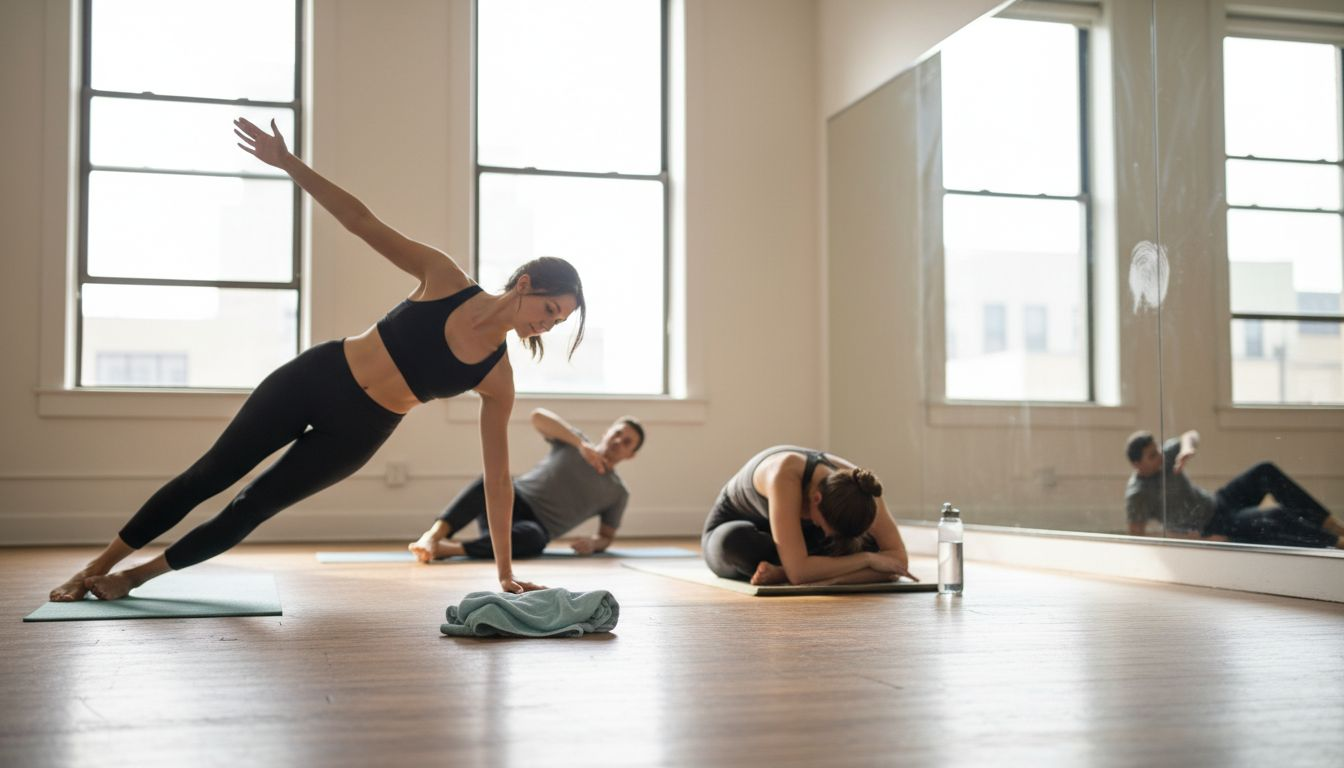
Most American adults struggle to find gentle workouts that actually make a difference in how they feel every day. With busy schedules and countless gym trends, it can be confusing to pick an exercise routine that fits real life in Philadelphia. Pilates stands out for beginners who want low-impact classes that truly build core strength and flexibility without the strain. Discover a smarter, safer way to move and see why so many locals are rethinking what fitness can look like.
Table of Contents
Key Takeaways
| Point | Details |
|---|---|
| Pilates Definition | Pilates is a mind-body exercise system focused on core strength, flexibility, and controlled movements. It is suitable for all fitness levels and not limited to dancers or highly flexible individuals. |
| Two Primary Approaches | Pilates can be practiced using mat-based or equipment-based methods, each offering distinct benefits for strength and support. Combining both approaches can enhance overall fitness outcomes. |
| Core Principles | The practice emphasizes six fundamental principles: concentration, control, center, flow, precision, and breathing, fostering mindful movement and injury prevention. |
| Beginner Considerations | Beginners should prioritize proper technique and communicate their health concerns with instructors to ensure a safe Pilates experience tailored to their abilities. |
Defining Pilates and Common Misconceptions
Pilates is a sophisticated mind-body exercise system originally developed by Joseph Pilates in the early 20th century. Initially created as a rehabilitation method for dancers, this practice focuses on strengthening core muscles, improving flexibility, and creating balanced muscular development through precise, controlled movements.
Unlike traditional strength training, Pilates emphasizes quality of movement over quantity. The practice incorporates approximately 50 repetitive exercises centered around five essential principles: breath control, cervical alignment, rib and scapular stabilization, pelvic mobility, and transversus abdominis engagement. Pilates combines both mat-based exercises and specialized apparatus like the Reformer and Cadillac to challenge and support the body's movement patterns.
Many people misunderstand Pilates, assuming it is only for dancers or extremely flexible individuals. In reality, this practice is adaptable to virtually every fitness level, age group, and body type. Whether you are recovering from an injury, an athlete seeking improved performance, or someone looking to enhance overall body awareness, Pilates offers comprehensive benefits. Its low-impact nature makes it particularly appealing for individuals seeking sustainable, mindful exercise that supports long-term physical wellness.
Pro tip: Start with a beginner-level class and communicate any physical limitations to your instructor to ensure a safe, personalized Pilates experience.
Exploring Mat and Equipment-Based Pilates
Pilates offers two primary practice approaches: mat-based and equipment-based training, each providing unique benefits for practitioners. Mat Pilates focuses on bodyweight exercises performed on the floor, challenging core strength, flexibility, and postural control using minimal equipment. These foundational exercises leverage your body weight to create resistance, making them accessible for beginners and advanced practitioners alike.
Equipment-based Pilates introduces specialized apparatus like the Reformer, Cadillac, Wunda Chair, and Ladder Barrel, which incorporate springs and pulleys to provide variable resistance. Clinical research suggests equipment-based Pilates can accelerate core muscle activation, particularly beneficial for individuals managing chronic conditions like low back pain. The apparatus allows for more targeted muscle engagement and provides support or increased challenge depending on individual fitness levels.
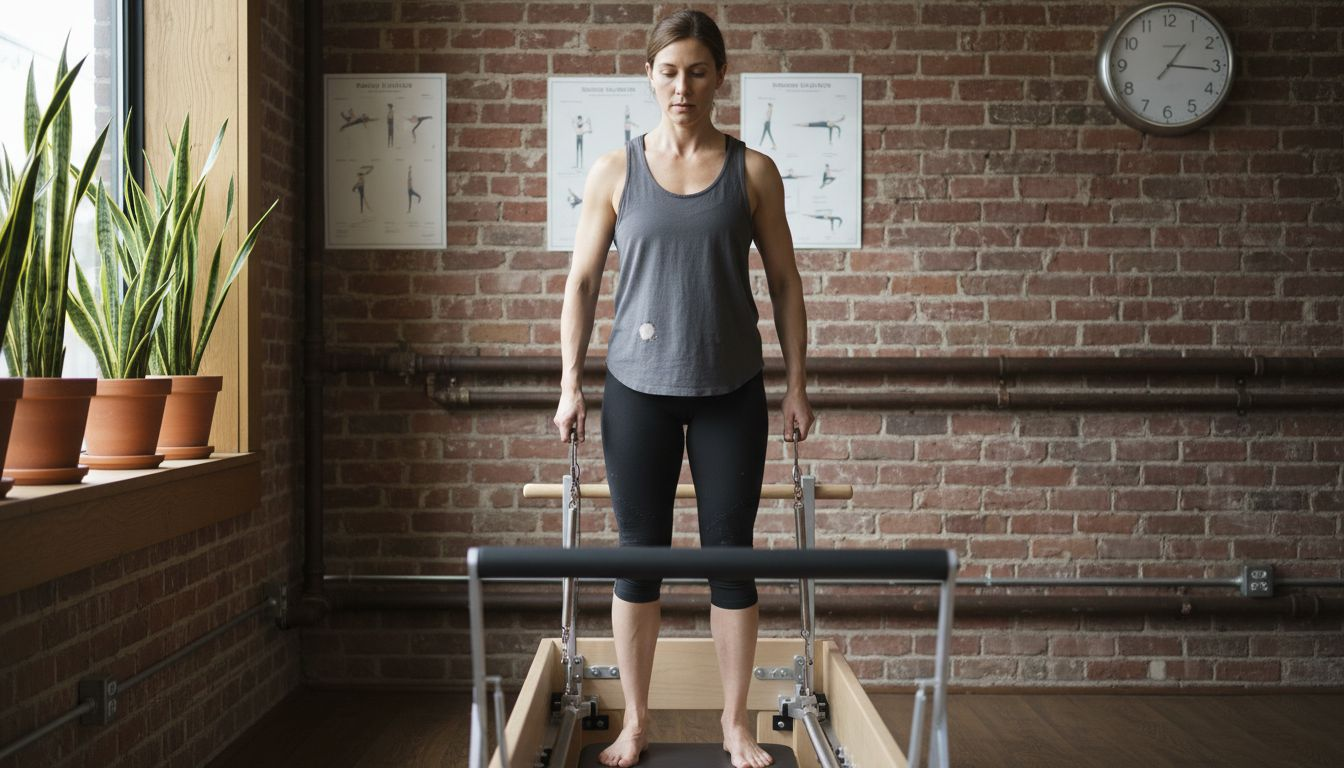
While mat and equipment Pilates complement each other, they serve different training objectives. Comprehensive Pilates practices often integrate both approaches to create a well-rounded workout that addresses strength, flexibility, alignment, and body awareness. Mat work builds foundational strength and teaches precise movement patterns, while equipment training offers dynamic resistance and helps practitioners refine their technique with additional support and challenge.
Here's a comparison of Mat Pilates and Equipment Pilates to help you decide which best matches your goals:
| Approach | Core Benefit | Level of Support | Suitable For |
|---|---|---|---|
| Mat Pilates | Builds foundational strength | Minimal external support | Beginners and travelers |
| Equipment Pilates | Offers targeted muscle engagement | Adjustable resistance | Rehab and advanced users |
Pro tip: Consider starting with a combination of mat and equipment classes to experience the full spectrum of Pilates benefits and find the approach that best suits your fitness goals.
Foundational Principles and Core Techniques
Pilates is built upon six fundamental principles that distinguish it from traditional exercise approaches, transforming movement into a mindful, intentional practice. These core techniques emphasize precision, control, and deliberate muscle engagement, creating a holistic approach to physical conditioning that goes beyond simple repetitive movements.
The six core principles of Pilates include concentration, control, center, flow, precision, and breathing. Concentration requires complete mental focus on each movement, ensuring proper form and muscle activation. Control emphasizes executing movements with intention, avoiding momentum-driven exercises. The center concept refers to engaging the body's powerhouse - the deep abdominal muscles, lower back, hips, and glutes - which form the foundation of every Pilates movement.
Breathing and flow are equally critical components that differentiate Pilates from other fitness practices. Proper breathing patterns synchronize with movement, helping to oxygenate muscles and create a rhythmic, fluid motion. By integrating breath with precise muscle engagement, practitioners develop a deeper awareness of their body's mechanics, improving overall movement efficiency and reducing the risk of injury.
Pro tip: Practice mindful breathing and focus on quality of movement over quantity, remembering that in Pilates, performing 5 perfect repetitions is far more beneficial than 20 rushed, imprecise movements.
Beginner Requirements and Starting Safely
Starting Pilates safely requires understanding fundamental guidelines and personal preparationthat ensure a positive, injury-free experience. Before beginning any Pilates practice, individuals should assess their current fitness level, discuss any pre-existing medical conditions with a healthcare provider, and choose an appropriate class or private instruction that matches their physical capabilities.
Pilates instructors recommend several key considerations for beginners. Low-impact movements can be customized to accommodate individual fitness levels and specific health needs, making the practice accessible to virtually everyone. Beginners should prioritize proper form over intensity, focusing on precise muscle engagement and controlled breathing. This approach helps develop core strength, improve flexibility, and prevent potential injuries by learning fundamental movement patterns gradually and mindfully.
Effective preparation for Pilates involves more than physical readiness. Mental preparation, understanding basic body mechanics, and developing body awareness are equally crucial. Newcomers should communicate openly with instructors about physical limitations, past injuries, or specific health concerns. Many studios offer introductory classes or private sessions designed specifically for beginners, providing personalized guidance and helping practitioners build confidence in their technique and movement capabilities.
Pro tip: Invest in comfortable, form-fitting clothing that allows unrestricted movement, and arrive to your first class 15 minutes early to discuss any personal health considerations with your instructor.
Risks, Mistakes, and Alternative Workouts
Pilates practitioners must be aware of potential risks and common mistakes that can compromise their practice, understanding that proper technique is crucial for preventing injury and maximizing benefits. The most frequent errors include improper body alignment, overexertion, and failing to engage core muscles correctly, which can lead to unnecessary strain and potential long-term physical complications.
Common mistakes in Pilates practice range from holding breath during exercises to using momentum instead of controlled muscle engagement. Beginners often push themselves too hard, attempting advanced movements before mastering fundamental techniques. This can result in poor form, reduced effectiveness, and increased risk of injury. Professional instructors recommend starting with modified versions of exercises, focusing on precision and gradual progression rather than attempting complex movements prematurely.
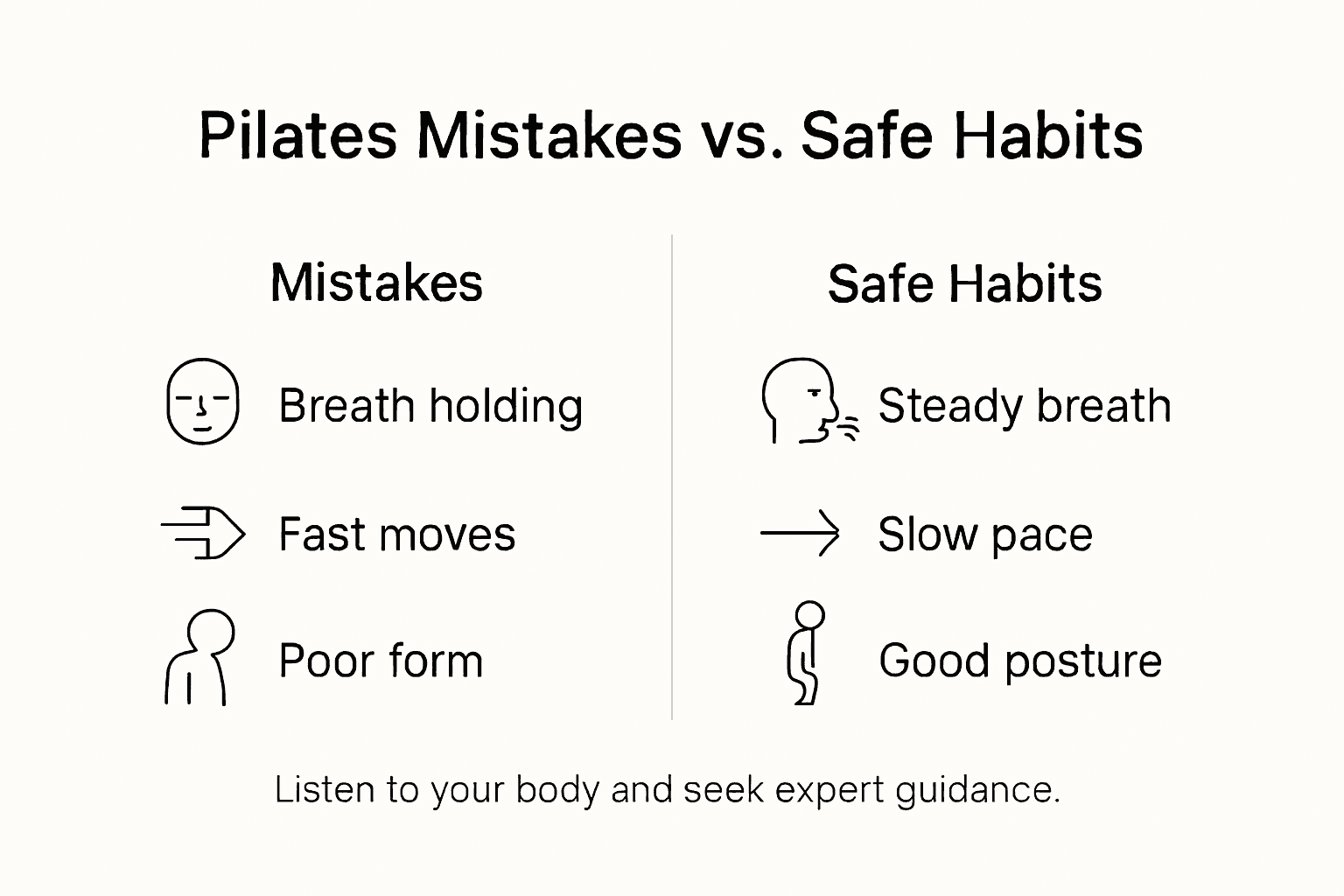
For individuals seeking alternative or complementary workouts, several options can provide similar benefits to Pilates. Yoga offers comparable core strengthening and flexibility improvements, while barre workouts combine elements of dance, Pilates, and strength training. Tai chi provides another low-impact alternative that emphasizes mind-body connection and controlled movements. Each of these practices can be integrated with or used as alternatives to Pilates, depending on individual fitness goals, physical limitations, and personal preferences.
Below is a summary of alternative workouts that complement or substitute for Pilates:
| Workout Type | Focus Area | Unique Benefit |
|---|---|---|
| Yoga | Flexibility & balance | Calms mind and improves flexibility |
| Barre | Full body & core | Blends dance, Pilates, and strength |
| Tai Chi | Mobility & coordination | Promotes balance and mental focus |
Pro tip: Always listen to your body, communicate with your instructor about any physical limitations, and remember that proper form is exponentially more important than the number of repetitions you complete.
Strengthen Your Core and Enhance Flexibility with Expert Pilates Guidance
If you are ready to take the next step in building core strength and improving flexibility through mindful movement this is your chance to explore personalized Pilates sessions designed to meet your fitness level. Whether you are new to Pilates or recovering from injury mastering the foundational principles like breath control and precise muscle engagement can transform your wellness journey. At Amrita Yoga & Wellness we understand the challenges of starting Pilates safely so our Pilates classes provide supportive environments where quality of movement always comes first.
Take control of your health today by joining our community in Philadelphia where you can experience both mat and equipment Pilates under expert guidance. Explore our full range of offerings including yoga and barre for a holistic approach to strength and flexibility. Discover more and sign up now at Amrita Yoga & Wellness and begin your path toward balanced body awareness and lasting wellness.
Frequently Asked Questions
What is Pilates?
Pilates is a mind-body exercise system focusing on strengthening core muscles, improving flexibility, and promoting balanced muscular development through precise movements.
Is Pilates suitable for beginners?
Yes, Pilates is adaptable to various fitness levels and body types, making it suitable for beginners. It's recommended to start with beginner-level classes to learn proper form and technique.
What are the main benefits of practicing Pilates?
The main benefits of Pilates include improved core strength, enhanced flexibility, better body awareness, and reduced risk of injuries, making it an ideal low-impact workout for long-term physical wellness.
What is the difference between mat and equipment-based Pilates?
Mat Pilates focuses on bodyweight exercises performed on the floor, while equipment-based Pilates uses specialized apparatus like the Reformer to provide variable resistance, offering targeted muscle engagement and support.