

Contact Us

Want to send us a quick message? Use the form on the right to contact us and we'll be in touch within 2 business days!

Please contact Audrey at info@amritayogawellness.com for general inquiries, software issues, in-studio and out-of-studio events and workshops, marketing, and community outreach and donations.

Please contact Heather at heather@amritayogawellness.com for private events, private yoga/pilates requests, and trainings.

1204 Frankford Avenue
North Philadelphia, PA, 19125
United States

(267) 928 3176

Amrita Yoga & Wellness offers a variety of Yoga traditions, Pilates Mat, Pilates Group Reformer, Tai Chi, and Massage services in a beautiful space. Our studio is located in Philadelphia, Pennsylvania.

Blog

Filtering by Tag: hot yoga benefits

Hot Yoga Studios – Transforming Wellness in 2026

Heather Rice

Long days at work in Philadelphia can leave your mind racing and your body craving a reset. For young professionals seeking more than a standard yoga class, hot yoga studios offer a specialized wellness environment where elevated heat and community support work together to nurture both physical health and mental clarity. With flexible schedules and holistic wellness options, these studios create space for deep personal growth, connection, and stress relief in the heart of the city.

Table of Contents

Key Takeaways

Point Details
Hot Yoga Studios Require Specialized Environments Hot yoga studios must maintain specific temperature and humidity levels to enhance the practice safely and effectively.
Diverse Hot Yoga Styles Offer Unique Benefits Different styles of hot yoga, such as Bikram and Hot Vinyasa, target various fitness goals and intensity levels, catering to a wide range of practitioners.
Physical and Mental Health Improvements Consistent hot yoga practice can lead to enhanced flexibility, improved cardiovascular health, and better mental clarity, contributing to holistic wellness.
Safety and Individual Considerations are Crucial Practitioners should assess their health conditions and consult with professionals to ensure hot yoga is a suitable choice for their fitness journey.

What Defines a Hot Yoga Studio

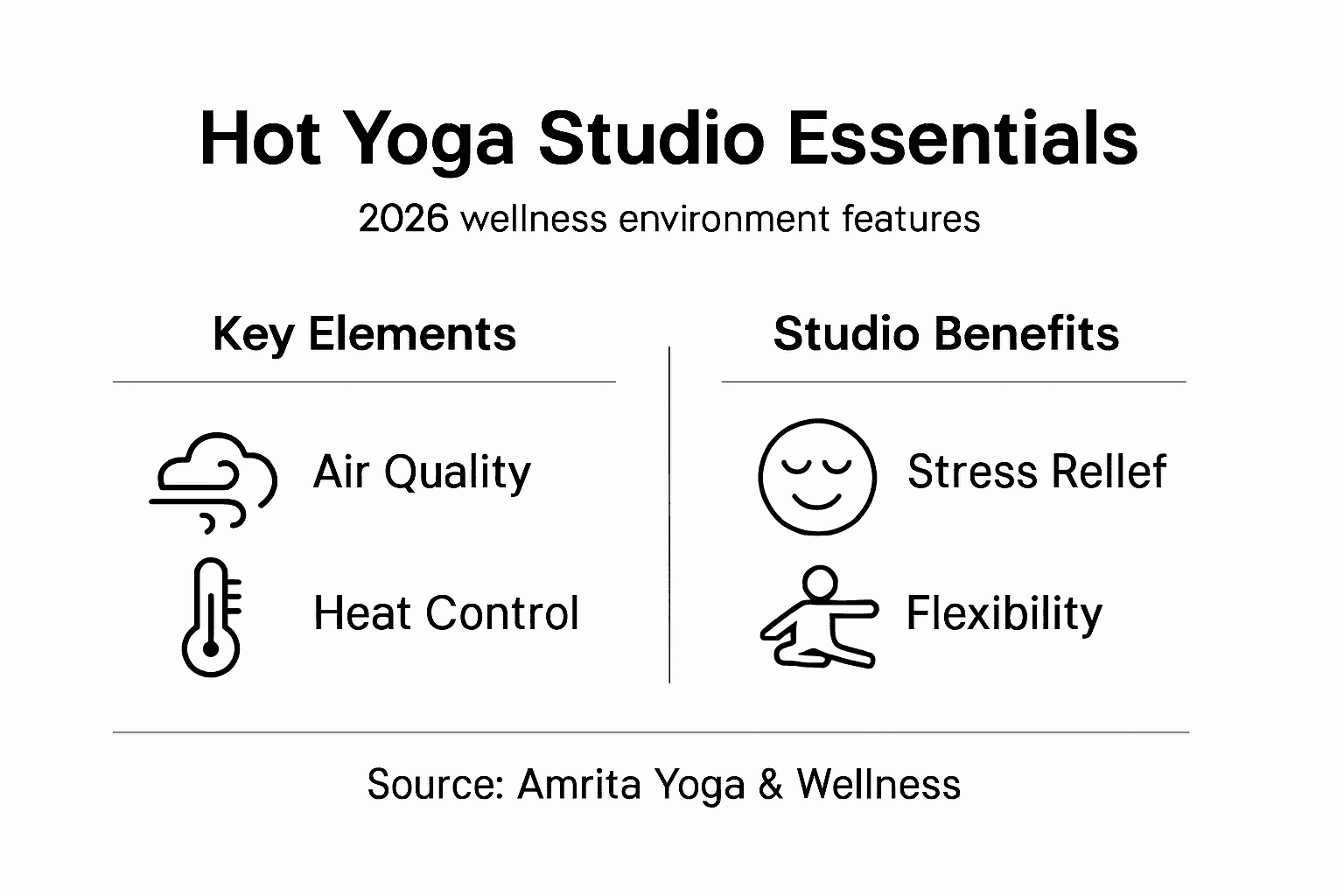
Hot yoga studios represent specialized wellness environments designed to transform physical and mental health through intentionally controlled thermal conditions. Precise environmental design creates an immersive experience that goes far beyond traditional yoga practices.

The core characteristics of a hot yoga studio include:

  • Temperature Control: Maintaining consistent heat between 30-52°C (86-125°F)

  • Humidity Regulation: Carefully managing humidity levels between 20-60%

  • Specialized Flooring: Mold-resistant, non-slip surfaces designed for heated practice

  • Air Quality Management: Contaminant-free ventilation systems

  • Acoustic Design: Minimal external noise to support meditative practice

The physiological benefits of these carefully curated environments are substantial. Advanced thermal yoga research demonstrates that controlled heat elevates heart rate, increases metabolic activity, and enhances overall cardiovascular performance during yoga sessions.

Professional hot yoga studios distinguish themselves through meticulous attention to environmental details. Unlike standard yoga spaces, these studios invest heavily in specialized heating systems, humidity controls, and air purification technologies to create a consistent, safe, and transformative wellness experience.
Pro tip: When selecting a hot yoga studio, request a facility tour to assess their temperature and air quality management systems, which are critical for a safe and effective practice.

Hot Yoga Styles and Heated Environments

Hot yoga encompasses a diverse range of practices characterized by intentionally heated environments designed to enhance physical performance and mental well-being. Comprehensive hot yoga research reveals multiple distinctive styles that transform traditional yoga experiences.

The primary hot yoga styles include:

  • Bikram Yoga: Fixed 26-pose sequence performed at 105°F with 40% humidity

  • Hot Vinyasa: Dynamic flow-based practice with variable sequences

  • Hot Hatha: Slower-paced practice emphasizing alignment and breath work

  • Power Hot Yoga: Intense, strength-focused heated practice

  • Hot Flow: Fluid movements linking breath and postures in heated environment

Temperature and humidity play critical roles in defining these practices. Hot yoga environmental conditions typically range from 90°F to 108°F, with humidity levels between 40-60%, creating a challenging yet transformative workout environment.

Here is a summary of how hot yoga styles differ by heat, difficulty, and focus:

Style Typical Temperature Intensity Level Core Focus
Bikram Yoga 105°F (40°C) High Fixed sequence, alignment
Hot Vinyasa 95–98°F (35–37°C) Moderate to High Fluid movement, strength
Hot Hatha 95°F (35°C) Moderate Breath, alignment
Power Yoga 96–99°F (36–37°C) High Strength, endurance
Hot Flow 90–95°F (32–35°C) Moderate Flow, flexibility

Each hot yoga style offers unique physiological benefits. The controlled heat increases core body temperature, enhances flexibility, accelerates metabolic processes, and provides a more intense cardiovascular experience compared to traditional yoga practices. Professional practitioners carefully design these heated environments to maximize physical and mental engagement.

Pro tip: Always hydrate thoroughly before and after hot yoga classes, and bring a towel and extra water to manage the intense heated environment.

Physical and Mental Health Benefits

Hot yoga represents a powerful approach to holistic wellness, offering profound transformations for both physical and mental well-being. Comprehensive cardiometabolic research reveals multiple evidence-based benefits that extend far beyond traditional exercise practices.

The key physical health benefits include:

  • Improved Body Composition: Enhanced metabolism and muscle definition

  • Cardiovascular Health: Better lipid profiles and vascular function

  • Increased Flexibility: Greater range of motion and joint mobility

  • Bone Density Support: Strengthening skeletal structure through weight-bearing movements

  • Enhanced Balance: Improved proprioception and core stability

Mental health outcomes are equally compelling. Regular hot yoga practice can potentially help manage stress, reduce symptoms of anxiety, and promote cognitive clarity. The combination of controlled breathing, challenging physical movements, and meditative focus creates a unique environment for psychological reset and emotional regulation.

Psychological benefits extend beyond immediate stress relief. Practitioners often report increased self-awareness, improved emotional regulation, and a greater sense of overall mental resilience. The heated environment challenges practitioners both physically and mentally, fostering a powerful mind-body connection that transcends typical workout experiences.

Pro tip: Start with shorter hot yoga sessions and gradually increase duration to allow your body and mind to adapt to the intense physical and mental challenges.

Common Myths and Safety Essentials

Hot yoga has accumulated numerous misconceptions that can potentially compromise practitioner safety and understanding. Hot yoga safety research reveals critical insights about managing risks and separating fact from fiction.

Common myths about hot yoga include:

  • Detoxification Myth: Sweating does not uniquely remove toxins from the body

  • Weight Loss Guarantee: Hot yoga alone cannot ensure significant weight reduction

  • Universal Fitness: Not suitable for all individuals, especially those with certain health conditions

  • Injury-Free Practice: Increased heat does not prevent potential physical strain

  • Absolute Performance: Individual results vary significantly based on personal fitness levels

Safety essentials are paramount in hot yoga practice. Practitioners must understand their personal health limitations, stay thoroughly hydrated, and listen carefully to their body's signals. People with heart disease, heat intolerance, or pregnant women should consult medical professionals before starting hot yoga.

Risk management involves more than physical preparation. Mental readiness, understanding personal boundaries, and maintaining consistent hydration are equally important. Proper breathing techniques, wearing appropriate moisture-wicking clothing, and taking breaks when needed can significantly reduce potential heat-related complications.

Pro tip: Conduct a personal health assessment and consult your healthcare provider before beginning hot yoga to ensure your individual safety and readiness.

Requirements, Costs, and What to Expect

Navigating the world of hot yoga requires understanding the specific requirements, financial investment, and realistic expectations for your wellness journey. Hot yoga studio insights reveal critical considerations for potential practitioners.

Typical financial considerations include:

  • Membership Options:

    • Drop-in rates: $15-$25 per class

    • Monthly unlimited memberships: $100-$200

    • Package deals: 5-10 class bundles with discounted rates

  • Equipment Costs:

    • Specialized yoga mat: $50-$100

    • Moisture-wicking clothing: $30-$80

    • Towel and water bottle: $20-$40

Practitioners should anticipate a comprehensive wellness experience that goes beyond traditional exercise. Each hot yoga session typically involves a structured environment maintained at temperatures between 90°F to 105°F, designed to challenge physical and mental boundaries while promoting holistic health.

Instructor qualifications play a crucial role in the hot yoga experience. Yoga studio requirements emphasize the importance of certified professionals who understand the nuanced demands of heated yoga practices. These instructors are trained to guide students safely through intense physical and thermal challenges.

Pro tip: Request a studio trial class or introductory package to experience the hot yoga environment without a significant financial commitment.

Is Hot Yoga Right for You? Alternatives Compared

Selecting the ideal yoga practice requires careful consideration of personal health, fitness goals, and individual physiological responses. Yoga practice recommendations highlight critical factors for making an informed decision about hot yoga suitability.

Alternative yoga styles for different fitness levels include:

  • Hatha Yoga:

    • Low-intensity, gentle movements

    • Ideal for beginners

    • Focus on basic postures and breathing

  • Iyengar Yoga:

    • Emphasizes precise alignment

    • Uses props for support

    • Great for injury rehabilitation

  • Vinyasa Flow:

    • Moderate intensity

    • Continuous movement

    • Suitable for intermediate practitioners

  • Restorative Yoga:

    • Minimal physical exertion

    • Uses props for complete relaxation

    • Best for stress reduction

Hot yoga presents unique challenges that may not suit everyone. Individuals with heart conditions, heat sensitivity, or chronic health issues should consult healthcare professionals before attempting heated practices. The intense thermal environment requires exceptional physical resilience and hydration management.

Below is a quick comparison of hot yoga and non-heated styles for different wellness needs:

Yoga Type Best For Key Challenge Environment
Hot Yoga Flexibility, detox, sweat Heat/humidity Heated, humid
Hatha Yoga Beginners, gentle movement Slow progression Room temperature
Iyengar Yoga Injury recovery, precision Alignment, props use Room temperature
Vinyasa Flow Stamina, coordination Pace, transitions Room temperature
Restorative Stress relief, relaxation Stillness Room temperature

The choice between hot yoga and alternative styles depends on personal wellness goals, current fitness level, and individual health considerations. Some practitioners might find the heat transformative, while others may prefer gentler, non-heated approaches that offer similar flexibility and strength benefits.

Pro tip: Consider trying multiple yoga styles through introductory classes to discover the practice that best aligns with your physical capabilities and wellness objectives.

Experience the True Benefits of Hot Yoga with Amrita Yoga & Wellness

The challenge of finding a hot yoga studio that prioritizes safe temperature control, expert instruction, and effective hydration management is real. If you want to enjoy all the physical and mental health benefits such as increased flexibility, cardiovascular improvement, and stress relief, it is essential to practice in a space designed for these needs. At Amrita Yoga & Wellness, we understand the importance of a properly heated and humidified environment along with qualified instructors who support your personal wellness journey.

Join our welcoming community in Philadelphia and discover diverse hot yoga classes tailored for all levels. Whether you are new to heated yoga or aiming to deepen your practice, our classes, workshops, and retreats provide the perfect opportunity to transform your wellness safely and effectively. Start today by exploring our class offerings and schedule at Amrita Yoga & Wellness. Take the next step toward a healthier body and a calmer mind with expert guidance in a supportive environment. Don’t wait your body and mind deserve the best experience in hot yoga now.

Frequently Asked Questions

What is a hot yoga studio?

A hot yoga studio is a specialized wellness environment designed to enhance yoga practice through controlled temperatures and humidity. These studios maintain temperatures between 30-52°C (86-125°F) and focus on air quality, flooring, and acoustics to create an immersive experience.

What are the main benefits of practicing hot yoga?

Hot yoga offers numerous benefits, including improved body composition, enhanced cardiovascular health, increased flexibility, better bone density, and benefits for mental health such as stress reduction and improved emotional regulation.

Are there different styles of hot yoga, and how do they differ?

Yes, there are various styles of hot yoga, including Bikram, Hot Vinyasa, Hot Hatha, Power Hot Yoga, and Hot Flow. Each style varies in temperature, intensity, and focus, catering to different preferences and fitness levels.

What should I consider before starting hot yoga?

Before starting hot yoga, consider your personal health limitations, hydration needs, and fitness goals. It is advisable to consult a healthcare provider if you have specific health concerns, particularly related to heat sensitivity or cardiovascular conditions.

Recommended

Hot Yoga Trainer: Impact on Wellness and Community

Heather Rice

Stress from a busy week in Philadelphia can feel never-ending, but stepping into a heated yoga studio is a game changer for your mind and body. Modern hot yoga trainers are more than instructors—they blend technical skill with a genuine focus on community and personal growth. If you crave stress relief and want to connect with others working toward wellness, understanding what sets apart a strong hot yoga trainer can help you find a supportive space where you truly belong.

Table of Contents

Key Takeaways

Point Details
Role of Hot Yoga Trainers Modern hot yoga trainers must combine technical skill with emotional intelligence and community leadership to create safe, inclusive environments for diverse students.
Certification Requirements Becoming a reputable hot yoga trainer involves accredited training beyond beginners’ workshops, typically a 200-hour program recognized by Yoga Alliance.
Physical and Mental Benefits Regular hot yoga practice yields significant improvements in cardiovascular health, flexibility, mental clarity, and stress reduction.
Community Building Importance Effective trainers foster a sense of community, which enhances student retention and improves overall wellness outcomes in hot yoga practices.

What Defines a Hot Yoga Trainer Today

A hot yoga trainer today is far more than someone who can perform advanced poses in a heated room. The modern hot yoga instructor operates at the intersection of technical expertise, emotional intelligence, and community leadership. What sets apart a skilled hot yoga trainer is their ability to guide students safely through challenging physical practice while maintaining the mindset that yoga is ultimately about personal transformation, not perfection. This multifaceted role requires trainers to balance anatomical knowledge with an understanding of how heat affects the body differently for each individual, monitor student wellbeing in real time, and create an inclusive environment where beginners feel just as welcome as advanced practitioners.

Today's hot yoga trainers must possess several core competencies that extend beyond flexibility and strength. First, they need solid understanding of human anatomy and how sustained heat exposure impacts muscle elasticity, cardiovascular function, and hydration levels. A trainer worth their mat knows the difference between helpful muscle engagement and dangerous overstretching, especially when students are working in elevated temperatures. They're trained to recognize early signs of overexertion such as excessive trembling, pallid skin, or dizziness, and they can adjust sequences on the fly without making students feel singled out. Beyond the physical, excellent trainers develop what you might call "studio reading ability." They scan the room during practice, notice which students are struggling, when the energy is dropping, and when the class needs a motivational push or a grounding moment. This situational awareness, combined with the ability to explain hot yoga benefits and safety, separates trainers who simply lead classes from those who truly impact student outcomes. They also understand their role as community builders. Rather than viewing themselves as performers on a platform, modern hot yoga trainers actively cultivate relationships with their students, remember names and personal goals, and create spaces where people feel seen and supported.

Perhaps most importantly, today's hot yoga trainer combines technical skill with genuine care for sustainable practice. This means actively discouraging the "no pain, no gain" mentality that can lead to burnout or injury, while simultaneously pushing students toward genuine growth. They understand that wellness is personal and contextual. A trainer might modify sequences for a student managing chronic pain, adjust breathing cues for someone with anxiety, or dial back intensity for a client recovering from illness, all while maintaining the integrity of the class. They also recognize that community extends beyond the studio walls. Many trainers at Philadelphia studios like Amrita Yoga & Wellness participate in workshops, continue their own education through certifications or specialized trainings, and contribute to a larger wellness conversation in the city. They're not static in their knowledge but actively evolving to better serve their students and the communities they're part of.

Pro tip: When evaluating a hot yoga trainer, observe how they interact with students between classes and whether they ask questions about your goals and limitations before suggesting modifications, not after you're struggling in a pose.

Required Certifications and Core Skills

Becoming a hot yoga trainer isn't something you can wing with a weekend workshop and some YouTube videos. The path requires legitimate, accredited training that goes beyond standard yoga instruction. Most reputable hot yoga trainers complete a 200-hour teacher training program accredited by recognized bodies like Yoga Alliance. These programs aren't one-size-fits-all, but they share common ground: they dive deep into how the human body responds to sustained heat exposure, teach you how to sequence classes safely, cover foundational anatomy specific to hot yoga practice, and equip you with the teaching skills to guide diverse student populations. If you're considering becoming a trainer or evaluating someone's credentials in Philadelphia, look for Yoga Alliance accreditation as a baseline marker of legitimacy. Without it, you're looking at unregulated instruction that may leave trainers ill-equipped to handle real student needs and potential safety issues that come with practicing in 100-plus-degree rooms.

The Certification Journey

The 200-hour foundational certification covers several non-negotiable areas. Heat-specific anatomy and physiology is critical here. A certified trainer understands thermoregulation, how the cardiovascular system responds to elevated temperatures, how heat affects muscle elasticity and hydration, and why pushing students to their limits in a heated room carries real risks. Teaching methodology rounds out the foundation, covering how to communicate cues clearly, adjust the room temperature and humidity responsibly, and recognize when a student needs modifications or a break. Many programs also include business fundamentals because let's be honest, running classes is only part of the job if you want to build a sustainable career.

Beyond the 200-hour mark, serious trainers pursue advanced certifications. A 300-hour program deepens expertise in areas like advanced sequencing, specialized populations (prenatal students, injury recovery, elderly practitioners), and business skills. Some studios and trainer networks offer 500-hour certifications that combine multiple disciplines and create specialists in their field. While these advanced credentials aren't strictly required to teach, they signal commitment and expertise that students notice. They also provide the knowledge you need to handle edge cases and complex student situations that inevitably arise in a community-focused studio like Amrita Yoga & Wellness.

Here is a comparison of foundational and advanced hot yoga trainer certifications:

Certification Levels
Certification Level Training Duration Focus Areas Career Impact
200-hour 2–3 months Anatomy, teaching skills, heat safety Entry-level teaching roles
300-hour 4–6 months Advanced sequencing, special populations, business Greater expertise, wider student base
500-hour 6 months+ Multi-discipline expertise, leadership Specialist roles, studio leadership

Core Competencies That Matter in Practice

Beyond the certification itself, certain skills separate trainers who get results from those who just show up. Heat management expertise tops the list. This means understanding how to read the room temperature and humidity, adjusting the environment as needed, and knowing when conditions are too extreme even for experienced students. Effective communication is another cornerstone. Can you give clear, anatomically accurate cues? Can you explain modifications without making students feel inadequate? Can you tell the difference between helpful challenge and dangerous strain just by watching someone's form and breathing?

Class management and safety protocols round out the core. A skilled trainer maintains control of the room, manages timing so students aren't overheated by the end, handles potential medical situations (dehydration, dizziness, panic), and makes split-second decisions about adjusting intensity or stopping sequences. Understanding how to work with diverse student populations and thermoregulation responses is equally critical. Not everyone responds to heat the same way. Trainers need to recognize individual differences and adjust accordingly, whether that's someone managing a chronic condition, a student on medication that affects heat tolerance, or a beginner whose body hasn't acclimated to the environment yet.

Pro tip: When researching a hot yoga trainer or program, ask directly about their accreditation, continued education, and how they handle safety concerns, rather than just looking at their Instagram feed or how many followers they have.

Class Structure, Safety, and Environment

Walking into a hot yoga studio in Philadelphia for the first time can feel like stepping into another world. The air is thick, warm, and noticeably different from anything you've experienced in a regular yoga class. What you're actually entering is a carefully controlled environment designed by trainers who understand that heat fundamentally changes how your body responds to practice. A hot yoga class typically lasts between 60 and 90 minutes, though some studios offer shorter 45-minute options for busy professionals. The room temperature is carefully maintained at specific levels, with room temperature and humidity ranges between 30 to 52 degrees Celsius and 20 to 60 percent humidity, depending on the specific hot yoga style being taught. This isn't arbitrary. These precise conditions create an environment where muscles warm up faster, joints become more pliable, and students can access deeper stretches more safely than they might in room temperature classes. However, the same heat that makes these benefits possible also introduces real risks that trainers must actively manage throughout each session.

The Anatomy of a Typical Class

Most hot yoga classes follow a structured sequence that builds logically from beginning to end. Classes typically begin with breath work and centering while the room is warming up, allowing students to acclimate gradually rather than being hit with full heat immediately. From there, the sequence progresses through standing postures that build heat in the body and establish foundational strength and balance. The middle section often includes more challenging poses as the body is now fully warm and flexible. Classes wind down with seated and supine postures, allowing heart rate and body temperature to gradually decrease before closing in a brief meditation or savasana. Some studios follow the traditional Bikram 26 plus 2 sequence, a fixed set of postures designed to systematically work every part of the body. Others offer more variation while maintaining the same structural principle of progression and flow.

The trainer's role during this structure extends far beyond demonstrating poses. They're actively monitoring the room, watching for signs of overexertion or heat stress in students. A good trainer checks in with newer students, ensures adequate water intake breaks, and adjusts the pacing if they sense the class is becoming too intense. They watch for trembling muscles, pale or flushed skin, dizziness, or anyone who seems disoriented, as these are signs a student needs a modification or a break. The environment itself becomes a teaching tool. Trainers explain why the heat matters, how it affects the body, and what students should expect in terms of increased sweating, elevated heart rate, and the mental clarity that often emerges as physical challenge is met with breath awareness.

Safety Measures and Environmental Control

Safety in hot yoga hinges on three pillars: controlled hydration, appropriate pacing, and constant monitoring of physical responses. Water is available throughout class, and good trainers encourage students to drink before they feel thirsty, since dehydration can sneak up quickly in heat. Pacing means the trainer doesn't rush through the sequence just to fit everything in. Instead, they hold poses long enough for real work but short enough that students don't overheat dangerously. Monitoring is ongoing. Trainers circulate, watch breathing patterns, ask how students are feeling, and make real-time adjustments. Some studios use heart rate monitoring technology or have protocols for checking in with students who look stressed.

The physical environment itself requires attention. Temperature and humidity levels need to stay consistent throughout class. Air circulation matters too. Trainers work with studio owners to ensure the HVAC system maintains optimal conditions without creating cold drafts that could shock the system or cause cramping. Floors must be non-slip because sweaty feet on regular yoga mats create hazards. Props like blocks and bolsters are essential for students who need modifications, and a good trainer has no shame about recommending them. Props are not failure. They're tools for safe, sustainable practice.

For students with pre-existing conditions, hot yoga requires special consideration. Trainers trained in safety protocols know that certain medical conditions, medications, or life circumstances mean hot yoga might not be appropriate, or might need significant modification. Pregnancy, uncontrolled blood pressure, recent surgery, or heat sensitivity all warrant conversation before class begins. A responsible trainer will ask about these factors during a new student orientation, not assume everyone can handle the same intensity.

Pro tip: Before your first hot yoga class, arrive 10 to 15 minutes early so you can acclimate to the temperature and have a conversation with the trainer about any physical concerns, medications, or injuries that might affect your practice.

Physical and Mental Benefits for Students

When you step out of a hot yoga class in Philadelphia drenched in sweat, there's more happening in your body than just the obvious heat response. Consistent hot yoga practice produces measurable changes that go far beyond what you see in the mirror. Research shows that chronic hot yoga practice improves cardiovascular function, body composition, and lipid profiles, meaning your heart works more efficiently, your cholesterol improves, and your body's ability to burn fat and build lean muscle strengthens over time. These aren't subtle shifts either. Students who practice regularly notice increased bone mineral density, which matters especially as you age and want to prevent osteoporosis. Your balance improves noticeably. Flexibility deepens in ways that regular yoga sometimes takes months to achieve because the heat allows muscles to lengthen safely. Overall physical performance enhances, whether that's daily stamina, athletic capacity, or just being able to carry groceries up three flights of stairs without getting winded. For busy professionals and health-conscious adults in the 25 to 40 age range, these benefits translate into feeling stronger, more capable, and more energized in daily life.

The Mental Health Impact That Often Surprises New Students

Here's what catches most people off guard: the mental benefits of hot yoga often exceed the physical ones. A randomized controlled trial with yoga-naïve adults showed that even six weeks of consistent practice significantly improved life satisfaction, general health perception, and mindfulness. More importantly, students experienced a measurable boost in peace of mind and momentary positive emotional experiences, especially those who started with lower baseline psychological well-being. This matters in a city like Philadelphia where stress from work, traffic, relationships, and constant demands can feel relentless. Hot yoga serves as a legitimate positive psychology intervention, not just another workout. The combination of physical challenge, breath awareness, and the mental focus required to stay present in a heated room creates a unique environment where anxiety and rumination naturally quiet down. You can't simultaneously worry about your 3 p.m. meeting and maintain proper alignment in a standing balance pose while your heart rate is elevated. The brain doesn't work that way. What happens instead is a form of active meditation where your nervous system downregulates, cortisol levels decrease, and you emerge from class with genuine mental clarity.

The stress relief aspect deserves specific attention because it's transformative for many students. During class, you're forced to focus on breath and body sensation, which interrupts the anxious thought loops that dominate daily life. After class, endorphins and other neurochemicals create a sustained mood elevation that lasts hours. Over weeks and months, regular practice rewires how your body responds to stress. Students report sleeping better, feeling less reactive to frustrations, and experiencing what they describe as a genuine shift in their baseline emotional state. One Philadelphia student described it as finally having a tool that actually works, rather than just managing stress reactively through other means. The mindfulness developed in hot yoga also translates into daily life. You become more aware of tension in your body before it becomes a chronic pain problem. You notice thought patterns more clearly. You make decisions from a calmer, more centered place.

The Community Connection as a Wellness Multiplier

What deserves highlighting is how the community aspect of hot yoga amplifies these individual benefits. When you practice regularly at a studio like Amrita Yoga & Wellness, you encounter the same people repeatedly. Friendships form. Accountability builds naturally. That person who was struggling with a pose last month suddenly nails it, and everyone celebrates. The trainer remembers your name, your goals, your struggles. This creates a belonging factor that science increasingly shows is crucial for sustained mental health and physical wellness. Practicing in community, especially in hot yoga classes designed for diverse experience levels, actually produces better long-term outcomes than home practice, even though both have value. The combination of physical transformation, mental clarity, and genuine connection to other people pursuing similar wellness goals creates something more powerful than any single benefit alone.

Below is a summary of physical, mental, and community benefits students experience from hot yoga practice:

Hot Yoga Benefits
Benefit Type Examples Long-Term Value
Physical Improved flexibility, stronger muscles, better balance Sustained health, injury prevention
Mental Reduced stress, higher mindfulness, better sleep Enhanced well-being, resilience
Community Friendships, sense of belonging, accountability Motivation, practice consistency

Pro tip: Commit to at least eight consecutive classes within a two-week period before evaluating whether hot yoga is right for you, since the real benefits compound after consistent practice and your body needs time to acclimate to the heat.

Community Building and Trainer Responsibilities

A skilled hot yoga trainer understands something fundamental that separates thriving studios from those that struggle with retention. Studios succeed not just because they offer good classes, but because they build genuine community. In Philadelphia's competitive wellness landscape, where people have options for fitness and stress relief everywhere, what keeps students returning isn't primarily the heated room or the physical benefits, though those matter. It's the sense of belonging. A trainer who merely leads a sequence of postures misses the entire point of community building. The real work happens before class starts when a trainer greets returning students by name, asks about their week, remembers that someone mentioned an injured shoulder last session, and adjusts their approach accordingly. These micro interactions, compounded over weeks and months, transform a class from a transaction into a community experience. Creating welcoming environments through intentional instructor behaviors like personal greetings and facilitating social connection between students directly enhances student retention and deepens practice engagement. When a trainer notices two students standing near each other before class and sparks a conversation about their yoga journeys, something shifts. When they celebrate a student's milestone like their 50th consecutive class or finally achieving a challenging pose, that person feels seen and valued. This isn't soft or fluffy. It's strategic community building that creates a space where people want to show up, even on days when motivation is low.

The Trainer's Extended Role Beyond the Mat

Today's hot yoga trainers carry responsibilities that extend well beyond demonstrating poses and correcting alignment. Effective trainers establish clear communication channels with their students through email updates, class scheduling apps, or even informal check-ins. They organize workshops, special events, and social gatherings that deepen connections among students. A trainer might host a pre-class breakfast workshop on nutrition and hydration, or organize a post-class gathering at a local coffee shop to build friendships outside the studio. They identify community needs by listening to what students struggle with and addressing those struggles directly. One trainer at Amrita Yoga & Wellness noticed several students juggling work stress and family demands, so she added a gentle evening restorative class specifically for people needing stress relief without high intensity. That's trainer responsibility in action.

Beyond individual connection, trainers foster inclusivity and shared goals. This means creating an environment where a 60-year-old beginner feels just as welcome as a 28-year-old athlete. It means actively celebrating diverse body types, abilities, and backgrounds practicing together. When a trainer encourages collaboration instead of competition, something remarkable happens. Students stop comparing themselves to others and start supporting each other. Someone struggling with a pose receives genuine encouragement from classmates, not judgment. Long-term students help newcomers feel comfortable instead of intimidated. The trainer sets this tone through how they talk about practice, what they celebrate, and how they handle setbacks. A trainer who says "You're not flexible enough yet" creates shame. A trainer who says "Your body is communicating something important, let's find a modification that works" creates safety and growth.

Building the Infrastructure of Belonging

Responsible trainers also recognize that establishing community means supporting personal growth and fostering inclusivity through consistent, intentional actions. This involves creating safe spaces where students feel comfortable being vulnerable. Someone dealing with anxiety might whisper to the trainer before class. A student managing grief might need extra compassion during a class where emotions surface. Rather than pretending not to notice, skilled trainers acknowledge these moments with privacy and care. They understand that hot yoga studios become healing spaces partly because of what trainers create through their presence and attention.

Practical infrastructure matters too. Trainers build community by organizing milestone celebrations, fostering peer support groups, and creating accountability structures. Some studios have buddy systems where newer students get paired with experienced practitioners. Others have special recognition for people hitting practice milestones. Trainers communicate regularly about workshop opportunities, retreat offerings, and ways to deepen practice. They encourage students to try different trainers and styles within the studio rather than getting locked into one class, which builds broader community connection. At Amrita Yoga & Wellness, trainers collaborate rather than compete, knowing that a student who takes one of a colleague's classes and loves it still benefits the whole community.

What's crucial to understand is that community building directly impacts health outcomes. Students in cohesive yoga communities show better long-term adherence to practice, experience greater mental health improvements, and create accountability that prevents them from quitting during difficult periods. A student struggling with consistency gets a text from a classmate asking where they've been. Someone going through a rough time finds their yoga community showing up in tangible ways. This resilience created through community connection produces sustained wellness results that individual practice alone cannot achieve.

Pro tip: Attend the same trainer's class consistently for at least a month before rotating to different instructors, which allows you to build deeper connections with that trainer and your fellow classmates while giving the trainer the context they need to support your practice effectively.

Unlock Your Wellness Journey with Expert Hot Yoga Training and Community Support

The article highlights key challenges such as navigating the physical demands of heat in yoga practice while prioritizing safety, managing mental stress through mindful movement, and fostering genuine community connection. If you value an instructor who understands heat management, individualized coaching, and the power of belonging this is exactly the environment Amrita Yoga & Wellness creates. With certified trainers who blend technical knowledge and heartfelt care, you gain access to classes that elevate both your physical health and mental clarity.

Experience the transformative benefits of hot yoga safely guided by professionals who truly care at Amrita Yoga & Wellness. Whether you are new or advanced explore a variety of classes and workshops designed to fit your unique goals. Start building supportive relationships with trainers and fellow students today and see how intentional community and expert guidance can amplify your wellness. Visit our class schedule and offerings now and take the first step toward a stronger, calmer, and more connected you.

Frequently Asked Questions

What qualifications should a hot yoga trainer have?

A reputable hot yoga trainer should complete a 200-hour teacher training program accredited by recognized bodies like Yoga Alliance. This training covers human anatomy, heat-specific teaching methodology, and safety precautions essential for guiding students in a heated environment.

How does practicing hot yoga benefit my mental health?

Hot yoga practice improves mindfulness, reduces stress, and enhances emotional well-being. The environment encourages present-moment awareness, which helps to quiet anxiety and promotes a sense of peace, leading to better overall mental health.

What should I expect in a typical hot yoga class?

A typical hot yoga class lasts between 60 and 90 minutes, featuring breath work, standing postures, and gradually more challenging poses. The heat enhances muscle elasticity and flexibility, followed by a cool down with seated postures and relaxation to safely bring heart rates down.

How do hot yoga trainers ensure safety during classes?

Hot yoga trainers ensure safety by monitoring room temperature and humidity, encouraging hydration throughout class, pacing the sequence appropriately, and watching for signs of overexertion in students. They also modify poses as necessary to accommodate individual student needs.

Recommended

How to Prepare for Hot Yoga: Essential Steps for Success

Heather Rice

Over 40 million american adults have tried yoga, yet hot yoga brings unique challenges that demand careful preparation before stepping into a heated studio. The intense heat pushes your limits and can overwhelm even experienced yogis without the right plan. This guide breaks down simple, proven steps for choosing supportive gear, staying hydrated, and building routines that help you thrive during every sweaty session.

Table of Contents

Key Takeaways

Key Point Explanation
1. Choose moisture-wicking gear Select lightweight, breathable fabrics that manage sweat and enhance movement. Performance-focused apparel prevents discomfort in hot conditions.
2. Prioritize hydration before class Drink 16 to 20 ounces of water within two hours before your session to ensure you are adequately hydrated for intense sweating.
3. Establish a pre-class routine Arrive early to mentally prepare and perform gentle stretches. Set intentions to enhance focus and calm your mind before practice.
4. Understand your physical limits Assess your heat tolerance and be mindful of your body signals to avoid potential health risks while practicing hot yoga.
5. Replenish nutrients post-practice Consume water with electrolytes and a light meal with protein and carbohydrates within 45 minutes after class to support recovery.

Step 1: Gather the Right Hot Yoga Gear

Preparing for hot yoga starts with selecting the right gear that supports your practice and helps you stay comfortable during intense sessions. The key is choosing moisture-wicking clothing that allows maximum breathability and movement while keeping you cool.

Your hot yoga wardrobe should prioritize performance-focused apparel with temperature regulation to manage the challenging environment. Look for lightweight, stretchy materials like spandex blends or specialized performance fabrics that quickly draw sweat away from your body. Women might prefer high-waisted yoga leggings or fitted shorts, while men can opt for compression shorts or breathable athletic pants. A supportive sports bra or fitted tank top completes the outfit for women, and a moisture-wicking athletic shirt works best for men.

Beyond clothing, pack essential accessories that will enhance your hot yoga experience. A large towel to place over your mat, a separate small towel for wiping sweat, and a high-quality water bottle with at least 32 ounces of capacity are crucial. Your yoga mat should be specifically designed for hot yoga environments, featuring extra grip and sweat resistance to prevent slipping during challenging poses. Pro tip: Bring an extra set of dry clothes to change into after class, as you will be completely drenched in sweat.

With the right gear prepared, you are now ready to step confidently into your hot yoga session.

Step 2: Hydrate and Nourish Your Body

Successful hot yoga preparation extends far beyond selecting the right gear it requires strategic hydration and nutrition to support your intense practice. Preparing your body through proper fluid intake becomes crucial for maintaining performance and preventing potential health risks.

The hydration process starts well before you step into the heated studio. Experts recommend drinking approximately 16 to 20 ounces of water in the two hours leading up to your class. During the session, maintaining electrolyte balance becomes paramount for sustained performance as you will lose significant amounts of fluid through intense sweating. Aim to consume small sips of water throughout the practice without overwhelming your system. Avoid heavy meals within two hours of class choose instead light snacks like a banana, a small smoothie, or a handful of almonds that provide steady energy without causing digestive discomfort.

Post-practice nutrition is equally critical. Immediately after your hot yoga session, focus on replenishing both fluids and nutrients. Drink water enhanced with electrolytes to restore what you have lost through sweating. Consider a protein-rich snack or light meal within 45 minutes of completing your practice to support muscle recovery and help regulate your body temperature. A blend of complex carbohydrates and lean proteins works best think Greek yogurt with berries, a protein shake, or whole grain toast with avocado.

With your body properly hydrated and nourished, you are now ready to maximize your hot yoga experience.

Step 3: Dress Appropriately for Heat

Choosing the right clothing for hot yoga is more than a fashion statement it is a critical component of your practice that directly impacts your comfort and performance. Selecting lightweight performance wear becomes your first line of defense against the intense heat and potential discomfort.

Your hot yoga outfit should prioritize minimal design elements that prevent chafing and maximize movement. Women might opt for high-waisted compression leggings or fitted shorts paired with a supportive sports bra or tank top. Men can choose compression shorts or breathable athletic pants with a moisture-wicking athletic shirt. The key is finding garments that fit snugly without restricting your range of motion. Look for technical fabrics engineered to draw sweat away from your body quickly and dry rapidly these materials will help regulate your body temperature and prevent that uncomfortable clingy feeling during challenging poses.

Beyond clothing selection, consider additional comfort strategies. A small sweat towel can be your best accessory helping you manage moisture during intense sequences. If you are prone to sweating heavily, consider wearing darker colors that hide moisture and bring an extra top to change into post-class. Remember that your clothing should make you feel confident and comfortable as you move through your hot yoga practice.

With the right outfit prepared, you are ready to face the heat and fully immerse yourself in your yoga session.

Step 4: Plan Your Pre-Class Routine

Successfully preparing for hot yoga goes beyond physical readiness it requires strategic planning and mindful preparation. Establishing a consistent pre-class hydration routine becomes your foundation for a successful practice.

Begin by timing your arrival strategically. Aim to reach the studio 15 to 20 minutes before class starts this gives you ample time to check in, change, set up your mat, and mentally transition into your practice space. Avoid eating heavy meals within two hours of class opt instead for a light snack like a banana or handful of almonds about 60 to 90 minutes before your session. Your pre-class routine should include gentle stretching or mobility work to warm up your muscles and increase flexibility. Consider planning your class schedule to ensure consistent practice and mental preparation.

Mental preparation is just as crucial as physical readiness. Take a few moments before class to sit quietly center your breath and set an intention for your practice. This brief meditation can help calm your nervous system and prepare you for the intense physical experience ahead. Pro tip bring a small journal to jot down any reflections or intentions before class this can help you stay focused and mindful throughout your hot yoga journey.

With your pre-class routine established, you are now ready to step confidently into your hot yoga experience.

Step 5: Check Your Physical Readiness

Preparing for hot yoga requires more than enthusiasm it demands a thoughtful assessment of your physical condition and potential limitations. Evaluating your personal tolerance to heat and understanding your body’s signals becomes crucial to preventing potential health risks during your practice.

Start by conducting an honest self assessment of your current physical state. If you have any recent injuries persistent medical conditions or chronic health challenges consult with your healthcare provider before beginning hot yoga. Pay close attention to your bodys response to heat sensitivity some individuals are more prone to heat exhaustion than others. Professional yoga instructors recommend monitoring your physical responses closely during the initial sessions. This means listening to your body and being willing to modify or stop if you experience dizziness excessive fatigue or unusual discomfort.

Beyond basic health screening develop a personal awareness of your physical limits. Notice how your body responds to heat and intense physical activity during practice. Keep track of your hydration levels energy reserves and overall comfort. A pro tip is to position yourself near the studio door or a cooler area during your first few classes this allows you an easy exit if you need to take a break or cool down. Remember that hot yoga is a practice of listening and respecting your bodys signals not a competition or endurance test.

With a clear understanding of your physical readiness you are now prepared to approach your hot yoga practice with confidence and self awareness.

Master Your Hot Yoga Practice with Expert Support and Community

Preparing for hot yoga involves overcoming key challenges such as managing intense heat, staying well hydrated, dressing appropriately, and respecting your physical limits. If you are ready to take your hot yoga journey beyond just preparation and experience guided support from experienced instructors who understand these unique demands, explore the resources and classes at Amrita Yoga & Wellness. Their welcoming community and expert-led sessions create the perfect environment to safely build endurance, confidence, and a deeper connection to your practice.

Join a supportive space where every step is designed to empower your body and mind. Visit Amrita Yoga & Wellness now to browse class schedules tailored for all levels, including hot yoga. Take advantage of workshops that help refine your pre- and post-class routines, and discover quality yoga accessories to enhance your experience. Start your journey with confidence today and turn the challenges of hot yoga into your personal triumph.

Frequently Asked Questions

What clothing should I wear for hot yoga?

Wear moisture-wicking and lightweight clothing that allows for breathability and movement. Look for high-waisted leggings or fitted shorts for women, and compression shorts or breathable athletic pants for men.

How much water should I drink before hot yoga?

Aim to drink approximately 16 to 20 ounces of water in the two hours leading up to your class. This ensures your body is adequately hydrated to handle the intense heat during your practice.

What should I eat before a hot yoga class?

Opt for light snacks like a banana or a handful of almonds about 60 to 90 minutes before your session. Avoid heavy meals to prevent digestive discomfort during yoga.

How can I prepare mentally for hot yoga?

Take a few moments before class to sit quietly, center your breath, and set an intention for your practice. This brief meditation will help you transition into the right mindset for an intense physical experience.

How can I assess my physical readiness for hot yoga?

Conduct an honest self-assessment of your current physical state, paying attention to any recent injuries or health conditions. Notice how your body responds to heat and high-intensity exercises during your initial sessions to ensure you stay safe.

What accessories are essential for hot yoga?

Bring a large towel for your mat, a smaller towel for wiping sweat, and a high-quality water bottle with at least 32 ounces of capacity. Consider also packing an extra set of dry clothes for after your class to help you feel more comfortable.

Recommended